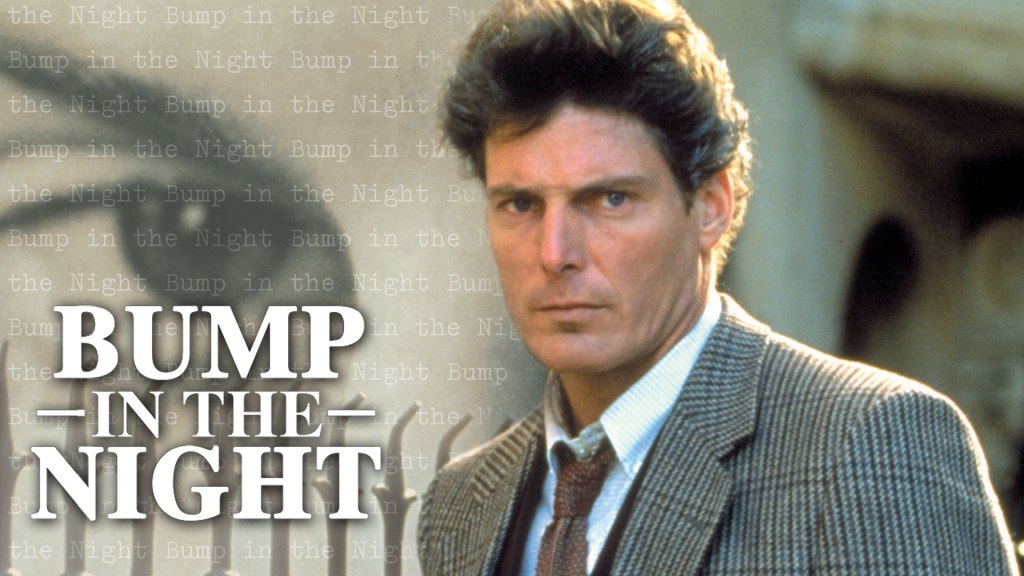
THE SEA WOLF (1993) – Charles Bronson vs. Superman!


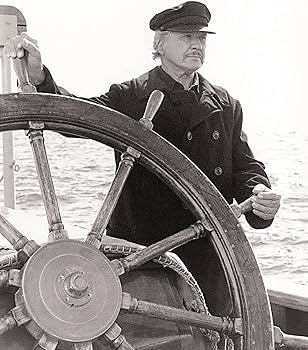
Back in the early 90’s, I was finishing up my high school years and starting up my college years, but I was still paying attention to every move my movie hero Charles Bronson was making. Bronson was at a very difficult place personally during those years as he was continuing to mourn the passing of his wife, Jill Ireland, and it really shows in his choice of roles. His first two films of the 90’s, THE INDIAN RUNNER and YES VIRGINIA, THERE IS A SANTA CLAUS, featured the aging star in the roles of a man dealing with great suffering and loss. Bronson’s third role, as Captain Wolf Larsen in the made for cable TV film, THE SEA WOLF (1993), featured him as the “thinking man’s megalomaniac” from Jack London’s work of classical literature. I couldn’t wait to see the film, but I had just one small problem. We didn’t have cable-TV in Toad Suck, Arkansas, so I would not be able to watch it on the night of its April 18th, 1993 premiere on the TNT channel. It was tough waiting a few months for that VHS release, but it was worth it! 

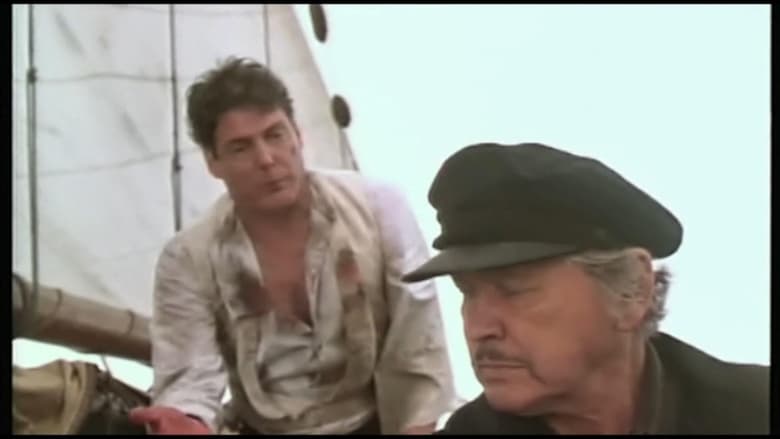
In a nutshell, Charles Bronson plays Wolf Larsen, the captain of the ship The Ghost, who saves shipwrecked aristocrat Humphrey Van Weyden (Christopher Reeve) and con woman Flaxen Brewster (Mary Catherine Stewart). He saves them, but once they’re on board his boat, they find out that Larsen rules over the crew with an iron fist. They also find out that he’s on a life or death mission to find his brother, Death Larsen, and exact revenge for past conflicts. Will they be able to survive this voyage?

Charles Bronson had mostly steered clear of roles that could be described as “villainous” later in his career, but it must have felt great to take on one of Jack London’s most famous characters. I remember the advertising would show him maniacally spouting lines like, “It’s better to reign in hell than serve in heaven!” Wolf Larsen is a man of contradictions. He’s ruthless and mad with power when it comes to the men and his boat, but he also appreciates great works of literature and philosophy. Even at 71 years of age, the icon is able to project arrogant menace and brute strength. Charles Bronson and Wolf Larsen almost seem made for each other, and he’s fantastic in the role. It’s his strongest performance of the 1990’s. 

There’s another great performance in the film, and it comes from Christopher Reeve as Humphrey Van Weyden. Most famous as Superman, Reeve was not having a lot of success at this point in his film career and was wanting meatier roles when he accepted this part. I was blown away with his performance as the intelligent and bullied aristocrat-turned-cabin boy who is forced to resort to some level of savage and barbaric behavior in order to survive Larsen’s boat! Christopher Reeve had really become a good actor at this point in his career, and he handles the role expertly. You believe his transformation throughout the course of the film as he adapts to the brutal conditions aboard the ship yet still retains his humanity. Reeve himself has been quoted as saying that THE SEA WOLF was a project “I really believed in and still think of as some of my best work.” I couldn’t agree more, Mr. Reeve. 

THE SEA WOLF was directed by veteran filmmaker Michael Anderson who had been working since the 1940’s with credits like AROUND THE WORLD IN 80 DAYS (1956) and LOGAN’S RUN (1976) to his name. He and Bronson were roughly the same age, and they’re both in fine form. In order for these types of films to work, you need a good director who can deliver a solid finished project and Anderson brings his A-game to this production. 

I’ve included the trailer for THE SEA WOLF below:

Horror Insomnia File #61: Replica (dir by James Nguyen)


What’s an Insomnia File? You know how some times you just can’t get any sleep and, at about three in the morning, you’ll find yourself watching whatever you can find on cable or streaming? This feature is all about those insomnia-inspired discoveries!

If you were having trouble getting to sleep last night, you could have logged onto Tubi and watched James Nguyen’s Replica.

Filmed in 2005 but not released until 2018, Replica tells the story of Joe Thomas (James David Braddock), a computer chip salesman who has been in a bit of a funk ever since he received a new kidney.  His sales are down.  His pet bird is mocking him by chirping loudly.  His morning drive is boring.  (We know this because, for some reason, the film shows us almost every mundane moment of that commute.)  He’s in danger of losing his job but then, while hanging out at the Golden Gate Bridge, he happens to spot Dr. Evelyn Tyler (Lana Dykstra) jogging by.  Evelyn is the same doctor who performed Joe’s kidney transplant!  Joe strikes up a conversation with her and soon, they’re dating!

(In this movie, dating means eating at a San Francisco theme restaurant, riding a carousel, and running along the beach before heading back home so that Evelyn can model a bikini for a slack-jawed Joe.)

Life is perfect!  Joe’s in love and he’s even managed to sell a gigantic amount of computer chips to Evelyn’s boss, Dr. G (Rick Camp)!  But then Evelyn is killed as the result of a very slow car collision.  Joe is in mourning.  Detective Le (David Nguyen) keeps popping up and suggesting that the car accident that took Evelyn’s life may not have been an accident at all.  (“We found semen in the body,” Detective Le earnestly says while speaking to Evelyn’s boyfriend.)  But then, one day, Joe happens to spot a woman who looks just like Evelyn, except for the fact that she has dark hair and tramp stamp that identifies her as not being Evelyn.  Quicker than you can say Vertigo, Joe is trying to get his new girlfriend to wear a blonde wig and dress just like Evelyn!

Director James Nguyen is best known for directing the Birdemic films.  Replica was actually filmed long before Birdemic but it shows that, even early in his career, Nguyen had his own definite aesthetic.  Everything that made Birdemic so memorable — the terrible sound quality, the pointless shots of people driving, the nonstop references to Hitchcock, the falling-in-love montages that suggest that Nguyen has never actually been on a date, and the suggestion that we’re supposed to take this film seriously — is present in Replica.  If Birdemic claimed to actually be about the dangers of harming the environment, Replica claims to be a film about the ethics of cloning.  While Birdemic featured the characters going out to see An Inconvenient Truth, Replica opens with Joe watching Christopher Reeve advocate for stem cell research.  Reeve is listed in the film’s credits, even though it’s obvious that Nguyen just taped an appearance that he made on a talk show.  Tippi Hedren and Kim Novak are also credited, even though both are only featured in archival footage that shows up on Joe’s television.

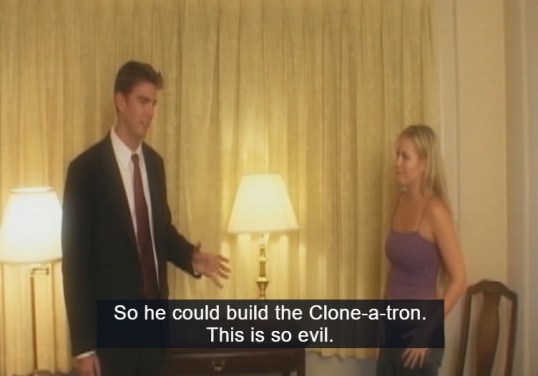
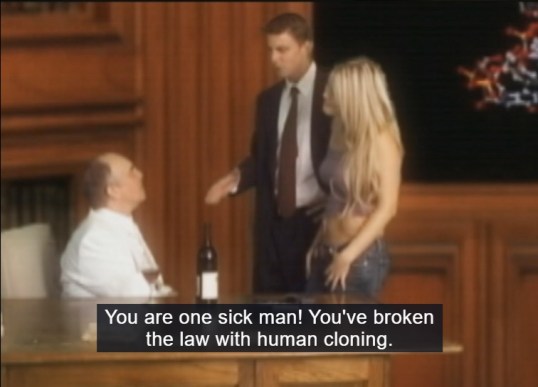
In typical Nguyen fashion, any attempt to say anything serious about cloning is negated by the fact that the film’s villain has invented something that he insists on calling “a clone-a-tron.”  (That said, the actor playing Dr. G overacts to such an extent that it’s hard not to appreciate his effort to bring a little life to the movie.)  The film comes out against cloning, despite the fact that Joe pretty much owes what little happiness he has to it.  All in all, it’s a pretty stupid movie but it’s also short so there’s something to be said for that.  In the end, for better or worse, this is a film that could have only been made by James Nguyen.  If you got a good laugh out of Birdemic, prepare for more of the same with Replica.

Previous Insomnia Files:

  1. Story of Mankind
  2. Stag
  3. Love Is A Gun
  4. Nina Takes A Lover
  5. Black Ice
  6. Frogs For Snakes
  7. Fair Game
  8. From The Hip
  9. Born Killers
  10. Eye For An Eye
  11. Summer Catch
  12. Beyond the Law
  13. Spring Broke
  14. Promise
  15. George Wallace
  16. Kill The Messenger
  17. The Suburbans
  18. Only The Strong
  19. Great Expectations
  20. Casual Sex?
  21. Truth
  22. Insomina
  23. Death Do Us Part
  24. A Star is Born
  25. The Winning Season
  26. Rabbit Run
  27. Remember My Name
  28. The Arrangement
  29. Day of the Animals
  30. Still of The Night
  31. Arsenal
  32. Smooth Talk
  33. The Comedian
  34. The Minus Man
  35. Donnie Brasco
  36. Punchline
  37. Evita
  38. Six: The Mark Unleashed
  39. Disclosure
  40. The Spanish Prisoner
  41. Elektra
  42. Revenge
  43. Legend
  44. Cat Run
  45. The Pyramid
  46. Enter the Ninja
  47. Downhill
  48. Malice
  49. Mystery Date
  50. Zola
  51. Ira & Abby
  52. The Next Karate Kid
  53. A Nightmare on Drug Street
  54. Jud
  55. FTA
  56. Exterminators of the Year 3000
  57. Boris Karloff: The Man Behind The Monster
  58. The Haunting of Helen Walker
  59. True Spirit
  60. Project Kill

Above Suspicion (1995, directed by Steven Schachter)


Dempsey Cain (Christopher Reeve) is a former test pilot turned homicide detective who ends up getting shot because of the incompetence of another cop, a patrolman named Nick Cain (Edward Kerr).  Nick also happens to be Dempsey’s younger brother.  While Dempsey’s in the hospital, Nick has an affair with Dempsey’s wife, Gail (Kim Cattrall).  When a now-paralyzed Dempsey returns home, he deals with his depression by drinking and contemplating suicide.  He tells Gail and Nick that he no longer wants to live but that his life insurance policy doesn’t cover suicide.  He comes up with a plan for his wife and brother to stage a break-in and murder him.  Because Gail and Nick are secretly lovers and want Dempsey out of the way, they agree.  However, it turns out that Dempsey isn’t as naive as they assumed and he still has a few tricks of his own.  It looks like the perfect murder but Detective Alan Reinhardt (Joe Mantegna) is determined to solve the case.

Produced for HBO, Above Suspicion is a clever and twisty film noir that, unfortunately, never escapes the shadow of Reeve’s real-life tragedy.  Just a week after the film first aired on HBO, Christopher Reeve was suffered the spinal chord injury that left him confined to a wheelchair for the rest of his life.  Knowing that Reeve would spend the final nine years of his life paralyzed from the neck down can make it difficult to watch Above Suspicion, which is unfortunate because this film features what might be Reeve’s best performance.

As an actor, Christopher Reeve was always typecast as Superman and he definitely missed out on some roles as a mistake.  Above Suspicion makes clever use of Reeve’s good guy image but casting him as someone who everyone thinks is a hero but who actually has a very dark side to his personality.  Everyone in the film thinks of Dempsey as being Superman but he instead reveals himself to be Lex Luthor.  It was definitely a chance of pace role for Reeve and he really seems to enjoy playing a scheming villain for once.  Watching the film today, it is obvious that he had enough talent that, if not for his injury, he probably would have eventually made an Alan Alda-style comeback that would have seen him settling into the role of being a much-in-demand character actor.

Interestingly, the clever script was written by William H. Macy, shortly before he found fame as Jerry Lundegaard in Fargo.  The film is a clever homage to films like Double Indemnity and The Postman Always Ring Twice and Christopher Reeve and Joe Mantegna are both fun to watch as they play their cat-and-mouse game.  Despite the real-life tragedy that it unintentionally invokes, Above Suspicion is a clever and twisty thriller featuring a cast of talented actors at their best.


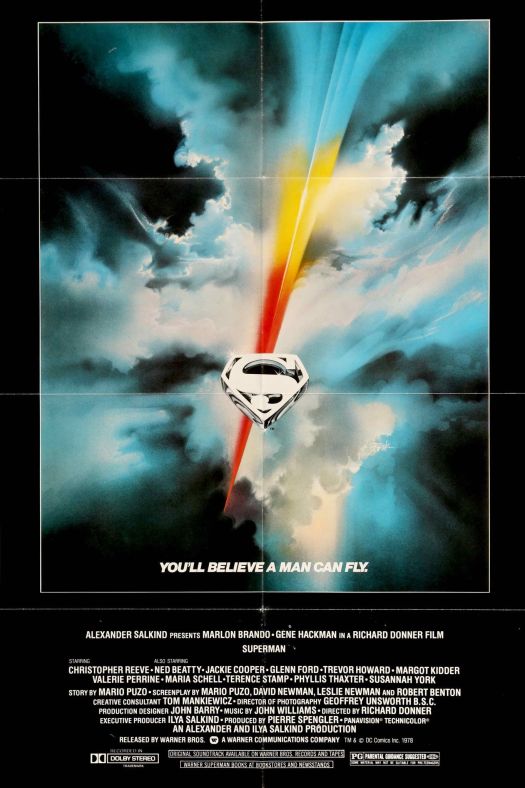
40 Years of SUPERMAN: THE MOVIE (Warner Brothers 1978)


gary loggins's avatarcracked rear viewer

Unlike today, when superheroes dominate at the box office and your local multiplex, costumed crusaders were dead as the proverbial doornail in theaters of the 1970’s. The last was 1966’s BATMAN, at the height of the camp craze, but after that zer0… zilch… nada. I didn’t care; my comic book reading days were pretty much at an end by 1978, driven away by other distractions, like making money, girls, beer, and girls. I had moved on.

But when Warner Brothers announced they were making a new, big budget Superman movie, I was intrigued. I’d always loved the old 50’s TV series starring George Reeves as the Man of Steel, corny as it was, and with a cast featuring Marlon Brando , Gene Hackman , and Glenn Ford , not to mention that girl from Brian DePalma’s SISTERS as Lois Lane, I wanted to see this new version. I also wanted…

View original post 979 more words

Horror Film Review: Village of the Damned (dir by John Carpenter)


At the risk of getting in trouble with at least a few people around the TSL offices, I am going to say something right now.  It may be controversial.  It may be shocking.  It may even make you question your belief in whatever it is that you believe in.

Ready?

Here we go:

I do not think that the 1995 version of Village of the Damned is that bad.

Now, please notice that I didn’t say that I thought it was that great, either.  However, when you listen to some people talk about this movie (which, admittedly, doesn’t seem to happen a lot), they make it sound as if Village of the Damned is one of the worst films ever made.  It is usually cited as being a waste of director John Carpenter’s abilities and Carpenter himself has said that he’s indifferent to the film.  Carpenter has gone as far as to call the film a “contractual assignment.”

Of course, one reason why people dislike the 1995 Village of the Damned is because it’s a remake of an acknowledged classic.  Even worse, it’s an unnecessary remake.  I would not disagree with that opinion.  The 1960 Village of the Damned holds up remarkably well, featuring George Sanders at his best and a lot of creepy little children.  (If anything, the fact that the original is in black-and-white makes the children look even creepier in the original.)  Having recently watched both versions of Village of the Damned, I can say that the remake doesn’t really improve on the original.

And yet, I would still argue that John Carpenter’s Village of the Damned is an underrated and crudely effective little movie.

The film tells the story of the town of Midwich, California.  (The original film took place in the UK and Midwich doesn’t really sound like the name of a town you’d find in California.  Incidentally, my favorite town in California is a place named Drytown, specifically because the town bar advertises itself as being “the only wet place in Drytown.”)  Midwich is a nice, little town.  Everyone is friendly.  Everyone knows everyone else.  Carpenter spends a while establishing Midwich as being the idealized coastal town.  But then, one day, the skies turn dark and everyone in Midwich loses consciousness.  Unfortunately, that doesn’t work out well for some people.  Frank McGowan (Michael Pare), for instance, is driving when the blackout occurs and he ends up dying when his truck goes off the road.  Another unfortunate fellow was manning the grill at the church picnic and, when he passed out, he ended up burning to death.

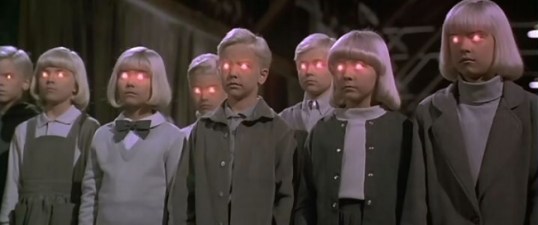
When everyone does wake up, it’s discovered that ten women are now pregnant.  One of them, Kate (Linda Kozlowski), is the widow of Frank.  Another, a teenage girl named Melanie (Meredith Salenger), is a virgin.  Nine months later, all of the babies are born on the same night, though Melanie’s is stillborn.  The 9 babies eventually become 9 very creepy children.  They have pale skin, white hair, glowing eyes, and no emotions.  Soon the government, led by Dr. Verner (Kristie Alley), invades the town so that they can investigate and experiment on the children.  You know that once the government shows up and takes over, everyone’s screwed.

And, while all of this is going on, the once friendly and vibrant town of Midwich becomes a far different place.  We watch as the citizens of the town die, one after another.  Melanie finds herself ostracized and abandoned.  The local reverend (Mark Hamill) goes insane and ends up perched on a hill with a rifle.  The town doctor (Christopher Reeve) loses his wife when she walks into the ocean.

And the children continue to coldly and unemotionally kill anyone who displeases them.  One man is forced to shoot himself.  In perhaps the film’s most disturbing scene, a scientist is forced to dissect herself.

Admittedly, some of the actors do a better than others.  Meredith Salenger gives the best performance while Mark Hamill definitely gives the worst.  At first, Kirstie Alley seems miscast but she actually gives one of the better performances in the film.  As the nominal hero, Christopher Reeve is boring but then again, many small town doctors are.  Of course, nearly everyone in the movie is dead by the time the end credits roll.

It’s a seriously dark movie and, when taken on its own terms, it’s definitely effective.  Carpenter does such a good job of establishing Midwich as a place where anyone would want to live that it does carry an impact to see the town suddenly isolate from the world and the once happy citizens resorting to suicide just to escape the town’s children.  In the end, John Carpenter’s Village of the Damned does capture the anguish of feeling as if there’s no escape from the present nor hope for the future.

Village of the Damned is crudely effective but effective nonetheless.


Lisa Cleans Out Her DVR: Monsignor (dir by Frank Perry)


(Lisa is currently in the process of cleaning out her DVR!  It’s taking her longer than it took Saint Malachy to transcribe The Prophecy of the Popes!  She recorded the 1982 film, Monsignor, off of Retroplex on March 8th!)

Maybe it’s because I’m a fourth Italian and I was raised Catholic but Monsignor amused the Hell out of me.

See, Monsignor is a big, sprawling epic about the Church and the Mafia.  I don’t know much about the production of this film but, having watched it, I’m going to guess that it was made by people who were neither Catholic nor Italian.  This is one of those films that is so full of clichés and inaccuracies and yet so self-important that it becomes oddly fascinating to watch.

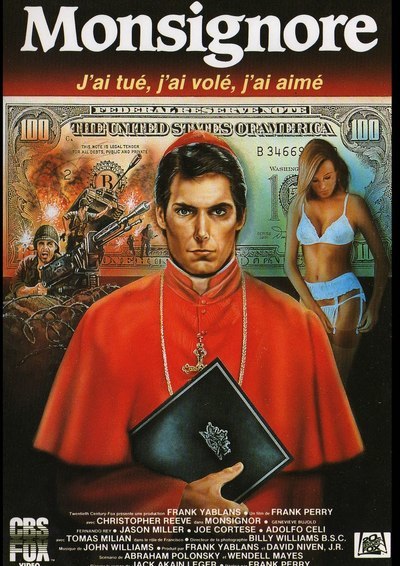
It tells the story of Father John Flaherty (Christopher Reeve, an Episcopalian who gives a performance so wooden that one worries about getting splinters just from watching it).  When we first meet Father Flaherty, he’s just taken his orders.  He’s a good Irish kid from Brooklyn.  The neighborhood’s proud of him, because he has volunteered to serve as a chaplain in the army.  (The film opens during World War II.)  The neighborhood is even prouder when he performs a Mafia wedding.  Don Appolini (Jason Miller), who may be a mobster but who still loves the Church, is especially impressed.  He expects big things from Father Flaherty.

(The father of the bride, incidentally, is played by Joe Spinell, who played Willy Chicci in Godfathers One and Two and who achieved a certain infamy when he starred in Maniac.)

Father Flaherty goes to war and discovers that it’s not easy to be a man of God in a war zone.  Everywhere around him, soldiers are either dying or losing their faith.  (Perhaps it would help if Father Flaherty knew how to properly conduct a Requiem Mass but the movie screws that up, with Flaherty saying, “”Requiescat in pace” when he clearly should have said, “Requiescant in pace.”)   After trying, in vain, to comfort a mortally wounded man, Flaherty snaps, picks up a machine gun, and starts blowing away Germans.

Having broken the Thou Shalt Not Kill Commandment and indulged in one of the seven deadly sins, Father Flaherty apparently decides to commit every other sin as well.  Or, at least, it seems like that’s his plan.  The thing is, Christopher Reeve’s performance is bland that it’s difficult to guess what could possibly be going on inside of Flaherty’s head.  Is he disillusioned with the church or does he still have faith?  When he says that he feels guilty over his transgressions, is he being sincere or is he lying?  It’s impossible to tell because, when it comes to Father Flaherty, there’s no there there.  He’s literally an empty vessel.

That, of course, doesn’t stop him from becoming a powerful man in the Church.  Through his Mafia connections, he makes a fortune on the black market and launders money for the church.  He also has sex with a cynical, nymphomaniac postulant nun, who is something of a stock figure in films like this.  In this case, the role is played by Genevieve Bujold.  Despite the stereotypical nature of her character, Bujold comes the closest of anyone in the cast to giving a nuanced performance but her character abruptly vanishes from the film.  One can literally hear the producers in the background saying, “Okay, we’ve indulged in the sexy nun thing.  Send her home now.”

Towards the end of the film, there’s a flash forward that is so abrupt that I didn’t even realize it had happened until I noticed that Christopher Reeve and Jason Miller now had a little gray in their hair.  The flash forward doesn’t really accomplish much.  Father Flaherty has lost a lot of the Mafia’s family and the Mafia’s not happy about it.  It’s kinda like the Vatican subplot in The Godfather Part III, just with less interesting actors.

Anyway, Monsignor obviously thinks that it has something to say about both the Church and the Mafia but it’s actually remarkably empty-headed.  Strangely enough, for an epic film that cost 10 million dollars to make (that’s in 1982 money), the whole film looks remarkably cheap.  If a community theater decided to put on a production of Otto Preminger’s The Cardinal, the end result would probably end up looking a lot like Monsignor.

And yet, I really can’t hate Monsignor.  It’s so bad that, as I said earlier, it’s also oddly fascinating.  You watch and you ask yourself, How many details can one film about Catholicism get wrong?  How many Italian stereotypes can be forced into a movie with a Mafia subplot?  Now, I should point out that, at no point, does Don Appolini say, “Mama mia!” but, if he had, I wouldn’t have been surprised.  It’s just that type of film.

Anyway, Monsignor is so sordid and stupid that it becomes entertaining for all the wrong reasons.  If you’re into that, you’ll enjoy Monsignor.

Shattered Politics #55: The Remains of the Day (dir by James Ivory)


Remains_of_the_day

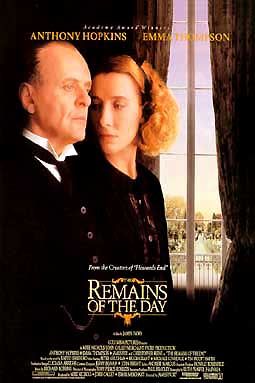
The 1993 Best Picture nominee The Remains of the Day is a love story.  Actually, it’s a series of love stories.  Every character in the film is in love with something or someone.  It’s just that, with one exception, they’re all so extremely British that it’s sometimes hard to tell.

The one exception is an American congressman named Trent Lewis (Christopher Reeve).  As the film opens in the 1950s, he’s just purchased Darlington Hall, which is one of those country manors that hold so much history and romance for those of us who regularly watch Downton Abbey.  Lewis is excited to have a British manor of his very own.  It even comes with its very own butler, a Mr. Stevens (Anthony Hopkins).

As we see in flashback, Stevens previously worked at Darlington Hall when it was owned by Lord Darlington (James Fox).  In the 1930s, Lord Darlington may have loved Britain but he was also dangerously naive about the rise of Nazi Germany.  Actually, to say that he was naive might be letting Lord Darlington off too easily.  When we first meet Lord Darlington, he seems like a well-meaning but hopelessly out-of-touch aristocrat.  He has so little understanding of the real world that he even asks Stevens to have the sex talk with his godson (played, somewhat inevitably, by Hugh Grant), who happens to be close to 30 years old at the time and, one would presume, far beyond the age when the talk is really necessary. When we first see Lord Darlington, who is hosting a conference on how to best deal with the rise of the Nazis, arguing that Britain should ignore the rise of Hitler, it’s easy to assume that he’s just as clueless about Germany as he is about his godson.  But then, eventually, Lord Darlington orders Stevens to fire two Jewish maids and you’re forced to reconsider everything that you previously believed about him.

And then there’s Ms. Kenton (Emma Thompson), who worked as a housekeeper for Lord Darlington.  She loves the repressed Mr. Stevens but continually finds herself frustrated by Stevens’s professional detachment.  Unlike Stevens, Ms. Kenton doesn’t hold back on her opinions but, when she finally has a chance to stand up for her beliefs and defy the status quo at Darlington Hall, she backs down.

And then there’s Mr. Stevens.  Mr. Stevens may be one of the most emotionally repressed characters in the history of the movies but the entire film revolves around trying to figure out what or who Stevens loves.  It’s a little too easy to assume that he’s in love with Ms. Kenton, even though that will be the natural instinct of most viewers.  While he obviously feels affection towards her, he can never bring himself to truly express it.  (That said, getting a letter from her appears to be the only thing that can actually inspire him to leave the safety of Darlington Hall and venture into the outside world.)  While it seems, at times, that he might love Lord Darlington, Stevens himself prefers to say that he respected Lord Darlington and, after the war, Stevens seems to have no trouble staying on at Darlington Hall even after its bought by Congressman Lewis.  Much like the ghosts in The Shining, Stevens has always been the butler and always will be.

Ultimately, Mr. Stevens loves his job.  He loves being a butler. He’s a man so dedicated to his job that he even continues to work even while his father is dying in the next room.   He loves making sure that everything’s perfect at Darlington Hall and he never bothers with worrying about how imperfect the world outside Darlington Hall may be.    In that way, Stevens is a stand-in for all of the European leaders who willfully chose to ignore what was happening in Germany in the days leading up to World War II.  And, much like those European leaders, he finds himself forced to work for an American in the aftermath.

As a film, The Remains of the Day can be frustrating but in a good way.  Mr. Stevens is such a repressed and detached character that, much like Ms. Kenton, we’re always tempted to give up on him.  Fortunately, Anthony Hopkins is one of those actors who can suggest so much with just a pause in his dialogue or a quick glance to the side.  You look at his sad eyes and suddenly, you know everything that Mr. Stevens cannot bring himself to say.  Emma Thompson has a somewhat easier role because Ms. Kenton at least gets to say what she’s thinking but she still bring a lot of depth to the role and has a lot of chemistry with Hopkins.  And finally, you’ve got James Fox who is so comically befuddled that it’s all the more shocking to consider all of the pain that he — intentionally or not — is partially responsible for.

The Remains of the Day is a great film for all of us Downton Abbey-loving history nerds.

http://www.youtube.com/watch?v=0nlyIvHY1Xw

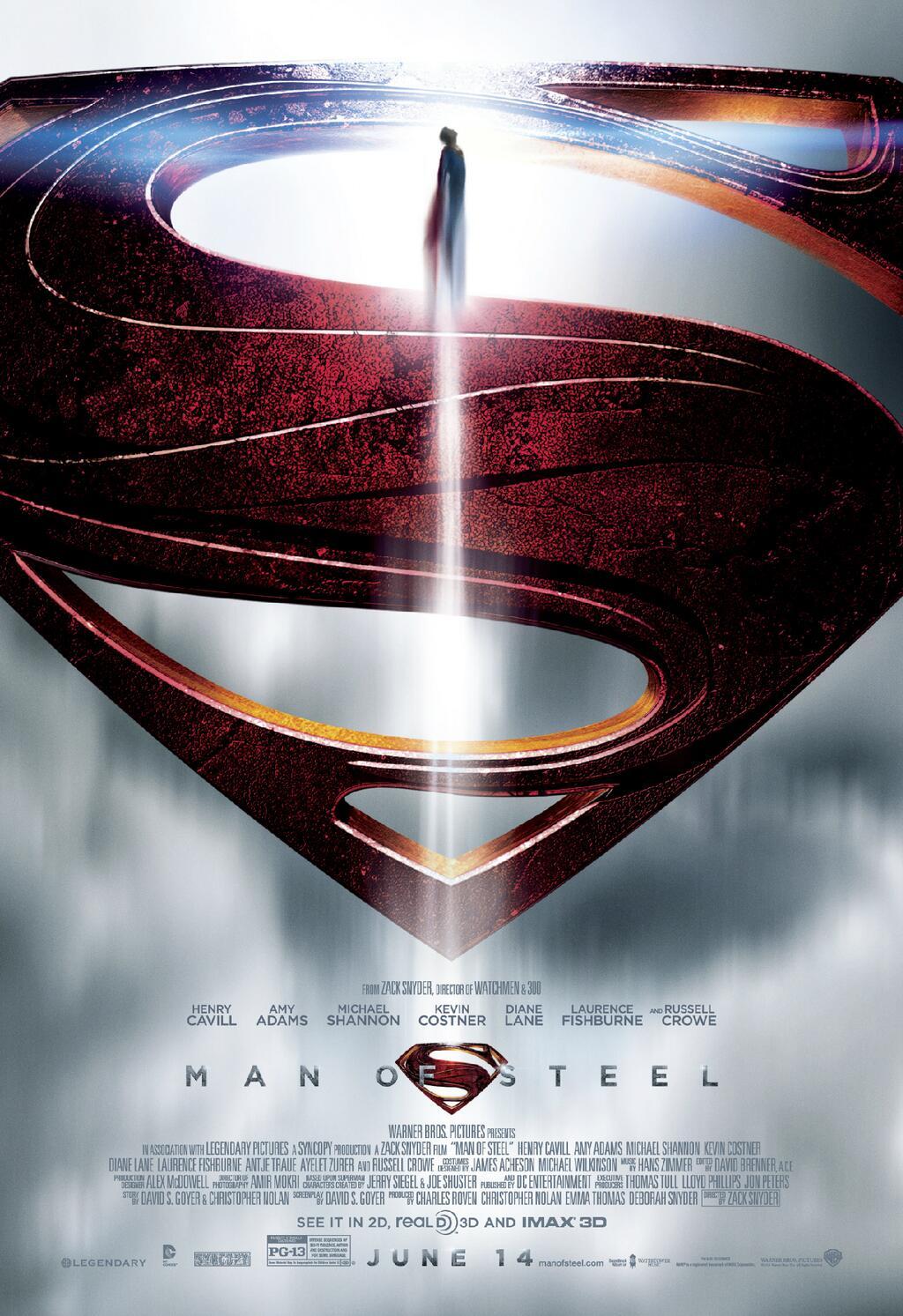
Trash Film Guru Vs. The Summer Blockbusters : “Man Of Steel”


New Man of Steel Poster

I know that, in this day and age, we as a society seem to get off on tearing down our myths and legends and “humanizing” them, but seriously — when did Superman develop a split personality?

Before you jump to any conclusions based on that admitted “gotcha” of an opening line, allow me to state for the record that I didn’t actively dislike Zack Snyder’s Man Of Steel, it’s just that it spends its first half or so rather half-heartedly trying to portray its title character in more human terms than we’ve seen in previous iterations before finally throwing all that out the window and deciding that it actually wants to tell a story about a God who walks (and flies) among us, and the film definitely suffers as a result of this abrupt shift in tone.

But first the “plus” side of the ledger : Man Of Steel is pretty much the most awesome visual spectacle the movies have ever produced. I’m no fan of CGI as a general rule, but damn if every single effects shot in this flick isn’t enough to take your breath away, particularly the sequences on Superman’s home planet of Krypton, which Snyder and his WETA-employed staff depict in a markedly new and exciting “biotech on steroids” fashion. When the action goes earthbound, the optical awesomeness continues, never fear, so if spectacle is what you’re after, you’ll walk away from this well pleased indeed.

Pitch-perfect (with one notable exception which we’ll get to in a moment) casting doesn’t hurt matters any, either — Henry Cavill makes an immediate impression in both his Superman and Clark Kent personas; Russell Crowe is suitably above it all as his Kryptonian father, Jor-El; Kevin Costner and Diane Lane are almost too spot-on for words as his adopted human parents; Laurence Fishburne’s Perry White is old-school newspaper vet all the way (even with the pierced ear); and the always-underrated Michael Shannon oozes psychotic menace as lead villain General Zod. Watching all these people at work is a genuine joy.

Granted, the script — by Dark Knight veteran David S. Goyer (from a story co-plotted with the head honcho of this whole enterprise, Christopher Nolan) — doesn’t do any of them any favors dialogue-wise (apparently Kryptonians have evolved beyond good, old-fashioned conversation and speak entirely in grandiose pronouncements — but it’s not like the mere humans in this film are any less prone to dull, dry, wooden,  faux-poetic waxings themselves), but the players by and large manage to rise above the material they’ve been handed.

I say “by and large” (and here comes that exception I talked about a moment ago) because, sadly, one has been dealt such a losing hand that I’m not sure what she could really have done about it — I’m speaking, of course, about Amy Adams’ Lois Lane. Goyer does some brave and interesting things in terms of shaking up the established Clark-Lois backstory ( let’s just say she won’t be sneaking glimpses of him at sly angles when his glasses are off to see how much he might or might not look like Superman), but the cold, emotionally distant nature of this particular big-budget beast means that the whole love story angle falls pretty flat. By the time Goyer, Nolan, and Snyder decide they want to play the Nietzchean uberman card for all it’s worth, the independent, confident journalist we meet at the outset is reduced to becoming more awestruck than she is lovestruck, and rather than being “Superman’s girlfriend” she comes off more as his disciple. Who just so happens to kiss him. I mentioned the abrupt tonal shift in the film at the outset of this review, and poor Lois definitely suffers the brunt of it.

The messianic poses Cavill is forced into during all the flight and battle sequences get pretty old pretty fast as well, it’s gotta be said, and with no real transition period in the way the story is structured between its “simple farm boy from Kansas”  and its “demi-god here to save us all from the evil forces originating from his own homeworld” (that he inadvertently brought here himself, but hey, let’s not dwell on that) segments, well — let’s just say not much thought apparently went into how jarringly that would all play out. Hans Zimmer’s typically percussive, insistent musical score only augments the problem, and while there’s no way anybody was gonna have fans forgetting about John Williams, a “stripped-down,” “less over the top” orchestral accompaniment really doesn’t work when you’re trying to portray Superman as a fucking deity.

Superman purists, for their part,  may also find themselves semi-outraged by more than the snakeskin-fetish-wear take on his costume. There’s no Jimmy Olsen here, no Lex Luthor (although the “Lexcorp” logo appears here and there on props throughout — as do the logos for Sears, 7-11, and an unending and highly annoying litany of corporate sponsors), and “Metropolis” is never mentioned by name even though the entire final act takes place there. So be ready for at least some “nerd-rage” on the internet. Still, if those were the only things that bugged me about Man Of Steel, I’d be feeling a little bit better about it as a whole right about now. Not that I’m all that pissed or disappointed —-just, well, kinda perplexed.

I can’t say that Man Of Steel isn’t a fun movie to watch, because it is — hell, it’s an absolute visual marvel, and if you want to shut your brain off and just be taken along for a wild adventure ride, you’re not gonna do much better this (or any other) summer  Still —my mind kept drifting back to the famous first-encounter-between-Supes-and-Lois scene in Richard Donner’s Superman : The Movie (still the gold standard for all superhero flicks as far as I’m concerned) : when Lois asks him “who are you?,” and he replies, simply and with a smile, “a friend,” that told us all we needed to know right there. Sure, he was faster than a speeding bullet, more powerful than a locomotive, and able to leap tall buildings in a single bound, but at the end of the day , Superman as envisioned by Richard Donner, Mario Puzo, and Christopher Reeve was one of us.

By contrast, Superman a la Snyder, Nolan, Goyer and Cavill is above us. He’s not here to help humanity, but to redeem it. He’s not our hero anymore, he’s our savior — whether we want one or not.

Scenes I Love: Superman Spins the Planet


“Fezzik, do you hear that? That is the sound of ultimate suffering.” – Inigo Montoya, The Princess Bride.

Granted, this is one of the most strangest ways to resolve an issue (rewind everything back so it didn’t happen to begin with, without any paradoxes whatsoever), but it’s the reaction to Lois’ death that I like about this. As a kid, that scream made me jump, because it sounded like Superman lost just about everything. I honestly would have liked to know what Reeve thought of to get that scream out. I recently showed this to my cousin who liked it too. The spinning around the planet was cool (though a little much), and is something I come back to once in a while.