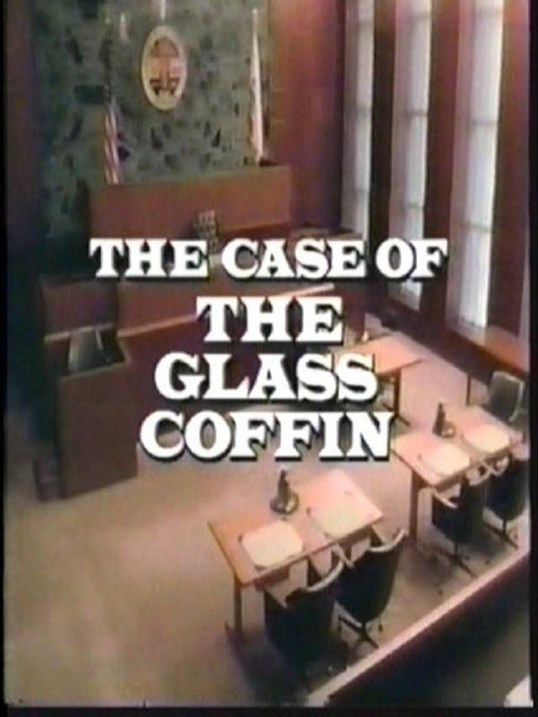
World famous magician David Katz (Peter Scolari) is accused of murdering his assistant (Nancy Lee Grahn) while performing a trick at a charity show. The prosecution says that David killed her to cover-up a pregnancy that was the result of a drunken, one-night stand. However, Perry Mason (Raymond Burr) and Ken Malansky (William R. Moses) discover that there were many people who might have a motive for killing the victim.
After the previous emotionally-charged Perry Mason movie, this entry felt pretty bland. I liked Peter Scolari as the accused magician but otherwise, this was a little boring. I guessed who would be playing the murderer as soon as I saw their name during the opening credits. I did find it amusing that Perry and the prosecutor (played by Bob Gunton) seemed to sincerely dislike each other. That added some bite to the courtroom scenes but I really do miss David Ogden Stiers’s as Perry’s regular courtroom opponent.
At the end of the movie, Perry took the jury to the theater where the murder occurred and then cross-examined the witnesses in the theater. I guess the movie’s producers were trying to do something new but it just didn’t feel right for Perry to get his confession anywhere other than in a courtroom.
“You don’t know what it’s like to have your life destroyed by one stupid mistake!” — Sean Miller
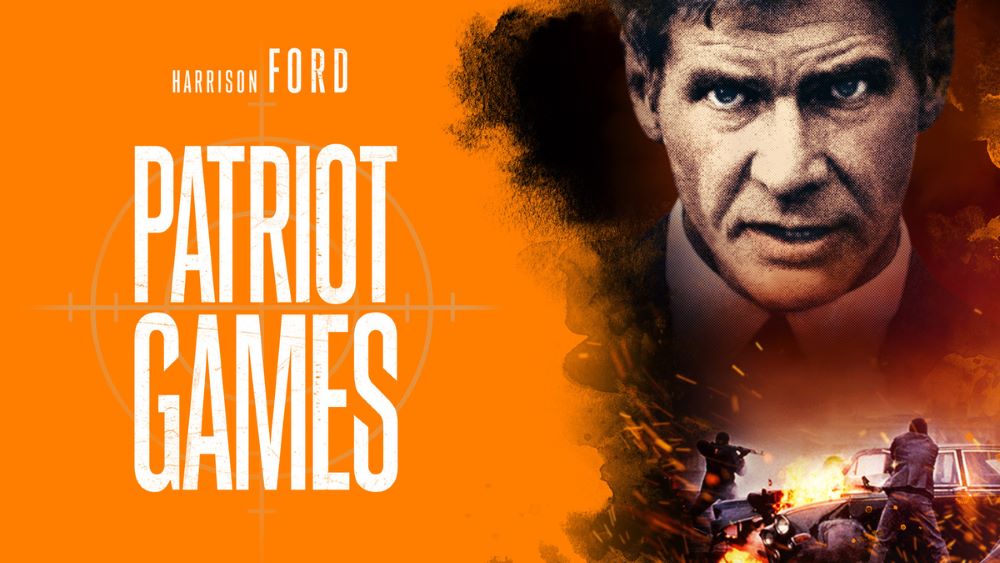
Patriot Games hits the ground running by thrusting Jack Ryan and his family into the heart of a terrorist ambush on a London street, targeting a key British official tied to the royal family. Harrison Ford plays Ryan as a sharp-minded history professor and former CIA analyst on a simple vacation with his wife Cathy and daughter Sally, but his old Marine training surges up—he charges in, kills two attackers including one terrorist’s brother, and gets winged by a bullet himself. Right away, this setup grabs attention by showing how a random act of guts can boomerang into endless trouble, forcing a guy who craves quiet lectures to dodge bullets and betrayal across oceans, and it plants seeds about whether playing hero is worth the fallout on everyone you love.
Back in Maryland at the Naval Academy, Ryan tries piecing together normalcy, grading papers and dodging CIA calls, but Sean Miller—the captured terrorist whose sibling Ryan killed—gets sprung in a brutal prison convoy hit that leaves cops dead in the dirt. Miller, now laser-focused on payback, reroutes his rogue Ulster splinter group’s rage straight at Ryan’s home front, culminating in a savage freeway pileup where goons ram Cathy’s car off the road, injuring her and Sally badly. Ford nails the shift from composed academic to seething protector, his clenched jaw and urgent phone calls conveying a dad pushed to the brink, while these family-targeted strikes crank the paranoia, transforming everyday drives and school runs into potential kill zones that linger long after the crashes fade.
Sean Bean invests Miller with a coiled, wordless intensity—scarred features and piercing glares that scream obsession without needing speeches, flipping Ryan’s principled stand into the villain’s fuel for a mirror-image crusade. This fictional IRA offshoot rolls with pro-level gear for hits from UK alleys to U.S. suburbs, dodging authorities with insider tips, but their flat-out villainy skips any cracks in loyalty or ideology, turning them into efficient machines rather than messy humans with grudges worth unpacking. Anne Archer holds Cathy together through hospital beds and hushed fears, emerging tougher, as James Earl Jones’ Admiral Greer supplies the gruff guidance that tugs Ryan toward Langley, balancing the intimate home front with globe-spanning spycraft that feels like a real squeeze on one man’s bandwidth.
The camera shifts smoothly from rain-slicked London corners to bright Maryland bays, capturing open spaces that make characters look small and exposed against the sprawl. Gunshots snap clean and engines growl low during pursuits, pulling you deeper into the fray without drowning out the quieter beats. Horner’s soundtrack builds with brooding pipes and driving rhythms that hit hard in the final bay showdown, boats tearing through darkness with bursts of flame from hands-on stunts that pack a punch even now. Action ramps up step by step from early scraps to that watery chaos, mixing smarts with muscle, even if plot points line up a bit too neatly at times.
CIA war rooms buzz with satellite feeds sharpening grainy Libyan camp footage into proof of terror training, a tech showcase that echoes Clancy’s gearhead love and ramps brainpower against brute force without flashy overkill. Ryan hashes out returns to duty with British contacts, including a Sinn Féin type disavowing the extremists, sketching post-Cold War shifts where lone wolves replace nation-states in the threat lineup. Book-to-screen changes crank Ryan’s field time over desk strategy, letting Ford flex rugged moves that thrill audiences but sand off novel layers of naval tactics and alliance chess for punchier pacing.
Ford and Archer capture the raw friction in Ryan’s marriage through tense, whispered spats about diving back into danger, their easy chemistry making the pushback feel lived-in and real rather than scripted melodrama. Miller’s storyline hurtles toward a frantic leap onto Ryan’s rocking boat, boiling his grudge down to savage, no-holds-barred combat amid crashing waves. On-screen locations—from echoing Naval Academy corridors to churning bay waters—breathe life into the settings, casting national pride as a bruising, up-close shield instead of hollow cheers. Subtle audio touches, like distant creaks in the dim Ryan house, crank up the exposed feeling, linking slick production values to gut-punch emotions without piling on the noise.
Those procedural deep dives—poring over red-haired accomplice sketches or grilling shaky informants—add authentic wonkery, like Ryan spotting tells in grainy photos that crack the case wide, but they drag amid family rehab montages where Sally’s recovery mirrors the slow-burn hunt. The baddies’ cartoonish zeal glosses Northern Ireland’s brutal splits, opting for clear-cut evil over thorny politics that could’ve mirrored real headlines from the era, a choice that streamlines tension yet dates the take harshly next to modern nuance. Endgame flips the house siege into a decoy boat trap, Ryan baiting Miller solo on fiery Chesapeake swells, evolving his street-brawl start into tactical payback, though the tidy win lacks the submarine slyness of earlier Ryan yarns.
This swap prioritizes visceral family shields over shadowy sub hunts, hooking casual viewers while purists miss the book’s flowchart plotting, yet it spotlights Ford’s prime reluctant-warrior groove amid practical blasts that crush today’s green-screen slop. Pacing ebbs in alliance huddles, but peaks like the SAS desert wipeout—watched live via infrared ghosts—deliver clinical thrills tying brains to bangs seamlessly.
Taken together, the taut opener, vengeful pursuits, tech-savvy thrills, emotional anchors, dated politics, and solid craftsmanship add up to a clear verdict: Patriot Games is a good film, a reliable ’90s thriller that delivers crowd-pleasing tension and strong leads without reinventing the wheel. It holds up for its practical stunts and intimate stakes, earning replays as Ford’s standout Ryan turn, even if flaws like simplification and lulls keep it from greatness. Worth the watch for anyone craving balanced action with heart.
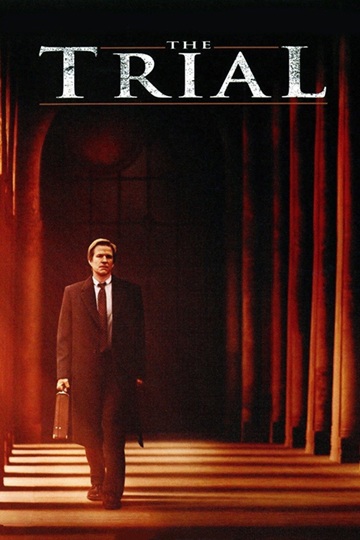
Mac is a Southern lawyer, even though it’s been a while since he practiced. After his wife and children were killed in a car accident, Mac decided to retire from practicing law but he never surrendered his license. A judge (Rance Howard) reaches out to him, asking him to serve as a public defender for Pete Thomason (Randy Wayne), a young man who has been accused of murdering his girlfriend. The evidence is stacked against Pete and there are plenty of wealthy people who, for various reasons, want Pete to quickly be convicted. Mac takes the case because he can tell that Pete is being railroaded. When he discovers that Pete will possibly be facing the death penalty if he’s convicted, the case becomes very personal for Mac.
The prosecuting attorney (Bob Gunton) has managed to find a doctor (Brett Rice) who is willing to testify that Pete is a sociopath. (The doctor has a reputation for finding just about anyone on trial to be a sociopath.) Mac finds a doctor of his own, Dr. Anne Wilkes (Clare Carey), his testifies that Pete is nowhere near being a sociopath. The problem is that Pete has no memory of what happened the night of the murder. Mac may believe that Pete is innocent but can he convince the jury when the evidence all seems to suggest otherwise?
Like The List, The Trial was based on a novel by Robert Whitlow and it was directed by Gary Wheeler. I was pretty hard on The List in last night’s review but I actually rather enjoyed The Trial, which was a solid and well-made legal thriller. (The film’s status as a faith-based film largely comes from a scene in which Mac quotes the Book of Provers in regards to how, during a trial, it’s easy to believe the first person who speaks but it’s equally important to listen to how the accused replies.) I enjoyed the twists and turns of the plot and the film’s ending worked well. Though the film had a a made-for-television feel to it (despite having been a theatrical release), it still held and rewarded my interest.
It helped that the cast was well-selected and everyone gave good performances. Matthew Modine, in particular, gave a strong performance as Mac, playing him not as being a saint but instead as being someone who was just determined to give his client the defense he deserved and to ultimately do the right thing. Robert Forster played Mac’s brother-in-law and lead investigator and he brought his own brand of world-weary determination to the part. Nobody plays a smug prosecutor as well as Bob Gunton, though it should be noted that the character himself never became a caricature. Rance Howard was the ideal judge, tough but fair. Randy Wayne was sympathetic as the confused Pete. The cast really brought the film’s world to life.
I always enjoy a good legal thriller and The Trial was certainly that.
Welcome to Retro Television Reviews, a feature where we review some of our favorite and least favorite shows of the past! On Mondays, I will be reviewing Miami Vice, which ran on NBC from 1984 to 1989. The entire show can be purchased on Prime!
This week, Castillo gets an adventure of his own.
Episode 5.3 “Heart of Night”
(Dir by Paul Krasny, originally aired on November 18th, 1988)
This is season 5’s Castillo episode.
Castillo got to be at the center of one episode per season. Usually, it involved someone from his past resurfacing and Castillo having to go full samurai (or ninja, as the case may be) to protect them. That’s certainly the case here, in which Castillo’s ex-wife (Rosalind Chao, replacing Joan Chen) approaches Castillo because she and her husband (James Saito) are being targeted by Rivas (Bob Gunton), an Ecuadorian drug dealer who — *sigh* — has connections to the CIA.
This episode wasn’t really bad. It just felt awfully familiar. Even Edward James Olmos, who usually shined whenever he got a solo adventure, seems kind of bored in this episode. At this point in the series, there was really nothing surprising about the revelation that a South American drug lord was working with the CIA. Just about every drug lord on the show was portrayed as working for the CIA. It’s also not a surprise when Castillo’s ex’s new husband turns out to be corrupt. The episode ends with Castillo watching as the women he still loves walk away from him and, again, been there done that. Almost this entire episode felt like Miami Vice on autopilot.
Crockett appeared for about two minutes in this episode. He has his memory back and he’s working for the Vice Squad again. Castillo points out that Crockett is still being investigated for numerous murders and he suggests that Crockett take some time off. Crockett reluctantly agrees. Shouldn’t Crockett be in prison right now? The man was the biggest drug lord in Miami. He killed a cop (albeit in self-defense). I’m surprised he would be allowed back into the Vice Squad with all that hanging over him. If not sitting in jail, Crockett should at least be under suspension.
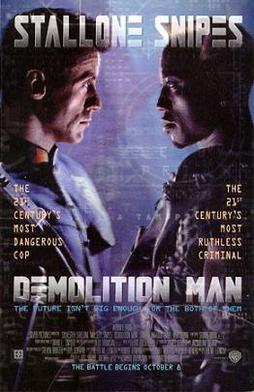
In the near future, law-breakers and other destructive types are not put in prison but are instead cryogenically frozen and left in suspended animation until they’ve served out their sentences. The most fearsome criminal in the world, Simon Phoenix (Wesley Snipes) has been frozen but so has his nemesis, Detective John Spartan (Sylvester Stallone).
In the far future, Los Angeles is a part of a megalopolis named San Angeles. Envisioned and watched over by a seemingly benign dictator named Cocteau (Nigel Hawthorne), San Angeles is a wannabe utopia where cursing leads to an automatic fine and all of the restaurants are Taco Bell. When he’s thawed out for a parole hearing, the suddenly super-powered Phoenix makes his escape. The police, no longer knowing how to deal with violence, make the reluctant decision to thaw out John Spartan. Assigned to work with the enthusiastic Lenina Huxley (Sandra Bullock), Spartan must navigate this strange future to defeat Phoenix.
For some reason, DemolitionMan never seems to get the respect that it deserves. Made at a time when both the Rambo and the Rocky franchises appeared to be over, DemolitionMan features one of Stallone’s most appealing performances as he deals with a society where just saying a bad word can cause a scandal. Just as Spartan proves that his brand of destructive police work still has its place in the future, Stallone proved that he could still carry an action movie in 1993. There’s a lot of knowing humor to Stallone’s performance. After a series of failed comedies in the 80s, DemolitionMan was the movie that proved that Stallone could be intentionally funny. Stallone is also surrounded by one of his strongest supporting casts. Wesley Snipes attacks his villainous role with gusto while Denis Leary breaks out his stand-up routine as Edgar Friendly, the leader of San Angeles’s rebels. This is also the film that led to Sandra Bullock getting cast in Speed and she’s so incredibly adorable here that even Stallone breaks out into a smile while acting opposite her
(In 1993, you couldn’t turn on television without seeing Sandra Bullock saying, “All restaurants are Taco Bell.”)
DemolitionMan is an action film and it lives up to its name, with all the demolition that a viewer could want. Even more so, It’s also a satire, of both Stallone’s previous films and what was then known as “political correctness.” DemolitionMan’s portrayal of a sterile society where everyone had been programmed to be docile and inoffensive wasn’t that far off from what a lot of politicians were then promoting for America at large. Luckily, John Spartan was around to put an end to that. The end result is one of Sylvester Stallone’s most memorable films.
I love the idea that a pitcher has a mental connection with his catcher. I love the stories of the minor leaguers who get their chance in the majors and who stun the world by coming out of nowhere to hit a home run on their first at bat. I love all the stories about which batters corked their bats and which pitchers could still manage to get away with throwing a spitball. I love baseball because watching it is a relaxing way to spend an afternoon but at the same time, the game is unpredictable. Just one hit can change the momentum of an entire game and, until that final out, the game could be won by anyone. I especially have a place in my heart for the legendary baseball scouts, the grouchy old men who would drive out to the middle of nowhere to watch a game and search for the next great homerun hitter.
That’s one reason why I hated Moneyball. I thought Brad Pitt, Philip Seymour Hoffman, Chris Pratt, and Jonah Hill all did a good job and I loved Brent Jennings’s performance as Ron Washington but I hated the idea that the scouts and their instincts weren’t necessary because everything could just be determined by sabermetrics. The idea that an algorithm could tell you everything you needed to know about how to put a team together felt like a crime against everything that makes baseball special and it deeply offended me as a fan. Moneyball may feature a baseball team but it’s a movie about business, not the game.
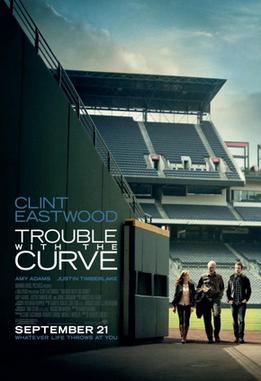
That’s why I’m thankful for TroubleWithTheCurve.
Clint Eastwood stars as Gus Lobel, one of those plain-spoken, no-BS scouts that I love so much. All of the team owners might be into sabermetrics but Gus knows that the best way to scout a player is to actually hit the road and see him play. For Gus, scouting is all about instincts and his own gut feeling. Gus is everything that I love about baseball. He’s knows the game, he knows the players, and he doesn’t need an algorithm to tell him whether or not someone should be on the field.
The movie is about Gus scouting a player who has trouble hitting the curve. That’s something that Gus notices but the algorithm overlooks. Accompanying Gus is his daughter, Mickey (Amy Adams), who is proud to have grown up surrounded by plain-spoken, unpretentious baseball scouts like her father and who doesn’t understand why Gus never took her on the road when she was younger. Mickey falls for a younger scout named Johnny (Justin Timberlake), their love based on their shared knowledge of baseball. I liked Mickey and Johnny as a couple and I appreciated the scenes where Mickey and Gus worked on their strained relationship but the best thing about this movie is that Gus gets to prove that he knows more about baseball than all the young whipper-snappers who think they understand the game.
TroubleWithTheCurve is a tribute to everything that baseball is truly about. It’s a movie that loves the game as much as I do. Clint Eastwood and Amy Adams are a perfect father/daughter duo. Who needs an algorithm when you’ve got Clint and Amy?
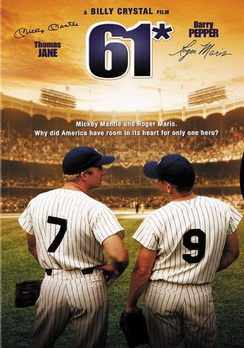
61* is about two baseball player and two friends who couldn’t seem to be more different.
Roger Maris (Barry Pepper) is an introverted family man who doesn’t like it when reporters show up at his house in search of a story or a quote. He’s a good ball player, one of the best, but he doesn’t want to be a celebrity. Mickey Mantle (Thomas Jane) is a larger-than-life personality, a beloved figure on the field and in the dugout. Mickey loves being famous and the fans love him. Both Maris and Mantle are members of the New York Yankees. Because Mantle is struggling with his drinking, he becomes Maris’s roommate when they’re on the road. In 1961, the two friends both go after Babe Ruth’s record of 60 home runs in a season. The press presents their season as a battle, a race to see who will be the first to hit the sixty-first home run of the season. Mantle and Maris, though, are just swinging the bat and making plays.
I really enjoyed 61*, which is a baseball film made by and for people who love baseball. I liked the contrast between the quiet Maris and the charismatic Mantle. Even though Maris is a hard worker and a good ballplayer, Mantle is the fan favorite and the one that people actually want to break the record. I appreciated that Maris and Mantle remained friends even when the press tried to turn them into rivals. That’s what teamwork is all about. Barry Pepper and Thomas Jane were great as Maris and Mantle and the movie showed how each man dealt with the stress of possibly breaking Babe Ruth’s record.
(Why is there an asterisk in the title? Babe Ruth set his record in a season that only had 154 games. The 1961 baseball season was 8 games longer. The asterisk was added as a reminder that Maris and Mantle had 8 more games than Ruth did to try to break the record. Baseball fans understand how important accurate statistics are to a player’s career and a team’s season.)
61* celebrates the way baseball used to be, a game played by athletes who had to depend on skill and teamwork instead of performance enhancing drugs. The movie opens with Maris’s family watching as Mark McGuire closes in on breaking the record. McGuire would only briefly hold the record. He would lose it, for 48 minutes, to Sammy Sosa and then, three years after winning it back, he would lose it a second time to Barry Bonds. Of course, Roger Maris won the record without using steroids so, as far as I’m concerned, it still belongs to him.
If you’re a baseball fan, 61* is a film that you have to see.
In 1989, having already won an Oscar for recreating his Vietnam experiences in Platoon, director Oliver Stone returned to the war with Born On The Fourth Of July.
Based on the memoir of anti-war activist Ron Kovic, Born on the Fourth of July stars Tom Cruise as Kovic. When we first meet Kovic, he’s growing up on Long Island in the 50s and 60s. He’s a clean-cut kid from a nice family. He’s on the school wrestling team and he’s got a lot of friends. When he was just 15, he heard John F. Kennedy telling people to ask what they can do for their country and he was inspired. He decided he wanted to join the Marines, despite the fact that his father (Raymond J. Barry) was still haunted by the combat that he saw in World War II. (In one of the film’s better scenes, a young Kovic notices that the elderly veterans marching in the Independence Day parade still flinch whenever they hear a firecracker.) He enlists in the Marines after listening to a patriotic speech from a recruiter (played by Tom Berenger). Ron runs through the rain to attend his prom and has one dance with Donna (Kyra Sedgwick), on whom he’s always had a crush. There’s nothing subtle about the way that Stone portrays Kovic’s childhood. In fact, one might argue that it’s a bit too idealized. But Stone knows what he’s doing. The wholesomenss of Kovic’s childhood leaves neither him nor the viewer prepared for what’s going to happen in Vietnam.
Vietnam turns out not to be the grand and patriotic adventure that Kovic thought it would be. After Sgt. Kovic accidentally shoots one of his own men in a firefight, he is ordered to keep quiet about the incident. After he is wounded and paralyzed in another firefight, Kovic ends up in a Hellish VA hospital, surrounded by men who will never fully recover from their mental and physical wounds. Kovic is eventually returns home in wheelchair. The film then follows Kovic as he goes from defending the war in Vietnam to eventually turning against both the war and the government. At one point, he ends up with a group of disabled vets in Mexico and there’s a memorable scene where he and another paraplegic (Willem Dafoe) attempt to fight despite having fallen out of their chairs. Eventually, Kovic returns to America and turns his anger into activism.
There’s nothing subtle about Born On The Fourth Of July. It’s a loud and angry film and Oliver Stone directs with a heavy-hand. Like a lot of Stone’s films, it overwhelms the viewer on a first viewing and it’s only during subsequent viewings that one becomes aware of just how manipulative the film is. Tom Cruise gives a good performance as Ron Kovic but his transformation into a long-haired, profane drunk still feels as if it happens a bit too abruptly. A good deal of the film centers on Kovic’s guilt about accidentally killing one of his men but the scene where he goes to the soldier’s family and asks them for forgiveness didn’t quite work for me. If anything, Kovic came across as being rather self-centered as he robs the man’s mother and father of the belief that their son had at least died heroically in combat as opposed to having been shot by his own sergeant. Did Kovic’s need to absolve himself really give him the right to cause this family more pain? Born on the Fourth Of July is an effective work of agitprop. On the first viewing, you’ll want to join Kovic in denouncing the military and demanding peace. On the second viewing, you’ll still sympathize with Kovic while also realizing that he really owes both his mother and father an apology for taking out his anger on them. By the third viewing, you’ll be kind of like, “Wow, I feel bad for this guy but he’s still kind of a jerk.” That said, when it comes to making an effective political film, Adam McKay could definitely take some lessons from Oliver Stone. Born On The Fourth of July is at its best when it simply captures the feeling of living in turmoil and discovering that the world is not as simple a place as you once believed. As idealized as the film’s presentation of Kovic’s childhood may be, anyone who has ever felt nostalgia for an earlier and simpler world will be able to relate.
Oliver Stone won his second Best Director Oscar for Born On The Fourth Of July. The film itself lost Best Picture to far more genteel version of the past, Driving Miss Daisy.
I sent our son a text the other day and asked him if he had an answer for the question “What’s your favorite movie?” I thought I knew the answer but it turns out I was only half right. I expected his answer to be THE HATEFUL EIGHT. Rather, the answer I received back was “The Hateful Eight or Shawshank Redemption!” Since I recently wrote about the time that he and I attended THE HATEFUL EIGHT roadshow in Dallas, I decided I would write about THE SHAWSHANK REDEMPTION this time around. It doesn’t hurt that it’s one of my favorite movies as well. It also doesn’t hurt that it’s the very top rated film on the Internet Movie Database.
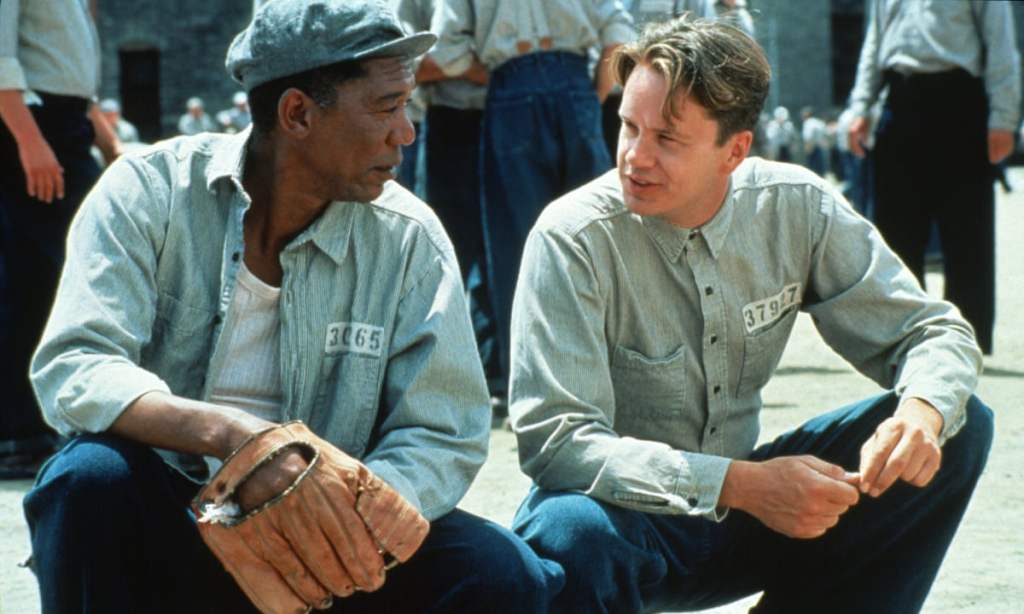
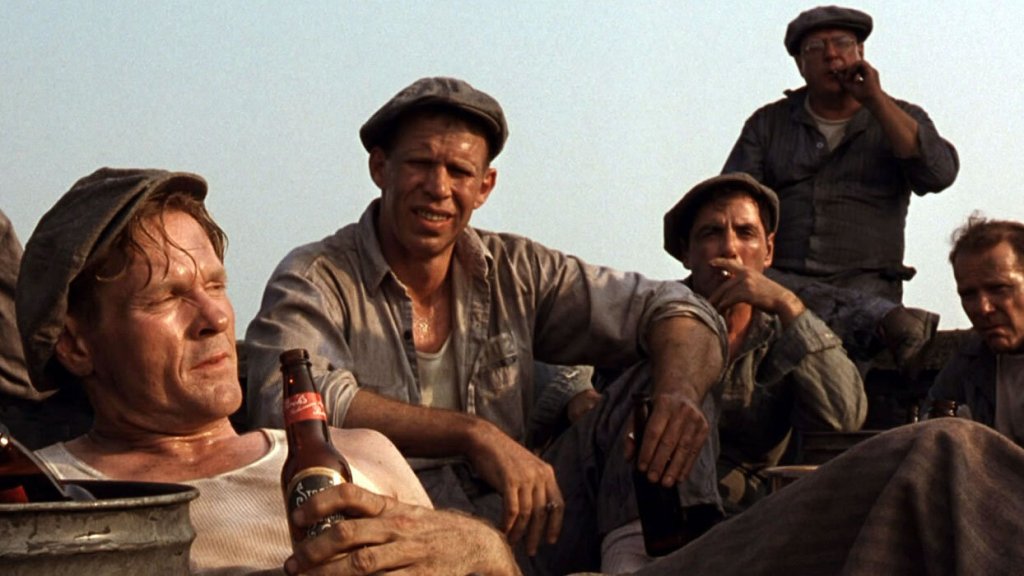
Based on Stephen King’s “Rita Hayworth and Shawshank Redemption,” the story is well known… hot shot banker Andy Dufresne (Tim Robbins) is convicted of the murder of his wife and her lover, and gets sentenced to life at the Shawshank prison. Once on the inside, we meet a variety of characters that you expect in a prison movie. We meet Warden Norton (Bob Gunton), the hypocrite who speaks of the Bible while hiding a corrupt, evil spirit. We meet Captain Hadley (Clancy Brown), the brutal chief prison guard, who rules over the inmates with intimidation and a real willingness to inflict violence and pain on anyone who shows the least bit of independence. We meet Red (Morgan Freeman), the long-time inmate who has the ability and connections to get you anything you need. We meet other inmates like Heywood (William Sadler), the inmate who seems like a jerk when you first meet him but turns out to be a pretty good fella; Tommy (Gil Bellows), the young guy who comes into prison and may know something that proves Andy’s innocence; Brooks (James Whitmore), the old man who gets released after almost a lifetime in prison, and doesn’t know how to adjust to life on the outside; and Bogs (Mark Rolston), the sadistic prisoner who wants to force himself on Andy, and is willing to kill to get what he wants. Life isn’t easy at all in Shawshank, but Andy’s intelligence and ability to prove himself useful to Warden Norton and Captain Hadley allows him to finds ways to make life more bearable for him and his friends. After nineteen years in prison, even though he maintains his innocence, it appears that Andy is content to live out his remaining years in prison. Or is he??
I’ll never forget the first time I saw the movie THE SHAWSHANK REDEMPTION. I didn’t see it until a year or two after its initial release in 1994. I was one of those guys who figured a movie that praised by the critics was probably not something that I would like that much. Plus, at the time, the title of the movie just seemed kind of weird. But I kept hearing about how great it was, so I finally decided to give it a viewing. I agree with my son, I think THE SHAWSHANK REDEMPTION is one of the most emotionally uplifting movies ever made. Why is that you might ask? My answer would be because there’s something profoundly satisfying about people who persevere through the worst times imaginable and continue to find hope where most of us would be hopeless. Prison life is shown as horrific. One prisoner is literally beaten to death by Captain Hadley on his first night in prison for crying. Andy fights off the sadistic Bogs as much as he can, but he is unable to completely fight off his advances. But no matter what he goes through, Andy Dufresne is able keep moving forward, and he does not allow the prison life to completely crush his spirit. He keeps finding ways to persevere. Andy’s actions and endurance turn simple acts like listening to Mozart or having a beer into overwhelming emotional highs for us as the audience. The film also maintains a realistic sense of humor, which might seem difficult under the circumstances. This sense of humor is found in such mundane tasks as creating a prison library, providing tax prep services for the guards, or attending multiple parole hearings over the years. These comedic moments are earned by the way the movie takes it’s time letting us really get to the know the characters and then laugh with them as the individual moments occur. And the friendship between Andy and Red is something that deeply resonates with me. I think we all would like to have that kind of friendship. These kinds of friendships aren’t built overnight, and often they require a level of shared experience that is almost impossible to find. But they find it behind Shawshank’s prison walls, and it connects them for life. In my opinion, the friendship between these two characters leads to one of the most emotionally satisfying endings to any film, ever.
Director Frank Darabont was able to obtain some of career-defining performances from his cast. As good as Tim Robbins is as an actor, in my opinion, he has never been better than he was as Andy Dufresne. And I say this knowing full well he won an Oscar for MYSTIC RIVER. He maintains his dignity against all odds and only appears to break down a time or two. Morgan Freeman is great as always as Red, but his character is so important because we see him go from a hopeless skeptic, to a man who truly has hope thanks to his friendship with Andy. Freeman seems to handle this transition effortlessly. I’m going to give a shoutout to James Whitmore as well. With a career going all the way back to the 1940’s, his performance as Brooks Hatlen is one of the more touching and heartbreaking performances of the film. I haven’t seen all of his work, but I have never seen him better than he was in THE SHAWSHANK REDEMPTION. Each additional cast member, from Bob Gunton, Clancy Brown and Mark Rolston, to Willam Sadler and Gil Bellows all have powerful moments that add to the overall effect of the film.
Looking back now, it’s hard to believe that THE SHAWSHANK REDEMPTION did not win the Academy Award for best film. It lost to FORREST GUMP when the awards were handed out in 1995. It’s even harder to believe that the film did not win a single Academy Award even though it received seven nominations. But at the end of the day, that doesn’t really matter to me. I just know that it’s a great film, and it reaches emotional heights that very few movies, if any, have ever reached before. That’s a pretty damn good legacy.
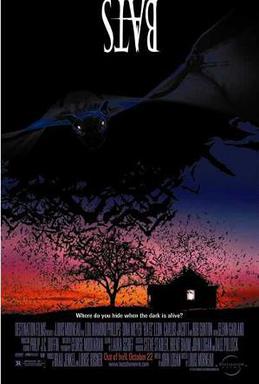
A scientist (Bob Gunton!) has genetically engineered the local population of bats in order to make them super intelligent and aggressive. Though he says that he just wanted to make sure that the bats never went extinct, the ultimate result of his experiment is that the bats are now killing all of the citizens of a small town in Texas. With the National Guard threatening to blow up the town, it’s up to Sheriff Emmett Kimsey (Lou Diamond Phillips!), Dr. Alexandra McCabe (Dina Meyer!), and assistant Jimmy Sands (Leon, so cool that he only needs one name!) to figure out how destroy the bats without destroying everyone’s home.
Now, this is how you make a killer bat movie! There’s a lot of stupid things about Bats but it’s still a thousand times better than Nightwing. I liked the idea of superintelligent bats more than the idea of just angry bats. The bats are too clever for the humans, often seeing straight though their plans. Nightwing took itself very seriously. Bats does not and is therefore, better in every regard. The bats are always on the attack, the good guys are always running from one place to another, and the National Guard just wants to blow everything up. It’s a fun B-move, with the B standings for Bats.
You have to love that cast, too. Any movie with Lou Diamond Phillips and Leon is going to be cooler than any movie without them. I wouldn’t be surprised to learn that the two of them hunt bats in their spare time because they really seemed to know what they were doing. Dina Meyer was obviously cast more because she looks like Dina Meyer than because she’s really a credible scientist but she still handles all the bat talk without embarrassing herself. Bob Gunton is a great bad guy, as always.
Bats is dumb, silly, and terrifically entertaining.


 Through the Shattered Lens