Review: Violent Night (dir. by Tommy Wirkola)


“Ho Ho holy shit.” — Santa Claus

Violent Night (2022), directed by Tommy Wirkola, is a wild ride that shakes up the traditional Christmas movie formula by turning Santa Claus into a battle-hardened warrior. David Harbour stars as this unconventional Santa, who is far from jolly; he’s a grizzled, somewhat cranky, and disillusioned figure with a Viking warrior past. The movie sets itself apart with a premise that throws a group of ruthless mercenaries into a wealthy family’s Christmas Eve gathering, only to discover Santa isn’t the harmless old man they expected. Instead, he’s a fierce protector who fights back with brutal efficiency.

The story unfolds at the mansion of the affluent Lightstone family during their holiday reunion. The family is full of tension, with secrets and resentments bubbling just beneath the surface. When a gang of mercenaries led by the villainous Scrooge (John Leguizamo) invades the house to steal a fortune rumored to be stashed there, the family members become hostages. Among them is Trudy, a young girl who still believes in Santa and becomes an emotional anchor for the story. What follows is a chaotic clash as Santa unleashes his warrior skills in a bloody and often darkly humorous fight to protect Trudy and take down the intruders.

One of the strongest aspects of Violent Night is David Harbour’s performance. His Santa is not the usual cheerful holiday icon but a rough-around-the-edges hero with a quick wit and a fierce sense of duty. Harbour brings a compelling mix of grit and warmth, making Santa both intimidating and surprisingly endearing. His fight scenes are impressively choreographed, with inventive use of Christmas-themed props that add a unique flavor to the action. The humor, often delivered through clever one-liners and absurd situations, enhances the movie without overloading it, striking a balance between dark comedy and action thriller.

The action sequences are a highlight, filled with creative and over-the-top violence that turns traditional Christmas decorations into lethal weapons. From candy canes to Christmas lights, the film embraces its outrageous concept fully, often with a smirk and knowing wink to the audience. This approach to action and humor makes it feel like a holiday-themed grindhouse film, which will certainly appeal to viewers looking for something different from typical festive fare.

However, the film is not without flaws. The storyline sometimes leans too heavily on clichés and predictable twists, particularly around family drama and criminal motives. While the Lightstone family members are meant to add complexity to the narrative, many come across as caricatures, which lessens emotional impact. The pacing occasionally suffers as well, with some scenes dragging or feeling repetitive amid the barrage of action. Furthermore, the movie’s tone can be uneven—certain moments of humor or sentimentality clash with brutal violence, which might alienate viewers who prefer more consistent storytelling.

The supporting cast delivers performances that range from serviceable to over-the-top, fitting the film’s campy and exaggerated style. John Leguizamo’s Scrooge is a memorable villain with a sneer and attitude that fits the tone, while Beverly D’Angelo adds a touch of dark humor as the wealthy matriarch. The character of Trudy serves as the emotional heart of the film, grounding the chaos with a child’s innocent belief in magic and goodness. Yet, some secondary characters feel underdeveloped, existing mostly to provide fodder for the violence or comedic moments.

Visually, Violent Night embraces the glitz and cold grandeur of a wealthy family’s mansion, contrasted sharply by the gritty and bloody action that unfolds. The cinematography and production design showcase the holiday setting effectively, using wintery landscapes and elaborate Christmas decor as backdrops that add to both the festive and lethal atmosphere. The film keeps a brisk pace, aided by energetic direction, though it sometimes prioritizes style over substance.

In terms of themes, Violent Night plays with the clash between holiday cheer and harsh realities, exploring ideas about family, belief, and redemption through its unusual take on Santa Claus. It taps into a more cynical view of Christmas but ultimately doesn’t abandon the underlying message of hope and protection. This mixture, however, occasionally feels forced, as the violent antics often overshadow character development and emotional depth.

Overall, Violent Night is an entertaining and unconventional holiday film that is best enjoyed with an appetite for absurdity and dark humor. It stands out for pushing boundaries with its brutal action scenes and a refreshingly gruff Santa, offering a festive movie experience that fits more in the niche of chaotic fun rather than heartwarming tradition. While it may not win over purists looking for classic Christmas storytelling, it offers a distinctive alternative for those who want their holiday films with a hard edge and plenty of explosive moments. For viewers who can embrace its mix of camp, carnage, and seasonal spirit, Violent Night delivers a wild, memorable ride that defies expectations.
Film Review: Every Which Way But Loose (dir by James Fargo)


In 1978’s Every Which Way But Loose, Clint Eastwood plays Philo Beddoe.

Philo’s an ordinary guy with beautiful hair and a way with throwing punches.  He’s a truck driver.  He enjoys a cold beer.  He enjoys country music.  He makes some extra money by taking part in bare-knuckle brawls.  Everyone says that he could be the next Tank Murdock, a legendary fighter.  Philo is just a simple, blue collar guy who lives in a small house, next door to his best friend Orville (Geoffrey Lewis) and Orville’s profanity-loving mother (Ruth Gordon).  Philo also owns an orangutan named Clyde.  He saved Clyde from being sent to live in a “desert zoo.”

(Actually, now that I think about it, most blue collar guys don’t own monkeys but whatever.  Clyde’s cute and Eastwood’s Eastwood.)

When Philo meets a country singer named Lynn Halsey-Taylor (Sondra Locke), he is immediately smitten.  When Lynn disappears and leaves Philo a cryptic note, Philo decides to go looking for her.  Clyde, Orville, and Philo hit the road.  Along the way, Orville meets and picks up a woman named Echo (Beverly D’Angelo).  This is a road movie so, of course, Clyde, Orville, Philo, and Echo have their adventures on the way to Colorado.  They end running afoul both a corrupt cop and a gang of buffoonish bikers.  Philo enters a fight whenever they need money and one occasionally gets the feeling that Eastwood took this role to show off the fact that, for someone approaching 50, he still looked good without a shirt on.  And good for him!  Because, seriously, Clint does look good in this movie….

I have to admit that, for all of my attempts at sophistication, my roots are in the country and I’ve traveled down enough dirt roads that I find it hard to resist a good redneck story.  And really, there aren’t many films that as proudly and unashamedly redneck than Every Which Way But Loose.  It’s a film that has a laid back, take-it-as-it-comes vibe to it.  Philo may be looking for Lynn but he seems to be okay with taking a few detour along the way.  There’s no real sense of urgency to any part of the movie.  Instead, Every Which Way But Loose was made for people who like a cold beer at the end of the day and who find Ruth Gordon to be hilarious when she curses.  Myself, I don’t drink.  That’s one part of the country lifestyle that passed me over.  But I did enjoy seeing Ruth Gordon cuss out the Nazi biker gang.

Eastwood, Lewis, and D’Angelo have a likable chemistry and the monkey’s cute.  Unfortunately, Sondra Locke isn’t particularly well-cast in the role of Lynn.  (Considering that she was in a relationship with Eastwood, it’s amazing how little chemistry they have in this movie.)  As I watched the film, it occurred to me that it probably would have worked better if Locke and D’Angelo had switched roles.  Locke’s character is supposed to be a femme fatale type but she gives a boring performance and, as a result, the revelation that Philo has misjudged her doesn’t really carry any emotional weight.

That said, this film features some beautiful shots of the wilderness, a charming romance between Lewis and D’Angelo, and a shirtless Clint Eastwood beating folks up.  That’s more than enough to please this secret country girl.

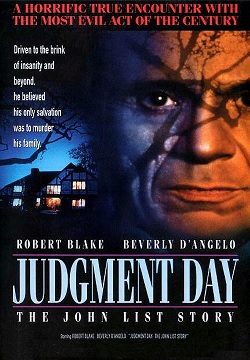
October True Crime: Judgment Day: The John List Story (dir by Bobby Roth)


In 1971, a 46 year-old account named John List committed a shocking crime.

To the outside world, John List was a normal suburbanite.  He was perhaps a little bit strict but then again, it was 1971 and all of the traditional morals that John List had grown up with were being challenged in the streets and in the movies.  Neither he nor his family were particularly sociable but again, it was assumed that they just liked the privacy that was afford to them by the mansion in which they lived.  List was married to Helen.  They lived with their three teenage children and List’s 84 year-old mother.  John List was a hard worker, he taught Sunday School, and, again, he was seen as being perfectly normal.

On November 9th, 1971, John List methodically murdered his wife, his children, and his mother.  He left his mother in her upstairs apartment while the rest of his family was laid out, in sleeping bags, in the ballroom.  (Detectives later surmised that List stopped in the middle of his murder spree to have lunch and then attended his son’s soccer game before taking him home and killing him.)  List left behind several notes, explaining that he was in a bad financial situation and that he feared that his family was heading down an immoral path that would have condemned their souls to Hell if he hadn’t killed them first.  And then, John List vanished.

For the rest of the 70s and the 80s, John List was phantom.  Some speculated that he had committed suicide while others thought that he had changed his identity and had probably remarried.  In 1987, the classic thriller The Stepfather was released in theaters.  Inspired by List’s crimes, The Stepfather starred Terry O’Quinn as Jerry Blake, a real estate agent who was obsessed with creating the perfect family.  The Stepfather imagined its killer as a friendly but rigid man who snapped whenever his illusion of perfection was threatened.  It also imagine him as someone who moved from town to town, searching for a new family that wouldn’t let him down.

As for the real John List, it turned out that those who suspected him of having changed his identity were correct.  And, just as The Stepfather suggested, he had remarried and was actually now a real stepfather.  List remained free until his story was included in a 1989 episode of America’s Most Wanted.  A forensic scientist included a bust of what John List might have looked like in 1989 and a viewer realized that the bust looked a lot like an accountant named Bob Clark.  “Bob Clark” was arrested and eventually, he confessed that he was actually John List.  Despite his attorney’s attempt to argue that he was not guilty by reason of insanity, John List was eventually convicted of five counts of murder.  He spent the rest of this life in prison, dying of natural causes in 2008.

The 1993 film Judgement Day: The Story of John List tells the story of List’s crimes and his subsequent attempt to build a new life for himself.  John List is played by Robert Blake, which turns out to be a bit of a problem as Blake gives such a twitchy and obviously unstable performance that it’s hard to believe that he could have successfully gone into hiding for 18 years.  Carroll Baker and Beverly D’Angelo are not given much to do as, respectively, List’s mother and List’s first wife while David Caruso appears as the detective who is determined to catch List.  Though this film was made long before CSI: Miami, I still found myself expecting Caruso to say something quippy and put on his sunglasses.

Judgment Day doesn’t add much to the story of John List.  It certainly doesn’t offer up any new insight into what led to List becoming a murderer, beyond the fact that List himself was just kind of a jerk.  It’s pretty much a by-the-numbers production that’s only interesting today because of Blake’s subsequent legal problems.  (For the record, I’ve always felt Robert Blake was innocent.)  When it comes to John List films, stick with The Stepfather.

David Harbour brings some Yuletide fun with the Violent Night trailer!


It’s a little early to be celebrating the holidays with Halloween around the corner, but this is cute. From the director of Hansel & Gretel: Witch Hunters comes Violent Night, starring David Harbour (Hellboy, Black Widow) as Santa Claus. Santa finds himself in a Die Hard-like situation when a family is held hostage by gunmen, led by John Leguizamo (John Wick). Can Santa save the family and still finish doing his Christmas duties?

The film also stars Alex Hassell (Netflix’s Cowboy Bebop), Beverly D’Angelo (The National Lampoon’s Vacation films), and Cam Gigandet (Twilight).

The film premieres in theatres on December 2.

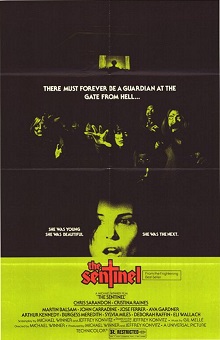
Horror Film Review: The Sentinel (dir by Michael Winner)


Here’s the main lesson that I’ve learned from watching the 1977 horror film, The Sentinel:

Even in the 1970s, the life of a model was not an easy one.

Take Alison Parker (Cristina Raines) for instance.  She should have everything but instead, she’s a neurotic mess.  Haunted by a traumatic childhood, she has attempted to commit suicide twice and everyone is always worried that she’s on the verge of having a breakdown.  As a model, she’s forced to deal with a bunch of phonies.  One of the phonies is played by Jeff Goldblum.  Because he’s Goldblum, you suspect that he has to have something up his sleeve but then it turns out that he doesn’t.  I get that Jeff Goldblum probably wasn’t a well-known actor when he appeared in The Sentinel but still, it’s incredibly distracting when he suddenly shows up and then doesn’t really do anything.

Alison has a fiancée.  His name is Michael Lerman (Chris Sarandon) and I figured out that he had to be up to no good as soon as he appeared.  For one thing, he has a pornstache.  For another thing, he’s played by Chris Sarandon, an actor who is best known for playing the vampire in the original Fright Night and Prince Humperdink in The Princess Bride.  Not surprisingly, it turns out that Michael’s previous wife died under mysterious circumstances.  NYPD Detective Rizzo (Christopher Walken) suspects that Michael may have killed her.

(That’s right.  Christopher Walken is in this movie but, much like Jeff Goldblum, he doesn’t get to do anything interesting.  How can a movie feature two of the quirkiest actors ever and then refuse to give them a chance to act quirky?)

Maybe Alison’s life will improve now that she has a new apartment.  It’s a really nice place and her real estate agent is played by Ava Gardner.  Alison wants to live on her own for a while.  She loves Michael but she needs to find herself.  Plus, it doesn’t help that Michael has a pornstache and may have killed his wife…

Unfortunately, as soon as Alison moves in, she starts having weird dreams and visions and all the usual stuff that always happens in movies like this.  She also discovers that she has a lot of eccentric neighbors, all of whom are played by semi-familiar character actors.  For instance, eccentric old Charles (Burgess Meredith) is always inviting her to wild parties.  Her other two neighbors (played by Sylvia Miles and Beverly D’Angelo) are lesbians, which the film presents as being the height of shocking decadence.  At first, Alison likes her neighbors but they make so much noise!  Eventually, she complains to Ava Gardner.  Ava replies that Alison only has one neighbor and that neighbor is neither Burgess Meredith nor a lesbian.

Instead, he’s a blind priest who spends all day sitting at a window.  He’s played by John Carradine, who apparently had a few hours to kill in 1977.

But it doesn’t stop there!  This movie is full of actors who will be familiar to anyone who enjoys watching TCM.  Along with those already mentioned, we also get cameos from Martin Balsam, Jose Ferrer, Arthur Kennedy, Eli Wallach, Richard Dreyfuss, and Tom Berenger.  There are 11 Oscar nominees wasted in this stupid film.  (Though, in all fairness, Christopher Walken’s nomination came after The Sentinel.)

Personally, The Sentinel bugged me because it’s yet another horror movie that exploits Catholic iconography while totally misstating church dogma.  However, the main problem with The Sentinel is that it’s just so incredibly boring.  I own it on DVD because I went through a period where I basically bought every horror film that could I find.  I’ve watched The Sentinel a handful of times and somehow, I always manage to forget just how mind-numbingly dull this movie really is.  There’s a few scary images but mostly, it’s just Burgess Meredith acting eccentric and Chris Sarandon looking mildly annoyed.  If you’ve ever seen Rosemary’s Baby, The Exorcist, or The Omen, you’ll figure out immediately what’s going on but The Sentinel still insists on dragging it all out.  Watching this movie is about as exciting as watching an Amish blacksmith shoe a horse.

There’s a lot of good actors in the film but it’s obvious that most of them just needed to pick up a paycheck.  I’ve read a lot of criticism of Cristina Raines’s lead performance but I actually think she does a pretty good job.  It’s not her acting that’s at fault.  It’s the film’s stupid script and lackluster direction.

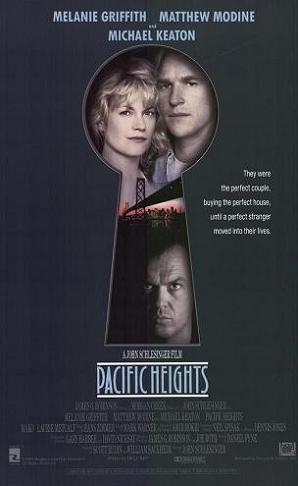
A Movie A Day #157: Pacific Heights (1990, directed by John Schlesinger)


Michael Keaton is the tenant from Hell in Pacific Heights.
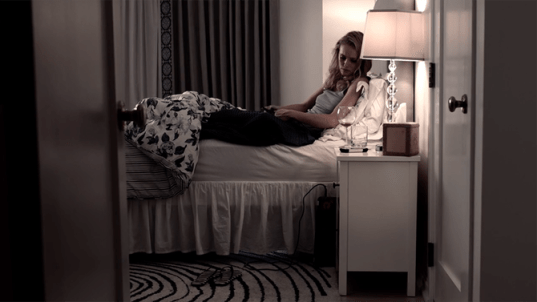
In San Francisco, Patty (Melanie Griffith) and Drake (Matthew Modine) have just bought an old and expensive house that they can not really afford.  In order to keep from going broke, they rent out two downstairs apartments.  One apartment is rented by a nice Japanese couple.  The other apartment is rented by Carter Hayes (Michael Keaton).  Carter convinces Patty and Drake not to check his credit by promising to pay the 6 months rent up front.  The money, he tells them, is coming via wire transfer.

The money never arrives but Carter does.  Once he moves into the apartment, Carter changes the locks so that no one but him can get in.  At all hours of the day and night, he can be heard hammering and drilling inside the apartment.  Even worse, he releases cockroaches throughout the building.  When Drake demands that Carter leave, the police back up Carter.  After goading Drake into attacking him, Carter gets a restraining order.  Drake is kicked out of his home, leaving Patty alone with their dangerous tenant.

Pacific Heights is the ultimate upper middle class nightmare: Buy a house that you can not really afford and then end up with a tenant who trashes the place to such an extent that the property value goes down.  As a thriller, Pacific Heights would be better if Drake and Patty weren’t so unlikable.  (When this movie was first made, people like Patty and Drake were known as yuppies.)  Much like Drake’s house, the entire movie is stolen by Michael Keaton’s performance as Carter Hayes.  Carter was not an easy role to play because not only did he have to be so convincingly charming that it was believable that he could rent an apartment just by promising a wire payment but he also had to be so crazy that no one would doubt that he would deliberately infest a house with cockroaches.  Michael Keaton has not played many bad guys in his career but his performance as Carter Hayes knocked it out of the park.

One final note: Keep an eye out for former Hitchcock muse (and Melanie Griffith’s mother) Tippi Hedren, playing another one of Carter’s potential victims.  Her cameo here is better than her cameo in In The Cold of the Night.


What Lisa Watched Last Night #161: Under The Bed (dir by Daniel Myrick)


Last night, I watched the latest Lifetime premiere film, Under the Bed!

under-the-bed

Why Was I Watching It?

Well, there were a few reasons why I watched it.  First off, it was on Lifetime and, by this point, it’s kind of a tradition around these parts that I always live tweet every Lifetime premiere.  Secondly, I watched it so that I could write this review.  After all, it’s a new year and that means that it’s time for a new set of What Lisa Watched Last Night reviews!

Add to that, the film had the word “bed” in the title so I assumed there would be a lot of sex.

What Was It About?

It’s yet another Lifetime stalker film!  This one, which is apparently based on a true story, features Hannah New as Callie Monroe.  Callie’s an acclaimed journalist who has a beautiful home, a cute dog, and absolutely no love life.  She’s just broken up with her longtime boyfriend and its going to take more than winning a Pulitzer for her article about climbing Kilimanjaro to fill the void in her life!

What Callie doesn’t know is that there’s a man  (played by Pat Healy) living underneath her bed.  Seriously.  He’s broken into her apartment.  He’s put secret cameras all over the place.  And he is now literally living underneath her bed, from which he regularly sends her messages.

Say it with me now — Agck!

What Worked?

Under the Bed was directed by Daniel Myrick, who co-directed the original Blair Witch Project.  There were a few effectively creepy scenes in the movie.  I mean, just the idea of having a stranger living with you in your bedroom without your knowledge is creepy in and of itself.  You could probably argue that the success or failure of this film depended on whether or not it inspired you to look underneath your bed after watching it.  I know I did.

Hannah New gives a good and sympathetic performance as Callie and Pat Healy is appropriately frightening as her stalker.  Beverly D’Angelo also provides some good support as Callie’s mother.

What Did Not Work?

(Spoiler Alert)

Freddy the Dog dies.  Freddy is an adorable little dog that Callie owns.  Unlike his owner, Freddy understands that there’s a man living underneath the bed.  So, one day, the man puts Freddy in a bag and buries him alive.  And we see all of this happen and, quite frankly, it’s too much.  First off, there was no reason to kill Freddy.  Secondly, the burial scenes ends on a somewhat ambiguous note so you’re not really sure whether or not Freddy was fully buried or not.  I spent the entire final hour of the film waiting for Freddy to suddenly show up and it really depressed me when he didn’t.

There’s more to the thing with Freddy than just the fact that I don’t like scenes of animal cruelty.  The scene itself didn’t only feel unnecessary but it also felt incredibly mean-spirited as well.  If you want to kill the dog that badly, have him dragged off-screen and do the little whimper thing.  Instead, by having us watch as Freddy’s buried alive, it felt like the film was saying, “Look how edgy we are!  We killed the dog!”  It felt terribly out-of-place and it soured me on the entire film.

It also didn’t help that the stalker was so obvious about what he was doing that, pretty soon, you started to resent Callie for being so naive.  When Callie finally discovered her stalker and started to fight back, it never felt empowering.  Instead, I was just kinda like, “Well, it’s good that you’re finally aware of what’s going on in your apartment but this could have all been avoided if you had just happened to glance under your bed once or twice over the past week.”

“Oh my God!  Just like me!” Moments

In some ways, I could relate to Callie but — and this is the important thing — I know I don’t have to worry about anyone living underneath my bed because, between all of my scrapbooks and old magazines, there’s no room under there.

(That said, Doc Bowman does enjoy hanging out underneath my bed but I’m pretty sure he can be trusted.)

Lessons Learned

Be kind to animals, dammit.

Horror on TV: Tales From The Crypt 4.13 “Werewolf Concerto” (dir by Steve Perry)


For tonight’s excursion into televised horror, we present to you the 13th episode of the 4th season of HBO’s Tales From The Crypt!

Werewolf Concerto originally aired on September 9th, 1992.  It deals with what happens when a group of hotel guests believe that there might be a werewolf in the area.  Fortunately, Timothy Dalton is also in the area and he claims to be a professional werewolf hunter!

Or is he….?

You’ll have to watch to find out!

Enjoy!

Insomnia File #11: Summer Catch (dir by Mike Tollin)


What’s an Insomnia File? You know how some times you just can’t get any sleep and, at about three in the morning, you’ll find yourself watching whatever you can find on cable? This feature is all about those insomnia-inspired discoveries!

Summer_catch

Whenever I look at my cable guide, I always notice that channel 834 is listed as being “MorMax.”  For some reason, I always assume that MorMax stands for Morman Max and I’m always expecting that it’s going to show movies about Joseph Smith and Brigham Young.  But actually, MorMax stands for More Cinemax.

Anyway, last night, if you were having a hard time sleeping around midnight (though why anyone would ever try to go to sleep before midnight is beyond me), you could have turned on MorMax and watched the 2001 romantic comedy Summer Catch!

Though it may be hard to believe today, there was a time when Freddie Prinze, Jr. was a pretty big deal.  From 1997 to 2001, Prinze appeared in 179 movies.  Well, actually, he only appeared in 10 but since they were all aimed at teenage girls and played on cable constantly, it felt like 179.  (Seriously, there was a time when I could not get through an entire day without seeing at least a few minutes of She’s All That.)  For the most part, all of these films were pretty much the same.  Freddie Prinze, Jr. plays a kind of dumb guy who falls in love with a girl.  Prinze’s character was usually from a working class family and had at least one wacky friend.  The girl was usually from a rich family and had one bitchy friend who would be an ex-friend by the end of the movie.  There was usually at least one scene set on the beach or at a swimming pool, the better for Freddie to remove his shirt and his costar to chastely strip down to her underwear.  There was usually a falling in love montage and at least one big misunderstanding.  Freddie would always flash the same goofy smile whenever the misunderstanding was cleared up.  Even at the time that the films were being released, nobody was ever under the impression that Freddie Prinze, Jr. was a particularly good actor.  But he was likable, unthreatening, and hot in an oddly bland sort of way.

(Speaking of oddly bland, check out the titles of some of Prinze’s films: She’s All That, Down To You, Boys and Girls, Head over Heels, and, of course, Summer Catch.)

Summer Catch opens with Ryan Dunne (Freddie!) explaining that he’s just a working class kid from Massachusetts but this summer, he’s going to be playing amateur baseball in Cap Cod and hopefully, he’ll get signed to a professional contract as result.  (Freddie adopts an inconsistent “pahk ya cah by the bah” accent and its kind of endearing to see him trying so hard.)  Ryan, of course, is just a local guy who mows lawns for a living but he’s determined to succeed.  He just has to stay focused.

However, that’s going to be difficult because he’s just met Tenley Parrish (Jessica Biel).  The Parrishes own a vacation home on Cape Cod and they are so rich that they can afford to name their oldest daughter Tenley.  Soon, Tenley and Ryan are a couple but Tenley’s father wants Tenley to marry a rich boy and Ryan’s father is too busy being all surly and working class to appreciate Ryan’s dreams.

(Tenley’s father, incidentally, is played by Bruce Davison because all snobbish WASPs of a certain age are played by Bruce Davison.  Ryan’s father is played by Fred Ward because Summer Catch was made in 2001.)

Because every Freddie Prinze, Jr. movie needs a hyperactive and wacky sidekick, Ryan’s best friend on the team is a catcher named Billy Brubaker (Matthew Lillard.)  Billy is known as “Bru.”  There’s a lot of scenes of people saying stuff like “Yo, Bru,” and “Come on, Bru!”  After a while, I found myself hoping for a scene where Bru went crazy and started shouting, “My name is Billy, dammit!  BILLY!  DAMN YOU ALL TO HELL!”  Instead, however, we get a subplot about how Billy can’t get any hits until he has sex with and wears the thong underwear of a local baseball fan.

Anyway, Summer Catch is an extremely predictable film.  It’s not surprising that this was one of Freddie’s final star vehicles because, other than his heroic effort to maintain a Massachusetts accent, even he seems to be bored with it all.  Perhaps the most remarkable thing about Summer Catch is that there’s next to no actual conflict in the film.  Oh sure, Ryan and Tenley have a few misunderstandings but it’s never anything serious.

If there’s an unheralded hero to Summer Catch, it’s the uncredited guy who we hear providing commentary during the games.  Seriously, I would have been so lost if not for him constantly saying stuff like, “This is Ryan Dunne’s chance to show what he can do,” and “Billy Brubaker needs to get a hit here…”  They should have made the entire movie about him and his efforts to remain up-to-date on all the players.

Because Summer Catch was a baseball film, I begged my sister Erin to watch it with me so that she could explain all the baseball stuff to me.  For the record, Erin says that the game scenes were okay (and I personally liked all of the totally gratuitous slow motion) but that the film wasn’t really a deep examination of baseball.  To be honest, I really wasn’t expecting that it would be.  I just wanted to make my sister stay up late and watch a movie with me.

Previous Insomnia Files:

  1. Story of Mankind
  2. Stag
  3. Love Is A Gun
  4. Nina Takes A Lover
  5. Black Ice
  6. Frogs For Snakes
  7. Fair Game
  8. From The Hip
  9. Born Killers
  10. Eye For An Eye


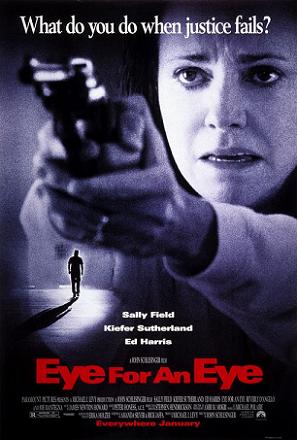
Insomnia File #10: Eye For An Eye (dir by John Schlesinger)


What’s an Insomnia File? You know how some times you just can’t get any sleep and, at about three in the morning, you’ll find yourself watching whatever you can find on cable? This feature is all about those insomnia-inspired discoveries!

Eye_for_an_Eye_(1996_film)_poster

If you were awake at midnight and trying to get some sleep, you could have turned over to ThillerMax and watched the 1996 revenge thriller, Eye For An Eye.  However, the film wouldn’t have helped you get to sleep.  Eye For An Eye is not a film that you sleep through.

Eye For An Eye opens with Karen McCann (Sally Field) comforting her youngest daughter, Megan (Alexandra Kyle).  Megan is terrified of a moth that has flown into her bedroom.  “Kill it, mommy, kill it!” Megan shouts.  Instead, Karen gently takes the moth in her hand and allows it to escape through an open window.  In those first few minutes, the film tells us everything that it feels to be important about Karen.  She’s a mother.  She lives in a big house in the suburbs.  And she wouldn’t kill a moth…

But — the name of the title is Eye For An Eye and that would seem to promise killing so we know that something terrible is going to happen to change Karen’s outlook on life.

And it does!  The next afternoon, Karen is stuck in traffic and calls her oldest daughter, 17 year-old Julie (Olivia Burnette).  In an extremely harrowing sequence that is pure nightmare fuel, Karen helplessly listens as Julie is raped and murdered.

A white trash deliveryman named Robert Doob is arrested for the crime and we immediately know that he’s guilty.  First off, his name is Robert Doob and that’s a serial killer name if I’ve ever heard one.  Secondly, he smirks at Karen and her husband (Ed Harris) and, in a particularly cruel moment that was especially upsetting to this former stutterer, he imitates Julie’s stammer.  Third, Robert has tattoos and Satanic facial hair.  And finally, Robert Doob is played by Keifer Sutherland.  And usually, I find Keifer and his growl of a voice to be kinda sexy in a dangerous sorta way but in Eye For An Eye, he was so icky that he just made my skin crawl.

Robert Doob is obviously guilty but an evil liberal judge throws the case out on a technicality.  After Karen gets over the shock of seeing justice perverted, she decides to take the law into her own hands.  After meeting a professional vigilante (Philip Baker Hall, looking slightly amused no matter how grim he tries to act), Karen decides to learn how to use a gun so that she can get her revenge…

There’s not a single subtle moment in Eye For An Eye but that’s actually the main reason I enjoyed the film.  Everything — from the performances to the script to the direction to the music to … well, everything — is completely and totally over-the-top.  The symbolism is so heavy-handed and the film is so heavily stacked in favor of vigilante justice that the whole thing becomes oddly fascinating.  It may not be a great film but it’s always watchable.  It may not be subtle and it may even be borderline irresponsible in its portrayal of the American justice system but who cares?  By the end of the movie, I was over whatever real world concerns I may have had about the film’s premise and I was totally  cheering Karen on in her quest for vengeance.  I imagine I’m not alone in that.  Eye For An Eye is the type of film that elitist movie snobs tend to dismiss, even while secretly knowing that it’s actually kinda awesome.

Previous Insomnia Files:

  1. Story of Mankind
  2. Stag
  3. Love Is A Gun
  4. Nina Takes A Lover
  5. Black Ice
  6. Frogs For Snakes
  7. Fair Game
  8. From The Hip
  9. Born Killers