Perry Mason (Raymond Burr) can’t even go to a wedding without someone getting killed! Kaitlynn Parrish (Heather McAdam) is the daughter of Max (Ronny Cox) and Diane Parrish (Diane Baker). Diane used to work for Perry and it’s implied that they used to be more than just colleagues. (I think that means that it is safe to assume that Kaitlynn is actually Perry’s daughter.) At the wedding, Alonzo Hawkes (Beau Starr), the uncle of the groom, gets into an argument with Max and accuses Max of embezzlement. Kaitlynn says she could kill Alonzo. A few hours later, Alonzo is found dead and Kaitlynn is arrested.
This was the 23rd Perry Mason television movie and it’s very predictable. I didn’t care much for the mystery or the scenes of Ken (William R. Moses) looking for clues. Once again, Ken gets in trouble with organized crime. It’s as if the movies ran out of plot lines for Ken so he just has to keep doing the same thing over and over again. All Ken really has to do is track down Suzy Richards (Merle Kennedy), a wedding crasher who witnessed the murder but it takes him forever to do it. Paul Drake, Jr. would have found her in the time it takes to snap your fingers.
I still recommend this one because of the cast. Along with Ronny Cox, the cast also includes Linda Blair, Paul Dooley, and musician Stephen Stills and they’re all really good. Paul Dooley plays the district attorney in this one. He really has no patience for Perry’s courtroom theatrics and Perry has a lot of them in this movie. It’s a good thing Perry was always able to get people to confess on the stand because otherwise, he probably would have gotten in a lot of trouble.
When arrogant news anchor Brett Huston (John James) is shot and killed, his co-anchor Gillian Pope (Kerrie Keane) is arrested and charged with the crime. It looks like an open-and-shut case because Brett was shot with Gillian’s gun. Luckily, Gillian is friends with Perry Mason (Raymond Burr) and soon Perry is on the case with Della Street (Barbara Hale) and Ken Malansky (William R. Moses).
Now this is how you do a Perry Mason movie! Brett’s murder is linked to a memo that he wrote in which he criticized the other members of the news team and argued that they should all be fired. All of the suspects are enjoyably eccentric. There’s a weatherman (Peter Jurasik) who wants to be a stand-up comedian. There’s the sports reporter (Philip Michael Thomas) who used and sold steroids. There’s the producer (Susan Sullivan), who was also Brett’s ex-wife. Brett even insulted the station manager (Jerry Orbach, who previously appeared as a different suspect in The Musical Murder). Ken, as usual, finds time for romance, this time with reporter Cassie Woodfield (Mary Page Keller) who appears to have someone trying to kill her as well. Along with a great cast of characters, this mystery had a solution that took me by surprise but which also made sense when I looked back on it. The final courtroom reveal was perfect. This is also probably the only Perry Mason film where the hours of a hamburger restaurant proved to be instrumental to the case.
Welcome to Late Night Retro Television Reviews, a feature where we review some of our favorite and least favorite shows of the past! On Thursdays, I will be reviewing Highway to Heaven, which aired on NBC from 1984 to 1989. The entire show is currently streaming on Tubi and several other services!
Today, season 4 comes to a close with an episode about two football teams, one struggling and one not. Care to guess which team is going to win the big game?
Episode 4.24 “The Whole Nine Yards”
(Dir by Michael Landon, originally aired on April 27th, 1988)
Charlie DuBoise (Dinah Lacey) is a twelve year-old girl who wants to play football. Vince Diller (Beau Starr) is the chauvinistic coach who refuses to allow Charlie to join his team, despite the fact that she can catch and she’s even faster then his son, quarterback Ricky Diller (Chad Allen). Instead, Charlie joins another team, the 0-5 Minnows. Who is the new coach of the Minnows? Mark Gordon, of course!
Ricky has a hard time accepting that a girl beat him in a race and, when Charlie approaches him in a totally 80s arcade, a fight breaks out. Luckily, Jonathan is there to break it up. Ricky apologizes to Charlie while Charlie has a gigantic wad of Kleenex stuck up her nose. The scene goes on for a while and Charlie never removes the Kleenex. It was awkward to watch. Seriously, that’s what nampons are for.
Eventually, Ricky gets sick of Vince and his win-at-all-costs mentality. Ricky talks back to his father and gets kicked off the team. Ricky joins the Minnows and he and Charlie defeat Vince’s team in the big game. Vince comes to realize that the game should be about fun and Ricky and Charlie go to the school dance together.
And so ends season 4 of Highway to Heaven. Shows about girls who want to play football are always weird to me because I’m a girl and I can’t ever think of circumstances in which I would want to play football. But I do think that if Charlie wants to get a head start on getting the concussions that will ruin her adult life, she should certainly be allowed to do so. The main problem with this episode was that Vince was such an ogre and such a terrible father that the show’s happy ending felt false. His son joined another team and destroyed Vince’s undefeated record. The episode ends with Vince saying he’s proud of his son but Vince has been such a monster that his words sound hollow. I’m kind of worried about what’s going to happen when Ricky goes home. Instead of putting together a football game, Jonathan and Mark should have been calling Child Protective Services.
This is my final episode of Highway to Heaven for 2025. Retro Television Reviews will be taking a break for the holidays but this feature will return! On January 8th, 2026, we’ll start our look at the final season of Highway to Heaven.
Welcome to Retro Television Reviews, a feature where we review some of our favorite and least favorite shows of the past! On Fridays, I will be reviewing St. Elsewhere, a medical show which ran on NBC from 1982 to 1988. The show can be found on Hulu and, for purchase, on Prime!
This week, it snows in Boston.
Episode 2.11 “Blizzard”
(Dir by Kevin Hooks, originally aired on January 18th, 1984)
It can’t be easy working in a hospital.
I’m thinking about this today because my aunt is currently dying. After several years of suffering from Alzheimer’s disease, my aunt is currently in a hospital, unresponsive and scheduled to move into hospice care. Presbyterian Health was the first hospice we reached out to. They don’t have any available rooms but they were willing to still admit her and send their nurses to the hospital everyday until a room opened up, One family would lose a loved one and my aunt would get a room. However, the hospital says that they need the bed that my aunt is occupying so my aunt is being sent to a different hospice. This hospice is located off the highway and it’s going to be Hell to get to. I yelled at the hospital social worker for an hour this morning. He suggested home hospice as a solution but home hospice is what I agreed to for my Dad last year and the pain from watching him die still lingers.
It’s easy to get angry at the doctors and the nurses and the hospice workers but I try not to. I’m losing my aunt, a woman who stepped up to look after me after my mom died. They’re losing one of the hundreds of patients that they deal with on a daily basis. That social worker upset me but ultimately, he was doing his job.
All of this was pressing on my mind as I watched this week’s episode of St. Elsewhere. Even though this episode was aired 41 years ago, it still felt relevant today. A patient — a nice old man named Harrison Jeffries (James McEachin) — died because a teenage girl hacked the hospital’s computer, screwed with the files for fun, and accidentally erased the fact that Harrison was allergic to Demerol. It was sad but it was also something that still happens today. People, both good and bad, go into hospitals for minor procedures and concerns and they don’t come out. Last year, my Dad went to the hospital because he was in a car accident and when I first visited him, he seemed like he was doing fine. Three months later, he died because the accident aggravated his Parkinson’s. It sucks and it hurts but that’s the way it is. Tomorrow, I could forget to pack my inhaler when I leave the house and I could die of an asthma attack. It’s not nice to think about but it could happen. That’s why you have to truly live life while you can. You never know when it might be taken away.
As for the rest of this episode, it dealt with a blizzard. The roof collapsed on Dr. Cavanero and she ended up with a broken arm. Dr. Craig tried to drive to the hospital and, after his car stalled, nearly died walking through the snow. (Vijay was able to warm up Craig’s feet by placing them on his stomach. Craig was not happy.) Victor struggled with his love for Roberta. Dr. Armstrong snapped at people. Jack Morrison was depressed. Even with this blizzard, it was really just another day at St. Eligius.
St. Elsewhere is frequently downbeat show but that makes sense. When you think about, no one ever gets a happy ending.
In 1984’s CityHeat, Clint Eastwood plays Lt. Speer, a tough and taciturn policeman who carries a big gun, throws a mean punch, and only speaks when he absolutely has to.
Burt Reynolds plays Mike Murphy, a private investigator who has a mustache, a wealthy girlfriend (Madeleine Kahn), and a habit of turning everything into a joke.
Together, they solve crimes!
I’m not being sarcastic here. The two of them actually do team up to solve a crime, despite having a not quite friendly relationship. (Speer has never forgiven Murphy for quitting the force and Murphy has never forgiven Speer for being better at everything than Murphy is.) That said, I would be hard-pressed to give you the exact details of the crime. CityHeat has a plot that can be difficult to follow, not because it’s complicated but because the film itself is so poorly paced and edited that the viewer’s mind tends to wander. The main impression that I came away with is that Speer and Murphy like to beat people up. In theory, there’s nothing wrong with that. Eastwood is legendary tough guy. Most people who watch an Eastwood film do so because they’re looking forward to him putting the bad guys in their place, whether it’s with a gun, his fists, or a devastating one-liner. Reynolds also played a lot of tough characters, though they tended to be more verbose than Eastwood’s.
That said, the violence in CityHeat really does get repetitive. There’s only so many times you can watch Clint punching Burt while various extras get gunned down in the background before it starts to feel a little bit boring. The fact that the film tries to sell itself as a comedy while gleefully mowing down the majority of the supporting cast doesn’t help. Eastwood snarls like a pro and Reynolds flashes his devil-may-care smile but, meanwhile, Richard Roundtree is getting tossed out a window, Irene Cara is getting hit by a car, and both Kahn and Jane Alexander are being taken hostage. Tonally, the film is all over the place. Director Richard Benjamin was a last-minute replacement for Blake Edwards and he directs without any sort of clear vision of just what exactly this film is supposed to be.
On the plus side, CityHeat takes place in Kansas City in 1933 and the production design and the majority of the costumes are gorgeous. (Unfortunately, the film itself is often so underlit that you may have to strain your eyes to really appreciate it.) And the film also features two fine character actors, Rip Torn and Tony Lo Bianco, are the main villains. For that matter, Robert Davi shows up as a low-level gangster and he brings an actual sense of menace to his character. There are some good things about CityHeat but overall, the film is just too messy and the script is a bit too glib for its own good.
Burt Reynolds and Clint Eastwood had apparently been friends since the early days of their careers. This was the only film that they made together. Interestingly enough, Reynolds gets the majority of the screentime. Eastwood may be top-billed but his role really is a supporting one. Unfortunately, Reynolds seems to be kind of bored with the whole thing. As for Clint, he snarls with the best of them but the film really doesn’t give him much to do.
A disappointing film, CityHeat. Watching a film like this, it’s easy to see why Eastwood ended up directing himself in the majority of his films.
In the late 90’s, I was all in on actor Chow Yun-Fat. Having only discovered his excellent Hong Kong film work a couple of years earlier, I was so excited to see what kind of splash he would make in American films. I loved his first American film THE REPLACEMENT KILLERS (1998), but I will admit it was an exercise in style over substance, and it really didn’t show off his acting abilities. Chow was working hard to improve his English language skills during this time, but that limited his performance the first time around. As I settled into my seat on the film’s opening weekend at the box office in March of 1999, I was hoping to see the Chow Yun-Fat I loved from his Hong Kong movies. But more on that later…
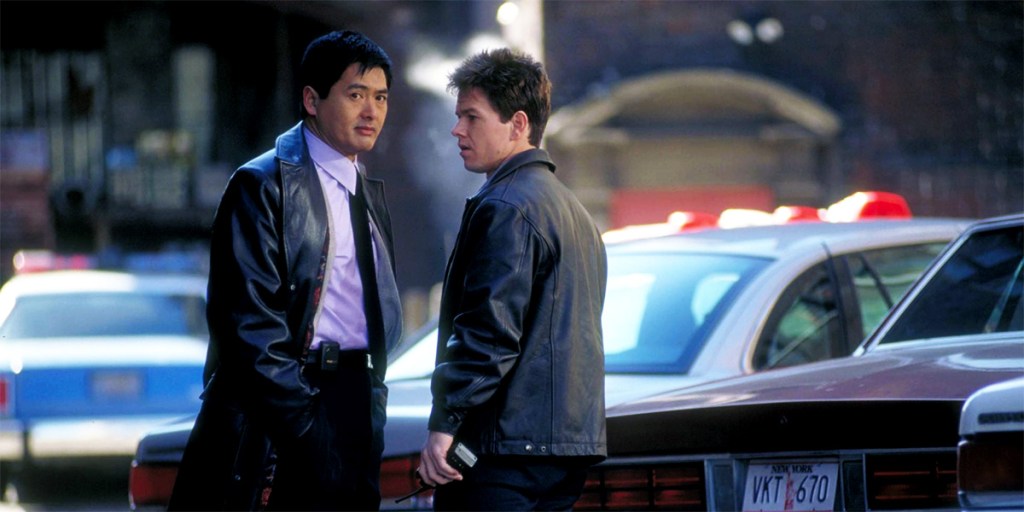
THE CORRUPTOR opens with a bomb going off in Chinatown, followed by a sidewalk assassination in broad daylight. It seems there’s a turf war being fought between a street gang called the Fukienese Dragons, led by Bobby Vu (Byron Mann), and a Chinese criminal organization called the Tung Fung Benevolence Association, led by Uncle Benny Wong (Kim Chan) and Henry Lee (Ric Young). We then meet Nicholas Chen (Chow Yun-Fat), a heroic, highly decorated NYPD cop who runs the Asian Gang Unit. His unit is tasked with trying to keep the peace in Chinatown, but with all the recent violence, they’re clearly failing. Knowing he needs more help, Chen requests additional manpower and gets the young and eager Danny Wallace (Mark Wahlberg). The two men don’t hit it off immediately as Chen had wanted a more experienced, Asian cop. Over time, however, Chen begins to trust Wallace and begins to let him into the inner workings of the unit.
We soon find out that things are much more complicated in Chinatown police work than they might have appeared at first. Chen is not quite as heroic as initially presented. He’s a morally conflicted man who wants to do good work for the people of Chinatown, but in the process, he’s compromised himself by taking sides and forming a delicate alliance with Uncle Benny and Henry Lee. And Danny isn’t quite the young, green cop he was presented as either. In fact, he’s been secretly tasked by Internal Affairs to monitor Chen and his unit. As Wallace sees what’s really going on in Chinatown, and after Chen saves his ass on multiple occasions, it becomes harder and harder for him to do his job and build a case against Chen. As the film reaches its conclusion in this world of grey, we will see if Chen and Wallace can work together and take down Henry Lee and Bobby Vu, who have formed an alliance to take over Chinatown’s criminal activities. And we will find out what Wallace will do with the information he has on Chen.
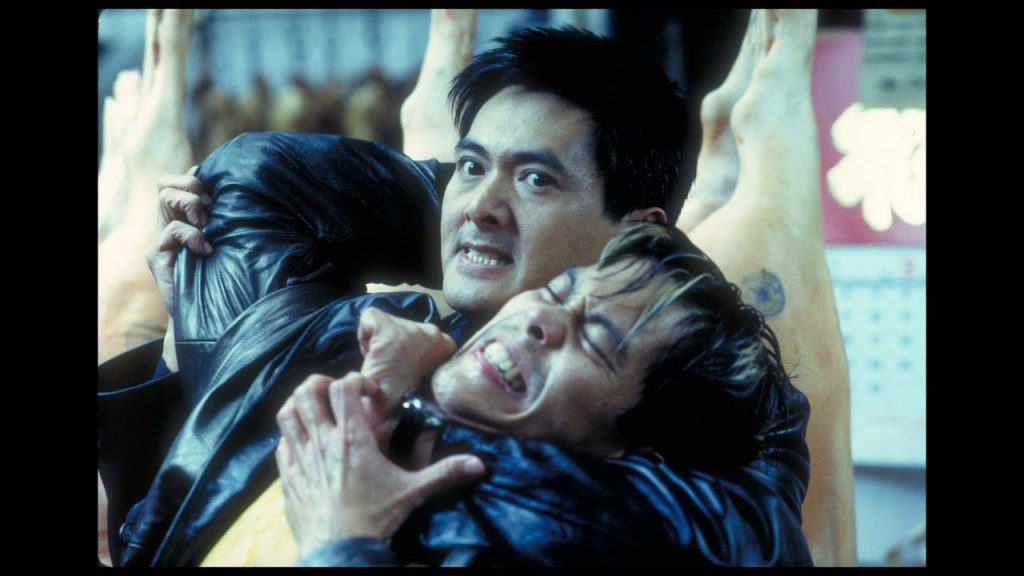
I’m a big fan of THE CORRUPTOR, and the primary reason is the excellent performance of Chow Yun-Fat. No other American made action film showed off the extraordinary charisma that made him a superstar in Asia in the 1980’s. In this film, Chow is able to play both sides of the law and still remain incredibly likable. He pulls this balancing act off in a way that appears effortless, and yet there are very few actors in the world who are capable of doing it. Mark Wahlberg had emerged as a major film star a couple of years earlier with the runaway success of BOOGIE NIGHTS (1997). I think he’s very good in this film as well, as his character must reconcile his ideals against the reality of fighting crime in such a dangerous environment. There’s a scene near the end where Chen has been informed that Wallace is internal affairs and confronts him about it. Wahlberg is incredible in the scene, setting the stage for the exciting resolution of the film.
THE CORRUPTOR has several excellent action set-pieces, beginning with a shootout at a lamp shop. This is when I knew this movie was going to present the Chow Yun-Fat I know and love. His personality is displayed in the scene, along with his two guns blazing in slow motion. There’s also an intense car chase through crowded streets and a final showdown on a cargo ship that really stood out to me. Director James Foley was probably hired based on his prior work that showed an ability to deal with moral ambiguity in films like AT CLOSE RANGE (1986) and GLENGARRY GLEN ROSS (1992). While he wouldn’t be my first directorial choice for an action film, he does a fine job in my opinion.
Overall, I recommend THE CORRUPTOR to any person who likes Chow Yun-Fat, Mark Wahlberg, or an entertaining action film. It’s not in the league of Chow’s best Hong Kong films, but it is his best American action film, because it actually gives him a strong character to play. That went a long way with me.
In 1989, having already won an Oscar for recreating his Vietnam experiences in Platoon, director Oliver Stone returned to the war with Born On The Fourth Of July.
Based on the memoir of anti-war activist Ron Kovic, Born on the Fourth of July stars Tom Cruise as Kovic. When we first meet Kovic, he’s growing up on Long Island in the 50s and 60s. He’s a clean-cut kid from a nice family. He’s on the school wrestling team and he’s got a lot of friends. When he was just 15, he heard John F. Kennedy telling people to ask what they can do for their country and he was inspired. He decided he wanted to join the Marines, despite the fact that his father (Raymond J. Barry) was still haunted by the combat that he saw in World War II. (In one of the film’s better scenes, a young Kovic notices that the elderly veterans marching in the Independence Day parade still flinch whenever they hear a firecracker.) He enlists in the Marines after listening to a patriotic speech from a recruiter (played by Tom Berenger). Ron runs through the rain to attend his prom and has one dance with Donna (Kyra Sedgwick), on whom he’s always had a crush. There’s nothing subtle about the way that Stone portrays Kovic’s childhood. In fact, one might argue that it’s a bit too idealized. But Stone knows what he’s doing. The wholesomenss of Kovic’s childhood leaves neither him nor the viewer prepared for what’s going to happen in Vietnam.
Vietnam turns out not to be the grand and patriotic adventure that Kovic thought it would be. After Sgt. Kovic accidentally shoots one of his own men in a firefight, he is ordered to keep quiet about the incident. After he is wounded and paralyzed in another firefight, Kovic ends up in a Hellish VA hospital, surrounded by men who will never fully recover from their mental and physical wounds. Kovic is eventually returns home in wheelchair. The film then follows Kovic as he goes from defending the war in Vietnam to eventually turning against both the war and the government. At one point, he ends up with a group of disabled vets in Mexico and there’s a memorable scene where he and another paraplegic (Willem Dafoe) attempt to fight despite having fallen out of their chairs. Eventually, Kovic returns to America and turns his anger into activism.
There’s nothing subtle about Born On The Fourth Of July. It’s a loud and angry film and Oliver Stone directs with a heavy-hand. Like a lot of Stone’s films, it overwhelms the viewer on a first viewing and it’s only during subsequent viewings that one becomes aware of just how manipulative the film is. Tom Cruise gives a good performance as Ron Kovic but his transformation into a long-haired, profane drunk still feels as if it happens a bit too abruptly. A good deal of the film centers on Kovic’s guilt about accidentally killing one of his men but the scene where he goes to the soldier’s family and asks them for forgiveness didn’t quite work for me. If anything, Kovic came across as being rather self-centered as he robs the man’s mother and father of the belief that their son had at least died heroically in combat as opposed to having been shot by his own sergeant. Did Kovic’s need to absolve himself really give him the right to cause this family more pain? Born on the Fourth Of July is an effective work of agitprop. On the first viewing, you’ll want to join Kovic in denouncing the military and demanding peace. On the second viewing, you’ll still sympathize with Kovic while also realizing that he really owes both his mother and father an apology for taking out his anger on them. By the third viewing, you’ll be kind of like, “Wow, I feel bad for this guy but he’s still kind of a jerk.” That said, when it comes to making an effective political film, Adam McKay could definitely take some lessons from Oliver Stone. Born On The Fourth of July is at its best when it simply captures the feeling of living in turmoil and discovering that the world is not as simple a place as you once believed. As idealized as the film’s presentation of Kovic’s childhood may be, anyone who has ever felt nostalgia for an earlier and simpler world will be able to relate.
Oliver Stone won his second Best Director Oscar for Born On The Fourth Of July. The film itself lost Best Picture to far more genteel version of the past, Driving Miss Daisy.
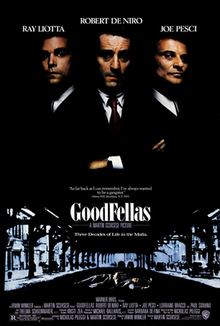
First released in 1990 and continuously acclaimed ever since, Goodfellas did not win the Oscar for Best Picture.
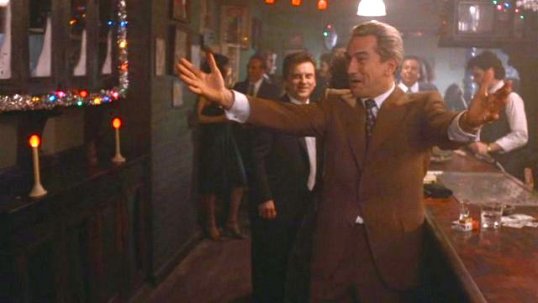
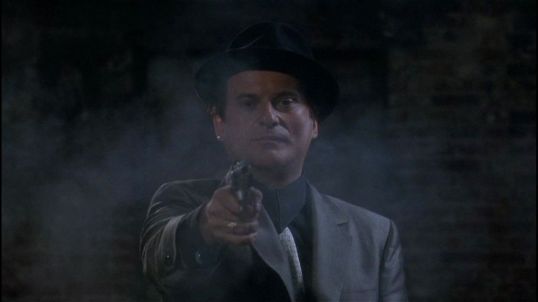
I’m always a bit surprised whenever I remember that. Goodfellas didn’t win Best Picture? That just doesn’t seem right. It’s not the other films nominated that year were bad but Goodfellas was so brilliant that it’s hard to imagine someone actually voting for something else. Seriously, it’s hard to think of a film that has been more influential than Goodfellas. Every gangster film with a soundtrack of kitschy tunes from the 6os and 70s owes huge debt to Goodfellas. Every actor who has ever been cast as a wild and out-of-control psycho gangster owes a debt to Joe Pesci’s performance as Tommy DeVito. When Ray Liotta passed away two years ago, we all immediately heard him saying, “I always wanted to be a gangster.” Robert De Niro’s Jimmy Conway remains the epitome of the ruthless gangster. For many, Paul Sorvino’s neighborhood godfather redefined what it meant to be a crime boss. Lorraine Bracco made such an impression as Karen Hill that it somehow seemed appropriate that she was one of the first people cast in The Sopranos, a show that itself would probably have not existed if not for Goodfellas. Frank Sivero, Samuel L. Jackson, Tobin Bell, Debi Mazer, Vincent Gallo, Ileana Douglas, Frank Vincent, Tony Sirico, Michael Imperioli, Tony Darrow, Mike Starr, Chuck Low, all of them can be seen in Goodfellas. It’s a film that many still consider to be the best of Martin Scorsese’s legendary career. Who can forget Robert De Niro smoking that cigarette while Sunshine of Your Love blared on the soundtrack? Who can forget “Maury’s wigs don’t come off!” or “Rossi, you are nothing but whore!?” Who can forget the cheery Christmas music playing in the background while De Niro’s Jimmy Conway grows more and more paranoid after pulling off the biggest heist of his career?
Plus, it’s a Christmas movie!
And yet, it did not win Best Picture.
Myself, whenever I’m sitting behind a garbage truck in traffic, I immediately start to hear the piano coda from Layla. For that matter, whenever I see a helicopter in the sky, I flash back to a coke-addled Henry Hill getting paranoid as he tries to pick up his brother from the hospital. Whenever I see someone walking across the street in the suburbs, I remember the scene where Henry coolly pistol-whips the country club guy and then tells Karen to hide his gun. I always remember Karen saying that she knows that many of her best friends would have run off as soon as their boyfriend gave them a gun to hide but “it turned me on.” It would have turned me on as well. Henry might be a gangster and his friends might be murderers but he doesn’t make any apologies for who he is, unlike everyone else in the world.
But it did not win Best Picture.
How many people have imitated Joe Pesci saying, “How am I funny?” How many times did Pesci and Frank Vincent have to listen to people telling them to “go home and get your fucking shinebox?” A lot of people remember the brutality of the scene where Pesci and De Niro team up to attack Vincent’s crude gangster but I always remember the sound of Donavon’s Atlantis playing on the soundtrack.
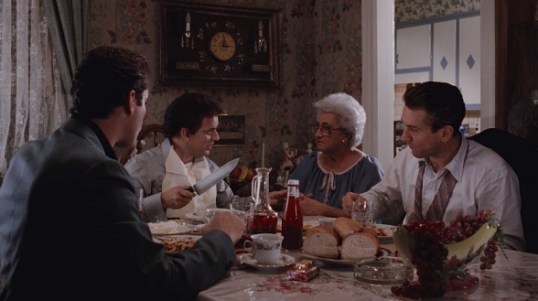
And then there’s Catherine Scorsese, showing up as Tommy’s mom and cooking for everyone while Vincent struggles to escape from the trunk of a car. “He is content to be a jerk,” Tommy says about Henry Hill. Just a few hours earlier, Tommy was apologizing to Henry for getting blood on his floor.
Goodfellas is a fast-paced look at organized crime, spanning from the 50s to the early 80s. Ray Liotta plays Henry Hill, who goes from idolizing gangsters to being a gangster to ultimately fearing his associates after he gets busted for dealing drugs. It’s a dizzying film, full of so many classic scenes and lines that it feels almost pointless to try to list them all here or to pretend like whoever is reading this review doesn’t remember the scene where the camera pans through the club and we meet the members of the crew. (“And then there was Pete The Killer….”) Goodfellas is a film that spend two hours showing us how much fun being a gangster can be and then thirty minutes showing us just how bad it can get when you’re high on coke, the police are after you, and you’ve recently learned that your associates are willing to kill even their oldest friends. No matter how many times I watch Goodfellas, I always get very anxious towards the end of the film. With the music pounding and the camera spinning, with Henry looking for helicopters, and with all of his plans going wrong over the course of one day, it’s almost a relief when Bo Dietl points that gun at Henry’s head and yells at him, revealing that Henry has been captured by the cops and not the Gambinos. Karen desperately running through the house, flushing drugs and hiding a gun in her underwear, always leaves me unsettled. It’s such a nice house but now, everything is crashing down.
There’s a tendency to compare Goodfellas to The Godfather, as their both films that re-imagine American history and culture through the lens of the gangster genre. I think they’re both great but I also think that they are ultimately two very different films. If The Godfather is sweeping and operatic, Goodfellas is the film that reminds us that gangsters also live in the suburbs and go to cookouts and that their wives take care of the kids and watch movies while the FBI searches their home. If The Godfather is about the bosses, Goodfellas is about the blue collar soldiers. The Godfather represents what we wish the Mafia was like while Goodfellas represents the reality.
Goodfellas is one of the greatest films ever made but it lost the Best Picture Oscar to Dances With Wolves, a film that left audiences feeling good as opposed to anxious. To be honest, Martin Scorsese losing Best Director to Kevin Costner feels like an even bigger injustice than Goodfellas losing Best Picture. One can understand the desire to reward Dances With Wolves, a film that attempts to correct a decades worth of negative stereotypes about Native Americans. But Scorsese’s direction was so brilliant that it’s truly a shame that he didn’t win and that Lorraine Bracco didn’t win Best Supporting Actress. It’s also a shame that Ray Liotta wasn’t nominated for playing Henry Hill. At least Joe Pesci won an Oscar for redefining what it meant to be a gangster.
Goodfellas is proof that the best film doesn’t always win at the Oscars. But it’s also proof that a great film doesn’t need an Oscar to be remembered.
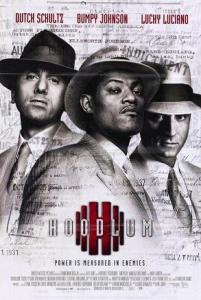
1930s. New York City. For years, Stephanie St. Clair (Cicely Tyson) has been the benevolent queen of the Harlem underworld, running a successful numbers game and protecting her community from outsiders. However, psychotic crime boss Dutch Schultz (Tim Roth) is determined to move into Harlem and take over the rackets for himself. With the weary support of Lucky Luciano (Andy Garcia), Schultz thinks that he is unstoppable but he did not count on the intervention of Bumpy Johnson (Laurence Fishburne). Just paroled from Sing Sing, Bumpy is determined to do whatever has to be done to keep Schultz out of Harlem.
When I reviewed The Cotton Club yesterday, I knew that I would have to do Hoodlum today. Hoodlum and The Cotton Club are based on the same historic events and both of them feature Laurence Fishburne in the role of Bumpy Johnson. Of the two, Hoodlum is the more straightforward film, without any of the operatic flourishes that Coppola brought to The Cotton Club. Fisburne is surprisingly dull as Bumpy Johnson but Tim Roth goes all in as Dutch Schultz and Andy Garcia is memorably oily as the Machiavellian Luciano. Hoodlum is about forty minutes too long but the gangster action scenes are staged well. Bumpy Johnson lived a fascinating life and it is unfortunate that no film has yet to really do him justice, though Clarence Williams III came close with his brief cameo in American Gangster. (Interestingly enough, Williams is also in Hoodlum, playing one of Shultz’s lieutenants.)
One final note: Hoodlum features William Atherton in the role of District Attorney Thomas E. Dewey. Atherton plays Dewey as being a corrupt and sleazy politician on Luciano’s payroll. In real life, Dewey was known for being so honest that Dutch Schultz actually put a contract out on his life after he discovered that Dewey could not be bribed. I am not sure why Hoodlum decided to slander the subject of one of America’s most famous headlines but it seems unnecessary.
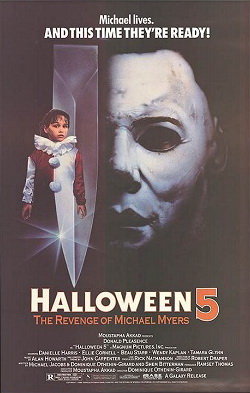
Hi everyone! We are currently in the process of our annual horrorthon here at the Shattered Lens so I thought it would be a good idea if me and some of my fellow writers reviewed all of the Halloween films! Arleigh already reviewed the original Halloween back in 2010 and I took a look at the first sequel in 2012. So, it just made perfect sense to me that we go ahead and take a look at the rest of the films in the series!
Yesterday, Case reviewed Halloween 4 and, later, he’ll be taking a look at Resurrection and H20. Jedadiah Leland is taking look at Halloween 6 tomorrow. So, that leaves me with … *sigh* Halloween 5.
BLEH!
Before we dive into the crapfest that was Halloween 5, let’s take a look at the trailer! It’ll be fun!
The trailer’s actually fairly effective. I have to wonder how many people, way back in 1989, were fooled into seeing this film as a result of this trailer? I imagine probably more than who are willing to admit it. Paying money to see Halloween 5 doesn’t seem like something anyone would want to brag about.
Halloween 5 is the one that has the dumb cops. Now, I know that every Halloween film seems to feature at least a few dumb cops but the ones in Halloween 5 are really dumb. And they get their own theme music! That’s right — whenever these two dumb cops show up on screen, comedic circus music plays. Needless to say, it’s woefully out of place in a horror movie. I read that this was apparently meant to be an homage to the dumb cops from the original Last House On the Left. This despite the fact that … EVERYONE HATED THE DUMB COPS IN LAST HOUSE ON THE LEFT!!! Even Wes Craven later said that the dumb cops were a mistake! If you’re going to rip off (or pay homage) to another movie, don’t pay homage to the part that sucked!
Anyway, you may remember that Halloween 4 ended with Jamie (Danielle Harris) attacking her mother and holding a knife. Uh-oh, looks like Jamie’s going to be a murderer! Well, no — that would have been too interesting. Halloween 5 finds Jamie being committed to a mental hospital for a year while Michael Myers (Don Shanks) is in a coma. Michael eventually comes out of his coma and starts stalking Jamie all over again.
Once again, Dr. Loomis (a depressingly frail Donald Pleasence) is one of the few people who realizes that Michael is still alive and once again, nobody is willing to listen to him. Here’s the thing: Dr. Loomis may be kinda crazy and yes, all the scars are kinda disturbing but he’s been right every single freaking time in the past. I understand that the people of Haddonfield are kind of in denial about Michael but this is just getting ridiculous.
Rachel Carrathurs (Ellie Cornell) returns for this movie but she gets killed early on. Apparently, she was killed so that the audience would know that anyone could be killed and that nobody was safe but Rachel was such a strong character and Ellie Cornell did such a good job playing her in the previous film that you really feel her absence in Halloween 5. Her death leaves a void that the film fails to adequately fill. Add to that, if you insist on killing a kickass character like Rachel, at least give her a memorable death scene. Don’t just have her blithely wandering around the house half-naked until she suddenly gets stabbed, as if she was just some generic slasher victim and not the lead of the previous movie.
With Rachel dead, it now falls to her amazingly annoying best friend, Tina (Wendy Kaplan), to serve as Jamie’s protector. Tina is hyperactive and talkative and quirky and blah blah blah. Basically, she’s like that person who is really annoying but since you’ve known her since the third grade, you feel obligated to hang out with her.
It all leads to another big Halloween party and few rather bloodless deaths. It’s all pretty boring, to be honest. There is one good scene where Michael chases Jamie in a car (the headlights cutting through the darkness create a wonderfully eerie effect) but, otherwise, it’s depressingly generic.
In the end, Michael is captured and put in a jail cell. Fortunately, a mysterious man in black shows up and breaks him out. Gee, I wonder what that’s about?
Halloween 5 is undoubtedly the worst of the Halloween films.
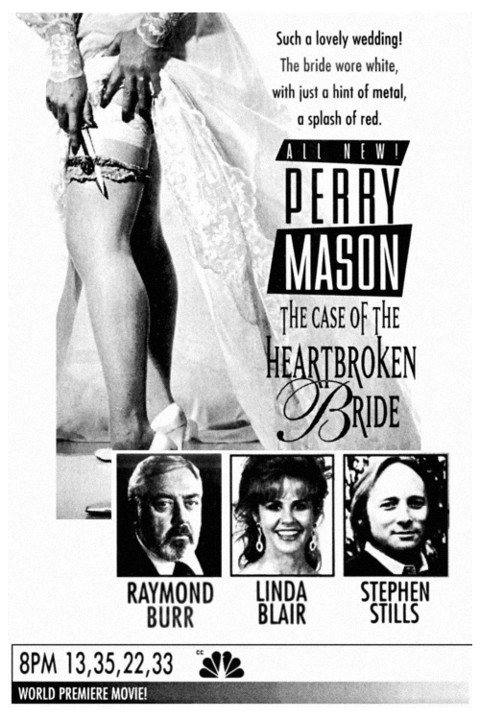 Perry Mason (Raymond Burr) can’t even go to a wedding without someone getting killed! Kaitlynn Parrish (Heather McAdam) is the daughter of Max (Ronny Cox) and Diane Parrish (Diane Baker). Diane used to work for Perry and it’s implied that they used to be more than just colleagues. (I think that means that it is safe to assume that Kaitlynn is actually Perry’s daughter.) At the wedding, Alonzo Hawkes (Beau Starr), the uncle of the groom, gets into an argument with Max and accuses Max of embezzlement. Kaitlynn says she could kill Alonzo. A few hours later, Alonzo is found dead and Kaitlynn is arrested.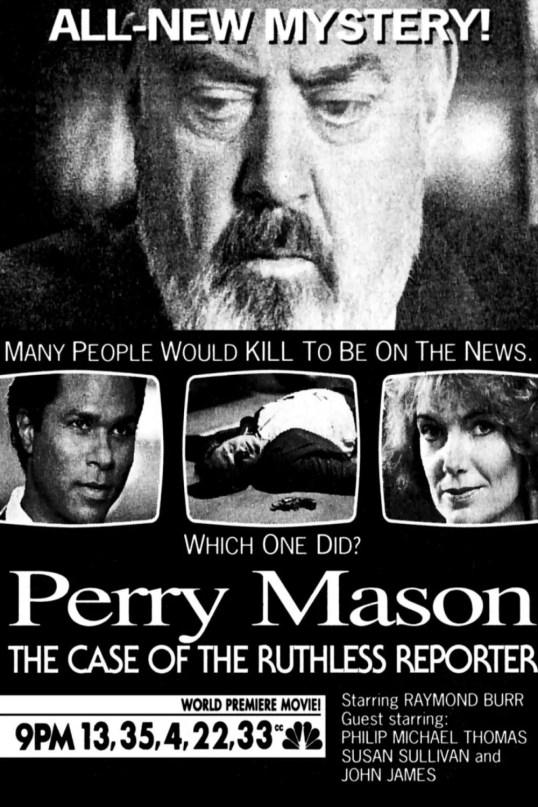
 1930s. New York City. For years, Stephanie St. Clair (Cicely Tyson) has been the benevolent queen of the Harlem underworld, running a successful numbers game and protecting her community from outsiders. However, psychotic crime boss Dutch Schultz (Tim Roth) is determined to move into Harlem and take over the rackets for himself. With the weary support of Lucky Luciano (Andy Garcia), Schultz thinks that he is unstoppable but he did not count on the intervention of Bumpy Johnson (Laurence Fishburne). Just paroled from Sing Sing, Bumpy is determined to do whatever has to be done to keep Schultz out of Harlem.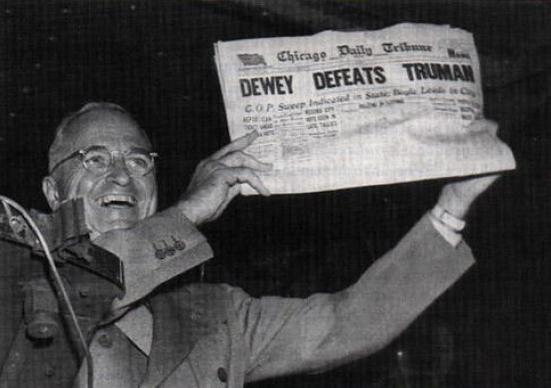
 Through the Shattered Lens