Enjoy!
Welcome to Late Night Retro Television Reviews, a feature where we review some of our favorite and least favorite shows of the past! On Saturdays, I will be reviewing Saved By The Bell, which ran on NBC from 1989 to 1993. The entire show is currently streaming on Prime and Tubi!

This week, it’s prank war time!
Episode 1.17 “Save That Tiger”
(Dir by Don Barnhart, originally aired on December 16th, 1989)
Historically, this is an important episode.
This is the episode that establishes that Valley is Bayside’s rival. It also introduces us to the annual prank war. It’s the episode in which Jessie (reluctantly) becomes a cheerleader. This episode establishes that Screech is the dork in the Bayside tiger costume. This is also the episode in which we first learn that Mr. Belding was a wild man in high school. His nickname? Mad Dog!
That said, what most people remember about this episode is “Stinky” Stingwell, the principal of Valley. Played by veteran comic Ronnie Schell, Mr. Stingwell is a prank war veteran who encourages his students to kidnap Screech and who greets Mr. Belding with a joy buzzer. Stinky Stingwell is a great character and it’s a shame that he only appeared in one episode.
This episode ends with a cheer competition between Valley, Bayside, and an unnamed school. Valley attempts to ruin the Bayside cheer by kidnapping Screech and putting a Valley student in the tiger costume. When Slater and Zack find out, they pour a bunch of fire ants into the costume and this leads to the Bayside Tiger having what appears to be a seizure. (It’s a good thing that the guy in the costume wasn’t allergic to fire ants because he could have died. Is that the legacy they want for their prank war?) Somehow, this leads to Bayside winning the competition. Even though Mr. Belding said he didn’t want any more pranks, he seems to be okay with them as long as it leads to Bayside winning a trophy.
I decided to get an expert opinion when it came to judging the cheer competition so I forced my sister to watch it with me. She said Valley should have won and I have to agree. Their cheer was good without requiring any gimmicks like a spastic tiger.
“We won the prank war,” Zack tells us.
Eh. Sorry, Zack. Stinky Stingwell won this round. TPing the school? Abducting Screech? Stealing the costume? Wrapping up the school’s students in 2-ply toilet paper? Somehow setting bobby traps in Zack, Slater, and Screech’s lockers?
Valley rules!

Baywatch (Tubi)
Decoy (Tubi)
Degrassi: The Next Generation (Tubi)
My review of Degrassi will drop tomorrow.
Freddy’s Nightmares (Tubi)
I reviewed Freddy’s Nightmares here.
Highway to Heaven (Tubi)
I reviewed Highway to Heaven here.
Homicide: Life On The Street (Peacock)
My review of Homicide will drop tomorrow.
It’s The Easter Beagle, Charlie Brown (Apple TV)
Watching this charming animated special is an Easter tradition that I share with Erin Nicole. You can read her thoughts here.
The Love Boat (Parmaount+)
I reviewed The Love Boat here.
Nero Wolfe (YouTube)
I watched an episode of this classic detective series on Tuesday. Maury Chaykin was a great Wolfe and Timothy Hutton was a wonderful Archie Goodwin. The late James Tolkan also appeared in the episode, wearing an eyepatch.
Saved By The Bell (Tubi)
My review of Saved By The Bell will drop in 30 minutes.
Show Me A Hero (HBO Max)
“….and I’ll show you a tragedy.” I rewatched this 2015 HBO miniseries on Wednesday. The miniseries dealt with the fight over low-income housing in Yonkers, New York and it starred Oscar Isaac as Nick Wasicsko, who went from being elected mayor at the age of 28 to committing suicide 6 years later. Supporting roles were played Catherine Keener, James Beluhsi, Peter Riegert, Jon Bernthal, Winona Ryder, Alfred Molina, and Carla Quevado. The show was written by David Simon and each episode was directed by Paul Haggis. Not surprisingly, several actors from The Wire popped up in small roles.
Show Me A Hero really impressed me when it originally aired. Rewatching it, it still held my attention but I could see that the miniseries was a bit more heavy-handed than I remembered and that Simon and Haggis were clearly more interested in the political storyline than they were in the stories of the people who eventually moved into the new housing developments. Some of the performances were better than other. Catherine Keener and Winona Ryder both overacted while, cast as the show’s three mayors, Belushi, Isaac, and Molina all gave strong performances. Carla Quevado was exceptionally good as Isaac’s wife.
In the end, Show Me A Hero works best as a portrait of an ambitious politician who peaked too young, suffered due to things out of his control, and then spent the rest of his life trying to regain his lost promise. Some people feel that Nick Wasicsko was a hero. This miniseries ultimately focuses on the tragedy.
St. Elsewhere (Daily Motion)
I reviewed St. Elsewhere here.
TV 2000 (NightFlight Plus)
Jeff and I watched an episode of this old 80s music program on Friday night. John Kassir, who played the kicker on 1st and Ten and who would later voice the Crypt Keeper on Tales From the Crypt, was one of the hosts. He was a bit hyperactive.
Welcome to Retro Television Reviews, a feature where we review some of our favorite and least favorite shows of the past! On Saturdays, I will be reviewing Baywatch, which ran on NBC and then in syndication from 1989 to 2001. The entire show can be viewed on Tubi.
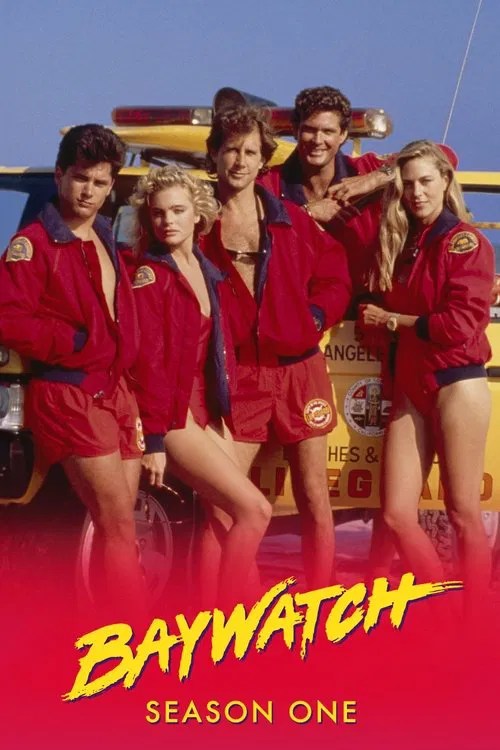
This week, a lifeguard dies!
Episode 1.18 “Shark Derby”
(Dir by Gregory J. Bonann, originally aired on March 2nd, 1990)
Hey, remember Jill?
Jill, played by Shawn Weatherly, was a major character at the start of the season. She was the tough, seasoned lifeguard who was one of Mitch’s best friends. She was also Shauni’s mentor. If Shauni was often silly and superficial, Jill was all business. She also had a brief flirtation with Trevor, before Trevor vanished from the show.
As the first season progressed, Jill became less and less important. In this week’s episode, Jill finally gets to do something, She dies! She dies after being attacked by a shark who was drawn to the beach by an unethical restaurant owner (Peter Brown) who has been pouring chum into the ocean and who has also placed some sort of transmitter underwater that sends out a high-pitched tone that only sharks can hear. The restauranter is just doing it to promote his annual shark derby. However, when one of the sharks attacks a raft full of school children, Jill swims out into the ocean to save them. And she ends up getting bitten by a shark. She doesn’t lose any limbs. In fact, we don’t see any blood at all. But, at the hospital, it’s announced that Jill has over two hundred sutures. Yikes!
Despite getting chomped by a shark, it first appears as if Jill will survive. But towards the end of the episode, even as she’s preparing to leave the hospital, she develops a blood cot that kills her, off-screen. David Hasselhoff gets to show off his ability to cry onscreen. To be honest, that’s the main reason this episode works. We don’t really know enough about Jill to get too emotionally involved in her situation. But Hasselhoff is so incredibly earnest and sincere in his grief that he gets to you. Jill must have been someone amazing if the Hoff is crying.
This episode was shameless and emotionally manipulative and it was pure Baywatch. This episode also featured a record number of slo mo of doom scenes. The shark attacked in slow motion. Jill and Craig yelled at people to get out of the water in slow motion. Is it really slow motion if no one yells? I’m not sure.
So, Jill is dead. But the Hoff and the rest are still alive and ready to save swimmers across California.
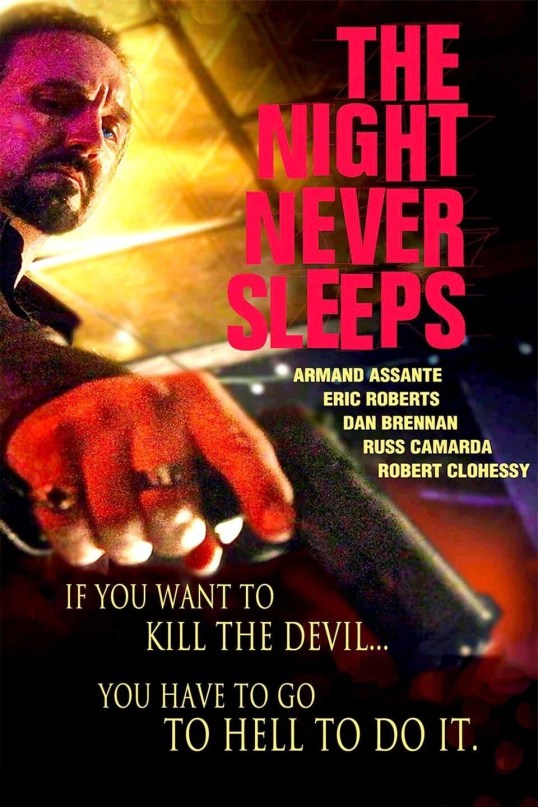
2012’s The Night Never Sleeps takes place over the course of one very long night in a New York city.
Sgt. Cavanaugh (Dan Brennan) is a tough and plain-spoken cop, the type who might not be great with pleasantries but who is a good enough policeman that he’s not going to let anyone stop him from avenging the deaths of the officers working under him. Each murder leads to Cavanaugh digging deeper and deeper into the city’s underworld. In between phone calls from his ex-wife (played by Eliza Roberts, wife of Eric) and meetings with the skeptical Inspector Romanelli (Armand Assante), Cavanaugh pursues a bloodthirsty hitman (Russ Camarda) and his boss.
The Night Never Sleeps is a low-budget police procedural, one that actually works far better than it has any right to. There’s hardly a cliche that isn’t present and there’s as few scenes where the nonstop “tough talk” verges on self-parody but the actors — especially Dan Brennan — all give good performances and the fact that the action was actually shot on location gives the film an appropriate gritty feel.
As for Eric Roberts, he plays a pimp whose cheerful manner hides a dangerous temperament. This is one of Roberts’s better cameo appearances. Not only does he seem to be invested in the performance but his character is also central to the plot. The film makes good use of Eric Robert’s off-center smile. On the one hand, he seems friendly, or at least as friendly as a pimp can be. On the other hand, there’s just enough fidgety nervousness beneath his amiable manner to indicate only as fool would turn their back on him.
The Night Never Sleeps is a flawed film but it still held my attention.
Previous Eric Roberts Films That We Have Reviewed:
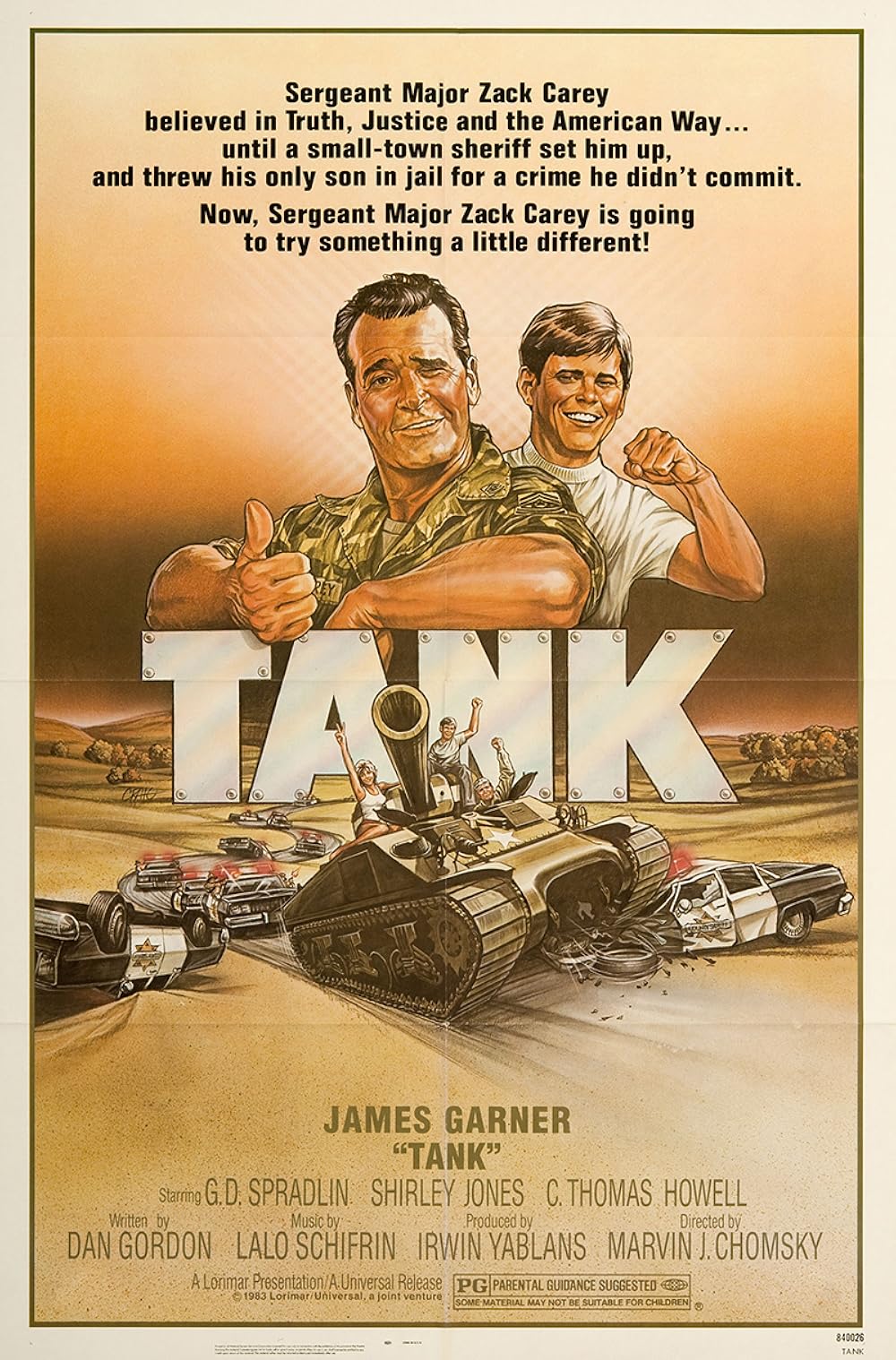
“There comes a time when a man has to stand up and be counted.” — Zack Carey
The 1984 action‑drama Tank is a small‑town parable dressed up as a military gimmick picture: an aging Army sergeant major, a battered old Sherman tank, and a corrupt sheriff. At its best, the film leans into James Garner’s quiet charisma and the absurdly specific “one man versus a whole county” premise; at its worst, it staggers under inconsistent tone and a plot that veers between heartfelt family‑drama and almost cartoonish vigilantism. Taken as a product of the early‑mid‑1980s, however, Tank holds up as a reasonably entertaining, if not especially deep, genre hybrid that works more through Gardner’s presence and a few solid set pieces than through psychological complexity or formal ambition.
James Garner plays Zack Carey, an Army sergeant major who moves his family to a small Georgia town near a training base, where he has acquired a battle‑worn M4A3 Sherman tank as a personal hobby and morale project. The setup is already a little out of the ordinary: an enlisted man whose side hustle is maintaining a World War II relic, while his wife LaDonna (played by Shirley Jones) quietly pushes back against the constraints of Army life and small‑town politics. The film’s opening stretches the believability of that scenario thin, but Garner’s easygoing authority and dry humor sell the idea that Zack is exactly the kind of practical, no‑nonsense soldier who would grow attached to a tank and treat it like a second family member. The script uses this setup to position the vehicle not just as hardware, but as a symbol of the character’s livelihood, dignity, and sense of duty.
The trigger for the conflict is an incident at a local bar, where Zack intervenes when a local deputy, who also moonlights as a pimp, roughs up a teenage prostitute named Sarah. The sheriff, Eugene Buelton (played with oily menace by C. Thomas Howell), is deeply corrupt and runs the town like a fiefdom, using his deputies to intimidate anyone who crosses him. When Zack’s teenage son, Billy, is later framed for a crime and thrown into a primitive prison camp, the fuse is lit. The film’s moral map is deliberately simple: Buelton is cartoonishly evil, Buelton’s deputies are unreliable tools of his will, and the Careys are painted as upright, essentially decent people caught in an unjust system. That simplicity works in Garner’s favor, because it lets the film focus on emotional stakes—father‑son loyalty, a wife’s fear for her family—rather than intricate political nuance.
What gives Tank much of its energy is the moment Zack decides to fight back with the only weapon he truly controls: his Sherman. The image of a lone, aging non‑commissioned officer rolling down country roads in a clanking World War II tank is inherently cinematic, and director Marvin J. Chomsky milks it for both action and symbolism. The scenes where Zack smashes through the sheriff’s office, disrupts the local jail, and later drives straight into the work farm to free Billy are played with a pulpy, almost comic‑strip bravado. The tank becomes a rolling moral absolutist: clumsy, loud, and impossible to ignore, cutting through the town’s layers of bureaucracy and intimidation in a way that mirrors Zack’s own frustration with a justice system that refuses to protect his son. The film’s action sequences are not particularly innovative by modern standards, but they benefit from the authenticity of the M4A3 and the straightforward choreography that lets the vehicle feel like a physical presence rather than a CGI abstraction.
Where Tank runs into trouble is in its fluctuating tone and some of its secondary choices. The subplot involving Sarah, the teenage prostitute, is handled with mixed success. On one hand, it adds a layer of social commentary about exploitation and small‑town complicity; on the other, it sometimes feels tacked on, introduced more as a narrative convenience than a fully developed character arc. The film wants to position her as a sympathetic victim who finds a kind of makeshift family inside the tank, but the material doesn’t dive deep into her background or inner life, leaving her more of a device than a rounded personality. This uneven handling reflects a broader issue: the movie vacillates between being a gritty crime drama, a family‑centric tearjerker, and a lighthearted action‑comedy. At times it feels like a made‑for‑television movie with a slightly bigger budget, hit by the same kind of tonal indecision that often plagued mid‑tier 1980s genre pictures.
Garner’s performance is the single element that keeps Tank consistently watchable. His Zack Carey is neither a cartoon hero nor a brooding anti‑hero; he’s a working‑class soldier approaching the end of his career, tired of compromise and willing to push back when pushed too far. Garner underplays the action‑hero theatrics, relying instead on quiet resolve, a dry sense of humor, and a lived‑in weariness that makes Zack feel like someone you might have actually met in an Army post or small town. Shirley Jones, as his wife, brings a grounded warmth to the domestic scenes, and the dynamic between Zack and his son Billy feels occasionally sentimental but never entirely false. The relationship between father and son anchors the film’s more outlandish elements, turning the tank chase into a visible metaphor for a father’s desperation to protect his child in a system that treats both as expendable.
Visually, Tank is workmanlike rather than stylish. The Georgia countryside is shot in broad daylight, with an emphasis on wide shots that showcase the tank moving through fields, back roads, and small towns. The tank itself is the film’s most vivid visual motif, a hulking, almost anachronistic machine that looks slightly out of place in a 1980s setting, yet somehow believable as the relic of a bygone era carried forward by a man who still believes in clear‑cut notions of right and wrong. The production favors practical effects and real locations over glossy stylization, which gives the material a modest, sometimes cheap‑looking quality but also lends it a concrete, lived‑in feel. The score, composed by Lalo Schifrin, adds a number of flavors—military marches, light jazz, and even a faintly disco‑tinged theme—further underscoring the film’s genre‑mixing instincts without always achieving cohesion.
Thematically, Tank leans heavily on the idea of individual resistance against corrupt authority. The sheriff’s abuse of power, the rigged legal process, and the near‑absence of any higher‑level oversight all feed into a classic American underdog narrative: one man, one tank, and a small band of allies taking on a system that has long since stopped pretending to be fair. The film stops short of overtly political commentary, but it clearly sympathizes with the notion that ordinary people sometimes have to go outside official channels when those channels are rigged against them. At the same time, the movie softens its edges with a crowd‑pleasing finale that reframes Zack and his allies as folk heroes, welcomed by a gathering of onlookers at the Tennessee border. This turn toward feel‑good spectacle undercuts some of the grittier implications of the earlier material, but it also fits the early‑1980s appetite for triumphant, crowd‑friendly resolutions.
As a time capsule of 1980s genre filmmaking, Tank is more interesting than it is groundbreaking. It is neither a forgotten masterpiece nor a laughably bad curio; it sits somewhere in the middle, powered by James Garner’s steady presence and the appealingly simple conceit of a World War II tank as a one‑man war machine. The film’s weaknesses—a schematic morality play, uneven tone, and underdeveloped secondary characters—are real, but they don’t completely erase its modest strengths. If viewed as a straightforward, mid‑tier action‑drama with a strong central performance and a memorable mechanical co‑star, Tank emerges as a fair, unpretentious, and occasionally rousing piece of 1980s entertainment.
As some of our regular readers undoubtedly know, I am involved in a few weekly live tweets on twitter. I host #FridayNightFlix every Friday, I co-host #ScarySocial on Saturday, and I am one of the five hosts of #MondayActionMovie! Every week, we get together. We watch a movie. We tweet our way through it.
Tonight, at 9 pm et, Deanna Dawn will be hosting #ScarySocial! The movie? The Slime People!
If you want to join us this Saturday, just hop onto twitter, start the movie at 9 pm et, and use the #ScarySocial hashtag! It’s a friendly group and welcoming of newcomers so don’t be shy.
The film is available on Prime!
Today’s song of the day is this beautiful and haunting piece from 2010’s True Grit.
Just like yesterday’s scene, today’s scene that I love comes from 1973’s Jesus Christ Superstar.
Not surprisingly, both the musical and the film were controversial when first released. Seen today, though, it’s one of the best and most spiritually sincere films about the Passion ever made.
Carl Anderson, as the ghost of Judas, sings as if the world depends upon it.
4 Or More Shots From 4 Or More Films is just what it says it is, 4 shots from 4 of our favorite films. As opposed to the reviews and recaps that we usually post, 4 Shots From 4 Films lets the visuals do the talking!
On this date, 94 years ago, Andrei Tarkovsky was born in Russia. Before he was murdered by the communist KGB in 1986, Tarkovsky was responsible for some of the most intriguing and visually stunning films ever made. Today, we pay tribute to Tarkovsky’s art and his legacy. It’s time for….
4 Shots From 4 Andrei Tarkovsky Films
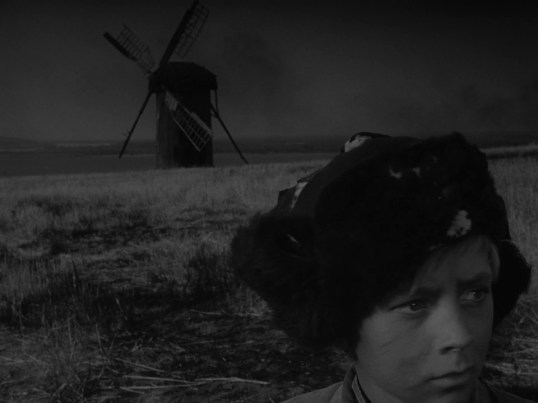
Ivan’s Childhood (1962, dir by Andrei Tarkovsky, DP; Vadim Yusov)

Solaris (1972, dir by Andrei Tarkovsky, DP: Vadim Yusov)
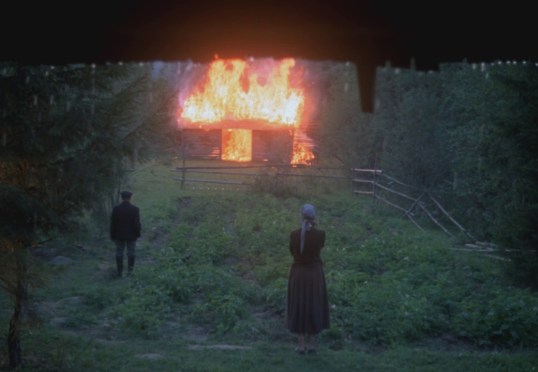
Mirror (1975, dir by Andrei Tarkovsky, DP: Georgy Rerberg)
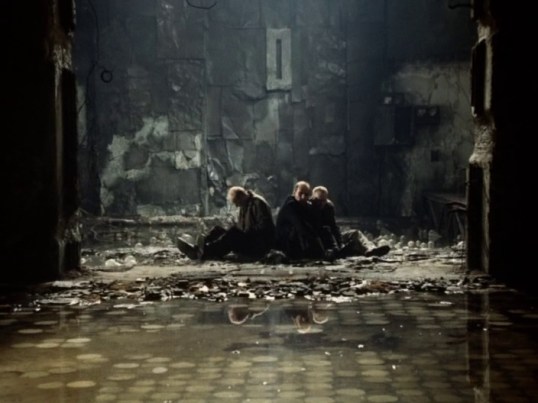
Stalker (1979, dir by Andrei Tarkovsky, DP: Alexander Knyazhinsky)
 Through the Shattered Lens