
Artist Unknown
This cover is from 1925.
Artist Unknown
This cover is from 1925.
Mr. T has a message for everyone.
This originally premiered as a part of Mr. T’s motivational video, Be Somebody … Or Be Somebody’s Fool! Director Jeff Margolis was an Emmy-winning director who worked with Carol Burnett, Julie Andrews, and Richard Pryor.
Enjoy!
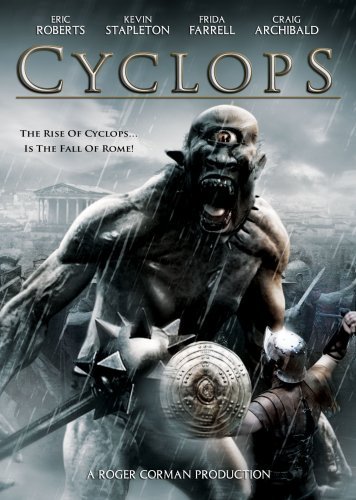
Behold the glory that was Rome!
In 2008’s Cyclops, Ancient Rome is a bad CGI village that is being menaced by an even worse CGI cyclops. (The height of the Cyclops literally changes from scene to scene.) After the Cyclops is captures, it’s forced to fight in the gladiatorial games of the decadent Emperor Tiberius (Eric Roberts). Marcus (Kevin Stapleton), a centurion-turned-gladiator, eventually launches his own revolution against the Empire. When you’re fighting against the 15 members of the fearsome Roman army, it helps to a have a monster from Greek mythology on your side. Long live the Roman Republic!
This is an extremely silly movie but it’s hard not to admire the chutzpah it takes to try to recreate the glory of Rome on a tiny budget. It’s not just that the city of Rome looks like a medieval village. It’s also that there appears to only be about fifty citizens of Rome and most of them look like they wandered over from Monty Python and the Holy Grail. The film doesn’t work but kudos to the filmmakers for trying in the first place. Not surprisingly, this was a Roger Corman production.
Eric Roberts as a Roman emperor is something that simply needs to be seen to believed. Eric has the haircut and the sinful smile and he gives the thumbs up symbol with the proper theatrical flourish. In the film, Tiberius turns on Marcus after the latter demands that he be given a land grant along with his promotion and I’m on Tiberius’s side as far as that goes. Marcus should have just accepted the promotion without making demands. Tiberius had every right to be miffed and no one plays miffed quite as well as Eric Roberts. Tiberius goes on to plan the state dinner that will celebrate the capture of the Cyclops. Tiberius and his friends will have half-a-boar. Marcus will be given “eggs and greens.” Oh, Tiberius!
Previous Eric Roberts Films That We Have Reviewed:
Welcome to Late Night Retro Television Reviews, a feature where we review some of our favorite and least favorite shows of the past! On Wednesdays, I will be reviewing 1st and Ten, which aired in syndication from 1984 to 1991. The entire series is streaming on Tubi.

Uh-oh. This episode features OJ Simpson doing the real acting.
Episode 3.9 “Call For The Hall”
(Directed by Bruce Seth Green, originally aired on November 4th, 1987)
TD Parker (played by OJ Simpson) has a lot to deal with this week!
The team’s running back has been injured. Buffalo is willing to trade their running back in return for Bubba Kincaid! Nobody wants to say goodbye to Bubba. He’s the heart of the team. He’s the team “poobah,” which means that he gets to wear a stupid horned helmet whenever he’s at that team bar. But the Bulls need a running back. TD is the one who has to tell Bubba that he’s been traded. Jethro is named the new team poobah. Bubba’s wife is not happy about moving to Buffalo because it’s too cold up north. Fortunately, it turns out that Buffalo’s running back has also been injured and the trade is canceled. Bubba is staying!
TD has also been voted into the football hall of fame. Should he take his wife and son to the ceremony or should he bring his mistress? TD can’t decide, even though it seems like kind of an obvious decision. Still, TD has to go to the team owner for advice and he is shocked when she reveals that she and everyone else know about TD’s new relationship.
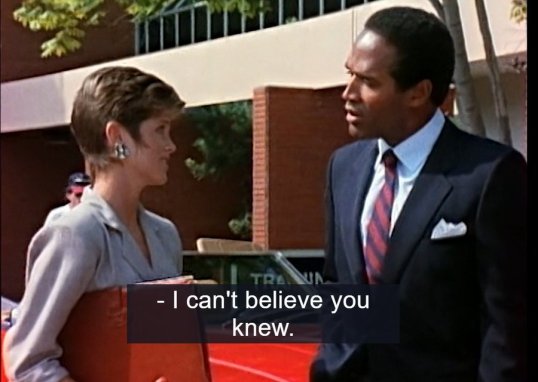
Sorry, TD — everyone knows!
The team owner says that he should probably bring his wife, if just for the sake of appearances. TD then plays basketball with his son and apologizes for not being a better father. This leads to a line of dialogue that so totally epitomizes how much times have changed that it really should be put in a museum.
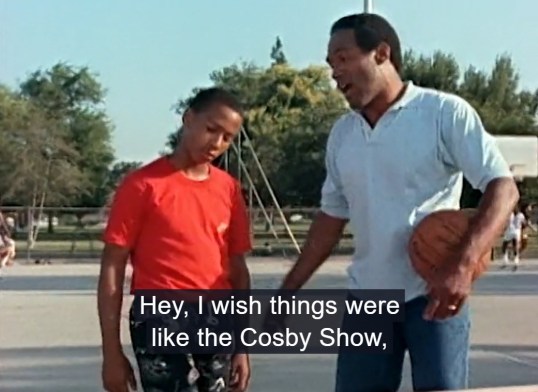
OJ Simpson apologizes for not being more like Bill Cosby. I think that pretty much sums up this show’s entire third season.
In the end, TD does not take his mistress to the Hall of Fame. But it doesn’t appear that his family attends either. TD gives a speech, thanking his wife and son. Awwww.
This episode features a lot of OJ Simpson acting. As an actor, OJ was mild, bland, and likable. He delivered his lines smoothly but with little sincerity. Of course, nowadays, it’s impossible to listen to him speak without searching for a hidden meaning between the lines. As I watched this episode, I found myself thinking, “Do not make him mad, do not make him mad….”
There was one other storyline in this episode. Dr. Death and Mad Dog stole Coach Grier’s pet mouse. The mouse died. Dr. Death and Mad Dog had to run up and down the stadium stairs as a punishment. The laugh track insists that all of this is funny but I had to disagree. Killing pets is never a good look.
This episode was a lot like OJ’s acting — mild and bland. Unlike OJ, it won’t be getting voted into the Hall of Fame anytime soon.
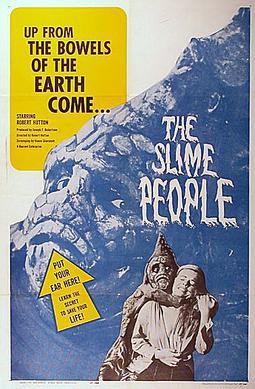 Pilot Tom Gregory (Robert Hutton) lands his private plane in Los Angeles and is shocked to discover that the city is surrounded by a thick fog and that it appears to be nearly deserted. A chance meeting with a professor named Galbraith (Robert Burton) and his two daughters (Susan Hart and Judee Morton) leads the group to a television station where they watch a news report about how Los Angeles has been surrounded by a “hardened fog.” No one can escape the fog and no one can escape the Slime People, reptilian humanoids who have ascended from their underground lair and declared war on the surface world. There appears to only be, at most, six Slime People but I guess that’s all you need to conquer Los Angeles.
The Slime People is a Z-grade horror film that features a lot of stock footage, monsters that would not be out of place in a Jon Pertwee-era Doctor Who serial, and an out-of-control fog machine. The fog machine is actually the star of the show. There’s so much fog in this movie that it’s often impossible to see the actors or the Slime People. It’s a shame because, considering that the production ran out of money after 9 days and the majority of the actors were never paid, the Slime People costumes are not that bad.
Along with the fog and the costumes, the other memorable thing about The Slime People is that none of the survivors seem to be particularly upset about any of the horror that they’ve just experienced. One young soldier (William Boyce) takes the time to ask one of the professor’s daughters if she’ll be available to date once the crisis ends. It’s a tribute to the American youth of the 1960s that not even an attack from underground dwellers could stop date night.
Welcome to Retro Television Reviews, a feature where we review some of our favorite and least favorite shows of the past! On Wednesdays, I will be reviewing the original Love Boat, which aired on ABC from 1977 to 1986! The series can be streamed on Paramount Plus!
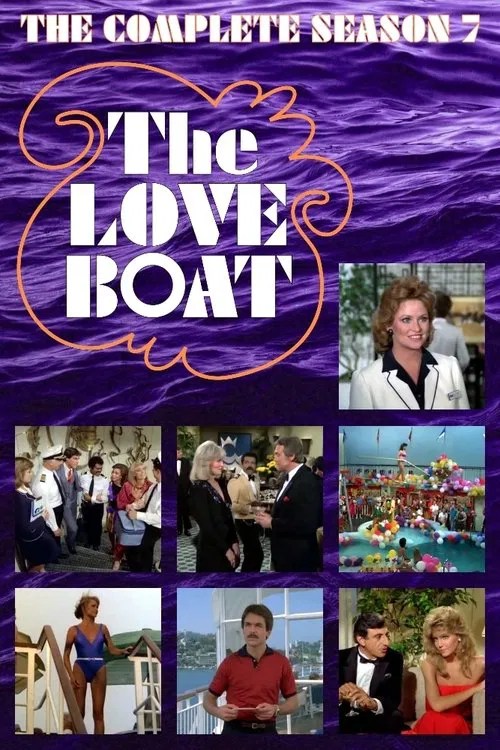
Come aboard, we’re expecting you….
Episode 7.14 “The Last Case/Looking for Mr. Wilson/Love on Strike”
(Dir by Richard A. Wells, originally aired on December 17th, 1983)
This week, an old high school friend of Julie’s is on the cruise. Whenever anyone from Julie’s past shows up, it means drama. Five years ago, when Jan Maddox (Jeanine Wilson) told her boyfriend, Michael, that she was pregnant, he ran out on her. Jan lied to her father, the rigid Colonel Maddox (Claude Akins), and told him that she and Michael had gotten married. For five years, Jan has been telling her father that she’s married. When Colonel Maddox boards the ship and meets his grandson Richie (R.J. Williams) for the first time, Jan continues to lie. She says that Michael got called away on business.
However, when Jan meets a charming single passenger (Tony Dow) and starts to fall for him, she decides to tell her father the truth.
“My grandson is illegitimate?” Maddox says, in a tone more worthy of 1883 than 1983.
Colonel Maddox says that he never wants to see his daughter or his grandson again. Seriously? Okay, good riddance. Colonel Maddox is a terrible person and Jan seems to be doing fine without him. However, Julie mentions to Maddox that Michael walked out on Jan and now the Colonel is doing the same thing. And then Richie tracks him down and yells, “You’re a mean old man and I hate you!” Colonel Maddox sees the error of his ways and that magically fixes everything. Jan forgives him. Richie forgives him. I would not have forgiven him. Then again, I also wouldn’t have lied about being married in the first place.
While this is going on, Jenny (Didi Conn) boards the ship and spends the cruise harassing her ex-boyfriend (Grant Goodeve) and his new girlfriend (Wendy Schaal). Jenny boards with two signs, each declaring that her ex is a louse. She follows him around the ship, chanting about what a louse he is. When she sees him dancing with his new girlfriend, she grabs a microphone and starts to talk about him to all the other passengers. Jenny probably should have been taken into custody and kicked off the boat at the next port-of-call. Instead, everyone acts as if Jenny’s actions are cute. It’s a weird story.
Finally, a mysterious woman known as the Contessa has disappeared from her cabin. Stubing convinces an old friend, retired detective Manfred Benusse (John Hillerman), to investigate. (I would think that the Captain would be required — by law and company policy — to report a missing passenger as soon as it was discovered that she was missing but whatever.) It turns out that there never was a Contessa. The whole thing was a set up, engineered by Benusse’s secretary, Liliane Pendergrast (Allyn Ann McLerie). Lillian didn’t want Benusse to retire and she thought that, if she gave him an unsolvable case, he would change his mind and I presume spend the rest of his days searching for a non-existent human being. I’m not sure how that would have been a good thing but, once Benusse figures it all out, he falls in love with Ms. Pendergrast. When you consider the fact that he could have easily been fired if Benusse hadn’t figured out what his secretary was doing, the Captain is surprisingly forgiving.
This was a really weird episode but the detective storyline was kind of charming in its nonsensical way. Hillerman did such a good job as the detective that it made up for the fact that the other two stories were kind of annoying. The end result was a pleasant cruise.
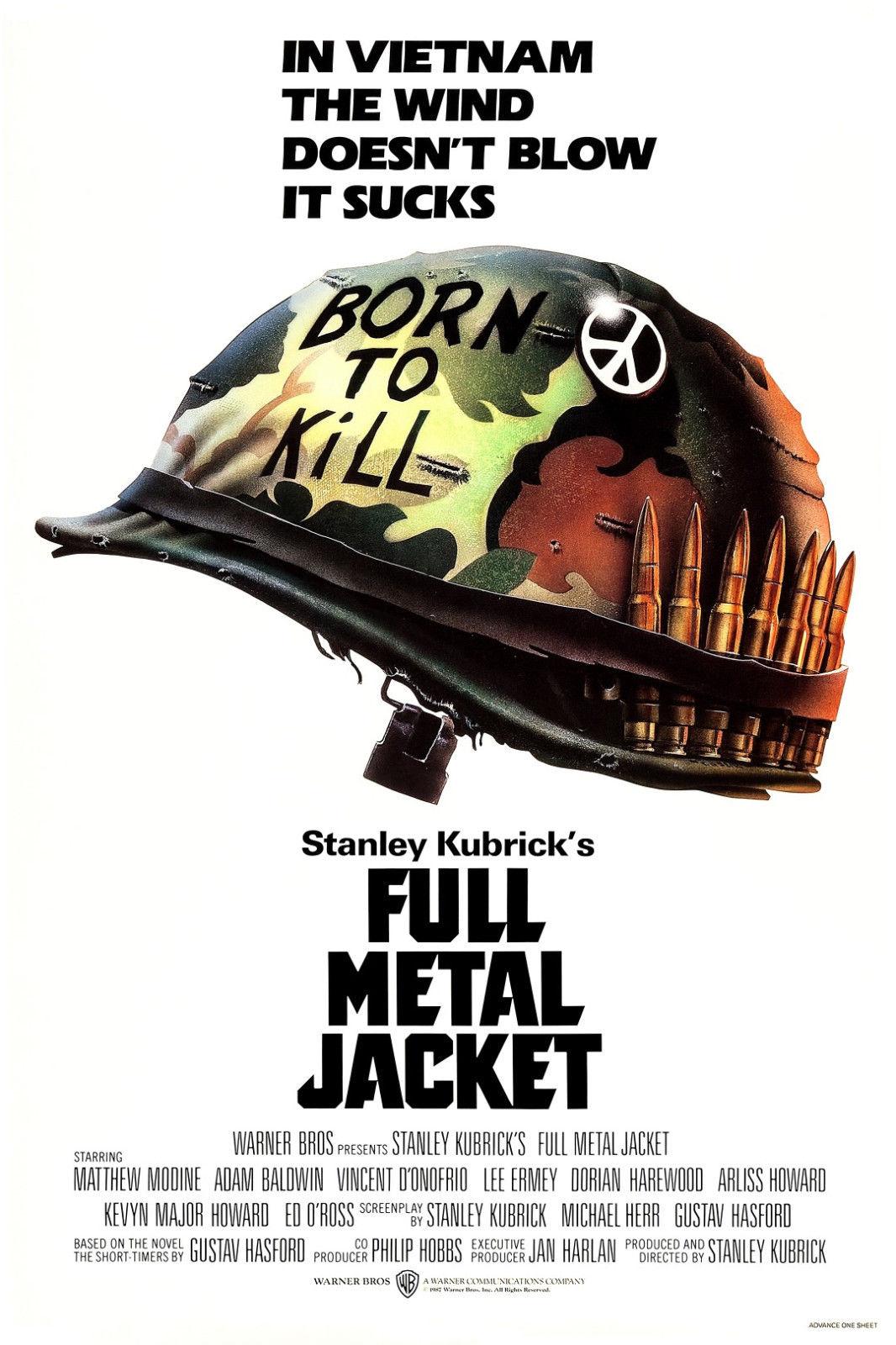
“You write ‘Born to Kill’ on your helmet and you wear a peace button. What’s that supposed to be, some kind of sick joke?” — Colonel
Full Metal Jacket is the kind of war movie that sticks in your craw like old metal shavings. It’s 1987, Stanley Kubrick’s last film released in his lifetime, and it plays less like a traditional Vietnam War saga and more like a taunt packed into two very different acts. One half is a barracks horror show about how the military turns boys into killers; the other is a grubby, almost casual descent into the chaos of combat. Together, they make a movie that feels intentionally disjointed so it can drill down on the same idea from two angles: war doesn’t just brutalize your body, it reshapes your mind into something barely human.
The film follows Private J.T. “Joker” Davis, played by Matthew Modine in one of those quietly watchful performances that’s easy to underestimate. Joker starts as a kind of archetypal smart‑mouth recruit, the guy who thinks he’s above the hysteria until he realizes he isn’t. Around him swirls a platoon of young Marines going through basic training at Parris Island under the merciless Gunnery Sergeant Hartman, played with shark‑like relish by R. Lee Ermey, who was actually a real‑life Marine drill instructor. Hartman’s whole job is to obliterate softness and replace it with drilled‑in aggression, and Kubrick lingers on every insult, every barked command, until the abuse stops feeling like a setup for a war movie and starts feeling like the main event.
The first half of Full Metal Jacket is basically a single, sustained initiation ritual. The camera stays tight, almost claustrophobic, trapping you in the barracks with the recruits, so you feel the same sensory overload they do. The lighting is harsh, the colors washed out, and the camera often locks in on Hartman’s face mid‑rant, making you uncomfortably intimate with his cruelty. This isn’t training so much as a manufactured psychological war waged on the platoon’s collective brain. The recruits are constantly degraded, mocked, and forced into grotesque rituals of humiliation, and the film never lets you forget that this is the system’s idea of “making Marines.” Kubrick doesn’t fake the perverse appeal of this process either; there’s a weird, ugly thrill in how effective it is, in how the boys start enjoying the brutality once they’re inside it.
The standout character in this section is Leonard “Gomer Pyle” Lawrence, played by Vincent D’Onofrio in a performance that’s almost physically uncomfortable to watch. D’Onofrio’s Pyle is this thick‑set, awkward kid who can’t keep up, and the movie doesn’t soften his edges to make him likable. He’s genuinely bad at the routine, slow, clumsy, but he’s also clearly just trying to survive. The film lets you watch, in a very matter‑of‑fact way, how the system turns his inadequacy into a target. The other recruits are instructed to punish him, and soon everyone starts in. The film doesn’t moralize about it; it just shows that this kind of group cruelty is baked into the structure. The infamous scene where the platoon holds Leonard down with piled‑on bed sheets while whacking him with a bar of soap wrapped in a towel is less about a single act of violence than about what it means to normalize dehumanization before you ever see combat.
What’s so unsettling about Full Metal Jacket is that it never pretends Hartman is some rogue sadist. He’s not an outlier; he’s the product of the system, and he’s also the system’s avatar. In that sense, the first half of the film functions like a kind of industrial horror. The Marines are being processed like defective parts on a factory line, streamed through a machine designed to break them and then rebuild them as compliant killers. The film toys with the idea that the military doesn’t want robots so much as creatures that hunger for violence on command. The line about “we don’t want robots, we want men” is repeated with a kind of grim irony because what the film actually shows is the production of something in between: not quite human, not quite machine, but something that can pull a trigger without hesitating.
Jumping from Parris Island to the streets of Huế during the Tet Offensive, the second half of Full Metal Jacket feels like a different movie in tone but the same one in thesis. Joker, now a combat correspondent with a Stars and Stripes hat and a “Born to Kill” slogan on his helmet, is literally split down the middle between observer and participant. He carries a camera and a rifle; he’s supposed to report, but he also has to fight. The film doesn’t resolve that tension the way a more sentimental war movie would. Instead, it lets Joker drift in that gray zone where war is equal parts absurdity and atrocity. The Vietnamese civilians are largely faceless, and the war itself is shown as a series of loosely connected vignettes—raids, ambushes, random firefights—rather than a grand narrative of heroism or tragedy.
Kubrick’s Vietnam is less a country and more a ruined theater set. The cityscapes are wide, desolate, and oddly beautiful in their destruction, as if the war has turned everything into a series of bleak tableaux. The camera doesn’t linger on gore for shock value; it lingers to make the war feel like a permanent, almost aesthetic state of ruin. Individual soldiers pop in and out: Animal Mother, the violently unhinged Marine played by Adam Baldwin; Cowboy, the earnest, almost naive replacement; and the rest of the squad, who oscillate between fear, boredom, and bursts of casual cruelty. None of them are given the kind of tragic backstories that usually make you emotionally invested in a war film. Instead, they’re presented as fragments of a larger machine, each one another cog in the same indifferent system.
The film’s most famous structural trick is its way of keeping politics at arm’s length while still radiating a deeply skeptical view of the war. It doesn’t really bother telling you who’s right or wrong, or why the Marines are there. It just shows what they become and what they do. The movie doesn’t ask you to sympathize with the Marines in the way some war films do; it asks you to recognize the mirror. The famous ending, where the Marines march through flaming ruins to the tune of Mickey Mouse, is pure Kubrick dark surrealism. The cheerful cartoon theme clashes violently with the apocalyptic imagery, and the soldiers chant along with a kind of manic innocence that feels like the last vestige of humanity being cannibalized by the war itself. It’s hard to tell whether the moment is tragic, absurd, or both, and that’s the point.
Full Metal Jacket is also a film about storytelling and the way narratives are weaponized. Joker, as a reporter, is supposed to package the war for a distant audience. He’s there to turn chaos into digestible stories, but the movie quietly undermines that idea by showing how unreliable those narratives are. The soldiers’ own stories are laced with jokes, bravado, misogyny, and casual racism, and the film doesn’t clean them up. It lets you sit with the ugliness, even when it’s delivered with a laugh. The film doesn’t romanticize the Marines’ camaraderie or soften their cruelty; it just lets you watch them behave like ordinary guys who happen to be doing something extraordinary and monstrous.
The cinematography in Full Metal Jacket is cold and precise, which is exactly what the material needs. The camera behaves like a reluctant witness, framing the Marines in symmetrical, almost clinical compositions that make their brutality look routine rather than spectacular. The score is minimal, and the film often relies on diegetic sound—machine‑gun fire, jeep engines, distant explosions, Hartman’s voice echoing off concrete walls—to ground you in the sensory overload of military life. Even the few moments of levity feel like concessions to show business more than true relief. The soldiers’ jokes are rarely funny in a wholesome way; they’re the kind of gallows humor that keeps you from noticing how broken you’ve become.
What ultimately makes Full Metal Jacket endure is that it refuses to offer catharsis. By the time the film ends, nothing has been “resolved” in the way Hollywood usually expects. Joker survives, but the war doesn’t; it just keeps going, and the Marines keep marching, chanting, and killing. The film doesn’t build toward a big speech about the futility of war or a tear‑jerker about fallen comrades. It just suggests, quietly and persistently, that the process outlined in the boot‑camp half is drafted, again, in the streets of Vietnam. You go in as a boy, you’re molded into something sharper and meaner, and then you’re sent out into a world that rewards that sharpness. The movie doesn’t need to say this out loud; it just shows it happening in scene after scene.
In that sense, Full Metal Jacket is one of the most honest anti‑war films precisely because it doesn’t pretend to be a plea for peace. It’s a portrait of a machine that feeds on itself, and of the people who get caught in its gears. It’s funny, disturbing, infuriating, and occasionally mesmerizing, sometimes all at once. It’s not a movie that wants to hold your hand or make you feel better about the human race. It wants you to stare at the gleam on that full metal jacket bullet and wonder what it took to make someone pull the trigger. That’s the real power of Full Metal Jacket: it doesn’t try to redeem the war, the soldiers, or the audience. It just makes sure you can’t look away.
Today’s song of the day was used to surprisingly good effect in Stanley Kubrick’s 1987 Vietnam war film, Full Metal Jacket.
Today would have been the 84th birthday of special effects maestro, Douglas Trumbull.
Today’s scene that I love come from 1968’s 2001: A Space Odyssey. The famous stargate sequence was designed by Trumbull and it remains one of the most influential science fiction moments of all time. In one of their greatest oversights, the Academy neglected to include Trumbull when they nominated the film for its special effects. As a result, the Oscar only went to Stanley Kubrick. Trumbull was not happy about that and, sadly, Kubrick and Trumbull did not speak to each other for years afterwards.
Despite not being included in the nomination, Douglas Trumbull’s work has stood the test of time.
4 (or more) Shots From 4 (or more) Films is just what it says it is, 4 (or more) shots from 4 (or more) of our favorite films. As opposed to the reviews and recaps that we usually post, 4 (or more) Shots From 4 (or more) Films lets the visuals do the talking.
With the official Cannes line-up due to be announced tomorrow, it only seems right to highlight a few American films that have previously won the Palme d’Or. It’s time for….
4 Shots From 4 Films That Won At Cannes
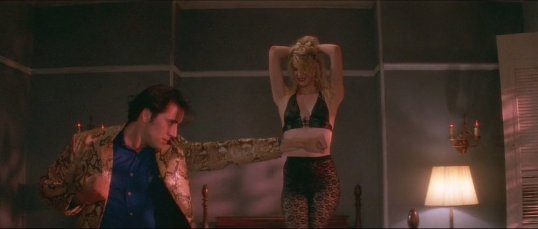
Wild At Heart (1990, dir by David Lynch, DP: Frederick Elmes)
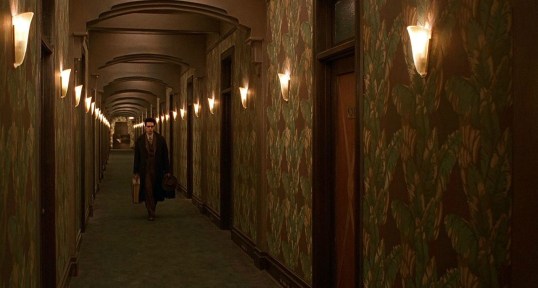
Barton Fink (1991, dir by the Coen Brothers, DP: Roger Deakins)
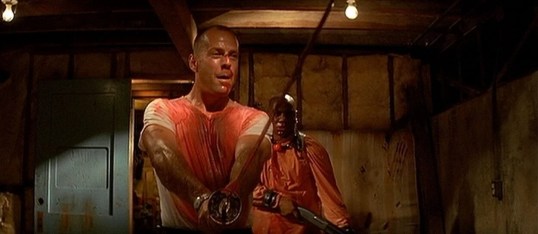
Pulp Fiction (1994, dir by Quentin Tarantino, DP: Andrzej Sekuła)
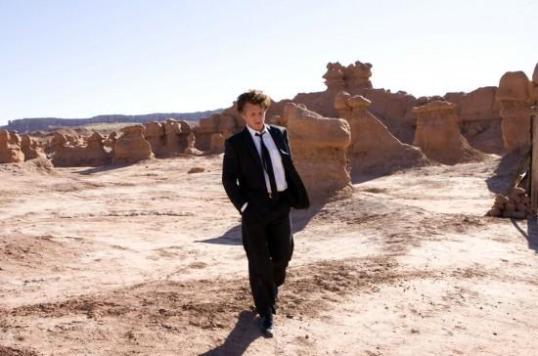
Tree of Life (2011, dir by Terrence Malick, DP: Emmanuel Lubezki)
 Through the Shattered Lens