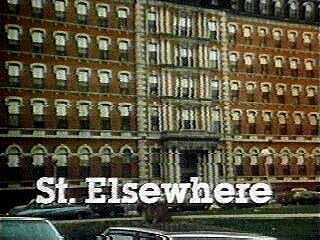
Welcome to Retro Television Reviews, a feature where we review some of our favorite and least favorite shows of the past! On Fridays, I will be reviewing St. Elsewhere, a medical show which ran on NBC from 1982 to 1988. The show can be found on Daily Motion.
This week, a famous doctor comes to St. Eligius.
Episode 3.13 “Dr. Wyler, I Presume”
(Dir by Mark Tinker, originally aired on December 19th, 1984)
This week’s episode opens in the hospital gift shop. Dr. Craig is excited because a Nobel Prize-winning surgeon, Dr. George Wyler (David Wayne), is traveling from Africa to St. Eligius. Wyler is bring along a man who needs a kidney transplant. They are hoping to find a donor in Boston.
Dr. Auschlander, who is an old friend of Wyler’s, is a bit more nervous. Craig tells him not to worry so much and then grabs a carnation that he puts on Auschlander’s lapel.
As Auschlander starts to leave the gift shop, Craig says, “Don’t forget to pay for that.”
It’s a brilliant opening for a pretty good episode of St. Elsewhere. It’s always interesting to see the usually arrogant Dr. Craig in fanboy mode and one gets the feeling that, if he’s impressed by Dr. Wyler, than Wyler really must be as brilliant as everyone says.
And maybe he is! It’s hard to say for sure. When Wyler arrives at the hospital, he’s avuncular and obviously intelligent but we really don’t learn much about him, beyond the fact that he’s an old friend of Auschlander’s. The rest of Wyler’s scenes feature him and Auschlander sitting around and talking about how they’re both getting older. It’s not boring, largely due to the performances of Norman Lloyd and David Wayne. But, after all of the build-up, it’s a bit anti-climatic. That said, according to the imdb, Dr. Wyler appeared in a total of three episodes so I imagine things will develop.
While this is going on, Nurse Rosenthal is having a mid-life crisis. Her 45th birthday is coming up and she doesn’t want to celebrate it. She’s not amused when the nurses get her a stripper. Usually, I would have sympathy for a character who hates the idea of getting older but I’m a little bit tired of Nurse Rosenthal and her poor-me attitude. I get that she’s upset that her adulterous affair hasn’t been going well but maybe she should take that as a sign to stop sleeping with married men.
Meanwhile, Mrs. Hufnagle, the patient that no one likes, continues to get on everyone’s nerves. She’s even managed to alienate Elliott! I actually feel bad for Mrs. Hufnagle. Yes, she complains a lot but being in a hospital is a scary thing. I get the feeling that the doctors and nurses getting annoyed with her is probably the most realistic part of the series. Dr. Morrison is now Hufnagle’s doctor and that worries me. Morrison’s stories always end in the most depressing way possible.
At the tv station, Victor is told that his medical segments are not popular with viewers and that he needs to make being sick sound more pleasant than it is. Victor records an upbeat segment about how wonderful it is to go the hospital.
At the hospital, Victor assists Dr. Craig in removing an live exploding bullet from a woman who was shot in a robbery. Victor worries that the bullet could explode as he removes it and end his medical career. Fortunately, the operation is successful but Craig still tells Ehrlich that he’s a disgrace.
Ouch!
Hey, this was a really good episode. It was well-acted. It wasn’t too depressing. Dr. Craig got to snap at a lot of people. The best episodes always feature Dr. Craig going off on someone. St. Eligius may not be the best hospital but, this week, it was the most entertaining.
Welcome to Late Night Retro Television Reviews, a feature where we review some of our favorite and least favorite shows of the past! On Thursdays, I will be reviewing Highway to Heaven, which aired on NBC from 1984 to 1989. The entire show is currently streaming on Tubi and several other services!
This week, Jonathan and Mark are speech therapists.
Episode 5.11 “The Inner Limits”
(Dir by Michael Landon, originally aired on July 21st, 1989)
George (Tim Choate) has spent years speechless and paralyzed. However, after George’s brother, Paul (Joseph Culp), has a chance meeting with speech therapist Jonathan Smith, it is discovered that George is actually a genius who can communicate through blinking and who hopes to write a book. Paul goes from wanting to move out of his childhood home and into an apartment with his girlfriend, Jessica (Lorie Griffin) to feeling like he has a duty to spend the rest of his life helping his mother (Julianna McCarthy) take care of George.
I’ve been crying a lot this year. I lost my Dad in 2024. Exactly one year later, I lost the aunt who helped to raise me when I was a child. I didn’t really get a chance to mourn my Dad because I immediately became one of my aunt’s caregivers. I thought that if I couldn’t save my Dad from Parkinson’s, I could at least save my aunt from Alzheimer’s. After my aunt passed, I threw myself into the holidays and I dealt with my emotions by buying lots of presents for other people. It’s only now, in the light of 2026, that it’s all truly hitting me. I cry very easily right now and I cried while watching this episode. There’s a sincerity and earnestness to Highway to Heaven that gets to me, despite how corny the show could sometimes be.
That said, this episode had the same flaws as most of season 5’s episodes. Jonathan and Mark were only in a few scenes and the majority of the episode was carried by Joseph Culp and Julianna McCarthy, both of whom tended to overact during their big emotional scenes. Culp eventually won me over but McCarthy’s performance was so theatrical and over-the-top that it really did take you out of the story.
That said, I did cry. Would I have cried if I wasn’t currently in mourning? I think I would have, actually. The final shot of a young boy reading George’s book while sitting in a wheelchair earned those tears. We never really know how many people we help, do we?
Welcome to Retro Television Reviews, a feature where we review some of our favorite and least favorite shows of the past! On Thursdays, I will be reviewing Decoy, which aired in Syndication in 1957 and 1958. The show can be viewed on Tubi!
This week, Casey learns about the dangers of reefer!
Episode 1.24 “Saturday Lost”
(Dir by Stuart Rosenberg, originally aired on March 24th, 1958)
Casey and her partner-of-the-week (played by Simon Oakland) are investigating the death of Geraldine “Geri” Wilson, a quiet and studious college student who was found dead on the side of the road after attending a college football game with her sister, Beth (Barbara Lord). Beth, who couldn’t even remember her own name when she was first found the morning after, isn’t much of a witness. She can’t remember what happened that night but, as she and Casey sit in one Geri’s old hangouts, she recognizes Ken Davidson (Larry Hagman), a student who was with them at the football game. Beth remembers that Ken and Geri had a fight.
The stunned Ken says that he had no reason to kill Geri.
Casey replies, “Marijuana gave you a reason!”
Casey has figured out, from listening to the way the spacey Beth talks, that Beth and Geri smoked “reefer” the night of the football game. Casey is convinced that, in a marijuana-crazed state, Ken tossed Geri out of the car. To help jog Beth’s memory, she has her partner drive Beth, Ken, and Casey along the same route where Geri’s body was found.
“Where did you get the reefers, sonny!?” Casey demands of Ken.
Beth suddenly remembers that she’s the one who bought the marijuana. Beth says that it only cost a dollar and that Ken himself didn’t indulge. Instead, it was just Beth and Geri who got stoned. Beth was driving when Geri opened the car door and fell out. “Faster! Faster!” Beth says, a line that immediately brings to mind the 30s anti-drug film, Reefer Madness.
(Why wasn’t Ken driving if he was the only one who wasn’t stoned?)
Back at police headquarters, Casey looks at the camera and tell us that the case has been dismissed. However, Beth will never forget that her sister died because Beth bought “reefer.”
Beverly Garland is, as always, excellent and a young Larry Hagman does well as Ken. But Barbara Lord overacts to such an extent that you really find yourself wondering if maybe she actually popped a bunch of amphetamines as opposed to smoking weed. Indeed, Beth and Geri’s story would be plausible with a lot of different drugs but it’s not particularly plausible with marijuana. There’s also a rather bizarre cameo from a young William Hickey (you’ll recognize the voice), playing a hipster who spouts a lot of nonsense. If anything, Hickey’s hipster comes across as if he’d be more likely to know where to get weed on campus than Ken but Casey just lets him wander off. In the end, this episode feels like a version of the urban legend about the girl who walked into an airplane propeller because she took too many pills.
Larry Hagman, I should mention, was a proud member of the Hollywood counter-culture and was very open about his own use of marijuana. (Apparently, he was introduced to it by Jack Nicholson, who felt it would help Hagman cut back on his drinking.) I wonder if anyone ever asked him about this episode.
Welcome to Late Night Retro Television Reviews, a feature where we review some of our favorite and least favorite shows of the past! On Wednesdays, I will be reviewing 1st and Ten, which aired in syndication from 1984 to 1991. The entire series is streaming on Tubi.
Things aren’t looking too good for the Bulls!
Episode 3.7 “A Mutiny on the Bull Team”
(Dir by Stan Lathan, originally aired on October 7th, 1987)
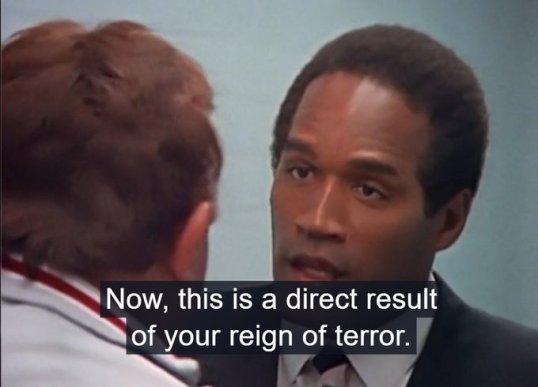
After a terrible start to the season (back-to-back losses!), TD tells Coach Grier that he needs to do something to get the team back into championship shape. Coach Grier launches an intensive training regimen and he posts a list of rules in the locker room — no beer in the locker room, players must shave for game day, and a bunch of other things. The players rebel and, during the next game, they stop running the plays that Grier wants. TD confronts Grier and demands to know what’s going on. Grier says that he just did what TD told him to do. TD says that he didn’t tell Grier to become a dictator even though that is kind of what TD told him to do.
Really, “reign of terror?” Coach Grier is like in his 60s and he’s fat and out of shape. The football players are …. well, football players. What exactly is TD Parker saying? It’s hard to say. OJ Simpson delivers all of his lines in the same amiable and bland manner that he used when he said he would devote his life to searching for the real killers. It’s hard to know what TD is thinking.
Anyway, Grier realizes the errors of his ways and the Bulls win the game! So, TD doesn’t have to cut anyone from the team. He can put away his knife for now. Everyone in the locker room should be breathing a sigh of relief.
Meanwhile, Yinessa and new owner Jill Schrader struggle with their feelings for each other. In the end, Yinessa kisses Jill in the stadium parking lot so I guess they decided to forget about the whole “We have to maintain a professional separation” thing.
One final note: Last week’s episode featured Delta Burke swearing that she was going to reclaim ownership of the Bulls. But, with this episode, Burke is no longer listed in the opening credits so I guess that storyline is over with. Jill is now the owner. Good! Maybe the Bulls will finally win a championship.
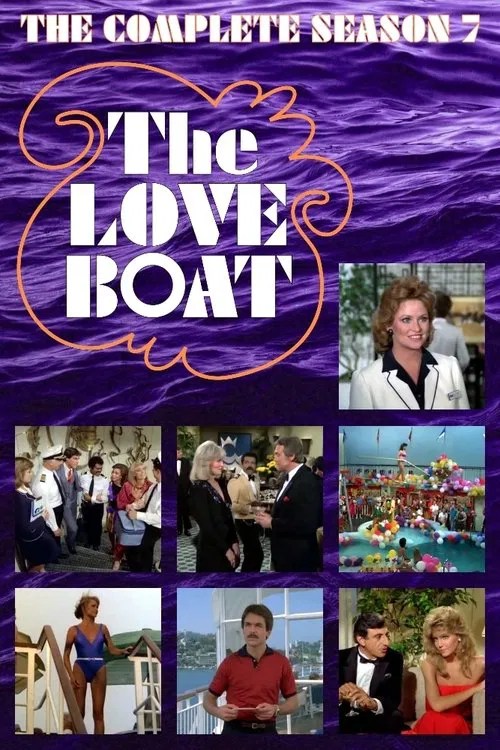
Welcome to Retro Television Reviews, a feature where we review some of our favorite and least favorite shows of the past! On Wednesdays, I will be reviewing the original Love Boat, which aired on ABC from 1977 to 1986! The series can be streamed on Paramount Plus!
(Dir by Richard Kinon, originally aired on December 3rd, 1983)
A detective (Don Gordon) tells Isaac and Gopher that he suspects a woman named Doris will be boarding the boat. She’s supposed to testify in a high-profile divorce case and she’s been dodging the process servers. The detective mentions that there’s a reward for turning Doris in. That definitely get Gopher and Isaac’s attention.
And Doris (Markie Post) is on the boat! Except she is pretending to be a teenager named Dee Dee and she’s speaking in an annoying squeaky voice. Jerry Howard (Clark Brandon) meets Dee Dee and develops a crush on her. Meanwhile, Jerry’s father, Phil (Geoffrey Scott), meets Doris and develops a crush of his own! In the end, Doris falls in love with Phil and Jerry …. well, Jerry gets his heart broken but he claims not to care. Phil is amused. As for the divorce case, it’s settled so Doris doesn’t have to testify after all!
(And no, there’s no reward for Isaac and Gopher. In fact, Stubing threatens to fire them.)
While that’s going on, author Daniel Baker (Tom Poston) wants to enjoy a romantic cruise with his wife (Abby Dalton) but he’s being blackmailed by his assistant, Wendy (Leslie Easterbrook). Wendy knows that Daniel plagiarized sections of his book and she threatens to reveal the truth unless Daniel has an affair with her. This is one of those storylines that would have worked better if some different casting choices had been made. As it is, noted sex symbol Tom Poston feels miscast.
Finally, Julie has a blind date boarding the boat. He turns out to be a nerdy, overweight guy named Leonard Gluck (Walter Olkewicz). Julie has nothing in common with Leonard and is planning on dumping him. But then Leonard dumps her first and Julie has a crisis of confidence. This story had the potential to reveal a new side of Julie but, in the end, Leonard revealed that he only dumped Julie to make her like him and Julie’s confidence was restored, along with her rule about not dating fat guys.
This was not a great cruise. It took me two minutes to get sick of Dee Dee’s voice. Oh well — not every trip can be a winner!
“A man dies when he is forgotten… as long as someone remembers you, you never truly die,” — Dr. Hiriluk
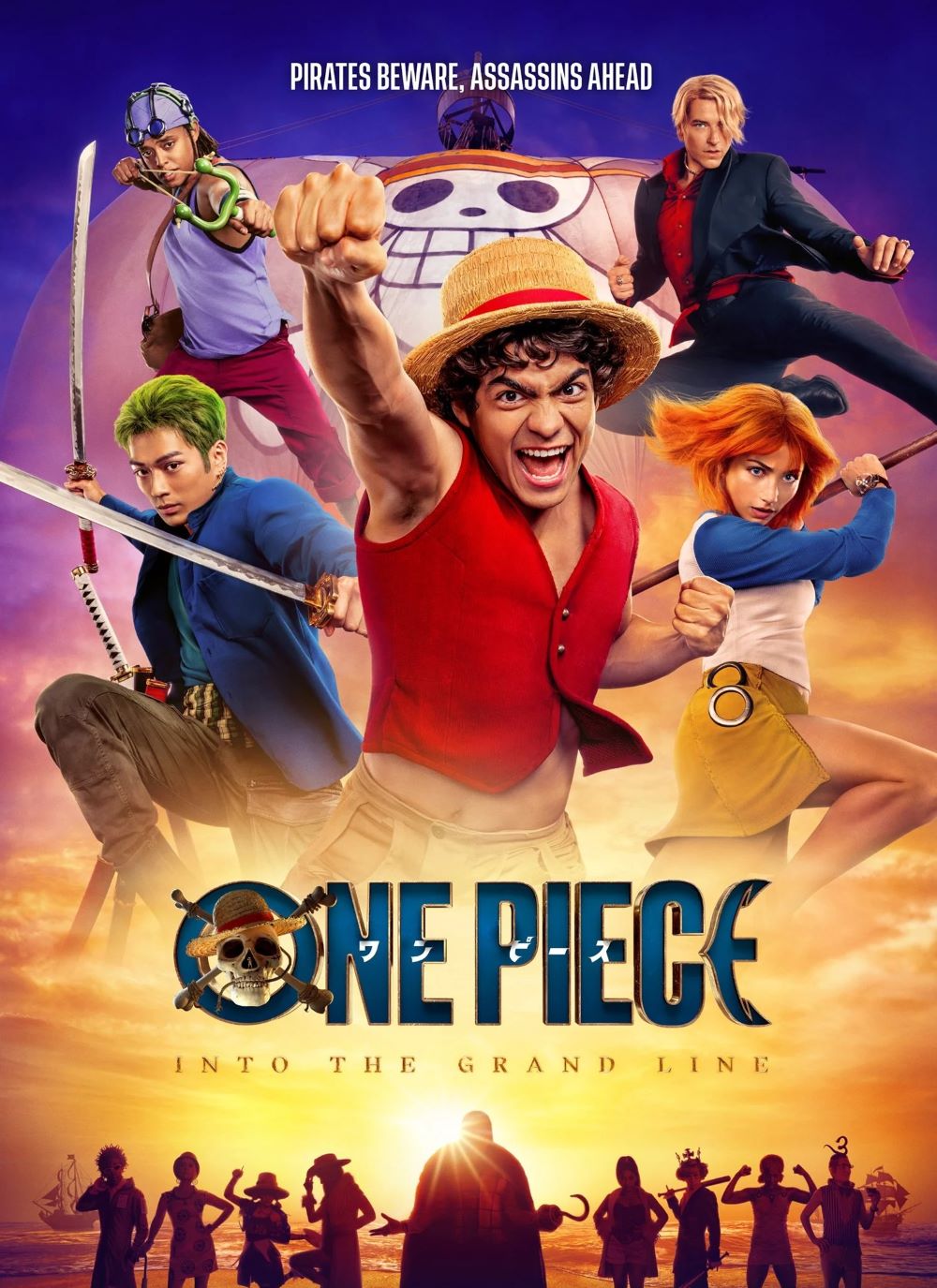
Netflix’s One Piece live-action sails into its second season with a lot more swagger, a lot more snow, and just enough rough edges to keep the debate interesting instead of purely celebratory. Season 2, subtitled Into the Grand Line, takes the Straw Hats from Loguetown through Reverse Mountain, Whisky Peak, Little Garden, and finally Drum Island, and you can feel the creative team leaning into the idea that season 1’s success wasn’t a fluke. It’s bigger, louder, more emotionally direct, and also a bit more overstuffed, but the core mix of sincerity, goofiness, and found-family melodrama still mostly works in live action.
The early stretch, especially episode 1, comes out swinging like the writers have a checklist of “stuff we have to set up before the Grand Line” and they’re determined to cram it all into a single opening salvo. Loguetown gets positioned as both a victory lap for the season 1 crew and a promise that the stakes are rising; you’ve got the looming execution platform, the legacy of Gol D. Roger, and the Marines closing in from multiple angles. Smoker and Tashigi are introduced as new Marine threats, and while they’re not as absurdly overpowered as their manga counterparts, their presence immediately shifts the atmosphere from “wacky pirate road trip” to “you’re on borrowed time, kids.” The result is an opener that’s busy to the point of clutter, but rarely boring, and it reassures you that the show still understands the scrappy, earnest energy that made season 1 feel like a minor miracle.
Once the Going Merry officially commits to the Grand Line, the season loosens up and starts having fun with its new sandbox. Reverse Mountain and Laboon give you that classic One Piece blend of absurdity and heartache: a giant whale with abandonment issues, a sea route that wants to kill you on the way in, and a protagonist who treats impossible odds like minor inconveniences. The adaptation trims and rearranges details from the manga, but the emotional throughline—Luffy refusing to dismiss someone else’s pain as a joke—still lands. Visually, the show takes advantage of wild weather and vertical ship movement to signal that Netflix has clearly opened the purse strings a bit.
The midseason arcs on Whisky Peak and Little Garden are where the season’s strengths and weaknesses sit side by side. On the plus side, the show feels far more confident staging ensemble scenes now; the Baroque Works intrigue in Whisky Peak gives everyone a small moment to shine, from Zoro’s stoic overkill to Usopp’s anxious resourcefulness. At the same time, you can tell the writers are racing a clock. Baroque Works as a threat sometimes plays like “sassy assassins of the week” rather than a deeply rooted conspiracy, and certain reveals hit faster than they probably should just to keep the plot on schedule. There’s a similar push-pull in the Little Garden episodes: the prehistoric island, giant warriors, and dinosaur mayhem are inherently goofy in a way that fits the franchise, but the story occasionally feels like it’s checking off “cool arc landmarks” rather than letting the weirdness breathe.
What keeps that middle section from sagging is how much better the show has gotten at tying action beats to character beats. Sanji and Zoro’s rivalry plays as casual, lived-in banter rather than forced comic relief, and Nami’s role as the crew’s unofficial grown-up becomes more prominent now that they’re in genuinely lethal territory. Usopp’s arc quietly levels up too; by the time we reach the Drum arc, he’s shifted from pure punchline to someone whose lies and bravado hide a growing sense of responsibility to the crew. The series still loves its shonen clichés, but it’s more careful now about using them as punctuation for character moments instead of the entire sentence.
The season really finds its footing once Nami falls ill and the plot veers into Drum Island. Episode 6 uses a simple hook—crew member in medical danger—to justify a full tonal pivot into survival mode, and it pays off. Nami’s fever forces Luffy and Sanji into a desperate climb toward a supposedly witch-haunted castle, and suddenly the story is about how far these idiots will go for each other, framed against a harsh, snowy landscape that looks genuinely inhospitable rather than just “TV cold.” The direction leans into long, wind-whipped shots of the mountainside and the rickety pathways up to Drum Castle so the physical effort feels real, even while we’re still dealing with rubber limbs and talking reindeer.
Visually, Drum Island is where the production team flexes the hardest. Drum Castle plays like a kind of “Winterfell of the Grand Line”: a looming, half-mythic fortress on a cliff that feels grounded enough to stand alongside the more heightened CG work. The snowstorms, the avalanche sequence, the torchlit interiors of Kureha’s domain—all of it sells the idea that the crew has wandered into a different kind of danger than the sunny East Blue of season 1. The score shifts accordingly, mixing sweeping orchestral swells with more intimate piano lines during the quieter medical scenes, and it does a lot of work underscoring the “we might actually lose someone this time” tension.
Episodes 7 and 8 are easily among the strongest hours the live-action has produced. The first of the two slows the pace to focus almost entirely on Tony Tony Chopper’s backstory, and it does that classic One Piece thing of luring you in with a silly premise—a talking reindeer in a tiny hat—and then punching you in the throat with abandonment, discrimination, and grief. The flashbacks to Chopper’s exile from his herd and rescue by Dr. Hiriluk are played surprisingly straight; Hiriluk becomes a ridiculous, heartbreaking figure whose speeches about miracles and cherry blossoms somehow dodge corniness through sheer conviction. Chopper’s performance has a gruff vulnerability that makes his early defensiveness around humans feel earned instead of cute schtick, and the combination of prosthetics, motion capture, and restrained CG works well enough that he reads as a real presence in the room, not a cartoon pasted in after the fact.
That said, the Chopper flashback episode isn’t flawless. Some of the emotional beats linger a bit too long, clearly honoring manga moments that don’t fully translate to live-action pacing, and a few of his transformation gags resort to quick cuts that blunt the imaginative body-horror silliness you get in animation. Still, the emotional spine is strong: Hiruluk’s doomed confrontation with Wapol, punctuated by illusory sakura petals and a speech about when a person truly dies, is staged with an almost theatrical sincerity that the cast actually pulls off. In the present, the B-plot with Zoro and Usopp anxiously waiting in the village for word about Nami is simple but effective, reinforcing how helpless it feels when your role in the crew doesn’t let you directly fix what’s wrong.
In the finale, the action splits cleanly between the village and the castle on the mountaintop, and that structure helps the chaos feel coherent instead of just noisy. Zoro and Usopp are down in Drum Village, hacking their way through the grotesque monster-soldier constructs that Wapol literally spits out as disposable shock troops, giving the ground battle a messy, creature-feature energy. Meanwhile, Sanji and Chopper are up in Drum Castle on top of Drum Mountain, clashing with Wapol’s advisors in tighter, more personal skirmishes that double as a test of Chopper’s resolve to stand with the Straw Hats. Wapol himself returns juiced up on his Baku Baku no Mi powers, and the episode leans hard into the grotesque humor of a villain who eats anything—including his own men—to spit out living weapons and fleshy blob minions.
The blend of practical creature work and CG in that finale isn’t flawless, especially in a few slow-motion shots where the animation looks more rubbery than Luffy, but it’s inventive enough that the absurdity never completely breaks immersion. The action is staged with a nice sense of geography: the snowy streets and rooftops of Drum Village, the cramped interior corridors of the castle, and the exposed battlements all feel distinct, so you always know where you are in the fight. The editing gives each Straw Hat a clear lane—Zoro as the unstoppable blade, Usopp as the desperate tactician, Sanji as the stylish brawler, Chopper as the rookie trying to prove he belongs—without turning the climax into a series of disconnected hero shots.
What really elevates the finale is how it uses the big battle to crystallize character arcs. Vivi, who’s been threaded into the season as a wavering princess-turned-co-conspirator, finally gets a proper leadership moment confronting Wapol and calling out his idea of kingship, and it feels earned instead of “we needed a speech here.” Dalton’s evolution from dutiful soldier to rebel champion hits a satisfying crescendo when he throws himself into the fight in a way that echoes his beastly manga counterpart, giving the non-Straw Hat side of the conflict some emotional heft. Luffy’s most telling moment isn’t about defending his own crew’s banner, but about protecting Dr. Hiriluk and Chopper’s sakura-painted Jolly Roger flag, making it clear that, to him, it isn’t just the Straw Hat symbol he respects but the very idea of a pirate flag as someone’s dream, no matter whose it is.
Chopper’s actual recruitment is peak One Piece cheese in the best way. After an episode and a half of backstory and reluctance, Luffy’s straightforward “You’re our doctor now” carries the weight of everything we’ve seen without turning into a speech, and Usopp’s outsider-to-outsider encouragement seals the emotional deal. The sleigh escape from Drum Castle, complete with impossible cherry blossoms blooming in a blizzard as Kureha salutes them with artillery, should be ridiculous, and it is—but it’s also exactly the kind of heightened, tear-jerking nonsense this series lives on. The show even sneaks in a small but potent Sanji beat, linking his obsession with feeding people to a sickly mother in his past, which adds a layer of vulnerability to his usual horny-cook routine without hijacking Chopper’s spotlight.
To keep things fair, the season does have some recurring issues. The pacing is uneven; cramming five arcs into eight episodes means some side characters and worldbuilding details flash by as cameos rather than lived-in pieces of a larger world. Wapol, while fun, sometimes leans too far into hammy buffoonery, undercutting his menace just when the show wants you to take Drum’s past trauma seriously. A few CG shots—particularly around Wapol’s more exaggerated transformations and some of the blob soldiers—don’t quite match the otherwise solid stunt work and practical sets, which can be jarring when the show is trying to sell you on grounded emotion. Nami spends a big chunk of the Drum arc sidelined by illness, and even though the narrative logic is sound, fans of her more active role in season 1 may feel shortchanged.
On the flip side, the main cast continues to carry the whole enterprise. Iñaki Godoy’s Luffy still walks that fine line between live-action goofball and shonen hero, radiating a kind of unfiltered optimism that makes his big declarations—about friendship, dreams, pirate kings—feel less like memes and more like core character. Mackenyu’s Zoro leans even further into deadpan exasperation, Taz Skylar’s Sanji gets both action hero and quietly wounded pretty boy notes, and Emily Rudd’s Nami remains the emotional anchor even when she’s stuck in a sickbed. Jacob Romero, meanwhile, gets a massive upgrade this season, with Usopp’s arc quietly becoming one of the highlights; he evolves from a running gag and anxious sniper into the Straw Hat who undergoes the most visible growth, fumbling his way toward that dream of being a “brave warrior of the sea” in a way that feels messy, vulnerable, and genuinely human. Add in strong turns from the Drum Island newcomers—Hiriluk’s big-hearted foolishness, Chopper’s skittish warmth, Kureha’s boozy tough love, Dalton’s stoic decency—and you end up with a season that feels richer in performance even when the story is sprinting.
Taken as a whole, One Piece: Into the Grand Line isn’t a flawless second voyage, but it is a confident one. It respects Eiichiro Oda’s world without trying to copy the manga panel-for-panel, it isn’t afraid to tweak pacing and emphasis for live action, and it continues to bet hard on earnest emotion over ironic distance. The rushed arcs, occasional CG wobble, and tonal whiplash won’t work for everyone, especially if you wanted a slower, more atmospheric take on the Grand Line. But if you were on board with season 1’s big-hearted cosplay-epic vibe, season 2 doubles down on that spirit, nails the Drum Island climax, and ends with the crew stronger, weirder, and more ready than ever to take on Alabasta.
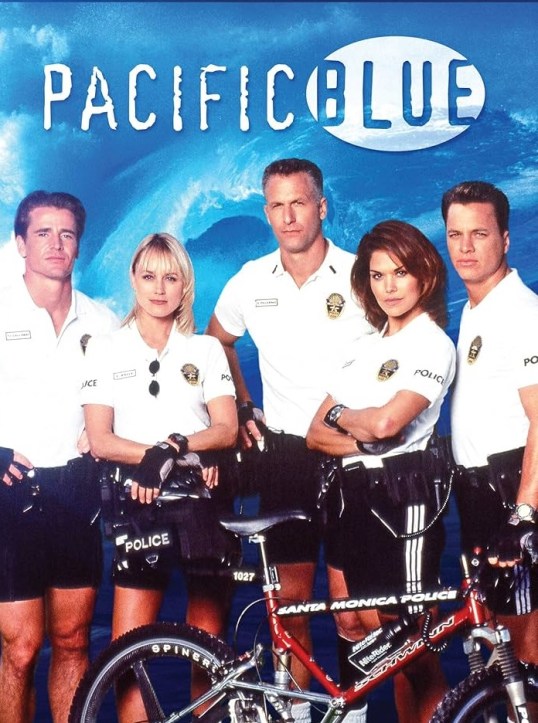
Welcome to Late Night Retro Television Reviews, a feature where we review some of our favorite and least favorite shows of the past! On Tuesdays, I will be reviewing Pacific Blue, a cop show that aired from 1996 to 2000 on the USA Network! It’s currently streaming everywhere, though I’m watching it on Tubi.
This week, the bicycle cops go after pharmaceutical smugglers.
Episode 3.18 “Caretakers”
(Dir by Sara Rose, originally aired on March 8th, 1998)
This week, a drug company is smuggling and distributing black market pharmaceuticals. Leslie Jordan plays Bo, the crazy man who lives in a storage unit and who has figured out what the company is doing. When he gets shot in the back, Chris feels guilty because she refused to listen to his ramblings earlier. After undergoing hypnosis to search for clues as to who shot Bo, Chris goes undercover as a potential drug buyer. It always amuses me whenever any member of the bike patrol goes undercover. None of them are capable of not coming across as being a cop and that’s especially true in Chris’s case. Everything from the way they talk to the way they glare at everyone to the way they stand just a little bit too rigidly screams, “Cop!” And yet the criminals never seem to catch on.
Meanwhile, Victor’s mother is deathly ill and needs some drugs to save her life. Luckily, the local priest has connections. But can Victor set aside whatever his issue is with the church? Does anyone care? I mean, I’m glad that Victor’s mom is alive at the end of the episode but Victor isn’t that interesting of a character.
We are three season into Pacific Blue and none of the characters are really interesting enough to carry the show. Even the lifeguards on Baywatch had more personality than the members of the bike patrol. The main thing that I’ll remember about this episode is that, even when they were keeping an eye on Chris working undercover, the cops all brought their bicycles.
The important thing is that Leslie Jordan survives his injuries. At the end of the episode, TC locks Chris in the Bo’s storage unit so that she’ll be forced to listen to his conspiracy theories. I guess TC’s okay with not getting any for a month.
I’d like this show better if the rode motorcycles.
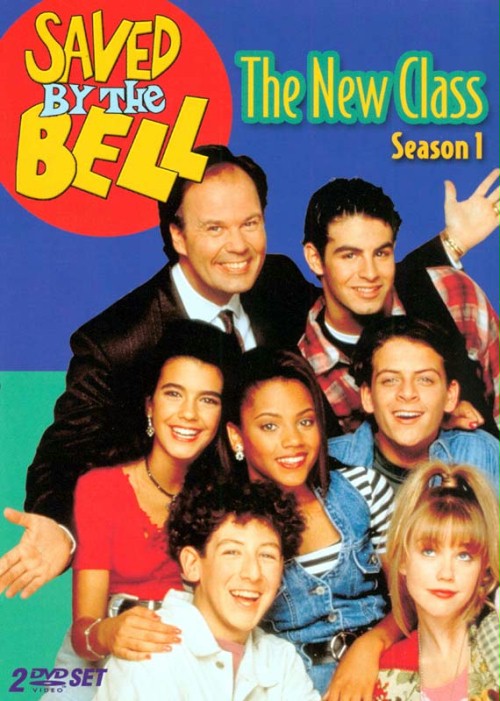
Welcome to Retro Television Reviews, a feature where we review some of our favorite and least favorite shows of the past! On Tuesdays, I will be reviewing Saved By The Bell: The New Class, which ran on NBC from 1993 to 2o00. The show is currently on Prime.
This week’s episode is so annoying.
Episode 1.8 “Belding’s Baby”
(Dir by Don Barnhart, originally aired on October 30th, 1993)
Ugh, this episode.
First off, I totally forgot that Mr. and Mrs. Belding named their son after Zack Morris. They did this because, during the original series, Zack helped deliver his namesake when he and Mrs. Belding ended up trapped in an elevator. While that was nice of Zack to do, I still have to wonder at the logic of naming your son after an unrepentant sociopath.
Anyway, Mr. Belding needs help looking after baby Zack. Scott volunteers to babysit him in order to get out of detention. Scott and the gang take baby Zack to the movies. Scott meets a girl named Ashley (Katy Barnhill), whose mother is a baby photographer who is seeking models. So, Scott pretends to be Zack Belding’s older brother and he and his friends try to get Baby Zack to the studio without Mr. Belding figuring things out. But when Belding takes his son to the Maxx, Weasel and Vicki have to dress up as Mr. Belding’s parents and….
Ugh, this is stupid.
It’s not even stupid in an amusing way. Scott lies about being Zack’s brother. There was absolutely no reason for Scott to lie. Ashley liked Scott from the start so Scott could have just said he was babysitting. For that matter, Mr. Belding could have hired a babysitter instead of entrusting his baby to the least responsible students in the entire school. This whole thing could have been straightened out by everyone not being an idiot. That’s not funny. It’s just annoying.
Dumb, dumb, dumb.
Also, we are eight episodes and Tommy D is still saying things to Scott like, “I’m impressed, kid,” as if he hasn’t known Scott for half of the school year already. And why does it matter if Tommy’s impressed? Tommy doesn’t ever do anything. He’s not a schemer. He just stands around and smiles. I imagine everyone impresses Tommy.
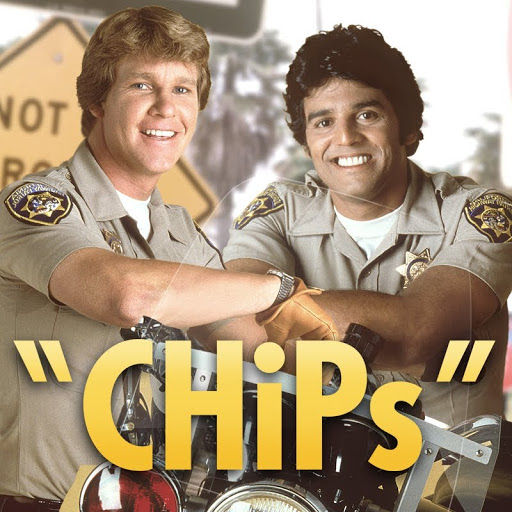
Welcome to Late Night Retro Television Reviews, a feature where we review some of our favorite and least favorite shows of the past! On Mondays, I will be reviewing CHiPs, which ran on NBC from 1977 to 1983. The entire show is currently streaming on Prime!
This week …. hey, what is this!?
Episode 5.12 “Mitchell & Woods”
(Dir by Bernard L. Kowalski, originally aired on December 18th, 1981)
When an old high school friend of Michell’s is murdered, Mitchell and Woods uncover a male prostitution ring. Along with bringing the guilty to justice, they also help Chickee (Pamela Susan Shoop) find the courage to leave her abusive relationship….
No, there’s not much motorcycle action. No, there’s no slow motion car crashes. Yes, this is an episode of CHiPs. Well, kind of.
It’s actually a backdoor pilot for a show about Mitchell and Woods. Ponch and Baker show up at the start of the show to wish Mitchell and Woods luck. Ponch and Baker return halfway through the show so that Ponch can tell Mitchell and Woods about an informant named Avrom (Tony Burton). And, finally, Ponch and Baker return at the end of the episode and give our erstwhile detectives a parking ticket.
Backdoor pilots at the worst! You’re all prepared to spend 40 minutes with people you know and suddenly, a bunch of new folks show up and start demanding your attention. It doesn’t help that Mitchell & Woods is a terrible pilot and I’m not really surprised that it didn’t become an actual series. Can Mitchell and Woods prove that woman can be good detectives? Will they ever impress their new boss (Paul Gale)? I don’t really know the characters so I don’t care.
I swear, they could have at least brought back Caitlyn Jenner for this episode.
Welcome to Retro Television Reviews, a feature where we review some of our favorite and least favorite shows of the past! On Mondays, I will be reviewing Miami Vice, which ran on NBC from 1984 to 1989. The entire show can be purchased on Prime!
This week, Al Lombard retuns.
Episode 5.18 “World of Trouble”
(Dir by Alan Myerson, originally aired on Jun 14th, 1989)
Way back in the first season, Dennis Farina appeared as an honorable gangster named Al Lombard who did not want his son, Sal, to follow him into the family business. During his first appearance, Lombard considered ratting out his associates in return for an immunity deal but, in the end, he refused. Al Lombard was old school. He was not a rat. That didn’t make much difference to his associates. The episode ended with an ambiguous freeze frame and gunshot that suggested they had executed him.
In this episode, it is revealed that Al Lombard faked his death and has spent the last few years in Europe. When a judge dismisses the years-old indictment against him, Al returns to Miami so he can visit his son, Sal (Timothy Patrick Quill). Despite the fact that Lombard went back on his promise to testify against his associates, Crockett and Tubbs are still happy to see him. Al is a likable guy!
Unfortunately, the whole thing is a set-up. Rival gangster Federico Librizzi (Ned Eisenberg) arranged for the indictment to be dismissed in order to lure Al back to Miami. Once in Miami, Al is upset to discover that Sal is now involved in the family business and that a gang war is about to break out over a new superweapon that Sal stole from the DEA. When Librizzi’s hitmen try to take out Al, they hit Sal instead.
Sal is dead and Al wants revenge. Al is smart enough to show up at a meeting between Librizzi and Burnett and Cooper (*sigh* the undercover thing again). Librizzi shoots Al, forcing Crockett and Tubbs to shoot Librizzi.
This was one of the fifth season episodes that did not originally air during the show’s network run. It was included in syndication as a “lost episode.” Dennis Farina gives a charismatic performance as Al Lombard but that’s about all this episode really has going for it. The other performances are nowhere close to being as good as Farina’s and the whole plot to bring Lombard back to Miami is ludicrously convoluted. Seriously, there aren’t mob hitmen in Europe?

 Through the Shattered Lens