Scenes That I Love: Harry Meets The Mayor From Dirty Harry


Today, we wish a happy 89th birthday to the one and only Clint Eastwood!

At this point of his career (from which he says he is now semi-retired), Clint Eastwood has become an American icon.  In many ways, his persona epitomizes all of the contrasts and extremes of the American experience.  A political conservative who specializes in playing taciturn and rather grouchy men, he is also one of our most humanistic directors, specializing in films that often question the traditional view of history and morality.  He may have first become a star in Europe but Clint Eastwood is definitely an American original.

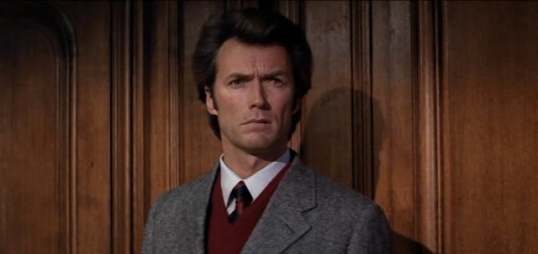
In honor of his birthday, I’m sharing a scene that I love from 1971’s Dirty Harry.  In this scene, Detective Harry Callahan (Clint Eastwood) meets the Mayor of San Francisco (John Vernon).  The mayor is concerned that there’s a psycho on the loose, gunning people down and demanding money.  Callahan’s annoyed that he’s spent a lot of time sitting in a waiting room.  Things pretty much go downhill from there.

There’s so much that I love about this scene.  Both Eastwood and Vernon do a wonderful job playing off of each other.  The Mayor may be in charge of the city but Callahan probably didn’t vote for him.  One thing that I especially love about this scene is the look of annoyance that crosses Harry’s face whenever he’s interrupted.

And, of course, there’s that final line!  Eastwood does a great job explaining Harry’s “policy” but ultimately, it’s Vernon’s “I think he’s got a point,” that provides the perfect closing note.

Happy birthday, Mr. Eastwood!

After The French Connection: Popeye Doyle (1986, directed by Peter Levin)


In this made-for-television movie, a pre-Married With Children Ed O’Neill takes over the role that won Gene Hackman an Oscar.

Popeye Doyle (played by O’Neill) is a hard-drinking, hard-living Irish police detective working out of New York City.  Along with his more emotionally stable partner, Tony Parese (Matthew Laurence), Doyle spends his time busting drug dealers, going on stakeouts, and chasing junkies through the mean streets of NYC.  When Jill, a beautiful young model (Audrey Landers) turns up dead, everyone assumes that it was an overdose.  Doyle, however, has his doubts.  All of her friends say that Jill never used drugs and, when Popeye searches her apartment, he doesn’t find any evidence that would point to her being junkie.  Instead, he finds tapes that Jill made for various wealthy men.  Convinced that Jill was murdered, Popeye is soon investigating the type of powerful people who are not used to being investigated.

In 1986, someone at NBC thought it would be a good idea to launch a series based on The French Connection.  Since Gene Hackman was busy making movies and hadn’t come anywhere close to appearing on television since losing the role of the father on The Brady Bunch to Robert Reed, the role of Popeye was given to Ed O’Neill.  At that time, O’Neill was an unknown who had appeared in a handful of plays, two movies, and one Red Lobster commercial.  The movie, Popeye Doyle, was meant to serve as a pilot for the proposed television series.  Needless to say, the film did not lead to a series.  If it had, Ed O’Neill probably wouldn’t have been available to take the role of Al Bundy on Married With Children.

O’Neill is probably the main reason that anyone today would want to see Popeye Doyle, which is otherwise a routine cop movie.  Except for a few scenes where he seems to be trying too hard to imitate Hackman’s iconic performance, O’Neill brings authentic working class swagger to the role.  He drinks too much, he often says the wrong thing, and he pisses off all the right people.  There are some scenes where O’Neill seems to blend right in with the pilot’s gritty visual style.  (It was shot on location in Ed Koch-era New York.)  There are other scenes where he gets so manic that he seems to be a man possessed.  In the scene where he watches Candy Clark do an impromptu striptease, O’Neill as Doyle gets so excited that you worry about him.  Interestingly, Doyle wanders through the film dressed like a slob and acting like a schlub but every beautiful woman he meets wants to have sex with him.  In that regard, it is easy to imagine the movie as being some sort of elaborate daydream that Al Bundy had while selling shoes.

As for the events in The French Connection, they’re mentioned briefly at the start of the movie, when a reporter asks Doyle about that time he accidentally shot and killed a federal agent.  Popeye Doyle still has many scenes that are meant to remind viewers of the first film.  There’s a stakeout scene, where Doyle and Parese sit out in the cold while their target enjoys a nice night.  There’s a scene where Doyle works undercover as a bum.  And, of course, there’s a car chase, though it’s nowhere near as exciting as the one from The French Connection.

Popeye Doyle has never been officially released on DVD (or even VHS), though it is available on YouTube.

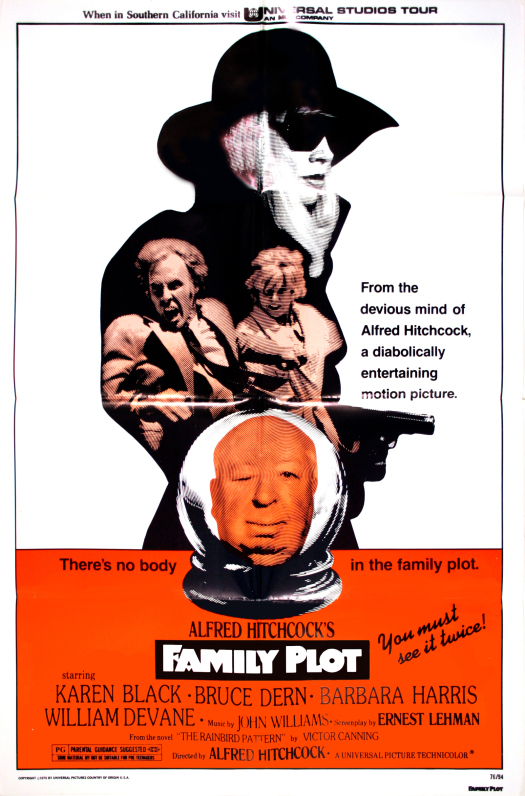
Alfred Hitchcock’s Last Ride: FAMILY PLOT (Universal 1976)


gary loggins's avatarcracked rear viewer

Critics in 1976 were divided over Alfred Hitchcock’s FAMILY PLOT, which turned out to be his final film. Some gave it faint praise, in an “it’s okay” kinda way; others decried it as too old-fashioned, saying the Master of Suspense had lost his touch – and was out of touch far as contemporary filmmaking goes. Having recently viewed the film for the first time, I’m blessed with the gift of hindsight, and can tell you it’s more than “okay”. FAMILY PLOT is a return to form, and while it may not be Top Shelf Hitchcock, it certainly holds up better than efforts made that same year by Hitch’s contemporaries George Cukor (THE BLUE BIRD), Elia Kazan (THE LAST TYCOON), and Vincente Minnelli (A MATTER OF TIME).

Hitchcock reunited with screenwriter Ernest Lehman (NORTH BY NORTHWEST) to concoct a devilishly clever black comedy about phony psychic Blanche Tyler who, along with…

View original post 469 more words

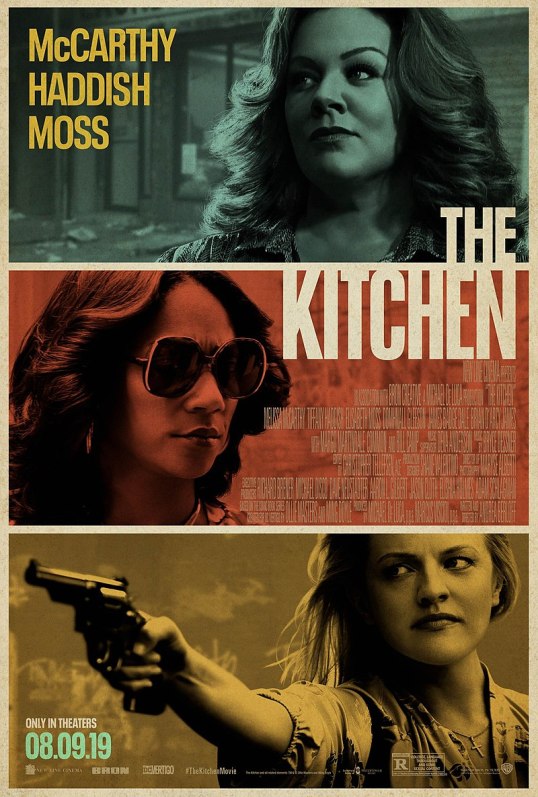
Here’s The Trailer For The Kitchen


The Kitchen, which will be coming out in August, is one of those films about which I am cautiously optimistic.

It’s about three women in 1970s New York.  Each one is married to a member of the Irish mafia.  When their husbands all end up getting arrested by the FBI, the women take control of the rackets themselves.  This, of course, brings them into conflict with the old and patriarchal Italian mob.

It is it a comedy?  Well, it does star TIffany Haddish and Melissa McCarthy as two of the of the wives.  However, though they both may be thought of as being primarily comedic actresses, Haddish is a critical favorite right now and McCarthy has two Oscar nominations despite the fact that she’s appeared in some truly terrible movies over the past few years.  Both of them have proven that they can handle drama just as well as comedy.

So, is this a drama?  Well, as you can see in the trailer below, it does appear to feature Elisabeth Moss falling in love with violence.  In fact, the trailer features a few people getting killed but it also appears to take a rather jaunty approach to all the death.  “Oh look!  He’s sitting on the toilet and he got shot!”

So, I’m going to guess that this film is going to try to balance both comedy and drama.  That approach, when it works, can lead to wonderful things.  And when it doesn’t work …. well, let’s not even think about it.

I will say this — the trailer’s glimpse of 42nd Street is gorgeous!

Anyway, here’s the trailer for Widows …. I mean, The Kitchen:

Here’s The Trailer For Rambo: Last Blood!


So, today, twitter is all abuzz over the trailer for the upcoming Rambo film.  Apparently this film, which is called Rambo: Last Blood, will be the final time that Sylvester Stallone will ever play John Rambo and it features Rambo coming home and fighting a Mexican drug cartel.

Look, to be honest, this trailer pretty much looks like a typical Sylvester Stallone trailer.  It could just as easily be the trailer for another Expendables film, except for the fact that Rambo has become an iconic figure in the annals of cinematic mayhem.  Just the mere mention of the name gets certain filmgoers excited.

Of course, I watched First Blood earlier this year and I was surprised to discover just how good a film it actually was.  And, of course, action film enthusiasts are still talking about that scene in Rambo where the title character kills the population of a small country in a matter of minutes.  So, I get why people are excited about this trailer but, at the same time, it still feels a bit generic.

This trailer also features Old Town Road because God knows it’s not like that song is currently overplayed or anything.

There’s one thing that I do think we definitely have to give Sylvester Stallone credit for.  I’ve read that, during the first part of his stardom, Stallone wasn’t always pleasant to work with and that he sometimes resented being thought of as just being an action star.  But, during the twilight of his career, it would appear that Stallone has definitely made a sort of peace with the roles that define him.  He understands what he does well and he tries to give his audience what they came for.  I’m predicting that, when Stallone’s 90 years old, he’ll probably still be making movies where he beats up terrorists.  By this point, of course, the terrorists might be attacking a retirement home but Stallone’s going to be there to put them in their place.

And we’ll all be better off for it!

Anyway, here’s the trailer:

The First Police Story: Slow Boy (1973, directed by William A. Graham)


Long before The Wire, Homicide, Chicago PD, NYPD Blue, or even Hill Street Blues, there was Police Story.

Co-created by cop-turned-writer Joseph Wambaugh, Police Story aired on NBC from 1973 to 1978.  It was an anthology series, with each episode following a different member of the LAPD as they deal with crime and social issues in Los Angeles.  For its time, it was ground-breaking in its realistic approach to the life and work of the police.  Interestingly, the show wasn’t always blindly pro-cop.  Often the cops featured were deeply flawed and the war on crime was frequently portrayed to be unwinnable.  Over the course of its run, Police Story was a regular Emmy nominee and won the award for Best Drama Series in 1976.

Police Story started, in 1973, with a two-hour TV movie.  At the time it aired, the pilot was called Stakeout but it has since aired in syndication under the title Slow Boy.  Vic Morrow stars as Sgt. Joe LaFrieda, a plainclothes detective who can’t keep his marriage together but who can take criminals off the street.  LaFrieda is the second-in-command of a special squad of detectives who specialize in watching and taking down high-profile criminals.  Their methods frequently come close to entrapment but they usually work.  Their current target is Slow Boy (Chuck Conners), the son of a mafia chieftain, who enjoys robbing stores.  When LaFrieda’s first attempt to put Slow Boy in jail is thwarted by a liberal judge and departmental bureaucracy, he and the squad come up with a second, less-than-legal plan to take Slow Boy down.

Considering the involvement of Joseph Wambaugh, it’s no surprise that plot is secondary to exploring the day-to-day lives of the blue-collar cops trying to take Slow Boy down.  The heart of the movie is in the scenes of the cops shooting the breeze and trying to keep each other amused during length shakeouts.  Their humor is often grim and the fascinating dialogue is cynical, dark, and, even by today’s standards, surprisingly raw.  One of the detectives (played by Harry Guardino, who specialized in loud-mouth city cops) is an unapologetic racist.  Though he gets a comeuppance of sorts, the way the film and the rest of his squad handle his racism will undoubtedly make modern audiences uncomfortable, even if it is authentic to the era in which Slow Boy was made.

The underrated Vic Morrow gives one of his best performances as the tough but sympathetic LaFrieda, who is bad at everything but his job.  He is ably supported by a host of familiar character actors.  Ed Asner plays LaFrieda’s reactionary lieutenant while Sandy Baron is great in the role of an informant.  Diane Baker was also perfectly cast as LaFrieda’s potential girlfriend.  (She first meets the detective while Slow Boy is holding a gun to her head.)  Finally, Chuck Conner is as intimidating as always as the sadistic Slow Boy.

Slow Boy is a tough and uncompromising police procedural and it provided a great start for Police Story.  Reruns of Police Story currently air on H&I on Sunday morning.

Special Memorial Day Edition: Randolph Scott in GUNG HO! (Universal 1943)


gary loggins's avatarcracked rear viewer

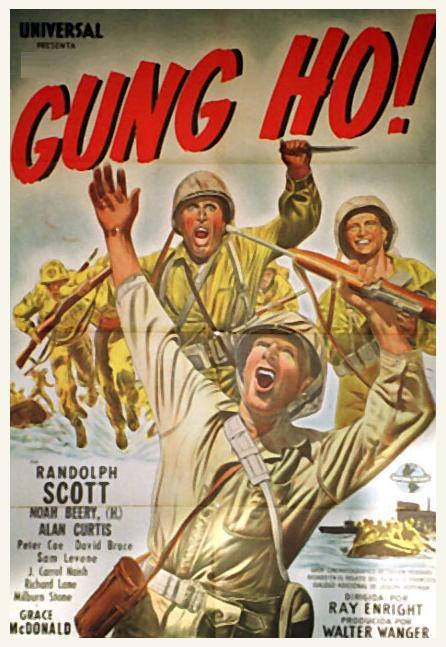
Duke Wayne wasn’t the only movie cowboy who fought WWII in Hollywood. Randolph Scott battled fascism in quite a few war dramas, and one of his best is 1943’s GUNG HO! (currently streaming on The Film Detective ). The rock-solid Mr. Scott plays tough-as-nails Col. Thorwald, an expert in guerilla warfare thanks to his experience with the Chinese army, who whips a diverse crew of Marines into fighting shape to launch the first American ground offensive against the Japanese on Makin Island.

Scott and his second-in-command, the versatile character actor J. Carrol Naish (playing a Marine of Greek descent this time around), gather up a motley crew of misfits and reprobates ala THE DIRTY DOZEN:  there’s battling stepbrothers Noah Beery Jr. and David Bruce (who’re also rivals for the affections of pretty Grace McDonald in a subplot), hillbilly farmboy Rod Cameron, murderous minister Alan Curtis , “no good kid” Harold…

View original post 369 more words

Chilling Adventures of Sabrina, S2 E9, Dir: Rob Seidenglanz, Review by Case Wright


sabrina

The finale!!! Don’t forget to check out Lisa’s review here!  This season was without a doubt a televised story that Netflix paid to make.  It had its downs and would roll credits.  By the end of this season, I am excited to speak with the show’s fan.

Last season was a triumph and this season was …. just trying.  Why? I didn’t mind that the characters separated and returned together; that’s a critical part of storytelling. I also don’t totally mind what Lisa pointed out: Sabrina sucks at her job.  She’s amazingly incompetent.  That’s kinda refreshing.  Usually, incompetence is just the purview of fat husbands married to pretty wives on sitcoms.  Sabrina blunders through everything she does and manages to survive because everyone cleans up her messes.  This time with Nick’s life, but I’m getting ahead of myself.  This is the finale so let’s get our flashlights out so we can see anything on our screens and try to figure out: Whaaa Happened?!

There was something different about this episode.  It wasn’t directed like it was done by an overtired cashier at The Last Blockbuster Video (Alaska) who couldn’t turn on the lights.  The direction popped and there was actual humor. Why? Am I watching the right show? Rob Seidenglanz directed this episode.  He is known for a number of dramas: The Following, Parenthood, BUT he also directed Party Down- a no kidding great comedy!

This episode and the season can be summed up in one word: burritos….wait, I’m kinda hungry….I meant failure.  Our heroine and her friends can barely tie their shoes correctly.  They should all get chaperones in case they try something challenging like getting their own mail or cutting up their own meat.

Last episode: Our heroine figured out that she was manipulated…oh wait she didn’t.  She unleashed Lucifer by “killing herself” her double.  In this episode, Lucifer gets released and Sabrina challenges him right off. Wait, no she…has dinner with him.  In fact, we learn that Lucifer is her father, but Hilda never thought to mention it. Ok, did the writers’ room just decide to eat bunch of turkey and nyquil sandwiches this season?!!!!!

Sabrina and the aunties try to kill Lucifer, but they bungle that too.  It’s kinda funny.  Sabrina’s friends also fail to keep the gates of hell closed.  Sabrina does a …. song and dance number?????  Huh??? But, Why? Why? Why?  It’s apparently a scheme to trap Lucifer in a puzzle box of her Adoptive Father’s design and it……fails.  Is someone around to bail out Sabrina? Yep, Nick! He makes Lucifer possess him and does a sleep spell.  Luckily, Ms. Wardwell is around to carry them both off to hell.  The shot is reminiscent of The Beyond, but no one goes blind from the revelation.

The episode ends with Sabrina and her friends planning out season 3 by deciding to try to go into Hell and rescue Nick. Poor, poor Nick.  Maybe you should stop doing…you know…things.  See you next season.  Maybe, Lisa will review it again if you beg her as I will!

This season as gif:

OKfail

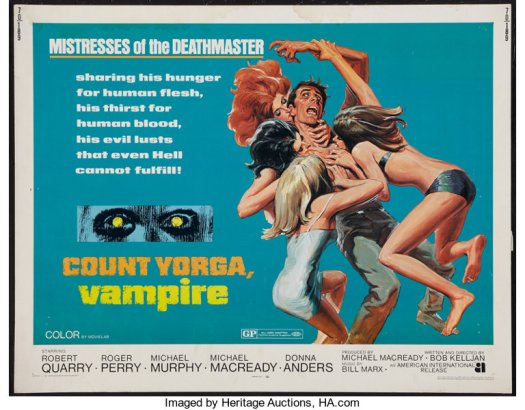
Bloody Good Show: Robert Quarry as COUNT YORGA, VAMPIRE (AIP 1970)


gary loggins's avatarcracked rear viewer

Robert Quarry’s screen career wasn’t really going anywhere by 1970. He had a good part in 1956’s soapy noir A KISS BEFORE DYING , but mostly he was relegated to uncredited bits in movies and guest shots on episodic TV. Quarry kept busy on the stage, until being approached by producer/actor Michael Macready to star in THE LOVES OF COUNT IORGA, originally envisioned as a soft core porn flick with horror elements. The actor said he would accept the job but only if it were turned into a straight modern-day vampire tale, and thus was born COUNT YORGA, VAMPIRE, launching Quarry into a new phase as a 70’s horror movie icon.

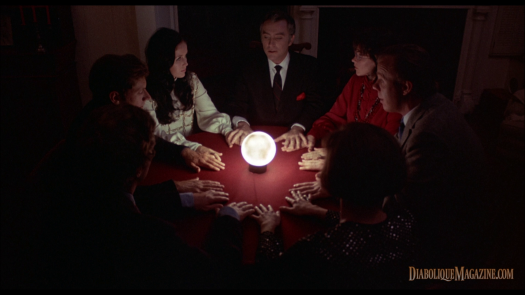
The plot is an updated version of Stoker’s DRACULA, with a few changes. Here, the Bulgarian-born Count Yorga is a recent transplant to California, and we first meet him conducting a séance on behalf of Donna, whose late…

View original post 758 more words

Bong Joon-ho Wins At Cannes while Tarantino and Malick are Snubbed


The 2019 Cannes FIlm Festival is over and here’s what won!  Interestingly enough, for all the critical acclaim and excitement that greeted Tarantino’s Once Upon A Time In Hollywood and Terrence Malick’s A Hidden Life, the jury ignored both of them.

COMPETITION

Palme d’Or: Bong Joon-ho, “Parasite”
Grand Prize: Mati Diop, “Atlantique”
Director: Jean-Pierre and Luc Dardenne, “Young Ahmed”
Jury Prize (tie): Ladj Ly, “Les Misérables” and Kleber Mendonça Filho and Juliano Dornelles, “Bacurau”
Actor: Antonio Banderas, “Pain and Glory”
Actress: Emily Beecham, “Little Joe”
Screenplay: Celine Sciamma, “Portrait of a Lady on Fire”
Special Mention Prize: “It Must Be Heaven,” Elia Suleiman

CAMERA D’OR (across all sections)

César Diaz, “Our Mothers”

UN CERTAIN REGARD

Un Certain Regard Award: “The Invisible Life of Euridice Gusmao,” Karim Ainouz
Jury Prize: “The Fire Will Come,” Oliver Laxe
Best Director: Kantemir Balagov, “Beanpole”
Best Performance: Chiara Mastroianni, “On a Magical Night”
Un Certain Regard “Heart” Prize: “The Climb” and “A Brother’s Love”
Special Jury Prize: Albert Serra, “Liberte”
Special Jury Mention: “Joan of Arc,” Bruno Dumont

CRITICS’ WEEK

Nespresso Grand Prize: “I Lost My Body,” Jérémy Clapin
Leitz Cine Discovery Prize for Short Film: “She Runs,” Qiu Yang
Louis Roederer Foundation Rising Star Award: Ingvar E. Sigurðsson, “A White, White Day”
Gan Foundation Award for Distribution: The Jokers Films, French distributor for “Vivarium” by Lorcan Finnegan
SACD Award: César Díaz, “Our Mothers”
Canal+ Award for Short Film: “Ikki Illa Meint,” Andrias Høgenni

FIPRESCI

In Competition: “It Must Be Heaven,” Elia Suleiman
Un Certain Regard: “Beanpole,” Kantemir Balagov
Parallel Selection: “The Lighthouse,” Robert Eggers

DIRECTORS’ FORTNIGHT

Europa Cinemas Label Award for Best European Film: “Alice and the Mayor,” Nicolas Pariser
SACD Award for Best French-language Film: “An Easy Girl” Rebecca Zlotowski
Illy Short Film Award: “Stay Awake, Be Ready,” Pham Thien An
Carrosse d’Or: John Carpenter

ECUMENICAL PRIZE

Prize of the Ecumenical Jury: “A Hidden Life,” Terrence Malick

GOLDEN EYE

“For Sama,” Waad al-Khateab and Edward Watts
Special Prize: “The Cordillera of Dreams,” Patricio Guzman

QUEER PALM

Queer Palm Award: “Portrait of a Lady on Fire,” Céline Sciamma
Short Film Queer Palm: “The Distance Between Us and the Sky,” Vasilis Kekatos

Palm Dog

Brandy (Once Upon a Time…in Hollywood)