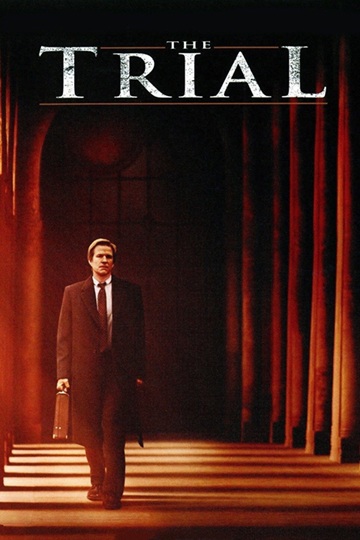
Mac is a Southern lawyer, even though it’s been a while since he practiced. After his wife and children were killed in a car accident, Mac decided to retire from practicing law but he never surrendered his license. A judge (Rance Howard) reaches out to him, asking him to serve as a public defender for Pete Thomason (Randy Wayne), a young man who has been accused of murdering his girlfriend. The evidence is stacked against Pete and there are plenty of wealthy people who, for various reasons, want Pete to quickly be convicted. Mac takes the case because he can tell that Pete is being railroaded. When he discovers that Pete will possibly be facing the death penalty if he’s convicted, the case becomes very personal for Mac.
The prosecuting attorney (Bob Gunton) has managed to find a doctor (Brett Rice) who is willing to testify that Pete is a sociopath. (The doctor has a reputation for finding just about anyone on trial to be a sociopath.) Mac finds a doctor of his own, Dr. Anne Wilkes (Clare Carey), his testifies that Pete is nowhere near being a sociopath. The problem is that Pete has no memory of what happened the night of the murder. Mac may believe that Pete is innocent but can he convince the jury when the evidence all seems to suggest otherwise?
Like The List, The Trial was based on a novel by Robert Whitlow and it was directed by Gary Wheeler. I was pretty hard on The List in last night’s review but I actually rather enjoyed The Trial, which was a solid and well-made legal thriller. (The film’s status as a faith-based film largely comes from a scene in which Mac quotes the Book of Provers in regards to how, during a trial, it’s easy to believe the first person who speaks but it’s equally important to listen to how the accused replies.) I enjoyed the twists and turns of the plot and the film’s ending worked well. Though the film had a a made-for-television feel to it (despite having been a theatrical release), it still held and rewarded my interest.
It helped that the cast was well-selected and everyone gave good performances. Matthew Modine, in particular, gave a strong performance as Mac, playing him not as being a saint but instead as being someone who was just determined to give his client the defense he deserved and to ultimately do the right thing. Robert Forster played Mac’s brother-in-law and lead investigator and he brought his own brand of world-weary determination to the part. Nobody plays a smug prosecutor as well as Bob Gunton, though it should be noted that the character himself never became a caricature. Rance Howard was the ideal judge, tough but fair. Randy Wayne was sympathetic as the confused Pete. The cast really brought the film’s world to life.
I always enjoy a good legal thriller and The Trial was certainly that.
Filmed in 1957 for a television program called Westinghouse Studio One, The Night America Trembled is a dramatization of the night that Orson Welles terrified America with his radio adaptation of War of The Worlds.
For legal reasons, Orson Welles is not portrayed nor is his name mentioned. Instead, the focus is mostly on the people listening to the broadcast and getting the wrong idea. That may sound like a comedy but The Night America Trembled takes itself fairly seriously. Even pompous old Edward R. Murrow shows up to narrate the film, in between taking drags off a cigarette.
Clocking in at a brisk 60 minutes, The Night America Trembled is an interesting recreation of that October 30th. Among the people panicking: a group of people in a bar who, before hearing the broadcast, were debating whether or not Hitler was as crazy as people said he was, a babysitter who goes absolutely crazy with fear, and a group of poker-playing college students. If, like me, you’re a frequent viewer of TCM, you may recognize some of the faces in the large cast: Ed Asner, James Coburn, John Astin, Warren Oates, and Warren Beatty all make early appearances.
It’s an interesting little historical document and you can watch it below!
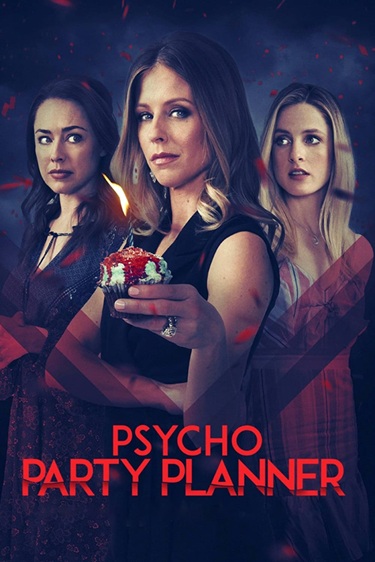
Kayla Anderson (Lindsey McKeon) wants to give her daughter, Kerry (Cathryn Dylan), a sweet 16 party that she’ll never forget. She hires a party planner but unfortunately, Lindy Shores (Katrina Begin) is a psycho party planner! Lindy only gets the job because she murdered the party planner that Kayla really wanted to hire and then she starts trying to corrupt Kerry. Lindy is who she says she is. This party is going to be murder!
You know what’s really psycho? Throwing a big 16th birthday party when you’ve still got an 18th birthday party, a high school graduation party, a college graduation party, an engagement party, a wedding reception, and a divorce party to plan for. Save your money! My 16th birthday, I got a cake with one candle and I had to beg my sisters to at least let me have the part with my name on it. And I was happy to have it! I didn’t a planner to know how to party.
I liked Psycho Party Planner because the daughter looked like she was 30 but she was still only celebrating her 16th birthday. It’s good to start denying your age early. Even though the Psycho Lindy turned out to have a lot of bad things up her sleeve, Kerry still got to have a party. It didn’t look like a great party to me but it was planned by a psycho party planner so I guess it was as good as it could be. The high school drill team performed and they were terrible. They’re not going to get to State with those moves. “If you can’t handle a birthday party, how are you going to handle the pressure of keeping everyone’s spirits up when our guys are losing to Lake Highlands?” as my old cheerleading coach used to say.
Psycho Party Planner was dumb but fun in a “What did I just watch?” way. Who would have guessed planning a party could be so dangerous? I’m going to plan all of my future parties myself so if they turn out to be psycho parties, I’ll know exactly who to blame!
Released in 1958, How To Make A Monster is a clever little horror satire from American International Pictures in which the stars of Teenage Werewolf and Teenage Frankenstein are hypnotized into believing that they actually are the monsters that they played! The main culprit is a movie makeup artist (Robert H. Harris) who has been deemed obsolete by the new bosses at AIP.
In this scene, Conal Cochran (Dan O’Herlihy) explains not only the origins of Halloween but he also discusses how he’s going to make Halloween great again. This scene is probably the best in the film and it’s almost entirely due to O’Herlihy’s wonderfully menacing performance as Conal Cochran.
This October, I’m going to be doing something a little bit different with my contribution to 4 Shots From 4 Films. I’m going to be taking a little chronological tour of the history of horror cinema, moving from decade to decade.
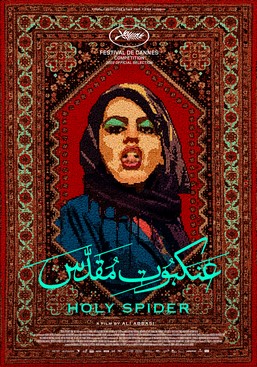
2022’s Holy Spider opens in the Iranian city of Mashahd. We follow a woman as she spend her night as a sex worker, standing on a street corners, going off with any man who stops for her, and hiding in the shadows whenever the infamous morality police are nearby. There’s nothing glamorous about her work. The men who pick her up are brutes who treat her like property and there’s little about the city that is beautiful or aesthetically pleasing. If anything, it looks bombed-out, as if no one could be bothered to repair any of the obvious cracks that are stretching across the city ancient’s facade. Towards the end of the night, the woman is picked up by a man who, in a harrowing scene, proceeds to choke her to death.
Journalist Arezoo Rahimi (Zar Amir Ebrahimi) arrives in the city to investigate the recent murders of several sex workers and immediately discovers that the authorities have no interest in discussing the case. When she pushes them, they taunt her about her private life and they snap at her for not properly covering her hair. Whenever she steps out into the street, she’s told that she’s going to get in trouble if she’s spotted by the Morality Police. (The attitude appears to be that it’s a greater crime for a woman to fail to fully cover her hair than for a man to kill a woman, whether her hair is properly covered or not.) Eventually, she teams up with a newspaper editor named Sharifi (Arash Ashtiani). Sharifi has been receiving letters from the murderer, ones in which he explains that he is cleansing the city in the name of Imam Reza, the eighth Shia Imam.
The murderer is a construction worker named Saeed Azimi (Mehdi Bajestani), a middle-aged man who previously served in the Iraq-Iran War and who it is suggested might be suffering from PTSD. On the outside, Saeed seems almost normal. He has friends. He has a family. He is very religious. To the outside viewer, he might not look like a killer. But, every night, he prowls the streets and he searches for potential victims. When Rahimi goes undercover as a sex worker, she comes close to becoming one of them.
More than just a recreation of a serial killer’s crimes, Holy Spider examines the misogynistic attitudes that allowed Saeed that get away with so many murders. Saeed himself becomes a folk hero amongst many Iranians, who are quick to say that they agree with his mission to cleanse the city. Even when on trial, Saeed is approached by members of the government who promise him his safety, though it soon becomes clear that their promises don’t necessarily mean much. The more that his crimes are celebrated, the more smug Saeed becomes. Even when his sentence comes down, Saeed remains convinced that he will be protected. Afterall, everyone seems to agree with him that the victims, and not the murderer, are to blame for their deaths.
Dark, disturbing, and ultimately infuriating, Holy Spider is a powerful film. The film’s power can be seen in the fact that it was not only banned in Iran but that the government also announced that anyone involved in the filming would also be censured. (Russia, a longtime ally of Iran, also banned the film.) Saeed is a hateful figure but even more hateful are the misogynists who celebrated him and nearly allowed him to get away with his crimes. Holy Spider may have been banned in Iran but it can still be seen in the rest of the world.
“You want to put some kind of explanation down here before you leave? Here’s one as good as any you’re likely to find. We’re bein’ punished by the Creator…”— John “Flyboy”
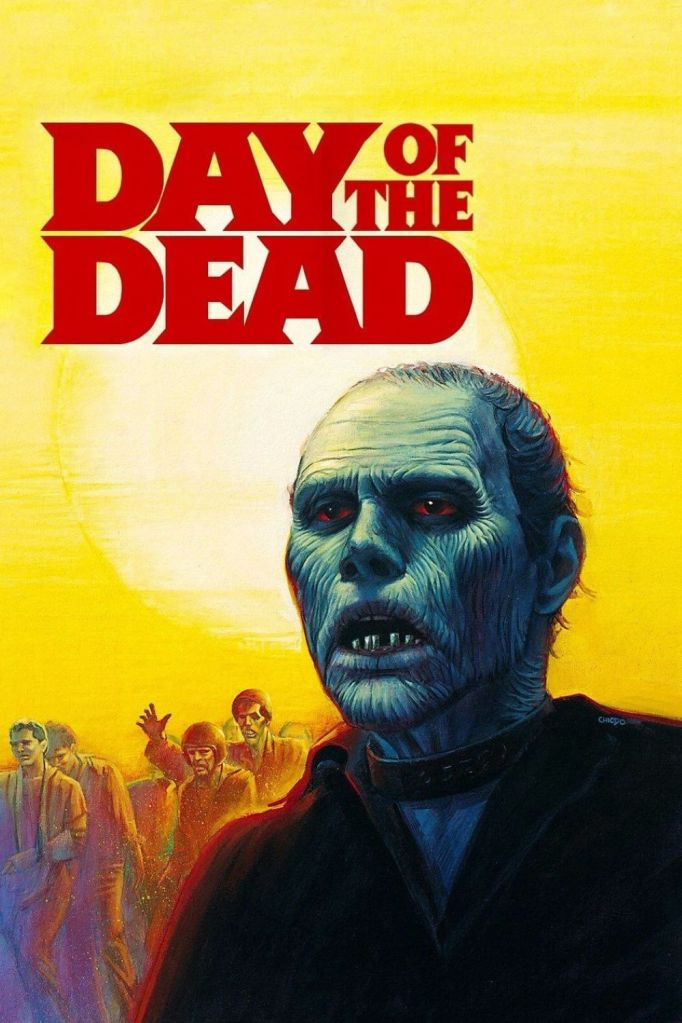
George A. Romero’s 1985 film Day of the Dead stands as an unflinching and deeply cynical meditation on the collapse of society amid a relentless zombie apocalypse, intensifying thematic and narrative complexities first introduced in Night of the Living Dead (1968) and Dawn of the Dead (1978).
Originally, Romero envisioned the film as an epic, describing it as “the Gone with the Wind of zombie films.” His screenplay featured above-ground scenes and a more expansive narrative, but budget cuts halved the original $7 million budget to $3.5 million, forcing a drastic paredown. While much grandiosity was lost, the trimming resulted in a tighter narrative and heightened the nihilistic tone, deepening the film’s focused exploration of humanity’s darkest aspects during apocalypse.
Set after civilization has collapsed, Day of the Dead places viewers in the suffocating confines of a missile silo bunker in Florida, where scientists and soldiers struggle for survival and solutions amid encroaching undead hordes. The claustrophobic atmosphere—born partly from the abandonment of Romero’s broader original sequences—intensifies the tension between the hopeful scientific pursuit of salvation and the harsh pragmatism of military authority. These competing ideologies escalate into authoritarian violence, embodying the fractured microcosm of a dying society.
Within this claustrophobic world, a third group—composed of characters Flyboy and McDermott—emerges as a stand-in for the rest of humanity. They observe the scientists and soldiers—institutions historically symbols of security and innovation—but witness how these deeply entrenched ways of thinking only exacerbate problems instead of solving them. This third faction characterizes humanity caught between rigid orders and doomed pursuits, reflecting Romero’s broader commentary on societal stagnation and fragmentation.
Central to this conflict are Dr. Logan, or “Frankenstein,” a scientist obsessed with controlling the undead through experimentation, and Captain Rhodes, the hardened soldier who believes survival demands ruthless control.
Logan’s controversial research seeks to domesticate and condition zombies, notably through his most celebrated subject, Bub—the undead zombie capable of rudimentary recognition and emotion—challenging assumptions about humanity and monstrosity.
Here the film benefits greatly from the extraordinary practical effects work of Tom Savini, whose contributions on Day of the Dead are widely considered his magnum opus. Savini’s makeup and gore effects remain unsurpassed in zombie cinema, continually influencing horror visuals to this day. Drawing from his experience as a combat photographer in Vietnam, Savini brought visceral realism to every decomposed corpse and violent injury. The close-quarters zombie encounters showcase meticulous practical work—detailed wounds, biting, and dismemberment—rendered with stunning anatomical authenticity that predates CGI dominance.
Bub, also a masterclass in makeup and animatronics, embodies this fusion of horror and humanity with lifelike textures and movements that blur the line between corpse and creature, rendering the undead terrifyingly believable.
The film captures the growing paranoia and cruelty as resources dwindle—food, ammunition, and medical supplies—and the fragile social order begins to shatter. The characters’ mounting desperation illustrates Romero’s thesis that humanity’s real enemy may be its own incapacity for cooperation.
The moral and social decay is vividly portrayed through characters like Miguel, whose mental breakdown sets destructive events in motion, and Rhodes, whose authoritarian survivalism fractures alliances and moral compass alike. Logan’s cold detachment and experiments push ethical boundaries in a world on the brink.
Romero’s direction combines claustrophobic dread with stark psychological terror, further amplified by Savini’s effects. The cinematography’s low lighting and tight framing create an oppressive environment, while graphic violence underscores a world irrevocably broken. The unsettling sound design—moans, silences, sudden outbreaks—immerses viewers in a relentless atmosphere of decay and fear.
Romero described Day of the Dead as a tragedy about how lack of human communication causes chaos and collapse even in this small slice of society. The dysfunction—soldiers and scientists talking past each other, eroding trust, spirals of paranoia—serves as a bleak allegory for 1980s America’s political and cultural fragmentation. Failed teamwork, mental health crises, and fatal miscommunication thrive as the bunker metaphorically becomes a prison of fractured humanity.
Though not as commercially successful as its predecessors, Day of the Dead remains the bleakest and most nihilistic entry in Romero’s Dead series. Its overall grim tone, combined with mostly unlikable characters, establishes it as the most desolate and truly apocalyptic film of the series. The characters often appear fractured, neurotic, and unable to escape their own destructive tendencies, making the story’s world feel even more hopeless and devastating.
Far beyond a simple gore fest, Day of the Dead serves as a profound social critique infused with psychological depth. It explores fear, isolation, authority abuse, and the ethical limits of science, reflecting enduring anxieties about society and survival. The film’s unsettling portrayal of humanity’s failings, embodied in broken relationships and moral decay, presents a harsh reckoning with what it means to be human when humanity itself is the ultimate threat to its own existence. This thematic complexity, combined with Romero’s unyielding vision and Savini’s unparalleled effects, crafts a chilling and unforgettable cinematic experience.
1962’s CarnivalofSouls was the only feature film to be directed by Herk Harvey. It was made on a budget of $33,000 and was filmed in Kansas and Utah, often without permits. The film was also the feature acting debut of model Candace Hilligoss, cast here as a emotionally withdrawn church organist who is involved in a serious car accident and then finds herself haunted by pasty-faced ghosts and surreal visions.
When it was initially released, CarnivalofSouls was dismissed by American critics. Indeed, it would a little over twenty years before the film started to be appreciated as both a classic independent film and also a truly eerie horror movie. Today, it’s recognized as a classic of the genre, an expressionistic ghost story that also works as a character study of a woman who is haunted by not just physical death but also emotional malaise.
Carnival of Souls is a Halloween tradition here at the TSL offices. This year, the tradition continues.