This scene comes from the 1982 film, Pieces. It’s not easy find an appropriate scene to share from Pieces, or at least a scene that I can share without this site getting in trouble. Just about every scene in the movie features either nudity or really bloody violence. It’s probably nothing that would shock our wonderfully jaded readers but still….
But then there’s this scene right here. Now, in order to understand what’s happening here, you should keep in mind that Lynda Day George is playing an undercover cop who also happens to be a tennis pro. She’s been assigned to the local college. Her job is to figure out who is using a chainsaw to kill all of the students. Unfortunately, she sucks at her job so she has to get this kinda nerdy college student to help her out.
Anyway, after a fun-filled morning of playing tennis and not looking for the killer, they’ve just discovered a dead body in the showers. Yes, the killer has struck again and …. well, it was really messy. Speaking as someone who appreciates a clean house and a carefully organized day, I can relate to the reaction below.
4 Or More Shots From 4 Or More Films is just what it says it is, 4 shots from 4 of our favorite films. As opposed to the reviews and recaps that we usually post, 4 Shots From 4 Films lets the visuals do the talking!
4 Shots From 4 Horror Films
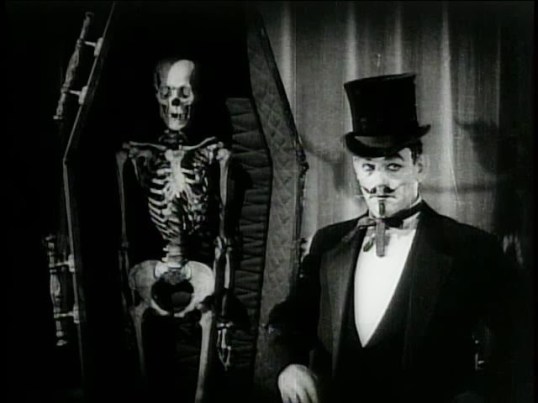
West of Zanzibar (1928, dir by Tod Browning, DP: Percy Hilburn)
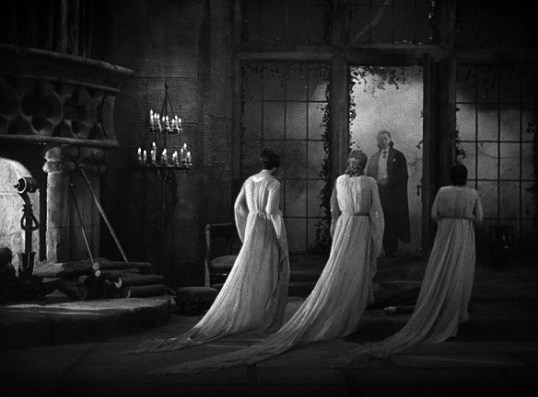
Dracula (1931, dir by Tod Browning. DP: Karl Freund)
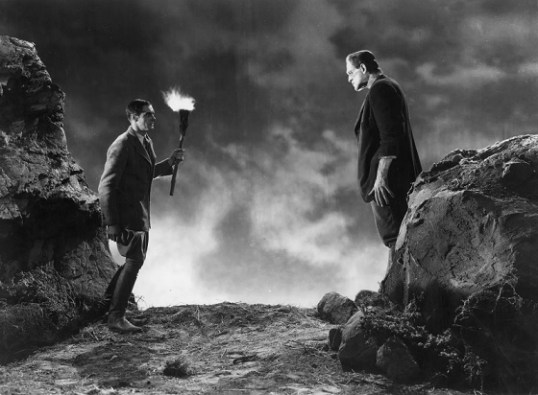
Frankenstein (1931, dir by James Whale, DP: Arthur Edeson)
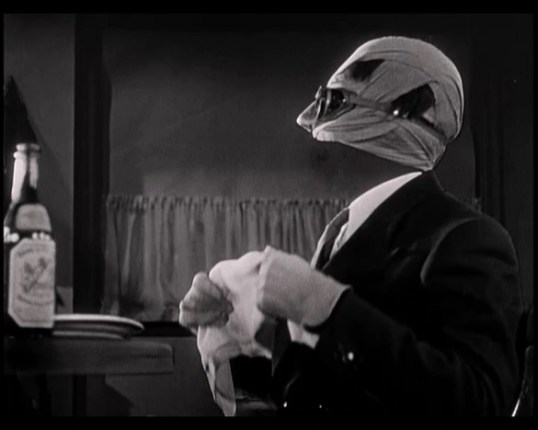
The Invisible Man (1933, dir by James Whale, DP: Arthur Edeson)
“I don’t know if you’ve noticed this, but nothing has been fine. And everything’s been getting worse every second.” — Eric
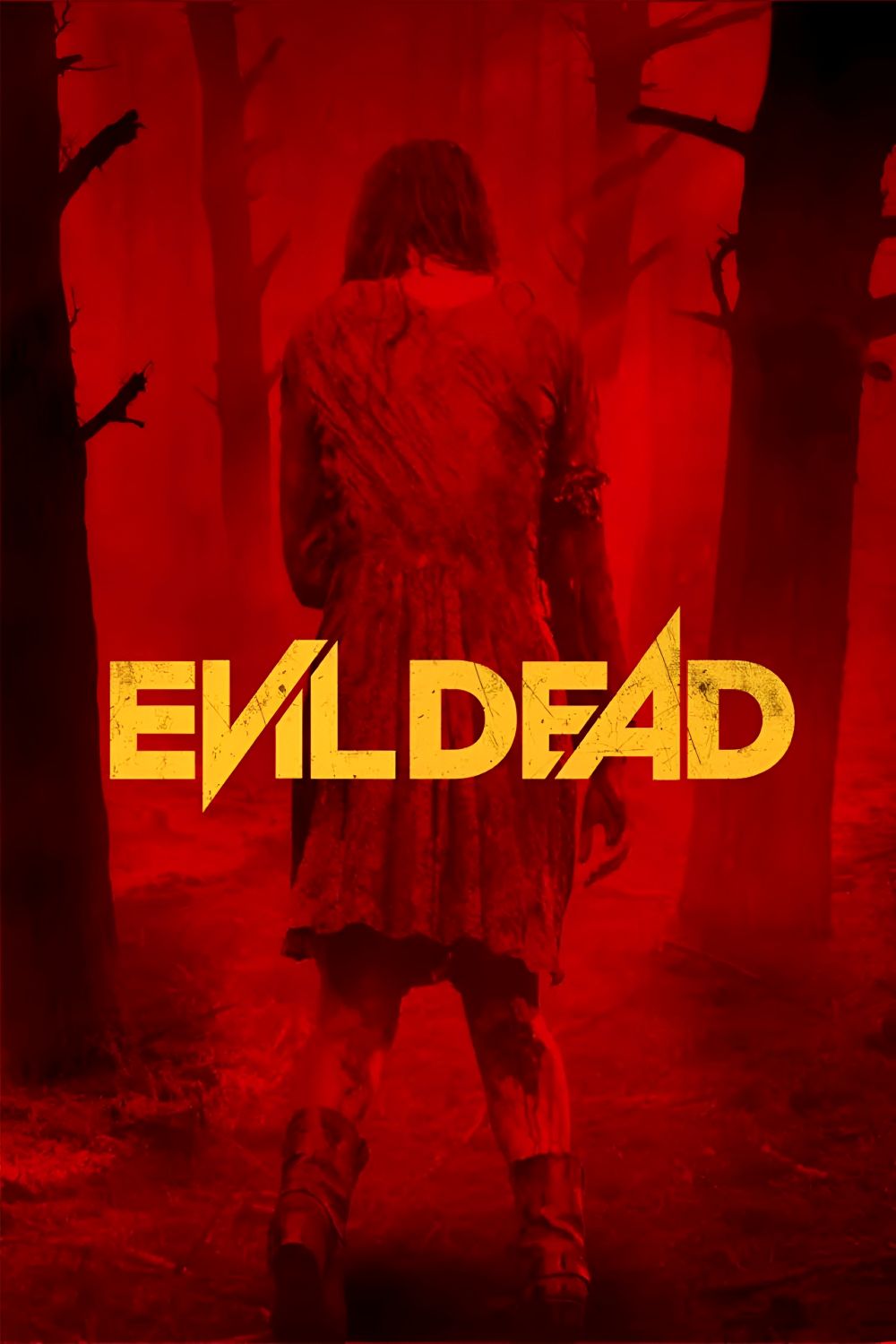
Evil Dead does not tiptoe around its legacy; it kicks the cabin door open, grabs the Necronomicon, and buries the audience under gallons of blood. Fede Alvarez’s 2013 soft reboot faced the nearly impossible task of revisiting Sam Raimi’s The Evil Dead, a cult horror landmark so tied to its handmade weirdness, manic energy, and eventual dark-comedy sensibility that a straight duplicate would have been pointless. Alvarez wisely does not try to replace the original. Instead, he takes its basic framework—the isolated cabin, the Book of the Dead, a group of doomed young people, and an escalating demonic outbreak—and reshapes it into something more polished, more punishing, and much more relentlessly nasty.
The major difference is tone. Raimi’s original had a rough, handmade quality that made every improvised effect, wild camera move, and strange performance feel like part of its identity. It was scary, but it was also energized by a kind of reckless invention. Alvarez’s Evil Dead goes in another direction. It is slicker, more controlled, and deeply mean-spirited in a way that makes the cabin feel less like a creepy vacation spot and more like a rotting death trap. This is not a winking horror-comedy, at least not until the violence becomes so excessive that it starts circling back around into stunned laughter. For most of its running time, the movie plays things brutally straight. It wants the audience to feel trapped in that filthy cabin right alongside the characters, watching every injury worsen and every possible escape route close off.
That seriousness is actually one of the film’s smartest choices. The cabin trip is no longer just a random weekend getaway that turns into hell. Mia, played by Jane Levy, is being brought to the family cabin by her brother David and a few friends so she can detox from heroin. It is a grim premise, but it gives the story a real emotional spine. Mia’s friends and family are not merely there to be picked off one by one; they are trying, however imperfectly, to help her survive something terrifying before any supernatural force enters the picture. When Mia starts seeing horrific things, the others initially assume she is suffering withdrawal symptoms or trying to manipulate them into letting her leave. That adds a nasty layer of uncertainty to the setup. The audience knows something evil is happening, but the people around Mia have a believable reason not to trust her.
Jane Levy carries a huge amount of the movie. Mia has to move through several different modes: vulnerable, furious, terrified, possessed, exhausted, and eventually almost mythic in her determination to survive. It would have been easy for the movie to turn her into either a helpless victim or a standard final girl, but Levy gives her enough rawness that she feels like a person fighting two battles at once. She is struggling with addiction, family resentment, and an actual demonic infection spreading through the cabin. Her performance gets more intense as the movie goes on, and by the final act she has become one of the more memorable protagonists in the franchise.
The supporting cast is less developed, though that is partly by design. David, played by Shiloh Fernandez, is Mia’s estranged brother and the closest thing the film has to a traditional lead for much of the first half. Lou Taylor Pucci’s Eric is the unfortunate idiot who reads from the Necronomicon despite the book being wrapped in barbed wire, marked with warnings, and seemingly designed to scream “do not open this.” Still, the movie at least gives him more guilt than the average horror-movie fool. Once he realizes what he has unleashed, Eric spends much of the film trying to help Mia and clean up his mistake. Olivia and Natalie are thinner characters, but the film uses them effectively as different stages of the Deadite infection and as delivery systems for some especially vile set pieces.
And that is where Evil Dead really earns its reputation. The film’s violence is not merely bloody; it is aggressive, tactile, and determined to make the audience squirm. Needles, glass, nail guns, electric carving knives, box cutters, hot water, exposed nerves, severed limbs—Alvarez and co-writer Rodo Sayagues treat the cabin like a giant torture chamber filled with household objects waiting to become weapons. The gore is so over-the-top that it becomes almost operatic. There is a clear effort to make every major injury feel specific rather than generic. This is not just people getting slashed in dark rooms. The movie wants viewers to remember exactly what happened, which is why several scenes are difficult to shake even after the credits roll.
What makes the carnage work is the heavy use of practical effects. The film has digital touch-ups here and there, but it mostly wants blood, makeup, prosthetics, and physical messiness in the frame. That choice connects it directly to the old-school horror tradition that made the original The Evil Dead so memorable. Alvarez has a cleaner visual style than Raimi, but he does not make the mistake of turning the Deadites into sleek CGI monsters. They look diseased, swollen, burned, cut open, and horribly physical. The cabin itself is just as important. It is damp, dark, decaying, and full of corners that seem infected before anyone even opens the book.
The film also knows how to use the iconography of the series without becoming trapped by it. The Book of the Dead is immediately recognizable, but it is presented as a more grotesque object than ever: bound in human skin, wrapped in barbed wire, and full of disturbing images and warnings that practically dare someone to ignore them. There are nods to Raimi’s films, including a familiar yellow Oldsmobile and the expected cabin imagery, but Alvarez avoids simply repeating Ash Williams’s story. Bruce Campbell’s Ash is such a distinct character that trying to replace him outright would have been a disaster. Instead, Evil Dead makes Mia its own survivor and lets her final confrontation stand apart from the earlier movies.
The biggest criticism of Alvarez’s film is also a fair one: it can feel almost too grim. The original movies had a wild punk-rock sense of fun—raw, fast, messy, inventive, and powered by the kind of reckless confidence that turns limitations into personality. Alvarez’s soft reboot abandons that punk-rock attitude almost entirely. If Raimi’s The Evil Dead feels like a sweaty, chaotic garage band ripping through a horror song at maximum volume, Alvarez’s Evil Dead is the Norwegian black-metal version: colder, uglier, more nihilistic, and committed to burying the audience under mud, blood, grief, and cruelty. It is still extreme, but it is extreme in a much more punishing key.
That is not automatically a flaw, even if it may leave fans of the original’s humor missing the unhinged fun. Alvarez is not trying to make a Raimi imitation. He makes a full-blooded, punishing horror film that takes the mythology seriously while still delivering the series’ essential pleasures: demonic possessions, a cursed cabin, practical gross-out effects, and enough blood to drown a small town. The dialogue is occasionally stiff, some of the supporting characters never become much more than targets, and the addiction metaphor can be a little blunt, but those weaknesses do not erase the film’s commitment or craft.
The climax is where the movie finally fully embraces the outrageousness that defines the franchise. Mia’s fight against the Abomination during a literal rain of blood is ridiculous in the best possible way. It is gruesome, excessive, and visually unforgettable. The movie has spent so long tightening the screws that this ending feels like an explosion of all the pent-up insanity it had been holding back. It is not as funny as Evil Dead II or Army of Darkness, but it absolutely understands that an Evil Dead finale should be bigger, wetter, louder, and more deranged than logic permits.
Ultimately, Evil Dead works because it treats the source material with respect without treating it like museum property. It is nastier than the original, more emotionally grounded, and less playful, but it is still recognizably part of the same cursed family tree. Alvarez’s version may not have the handmade chaos or goofy charm of Raimi’s The Evil Dead, but it has its own savage identity. More importantly, it proved the franchise could move forward without simply repeating Ash Williams’s story. Its grimy, practical-effects-heavy, emotionally brutal approach became the blueprint for the modern Evil Dead films that followed, including Evil Dead Rise and Evil Dead Burn, even as each one found a new setting, cast, and nightmare to unleash. Evil Dead Rise moved the carnage from the cabin into a cramped apartment building, while Evil Dead Burn carried that modern branch of the series forward with another standalone story connected to the same larger Deadite universe.
For viewers who want horror movies to go all the way—who want the blood to spray, the limbs to fly, and the final girl to earn every second of her survival—it remains one of the strongest horror remakes of its era.
In The Ground Beneath Our Feet, Emma Bryant (Elliana McKean) is a teenager who feels lost. Her school has drab lighting and is full of teachers who don’t seem to care and bullies who terrorize the hallways. When she gets cast in the school musical, it turns out that it’s a sacrilegious dirge written by a drama teacher who obviously has issues of her own. (“Thank God I don’t need God!” a typical song goes.) Her grandparents aren’t going to be happy about that! For that matter, they also probably wouldn’t approve of her crush on simple-minded football star Aiden (Cooper Southfield).
Hidden away in the corners of her grandparents’ home is a diary that was written by Emma’s great-aunt Evelyn. Reading it, she learns about how, in the 1950s, Evelyn (Mirabelle Bishaw) watched as her sister Mary (Ruby Eisenberg) fell under the influence of a no-good boyfriend named Roy (Eric Johnson) and a Math teacher who rarely taught about Math and instead would spend the entire class talking about his atheism.
The film flashes back and forth, from the 50s to 2024. There’s even a brief stopover in the 70s. That’s actually an intriguing premise and the film does make an effort to show how history repeats itself. The alienation that Mary felt in the 50s is much like the alienation that Emma feels in 2024. Unfortunately, the film itself really doesn’t have the budget to convincingly recreate the 50s, beyond featuring a few vintage cars. Indeed, the film’s version of the 50s feels almost like a parody. All of the dialogue has the sound of a writer trying to duplicate the rhythms of an era that they don’t know much about beyond what they’ve seen on television or in other movies. And while Mirabelle Bishaw, Ruby Eisenberg, and Eric Johnson all do a good job in the 50s scenes, the actors playing their friends and acquaintances deliver their lines almost robotically. It’s a bit disconcerting to listen to some of them.
The main theme running through this film is that people are very easily led. That’s not necessarily a bad theme. The truth of the matter is the most people are easily manipulated, especially by authority figures like teachers. (Myself, I tend to assume that everyone is wrong except for me. And while that may be preferable to being easily influences, it still comes with its own set of difficulties.) In the modern scenes, Emma listens as a friend of her grandmother’s explains that her granddaughter has fallen away from the church because she read a set of “fantasy book” that led to her becoming an occultist. That’s something that often seems to happen in faith-based films but I have to say that I don’t buy it. Don’t blame the books just because your granddaughter apparently can’t think for herself. People are responsible for their own decisions, regardless of how easily led they may be.
This film was definitely better-made than the average faith-based film. The movie actually looked like a real movie. Elliana McKean was sympathetic and likable as Emma. The story was a bit difficult to follow. The nonlinear style of storytelling has become very popular nowadays but it really does require a fine eye for detail to truly make it work. I doubt it will convert anyone but at least the film felt like a professional production.
Before Marjoe Gortner was an actor, he was a preacher.
Actually, that might be a bit too glib on my part. According to Marjoe, he was never more of an actor than when he was standing under a tent and preaching.
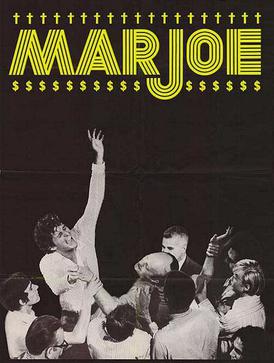
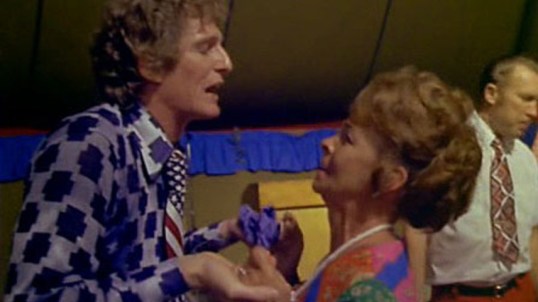
The 1972 documentary Marjoe opens with footage of a four-year-old Marjoe Gortner wearing a white button-down shirt and a bow tie and preaching about how all the sinners are going to burn in Hell. We watch as young Marjoe performs a marriage. We see his parents beaming as Marjoe delivers a fire-breathing sermon. In a voice-over, an adult Marjoe Gortner explains that he was named after Mary and Joseph and that both of his parents were active on the Pentecostal revival circuit. His father was a preacher. At four years old, Marjoe became the world’s youngest ordained preacher. Marjoe talks about how the novelty of a child preacher drew in crowds. By the time he was 14, he had brought in over four million dollars to his family’s ministry. When crowds turned out to be less interested in a teenage preacher than they had been in a child preacher, Marjoe’s father left the family and took the money with him.
We cut to Marjoe Gortner at 27. He’s tall, a little bit gawky. He has curly hair and a beak-like nose. He’s not exactly handsome, but when he speaks, he still has the charisma that once made him a superstar in evangelical circles. He’s talking to a documentary crew who are about to follow him on what he says will be his final revival tour. Marjoe claims that, even as a child, he never really believed or even understood what he was preaching. He was raised to perform, and that’s what he did. Now, Marjoe says that he’s had a crisis of conscience. In public, he’s still a fire-and-brimstone preacher who claims to be able to heal the sick and whose rhythmic sermons cause people to dance, speak in tongues, and give away their money. (The money, Marjoe explains, is the important part.) He preaches against drugs and sin and anyone who believes differently than he does. In private, Marjoe is a pot-smoking beatnik (and indeed, beatnik would be the right term to use because Marjoe’s a bit too cynical to be considered a hippie) who enjoys hanging out with the same people that he condemns from the stage.
The documentary features a lot of footage of Marjoe at various revival meetings, preaching and showing off the moves that he says he copied from Mick Jagger. We watch as Marjoe has an awkward reunion with his estranged father, who shows up to preach under the same tent as his son. We watch as Marjoe repeatedly counts his money. Marjoe revels in being a showman and admits that he still loves the feeling of holding the emotions of his audience in the palm of his hand. As creepy as the footage sometimes is, there’s a definite elitism to the documentary crew, of which they don’t really seem to be aware. Of course, the film seems to be saying, this would happen in the South. We Northerners are too smart to fall for Marjoe’s act. And yet, just the fact that they’re filming him shows that they have fallen for his act. They just don’t realize it.
While the revival footage is indeed fascinating (one can really feel the audience getting swept up in Marjoe’s sermons), the film’s most interesting moments are when we see Marjoe talking to the documentarians. For all the talk about how he wants to finally be himself, Marjoe never stops performing. Even when he’s confessing and claiming to be telling the truth, Marjoe is acting. One gets the feeling that performing is all that Marjoe ever knew, and certainly it makes it easy to understand why, in the years following this documentary, he found success as a character actor. There’s never a moment in the documentary in which Marjoe isn’t “on.” In the end, one gets the feeling that he’s conning the documentarians just as easily as he’s conning the faithful. When Marjoe says that he is “bad but not evil,” it ultimately feels like another performance. Marjoe spends the documentary taking viewers behind the scenes, and yet he’s as much of an enigma at the end of the documentary as he was at the beginning. He’s a fascinating character, if only because it’s impossible to tell how much of anything is real to him.
(Indeed, watching Marjoe, I was reminded of Elizabeth Holmes’s disturbingly empty smile in the trailer for the upcoming documentary You Can See Everything.)
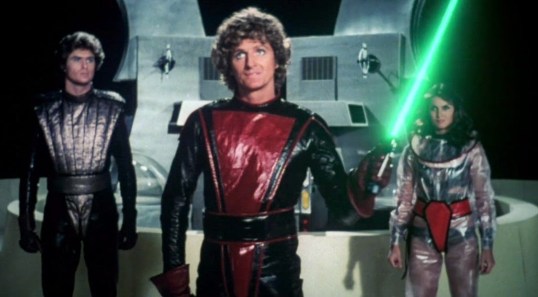
Released in 1972, Marjoe won the Oscar for Best Documentary. Marjoe Gortner, who passed away last week at the age of 82, had a lengthy acting career, one in which he often played con men and other outlaws. His final role was in 1995’s Wild Bill. He played a preacher. My favorite Gortner role will always be as Akton in 1978’s Starcrash.
1963’s House of the Damned tells the story of an isolated mansion. It’s a place that many people have tried to live in but no one has ever been willing to stick around for too long. There are rumors that the mansion is haunted. In fact, you could even make the claim that the mansion is a house of the damned! Of course, we all know that there’s no such thing as ghosts, right?
Joseph Schiller (Richard Crane), the new owner of the mansion, calls architect Scott Campbell (Rob Foster) and tells him to go up to the house and check the place out. Scott points out that he was planning on celebrating his anniversary with his wife, Nancy (Merry Anders). Joseph say that there is no better way to celebrate an anniversary than to visit a house that might be haunted. Scott and Nancy (who is amazingly understanding) head for the house, where all sorts of strange things happen.
What type of strange things? Keys disappear. There are weird noises. Sometimes, it seems like something or someone might be lurking in the shadows. Could the house be haunted? While Scott and Nancy try to figure out what’s going on, Joseph shows up with his wife, Loy (Erika Peters). When Loy disappears, it becomes obvious that something is happening in the house of the damned!
House of the Damned is a briskly paced and occasionally effective haunted house story. It was directed by Maury Dexter, who was a director who was so fast and so capable of stretching a low budget that, at his best, he gave Roger Corman a run for his money. House of the Damned is only 63 minutes long and the film’s story isn’t particularly complex but Dexter still manages to create a properly ominous atmosphere and he does keep you guessing as to whether or not the house is actually haunted. The house itself was the former estate of infamous gangster Bugsy Siegel. Dexter reportedly spent ten days filming the movie at the Spiegel estate. Hopefully, he was not bothered by Bugsy’s ghost.
None of the characters are particularly well-developed but they are well-cast and the actors are all likable. The best performance comes from Erika Peters, who plays Loy as being slightly self-absorbed but ultimately good-hearted. She also gets to wear a bathing suit that is simply to die for. This film also features a very early performance from the great Richard Kiel, playing “The Giant.” It’s always nice to see Richard Kiel in a movie. Shortly before he passed away in 2014, Kiel visited my Alamo Drafthouse for a showing of The Spy Who Loved Me. Though it was obvious that he wasn’t in great health, he still took time to answer questions and to show off a rather charming smile. When a certain redhead told him that she loved him in a beloved 90s golf comedy, he smiled and said, “I believe that jacket belongs to Mr. Gilmore.”
House of the Damned was a nice surprise. We need more 62-minute films.
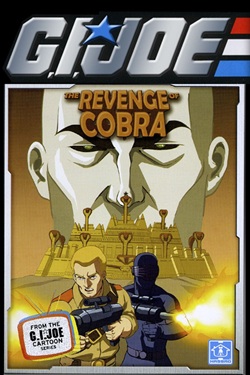
“G.I. Joe is the code name for America’s daring, highly trained special mission force. Its purpose: to defend human freedom against Cobra, a ruthless terrorist organization determined to rule the world!”
It’s good to see that some things never change. Land, sea, or air, G.I. Joe is there! If Cobra ceased to exist, would G.I. Joe be disbanded? It seems strange that G.I. Joe is apparently the only opponent Cobra has, especially when you consider that Cobra is an international organization. Is there a British version of G.I. Joe?
Those questions and a lot more were not answered in the second G.I. Joe animated five-episode miniseries, The Revenge of Cobra. This time, Cobra steals a special laser from G.I. Joe and uses it to power a weather machine. As usual, Destro does all the work, and then Cobra Commander ruins everything by pushing the machine too far. The machine breaks into three separate pieces, all of which land in different and very dangerous parts of the world and continue to create havoc. The Joes and Cobra fight to retrieve the three parts. Duke, meanwhile, gets captured again and ends up fighting in the arena of the Cobra Temple again.
It’s the same basic plot as G.I. Joe: A Real American Hero, just with more emphasis on showing off all of the toys that the audience could then demand their parents buy them. This episode features Zartan and his Dreadnoks, and whenever they’re on screen, they might as well have a price tag on their foreheads, because who wouldn’t want to be Cobra’s master of disguise?
In G.I. Joe terms, a five-part miniseries is the equivalent of a 90-minute film. There’s a lot of action packed into those 90 minutes, and there’s a cliffhanger every 18 minutes. The animation is sleeker than in A Real American Hero, but it’s still clunky in that ’80s way that will either make you feel nostalgic or bored. Snake Eyes is given next to nothing to do, which is a mistake, because everyone knows Snake Eyes and Scarlett were the only members of the team who really mattered. If you watch, be prepared to hear “Yo Joe!” every two minutes.
There are a lot of battles in The Revenge of Cobra, but no one ever dies or is even seriously injured. What would G.I. Joe and Cobra do without each other?
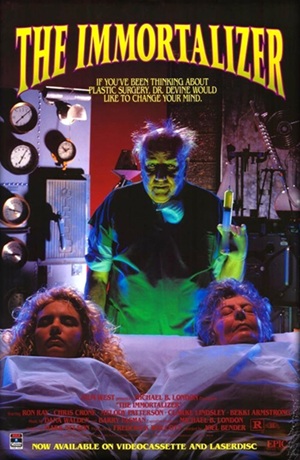
Dr. Divine (Ron Ray) has a successful practice going in his heavily guarded clinic. The mixed-up mutants and rednecks who work for him go out into the city and bash attractive 20-year-olds on the head. They drag them back to the clinic, where old people pay a million dollars to have their brains put into younger bodies.
“If you’ve been thinking about plastic surgery, Dr. Divine would like to change your mind!”
Dr. Divine has a point. Why get plastic surgery when you can just pay a million dollars to have your brain scooped out of your skull and stuffed into someone else’s head? Laugh at the plot all you want. Jordan Peele won an Oscar for coming up with the same basic story. Of course, The Immortalizer doesn’t have any of the subtext of Get Out. In fact, it doesn’t have any subtext at all, beyond the fact that everyone wants a body that’s healthier than the one they’ve got.
Gregg (Chris Crone) is among those abducted. He manages to escape from the clinic, but he struggles to get anyone to take him seriously when he tells them about what’s happening. Eventually, he does get some help, but will it be in time to save his friends?
This is very much a direct-to-video, late-’80s horror film, complete with big hair, bad acting, and gratuitous nudity to go along with the lengthy shots of the brain surgery. The doctor worries about the bodies getting damaged, but he’s the one who is opening up people’s heads and moving brains around. That’s going to leave scars. It’s fun in the nonsensical way that most late-night Cinemax horror films were fun. It’s on Tubi, and it’s a nostalgia rush, even if the title does sound like the name of a minor Marvel comic villain.
Spider-Man vs. The Immortalizer? My money is on Spider-Man. He’s been around since 1962, and he’s still only in his 20s. Who needs brain surgery when you’ve got radioactive spiders?
As far back as I can remember I’ve been a fan of Mel Gibson. I also truly believe that the LETHAL WEAPON series is one of the greatest action franchises of all time. Of course, part of that could be because it meant so much to me when I was growing up. I remember renting the original action classic with my family when we were on a spring break vacation at a resort in Hot Springs. I was 16 when part 2 became a huge hit in the late summer of 1989, and one of my first real dates was to see the film at the theater. Part 3 didn’t have as lasting an impact, but part 4 introduced me to the action legend Jet Li. Needless to say, if the long-rumored part 5 ever materializes, I’ll be there.
So, when I recently came across the thriller ON THE LINE (2022) on Netflix, I was happy to see Gibson back in a leading man role that appears to give him a chance to have some real fun. Here, he plays Elvis Cooney, a controversial late-night radio host whose show takes a serious turn when a distraught caller threatens to murder his family if he doesn’t play a dangerous game with him. What begins as any other night at the station turns deadly, with Elvis trying to figure out who he’s dealing with and just how far he’s willing to go.
One of the things I’ve always liked about Gibson is his ability to play characters who can be funny, obnoxious, and downright nuts, sometimes all at the same time. He brings plenty of that crazy personality to Elvis, who often comes off as a complete A-hole. But Gibson has a way of making even a real jerk entertaining to watch, and I enjoyed seeing him carry this film. I’ll just say this right now, if you don’t like Gibson, this is probably not the movie for you. He’s the primary reason to watch. I know Gibson has had some very public controversies over the years, and I certainly don’t condone some of his actions. But that doesn’t change the fact that this guy, his performances, and his movies were a staple of those early years when I was falling in love with cinema.
ON THE LINE reminded me a little of THE GAME (1997), the David Fincher thriller starring Michael Douglas and Sean Penn. Both films use the lead character’s birthday to set into motion an elaborate deception. I don’t want to give away this film’s surprises, and I’m certainly not suggesting that it’s nearly as accomplished as THE GAME, but I found it interesting that the two movies brought those same thoughts to my mind.
Is ON THE LINE a great movie? I wouldn’t go that far, and I’m sure there are plenty of folks who may feel cheated by the twisty ending(s). While I understand all of that, I’m the kind of viewer who doesn’t need every movie I watch to be a masterpiece. First and foremost, I’m a fan of actors, and I enjoy having a chance to see Mel Gibson being the true lead in a film that allows him to shine. That goes a long way with me.
I actually thought that I reviewed “Backrooms” already, but I had not. However, since it is October, it’s a perfect time to review this …. story. The fanbase is Star Wars-level obsessive and just because I don’t particularly care for something, it doesn’t mean it’s terrible- it usually does, but maybe this time is different. I can’t be correct – all the time…. or can I?
This film started as a 4chan post that went viral and the writer/director Kane Parsons built his life around this 4chan post. Then, he went all found footage on its ass. From the age of sixteen to twenty, his entire life was devoted to this magical world that looks a lot like a cubicle farm without the cubicles. The backrooms is a place where you expect to see sad data entry professionals working in sweatshop conditions. Maybe the backrooms is really just a front for an H1-B scam? Whenever a person enters the backrooms, all the workers are gone; so, maybe they used the backrooms as a means to move around their illegal data entry group and things got out of hand, creating a H1-B multiverse?
The film’s quantum mechanics are very intricate, but the movie itself has a very thin plot like saran wrap thin. Backrooms is 95% lore and the plot exists just to have more scenes wandering around the backrooms. Clark is the vehicle we use to get into the backrooms; he is the protagonist – sort of. He is an abusive alcoholic and failed architect who likely killed his wife. He also runs a furniture store and has employees who hate him, but that’s pretty normal for Clark because Clark is an asshat. In fact, his asshattery is so well-developed that even his therapist thinks he’s a boring jerk.
During one of his self-loathing sessions, Clark goes to his store’s basement and tries to do some electricity maintenance and he falls through a portal in his wall to …. wait for it…the backrooms! They basically look like the same room that he was in, but crappier and there are infinite backroom dimensions and quasi-fake people who you can eat- if you want. Apparently, it is okay to go Dahmer on these freaky people because they are “still lifes” – copies of copies of the earth prime people- I think.
He tells his therapist about the backrooms and she checks them out and nearly dies. I would have avoided this adventure and I would’ve been just fine. Clark, unlike me, becomes obsessed with the backrooms, gets his employees to explore them with him, and all the employees die because of a monster or because Clark eats them. Yes, Clark is a quasi-cannibal or a full-on cannibal or he is long pig curious. Don’t worry, Clark is stopped because he gets eaten by a paper mache version of himself. I always knew that arts and crafts were the devil’s workshop.
You could say that the backrooms are a Clark eat Clark world….
If you want to understand the backrooms, be prepared to have A LOT of homework like D&D dungeon master levels of homework!


 1963’s House of the Damned tells the story of an isolated mansion. It’s a place that many people have tried to live in but no one has ever been willing to stick around for too long. There are rumors that the mansion is haunted. In fact, you could even make the claim that the mansion is a house of the damned! Of course, we all know that there’s no such thing as ghosts, right?