4 Shots From 4 Films is just what it says it is, 4 shots from 4 of our favorite films. As opposed to the reviews and recaps that we usually post, 4 Shots From 4 Films is all about letting the visuals do the talking.
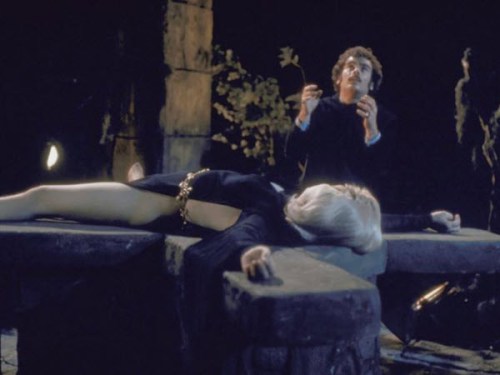
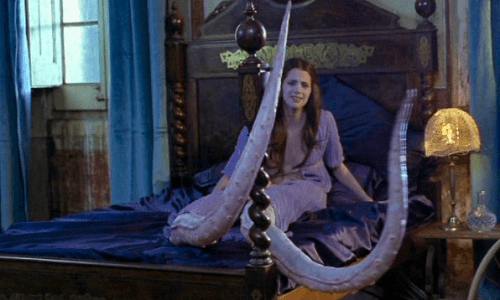
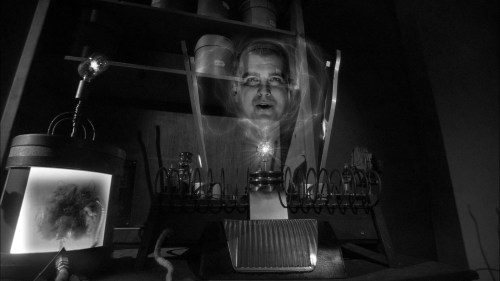
This edition of 4 Shots From 4 Films is dedicated to H.P. Lovecraft, on the occasion of his 125th birthday.
4 Shots From 4 Films
The Dunwich Horror (1970, directed by Daniel Haller)
Dagon (2001, directed by Stuart Gordon)
The Call of Cthulhu (2005, directed by Andrew Leman)
The Whisperer in Darkness (2011, directed by Sean Branney)
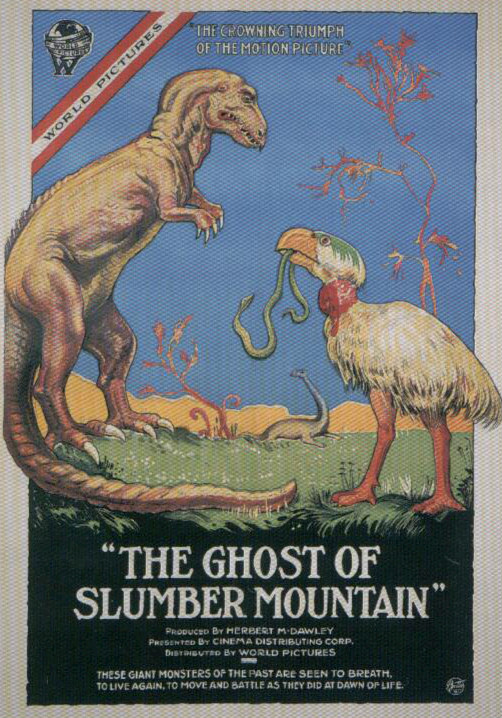
Directed by special effects pioneer Willis O’Brien (who would later do the special effects for the original King Kong), The Ghost of Slumber Mountain tells the story of an explorer and writer named Holmes (Herbert M. Dawley). When his nephews ask him to tell them a story, Holmes tells them about the time that he explored Slumber Mountain and met the ghost a prospector named Mad Dick (played by O’Brien himself). The ghost instructs Holmes to look through a telescope. Upon doing so, Holmes finds himself starting into prehistoric times. He not only sees a fight between a Tyrannosaurus and a Triceratops but then apparently gets sent though time himself as he soon finds himself being chased by the surviving dinosaur.
Now, there are a few things that I should make clear about The Ghost of Slumber Mountain. It’s a silent film, which means that watching it requires modern audiences to adapt to a far different narrative experience than they may be used to. As well, the film originally ran 30 minute but the current print clocks in at 19 minutes. As a result, most of the film’s non-dinosaur plot is unknown.
With all that in mind, The Ghost of Slumber Mountain is still a fascinating and fun slice of cinematic history. This was the first film to show live actors and stop-motion creatures together on the screen. And while the special effects are primitive when compared to today’s CGI monsters, there’s also an undeniable charm to them.
Today, of course, we tend to take special effects for granted. One of the great things about watching a movie like The Ghost of Slumber Mountain is that it gives you a chance to travel back to a time when special effects truly were special and unexpected. There was once a time when film magic truly did seem to be like magic and sometimes, it’s fun to hop into a cinematic time machine and try to imagine being in that 1918 audience and being truly amazed by what we are seeing.
So, why not hop into that time machine and watch The Ghost of Slumber Mountain?
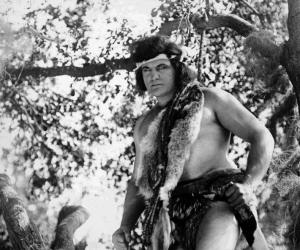
Over on Through the Shattered Lens Presents the Oscars, we are continuing to reimagine Oscar history, one year at a time! Today, we take a look at the year 1918. World War I ended, the Spanish Flu wiped out 5% of the world’s population, and the Academy embraced Tarzan of the Apes!
1918 was a year of dominated by war and pestilence. As the world seemed to be intent on destroying itself, both the Academy and American filmgoers embraced escapism.
Overseas, the Great War continued to drag on. With no end to the fighting in sight, there were fears that the American public would turn against the war and their elected leaders would withdraw American soldiers from the fighting. The British government, realizing the potential of film as a propaganda tool, contacted director D.W. Griffith and offered to help him make a film. The end result was Hearts of the World, an epic war film that starred Lillian Gish as a French girl who struggles to survive and find true love as the Germans raid her village.
It’s been a great couple years when it comes to what the snooty cinephiles would consider as horror in cinema. Sure, we still get the slashers, zombies, found footage paranormals and even the odd cannibal exploitation, but of late we’ve also been getting some great atmospheric and truly disturbing horror of the gothic kind.
The last couple years alone we’ve gotten such great horror films as It Follows, Babadook, The Conjuring, We Are What We Are and The Sacrament to name a few. We have a film straight out of Sundance that looks to join this list.
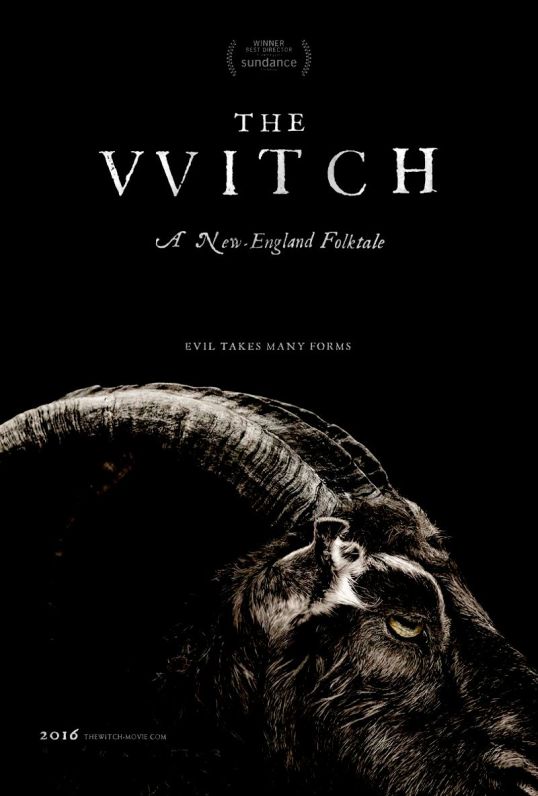
The Witch is the first film for writer/director Robert Eggers. Working off of his own script, Eggers’ film won him the Directing Award in the Drama Category during Sundance. With critics at the festival lauding the film, The Witch was soon picked up by A24 Films for a theatrical distribution.
Sometimes a scene in a film doesn’t need any dialogue to be able to convey emotion and character development the story requires. One such film that does a great job of using wordless sequences to let the audience in on the characters motivations and agendas is Steve McQueen’s Shame.
I could’ve picked from so many different scenes this film had to offer. Yet, it was the wordless scene of flirting, attraction and seduction between Michael Fassbender’s Brandon and an unnamed woman sitting across from him in the subway car. With Harry Escott’s score setting up the scene, McQueen allows the two players (Brandon and the unnamed woman) to use furtive glances and flirtatious looks to convey the attraction between these two beautiful individuals.
Even how the woman’s seemingly brief acceptance of what Brandon’s unspoken invitation suddenly turned into something of regret spoke volume in the scene. While Brandon’s sexual addiction has made him a sort of junkie looking to find his next fix wherever he can find it, the woman realizes in the end that maybe, maybe Brandon’s invitation is something she shouldn’t accept on a whim.
It’s later in the film that we find out the woman is now engage (or has been) and the tables has been turned with her now more confident in what she wants and Brandon now the one hesitating.
I know that many people probably have other scenes from Shame they would consider their favorite, but this one definitely is mine.
What’s an Insomnia File? You know how some times you just can’t get any sleep and, at about three in the morning, you’ll find yourself watching whatever you can find on cable? This feature is all about those insomnia-inspired discoveries!
Last night, if you were having trouble getting to sleep at 2 in the morning, you could have turned over to Starz and watched Nina Takes A Lover, a movie from 1994.
Nina Takes A Lover is such a typical 90s Sundance film that it could have just as easily been called Independent Movie From 1994. Everything that we tend to associate with American independent cinema is present in this film. It’s a relationship drama with moments of quirky comedy. It’s set in the city and no, it doesn’t matter which city. It could be New York or it could be Seattle or it could be Los Angeles or San Francisco. The important thing is that it’s a city on one of the coasts, the type of city where people engage in witty banter while sharing an apple in the park or over cups of coffee at a cozy cafe that was probably replaced by a Starbucks after this film was released. This is the type of film where the characters tell their stories in flashback while being interviewed by a bespectacled journalist. Characters alternate between artificial small talk and sudden statements of portentous wisdom. Of course, all of quirky drama leads up to a sudden twist. I figured out the twist after watching about 10 minutes of the film. Maybe audiences in 1994 were a bit more surprised.
About the only thing that keeps Nina Takes A Lover from being the most stereotypical indie film ever made is the fact that there’s no quirky criminals and nobody spends any time talking about their favorite childhood TV shows. If Nina had only shot someone while taking a lover, this would have been the most indie film ever.
I imagine that I’ve probably made the film sound totally unbearable but I actually enjoyed Nina Takes A Lover. Once I realized and accepted that Nina Takes A Lover wasn’t exactly going to reinvent cinema, I discovered that it was actually a very likable film.
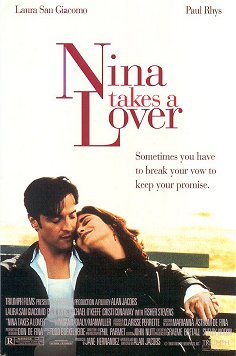
Nina is played by Laura San Giacomo, who owns a shoe store. Nina meets a man in the park. The man (Paul Rhys) has no name and is merely identified as being “Photographer.” (And, of course, he’s British because this is an independent film and, in the world of indie cinema, all ideal lovers are British.) Soon, Nina and Photographer are having a passionate and very physical affair. However, Nina explains that she’s married and her husband will be home in three weeks. Photographer says that he has a wife as well. As Nina and the Photographer talk about love, marriage, and sex, they also try to figure out what they should do when the three weeks are up.
And, of course, it all leads to a twist that you’ve probably already figured out but you know what? It doesn’t matter if the film is predictable because it’s just so likable. Laura San Giacomo and Paul Rhys both give likable performances, they have a lot of chemistry, and the sex scenes are well-done and genuinely erotic. The film may tell a familiar story but it tells it well.
Nina Takes A Lover is a good film to watch when you’ve got insomnia. It won’t put you to sleep but it will definitely make the hours of darkness a little more pleasant.
Carol, which is based on a Patricia Highsmith novel and stars Cate Blanchett and Rooney Mara, was widely acclaimed at Cannes and it’s expected to be a major Oscar contender.
(Yes, that’s right — Rooney might finally get an Oscar nomination that she actually deserves, as opposed to the nomination she got for David Fincher’s insulting bastardization of The Girl With The Dragon Tattoo.)
This teaser looks pretty good. The only thing that concerns me is that director Todd Haynes may have be acclaimed by some critics but I’m Not There was a mess that featured a handful of good scenes and a general sense of incoherent pretension. And his version of Mildred Pierce was a total travesty, which was mostly rewarded for what it should have been as opposed to what it actually was.
So, Carol could be brilliant. Or it could be totally overrated. I look forward to finding out!
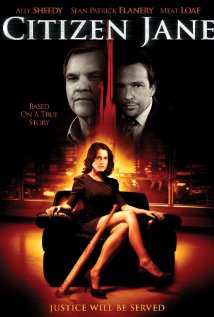
Citizen Jane (2009) – I was quite surprised that this was actually a Hallmark movie. The acting was strong. The story stayed focused. They actually bothered shooting in San Francisco. This almost could have been a small time B-Movie or something I would expect from Lifetime.
It begins with Jane Alexander’s (Ally Sheedy) aunt being murdered. Jane lives with a man named Tom O’Donnell (Sean Patrick Flanery) and it’s never really a mystery that he did it. The film is about how they prove it. Jane has assistance from Detective Jack Morris (Meat Loaf). I think Meat Loaf did a great job and so does Sheedy. We care, we follow, we get a decent movie. The only problem I found is the same one that was in the Lifetime movie Cleveland Abduction (2015). That movie was also based on real events. Even not knowing the true story behind it, you could tell that the film was a superficial treatment that needed much more time to properly tell the story. The same is true here. At times things will feel like they just jumped from one gear to another. Otherwise, it’s one of the most well made of the Hallmark mystery type movies. Even if there isn’t much of a mystery to it. More like mystery in the Columbo sense of the word where we know exactly what happened, but find out how the person is going to be caught.
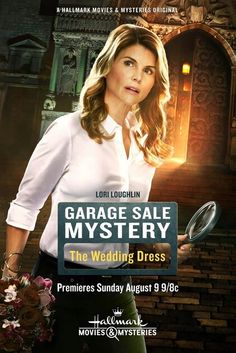
Garage Sale Mystery: The Wedding Dress (2015) – Again, it’s time for Jennifer (Lori Loughlin) to get involved in a mystery. This time she is at an estate sale and when she returns to her shop she discovers that among the things she has purchased is a vintage 1970’s wedding dress. Great! Except there are blood stains in a pocket. And thank god there are. I say that because this establishes a good reason for her to be investigating while the cops don’t. That’s really nice when it comes to the recent deluge of these murder mystery movies that Hallmark is producing. Usually the woman just comes across as a busybody who should just mind her own business. Here she has something that should spark her interest and the further she looks into it, the more she has a reason to bring her police officer friend into the case. It’s still heavily sanitized in the way you expect from these movies. However, for this series, I think it’s the best one I have seen so far.
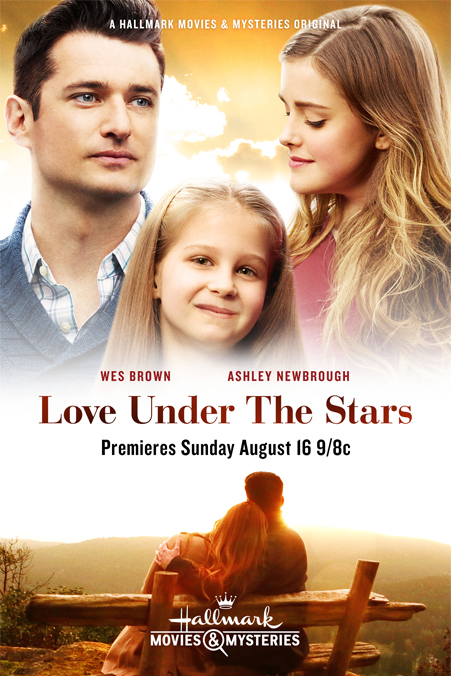
Love Under the Stars (2015) – When you boil it down to the basic plot, this is like the Hallmark movie Class (2010). Except it’s much better. It’s about a college girl played by Ashley Newbrough who needs to come up with her thesis in child psychology. Her college advisor played by Barry Bostwick has a niece that teaches a fourth grade class and has Newbrough go there for inspiration. She meets a guy played by Wes Brown who is raising a daughter as a single parent because the mother/wife has passed away. It plays out the way you expect it to and the way Class did, but it’s just better the whole way through. Especially Wes Brown. We can easily understand why she is attracted to him, but he also comes across well as a loving father who appears happy, but also has an underground river of fear and concern for his daughter constantly flowing through him. He is the real reason the film works as well as it does. Newbrough is pretty good too, but she basically walks around the film like she’s hot and horny, to put it bluntly, all the time she’s with him. It makes it difficult to take her character seriously as a real person the way we do with him. In particular, when it comes to her backstory of also losing her mother and the development of the relationship with the daughter. They should have had her dial it back a bit and act less like an infatuated teenager.
Also, the daughter (Jaeda Lily Miller) is a little annoying. I don’t think it’s the actresses fault so much as it is the way her character is written. I don’t think they give her enough credit and let her be more like a real kid with problems, then a cardboard cut out of a troubled child. A little tweaking of her character would have helped.
I really did like the use of the counting thing. When the father leaves her off at school or somewhere else, he counts down a few seconds because he knows she will turn around, usually opening a door, in order to wave to him one more time. She’s afraid he might be gone like her mother is forever. It’s a really nice touch that of course pays off in the end.
All around, this is one of the top tier Hallmark movies I have seen so far.
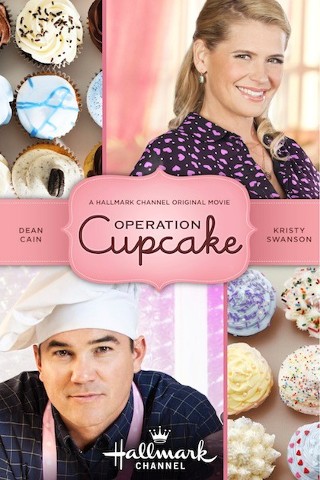
Operation Cupcake (2012) – I mentioned not giving the character of the daughter enough credit in Love Under The Stars and the problem is in this film too. This is about Army Colonel Griff Carson (Dean Cain) who comes home on leave to his wife Janet (Kristy Swanson) who runs a cupcake shop. The whole thing is about Griff adjusting to civilian life while also awaiting a possible promotion to General. The problem is they don’t give this guy enough credit. Instead, they drag out his adjustment way too long. It shouldn’t have taken him so long and the change should have been more gradual rather than played for laughs as long as it could. He works at the shop with his wife, and there was at least one scene where you wonder if he actually comes from the Army. He is mobbed by a ton of people at the cupcake store that he suddenly has to service. He doesn’t really attempt to put some of his training to use in order take a bunch of unruly people and get them to act in a civilized manner. The scene doesn’t work and the movie just doesn’t really work either. I think they should have had Cain’s character transition more gradually rather than having him be essentially a brick wall that only comes down in the end. Hallmark avoided that with Recipe For Love and that’s why it is one of my favorites. I also think that Dean Cain was miscast. I have difficultly buying any kind of machismo from his character. He just doesn’t fit the part. This is one that’s fine if you wind up catching it by chance, but don’t put your lure out into the Hallmark waters explicitly to see it.
Final note: I didn’t even notice till I was looking at the credits, but Donna Pescow is in this. She was a baker at the store who has some back and forth with Cain. Of course for most people she is from Saturday Night Fever (1977), but I will always remember her as the mom on the TV Show Out Of This World. Makes me want to break out my bootleg copies of that show. To the best of my knowledge, they still haven’t released that show on DVD.
Lisa and I continue to reimagine the Oscar history, one year at a time. Today, we look at 1917. The U.S. enters World War I, the Pickfords take over Hollywood, and, for the first time, the entire membership of the Academy gets to vote.
Whereas the previous year had been dominated by films, like the Award-winning Civilization, that promoted neutrality and world peace, 1917 saw the release of several films that were designed to support the American war effort. The pacifism of Civilization was forgotten as the box office embraced…
What’s an Insomnia File? You know how some times you just can’t get any sleep and, at about three in the morning, you’ll find yourself watching whatever you can find on cable? This feature is all about those insomnia-inspired discoveries!
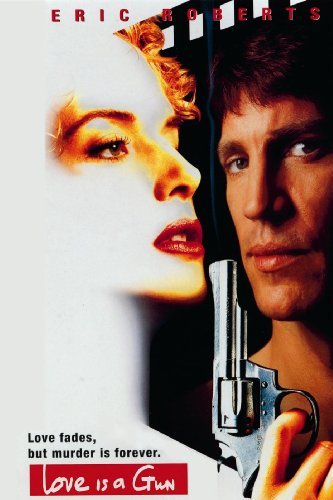
If you were suffering from insomnia last night, at around 2 in the morning, you could have turned on Showtime and watched Love is a Gun, an odd little thriller from 1994.
How odd is Love Is a Gun? It’s so odd that it stars Eric Roberts. Roberts plays Jack, a photographer with problems. His longtime girlfriend, Isabelle (Eliza Roberts), refuses to forgive him for cheating on her in the past and demands that he put a ring on her finger. (Jack, for his part, has bought a ring but he keeps losing it.) Jack is haunted by a reoccurring dream, in which he sees himself with a gun pointed at his head. Isabelle says that the dream means that Jack needs to give her a ring. Jack says it’s all about deja vu.
Jack gets a job working as a crime scene investigator. He meets a detective who is so crazy that he’s played by R. Lee Ermey. Jack takes pictures of dead bodies. His colleagues make macabre jokes. A local reporter offers to pay Jack for insider information. Ermey asks Jacks to help cover up a crime. Jack has visions of a line of well-dressed detectives shooting at him, firing squad style. Eventually, Jack ends up sitting in a living room, an anonymous body at his feet, and watching a soap opera. The actors on TV repeat dialogue that we’ve heard Jack and Isabelle say earlier in the film. Jack starts to giggle and is soon laughing like a maniac. A detective steps into the living room and asks Jack if he remembered to take a picture of the body in the bathroom. “Oh yeah,” Jack says, “I forgot about that…”
Jack meets a model named Jean (Kelly Preston). He takes pictures of her wearing a bridal gown and occasionally playing dead. He realizes that he’s already seen the exact same pictures that he’s just taken. Somebody left them in his locker at work but the images of Jean faded to black as soon as he looked at them. He asks Jean if this is all an elaborate joke. “Take the shot, Jack,” Jean replies.
Soon, Jean and Jack are having an affair. Jean tells Jack that she has a strange rash. Jack imagines that there’s a hole in Jean’s forehead. A man claiming to be Jean’s husband shows up and wishes Jack luck because his wife is crazy.
Jack goes back to Isabelle. Isabelle demands the ring. Jack freaks out and returns to Jean. Jean says she’s pregnant but then says she isn’t. Jack giggles and then cries. He goes back and forth between the two women, constantly begging for forgiveness as beads of sweat collect on his forehead.
Jack’s watch stops. He tries to get it repaired. An old man yells at him that his watch is cursed and cannot be repaired because it might infect all of the other watches in the man’s shop.
And, after all of that, the movie starts to get really weird…
Love Is A Gun does eventually offer up an explanation as to what’s going on. It doesn’t make a bit of sense but somehow, the total incoherence of it all adds to this low-budget film’s charm. Full of surreal images and intentionally odd dialogue, Love Is A Gun is compulsively watchable.
It also features a genuinely strange performance from Eric Roberts. Roberts goes through the film with this goofy smile on his face, except for the scenes when Jack gets upset. When Jack is upset, Roberts stomps his feet, jumps up and down, yells out every other line of dialogue, and contorts his body in some truly weird ways. When he gets really angry, he grabs can after can of beer and furiously shakes them before opening, causing the beer to drench his face. Eric Roberts’s lead performance is literally one of the oddest things that I have ever seen and it’s worth watching Love Is A Gun just to experience it.