The Daily Grindhouse: The Last Resort (dir by Brandon Nutt)


The Last Resort is a low-budget horror film from 2009 that tends to show up on Chiller a lot.  It’s a low-budget film about annoying people who, largely as the result of their own stupidity, get trapped in a really bad situation.  It’s a movie that many people dismiss but I’ve always found it to be a pretty effective little horror film.

In The Last Resort, Kathleen (played by Marissa Tait) is a bride-to-be who decides to go down to Mexico with her bridesmaids and have one last wild weekend for getting married.  They spend their first night in Mexico getting drunk and one of the bridesmaids, Sophia (America Olivio), leaves the group to spend the night with an American tourist named Rob (Nick Ballard).  The next morning, Kathleen and the three bridesmaids decide to take a tour of the countryside with two rather sleazy locals.  Sophia is left behind.

Not surprisingly, the two locals drive the group out to the middle of nowhere  and then rob them, seriously wounding one of the girls in the process.  Kathleen and her bridesmaids are abandoned to die in the desert but they manage to find a deserted resort where they take shelter for the night.  Unfortunately, it appears that the resort is also home to a murderous demon which proceeds to possess each of the girls, one after another.

The Last Resort has a really terrible reputation and if you happen to look it up on the imdb, you’ll come across a lot of negative comments about the film.  But you know what?  For what it is, The Last Resort is not that bad of a film.  The deserted resort is a genuinely menacing location and the director Brandon Nutt does a good job of maintaining an ominous atmosphere once the girls reach the location.  (Though it should also be admitted that it seems to take the film forever to reach that point.)

While the girls might not be memorable as individual characters, they are believable as a group.  You sincerely believe that they would not only all be friends but that they would also be the type of friends who, once they all get together, would end up spending a drunken weekend in Mexico and get stranded at a haunted resort.  In all honesty, one reason why this film resonated with me is because I’ve been on a few similar wild weekends myself.  Fortunately, neither me nor any of my friends were ever kidnapped at gunpoint but I do think that there were a few cases of demonic possession on some of those weekends.

Hey, it happens.

The Last Resort is one of those films that we tend to watch and go, “God, these people are so stupid,” but, to be honest, the stupider the characters act, the more strangely plausible a film like this feels.  The fact of the matter is that, at any given moment, 85% of the world is engaged in doing something stupid.  Smart people find themselves in stupid situations because, seriously, you don’t ever expect to find yourself being kidnapped or possessed until you already are.

That’s one reason why horror will always be a popular genre.  It’s one of the few genres that forces us to admit that, for the most part, we have no idea how vulnerable we are until it’s too late.  It’s easy to dismiss The Last Resort as being a film about stupid people making stupid decisions but, for me, it works precisely because it reminds us that we are capable of being just as stupid as the unfortunate bridesmaids in this film.

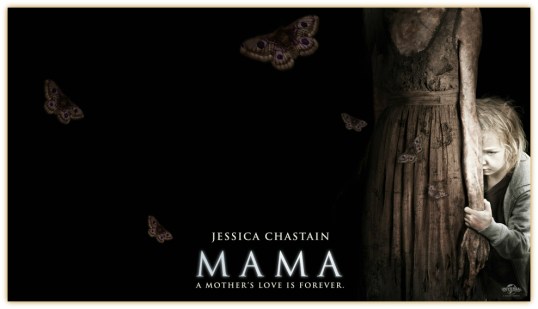
Review: Mama (dir. by Andres Muschietti)


Mama

In 2008 a young Argentine filmmaker made a 3-minute short film that caught the eye of one Guillermo Del Toro. The short film was titled Mama and it’s simple premise of ghostly mother chasing after two young girls in a darkened home was so well-received by Del Toro that he decided to produce a feature-length adaptation of the short film. He could’ve easily put himself in the director’s chair for the adaptation, but liking the work done by the short film’s original director the Mexican filmmaker gave the job to the original director, Andres Muschietti, and allowed him the freedom to make Mama the way it was meant to be made.

The feature-length version of the film works off of the screenplay written by the filmmaker Andres Muschietti and his sister Barbara Muschietti (with some help from Neil Cross) and expands on the brief sequence from the short film. We get a backstory as to the origins of the titular character and how she came to be throughout the film. We even get a much more detailed work up of the two young sisters who have become the obsession of the ghostly “Mama” and how they had gotten involved with her.

Mama opens up with a disturbing sequence where a father has murdered his partners in his company and his wife then taking his two young daughters out into the country where his grief at what he’s done leads him in an attempt to complete the cycle of becoming a family annihilator through the killing of his children then his own suicide. It’s only through the intervention of a shadowy figure in the abandoned cabin they’ve come across in the forest that this father’s plan fails. It’s a truly disturbing scene to see a father comforting his 3-year old daughter and at the same time hold a gun to her head. It’s almost a wonder that the audience feels both a sense of relief and horror at seeing “Mama” protect the young girls by killing the father.

We skip five years later as we find out that the father has a twin brother named Lucas (played by Game of Thrones‘ Nikolaj Coster-Waldau) who has spent the intervening years using whatever money the dead brother had left in an attempt to find the two young girls. Victoria and Lilly do get found by the scouts sent out by Lucas in the very same cabin where their father had taken them earlier in the film, but what the scouts find look more like feral animals than children.

One would think that the film would be about “Mama” wreaking havoc on Lucas to try and get her young girls back, but this film is not about mother versus father but mother versus mother. We’ve already met “Mama” briefly in the start of the film. The other mama in this fight for the girls’ love and soul is Lucas’ rocker girlfriend whose attitude in the beginning doesn’t shout maternal at all. Annabelle (played by Jessica Chastain) doesn’t think it’s her job to have to raise the two girls. It’s her love for Lucas that keeps her from bolting and trying to find a common ground with the two young girls. As the film moves forward Annabelle begins to feel protective of the two young girls and begins to believe that “Mama” is real and that she has followed Victoria and Lilly back from the cabin.

To say that this film is a horror film would be understating things. While it does have some jump scare moments and some creepy and disturbing images the story itself plays out more like a dark fairy tale set in a modern setting. just like another Del Toro produced horror film from the last couple years in The Orphanage, this film uses a fairy tale template to tell the story of the maternal love mothers have for their children. It’s interesting to note that the two mothers vying for Victoria and Lilly are not their biological mother, but surrogates who have come to love and care for the two girls in their own way.

Mama doesn’t break new grounds in the field of horror. It’s liberal use of gothic horror cliches and tropes by the Andres and Barbara Muschietti detracts from some darkly beautiful visuals and imagery that the filmmaker seemed very adept in creating to build that very sense of the fairy tale. What could’ve been a “been there and done that” and “paint-by-the-numbers” ghost story gets elevated by the performances by Jessica Chastain and the two young girls (Megan Charpentier as the elder sister Victoria and Isabelle Nélisse as the younger Lilly). Chastain in particular shines in the role of Annabelle as we believe her growth from reluctant caretaker to loving mother figure to protective mama bear by the time film ends on a very un-Hollywood ending.

Mama will definitely lose some fans of the horror genre who expect gore (which the film doesn’t have a drop of) and tons of scary moments (the film has jump scares but not much). This film will attract audiences looking for something familiar but at the same time with the added visual flair of a young filmmaker who looks to have a future in the genre, if not the industry, as a new creative eye who can work with something unoriginal and give it his own spin.

While the film is not on the same creative and storytelling level as Juan Antonio Bayona’s The Orphanage it is much better than Troy Nixey’s remake of the 1973 horror film Don’t Be Afraid of the Dark. The film does continue Guillermo Del Toro’s streak of finding new and upcoming young filmmakers in the horror genre and giving them a chance to break into the industry with him mentoring them through the process. Mama might not be a perfect film but Andres Muschietti’s work as a director shows that he has repaid Del Toro’s faith in him. I, for one, can’t wait to see what this filmmaker has up next.

An Obscure Film Review: Katherine (dir by Jeremy Kagan)


One of the great things about being an online film critic is that you occasionally come across a good but obscure film that you can then let the rest of the world know about as well.  Katherine is one such film.

I came across Katherine as part of a 3-film compilation DVD called Classic Films Of The 70s.  The other two films on the DVD were The Harrad Experiment and Born To Win and both of those films were so bad that I nearly tossed the DVD to the side without watching Katherine.  I’m glad I changed my mind because, while it may not have truly lived up to the promise of being a classic film of the 70s, Katherine was still a thousand times better than The Harrad Experiment.

Beginning with the idealism and hope of the early 60s and ending with a literal bang in the 70s, Katherine tells the story of how one woman is transformed from being a sheltered, upper class liberal to being a political revolutionary who is proud to embrace violence in order to bring about change.  Katherine ( Sissy Spacek, before she was Carrie) starts out as a teacher before falling in love with a civil rights activist (played, in a nicely smarmy performance, by Henry Winkler).  Against the backdrop of the Viet Nam War and the violence of the late 60s, Spacek and Winkler gradually become more and more radicalized until they eventually go underground and turn violent.  The film is made up of interviews with people who knew Katherine and Katherine herself even pops up and tells us her own version of her story.  Despite being forced to wear a horrid wig in the latter half of the film, Sissy Spacek gives a wonderfully empathetic and multi-layered performance as Katherine.  Even if you don’t always like the self-righteous stridency of the character, you never doubt her sincerity.

After I watched Katherine, I did a little research on the IMDb and I discovered that Katherine was a made-for-TV movie that was originally broadcast in 1975.  This did not surprise me because,  even as I was watching it, it was very easy to imagine a remake of Katherine (starring, I decided after much debate, Leighton Meester) being broadcast on the Lifetime Movie Network.  However, if Katherine felt like a Lifetime movie  with a political subtext, that’s only because I happen to love Lifetime movies.  Katherine is both an intelligent and interesting look at a very specific period of American history and a portrait of youthful idealism, disillusionment, and wanderlust.  We have all had to deal with that moment when our beliefs run into the wall of reality and Katherine captures that experience perfectly.

I found myself thinking about Katherine earlier today as I watched the presidential inauguration in Washington D.C.  Though the film might be close to 40 years old, its portrait of naive idealism, political stridency, and destructive activism still feels relevant.  Katherine is a film that most people have never heard of but it’s also one that is worth tracking down.

What Lisa and the Snarkalecs Watched Last Night #66: Tasmanian Devils (dir by Zach Lipovsky)


(Minor Spoilers)

Last night, the Snarkalecs and I watched the SyFy original movie Tasmanian Devils.  Who are the Snarkalecs?  You can find out here.

Why Was I Watching It?

Seriously, yesterday was a weird, weird day.  I don’t even know where to begin.  In between the pervy guys who have been working on the roof of the house across the alley, and the woman in Georgia who keeps accusing me of having an affair with her husband (another long story that you can read all about here), I was seriously ready to just change my name to Diabla, stop washing my hair, stop wearing makeup, and just move to Vermont.

But, through it all, I took the strength for the knowledge that, at 8:00, there would be an original movie on SyFy and that I would be watching it with my friends, the Snarkalecs…

What’s It About?

I’ll tell you what it’s not about.  It’s not about the spinning cartoon character who was always falling off cliffs and having safes dropped on his head.  No, these Tasmanian devils are vicious killers but, at the same time, they’re also kinda cute and adorable in a chupacabra kind of way.

Anyway, Apolo Ohno and a bunch of his friends go to Tasmania. Apolo jumps off of a cliff, has some trouble with his parachute, and ends up plunging into a hidden cave and getting impaled on the world’s biggest stalagmite.  Apolo hangs around for a bit, squirming like a bug and groaning despite the fact that he’s got a gigantic hole in chest.  Seriously, Apolo must be invincible.  Alas, his blood gets the attention of the Tasmanian devils and, in perhaps the defining scene of 2013, Apolo Ohno is literally ripped into little pieces on-screen.

There is a little bit more that happens in the film.  Apolo’s friends end up running into a park ranger played by Danica McKellar and they soon all find themselves being stalked through the wilderness by the Tasmanian devils.  However, for me, the film was pretty much about Apolo Ohno getting literally ripped into little pieces on-screen.

What Worked?

OH MY GOD!  Apolo Ohno was literally ripped into little pieces on-screen!  This led to me framing the term “Ohnotastic” as a way to refer to any spectacular death in a SyFy film.  This eventually led to the creation of the Ohno Scale, which from now on, will be used to judge the effectiveness of SyFy carnage.  Tasmanian Devils will now forever be one of the pivotal films in the history of the Snarkalecs.

(Hopefully, the next two-headed shark film from the Asylum will feature a Michael Phelps cameo.)

Beyond that, Tasmanian Devils was actually a pretty good film.  It was the epitome of a fun movie to watch with friends and director Zach Lipovsky actually managed to generate some genuine suspense.  Even better, both Lipovsky and Danica McKellar dropped by twitter and interacted with the people commenting on the film.  It’s always really nice whenever filmmakers do this.

On a personal note, I enjoyed Tasmanian Devils because it was filmed in Canada, a country that I am strangely obsessed with.  As for the male snarkalecs, they seemed to largely enjoy Tasmanian Devils because of the low-cut top that Danica McKellar’s park ranger was wearing.

What Did Not Work?

It all worked.  Life is too short to be critical of a film called Tasmanian Devils.

“OH MY GOD!  Just like me!” Moments

Insert your own low-cut top/heaving boobs comment here.

Lessons Learned

Apolo Ohno is not invincible.

The Daily Grindhouse: Alone With Her (dir by Eric Nicholas)


I recently watched the 2007 horror film Alone With Her and I have to say that I’m surprised that this film isn’t better known.  It’s probably one of the better horror films that I’ve seen recently.  I say this despite the fact that it’s a “found footage” horror film and, as such, the entire film is presented as being told through the lenses of various spy cameras.  I can count on two hands the number of “found footage” films that have actually worked for me.  As of right now, Alone With Her is sitting on the tip of my right pinkie finger.

Alone With Her opens with a disturbing montage in which Doug (Colin Hanks) wanders through the streets of the city, following every woman that he sees and secretly filming them with a hidden camera.  The fact that this montage plays out at such a naturalistic and unhurried  pace makes it all the more disturbing.  We watch as Doug does things like stand behind a woman so he can film up her skirt or pretend to shop solely so he can secretly get some leering footage of her cleavage.  By the end of this montage, I was already thoroughly creeped out and debating whether I would ever feel safe wearing a skirt in public again.

(Ultimately, I decided that I would continue to wear skirts but that, from now on, I’m going to pepper spray any man who stands less than a foot behind me.)

Eventually, Doug spots a woman named Amy (Ana Claudia Telancon) at a park and follows her back to her home.  Over the next few days, he obsessively films her as she unknowingly goes about her life until he finally breaks into her apartment and sets up numerous spy cameras.  Now free to observe every aspect of her life, Doug  arranges to meet the emotionally fragile Amy.  Using the knowledge that he’s gained from spying on her, he strikes up a friendship.  However, Amy’s best friend (played by Jordana Spiro) is suspicious of Doug and her suspicions lead to the film’s shockingly violent climax.

I didn’t have high expectations for Alone With Her and I have to admit that I’m still surprised at just how effective this film turned out to be.  For a film that doesn’t have much gore or any huge “shock” scenes, Alone With Her is an effectively creepy horror film that sticks with you long after the final frame.

A lot of the credit for the film’s success has to go to the cast.  Talancon is likable as Amy and Jordana Spiro brings unexpected nuance to the role of the stereotypically outspoken best friend.  Anyone who saw the sixth season of Dexter already knows that Colin Hanks can play a psycho but they still might not be prepared for just how downright creepy Hanks is in this film.  The film makes good use of Hanks’s neurotic persona and Hanks does a good job of gradually revealing the empty core that’s hiding behind Doug’s outward affability.  As played by Colin Hanks, Doug is the everyman-as-psycho.

However, the real star of the film is director Eric Nicholas.  I’m usually not a big fan of horror films that claim to have been assembled from  ”found footage.”  There are a few noticeable exceptions (like Ruggero Deodato’s Cannibal Holocaust, The Last Exorcism, Apollo 18, and Paranormal Activity 3) but, for the most part, these films never seem to be able to escape from the gimmicky feel of the concept.  (Add to that, they often fail to convince us that anyone would actually keep filming even while they’re being pursued by a masked murderer or whatever threat the narrative may supply.)  However, Nicholas manages to take the limitations of the found footage genre and transform them into strengths.  It helps that this film is about voyeurism and, by presenting what we’re seeing as being “found footage,” Nicholas creates a true sense of unease.  By the end of the film, I found myself nervously glancing around my bedroom and wondering if there was anyone secretly watching me.  Nicholas creates and sustains such an atmosphere of paranoia that the film’s familiar story takes on a surprising power.

As I stated previously, Alone With Her was a real surprise.  It’s a disturbing and all too plausible horror movie that stays with you.

Film Review: Casino (dir by Martin Scorsese)


(Minor spoilers below)

Casino, Martin Scorsese’s epic, Las Vegas-set film from 1995, is one of my favorite films of all time.  It seems to show up on cable every other week and, whenever I see that it’s playing, I always make it a point to catch at least a few minutes.

Casino opens with veteran Las Vegas bookie Ace Rothstein (played by Robert De Niro) getting into a car.  He starts the engine and the car explodes.  The rest of the movie is an extended flashback as both Ace and his friend and eventual rival Nicky (Joe Pesci) explain how Ace went from being the most powerful man in Vegas to getting blown up in his car.

We are shown how Ace was originally sent to Vegas by a group of mobsters who are headquartered in the far less flamboyant town of Kansas City.  Ace keeps an eye on the city for the bosses and, as long as the money keep coming in, they leave Ace alone to do whatever he wants.  When Ace isn’t bribing government officials (including one particularly sleazy state senator who was reportedly based on future U.S. Sen. Harry Reid) and breaking the fingers of the unlucky gamblers who have been caught trying to cheat the casino, he’s busy falling in love with the beautiful prostitute Ginger (Sharon Stone, who was nominated for Best Actress for her work in this film).  Though Ginger warns Ace that she doesn’t love him and is still hung up on her manipulative pimp Lester Diamond (James Woods, who is hilariously sleazy), Ginger and Ace still get married.

Everything’s perfect except for the fact that Ace’s old friend Nicky (Joe Pesci) has also moved to Vegas.  As opposed to the calm and low-key Ace, Nicky has a violent temper and soon, he starts drawing unwanted attention to both himself and Ace.  When Ace attempts to control Nicky, Nicky responds by turning on his friend and soon, the two of them are fighting an undeclared war for control of the city.  Meanwhile, the bosses in Kansas City are starting to notice that less and less money is making its way back to them from Las Vegas…

There are so many things that I love about Casino that I don’t even know where to begin.

First off, I love the film’s glamour.  I love the way that the film celebrates the glitz of Las Vegas, presenting it as an oasis of exuberant life sitting in the middle of a barren desert that, we’re told, is full of dead people.  I love seeing the tacky yet stylish casinos.  I love seeing the inside of Ace’s mansion.  And Ginger’s clothes are just to die for!

I love that Scorsese’s signature visual style perfectly keeps up with and comments on the natural flamboyance of Las Vegas.  Consider how the film starts, with the shadowy form of Ace Rothstein being tossed through the air and then descending back down to Earth.  Consider the image of Ace standing in the middle of the desert and being submerged within a thick cloud of dust as Nicky’s car speeds away from him.  Consider how Scorsese’s camera glides through the casino, letting us see both the people who cheat and the people who are watching them cheat.  Consider Nicky standing outside of his jewelry stare and freezing the movement of the camera with his reptilian glare.  Consider the scene of cocaine being snorted up a straw, seemingly filmed from inside the straw.  Casino is a film full of the type of images that all directors promise but few ever actually deliver.

I love that Casino is built around a brilliant lead performance from Robert De Niro.  De Niro gives a performance that mixes both tragedy and comedy.  My favorite De Niro moment comes about halfway through the film, when Ace finds himself hosting a wonderfully tacky cable access show called Aces High. Ace interviews “celebrities” like Frankie Avalon, introduces the Ace Rothstein Dancers, and even finds the time to do some juggling.  De Niro makes Ace into an endearing and awkward character in these scenes, a permanent outsider who has finally managed to become something of a star.

It’s easy to compare Casino to Scorsese’s other classic mix of gangster film and social satire, 1990’s Goodfellas.  Both films feature De Niro, Pesci, and Frank Vincent.  (In a nice piece of irony, Casino features Vincent getting a little revenge after being attacked twice by Joe Pesci in two different Scorsese films.)  Both films are based on nonfiction books by Nicholas Pileggi.  Both films feature nonstop music playing on the soundtrack.  Both films feature multiple narrators who explain to us how the day-to-day operations of the  Mafia are conducted.  When Scorsese shows us Ace and Ginger’s wedding day, it feels almost like a scene-for-scene recreation of Henry Hill’s wedding in Goodfellas.

At the same time, there are a few key differences between Goodfellas and Casino.  Whereas Goodfellas was all about being a low-level cog in the Mafia, Casino is about management.  Casino is about the guys who the Goodfellas made  rich.  Goodfellas was about the drudgery of everyday life whereas Casino is about the glitz and the glamour promised by the fantasy world of Las Vegas.  Whereas Goodfellas was almost obsessively anti-romantic, Casino is a gangster film with heart.  No matter what else you might say about him as a character, Ace’s love for both Ginger and Las Vegas is real.  On a similar note, when Nicky turns against Ace, it’s because his feelings have been hurt.  In the end, Ace and Nicky come across like children who have, temporarily, been given the keys to the world’s biggest playground.

Casino is a glossy, flamboyant film that literally opens with a bang and ends on a note of melancholy and loss.  Not only is Ace reduced to being an anonymous old man working out of a nondescript office but our last two views of Vegas are of the old casinos being dynamited and an army of overweight tourists emerging from the airport like the unstoppable zombies from Dawn of the Dead.  This, then, is Scorsese’s view of the apocalypse. The world isn’t destroyed by a cataclysm but instead by an invasion of terminal middle American blandness.

What Lisa and Evelyn Watched Last Night #65: Megiddo: The Omega Code 2 (dir by Brian Trenchard-Smith)


Last night, after we finished watching the first episode of the new season of American Idol, my bff Evelyn and I watched Megiddo: The Omega Code 2, an evangelical apocalypse film from 2001.

Why Were We Watching It?

Considering that I’m an occasionally agnostic Irish Catholic and Evelyn describes herself as being a “Jewish atheist,” and that Megiddo: The Omega Code 2 is a film about Armageddon told from an evangelical point of view, I think the real question is how could we not watch it?  I mean, seriously.

Along with that, of course, Evelyn and I both wanted to watch something that nobody would ever expect either one of us to ever watch.

What Was It About?

Stone Alexander (Michael York) is President of the European Union and is promoting a plan that he claims will solve all of the world’s problems.  His younger brother, David Alexander (Michael Biehn) is vice president of the United States and wants to keep America from turning into Europe.  David is also in love with Stone’s wife (Diane Venora).  And, of course, Stone is actually the Antichrist while David is Michael Biehn.

Anyway, Stone uses his magic devil powers to cause President Benson (R. Lee Ermey) to die of a heart attack and David becomes President.  David, however, refuses to join Stone’s “new world order” so Stone frames David for the murder of their father.  David goes into hiding with a few loyal American soldiers while Stone makes plans to launch a military strike against Jerusalem.

It all, of course, leads to a huge battle between the forces of Hell and the combined armies of Spain and China (no, really).  David finally gets his chance to confront his brother, many prayers are said, and, eventually, a CGI demon pops up and creates a lot of CGI mayhem.

What Worked?

Evelyn claims that nothing worked in this film but I disagree just slightly.  First off, and most importantly, Franco Nero is in this film!  He plays Stone’s father-in-law and, while he may no longer be the dashing Lancelot from Camelot, Franco Nero is still aging pretty damn well.

Udo Kier is in the film too.  Seriously, Udo Kier pops up in the strangest places.

Michael York is a lot of fun as the wonderfully evil Stone Alexander. York’s performance here makes his delivery of the line, “YOU CAN LIVE!  LIIIIIIIIIIIIIIIIIIIIVE!” at the end of Logan’s Run look restrained.  Also, if you’re going to have a made-for-evil name like Stone Alexander, you might as well be the Antichrist.

On a personal note, I had a lot of fun annoying Evelyn by pointing out that just about every policy proposed by Stone Alexander has also been proposed by Barack Obama.  I imagine that Megiddo must be a very popular film among certain conspiracy-minded segments of the population.

What Did Not Work?

To be honest, the entire film didn’t work.  It’s not a very good film.  The special effects were cheap, the script made the Atlas Shrugged films look subtle, and I imagine that the film probably created more atheists than believers.

That said, Megiddo is still better than Avatar.

“Oh my God!  Just like Evelyn and Lisa!” Moments

None.

Lessons Learned

Franco Nero ages like a fine wine.

Getting the point of Megiddo

The Daily Grindhouse: Kiss Daddy Goodnight (dir by Peter Ily Huemer)


To me, Uma Thurman will always be Kill Bill‘s Beatrix Kiddo and, for that reason, she will always be one of my favorite actresses.  Though we take that film and her performance in it for granted now, the fact of the matter is that Kill Bill, Volume 1 was one of the most important milestones in my evolution towards becoming a film fanatic.  I was a senior in high school when I first saw that movie and I had the same insecurities that every 17 year-old girl has.  However, when I watched the Kill Bill films, I felt like I could survive anything.  If Beatrix Kiddo (in the form of Uma Thurman) could survive being shot in the head and come out of her coma kicking ass, then I knew that I could certainly survive breaking up with my boyfriend or getting my period in gym class or waking up with a big zit in the middle of my forehead.

However, even Uma Thurman had to start somewhere and that somewhere, in her case, was with an obscure, low-budget film called Kiss Daddy Goodnight.  Kiss Daddy Goodnight, which also features Steve Buscemi in a small role, is one of those moody, atmosphere-drenched films that always seems to show up in cheap, 10-movie box sets.  I recently watched it as a part of the Night Chills box set and I discovered that it’s not really as terrible as many reviewers claim.

First released in 1987 and looking as if it was produced with a budget of about a $1,000, Kiss Daddy Goodnight  is another one of those oddly fascinating and pretentious grindhouse films that tries to mix art and exploitation.  Shot on location at some of the sleaziest locations in New York City, Kiss Daddy Goodnight is the ennui-drenched story of Laura (17 year-old Uma Thurman).  Laura is an actress who supplements her income by going out at night with a Louise Brooks wig on, picking up rich men, drugging them, and robbing them.  Laura steals an ornate dagger from one of her victims and makes plans to give it to her mom as a birthday present.

Kiss Daddy Goodnight is also the story of Sid (Paul Dillon), a friend of Laura’s who, having previously left for reasons unknown, returns to New York and announces that he’s looking for Laura’s ex-boyfriend, Johnny.  Sid wants to start a band.  Laura tells him that she doesn’t know where Johnny is but she allows Sid to crash at her apartment.  Sid spends most of the movie walking up to random people and asking if they’ve seen Johnny.  He also finds the time to go through Laura’s closet whenever Laura’s not at the apartment.  “Fucking bitch,” Sid randomly exclaims while looking at Laura’s dresses.

Kiss Daddy Goodnight also tells the story of William (Paul Richards), a courtly older man who lives in an apartment with a rabbit and who spends most of his time missing his daughter Lara, who wants nothing to do with him.  William becomes obsessed with Laura, who looks almost exactly like Lara.  We’re never quite sure what William does for a living but he’s rich enough to have a henchman who follows Laura whenever she leaves her apartment.

Finally, Kiss Daddy Goodnight is the story of Johnny who, once Sid does find him, turns out to be played by a very young Steve Buscemi.  Johnny is only on-screen for about 5 minutes but, since he’s played by Buscemi (who, as opposed to Dillon and Richards, can actually act), he becomes a major character by default.  Johnny is the only character in the film who seems to have a life outside of what we’re seeing on-screen.  When Sid says he wants to get the band together again, Johnny says he no longer plays.  When Sid says, “Laura says hello,” Johnny simply gives him a contemptuous stare and turns on the TV.  The camera zooms in on the TV and we spend a few minutes watching football players tackling each other in slow motion.

Yes, Kiss Daddy Goodnight is an odd little film.  While the film’s nominal plot is basically William pursuing Laura while Sid attempts to protect her, the film itself has a random, almost improvised feel to it.  The film is more interested in documenting the weird people around Laura and Sid than in Laura and Sid themselves.  When Sid applies for a job in a seafood place, the camera pans over to the two men in sitting in the booth behind him and we spend a minute listening to them talk about a friend who has been kicked out of a private school in Europe.  When Laura takes a taxi to her apartment, the driver discusses philosophy with her.  The phone number 559-8317 appears throughout the movie, cryptically scrawled on apparently every wall in New York.  No one calls the number or even seems to notice it but it’s there as evidence that Kiss Daddy Goodnight is far more concerned with preserving a specific time and place than with telling a traditional story.  When viewed as a  historic document, Kiss Daddy Goodnight is a success d’estime.

Kiss Daddy Goodnight has a pretty bad reputation.  One need only visit its page on the IMDb to see how little most people seem to think of Uma Thurman’s debut film.  I, however, found it to be a bit more interesting than its reputation would lead one to suspect.  Along with serving as a time capsule of New York City, the film proves that, even early in their respective careers, both Thurman and Buscemi had the talent and charisma necessary to become stars.  If nothing else, just the fact that Uma Turman could go from Kiss Daddy Goodnight to Kill Bill, should give us all hope for the future.

It’s just more evidence that anything is possible.

Film Review: Les Miserables (dir. by Tom Hooper)


I was recently talking to one of my fellow film bloggers when the subject of this year’s Oscar nominees came up.  After I told her that I thought that Beasts of the Southern Wild was the worst of this year’s nominees, she rather vigorously shook her head and said, “No film this year was less deserving of a nomination than Les Mis.”

Now, I have to admit that it’s rare that her and I ever agree on anything.  For instance, she thinks that Barack Obama is going to save the world whereas I … well, let’s just say that I don’t.  She watches Glee and I would watch Community if it would ever come back on the air.  However, we do usually agree about films and, in fact, our friendship was initially the result of our shared loathing for Avatar.  So, I was curious why her reaction to Les Miserables was so different from mine.

In her own words, Les Miserables was “bombastic” and over-directed by Tom Hooper.  She complained about Russell Crowe’s singing and she felt that Sacha Baron Cohen appeared to be acting in a totally different film from everyone else.  The term “style over substance” came up more than a few times and she felt that even the things that did work — like Anne Hathaway’s draining performance as Fantine, Samantha Barks’ poignant work as Eponine, and Aaron Tveit’s charismatic performance as Enjorlas — simply served to highlight how uneven the film was when taken as a whole.  Finally — and I think that this is actually the key behind a lot of the online backlash against Les Miserables — she admitted that a part of her reaction was due to the fact that she still resented the fact that Hooper’s previous film, The King’s Speech, defeated The Social Network for Best Picture way back in 2010.

What’s ironic is that I found myself agreeing with a lot of what she was saying.  The fact of the matter is that Hooper does over-direct Les Miserables and the frequent jump cuts do tend to detract from the film’s performances.  It’s not a coincidence that the film’s best performance is given by one of the few performers (Anna Hathaway, of course) who is actually allowed to sing an entire song in close-up without Hooper cutting away to distract us with something else.  And yes, Sacha Baron Cohen does feel out-of-place and yes, Russell Crowe is a bit miscast in the role of Javert.

And yet, despite those not minor complaints, I still loved Les Miserables and I think it’s more than deserving of its nomination for Best Picture of the year.

Les Miserables in an adaptation of the Broadway musical that was itself an adaptation of Victor Hugo’s classic novel.  The plot will be familiar to anyone who has ever taken an English class.  In 19th century France, Jean Valjean (Hugh Jackman) serves 19 years in prison for stealing bread.  When he’s paroled from prison, he adopts a new identity and starts a new life.  Eventually, he becomes a factory owner and a local politician and is known for his kindness and honesty.  When the tragic prostitute Fantine (Anne Hathaway) dies, Valjean adopts her daughter, Cosette.  However, when the obsessive Inspector Javert (Russell Crowe) learns of Valjean’s true identity, Valjean and Cosette are forced to go into hiding.  Many years later, the now grown Cosette (Amanda Seyfried) has fallen in love with the revolutionary Marius (Eddie Redmayne, who gives a performance that is just as good as Hathaway’s much more lauded work). As France descends into revolution, Javert again discovers Valjean, much blood is shed on the streets of Paris, and Sacha Baron Cohen keeps popping up and offering some awkward comedic relief.

Yes, Les Miserables is all about style and yes, it is a bit bombastic but is that necessarily a bad thing?  I loved Les Mis specifically because it was such an old school spectacle.  There have been several very serious, very sober-minded adaptations of Les Miserables and most of them, especially the nearly 5 hour French version from 1934, deserve to be seen.  Both the Broadway musical and Hooper’s adaptation play up the story’s inherent melodrama and the resulting show is one that is designed to get more of an emotional response than an intellectual one.  Tom Hooper’s Les Miserables is a film that has specifically been made for those of us who aren’t ashamed to shed a few tears at the movies.  When I walked out of the theater after watching Les Miserables, I had mascara everywhere and I can’t think of a higher compliment to pay this uneven but ultimately triumphant film.

The Case for Dredd 3-D


558551d83bc53bcdec27e79335a5e8bd

I don’t know that many people who, in the thrall of a weak September, dished out the $5, $10, $12, to see Dredd 3-D. This is curious, because I saw it the day that it came out, and I sang its praises til… wait, when am I writing this? I suppose the singing goes on. If you’ve seen Dredd 3-D, you probably had the same initial reaction I did – that this movie is much, much, much better than you ever thought it would be. But, having seen it three times in theaters, and roughly one billion times since the DVD release… there’s more to this movie. This is a truly great film. And since we’re in the season of handing out awards, and because movies like Dredd 3-D know from the moment of their inception that they will never sniff a nomination, it seems like a fine time to extol the virtues of what might be the best action movie made since the calendar flipped over from 1989.

If you’ve seen the film, I can probably spare you most of this song of praise. Of the few people that I know who have seen the film (most of them forced to see it by me), I have heard very few complaints. Of course, I have targeted the film’s audience amongst my own friends, and I’m not trying to win it the support of the Academy. But for a film to be so universally heralded amongst fans of a certain genre is actually fairly impressive in 2013, let alone for that very same film – a gritty B action film, by all accounts – to command a startling 77% fresh rating at Rotten Tomatoes, is nothing short of incredible.

For the uninitiated, let’s start at the beginning. What is Dredd 3-D?

Well, it’s an exploration of a dystopian future that is the primary subject of the long-running Judge Dredd comic strip, an American hero who has been published almost exclusively in the United Kingdom. Dredd is a living metaphor, he is blind justice, the implacable and unrelenting arm of the law. He is fearless, he is formidable… he is the law. In a desolate future, North America is a nuclear wasteland. Outside of the boundaries of the incredible Megacity One, all is irradiated desolation. The Megacity runs from Boston to Washington DC, and contains twice as many people as lived in all of North America in 2012. Within the city limits, only one organization is still fighting to maintain order… the Judges of the Hall of Justice. They are judges, they are juries, and if necessary, they are executioners.

In Dredd 3-D, this is effectively all of the exposition we need. Judge Dredd (Karl Urban) is the merciless reality of a law that is actively losing its struggle to serve and protect. Megacity One is falling apart day by day. But if Dredd himself is dismayed, he does not show it. Our opening sequence is a bloodbath of a high-speed chase through the streets of Megacity One that is given all the feel of a totally average day on the job. Innocent people die, vehicles are destroyed, drugs are consumed, and assault weapons are in abundance. So routine does the film make the bust feel, that it drew me into the world of Judge Dredd. Once I was there, and once the action started, the film never released its talons.

From there, Judge Dredd hauls rookie Judge-Candidate Anderson (Olivia Thirlby) out into the real world. As befits an assessment, Anderson takes the lead, committing herself and Dredd to respond to a multiple homicide at Peach Trees, one of the massive megastructures of Megacity One, a single tenement that houses over 75,000 people. Upon arrival, the Judges determine that the corpses – skinned and thrown off the balcony of Peach Trees’ level 200 – were executions, intended to send a message. From there, we’re off. The Judges fight their way up the megastructure and toward survival, battling against the savage druglord Ma-Ma (Lena Headley) and her minions. Most of the effects are practical, most of the dialogue is minimal, and while the story does have its emotional aspect, the action is the centerpiece of this film.

So, given that, why would I prop this film up as one of 2012’s best? Why would I, had I an Academy vote, have nominated Dredd 3-D for Best Picture (and probably Best Direction and Best Score, but probably nothing else). Because Dredd 3-D understands its genre, and its audience, and it attempts to be a perfect film within that framework. There is no pretension here. There are no regal accents, timeless proclamations of love, or elaborate Victorian costumes. That probably disqualifies Dredd from an award this year, but it shouldn’t. Because Dredd is a better film than Les Miserables (which, earnestly, has been done better more than once before). It is a better film than Lincoln (no one has ever claimed that they felt Dredd 3-D’s length)… because Dredd 3-D is a perfect action movie. If we do not ascribe any deeper motivations or requirements to a film than it be relentlessly entertaining and that it fill the basic requirements of its genre, there are few films ever made that will fill this criteria better.

Dredd 3-D sets up its scenario expertly, in a handful of scenes, and without much in the way of dialogue. Karl Urban has proved time and again that he is both versatile and talented (and criminally underrated, but that’s neither here nor there) but he is not asked to do much here. Dredd delivers his lines in the same tone of voice regardless of the situation. Where Dredd’s catch-phrases seemed campy and over-wrought in the 1995 adaptation starring Sylvester Stallone, Urban seems to have the better measure of his character. He is mercilessly deadpan, transforming one-liners into either tiny morsels of dry humour or vaguely ominous threats. Because Dredd’s persona is so unvarying, it never seems like he’s delivering a line. He is simply stating facts, as he observes them, and we are reacting in turn. Throughout the film, Dredd delivers roughly three facial expressions – a default look of grim severity, a look of significant disappointment (when a particular misfortune befalls rookie Judge Anderson) and one that I would not describe otherwise than grim fury (when a particularly more unfortunate misfortune befalls rookie Judge Anderson).

Dredd 3-D doesn’t demand much from its audience, but it outputs entertainment at an almost unvarying rate. The action scenes and set-pieces are actually remarkably varied (such as they can be) despite the confined nature of the film’s locations. As we watch, Dredd’s relentless implacability, and the sense that he literally cannot be stopped, actually become a fun part of the story. There is literally nothing to recommend the villains of the piece to us, despite a fairly layered performance by Lena Headley, who manages to be savage, determined, exhausted, and regretful basically all at once. This is one circumstance in which we very much want “the law” to prevail… and if what you hunger for is watching the law burn gang-bangers to death with incendiary ammunition, this film will grant you your fondest wish.

So, while Dredd 3-D may not have been nominated for any prestigious awards this season, please do it the favour of checking it out. It is a nearly-perfect action movie, and it is that way in spite of, not because of, its source material. Show it some love, and hope that the who’s-who of Hollywood realizes why this film is worth our time – and that they make many more films just like it.