Review: Project Hail Mary (dir. by Phil Lord and Christopher Miller)


“I am happy. You no die. Let’s save planets!” — Rocky

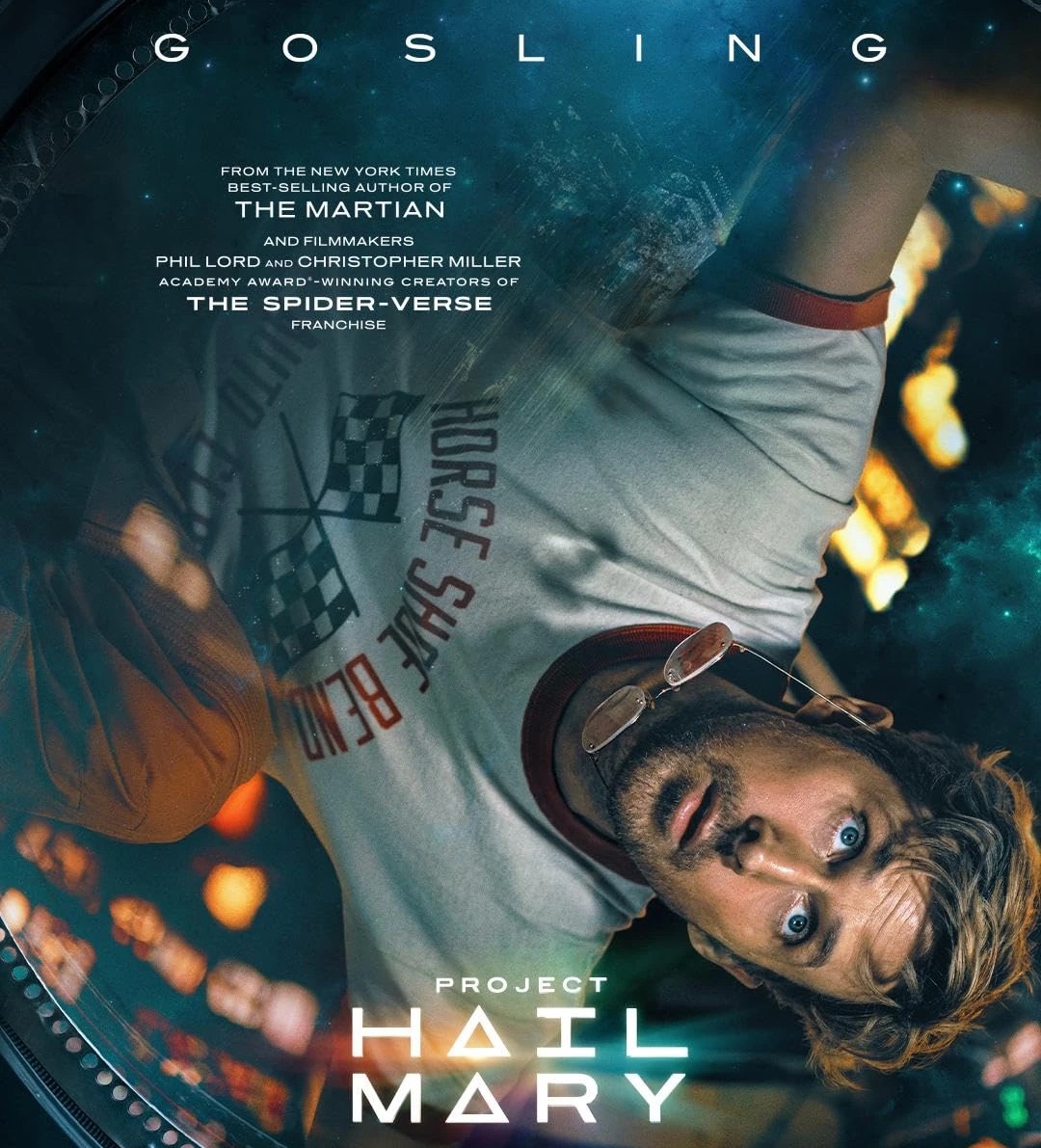
Project Hail Mary delivers a crowd-pleasing space adventure that captures the spirit of Andy Weir’s bestselling novel without reinventing the sci-fi wheel. Ryan Gosling shines as the reluctant hero, carrying the film through its mix of brainy puzzles and heartfelt moments. Directed by Phil Lord and Christopher Miller, this big-budget adaptation balances wonder with some familiar tropes, making it a solid popcorn flick for fans of hard science fiction laced with humor.

The story kicks off with Dr. Ryland Grace, a brilliant but socially awkward science teacher played by Gosling, who wakes up alone on a spaceship hurtling through the solar system. He has amnesia, no crewmates, and a mission he can’t quite remember—saving Earth from a mysterious microbe called Astrophage that’s dimming the sun and threatening global catastrophe. As Grace pieces together his past through flashbacks, we see how he went from a disgraced academic debunking fringe theories to humanity’s last-ditch savior. The setup echoes The Martian, Weir’s previous hit, with its lone survivor using wit and science to beat impossible odds.

Gosling nails the everyman genius vibe, blending wide-eyed confusion with deadpan quips that keep things light. His Grace is no stoic astronaut; he’s a guy who’d rather teach middle school than lead a suicide mission, cracking jokes about his fear of commitment even as he’s rigging experiments with duct tape and hope. The performance anchors the film’s emotional core, especially in quieter moments where Grace grapples with isolation and doubt. Sandra Hüller adds gravitas as Eva Stratt, the no-nonsense project leader who strong-arms world governments into action—she’s all icy efficiency, a nice counterpoint to Gosling’s rumpled charm.

Lord and Miller, the duo behind The Lego Movie and Spider-Man: Into the Spider-Verse, bring their signature visual flair to the vastness of space. The Hail Mary ship feels lived-in and jury-rigged, with practical sets that pop against sweeping CGI vistas of alien planets and swirling Astrophage clouds. Early scenes use dreamlike tilts and blurred transitions to mirror Grace’s foggy memory, creating a disorienting but captivating rhythm. It’s not always seamless—the nonlinear structure can jolt you out of the immersion—but it builds tension effectively as revelations stack up.

Screenwriter Drew Goddard, who collaborated with Weir on The Martian, stays faithful to the book’s plot beats and scientific grounding. Astrophage isn’t just a plot device; it’s a clever microorganism that feeds on starlight, explained through Grace’s whiteboard scribbles and explosive demos. The film dives into real astrophysics—like orbital mechanics and xenobiology—without dumbing it down, yet it keeps the pace brisk with problem-solving montages set to a retro-futuristic score. Think Guardians of the Galaxy vibes, complete with a catchy farewell tune that hits surprisingly hard.

About halfway through, the story pivots to its most memorable element: Grace’s encounter with Rocky, an alien engineer from the 40 Eridani system. Voiced and puppeteered by James Ortiz, Rocky is a spider-like creature with a high-pitched ammonia-breathing voice, communicated via a bulky translation rig à la Arrival. Their friendship is the heart of Project Hail Mary, turning a solo survival tale into a buddy sci-fi romp. The xenolinguistics—figuring out math and music as common ground—feels fresh and fun, with practical effects making Rocky endearing rather than creepy.

That said, the film isn’t flawless. Clocking in around two hours, it rushes some of the book’s deeper world-building, like the global panic on Earth or the crew’s backstories, which get condensed into quick flashbacks. Grace’s arc from coward to hero leans on a simple mantra—”bravery is fighting for someone else”—that’s uplifting but predictable. It doesn’t push cinematic boundaries like Interstellar or Dune, settling for feel-good spectacle over profound philosophy. The massive budget shows in the polish, but it occasionally feels like a theme-park ride: thrilling set pieces, like a high-stakes EVA gone wrong, prioritize awe over subtlety.

Visually, the film excels in its alien encounters and spacewalk sequences, with IMAX-friendly shots of Eridani b’s jagged landscapes and bioluminescent horrors. The Astrophage effects are a standout—tiny, shimmering specks that swarm like deadly fireflies, rendered with meticulous detail. Sound design amplifies the isolation, from the hum of life support to Rocky’s echolocating chirps. It’s all wrapped in a score that mixes orchestral swells with synth grooves, evoking 80s space operas while feeling modern.

Thematically, Project Hail Mary champions collaboration across species and borders, a timely nod amid real-world divisions. Grace’s growth isn’t just about smarts; it’s about vulnerability, learning to trust Rocky despite zero shared language or biology. The film handles this with sincerity, avoiding preachiness by grounding it in humor—imagine two nerds bonding over thermodynamics while one’s in a pressurized suit and the other’s a five-eyed rock. It’s optimistic sci-fi that posits curiosity as humanity’s superpower, even if the execution stays safely within blockbuster lanes.

Supporting cast fleshes out the ensemble without stealing focus. Tracy Letts chews scenery as a blustery politician, while smaller roles like the multinational crew add diversity to the stakes. Production design nods to NASA realism, with the Beetle probes (Grace’s mini-shuttles) stealing scenes in their plucky, R2-D2 fashion. Pacing dips in the mid-act info dumps, but Goddard trims the fat smartly, ensuring the climax—a desperate race against entropy—delivers white-knuckle payoff.

Early reactions praise its fidelity to Weir’s page-turner, with fans thrilled by the faithful visuals and emotional beats. Detractors might call it formulaic, but in a genre crowded with grimdark dystopias, this one’s a breath of fresh (oxygenated) air. It’s not the most original sci-fi, but it’s entertaining as hell, blending laughs, tears, and light-speed thrills.

For book purists, the adaptation honors the source without copying verbatim—key twists land with impact, and the science holds up under scrutiny. Weir himself has endorsed it, chatting about Rocky’s creation and making quantum mechanics accessible. If you’re burned out on capes or zombies, Project Hail Mary offers smart, hopeful escapism that sticks the landing.

Ultimately, this is peak “movie medicine”—a fun, moving reminder that lone wolves become legends with the right friends, human or otherwise. Gosling’s charisma, paired with Lord and Miller’s playful direction, makes it soar higher than its plot alone might suggest. Worth the ticket for any sci-fi buff craving brains with their spectacle; just don’t expect it to redefine the stars.
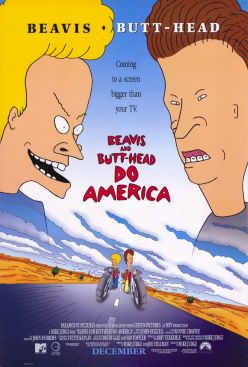
Beavis and Butt-Head Do America (1996, directed by Mike Judge)


While having a dream about being a giant who can destroy a city and almost score, Butt-Head is woken up by his friend Beavis.  Beavis points out that their TV has disappeared. Muddy footprints lead away from the television’s former location and out the front door.  Anyone who is familiar with MTV’s Beavis and Butt-Head will immediately realize that this is a crisis.  Animated and voiced by Mike Judge, the moronic teenage duo of Beavis and Butt-Head really don’t have anything in their lives beyond television and heavy metal.  Beavis and Butt-Head set off to find their television, a quest that will see them traveling all the way from Highland, Texas to Las Vegas and eventually Washington D.C.  Along the way, they’ll be pursued by ATF Agent Fleming (Robert Stack), they’ll get hired by alcoholic Muddy Grimes (Bruce Willis) to kill his wife, Dallas (Demi Moore), and Dallas will set them up as the perfect patsies for a terrorist attack on Washington D.C.  Chelsea Clinton will beat up Butt-Head.  President Clinton will declares the boys to be heroes.  They’ll even meet their fathers, though everyone involved will be too dumb to realize it.  But will Beavis and Butt-Head ever find their TV?

Beavis and Butt-Head Do America was the first movie to star Beavis and Butt-Head and I can still remember when it first came out in 1996.  No one expected much from it but it turned out to be one of the funniest movies of the year, a triumph of animation, social satire, and jokes about wood.  A lot of the film’s humor comes from just how stupid Beavis and Butt-Head are but even more of the humor comes from everyone’s inability to understand just how stupid they are.  Agent Fleming may think he’s saving America but he’s actually just chasing two teenagers who don’t even know how to read their own names.  Muddy may think that he’s hired two experienced hitmen to “do” his wife but instead, he’s promised to pay two idiots to do his wife.  (With the money, “we could buy a TV,” Butt-Head tells Beavis.)  Everyone, from Fleming to Muddy Grimes, assumes that there must be some sort of grand scheme behind Beavis and Butt-Head’s journey across America.  There isn’t.  They just want to find a television.

Beavis and Butt-Head were and still are two wonderfully comedic creations.  Watching them, I’m always surprised to remember that Mike Judge provided both of their voices.  When they argue with each other about where their TV has gone or if it’s a good idea to jump out of a speeding car, Judge is arguing with himself.  Butt-Head may be the leader but the heart of the duo is definitely Beavis and maybe Cornholio.  The non-stop laughing, the inability to read, the obsessively crude humor, Beavis and Butt-Head were the future and they didn’t even realize it.  Voicing the boys and their neighbor Mr. Anderson, Mike Judge generates most of the laughs in the movie but he still gets first-class help from Bruce Willis, Demi Moore, and especially Robert Stack.

Beavis and Butt-Head Do America was considered to be a surprise commercial and critical success but the only people who were really surprised were those who hadn’t previously experienced Mike Judge’s sense of humor and satirical viewpoint.  Beavis and Butt-Head Do America is smart comedy about some very dumb people.

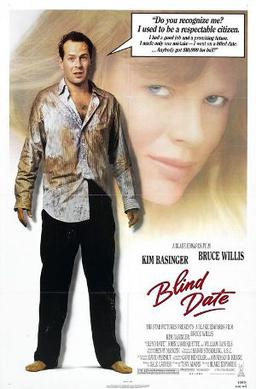
Blind Date (1987, directed by Blake Edwards)


H˜é‚

Walter Davis (Bruce Willis) is a workaholic who, in typical 80s fashion, is trying to secure a deal to manage the assets of a Japanese industrialist.  When he needs a date to a business dinner, his brother (Phil Hartman) sets him up with his wife’s cousin, Nadia (Kim Basinger).  Walter is warned to not let Nadia take a single sip of alcohol.  Of course, Walter lets Nadia drink some champagne.  It turns out that Nadia loses all of her inhibitions when she drinks and she says exactly what’s on her mind.  The dinner turns into a disaster as Nadia convinces the industrialist’s wife to file for divorce.  Walter not only loses his job but he now has to get the intoxicated Nadia back home.  Making that difficult is that Nadia’s ex, David (John Larroquette), is still obsessed with her.  David is also crazy and spends almost the entire night chasing Nadia and Walter.

Blind Date is historically significant because it was both Bruce Willis’s first credited film role (he had previously appeared, uncredited, in The First Deadly Sin and The Verdict) and also Willis’s first starring role.  Willis received the role after becoming a sudden star due to his role on Moonlighting and the entire movie is full of television actors.  John Larroquette was best-known for Night Court.  Phil Hartman had just started on Saturday Night Live.  William Daniels appears as Larroquette’s father.  At the time Blind Date came out, Kim Basinger was the closest thing that the cast had to a legitimate movie star.

Watching Blind Date today, it’s strange to see Willis playing a nebbish.  He’s likable but miscast as a straight-laced executive who needs his sister-in-law to set him up on a date.  It’s a role that would have been best-served by someone like John Ritter, who starred in director Blake Edwards’s Skin Deep just two years after Blind Date.  As David, John Larroquette is cartoonish but entertaining and he gets most of the best lines.  Kim Basinger is beautiful as Nadia but doesn’t always seem to be comfortable performing comedy.  There are funny moments but, as with so many of Blake Edwards’s later films, it’s uneven.

Blind Date was a box office hit.  (It was the last big hit of Blake Edwards’s career.)  The film found its real success on HBO, where it was a mainstay for several years.  Luckily, a more appropriate starring vehicle for Bruce Willis was released just a year later.  In Die Hard, Bruce Willis brought John McClaine to life and made film history.

I Watched The Whole Nine Yards (2000, Dir. by Jonathan Lynn)


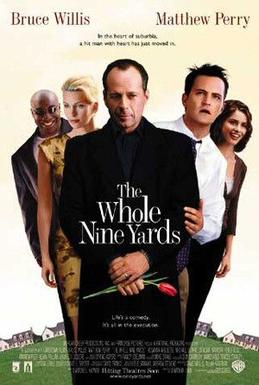
Oz (Matthew Perry) is an unhappily married dentist who discovers that his new neighbor, Jimmy (Bruce Willis), is a notorious contract killer who has a bounty on his head.  Oz’s wife, Sophie (Rosanna Arquette), wants Oz to rat Jimmy out to the local mob boss (Kevin Pollack) and collect the bounty.  Oz is deeply in debt and has a hard time saying no to his wife but he and Jimmy have actually become friends.  Also, Oz is falling in love with his dental assistant, Jill (Amanda Peet) despite the fact that Jill is also a contract killer, though she’s still a “virgin” because she’s falling in love with the man that she was hired to kill.

The Whole Nine Yards is an amusing comedy that works because of the chemistry between Matthew Perry and Bruce Willis.  When it came to his movie career, Perry was always Chandler Bing no matter who he was playing but that didn’t matter because everyone loved Chandler.  I know I loved Chandler, even if Joey would have been the Friend that I probably would have ended up flirting with.  Perry was a naturally funny actor and he and Willis made for a good team in The Whole Nine Yards.  I also really liked Amanda Peet’s energetic performance as Jill and Kevin Pollack as the crime boss.  The Whole Nine Yards is basically a violent sitcom.  It may not be a great movie but Perry and Willis will make you laugh.

It’s a little hard to rewatch now.  Matthew Perry is gone.  Bruce Willis is retired for health reasons.  They’re both having so much fun in this movie and are so entertaining to watch that it’s impossible not feel a little sad watching them.  But the movie also shows what Perry and Willis could do, even with so-so material.  Watching the movie made me laugh and it made me sad but mostly it just made me appreciate their talent.  We can mourn what we’ve lost while still appreciating what we had.

I Liked Look Who’s Talking (1989, Dir. by Amy Heckerling)


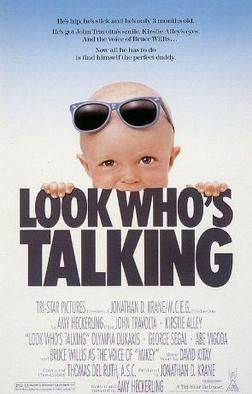
Mollie Jensen (Kirstie Alley) is an accountant who has an affair with a married client, Albert (George Segal) and ends up getting pregnant.  At first, Albert has no interest in being a father but luckily, when Mollie goes into labor, she’s driven to the hospital by a down-on-his-luck taxi driver named James (John Travolta).  After little Mikey is born, James agrees to be Mikey’s babysitter in return for Mollie letting James use her address so he can set up nursing care for his grandfather (Abe Vigoda).  Mollie and James are falling in love but then Albert reenters the picture.  Will Mollie choose rich Albert or goofy James?

As if there’s any doubt!

The important this is not the story but that the story is narrated by Mikey and Mikey sounds just like Bruce Willis!

I will admit it.  I like Look Who’s Talking.

Hey, it’s cute!  It’s a movie that opens with a point of view shot of a herd of sperm heading for an egg.  Little sperm Mikey is so excited!  Even before Mikey is born, he’s giving us his opinions.  When he is born and they cut the umbilical cord, he says, “Hey, I need that!”  What newborn wouldn’t say that?  You’re comfortable and suddenly, you’re getting dragged into the real world.

What I really like about Look Who’s Talking is that we just hear Mikey’s narration and thoughts but Mikey himself doesn’t actually talk.  It’s not like those creepy commercials where they use cheap CGI to make it look like the babies are actually talking.  I hate those commercials.  Instead, we’re just hearing Mikey’s thoughts and his thoughts are probably the ones that most babies would have.  He just sounds like Bruce Willis.  John Travolta is adorable in this.  Kirstie Alley is neurotic and relatable.  The babies are all cute.  But the true star of the film is Bruce Willis’s voice.  Supposedly, Willis ad-libbed most of his lines.  Mikey’s crude but most babies are.

No, I haven’t seen the sequels.  I won’t ever see the sequels.  I get the feeling this is one of those movies that could only work once.  Didn’t the third movie feature talking animals and no Bruce Willis?  There’s no need for that.


Dune: Part One (dir. by Denis Villeneuve) Review


“I said I would not harm them and I shall not. But Arrakis is Arrakis and the desert takes the weak. This is my desert. My Arrakis. My Dune.” — Baron Vladimir Harkonnen

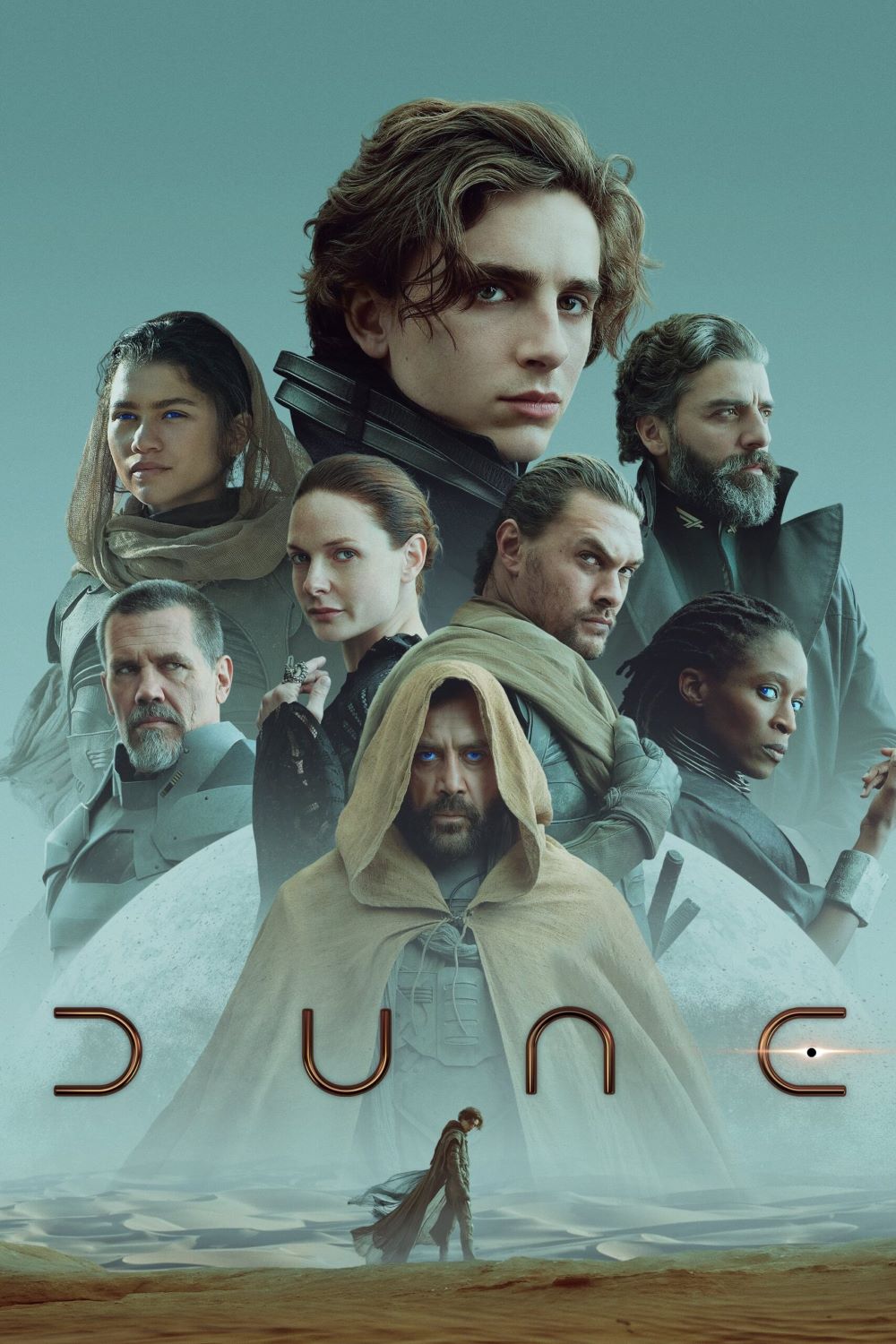
Denis Villeneuve’s Dune: Part One is one of those big, monolithic blockbusters that feels less like a movie night and more like being slowly lowered into someone else’s dream. It’s massive, deliberately paced, and sometimes emotionally chilly, but when it hits, it really hits, and you can feel a director absolutely obsessed with getting this universe right. The film adapts roughly the first half of Frank Herbert’s novel, following Paul Atreides, heir to House Atreides, as his family accepts control of the desert planet Arrakis, the only source of the spice melange that powers space travel and heightens human abilities. The setup is pure operatic space-feudalism: the Emperor orders House Atreides to take over Arrakis from their bitter rivals, House Harkonnen, in what is basically a beautifully staged death trap. Villeneuve leans into the political trap aspect; even if you’ve never read Dune, you can tell from minute one that this is not an opportunity, it’s a setup, and that sense of doom hangs over everything.

What Villeneuve really nails is the “ancient future” texture that people always talk about with Dune but rarely pull off on screen. The technology looks advanced but worn, ritualized, and heavy, from the gargantuan starships to the dragonfly-like ornithopters that rattle and pitch like actual aircraft instead of sleek sci-fi toys. The production design and Greig Fraser’s cinematography go all-in on scale: Caladan’s stormy oceans, Arrakis’s endless dunes, cavernous fortresses that make the human figures look insignificant. It’s not just pretty—it’s doing character work for the universe, selling you on the idea that people here live under forces (political, religious, environmental) that absolutely dwarf them. In theme terms, this is Villeneuve visually translating Herbert’s obsession with ecology and power structures, but he externalizes it more than the book: instead of living inside characters’ heads, you’re constantly being reminded how small they are against their environment.

All of that is backed by Hans Zimmer’s aggressive, sometimes overwhelming score, which sounds like someone trying to invent religious music for a civilization that doesn’t exist yet. It’s not subtle; there are bagpipes blaring on Caladan, guttural chants over Sardaukar warriors being ritually baptized in mud, and wailing voices that basically scream “destiny” every time Paul has a vision. But it syncs with Villeneuve’s approach: this is myth-making by way of blunt force, and the sound design and music are part of the same strategy of immersion and awe. Compared to the novel’s intricate, almost clinical tone, the film leans much harder into a mythic, quasi-religious mood. That means some of Herbert’s more sardonic or critical edges get smoothed out, but it also lets Villeneuve foreground the feeling of a civilization that already half-believes its own prophecies.

Narratively, Dune: Part One walks a weird tightrope. On one hand, this is a story about prophecies, chosen ones, and a messiah in the making, but on the other, the film quietly undercuts that fantasy. Villeneuve and his co-writers emphasize the Bene Gesserit’s centuries-long manipulation of bloodlines and myths, including seeding prophecies among the Fremen, so Paul’s “chosen one” status comes prepackaged with a lot of moral unease. That’s one of the places where Villeneuve stays very faithful to Herbert: the idea that religious belief can be engineered and weaponized. At the same time, by stripping out so much of the book’s interior commentary, the movie makes that critique more atmospheric than explicit. You feel that something is off about Paul’s destiny—the visions of holy war help with that—but you don’t hear the narrative voice outright interrogating the myth the way the novel does. It’s like Villeneuve wants the audience to experience the seduction of the messiah narrative first, and only slowly realize how poisonous it is.

Timothée Chalamet’s performance takes advantage of that approach by playing Paul as a kid who has been trained his whole life for greatness but absolutely does not want the role he’s being handed. Early on, he’s soft-spoken, almost recessive, but you see flashes of arrogance and temper, especially in the Gom Jabbar test and the later tent breakdown after his visions of a holy war in his name. Villeneuve doesn’t try to turn him into an instant charismatic leader; instead, he feels like a thoughtful, scared teenager caught in a machine that’s been running for centuries. That divergence from the source material is subtle but important: book-Paul, with all his internal analysis and mentat-like processing, comes off almost superhumanly composed. Film-Paul is less in control, more overwhelmed, which shifts the theme from “a superior mind learning to navigate fate” toward “a boy being crushed into a role he might never have truly chosen.”

The supporting cast is absurdly stacked, and the film uses them more as archetypes orbiting Paul than as fully fleshed-out characters, which is both a feature and a bug. Oscar Isaac’s Duke Leto radiates tired nobility, a man who knows he is walking into a trap but refuses to show fear because he needs his people to believe. Rebecca Ferguson’s Lady Jessica might be the most compelling presence in the movie: a Bene Gesserit trained in manipulation and control, visibly torn between her loyalty to the order and her love for her son. Ferguson gives Jessica a constant undercurrent of panic; even when she’s composed and commanding the Voice, you can feel the guilt and fear simmering underneath. In Herbert’s text, Jessica carries a heavy burden of calculation and self-critique through internal monologue; Villeneuve replaces that with rawer, more visible emotion. That choice makes Jessica more immediately relatable on screen but also shifts the theme slightly—from a cold, almost chess-like examination of breeding programs and long-term plans to a more intimate conflict between institutional programming and maternal love.

On the more purely fun side, Jason Momoa’s Duncan Idaho brings some sorely needed looseness and warmth. He’s one of the only characters who feels like he exists outside the grim political machinery, which makes his relationship with Paul read as genuinely affectionate instead of court-mandated mentorship. His big stand against the Sardaukar is shot like a mythic warrior’s last stand, and it sells Duncan as the kind of legend people would sing about after the fact. The tradeoff is that Duncan’s characterization leans into straightforward heroism; some of the book’s emphasis on the complexities and limits of loyalty gets compressed into a single grand gesture. Josh Brolin’s Gurney Halleck mostly glowers and shouts in this installment, but there’s enough there—especially in the training scene—that you get a sense of this gruff soldier-poet without the film ever stopping to spell it out. What’s missing, though, is the more overt sense of Atreides culture and camaraderie that the novel lingers on; Villeneuve sketches it, then moves on.

If the heroes lean archetypal, the villains almost go minimalistic to a fault. Stellan Skarsgård’s Baron Harkonnen is an imposing, bloated specter, more a presence than a personality; he spends a lot of time floating, brooding, and letting the makeup and lighting do the talking. In the book, the Baron is a much more talkative schemer, constantly plotting and vocalizing his nastiness, which underlines Herbert’s theme of decadence rotting the powerful from within. Here he’s closer to a horror-movie monster, which works visually but makes the political conflict feel a bit less textured. It’s a conscious trade: Villeneuve sacrifices some of Herbert’s satirical bite for a cleaner, more archetypal good-house-versus-evil-house dynamic. The Mentats, like Thufir Hawat and Piter de Vries, also get sidelined, and with them goes a lot of the book’s focus on human computation and the consequences of tech bans; the movie nods to that world-building but clearly doesn’t prioritize those themes.

Where Dune: Part One really shines is in its set-pieces that double as worldbuilding lessons. The spice harvester rescue sequence isn’t just about a sandworm attack; it’s a crash course in how dangerous Arrakis is, how unwieldy the spice operation can be, and how Paul reacts when the spice hits his system and his visions start intensifying. The hunter-seeker assassination attempt in his room does something similar for palace intrigue and surveillance, even if the staging (Paul standing unnervingly still as the device inches toward him) has rubbed some viewers the wrong way. These scenes make Arrakis feel like a living trap: environmental, political, and spiritual all at once. Compared to the novel’s detailed ecological and economic exposition, Villeneuve’s version is more experiential—you feel sandstorms and worm sign before you fully understand the larger ecological philosophy that Herbert spells out. That keeps the film more cinematic, but it also means the deeper environmental thesis is only hinted at rather than explored.

The downside of Villeneuve’s devotion to mood and worldbuilding is pacing. This is a two-and-a-half-hour movie that very much feels like “Part One,” and you can sense the absence of a conventional third-act climax. The story peaks emotionally with the fall of House Atreides—Leto’s death, Duncan’s sacrifice, Kynes’s end—but then keeps going, drifting into the deep desert with Paul and Jessica. The final duel with Jamis is thematically important—Paul’s first deliberate kill, a step toward becoming the kind of leader his visions imply—but as a closer for a blockbuster, it’s quiet and off-kilter. What’s interesting is how that duel distills one of Herbert’s key themes—the cost of survival and leadership—down to a single, intimate moment. The book wraps that in a ton of cultural detail and internal reflection; the film pares it down to body language, breath, and a few lines of dialogue. Villeneuve keeps the moral weight of the act but narrows the lens, trusting the audience to sit with what it means for Paul to cross that line without spelling it out.

If you come in as a Dune novice, the film is surprisingly navigable but not always emotionally generous. Villeneuve strips away the novel’s dense internal monologues and replaces them with visual suggestion and sparse dialogue, which keeps the movie from turning into a two-hour voiceover but also makes some motivations feel opaque. Characters like Dr. Yueh suffer the most from this approach; his betrayal happens so quickly and with so little setup that it plays more as a plot requirement than a tragic inevitability. That’s a clear case where the film discards a major thematic thread: Herbert uses Yueh to dig into ideas of conditioning, trauma, and the limits of “programmed” loyalty, but Villeneuve mostly uses him to push the plot into the Harkonnen attack. The tradeoff is understandable in a two-part film structure, but it’s a noticeable hollow spot for viewers who care about the story’s psychological underpinnings.

Still, as an opening movement, Dune: Part One feels like a deliberate choice to build the cathedral before lighting the candles. It’s more concerned with making Arrakis, its politics, and its religious machinery feel tangible than with delivering a neatly wrapped narrative. That can make it frustrating if you want a self-contained story, but it pays off in atmosphere: by the time Paul and Jessica join Stilgar’s Fremen and we get that final image of a sandworm being ridden across the dunes, you believe this is a place where myths can walk around as real people. Villeneuve stays true to Herbert’s broad thematic architecture—power, religion as control, ecology as destiny—but he discards a lot of the author’s density and interior commentary in favor of a more streamlined, sensory-driven experience. As a result, the film feels less like reading a dense political text and more like standing inside the legend that text would later be written about.

As a complete film, it’s imperfect—sometimes emotionally distant, sometimes so in love with its own scale that character beats get swallowed—but it’s also one of the rare modern blockbusters that feels handcrafted rather than committee-engineered. As an adaptation, it respects the spirit of Dune while making sharp, cinematic choices about what to emphasize and what to streamline, even if that means some beloved book moments get reduced or reconfigured. And as a foundation for a larger saga, it does exactly what “Part One” says on the label: it sets the board, crowns no clear winners, and leaves you with the distinct feeling that the real story—the dangerous one—is only just beginning.

The Eric Roberts Collection: Tripfall (dir by Serge Rodnunsky)


In an effort to save their marriage, Tom (John Ritter) and Gina (Rachel Hunter) take a vacation in California.  However, when they arrive at the home that they’re going to be renting, they are taken hostage by a group of redneck criminals led by Mr. Eddie (Eric Roberts).  Mr. Eddie wants all of Tom’s money and this leads to a rather drawn-out hostage situation as Tom tries to get the better of Mr. Eddie and Mr. Eddie spends a lot of time purring threats in a thick Southern accent.

That’s plot of 2000’s TripFall.  Don’t ask my why it’s called TripFall.  It seems like a bit of a redundant title because a trip and a fall are pretty much the same thing.  In fact, don’t even ask me what the point of the film is because there’s really not that much action or suspense.  It’s mostly just Eric Roberts and the gang driving John Ritter from one location to another.  I’m not a big fan of films about people being held hostage because they always seem to feature the same scene played over and over again.  The hostage refuses to do something.  The person holding him hostage gives a long monologue.  It gets boring after a while.

TripFall is not a career highpoint for either Roberts or Ritter.  It’s an action film in which there is very little action.  Watching the film, I found myself thinking that it would have been more interesting if Ritter and Roberts had switched roles.  Roberts could have played the likable family man for once and maybe the film could have explored the darkness behind Ritter’s goofy persona.  (Comedic actors sometimes make the best villains.)

That said, it’s difficult to resist the oddness of John Ritter and Eric Roberts starring in the same movie.  If there are two actors who feel as if they literally come from different planets, it’s Ritter and Roberts.  Ritter is his typical goofy self, even when he’s trying to play up the drama of the situation.  Roberts hisses his lines as Mr. Eddie and appears to be acting in a totally different movie from Ritter.  They’re so mismatched that they become rather fascinating (if not exactly memorable) to watch.

Previous Eric Roberts Films That We Have Reviewed:

  1. Paul’s Case (1980)
  2. Star 80 (1983)
  3. Runaway Train (1985)
  4. To Heal A Nation (1988)
  5. Best of the Best (1989)
  6. Blood Red (1989)
  7. The Ambulance (1990)
  8. The Lost Capone (1990)
  9. Best of the Best II (1993)
  10. Love, Cheat, & Steal (1993)
  11. Voyage (1993)
  12. Love Is A Gun (1994)
  13. Sensation (1994)
  14. Dark Angel (1996)
  15. Doctor Who (1996)
  16. Most Wanted (1997)
  17. The Alternate (2000)
  18. Mercy Streets (2000)
  19. Raptor (2001)
  20. Rough Air: Danger on Flight 534 (2001)
  21. Strange Frequency (2001)
  22. Wolves of Wall Street (2002)
  23. Border Blues (2004)
  24. Mr. Brightside (2004)
  25. Six: The Mark Unleased (2004)
  26. We Belong Together (2005)
  27. Hey You (2006)
  28. Depth Charge (2008)
  29. Amazing Racer (2009)
  30. The Chaos Experiment (2009)
  31. In The Blink of an Eye (2009)
  32. Bed & Breakfast (2010)
  33. Enemies Among Us (2010)
  34. The Expendables (2010) 
  35. Sharktopus (2010)
  36. Beyond The Trophy (2012)
  37. The Dead Want Women (2012)
  38. Deadline (2012)
  39. The Mark (2012)
  40. Miss Atomic Bomb (2012)
  41. Assault on Wall Street (2013)
  42. Bonnie And Clyde: Justified (2013)
  43. Lovelace (2013)
  44. The Mark: Redemption (2013)
  45. The Perfect Summer (2013)
  46. Revelation Road: The Beginning of the End (2013)
  47. Revelation Road 2: The Sea of Glass and Fire (2013)
  48. Self-Storage (2013)
  49. Sink Hole (2013)
  50. A Talking Cat!?! (2013)
  51. This Is Our Time (2013)
  52. Bigfoot vs DB Cooper (2014)
  53. Doc Holliday’s Revenge (2014)
  54. Inherent Vice (2014)
  55. Road to the Open (2014)
  56. Rumors of War (2014)
  57. So This Is Christmas (2014)
  58. Amityville Death House (2015)
  59. Deadly Sanctuary (2015)
  60. A Fatal Obsession (2015)
  61. Las Vegas Story (2015)
  62. Sorority Slaughterhouse (2015)
  63. Stalked By My Doctor (2015)
  64. Enemy Within (2016)
  65. Hunting Season (2016)
  66. Joker’s Poltergeist (2016)
  67. Prayer Never Fails (2016)
  68. Stalked By My Doctor: The Return (2016)
  69. The Wrong Roommate (2016)
  70. Dark Image (2017)
  71. The Demonic Dead (2017)
  72. Black Wake (2018)
  73. Frank and Ava (2018)
  74. Stalked By My Doctor: Patient’s Revenge (2018)
  75. Clinton Island (2019)
  76. Monster Island (2019)
  77. The Reliant (2019)
  78. The Savant (2019)
  79. Seven Deadly Sins (2019)
  80. Stalked By My Doctor: A Sleepwalker’s Nightmare (2019)
  81. The Wrong Mommy (2019)
  82. Exodus of a Prodigal Son (2020)
  83. Free Lunch Express (2020)
  84. Her Deadly Groom (2020)
  85. Top Gunner (2020)
  86. Deadly Nightshade (2021)
  87. The Elevator (2021)
  88. Just What The Doctor Ordered (2021)
  89. Killer Advice (2021)
  90. Megaboa (2021)
  91. Night Night (2021)
  92. The Poltergeist Diaries (2021)
  93. The Rebels of PT-218 (2021)
  94. Red Prophecies (2021)
  95. A Town Called Parable (2021)
  96. Bleach (2022)
  97. Dawn (2022)
  98. My Dinner With Eric (2022)
  99. 69 Parts (2022)
  100. The Rideshare Killer (2022)
  101. The Company We Keep (2023)
  102. D.C. Down (2023)
  103. Aftermath (2024)
  104. Bad Substitute (2024)
  105. Devil’s Knight (2024)
  106. Insane Like Me? (2024)
  107. Space Sharks (2024)
  108. The Wrong Life Coach (2024)
  109. Broken Church (2025)
  110. When It Rains In L.A. (2025)

The TSL Grindhouse: Grizzly (dir by William Girdler)


In 1976’s Grizzly, something is making a national park a lot less inviting.

Campers are turning up dead.  Bloody body parts are being found buried underneath leaves.  It’s obvious that a bear is to blame but reports seem to indicate that this isn’t just any bear.  This is a super bear, standing 8 feet tall and capable of knocking down an observation tower and picking up a helicopter.  This is the most dangerous bear known to man and the park has to be closed.

Closing the park during tourist season!?  Surely not!

Does this all sound familiar?  Grizzly came out a year after Jaws.  In all fairness to Grizzly, there were a lot of movies that ripped-off Jaws.  As a matter of fact, there are still movies ripping off Jaws.  The Jaws films eventually ended up ripping off themselves with three sequels.  Still, it’s hard to ignore just how blatantly Grizzly rips off Jaws.  We get shots from the bear’s point of view.  Christopher George plays the sheriff who keeps demanding that the park be closed down until the bear has been taken care of.  Andrew Prine is the hippie bear expert.  Richard Jaeckel is the crotchety old man who knows more about bears that just about anyone else in the world.  In Jaws, they needed a bigger boat.  In Grizzly, they need a bigger helicopter.  Jaws features scenes of people fleeing from the water.  Grizzly features an unintentionally funny shot of hundreds of panicked campers fleeing down the side of a mountain.

Grizzly is Jaws, without the water and without the wit.  And yet, in its own grim way, it works well enough.  The fact of the matter is that bears are scary and the bear in Grizzly is really, really big.  The gore effects are memorably grotesque and, perhaps even more so than Jaws, Grizzly goes out of its way to establish that anyone can die.  As for the actors, I’ve always enjoyed seeing Christopher George in films like this.  He was one of those actors who always seemed to try to give a convincing performance, even when he was appearing in a film that no one would mistake for a classic.  Richard Jaeckel and Andrew Prine also do their best to bring their characters to life.

Finally, I should mention that the film ends on a properly silly and over-the-top note.  Actually, it’s not that much different from the ending to Jaws.  It’s just that Jaws was made with such skill that even the silly moments worked.  Grizzly was directed by William Girdler, who was no Steven Spielberg.  At the end of Grizzly, I found myself shouted, “Why didn’t someone just do that in the first place!?”  Then again, if they had, we never would have gotten all of those point of view shots of the bear wandering through the forest while growling like an 70s obscene phone caller.

As a final note, I defy anyone to watch Grizzly without imagining Werner Herzog narrating the bear’s activities.  It cannot be done!

The Best Picture Race: The 2010s


Ah, the 2010s. Social media made anxiety the norm and Americans became obsessed with “red states” and “blue states.” Americans fetishized politicians and the Academy decided that it would be cool to do away with the idea of having a set number of best picture winners. One bright spot, for me at least: Arleigh invited me to write for this site! And the rest, as they say, is history!

2010

Black Swan

The Fighter

Inception

The Kids Are All Right

The King’s Speech

127 Hours

The Social Network

Toy Story 3

True Grit

Winter’s Bone

Won: The King’s Speech

Should Have Won: Ah, The King’s Speech vs The Social Network. On the one hand, The King’s Speech was a far more conventional film than The Social Network. On the other hand, The Social Network‘s supporters tended to be so obnoxious about it that you kind of wanted it to lose just to spite them. Personally, I liked The King’s Speech on an emotional level. The Social Network holds up fairly well, though I still find it to be overrated. Inception is still exciting to watch and Winter’s Bone gets better every time I view it. In the end, though, my vote still goes to Black Swan, a film that gave me an asthma attack the first time I watched it.

2011

The Artist

The Descendants

Extremely Loud and Incredibly Close

The Help

Hugo

Midnight in Paris

Moneyball

The Tree of Life

War Horse

Won: The Artist

Should Have Won: The Artist isn’t bad but its victory was still more about its novelty than its quality. The Tree of Life is visually stunning but the scenes with Sean Penn are a bit too heavy-handed for me. My vote goes to Hugo, a film that gets better each and every time that I see it. (My favorite film of the year remains the unnominated Hanna.)

2012

Amour

Argo

Beasts of the Southern Wild

Django Unchained

Les Miserables

Life of Pi

Lincoln

Silver Linings Playbook

Zero Dark Thirty

Won: Argo

Should Have Won: “Argo f*ck yourself!” Yes, I can see why this won! Actually, Argo‘s victory has always struck me as weird. Argo is a rather forgettable winner. (Has anyone even mentioned Argo when discussing the current war with Iran?) My vote goes to Life of Pi.

2013

12 years A Slave

American Hustle

Captain Phillips

Dallas Buyers Club

Gravity

Her

Nebraska

Philomena

The Wolf of Wall Street

Won: 12 Years A Slave

Should Have Won: This was a good year and I can make an argument for why American Hustle, Captain Phillips, Gravity, Her, and The Wolf of Wall Street all deserved to win. In the end, though, the power of 12 Years a Slave cannot be denied.

2014

American Sniper

Birdman

Boyhood

The Grand Budapest Hotel

The Imitation Game

Selma

The Theory of Everything

Whiplash

Won: Birdman

Should Have Won: We all love Michael Keaton but Birdman was a pretentious film that thought it was more profound than it actually was. Of the nominees, Boyhood is my pick. (My favorite film of the year was — and I make no apologies for this — the terrifically entertaining Guardians of the Galaxy.)

2015

The Big Short

Bridge of Spies

Brooklyn

Mad Max: Fury Road

The Martian

The Revenant

Room

Spotlight

Won: Spotlight

Should Have Won: Spotlight is a well-acted, visually flat movie that feels like it belongs on television as opposed to playing in theaters. Of the nominees, I really love Brooklyn but Mad Max: Fury Road is a masterpiece of the pulp imagination and that’s the film that gets my vote.

2016

Arrival

Fences

Hacksaw Ridge

Hell or High Water

Hidden Figures

La La Land

Lion

Manchester By The Sea

Moonlight

Won: Moonlight

Should Have Won: This is one of the stronger best picture line-ups and the fact that I would pick a film other than Moonlight should not be taken as a criticism of the Academy’s decision. Moonlight is a worthwhile winner. La La Land would have been a worthy winner, as well. In retrospect, 2016 was a better year for movie than a lot of us realized a the time. Back then, I would have voted for Arrival but today, I would probably vote for Hell or High Water. “We ain’t got no g-dd-mned trout.”

2017

Call Me By Your Name

Darkest Hour

Dunkirk

Get Out

Lady Bird

Phantom Thread

The Post

The Shape of Water

Three Billboards Outside Ebbing, Missouri

Won: The Shape of Water

Should Have Won: Considering how much I love Guillermo Del Toro, it pains me that I didn’t particularly care for The Shape of Water. But I have to admit that the film lost me as soon as the Fishman ate that cat. Of the nominees, I would have voted for Lady Bird.

2018

Black Panther

BlackKklansman

Bohemian Rhapsody

The Favourtie

Green Book

Roma

A Star Is Born

Vice

Won: Green Book

Should Have Won: My favorite film of the year, Eighth Grade, was not nominated. In fact, a lot of good films weren’t nominated in 2018. What a strange year that sees both Vice and Bohemian Rhapsody nominated but not Eighth Grade or First Reformed. Spike Lee finally got his first nomination but it was for one of his most conventional films. It was a strange year. Of the nominees, I would vote for A Star is Born.

2019

Ford v Ferrari

The Irishman

Jojo Rabbit

Joker

Little Women

Marriage Story

1917

Once Upon A Time In Hollywood

Parasite

Won: Parasite

Should Have Won: My favorite film of the year was The Souvenir, which barely got any distribution at all in the States and went unnominated. Parasite‘s victory was a great moment and it’s certainly a good film. That said, I still would have voted for Once Upon A Time In Hollywood or The Irishman.

Up next, in 30 minutes, the 2020s …. so far!

Once Upon A Time In Hollywood (2019, dir by Quentin Tarantino)

The Best Picture Race: The 2000s


Lost In Translation (2003, dir by Sofia Coppola)

Ah, the aughts. The new century started out with the terror of 9-11 and it ended with the collapse of the world’s economy. In between, a lot of films were released. Some of them were really good. A few of them were nominated for Best Picture. Most of them were not.

2000

Chocolat

Crouching Tiger, Hidden Dragon

Erin Brockovich

Gladiator

Traffic

Won: Gladiator

Should Have Won: I’m in a minority here but I’ve never particularly cared for Gladiator. Joaquin Phoenix is a good villain and I can certainly understand why some people have adopted it as a sort of a life manual but, for the most part, Gladiator just falls flat for me. If I was voting, I would have voted for Crouching Tiger, Hidden Dragon. There was a time when I would have voted for Traffic but Crouching Tiger has aged with a bit more grace the Steven Soderbergh’s look at the war on drugs.

2001

A Beautiful Mind

Gosford Park

In the Bedroom

The Lord of the Rings: The Fellowship of the Ring

Moulin Rouge!

Won: A Beautiful Mind

Should Have Won: A Beautiful Mind gets criticized for being too Oscar bait-y but it’s not a bad film. What it does, it does well. That said, I would have voted for Todd Field’s haunting In The Bedroom.

2002

Chicago

Gangs of New York

The Hours

The Lord of the Rings: The Two Towers

The Pianist

Won: Chicago

Should Have Won: As much as I love Chicago, this is the year that I would have selected to honor Peter Jackson’s Lord of the Rings trilogy. The Two Towers is the darkest chapter in the saga and it’s also the best.

2003

The Lord of the Rings: Return of the King

Lost in Translation

Master and Commander: The Far Side of the World

Mystic River

Seabiscuit

Won: The Lord of the Rings: Return of the King

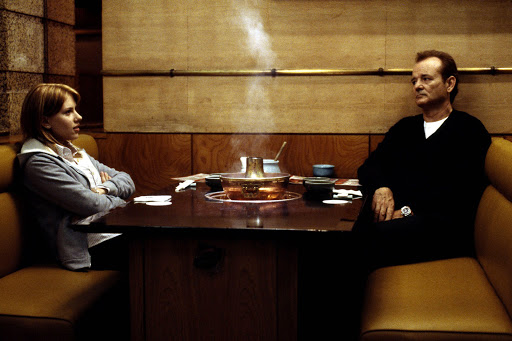
Should Have Won: Even while it was sweeping the Oscars, it was understood that Return of the King was being honored as a way to acknowledge the entire trilogy. Since I already honored the trilogy with The Two Towers, that frees me up to vote for Lost In Translation this year. Lost In Translation is a film that haunts me in a way that few other films ever have or ever will.

2004

The Aviator

Finding Neverland

Million Dollar Baby

Ray

Sideways

Won: Million Dollar Baby

Should Have Won: Million Dollar Baby is good but The Aviator is Scorsese at his best. It also features Leonardo DiCaprio’s first legitimately great performance.

2005

Brokeback Mountain

Capote

Crash

Good Night and Good Luck

Munich

Won: Crash

Should Have Won: Oh God, don’t get me started on Crash. What should have won? Anything other than Crash. I’ll go with Brokeback Mountain.

2006

Babel

The Departed

Letters From Iwo Jima

Little Miss Sunshine

The Queen

Won: The Departed

Should Have Won: Martin Scorsese finally won his first Oscar for The Departed. Sadly, The Departed is actually one of his weaker films. (Of course, a weak Scorsese film is still better than an average film from any other director.) Back in 2007, I thought Babel should have won but that’s just because I was going through a pretentious phase where I thought any film with multiple storylines was automatically brilliant. Today, I realize that The Queen was the proper winner.

2007

Atonement

Juno

Michael Clayton

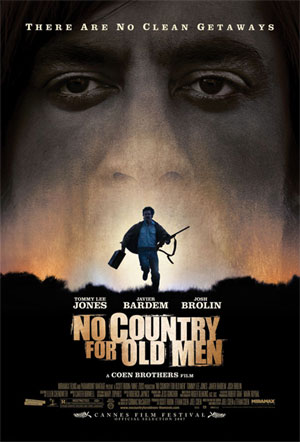
No Country For Old Men

There Will Be Blood

Won: No Country For Old Men

Should Have Won: No Country For Old Men. The Academy got it exactly right.

2008

The Curious Case of Benjamin Button

Frost/Nixon

Milk

The Reader

Slumdog Millionaire

Won: Slumdog Millionaire

Should Have Won: Of the nominees, I have to go with Slumdog Millionaire. This, of course, is the year that The Dark Knight was not nominated and the internet lost its mind as a result.

2009

Avatar

The Blind Side

District 9

An Education

The Hurt Locker

Inglourious Basterds

Precious

A Serious Man

Up

Up In The Air

Won: The Hurt Locker

Should Have Won: This is the year that the Academy went back to ten nominees. The idea was that this would lead to a more diverse best picture lineup and it certainly worked the first year they tried it. This is one of the strongest best picture lineups in Oscar history and I say that as someone who really disliked Avatar and who thought The Hurt Locker was a bit overrated. I could make an argument for honoring Up In The Air, Up, District 9, A Serious Man, and Inglourious Basterds but my final vote would go to the underrated but wonderful An Education.

Coming up in 30 minutes, we look at the history of the Best Picture race with the 2010s!