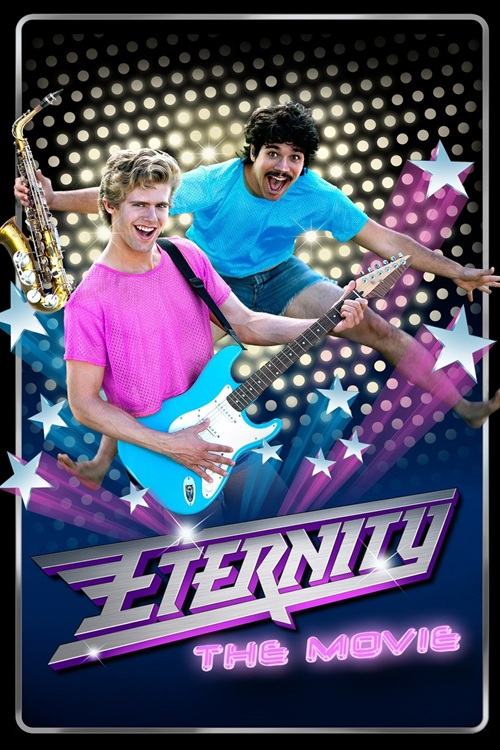
The Eric Roberts Collection: Eternity: The Movie (dir by Ian Thorpe)


In the 1980s, no band better represented mediocre R&B than Eternity.

At least, that’s the claim made by 2014’s Eternity: The Movie, an occasionally amusing comedy in which Pennsylvania-bred singer/songwriter Todd Lucas (Barrett Clarke) moves to California, gets his dream job of working at BJ-Maxx, and eventually befriends a coworker whose name actually is BJ (Myko Oliver).  BJ is a saxophonist who has released a solo album in which he covers the theme songs of classic detective shows.  When the naive Todd and the irresponsible BJ get together, they become an unlikely hit-making duo.  Their first song Make Love, Not Just Sex, shoots up the charts and soon, Todd and BJ are putting all of their personal issues to music.

Eternity: The Movie is a comedy that recycles a handful of jokes over and over again.  The main joke is that Todd and BJ come across as being extremely into each other, even while they’re sleeping with groupies and both pining for their neighbor, Gina Marie (Nikki Leonti).  Todd and BJ are the type of musical partners who discuss their lives while sharing a bubble bath.  It’s not the cleverest joke ever told but, thanks to the ability of the actors to say the most ludicrous of lines with a deadpan face, I did chuckle occasionally.  The better joke is that their music is both convincingly bad and also convincingly catchy.  It’s the type of bad music that you can believe would become very popular.  At one point, Todd sings a song about his ex-girlfriend, who drowned in a river.  Throughout the song, he laments that she just wasn’t a better swimmer.  The songs are performed with just the right amount of earnest stupidity to be funny.

As for Eric Roberts, he plays the manager of BJ-Maxx.  Jon Gries and Martin Kove also show up, playing a record executive and the record executive’s father respectively. I’d like to see a movie where Eric Roberts and Martin Kove start a band.  Someone should make that happen.

Previous Eric Roberts Films That We Have Reviewed:

  1. Paul’s Case (1980)
  2. Star 80 (1983)
  3. Runaway Train (1985)
  4. To Heal A Nation (1988)
  5. Best of the Best (1989)
  6. Blood Red (1989)
  7. The Ambulance (1990)
  8. The Lost Capone (1990)
  9. Best of the Best II (1993)
  10. Love, Cheat, & Steal (1993)
  11. Voyage (1993)
  12. Love Is A Gun (1994)
  13. Sensation (1994)
  14. Dark Angel (1996)
  15. Doctor Who (1996)
  16. Most Wanted (1997)
  17. The Alternate (2000)
  18. Mercy Streets (2000)
  19. Tripfall (2000)
  20. Raptor (2001)
  21. Rough Air: Danger on Flight 534 (2001)
  22. Strange Frequency (2001)
  23. Wolves of Wall Street (2002)
  24. Border Blues (2004)
  25. Mr. Brightside (2004)
  26. Six: The Mark Unleased (2004)
  27. We Belong Together (2005)
  28. Hey You (2006)
  29. Depth Charge (2008)
  30. Amazing Racer (2009)
  31. The Chaos Experiment (2009)
  32. In The Blink of an Eye (2009)
  33. Bed & Breakfast (2010)
  34. Enemies Among Us (2010)
  35. The Expendables (2010) 
  36. Sharktopus (2010)
  37. Beyond The Trophy (2012)
  38. The Dead Want Women (2012)
  39. Deadline (2012)
  40. The Mark (2012)
  41. Miss Atomic Bomb (2012)
  42. Assault on Wall Street (2013)
  43. Bonnie And Clyde: Justified (2013)
  44. Lovelace (2013)
  45. The Mark: Redemption (2013)
  46. The Perfect Summer (2013)
  47. Revelation Road: The Beginning of the End (2013)
  48. Revelation Road 2: The Sea of Glass and Fire (2013)
  49. Self-Storage (2013)
  50. Sink Hole (2013)
  51. A Talking Cat!?! (2013)
  52. This Is Our Time (2013)
  53. Bigfoot vs DB Cooper (2014)
  54. Doc Holliday’s Revenge (2014)
  55. Inherent Vice (2014)
  56. Road to the Open (2014)
  57. Rumors of War (2014)
  58. So This Is Christmas (2014)
  59. Amityville Death House (2015)
  60. Deadly Sanctuary (2015)
  61. A Fatal Obsession (2015)
  62. Las Vegas Story (2015)
  63. Sorority Slaughterhouse (2015)
  64. Stalked By My Doctor (2015)
  65. Enemy Within (2016)
  66. Hunting Season (2016)
  67. Joker’s Poltergeist (2016)
  68. Prayer Never Fails (2016)
  69. Stalked By My Doctor: The Return (2016)
  70. The Wrong Roommate (2016)
  71. Dark Image (2017)
  72. The Demonic Dead (2017)
  73. Black Wake (2018)
  74. Frank and Ava (2018)
  75. Stalked By My Doctor: Patient’s Revenge (2018)
  76. Clinton Island (2019)
  77. Monster Island (2019)
  78. The Reliant (2019)
  79. The Savant (2019)
  80. Seven Deadly Sins (2019)
  81. Stalked By My Doctor: A Sleepwalker’s Nightmare (2019)
  82. The Wrong Mommy (2019)
  83. Exodus of a Prodigal Son (2020)
  84. Free Lunch Express (2020)
  85. Her Deadly Groom (2020)
  86. Top Gunner (2020)
  87. Deadly Nightshade (2021)
  88. The Elevator (2021)
  89. Just What The Doctor Ordered (2021)
  90. Killer Advice (2021)
  91. Megaboa (2021)
  92. Night Night (2021)
  93. The Poltergeist Diaries (2021)
  94. The Rebels of PT-218 (2021)
  95. Red Prophecies (2021)
  96. A Town Called Parable (2021)
  97. Bleach (2022)
  98. Dawn (2022)
  99. My Dinner With Eric (2022)
  100. 69 Parts (2022)
  101. The Rideshare Killer (2022)
  102. The Company We Keep (2023)
  103. D.C. Down (2023)
  104. Aftermath (2024)
  105. Bad Substitute (2024)
  106. Devil’s Knight (2024)
  107. Insane Like Me? (2024)
  108. Space Sharks (2024)
  109. The Wrong Life Coach (2024)
  110. Broken Church (2025)
  111. When It Rains In L.A. (2025)

Scenes I Love: The Montage from The Parallax View


Today, we wish a happy birthday to actor, director, and producer Warren Beatty.

In Alan J. Pakula’s 1974 film The Parallax View, Beatty plays a seedy journalist who goes undercover to investigate the links between the mysterious Parallax Corporation and a series of recent political assassinations.  In the film’s most famous sequence, Beatty — pretending to be a job applicant (read: potential assassin) for the Parallax Corporation — is shown an orientation film that has been designed to test whether or not he’s a suitable applicant. The montage is shown in its entirety, without once cutting away to show us Beatty’s reaction.  The implication, of course, is that what’s important isn’t how Beatty reacts to the montage but how the viewers sitting out in the audience react.

So, at the risk of furthering the conspiracy, here’s that montage.

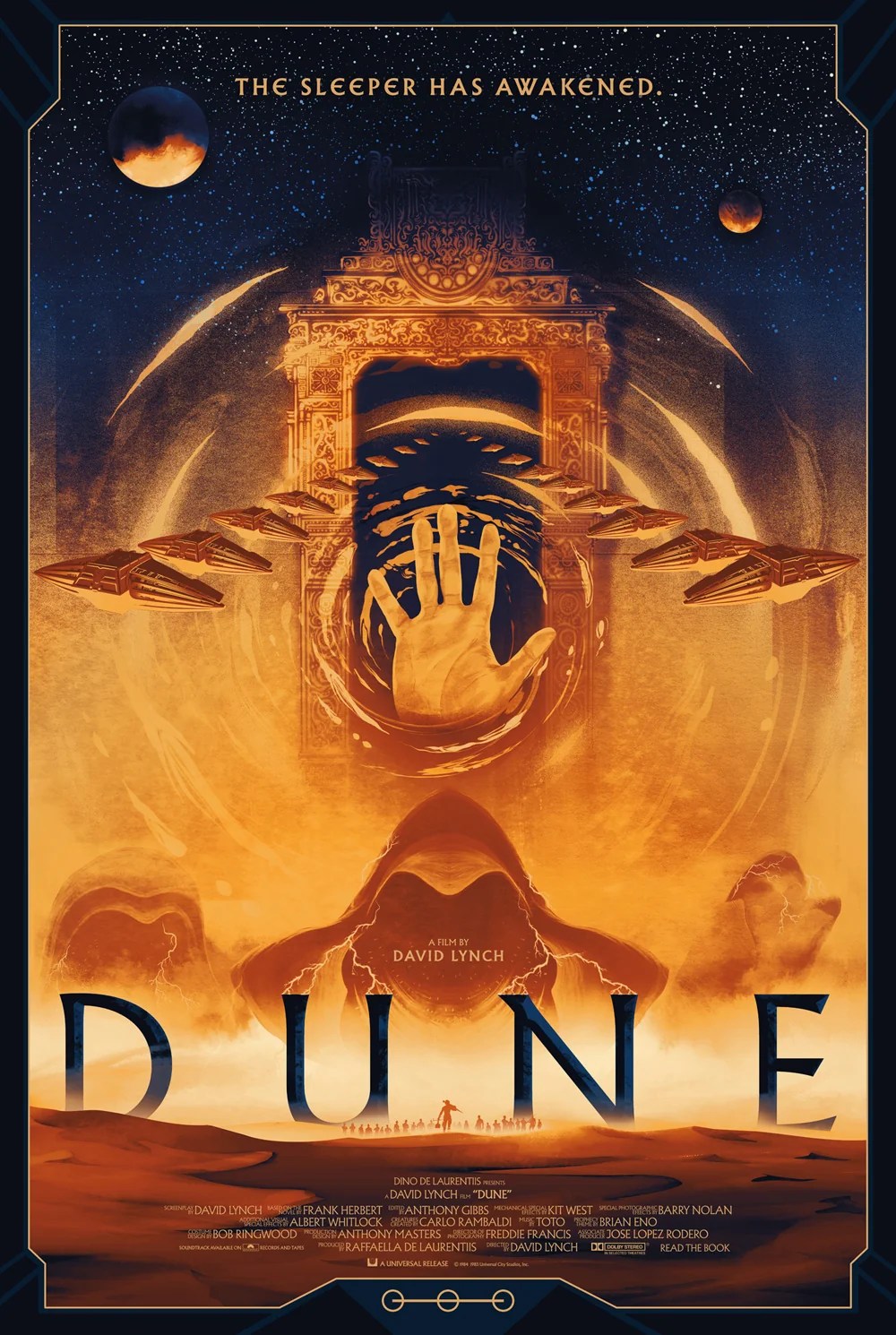
Review: Dune (dir. by David Lynch)


“The sleeper has awakened.” — Paul “Muad’Dib” Atreides

David Lynch’s Dune is one of those movies that somehow manages to be both a spectacular failure and a strangely hypnotic piece of cinema at the same time. It feels like a film willed into existence through pure creative tension: on one side, Frank Herbert’s dense, political, and spiritual sci‑fi novel; on the other, David Lynch’s surreal, psychological, dream‑logic sensibility. The result is a singular oddity—visually bold, dramatically uneven, and endlessly fascinating if you’re in the mood for something that feels more like a hallucination than a conventional space opera.

To call the adaptation ambitious is underselling it. After the collapse of Alejandro Jodorowsky’s infamous attempt to adapt Dune, the project eventually landed at Universal with producer Dino De Laurentiis, and Lynch—fresh off The Elephant Man—was brought in to turn Herbert’s galaxy‑spanning book into a two‑hour‑ish feature. On paper, it seems like inspired casting: Lynch had the visual imagination and emotional intensity to do something memorable with the material. But he was never a natural fit for streamlined blockbuster storytelling. His instincts live in mood, subconscious imagery, and uneasy psychological textures rather than clean plot mechanics. You can feel that clash all over the final film, and it’s part of what makes it so weirdly compelling.

Right from the opening, Dune doesn’t hold your hand. Princess Irulan’s floating head lays out a massive info‑dump about spice, the Imperium, and Arrakis that plays like someone reading you the glossary at the back of a sci‑fi novel. It’s dense, awkward, and kind of charming in its sincerity. The movie takes Herbert’s universe extremely seriously—no wink, no irony, no attempt to sand off the stranger edges. The Bene Gesserit, mentats, feudal houses, and prophecies are all presented straight, as if the audience will either keep up or be left behind. There’s something almost punk about that level of commitment.

Kyle MacLachlan, in his debut as Paul Atreides, is perfectly cast for Lynch’s take on the character. He’s got this earnest, slightly naive presence that gradually hardens as the story pushes him toward messiah status. Instead of leaning into a swashbuckling hero archetype, Lynch frames Paul’s evolution as something interior and dreamlike, almost like a spiritual awakening happening inside a hostile universe. Paul’s visions aren’t giant, crystal‑clear CGI prophecy sequences; they’re fragmented, flickering images, whispers, and flashes of desert and blood. You can feel Lynch trying to drag the sci‑fi epic into his own subconscious, even if the narrative doesn’t always keep up.

The supporting cast is packed with strong, sometimes delightfully bizarre performances. Francesca Annis gives Lady Jessica a sensual, haunted calm that fits the Bene Gesserit’s mix of discipline and manipulation. Jurgen Prochnow’s Duke Leto radiates dignified doom; he feels like a man who knows he’s walking into a trap but can’t step off the path. Then you get to the Harkonnens, where Lynch just lets his freak flag fly. Kenneth McMillan’s Baron is a grotesque comic‑book monster, oozing, cackling, floating on anti‑grav tech, and reveling in cruelty. It’s not subtle, but it is unforgettable. And of course Sting as Feyd‑Rautha, stalking around in barely‑there outfits and sneering like a rock star beamed in from another film entirely, just adds to the movie’s fever‑dream energy.

Visually, Dune is a feast and sometimes a bit of a choke. The production design leans into a kind of retro‑futurist baroque: cavernous sets, ornate technology, and spaces that feel less like functional environments and more like places out of a dark fantasy. Lynch and cinematographer Freddie Francis infuse everything with shadow, smoke, and texture, so even the quiet scenes feel heavy and loaded. The sandworms are huge, tactile, and worshipful in scale; the way they burst from the desert feels more like a religious manifestation than a monster attack. Even if you’re lost in the plot, the images stick with you—daggers, stillsuits, weirding whispers, blood on sand.

The sound and music do a ton of work in giving the film its identity. The score, primarily by Toto with contributions from Brian Eno, is this fusion of 80s rock sensibility and orchestral grandeur. It shouldn’t work, but it does; the main theme swells with tragic heroism, while other cues veer into eerie, synthy territory that matches Lynch’s off‑kilter tone. The sound design around the “weirding” abilities, the internal monologues, and the roar of the sandworms all help sell the world even when the script is sprinting past exposition. It’s one of those films where you might not fully grasp every detail, but the combined force of image and sound makes you feel like you’ve visited a real, deeply strange place.

The big structural problem, and the thing that most clearly separates Lynch’s adaptation from Denis Villeneuve’s two‑part version, is time and emphasis. Lynch is trying to cram the entire arc of Dune into a single film, and that means the plotting goes from methodical to breakneck halfway through. The first half lingers on the setup—Caladan, the move to Arrakis, the betrayal—while the second half rockets through Paul’s Fremen transformation, the guerrilla war, the sandworm riding, and the final confrontation. Subplots are hinted at and dropped, character arcs feel truncated, and the voiceover is forever trying to patch gaps the edits created. Themes like ecological transformation, the manipulation behind religious prophecy, and the long‑term horror of Paul’s rise are mostly reduced to gestures.

The best way to see Dune in Lynch’s version is actually through the extended cut, which adds a bit more context to certain scenes and lets the film breathe slightly more than the theatrical release. The theatrical cut is so aggressively compressed that pieces of motivation and setup just vanish, leaving the story feeling even more disjointed. The extended version restores some of the connective tissue—especially around Paul’s early time with the Fremen, the political maneuvering in the lead‑up to the final act, and the way certain characters orient themselves in the larger conflict. It doesn’t magically fix the studio‑driven structure or the inherent weirdness of Lynch’s choices, but it does make the film feel a little more complete, a little closer to the director’s original vision. It’s still messy, but less like a rushed homework assignment and more like a genuinely eccentric, if compromised, longform take on Herbert’s world.

Tonally, Lynch and Villeneuve are almost mirror images. Lynch’s film is cramped, loud in its weirdness, and often grotesque, playing like a baroque horror‑opera about destiny. Villeneuve’s is stately, slow‑burn, and solemn, more interested in the weight of empire, colonialism, and religious manipulation. Even their takes on Paul are distinct. In Lynch’s film, Paul ultimately plays more like a triumphant chosen one; whatever ambiguity is there gets overshadowed by the climactic victory and the literal act of making it rain as a grand, almost celebratory miracle. Villeneuve leans harder into the darker implications: Paul is framed as a potentially dangerous figure whose rise may unleash something terrible, and his two‑part arc emphasizes the holy war and fanaticism coalescing around him instead of treating his ascension as a clean win. Where Lynch’s ending lands somewhere between pulp myth and studio‑mandated uplift, Villeneuve’s execution feels closer to a tragedy about messianic power.

Knowing all that, Lynch’s Dune ends up feeling like a relic from an era when studios occasionally handed gigantic, unwieldy properties to filmmakers with intensely personal styles and just hoped for the best. It doesn’t “work” in a conventional plot sense, and if you’re coming to it after the sleek coherence of Villeneuve’s films, it can feel like a chaotic, cluttered alternate‑universe version of the same story. But that alternate universe has its own power. There’s a raw, handmade intensity to Lynch’s take—a sense that he’s trying to turn Dune into a waking dream about destiny, decay, and the seduction of power, even as the studio scissors are hacking away at his vision.

In the end, David Lynch’s Dune is a beautifully broken thing: a movie that fails as a straightforward adaptation but succeeds as a cinematic experience you can’t quite shake. Villeneuve gives you a clearer, more faithful, and philosophically aligned Dune, the one that explains itself and lets you sit with its implications. Lynch gives you the nightmare version, messy and compromised, but pulsing with strange life. If Villeneuve’s two‑part saga is the definitive modern telling, Lynch’s film—especially the extended cut—remains the haunting alternate path, a vision of Arrakis filtered through a very particular mind, sandblasted, grotesque, and unforgettable.

Film Review: Armor (dir by Justin Routt)


In rural Alabama, James Brody (Jason Patric) is a recovering alcoholic who makes his living as an armored truck driver.  He works with his son, Casey (Josh Wiggins).  Every day, James and Casey transport millions from bank to bank and usually, they’re able to do it without incident.  However, this day is different.  James and Casey find themselves trapped on a bridge with a team of thieves on every side of them.  James and Casey struggle to escape while working out their own personal issues.

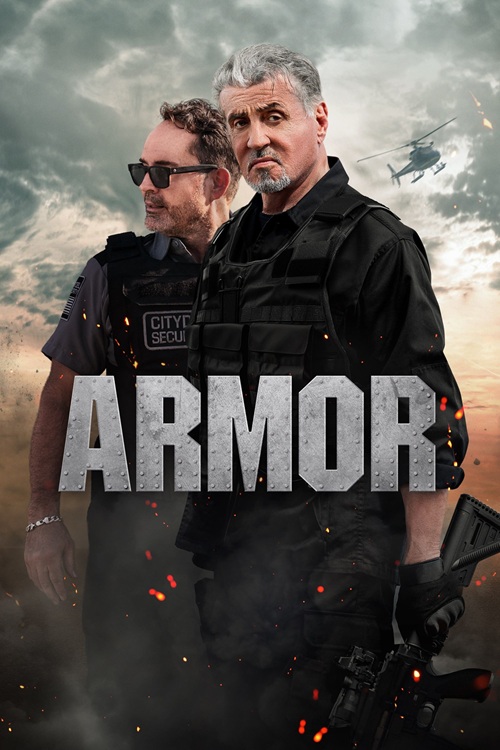
Sylvester Stallone receives top billing in 2024’s Armor and, just by looking at the poster, you would probably be excused for assuming that Stallone was playing the hero of the film.  Instead, Stallone only has a few minutes of screentime and he plays one of the criminals, a tough guy named Rook.  Rook may be a professional thief but he has a conscience and he doesn’t believe in killing anyone who doesn’t need to be killed.  That sets him apart from the rest of the thieves.

One may wonder what a star like Stallone is doing in a low-budget, direct-to-video film like this.  The answer is that Armor was produced by Randall Emmett, a producer who specializes in getting big names to appear in small roles in B-movies.  Not much money may have gone into the budget of Armor but one can be sure but the majority of it was used to pay Stallone’s salary.  According to some comments left on Letterboxd by someone who claims to have worked on the film’s crew, Stallone shot his scenes in one day and was deliberately kept in the dark about the fact that the film was actually being directed by Emmett and not the credited Justin Routt.  Now, whether or not any of that is true, I can’t definitely say for sure.  However, it definitely has the ring of truth.  Randall Emmett himself is best known for producing many of Bruce Willis’s final films.  With Willis having retired and John Travolta perhaps busy, Sylvester Stallone ended up as Emmett’s star-in-name-only for Armor.

Give credit where credit is due.  Stallone dominates the few scenes in which he appears.  For all the criticism that Stallone has taken over the course of his career, this film reminds us that there’s no other actor who has quite the same screen presence as Sylvester Stallone.  As for the rest of the cast, Jason Patric is convincing as the haunted James.  Unfortunately, the film can never make up its mind whether or not it wants to be an action flick or a relationship drama.  Patric does his best but he’s let down by a script that never seem to be quite sure what it wants to say.

I appreciated that this film took place in the South.  The film opens with a news report about an armored truck crash in Dallas and, as soon as they mentioned the Thornton Freeway, I was like, “I was stuck there just a few days ago!”  The majority of the film takes place on a bridge in Alabama.  The scenery is lovely, even when the action is hackneyed.

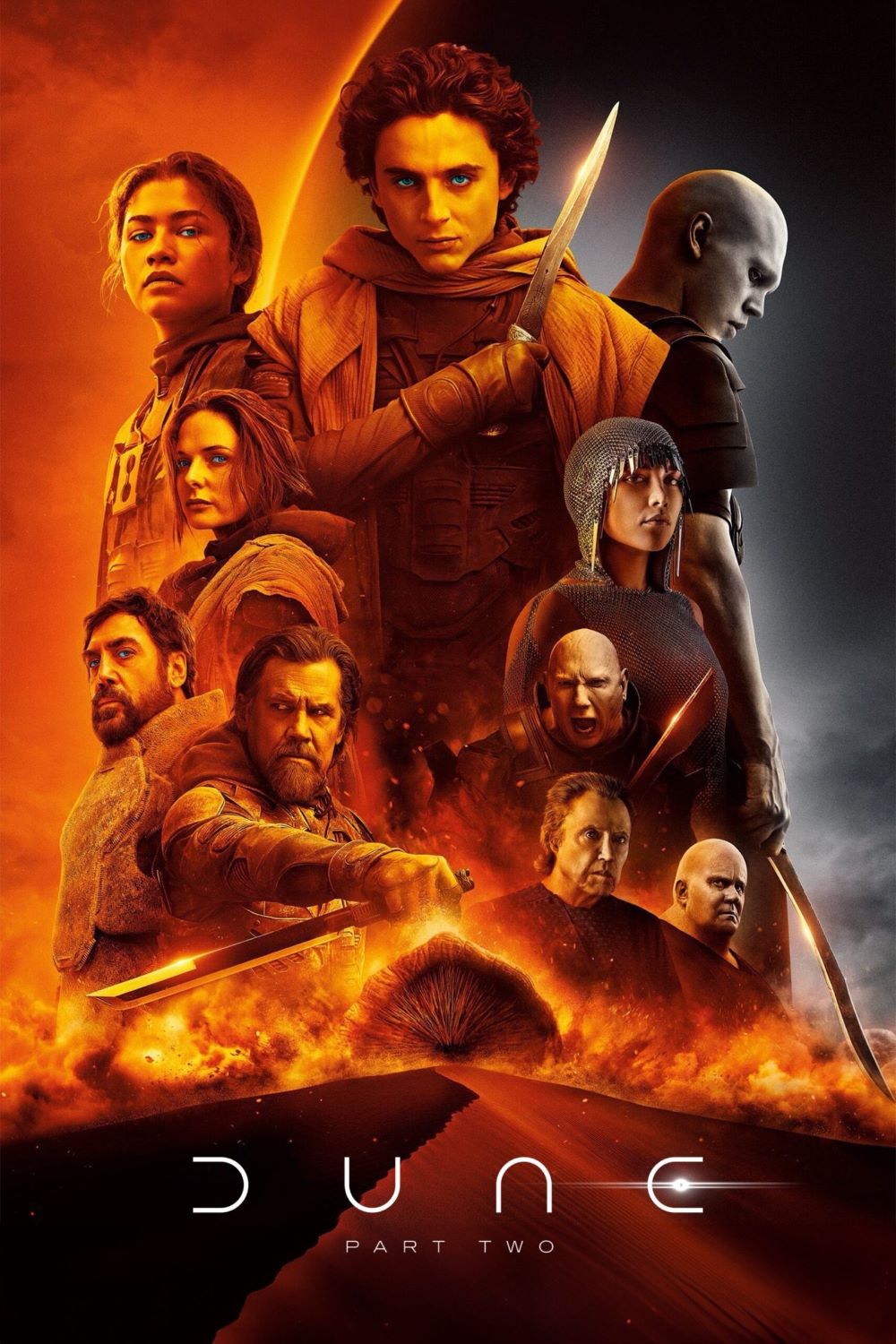
Dune: Part Two (dir. by Denis Villeneuve) Review


“The Mahdi is too humble to say he is the Mahdi. Even more reason to know he is!” — Stilgar

Dune: Part Two picks up right where the first film left off, diving headfirst into Paul Atreides’ quest for revenge on the desert world of Arrakis, and it absolutely delivers on the epic, operatic scale the setup promised. The first movie was all mood and table-setting; this one cashes in that patience with a story that’s bigger, louder, and way more emotionally volatile, without totally ditching the cerebral, slow-burn vibe that makes Dune feel different from other sci-fi tentpoles. Denis Villeneuve isn’t just continuing a story; he’s doubling down on the idea that this whole saga is less about a hero’s rise and more about the terrifying consequences of people begging for a savior and then getting exactly what they asked for.

Narratively, the film tracks Paul and his mother Jessica as they embed deeper into Fremen culture while House Harkonnen tightens its stranglehold on Arrakis. Paul trains, raids spice convoys, and slowly evolves from accepted outsider to full-on messianic figure, even as he keeps insisting he doesn’t want that role. The emotional throughline is his relationship with Chani, who acts as both partner and conscience, pushing back against the religious fervor gathering around him. At the same time, you’ve got Baron Harkonnen scheming from his grotesque oil-bath throne and Feyd-Rautha unleashed as the house’s rabid attack dog, chewing through enemies in gladiatorial arenas and on the battlefield. The stakes are clear and simple—control of Arrakis and its spice—but the film keeps twisting that into something more existential: control of the future itself and who gets to write it.

Visually, Dune: Part Two is just ridiculous in the best way. Arrakis still feels harsh and elemental, like the planet itself is a character that occasionally decides to eat people via sandworm. The desert exteriors are shot with that hazy, golden brutality where every wide shot makes the Fremen look tiny against an uncaring landscape. When Paul finally rides a sandworm, it’s not played as some clean, heroic moment but as a thrashing, chaotic stunt that looks legitimately dangerous—he’s clinging to this titanic creature, sand exploding in sheets around him, the camera swinging wide so you feel both the scale and the sheer lunacy of what he’s doing. The Harkonnen world, by contrast, is stark and stylized, all cold geometry and void-like skies, leaning into monochrome to make it feel like you’ve stepped into some industrial underworld. Villeneuve’s obsession with scale and texture pays off; every frame feels like it was composed to be stared at.

The action this time is more frequent and more brutal. Where Dune: Part One held back, this one goes for full war-movie energy. You get Fremen ambushes out of sand, night raids lit by explosions, and a final battle that’s basically holy war meets desert cavalry charge. Sandworms surf through shield walls, ornithopters slam into the ground, and a sea of troops gets swallowed by sand and fire. The choreography stays clean enough that you can track who’s doing what, but it never loses that messy, grounded feel—knife fights still feel close and ugly, even when they’re surrounded by massive spectacle. The duel between Paul and Feyd is the peak of that: sweaty, vicious, and personal, more about willpower and ideology than just skill.

Performance-wise, the film runs on the tension between Timothée Chalamet’s Paul and Zendaya’s Chani. Chalamet gets to shift from haunted survivor to someone who realizes he can pull the strings of history—and chooses to do it anyway. He plays Paul as a guy who genuinely hates what he sees in his visions but can’t stomach losing, which gives the final act a bitter edge. Zendaya finally gets the screen time the first film teased, and she makes the most of it. Chani isn’t just “the love interest”; she’s the one person in the story who consistently calls bullshit on prophecy, seeing how Fremen belief is being turned into a weapon. That skepticism, that refusal to be swept up, becomes the emotional counterweight to everything Jessica and the Bene Gesserit are engineering.

Rebecca Ferguson’s Jessica goes full political operator here, and it’s honestly one of the most interesting arcs in the film. Once she takes on the role of Reverend Mother, she leans into manipulating Fremen faith, playing up visions, symbols, and omens to lock in Paul’s status. She’s terrifyingly pragmatic about it, and the movie doesn’t let that slide as a “necessary evil”—it’s part of how this whole situation curdles into fanaticism. Austin Butler’s Feyd-Rautha is pure menace: feral, theatrical, and oddly charismatic, like a rock star who decided to become a warlord. He feels like the dark mirror of Paul, another bred product of a toxic system, but one who embraces cruelty instead of burden.

Then you’ve got Florence Pugh’s Princess Irulan and Christopher Walken’s Emperor Shaddam IV, introduced with real weight as the heir to the throne and the man who greenlit House Atreides’ betrayal—but then largely sidelined as bit characters rather than the shadowy power brokers they should be. On paper, they’re the architects of galactic order, pulling levers from opulent palaces while Paul scrambles in the sand. The film gives them poised entrances and sharp dialogue, but parks them as observers to Paul’s whirlwind, more like well-dressed cameos than forces reshaping the board. Walken nails the Emperor’s weary calculation, and Pugh hints at Irulan’s future scheming, but without deeper scenes of imperial intrigue, they orbit Paul’s story instead of challenging it head-on, underscoring how his rise eclipses even the old guard.

Hans Zimmer’s score keeps pushing that strange, alien soundscape he built in the first film and then amps it up. The music leans hard on percussion, guttural vocals, and warped instruments that feel half-organic, half-industrial, like you’re listening to the desert itself breathing. The score doesn’t really do the classic “themes you hum on the way out of the theater” thing; instead, it sits in your bones. During the big set pieces, it’s almost overwhelming—drones, chants, and pounding rhythms layering on top of each other until your seat feels like it’s vibrating. In quieter scenes, Zimmer pulls back just enough to let a harsh little motif peek through, usually when Paul is weighing his choices or when Chani realizes how far things are slipping away from what she hoped for.

Thematically, Dune: Part Two sinks its teeth deepest into the dangers of blind faith and the double-edged sword of prophecy—how it can shatter chains of oppression only to forge far heavier ones in their place. Frank Herbert’s original warning pulses through every frame: belief isn’t just a comfort or a spark for revolution; it’s a weapon that smart people wield to hijack desperate hearts. The Fremen, crushed under imperial boot and environmental hell, latch onto their Lisan al-Gaib legend like a lifeline, and figures like Jessica and the Bene Gesserit are all too happy to fan those flames. Lines like Stilgar’s “The Mahdi is too humble to say he is the Mahdi. Even more reason to know he is!” twist logic into a pretzel, showing how faith devours reason—Paul’s every hesitation or miracle just “proves” his divinity more. Chani’s gut-punch retort, “This prophecy is how they enslave us!” lays it bare: what starts as liberation from Harkonnen greed morphs into submission to a new myth, one engineered off-world to keep Arrakis in check.

Paul embodies this tragedy most painfully. His spice-fueled visions reveal futures of jihad consuming the stars, yet the “narrow path” he chooses—embracing the prophecy—breaks the Fremen’s subjugation to outsiders while binding them to him as unquestioning soldiers. It’s not accidental heroism; it’s a calculated gamble where prophecy empowers the oppressed to topple one empire, only for Paul to birth a deadlier one, fueled by the very zeal that freed them. Princess Irulan’s cool observation, “You underestimate the power of faith,” chills because it’s the Emperor admitting belief outstrips blades or thrones—faith doesn’t just win wars; it rewrites reality, turning Fremen riders into galaxy-scouring fanatics. Even the Reverend Mother Mohiam’s “We don’t hope. We plan” unmasks prophecy as cold manipulation, a multi-generational con that breakers colonial chains today while guaranteeing control tomorrow.

Villeneuve doesn’t glorify this cycle; he revels in its horror. The final rally, with Fremen chanting “Lisan al-Gaib!” as Paul seizes the throne, thrills like a rock concert and curdles like a cult initiation. Chani riding off alone isn’t defeat—it’s the last gasp of clear-eyed doubt in a tide of delusion. Faith topples the Baron and humbles Shaddam, sure, but it installs Paul as its high priest-emperor, proving Herbert right: saviors don’t save; they scale up the suffering. The film tweaks the book to amplify this, giving Chani more agency to voice the peril, making the “victory” feel like a velvet trap. It’s prophecy as breaker of chains—smashing Harkonnen spice rigs and imperial ornithopters—then creator of new ones, with Paul’s jihad looming not as triumph, but inevitable apocalypse.

If the film has a real sticking point, it’s that tension between being a massive, audience-pleasing sci-fi epic and being a deeply cynical story about the cost of belief. On a surface level, it totally works as a grand payoff: you get your worm rides, your duels, your big speeches, your villains being humbled. But underneath, Villeneuve keeps threading in this idea that what we’re watching isn’t a happy ending; it’s the start of something worse. The sidelining of Irulan and Shaddam reinforces how Paul’s myth-centered rise devours old powers, prophecy steamrolling politics.

As a complete experience, Dune: Part Two feels like the rare blockbuster that respects its audience’s patience and intelligence. It assumes you remember part one, assumes you’re willing to sit with long, quiet moments and sudden bursts of violence, and assumes you’ll notice that the “hero’s journey” here is more of a slow moral collapse dressed up as triumph. It’s messy in spots—some pacing jolts, some underused heavy hitters in the cast—but it swings so hard and with such confidence that the rough edges end up feeling like part of its personality. The result is a movie that works both as an immediate, visceral ride and as something you keep chewing on afterward, wondering if you were supposed to be as excited as you were by the sight of a new god-king being crowned in the desert.

Film Review: Survive The Game (dir by James Cullen Bressack)


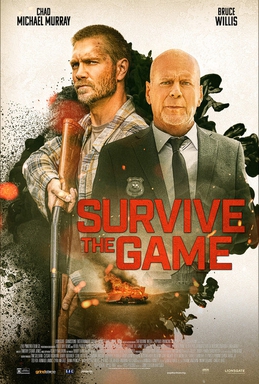
Looking at the title of 2021’s Survive the Game, you may be tempted to wonder what game the characters are attempting to survive.

The answer is that there isn’t a game, unless you’re one of those people who still insists on using “The Game,” to refer to the drug trade because you once heard someone do the same thing on The Wire.

Though there are no games, the film is full of people who are trying to survive.  For instance, after a drug bust gone wrong, Detective David Watson (Bruce Willis) is trying to survive having been shot in the gut.  He manages to do so surprisingly well, even though he’s being held hostage by the bad guys.  The leader of the bad guys, Frank (Michael Sirow), is supposed to be a fearsome torture expert but David just smirks at him.

David’s partner, Cal (Swen Temmel), survives by running to a nearby farm.  The farm itself is owned by Eric (Chad Michael Murray), a veteran who is haunted by the death of his wife and who just wants to be left alone.  With the bad guys surrounding his farm and looking to eliminate all of the witnesses, Eric teams up with Cal.

There’s a lot of bad guys in this film and they’re all so eccentric that they really do become the main attraction.  The bad guys are occasionally entertaining.  They spend a lot of time bickering and each one has at least one particularly obnoxious personality trait that can be used to distinguish one from the other.  Most of them have a tattoos.  One has a mohawk.  Quite a few have brightly colored hair.  You can’t help but wonder how any of these people could possibly be successful criminals because they’ve all gone out of their way to make sure that it will be easy for law enforcement to spot and identify them.  To once again cite The Wire, Wee-Bey Brice yelled at at his son Namond for not shaving his head because the police would be able to easily spot Namond’s haircut.  Wee-Bey had a point.

Anyway, this is a siege film.  Cal and Eric spend almost the entire movie running around the farm and picking off bad guys.  For those of you who are into this sort of thing, some of the kills are imaginative and ruthless.  Interestingly, some of the bad guys are presented as being more sympathetic than the film’s heroes.  They have their own relationships and fears and they get upset when their friends are killed.  I actually felt a little bit bad for some of them. It makes Survive the Game slightly more interesting than the usual DTV B-action movie.

As you may have guessed, this is another Randall Emmett production.  Emmett is best-known for his ability to get former and current A-listers to take small roles in his B-movies.  As such, an actor like Bruce Willis or Sylvester Stallone would put in a day’s worth of work and the film could be advertised as starring Bruce Willis as opposed to Chad Michael Murray.  In Survive The Game, there’s a somewhat endearing moment that occurs when Willis appears to start laughing at the ludicrous dialogue to which he is being subjected.  That said, Willis was obviously not doing well when he appeared in this film and it does make some of his scenes somewhat difficult to watch.  The viewer really does end up missing the Bruce who could drive Alan Rickman to distraction.

Survive the Game is a film that I had long meant to watch, though I’m not sure why.  I think the title appealed to me.  Again, I’m not sure why.  It’s better than some of Emmett’s DTV action movies but it’s still pretty forgettable.  I would still watch a prequel about how the mohawk guy became a ruthless mercenary.  It seems like there’s probably a story there.

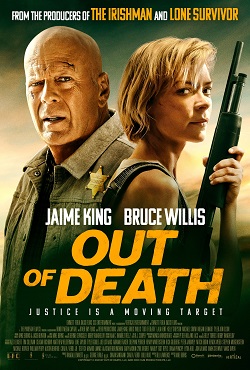
Film Review: Out of Death (dir by Mike Burns)


The first question that one might want to ask about 2021’s Out of Death is what is going on with that title.

Out of Death?  Did they run out?  Is there an issue with the warehouse?  Is it a nationwide outage or just a regional problem?  How exactly does someone find themselves out of death?  I mean, there are plenty of shortages in the world.  There are people who can’t get clean drinking water or tasty food.  I had to wait an extra day to get my new scanner because of a supply chain issue.  These things happen.  But people never seem to run out of death.  Death is the one thing that we will always in large quantities.

As for the film itself, it is rather death-obsessed.  Shannon (Jaime King) is a photojournalist who has recently lost her father.  All she wants to do is spread his ashes in the woods.  However, when she witnesses a murder in the woods, she finds herself being pursued by a compromised deputy (Lala Kent).  Meanwhile, Jack Harris (Bruce Willis) is a retired detective who has recently lost his wife.  He wants to spend some time alone in his niece’s cabin but instead, he finds himself mixed up in Shannon’s problems.  The corrupt sheriff (Michael Sirow) wants to be mayor and he’s not going to let Shannon and Jack stand in his way, even if it means killing every possible witness.

Even though Bruce Willis gets top-billing along with Jaime King, he’s not in much of Out of Death.  Out of Death was one of the many film productions to be delayed by the COVID lockdowns.  When production finally did begin, Bruce Willis shot all of his scenes in one day.  (The entire film took 9 days to shoot.  Roger Corman, if he was still with us, would want to know why the production took 9 days when it could just as easily been done in two.)  Sadly, this is one of the films that Bruce Willis made after it became apparent that he was having serious issues with his health.  Willis delivers his lines in a halting manner, which technically works for his emotionally shattered character but which is still hard to watch now that we know that Willis was suffering from frontotemporal dementia at the time.  Producer Randall Emmett made his career by convincing big stars to appear in B-movies and he shouldn’t be faulted for that.  However, the later films he made with Willis not always easy to watch.  Say what you will about the films that Sylvester Stallone and Robert De Niro have made with Emmett, they all knew what they were getting into.  It’s hard to say whether the same was true with Bruce Willis.

As for Out of Death, it’s a fairly dull cat-and-mouse game but I will give it some credit for capturing the atmosphere that goes along with being isolated in the Southern wilderness.  This is a film where you could feel the humidity rising from the screen.  And Jaime King, who deserves better, gave a strong performance as Shannon.  Otherwise, the most interesting thing about Out of Death is the mystery as to what exactly the title means.

Out of Death?  It’s a nice thought.

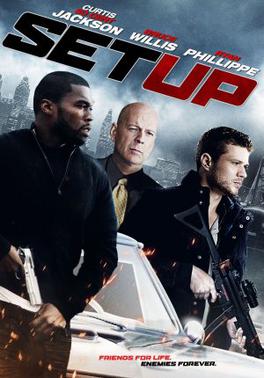
Film Review: Setup (dir by Mike Gunther)


On the mean streets of Detroit …. really, Detroit again?

Well, anyway, Sonny (5o Cent) is a career criminal who also happens to be a really nice guy.  When his partner-in-crime, Vincent (Ryan Phillippe), worries about the survival of his imprisoned father (James Remar), Sonny is sympathetic.  When his other partner-in-crime, Dave (Brent Granstaff), won’t shut up about how much he loves his wife and his life in the suburbs, Sonny is genuinely happy for him.  Sonny may be a criminal but he’s not violent.  He’s not a killer.

Understandably, Sonny is upset when Vincent kills a guard during their latest diamond heist.  However, that’s nothing compared to how angry Sonny becomes when Vincent betrays both him and Dave, shooting them and leaving them for dead.  Dave dies but Sonny survives.  Seeking revenge, Sonny teams up with a gangster named Biggs (Bruce Willis).  Biggs demands that Sonny retrieve some money for him.  It really shouldn’t be that difficult except for the fact that every criminal in Detroit is soon revealed to be an absolute idiot.

At this point, I’ll admit that 2011’s Setup has more than a little in common with Gun.  Like that film, it takes place in Detroit and it centers on the drama that takes place in the shadows of the underworld.  50 Cent plays a criminal in both films.  James Remar has a small role in both films.  Both films feature multiple betrayals and both of them contrast the criminals on the street with the bosses behind-the-scenes.  Both films were also produced by Randall Emmett.  Indeed, this was one of the first films that Bruce Willis did with Emmett.  Emmett would go on to produce several of Willis’s final films and there’s definitely some controversy as to whether or not those films exploited Willis at a time when he was particularly vulnerable.

That said, I actually kind of liked Setup.  It’s definitely a low-budget B-flick but it still has its ambitions and it actually achieves some of them.  50 Cent is far more convincing as the well-intentioned but somewhat dumb Sonny in Setup than he was in Gun and he actually does pretty well as the film progresses and Sonny becomes more conflicted about whether or not he actually wants his legacy to be one of vengeance.  Ryan Phillippe is well-cast as Vincent and I liked the performances of Jay Karnes and Jenna Dewan, both playing low-level criminals who find themselves in over their heads.  The film did a good job of examining all of the different levels of crime in Detroit, from the wealthy Biggs all the way down to the idiots who continually screw up the simplest of plans.  Randy Courtere does an especially good job as Petey, the moron who thinks playing with a loaded gun is a good idea.

As for Bruce Willis, his role here is small and it’s a role that probably could have been played by any tough guy actor of a certain age.  But, Willis still brings his cocky charm to the role.  (Seeing Willis here really drives home just how different he was in the final films that he did for Emmett.)  Willis plays Biggs with a sense of humor and it’s just what the movie needed.

To say a movie is better than expected can sound like a backhanded compliment but it’s a compliment nonetheless.  Setup was definitely better than I expected.

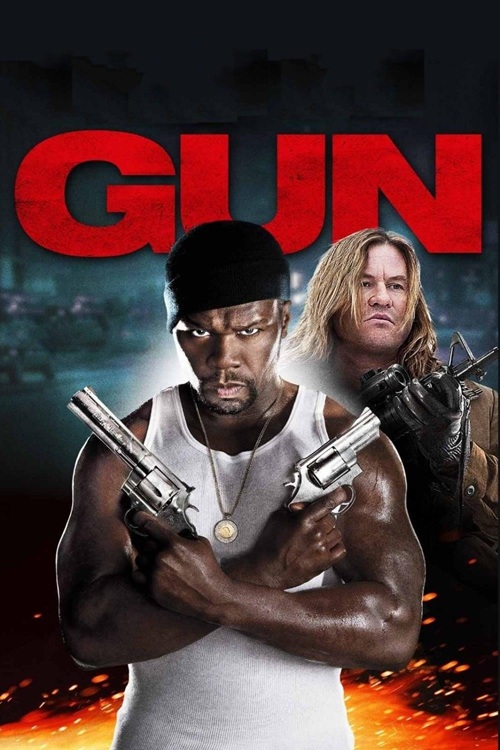
Film Review: Gun (dir by Jessy Terrero)


Angel (Val Kilmer) has just been released from prison and he’s returned to the hard streets of Detroit.  Hooking up with his old friend Rich (50 Cent), Angel gets involved in a gun-running operation.

Unfortunately, it’s no longer easy or safe to sell guns in Detroit.  The police are cracking down.  Rival gun dealers are trying to take out a competition.  A raid at a club leaves a dealer dead and a huge power void in Detroit’s criminal underworld.  When it becomes obvious that the police have a snitch in Rich’s crew, Rich’s girlfriend (AnnaLynne McCord) suspects that it’s Angel.  Can Rich find the snitch without having to betray his best friend?  And does Angel have secrets of his own?

First released in 201o, Gun was the third film that Val Kilmer made with 50 Cent and it’s apparently their only collaboration that Kilmer didn’t mention in his autobiography.  It probably should be noted that Val Kilmer doesn’t look particularly happy in the movie but that actually works for his character.  Angel has just gotten out of prison, he’s mourning his wife, and he’s found himself right in the middle of the type of violent situation that could lead to him going back to prison.  In many ways, Angel feels like he could be a version of Heat’s Chris Shiherlis.  It’d easy to imagine that maybe Chris changed his name after escaping Los Angeles.  He became Angel and he found a new partner in the form of Rich.  Unfortunately, Detroit is a lot uglier than Los Angeles, Rich is no Neil McCauley, and Michael Mann’s not directing.  Kilmer’s performance is not bad.  Even in a low-budget movie like this, he still did his best.

That said, the film is centered around 50 Cent.  50 Cent plays Rich.  50 Cent provides the music.  50 Cent produced the film, along with Randall Emmett, a producer who largely made a career out of getting faded stars to appear in B-movies.  (He’s best-known for producing the many of Bruce Willis’s final films.)  As Rich, 50 Cent gives a rather stiff performance.  It’s not so much that he’s not convincing as a street smart gun dealer as he’s just not very interesting to watch.  There’s a predictability to his performance, one that is reflected in the songs that appear on the film’s soundtrack.  How many rap songs about making money and shooting people can one listen to before admitting that it all gets boring after a while?

In the end, the most interesting thing about Gun is the number of familiar faces who appear in small roles.  James Remar plays a cop.  Paul Calderon, the bartender from Pulp Fiction and the traitor from King of New York, plays a detective.  John Larroquette and, somewhat inevitably, Danny Trejo both make appearances.  Perhaps most oddly, Mike “Boogie” Malin, the winner of Big Brother All-Stars, plays an ATF agent.  I should mention that, in real life, Boogie Mike and Dr. Will Kirby (winner of Big Brother 2) had a friendship that widely mirrored the friendship between Rich and Angel.  I doubt that factored into his casting.  That would be giving Gun to much credit.

Gun was not a particularly compelling film, though it did win some authenticity points by actually being shot on location in Michigan.  That said, Val Kilmer gave a better performance than perhaps the material deserved.  Val is definitely missed.

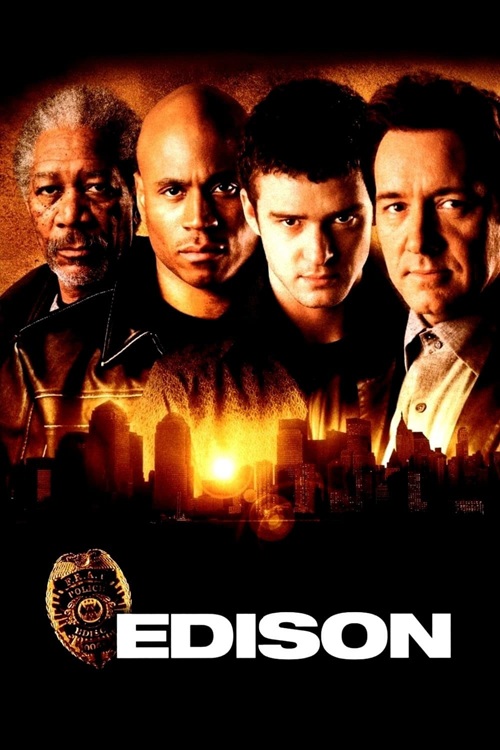
Film Review: Edison (dir by David J. Burke)


In the town of Edison, a reporter named Pollack (Justin Timberlake) is convinced that he’s uncovered evidence of massive police corruption.  His editor, Moses Ashford (Morgan Freeman), responds by firing Pollack but then rehires him on the condition that he actually do the work and interview everyone involved.  Pollack is confused until he sees that Ashford has a Pulitzer Prize in his Edison bachelor pad.

FRAT stands for First Response Assault and Tactical.  Led by Captian Tilman (John Heard) and protected by duplicitous politician Jack Reigert (Cary Elwes), FRAT has made Edison safe but at what cost?  The constitution is regularly trampled.  Drug dealers are summarily executed.  Sgt. Lazaerov (Dylan McDermott) confiscates and uses the drugs himself while the newest recruit, Detective Deeds (LL Cool J), worries that he’ll be executed when he declines to lie in court.  Deeds has reason to be worried because he witnesses the attempted assassination of both Pollack and his girlfriend (Piper Perabo).

Teaming up with Detective Leon Wallace (Kevin Spacey), Pollack and Ashford try to get Deeds to turn on FRAT and expose the trouble in Edison.

First released in 2005, Edison was produced by Randall Emmett, who is today best-known for producing (and occasionally directing) Bruce Willis’s final films.  Emmett specializes in getting name actors to play small roles in what are otherwise B-movies.  In an Emmett film, De Niro, Stallone, Travolta, or Nicolas Cage might get top billing but usually, they only have a few minutes of screentime.  Edison is unique in that Morgan Freeman and Kevin Spacey (who was still considered to be a big name back in 2005) both actually have fairly large roles.  Though LL Cool J and Justin Timberlake are the stars of the film, it still appears that it probably took Freeman and Spacey longer than a day to shoot their scenes and that truly does set this film apart from other Emmett productions.  I should also note that Spacey wears an incredibly tacky hairpiece while Freeman gets an extended dance scene set to Time Has Come Today by The Chambers Brothers.

Is the film itself any good?  Eh, not really.  It’s a bit disjointed.  John Heard was a good actor but this movie was made when he was at the height of his “9-11 was an inside job” nuttiness and he gives a cartoonish performance as the main bad guy.  Cary Elwes is entertaining as the crooked politician but it’s hard not to feel that the film would have been more interesting if he and Kevin Spacey had switched roles.  LL Cool J is not particularly convincing as a cop so naive that he’s shocked to discover that there’s corruption on the force.  As for Justin Timberlake, this was actually his debut as an actor.  Timberlake is always at his best playing morally shady characters, like in Alpha Dog or The Social Network.  In this film, he has to play earnest and outraged and he’s never particularly convincing.  If anything, he comes across as being a little whiny.

That said, the idea behind Edison is at least interesting.  FRAT — like countless other special police units in the country — has become untouchable by actually doing its job.  The streets are safer, as long as you don’t get on FRAT’s bad side.  Who watches the watchmen?  Edison asked this now common question in 2005, when America was still embracing the survelliance state.  Flaws and all, Edison was ahead of its time.