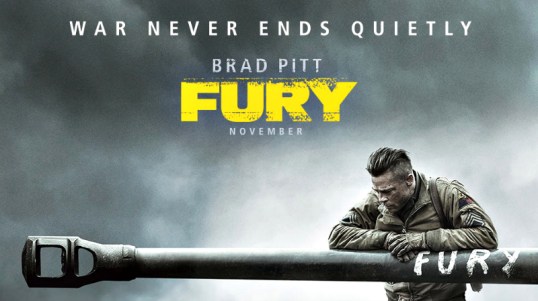
Review: Fury (dir. by David Ayer)


Fury

“Ideals are peaceful. History is violent.”

1998 saw the release of Steven Spielberg’s Saving Private Ryan.

Prior to this most films depicted World War II as a noble endeavor that needed to be done to help rid the world of Hitler and the horror he was inflicting upon Europe (beyond if given the chance). It gave birth to the “Greatest Generation” that people still look up to even to this day. These were young men who volunteered for a conflict that would change history and for the millions involved. Yet, World War II films were always cut and dried. It was always the good guys (American, British, Canadian, etc…) fighting against the nameless and efficient Nazi war machine.

In time, so many of these films followed the same formula that character stereotypes came about. We always had the cynical, older veteran who becomes a sort of father figure to a hodge-podge group of young, untested soldiers. What these films also had in common was the fact that they remain bloodless despite the nature of the story being told. Some filmmakers would try to buck this time-tested formula (Sam Fuller being the most prominent), but it would take 1998’s Saving Private Ryan to set a shift in how we saw World War II.

Spielberg lifted the rose-colored glasses from the audience and dared to show that while noble, World War II was still war and it still had the horror and brutality that all wars have. 2014’s Fury by David Ayer would continue this exploration of the last “Good War” in it’s most gritty and blood-soaked detail.

The film shows the last gasp of the German war machine as Hitler gives one of his final orders for the German people to repel the invading Allies. It was to be a scorched earth defense. Whether by choice or forced into this desperate tactic, every man, woman and child was to take up arms to their last breath to defend the Fatherland. It’s in this nightmare scenario that we find the veteran Sherman tank crew led by Don “Wardaddy” Collier trying to survive these final days til war’s end. Their home for the last two and a half years since North Africa has been a modified Sherman tank they call Fury. It’s a crew that’s been battle tested from the sands of North Africa, the maze-like hedgerows of France’s bocage and now the countryside of Germany itself.

We can see right from the start that this crew has been through hell and back many times and already resigned to going through hell many more times before they can eveb think of getting back home. It’s a crew that’s already lost one of it’s own minutes into the film. Wardaddy (Brad Pitt) looms over his crew like a weary father figure. This ragtag group consists of Bible (Shia LaBeouf) as the born-again Christian who sees their survival battle after battle as a sign that God’s grace is upon Fury and her crew. Then we have Gordo (Michael Peña) who has been so traumatized by the war and what he has had to do to survive that he has numbed himself from these memories by being in a constant state of drunkenness. Lastly, we have the tank’s loader Grady (Jon Bernthal) whose misanthropic attitude comes as a crude and brutish counterpoint to Bible’s religious fervor. Into this misanthropic soup of a crew comes in the replacement to their recently killed comrade.

Logan Lerman’s character, the young and naive clerk typist Norman Ellison, becomes the audience’s eyes in the brutal world of Fury and her crew. We’re meant to see the war’s brutality and horror not through the jaded and cynical eyes of Wardaddy and his men, but through a young man who has never killed an enemy or even fired a weapon in anger. Norman becomes the surrogate through which we determine and decide whether there is such a thing a nobility and honor in war.

Honor and nobility have always been used by those always willing to go to war to convince the young and impressionable to follow them into the breach. Fury takes these two words and what they represent and muddies them through the muck and gore left behind with each passing battle and tries to see if they remain unchanged on the other side. Norman is a literal babe in the woods as he must adapt or die in a war nearing it’s end but also becoming even more deadly and dangerous than ever. His very naivete quickly becomes a hindrance and a real danger to Wardaddy and his crew. He’s not meant for this world but has had it thrust upon him.

The film treats Norman’s humanity as a liability in a war that strips it from everyone given enough time. We see Wardaddy attempt to speed up the process during a tense sequence where Norman’s being forced to shoot a German prisoner. It’s a sequence of events that’s both unnerving and disturbing as we see the veteran soldiers encircling Norman and Wardaddy cheering or looking on with indifference in their eyes. They’ve all been in something similar and one can only imagine what they had to do to make it this far.

Fury straddles a fine line between showing and explaining it’s themes to the audience. It’s to David Ayer’s skill as a writer that the film’s able to use some finely choreographed scenes both violent and peaceful to make a point about war’s effect on it’s participants both physically and mentally. Whether it’s through several well-choreographed battle scenes to a sequence of tense and quiet serenity in the apartment of two German women that bring back the plantation segment from Coppola’s Apocalypse Now Redux, the film does a great job in showing how even when stripped down close to the bone, Wardaddy and his veteran crew still has semblance of humanity and the honor and nobility they all began the war with.

As a war film, Fury brings a type of combat to the bigscreen that has rarely been explored and never in such a realistic fashion as we watch tank warfare at it’s most tactical and most horrific. Ayer doesn’t fall for the jump cut style that many filmmakers nowadays sees as a way to convey the chaos of battle. Ayer and cinematographer Roman Vasnayov have planned every sequence to allow the audience to keep track of the two opposing sides and their place in the battle’s geography. And just like Spielberg’s own Saving Private Ryan, Fury shows the very ugly and bloody side of World War II. There’s a lot of bodies being blown apart and torn to chunks of meat yet they never seem to come off as gratuitous. Every bloody moment makes a point on the horrors of war and the level of inhumanity that another man inflicts on another man.

If there’s something that Fury does lag behind on it would be some of the narrative choices dealing with Norman’s character. The film takes place literally over a day’s time and the quick change in Norman’s mentality about the war seem very sudden and abrupt. While this day in the life of Fury and her crew worked well in Ayer’s past films (both as writer or director) here it puts Ayer stuck in a corner that made it difficult to fully justify Norman’s sudden change of heart from babe in the woods to hardened Nazi-killer. We can see throughout the film that the war is affecting him in ways that could lead up to this change, but to have it happen in just under a day really stretches it’s believability to the breaking point.

Yet, despite this the film is able to stay on course and recover from this misstep on the strength of Ayer’s direction and the performances of the ensemble cast. Brad Pitt has been the focus of the media campaign leading up to the release of Fury, but every actor who comprises the crew of Fury leave their own mark in the film. Shia Labeouf has had a tough past year both professionally and personally, but one has to admit that performances like the one he had in Fury is a reminder that he’s a damn fine good actor. Whether this film has become the path to his redemption in the eyes of the public is irrelevant. One doesn’t need to like the man to respect the talent he’s able to put up on the screen.

Awards season is in full swing as Fall 2014 arrives and Fury makes it’s case known that genre films (and make no mistake this is a genre film) can more than hold it’s own with the more dramatic life-exploring films that critics tend to put on the pedestal as examples of great filmmaking. While Fury is not perfect it is a very good film full of great performances that just misses being great.
 

Horror Song of the Day: Ave Satani (by Jerry Goldsmith)


theomenfeat-1024x847

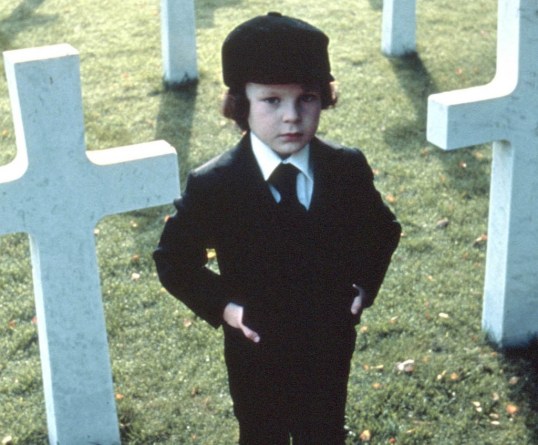
One cannot think of horror and not bring up Richard Donner’s The Omen. A film made during the turbulent late 1970’s when the world was literally on the brink of ripping itself apart. The Omen was a film that told the tale of the birth of the Anti-Christ which would herald the coming of the Apocalypse. Outside of William Friedkin’s The Exorcist there wasn’t a film during this era which put the fear of God’s Judgment on the faithful than The Omen.

It helped that it’s own film score was determined to hammer the point of it’s blasphemous subject matter by taking one of the most holy rituals in Roman Catholicism and inverting it to praise Satan instead of the Virgin Mary. Jerry Goldsmith took the rite of consecration and came up with what one could call the rite of desecration for a purported Black Mass.

One must say that “Ave Satani” was all the creation of Jerry Goldsmith and a fellow choir-master in London. This was a work of art created to accompany a film that some would label art as well, but for some whose own faith has superseded all thoughts of art appreciation “Ave Satani” was very real and was a real danger to one’s eternal soul.

I will say that it’s an effective use of the Gregorian chant and more than just a tad hair-raising.

Ave Satani

Sanguis bibimus
Corpus edibus
Sanguis bibimus
Corpus edibus
Sanguis bibimus
Corpus edibus
Rolle corpus Satani, ave
Sanguis bibimus
Corpus edibus
Rolle corpus Satani, ave

Ave, ave, versus Christus

Ave Satani
Sanguis bibimus
Corpus edibus
Rolle corpus Satani,
Satani, Satani

Ave, ave, Satani

Horror Review: The Walking Dead S5E02 “Strangers”


TheWalkingDeadS5E02

“Nowadays, people are just as dangerous as the dead, don’t you think.” — Father Gabriel

[spoilers]

The Walking Dead as a show has never been more popular than it is now, but there’s been always a group of fans who have always had a bone to pick with the writers of the show. Some of these fans have given up on the series while others continue to watch it hoping that the series will get back on track. These fans are some of the biggest followers of the comic book series that the show is based on. They’ve bought and read The Walking Dead since the very first issue. While most remain steadfast fans of the show for it’s unpredictability in changing up story arcs and characters, there are those readers who hate when the show deviates from the comics.

These fans believe that the stories told in the comic book are strong and rich enough in drama and detail that deviating from them becomes a crapshoot in terms of quality. Yet, it’s the very deviation from the comics which has kept fans of the comics from instantly figuring out what will happen as the show moves from season to season.

The series itself never truly deviates from the main story arcs told in the comics. It’s how small details, subplots and characters get handled in different ways that the deviations come into play.

During the first four seasons of the show there’s been some major deviations on who died and who appeared and when. Characters such as Dale, Andrea, Sophia and Shane have had their roles expanded, reduced and/or changed that made them feel new and exciting (though for some characters like Andrea not so well). Even the mix and matching of subplots have kept even fans of the comics from feeling too comfortable about what to expect next.

Current showrunner Scott M. Gimple looks to be addressing this war between fans of the comics and those who have never read it by gradually pushing the show’s narrative much closer to the comics as early as the mid-season finale of season 4. Now with the second episode of season 5 the series looks to be introducing several details from the comics that should sound and look familiar to fans of the book.

First, we find the group on the move after the events of Terminus. There’s some small feeling out between new additions to Rick’s “family” with the Tara unsure whether the group would accept her since she was part of the Governor’s group which assaulted the prison and got Hershel killed. Rick and Maggie could easily have rejected her apologies of not knowing who the Governor truly was, but they understood how charismatic the Governor could be. Tara might be forgiven but time will tell if the group will truly trust her.

It’s after this brief opening that we come to the show moving towards the comic book in regards to it’s narrative. We meet Father Gabriel who looks to be a figurative babe in the woods. He’s trapped by several zombies and his reaction to being rescued by Rick and events after show him to be one with a naive sense of the new world. Rick and his people don’t know what to think of Father Gabriel. How has he survived almost two years on his own in his church without ever killing anyone (whether in self-defense or on purpose) or even make it this long without knowing how to deal with the zombies just beyond his church’s doors.

Father Gabriel already comes off as something more than what he’s telling the group. This doesn’t bode well for Rick and his “family” since whenever they come across strangers who seem willing to help they end up the opposite of helpful. Gabriel definitely has secrets he’s keeping from the group and Rick seems to have an inkling what it might be (with a little help from Carl), but he’s willing to string the good reverend along until his true colors comes out.

Now, the second part of tonight’s episode which brings the show back on track with the comics is the introduction of the “The Hunters” story arc from the books. Terminus looks to have become the foundation for this story arc. Let’s call it the prequel to what looks to be season 5’s first half story. Carol, Rick and the gang did quite a job on taking down Terminus. It was definitely not the sanctuary they’ve been advertising over the airwaves to potential survivors. Yet, the group’s complaint at Rick wanting to go back and finish the job at the end of the season premiere has come back to become a major danger to all of them.

But what part of that brings the show back on track and in sync with the comics?

The ending which has Bob taken captive by the Terminus survivors with Gareth still alive and hipstering was adapted almost scene for scene from the comic books. While it was poor departed Dale who was taken captive in the comics, it looks like that fate has befallen Bob in the show. This sequence was a major shocker in the comic book and it has a similar effect in the show since Bob has become a well-rounded character and one audiences come to care for. It helps that Larry Gilliard, Jr. has been giving good performances everytime he’s on the screen.

“Strangers” looks like the beginning of a major storyline for the show and might be a way to begin culling the group of it’s growing number. This doesn’t bode well for characters on the show not named Rick, Carl, Michonne and Daryl. If there’s been one thing The Walking Dead has become an expert in during it’s first four season it’s killing off characters when we least expect them to. One thing for sure is that if Rick and his people haven’t stopped trusting strangers before tonight’s episode they may just end up not trusting anyone they don’t recognize by the time the midseason break rolls around.

Notes

  • Robert Kirkman (creator and writer of the comic book) does the writing duties with tonight’s episode. There were some slow spots in the middle, but he nailed that final sequence with Bob and the Hunters.
  • The Walking Dead gets another alum from HBO’s The Wire with the addition of Seth Gilliam as Father Gabriel. It’s almost a running joke now. I next expect to see Michael K. Williams, Dominic West and Idris Elba to become cast members in future seasons (not a bad idea when you think about it).
  • Rick definitely doesn’t buy fully into the news that Eugene has the cure for the zombie apocalypse, but he understands that having Abraham and Rosita along just makes the group stronger.
  • Speaking of Abraham, I wonder how much longer before Rick and he begin to truly bump heads over who will be the leader of the group.
  • Carol looks to be having a case of the “guilts” in tonight’s episode. Hopefully, they don’t string out this personal crisis too long and just have her continue on her upward trajectory of becoming the show’s biggest badass.
  • Waterlogged zombies in the food bank reminded me so much of Deadite in The Pit in Army of Darkness. Greg Nicotero promised during Comic-Con that they were going to up their game when it came to zombie make-up effects for season 5 and they’ve followed through on that promise, so far.
  • Talking Dead guests for tonight are Matt L. Jones (Breaking Bad, Mom) and Chad Coleman aka Tyreese from The Walking Dead.

Season 5

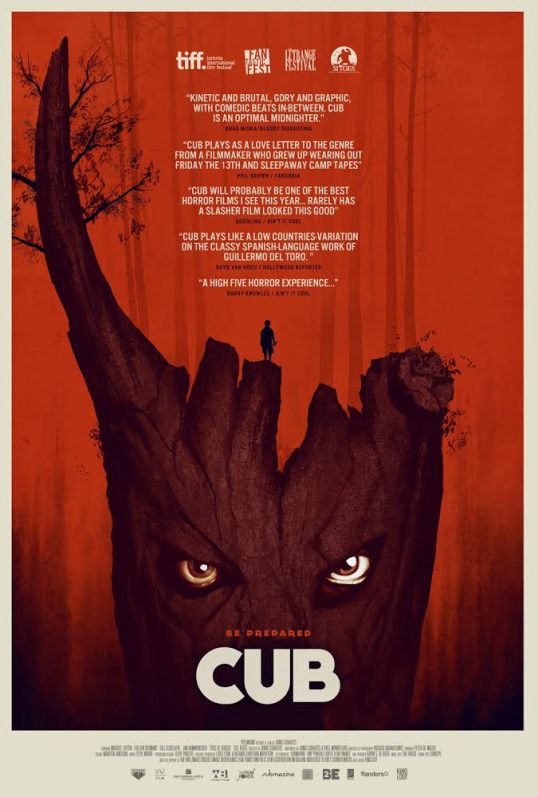
Horror Trailer: Cub (Welp)


Cub-Poster

There has always been an unwritten agreement that Hollywood films minimize the sort of violence inflicted on children on-screen. Something about children and pets being put into harm’s way that disturbs the majority of people going to see films. This hasn’t been the case with foreign cinema.

Films such as Battle Royale put children front and center when it comes to on-screen violence. Sometimes it’s to make a point and others it’s just a filmmaker channeling their inner exploitation bone.

One film which has been making the festival circuit is the Belgian horror film Cub (titled Welp in it’s home country) which brings the campfire spooky tale of yesteryear into a more modern setting.

From first-time director Jonas Govaerts, Cub tells the story of a group of young Cub scouts out camping and who end up becoming prey to a psychopathic woodman who has left devious and deadly traps in the very woods they’ve decided to camp in.

The trailer does a good job in not telling too much and also hinting at the sort of on-screen kid violence that makes people uncomfortable. For now, Cub has no release date in the US so for now here’s to hoping it at least hits the VOD market.

Horror Retro Review: Shadow Hearts


logo-1

Role-playing games have been a major staple of console gamers since the days of the Super Nintendo console. It became even more popular with the release of the first Playstation which had as one of it’s biggest selling point the Japanese role-playing game Final Fantasy VII. This title from Squaresoft (now Square-Enix) introduced the role-playing game genre to many gamers who grew up on shooters and action titles.

Final Fantasy became synonymous with Japanese RPG, yet there were other rpg titles out there that were just as good if not better. One such title that flew under the radar, but definitely caught the attention of hardcore gamers during the early days of the PS2 was the Japanese rpg Shadow Hearts from Sacnoth. It didn’t have the polish and epic spectacle gamers were used to with the Final Fantasy titles, but it did bring a new take on the time-tested rpg genre. Sacnoth decided to use horror as the theme of it’s title instead of scifi or fantasy and it’s that artistic choice which made Shadow Hearts such a unique title and one still beloved by it’s many fans.

Set in an alternate reality during the early 1900’s, Shadow Hearts follows the adventures of Yuri Hyuga and Alice Elliott as they attempt to solve the mystery of why the latter was being pursued by the historical figure Roger Bacon (who history says wasn’t just a learned Franciscan friar but one of the preeminent philosophers of his time). The game takes Yuri and Alice through several cities in China and Europe and most of them somewhat heightened-versions of their real counterparts, but where mysticism, the supernatural and folklore have become somewhat accepted.

The game doesn’t flinch in portraying not just the horrors of war, but of the shadow world just bubbling beneath the surface that involves demons, vampires, sorcerers and zombies. the main protagonist, Yuri Hyuga, even unlocks greater abilities and powers by absorbing the souls of enemies he has killed and entering a sort of personal “Dream Realm (or Nightmare depending on one’s interpretation) where he must battle personal demons to gain their powers. It’s definitely not something that Final Fantasy players have been exposed to in the past and I think it’s one major reason why the game appealed to some gamers who wanted something new in the Japanese rpg scene that was becoming dominated and homogenized by the styles pushed Square-Enix’s Final Fantasy franchise.

Shadow Hearts had a unique way of doing combat during the game: The Justice Ring.

The Justice Ring combat system was a nice change of pace to the usual turn-based battle system used in most Japanese rpgs. This battle system was still turn-based, but every action outside of defending was affected on how well the player hits his mark on the rotating Justice Ring. This kept the player from just picking an action and seeing what happens, or even worse, just button mashing the attack action to try and win fights. The Justice Ring system kept the player involved throughout the whole battle. Sometimes perfect use of the Justice Ring was a must to fight and succeed against certain bosses and situations.

Shadow Hearts might not have the pedigree of the Final Fantasy series, but it was a nice change of pace from the the typical scifi-fantasy that series re-used over and over to the point that they became a video game trope that was seen by some as a negative rather than a positive. The game itself wasn’t perfect by any means and had more than it’s fair share of glaring flaws. The dialogue was pretty laughable at times though never to the point that it broke the game’s serious and ominous tone. The graphics, for a PS2 title, was very underwhelming especially when compared to the Final Fantasy franchise.

Yet, despite all its warts and flaws, Shadow Hearts remains one of the more unique rpg gaming experience of the early 2000’s and it became popular enough that it would spawn two more sequels that would explore the alternate reality the franchise was based on. I’m all for the scifi and fantasy worlds that most console rpgs have been using as their templates, but once in awhile I’m reminded that rpgs could also have fun in the horror realm and Shadow Hearts helped make that deviation from the norm happen.

On a sidenote, this game also had a great soundtrack from Japanese composer Yoshitaka Hirota

Horror Scenes I Love: The Serpent and The Rainbow


TontonMacoutes

“I want to hear you scream.” — Dargent Peytraud

All I can say about this scene is that I guarantee every guy who watches this will want to cross their legs tight. They may just scream as well just as a reflex action to what happens in the end.

Yet, as one watches this torture scene of the main lead in the film the audience never really sees anything. Everything’s implied and we see signs of what’s about to happen throughout the segment.

The Serpent and The Rainbow continues to be one of my favorite horror films and one of my favorite Wes Craven offerings.

Horror Review: The Walking Dead S5E01 “No Sanctuary”


TheWalkingDeadS5E01

“Be the butcher or you’re the cattle.” — Terminus Mary

[spoilers]

If people were asked five years ago that a show about the zombie apocalypse was going to be one of the biggest shows on TV then most people would be straight out snickering. Zombies, even just five years ago, was already being seen as overdone. Everything was zombie this and zombie that. Yet, on the basic cable network AMC, we see The Walking Dead coming into it’s fifth season stronger than ever and doesn’t seem to be slowing down anytime soon.

It’s worth repeating that there’s a set of critics and viewers out there who remain dumbfounded as to why The Walking Dead remains such a popular hour of television despite the inconsistencies in writing, character growth (if any) and direction. This is the show that fired it’s creator and first showrunner halfway through season 2. His replacement would also get the axe once season three ended.

The Walking Dead has been called the soap opera with zombies and to an extent it is just that. It’s a show that lives and dies on the melodrama. At times this has been to the show’s benefit, but when it doesn’t work then certain episodes and story arcs just fall flat. Yet, we’re now starting season 5 and it’s a season premiere that doesn’t take it’s time (as some have complained) and pretty much hits the ground running from it’s cold opening right up to the final scene.

“No Sanctuary” begins with a jump back in time as we see the Terminus crew as prisoners in their own compound. We hear screaming in the background and those in with Gareth bemoaning the fact that they let the very people holding them hostages in. It’s a time when the Terminus people were just like Rick and his group. They tried to do the right thing, but this time around their trust and good nature backfired. Now the Terminus people are in charge and keeping Rick and his people prisoner and four new faces since captured since the end of the last season.

Throughout the episode we see the change come to Rick (already seen at the end of season 4) that he must be brutal if he’s to keep his people safe. It’s something that he has tried to avoid since the pilot episode. Even when up against the Governor and his lackeys there was always a sense that Rick was trying to find a peaceful solution to a crisis. Rick has always been one to try and stick to his own personal sense of justice and order throughout the season, but tonight’s episode saw more and more of it chipped away as the banality of evil as shown by Gareth and his Terminus survivors.

To say that tonight’s season premiere was action-heavy would be an understatement. With Greg Nicotero doing directing duties, the episode had the sort of epic scope in terms of action, violence, gore and character moments that fans of zombie fiction crave. Nicotero is still at his best when coming up with ways to rip people to pieces and the many ways zombies look and get destroyed, but with each episode under his belt as director he has improved. And for a show where it’s writing has been criticized nonstop tonight’s episode by showrunner Scott M. Gimple kept things moving. Every piece of dialogue was meant to bring some insight into the mindset of the character (Gareth who has taken pragmatism as a way to justify his turn to the dark side) or a way to move the scene forward.

If there was fear going into season 5 it was that the writers might linger and stretch the Terminus storyline (at least keep Rick and his group as prisoners longer than needed) the way things lingered in the Greene farm, will the Governor attack or won’t he and then the half a season spent getting the different survivors heading towards Terminus in season 4. We didn’t get that with “No Sanctuary” and while it’s a sure bet that not all Terminus people died at least the show will continue to be on the move instead of remaining static for no reason.

There are still many questions left unanswered after tonight’s episode. One major question being where the hell is Beth and who is holding her prisoner (if she is a prisoner). There’s also the question of this cure that Eugene is suppose to know that can reset the zombie apocalypse back to zero. At least we learned that one can come back from the exile the way Carol did as the episode ended. Despite being glad to see that it Carol was alive and she was instrumental in freeing him and the rest of his people, will Rick just forget what she did and take her back in unconditionally. Maybe Rick finally understood what Carol told him during their supply run back in season 4. When things have be to be done they have to be done right then and there for the good of the group.

As a final great moment that should be a major tease for fans of the show….we see the return of fan favorite in the form of Morgan Jones who looks to have left his sanctuary back in Rick’s old hometown and now trying to find his way back to other survivors (or tracking Rick if that’s the case).

Notes

  • We see the return of Robin Lord Taylor (Gotham) as Sam, the survivor with the basket of fruits in season 4’s “Indifference”, just before he gets a baseball bat to the back of the head and then his throat slit over a steel trough.
  • We have a new intro sequence that’s a bunch of new images taken from past episodes to start the credits intro. Maybe this is a sign that the show is now turned the corner from the Darabont and Mazzarra era and the show is firmly in the guiding hands of the Gimple.
  • There was a lot of MacGuyvering in tonight’s episode as the survivors still trapped in the “A” car were down to making makeshift weapons from pocketwatch chains, belt buckles and pieces of splintered wood. Rick and his people really showed that Gareth and the Terminus people were “fucking” with the wrong people.
  • It took four seasons, but Carol has graduated into biggest badass in a show that already loaded with them. Carol is the biggest BAMF on this show as it stands.
  • I’m sure the Carol and Daryl ship will be sailing along smoothly now that the two has reunited. Caryl shippers worldwide are breathing a sigh of relief.
  • Even though people thought Mr. Flashlight and ponytail in the flashback that bookended the episode was going to be big baddie Negan from the comics it looks like he’s the crazy dude Glenn let out of the container who was subsequently eaten by zombies. So, reports of Negan and Lucille were mistaken.
  • Talking Dead returns with Greg Nicotero (make-up FX wizard and show director), Scott M. Gimple (series showrunner) and Conan O’Brien as guests.

Horror AMV of the Day: Carnivore (Tokyo Ghoul)


TokyoGhoulKaneki

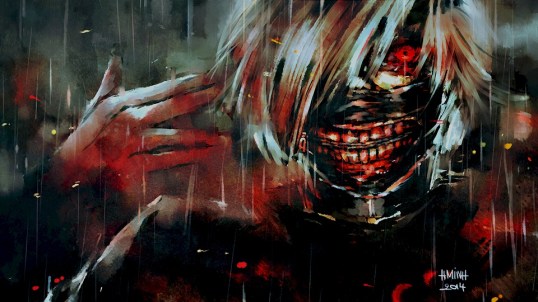
While horror anime is not quite widespread as other genres they do exist and one of the more recent ones is the horror/dark fantasy series which came out this past July.

Tokyo Ghoul is the anime from whence our latest “AMV of the Day” was born from. I’ve only seen highlight clips of the series, but from what I’ve seen it’s definitely right up my alley. It’s not so violent and gory that it goes over into “guro” realm. It looks like it’s series dealing with ghouls hiding within the human population and having their own clans and factions gives the series a nice urban gothic feel to it in addition to the horror.

This particular AMV uses the appropriate song by Starset called “Carnivore” which is one thing the ghouls in this series tend to be as eaters.

Guess what they like for breakfast, lunch and dinner? I heard it tastes like pork. Some very long pork.

Anime: Tokyo Ghoul

Song: “Carnivore” by Starset

Creator: Anime Bros

Past AMVs of the Day

Horror Scenes I Love: Daybreakers


DaybreakersBloodOrgy

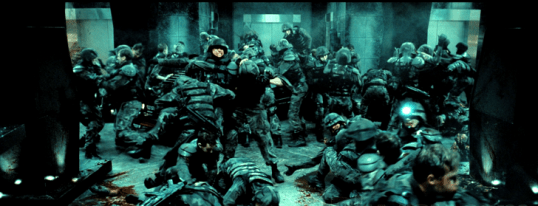
[spoilers!!] [spoilers!!] [spoilers!!]

I know some people like and even love the vampire film Daybreakers when it arrived in theaters in early 2010. I’m not one of those who love Daybreakers as my review can attest, but I did like some of the ideas brought up by The Spierig Brothers who wrote and directed the film. One could say that I begrudgingly like the film despite its many flaws.

One of the things I did like about this film was how unabashed it was in keeping the whole affair a rated-R affair. Unlike most vampire films which have come out the last decade or so this one doesn’t shy from the grue that others have. Daybreakers was definitely not of the Twilight branch of the vampiric subgenre.

My favorite scene in the film happens pretty much around the end of it. It saved the film from becoming a total dull, boring affair into one worthy of being talked about if just for this one scene. One could come into the film just at this scene alone and forget that they’re watching a vampire film but a zombie one instead. The gore was just so over-the-top and it’s staging so well-done that I couldn’t stop from having a silly grin of enjoyment from escaping.

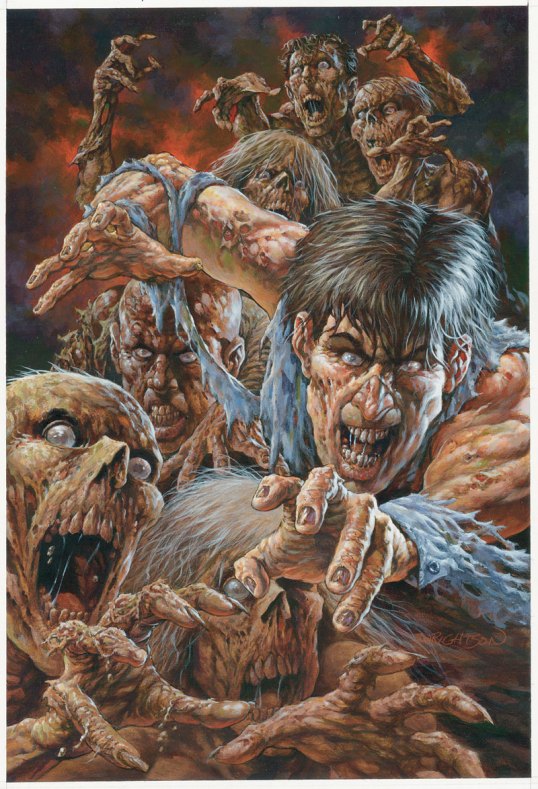
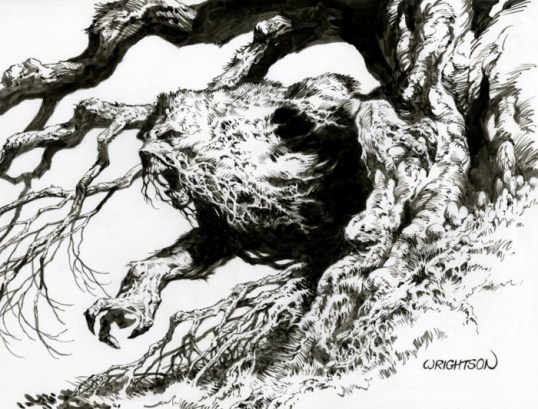
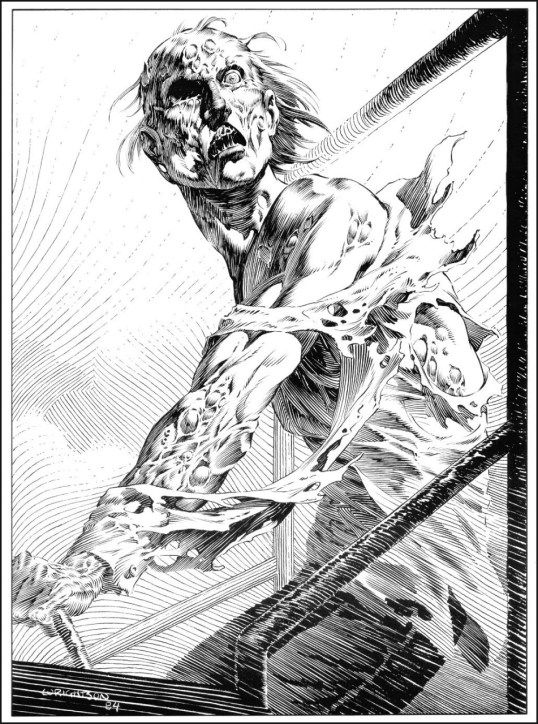
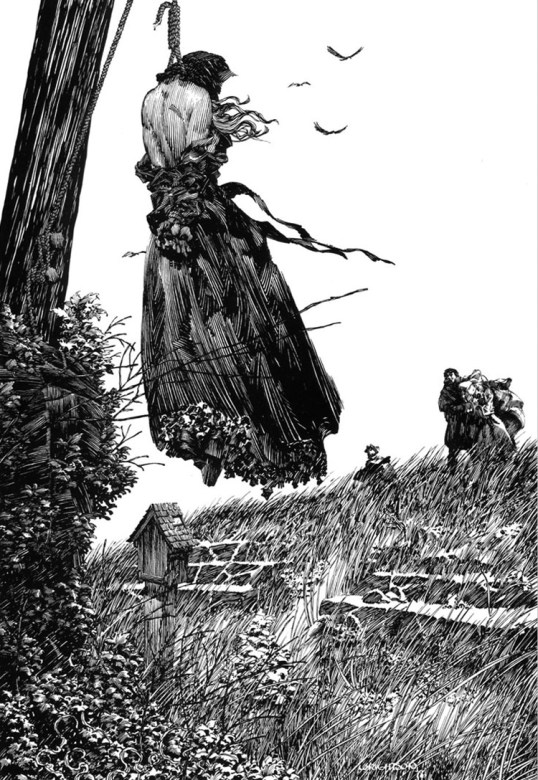
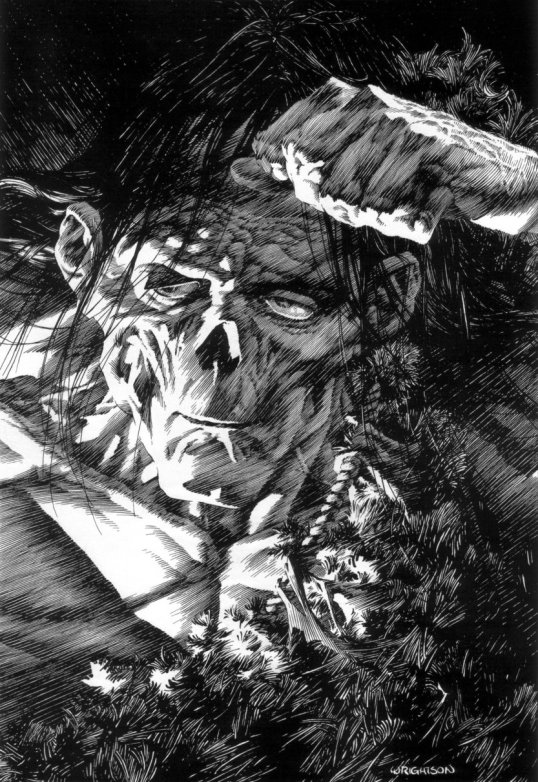
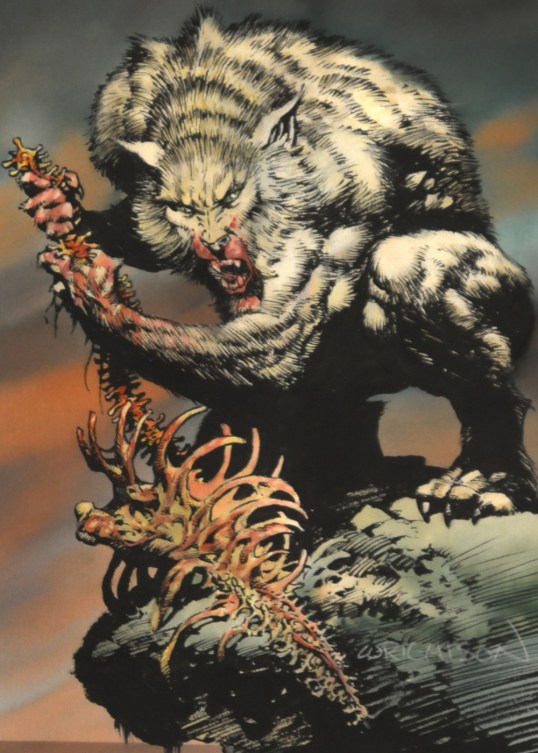
Horror Artist Profile: Bernie Wrightson (1948- )


BerniWrightson01

Horror fans know who Bernie Wrightson is even if not by name, but by the work he has done in the horror field.

Born in October 27, 1948, Bernie Wrightson has made his name creating some of the more recognizable horror illustrations since the 1970’s. Wrightson would have his break out work in conjunction with Len Wein in co-creating the character Swamp Thing for DC Comics in 1971. In time, Wrightson would move on from DC Comics and the character he created for Warren Publishing that were well-known for producing black-and-white horror titles.

Throughout the years, Wrightson would end up producing some classic images for horror stories ranging from Mary Shelley’s novel Frankenstein right up to several Stephen King novels (The Stand, Cycle of the Werewolf and Wolves of the Calla).

Here’s to hoping that Wrightson has many more years of horror work ready to fire up the imaginations of horror fans everywhere.

BernieWrightson02

BernieWrightson03

BernieWrightson05

BernieWrightson06

BernieWrightson07

BernieWrightson08

BernieWrightson09

BernieWrightson04