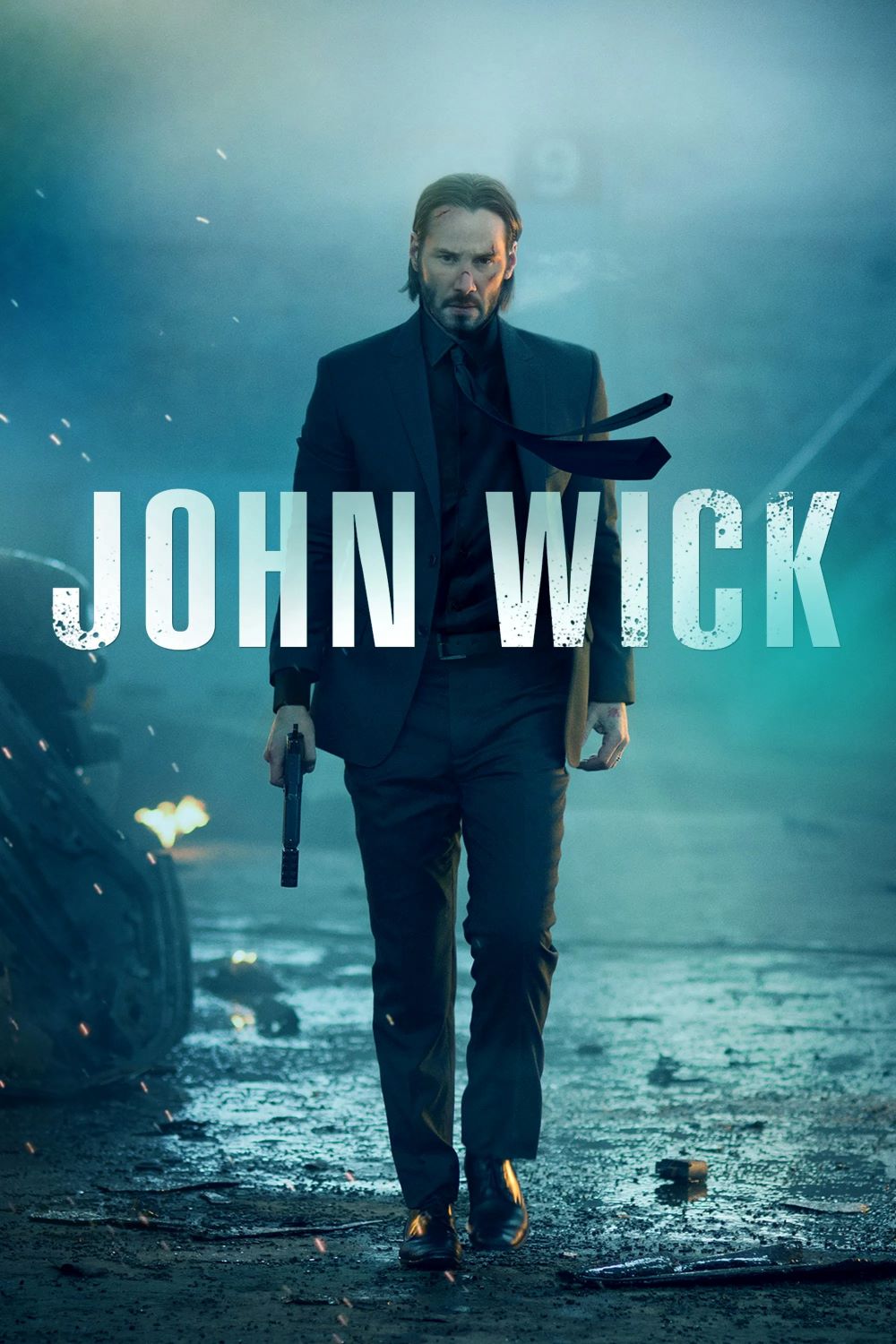
Review: John Wick (dir. by Chad Stahelski)


“John is a man of focus, commitment, sheer will… something you know very little about. I once saw him kill three men in a bar… with a pencil, with a fucking pencil.” — Viggo Tarasov

John Wick kicks off with a simple, gut-punching premise that hooks you right away. Keanu Reeves plays the titular character, a retired hitman trying to leave his bloody past behind after the death of his wife. She leaves him a beagle puppy as a final gift, symbolizing a chance at normalcy, but some punk Russian mobsters steal his prized Mustang and kill the dog, setting off a revenge rampage. It’s a revenge story done right—straightforward, no frills, and fueled by raw emotion rather than convoluted twists. Directed by Chad Stahelski and David Leitch, who share a stunt background, the film feels like a love letter to classic action flicks from the ’80s and ’90s, but with a modern polish.

What sets John Wick apart from the glut of forgettable action movies is its relentless focus on craftsmanship. The action sequences are balletic and brutal, blending gun-fu—a mix of precise gunplay and martial arts—with practical stunts that avoid overreliance on CGI. This gun-fu draws directly from the Center Axis Relock (CAR) system, a real-world self-defense close-combat technique where the pistol is held close to the chest at a forward cant for better retention and control in tight quarters. Reeves, at 50 when the film was made, moves like a man possessed, his long-limbed frame perfect for the choreography. Watch the nightclub shootout: bodies drop in waves as Wick reloads with one hand while pistol-whipping foes with the other, all grounded in CAR’s principles that have since become a staple in action films. It’s exhilarating, almost musical in rhythm, thanks to a thumping soundtrack featuring artists like Aloe Blacc and Kaiser Chiefs that amps up the tension without overpowering the visuals.

Keanu Reeves carries the film on his stoic shoulders, and it’s one of his best turns since The Matrix. John Wick isn’t a chatterbox; he’s all simmering grief and quiet menace, his thousand-yard stare conveying depths of loss that words don’t touch. That opening montage of him and his wife—tender beach walks, her terminal illness—hits hard because it’s so understated. Reeves sells the puppy’s death not with histrionics but a single, shattered sob, making his vengeance feel earned. Supporting players elevate the mix too: Michael Nyqvist chews scenery as the mob boss Viggo, Willem Dafoe shines as a sympathetic mentor figure, and Ian McShane adds suave authority as the Continental hotel’s manager. Alfie Allen, pre-Game of Thrones fame, nails the cocky antagonist role without caricature.

The world-building is another standout, introduced efficiently without info-dumps. The Continental Hotel emerges as a neutral ground for assassins, complete with gold coins as currency and strict no-business-on-premises rules—hints at a larger universe that sequels would expand. It’s a clever nod to pulp noir and spy thrillers, giving the violence a code of honor. Stahelski’s visual style, with its neon-drenched nights and stark lighting, evokes The Raid while carving its own path. The Mustang chase is a highlight: tires screech, bullets ping off chrome, and Wick dispatches goons from the driver’s seat with cold efficiency. Production design shines in details like the mobsters’ gaudy mansions contrasting Wick’s minimalist home, underscoring his outsider status.

John Wick isn’t flawless. The plot is paper-thin, essentially “bad guys kill dog, hero slaughters 100 dudes,” with little character depth beyond Wick. Supporting characters get one-note arcs; Viggo monologues about Wick’s legend, but we learn more through reputation than growth. Some viewers find the 101-minute runtime padded by repetitive shootouts—after the first dozen kills, the thrill dips into redundancy for all but the most action-addicted. Women are scarce and sidelined: Wick’s wife appears mostly in flashbacks, and the few female roles are functional at best. It’s a dude-bro fantasy at heart, prioritizing spectacle over substance, which alienates if you’re craving nuance or social commentary.

Pacing stumbles early too. The first act drags with somber setup, mourning the wife and puppy, before exploding into chaos. Once it hits gear, though, it rarely brakes, building to a cathartic finale at Viggo’s compound. Some criticize the violence as gratuitous—headshots galore, blood sprays like a Tarantino wet dream—but it’s stylized, not sadistic, with clear rules (headshots for efficiency) that heighten tension. Compared to contemporaries like Taken, which leaned on gruff one-liners, John Wick opts for silence, letting deeds speak. It’s refreshing, but purists might miss emotional beats amid the bullet casings.

Stylistically, the film borrows heavily yet innovates. Influences from Hong Kong cinema (Hard Boiled, John Woo) shine in the balletic-style of action, while the “gun fu” term coined by critics fits perfectly, elevated by that CAR-inspired hold that’s now echoed in blockbusters everywhere. Cinematographer Jonathan Sela’s work—wide lenses for spatial awareness in fights—makes every room a battlefield, unlike shaky-cam hacks. The music for the film was courtesy of Tyler Bates and Joel L. Richard, pulsing with industrial beats that sync to gunfire like a heartbeat. Budgeted at $20-30 million, it grossed over $86 million worldwide, proving audiences craved this stripped-down revenge tale amid superhero fatigue.

Reeves’ commitment deserves props; he trained rigorously in judo, jiu-jitsu, and firearms, selling every beatdown with authentic CAR posture. Stahelski, his longtime stunt double, directs with intimacy, framing close-quarters brawls to feel visceral. The film’s legacy? It revived Reeves’ career, birthed a franchise (now four films deep, plus spin-offs), and influenced action design industry-wide—expect “John Wick”-style choreography, complete with Center Axis Relock grips, in everything from Netflix shows to indies. Yet its simplicity invites backlash: online threads buzz with “overhyped” takes, arguing it’s style sans soul. Fair point—it’s not Heat‘s operatic depth—but as popcorn entertainment, it delivers uncut adrenaline.

Culturally, John Wick taps male grief mythology: the Baba Yaga legend (Wick as unstoppable boogeyman) mirrors real loss through mythic fury. No preachiness, just catharsis. Drawbacks persist—predictability (you know Wick wins), thin Russian accents straining credulity, and a sequel-bait ending that feels calculated. Still, it revitalized the genre post-Avengers dominance, proving solo heroes endure. For fans of Die Hard or Léon, it’s essential; others might yawn at the body count.

In a landscape of quippy Marvel flicks, John Wick stands tall for earnestness. It doesn’t pretend to be profound, owning its B-movie roots with A-grade execution. Reeves mourns, fights, repeats—rinse with blood. Flaws and all, it’s a blast: taut, stylish, and unapologetic. If action’s your jam, dive in; just don’t expect Shakespeare.

Weapons used by John Wick throughout the film

  • Heckler & Koch P30L: His signature primary pistol (custom compensator), used throughout—from the home invasion to the Red Circle club.
  • Glock 26: Backup compact pistol, pulled out during the bathhouse shootout when ammo runs low.
  • Coharie Arms CA-415: Short-barreled rifle (HK416 clone) for the church assault and parking lot shootout.
  • Kel-Tec KSG: Bullpup shotgun commandeered from goons after church assault and parking lot shootouts.
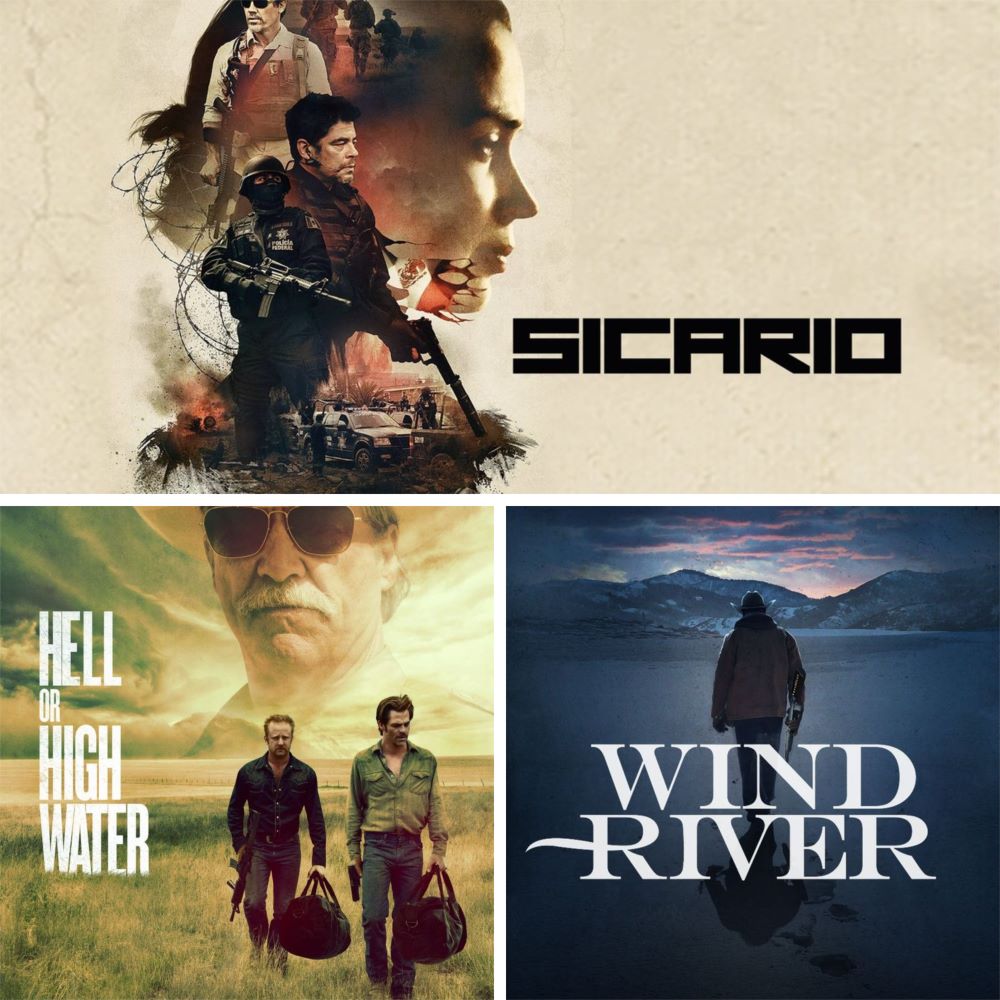
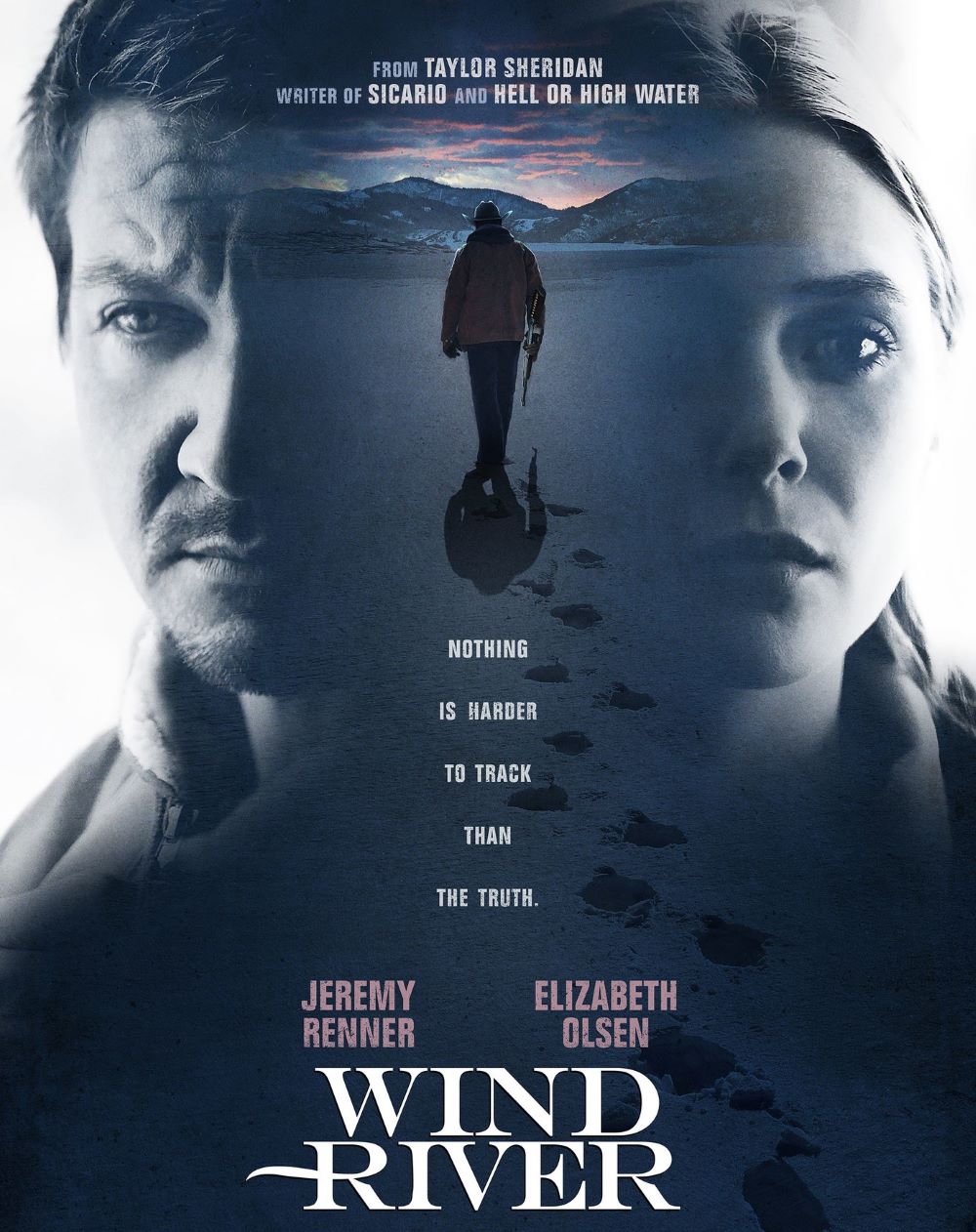
Frontier Fractured: Taylor Sheridan’s Neo-Western Reckoning


“The characters are fiction, but the landscape and the lives the characters are navigating are real.” — Taylor Sheridan

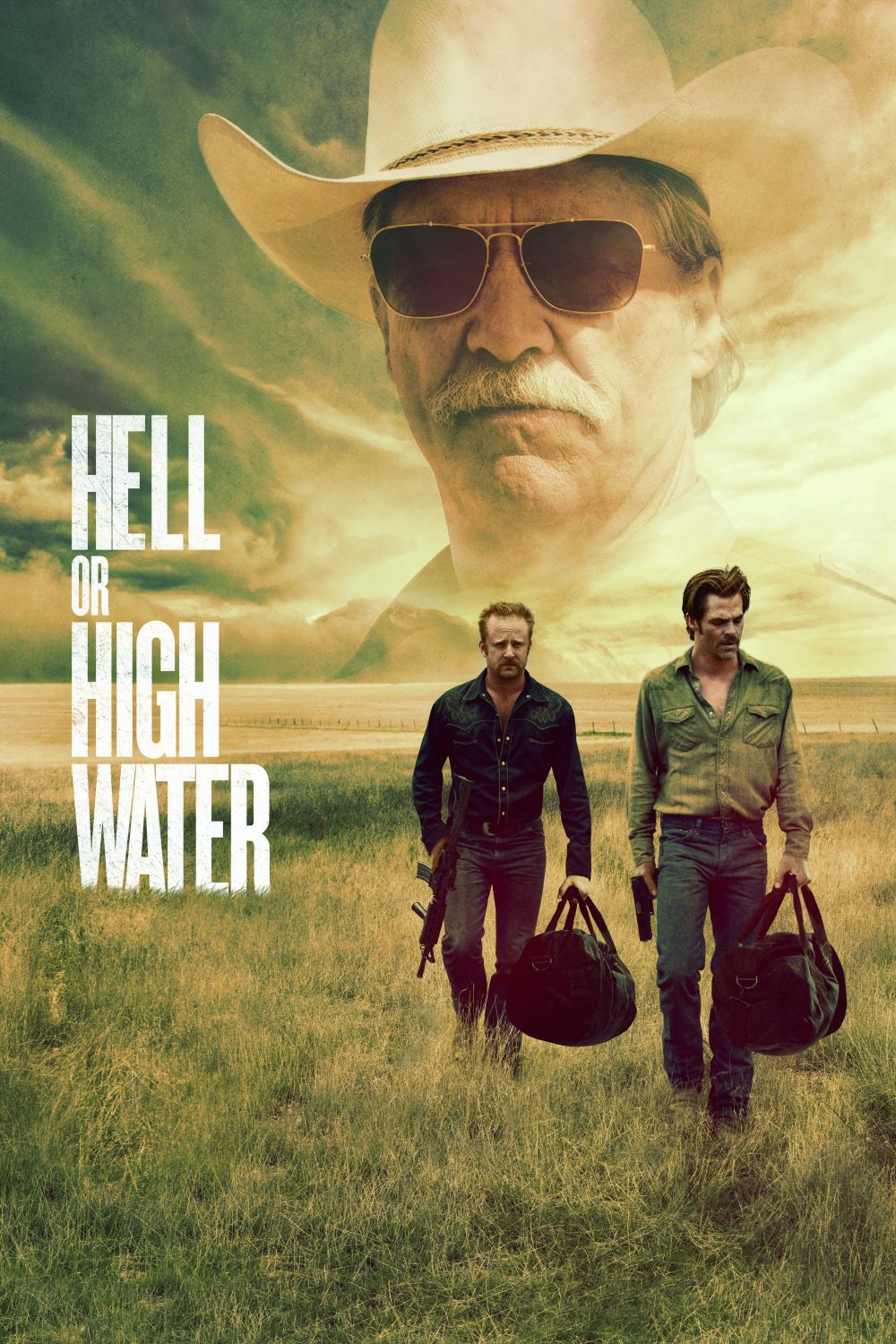
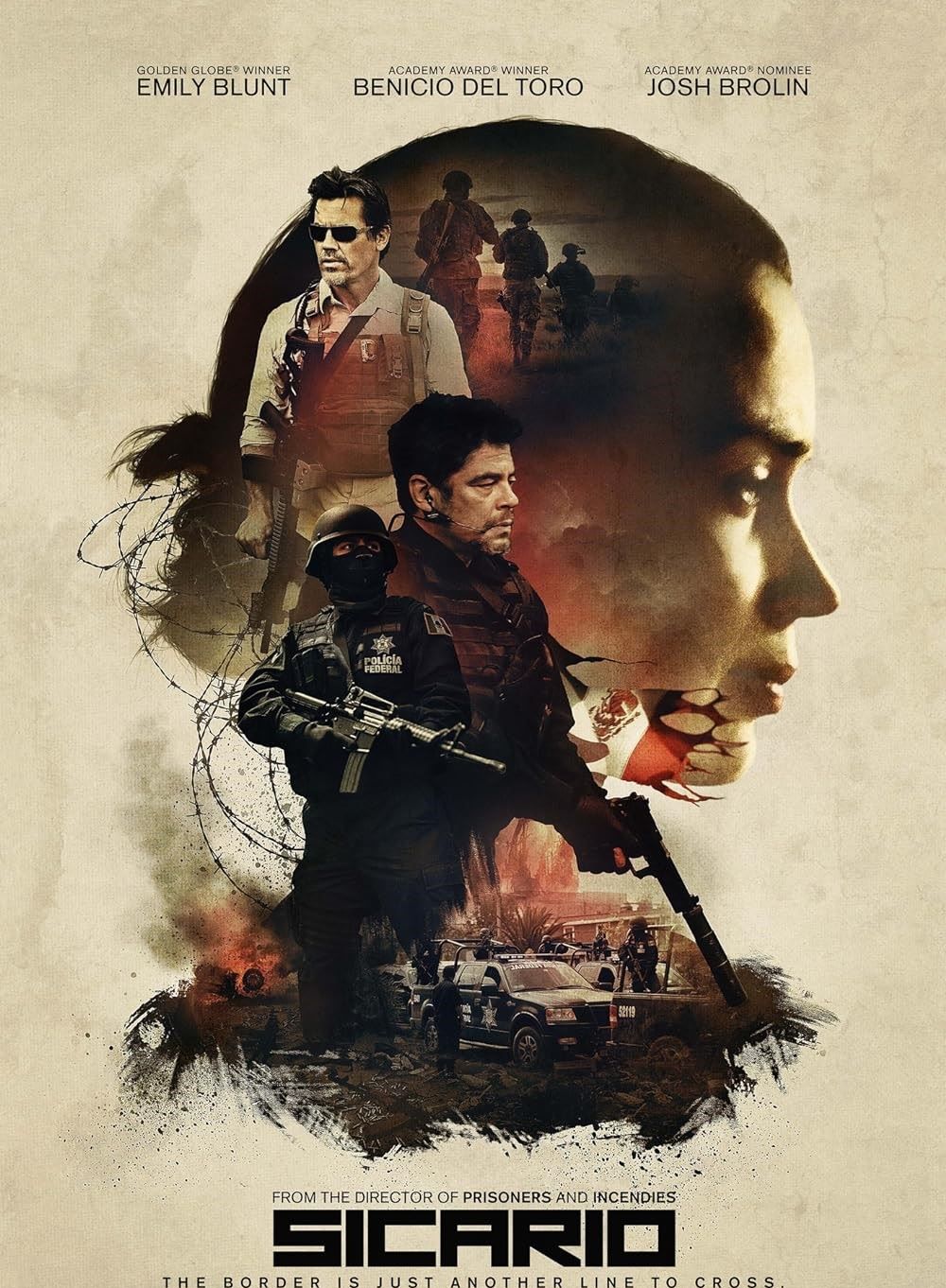
Taylor Sheridan’s American Frontier Trilogy—Sicario (2015), Hell or High Water (2016), and Wind River (2017)—stands as a landmark in modern neo-Western cinema, a tightly crafted exploration of America’s frayed edges penned by the screenwriter who would later dominate television with Yellowstone. These films, while not narratively linked, form a thematic triptych that dissects the moral decay of the contemporary frontier, where law buckles under the weight of systemic injustice, economic despair, and cultural erasure. This retrospective examines Sheridan’s screenplays as a cohesive vision of a nation haunted by its own myths of manifest destiny, blending pulse-pounding tension with unflinching social critique.

Defining the Trilogy’s Core

Sheridan’s “American Frontier” trilogy emerged from his own observations of overlooked American landscapes, as he described in interviews around Wind River‘s release. Sicario, directed by Denis Villeneuve, plunges into the U.S.-Mexico border war on drugs, following idealistic FBI agent Kate Macer (Emily Blunt) as she’s drawn into a shadowy CIA operation led by the enigmatic Matt Graver (Josh Brolin) and the ruthless Alejandro (Benicio del Toro). The film boasts breakneck pacing and claustrophobic tension, transforming a procedural thriller into a meditation on moral compromise, where the line between hunter and hunted dissolves in Juarez’s blood-soaked streets.

Hell or High Water, helmed by David Mackenzie, shifts to West Texas, chronicling brothers Toby (Chris Pine) and Tanner Howard (Ben Foster) as they rob branches of the Texas Midlands Bank—the same institution foreclosing on their mother’s ranch. It delivers a lean, character-driven drama, with an ear for authentic dialogue that captures rural Texan fatalism: lines like “You’re free now” underscore a cycle of poverty where crime becomes an act of reclamation. Ranger Marcus Hamilton (Jeff Bridges), pursuing them, embodies the law’s weary inefficiency.

Wind River, which Sheridan also directed, unfolds on Wyoming’s Wind River Indian Reservation, where U.S. Fish and Wildlife officer Cory Lambert (Jeremy Renner) aids rookie FBI agent Jane Banner (Elizabeth Olsen) in investigating a young Native woman’s death in the snow. It lands as a gut-punch of grief and rage, spotlighting the epidemic of missing and murdered Indigenous women (MMIW), with Cory’s personal loss fueling a vigilante justice that indicts federal neglect.

What unites them? Remote, unforgiving terrains—the border deserts, dusty plains, frozen reservations—mirror the characters’ isolation. Protagonists skirt legality not from villainy but necessity, exposing institutions (CIA, banks, FBI) as complicit oppressors. The “United States legal system” emerges as the trilogy’s true antagonist, wreaking havoc on the marginalized.

Thematic Pillars: Justice Beyond the Badge

At the trilogy’s heart lies a profound distrust of official justice, a motif each film escalates. In Sicario, Kate’s arc is one of disillusionment; she clings to warrants amid Graver’s extralegal raids, only to realize the “war” thrives on endless escalation. Sheridan’s script masterfully builds dread through escalating set-pieces—like the night-vision tunnel assault—while Alejandro’s backstory reveals the human cost of cartel savagery, blurring good and evil. It’s a film where victory feels pyrrhic, the frontier’s violence spilling northward unchecked.

Hell or High Water flips the script to economic predation. The Howards aren’t greedy outlaws but desperate everymen funding their family’s future against predatory lending. Sheridan’s sardonic humor amid despair shines in banter between Marcus and his partner Alberto (Gil Birmingham), laced with casual racism that humanizes their bond. The film’s climax, a bank standoff turned shootout, affirms the brothers’ twisted righteousness, critiquing how banks “won the West” anew through debt. It’s Sheridan’s most optimistic entry, suggesting personal agency can pierce systemic greed.

Wind River delivers the rawest indictment, weaving personal trauma into institutional failure. Cory tracks predators—animal and human—across a landscape where Native lives vanish without trace; statistics cited in the film (96% of reservation rapes unreported) hit like bullets. Its poetic minimalism—from snow-dusted crime scenes to Cory’s haunting promise to a grieving father: “I wish I could take that pain away”—underscores how the reservation embodies America’s forgotten frontier. Here, justice is vengeance, meted quietly in the mountains.

Across the trilogy, Sheridan updates Western archetypes: the principled lawman (Kate, Marcus, Jane) yields to the lone avenger (Alejandro, Toby, Cory). This serves as a modernization of classic Western struggles, swapping cattle barons for cartels and banks.

Stylistic Mastery and Sheridan’s Voice

Sheridan’s prose is economical yet evocative, favoring sparse dialogue that reveals worlds. His authentic regionalism comes through in Texan drawls in Hell or High Water, Arapaho stoicism in Wind River, and border Spanglish in Sicario. Directors amplify this: Villeneuve’s Sicario is visceral, with Roger Deakins’ cinematography turning borders into hellscapes; Mackenzie’s Hell or High Water feels expansive yet intimate, Giles Nuttgens capturing Texas’s soul-crushing vastness; Sheridan’s Wind River is austere, Nick Cave’s score amplifying isolation.

Performances elevate the scripts. Del Toro’s coiled fury in Sicario earned Oscar nods; Bridges’ folksy gravitas anchors Hell or High Water; Renner and Olsen ground Wind River‘s procedural in raw emotion. Yet Sheridan’s writing shines brightest in quiet beats: Kate’s post-raid breakdown, Toby’s motel confession, Cory’s frozen vigil.

The films were critically acclaimed for their sharp writing and thematic depth, earning Sheridan Oscar nominations for Hell or High Water and Wind River, while resonating widely with general audiences through gripping narratives and relatable human struggles that packed theaters and sparked enduring discussions. This neo-Western revival took audiences to unseen locales, from Juarez slums to Wind River snows.

Cultural Impact and Legacy

Released amid the turbulent 2010s—marked by escalating border crises, the lingering financial fallout from the 2008 recession, and rising awareness of the #MMIW epidemic—the trilogy presciently tapped into deep-seated national anxieties, reshaping conversations around justice, identity, and power in America. Sicario arrived as tensions over immigration and the drug war boiled over, humanizing the futility of America’s “war on drugs” just before the 2016 presidential debates on border walls and cartel violence. Its portrayal of shadowy U.S. operations crossing ethical lines sparked debates on real-world CIA tactics and the moral cost of security, influencing discourse in policy circles and popular media alike. The film’s raw depiction of Juarez’s carnage forced viewers to confront overlooked atrocities, bridging Hollywood thrillers with journalistic urgency and priming audiences for later works like Narcos.

Hell or High Water struck a populist chord amid post-recession rage, echoing Occupy Wall Street’s anti-bank fervor and the foreclosure crisis that ravaged rural America. By framing bank robbers as sympathetic everymen fighting predatory lending, Sheridan tapped into widespread resentment toward financial institutions, a sentiment that fueled political movements from Tea Party economics to progressive wealth taxes. The film’s Texas setting amplified its authenticity, resonating in heartland theaters and inspiring think pieces on economic despair as a driver of crime. Its legacy endures in modern “eat the rich” narratives, from The Gentlemen to economic thrillers, while proving indie sensibilities could deliver blockbuster emotional punches.

Wind River ignited a cultural firestorm by centering the MMIW crisis, a long-ignored epidemic where Native women face violence at rates exponentially higher than the national average. The film’s stark statistics and harrowing story propelled #MMIW into mainstream consciousness, directly contributing to legislative momentum like Savanna’s Act (passed in 2020), which improved federal responses to cases on tribal lands. Sheridan consulted with Native communities for accuracy, amplifying Indigenous voices through actors like Gil Birmingham and Julia Jones, though it faced critiques for “white savior” elements. Nonetheless, it opened doors for Native-led stories in films like Reservation Dogs and heightened Hollywood’s focus on underrepresented frontiers.

Collectively, the trilogy’s impact reverberates profoundly. Lionsgate’s 2022 Blu-ray collection formalized its status as a cinematic canon, while Sheridan’s scripts birthed his TV empire—Yellowstone1883Lioness—exporting frontier grit to streaming billions. Yet the films surpass his serialized work in laser-focused purity, influencing a neo-Western renaissance seen in No Country for Old Men echoes, The Power of the Dog, and series like Longmire. In policy realms, Sicario informed border security debates under both Biden and now-President Trump’s 2025 reelection; Hell or High Water prefigured rural economic populism in Trump-era politics; Wind River bolstered tribal advocacy amid ongoing land rights battles.

By 2026, amid Sheridan’s Yellowstone spinoffs dominating Paramount+ and renewed border rhetoric in a second Trump administration, the trilogy feels more vital than ever. It birthed a cinematic language for America’s internal fractures—geographic, economic, racial—challenging viewers to question who truly governs the forgotten edges. Academic panels dissect its archetypes; fan communities on Reddit and Letterboxd binge it as essential viewing. Flaws persist—Sicario 2‘s dilution without Sheridan, Wind River‘s debated optics—but its triumph lies in tension and truth, proving standalone stories can outlast franchises. Sheridan’s evolution from struggling actor to scribe magnate underscores a rare feat: films that entertain viscerally while indicting society, ensuring the frontier’s ghosts haunt us still.

Individual Breakdowns

Sicario: Border Inferno

Villeneuve’s adaptation turns Sheridan’s outrage at Juarez carnage—ignored by U.S. media—into a descent narrative. Kate’s naivety crumbles amid moral voids; Alejandro’s vendetta personalizes cartel horrors. Its operatic violence peaks in the stadium raid, where justice devolves to assassination. At 121 minutes, it’s taut prophecy.

Hell or High Water: Desperate Heist

Sheridan’s personal favorite channels his Texas roots, pitting family against finance. Pine’s everyman resolve contrasts Foster’s volatility; Bridges steals scenes with wry wisdom. The thrilling cat-and-mouse culminates in redemption through sacrifice, a neo-Bonnie and Clyde for foreclosure America. 102 minutes of populist fire.

Wind River: Frozen Requiem

Sheridan’s directorial bow personalizes loss—his script grew from real MMIW stats. Renner’s haunted tracker partners uneasily with Olsen’s fish-out-of-water fed; subplots flesh reservation despair. Its heartbreaking intimacy ends not in triumph but resolve amid endless winter. 107 minutes of unflinching truth.

Why It Endures

Sheridan’s trilogy isn’t mere genre exercise; it’s elegy for eroded American dreams. By bucking plot contrivances for lived-in despair, it forces reckoning with borders, banks, and buried bodies. These thrillers bleed social conscience—unadulterated, unflagging. In a franchise-saturated era, these standalone gems reclaim cinema’s frontier spirit.

Review: Wind River (dir. by Taylor Sheridan)


“Luck don’t live out here.” — Cory Lambert

Wind River is a gripping crime thriller set against the stark, frozen backdrop of Wyoming’s Wind River Indian Reservation, where U.S. Fish and Wildlife tracker Cory Lambert teams up with rookie FBI agent Jane Banner to investigate the brutal death of a young Native American woman named Natalie Hanson. Wind River marks the third film in Taylor Sheridan’s American Frontier trilogy that he wrote—following Sicario and Hell or High Water—and it’s the first where Sheridan steps into the director’s chair himself, bringing his sharp eye for gritty realism to the helm. Clocking in at just under two hours, it delivers a mostly positive experience through strong performances, atmospheric visuals, and a script that builds suspense without unnecessary flash, though it occasionally leans on familiar tropes.

Right from the opening moments, Wind River immerses you in a world of isolation and harsh beauty. Snow-covered plains stretch endlessly under a pale sky, and the crunch of boots on ice sets an immediate tone of vulnerability. Cory, played with quiet intensity by Jeremy Renner, discovers Natalie’s frozen body while tracking a mountain lion that’s been preying on livestock. She’s barefoot, half-naked, and miles from any help—details that hit hard and underscore the film’s core mystery: what happened to her, and why does it feel like no one cares? Renner nails the role of a man haunted by his own past loss—his teenage daughter died under mysterious circumstances a few years back—making Cory a grounded everyman rather than a superheroic cowboy. His subtle grief adds layers to every scene, turning routine investigation beats into something personal and raw.

Enter Elizabeth Olsen as Jane Banner, the FBI agent flown in from Vegas who’s clearly out of her depth in sub-zero temperatures and jurisdictional limbo. Olsen brings a mix of determination and wide-eyed realism to the part, avoiding the cliché of the big-city hotshot who learns frontier wisdom overnight. She’s tough but human—hypothermic after a chase, throwing up from the cold, yet pushing through because Natalie deserves justice. The dynamic between Cory and Jane is one of the film’s highlights: no forced romance, just mutual respect born from necessity. Sheridan smartly lets their partnership evolve organically, with Cory’s local knowledge filling Jane’s gaps in protocol and reservation politics. It’s refreshing to see two leads click without sparks flying, focusing instead on shared purpose amid tragedy.

The script shines in its efficient storytelling. Sheridan wastes no time on exposition dumps; instead, he weaves backstory through quiet conversations and flashbacks that pack emotional punch. We learn about the epidemic of missing Indigenous women—thousands vanish yearly, often ignored by media and law enforcement—via stark statistics flashed on screen and through the eyes of Natalie’s family. Gil Birmingham delivers a heartbreaking performance as her father, Martin, a stoic oil rig worker whose rage simmers beneath a veneer of resignation. His scenes with Cory, especially a late-night talk by a bonfire, cut deep, exploring themes of fatherly failure and systemic neglect without preaching. Birmingham’s restrained power elevates what could have been a stock grieving parent into a standout supporting role.

Visually, Wind River is a stunner, thanks to cinematographer Ben Richardson. Those vast, snowy expanses aren’t just pretty—they mirror the characters’ emotional desolation and amplify the stakes. An early tracking sequence, with Cory following Natalie’s footprints in the snow, builds dread masterfully, the silence broken only by wind and labored breaths. The film shifts tones seamlessly: slow-burn investigation gives way to visceral action in the third act, including a raid on an oil site trailer that’s tense, realistic, and over in a flash—no prolonged shootouts or slow-mo heroics. Sound design plays a big role too; the howling wind and muffled gunshots make every moment feel immediate and unforgiving.

Sheridan’s direction keeps things taut without rushing the build-up. This is a slow-burner that earns its pace, letting tension simmer through everyday details like jurisdictional squabbles with underfunded tribal police or Cory teaching Jane to dress for the cold. Nick Cave and Warren Ellis’s score is another winner—sparse, haunting electronics that evoke loneliness rather than bombast. It underscores key scenes without overpowering them, much like the film itself avoids Hollywood excess.

That said, Wind River has its stumbles. Pacing dips in the middle, with some dialogue-heavy stretches that spell out themes a tad too explicitly—like chats about reservation poverty or ignored crimes. It can feel heavy-handed, pulling you out of the immersion. A few characters, like the bumbling FBI contingent or security guards, border on caricature, though the leads stay nuanced. The violence, while sparse and purposeful, includes a harrowing assault scene that’s tough to watch; it’s crucial to the story but might overwhelm sensitive viewers. And while the film tackles real issues facing Native communities, some critics note it centers white protagonists in a Native story, though Sheridan consulted tribal members and cast authentically.

Still, these are minor gripes in a film that largely succeeds on its own terms, especially as the capstone to Sheridan’s trilogy exploring America’s frayed edges. The ending delivers catharsis without easy answers, leaving you with a chill that lingers. Cory gets a measure of redemption, Jane gains hard-won insight, and the reservation’s harsh realities feel unflinchingly real. It’s the kind of movie that sticks because it respects your intelligence—connecting dots about corruption, indifference, and human cost without hand-holding.

What elevates Wind River above standard thrillers is its humanity. Every character, even antagonists, feels fleshed out rather than villainous stock. The oil workers aren’t cartoon evil; they’re desperate men making brutal choices in a forgotten corner of America. Sheridan, drawing from his own ranching background, captures blue-collar grit authentically—no glamour, just survival. Renner’s Cory hunts for a living, bottles his pain, and bonds with his ex-wife’s new family in tender asides that ground the procedural. Olsen’s Jane evolves from outsider to advocate, her arc subtle but satisfying.

The film’s relevance hasn’t faded since its 2017 release. With ongoing conversations around Missing and Murdered Indigenous Women (MMIW), it spotlights a crisis stats show claims over 5,000 cases annually, many unsolved due to jurisdictional messes. Wind River doesn’t solve it but demands attention, blending genre thrills with advocacy seamlessly.

In a crowded field of crime dramas, Wind River stands out for its chill factor, both literal and figurative. It’s not reinventing the wheel, but Sheridan proves he’s a triple threat: writer, director, voice for the voiceless. Renner and Olsen lead a tight ensemble, and the Wyoming wilderness becomes a character itself. If you dig thoughtful thrillers like Hell or High Water or Sicario, this one’s essential. It’s mostly positive vibes from me—intense, moving, and worth cranking up the thermostat for.

Sheridan’s ear for dialogue keeps things natural—terse exchanges crackle with subtext, like Cory’s line to Martin about enduring loss as a father that hits like a gut punch with simple words carrying profound weight. The film trusts silence too; long shots of characters staring into the void say more than monologues ever could, while technically it’s polished with editing that snaps during action and breathes during reflection. Even smaller roles shine—Kelsey Asbille as Natalie brings fire in limited screen time, and James Jordan plays an irredeemable private security contractor so well. Balanced against its preachiness, Wind River earns its emotional heft, dragging occasionally sure, but the payoff of an explosive finale and quiet closure makes it worthwhile, with power in inevitability and quiet fury as Sheridan avoids exploitative rape-revenge clichés to focus on aftermath and accountability.

Wind River delivers assured direction in Sheridan’s feature debut, memorable performances, and a compelling story that resonates. It refreshes the thriller genre with its blend of tension and substance.

Review: Hell of High Water (dir. by David MacKenzie)


“I’ve been poor my whole life… like a disease passing from generation to generation. But not my boys, not anymore.” == Toby Howard

Hell or High Water is a gritty neo-Western that captures the desperation of rural America with sharp dialogue and tense heists. Directed by David Mackenzie and written by Taylor Sheridan, it stars Chris Pine and Ben Foster as brothers robbing banks across West Texas to save their family ranch. As the second film in Sheridan’s American Frontier Trilogy, it dives deep into economic despair on the fraying edges of modern America, carving out a raw, personal tale of survival amid systemic rot.

The story kicks off with Toby Howard (Pine), a quiet divorced dad scraping by at a casino, teaming up with his wild older brother Tanner (Foster), fresh out of prison and itching for chaos, for a string of quick bank jobs. They’re targeting branches of the Texas Midlands Bank, the same predatory outfit that’s been bleeding their late mother’s ranch dry with reverse mortgages that ballooned after her death. Toby’s motive is pure and heartbreaking: he wants to pay off the debt and hand the property—now sitting on untapped oil reserves—to his estranged kids, breaking a multi-generational cycle of poverty that’s crushed their family under debt, divorce, and dead-end jobs. It’s not about greed; it’s survival, wrapped in a fierce code of brotherly loyalty that feels timeless, echoing the blood oaths of classic Westerns like The Searchers or Unforgiven. Sheridan builds this setup methodically, letting the brothers’ quiet desperation simmer before the first robbery, making their partnership feel inevitable and doomed from the start. You get these early glimpses of their bond—Toby’s measured calm clashing with Tanner’s explosive energy—over shared meals or late-night drives, hinting at the fractures that prison and hardship have carved into their lives.

What stands out right away is how the film paints West Texas as its own brutal character—dusty highways stretching into infinity, faded diners serving coffee and Whataburger breakfast tacos, ghost towns where the only new construction is more banks or payday loan shacks preying on the broke. Giles Nuttgens’ cinematography turns the landscape into a vast, unforgiving canvas, with wide shots of endless plains, shimmering heat haze, and abandoned oil pumps that mirror the characters’ isolation and the weight of their choices. The visuals aren’t flashy; they’re oppressive, framing lone figures against horizons that swallow them whole, emphasizing how small these men feel against the indifferent sprawl. Nick Cave and Warren Ellis’ score adds a haunting twang—sparse piano notes, eerie strings, and subtle guitar plucks that build tension without ever overpowering the dialogue or action. It’s masterfully subtle, letting the silence between robberies speak volumes about the boredom, hopelessness, and fleeting camaraderie of these small, overlooked lives in flyover country. Even the sound design nails it: the rumble of getaway trucks, the click of slot machines in casinos, the distant wail of sirens—all weaving a sonic tapestry of gritty realism.

Chris Pine shines as Toby, completely shedding his action-hero polish for a layered everyman performance full of bottled-up resolve and quiet pain. You see the weight of his failures—a loveless marriage shattered, kids he barely knows living hours away—in every furrowed glance, every deliberate pause before he pulls a mask down. He’s the planner, the reluctant criminal whose moral compass wavers just enough to justify the heists in his mind, but you sense the toll it’s taking, like a man grinding his teeth through every moral compromise. Ben Foster, though, steals every scene he’s in as Tanner, the hothead ex-con with a wolfish grin that barely masks his pent-up rage and damage. His unhinged energy explodes during the heists—like firing warning shots at terrified tellers or flipping off pursuing cops mid-chase—but it’s always undercut by real pathos; years in prison have broken something fundamental in him, turning brotherly love into a volatile lifeline. Their dynamic is the beating heart of the film—casual banter over stolen cars, casino poker games, or roadside Whataburger runs feels achingly genuine, a brief respite from the doom that’s closing in. Moments like Tanner teasing Toby about his ex-wife or the brothers sharing a rare laugh humanize them, making their inevitable collision with fate hit that much harder.

Then there’s the pursuit side of the equation: Texas Rangers Marcus Hamilton (Jeff Bridges) and his partner Alberto Parker (Gil Birmingham), who provide the perfect counterpoint to the brothers’ frenzy. Bridges chews the scenery with gleeful abandon as the grizzled vet nearing retirement, obsessed with cracking one last big case before hanging it up. His folksy drawl delivers casual racist jabs at his Native American partner—not out of outright malice, but as a form of twisted, old-school affection that reveals Marcus’s own deep-seated insecurities about aging and obsolescence. It’s uncomfortable, authentic, and played with such charm that it lands as character revelation rather than cheap shock. Birmingham matches him beat for beat with deadpan comebacks that land like quiet thunder, turning their stakeouts into a buddy-cop routine laced with sharp cultural commentary. Chats about diner waitresses’ curves, Comanche history, or the ethics of bank robbery add unexpected levity and depth, transforming the cat-and-mouse chase into something richer, almost philosophical, amid the choking West Texas dust. Bridges’ Marcus isn’t just hunting criminals; he’s confronting his own mortality, piecing together the brothers’ pattern like a puzzle that might define his legacy.

Taylor Sheridan’s script nails modern American malaise without ever slipping into preachiness or melodrama. Poverty isn’t some abstract talking point; it’s visceral—Toby’s trailer-park existence with its peeling paint and flickering lights, the single mom’s quiet despair over her mortgage payments, the rusted oil rigs promising riches that never trickle down to anyone local. The banks emerge as the true villains, plastering billboards with false salvation (“Texas Midlands: Your Friend in Need”) while gobbling up ranches through fine-print loopholes and aggressive collections. Sheridan weaves in these details organically—no info-dumps, just overheard conversations at diners or glimpses of foreclosure signs dotting the highway—that build a world where desperation breeds crime. Violence erupts organically from this pressure cooker—robbers improvise with stolen cars and sawn-off shotguns, rangers swap hunches over lukewarm diner coffee—not in overblown Hollywood set pieces, but in raw, consequential bursts that leave real scars. A botched heist introduces innocent blood on their hands, forcing you to grapple with whether Toby’s noble ends can ever justify Tanner’s reckless means, a moral tightrope Sheridan walks with unflinching precision. It’s this nuance that elevates the film: no one’s purely good or evil, just products of their environment, clawing for a scrap of dignity.

The film’s slow burn pays off in spades. Early jobs are clinical and methodical: masks on, small bills only from the tellers’ drawers, in-and-out in under two minutes to avoid dye packs or alarms, always hitting small branches mid-morning when staff is light. Tension simmers in the mundane details—laundering dirty cash at Native casinos amid blinking lights and cigarette smoke, dodging security cams with cheap disguises, or holing up in cheap motels with peeling wallpaper—building inexorably to a final showdown that’s as brutal as it is poetic. No heroes ride off into the sunset unscathed; justice twists unpredictably like the West Texas wind, leaving you questioning who’s really won in this rigged game. It’s balanced too—no glorifying crime without consequences. Toby’s noble intent constantly clashes with Tanner’s powder-keg recklessness, while Marcus’s dogged pursuit peels back layers of his own regrets about a life spent chasing ghosts. Everyone’s deeply flawed, chasing some form of redemption in a system that’s stacked against the little guy from the jump, and Sheridan lets those contradictions breathe without forcing resolutions.

Pacing does drag a tad in the middle, with those ranger stakeouts testing patience at times, but it masterfully mirrors the tedious grind of real low-level crime—the waiting, the watching, the endless coffee refills—making the climaxes land with twice the force. Character depth is rock-solid across the board, though side players like the waitress (Katy Mixon) or the casino manager get a bit short shrift in the script’s tight focus. Still, the core quartet carries the weight effortlessly, with Bridges delivering a masterclass in weathered charm—part crusty mentor, part comic relief, all heart. Even smaller beats, like a teller’s trembling hands or a deputy’s split-second choice, add texture without stealing focus.

Hell or High Water revives the Western genre for the 21st century—less six-guns and saloons, more economic gunslinging and ATM skimmers. At its core, it’s about family ties that bind even as they strangle, personal failures that haunt like ghosts on the plains, and faceless corporations devouring the heartland one foreclosure at a time. Toby’s final call to his ex-wife, hinting at a freer future for his boys on the now-clear-titled ranch, lands with bittersweet punch, his voice cracking just enough to sell the lie he tells himself. Marcus, surveying the bloodied aftermath from a ridge, mutters about Comanches losing their land centuries ago—a stark reminder that history’s cycles of loss and revenge remain unbroken, no matter who holds the deed. No tidy Hollywood bows, just hard-earned truth staring you down from the screen.

In a landscape clogged with summer blockbusters, this indie gem—backed by bold financiers—proves that small-scale stories pack the biggest emotional wallop. Watch it for the immersive vibes and regional flavor, from the twangy accents to the sun-bleached pickups; stay for the soul-stirring performances and themes that linger long after the credits. If you dug the Coens’ No Country for Old Men, this slots right in—tense as a taut wire, thoughtful without pontificating, unflinching in its gaze at America’s underbelly. Hell yeah, it’s absolutely worth your time.

Review: Sicario (dir. by Denis Villeneuve)


“You should move to a small town where the rule of law still exists. You will not survive here. You are not a wolf. And this is the land of wolves now.” — Alejandro

Sicario is one of those thrillers that doesn’t just try to get your pulse up; it wants to leave you sitting there afterward, uncomfortable and a little hollowed out. Set in the murky world of the U.S.–Mexico drug war, it follows an idealistic FBI agent pulled into a “by any means necessary” operation and slowly realizing she’s basically a pawn in a much bigger, much uglier game. It’s not a movie about slick heroes taking down bad guys so much as a slow, grim spiral into the realization that the system is rigged on every level, and that’s where the film is both at its most impressive and its most uncompromising. Overall, it leans heavily positive as a piece of craft—beautifully shot, superbly acted, tightly directed—and its refusal to blink at where its story logically leads is a big part of what gives it power.

The basic setup is simple enough: Kate Macer, played by Emily Blunt, is an FBI agent used to doing things by the book, raiding cartel safe houses in Arizona with her partner Reggie. After a grisly opening operation that turns up corpses hidden in the walls and a deadly booby trap, she’s recruited into a joint task force helmed by Josh Brolin’s Matt Graver, a flip‑flop‑wearing CIA type who treats international borders and legal constraints as suggestions. The team’s official mission is to go after a cartel lieutenant, Manuel Díaz, but very quickly Kate realizes she’s only being told a fraction of what’s really going on. The more she pushes for answers, the more obvious it becomes that Matt and his mysterious associate Alejandro (Benicio Del Toro) are running their own agenda and using her badge and presence as cover.

From the start, Denis Villeneuve frames this story as a descent, and he does it by locking us into Kate’s perspective for most of the film. We’re as confused and kept in the dark as she is: we don’t fully know why the team is crossing into Juárez, why everyone is so tense at the border, or what the deeper objective is besides “disrupt the cartel.” That choice pays off in a huge way during the film’s standout sequences, whether it’s the convoy inching through traffic surrounded by armed federales or the nighttime tunnel infiltration lit by thermal and night‑vision photography. Those scenes aren’t just “cool action beats”; they’re engineered to make you feel boxed in and outmatched, like violence could erupt at any second and no one really has control. Even when nothing is technically happening, you can feel the nerves jangling under the surface.

One of the most striking things about Sicario is how it weaponizes space. The way the film uses its wide, open desert vistas isn’t just pretty scenery—it adds this creeping, suffocating dread to everything, as if the characters are tiny figures swallowed up by forces they can’t hope to understand or control. Those long shots of trucks threading their way across the landscape, or helicopters gliding over seemingly endless scrub, make the world feel vast, ancient, and totally indifferent to whoever’s spilling blood on it today. In those moments, the movie almost channels a kind of Lovecraftian horror, the same cosmic, indifferent menace that Cormac McCarthy managed to weave through his Westerns, where the land itself feels old, hostile, and utterly unmoved by human morality or suffering. It’s not supernatural, but that sense of something bigger, colder, and permanent presses down on every decision these characters make.

Roger Deakins’ cinematography is a huge part of why that dread lands so well. The desert is captured in these wide, ominous skyline shots with tiny vehicles creeping along the horizon, giving Sicario a sense of menace that feels baked into the environment. Even the daylight scenes feel threatening, all washed‑out heat and harsh sun flattening everything into a kind of moral no‑man’s‑land. Then the movie flips into night, and suddenly you’re plunged into infrared and silhouettes, which fits perfectly with the story’s obsession with secrecy and invisible lines being crossed. This is one of those films where you could watch with the sound off and still feel the tension just from how the images are composed, but the use of space and light also nudges the movie into that McCarthy‑adjacent territory where the West is less a backdrop and more a silent, malevolent presence.

The performances match that level of craft. Emily Blunt plays Kate as tough and competent, but not in a superhero way—she’s brave, but she’s also human, constantly trying to reconcile what she’s seeing with what she believes law enforcement is supposed to be. You can see the frustration mounting as she keeps demanding clarity and hitting a wall of smirks, deflections, and “you’ll understand later.” Benicio Del Toro, meanwhile, walks off with the film as Alejandro, this quiet, haunted figure who initially seems like just another operative but reveals layers of trauma and ruthlessness as the story goes on. The script is smart about keeping his backstory mostly hinted at until late in the film, which makes it all the more chilling when you finally see what he’s really there to do. Josh Brolin is the third pillar, playing Matt as casually flippant on the surface but utterly cold about collateral damage, the kind of guy who laughs through briefings because he already knows the moral lines are going to be erased.

On a thematic level, Sicario is very much about complicity and the idea that in this particular “war,” there are no clean hands. Kate comes in thinking she’s going to help nail cartel leadership through some kind of legal, targeted operation; what she slowly figures out is that the task force is really trying to destabilize one cartel to empower another, consolidating power into a more “manageable” single organization. That logic—“create one devil we can deal with instead of many we can’t”—is chilling, and the movie doesn’t really offer a comforting counterargument. Instead of pulling back or softening that stance, it commits to showing what that philosophy looks like in practice, all the way to the bitter end. By the time Alejandro reaches his personal endgame and we see what “justice” looks like in this world, any illusions about moral clarity are gone, and the film refuses to apologize for following that line through.

Where some films might hedge their bets or try to inject a last‑minute note of optimism, Sicario is deliberately straight‑backed about where its story logically leads. The CIA needs Kate’s FBI status to legitimize their operation on U.S. soil, but they don’t actually want her input; she’s there to sign off and be lied to, not to shape policy. Every time she pushes back—like when she tries to build a traditional case after the task force raids a cartel‑connected bank—she’s shut down because “that’s not what this mission is.” Even the brief subplot with the corrupt local cop Silvio is there to underline how the drug war trickles down: this isn’t just cartel bosses and shadowy agents, it’s working‑class people pulling double duty as mules because they’re desperate, and they end up as expendable as anyone else. Rather than treating that as background noise, the movie leans into the bleak implications and lets them sit with you.

The same goes for Kate’s arc. Some viewers see the film as sidelining its female lead in the third act, shifting the narrative fully over to Alejandro just when things are coming to a head. Structurally, that is what happens: the viewpoint tilts from Kate’s confused horror to Alejandro’s mission, and she becomes more of a witness than an active participant. But that shift feels of a piece with the movie’s overall approach—she has been outmaneuvered and used from the start, and Sicario isn’t interested in pretending otherwise just to deliver a more empowering or conventionally satisfying ending. There’s something bracing about the way the film sticks to its guns here; it says, “this is the world we’ve shown you for two hours, and this is how someone like Kate gets treated in it,” and then follows through.

All of this could have tipped into empty cynicism if the film didn’t feel so precise and purposeful. Jóhann Jóhannsson’s score, all pounding, low‑end rumble and ominous strings, practically turns the highway scenes into horror set‑pieces; it feels like the sound of something massive grinding forward that you can’t stop. Villeneuve keeps the pacing deliberate but never sluggish, using long stretches of quiet to make the explosions of violence feel random and brutal instead of exciting. Even small scenes, like Kate’s attempted hookup with a local cop who turns out to be on the cartel payroll, are staged to underline how deeply compromised everything is. There’s no safe space, no “off the clock” moment where the larger conflict doesn’t intrude, and the movie doesn’t pretend there is just to make you feel better walking out.

If you go into Sicario looking for a clean, cathartic crime thriller where the good guys outsmart the bad guys, you’ll probably come away irritated or even angry. The movie’s whole point is that those categories don’t really apply in this corner of the world, and it’s committed enough to that idea that it never gives you an easy out. But if you’re up for something more sobering—an incredibly well‑crafted, morally grim look at the drug war with standout work from Blunt, Del Toro, Brolin, Deakins, and Villeneuve—it’s a pretty exceptional ride. Its worldview is harsh, but it’s also coherent and honestly pursued, and that level of conviction is a big part of why the film lingers. It may not be the kind of movie you “enjoy” in a traditional sense, but it’s one that sticks with you, and in this genre, that counts for a lot.

Review: One Piece (Season 1)


“Being a pirate is not about raiding villages or perfect plans; it’s about adventure and freedom.” — Monkey D. Luffy

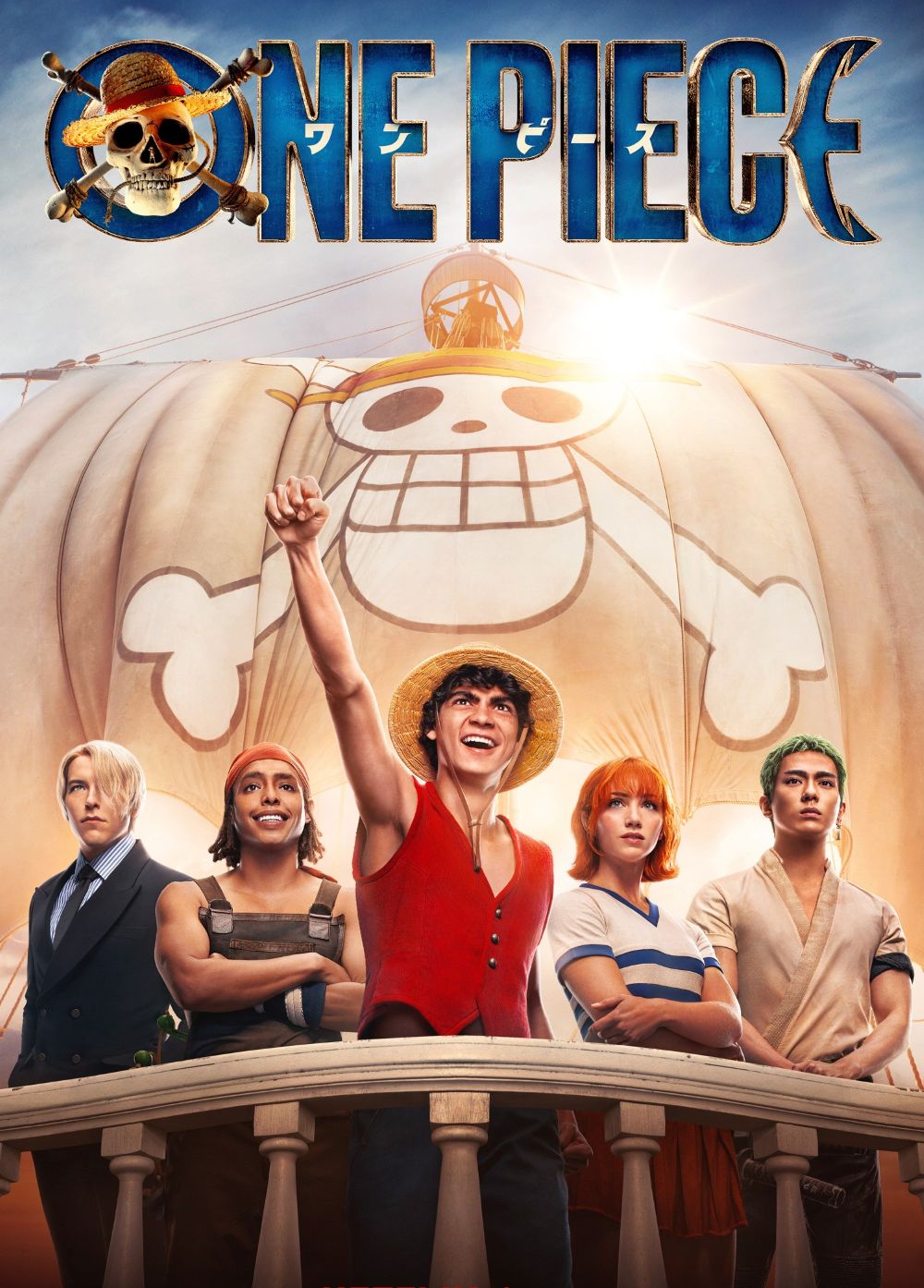
Netflix’s first season of the live-action One Piece is one of those rare anime adaptations that’s both messy and genuinely charming, often in the same scene. It doesn’t completely escape the usual problems that come with translating wild, cartoon logic into real people and real sets, but it gets enough right—especially the cast dynamics and worldbuilding—that it feels more like a real show than a cosplay experiment.

The basics: this first season covers the East Blue saga, following Monkey D. Luffy as he puts together the early Straw Hat crew and heads off toward the Grand Line. You get the big beats fans expect: Romance Dawn, Zoro’s introduction, Orange Town and Buggy, Syrup Village with Usopp and Kaya, Baratie with Sanji, and Arlong Park with Nami’s backstory as the emotional anchor. It’s condensed into eight hour-ish episodes, so you’re not getting a one-to-one remake of either the One Piece manga or the anime; this is very much a “greatest hits” version of that early stretch, with a ton of trimming, merging, and reordering to make it work as a bingeable live-action series.

Probably the easiest part to recommend is the core cast and their chemistry, which does a lot of heavy lifting. Iñaki Godoy’s Luffy is unapologetically goofy, earnest, and loud in a way that could’ve gone horribly wrong in live action, but he leans into the character’s optimism so hard that it mostly works. He feels like someone who really does believe he’ll be King of the Pirates and doesn’t see any reason to question it, and that unshakable confidence becomes the emotional center of the crew. Godoy also nails Luffy’s mix of childlike wonder and sudden steel; he can flip from grinning over a new ship to staring down a villain in a way that sells Luffy as more than just a rubbery himbo. His turn as Luffy ends up being the highlight performance of the season, because if he doesn’t work, nothing else does—and he absolutely carries the show’s heart on his sleeve.

Mackenyu’s Zoro is basically the polar opposite energy, which is why their dynamic works so well. He plays Zoro with a dry, deadpan coolness that never tips completely into parody, even when he’s doing something as inherently ridiculous as fighting with three swords. His line delivery is often clipped and understated, and that restraint gives him room to land some of the show’s funnier reactions just by raising an eyebrow or sighing at Luffy’s nonsense. Importantly, Mackenyu makes Zoro feel like someone who’s constantly sizing up the room and quietly choosing when to step in, which fits the character’s “honor-bound mercenary slowly becoming a real crewmate” vibe.

Emily Rudd’s Nami brings a different energy altogether, mixing competence, guardedness, and flashes of vulnerability in a way that really pays off once the Arlong Park material kicks in. Early on, she plays Nami with a kind of wary charm—she’s clearly the most practical person on the ship, always thinking about maps, money, and survival, and Rudd lets that edge peek through even when Nami is going along with Luffy’s madness. When the show finally digs into her backstory, she shifts gears into something rawer and more emotional without it feeling out of character, and her scenes in the latter part of the season give the story a genuine emotional spine. Alongside Godoy, Rudd’s performance is another standout, since the season’s biggest emotional payoff basically hinges on whether you buy Nami’s pain and eventual trust in the crew.

Jacob Romero as Usopp leans into the character’s role as the lovable coward and storyteller, but he doesn’t make him a total joke. His performance captures that mix of bluster and insecurity—he’s a guy who talks a big game, clearly doesn’t always believe himself, and still steps up when it matters. Romero’s physicality and timing help sell Usopp’s more exaggerated reactions, but he also gives the quieter moments with Kaya and the Going Merry a sincerity that keeps the character from being just comic relief. You can see why this crew keeps him around, even when he’s clearly terrified half the time.

Taz Skylar’s Sanji doesn’t show up until later in the season, but he makes a strong impression once he does. Skylar leans into Sanji’s suave, flirtatious side without making him completely insufferable, and he brings a surprising amount of warmth to the character’s loyalty toward Zeff and the Baratie. His fight scenes, built around kicks and flashy movement, give the action a slightly different flavor whenever he’s involved, and his banter with Zoro and Luffy slots into the group dynamic quickly. The show dials back some of Sanji’s more over-the-top anime tendencies, and Skylar’s performance sells that reined-in version pretty well.

One thing that helps the whole project feel less like a random “Hollywood take” and more like a genuine extension of the franchise is how closely One Piece creator Eiichiro Oda worked with the team to adapt his manga and anime for live action. His involvement doesn’t magically make every creative choice perfect, but it does temper some of the bigger changes from the original, since you get the sense that the tweaks to pacing, structure, and certain character beats were made with his blessing rather than behind his back. Even when the show compresses arcs or reshuffles events, it still feels guided by the spirit of One Piece as Oda sees it, which goes a long way toward making the adaptation easier to accept for fans who might otherwise bristle at every deviation.

The show spends a lot of time on relationships and backstory, and that’s both a strength and a weakness. On the plus side, those flashbacks—Luffy and Shanks, Zoro’s childhood, Nami’s history with Arlong, the way characters like Kaya and Usopp connect—give emotional weight to what might otherwise just be colorful pirate antics. By the time Arlong Park rolls around, you actually care enough about Nami and her village that the standoff with Arlong lands as the season’s big payoff rather than just another boss fight. On the minus side, the early episodes can feel overstuffed with introductions and tone-setting. There are a lot of characters and a lot of lore thrown at you quickly, and if you’re not already familiar with One Piece, it can feel chaotic and hard to latch onto at first.

Visually, the show is kind of wild—in a good way. One of the big fears with live-action anime is that the production design ends up feeling cheap, empty, or embarrassed by the source material. Here, the sets are large, busy, and distinct: each island or town has its own look and vibe, from circus-horror weirdness with Buggy to the ocean-front glam of the Baratie to the more oppressive, grimy feel of Arlong Park. There’s a sense that this is a big, strange world rather than just three reused soundstages and a backlot. The costumes, props, and little bits of world detail—like the transponder snails and offbeat outfits—lean into the original’s absurdity instead of trying to “ground” it into blandness, and that helps the show retain a lot of its personality.

The CGI and action are… pretty good, with caveats. Luffy’s rubber powers were always going to be a challenge, and sometimes the stretching looks a little off, but the show smartly leans into the inherent ridiculousness rather than pretending it’s supposed to look “realistic.” The action scenes are choreographed to be big and theatrical rather than gritty, which fits One Piece’s energy. There are moments where the limitations show—fights can be shorter than fans might want, and some sequences are clearly staged to avoid pushing the visual effects too hard—but when the show goes all-in, the results are genuinely fun. The key is that the action is always driven by character: Zoro’s swordsmanship, Sanji’s kicks, and Luffy’s unshakeable confidence all feel distinct and recognizable.

That brings us to the fishmen, which are easily one of the trickiest elements to pull off in live action. The make-up effects and prosthetics do a lot of heavy lifting, and from a distance the designs are bold and striking, but when the camera gets up close, things can get pretty rough. You can see the seams, the stiffness, and the slightly rubbery, mask-like quality that’s hard to completely disguise when you’re turning heavily stylized cartoon fish-people into real actors in costumes. By the time the show gets to that particular section of the season, though, the audience has more or less made its peace with the whole experiment: either you’ve bought into the concept that this is a live-action One Piece—with all the heightened, cosplay-adjacent weirdness that implies—or you haven’t, and the fishmen are just going to be one more thing you can’t get past. For viewers already on the show’s wavelength, the emotional stakes of Arlong Park matter more than the occasional rubbery jawline.

Performance-wise beyond the core Straw Hats, there are a few clear standouts in the supporting cast, and the obvious high point is Jeff Ward as Buggy. He takes a character who’s primarily used as broad, loud comedic relief in the manga and anime and plays him the same way on the surface—still ridiculous, still theatrical, still a clown-themed pirate—but with a bit more bite and cynicism underneath. There’s a mean streak and a sense of bruised ego in his version of Buggy that makes him feel less like a one-note gag and more like an actual threat who just happens to be funny. That extra edge helps his scenes pop whenever he’s on screen and makes Buggy one of the side characters you actually want to see come back later instead of just being a one-arc villain.

Tone-wise, season 1 walks a tightrope between over-the-top anime goofiness and more grounded live-action drama. The first couple of episodes lean heavily into cartoonish humor and big, exaggerated deliveries, which can feel jarring if you’re not already on board with that style. As the season goes on, though, the show settles into a more comfortable rhythm where the comedy and drama balance better. The horror-tinged atmosphere in some mid-season episodes, the emotional flashbacks, and the quieter character moments give it some texture beyond “loud and wacky.” Still, there’s no getting around the fact that some jokes are pushed too hard and some lines land awkwardly; not every animated beat translates cleanly to actors on a physical set.

One of the more interesting aspects is how the story has been compressed and rearranged. Plotlines that took multiple episodes in the anime get condensed, combined, or reordered so that they fit into an eight-episode season with a clear build toward Arlong Park as the climax. On the positive side, this keeps things moving and avoids the bloat that long-running anime can fall into. There aren’t many filler-feeling stretches; almost every scene is trying to push plot, character, or worldbuilding forward. On the negative side, there are moments where you can feel the rush: some conflicts resolve faster than they arguably should, certain relationships don’t get as much space to breathe, and some secondary characters end up feeling like sketches rather than fully realized people.

If you’re a long-time fan of the One Piece manga or anime, that editing is going to be a bit of a mixed bag. Some changes genuinely help the story flow better in live action, tightening up arcs that were originally more meandering. Other changes will probably rub purists the wrong way, especially when beloved scenes are trimmed, altered, or moved around. That said, the adaptation is more faithful in spirit than many other anime-to-live-action attempts. The Straw Hats act like themselves, the world still feels strange and adventurous, and the show never seems ashamed of its source material. It’s clearly designed as an accessible starting point for newcomers rather than a frame-by-frame recreation for existing fans.

Pacing is another area where the season both succeeds and stumbles. The length of the episodes means there’s room for characterization and little worldbuilding beats, but they can sometimes feel bloated, especially in the early going when you’re still figuring out how seriously to take anything. Some viewers may bounce off before the show fully finds its groove. However, once the series gets deeper into the crew’s emotional histories—especially in the middle episodes and leading into the Arlong material—it becomes easier to invest in what’s happening on screen. The season builds nicely toward its finale, even if the path there is occasionally uneven.

As a whole package, season 1 of Netflix’s One Piece is far from perfect but genuinely enjoyable if you’re open to what it’s trying to do. It’s big, colorful, sometimes clumsy, and often surprisingly heartfelt. Fans looking for a meticulous, panel-accurate adaptation are going to notice every shortcut and deviation. People who hate anime-style humor may find parts of it grating or too over-the-top. But if you’re okay with a show that’s earnest, occasionally awkward, and unafraid to be strange, there’s a lot here to like—especially the way the crew’s bond slowly becomes the emotional core of the story.

In the end, this first season feels less like a flawless triumph and more like a strong proof of concept. It shows that One Piece can work in live action without losing its identity, even if compromises have to be made in pacing, tone, and scale. The highlight performances from Godoy as Luffy and Rudd as Nami, backed by a solid ensemble that includes scene-stealers like Jeff Ward’s Buggy, Oda’s guiding hand, the ambitious production design, and the emotional beats of arcs like Arlong Park are strong enough that, by the time the final stinger hints at more adventures to come, it’s easy to imagine sticking around for another voyage with this crew—even if the make-up isn’t always convincing and the rubber powers don’t always look great.

Review: The Monster Squad (dir. by Fred Dekker)


“Creature stole my Twinkie.” – Eugene

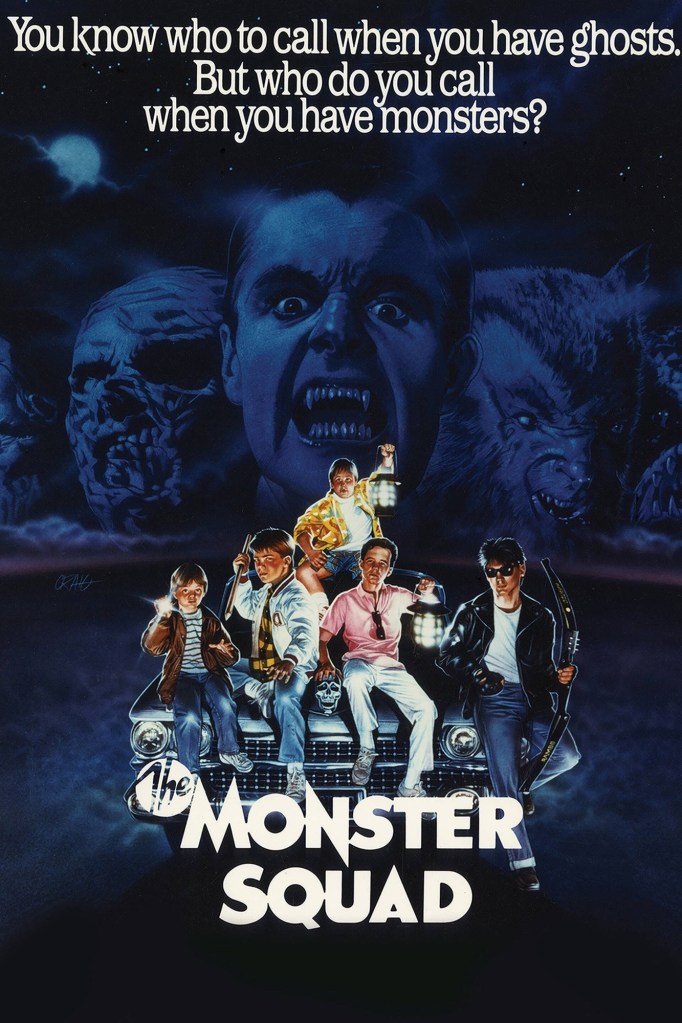
Released in 1987, The Monster Squad has lived one of those strange afterlives that cult films sometimes enjoy—ignored or even ridiculed upon release, only to become a beloved artifact for the generation that found it later on VHS. Directed by Fred Dekker and co-written with Shane Black, the movie occupies an awkward but endearing space between horror, comedy, and kids’ adventure. It never fully settles into one tone, and that’s part of both its charm and its problem. Watching it today, the film feels like The Goonies took a detour through a drive-in double feature of Dracula and The Wolf Man. It’s clunky, funny, occasionally mean-spirited, and loaded with enthusiasm—qualities that make it a thoroughly guilty pleasure for fans of ’80s genre mashups.

The story wastes no time getting into its madcap premise. A group of suburban preteens calling themselves “The Monster Squad” find that the classic Universal-style monsters are real, and worse, they’ve come to town. Count Dracula has a plan to plunge the world into darkness using an ancient amulet, and to succeed he enlists a roster of familiar faces: Frankenstein’s Monster, the Mummy, the Gill-Man, and the Wolf Man. This roster is fan-service before fan-service was a marketing term—a kid’s monster toybox brought to life. The squad, of course, must stop them, armed with comic-book knowledge, wooden stakes, and a blend of reckless courage and youthful sarcasm.

Dekker’s direction and tone play like a movie made for kids but smuggled in some heavy teenage energy. There’s violence, crude jokes, and occasional language that Hollywood would never let slip into a PG-friendly franchise today. Yet that rough edge is part of why The Monster Squad aged into cult status. It’s unapologetically of its time, operating on the belief that kids can handle scares as long as they’re fun and that suburban fantasy can, for a while at least, coexist with real danger. The movie’s depiction of childhood feels filtered through a stack of comic books and Creepshow issues—hyper absurd but still emotionally grounded in a way only ’80s adventure films seemed to pull off.

The kids themselves are a mixed bunch of believable archetypes. There’s Sean (André Gower), the de facto leader with a bedroom plastered in monster movie posters; Patrick (Robby Kiger), his wisecracking sidekick; Rudy (Ryan Lambert), the too-cool-for-school older kid who smokes, rides a bike, and somehow becomes the squad’s weapons specialist; and Eugene (Michael Faustino), the youngest, who still sleeps with his dog and writes letters to the Army for backup. They’re joined by Horace, nicknamed “Fat Kid,” played with surprising vulnerability by Brent Chalem. Each character is drawn broadly but memorably, and even when the dialogue veers into dated humor, there’s an underlying sincerity. You can tell Dekker and Black really liked these kids. They might use slingshots and one-liners, but what unites them is their intense sense of loyalty to one another—the kind of friendship that survives both bullies and broomstick-wielding vampires.

If there’s an emotional anchor, oddly enough, it’s the relationship between the squad and Frankenstein’s Monster, played by Tom Noonan in an unexpectedly gentle performance. When the creature befriends the kids, particularly little Phoebe (Ashley Bank), the film shifts momentarily from wisecracks to something close to tenderness. Noonan gives the character a shy uncertainty, a weary loneliness that offsets the visual absurdity of the rubbery monsters around him. There’s even a tinge of tragedy in his final act, which echoes Frankenstein’s literary roots—a moment of real feeling buried inside an otherwise loud and gleefully messy creature romp.

The monsters themselves, created by legendary effects artist Stan Winston, are among the film’s biggest draws. Each design feels like a loving upgrade to the old Universal look—recognizable but more feral, angular, and rooted in late-’80s aesthetics. The Wolf Man, for example, looks simultaneously comic and menacing, while the Gill-Man costume still impresses for its texture and movement decades later. The decision not to rely on stop motion or heavy opticals gives the monsters a tactile presence that CGI could never capture. There’s something about watching full-bodied suits and prosthetics move in real space that makes the threats feel tangible even when the stakes are goofy. These creatures are fun to look at, even when the script doesn’t give them much to do beyond roar and stalk across smoke-filled sets.

Shane Black’s fingerprints are all over the dialogue—the sardonic banter, the genre in-jokes, the affection for both pulp tropes and subverting them. But perhaps because the film was marketed partly as family adventure and partly as horror spoof, it often can’t decide whether to play sincere or ironic. Some scenes lean heavily on nostalgic affection for monster movies, while others feel almost mean in their mockery of small-town innocence. The tone whiplash means The Monster Squad doesn’t build much consistent momentum; one minute it’s heartfelt, the next it’s a barrage of sarcastic one-liners. Still, its rough tonal juggling has a ragtag energy that keeps it lively, and the sheer commitment to blending genres is endearing.

When it comes to pacing, the movie flies by in under 80 minutes, which turns out to be both blessing and curse. On one hand, there’s no filler—every scene moves briskly to the next piece of monster mayhem. On the other, the movie’s emotional beats and mythology barely have time to breathe. We get glimmers of backstory (like Dracula’s cryptic hunt for the amulet and Van Helsing’s prologue battle) that hint at a larger world that the film never really explores. You sense that Dekker and Black were operating under the fantasy logic of childlike storytelling: don’t explain too much, just move fast enough that no one questions it. It works, more or less, because of the film’s sheer enthusiasm, but it leaves you imagining a richer version of this story that never quite made it onscreen.

Looking back from today’s lens, some parts of The Monster Squad show their age more harshly. Certain lines and stereotypes that went unnoticed in the ’80s now feel jarring, even uncomfortable, and the film’s cavalier tone sometimes undercuts moments that should feel more innocent. Yet despite that, most viewers who revisit it with awareness of its era find themselves disarmed by its sense of fun. There’s no cynicism driving it—it’s pure genre love, messy and sincere, like a handmade Halloween costume that’s somehow cooler precisely because it’s imperfect. The film represents a time when kids’ movies were allowed to have teeth, blood, and a few scary moments, trusting that a young audience could handle being spooked without needing everything smoothed over.

For many fans, The Monster Squad works less as a polished film and more as an experience—a flashback to VHS sleepovers, bad pizza, and rewinding favorite scenes. The movie’s newfound appreciation, fueled by screenings and documentaries like Wolfman’s Got Nards, speaks to that nostalgic bond. It’s less about objective greatness and more about the feeling it preserves. Sure, some of the jokes fall flat, and the plot functions mostly as connective tissue between monster gags, but few movies embody the gleeful chaos of late-’80s pop horror as affectionately as this one does.

The Monster Squad earns its title. It’s not a flawless film, nor even a particularly coherent one, but it’s deeply fun, carried by the conviction that monsters—real or imaginary—are made to be fought with courage, humor, and friends who have your back. Watching it now is like flipping through an old comic book you used to love: you can see every crease and faded color, but that doesn’t make it any less special. And in a cinematic era saturated with irony and nostalgia pastiche, The Monster Squad still feels refreshingly earnest about its own weirdness. Maybe that’s its secret power.

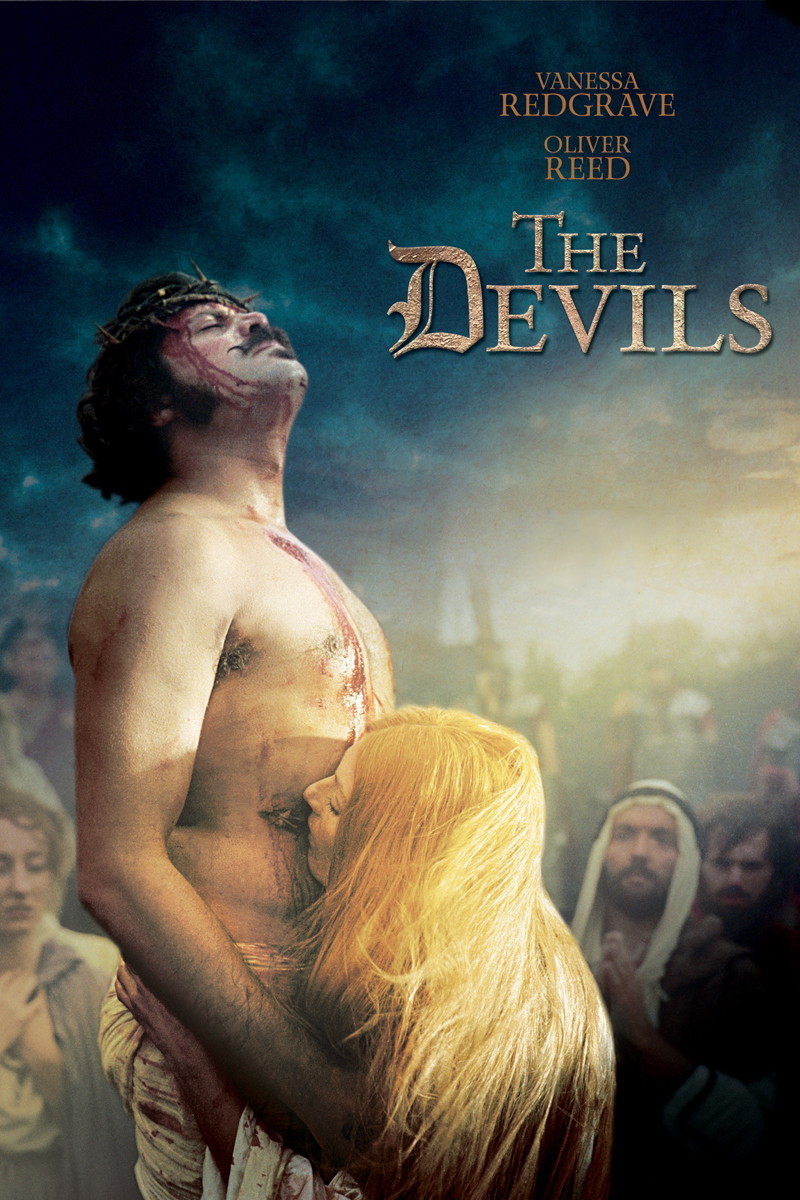
Review: The Devils (dir. by Ken Russell)


“I have been a man. I have loved women. I have enjoyed power.” — Father Urbain Grandier

Ken Russell’s The Devils (1971) stands as one of the most provocative and polarizing films in cinema history, a visceral plunge into the hysteria of religious fanaticism and political intrigue set against the backdrop of 17th-century France. Adapted loosely from Aldous Huxley’s historical account The Devils of Loudun and John Whiting’s play The Devils, the film dramatizes the real-life case of Father Urbain Grandier, a charismatic priest accused of witchcraft amid a scandal of supposed demonic possessions at a Loudun convent. Directed with unbridled fervor by Russell, who infuses every frame with operatic excess, the movie challenges viewers to confront the grotesque intersections of faith, sexuality, power, and repression. While its boldness earns admiration for unflinching social commentary, its stylistic indulgences can overwhelm, making it a work that demands both endurance and reflection.

The story unfolds in the walled city of Loudun, a Protestant stronghold under threat from Catholic forces led by the cunning Cardinal Richelieu. Oliver Reed delivers a towering performance as Grandier, portraying him not as a saintly martyr but as a flawed, hedonistic figure—a womanizer who preaches liberty while bedding Madeleine (Gemma Jones), a young Protestant whose quiet devotion contrasts sharply with the surrounding debauchery. Grandier’s defiance of Richelieu’s edict to demolish the city’s walls marks him as a target, but his downfall accelerates through the hysterical claims of Sister Jeanne (Vanessa Redgrave), the hunchbacked prioress of the Ursuline convent. Twisted by unrequited lust for Grandier, Jeanne accuses him of sorcery, sparking a wave of mass possession among the nuns that spirals into public spectacle. Russell draws from historical records to depict these events, emphasizing how personal pathologies fueled institutional corruption.

Visually, The Devils is a tour de force of baroque horror, with production designer Derek Jarman crafting sets that evoke a pristine white monastery defiled by filth and frenzy. Cinematographer David Watkin employs distorted wide-angle lenses and frenetic camera movements to mirror the characters’ unraveling psyches, turning sacred spaces into nightmarish arenas. The infamous “nunsploitation” sequences—where possessed sisters writhe in orgiastic fits, desecrate crucifixes, and simulate blasphemous acts—remain shocking even today, not merely for their explicitness but for their raw psychological intensity. These scenes serve Russell’s thesis: repressed desires, when twisted by authority figures like the witch-hunting Father Barre and Father Mignon, erupt into collective madness. Fairly assessed, these choices underscore Russell’s intent: to expose how power structures weaponize female hysteria, a theme resonant in historical witch hunts and modern reckonings with abuse.

Russell’s direction amplifies this through rhythmic editing and a pounding score by Peter Maxwell Davies, which blends liturgical chants with dissonant percussion to evoke a descent into hell. The film’s opening, with its ritualistic execution of a wise woman amid fireworks and folk rituals, sets a tone of pagan vitality clashing against ecclesiastical oppression. Midway, hallucinatory visions plague Grandier, blurring reality and delusion in a style reminiscent of Russell’s later explorations of ecstatic breakdown. The film unflinchingly depicts torture scenes—a burning at the stake, an afternoon in the rack, headscrews, a douche with boiling water—highlighting its raw confrontation with human cruelty. However, this excess risks tipping into self-parody; moments like the nuns’ simulated levitations or Jeanne’s contortions can strain credulity, prompting questions of balance between provocation and restraint.

Performances anchor the chaos, with Reed’s Grandier embodying defiant charisma undercut by hubris. His courtroom defiance and final quartering—nailed alive to a burning cross—culminate in a crucifixion scene of harrowing power, rivaling traditional passion narratives in emotional weight. Redgrave’s Jeanne is a revelation, her physical deformity symbolizing inner torment; she veers from pitiable to monstrous without caricature. Supporting turns shine too: Dudley Sutton as the impish Baron de Laubardemont, scheming for Richelieu; Max Adrian as the syphilitic priest whose decaying face mirrors moral rot; and Christopher Logue as the predatory Cardinal, whose urbane cruelty chills. The ensemble’s conviction elevates the material, ensuring characters feel flesh-and-blood rather than allegorical pawns.

Thematically, The Devils indicts institutional religion not as anti-faith but as a critique of its perversion by human ambition. Russell draws parallels to scandals where church power intertwines with politics, arguing that true devilry lies in hypocrisy. The film posits sexuality as a battleground: Grandier’s libertinism versus Jeanne’s repression, with the church exploiting both for control. This aligns with Huxley’s original thesis, expanded by Russell into a broader assault on authoritarianism. Politically, it skewers absolutism; Richelieu’s agents manipulate “possessions” for territorial gain, much as witchfinders historically profited from purges. Balanced against this, the film acknowledges Grandier’s flaws—he fathers a child out of wedlock and mocks piety—preventing hagiography. Upon release, it faced cuts in various countries, its controversial rating reflecting discomfort with its uncompromised vision.

Stylistically, Russell risks the “ridiculous” for the sublime. The white-tiled convent, pristine yet prone to vomit and excrement, symbolizes false purity; smashing it in the finale cathartically liberates Loudun from fanaticism. Influences from montage masters appear in crowd scenes, synthesized into a singular fever dream. Pacing falters in the trial’s verbosity, and some anachronistic flourishes—like Louis XIII’s cross-dressing ballet—inject campy levity, diluting gravity at times. Yet these quirks humanize the director’s bombast, reminding us of cinema’s power to provoke laughter amid horror. Compared to Russell’s Women in Love or TommyThe Devils stands as his most structurally coherent assault on repression.

Historically contextualized, the Loudun possessions of 1634 involved Urbain Grandier, executed for allegedly bewitching Ursuline nuns via a pact with Satan. Huxley documented the hysteria, linking it to political machinations under Richelieu, who sought to crush Huguenot resistance. Russell amplifies the carnality for dramatic effect, prioritizing emotional truth over literalism. Restored versions reveal its full ferocity, influencing not just cinema but broader media, including comics like Argentinian artist Ignacio Noé’s The Convent of Hell, which echoes its themes of convent-based depravity and demonic intrigue in vivid, explicit sequential art.

Ultimately, The Devils endures as a lightning rod: a moral film cloaked in immorality, pro-religion by exposing its distortions. Its ugliness—filth-smeared faces, ruptured bodies—serves illumination, urging viewers toward wisdom. For every viewer repulsed by its excesses, another finds genius in its candor. Russell’s gamble pays off; in risking the absurd, he achieves a sublime confrontation with our shadowed souls. At around 109 minutes in its uncut form, it repays multiple viewings, rewarding the brave with insights into faith’s fragility and power’s perils. Not flawless—its hysteria occasionally exhausts—yet undeniably vital, The Devils remains essential cinema, a shattered lens on humanity’s eternal dance with darkness.

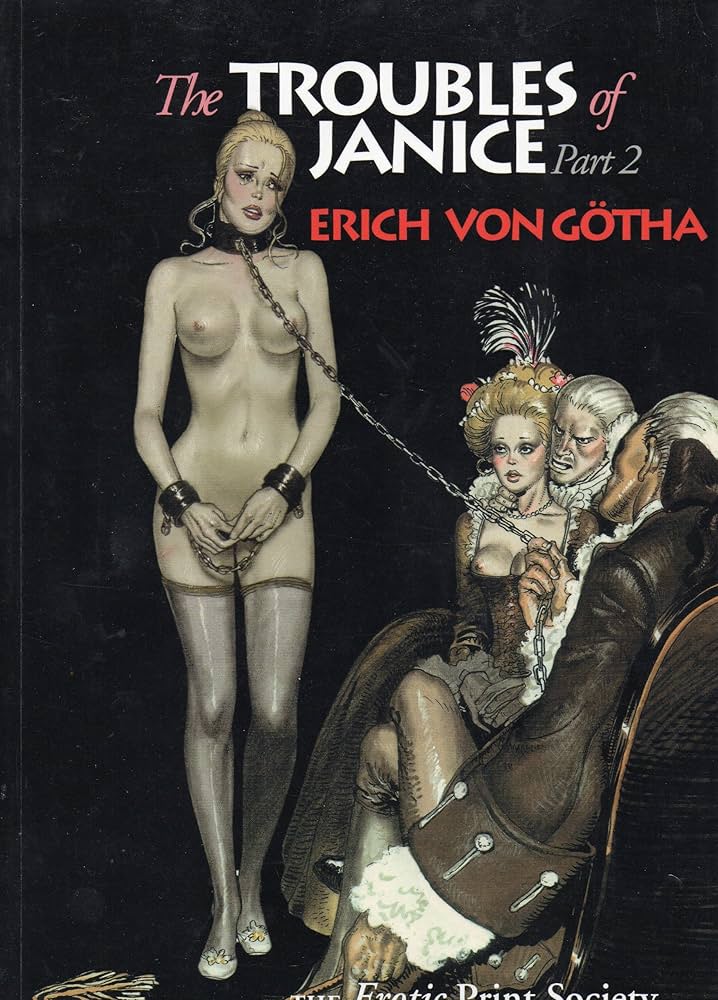
Guilty Pleasure No. 106: The Troubles of Janice (by Erich von Götha)


The Troubles of Janice by Erich von Götha remains one of the most infamous works in erotic comics, a multi-volume series spanning 1987 to 1996 that draws readers into a vivid world of sadomasochistic intrigue amid the lavish decay of 18th-century England. Janice McCormick, a curvaceous young woman released from Newgate Prison, soon finds herself ensnared by the sadistic Duke Viscount Vauxhall of Nether Wallop, whose experiments in female discipline propel her through a cascade of blackmail, assassinations, and sensual escapades—from the clandestine Hellfire Club to the shimmering waterways of Venice. Serialized initially in French magazines and later compiled into albums such as Parts 1 through 4, the narrative echoes the spirit of the Marquis de Sade’s Philosophy in the Bedroom, pitting innocence against unbridled authority in panels brimming with exaggerated forms and explicit encounters that straddle the edge of terror and desire.

This series thrives squarely in guilty pleasure territory, offering a procession of BDSM scenarios tailored for indulgent, after-hours reading—Janice bound and enduring floggings, group violations, and ceremonial degradations at the hands of depraved aristocrats, clergy, and a imposing black servant named Horace, whose prominence marks the early chapters. The artwork begins with a raw, straightforward style, its stark lines accentuating phallic prominence and voluptuous contours, but evolves across the run into more refined techniques, incorporating nuanced shading, occasional full-color pages, and fluid compositions that convey genuine motion. Under the pseudonym of British artist Robin Ray, von Götha refined his craft from earlier projects like the sporadic Torrid comic of the 1980s, achieving here a theatrical intensity that elevates rote erotica into something akin to a decadent opera. Janice’s subjugation under Vauxhall builds to extravagant bacchanals, her figure a stage for boundless transgression, sustained by slender plotlines: a doomed union with Lord Mitchcombe, clerical extortion of her fortune, and a desperate flight to Venice. It delivers unvarnished pornographic fantasy, where non-consent heightens the illicit allure, interwoven with dated racism, sexism, and brutality that clash with contemporary standards.

Nevertheless, amid its sensationalism, The Troubles of Janice carries a sly undercurrent that resonates as guilty pleasure, while dedicated admirers in specialized erotica and Sadean circles regard it as elevated art for its bold dissection of dominance and moral corruption. Enthusiasts praise von Götha’s fidelity to historical particulars—powdered periwigs, flickering chambers, and rigid social strata—which grounds the excess in authenticity, recasting Janice’s sufferings as a pictorial meditation on control and yielding. The work’s longevity, evidenced by deluxe reprints into 2008 via publishers like Dynamite and Priaprism/Last Gasp, underscores this devoted following, as initial stark visuals mature into polished depictions of perspiration, anguish, and rapture rendered with technical finesse. Partnership with writer Bernard Joubert lends philosophical weight reminiscent of Sade’s justifications for indulgence, complemented by von Götha’s advertising and design heritage, which infuses each frame with compelling, voyeuristic magnetism.

The episodic structure fosters escalating drama without pause: Janice’s journey from captive to bereaved inheritor to elusive temptress parallels gothic archetypes, her physique weathering not only corporal trials but subtle emotional fissures that suggest deeper psyche amid the torment. Venetian interludes in subsequent volumes add worldly elegance, with Janice alluring period luminaries amid carnivalesque revels and canal rendezvous, a momentary reprieve prior to recapture. Visually, the shift from monochrome austerity to vivid palettes enlivens flesh tones and intensifies ominous depths. Fair assessment reveals shortcomings, however: proportions veer toward the grotesque, recurring motifs dull the initial impact, and pervasive misogyny, though fitting the fantastical milieu, borders on excess even for 1980s sensibilities. Stereotypes such as Horace’s portrayal jar in modern light, affirming its roots in London’s pre-PC erotic underbelly.

Within insular communities, such elements paradoxically enhance its stature—collectors and forums acclaim von Götha as a virtuoso of restraint, his standalone prints and mythic illustrations perpetuating the legacy, bolstered by exhibitions in Bologna and Paris that confer artistic validity. To the broader audience, it embodies quintessential guilty pleasure—discreetly concealed material that fulfills taboo yearnings sans apology. The Troubles of Janice persists by unflinchingly engaging the subconscious, compelling confrontation with shadowed impulses through line and shade. Whether approached for its carnality or its Sadean resonances, The Troubles of Janice endures as a divisive masterpiece, ideally encountered with caution.

Previous Guilty Pleasures

  1. Half-Baked
  2. Save The Last Dance
  3. Every Rose Has Its Thorns
  4. The Jeremy Kyle Show
  5. Invasion USA
  6. The Golden Child
  7. Final Destination 2
  8. Paparazzi
  9. The Principal
  10. The Substitute
  11. Terror In The Family
  12. Pandorum
  13. Lambada
  14. Fear
  15. Cocktail
  16. Keep Off The Grass
  17. Girls, Girls, Girls
  18. Class
  19. Tart
  20. King Kong vs. Godzilla
  21. Hawk the Slayer
  22. Battle Beyond the Stars
  23. Meridian
  24. Walk of Shame
  25. From Justin To Kelly
  26. Project Greenlight
  27. Sex Decoy: Love Stings
  28. Swimfan
  29. On the Line
  30. Wolfen
  31. Hail Caesar!
  32. It’s So Cold In The D
  33. In the Mix
  34. Healed By Grace
  35. Valley of the Dolls
  36. The Legend of Billie Jean
  37. Death Wish
  38. Shipping Wars
  39. Ghost Whisperer
  40. Parking Wars
  41. The Dead Are After Me
  42. Harper’s Island
  43. The Resurrection of Gavin Stone
  44. Paranormal State
  45. Utopia
  46. Bar Rescue
  47. The Powers of Matthew Star
  48. Spiker
  49. Heavenly Bodies
  50. Maid in Manhattan
  51. Rage and Honor
  52. Saved By The Bell 3. 21 “No Hope With Dope”
  53. Happy Gilmore
  54. Solarbabies
  55. The Dawn of Correction
  56. Once You Understand
  57. The Voyeurs 
  58. Robot Jox
  59. Teen Wolf
  60. The Running Man
  61. Double Dragon
  62. Backtrack
  63. Julie and Jack
  64. Karate Warrior
  65. Invaders From Mars
  66. Cloverfield
  67. Aerobicide 
  68. Blood Harvest
  69. Shocking Dark
  70. Face The Truth
  71. Submerged
  72. The Canyons
  73. Days of Thunder
  74. Van Helsing
  75. The Night Comes for Us
  76. Code of Silence
  77. Captain Ron
  78. Armageddon
  79. Kate’s Secret
  80. Point Break
  81. The Replacements
  82. The Shadow
  83. Meteor
  84. Last Action Hero
  85. Attack of the Killer Tomatoes
  86. The Horror at 37,000 Feet
  87. The ‘Burbs
  88. Lifeforce
  89. Highschool of the Dead
  90. Ice Station Zebra
  91. No One Lives
  92. Brewster’s Millions
  93. Porky’s
  94. Revenge of the Nerds
  95. The Delta Force
  96. The Hidden
  97. Roller Boogie
  98. Raw Deal
  99. Death Merchant Series
  100. Ski Patrol
  101. The Executioner Series
  102. The Destroyer Series
  103. Private Teacher
  104. The Parker Series
  105. Ramba

Review: Quills (dir. by Philip Kaufmann)


“In order to know virtue, we must acquaint ourselves with vice. Only then can we know the true measure of a man.” — Marquis de Sade

Quills, Philip Kaufman’s 2000 take on the infamous Marquis de Sade, dives headfirst into the messy clash between artistic freedom and societal repression. It’s a film that doesn’t shy away from the dark, provocative world of its subject, blending historical drama with a touch of theatrical flair. While it takes liberties with the facts, it captures the spirit of de Sade’s defiance in a way that’s both entertaining and thought-provoking.

Right from the start, Quills sets up its world inside the Charenton Asylum for the Insane, where the aging Marquis de Sade, played with gleeful abandon by Geoffrey Rush, is holed up under the watch of the kindly Abbé de Coulmier (Joaquin Phoenix). De Sade’s been churning out his scandalous writings—think Justine and other works that shocked 18th-century France—and smuggling them out via laundry baskets to a young laundress named Madeleine LeClerc (Kate Winslet). Napoleon’s regime isn’t thrilled, so they dispatch the stern Dr. Royer-Collard (Michael Caine) to tighten the screws and silence the madman once and for all. The stage is set for a battle of wills, with de Sade’s pen as his weapon against the forces of censorship.

Geoffrey Rush owns the screen as de Sade, turning what could have been a one-note villain into a complex, charismatic force of nature. He’s sly, unrepentant, and hilariously vulgar, spitting barbs that cut deep into hypocrisy and piety. Rush balances the man’s depravity with a genuine passion for expression, making you root for him even as his ideas repulse. It’s a performance that’s equal parts showman and philosopher, and it anchors the film’s energy. Joaquin Phoenix brings a quiet intensity to the Abbé, a man torn between his faith, his compassion, and the stirrings of forbidden desire—especially toward Madeleine. Phoenix nails the internal conflict, his wide eyes conveying a soul on the brink.

Kate Winslet shines as Madeleine, the innocent conduit for de Sade’s words, whose curiosity pulls her into his orbit. She’s got that Winslet spark—earnest yet fiery—and her scenes smuggling manuscripts or reading aloud add a layer of warmth to the asylum’s chill. Michael Caine, meanwhile, chews scenery as the pompous doctor, a hypocritical sadist in his own right, obsessed with his young bride Simone (Amelia Warner). Caine’s Royer-Collard is deliciously smarmy, a foil to de Sade who mirrors his cruelty under the guise of order. The ensemble clicks, with supporting turns like Tony Berthaud as the asylum’s rougemont adding comic relief amid the tension.

Kaufman’s direction keeps things visually striking without overwhelming the story. The asylum feels alive—claustrophobic cells contrast with grand halls where inmates stage de Sade’s plays under the Abbé’s misguided therapy. Cinematographer Rogier Stoffers bathes everything in earthy tones, with candlelit shadows that amp up the gothic vibe. The score by Angelo Badalamenti weaves eerie strings and harpsichord flourishes, underscoring the film’s blend of horror and humor. It’s not afraid to get graphic: scenes of self-mutilation and bodily fluids as writing tools push boundaries, but they’re more about desperation than shock value.

Thematically, Quills grapples with freedom of speech in a way that’s timeless. De Sade isn’t portrayed as a hero—his writings celebrate excess and cruelty—but as an indomitable spirit who won’t be silenced. Even stripped of paper, ink, clothes, and eventually his voice, he finds ways to provoke, dictating stories through inmates or scratching words into his skin. It’s a middle finger to censorship, questioning who the real monsters are: the libertine or the repressors enforcing “morality.” The Abbé represents liberal tolerance stretched to breaking, Royer-Collard conservative control gone tyrannical. Madeleine embodies the allure of forbidden ideas, her tragic arc highlighting how words can liberate or destroy.

That said, the film isn’t perfect—it’s a fictionalized riff on history, not a biopic. The real de Sade spent years at Charenton, but the timeline compresses events, amps up the drama, and softens his edges for modern tastes. He wasn’t quite the defiant artist Kaufman paints; his later years were more pathetic than poetic. Critics have noted it sanitizes Justine‘s true extremity—no orgies or murders here, just innuendo. Some see it as romanticizing a monster, turning him into a free-speech martyr rather than the predator he was. Fair point; the movie sympathizes more with his pen than his philosophy. Still, as entertainment, it works because it doesn’t pretend to be a documentary.

Humor peppers the darkness, keeping Quills from wallowing in gloom. De Sade’s quips land like punches—”There’s no sin in writing!”—and absurd moments, like inmates reenacting his tales or the doctor’s failed inventions, add levity. One standout sequence has de Sade dictating a racy novel through a chain of whispering patients, turning the asylum into a underground press. It’s One Flew Over the Cuckoo’s Nest meets Dangerous Liaisons, with inmates running wild in a riot of liberation gone wrong. The film’s pace builds masterfully to its brutal climax, where de Sade’s final “victory” leaves you unsettled, pondering if ideas can truly be killed.

Performances aside, the script by Doug Wright (adapted from his play) crackles with wit and insight. Dialogue zings without feeling stagey, and it probes hypocrisy head-on: the pious Abbé lusting after Madeleine, Royer-Collard bedding his teen bride while torturing others. Christianity takes hits—de Sade devours a crucifix, mocks scripture—but it’s broad satire, not preachy atheism. The ending, with its ironic twist on legacy, sticks with you, echoing how de Sade’s name endures despite efforts to erase him.

For fans of period dramas with bite, Quills delivers. It’s provocative without being pornographic, smart without being stuffy. At 124 minutes, it never drags, balancing spectacle and substance. Sure, it glamorizes a controversial figure, and history buffs might nitpick inaccuracies—like the Abbé’s real-life tolerance or Charenton’s theater program. But Kaufman’s track record (The Right StuffThe Unbearable Lightness of Being) shows he knows how to humanize extremes. Rated R for good reason—nudity, violence, profanity—it’s adult fare that rewards attention.

Visually, the costumes pop: de Sade’s velvet robes give way to rags, symbolizing his fall, while Madeleine’s simple smocks highlight her purity amid corruption. Production design nails early 19th-century France, from ornate asylum architecture to the doctor’s sterile gadgets. Badalamenti’s music swells during key confrontations, heightening emotional stakes without overpowering.

In the end, Quills asks tough questions about art’s power and limits. Does provocation justify excess? Can society silence dangerous minds without becoming monstrous itself? It doesn’t provide easy answers, which is its strength. Rush’s tour-de-force makes de Sade magnetic, flaws and all, while the supporting cast elevates the ensemble. Not for the faint-hearted, but if you appreciate bold cinema that stirs debate, it’s a gem. Rewatch value is high—themes resonate in our cancel-culture age. Philip Kaufman crafted a film that’s as unruly as its protagonist: unapologetic, alive, and impossible to ignore.