Atlus is one Japanese video game company who seem to have gained quite the rabid and dedicated fan following despite never having released a game that sold in the millions of units. They’re titles are considered by gamers as being very “Japanese”. This is probably why those in the US and Europe who love their games also happen to be major fans of anime, manga and many other Japanese pop culture.
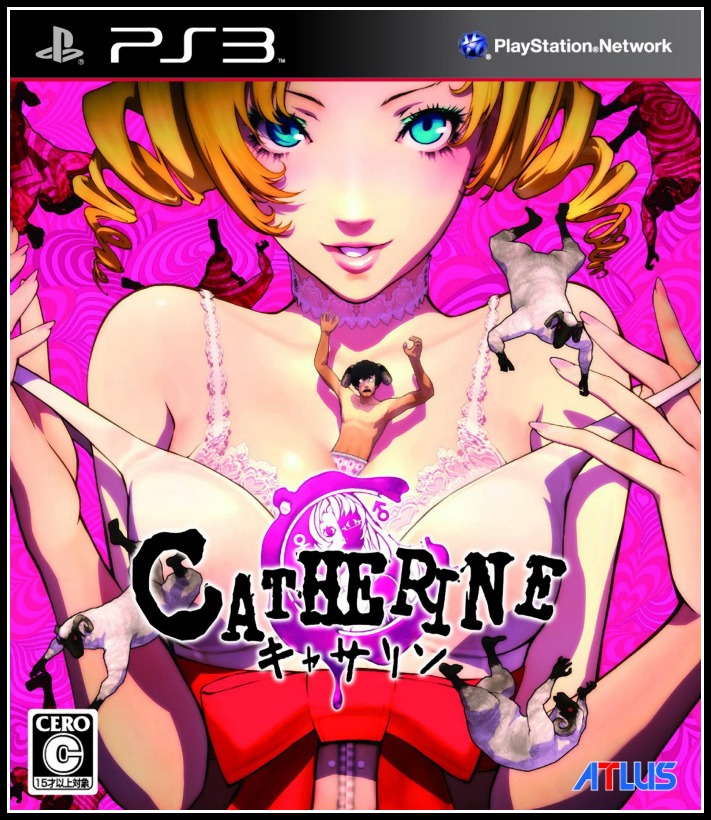
One game being developed and published by Atlus that was announced sometime in 2010 was the puzzle-platformer/action adventure game Catherine. Right from the get-go Atlus fans were clamoring for more info on the game and when it would be localized for a North American and European release. When the game was just weeks away from it’s Japanese release date news came down from Atlus themselves that there was no plans at the moment to release the game outside of Japan.
To say that Atlus fans were heartbroken would be an understatement. While they could still import the game that would mean higher price due to import shipping fees.
Fortunately, this stance suddenly changed and on March 1st of 2011 the company announced that they were officially releasing the game for North America and with a release date of July 26, 2011. This news was greeted with joy by Atlus fans and some grumblings from those who shelled out the extra cash to import the game.
Catherine is a game that one might call one with “adult” themes and subject matter. It because of this that some call it quite “Japanese” since they’re more willing to release games that are adult in nature without resorting to violence as the foundation. While the game is not one of those eroge titles (erotic game) it is one that should definitely be bought and played only by those who are old enough to buy M-Rated titles.
The game will follow the similar Japanese release pattern and come out with different covers for the PS3 and Xbox 360 versions. The game is still set for a July 26, 2011 release.
Every year there’s always a film which seems to get little to no buzz leading up to it’s release date. One such film which seems to be sneaking up on the filmgoing public is a little action thriller called Hanna from British filmmaker Joe Wright (Pride and Prejudice, Atonement) about a young girl (Saoirse Ronan) being trained by her father (Eric Bana) into some sort of assassin in the frozen wilderness of Finland. The film also stars Cate Blanchett in a role that some of her fans may not be used to. A morally ambiguous role which may or may not make her into the villain of the film.
Outside of the people who cover the film industry year in and year out this film has bypassed the radar of most film fans and are only starting to hear about it. From some of the advance reports being mentioned about Hanna, filmgoers may have something to look forward to when it finally comes out in a little over a week. Hanna has been getting some positive talk of being one of the best, if not the best, film of the year to date. Those are some pretty bold statements, but even if the film only manages to live up to half of the talk about it the last week or so then it’s going to be a film that will entertain and one that may just get strong word of mouth to get more people to watch it.
One thing which may interest some people about this film is who will be in charge of scoring it. The film’s score will be handled by the electronica duo The Chemical Brothers.
There have always been films through the years which will garner extreme reactions from its audiences. These reactions will always take two sides on the film. People who see these films will either love them or they will hate them. There is to be little to no middle ground reaction when it comes to these films. In 2009, we had James Cameron’s epic scifi Avatar which had two sets of fans. Those who loved it to the point that it transcended simple fandom into something these people thought as important. Then there were the vocal minority who absolutely hated the film. Whether both fans were right in their opinions was (and continues) to be irrelevent. All that mattered to these people was that they’re right and the other side was wrong.
2011 is entering it’s second season and a film finally arrived which seem to have elicited the same sort of reaction from people who have seen it. Sure, there’s some who saw it merely as entertainment and left it at that, but there’s a growing rift between those who loved the film and those who hated it. The film which seem to have caused this is the action-fantasy film Sucker Punch.
To say that Zack Snyder’s latest visual extravaganza would create discussion amongst filmgoers would be an undertstatement. Sucker Punch has arrived to much genre fandom fanfare. This was a film that seemed to take genres from all corners like scifi, fantasy, anime and manga and mashed them all up into something new and serving it up to the legion of fans who love those very things. Zack Snyder has made his reputation as a filmmaker as a visual artist. His entire filmography from the Dawn of the Dead remake all the way up to his adaptation of the Alan Moore graphic novel Watchmen have all been very strong visually. His grasp of narrative structure continues to grow and improve but it’s always been his handling of dialogue which has tripped him up.
Sucker Punch is a tale within a tale about a young woman we come to know as Baby Doll (played with an almost angelic quality by Emily Browning). The film opens up with the curtain rising on a theater stage and we soon become witness to a dialogue-free opening sequence of the events which transpired to bring Baby Doll to the Lennox House mental institution. This entire opening sequence is a great example of Snyder as a master of creating a montage of striking visuals sans dialogue with only music to break the silence. It helped that the music chosen to accompany this scene was a haunting rendition by Emily Browning herself of the Eurythmics’ “Sweet Dreams (Are Made of These)”. Just like in Watchmen‘s own intro title sequence, Snyder was able to convey the beginnings of the story without the need for dialogue and do it so well that we as an audience understand fully all that’s transpiring on the screen.
Once this prologue ends we move onto the main setting of the film where Baby Doll gets put into the care of the Lennox House’s resident boogeyman in the form of Blue as played with slimy charm and panache by one Oscar Isaac (last scene chewing up the English countryside in Ridley Scott’s Robin Hood). The audience sees what Baby Doll sees as Blue gives her the tour of the facilities which finally ends at the “Theater” where all the female patients act out their problems and fears through the guidance and help of Doctor Gorski (played by the lovely and return Snyder performer, Carla Gugino).
The first 15 minutes of this film was pretty much a basic set-up of what Snyder will use as his blueprint for the rest of the film. All the different levels of fantasy Baby Doll will imagine and inhabit throughout the film is rooted deeply in this initial sequence of events which begins the film. The clues as to who the story is truely about could be found in this intro if one was paying attention to the film instead of being distracted and mesmerized by the visuals Snyder crafts to start the film. While it won’t become apparent until the reveal at the climactic events of the film. Once all are the cards were revealed, so to speak, the beginning of the film begins to make sense. From the curtain rising, the silent film-like scene to begin and the narration to open things up, all those give a hint to what the answer to the question the film’s narrative really asks: “Is what we’re seeing truly real or is it all just fantasy?”
Sucker Punch becomes a sort of a trip down the rabbit hole a la Alice In Wonderland once the film establishes Baby Doll’s predicament upon arriving at the Lennox House (she’s to be lobotomized in 5 days). The film moves from the gray and depressing confines of the Lennox House to the fantasy world centered on a burlesque establishment where Baby Doll is an orphan sold by a decadent priest (the form her stepfather takes in this fantasy) to Blue, the proprietor of this house of ill repute where orphaned young women become burlesque dancers and worst to the clientele. It is in this place we meet the rest of the gang Baby Doll will befriend to help her try to escape the place and thus avoif the “High Roller” who will come to collect her in 5 days.
The film shares something similar with Christopher Nolan’s Inception in that both films deal with different levels of reality or fantasy (depends on how one sees the different worlds shown in both films). Where Nolan’s ideas seem more rooted in what he would consider as more grounded to reality as much as possible Snyder goes the other way and takes the leashes off of Baby Doll’s imagination. This third level Baby Doll goes to as she begins her dance to distract the men of the burlesque house is her mind unfettered and where she’s not helpless but has power not just to protect herself but do so better than the men who inhabit this fantasy world of steampunk zombie soldiers, orcs, dragons, alien robot machines and many other scifi and fantasy tropes which define geek culture through the decades.
If there’s one reason to watch this film it would be just to bear witness to Snyder letting his imagination as a visual filmmaker take over. Some people may not like this and want a strong, structured narrative to balance out the visuals. I, too, would’ve liked to have seen something stronger in terms of story and plot, but there are just instances when the visuals are so striking and wildly imaginative that one just marvels at the scenes unfolding on the screen. If any, Snyder as a visual artist helps prop up the weakness in the story. Snyder would’ve served this film better if he went even further and turned Sucker Punch into an avant-garde silent film of the digital age. That beginning in the film just unfolded so strongly despite no dialogue that the rest of the film could’ve been done in the same manner and be the better for it.
Which brings me to what was the film’s near fatal flaw. A flaw that many of the film’s detractors have taken as the rallying cry to denounce the film as horrible and Snyder as a hack. The interesting thing is that these same people were also the ones who had been praising of Snyder prior to this film. Even those who begrudgingly gave Snyder his props for having some semblance of talent because of the very handling of the visuals that he has now have become much more vocal about how they always knew Snyder was never that good.
I would say that Snyder is not the second coming of Ridley Scott as some of his supporters have anointed him or is he a hack filmmaker who is all flash and no substance. I think he’s somewhere in the middle and still finding his true voice as a filmmaker. I’ve always seen Snyder as being weak when it comes to handling the slower scenes of dialogue and most visual filmmakers tend to be the same when starting out. The dialogue seem to get in the way of what they really want to do and tell the story through striking visual sequences. They’re like painters who don’t need words to convey the emotions they wish to convey. Sucker Punch I believe suffered from Snyder trying to combine his strength on the visual side of the equation with his handling of story through the dialogue which he still hasn’t mastered. If someone else had written, or at the very least, fixed and strengthened the script, I do believe that the film wouldn’t be getting so ripped and trounced by those who had been so excited to seeing one of Snyder’s personal projects.
The performances by the cast ranged from good to just being there. There really wasn’t anyone in particular who performed badly. Everyone from Emily Browning to Oscar Isaac all the way to Abbie Cornish did well enough with the material they were given. Oscar Isaac as both Blue in the insane asylum and as the pimp in the burlesque house did particularly well playing up the fun role of the villain in Baby Doll’s different levels of reality/fantasy. Of the ladies in the film I must point out the performance of Jena Malone and Abbie Cornish as sisters in the second level. While we only get a glimpse of Cornish’s Sweet Pea character in the Lennox House, once in the burlesque setting she becomes the anchor by which the rest of the women in the cast held onto. Jena Malone as the younger sister Rocket who still dreamed hopes of escape was a nice complement to Sweet Pea.
So, we have a film in Sucker Punch which seem to have strength on one side of the filmmaking equation and a major weakness on another. This is the kind of film that I would, in the past, have dismissed as another attempt by Hollywood to pander to the geek crowd with its mash-up of different scifi and fantasy imagery. But this time around I actually enjoyed the film both in a visual sense and how Snyder was able to play with the audience’s personal observations about the themes his film is trying to explore. It’s these very themes which have split audiences into two camps. While the gender politics and stereotypes people have brought up in discussing this film have made for some lively debate I refrain from adding my views on it in this review. I think I’m not well-qualified to debate such discussions.
For me, Sucker Punch succeeds more than it fails because Snyder didn’t play it safe with how he wanted to make his film. He was able to tell the film’s story through the different visual styles for each world the cast played in and did it quite well. While most of the time I wouldn’t give a film a pass for a weak narrative and average dialogue with this film I felt like the experience one gets from experiencing the visual canvas Snyder continued to paint with from beginning to end was enough to balance out the negative. It’s really a film that one must experience for themselves and make their decision on that experience instead of listening to other’s opinions (both good and bad) about the film. One may end up hating the film like some, but then again they may end up like me and forgive Snyder for trying to reach for the sun and failing to do so, but at least tried to with panache instead of playing it safe.
As a continue to write my Sucker Punch review I decided to take a break from it and watch some AMV’s on YouTube. I finally found one that I thought was worthy of becoming the latest “AMV of the Day”. This one combines one of the most popular action anime series of the last few years with a song from the American hard rock band 30 Seconds To Mars.
“This Is War” forms the basis for this AMv which takes that song and combines it with scenes from the anime series, Fullmetal Alchemist: Brotherhood. One thing which I always look at when choosing which AMV makes the grade is whether the creator has a fine grasp on the song and its lyrics. It’s simple enough to cut-edit anime scenes together and slap on a song to it, but matching the song to those very scenes takes skill and the creator of this amv definitely has that.
Zack Snyder’s Sucker Punch is still resonating quite strong for me. It doesn’t help that I’ve fallen quite in love with the soundtrack. Last night I chose the first track in the soundtrack as song of the day. That one was sung by the film’s lead, Emily Browning. My next choice for song of the day was also sung by Emily Browning and is the third of three songs she covered for the film.
“Asleep” is the Emily Browning cover of the indie pop classic from indie-rock band The Smiths and their famous front man, Morrissey. I’m not what you would call a big fan of The Smiths or even of Morrissey. I will admit that this song as sung by Emily Browning is quite good and her ethereal voice lends a haunting quality to the music. The song itself marks a major turning point in the film and finally reveals just who the storyteller really is and who the subject of the story truely is.
Whatever may come of Ms. Browning’s acting career I definitely think she has one as a singer. “Asleep” is definite proof of the talent this young actor has not just in front of the camera but in a recording studio.
Asleep Sing me to sleep
Sing me to sleep
I’m tired and I
I want to go to bed
Sing me to sleep
Sing me to sleep
And then leave me alone
Don’t try to wake me in the morning
‘Cause I will be gone
Don’t feel bad for me
I want you to know
Deep in the cell of my heart
I will feel so glad to go
Sing me to sleep
Sing me to sleep
I don’t want to wake up
On my own anymore
Sing to me
Sing to me
I don’t want to wake up
On my own anymore
Don’t feel bad for me
I want you to know
Deep in the cell of my heart
I really want to go
There is another world
There is a better world
Well, there must be
Well, there must be
Well, there must be
Well, there must be
Well …
After having just seen Zack Snyder’s latest visual extravaganza with Sucker Punch my next pick for “song of the day” comes courtesy of that film’s eclectic soundtrack. The one song which stood out the most and set the tone of the film for me has to be the one which starts the film: “Sweet Dreams (Are Made of These)” covered by the film’s lead, Emily Browning.
“Sweet Dreams” was an instant classic when Eurthymics first unleashed it upon the music world and it continues to do so even after countless bands and artists covering the song. One cover which seems to get the most press has been Marilyn Manson’s version which helped propel the shock rocker into prominence (and helped launch an uncounted number of “goths” to the world). In Sucker Punch the song once again gets covered but this time by Emily Browning. This English actress’ haunting and ethereal rendition of the song with a symphonic rock tempo and melody to match her voice has made this cover of the song my favorite.
This cover opens up the film and almost gives the opening scene a silent film quality as the song plays over a dialogue-free sequence. It also gives the whole proceeding a dream-like quality that helped set the tone of the film. The song pretty much said that what one was about to see may or may not be real. The rest of the film’s soundtrack just got better as the film went forward, but it was the strong beginning with this song that turned a very good soundtrack into a great one.
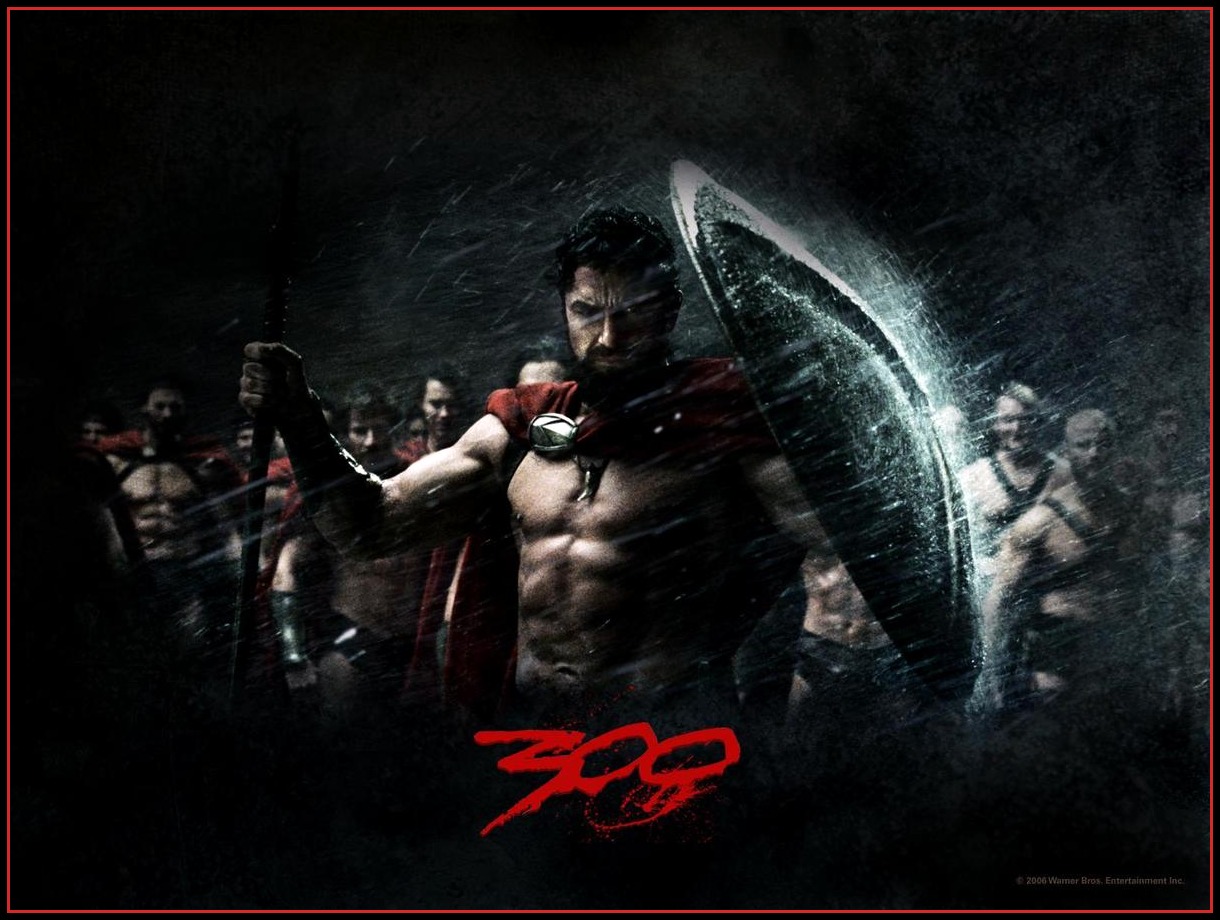
I will get it out of the way and say that this was not and was not meant to be a historically accurate depiction of Ancient Greece. It was never meant to be even when it was still just an Eisner-Award winning graphic novel from the mind of iconic graphic novelist and artist Frank Miller. With that out of the way I was able to watch and enjoy Zack Snyder’s film adaptation on its own terms without the criticism of historical accuracies looming dangerously over my head. 300 deserves the label of being an event film. From start to finish, Snyder’s film practically screams blockbuster and popcorn and I wouldn’t have it any other way.
Frank Miller’s 300 was at its time an interesting depiction of one of history’s greatest military last stands. Miller already known for hyperstylizing the look and feel of the noir genre with his Sin City graphic novels, takes the same approach with his depiction of King Leonidas and his 300 Spartans taking a final last stand against Persian God-King Xerxes at a narrow mountain pass called Thermopylae (literally meaning Hot Gates in Greek). Zack Snyder took this graphic novel and painstakingly stayed true to the visuals Miller and his colorist wife, Lynn Varley put on paper. Looking back at my memory of some of the panels and images from the graphic novel. Snyder and his crew of art directors, cinematographers and CGI-artists were successful in translating almost every page of the graphic novel onto the screen.
Like Robert Rodriguez’s adaptation of Miller’s Sin City, Zack Snyder’s 300 pretty much brings the graphic novel to moving life. This means he stuck to the source material quite literally which limits his own take on the graphic novel. Like Rodriguez, Snyder doesn’t really put his own signature stamp as a director to the film. It’s not too much of criticis since he does a great job of translating Miller’s work onto film, but one wonders what sort of personal touches he could’ve added to the finished look that wasn’t lifted from Miller’s style and whether it would’ve changed the overlook look and feel of the film.
The story is quite simple and just takes the basic summary of the historical event itself. Spartan King Leonidas (played with visceral gusto and machismo by Scottish thespian Gerard Butler) makes a decision to go to war and confront the encroaching and fast approaching massive Persian Army led by Xerxes (Rodrigo Santoro) intent on conquering the Hellenic city-states of the Greek Peninsula. Persian ambassadors ride forth to demand oaths of fealty from those city-states ahead of the army’s path. Sparta is one such city-state, but different from the rest of its Hellenic brethrens. Sparta has gone down in history as a word synonymous with unbending dedication to a strict, ascetic warrior code. Warfare and battle were what Spartans were born and trained to do from an early age. Weakness and physical imperfections weeded out from the time of birth (the film explains just what happens to male newborns with physical imperfections and deformities). The answer Leonidas gives the Persian delegation could be seen as somewhat extreme, but not contrary to his nation’s warrior-culture of never surrendering and seeing death in battle the greatest glory for a Spartan to achieve. From this sequence right up to the end of the film we get to see just how much of a warrior culture the Spartans were in extreme detail.
It’s during the prolonged battle scenes between Leonidas’ Spartans and Xerxes army which will have everyone chomping at the bit. If you have to see this film for any particular reason outside of watching superbly-trained underdogs slaughtering and endless supply of enemy troops then you will most likely be disappointed by the slower scenes away from Thermopylae. Indeed, this film an its original source material would’ve worked even better without the extra filler Snyder and his writers added to give the film more depth. I’m all for more emotional depth and characterization in my films but when a movie is all about a bloody and heroic last stand of a few against the many, scenes which slow the story down does more to break the rhythm and tone of a film than add to it. Othe than a deeper understanding of the kind of partnership Leonidas had with Gorgo, his Spartan Queen, most of the subplots added by Snyder and his writers could easily have been left out and still ge a kick ass action epic.
It’s the action scenes which reall stand out visually. Some people might see the style tricks of speed ramping certain action sequences then slowing it down considerably to show the minute detail of the battle scene as being to gimmicky, but I would disagree and say it actually gives the movie a mythical quality in its storytelling. One thing I have to say about Zack Snyder as a director (his remake of George A. Romero’s Dawn of the Dead better than what detractors have made it out to be) is that he knows how to film action and with special mention to bloody and gory action. He makes these scenes of dismemberments, decapitations, and disembowlments look like a piece of performance art.
These scenes of carnage would be considered extremely gratuitious if it didn’t look so made up good. Even the way the blood flows, spurts and splashes look like something Jackson Pollock would take interest in. The speed up and slow down of the sequences also gives the fight scenes a certain rhythm that once an audience picks up on will follow it through to the end. This is why the scenes back in Sparta with a duplicitous politician and his powerplay to assume control and power seem such a downer instead of enhancing the sacrifice of Leonidas and his men. Those scenes just feel tacked on and completely superfluous. Luckily, there’s not enough of them to slow down the frantic pace developed by the battle itself.
The performances by all actors involved really doesn’t require too much criticism or reflection over. Gerard Butler does a great and convincing job as the Spartan King and his conviction in confronting Xerxes and his army with so few seem very believable. It’s not a star-making performance but it does show that Butler can add a bit of gravitas to a character and role so basic in characterization. Lena Hedley is radiant as his partner and Queen. Despite the weird sounding name of Gorgo, Hedley plays the strong-minded and equally influential wife to Butler’s Leonidas. It’s only her scenes back in Sparta as she tries to rally her people to support their king which keeps these slower sequences from fully pulling down the film. The performances were good enough to keep the acting in the film from becoming too campy or too serious. It’s an action film and with enough action going on in the movie I could forgive the writers (both Miller and the screenwriters) from scrimping on character build up.
All in all, Zack Snyder’s film adaptation of Frank Miller’s 300 succeeds in bringing the book to moving life. Throughout the run of the film it was hard not to get lost in the beautiful visuals. Whether it was the muted color pallette which puts most of the scenes in an almost sepia-tone look to over-emphasizing certain colors to set a certain mood. From oversaturation of reds in one sequence to one where everything seem to be tinted with the many shades of blues at night. This is what 300 will be best remembered for. It’s technical use of CGI to paint the environment in unrealistic but beautiful ways which gives the scenes a lyrical and mythical look to them once the actors were superimposed over them. The film really was a painting come to life and it shows once again how computer and digital filmmaking technology have now afforded directors in making what used to be impossible technically to something that could be done with the limit being the artist’s imagination.
This film will not win many acting, directing and even screenwriting awards (which it didn’t once award season rolled around), but it doesn’t have to for people to enjoy it. It will entertain and pull its audience into a living and modern retelling of a legend. Whether all that happened on the screen was exactly as it happened in 480 B.C. doesn’t matter. What it does show is that through retelling down the years even all the embellishments added to the story of Leonidas and his men doesn’t diminish the fact that what they did and accomplished was how legendary heroes were made and remembered.
We already have the first full trailer for the upcoming Thor film this coming summer season. Fans have been eagerly awaiting the next big trailer from Paramount Pictures and Marvel Studios. While a teaser trailer was shown during the Super Bowl there still hasn’t been an official trailer for Joe Johnston’s Captain America: The First Avenger. Now that wait is over as Paramount Pictures have finally unleashed the first official trailer.
Captain America: The First Avenger is still set for a July 22, 2010 release.
The latest “song of the day” arrives courtesy of Michael Mann’s Miami Vice. I speak of one of the best rock songs of the 1980’s: Phil Collins’ “In The Air Tonight”.
Phil Collins was already a major star as part of the progressive rock band Genesis. In the early 80’s he finally went out on his own and began a second successful career as a solo artist. His 1981 debut solo album, Face Value, would release it’s first single with what would turn out to be one of the 80’s iconic rock songs with “In The Air Tonight”. The song was originally recorded in 1979, but it was until Collins went solo did it see the light of day and once it made it to the mass public it instantly became a major hit. This song would end up Collins’ biggest hit ever and would be covered by rock bands and sampled by rappers in the decades to come.
Some of the younger generation would recognize this song because of a hilarious scene in the 2009 comedy The Hangover involving Mike Tyson and one of the most famous basslines in rock history. It’s a shame that it would be that scene people would remember since this song is more than just a punchline in a comedy. This song has become an integral part of my growing up during the 80’s and I still listen to it intently decades later…and yes I, too, consider that bassline to start the final chorus as the go-ahead to air drum the sequence in the privacy of my own room or car.
The one cover of this song I like just as much as the original is the hard rock cover done by the band Nonpoint for Michael Mann’s Miami Vice.
In The Air Tonight
I can feel it coming in the air tonight, oh Lord And I’ve been waiting for this moment for all my life, oh Lord Can you feel it coming in the air tonight, oh Lord, oh Lord
Well if you told me you were drowning, I would not lend a hand I’ve seen your face before my friend, but I don’t know if you know who I am Well I was there and I saw what you did, I saw it with my own two eyes So you can wipe off that grin, I know where you’ve been It’s all been a pack of lies
And I can feel it coming in the air tonight, oh Lord Well I’ve been waiting for this moment for all my life, oh Lord I can feel it coming in the air tonight, oh Lord Well I’ve been waiting for this moment for all my life, oh Lord, oh Lord
Well I remember, I remember, don’t worry, how could I ever forget It’s the first time, the last time we ever met But I know the reason why you keep your silence UP, oh no you don’t fool me Well the hurt doesn’t show, but the pain still grows It’s no stranger to you and me
I can feel it coming in the air tonight, oh Lord Well I’ve been waiting for this moment for all my life, oh Lord I can feel it in the air tonight, oh Lord, oh lord Well I’ve been waiting for this moment for all my life, oh Lord I can feel it coming in the air tonight, oh Lord And I’ve been waiting for this moment for all my life, oh Lord I can feel it in the air tonight, oh lord, oh lord, oh lord Well I’ve been waiting for this moment for all my life, oh lord, oh lord
I can feel it in the air tonight, oh lord, oh lord, oh lord, oh lord And I’ve been waiting for this moment for all my life, oh lord, oh lord, oh lord And I can feel it in the air tonight, Oh Lord… I’ve been waiting for this moment, all my life, Oh Lord, Oh Lord
Michael Mann has always been in the forefront of experimenting and trying out new film techniques and styles to tell his stories. 2003’s Collateral was a veritable masterpiece of directing of a modern, urban noir. He even made Tom Cruise very believable as a sociopathic character. In 2006, Michael Mann followed up Collateral with another trip down the darkside of the law and crime. Taking a concept he made into a cultural phenomenon during the mid 80’s, Mann reinvents the show Miami Vice from the pastel colors, hedonistic and over-the-top drug-culture Miami of the 1980’s to a more down, dirty and shadowy world of the new millenium where extremes by both the cops and the criminals rule the seedy, forgotten side of the city.
Michael Mann’s films have always dealt with the extremes in its characters. Whether its James Caan’s thief character Frank in Thief, the dueling detective and thief of Al Pacino and Robert DeNiro in Heat, up to Foxx and Cruise’s taxi driver and assassin in the aforementioned Collateral. They all have had one thing in common. They’re individuals dedicated to their chosen craft. Professional in all respect and so focused to doing their job right that they’ve crossed the line to obsession. It is this obsession and how it governs everything they do which almost makes it into their own personal form of drug.
This theme continues in Mann’s film reboot of his TV series Miami Vice. The characters remain the same. There’s still the two main characters of Vice Detectives Sonny Crockett and Ricardo Tubbs. This time around these titular characters were played by Colin Farrell (in a look that echoes Gregg Allman more than Don Johnson) and Jamie Foxx. From the first moment the first scene suddenly appears all the way through to the final fade to black in the end of the film, the audience was thrust immediately into the meat of the action. Mann dispenses with the need for any sort of opening credits. In fact, the title of the film doesn’t appear until the end of the film and the same goes for the names of all involved. I thought this was a nice touch. It gave the film a stronger realism throughout.
The film’s story was a mixture of past classic episodes rolled into one two-hour long film with the episode “Smuggler’s Blues” being the main influence on the story. The glamour and glitz that were so prevalent in the original series does show up in the film, but it’s not used too much that it turned the characters of Crockett, Tubbs and the rest of the cast into caricatures. The glamour seems more of a thin veneer to hide the danger inherent in all the parties involved. These people were all dangerous from the cops to the criminals. There’s a lot of the so-called “gray areas” between what makes a cop and what makes a criminal. Mann’s always been great in blurring those lines and in showing that people on either side of the line have much more in common than they realize.
Miami Vice‘s story doesn’t leave much for back story exposition for the main leads. Michael Mann takes the minimalist approach and just introduces the characters right from the beginning with nothing to explain who they were outside of the roles they played — whether they were law-enforcement or drug dealers. The script allows for little personal backstory and instead lets the actors’ performance show just what moves, motivates and inspires these characters. Again, Jamie Foxx steals the film from his more glamorous co-star in Colin Farrell. Farrell did a fine job in making Crockett the high-risk taking and intense half of the partnership, but Foxx’s no-nonsense, focused intensity as Tubbs was the highlight performance throughout the film.
The rest of the cast do a fine job in the their roles. From Gong Li as Isabella, the drug-lord’s moll who also double’s as his organization’s brains behind the finances to Luis Tosar as the mastermind drug kingping Arcángel de Jesús Montoya. Tosar as Montoya also does a standout performance, but was in the screen for too less a time. Two other players in the film I have to make mention of were John Ortiz as Jose Yero who was Montoya’s machiavellian spymaster and Tom Towles in a small, but scary role as the leader of the Aryan Brotherhood gang hired by Yero to be his Miami enforcers. Both actors were great in their supporting role and more than held their own against their more celebrated cast mates.
This film wouldn’t be much of a police crime drama if it was all talk and no action. The action in Miami Vice comes fast and tight. Each scene was played out with a tightness and intensity which prepped the audience to the point that the violence that suddenly arrives was almost a release. Everyone knew what was coming and when the violence and action do arrive it goes in hard and fast with no use of quick edits, slow-motion sequences or fancy camera angles and tricks like most action films. Instead Michael Mann continues his theme of going for realism even in these pivotal moments in the film.
The shootouts doesn’t have the feel of artificiality. The gunshots inflicted on the people in the film were brutal, violent and quick. The camera doesn’t linger on the dead and wounded. These scenes must’ve taken only a few minutes of the film’s running time, but they were minutes that were executed with Swiss-like precision. The final showdown at an empty lot near the Miami docks was organized chaos with the scene easy to follow yet still keeping a sense of anarchy to give the whole sequence a real sense of “in the now”.
The look of the film was where Mann’s signature could be seen from beginning to end. He started using digital cameras heavily in Collateral. His decision to use digital cameras for that film also was due to a story mostly set at night. The use of digital allowed him to capture the deepest black to off-set the grays and blues of Los Angeles at night. Mann does the same for Miami Vice, but he does Collateral one better by using digital cameras from beginning to end. Digital lent abit of graininess to some scenes, but it really wasn’t as distracting as some reviewers would have you believe. In fact, it made Miami Vice seem like a tale straight out of COPS or one of those reality police shows.
Michael Mann stretches the limits of what his mind and technology could accomplish when working in concert. Mann’s direction and overall work in Miami Vice could only be described as being as focused and obsessive over the smallest detail as the characters in his films. This is a filmmaker who seem to want nothing but perfection in each scene shot.
With Miami Vice, Michael Mann has done the unthinkable and actually made a film adaptation of a TV show look like an art-film posing as a tight police drama. Everyone who have given the film a less than stellar review seem to have done so because Mann didn’t use the 80’s imagery and sensibilities from the original show. There were no pastel designer clothes and homes. There was no pet alligator and little friendly banter and joking around. Mann goes the other way and keeps the mood deadly serious. This was very apropo since the two leads led mortally dangerous lives as undercover agents who could die at the slightest mistake. The fun and jokes of the original series would’ve broken the mood and feel of this film. I, for one, am glad Mann went this route and not paid homage to the original series. This some saw as a major flaw, but I saw it as the main advantage in keeping Miami Vice from becoming a self-referential film bordering on camp.
Miami Vice was a finished product thats smart, stylish, and innovative crime drama. This was a film that people would either love despite some of the flaws, or one people would hate due to not being like the original TV series. Those who decide to skip watching Miami Vice because of the latter would miss a great film from one of this generation’s best directors. Those who do give this version of Miami Vice a chance would be rewarded with a great tale of cops and criminals and the obsession they have in their set roles.







 Through the Shattered Lens