I probably should have shared this on the 4th of July but whatever. America never goes out of style.
Enjoy!
I probably should have shared this on the 4th of July but whatever. America never goes out of style.
Enjoy!
Welcome to Late Night Retro Television Reviews, a feature where we review some of our favorite and least favorite shows of the past! On Fridays, I will be reviewing Friday the 13th: The Series, a show which ran in syndication from 1987 to 1990. The entire series can be found on YouTube!

This week, it’s Johnny vs the Druids.
Episode 3.19 “The Tree of Life”
(Dir by William Fruet, originally aired on May 7th, 1990)
Johnny randomly runs into a distraught woman who claims that, years ago, her daughter was abducted and her husband murdered by obstetrician Dr. Sybil Oakwood (Gale Garnett). When Jack and Micki doubt the woman’s story, Johnny investigates on his own and discovers that Dr. Oakwood is kidnapping newborn girls and raising them in her fertility clinic. It turns out that Dr. Oakwood is a druid and she’s trying to breed future Druidic priestesses.
(Don’t yell at me, this is the show’s interpretation of druidism.)
This was the next-to-the-last episode of Friday the 13th and it just feels like the writers were tired and uninspired. Suddenly, for the first time in three years, Jack and Micki are skeptical about reports of the paranormal. Johnny is back to being impulsive and, if we’re to be honest, kind of stupid. He tells the distraught mother that her daughter is being held prisoner at the fertility clinic and then is shocked when the mother runs off to the clinic without waiting for Johnny to accompany her. Once again, it all leads to a cult and an underground cavern. This entire episode feels like it was recycled from previous episodes.
I’m not an expert on paganism so I’m not going to get into whether or not this episode accurately portrayed druidic beliefs. I will say that the druids in this episode acted like every other cult that’s ever appeared on this show. They’re just like the Satanic cult that showed up at the end of season 2. Making them druids is probably one of those things that sounded good when the episode was pitched. The word “druid” brings to mind Stonehenge and all the rest of that good stuff. But, narratively, there was nothing gained nor lost by making them druids. The show treated them like any other self-destructive cult.
This episode was a bit dull. It felt like the show was taking one last shot at getting audiences to replace Johnny as Ryan’s replacement. The whole thing just felt uninspired. It certainly left your brave reviewer bereft of inspiration.
Next week, we come to the conclusion of Friday the 13th: The Series.
Welcome to Retro Television Reviews, a feature where we review some of our favorite and least favorite shows of the past! On Fridays, I will be reviewing St. Elsewhere, a medical show which ran on NBC from 1982 to 1988. The show can be found on Hulu and, for purchase, on Prime!
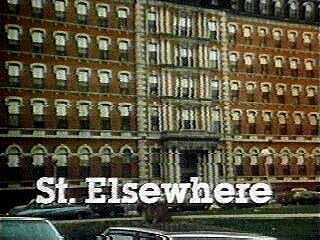
This week, the hospital staff is under pressure!
Episode 2.6 “Under Pressure”
(Dir by David Anspaugh, originally aired on November 30th, 1983)
What a depressing episode!
It’s another day at St. Eligius and almost everyone seems to be in a bad mood. Patients are complaining that Dr. Craig is so obsessed with his heart transplant that he’s ignoring them. Dr. Westphall wakes up in a bad mood and continue to be in a bad mood for the entire episode. Dr. Morrison is upset because he’s treating two Irish teens who nearly killed each other because one is Protestant and the other is Catholic. (One of the teens is played by a young Eric Stoltz.) Bobby Caldwell has to figure out how to put together the face of one of the Irish boys. Ehrlich is complaining nonstop. Morrison is missing his wife. Auschlander is dealing with his approaching mortality. (There’s a wonderful moment when Norman Lloyd rolls his eyes while Auschlander listens to Westphall whine.)
Finally, a man calling himself Mr. Entertainment (Austin Pendleton) took over one of the hospital’s elevators and sang to the patients. That cheered some people up. It would have annoyed the Hell out of me. Mr. Entertainment is checked into the psych ward, where he meets the new head psychiatrist, Michael Ridley (Paul Sand). (Hugh Beale apparently no longer works at the hospital. Both he and Dr. Samuels were dropped after the first season, with no onscreen explanation.) The episode ends with Mr. Entertainment singing for a collection of nurses and doctors and bringing some happiness to their lives.
Everyone in this episode is under pressure. That’s fine. That’s realistic. Being a doctor cannot be an easy job. But it just made for a rather melancholy episode and I have to admit that I couldn’t wait for the end credits and that meowing cat.
Perhaps next week will be better.
Here’s something that everyone needs in their life, a ska version of Black Sabbath’s Paranoid!
As some of our regular readers undoubtedly know, I am involved in a few weekly watch parties. On Twitter, I host #FridayNightFlix every Friday and I co-host #ScarySocial on Saturday. On Mastodon, I am one of the five hosts of #MondayActionMovie! Every week, we get together. We watch a movie. We tweet our way through it.
Tonight, at 10 pm et, I will be hosting #FridayNightFlix! The movie? 1973’s Ninja Warlord!
If you want to join us this Friday, just hop onto twitter, start the movie at 10 pm et, and use the #FridayNightFlix hashtag! I’ll be there tweeting, probably while fireworks shake the windows of my office. It’s a friendly group and welcoming of newcomers so don’t be shy.
Ninja Warlord is available on Prime and Tubi!
See you there!
What better way to start the week than with something loud?
Enjoy!
Welcome to Late Night Retro Television Reviews, a feature where we review some of our favorite and least favorite shows of the past! On Thursdays, I will be reviewing Highway to Heaven, which aired on NBC from 1984 to 1989. The entire show is currently streaming on Tubi and several other services!
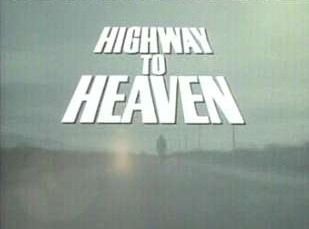
This week, Jonathan and Mark take on prejudice.
Episode 4.4 “The People Next Door”
(Dir by Michael Landon, originally aired on October 21st, 1987)
Dr. William Martin (David Spielberg) is living a double life. His family and his neighbors know him as a white doctor who lives in a suburban community and who is a part of the homeowner’s community. He’s told his wife and his son that his parents died before he met them.
His mother knows him as Dr. Guillermo Martinez, who works at the free clinic in the economically disadvantaged area of town. Anna Martinez (Mariam Colon) works as a maid and has no idea that her son is married and that she’s a grandmother.
Guillermo changed his name and lied about his ethnicity so that he could get ahead as a doctor and it’s worked for him. His best friend is Brad Bowman (John Lawlor), the real estate agent who is dedicated to making sure that only “the right people” move into the neighborhood. But when Jonathan and Mark show up as rival real estate agents and hire Anna to help them clean up the house next door, William/Guillermo is forced to face the truth about who he is.
At the start of this episode, Jonathan tells Mark that their assignment is not only to show William the foolishness of denying his heritage but to also help William’s neighbors become more tolerant. They definitely help out William but they don’t really seem to have much luck with the neighbors. Brad Bowman (no relation!) is as much of a bigot at the end of the show as he was at the start. Jonathan and Mark do arrange for a black family to move into the empty house and then Jonathan and Mark promptly leave the neighborhood. So, I guess the responsibility for teaching everyone else tolerance is going to be on the new homeowners. This is one of those episodes where you wish Jonathan had actually gone to extremes to make his point, instead of just arranging for people to run into each other while wandering around the neighborhood. I know that some people would say, “Well, Brad’s just a bad person,” but wasn’t one the original themes of this show that everyone had the potential to see the light, learn the errors of their ways, and be redeemed?
While the show suggested that there was no hope for Brad to see the error of his ways, it also let Guillermo off way too easy. His wife was surprisingly understanding about her husband lying to her for years. And, in the end, his mother was surprisingly forgiving about him lying about the fact that she had a grandson. Jonathan scolded him briefly but that was pretty much it. My grandmother, who came to this country from Franco’s Spain, would not have been as forgiving.
This episode was well-intentioned but didn’t quite work.
Tonight, I’m starting my summer job of writing about Big Brother for the Big Brother Blog. In honor of that, today’s song of the day is the little-remembered theme song from the first season of Big Brother!
After listening to this, you’ll understand why they’ve gone with an instrumental theme song from season two on.
Welcome to Retro Television Reviews, a feature where we review some of our favorite and least favorite shows of the past! On Thursdays, I will be reviewing Malibu CA, which aired in Syndication in 1998 and 1999. Almost the entire show is currently streaming on YouTube!

Yes, this is from the first season. I don’t care. I refuse to waste my time looking for a second season advertisement.
Soon, I will be finished with this show. I’m just trying to keep my spirits up.
Episode 2.21 “Parent Trap”
(Dir by Gary Shimokawa, originally aired on April 15th, 2000)
Peter is having a midlife crisis so Scott, Jason, and Traycee introduce him to Traycee’s mom, Candee (Wendi Winburn). Peter falls for Candee and decides to ask her to marry him. Traycee warns Scott and Jason that Candee has been proposed to by a lot of men — including Donald Trump! — and she always turns them down. But, for some reason, Candee accepts Peter’s proposal. But then, at the celebration dinner, Candee mentions that she wants to travel and Peter mentions that he wants to stay in Malibu and manage his restaurant (even though he tried to retire just a few episodes ago) and Candee and Peter decide not to get married. They both share a laugh over the whole thing which struck me as odd.
Meanwhile, Lisa gets upset when Murray paints a naked picture of her. She goes to Murray’s art showing and attempts to paint clothes on her body and seriously, I just wanted the police to arrest her and drag her away. What a stupid storyline. Lisa (the character, not me) is the worst.
This episode …. hey, it fit the running time and stuff happened. Apparently, by this point in the second season, that’s all anyone was demanding from Malibu CA. There’s an odd lack of conflict in this episode. Candee wants to go on safari. Peter doesn’t. They laugh and call the whole thing off. Uhmm, okay. Most engagements end on a bit more of a dramatic (or, at the very least, an emotional) note. When I was 18, I was briefly engaged until I found out that my fiancé’s family didn’t actually own all of those oil wells in South Texas, despite the fact that he claimed otherwise. That was not a happy breakup. Everyone in this episode is so agreeable that it’s boring. For someone who was totally in love, Peter certainly seem to be cheerful about never seeing Candee again. Seriously, he picked his tacky restaurant over the supposed love of his life. What an idiot.
Oh well, at least this show is nearly over.
4 Or More Shots From 4 Or More Films is just what it says it is, 4 shots from 4 of our favorite films. As opposed to the reviews and recaps that we usually post, 4 Shots From 4 Films lets the visuals do the talking!
Today, the Shattered Lens pays tribute to the year 1971!
4 Shots From 4 1971 Films
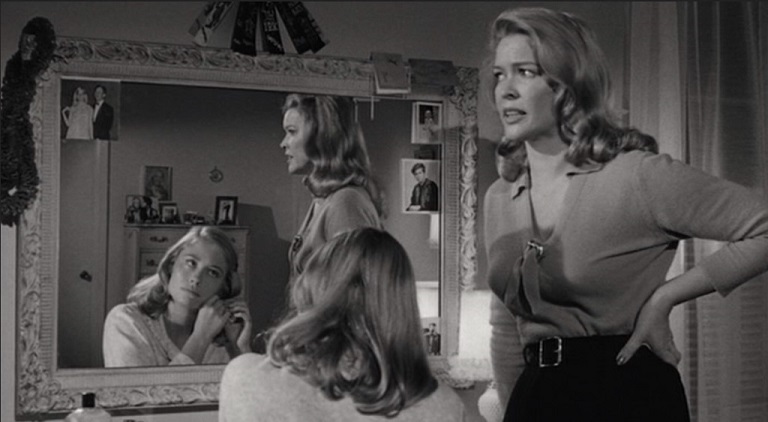
The Last Picture Show (1971, dir by Peter Bogdanovich, DP: Bruce Surtees)
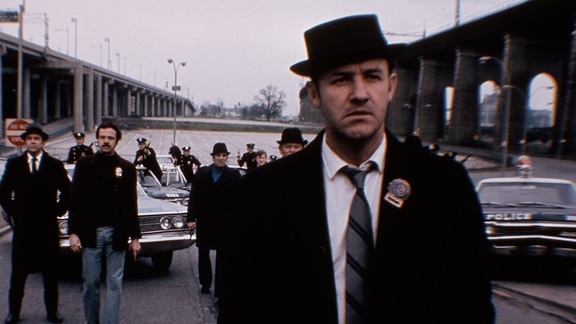
The French Connection (1971, dir by William Friedkin, DP: Owen Roizman)
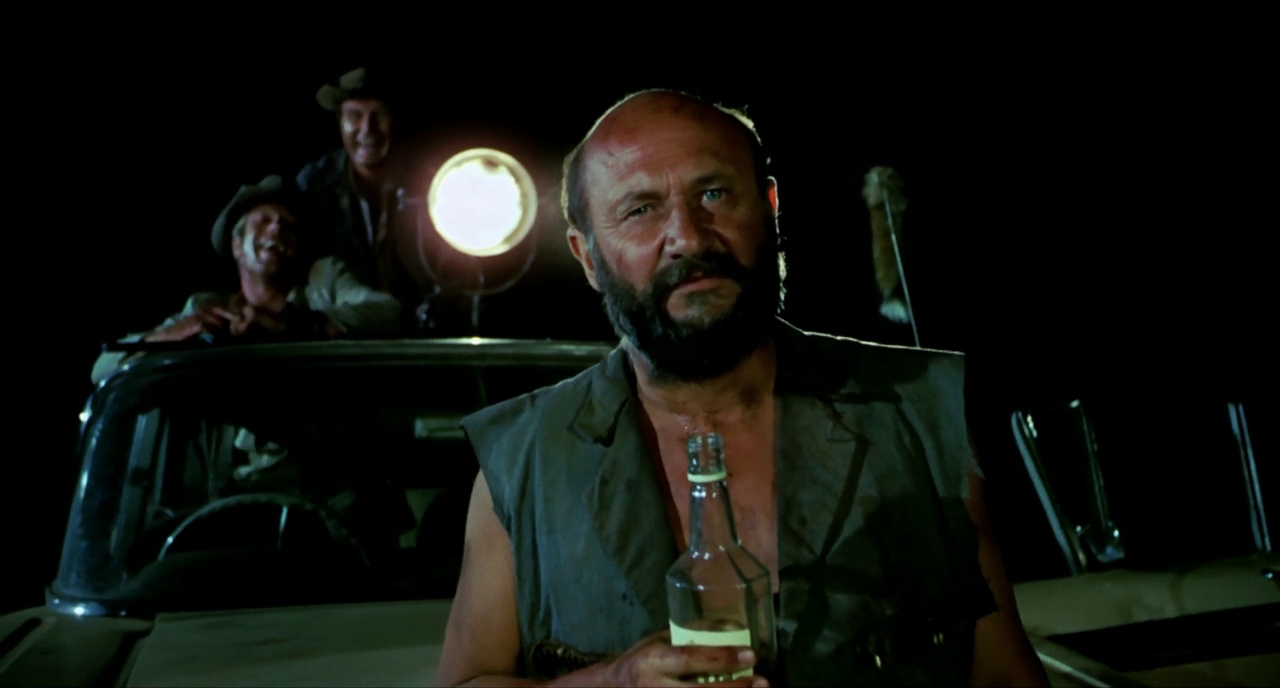
Wake in Fright (1971, dir by Ted Kotcheff, DP: Brian West)
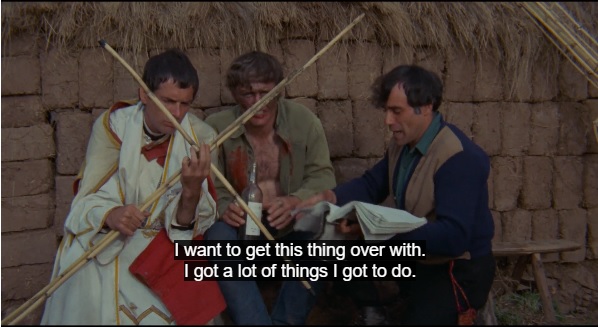
The Last Movie (1971, dir by Dennis Hopper, DP: Laszlo Kovacs)

