Film Review: After Earth (dir by M. Night Shyamalan)


After Earth is the latest of many forgettable films to have been released in 2013.

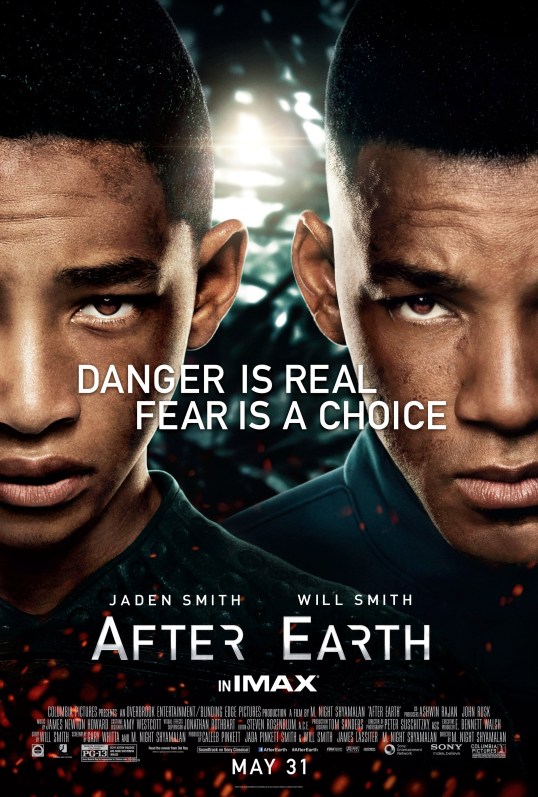
The film’s plot — which will be familiar to anyone who has seen Oblivion or any other science fiction film — deals with a father (Will Smith) and his son (Jaden Smith). The father is a great military leader but is emotionally distant.  (Will Smith, who is probably one of the most openly emotional actors working today, deals with being miscast by refusing to smile.)  The son is desperate to prove himself to his father.  When the two of them return to Earth (which was deserted a thousand years ago because of — you guessed it — pollution), their ship crashes.  The father is critically injured and, of course, the son has to save both of their lives, deal with his past guilt, and become a man.

Or something like that.

Did you know that M. Night Shyamalan directed After Earth?  If you didn’t, don’t feel bad.  In the advertising campaign leading up to this film’s release, Columbia Pictures has treated Shyamalan’s involvement like a dirty secret.  It’s understandable, really.  After all, Shyamalan’s last two films were The Happening and The Last Airbender and you can only refer to him as being “the director of The Sixth Sense” for so long.  That said, Shyamalan’s work here isn’t that bad.  It’s not that memorable either.  Instead, it’s the epitome of adequate and bland.  Some scenes (like the crash landing on Earth) actually come close to being exciting but there’s little sense of wonder or surprise to the film’s version of the future and, while the majority of the film is about Jaden Smith trying to survive and conquer the cruelty of nature, the environment of After Earth never truly feels alive.  Perhaps an Ang Lee or a Werner Herzog could have brought After Earth to life but all Shyamalan can do is keep the action plodding forward.

However, it’s unfair to put blame for After Earth on M. Night Shyamalan.  If anybody can truly be considered the auteur of After Earth, it is Will Smith.  Smith produced the film, came up with the film’s storyline, and gave the film’s lead role to his son.  Thematically, After Earth fits into Smith’s feel-good, good-for-you brand of cinema.  The problem, however, is that for an action film like this to work, you need a charismatic hero and, to judge from this film, Jaden Smith has inherited little of his father’s onscreen prowess.  Fairly or not, it’s impossible to watch Jaden in this film without being aware that he (as opposed to an actor who doesn’t have a famous father) got the role solely because he was the producer’s son.  As such, it’s far more difficult to forgive Jaden’s awkward screen presence than it might be otherwise.

After Earth is only 100 minutes long.  It’s considerably shorter than both Iron Man 3 and the latest Star Trek film.  However, when the film’s lack of surprise is combined with Jaden Smith’s bland lead performance, the end result is a film that feels a lot longer than it actually is.

When all I said and done, the only real question about After Earth is whether or not it’s worse than Oblivion.  It’s hard to say because After Earth and Oblivion are both oddly forgettable sci-fi films with similar premises.  In fact, while watching After Earth, I kept expecting Tom Cruise to pop up and say, “I thought I was the only man left on Earth!”

I guess the question really comes down to which film is more annoying and again, there are no easy answers.  Considering how bland both Oblivion and After Earth really are, it’s interesting that both of them manage to feature some overdone accent work.  It’s hard to know how to describe Will Smith’s vaguely Aruban (?) accent in After Earth but honestly, nothing could be more annoying than Melissa Leo’s butchering of the Southern accent in Oblivion.  So, as far as bad accents are concerned, Oblivion has to be considered the winner.

(Add to that, as weird as Smith’s accent was, it could at least be justified by the fact that After Earth was meant to be taking place in the far future.  There was absolutely no justifiable reason for Melissa Leo in Oblivion to sound like Cate Blanchett in Hanna.)

However, After Earth has a tacked-on environmental message, the type that makes Shyamalan’s The Happening seem subtle and intelligent by comparison. Don’t get me wrong.  I’m not objecting to After Earth (or any other film) having a subtext.  What I do object to is when a film uses an obvious and heavy-handed subtext to try to hide the fact that the movie itself isn’t that good.  In the case of After Earth, the environmental message feels lazy and predictable.  It almost feels as if, by paying lip service to a noble cause, Shyamalan is attempting to blackmail us into liking this film.

So, what’s worse?  A bad accent or an insincere message?

Ultimately, that’s a decision that everyone must make on their own.

Or you could just ignore both After Earth and Oblivion altogether and instead make the effort to see and support truly unique films like Upstream Color.

The choice is yours.

Trailer: As I Lay Dying


PCAS

As far as I’m concerned, 2013 should just be called “The Year of James Franco.”  Not only is James Franco my super hot (and smart) fantasy husband but he’s also starring in Oz, the Great and Powerful, playing himself in This Is The End, and making memorable appearances in supporting roles in films like The Iceman and Spring Breakers but he’s also directed his first film!

As I Lay Dying is based on William Faulkner’s classic novel.  A lot of critics have claimed that the book is unfilmable but I think that, if anyone can make As I Lay Dying into a great film, it’ll be James Franco.

Why?

Because he’s James Franco.

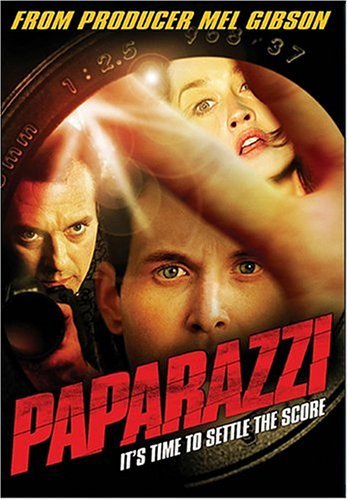
Guilty Pleasure No. 8: Paparazzi


259791_ori

I once got into an argument with a friend of mine about whether or not a film could actually be so bad that it was good.

His argument was that bad, by its very definition, was the opposite of good and therefore, nothing bad could be good and vice versa.

My argument was Paparazzi.

First released back in 2004, Paparazzi tells the story of Bo Laramie (Cole Hauser).  Bo is an up-and-coming super star.  As the film begins, we’re told — by a breathless correspondent from E! News — that Bo has arrived.  He’s starring in what promises to be “the world’s biggest action franchise.”  Bo has a wife (Robin Tunney), a son, and a beautiful house on the beach.  Whenever he goes jogging, huge groups of women magically materialize so that they can giggle as he runs by.

However, not everything is perfect in the world of Bo Laramie.  Like far too many defenseless celebrities, he’s being harassed by the paparazzi.  At first, Bo attempts to be polite.  However, a demonic photographer named Rex (Tom Sizemore) refuses to stop trying to take pictures of Bo at his son’s soccer game.  Things escalate until eventually, Bo’s son is in a coma and Bo is coming up with ludicrously elaborate ways to kill all of Rex’s colleagues.

The thing that distinguishes Paparazzi is not that it’s a revenge film.  What distinguishes Paparazzi is that it seems to seriously be arguing that celebrities have the right to kill people who annoy them.  Rex and his colleagues are portrayed as being pure evil (one even laughs maniacally after snapping a picture) while Bo is the victim who has to deal with the issues that come from being a multimillionaire.  Even the homicide detective played by Dennis Farina seems to be continually on the verge of saying, “Right on!” while looking over the results of Bo’s handiwork.

It’s so ludicrous and stupid and over-the-top that it can’t help but also be a lot of fun.

Don’t get me wrong.  Paparazzi is a terrible film.  In fact, it’s so terrible that, if a group of aliens ever somehow saw Paparazzi, they would probably hop in their spaceship and come to Earth specifically to wipe out the human race.  However, as bad as the film is, it’s also one of those films that you simply cannot look away from.  Watching this film is like witnessing a tornado of pure mediocrity coming straight at you.  You know that you should just stop watching and get to safety but it’s such an unexpectedly odd sight that you can’t look away.  Once you’ve seen it, you’ll never forget it and it becomes impossible not to become fascinated by the fact that such a terrible film could actually exist.

Consider the following:

1) When he’s not busy killing photographers, Bo Laramie is filming a movie called Adrenaline Force 2.  Seriously, that title is so generic that I couldn’t help but smile every time it was mentioned.  Can you imagine anyone saying, “I want to see that new movie, what’s it called, uhmm… Adrenaline Force 2?”

2) Speaking of generic, do you think that anyone named Bo Laramie could ever possibly become the biggest film star in the world?

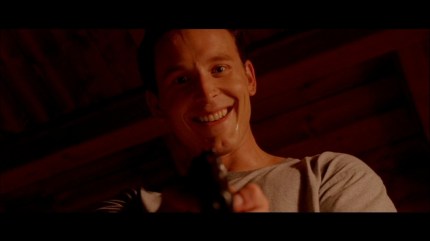
3) In the role of Bo Laramie, Cole Hauser seems like he’s as confused by this movie as everyone else.  However, towards the end of the film, he starts to flash a psychotic little grin and the contrast between that grin and Laramie’s previously stoic facade is oddly charming.

Hauser-in-Paparazzi-cole-hauser-12392470-853-480

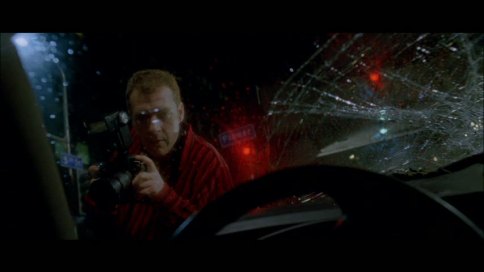
4) You haven’t lived until you’ve seen Tom Sizemore play the world’s sleaziest photographer.

5) Vince Vaughn has a cameo as himself!  He’s co-starring in Adrenaline Force 2.

6) Mel Gibson has a cameo as himself!  He’s seen sitting in a psychologist’s office.  (No, seriously…)

7) Matthew McConaughey has a cameo as himself!  He shows up out-of-nowhere, tells Bo that it’s a pleasure to meet him, and then goes, “Alright, alright…”

8) Chris Rock has a cameo as a …. pizza deliveryman!  At first, I assumed that Chris Rock was playing himself and I kept waiting for him to explain why he was delivering a pizza to Bo Laramie’s house.  However, according to the end credits, Vaughn, McConaughey, and Gibson were playing themselves while Rock was playing the role of “Pizza Guy.”

9) Plotwise, this film invites the viewer to play a game of, “What if everyone in this film wasn’t a total and complete idiot?”  For all the effort that Bo puts into plotting his revenge, it’s hard not to feel that he just got extremely lucky.

10) The film manages to be both silly and completely humorless at the same time.  As a result, it’s a good for more than a few laughs.

11) There’s a scene where, out of nowhere, Bo recites an inner monologue about the price of fame that will remind observant viewers of Tony Bennett’s classic narration from The Oscar.

12) At one point, Tom Sizemore says, “I am going to destroy your life and eat your soul. And I can’t wait to do it.”

13) The film’s director used to be Mel Gibson’s hairdresser.

14) Finally, the film was produced by Mel Gibson and that probably means that the film actually is making a sincere case for murdering members of the paparazzi.

If ever a film has deserved the description of being so bad that it’s good, it is Paparazzi.  Between the sense of entitlement, the feverish fantasies of revenge, and the out-of-nowhere celebrity cameos, Paparazzi is a film that has earned the title of guilty pleasure.

Tom-in-Paparazzi-tom-sizemore-26901287-853-480

Previous Guilty Pleasures:

  1. Half-Baked
  2. Save The Last Dance
  3. Every Rose Has Its Thorns
  4. The Jeremy Kyle Show
  5. Invasion USA
  6. The Golden Child
  7. Final Destination 2

Let’s Second Guess The Academy: Best Picture 1985


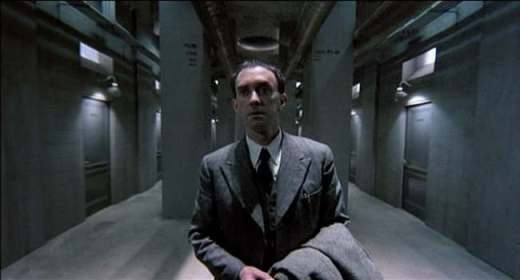
Jonathan Pryce in Brazil

Last week, we reconsidered whether or not The Hurt Locker deserved the title of Best Picture of 2009.

This week, let’s go back to the year of my birth, 1985.  According to the Motion Picture Academy, the five best films of the year were:

1) Steven Spielberg’s controversial adaptation of Alice Walker’s The Color Purple,

2) Witness, a film about a tough cop (Harrison Ford) who hides out with the Amish,

3) Kiss of the Spider Woman, one of the first independent films to ever be nominated for best picture,

4) Prizzi’s Honor, a darker than dark Mafia comedy from John Huston that starred Jack Nicholson,

and finally,

5) Out of the Africa, the film that was eventually named best picture of 1985.

Despite its victory at the Oscars, Out of Africa hasn’t aged well.  If any year seems to be worthy of a little second guessing, it would certainly be 1985.  If you were a member of the Academy in 1985, which nominee would you have voted for?  Personally, I would have voted for Witness.  How about you?

Now, here comes the fun part.  Let’s say that Out of Africa wasn’t released in 1985.  Let’s say that Steven Spielberg never made The Color of Purple and that Jack Nicholson refused to star in Prizzi’s Honor.  Let’s say that none of the five nominated film had been eligible in 1985.  Which films would you have nominated in their place?

You can vote for five of the film listed below and yes, we do accept write-ins!

(Incidentally, I voted for Brazil, The Breakfast Club, To Live and Die In L.A., The Purple Rose of Cairo, and Insignificance.)

Blue Is The Warmest Colour and Bruce Dern Win At Cannes


Bruce Dern in Nebraksa

Here are the official winners at the 2013 Cannes Film Festival:

Palme d’Or – Blue Is the Warmest Colour by Abdellatif Kechiche
Honorary Palme d’Or – Adèle Exarchopoulos and Léa Seydoux for Blue Is the Warmest Colour
Grand Prix – Inside Llewyn Davis by Joel & Ethan Coen
Best Director – Amat Escalante for Heli
Best Screenplay – Jia Zhangke for A Touch of Sin
Best Actress – Bérénice Bejo for The Past
Best Actor – Bruce Dern for Nebraska
Jury Prize – Like Father, Like Son by Hirokazu Koreeda

Both The Tree of Life and Amour were nominated for best picture after winning the Palme d’Or and, in fact, it could be argued that neither one of those films would have had the momentum necessary to score an Oscar nod if they hadn’t first won at Cannes.  It’ll be interesting to see if this trend will continue with Blue Is The Warmest Colour.

As for Bruce Dern — a Hollywood veteran who has appeared in a lot of iconic films but who has never won an Oscar — I have a feeling that he’ll be winning a lot of other awards before the Oscar season has ended.


Is It Too Late To Hate On Movie 43?


Originally,  I wasn’t planning on ever seeing Movie 43.

Remember Movie 43?  That’s the comedy with the huge ensemble cast that came out in January and stayed in theaters for about a week.  The trailers looked terrible, the commercials looked terrible, and finally, the reviews were terrible.  In fact, the reviews were so terrible (Richard Roeper called it the Citizen Kane of bad movies) that, at first, I was perfectly content never to see it.

However, as time passed, I continually heard Movie 43 referred to as being one of the worst films ever made.  Every 12 months, I post my picks for the 26 worst films of the year and I knew that Movie 43 was one of those films that would either appear on that list or, if it didn’t, I would have to be willing to defend the title’s absence.

I realized that before I could either defend or condemn, I would have to sit through the movie.  After all, I figured, it’s only 90 minutes of my life.

90 minutes that I’ll never get back, I might add.

Movie 43 is an anthology film in which 13 separate comedic sketches are loosely linked together by one overarching story.  For the most part, this is a film that was presumably made both for adolescent boys and for men who still think like adolescent boys.  Most of the humor is derived from bodily functions and there’s a real strain of misogyny running through the entire film.  However, the film’s problem is not that it’s crude and misogynistic but that it manages to be so dull about being crude and misogynistic.  If you think its hilarious when Meg is insulted on Family Guy or when Seth McFarlane smirks after making an anti-Semitic comment, you might enjoy Movie 43 but the rest of us are going to find far less to enjoy.

Oddly enough, there are actually two different versions of Movie 43 in circulation.  In the version that was released in U.S. theaters, the various vignettes are tied together by a story in which an insane director (Dennis Quaid) pitches scene after scene to a callous movie executive (Greg Kinnear).  In the version that was released in the UK, they’re linked together by a story about 3 teenagers searching for the most offensive film ever made.  To be honest, both versions are pretty stupid but I prefer the one about the 3 teenagers, if just because that way I can pretend that neither Dennis Quaid nor Greg Kinnear had anything to do with this movie.

As for the sketches themselves, there’s 13 of them and they are a mixed bag as far as both humor and quality are concerned:

1)      The Catch (dir by Peter Farrelly)

Kate Winslet and Hugh Jackman go on a blind date.  Jackman has testicles hanging from his neck and only Winslet thinks this is an odd thing.  This skit goes on forever.

2)      Homeschooled (dir by Will Graham)

Liev Schreiber and Naomi Watts explain how they’re making sure that their teenage son is getting the full high school experience despite the fact that he’s being homeschooled.  They do this through a combination of hazing and incest.  This skit worked pretty well, mostly because of the dedication that Schreiber and Watts brought to their absurd roles.

3)      The Proposition (dir by Steve Carr)

Uhmm…yeah.  So, this is the skit that opens with Anna Faris asking Chris Pratt to defecate on her.  I skipped over it because, quite frankly, life is too short.

4)      Veronica (dir by Griffin Dunne)

Neil (Kieran Culkin) is working the night shift at a depressing grocery store when his ex-girlfriend Veronica (Emma Stone) comes in.  They argue about who infected who with an STD.  Little do they realize that Neil has accidentally turned on the intercom and everyone in the store can hear them.  I actually kind of liked this short skit.  Culkin and Stone had a lot of chemistry and it was well-directed by Griffin Dunne.  Plus, it only lasted 2 minutes and, therefore, ended before the joke got old.

5)      iBabe (dir by Stephen Brill)

The iBabe is an MP3 player that happens to look like a life-size nude woman.  Unfortunately, a fan was built into the iBabe’s vagina and now, teenage boys are being dismembered while fingering and fucking iBabe.  Richard Gere plays the President of the company that makes iBabe.  I’ve never thought of Richard Gere as being a comedic actor and his performance here does nothing to change that.

6)      Superhero Speed Dating (directed by James Duffy)

Robin (Justin Long) goes speed dating and Batman (Jason Sudekis) tries to mess things up for him.  This skit – which also features (and wastes) Uma Thurman, Kristen Bell, and Bobby Cannavale – is so incredibly bad that I don’t even know where to begin.  Between this film and his appearance in last year’s The Conspirator, I’m having to rethink my slight crush on Justin Long.

7)      Machine Kids (directed by Jonathan Von Tulleken)

This commercial parody asks us to consider the children who work inside copiers and vending machines and how they are effected when we criticize those machines for not accepting our dollar.  This was actually so weird that I couldn’t help but love it.

8)      Middleschool Date (dir by Elizabeth Banks)

7th grader Amanda (Chloe Moretz) is having her first “middle school” date with Nathan (Jimmy Bennett) when she starts her first period.  In response, Nathan and his older brother (Christopher Mintz-Plasse) panic.  Believe it or not, this was actually one of the better parts of Movie 43, if just because the scene’s humor comes not from Amanda getting her period but instead from how every male around her descends into histrionics as a result.   It helps that this was the only part of Movie 43 that was both written and directed by women.  It also helps that director Elizabeth Banks is so clearly on Amanda’s side.  The end result is one of the few moments in Movie 43 that doesn’t feel misogynistic. 

9)      Tampax (dir by Patrik Forsberg)

This is another fake commercial.  Two girls are at the beach.  One uses tampax tampons and the other doesn’t.  Guess which one gets eaten by a shark?  As opposed to the previous skit, this bit of menstrual humor was obviously written and directed by a man (and the message, not surprisingly, is “Ewww!  Girls are scary and dangerous!”) but I’m going to have to admit that this one made me laugh if just because, like Middleschool Date, it reminded me of some of the period horror stories that I used to hear (and believe) back when I was younger.  (Though I was raised to be more concerned about bears than sharks…)

10)  Happy Birthday (dir by that noted comedian, Brett Ratner)

Pete (Johnny Knoxville) kidnaps an angry leprechaun (Gerard Butler) and gives it to Brian (Seann William Scott).  The leprechaun’s equally angry brother (also played by Gerard Butler) shows up and violence ensues.  Watching this skit was like being told a joke by someone who has no sense of humor.

11)  Truth or Dare (dir by Peter Farelly and Patrik Forsberg)

Halle Berry and Stephen Merchant are on a first date and Merchant has testicles on his neck…oh wait.  Sorry, that was Hugh Jackman and Kate Winslet’s skit.  In this skit, Berry challenges Merchant to game of truth or dare.  It escalates as the dares get continually more and more outrageous.  Whoops?  Did I say outrageous?  I meant to say stupid and oddly dull.  Watching this skit was like listening to a someone who has no sense of humor continue to tell a joke even though everyone else has already guessed the punchline.

12)  Victory’s Glory (dir by Rusty Cundieff)

In this parody of “inspirational” sports movies, Coach Jackson (Terrence Howard) speaks to his basketball team before they play their first game against an all-white team.  The gist of the speech is that Jackson’s team is going to win because they’re black and the other team is white.  This skit started out strong but, like a lot of Movie 43, it ran on for a bit too long.

13)  Beezel (dir by James Gunn)

This was actually my favorite part of Movie 43.  Unfortunately, since Beezel shows up in the middle of the end credits, I get the feeling that a lot of disappointed audience members had probably already walked out of the theater before it even began.  Beezel is a cartoon cat who has an unhealthy obsession with his owner (Josh Duhamel).  When Duhamel’s girlfriend (played by Elizabeth Banks) catches Beezel masturbating to pictures of Duhamel in a swimsuit, Beezel responds by plotting her demise.  Beezel was actually the only part of Movie 43 that truly felt edgy and unpredictable.  This is largely because this segment was directed by James Gunn, one of the few truly transgressive artists currently working in mainstream film.

So, here’s the question: is Movie 43 the worst film of 2013 as so many critics have claimed?  A few isolated moments aside, Movie 43 is pretty bad.  Even the parts of the film that do work can’t hope to compete with the pure horrifying incompetence of that parts that don’t.  However, thanks largely to James Gunn and Elizabeth Banks, it’s still a smidgen or so better than Tyler Perry’s Temptation.  (For all of its failings, Movie 43 never suggests that AIDS is God’s way of punishing wives who stray.  Nope, for that message, you have to go to Tyler Perry.)

Movie 43 is not the worst film of 2013.

It just seems like it.

Review: Bates Motel 1.10 “Midnight”


bates-motel-finale-freddie-highmore-norman-olivia-cooke-emma

(Have you seen this episode yet?  If not, you might not want to read this review.  Spoiler warning!)

Well, we all knew that was going to happen, didn’t we?

To recap: During last night’s episode of Bates Motel , Norman (Freddie Highmore) asked Emma (Oliva Cooke) to attend a school dance with him.  Emma bought a really pretty dress and was obviously very excited to finally go out on a real date with Norman.  However, before Emma showed up for their date, Norman was upset by 1) Bradley (Nicola Peltz) showing up at the motel so that she could talk to Dylan (Max Thieriot) and 2) Norma (Vera Farmiga) telling him that she had been sexually abused as a child.  Once they got to the dance, Norman wouldn’t stop staring at Bradley and Emma finally lost her temper, told Norman to get a ride of home from someone else, and then left.

(And allow me to just say, “You go, girl!”  Seriously…)

After getting punched out by Bradley’s boyfriend, Norman started to walk home in the pouring rain.  As always seems to happen whenever Norman is walking home, someone drove up and offered him a ride.  In this case, it was his overly concerned teacher, Miss Watson (Keegan Connor Tracy).  Miss Watson took Norman back to her place and, after washing the blood off his face, then said that she’d give Norman a ride home after changing clothes.

It was at this point that Norman started to hallucinate.  Norma suddenly appeared, sitting on a couch and demanding to know what type of teacher would actually take a student home with her and then go into her bedroom to change clothes without bothering to close the door first.

“You know what you have to do,” imaginary Norma told Norman.

One jump cut later, Norman was again walking in the rain and, as was revealed in the episode’s final scene, Miss Watson was lying dead in her bedroom with her throat cut.

This, in itself, wasn’t really a shock.  Simply by the fact that the show’s main character is Norman Bates, we already knew that he would have to end up killing someone by the end of last night’s season finale and Miss Watson, as an established character who wasn’t really central to any of the show’s storylines, was the obvious victim.  As such, what happened on last night’s episode wasn’t exactly surprising but it was still effectively handled.  While the show is often thought of as being a showcase for Vera Farmiga, Freddie Highmore has done such a good job of making Norman into a sympathetic character that it’s still somewhat upsetting to be reminded of just what Norman Bates is destined to end up doing.

Up until Norman and Emma left for their date, last night’s episode was dominated by both Norma and Vera Farmiga’s ferocious performance.  If I haven’t said it before, Vera Farmiga deserves (at the very least) an Emmy nomination for bringing Norma to such memorable life.  During last night’s episode, Norma enlisted the suddenly rather mysterious  Sheriff Romero (Nestor Carbonell)  to help her deal with Jake Abernanthy (Jere Burns).  In his calmly intimidating way, Romero confronted Abernanthy, told him that nobody did any business in his town without his permission, and then proceeded to gun Abernanthy down.  It was a moment that was as surprising as the death of Miss Watson was predictable.

And so concludes the first season of Bates Motel.  It’s been a frequently intruiging and occasionally frustrating season but, perhaps most importantly, it ended strong.  I’m still not totally convinced that there’s all that many stories available to be mined from a prequel to Psycho but I’m certainly looking forward to seeing what happens when this show returns next season.

Random Observations:

  • “SCREW OFF, SHITHEAD!”  Seriously, if Vera Farmiga didn’t already deserve Emmy consideration, she deserves it for her delivery of this one line.
  • I wonder if Eric (the guy that Miss Watson was on the phone with) will show up next season.
  • One of the best scenes last night: Norma and Dylan bonding over target practice.
  • Everyone online seems to be obsessed with hating on Bradley and hoping that Emma and Norman get together.  However, doesn’t Emma have enough to deal with without the addition of a psychotic boyfriend?
  • Speaking of Emma and Norman, their “fight” at the school dance was handled pretty well by both Olivia Cooke and Freddie Highmore.  The contrast between Cooke’s anger and Highmore’s blank expression was a definite highlight of the episode.
  • How many times, this season, was Norman offered a ride while walking down the street?  Seriously, it seems like it happened at least once every episode.
  • I’ve really enjoyed reviewing the first season of this frustrating but frequently intriguing show and I look forward to continuing to do so during the second season.

Film Review: Trance (dir by Danny Boyle)


trance

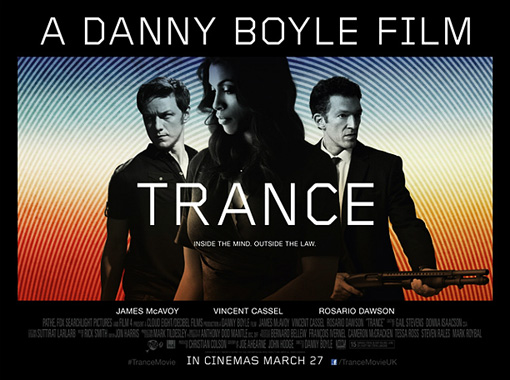
Trance, the latest film from Danny Boyle, is an enjoyable mess.  The film makes little sense, the characters are rarely consistent, and tonally, Trance is all over the place.  At the same time, it’s also a lot of fun.

Seeking to do for hypnosis what Inception did for dreams, Trance opens with Simon (an excellent James McAvoy), a fine art auctioneer who has gotten into trouble with online gambling.  Desperately needing money, Simon agrees to help the criminal Franck (Vincent Cassel) steal a painting.  However, during the robbery, Simon attacks Franck.  Franck responds by whacking Simon on the head.

As a result of the blow to his head, Simon ends up with amnesia and can’t remember anything that happened immediately after the robbery.  Unfortunately for Franck, Simon was attempting to steal the painting for himself when he got hit on the head.  As a result, neither Simon nor Franck have the painting and Simon can’t remember where he hid it.  After unsuccessfully attempting to restore Simon’s memory through physical torture, Franck then decides that Simon should see a hypnotist.

Simon goes to see Dr. Elizabeth Lamb (a surprisingly effective Rosario Dawson).  In several hallucinogenic and increasingly surreal scenes, we watch as Elizabeth leads the hypnotized Simon through the twists and turns of his own troubled subconscious.  While Simon initially lies about why he’s undergoing hypnosis, Elizabeth quickly reveals that she knows what’s going on.  However, to Franck’s surprise, Elizabeth agrees to continue to treat Simon and help him remember the location of the painting.  Soon, both Simon and Franck find themselves falling in love with Elizabeth, little suspecting that Elizabeth has an agenda of her own…

Judging from some of the reviews and other online comments that I’ve come across, I may be in a minority but I actually really enjoyed Trance.  Seriously, how can you not enjoy a film that’s so unapologetically over-the-top?  I loved the film for its lush cinematography.  I loved the fact that everyone’s apartment appeared to decorated exclusively with neon.  I loved the fact that all three of the main characters came across like they were continually on the verge of having a nervous breakdown.  In the end, I even loved the fact that Boyle didn’t even attempt to make the film realistic.  Trance is a celebration of pure style, a collection of barely connected set pieces that come together to make Trance into a pure cinematic experience.

Danny Boyle is one of those directors that people tend to either love or hate.  If you don’t like Danny Boyle, you probably won’t enjoy Trance.  However, if you’re like me and you’re an unapologetic fan, you’ll appreciate Trance for what it is, a pure triumph of style over substance.  Like many other Boyle films, the visuals are so strong, the music is so propulsive, and camerawork is so kinetic that you can forgive the fact that the film’s plot doesn’t make much sense.  Boyle may be a messy filmmaker but it’s often a beautiful mess.