Horror On TV: Beyond Belief: Fact or Fiction Episode 13


Beyond Belief: Fact or Fiction aired off-and-on for about five years on the Fox network.  A sign of just how randomly this show was scheduled can be found in the fact that season 3 started in 2000 while season 4 didn’t start until 2002.  Reruns of the show currently air on the Chiller Network which is where I recently discovered it.

Hosted by Jonathan Frakes, each episode would present the viewers with five different stories.  Each story would appear to defy logic and then, at the end of the episode, Frakes would reveal which of the stories were fact and which were fiction.  The show was often incredibly silly and yet, it occasionally had an odd charm to it.  A lot of this was due to Jonathan Frakes, who always seemed to be rather amused with it all.

Even more importantly, as bad as this show often was, it’s the perfect type of show to watch in October.  It’s the television equivalent of a scary story being told around a campfire.

Episode 13 aired during the show’s 2nd season.  Can you guess what’s fact and what’s fiction?

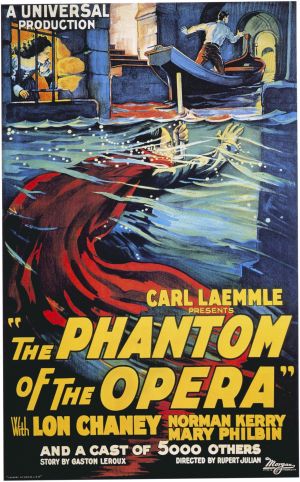
Horror On The Lens: The Phantom of the Opera (dir by Rupert Julian)


The_Phantom_of_the_Opera_(1925_film)Today’s horror movie on the Shattered Lens is both a classic of silent era and one of the most influential horror films ever made.

First released in 1925, The Phantom of the Opera is today best known for both Lon Chaney’s theatrical but empathetic performance as the Phantom and the iconic scene where Mary Philbin unmasks him.  However, the film is also a perfect example of early screen spectacle.  The Phantom of the Opera was released during that period of time, between Birth of the Nation and the introduction of sound, when audiences expected films to provide a visual feast and Phantom of the Opera certainly accomplishes that.  Indeed, after watching this film and reading Gaston Leroux’s original novel, it’s obvious that the musical was inspired more by the opulence of this film than by the book.

This film is also historically significant in that it was one of the first films to be massively reworked as the result of a poor test screening.  The film’s ending was originally faithful to the end of the novel.  However, audiences demanded something a little more dramatic and that’s what they got.

Horror Film Review: Warm Bodies (dir by Jonathan Levine)


Warm Bodies

I did not see Warm Bodies when it was first released back in February.  I was certainly aware of the film, having been bombarded with the trailer since December of 2012. and I assumed that I would see the film but, for whatever reason, I simply could not work up the enthusiasm necessary to actually see it.

Perhaps it was because the concept — a zombie love story — simply seemed too cutesy and, as much as I love zombie movies, they’re not exactly what I want to watch on Valentine’s Day.  The fact that the movie was being called a “zombie twilight” didn’t help.  (Don’t get me wrong.  The Twilight films are a very guilty pleasure of mine but that still doesn’t make the comparison a selling point.)

As a result, as much as I thought I would end up seeing Warm Bodies in the theaters, I never got around to it.  Instead, I waited until Warm Bodies premiered on Cinemax earlier this month to watch it and you know what?

I was surprised to discover how much I loved it.

Warm Bodies takes place after the zombie apocalypse has decimated America.  The undead wander through the ruins of society while the few remaining humans have barricaded themselves in a heavily guarded enclave.  Leading them is Col. Grigio (John Malkovich) who continually tells his citizens that the only way to survive is to kill every zombie that they see.  As Grigio explains it, the zombies may look human but they have no humanity left.

This would probably come as news to R (Nicholas Hoult), a zombie whose day consists of wandering around an airport, looking for people to eat, and occasionally acknowledging his friend M (Rob Corddry) with a grunt.  R spends most of his time thinking about how bored he is with being a zombie and wondering who he once was.  That’s one reason why R enjoys eating brains because, by doing so, R gets to enjoy the memories of his victims and, for just a brief few moments, he can know what it’s like to be human.

Things change for R when he and a group of zombies come across humans that are searching the city for medical supplies.  R spots one of the humans, Julie (Teresa Palmer), and finds himself immediately drawn towards her.  However, R is also shot in the chest by Julie’s boyfriend, Perry (played by Dave Franco, the younger brother of my beloved James Franco).  R responds by attack Perry and eating his brain, which causes R to experience all of Perry’s memories of Julie.  Now in love with Julie, R saves her from the other zombies and takes her back to the airplane where he makes his home.

Warm Bodies 3

As Julie and R bond, R finds himself slowly becoming more and more human.  Yes, that’s right — the cure to the zombie apocalypse is love.  Now, that may sound predictable or simplistic and I guess it is.  But you know what?  I’m a romantic and I loved it!  It helped that both Palmer and Hoult have a really likable chemistry.  Even before R’s heart starts to beat again, they make a really adorable couple.

Unfortunately, the more R tries to act human, the more the other zombies want to eat him.  This is especially true of the Boneys, zombies who have decayed to the point of just being skeletons and who prey on anything that happens to have the slightest trace of a heartbeat.  Meanwhile, Julie’s father — Col. Grigio — remains firmly convinced that the only cure for zombification is a bullet in the head.

Though there are moments of horror in Warm Bodies (mostly involving the Boneys, who are genuinely scary), the film is mostly concerned with telling an audience-friendly love story.  As I watched the film, I occasionally found myself wishing that the movie has been directed by someone like James Gunn, who would have brought a bit more of a satiric bite to the film.

And yet, despite being occasionally frustrated by how (literally) bloodless the film was, I loved Warm Bodies.

What can I say?  It’s an incredibly sweet and romantic movie and, as much as its fashionable to be cynical, who can resist a good love story?  If anything truly elevates Warm Bodies above being just another supernatural romance, it’s the performance of Nicholas Hoult.  Even when he’s just stumbling around with a blank face and uttering meaningless groans, Hoult makes R into a likable flesh eater.  As sweet as the idea of love bringing life to the dead may be, it’s Hoult’s intelligent performance that makes both the idea and the romance feel real.

And that’s why I loved Warm Bodies.

Warm Bodies2

Horror On TV: Twilight Zone 3.7 “The Grave”


This is another fun one.

In The Grave, old west outlaw Pinto Sykes is gunned down by a group of townspeople and buried in a lonely grave.  However, before Sykes dies, he swears that if the bounty hunter Miller (Lee Marvin) ever comes near his grave, he’ll reach out of the ground and grab him.  Needless to say, it’s not long before Miller is challenged to put Sykes’s dying words to the test.

This episode of The Twilight Zone was written and directed by Montgomery Pittman.  It originally aired on October 27th, 1961.  Classic western fans will immediately recognize the majority of the cast.

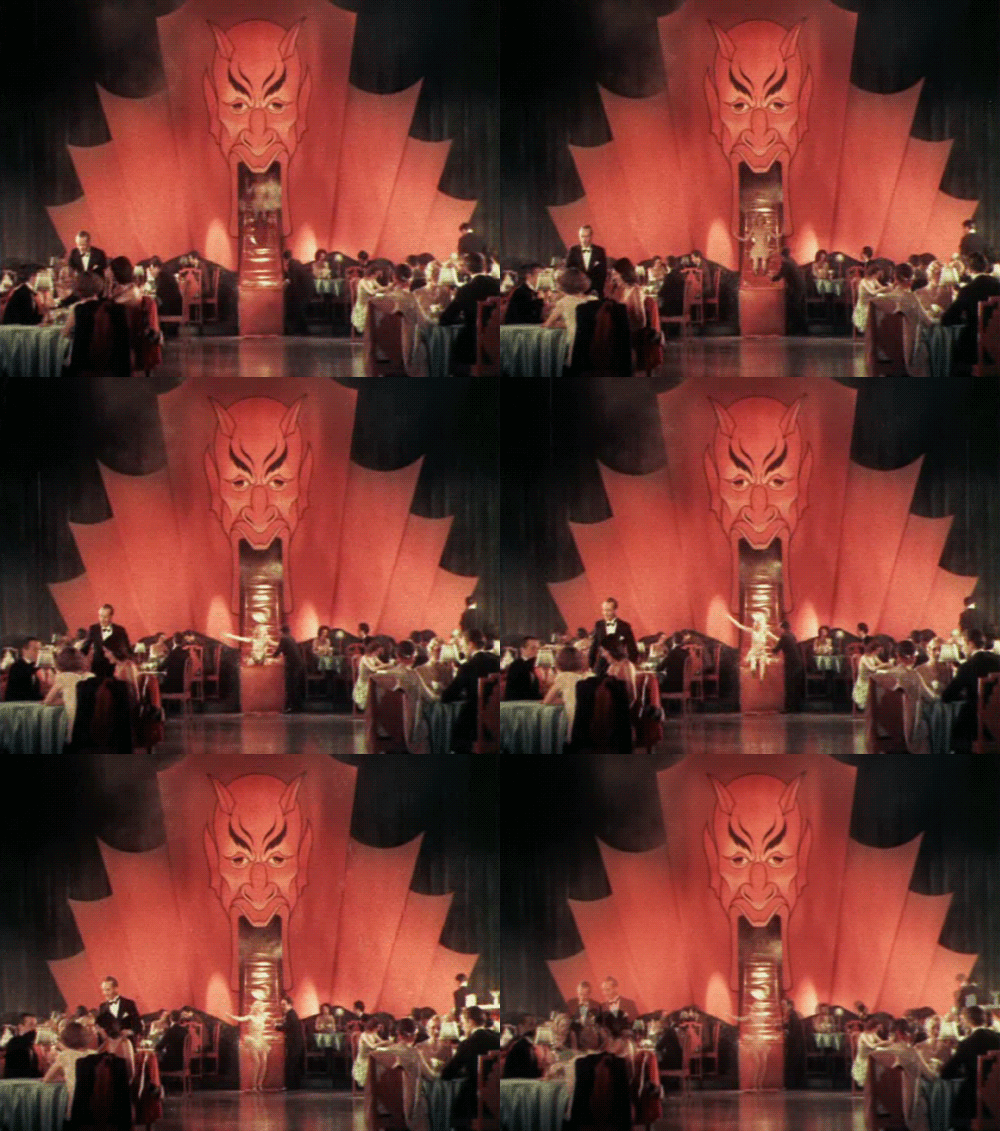
What the Hell is This? The Devil’s Cabaret.


The Devil's Cabaret

Today, I want to take about 18 minutes to share something with our readers.  The Devil’s Cabaret is an early color short film from 1930.  I recent caught it on TCM and my immediate reaction was that I simply had to share it.  Along with fitting in with the October theme of this site, The Devil’s Cabaret provides ample evidence of just how weird Hollywood could be before the production code was instituted.

Incidentally, the devil is played Charles Middleton who, nearly two decades later, would play The Strangler of the Swamp.

Enjoy The Devil’s Cabaret!

Film Review: Brother John (dir by James Goldstone)


Yesterday, while I was out running, I tripped over an invisible rock (at least I think it was an invisible rock) and I twisted my ankle. My first impulse was to check to see if I was being chased by zombies since I’ve learned from movies that anytime a woman sprains her ankle, there has to be either zombies or a masked killer somewhere nearby. Fortunately, movies are not real life. Anyway, I’m staying home from work today, trying to rest and stay off my ankle — which means going against every naturally hyper instinct in my body.

Fortunately, I’ve got thousands of movies, a lot of books, and a TV to help comfort me as I spend the day on the couch.  (I also have the sound of my landlord’s son mowing the lawn outside.)   Earlier this morning, as I was exploring everything that television has to offer, I came across a channel called Bounce TV and a movie called Brother John.

Up until I randomly came across it on Bounce TV, I had never heard of Brother John.  A quick google search hinted that I probably wasn’t alone in that.  Brother John appears to be a rather obscure film.

And that’s a shame because, as I quickly discovered, Brother John is actually a pretty interesting film.

Released in 1971, Brother John takes place in a small town in Alabama.  The majority of the town’s black citizens work at the local factory, where they are exploited by the white owners and kept in check by the white sheriff (who, as played by Ramon Bieri, is the epitome of the nightmarish Southern law enforcer).  When the workers, under the leadership of the charismatic Charlie Gray (Lincoln Kilkpatrick), threaten to unionize, the town finds itself on the verge of exploding into racial violence.

Into all of this comes John Kane (Sidney Poitier).  Wearing a dark suit and viewing the world through weary eyes, John grew up in the town.  The local doctor and town drunk Doc Thomas (Will Geer) can still remember delivering John.  However, John mysteriously vanished when he was a teenager.  As Doc Thomas points out, John only returns after someone dies.  In this case, it was the funeral of John’s sister that led to him returning to town.

This time, however, John doesn’t leave immediately after the funeral.  Instead, he spends a few days in the town and dates a school teacher (Beverly Todd).  The authorities — led by Doc Thomas’s politically ambitious son, Lloyd (Bradford Dillman) — are convinced that John is a labor agitator who has come to town to start trouble.  Meanwhile, the factory workers (including Todd’s ex-boyfriend, played by Paul Winfield) are angered by John’s reticent nature.

After having John arrested, Lloyd discovers, from looking at John’s passport, that John has been all over the world, even to communist countries that should be closed to American citizens.  He discovers that John carries a journal that’s full of empty pages.  When he asks John how he managed to learn a dozen different languages, John replies, “I listened.”  Lloyd thinks John is a communist.  Doc Thomas, meanwhile, is convinced that John is something more than just a human being…

Who is Brother John?  That’s the question that everyone’s asking in this film.  It’s a question that the film never answers.  Instead, it’s up to the audience to consider the enigmatic clues offered up in this film and come to their own conclusions.

And that is why I enjoyed Brother John.  It’s a film that encourages the audience to think for itself.  Featuring an excellent performance from a perfectly cast Sidney Poitier and plenty of moody Southern atmosphere, Brother John is a great discovery waiting to be found.

brother-john-movie-poster-1971-1020235424

Horror On The Lens: Plan 9 From Outer Space (dir by Edward D. Wood, Jr.)


Plan_9_Alternative_poster

We have a few traditions here at the Shattered Lens.  Every Christmas, we feature Treevenge.  Every Halloween, we invite everyone to watch Night of the Living Dead.  And every October, we offer up Ed Wood’s classic plea for world peace, Plan 9 From Outer Space.

Enjoy!

Horror On TV: Twilight Zone 5.25 “The Masks”


In “The Masks,” a group of greedy relatives gather at the New Orleans home of Jason Foster (Robert Keith).  Foster is on the verge of death and the relatives are eagerly waiting their chance to claim their inheritance.  However, as Foster informs them, they will only get paid if they wear masks that are meant to reflect their inner natures…

This episode of the Twilight Zone first aired on March 20th, 1964.  As written by Rod Serling and directed by Ida Lupino (making her the only woman to direct an episode of the original Twilight Zone), this episode is full of gothic Southern atmosphere and it’s a perfect addition for any Halloween viewing marathon.

Add to that, the masks are really creepy!

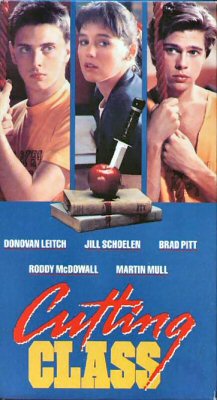
Horror On The Lens: Cutting Class (dir by Rospo Pallenberg)


Cutting_Class_film_poster

it’s been said that, early in the career of every Oscar nominee, there’s a film or two that he probably wishes would be forgotten.  Today’s movie is one of those films, 1989’s Cutting Class.

Cutting Class is, in many ways, a fairly standard 1980s slasher comedy hybrid.  It features a stronger heroine than most and it does a bit of a better job than expected at making you guess who the killer is but, for the most part, Cutting Class is mostly memorable for being one of Brad Pitt’s first major roles.

The bad news is that the character he’s playing here is kind of an asshole and not even the fact that he looks like Brad Pitt can make him likable.

The good news is that Brad Pitt has always been hot.

And here’s the proof…

Horror On TV: Twilight Zone 5.19 “Night Call”


In this poignantly haunting episode of the Twilight Zone, Gladys Cooper plays a lonely widow who starts to receive mysterious phone calls from a stranger.

This episode was written by Richard Matheson (and based on his short story Long Distance  Call) and it was directed by Jacques Tourneur.  Tourneur is probably best known for directing moody horror films like Cat People and Curse of the Demon and he brings a similar atmosphere to Night Call.

Night Call originally aired on February 7, 1964.