Insomnia File #69: Candy (dir by Christian Marquand)


What’s an Insomnia File? You know how some times you just can’t get any sleep and, at about three in the morning, you’ll find yourself watching whatever you can find on cable or streaming? This feature is all about those insomnia-inspired discoveries!

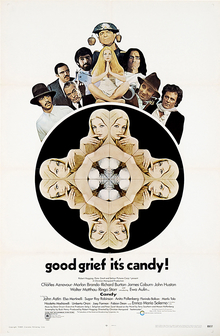
If you find yourself having trouble getting to sleep tonight, you can always pass the time by watching the 1968 film, Candy.  It’s currently on Tubi.

Based on a satirical novel by Terry Southern and Mason Hoffenberg, Candy follows Candy Christian (Ewa Aulin), a naive teenager from middle America as she has a number of increasingly surreal adventures, the majority of which end with her getting sexually assaulted by one of the film’s special guest stars.  It’s very much a film of the 60s, in that it’s anti-establishment without actually seeming to know who the establishment is.  It opens with a lengthy sequence that appears to be taking place in outer space.  It ends with an extended sequence of Candy walking amongst the film’s cast and a bunch of random hippies.  Director Christian Marquand appears as himself, directing the film.  Yep, this is one of those films where the director and the film crew show up and you’re supposed to be say, “Far out, I didn’t realize I was watching a movie, man.”

The whole thing is a bit of a misfire.  The novel was meant to be smut that satirized smut.  The film isn’t really clever enough to work on any sort of real satirical level.  As was the case with a lot of studio-made “psychedelic” films in the 60s, everything is a bit too obvious and overdone.  Casting the Swedish Ewa Aulin as a character who was meant to represent middle America was just one of the film’s missteps.  Based on The Graduate, Mike Nichols probably could have made a clever film out of Candy.  The French Christian Marquand, a protegee of Roger Vadim’s, can not because he refuses to get out of the film’s way.  It’s all jump cuts, flashy cinematography, and attempts to poke fun at American culture by someone who obviously knew nothing about America beyond the jokes told in Paris.

That said, the main reason that anyone would watch this film would be for the collection of guest stars who all show up and try to take advantage of Candy.  Richard Burton plays an alcoholic poet named MacPhisto and his appearance goes on for far too long.  (Burton, not surprisingly, appears to actually be drunk for the majority of his scenes.)  Ringo Star — yes, Ringo Starr — plays a Mexican gardener who assaults Candy after getting turned on by the sight of MacPhisto humping a mannequin.  When Emmanuel’s sisters try to attack Candy, she and her parents escape on a military plane that is commanded by Walter Matthau.  Landing in New York, Candy’s brain-damaged father (John Astin) is operated on by a brilliant doctor (James Coburn) who later seduces Candy after she faints at a cocktail party.  Candy’s uncle (John Astin, again) also tries to seduce Candy, leading to Candy getting lost in New York, meeting a hunchback (Charles Aznavour), and then eventually ending up with a guru (Marlon Brando).  Candy’s adventures climax with a particularly sick joke that requires a bit more skill to pull off than this film can afford.

If you’re wondering how all of these famous people ended up in this movie, you have Brando to thank (or blame).  Christian Marquand was Brando’s best friend and Marlon even named his son after him.  After Brando agreed to appear in the film, the rest of the actors followed.  Brando, Burton, and Coburn received a share of the film’s profits and Coburn later said that his entire post-1968 lifestyle was pretty much paid for by Candy.  That seems appropriate as, out of all the guest stars, Coburn i the only one who actually gives an interesting performance.  Burton is too drunk, Matthau is too embarrassed, Starr is too amateurish, and Brando is too self-amused to really be interesting in the film.  Coburn, however, seems to be having a blast, playing his doctor as being a medical cult leader.

Candy is very much a film of 1968.  It has some value as a cultural relic.  Ultimately, it’s main interest is as an example of how the studios tried (and failed) to latch onto the counterculture zeitgeist.
Previous Insomnia Files:

  1. Story of Mankind
  2. Stag
  3. Love Is A Gun
  4. Nina Takes A Lover
  5. Black Ice
  6. Frogs For Snakes
  7. Fair Game
  8. From The Hip
  9. Born Killers
  10. Eye For An Eye
  11. Summer Catch
  12. Beyond the Law
  13. Spring Broke
  14. Promise
  15. George Wallace
  16. Kill The Messenger
  17. The Suburbans
  18. Only The Strong
  19. Great Expectations
  20. Casual Sex?
  21. Truth
  22. Insomina
  23. Death Do Us Part
  24. A Star is Born
  25. The Winning Season
  26. Rabbit Run
  27. Remember My Name
  28. The Arrangement
  29. Day of the Animals
  30. Still of The Night
  31. Arsenal
  32. Smooth Talk
  33. The Comedian
  34. The Minus Man
  35. Donnie Brasco
  36. Punchline
  37. Evita
  38. Six: The Mark Unleashed
  39. Disclosure
  40. The Spanish Prisoner
  41. Elektra
  42. Revenge
  43. Legend
  44. Cat Run
  45. The Pyramid
  46. Enter the Ninja
  47. Downhill
  48. Malice
  49. Mystery Date
  50. Zola
  51. Ira & Abby
  52. The Next Karate Kid
  53. A Nightmare on Drug Street
  54. Jud
  55. FTA
  56. Exterminators of the Year 3000
  57. Boris Karloff: The Man Behind The Monster
  58. The Haunting of Helen Walker
  59. True Spirit
  60. Project Kill
  61. Replica
  62. Rollergator
  63. Hillbillys In A Haunted House
  64. Once Upon A Midnight Scary
  65. Girl Lost
  66. Ghosts Can’t Do It
  67. Heist
  68. Mind, Body & Soul

Late Night Retro Television Review: Highway to Heaven 3.18 “A Mother And A Daughter”


Welcome to Late Night Retro Television Reviews, a feature where we review some of our favorite and least favorite shows of the past!  On Thursdays, I will be reviewing Highway to Heaven, which aired on NBC from 1984 to 1989.  The entire show is currently streaming on Tubi and several other services!

This week, Jonathan is considered for a promotion!

Episode 3.18 “A Mother And A Daughter”

(Dir by Michael Landon, originally aired on February 4th, 1987)

Jonathan and Mark are in Hollywood …. again!

Seriously, it’s interesting how many episodes of Highway to Heaven found Jonathan and Mark dealing with movie stars and entertainment executives in Hollywood.  Every Hollywood episode basically followed the same plot.  Jonathan is all-business while Mark is excited to meet one of his old screen idols.  One thing that is a bit odd is that Mark always acts as if he’s never been in Hollywood before, even though almost every season usually featured several Hollywood episodes.

This time, they’ve been assigned to repair the relationship between veteran film star Phoebe Hall (Gloria DeHaven) and her estranged daughter, Gail (Judith Chapman).  Gail is writing a tell-all book about Phoebe, one that is set to be published at the same time that Phoebe is receiving a lifetime achievement award at a televised ceremony.  Can Jonathan get Gail to forgive her mother by showing Gail a bunch of old home movies?  Can Mark show Pheobe how much her career means to her fans?  Episodes in which Jonathan dealt with a film star who hadn’t been there for their children always seemed to hit Michael Landon extra hard.  His children have said that Landon was a bit of a workaholic and not always the most present of fathers.  One gets the feeling that this episode was Landon’s way of dealing with his own regrets.

While Jonathan works, he’s observed by another angel, Henry Clifford (Basil Langston).  Henry confides to Mark that Jonathan is being considered for a promotion into Heaven.  Mark briefly thinks about purposefully tanking the assignment so that Jonathan will stay on Earth with him.  Jonathan explains that they can’t do that and, to the show’s credit, Mark quickly realizes that Jonathan’s correct.  (Doing a bad job on purpose would have gone against everything the show had established about Mark’s character.)  In the end, Henry says that Jonathan will be staying on Earth for the time being because that’s obviously where Jonathan can do the most good.  Jonathan and Mark are happy.

That said, I do find it curious that the show has never really examined how Jonathan feels about the prospect of finally heading “upstairs.”  I mean, as Jonathan explains during this episode, he’s dead.  He’s been dead for a long time.  Wouldn’t he like to relax and enjoy his final reward?  Some people really like to work.  To be honest, I’d probably be the same way.  Give me a choice between going to Heaven and reviewing movies as a ghost …. well, it would be a hard decision for me.

Anyway, this was a sweet episode.  Highway to Heaven‘s strength was that it was shamelessly optimistic and earnest and that’s certainly the case here.

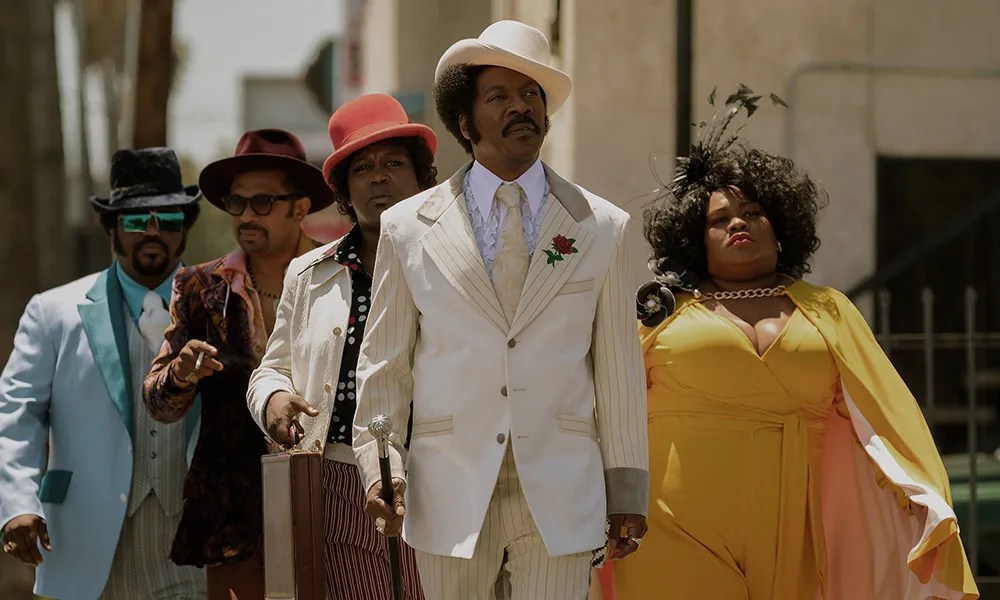
4 Shots From 4 Films – featuring Eddie Murphy!


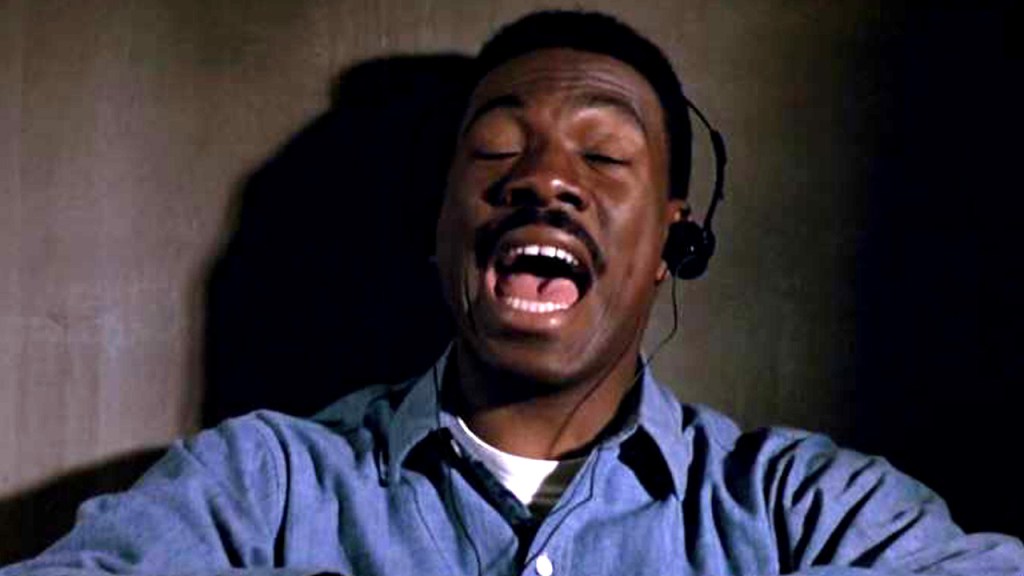
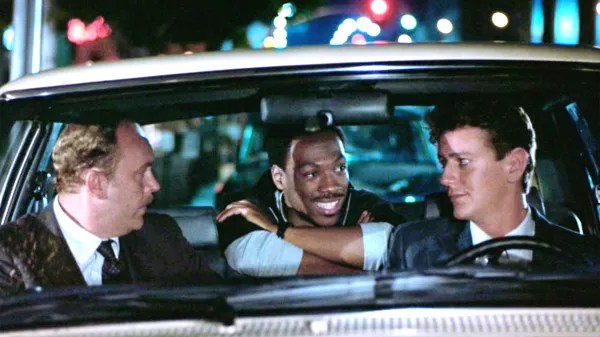
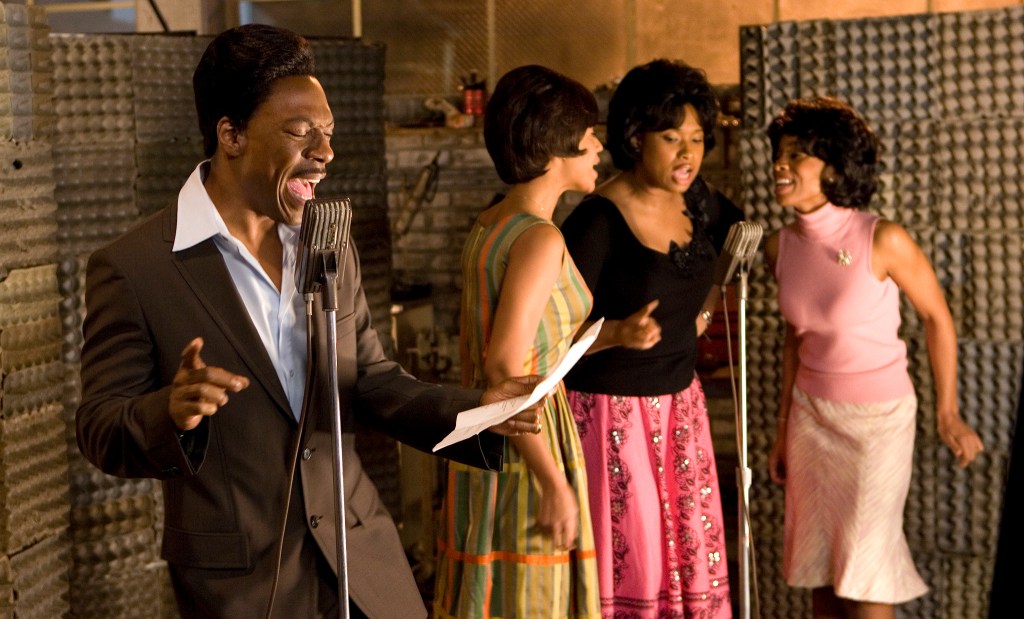
4 Shots From 4 Films is just what it says it is, 4 shots from 4 of our favorite films. As opposed to the reviews and recaps that we usually post, 4 Shots From 4 Films lets the visuals do the talking.

I’m just barely getting this in under the wire, but I wanted to celebrate Eddie Murphy’s 64th birthday on April 3rd with a few images from some of his best performances. He is a truly talented actor and comedian, and I’ve pretty much loved him my entire life. Thanks for all the great memories, Eddie, and I’m looking forward to many more!

48 HRS. (1982)

BEVERLY HILLS COP (1984)

DREAMGIRLS (2006)

DOLEMITE IS MY NAME (2019)

The Rangers Are 5-2!


The Rangers finally got a day off from playing today.  Personally, I think they more than earned it.  Yesterday, they won their second series of the regular season, defeating the Reds with a score of 1-0.  Two weeks into the regular season and my team is 5-2 and at the top of AL West.  That’s what I love to see!

Tomorrow, they play the Rays.  For now, here’s the highlights of yesterday’s game!

Song of the Day: Do Lung by Francis Ford Coppola and Carmine Coppola


Since today is Marlon Brando’s birthday, it only seems appropriate that today’s song of the day should come from the soundtrack of one of his films.  (I’ll also be watching this film later tonight.)

From 1979’s Apocalypse Now, here is the haunting music that plays as Willard and the boat approach the infamous bridge that is built every day so that it can be destroyed every night.

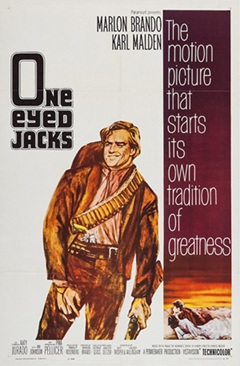
One-Eyed Jacks (1961, directed by Marlon Brando)


Rio (Marlon Brando), a young outlaw in the Old West, is betrayed by his partner and mentor Dad Longworth (Karl Malden) and ends up spending five years in a Mexican prison.  When Rio escapes, he gets together a new gang and heads for Monterey, California.  He wants to both get his revenge on Longworth and also rob the local bank.  Things get complicated when Rio actually confronts Longworth and suddenly realizes that he can’t bring himself just to gun the man down in cold blood.  Rio is not as ruthless of an outlaw as he thought he was.

However, Rio then meets and falls in love with Louisa (Pina Pellicer), Longworth’s stepdaughter  Longworth is willing to do whatever he has to keep Rio away from Louisa and, when Rio starts to think about going straight in an effort to win Louisa’s love, his new gang turn out to be even less trustworthy than his old partners.

A teenage rebellion film disguised as a western (and it’s not a coincidence that the main bad guy is named Dad), One-Eyed Jacks was Marlon Brando’s only film as a director.  The film was originally meant to be directed by Stanley Kubrick, who was working from a script written by a once-in-a-lifetime combination of Rod Serling and Sam Peckinpah.  Kubrick and Brando worked together to develop the film, with Brando insisting on Karl Malden as Dad.  (Kubrick wanted to cast Spencer Tracy.)  Ultimately realizing that working on One-Eyed Jacks would mean essentially taking orders from his star, Kubrick stepped down from directing so he could focus on Lolita and Brando took over as director.  The film finally went into production in 1958 and would not be released until 1961.  Brando’s perfectionism was blamed for the film going massively overbudget and, when it was finally released, One-Eyed Jacks was the first of Brando’s films to lose money.  The combined box office failures of One-Eyed Jacks and the remake of Mutiny on the Bounty left Brando in the cinematic wilderness for much of the 60s.

As for the film itself, One-Eyed Jacks takes what should have been a simple story and attempts to turn into an epic.  Rio spends a good deal of time brooding and the film seems to brood right along with him.  What starts out as a western becomes a forbidden love story as Rio and Louisa fall for each other.  Dad Longworth may be an outlaw-turned-sheriff but Malden plays him more as a possessive father who can’t handle that his two stepchildren — Rio and Louisa — are both turning against him and his strict rules.  Brando obviously viewed the film as being something bigger than a standard western.  Sometimes, his direction works and he does manage to get the epic feel that he was going for.  Other times, the film itself seems to be unsure what direction it wants to go in telling its story.  This is method directing.

Ultimately, One-Eyed Jacks is an interesting experiment, one that doesn’t really work but which still features Charles Lang’s outstanding cinematography and one of Karl Malden’s best performances.  As Brando’s only directorial effort, the film is a curiosity piece, one that will be best enjoyed by western fans who have the patience for something a little different.  And, for what it’s worth, based on the film’s visual beauty and the performances that he gets from the cat, I think Brando could have developed into a fine director with a little more experience.  However, it was not to be.


Retro Television Review: Malibu CA 2.7 “The Long Goodbye”


Welcome to Retro Television Reviews, a feature where we review some of our favorite and least favorite shows of the past!  On Thursdays, I will be reviewing Malibu CA, which aired in Syndication in 1998 and 1999.  Almost the entire show is currently streaming on YouTube!

Yes, this is from the first season. I don’t care. I refuse to waste my time looking for a second season advertisement.

This week, Jason ruins his life.  Or at least, that’s what I assume happened.

Episode 2.7 “The Long Goodbye”

(Dir by Gary Shimokawa, originally aired on November 20th, 1999)

Here’s the plot of this week’s episode, according to the imdb:

After a successful audition before Alex’s uncle the producer, Jason gets the go-ahead to make a demo recording. He’s surprised to see that the producer sent to work with him is a woman: a young, attractive one. Jason works with Kendall and there seems to be a spark between them. Stads calls from Europe. Jason tells her about the demo but not that the producer is female.

Wow, that sounds great!  (If you’re detecting heavy sarcasm, you are indeed a perceptive reader.)  Too bad this episode is one of the ones that has not been uploaded to YouTube.  Or actually, maybe it’s not that bad that I have an excuse not watch it.  I’ve never bought into the whole idea of Jason being this massively talented singer and songwriter.  According to Wikipedia, this episode was the last appearance as Stads so I’m going to guess that Jason not mentioning his producer being female led to a break-up.  Oh well!

Consider this a placeholder.  If this episode ever is uploaded, I’ll review it.

Film Review: A Dry White Season (dir by Euzhan Palcy)


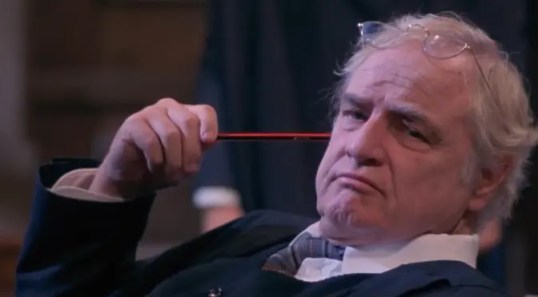
In 1990, Marlon Brando received his final Academy Award nomination when he was nominated for his supporting performance in 1989’s A Dry White Season.

Brando played Ian McKenzie, a human rights lawyer who lives and work in South Africa at the height of the Apartheid regime.  When we first see McKenzie, he’s sitting in his office and complaining about how all the flowers surrounding him have given him a permanent allergy.  When Ben Du Toit (Donald Sutherland) explains that he’s trying to learn the truth about why his gardener and his gardener’s son both died in the custody of South Africa’s “special branch,” McKenzie replies that bringing the case would be a waste of time.  McKenzie makes several dismissive comments about the case and tells Du Toit that pursing the matter would lead to Du Toit becoming a pariah himself.  Only when Du Toit says that he’ll just find another lawyer to pursue the manner does McKenzie agree to take the case.  His comments may have seemed callous but they were McKenzie’s way of testing Du Toit’s commitment to actually getting to the truth.

Up until the death of his gardener, Ben Du Toit was someone who blindly believed in the system.  A former rugby star and a teacher, Ben grew up in South Africa and is proud to call himself a “true African.”  (In one of the film’s best scenes, Ben’s driver, Stanley — played by Zakes Mokae, — informs Ben that being an African in South Africa means not being allowed to vote and having to carry identification papers everywhere with him.)  When the gardener’s son is first arrested, Ben repeatedly says, “He must have done something.”  When Ben’s gardener is arrested, Ben believes that it’s all just a terrible mistake and that he’ll be released soon.  Even after the gardener is killed, Ben initially believes the official story that the death was a suicide.  It’s only after Stanley takes Ben to the funeral home and shows him the gardener’s tortured body that Ben finally comes to realize that he was tortured to death by Captain Stolz (Jurgen Prochow).

Still, Ben is naive enough to assume that McKenzie will be able to get some sort of justice.  In court, McKenzie easily exposes the flaws in Stolz’s story.  When Stolz claims that the dead man’s injuries were the result of the man throwing himself against the bars of his cell, McKenzie mentions that the man’s back was injured and then asks if he was throwing himself backwards.  Stolz smirks and says that the man was “an animal.”  McKenzie may be a brilliant lawyer but it’s a foregone conclusion that he’s going to lose the case.  Stolz is exonerated and the expression on McKenzie’s face is one that indicate that he is not surprised at all.

It’s a small role.  Brando gets less than ten minutes of screentime but he makes perfect use of them and shows that, even in the latter half of his career, Brando could still give a good performance when he cared about the material.  Both Brando and Susan Sarandon took small roles in this anti-Apartheid drama because they believed in the message.  Sarandon’s casting is a bit distracting.  She never becomes the journalist she’s playing, instead she just seems like a movie star lending her name to a cause that she believes in.  But Brando becomes Ian McKenzie and he expertly reveals the absurd lengths to which the Apartheid government will go to excuse its actions.

The majority of the film deals with Ben Du Toit and his slow-awakening about the truth of the country that he calls home.  Upon realizing the truth about the country’s government and its actions, Du Toit declares that he can no longer go back to being who he once was and it costs him his family, his home, and ultimately his life.  Donald Sutherland does a wonderful job, portraying Du Toit’s growing understanding of what’s actually happening in South Africa.  Wisely, the film doesn’t portray Du Toit as being a saint.  It fully understands that Du Toit only started to care about Apartheid when it effected somebody that he knew and fortunately, Stanley is always there to call Du Toit out whenever he starts to forget about his own role in supporting the system that he now opposes.  It’s a powerful and heartfelt film, one that is well-known for Brando’s performance but works just as well when Brando is off-screen as well.

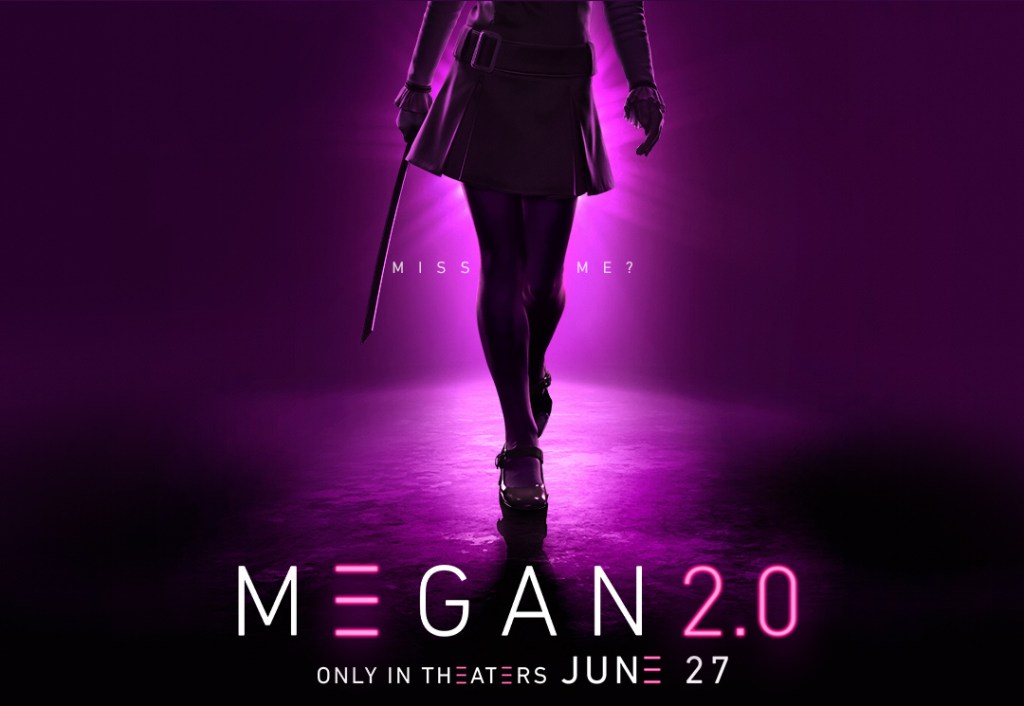
Trailer: M3GAN 2.0


M3GAN in 2022 was a surprise hit that no one saw coming. What would’ve been a a nice little horror film from Blumhouse that would’ve come and gone with little fanfare suddenly became a major hit due to the viral marketing of the titular character’s dancing shown in the initial trailer becoming a huge internet meme.

Now we are back with the sequel (I don’t think anyone was surprised that Blumhouse quickly greenlit a follow-up) and it looks like the original team of director Gerard Johnstone and writer Akela Cooper are back to headline M3GAN 2.0.

The sequel looks to be bigger and a bit more ambitious with more than just a bit of a Terminator 2 vibe with the title character looking to be more of the savior and not just an overprotective killing AI doll.

Will M3GAN 2.0 be able to replicate the viral success of the first film? We shall find out on June 27, 2025.