-Sean Baker, Tangerine – (for producing, directing, screenwriting, film editing, cinematography, camera operation, and casting)
-Joel Edgerton, The Gift – (for producing, directing, and screenwriting)
-David Robert Mitchell, It Follows – (for producing, directing, and screenwriting)
-Daisy Ridley, Star Wars: Episode VII – The Force Awakens – (for acting)
-Jacob Tremblay, Room – (for acting)
-Alicia Vikander, Burnt, The Danish Girl, Ex Machina, The Man from U.N.C.L.E., Seventh Son, and Testament of Youth – (for acting)
Best Cinematography
-Roger Deakins, Sicario
-Emmanuel Lubezki, The Revenant
-Robert Richardson, The Hateful Eight
-John Seale, Mad Max: Fury Road
-Dariusz Wolski, The Martian
-Emma Donoghue, Room
-Drew Goddard, The Martian
-Nick Hornby, Brooklyn
-Charles Randolph and Adam McKay, The Big Short
-Aaron Sorkin, Steve Jobs
Best Original Screenplay
-Pete Docter, Meg LeFauve, and Josh Cooley, Inside Out
-Alex Garland, Ex Machina
-Taylor Sheridan, Sicario
-Josh Singer and Tom McCarthy, Spotlight
-Quentin Tarantino, The Hateful Eight
Best Score
-Carter Burwell, Carol
-Michael Giacchino, Inside Out
-Jóhann Jóhannsson, Sicario
-Junkie XL, Mad Max: Fury Road
-Ennio Morricone, The Hateful Eight
I have to admit I was scared going into this. Based on the plot summary it sounded like it was going to be Strawberry Summer Retread: A Country Wedding, Part II. Strawberry Summer was the epic disaster that I can’t possibly summarize and A Country Wedding was about 90 minutes of snide, stupid, ignorant, and redneck dialogue that made both of the characters look like hicks. Also, this movie was directed by the man who keeps bringing us Baby Geniuses sequels and directed 3 Ninjas: High Noon at Mega Mountain (1998). So you can imagine my trepidation going into this movie. But how bad could it be? I mean I like Luke Perry. Well, it turned to out to reasonably good. It has it’s problems, but it’s not bad at all.
First things first though. With this movie, and Jesse Stone: Lost In Paradise, Luke Perry is yet another of the Beverly Hills, 90210 crowd to make their way to Hallmark:
Those are just the ones I have reviewed. However, I’m pretty sure we haven’t seen Gabrielle Carteris, Joe E. Tata, Carol Potter, or Brian Austin Green yet. Ian Ziering is busy fighting sharks. And yes, I am aware that Tiffani Thiessen was in Northpole, but I haven’t seen it so it doesn’t count. Same goes for those other Luke Perry Hallmark movies as well.
But back to this movie. It opens up with Luke in front of a green screen, then we get the title card, before it cuts back to this.
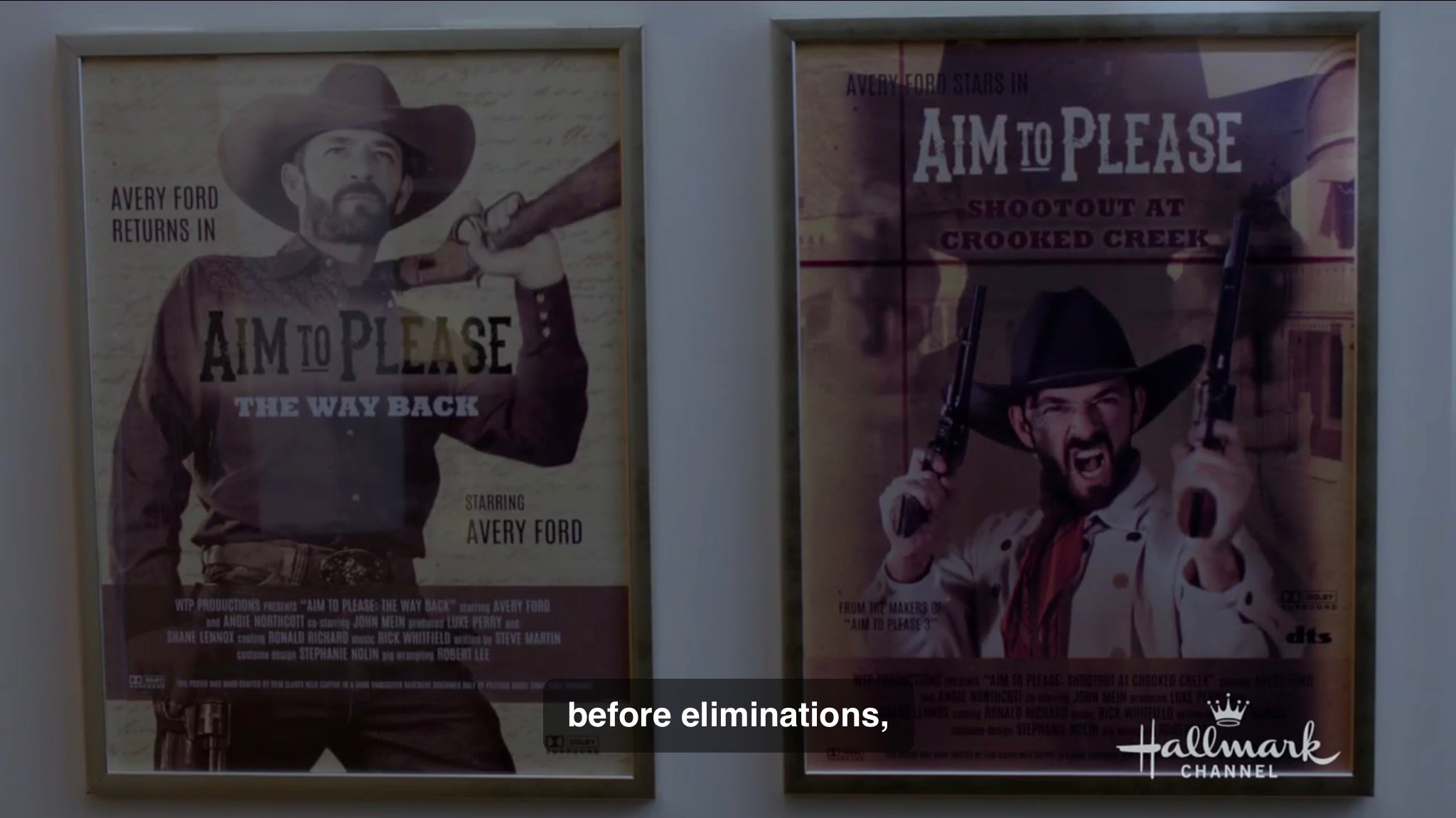
I know his character’s name is Avery Ford, but I don’t care. He is Dylan McKay to me now and always. So Dylan here is an aging star of westerns called Aim To Please. And look! They were made by the same people who worked on this film.
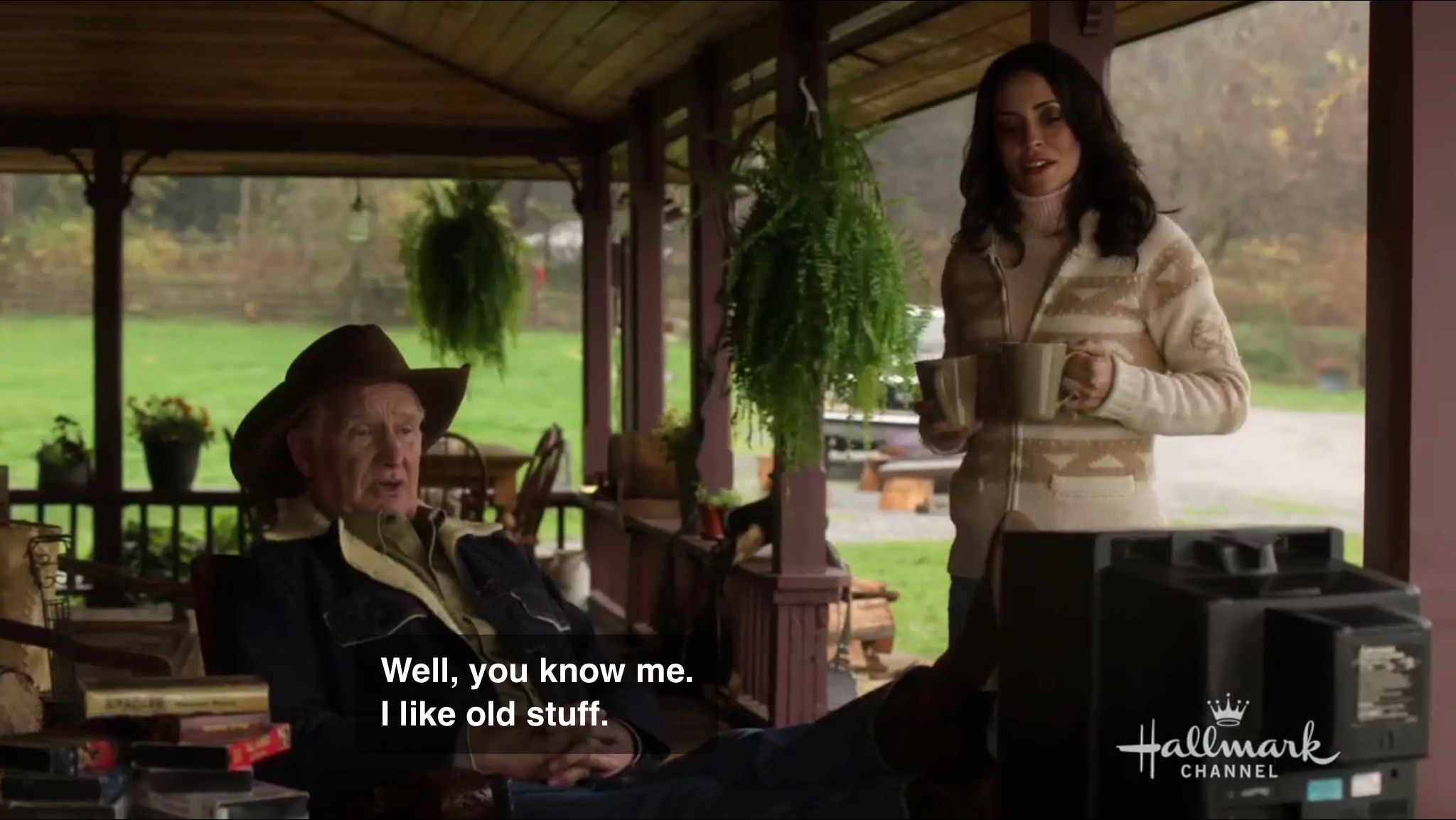
Notice that includes Luke Perry himself as a producer. Dylan isn’t a happy man. He doesn’t like hocking beans. Now we meet Heather (Emmanuelle Vaugier) and her father Casey (Tom Butler).
Turns out Casey is a fan of Dylan’s work as a western star. Also, it turns out the hotel/ranch is in Montana. And by Montana, they mean Agassiz, British Columbia, Canada. Well, at least for these shots.
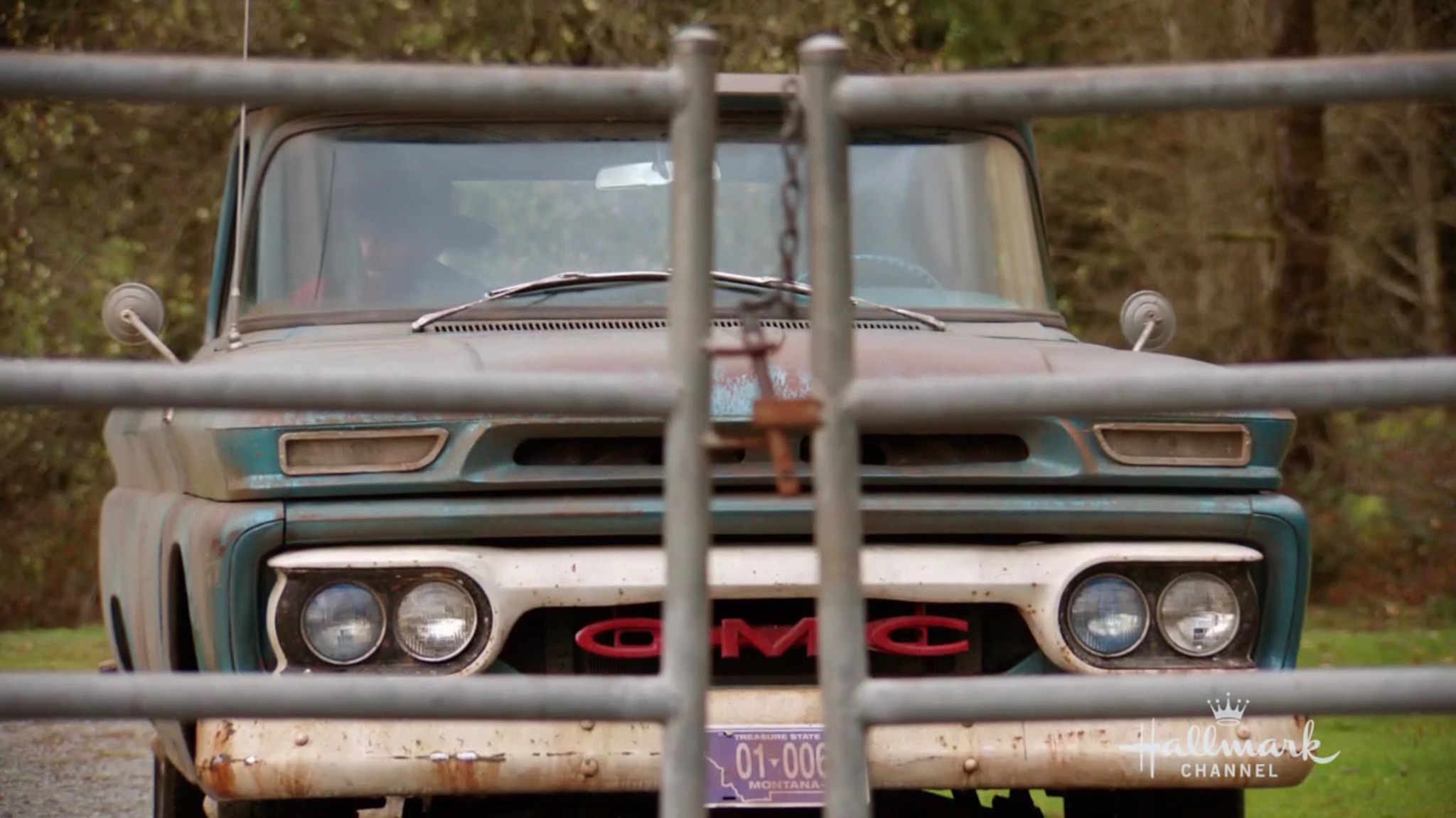
I have to assume the main set is also in the area, but I couldn’t pin it down. They also do a reasonably good job with the license plates too. I think all the major cars in the movie have Montana plates on them.
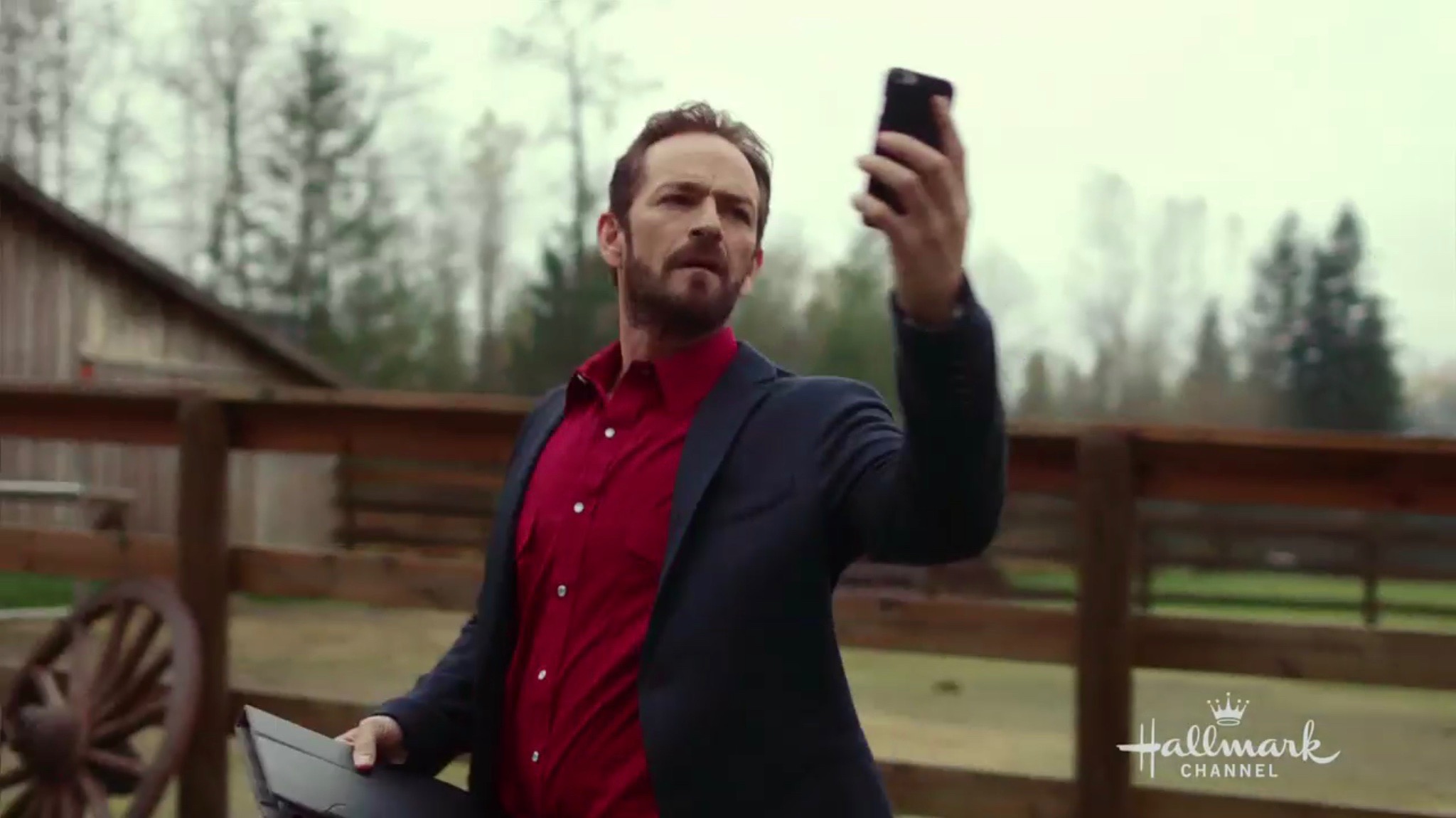
So, how is Dylan going to end up in the country you ask? Nearly the same way as in Strawberry Summer. The hotel is in trouble and she figures since her father is a bit of a celebrity cowboy it might be mutually beneficial for her and Dylan if he pays a PR visit. But unlike Strawberry Summer, the first words out of Dylan’s mouth are that she could be a crazy person like Kathy Bates in Misery.
I don’t care that he goes anyways. I am just grateful this movie acknowledged that fact. Strawberry Summer just glosses over that she is an obsessed fan who uses her personal connections to lure a celebrity to her small town because she believes she can fix him. Thank you Luke Perry, Tippi Dobrofsky, and Neal Dobrofsky for writing that into this film.
After landing, Dylan buys some boots because you know, he’s just an actor, not a real cowboy. That’s where a problem with this film is. Also, it’s a little wishy washy about it. She kind of acts like the girl in A Country Wedding even commenting on his obviously new and not really his boots. In her case though, it’s not that she’s being a jackass and more that for some reason she doesn’t know what acting is. If Anthony Hopkins had shown up in town, then would she have been expecting him to be a cannibal? The wishy washy part is that basically nobody else thinks that way. Certainly not the father who makes it very clear he knew he wasn’t a real cowboy. He’s an actor who plays one in movies. Movies that happen to make him happy when he watches them.
Well, they go through the standard city slicker in the country bit. Yes, that includes this nonsense.
But what’s nice is that this tapers off within the first 30 minutes or so of the movie. The rest of the time is Dylan, Heather, and Casey just getting to know each other and themselves better. Dylan already knew he wasn’t super happy with where he was in his life, but it won’t mean that he just up and stops acting. That’s one of the really nice things about this movie. He finishes the film with a much more moderate and realistic response to his time with Heather and Casey. Heather gets to know Dylan and generally begins to appreciate what her father sees in him. Up till then she didn’t watch his movies. They don’t take that as far as I would have liked, but it’s quite implied that she understands his acting has brought her dad happiness. As for the dad, it’s a win win situation for him. He gets to hang out with his favorite actor and his daughter is happy as she grows closer to Dylan. At least as close as most Hallmark romances do before just having them end up together.
There is a little subplot with a guy who wants to do something by buying her place, but I really don’t know why they even bothered with it. It barely comes into play.
However, there are two things to notice in this movie.
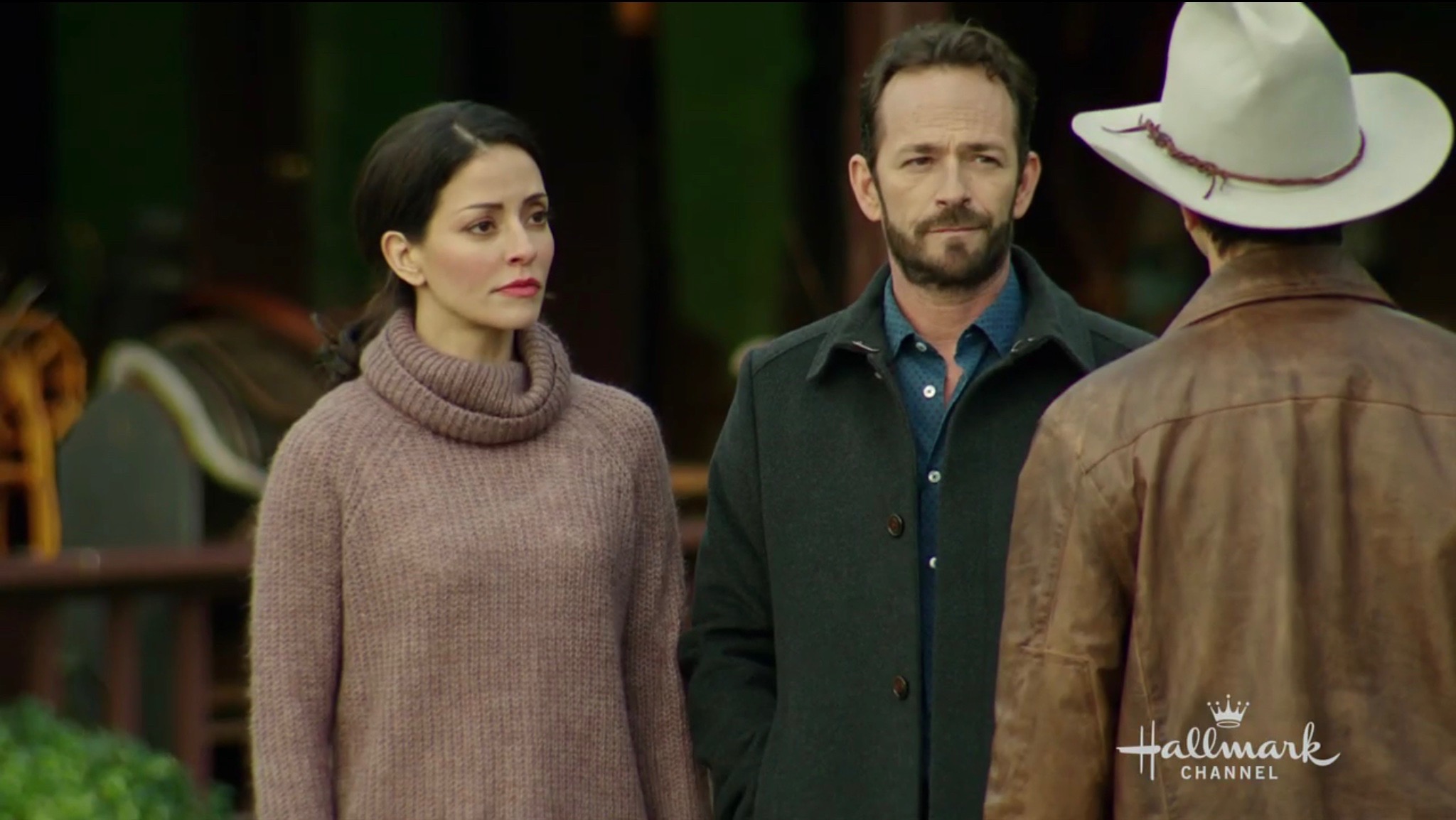
In that scene the guy who wants to buy up the place shows up to harass Heather. Luke Perry goes right into classic Dylan McKay for that moment. You know, those scenes when he would walk right over and tell someone to back off if they were bothering one of his friends. It’s suddenly Beverly Hills, 90210 for that moment and she might as well be Kelly.
The other thing.
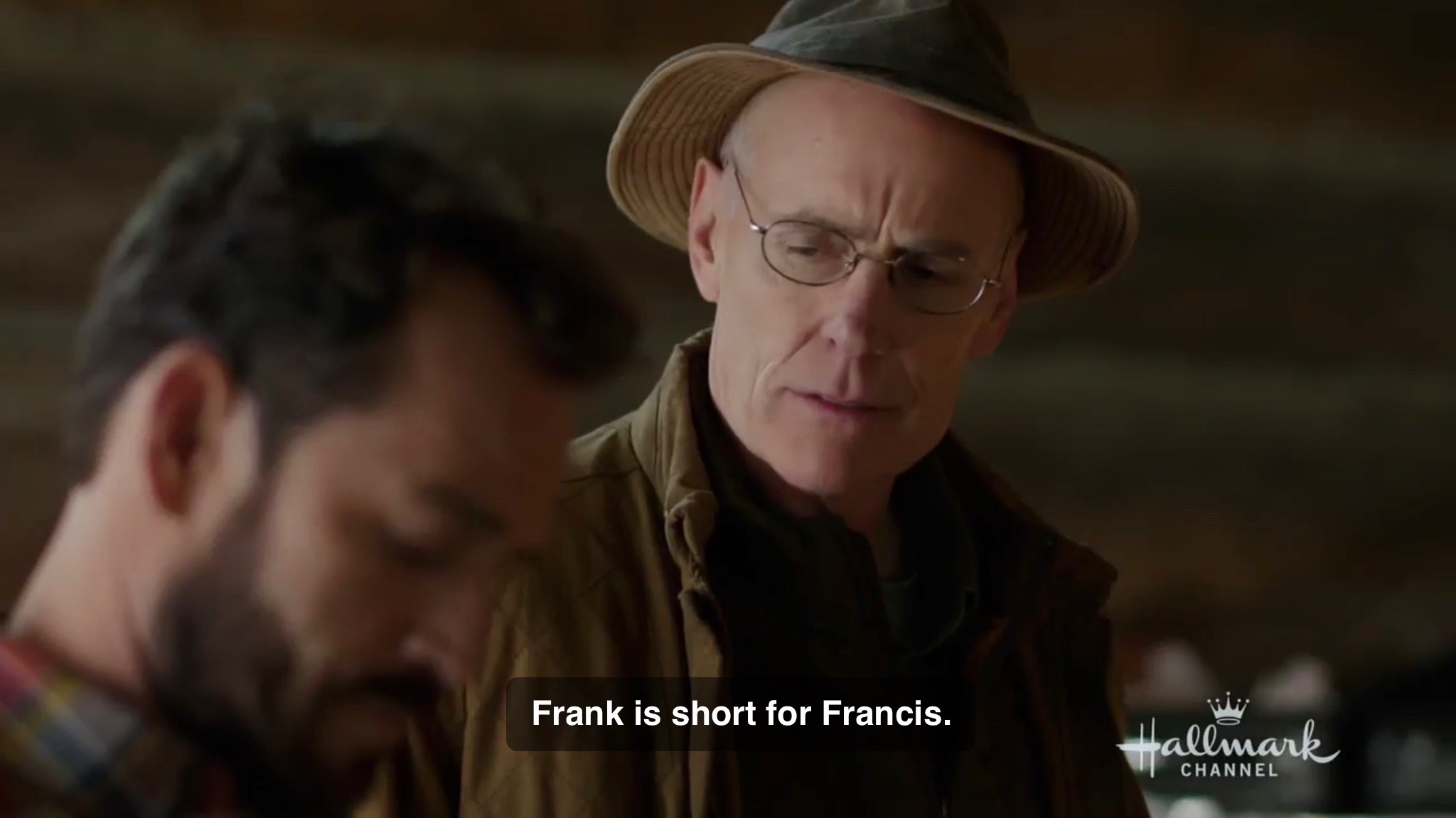
That is Matt Frewer as the local doctor, and that scene is a major missed opportunity. Do you see it? Let me change the line: Name is Marion, but people call me Max. Boom! A John Wayne reference, which was done that way in One Starry Christmas, plus a reference to Matt Frewer as Max Headroom. Too bad.
Ultimately what do you have with Love in Paradise? You have Strawberry Summer and A Country Wedding put into a blender and mixed by screenwriters who knew what they were doing. It works. There are cliches they could have left out, and moments they could have shot for something more meaningful, but it’s Hallmark. I will gladly praise the ones that really rise above, but I’m not going to come down on this one hard for it’s flaws. I recommend it.
BEST ACTOR
1. Michael B. Jordan (Creed) 29 points
2. Geza Rohrig (Son of Saul) 18
3. Tom Courtenay (45 Years) 15
BEST ACTRESS
1. Charlotte Rampling (45 Years) 57
2. Saoirse Ronan (Brooklyn) 30
3. Nina Hoss (Phoenix) 22
BEST SUPPORTING ACTOR
1. Mark Rylance (Bridge of Spies) 56
2. Michael Shannon (99 Homes) 16
3. Sylvester Stallone (Creed) 14
BEST SUPPORTING ACTRESS
1. Kristen Stewart (Clouds of Sils Maria) 53
2. Alicia Vikander (Ex Machina) 23
3. Kate Winslet (Steve Jobs) 17
3. Elizabeth Banks (Love & Mercy) 17
BEST SCREENPLAY
1. Spotlight (Josh Singer and Tom McCarthy) 21
2. Anomalisa (Charlie Kaufman) 15
2. The Big Short (Charles Randolph and Adam McKay) 15
CINEMATOGRAPHY
1. Carol (Ed Lachman) 25
2. The Assassin (Mark Lee Ping-bin) 22
3. Mad Max: Fury Road (John Seale) 12
With 2015 now over, it’s time for me to both make out my end-of-the-year lists and take a look at the films that I saw last year that I have yet to get around to reviewing. In other words, it’s time to play catch up!
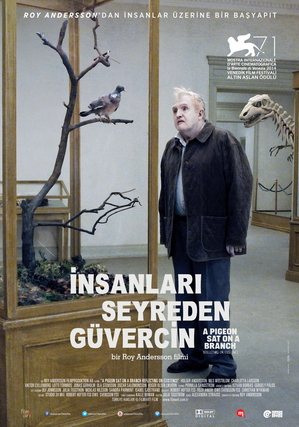
A Pigeon Sat On A Branch Reflecting On Existence is a Swedish film but, just from the title, you probably guessed that this was a European film. After all, an American film would never have a title quite that long or passive. We prefer our titles to be short and punchy and to the point: Taken, Spotlight, Die Hard, Concussion. A Pigeon Sat On A Branch Reflection On Existence is a title that is full of ennui and existential considerations.
At first glance — and I write this from an American point of view — A Pigeon Sat On A Branch Reflection On Existence seems like almost a parody of an experimental European art film. The performances are low-key and unemotional. The humor is often dark, cynical, and deliberately obscure. The film is full of long takes and medium shots, with the camera never moving. This is a film that demands more than a little patience from the viewer. I ended up loving it but I have a feeling that a lot of people will give up on the film after the first 15 minutes or so.
Believe it or not, this is not a film about a pigeon. Instead, it’s a collection of small and increasingly absurd scenes, some of which are connected and some of which are not. Some characters appear in more than one scene and some do not. The two most prominent characters are two dour-faced salesman of novelty items. “We want to help people have fun,” they repeatedly say in the flattest possible tone. They sell vampire teeth and a mask that they call Uncle One Tooth. (Whenever they pull out the Uncle One Tooth mask, it leads to someone screaming in horror.) They also sell bags of laughter, little bags that laugh when you open them and then keep laughing until they suddenly stop. One of the salesman is feeling depressed and no longer wants to keep selling novelties. The other salesman has to continually beg him to leave his apartment.
At one point, the two salesman enter a small diner and you can’t help but notice that, looking out the front windows, the diner appears to be sitting in the middle of an apocalyptic wasteland. Eventually, a group of 18th century soldiers march by and decide to enter the diner. They are followed by their leader, a preening martinet on a horse who orders that all women leave the diner. Later, we return to the diner and so do the soldiers. They’ve obviously lost whatever battle they were fighting but they still stand at attention when the horse reenters the diner, mounted by their dying (or possibly dead) leader.
And it’s all very odd but yet also very fascinating. The film is so deadpan and so unashamedly absurd in its humor that it’s impossible not to enjoy. Or at least, that’s the case up until the final 10 minutes or so, at which point the audience is confronted by a crowd of obviously wealthy people casually watching a group of slaves being horrifically burned alive.
What does all this mean? I think a better question would be, “Does this mean anything at all?” That said, A Pigeon Sat On A Branch Reflecting On Existence is a fascinating film for audiences that are willing to take a chance on something different.
I watched it so you don’t have to: “My Boyfriend’s Back” (1993)
“He died for me, He came back from the dead for me, He ate somebody for me.”
I’ll get back to that, but let’s get the technicalities out of the way first!
Stars:
Andrew Lowery as Johnny Dingle (Buffy The Vampire Slayer, Nothing, Clerks)
Traci Lind as Missy McCloud (Voyager, Fame, 21 Jump Street)
Minor roles by:
Philip Seymour Hoffman, Cloris Leachman,Matthew McConaughey, Renée Zellweger (You might have heard of them.)
Directed by:
Bob Balaban (Nurse Jackie, The Twilight Zone, plus much more)
Written by:
Dean Lorey (Arrested Development, ‘Til Death)
Plot:
To impress his wanna be girlfriend (Lind), Johnny (Lowery) decides to stage a convenience store robbery. In that staging he is killed and comes back as a zombie. Just before dying, Johnny asked Missy to the prom and she accepts.
As Johnny comes back as a zombie, he tries to integrate back into society. Facing anti-zombie discrimination. Missy finally agrees to got to prom with him in his zombie state. Going to the prom, Johnny finally disitergrates into his un-dead form.
While he made it to Heaven, he was let known that his original death was a mistake and he is given another chance. Put back in the point of the robbery, and knowing he was never meant to die, Johnny dives infront of the bullet. The bullet, caught by a locket he made of Missy and himself in the first grade, he is saved. Missy and Johnny go to the prom and (presumably) live happily ever after.
Review:
Honestly, going in, I really wanted to hate this movie. It has all the cheesy plot lines. Boy loves girl, boy dies for girl, boy comes back for girl, she ends up loving him. But if I am going to be honest, this movie was really cute. And to get back to my original quote, yeah, that worked!
Since “My Boyfriend’s Back” is not in public domain, I can’t give you a link to the entire movie, but here is a trailer if you like! 🙂
Well, I was gonna review a Late Night Cable movie next, but unfortunately I watched Serena The Sexplorer (2013). It was horrible! Same writer and director as the also terrible Monster Of The Nudist Colony. *Shudders*
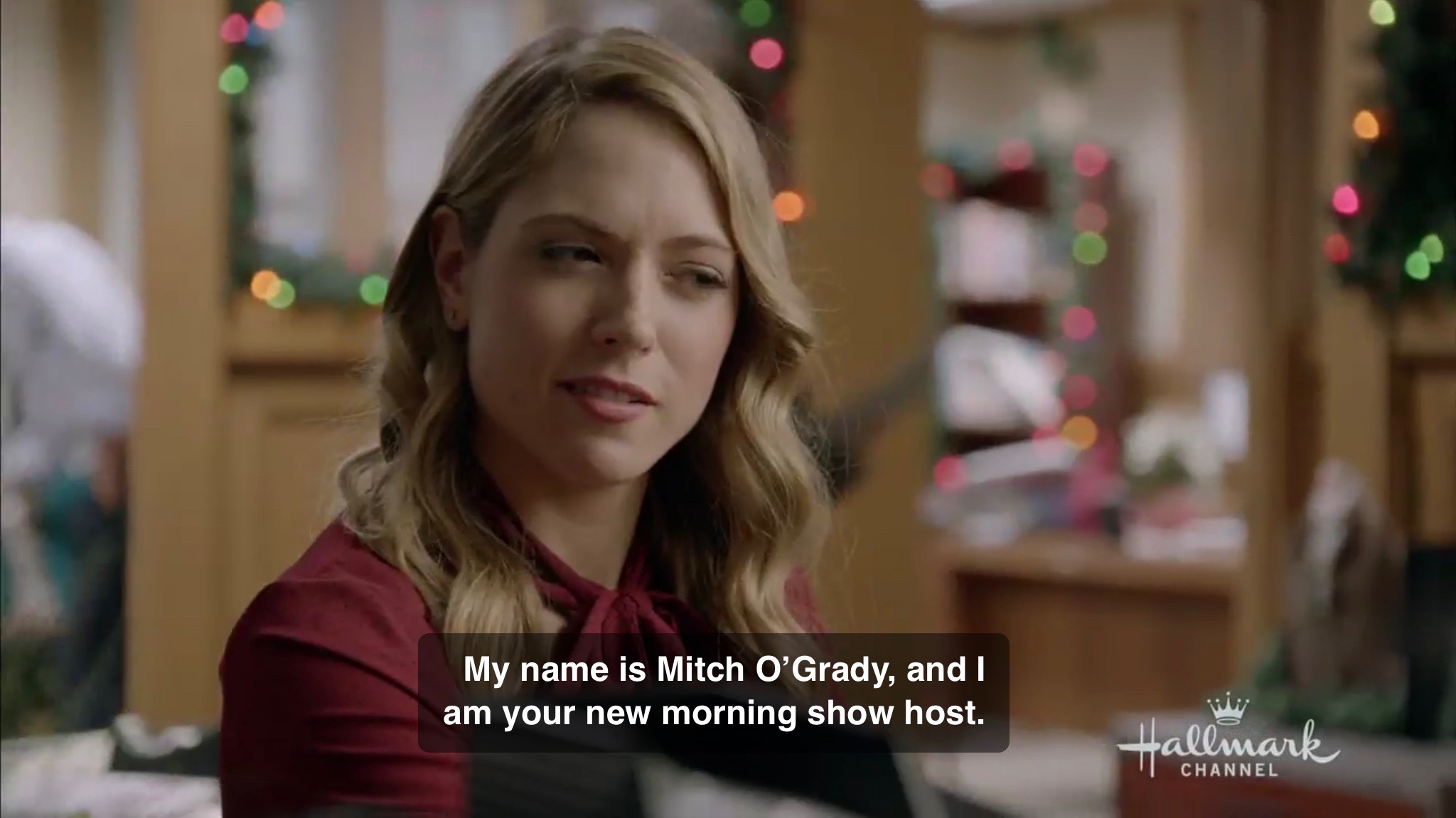
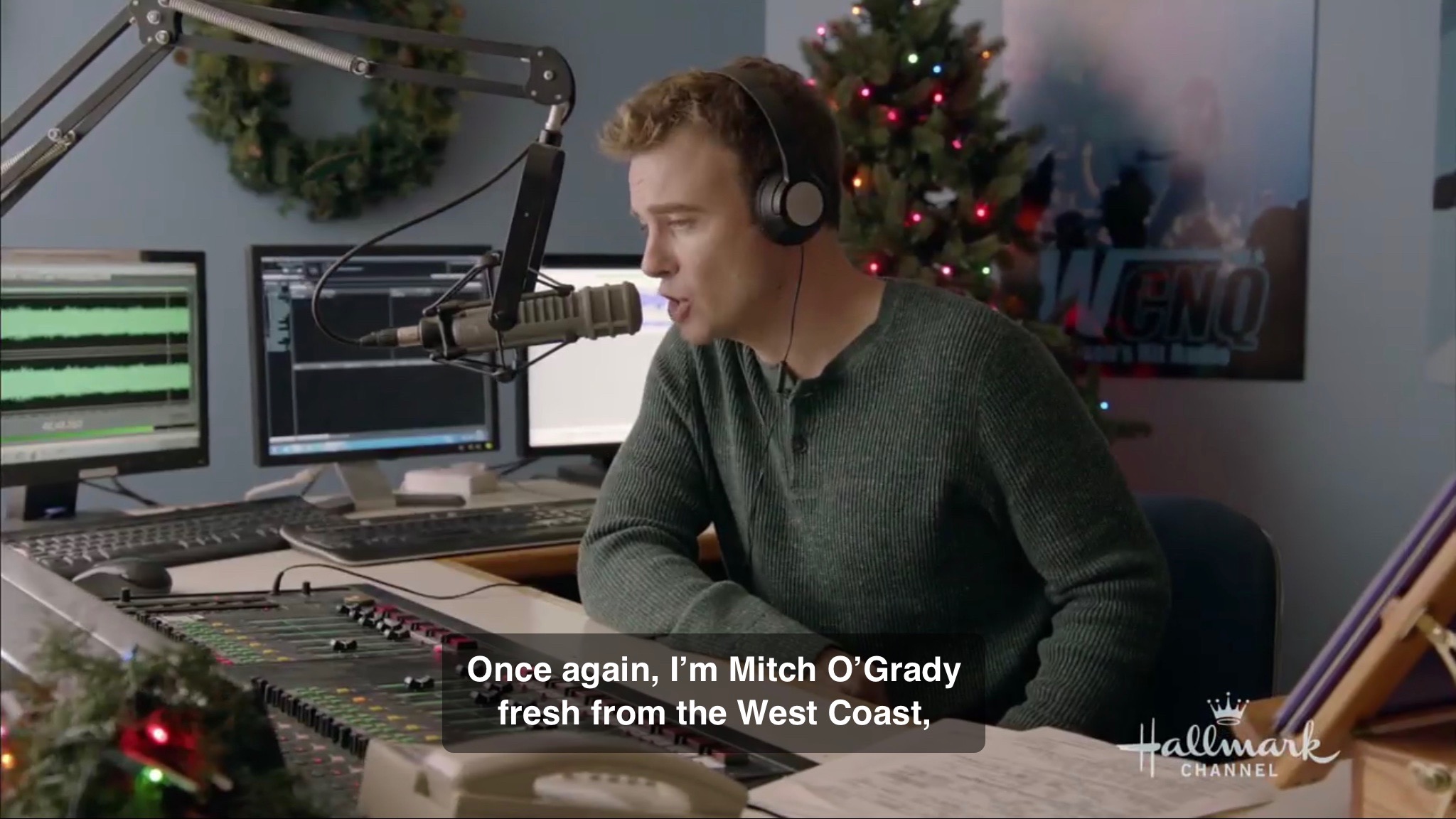
So instead I watched the next Hallmark movie on my DVR. The movie opens and we meet our two leads in college. This is Mitch (Robin Dunne).
This is Maggie (Brooke Nevin).
This lady reminds me of a online friend I met about 6 years ago who also used to work as a small town reporter like this character will. By the way, she runs a great movie blog over at Comet Over Hollywood. One of the most wonderful people I know online and a far better writer than I will ever be. But back to the movie.
She needs to get home for Christmas and he agrees to give her a ride home so she doesn’t miss it despite the storm. They get stuck in a traffic jam along the way so they can spend some time together to setup the plot for later in the movie. One little problem here. They are clearly just sitting in a car that isn’t moving which isn’t uncommon in movies, but when they say they are going to get off the highway it immediately cuts to them getting out of a stationary car. The movie really could have benefitted by a shot of the car going onto an offramp before that shot. Well, they make snow angels, build a snowman, and ride a toboggan. Finally, he gets her home and before you can say When Harry Met Sally (1989), it cuts to 10 years later.
We are now in a small town called Harrison. And by Harrison they mean Hamilton, Ontario, Canada.
Maggie is now a small town newspaper reporter and subscriptions are down so the head of the paper informs them the paper will be joining the Wrightsbridge family of publications. Those damn kids and their Internet that no newspaper makes heavy use of and never makes all their reporters have social media accounts. They now need to be at their best. Maggie turns on the radio…
and either she is thinking her life might turn into Ron Howard’s The Paper (1994) and she too will have to ask why the bullet came out of the wall or she recognizes the name Mitch O’Grady.
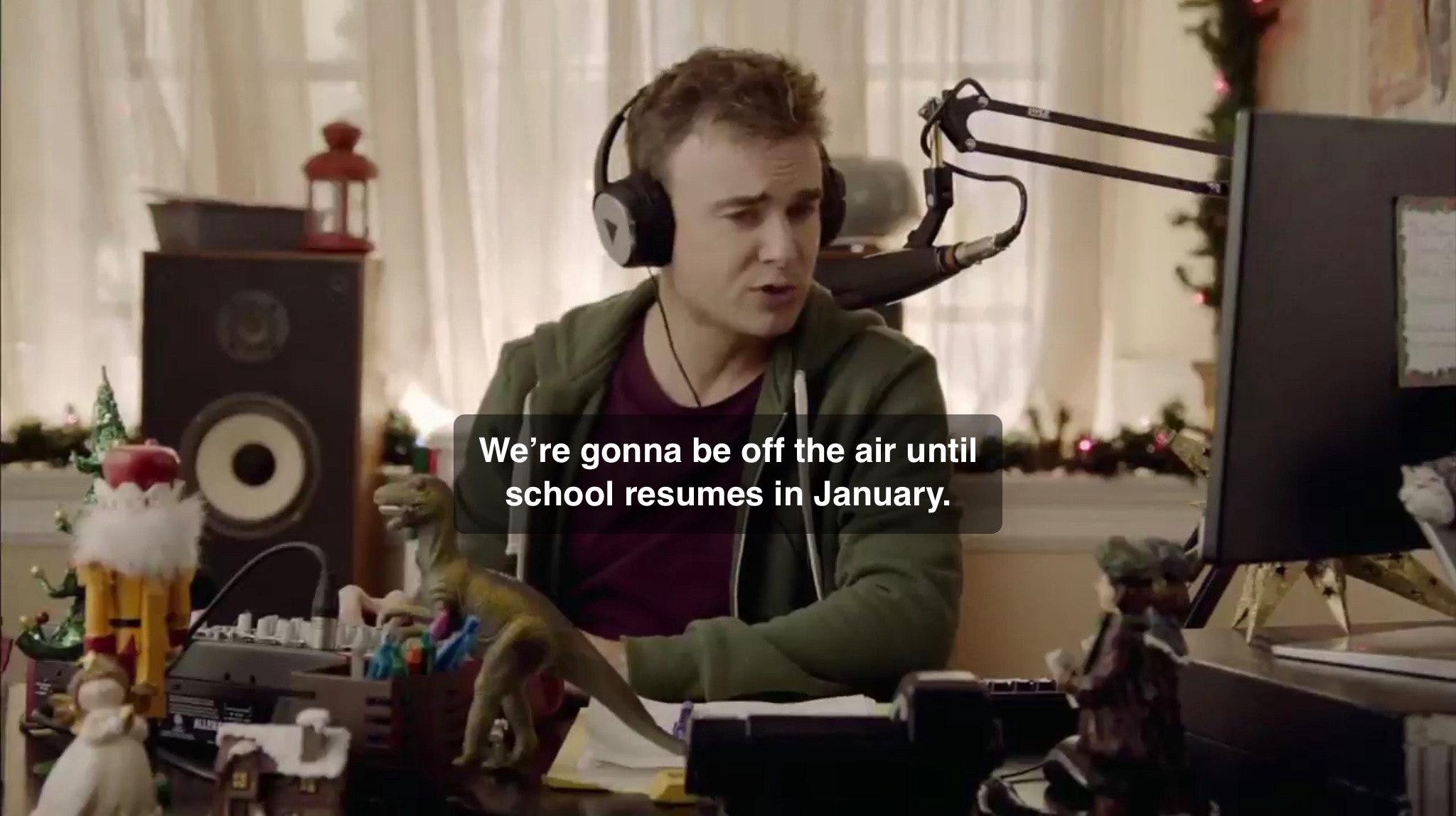
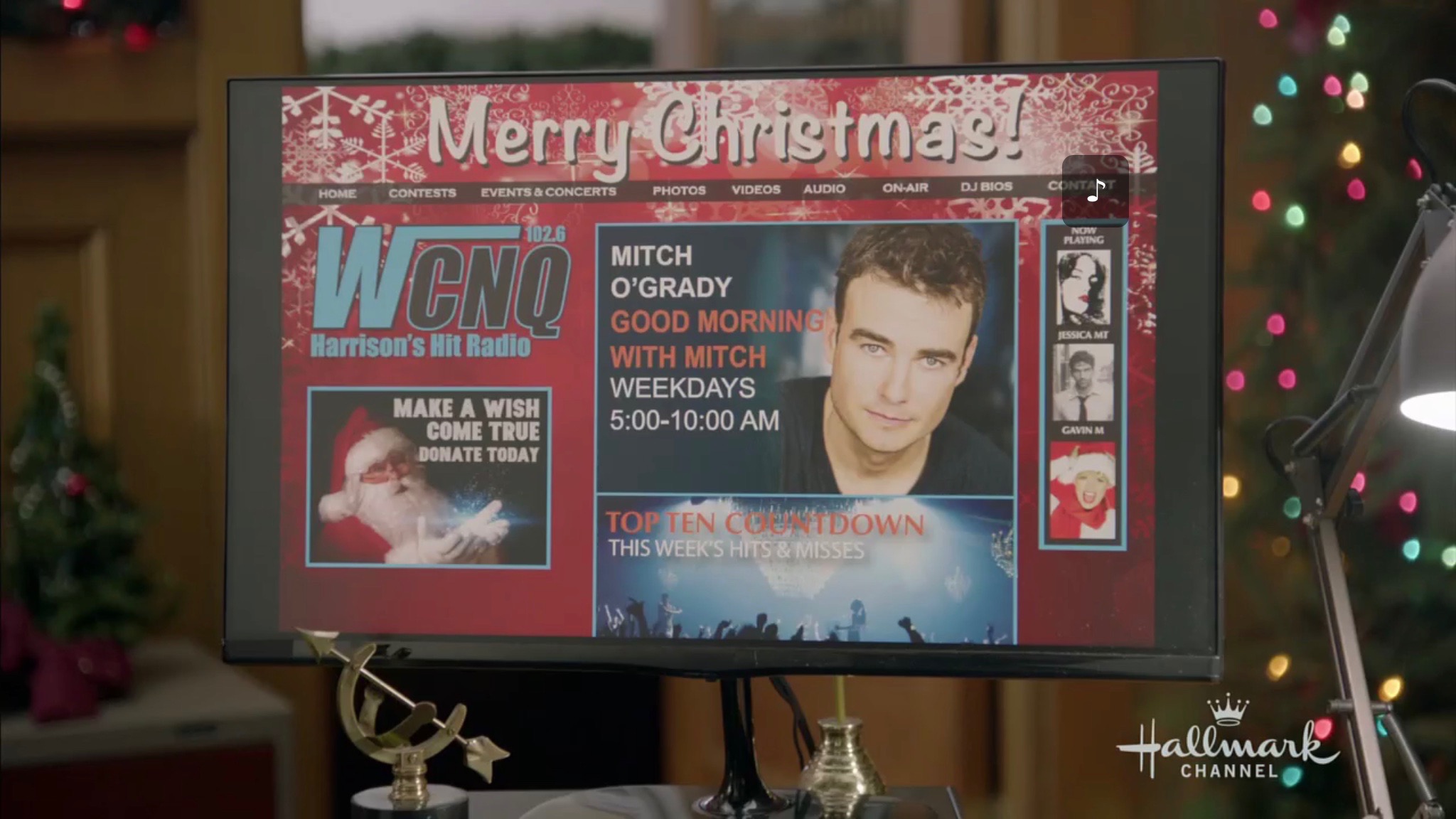
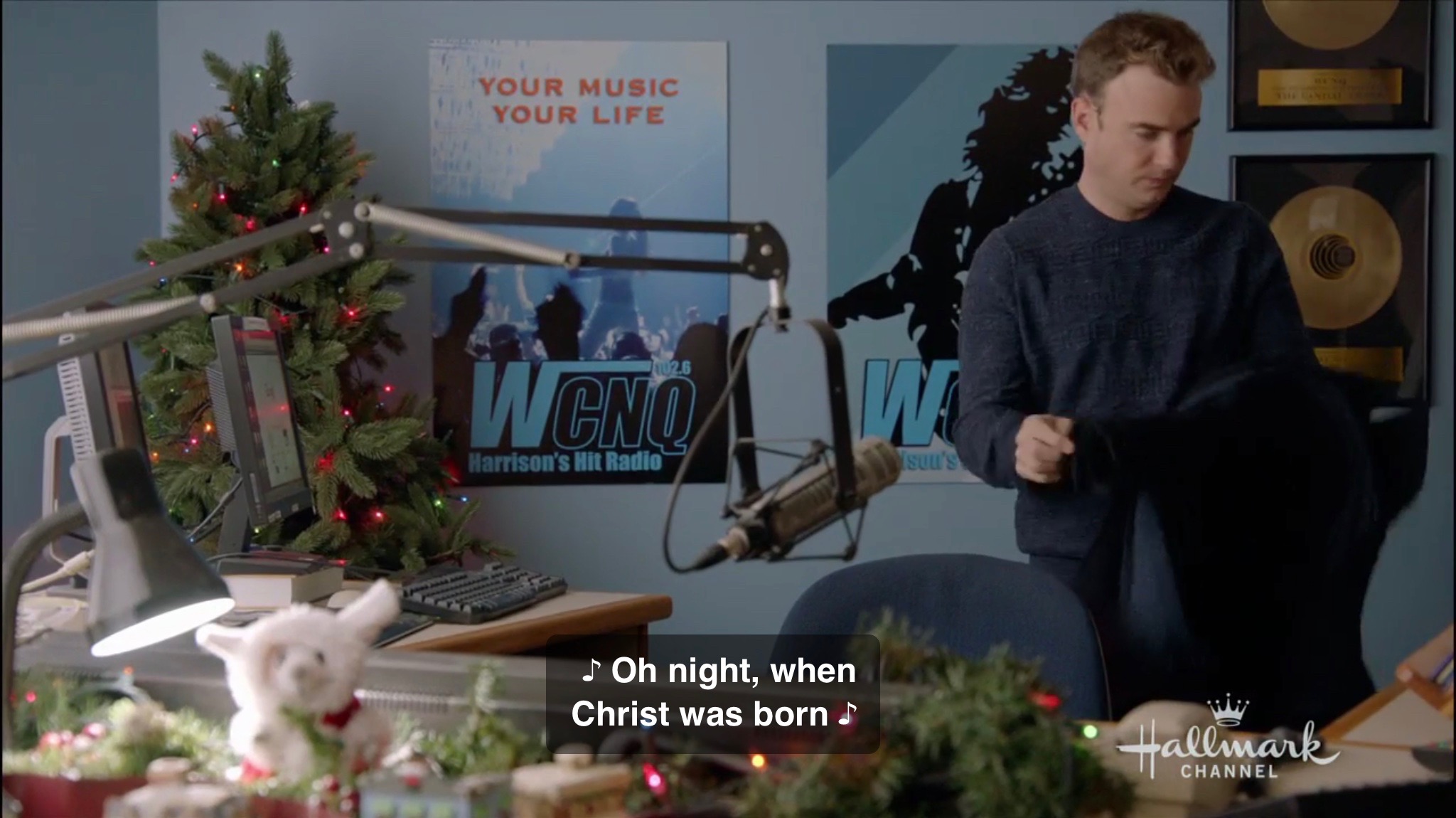
Mitch has moved to the small town of Harrison from L.A. to be a disc jockey. He is a bit of a Scrooge when it comes to Christmas. He doesn’t want to play any Christmas music because he thinks it’s overplayed on the radio during the season. Tell me about it! And much to my surprise the film will treat him respectfully. We will kindly be taken through a series of events that culminate with us finding out why Christmas is a painful time for him now. Oh, and notice the sweet three monitor setup he has there complete with the monitor on the far right that I believe is using Audacity. Not sure what the other monitors are showing, but it doesn’t matter cause all you need to remember is there are three of them and the monitor on the right has nothing underneath it.
Oh, and kudos to the production crew for a well faked website.
Now Maggie is having lunch when of course Mitch comes in and joins her to catch up. Unfortunately, the local flirt shows up to hit on Mitch. You can tell how important she is because I am not even going to include a screenshot of her. Maggie goes home and gets a brilliant idea. The title of the movie mentions the 12 days of Christmas so she’s going to send 12 gifts to Mitch as a Secret Santa. They are inspired by the things they did together on their way to her home 10 years prior.
Back at work a guy from the parent company shows up and I thought he was going to be like the “evil” reporter from The Note, but nope. He’s barely in the movie and very reasonable. He’s just there to drop the line that people like personal interest stories so that she will let the Secret Santa thing go further than she probably should.
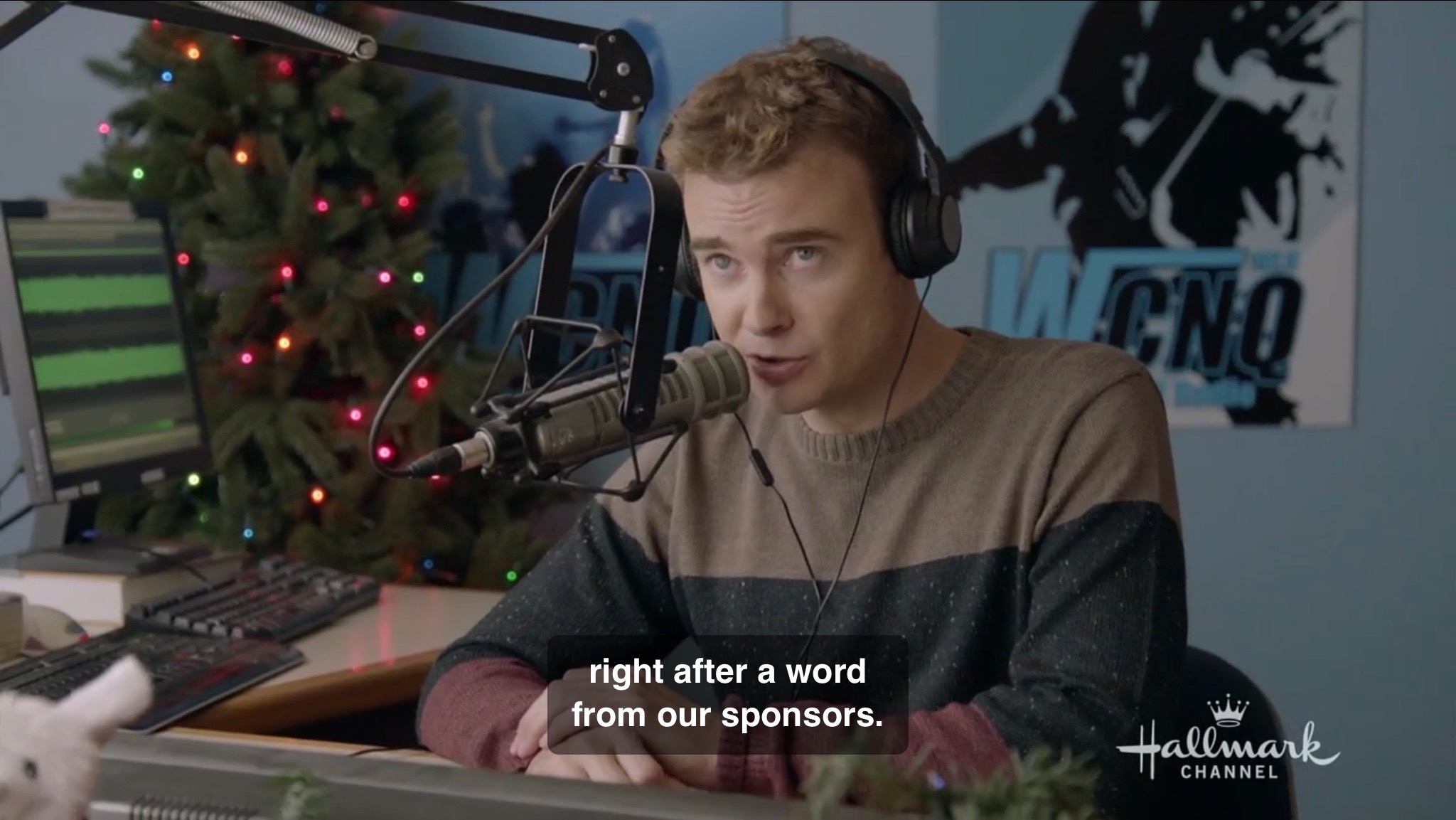
Meanwhile, back at Mitch’s office. Somebody has moved his far left monitor to the far right and put a book under it.
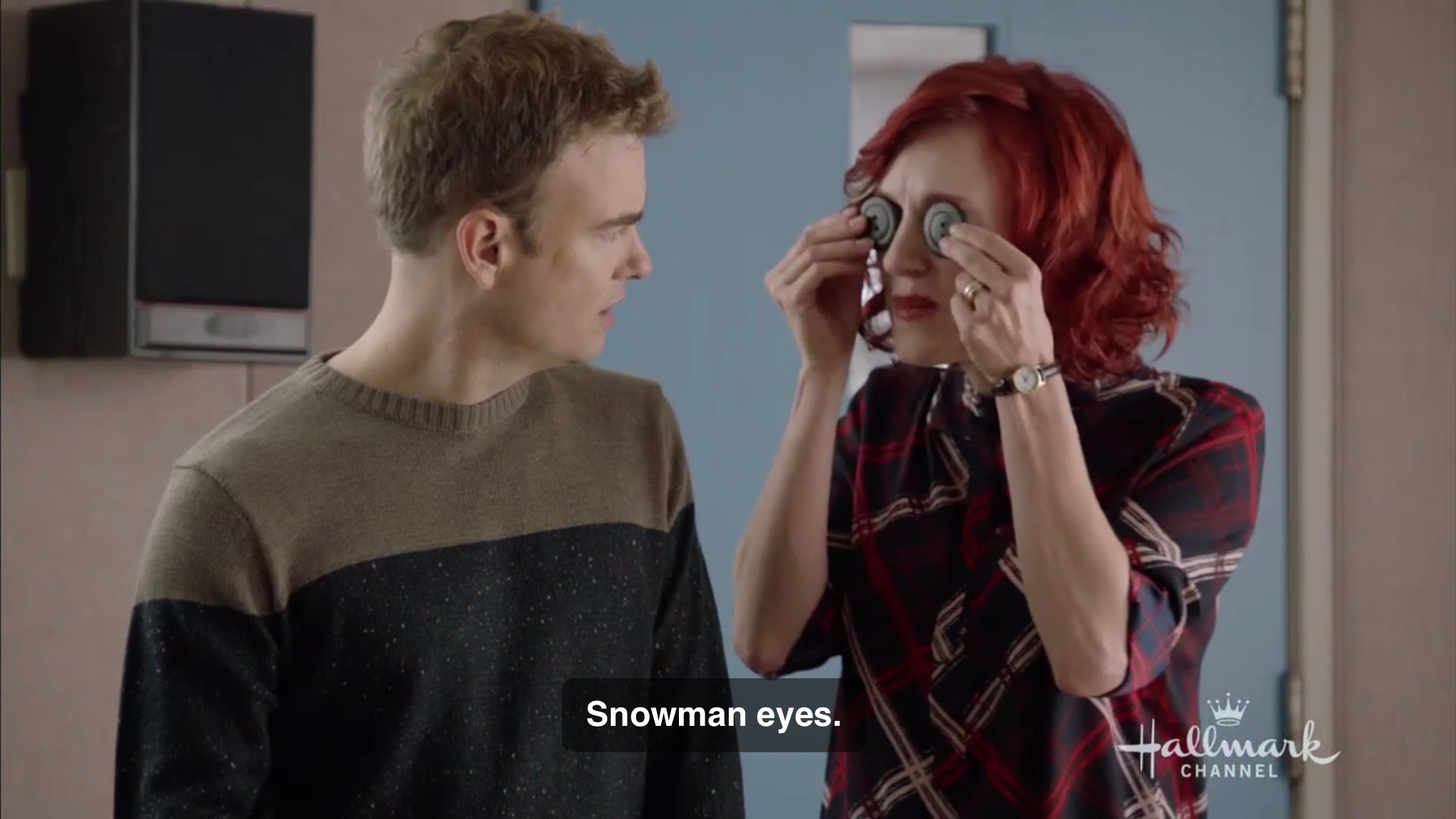
The first gift comes and it’s the eyes he and Maggie used 10 years prior to make a snowman. And this is Rita (Geri Hall).
She will be your Beth from NewsRadio for the movie, but more useful and less annoying. Oh, and his monitor’s are back the way he likes them.
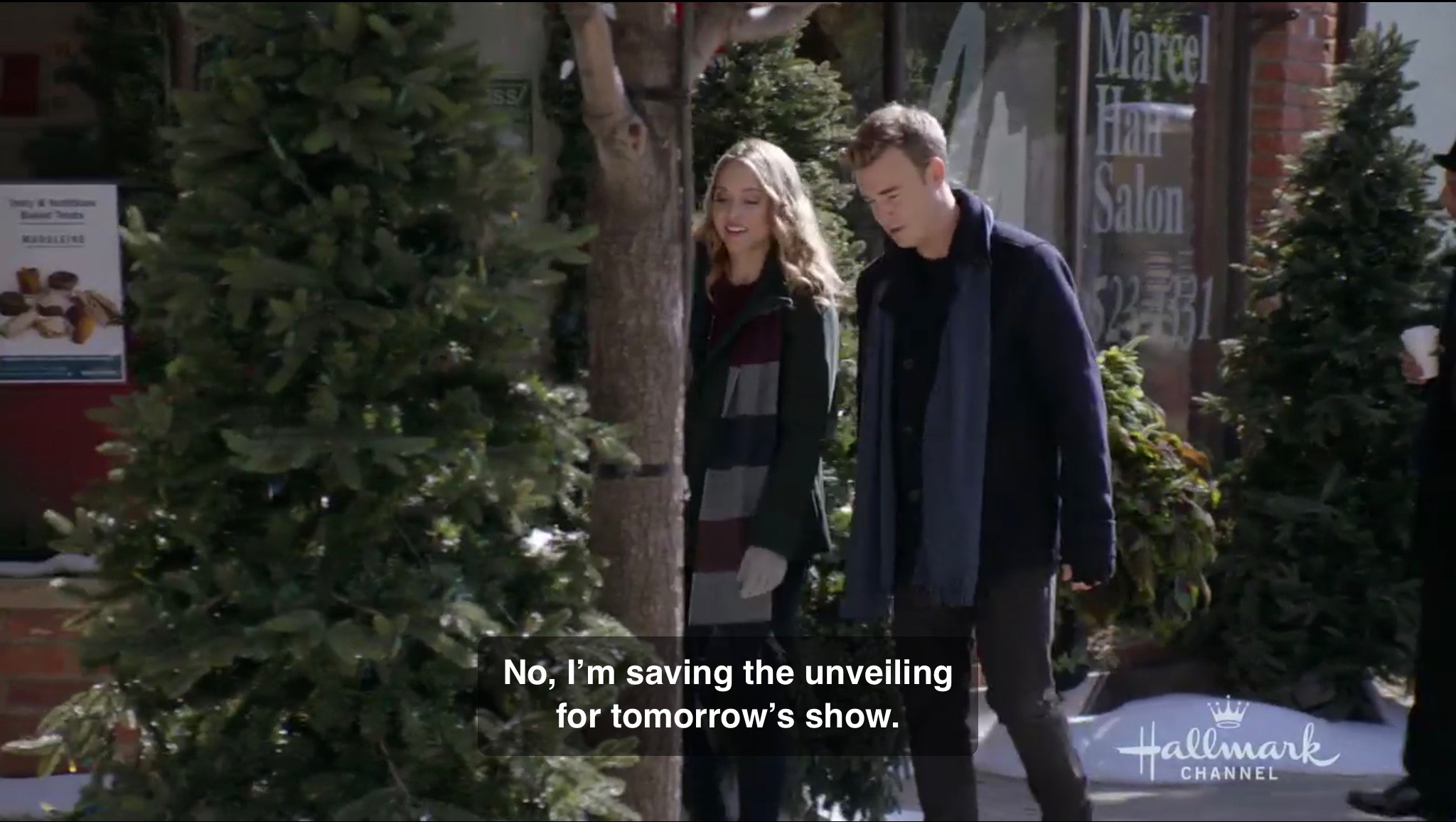
Now Mitch decides to talk about the Secret Santa thing on the radio, turns out KCNQ is a “bronze-level” advertiser with the paper, and the presents are now on the radio’s website. There’s your setup. She keeps sending him stuff, there are red herrings about who could be the Secret Santa, and they spend time together because she needs to cover the story for the paper. One more thing, I forgot that each present comes with instructions of what he is to do with the present. For example, make a snowman to use the eyes on. Of course Maggie is more than willing to help out.
He eventually figures it out and does the third act misunderstanding bit before things turnaround for the best. While Maggie pouts, we get a cameo we all knew was coming.
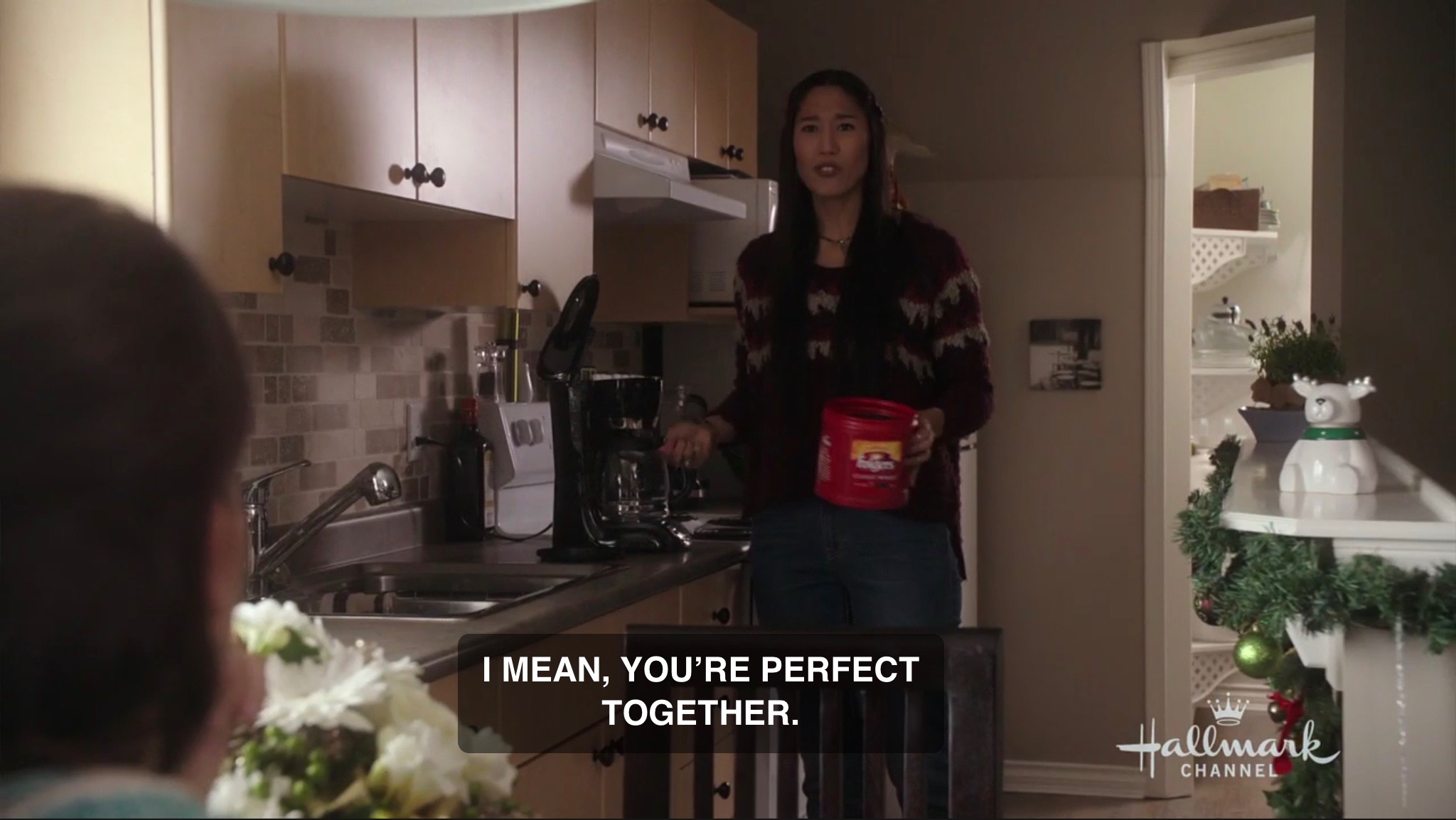
That’s right! A cameo appearance by the can of Folgers coffee from The Nine Of Christmas.
The Nine Lives Of Christmas (2014)
Okay, nobody expected it, but there it is.
Seeing as I did like this one, I won’t spoil why he is a bit of Christmas grumpus. It’s a standard Hallmark cliche, but I won’t say. This was reasonably well acted, it didn’t have its characters act in weird unexplainable ways, none of that Christmas Land crap, and it knew it was a small scale story and made it fit that format.
However, there is one thing I want to know. I mean aside from why he suddenly only has two monitors near the end of the movie with the book back under the far right one. I thought people who break into places to rearrange furniture only existed in the movie A Chorus Line (1985). Must be the same person who did it in 12 Gifts Of Christmas.
What I want to know is where was actor Don Allison in this movie? He is credited as playing Mitch’s father, but I didn’t see him. Don Allison is the actor from Christmas Magic that in his few minutes of screen time gave a real heartfelt performance with barely two words. If anyone knows, then please tell me because I didn’t see him.
This isn’t an amazing Hallmark movie, but it’s a nice little story that one could certainly sit through the next time it comes around on Hallmark. I do recommend it.
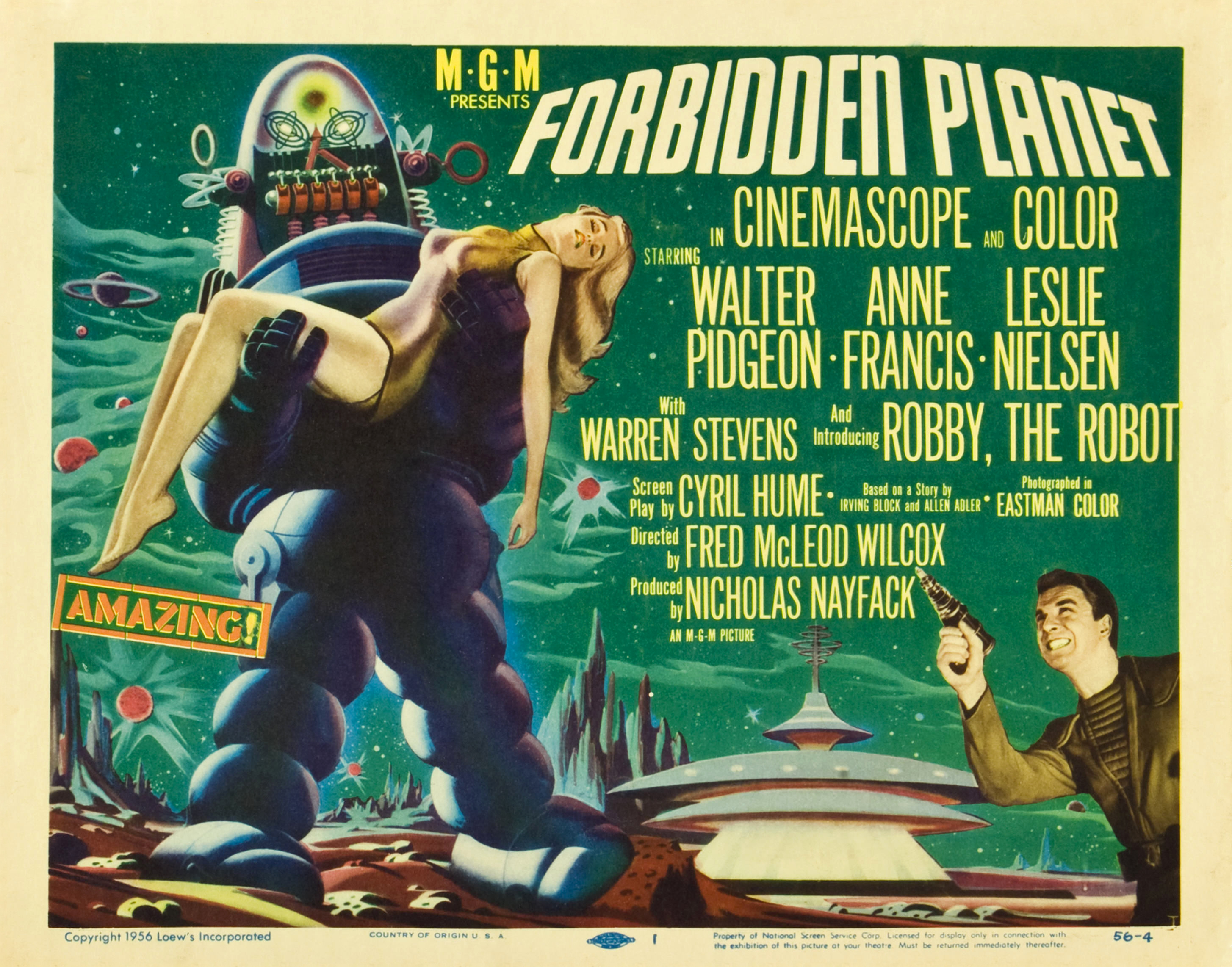
Well, not quite. FORBIDDEN PLANET is very loosely based on The Bard’s THE TEMPEST, drawing on some of its themes and characters, and putting them in an outer space setting. But the film is much more than that. It’s full of screen firsts, and one of the most influential science fiction movies ever. While watching I was more than reminded of STAR TREK, and wasn’t surprised while doing research that Gene Roddenberry cited it as “one of his inspirations”.
Today no one thinks twice about movies being set completely in outer space, but FORBIDDEN PLANET did it first. The art and set direction by MGM vets Cedric Gibbons and Arthur Lonergan are wonders to behold, shot in beautiful CinemaScope and Eastmancolor by George J. Folsey. The cinematographer began in silent pictures, and carved a niche with big, splashy musicals like MEET ME IN ST. LOUIS, THE ZIEGFELD FOLLIES, TAKE ME OUT TO THE BALL…
Fourteen years posting a year-end list somewhere, and the rule never changes: odd-numbered years produce more good music. Thankfully, we just concluded 2015. 🙂
15. Deafheaven – New Bermuda
14. Peste Noire – La Chaise-Dyable
13. Mgła – Exercises in Futility
12. Veilburner – Noumenon
11. Botanist – Hammer of Botany
10. Enslaved – In Times (track: Building With Fire)
It’s amazing that after 24 years and 13 studio albums, Enslaved still routinely make it into my year-end top 10. They have continually evolved without letting go of their black metal roots, and the consequence lately has been a long stretch of memorable, prog-rock infused releases that keep up with the times and never grow stale no matter how often I resurrect them. If In Times won’t stick with me quite so permanently as Vertebrae in 2008, it still achieves everything I’ve come to expect of them lately and has managed to entertain me more than the vast majority of other albums I have heard this year. I think I have a bit of a subconscious inclination to prioritize newer bands, but #10 was as low as I could justify dropping this one.
9. Krallice – Ygg Huur (track: Wastes of Ocean)
Like any Krallice album, Ygg Huur takes dozens of listens to ingest. What struck me at first as a rather disappointing, spastic blathering of sound comes together much more coherently if you give it its due time. That being said, it is still a sharp break from their previous four albums, and it lacks that element of progression and overarching vision that has traditionally made this band, for me at least, infinitely repeatable. (I have listened to Krallice more than any other band in my life by a large margin, and they only came into existence in 2008.) Ygg Huur is a brief an meandering mood piece that does not, perhaps, maximize the band’s song-writing talents, but I’ve enjoyed it plenty never the less. More avant-garde than post-black metal, am I allowed to love it and still hope it was just a one-time experiment?
8. Ghost Bath – Moonlover (track: Golden Number)
This is a pretty gorgeous post-black metal album that I’m surprised more sites haven’t picked up on for their year-end summaries. It lacks a touch of refinement that might have earned it higher standing, but the song writing is fabulous. Moonlover delivers a well-rounded package of post-rock infused metal that seems to pay a good deal of respect to Alcest and Amesoeurs, but their undertone is bleak and depressing. It’s a sad album in a way that makes me think of Harakiri for the Sky’s Aokigahara last year, but peppered with little bursts of joy that will bring a smile to your face.
Oh yeah, metal’s not supposed to make me smile. Check.
7. Sumac – The Deal (track: Thorn In The Lion’s Paw)
I never really got into Old Man Gloom. Make what you will of that. The Deal certainly wasn’t Aaron Turner’s most well-received album, but I personally enjoyed it more than anything he’s contributed to since Oceanic. A lot of that has to do with Nick Yacyshyn’s brilliant mastery of the drum set, but I also feel like Turner’s chugging out riffs that really sink into my head more than I’m used to. It’s like a doom metal reinterpretation of Isis, albeit with less progression, and I love the subtle stylistic diversity he brings to the field on this one. It has moments that remind me of everything from black metal to Converge. (And it probably wins this year’s ‘most listened to in my car’ award. <_<)
6. A Forest of Stars – Beware the Sword You Cannot See (track: Virtus Sola Invicta)
Beware the Sword You Cannot See is one of the most eclectic albums I have heard in a long time that I still managed to really enjoy. If I could begin to put a finger on how to describe it, I would have reviewed it ages ago. Black metal at its heart, it weaves a wild mix of strings and spoken word and avant-garde breaks around that core. I like it, quite a bit, and I think the vocals and lyrics (at least, what I can make of them) might be its strongest selling point. I really don’t know what to say about this album. Hear it for yourselves, and be prepared to give an attentive listen–possibly many–if you want to soak it all in.
5. Blind Guardian – Beyond the Red Mirror (track: Grand Parade)
It’s pretty hard to measure the worth of an epic power metal band on a list that is heavily dominated by innovative new styles of music. I don’t think I would have felt entirely comfortable with my positioning of this album no matter where I put it, but I tried to make the cutoff a sort of drifting point between albums that really made me reflect and albums that I just really enjoyed, because there’s never going to be a particularly deep hidden truth to a Blind Guardian track, but they’ve proven a dozen times over to be the ultimate kings of all fantasy-themed music. In the broad scheme of BG’s vast discography, I would probably place Beyond the Red Mirror fourth, after Nightfall in Middle-Earth, At the Edge of Time, and A Night at the Opera. That translates roughly to: it’s awesome.
4. Bosse-de-Nage – All Fours (track: A Subtle Change)
Am I a little biased since I got my initial rip of this direct from frontman Bryan Manning? Probably not, but in my weird little world that’s still a bragging point. 😉 Like Cara Neir’s Portals to a Better, Dead World in 2013, All Fours takes everything I love about screamo and turns it into post-black metal. This might be a coincidence. I’m pretty sure the band claims no direct screamo influence (don’t quote me on that), but the consequence is the same. These guys have worked their way into the top-tier of bands pushing metal in new directions today, and, more so than their previous albums, All Fours really strikes me as a well-rounded composition that possesses the maturity to fully deliver its vision. And Manning has a way with lyrics that’s… well… you just have to read them.
3. Obsequiae – Aria of Vernal Tombs (track: Orphic Rites Of The Mystic)
When I first heard Obsequiae, it was one of those rare moments where I went a-ha, you are that band that’s going to pioneer the style I have always desired but been too inept to create myself. I can guarantee you without much doubt that, of all of the albums of 2015, Aria of Vernal Tombs will find its way into my playlist the most for the longest period of time. Ten years from now, I will probably still be listening to this album when its competitors are all but distant memories. Like Summoning, they fit a unique mood for me that no other band has really begun to approach. (Perhaps Opeth’s Orchid crosses into this terrain, briefly and insufficiently.) A collection of captivating medieval melodies that press themselves upon you by-and-large through euphorically well-mixed guitar and bass (the bass on this album is absolutely gorgeous) rather than traditional instrumentation… my god, I’ve been waiting so long for a band that sounds like this, and they’re easily my favorite new discovery of the year.
2. Panopticon – Autumn Eternal (track: The Wind’s Farewell)
It’s amazing to think that, in the absence of one album this year that won my heart in a landslide, Panopticon could have taken my #1 slot in 3 out of the last 4 years. To put it bluntly, Autumn Eternal is Austin Lunn’s best album to date, and Austin Lunn is arguably the most accomplished metal artist of the 2010s. An incredibly versatile musician who can sample uninhibited from the melting-pot of styles that is post-black metal, Lunn’s newest offering is a mindblowing amalgamation of post-rock and black metal that leaves the more popular bands of this persuasion choking on his dust.
1. Liturgy – The Ark Work (track: Kel Valhaal)
What can I say…. it didn’t make Pitchfork’s top 25? I will probably look back on The Ark Work as one of the most underrated albums ever recorded, and I think its merits have more in common with Radiohead than with anything that has ever derived from heavy metal. It constantly threatens to collapse into a blundering mire of amateur garbage, from the excessive bell tones to Hunter’s marshmallow-mouthed rap vocals. This might be the turn-off for so many listeners, but it is necessary, and the key to this album is in how Liturgy always manage to somehow hold it together. It’s the musical equivalent of your kindergartener handing you a crayon scribble that, on second glance, turns out to be a Picasso.
On Aesthethica, Liturgy explored a very explicit reinterpretation of black metal that found quite a bit of inspired company among bands who were beginning to recognize and explore the similarities between black metal and post-rock. That album helped to define a movement, but it only achieved the band’s vision in a very direct sort of way: through rhythm and melody and progression. The Ark Work nails Hunter’s vision home with an extremely more robust and precise pallet, bringing lyrics and glitch effects and atypical instrumentation and a totally unorthodox approach to metal vocals into the fray. If you listen to a track like “Vitriol” and can barely take it seriously, that’s part of the point, but barely is the key word. Every risk and gamble they take ultimately works, and I am unabashedly unashamed to blare Hunter’s trap beat ‘occult rap’ at max volume out my car stereo. 😀
You might listen to The Ark Work and hear some childish clusterfuck, but I hear absolutely brilliant attention to detail–a musician completely in control of the degree to which his work teeters on the brink of nonsense. Top 20 all-time contender? I could go there. Leave your fear of speaking too fondly of Hunter Hunt-Hendrix at the door and just embrace this album with the assumption that he knew exactly what he was doing. You won’t be disappointed.
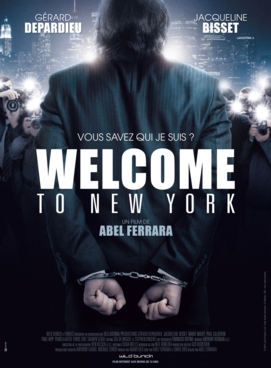
Gerard Depardieu is naked a lot in Welcome to New York and I know you’re probably being snarky and sarcastically thinking, “Well, then I’m definitely going to track down this film…” but actually, the frequent display of Depardieu’s body gets to the heart of what makes his performance so memorable. Playing an extremely unsympathetic role, Depardieu doesn’t hide the character’s depravity from the audience. He reveals every inch of the character, from his flabby body to his empty soul. It takes courage to bring such an unsympathetic character to life and talent to keep the audience watching and fortunately, Depardieu has both of those.
Welcome to New York opens with Depardieu (as himself) talking to a group of reporters and explaining why he’s decided to play a character based on Dominique Strauss-Kahn in Abel Ferrara’s upcoming movie. It’s an interesting way to start, both because it features Depardieu’s scornful opinion of politicians and because it leaves no doubt that, even if Depardieu’s character has been renamed Devereaux, Welcome to New York is directly based on the Dominique Strauss-Kahn case.
(Dominique Strauss-Kahn, of course, was the wealthy French socialist who many thought was going to be the next President of France until he was arrested after raping a hotel maid in New York City. As a wealthy and well-connected white man, he was acquitted of raping the maid, who neither wealthy, well-connected, or white. Throughout the trial, the usual collection of elitists complained about how Americans just didn’t understand French culture but, ultimately, Strauss-Kahn’s political career was ended by the scandal.)
Welcome to New York closely follows the facts of the Strauss-Kahn case. Wealthy banker and politician Devereaux is in New York on business. When he meets his daughter and her boyfriend, he spends the entire lunch asking them about their sex life. When he returns to his hotel, he and his business associates hire a group of prostitutes and have one of the most depressing orgies ever captured on film.
I have to admit that during these first part of the film, I was often tempted to turn off Welcome To New York. No, it wasn’t that the film was too explicit. Instead, my problem was that Devereaux was such a dull character. Devereaux has a lot of sex during the first third of the film but, at no point, does he seem to enjoy it. Instead, he is detached from everything happening around him and it doesn’t exactly make for compelling viewing.
But, as the film played out, I realized that we weren’t supposed to find Devereaux in any way compelling. Instead, Devereaux is portrayed as a hollow and empty shell. For him, sex is all about entitlement and power. After his is arrested for raping the hotel maid, Devereaux appears to be more surprised than anything else. Rather than feeling regret at being caught or even fear that he might be convicted, Devereaux seems to be shocked that a man of his wealth would be held responsible for his actions.
After Devereaux is arrested, the film’s pace picks up a bit. Devereaux’s wife, Simone (Jacqueline Bisset), flies to New York and takes over her husband’s defense. It’s not that Simone feels that Devereaux has been wrongly accused. In fact, Simone really doesn’t seem to care much for her husband in general. However, Simone is determined that Devereaux is going to be the next president of France and she certainly has no intention of allowing some American criminal case to stand in his way. Bisset gives a chilling performance as the almost fanatically driven Simone.
Soon, Devereaux is under house arrest and staying at a rented house. (For these scenes, Welcome to New York filmed in the same house that Strauss-Kahn stayed at during his trial.) It’s while locked away in the house that Devereaux finally starts to realize that he has gone too far. It’s in the house that Devereaux remembers the man he was once was and is forced to confront the man that he has become.
Welcome to New York is not always an easy film to watch but, thanks to Depardieu and Bisset’s ferocious performances, it’s a film that will reward patient viewers.














 Through the Shattered Lens