Horror Review: Christine (dir. by John Carpenter)


During the late 1970s and early 1980s, one could hardly step into a theater during the fall or winter movie season without seeing a trailer for the newest Stephen King adaptation. His name had become synonymous with cinematic horror, and nearly every year brought a new film promising supernatural terror or psychological unease.

Among this wave of adaptations came a 1983 film that united two masters of the genre—Stephen King, the reigning literary giant of horror, and John Carpenter, the filmmaker who had already cemented his reputation with Halloween and The Thing. Their collaboration resulted in the sleek, deadly story of a boy and his car: Christine.

The film opens on the assembly line of a Plymouth factory in 1957, immediately signaling that something is off about this particular 1958 Plymouth Fury. From the first note of the retro rock soundtrack to the gleam of that deep crimson paint, Carpenter frames the car with both nostalgia and menace. The lighting in this opening feels almost clinical—bright, sterile, mechanical—yet Christine’s red sheen cuts violently through it, a visual omen that this machine is infused with something beyond metal and chrome. Carpenter wastes no time making it clear that this car is not an inanimate prop; it’s a living entity from the moment it’s born.

We’re soon introduced to the film’s human core—Arnie Cunningham (Keith Gordon), a shy, bookish teenager tormented by bullies and smothered by his controlling parents, and his best friend Dennis Guilder (John Stockwell), the confident star athlete who often looks out for him. One afternoon, during their drive home from school, Arnie spots a rusting, decrepit Plymouth Fury in the front yard of an old man named Roland D. LeBay. Where Dennis sees a heap of junk, Arnie sees perfection. Ignoring his friend’s concerns—and later, his parents’ outrage—Arnie buys the car and names it Christine.

As Arnie begins restoring Christine to her former glory, a transformation occurs—not just in the car, but in Arnie himself. The once timid, acne-scarred teenager grows into a confident, even arrogant young man, donning slicker clothes, sharper speech, and a darker aura. Christine becomes his obsession, his refuge, and ultimately, his identity.

Carpenter crafts this metamorphosis with eerie precision, pairing the car’s physical renewal with Arnie’s psychological decay. The cinematography shifts accordingly—the lighting grows darker, drenched in neon reds and shadowy blues, mirroring Christine’s two faces: seductive allure and demonic possession. Carpenter’s score, a pulsing blend of electronic rhythm and minimalistic dread, underscores these shifts. It functions almost like Christine’s heartbeat—steady, mechanical, and ominously sensual.

Between the vintage rock tracks that accompany Arnie’s moments of infatuation and the electronic motifs that follow Christine’s predatory stalks, Carpenter manipulates sound to blur the lines between teenage romance and supernatural horror. Every rev of the engine feels rhythmic, almost musical, as if the car itself communicates through vibration and tone rather than words.

Arnie’s newfound confidence even earns him Leigh Cabot (Alexandra Paul), the most desired girl in school—a relationship that initially feels like a symbol of his triumph. But Christine is no fairy tale. When Arnie’s bullies vandalize his beloved car, the story turns from eerie to vengeful.

In a now-iconic sequence, Christine repairs herself before Arnie’s stunned eyes—the crumpled metal expands, glass re-forms, headlights ignite like eyes opening from a nightmare. Carpenter lights the scene with a soft, golden underglow that turns mechanical resurrection into a hauntingly beautiful transformation. It’s both horrifying and hypnotic—a perfectly scored ballet of vengeance set to the hum of machinery and the director’s unmistakable electronic pulse.

What follows is a furious killing spree. Christine prowls the night streets for retribution, a creature of fire and gasoline more alive than metal should ever be.

While Carpenter’s adaptation diverges from King’s novel, it remains faithful to its emotional and thematic essence. King’s book delves deeply into the idea of objects absorbing the evil of their owners, suggesting that malevolence can linger in things as much as in people. Carpenter, however, turns the focus inward.

His version becomes a tragic character study—a battle for Arnie’s soul between the cold, seductive power of obsession and the fragile warmth of human connection. In one corner stands Christine, the car that offers Arnie unconditional love but demands total possession. In the other are Dennis and Leigh, desperate to save the friend they’re rapidly losing to something they can’t fully understand.

Carpenter’s signature touches—his electronic score, minimalist framing, and cynical tone—imbue the film with a dark romanticism. Christine is less a haunted object than a femme fatale: a mechanized embodiment of jealousy and desire. The film’s atmosphere bridges two eras, combining the nostalgic vibe of 1950s Americana with the grim realism of Reagan-era suburbia.

By the end, Christine becomes both a story of supernatural obsession and a commentary on teenage identity—the hunger to shed weakness, to command respect, and to control one’s fate, even at the cost of one’s soul.

Upon its release in December 1983, Christine performed modestly at the box office but was far from a failure. Over time, it has developed a strong cult following, cherished by both Carpenter devotees and Stephen King fans. Though often overshadowed by Carpenter’s heavier-hitting works like The Thing or Escape from New York, Christine remains one of his most technically polished films. It also stands as a fascinating bridge between studio horror and Carpenter’s independent sensibilities—where the shine of a Hollywood production mingles with the grit of a B-movie heart.

If Christine teaches any lesson, it’s that love and possession are two sides of the same coin. Arnie’s tragedy lies not in falling for the wrong woman, but in falling for one that burns with literal hellfire. In Carpenter’s vision, the road to damnation isn’t paved with good intentions—it’s lined with chrome, lit by headlights, and always hungry for one more ride.

Quick Horror Review: John Carpenter’s The Fog


I have something of a tradition with John Carpenter’s The Fog. Every year, I try to watch the film on the date and time where the story starts – April 20th, at around 11:55pm. It’s not the scariest of stories, but it does have a spooky atmosphere that lends itself well to Halloween – or any late quiet night. I love this movie.

The Fog marked the first film that John Carpenter worked on after Halloween, collaborating with the late Debra Hill, who also produced the movie. She’d go on to also produce both Escape From New York and Escape from L.A for Carpenter. While it didn’t really have the impact of Halloween, it held up until Escape from New York came out the following year.

Here’s the story:

In the town of Antonio Bay, an old captain (John Houseman) explains to some children about the ill-fated Elizabeth Dane (what a beautiful name, I might add), a ship that belonged a rich of crew of lepers led by someone named Blake. The heads of the town conspired to steal the gold by setting up the ship to crash against the docks. It works out for the Conspirators, as they are “aided by a unearthy fog” that blinds the Leper ship’s navigators. and the gold they collect helps to form the great town the kids play in to this day.

What they don’t realize is that vengeance is coming in the form of that very same fog, as the ghost of the Lepers have come to claim the lives of the six conspirators…or their direct descendants.

As a kid, I had a problem with that. You mean because my great great grandparents messed up somewhere ages ago, I have to get killed for it? I remember thinking that it really wasn’t fair, but I’m kind of diverging from the topic here. The story gives you four points of view. You have Nick (Tom Atkins, sans his signature mustache) and a hitchhiker he picks up played by then scream queen Jamie Lee Curtis. You have Curtis mother, Janet Leigh, who’s character is working on the anniversary party for the town and her assistant, Sandy, played by Nancy Loomis (who appeared in the first three Halloween films). The third comes from Adrienne Barbeau’s character, Stevie Wayne, who works for the local radio station. Her character acts as the warning voice for the town and she starts to notice that something’s going on when her son gives her a piece of Driftwood that later echoes Blake’s warning. The final viewpoint comes from Father Malone (Hal Holbrook), who discovers Blake’s diary and learns the truth about what happened 100 years ago. His character helps to piece the mystery together, somewhat.

Carpenter and Hill gathered many of their friends, who went on to work on other films for this. Tommy Lee Wallace went on to direct Halloween III: Season of the Witch (and coincidentally did the voice of the Silver Shamrock ad-man in the commercial) and Vampires: Los Muertos. Wallace’s name was given to Carpenter fan favorite Buck Flower. Nick Castle’s name was given to Tom Atkins character. Makeup Wizard Rob Bottin (who also played Blake in the film) went on to do some of the effects in The Thing.

The makeup effects in this film were okay. The lighting and fog did more to obscure than to actually help one see what was doing the attacking, but it really worked for some of the shadowing in the film. If the movie has any drawbacks, it’s that there’s a really low body count to the film. In essence, there are only 6 people the ghosts are after, so these are only the ones they actually get. It would have been interesting if there were a few random deaths, or more individuals in danger, but I supposed it worked out well for the time period.

The Fog is a nice film to catch late at night. You won’t find it at the upper rankings of top horror films, but it’s one to try, at least. Don’t even bother with the Remake for this one. It’s not even work talking about.

A Quickie Horror Review: The Black Cat (dir. by Lucio Fulci)


For my first horror review of October, I want to tell you about a movie that was directed by one of my favorite Italian filmmakers, Lucio Fulci.  That movie is the unjustly neglected Gato nero, or the Black Cat

In The Black Cat (loosely — and I do mean loosely — based on Edgar Allan Poe’s short story), the great David Warbeck plays a detective who is  sent to a small English village to investigate a series of mysterious deaths.  Corpses are turning up covered in scratches.  A man crashes his car after a black cat suddenly shows up in the passenger’s seat.  A young couple is found dead in a locked-up boathouse.  Evidence suggests that the killer entered through a small air vent.  No human could fit through that vent but…how about a cat?  Warbeck enlists the aid of a visiting American photographer (Mimsy Farmer) to investigate the crimes and he soon comes across a half-crazed medium (Patrick Magee) who just happens to own an adorable, if ill-tempered, black cat…

Fulci is well-known for directing such seminal (and gory) horror films as Zombi 2 and The Beyond trilogy.  The Black Cat was made during the same period of time as his more infamous films but it has never received as much attention.  Perhaps that’s because The Black Cat almost doesn’t feel like a Fulci film.  The gore is played down, the plot is coherent and (for a Fulci film) surprisingly linear, and the film even has a playful sense of humor to it.  Indeed, this often feels more like a minor, if entertaining, Hammer film than a Fulci film.  However, visually, this film is clearly the work of Lucio Fulci.  With his constantly prowling camera following isolated characters through dark streets and passageways, Fulci manages to make a small English village feel just as menacing as the dying Caribbean island from Zombi 2.  For all the attention given to Fulci as a “master of gore,” the true strength of his best films came from Fulci’s ability to create a palpable atmosphere of dread.  Fulci used gore as a tool but not as a crutch and if The Black Cat is a minor Fulci film, it’s still a film that proves that he was a far better director than even many of his fans give him credit for.

The Black Cat is surprisingly well-acted by a cast that’s made up of an appealing  combination of Fulci regulars and English B-movie veterans.  I read an old interview in which Warbeck complained that he felt his performance here was “boring,” but actually he was the perfect lead for this type of film, likable and with enough of a sense of humor to keep you watching.  Al Cliver may not be a household name but he and his blonde mustache seemed to show up in just about every movie Fulci made and he shows up here as well.  This time, he’s playing a local English constable and he’s no more believable here than he was playing a scientist in The Beyond or a boat captain in Zombi 2.  Still, any true Fulci fan will always be happy to see Cliver show up in a Fulci film because — much like familiar but bland wall paper — he lets us know that we’re home.  Patrick Magee is probably best known for his over-the-top performance as Mr. Alexander in A Clockwork Orange.  Magee goes just as much over-the-top here but, just as in A Clockwork Orange, Magee’s performance fits in perfectly with the film he’s appearing in.  Much as Stanley Kubrick contrasted Magee’s performance with Malcolm McDowell’s more subtle work, Fulci contrasts Magee’s theatrical approach with the more relaxed performances of Warbeck and Farmer.  Did I just compare Lucio Fulci to Stanley Kubrick?  Yes, I did and I stand by it.

However, the real star of this film is the black cat.  Trust me, this black cat (or black cats as I imagine several were used) is both adorable and blood-thirsty.  I still say that our cat Doc is the cutest black cat in the world but this film’s murderous feline comes in a very close second.

Doc, the greatest black cat ever!

The Walking Dead: “Torn Apart” 6-Part Webisodes


It’s just 13 days more days til the season 2 premiere of AMC’s The Walking Dead series. The show has been a runaway hit for the network and for all involved. The past summer has seen some major turmoil within the creative team (mostly the firing of show-runner Frank Darabont halfway through the season 2 filming), but the show still remains one of the most awaited ones for 2011 with millions of fans waiting to see what’s in store for Rick Grimes and his small group of survivors.

Leading up to the show’s October 16 premiere the people at AMC and the show decided to create six webisodes showing the life of the first zombie Rick comes across in the first season. Yes, these 2.5 minute webisodes details the life of the “Bicycle Girl” before she joined the ranks of the undead. The webisodes were directed by the show’s lead make-up effects guru in Greg Nicotero.

One would think that AMC would release one webisode every other day until the seasoon 2 premiere but they’ve tortured fans of the show enough with all the drama this past summer and decided to release all 6 webisodes at the same time.

From what I saw these webisodes were well-done and added an extra but of tragic backstory to one of the iconic figures of the first season. Here’s to hoping this becomes a regular practice with each new season for the show.

Part 1: “A New Day”

Part 2: “Family Matters”

Part 3: “Domestic Violence”

Part 4: “Neighborly Advice”

Part 5: “Step-Mother”

Part 6: “Everything Dies”

Comment on what you’ve just watched. Do you think the family’s decisions made things worse or were things just too far gone for them to reach safety? What would you do differently if in their shoes?

Source: AMC TV: The Walking Dead

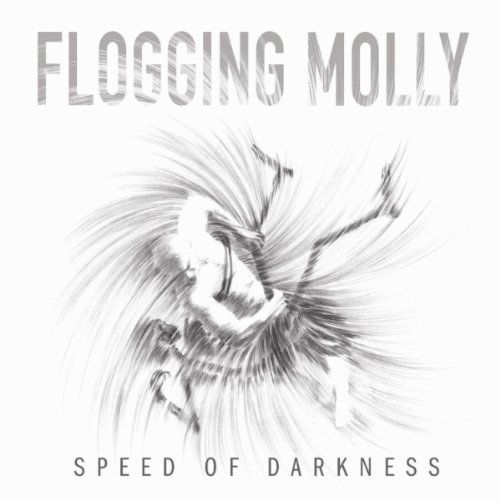
Review: Flogging Molly – Speed of Darkness


Dave King, the frontman to Flogging Molly, is going to turn 50 in two months, and the band’s debut studio album is barely a decade old. King has a long musical history pre-dating Swagger, playing in various bands that included former members of Motörhead and Krokus, and he was actively involved in writing and performing Irish folk music by at least 1993. So while Speed of Darkness might only be the band’s fifth studio album, spanning only six years, it’s something of a late career effort.

Float disappointed me. It had nothing of the immediate appeal of Swagger, Drunken Lullabies, or Within a Mile of Home. Though the music and lyrics might have been appealing after a few reflective listens, I never felt compelled to put in the effort. What I liked most about the band was missing and I frankly didn’t have the time in 2008 to dig deeper. The thought immediately came to me that their first three albums had been the product of a lifetime of creative creations that had simply not been fully developed into recorded songs, and that on Float, in contrast, for the first time Flogging Molly had to produce new material from scratch. Given King’s age, perhaps the four years between Within a Mile of Home and Float just weren’t sufficient to really develop something noteworthy.

But again, 2008 was an off year for me in general. Speed of Darkness I am at more liberty to assess.


Speed of Darkness

What I noticed immediately was a more explosive sound. The opening song kicks off with a sort of energy that I never picked up on passively listening to Float. It definitely grabbed my attention. But while a part of me was excited by this return, the actual content of the song had me worried. It seemed a bit too heavy for its own good. That the song is meant to be a little more dark than usual might be implied by its title, but really, what Irish folk song isn’t dark? In a style so permeated by a morbid sense of humor, the song’s serious tone just felt shallow. The folk takes second stage to the punk/hard rock, and the sort of anger King expresses is neither particularly poignant nor encased in music sufficiently care-free to drive its point home.

It lacked the means by which Irish folk conveys such a heightened feeling of sincerity. I didn’t feel like whatever King had to say got through. This sort of shallowness, not of thought necessarily, but at least of its conveyance, would be my watchword for the rest of the album.


Revolution

I didn’t have to look far. Revolution probably wasn’t the best choice of songs to follow up Speed of Darkness, because it only served to confirm my suspicions. The whole power to the proletariat theme permeating the album is presented so narrowly that it seems a century distant from reality, never mind that the issues they wish to confront are quite active. This song attempts to tap into sentiments that may have stood strong in the industrial age, but I question whether their target audience, in spite of being able to relate to the problems King addresses, really view their hardships in terms of a simple class struggle. Americans aren’t starving in the streets of Detroit, reading Marx, and forming up political discussion groups. Times are tough, but the issues manifest elsewhere, and “I lost my job, it’s time for a revolution,” is an absurdly shallow (if anything counterrevolutionary) solution to modern concerns.

I’m not picking sides or calling Flogging Molly out on anything, I’m just saying that the lyrical theme which appears on Revolution and continues to surface throughout the album isn’t nearly so inspiring as they would like it to be, and as, given another year of brainstorming before entering the studio, I think they could have made it.

Hand in hand, the music is a bore.


The Power’s Out

But my negative remarks take precedence only because their previous albums were so good and because they seem to be trying so hard. Speed of Darkness is not a dead weight; it’s a mish-mash. That initial impression on the opening song–that feeling that something of their old energy was back–was not a complete illusion. The Power’s Out is at least one song entirely on par with their old material. The sort of shallowness I sense in the album’s overarching message is entirely forgiven when given to lyrics and music that are effectively moving. What I hear in this song that Speed of Darkness and Revolution lack is earnest conviction. This is the sort of song where you can feel King’s passion. He’s speaking from the heart, not just regurgitating rhetoric, and the whole band seems to feed off of it. The lines are better composed, the music better written, the delivery more convincing… There’s a central spark igniting their real talent.


A Prayer for Me in Silence

And while I think it safe to call Speed of Darkness their most rock-oriented album to date, snubbing the folk side of their sound far more than I would have liked, there are a number of nice little acoustic numbers filling the gaps that serve well to warm an otherwise bleak collection of songs.

Speed of Darkness is one of those textbook average albums. It’s never “bad” but frequently bores, pays ample homage to the generic, struggles lyrically to live up to its own standards, but does occasionally break into something above the bar. As I said, Dave King is about to turn 50, and to call it a disappointment would overlook the fact that he has a long, successful career behind him. It can be hard to accept this, given that they’ve only released five albums, but in context it’s perhaps unfair to even compare this to the likes of Swagger. I mean no one says of a new Iron Maiden album “It’s got nothing on Number of the Beast,” or refuses to enjoy it on those grounds. There comes a certain point in an artist’s career where average becomes appreciable, and you have to respect him for at least trying to keep it real.

But this is a band, not a one-man project, and furthermore I have no insight into King’s state of mind. If he still feels like his musical peak has yet to come and he has something to prove, and the rest of the band is with him, then I challenge him to do better. If they’re just out there having fun and aren’t trying to surpass their finer hours, then Speed of Darkness is a respectable work. Just nothing special.

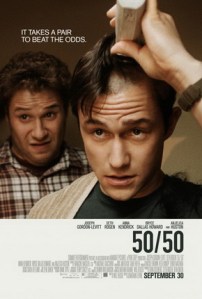
Quick Review: 50/50 (dir. by Johnathan Levine)


This is the worst review I’ll ever write. I’ll admit to that up front. This is a highly biased review.

I recently underwent a colonoscopy for what doctors refer to as “excessive bleeding”, which your body isn’t really supposed to do. Part of this also involves a biopsy of tissue to determine if it’s cancerous. I’m still due to find out what was found (because I’ve been dancing around going back as much as I have writing this review), but there’s a sense of dread in knowing that your life can change with just a few sentences from a doctor.  That, coupled with the knowledge that my mom underwent chemo for Lung Cancer and a friend who’s also living with it made 50/50 a hard film to sit through at some points.

I saw the movie on Friday Night, and literally spent the entire weekend with my laptop on my lap with Scrivener open, trying to get this written. The only reason it’s happening now is because I started admitting why I didn’t and wrote a paragraph. If I stop now, this is going to be another Sucker Punch, a film I was going to review when it came out, but refrained from doing so because it hit a little too close to home.

I walked into 50/50 expecting a heavy handed story along the lines of either the last half of Beaches or My Life with Michael Keaton. After all, the story deals with Cancer, which we all know is very serious. I actually left the film glancing at the movie schedule, looking to find out how soon the next showing was. It was a little later than I hoped, so I headed home. If it were any earlier, I would have gone right back. I laughed so much that I might have scared a few of the people sitting in the back of the theatre, and was thankful for the extra tissues I took with me when I cried.

Based on a true story of the film’s writer, Will Reiser, 50/50 is the story of  Adam Lerner (Joseph Gordon-Levitt), who goes through life making all the right choices. He eats right, jogs regularly and crosses when the walk sign is clear. He loves his girlfriend (played by Bryce Dallas Howard), and his best friend Kyle (played by Seth Rogen) helps him laugh through it all. After experiencing some pain in his back, he heads to the doctor, only to discover that he has developed a rare form of Cancer. The actual moment of awareness when he’s told is done so well that I had to bite my lip. Once you know the truth of things, you can’t return to a state where you “don’t” know, and I’ll admit that shook me.

The greatest part I loved about 50/50 was that it was more a story about the Support Groups that keep us afloat than it was about the problem of the illness itself. There are just some things in the world that you shouldn’t go through alone. Each person in Adam’s circle had a different reaction to what was occurring, but Seth Rogen’s character was by far the best, choosing to not allow Adam to wallow too much in what was happening to him.

Adam is assigned a therapist in the form of Kate McKay (Anna Kendrick), who tries to get him to relax and explain how he’s feeling, to which in most cases, he’d say “I’m fine.” It’s amazing how quickly and easily we can say that phrase to deflect every other emotion we may be feeling, and the writing in this film was good enough to play on that angle as well. His mother (Angelica Houston) wants to help her son a little too much, but Mothers can be that way, I suppose.

Just because this happens to be a story about illness doesn’t mean that it has to be non stop gloom and doom. There were a number of scenes that were laugh out loud funny, particularly those with Rogen. It’s Gordon-Levitt, however, who really carries the film. He does a great job here, and it’s a shame with the weekend over that it seems the film won’t overshadow either The Lion King or A Dolphin’s Tale. It would be interesting if the film has enough legs to last over the next few weeks. It definitely deserves a viewing.

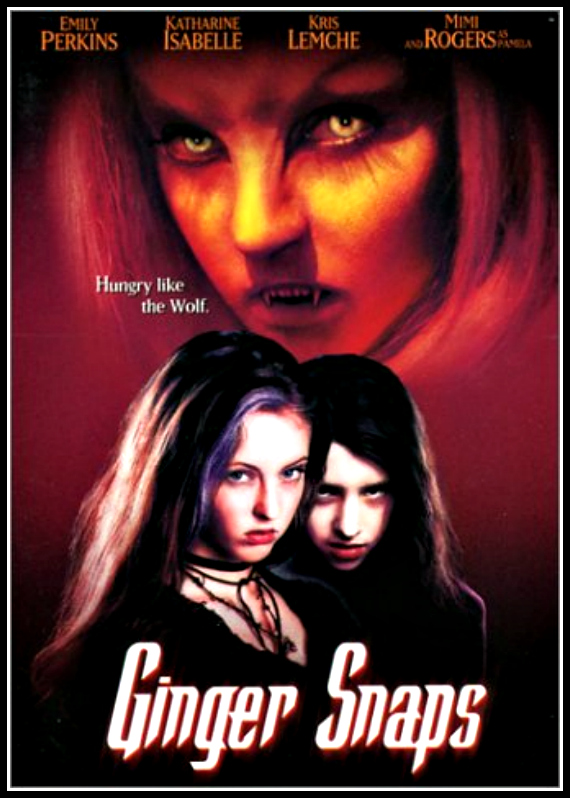
Quickie Horror Review: Ginger Snaps (dir. by John Fawcett)


Werewolf horror films have not enjoyed the same prolific output as zombie or vampire cinema in recent decades. While the undead and bloodsuckers dominate both mainstream and indie horror, lycanthropes remain relatively underrepresented. In the last ten to fifteen years, the number of truly memorable werewolf films is small enough to count on one hand, suggesting that the subgenre is persistently niche despite the creature’s long-standing place in horror folklore. This scarcity makes standout entries even more notable, and among those, two titles remain touchstones for modern audiences: Neil Marshall’s gritty low-budget Dog Soldiers (2002) and the Canadian cult classic Ginger Snaps (2000), which preceded Marshall’s work by two years.

Ginger Snaps is as much a coming-of-age drama as it is a horror film, weaving werewolf mythology into a biting exploration of adolescence, sisterhood, and female identity. Set in a seemingly quiet Canadian suburb, the story follows sisters Ginger and Brigitte Fitzgerald, misfits bound by their shared cynicism, morbid sense of humor, and disdain for high school conformity. Isolated from their peers, they find comfort in their own dark, goth-influenced world, preferring late-night cemetery photography to pep rallies or social gatherings. Their bond is strong, but it faces a severe test one fateful night.

While walking home together, the sisters encounter something in the darkness—an unseen, feral creature that lunges, attacking Ginger with brutal force. The animal’s bite leaves a wound that begins to heal at an unnatural speed, and soon, strange transformations begin to manifest. At first, these changes seem physical—accelerated hair growth, heightened senses, and an insatiable appetite—but as time passes, her personality shifts as well. Ginger grows more assertive, sexually confident, and rebellious, traits that make her magnetic to others yet alienate her from her once inseparable sister.

Director John Fawcett and screenwriter Karen Walton craft the lycanthropy metaphor with unusual clarity: the werewolf curse mirrors puberty’s upheaval. Much like films inspired by the “body horror” sensibilities of David Cronenberg, Ginger Snaps draws unsettling power from portraying transformation as both horrifying and intoxicating. This duality captures adolescence’s contradictions—its liberating confidence and its destabilizing volatility—while reframing the traditional werewolf narrative to center on female experience. For Ginger, the physical metamorphosis coincides with new social dominance, a rejection of her former outsider identity, and an embrace of raw, animalistic freedom. For Brigitte, these same changes signify danger, loss, and the unraveling of the relationship she once relied upon.

The narrative excels in balancing its supernatural premise with human emotional stakes. While a less thoughtful script could have leaned entirely on gore and special effects, Ginger Snaps roots its horror in character dynamics. Walton’s writing, although sometimes heavy-handed in its metaphors, is remarkably strong for a film produced on a modest budget. Themes of loyalty, femininity, sexuality, and transformation run parallel to the literal werewolf plot, creating layers of meaning. This thematic richness ensures that the story resonates beyond its horror trappings, inviting audience discussion in a way that pure creature features often do not.

Central to this success are the performances. Katharine Isabelle embodies Ginger with feral charm, adeptly shifting from sardonic teenager to predatory seductress. Her portrayal never loses sight of the character’s humanity, even as the animal side takes over. Emily Perkins delivers an equally strong performance as Brigitte; her quiet, introverted resolve becomes the emotional anchor of the film, providing a moral counterbalance to Ginger’s volatility. Together, they create a convincing sisterly dynamic where love is tested by fear, jealousy, and survival.

Even the supporting cast contributes meaningfully, with Mimi Rogers standing out as Pamela Fitzgerald, the sisters’ well-intentioned but oblivious mother. Rogers resists the temptation to overplay the role for comic relief, giving Pamela a genuine warmth that contrasts the darkness overtaking her daughters’ lives. This restraint keeps the film grounded, preventing it from becoming camp and ensuring its humor arises naturally from character interactions rather than exaggerated antics.

Visually, Ginger Snaps sidesteps the glossy look of higher-budget Hollywood horror, opting instead for the muted realism of suburban streets and dimly lit interiors. This aesthetic choice enhances the film’s authenticity, making the supernatural intrusion feel more jarring. The creature effects, while limited by budget, are used sparingly and effectively; rather than relying on endless transformation sequences, the filmmakers allow viewers’ imaginations to fill in the most disturbing details. This restraint mirrors the approach of Dog Soldiers, demonstrating that practical effects and atmospheric tension often outshine CGI spectacle.

The film’s release trajectory reflects its cult status. Premiering at the 2000 Toronto International Film Festival, Ginger Snaps did not achieve immediate mainstream attention. Instead, it found its audience gradually, through word of mouth and home video rentals. Horror fans discovered it over time, drawn to its unconventional blend of teenage angst and supernatural dread. In the years since, it has earned a devoted following and spawned two sequels—Ginger Snaps 2: Unleashed (2004) and Ginger Snaps Back: The Beginning (2004)—that expanded the lore while retaining the core themes of the original.

Part of the film’s enduring appeal is that it approaches werewolf mythology with fresh eyes. Traditionally, cinematic werewolves are framed around male protagonists, their curse tied to aggression, uncontrollable rage, or forbidden lust in a way that reflects masculine fears and desires. By centering two teenage girls and equating lycanthropy with female sexuality and transformation, Ginger Snaps subverts these tropes, adding complexity to a genre often dominated by male perspectives. The werewolf becomes a vehicle for exploring how society reacts to—and attempts to control—the emergence of female autonomy.

Dark humor plays an important role as well. The Fitzgerald sisters’ sardonic wit is woven throughout, providing moments of levity even as events grow increasingly grim. These comedic beats arise out of their personalities, underscoring their outsider status and emotional coping mechanisms. The humor and horror work in tandem, preventing the film from collapsing into bleakness while maintaining its bite.

Thematically, Ginger Snaps joins a short list of werewolf films that transcend their genre trappings, akin to An American Werewolf in London (1981) or The Company of Wolves (1984). It invites analysis not just for its scares but for what those scares signify: the fear of change, the allure of liberation, and the strain placed on human bonds by transformation—be it supernatural or psychological. In this respect, it aligns with Cronenberg’s The Fly, where bodily change becomes the central metaphor for loss and evolution.

Two decades later, the film remains a touchstone for horror fans advocating for more diverse and conceptually rich werewolf stories. Its success highlights that the subgenre’s scarcity is not due to audience disinterest but perhaps to a lack of filmmakers willing to innovate beyond conventional “monster hunt” templates. As the horror landscape continues to evolve, Ginger Snaps offers a blueprint for blending creature mythology with compelling character drama, ensuring that lycanthropes can be as emotionally resonant as their undead or vampiric cousins.

For viewers wondering why werewolf cinema lags behind zombie apocalypses and vampire sagas, Ginger Snaps provides an answer: when the subgenre is approached with thematic depth, sharp performances, and genuine character stakes, it can be every bit as compelling—and perhaps even more relatable—than its supernatural peers. In weaving together dark humor, horror, and adolescence’s raw turbulence, the film stands as a rare entry that deserves both its cult following and its place in the broader horror canon.

A Quickie With Lisa Marie: Dream House (dir. by Jim Sheridan)


As I try to put into words my reaction to the new film Dream House, one phrase comes to mind:

Bleh.

Dream House is about this guy played by Daniel Craig who we’re told, at the start of the film, is a writer.  He’s moved out to his “Dream House” out in the middle of one of those cinematic suburban communities.  He shares his dream house with his wife Libby (Rachel Weisz) and his two little girls.  However, things aren’t quite what they seem.  The girls keep seeing a shadowy figure watching them.  Teenagers keep performing Satanic rituals in the basement.  Craig’s neighbor looks just like Naomi Watts.  Oh no!  Has he been sucked into Mulholland Drive!?

No, not quite.  Instead, he’s just found himself trapped in a painfully slow movie that takes itself and it’s half-baked plot way too seriously.  This film is being advertised as if it’s a horror movie but there’s nothing scary about it and it’s almost as if the film itself is refusing to lower itself to providing us with any “cheap” thrills.  The film instead is a mystery but it’s one of those mysteries where we discover the solution not through any artfully placed clues but instead by random characters showing up and having flashbacks.

There’s a big twist about 80 minutes into this 99 minute film and, as a reviewer, I know that it would not be right for me to spoil that twist.  Fortunately, however, Morgan Creek Productions decided to include that twist in the film’s trailer so, if you want to know, here you go:

Again, it takes this film 80 minutes to reach the twist that the trailer reveals after 1 minutes and 17 seconds.  So, as a result, you spend the first 80 minutes going, “Okay, we know…”  Once the twist is revealed, there’s only 18 minutes to wrap up the film’s plot and this is done in the clumsiest way imaginable.

Now, one reason for this might be that the film’s producers reportedly clashed with director Jim Sheridan and eventually took the film away from him.  Sheridan, Craig, and Watts have all refused to do any promotion for the film and have publicly stated that they hate the version that has been released.  I don’t know.  My natural impulse has always been to side with the artists as opposed to the corporate people.  After all, we’ve all heard about what happened to Erich Von Stroheim’s original cut of Greed and about what Terry Gilliam went through with Brazil.  Still, it’s hard to look at the assembled footage and see any hint that this film could have been anything more than the film that’s currently playing at your local theater.

When I told Arleigh about my feelings towards Dream House, he asked me if I felt it was the “worst one of the year.”  I wouldn’t go quite that far.  Dream House is forgettable but it’s not as pompous as The Conspirator or as insulting as Straw Dogs.

No, Dream House is not the worst.

It’s just bleh.

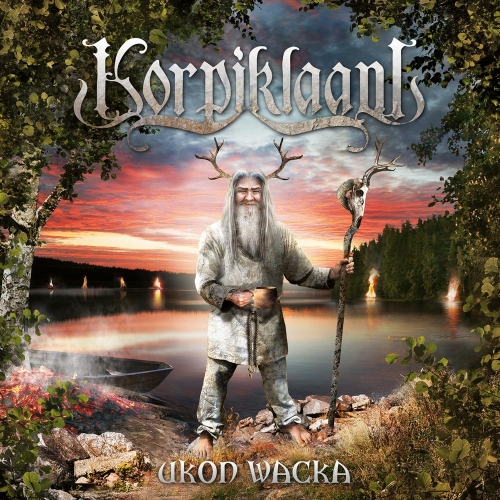
Review: Korpiklaani – Ukon Wacka


I just found out that Jaakko Hittavainen Lemmetty left Korpiklaani last month. According to the band’s official statement, “his personal health issues made the constant touring and recording impossible.” That might come as no surprise, considering Korpiklaani are one of the most prolific bands on the market. During his tenure they managed to release seven albums in nine years, and in 2010 alone they performed live approximately 100 times. I know I certainly wouldn’t be able to keep up.

His departure lends a sort of heightened significance to Ukon Wacka. Hittavainen might not have been their frontman, but he was responsible for all violins and woodwinds on all seven albums. In other words, half of what really made Korpiklaani folk metal is gone, and however well his replacement, Teemu Eerola, fills the void, their next album is bound to be different. Ukon Wacka might be the last of its kind.

Change is a pretty foreign concept to Korpiklaani, both in their sound and in their line-up. That is a point I’ve always appreciated about them. If it’s not broke, why fix it?


Louhen Yhdeksäs Poika

Ukon Wacka is no different. As always, the album makes no attempt at an introduction. It just kicks off from the get-go as quintessential Korpiklaani. Jonne Järvelä goes on rolling out incomprehensible lines at a break neck pace to a constant melody of accordion and violin, brought to life by standard metal instrumentation that’s designed to accent the folk, not compete with it. Throw in an awesome violin solo towards the end, and you’ve got a song that’s entirely unique to the band and entirely to form with everything else they’ve written. The stylistic monotony is hardly a fault, what with nearly all of their 80+ songs accomplishing a distinct and addictive melody. I probably get more Korpiklaani songs stuck in my head than any other band out there; I just might be at a loss to put a name or album to them.


Tequila

One of many long-standing traditions Ukon Wacka upholds is the booze track. Not that every song isn’t designed for copious consumption, there’s always been at least one song that requires no knowledge of Finnish to convey its lyrics. With Wooden Pints on Spirit of the Forest, Beer Beer on Voice of Wilderness, Happy Little Boozer on Tales Along This Road, Let’s Drink on Tervaskanto, Vodka on Karkelo, and now Tequila, Korven Kuningas remains the only album that doesn’t really fit that mold. And like all of those others, Tequila stands out as one of the album’s most memorable songs.


Surma

When it comes to closing songs, the band has been a little more diverse in their selection. But, aside from on Tales Along This Road, they’ve always seemed to save their most reflective or otherwise inspiring song for the end. Surma might not match Karkelo’s Kohmelo or Tervaskanto’s Nordic Feast, but it’s certainly the high point of Ukon Wacka as far as I’m concerned.

There’s not much I can say about the album really, because it sounds just like all of their others. I suppose Korpiklaani might be regarded as a bit shallow, at least in so far as most of their songs, especially in the absence of any understanding of the predominantly Finnish lyrics, are just fun and fairly thoughtless numbers about partying and getting drunk. But there’s also a sort of authenticity to that which renders them significantly more enduring than comparable acts like Finntroll. While I don’t think any particular Korpiklaani album holds a candle to Nattfödd or even Nifelvind, in the long run I always end up listening to them more. A lot of folk bands that don’t take themselves very seriously can only really be appreciated in their own right. Korpiklaani, on the other hand, extend beyond themselves, presenting a sort of continuity. I can’t really speak of them imitating or incorporating Finnish folk because, much like Irish punk and metal bands, they’re more the modern continuation of a long-standing tradition than an attempt to resuscitate it. I’ve never seen them live (they’re about to kick off a North American tour with Arkona that I might give in to a five hour drive across the state for), but I imagine their show incites a lot more dancing than headbanging, if you know what I mean. Authentic folk really implies community participation, and that’s the sort of thing Korpiklaani cater to, on Ukon Wacka as strongly as on anything else.

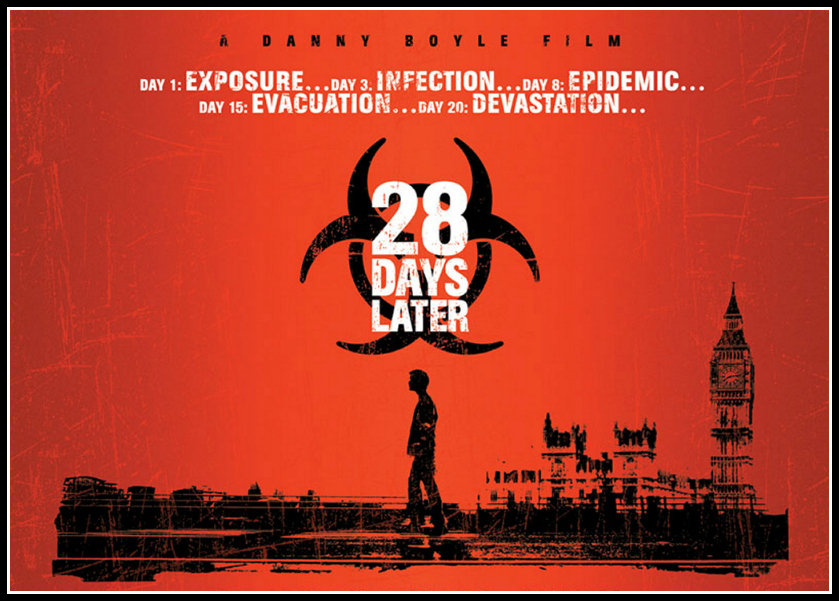
Horror Review: 28 Days Later (dir. by Danny Boyle)


For decades, the zombie film genre has been defined by the rules established by the grandfather of the modern zombie story, George A. Romero. His 1968 landmark horror film Night of the Living Dead transformed what had once been a gothic creature rooted in the voodoo folklore of Haiti and the Caribbean into an apocalyptic force symbolizing social collapse and human weakness. The film not only terrified audiences but also laid the foundational blueprint for every zombie movie that followed. Romero’s zombies weren’t merely monsters — they were a reflection of humanity’s fears, prejudices, and inner decay. His influence has remained so pervasive that, even today, filmmakers working in horror are inevitably responding to his legacy, whether they realize it or not.

Through the years, there have been numerous attempts to deviate from Romero’s formula. The most prominent early success came in the 1980s with the Return of the Living Dead series — a clever horror-comedy franchise that infused dark humor and punk aesthetics into the genre. Yet even that beloved cult entry eventually lost steam. True reinvention did not arrive until 2002, when British filmmaker Danny Boyle and screenwriter Alex Garland collaborated on 28 Days Later, a project that both revitalized the zombie genre and split its devoted fan base down the middle. Was it truly a “zombie” film, or something else entirely? That very debate remains unresolved more than twenty years later.

Boyle’s film begins not with a supernatural curse or the reanimation of the dead, but with a catastrophic act of human arrogance. A group of naïve animal-rights activists break into a research laboratory to rescue chimpanzees subjected to bureaucratic cruelty. However, they find that these animals have been injected with a rage-inducing virus — the product of bioengineering rather than black magic. One of the activists, horrified by what she witnesses, ignores the pleas of a desperate scientist and frees a chimp, unleashing a pandemic that will decimate Britain within weeks. This opening sequence is both economical and horrifying: the origins of the apocalypse come from compassion twisted into recklessness. Boyle establishes his tone immediately — quick editing, grainy digital video, and an oppressive sense of realism create a world that feels disturbingly possible.

The narrative then leaps forward twenty-eight days. In a now-iconic sequence, the protagonist Jim (played by Cillian Murphy) awakens from a coma in an abandoned London hospital. His disorientation mirrors that of the audience: sterile hallways littered with trash, flickering lights, a haunting silence broken only by the hum of wind through the empty city. When Jim emerges into the sunlight, the camera captures a London entirely devoid of people, its majestic landmarks standing as hollow monuments to civilization’s sudden collapse. This is one of cinema’s most unforgettable depictions of isolation. The haunting score by John Murphy and the use of Godspeed You! Black Emperor’s instrumental “East Hastings” heighten the apocalyptic stillness, transforming London into a ghost metropolis.

Jim’s bewilderment only deepens when he seeks refuge in a church — a setting traditionally associated with salvation — only to find it desecrated by carnage. His presence awakens a horde of infected individuals who charge at him with terrifying speed. Unlike Romero’s slow, lumbering undead, Boyle’s infected are human beings transformed by a virus that amplifies their aggression to animalistic extremes. They move like predators, sprinting at prey with berserk fury. Jim narrowly escapes thanks to two survivors, Selena (Naomie Harris) and Mark (Noah Huntley), who introduce him to the brutal new rules of existence: infection spreads through blood contact, turning victims within seconds, and hesitation means death.

The trio’s uneasy alliance soon crumbles after Mark becomes infected, forcing Selena to kill him without hesitation. This harrowing moment establishes her as one of the film’s strongest and most pragmatic characters — a refreshing departure from the damsel archetype that has long haunted horror cinema. Jim and Selena later encounter Frank (Brendan Gleeson), a good-natured taxi driver, and his teenage daughter Hannah (Megan Burns), who have been surviving in a fortified apartment building. Together they form a fragile surrogate family and travel in search of a military broadcast promising safety and a potential cure.

Boyle deftly blends moments of human warmth amid horror. Scenes like the group’s scavenging trip through an abandoned grocery store — a darkly comic echo of Dawn of the Dead’s consumer satire — offer glimpses of joy and normalcy. The countryside sequences, shot with a painterly eye, contrast the urban decay of London with the serene beauty of a world reclaiming itself from human control. Nature, the film quietly suggests, endures long after people have vanished.

Their journey leads them to a fortified mansion commanded by Major Henry West (Christopher Eccleston), a British officer whose soldiers claim to have “the answer to infection.” The supposed sanctuary quickly reveals a darker truth. West’s band of men have descended into moral depravity, promising their commander that the promise of “women” will restore morale. The film shifts from survival horror to psychological thriller as the real threat emerges — not the infected outside, but the monstrousness within human beings when order collapses. In this descent into militaristic patriarchy and madness, Boyle channels the spirit of Romero’s Day of the Dead, where the military’s illusion of control becomes the true source of terror.

Boyle and Garland’s reinvention of the zombie mythos was revolutionary. Longtime fans of Romero’s shambling undead initially resisted the notion that 28 Days Later even qualified as a zombie movie. After all, its creatures weren’t reanimated corpses but living people overtaken by an uncontrollable virus. Yet their function within the story — relentless, dehumanized embodiments of contagion and rage — served the same thematic role as zombies always had: mirrors for society’s breakdown. The debate over whether the infected “count” as zombies is less important than the fact that Boyle redefined the genre’s emotional and kinetic language. His infected didn’t just pursue victims; they hunted them. Their blistering speed and screams injected pure chaos into what had once been slow, creeping dread.

The technical and artistic choices heightened the film’s intensity. Shot largely on digital video with handheld cameras, 28 Days Later looked raw and immediate, more like found footage than polished fiction. This realism bridged the gap between old-school horror and the new century’s fixation on viral outbreaks and global instability. Coming in the post-9/11 era, its images of deserted cities and military lockdowns felt eerily prescient, foreshadowing later fears of pandemics and authoritarian control.

The performances ground the film emotionally. Cillian Murphy’s portrayal of Jim evolves from bewildered innocence to hardened survivor, serving as the audience’s emotional compass. Naomie Harris delivers one of the genre’s most capable female performances, blending vulnerability with ferocity. Brendan Gleeson, always magnetic, brings compassion and tragedy to Frank — a man whose paternal instincts ultimately lead to heartbreak. Christopher Eccleston’s Major West stands as a chilling embodiment of human corruption in crisis: the soldier who insists he is saving civilization while replicating its worst impulses.

Despite being produced on a modest budget of roughly eight million dollars, Boyle’s film achieved a scale and impact far greater than its resources suggested. The empty London shots — achieved by closing key streets at dawn for only minutes at a time — remain astonishing feats of logistical precision and cinematic audacity. More importantly, the film’s minimalist production enhanced its believability. Everything about 28 Days Later feels lived-in, grimy, and plausible.

Two decades on, 28 Days Later continues to stand as one of the most influential horror films of the 21st century. Its success reinvigorated a genre that had grown stale and inspired a wave of imitators across film, television, and video games, from Zack Snyder’s Dawn of the Dead remake to AMC’s The Walking Dead. Beyond its cultural impact, it remains a haunting meditation on rage — personal, societal, and political. Boyle and Garland transformed horror into a canvas for existential dread, exploring how quickly civility unravels when survival becomes the only law.

Whether one calls it a zombie film or not hardly matters anymore. 28 Days Later breathed new life into the undead myth, shattering old rules and redefining what modern horror could be. The debate it sparked continues, but one truth is undeniable: the genre has never been the same since Jim first walked through that silent, ruined London — a world devoured not by the dead, but by the terrifying rage of the living.