Guilty Pleasure No. 92: Brewster’s Millions (dir. by Walter Hill)


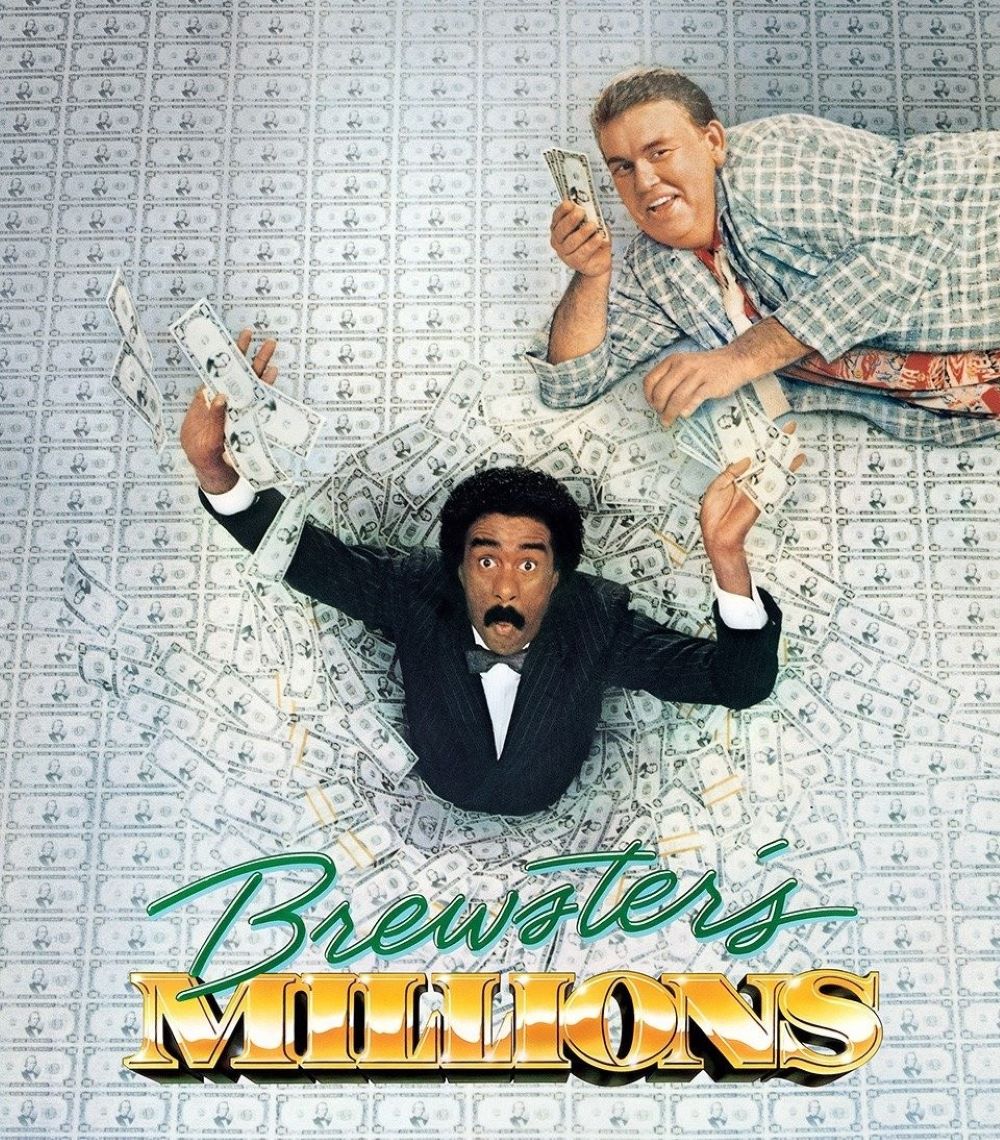
Walter Hill’s Brewster’s Millions (1985) isn’t a perfect movie by any stretch, but it’s the kind of film that sneaks up on you. It may not be sharp enough to qualify as great satire or consistent enough to hit every comedic note, but it has an undeniable charm that pulls you in regardless. It’s loud, uneven, and often ridiculous, yet few comedies from the 1980s are as weirdly entertaining when they’re firing on all cylinders. For many movie fans, it’s that quintessential “guilty pleasure”—a film you know has problems, but that somehow feels impossible to turn off once it starts. And in many ways, that’s exactly where Brewster’s Millions finds its lasting appeal.

The setup alone is too fun to resist. Richard Pryor stars as Montgomery Brewster, a minor league baseball pitcher who unexpectedly inherits the opportunity of a lifetime—to claim a $300 million fortune from a distant relative. The catch? Before he can get it, he has to spend $30 million in 30 days under a bizarre set of conditions that make financial ruin easier said than done. He can’t give the money away, can’t destroy it, can’t buy assets or investments that retain value, and can’t tell anyone why he’s doing it. Fail, and he gets nothing. Succeed, and he becomes one of the richest men alive. It’s the sort of gleefully absurd premise that could only have come from Hollywood in the 1980s, and it’s immediately clear that the film wants audiences to sit back, grab some popcorn, and watch Pryor tear through cash in increasingly funny and desperate ways.

Richard Pryor is, without doubt, the heart and soul of the movie. He imbues Montgomery Brewster with equal parts manic energy and human frustration, giving the character a real emotional arc beneath all the comic spectacle. Pryor’s talent for blending humor with exasperation makes Brewster’s predicament believable, even when it’s insane. Watching him scramble to lose money while the world keeps rewarding him is strangely satisfying. Pryor understood how to play ordinary men caught in extraordinary circumstances, and that quality grounds the film when it could have easily spiraled into total silliness. In scenes where he loses his patience with accountants, schemes wild spending sprees, or watches his good intentions backfire, Pryor’s comic timing keeps the chaos enjoyable.

John Candy adds another layer of charm as Brewster’s best friend and teammate, Spike Nolan. Candy brings warmth, loyalty, and that unmistakable good-heartedness that made him one of the decade’s most beloved comedic actors. The chemistry between Pryor and Candy keeps the film buoyant even through its weaker stretches. Their friendship defines the film’s tone—it’s loose, goofy, and full of bro-ish camaraderie. Without Candy’s infectious energy, the movie’s more hollow comedic beats might have hit the floor with a thud. Together, they create a dynamic that feels real, even inside a premise that’s totally absurd.

As a director, Walter Hill feels like an odd fit for this kind of broad comedy, but that’s part of what makes Brewster’s Millions interesting. Hill, better known for tough, kinetic action films like The Warriors and 48 Hrs., approaches this farce with a surprising amount of structure and visual precision. The film looks slicker and sharper than most comedies of its kind, which gives the excess on-screen an unintentionally epic flair. Hill’s direction keeps the story moving, and though he’s not naturally a comedic filmmaker, his grounded style adds a peculiar edge to all the craziness. It’s chaos with discipline—an aesthetic that somehow works in the movie’s favor.

Still, Brewster’s Millions can’t quite escape its shortcomings. The pacing is uneven, especially in the middle, where the film loses some steam as Brewster cycles through increasingly repetitive spending gimmicks. The story flirts with satire but rarely commits, brushing up against deeper commentary on wealth, politics, and capitalism before retreating to the comfort of broad comedy. The “Vote None of the Above” subplot, where Brewster’s money-wasting political campaign taps into voter cynicism, is one of the smartest parts of the film—but it’s introduced and resolved too quickly to leave a mark. And while the movie is full of lively energy, not every gag lands; a few supporting performances veer into caricature, and some jokes feel very much of their time.

Yet these flaws are partly what make Brewster’s Millions such a delightful guilty pleasure. It’s the cinematic equivalent of junk food—high on calories, low on nutritional value, but deeply enjoyable all the same. Pryor’s constant exasperation, the sheer absurdity of trying to “waste” money legally, and the exaggerated set pieces (like the overblown parties or his failed attempts to lose at gambling) make for irresistible entertainment. Even when the humor dips into predictable territory, the concept keeps pulling you back in. There’s a giddy satisfaction in watching Brewster try—and fail—to lose money, especially because the universe just won’t let him.

The romance subplot with Lonette McKee’s character, Angela Drake, adds just enough heart to balance the absurdity. McKee gives a grounded, intelligent performance that prevents the love story from feeling tacked on, even if it never fully takes center stage. Her presence keeps Brewster tethered to some kind of reality, and the moral through-line—learning that not everything valuable can be bought—lands gently rather than preachily. It’s not profound, but it fits the breezy tone perfectly.

As a comedy of excess, Brewster’s Millions is very much a product of its time. The slick suits, the gaudy parties, the blind faith in wealth, and the Reagan-era optimism about money’s moral neutrality all ooze from every frame. That time-capsule quality is part of its modern appeal. Watching it today, you can’t help but smile at how on-the-nose it feels—a movie from the “greed is good” decade that accidentally ends up mocking the very mindset it sprang from. It’s self-aware only in flashes, but those flashes are enough to make you recognize the movie’s satirical edge hiding beneath its loud surface.

In the end, that’s what makes Brewster’s Millions endure as a lovable guilty pleasure. It has flaws you can’t ignore—uneven pacing, scattershot tone, underdeveloped ideas—but none of them outweigh its charm. Pryor’s comic genius makes even the weakest joke land better than it should. Candy’s warmth keeps the film light. And Hill’s straightforward direction infuses the lunacy with just enough realism to make it believable. The result is a movie that’s too silly to take seriously but too fun to dismiss. You watch it, laugh at its audacity, shake your head at the logic gaps, and yet somehow come away smiling.

Brewster’s Millions may not be a comedy classic, but it’s easy to see why people keep revisiting it. It’s comfort food cinema—lighthearted, clumsy, and endlessly watchable. And like all the best guilty pleasures, it doesn’t need to be perfect to make you happy. Sometimes, seeing Richard Pryor outsmart the meaning of money for two hours is more than enough.

Previous Guilty Pleasures

  1. Half-Baked
  2. Save The Last Dance
  3. Every Rose Has Its Thorns
  4. The Jeremy Kyle Show
  5. Invasion USA
  6. The Golden Child
  7. Final Destination 2
  8. Paparazzi
  9. The Principal
  10. The Substitute
  11. Terror In The Family
  12. Pandorum
  13. Lambada
  14. Fear
  15. Cocktail
  16. Keep Off The Grass
  17. Girls, Girls, Girls
  18. Class
  19. Tart
  20. King Kong vs. Godzilla
  21. Hawk the Slayer
  22. Battle Beyond the Stars
  23. Meridian
  24. Walk of Shame
  25. From Justin To Kelly
  26. Project Greenlight
  27. Sex Decoy: Love Stings
  28. Swimfan
  29. On the Line
  30. Wolfen
  31. Hail Caesar!
  32. It’s So Cold In The D
  33. In the Mix
  34. Healed By Grace
  35. Valley of the Dolls
  36. The Legend of Billie Jean
  37. Death Wish
  38. Shipping Wars
  39. Ghost Whisperer
  40. Parking Wars
  41. The Dead Are After Me
  42. Harper’s Island
  43. The Resurrection of Gavin Stone
  44. Paranormal State
  45. Utopia
  46. Bar Rescue
  47. The Powers of Matthew Star
  48. Spiker
  49. Heavenly Bodies
  50. Maid in Manhattan
  51. Rage and Honor
  52. Saved By The Bell 3. 21 “No Hope With Dope”
  53. Happy Gilmore
  54. Solarbabies
  55. The Dawn of Correction
  56. Once You Understand
  57. The Voyeurs 
  58. Robot Jox
  59. Teen Wolf
  60. The Running Man
  61. Double Dragon
  62. Backtrack
  63. Julie and Jack
  64. Karate Warrior
  65. Invaders From Mars
  66. Cloverfield
  67. Aerobicide 
  68. Blood Harvest
  69. Shocking Dark
  70. Face The Truth
  71. Submerged
  72. The Canyons
  73. Days of Thunder
  74. Van Helsing
  75. The Night Comes for Us
  76. Code of Silence
  77. Captain Ron
  78. Armageddon
  79. Kate’s Secret
  80. Point Break
  81. The Replacements
  82. The Shadow
  83. Meteor
  84. Last Action Hero
  85. Attack of the Killer Tomatoes
  86. The Horror at 37,000 Feet
  87. The ‘Burbs
  88. Lifeforce
  89. Highschool of the Dead
  90. Ice Station Zebra
  91. No One Lives

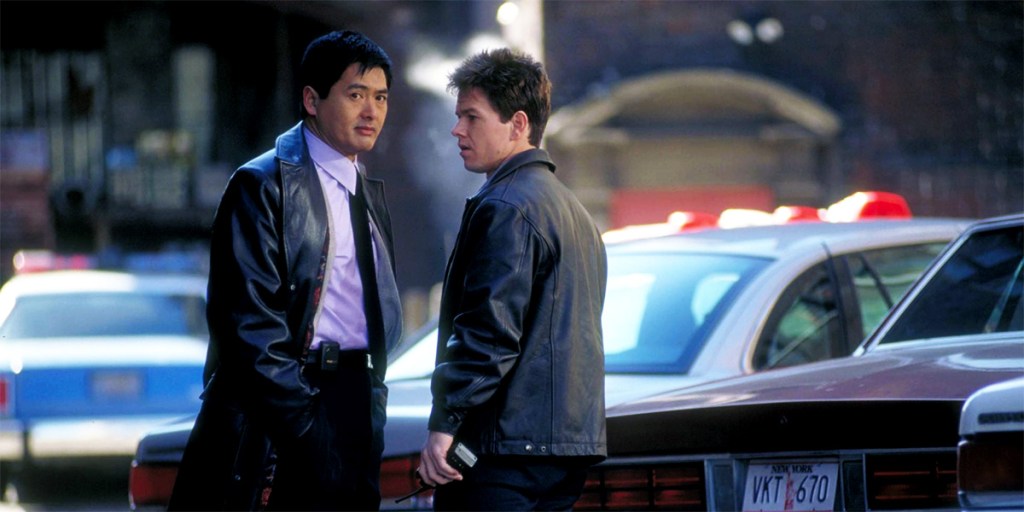
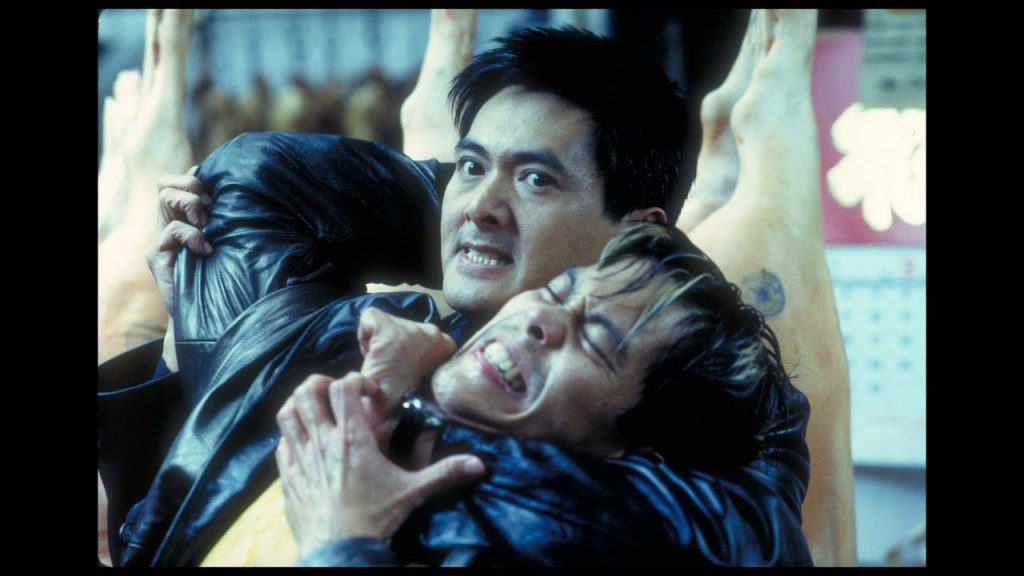
THE CORRUPTOR (1999) – Chow Yun-Fat and Mark Wahlberg fight corruption in Chinatown!


In the late 90’s, I was all in on actor Chow Yun-Fat. Having only discovered his excellent Hong Kong film work a couple of years earlier, I was so excited to see what kind of splash he would make in American films. I loved his first American film THE REPLACEMENT KILLERS (1998), but I will admit it was an exercise in style over substance, and it really didn’t show off his acting abilities. Chow was working hard to improve his English language skills during this time, but that limited his performance the first time around. As I settled into my seat on the film’s opening weekend at the box office in March of 1999, I was hoping to see the Chow Yun-Fat I loved from his Hong Kong movies. But more on that later…

THE CORRUPTOR opens with a bomb going off in Chinatown, followed by a sidewalk assassination in broad daylight. It seems there’s a turf war being fought between a street gang called the Fukienese Dragons, led by Bobby Vu (Byron Mann), and a Chinese criminal organization called the Tung Fung Benevolence Association, led by Uncle Benny Wong (Kim Chan) and Henry Lee (Ric Young). We then meet Nicholas Chen (Chow Yun-Fat), a heroic, highly decorated NYPD cop who runs the Asian Gang Unit. His unit is tasked with trying to keep the peace in Chinatown, but with all the recent violence, they’re clearly failing. Knowing he needs more help, Chen requests additional manpower and gets the young and eager Danny Wallace (Mark Wahlberg). The two men don’t hit it off immediately as Chen had wanted a more experienced, Asian cop. Over time, however, Chen begins to trust Wallace and begins to let him into the inner workings of the unit. 

We soon find out that things are much more complicated in Chinatown police work than they might have appeared at first. Chen is not quite as heroic as initially presented. He’s a morally conflicted man who wants to do good work for the people of Chinatown, but in the process, he’s compromised himself by taking sides and forming a delicate alliance with Uncle Benny and Henry Lee. And Danny isn’t quite the young, green cop he was presented as either. In fact, he’s been secretly tasked by Internal Affairs to monitor Chen and his unit. As Wallace sees what’s really going on in Chinatown, and after Chen saves his ass on multiple occasions, it becomes harder and harder for him to do his job and build a case against Chen. As the film reaches its conclusion in this world of grey, we will see if Chen and Wallace can work together and take down Henry Lee and Bobby Vu, who have formed an alliance to take over Chinatown’s criminal activities. And we will find out what Wallace will do with the information he has on Chen.

I’m a big fan of THE CORRUPTOR, and the primary reason is the excellent performance of Chow Yun-Fat. No other American made action film showed off the extraordinary charisma that made him a superstar in Asia in the 1980’s. In this film, Chow is able to play both sides of the law and still remain incredibly likable. He pulls this balancing act off in a way that appears effortless, and yet there are very few actors in the world who are capable of doing it. Mark Wahlberg had emerged as a major film star a couple of years earlier with the runaway success of BOOGIE NIGHTS (1997). I think he’s very good in this film as well, as his character must reconcile his ideals against the reality of fighting crime in such a dangerous environment. There’s a scene near the end where Chen has been informed that Wallace is internal affairs and confronts him about it. Wahlberg is incredible in the scene, setting the stage for the exciting resolution of the film.

THE CORRUPTOR has several excellent action set-pieces, beginning with a shootout at a lamp shop. This is when I knew this movie was going to present the Chow Yun-Fat I know and love. His personality is displayed in the scene, along with his two guns blazing in slow motion. There’s also an intense car chase through crowded streets and a final showdown on a cargo ship that really stood out to me. Director James Foley was probably hired based on his prior work that showed an ability to deal with moral ambiguity in films like AT CLOSE RANGE (1986) and GLENGARRY GLEN ROSS (1992). While he wouldn’t be my first directorial choice for an action film, he does a fine job in my opinion. 

Overall, I recommend THE CORRUPTOR to any person who likes Chow Yun-Fat, Mark Wahlberg, or an entertaining action film. It’s not in the league of Chow’s best Hong Kong films, but it is his best American action film, because it actually gives him a strong character to play. That went a long way with me. 

I’ve included the trailer for the film below:

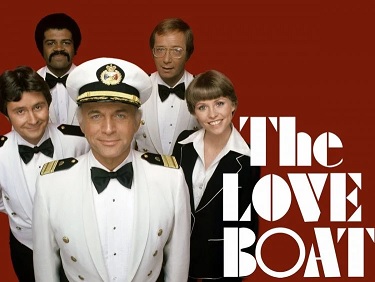
Retro Television Review: The Love Boat 1.2 “A Tasteful Affair / Oh, Dale! / The Main Event”


Welcome to Retro Television Reviews, a feature where we review some of our favorite and least favorite shows of the past!  On Wednesdays, I will be reviewing the original Love Boat, which aired on ABC from 1977 to 1986!  The series can be streamed on Paramount Plus!

It’s time to set sail on adventure and set your mind on a new romance!

Episode 1.2 “A Tasteful Affair / Oh, Dale! / The Main Event”

(Directed by Richard Kinon, Adam Rafkin, and Stuart Margolin, originally aired on October 1st, 1977)

The second episode of The Love Boat was all about fighting lovers.

For instance, one storyline — I assume it’s the one that was called “The Main Event” — features Sherman Hemsley as Maurice Marshall and LaWanda Page as his wife, Stella.  From the minute that they get on the boat, Maurice and Stella are arguing but it soon becomes obvious that, like many couples who have been together for a while, arguing is just the way that they express their love for each other.  The insults may be frequent but they’re always affectionate, which is kind of sweet.  Anyway, while on their way to dinner in the ship’s lounge, they get stuck in an elevator.  After arguing about the best way to escape from the elevator, they end up making out.  Of course, when the doors to the elevator do finally open, Captain Stubing and Gopher see that the couple, rather than being dead, are instead making good use of the space.  Everyone laughs.  Seriously, that’s the entire story.  Two people get suck in an elevator and make out.  That’s it.  You know, you can fool around on a moving elevator as well.  You don’t have to fry the circuitry ahead of time.  Just listen for the ping before the elevator doors open.

In a rather more serious storyline, Jaclyn Smith plays Janette Bradford, the wife of a wealthy but heartless man named Lucas (David Knapp).  Lucas is convinced that Janette is only taking the cruise alone because she’s planning on cheating on him.  Lucas hires a private investigator named Dennis Kingsley (Dennis Cole) to watch her on the boat.  Dennis soon discovers that Janette is not cheating on her husband but instead, she took the cruise because she needed a break from his controlling and emotionally abusive ways.  Dennis ends up falling in love with Janette and Janette with him.  However, Dennis also knows that he’s going to have to tell her the truth about why he’s on the cruise.  It doesn’t quite lead to heartbreak but it’s still far more serious than anything you might expect to see on a show of The Love Boat‘s reputation.  Jaclyn Smith, it should be said, does a wonderful job in the role of Janette, capturing both the vulnerability of someone in an abusive relationship and also her growing determination to escape from Lucas’s control.

Unfortunately, while all of this is going on, you have to deal with John Ritter playing a guy whose lover actually is cheating on him.  Ritter plays Dale.  Dale wants to follow his girlfriend on the cruise for the same reason that Lucas hired Dennis to spy on Janette.  Dale suspects that he’s being cheated on.  However, the cruise is almost entirely sold out.  There’s only one ticket left but it’s to share a cabin that’s already occupied by a woman.  Since Dale is not a woman, he can’t buy the ticket.  So, of course, Dale steals a blonde wig and a suitcase full of the frumpiest dresses imaginable.  Can you guess where this is going?  Dale gets his cabin, falls in love with his cabinmate (played, in a likable performance, by Tovah Feldshuh), and spends a lot of time changing clothes in the ship’s linen closet.  Captain Stubing ends up getting a crush on the mysterious woman with the big blonde hair and the ugly dresses and yes, it’s as stupid as it sounds with a heavy dose of cringey 70s gay panic humor tossed in to boot.  It doesn’t help that John Ritter gives such a frantic performance in the role that I actually got nervous watching him.  “Calm down!” I wanted to say.

As you can guess, the tone is all over the place in this episode.  That’s to be expected when you’re telling three stories at one time but there’s such an imbalance between Jaclyn Smith acting depressed and fragile and John Ritter doing pratfalls that it ultimately takes away from both stories.  With the second episode of The Love Boat, it seems obvious that the show was still struggling to find the right balance between drama and comedy.  As well, this episode suffers because the crew isn’t given much to do.  The first episode was enjoyable because the main cast had a fun chemistry but, in this episode, everyone is a bystander except for Captain Stubing.  Unfortunately, this episode couldn’t even treat Stubing consistently as the elevator storyline requires Stubing to be significantly smarter than the Stubing who appears in the John Ritter storyline.

Would the show ever succeed in finding and striking the right balance?  We’ll see what happens next week!

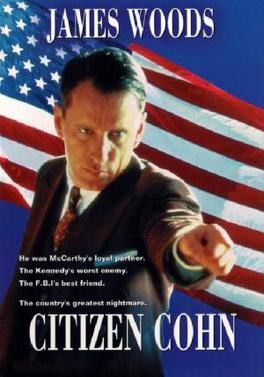
Citizen Cohn (1992, directed by Frank Pierson)


The year is 1986 and the powerful attorney Roy Cohn (James Woods) is dying.  The official story is that Cohn has liver cancer but the truth is that he’s dying of AIDS.  As he lies in his hospital bed, he thinks about his past and the events the led to him becoming one of the most feared and powerful men in America.  He is haunted by the ghosts of his many enemies, people like communist spy Ethel Rosenberg (Karen Ludwig) and his former colleague, Bobby Kennedy (David Marshall Grant).

Not surprisingly, a good deal of Cohn’s memories center around his association with Sen. Joseph McCarthy (Joe Don Baker), a charismatic alcoholic who, in the 50s, charged that he had a list with the names of communist spies deep within the government.  Cohn and Kennedy served as the counsels on McCarthy’s committees.  Cohn is with McCarthy from the beginning and he’s with him until the end of the senator’s career.  In fact, it’s Cohn’s own shadowy relationship with an army private that ultimately leads to McCarthy’s downfall.

Except for one aspect of the film, Citizen Cohn is one of the best films to ever be produced by HBO.  The film covers a lot of history in a little less than 2 hours and it does so in a way that is always interesting and easy to follow.  By including incidents from every phase of Cohn’s life, as opposed to just focusing on his time as McCarthy’, the film also shows how someone like Roy Cohn can become a behind-the-scenes power player despite the majority of the country having no idea who he is.  James Woods gives one of his best performances as the hyperactive and unapologetically corrupt Cohn while Joe Don Baker is perfect as the self-pitying Joseph McCarthy.

The problem with the film, and your mileage may vary on how big an issue this is, is that it almost presents Cohn’s final days — dying of AIDS in a lonely New York hospital room — as being some sort of deserved fate for everything that he did wrong in life.  For me, even in the case of someone like Roy Cohn, that’s a step too far and it comes very close to presenting AIDS as some sort of divine punishment (which, itself, comes dangerously close to mirroring the homophobic statements that were made — and still are being made — by anti-gay activists).  That may not have been the film’s intention but, with the flashback structure and all of his dead enemies materializing to taunt Cohn as he lies dying, it’s still a very valid interpretation.

Some of that is perhaps unavoidable.  Cohn, in both real life and the film, died largely unrepentant for anything he did during his life.  As the central character of a biopic, Cohn never has the type of big moment that you would hope for, where he would realize that it was wrong for him to destroy so many lives and show at least a hint of contrition for his past behaviors.  That Roy Cohn is even a compelling character is a testament to the talent of James Woods because it’s certainly not due to any sort of hidden goodness lurking underneath the surface of Cohn’s snarling personality.  The lack of apologies and regrets that made Cohn a powerhouse in real life also makes him an ultimately unsatisfying subject for a movie.

So You Want To Be A Rock’n’Roll Star: The Idolmaker, Breaking Glass, That’ll Be The Day, Stardust


So, you want to be a rock and roll star?  Then listen now to what I say: just get an electric guitar and take some time and learn how to play.  And when your hair’s combed right and your pants fit tight, it’s gonna be all right.

If you need any more help, try watching these four films:

Idolmaker

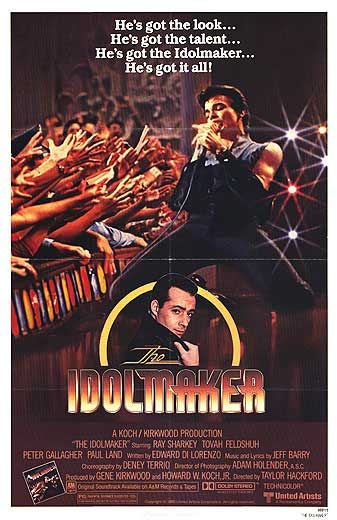
The Idolmaker (1980, directed by Taylor Hackford)

The Idolmaker is a movie that asks the question, “What does it take to be a star?  Who is more interesting, the Svengalis or the Trilbys?”  The year is 1959 and Vinny Vacari (Ray Sharkey, who won a Golden Globe for his performance but don’t let that dissuade you from seeing the movie) is a local kid from New Jersey who dreams of being a star.  He has got the talent.  He has got the ambition and he has got the media savvy.  He also has a receding hairline and a face like a porcupine.

Realizing that someone who looks like him is never going to make hundreds of teenage girls all scream at once, Vinny instead becomes a starmaker.  With the help of his girlfriend, teen mag editor Brenda (Tovah Feldshuh) and a little payola, he turns saxophone player Tomaso DeLorussa into teen idol Tommy Dee.  When Tommy Dee becomes a star and leaves his mentor, Vinny takes a shy waiter named Guido (Peter Gallagher) and turns him into a Neil Diamond-style crooner named Cesare.  Destined to always be  abandoned by the stars that he creates, Vinny continually ends up back in the same Jersey dive, performing his own songs with piano accompaniment.

The Idolmaker is a nostalgic look at rock and roll in the years between Elvis’s induction into the Army and the British invasion.  The Idolmaker has some slow spots but Ray Sharkey is great in the role of Vinny and the film’s look at what goes on behind the scenes of stardom is always interesting.  In the movie’s best scene, Tommy performs in front of an audience of screaming teenagers while Vinny mimics his exact moments backstage.

Vinny was based on real-life rock promoter and manager, Bob Marcucci.  Marcucci was responsible for launching the careers of both Frankie Avalon and Fabian Forte.  Marcucci served as an executive producer on The Idolmaker, which probably explains why this is the rare rock film in which the manager is more sympathetic than the musicians.

breakglass_lrg

Breaking Glass (1980, directed by Brian Gibson)

At the same time that The Idolmaker was providing American audiences with a look at life behind-the-scenes of music stardom, Breaking Glass was doing the same thing for British audiences.

In Breaking Glass, the idolmaker is Danny (Phil Daniels, who also starred in Quadrophenia) and his star is an angry New Wave singer named Kate (Hazel O’Connor).  Danny first spots Kate while she is putting up flyers promoting herself and her band and talks her into allowing him to mange her.  At first, Kate refuses to compromise either her beliefs or her lyrics but that is before she starts to get famous.  The bigger a star she becomes, the more distant she becomes from Danny and her old life and the less control she has over what her music says.  While her new fans scare her by all trying to dress and look like her, Kate’s old fans accuse her of selling out.

http://www.youtube.com/watch?v=8ALdL8oV_sY

As a performer, Hazel O’Connor can be an acquired taste and how you feel about Breaking Glass will depend on how much tolerance you have for her and her music.  (She wrote and composed all of the songs here.)  Breaking Glass does provide an interesting look at post-punk London and Jonathan Pryce gives a good performance as a sax player with a heroin addiction.

thatll-be-the-day-poster

That’ll Be The Day (1973, directed by Claude Whatham)

Real-life teen idol David Essex plays Jim MacClaine, a teenager in 1958 who blows off his university exams and runs away to the Isle of Wright.  He goes from renting deckchairs at a resort to being a barman to working as a carny.  He lives in squalor, has lots of sex, and constantly listens to rock and roll.  Eventually, when he has no other choice, he does return home and works in his mother’s shop.  He gets married and has a son but still finds himself tempted to abandon his family (just as his father previously abandoned him) and pursue his dreams of stardom.

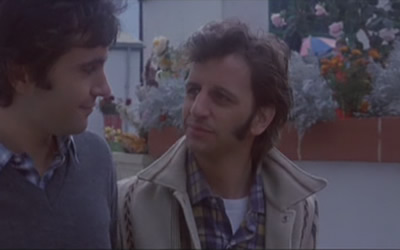
David Essex and Ringo Starr

Based loosely on the early life of John Lennon, the tough and gritty That’ll Be The Day is more of a British kitchen sink character study than a traditional rock and roll film but rock fans will still find the film interesting because of its great soundtrack of late 50s rock and roll and a cast that is full of musical luminaries who actually lived through and survived the era.  Billy Fury and the Who’s Keith Moon both appear in small roles.  Mike, Jim’s mentor and best friend, is played by Ringo Starr who, of all the Beatles, was always the best actor.

That’ll Be The Day ends on a downbeat note but it does leave the story open for a sequel.

stardust-1

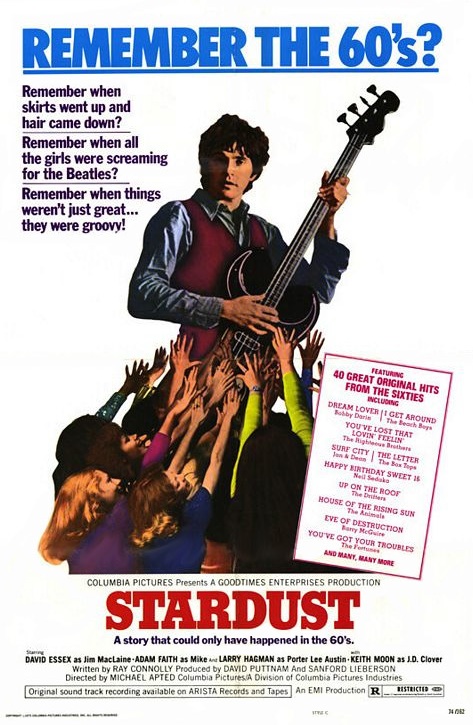
Stardust (1974, directed by Michael Apted)

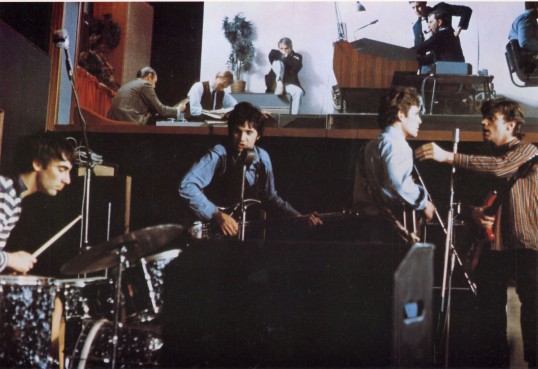
Stardust continues the story of Jim MacClaine.  Jim hires his old friend Mike (Adam Faith, replacing Ringo Starr) to manage a band that he is in, The Straycats (which includes Keith Moon, playing a far more prominent role here than in That’ll Be the Day).  With the help of Mike’s business savvy, The Stray Cats find early success and are signed to a record deal by eccentric Texas millionaire, Porter Lee Austin (Larry Hagman, playing an early version of J.R. Ewing).

When he becomes the breakout star of the group, Jim starts to overindulge in drugs, groupies, and everything that goes with being a superstar.  Having alienated both Mike and the rest of the group, Jim ends up as a recluse living in a Spanish castle.  Even worse, he gives into his own ego and writes a rock opera, Dea Sancta, which is reminiscent of the absolute worst of progressive rock.  Watching Jim perform Dea Sancta, you understand why, just a few years later, Johnny Rotten would be wearing a homemade “Pink Floyd Sucks” t-shirt.

Stardust works best as a sad-eyed look back at the lost promise of the 1960s and its music.  Watch the movie and then ask yourself, “So, do you really want to be a rock and roll star?”

21494_2

The Walking Dead Season 6 Trailer


TheWalkingDeadS6

“Do you have any idea who you’re talking to?” — Rick Grimes

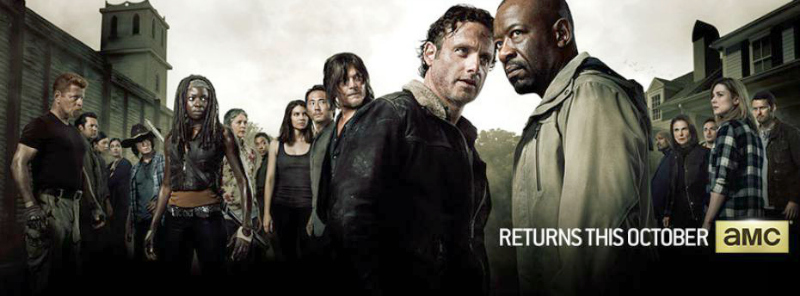
AMC has unveiled it’s official trailer for the 6th season of TV’s most popular show (so popular that it even beats Sunday Night Football on occasion) during it’s San Diego Comic-Con panel at Hall H.

Last we left the Grimes crew saw Rick Grimes get the go-ahead from Alexandria Safe-Zone leader Deanna Monroe to shoot wife-batterer and neck-slashing Pete in his face. It would’ve been quite a satisfying event if not for Rick’s first BFF, Morgan Jones, suddenly appearing out of the shadows to see him do the deed. This is the same Morgan who went from crazy clear to zen clear who thought all life that wasn’t undead was precious.

So, now season 6 is almost upon us fellow fans of the show and it looks like Rick is turning out to be Alexandria’s shogun with Deanna as the figurehead leader.

Will Rick’s Shane-like attitude to leading this expanded group of survivors be a blessing or be the downfall of another safe-haven for the Grimes Gang? There’s still the Wolves out there who now knows where they are. There’s also the looming shadow of the comic book’s Negan and his Saviors possibly making their appearance which could mean just one thing: WAR.

So, grab those ribs and thick-cut steaks and take a big bite and enjoy the trailer.

Review: The Walking Dead S5E16 “Conquer”


TheWalkingDeadS5E16

“Simply put, there is a vast ocean of shit that you people don’t know shit about.” — Sgt. Abraham Ford

[spoilers within]

The Walking Dead has been derided as badly-written (early seasons definitely had it’s story issues) with recycled themes and subplots with characters that barely rise above one-dimensional. Only the most ardent fan would take those criticisms of the show and dismiss them outright. The series has had it’s many flaws and the three mentioned have been ones earned through the show’s first three seasons of revolving door showrunners.

There was the show’s original creator, Frank Darabont, who injected a cinematic quality to a tv show that could easily have gone campy (Z Nation), but whose need to control every aspect of the show made him lose the support of the very studio that helped him get the show up and running. It didn’t help that his first half of season 2 where the group searched endlessly for Sophia almost sunk the show.

With Darabont given his walking papers the show turned to series writer and producer Glen Mazzara to right the ship after a listless first half of season 2. Things definitely turned for the better with Mazzara in charge and for the first half of season 3 it looked like Mazzara might have finally figured out what sort of show The Walking Dead should be. In the end, he too ran out of steam as season 3 limped into an underwhelming season finale.

Scott M. Gimple took the reins and things for the show has been improving at a steady rate since season 4 and finally culminates in a season 5 finale that was both full of suspense, action and melodrama in equal amounts that has been the mark of his current tenure as series showrunner. If the show has an award for series MVP it should be handed gladly over to Scott M. Gimple.

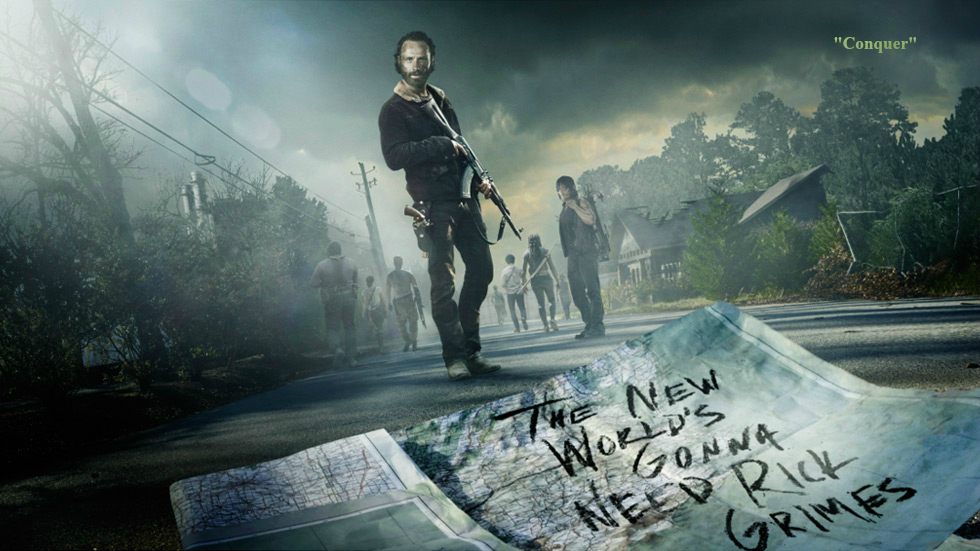
“Conquer” starts with a cold opening that already signals that great things are afoot for the rest of the season finale’s extended 90-minutes. We find Morgan asleep (quite peacefully) inside a derelict car in the middle of the woods. We see him wake up and go about what’s probably a daily ritual for him when his breakfast gets interrupted by a stranger who happens to be sporting a “W” mark on his forehead (with dirt instead of carved into). He’s the first person we meet who seems to be affiliated with the very Wolves this second half of the season has been working up as the next Big Bad to threaten Rick and his people. It’s a sequence that gives us a clue as to the sort of bad guys these “Wolves” are going to be for Rick and Company. With some fancy staff fighting and a zen quality to his actions, Morgan more than holds off the two “Wolves” looking to steal his gear and add them to their collection of “W” marked zombies.

The rest of the episode takes on three different storylines involving Rick, Father Gabriel and Glenn.

With Glenn we see him follow Nicholas seen climbing over the walls of Alexandria. While not the most smart thing he has done of late, Glenn has a right to be suspicious of Nicholas who has done nothing but get people (both his own and Rick’s) killed while pumping himself out to be a strong protector when Glenn and the audience know that he’s far from it. It’s a sort of chase sequence as Glenn and Nicholas end up going at it mano-y-mano with Nicholas starting it off with a failed ambush that only wounds Glenn, but does hurt him enough that at times during the episode there was a great chance it was going to be him that would be the significant death to mark the season finale.

The writers (Scott M. Gimple and Seth Hoffman) don’t do the obvious and kill Glenn off, but does make him teeter on the brink of doing what many in the audience hope would happen and that was kill Nicholas once he finally had him beaten down. Instead, Glenn shows that despite his extended time out in the savage wilds outside the walls of Alexandria, he still has some compassion (misguided it might well turn out to be) and the need to see justice done. While Glenn might not have died in this finale his growing role as the voice of reason and compassion in a group that’s become fractured emotionally and mentally means his days on the series could very well be numbered.

Father Gabriel was the more frustrating segment of tonight’s finale. His time with the group has found him to be both naively stupid of the new world around him and mentally unstable because of what he had to do to survive. Yet, we find him talking a walk outside the walls in a bright, clean white shirt like he has cleansed himself prior to make sure he dies with a clean conscience. Instead, the instance a zombie was about to do what he seems to want he finally decides to want to live. But then does another 180 degrees and decides to leave the compound’s gate unsecured knowing it means zombies will definitely wander in.

The writers don’t seem to know what to do with Father Gabriel. From the moment he was introduced they seem to be flailing in the dark with so many ideas on how to treat an unstable man whose faith has been shattered by this new world where the dead don’t remain dead and those who survive must turn to their darker instincts (him included). One moment he’s trying to poison the minds of Deanna about Rick and his people while not confessing to the dark deeds he has done. Next he’s trying to atone for those very sins only to turn around and do something that would add more sins to his ledger.

It’s a shame that Father Gabriel has become such an albatross this season for the show since Seth Gilliam is such a great actor (as his time on HBO’s The Wire has shown). There’s still a glimmer of hope for the fallen priest as we saw when Maggie arrives just in time to keep Sasha from killing Father Gabriel. Will Maggie’s own Hershel-like act of mercy be enough to finally turn Father Gabriel towards something more concrete (whether as a good guy or a bad guy) would have to wait for season 6 this coming October.

We finally come to Rick who is in a sort of timeout after his total breakdown in the previous episode. He finally understands that he might have gone a bit Shane-like and overboard with his behavior, but he also still believes that Alexandria’s best chance of surviving beyond the luck they’ve had before their arrival was for them to stay and takeover. Whether they take over by the examples of their words and deeds or through force if the Alexandrians try to kick them out would depend on the very people who don’t seem to understand what’s truly at stake.

Rick gets a sort of visit from all the differing voices within his group. There’s Glenn and Michonne who wonder if Rick never wanted for their stay in Alexandria to work. Then there’s Carol and, to a certain extent Abraham, who has seen enough of how Alexandria operates to know that these people are like children who have had the luxury of never having been confronted with a no-win situation to wake them up from their fantasy of trying to rebuild civilization. It’s the sort of angel and devil on the shoulder bit that could’ve gone terribly cheesy, but ended up being natural and poignant to the episode’s narrative. A narrative that showed how both Rick and Deanna have been both wrong and right in their stances of how Alexandria should be led.

It would take a death to someone Deanna holds dear for her to finally understand what Rick and his people have bee trying to tell her and the rest of the Alexandrians. Abraham (who has become the show’s go-to-guy for memorable one-liners) said it best himself during the night meeting to decide Rick’s fate. In the only way Abraham knows how he says, “Simply put, there is a vast ocean of shit that you people don’t know shit about.”

In the end, Abraham was correct in that the Alexandrians just do not understand the world they’re living in. They might have the strong walls (not so strong that people can’t climb over them) to keep the zombies out. They have power and running water and some luxuries of the life long past dead. Yet, they’re naive and delusional to think that they won’t have to get their hands dirty to keep their way of life going. These people need people like Rick Grimes and his band of survivors. They might not be the best examples of how society and civilization was before the zombie apocalypse fell on everyone, but they were the ones who best adapted to it and still kept a semblance of their humanity in some way.

So, season 5 ended with not just Rick using a brand of reasoning and a recent example of how things could easily go from good to bad to make his point, but with Daryl and Aaron bringing Morgan back to Alexandria for a reunion between the first two characters we met on this show. Last time we saw Rick and Morgan together was in season 3’s “Clear” and Morgan was definitely not in his right mind while Rick was still holding onto his pre-apocalypse principles. with their latest reunion it looks like things have reversed with Rick looking more and more like the Morgan of “Clear” while Morgan has recovered from his crisis of conscience to come out the other side clear of mind.

We already know that there will be a season 6 and a season after that (AMC knows a goldmine when they see it and this show is literally printing them cash). The questions left unanswered by tonight’s finale looks to be the driving force for the next season. The Wolves now have an idea that Alexandria exists (from the knapsack full of pictures Aaron dropped at the canned food warehouse depot) and will probably try to visit them soon. Then there’s the question of how will Glenn finally expose Nicholas’ cowardice and duplicity to the Alexandrians and whether Nicholas will remain a problem for Glenn moving forward. The biggest question remains on whether these Wolves will involve Negan of the comics in some capacity or just the tip of a bigger danger.

The season closes with a very appropriate scene before fading to black. A car in the canned food depot marked in stark white spray paint with the words: “Wolves Not Far.”

Notes

  • Tonight’s season finale was directed by series exec. producer Greg Nicotero and written by showrunner Scott M. Gimple and series writer Seth Hoffman.
  • The Wolves seem to be a new group made just for the show. They don’t seem to correspond to any past group that the comic book has had Rick encounter and/or fight against.
  • The trailers trap full of zombies with the “W” marks on their foreheads was reminiscent of a similar scene and trap from Resident Evil: Extinction.
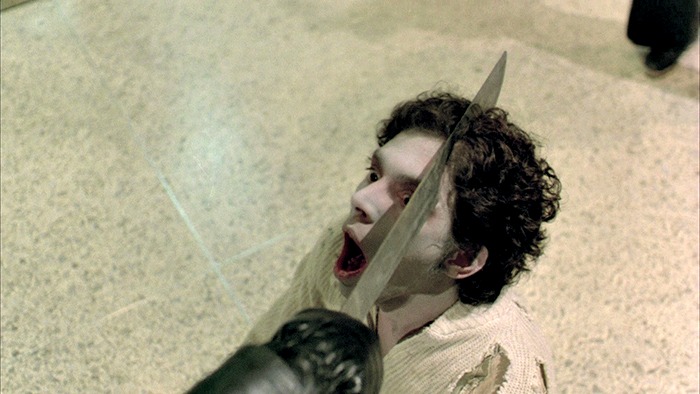
  • Aaron had his own moment during the escape out of the car that was straight out of the original Dawn of the Dead. machetezombie
  • Kill of the season has to be when Daryl took the chain, whipped it around his head to take the top of the heads of three zombies with precision. that’s kill of the week stuff that even Zombieland would be proud of.
  • When Father Gabriel fails to secure the main gate and then his subsequent behavior and confession to Maggie at the chapel was also reminiscent of a character from a George A. Romero zombie film: Day of The Dead. When Pvt. Salazar decides to commit suicide by letting in zombies into the secured compound.
  • Lennie James was trained to use a walking/fighting stick by the original Donatello from the first Teenage Mutant Ninja Turtles.
  • The scene at the meeting where Pete accidentally kills Reg and the aftermath was straight out of the comic book frame for frame.
  • Talking Dead guests tonight are Morgan, Carol and Daryl (Lennie James, Melissa McBride and Norman Reedus) from The Walking Dead.

Season 5

Review: The Walking Dead S5E15 “Try”


TheWalkingDeadS5E15

“It’s their world, we’re just living in it.” — Enid

[spoilers within]

Tonight’s episode of The Walking Dead marks the penultimate one for the show’s fifth season. It has been a season that’s seen the series remain on a consistent high. It still had some episodes which fell a bit flat, but overall season 5 has been the show’s best and delivered on showrunner Scott M. Gimple’s promise to keep the story moving forward.

The episode begins with a cold opening that shows the aftermath of the deadly supply run to the solar factory warehouse in the previous episode. We have to stories being told. There’s Glenn still haunted by having to witness Noah’s death by zombies very up close and personal. We see him tell Rick about how he and the others made a mistake and how it led to the deaths of Aidan and Noah. He feels responsible and hopes that it doesn’t ruin their chance in making the Alexandria experiment work. He still believes in the concept that is the ASZ (Alexandria Safe-Zone) and even Noah’s death doesn’t budge him from that belief. Rick, on the other hand, only sees danger and trouble when it comes to the ineptitude of the Alexandrians. His fears and doubts about whether the Alexandrians can pull their weight when it comes to keeping everyone safe has been confirmed.

Deanna, on the other hand, hears a different tale from Nicholas. It’s a tale of how it was he who tried to save Aidan and not leave him behind. It was Glenn who distracted and caused the death of Aidan and whose bloodthirsty attitude got Noah killed. Nicholas spoke about how he would never leave Aidan, his friend, behind and even included newcomer Tara as someone he tried to save. There’s some hints that Deanna has a sense that Nicholas wasn’t telling her the truth of what happened, but we don’t get to hear her voice out these doubts.

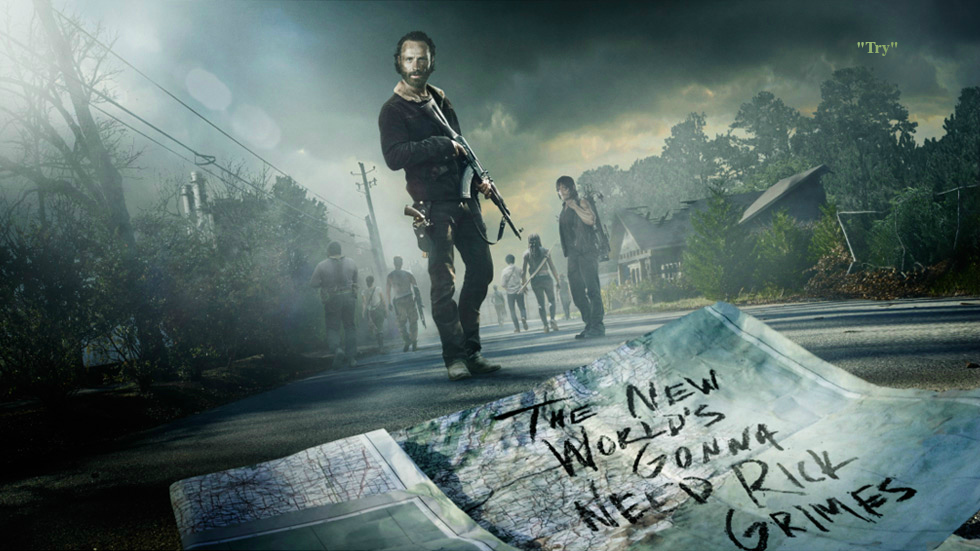
“Try” is a very appropriate title for tonight’s episode. We see several characters attempt to try and find a way to make the combination of Rick’s people and the Alexandrians co-exists together peacefully. Glenn, despite what some of these Alexandrians have done, still believes that they need to make Alexandria work. It’s their last chance to go beyond just existing and surviving but actually living life. He’s become the show’s moral compass (hopefully not a death sentence) now that Hershel and Tyreese are gone. Yet, unlike the previous moral compasses in the show, Glenn does understand that sometimes pragmatism must rule the day above all else. He just believes that Alexandria needs a chance to survive the growing pains of their group’s arrival.

Another of Rick’s people trying to make it work is Michonne. She’s had her time in exile in the wilds of this new and dangerous world. Her survival to this point has been in part due to those solitary months on her own with only herself to keep safe. Yet, she has also found out that being alone was a detriment to her psyche’s well-being and finding Rick and his people was what ultimately saved her not just from the zombies but from her own self-destructive ways.

She sees what’s happening with Sasha. A friend and fellow survivor deep in the midst of PTSD who has lost so much in such a short period of time that she hasn’t had the chance to take in and accept those losses let alone mourn them. Michonne understands what Sasha is going through but also realizes that they need her for what’s to come. Michonne wants to make Alexandria work and instability brought on by Sasha’s death wish and Rick’s inability to trust the Alexandrians will only make that prospect harder to achieve.

It is no surprise that the episode ends with Michonne taking control of a situation brought on by Rick’s blunt force behavior in trying to convince the Alexandrians that the way they were doing things were not going to work going forward. Michonne’s belief in the Alexandrians’ survival skills might mirror Rick’s own thoughts on the matter, but where Rick wants a confrontation to be the catalyst of change she seems more than willing to lead by example.

On the other side of things are Rick and Deanna looking to be at loggerheads about what’s truly best of Alexandria. It’s easy to take Rick’s side that the way Deanna and the rest of the Alexandrians have been doing things were just not going to cut it in this new world. It’s a world that Rick and his people have experienced first-hand and lost people along the way, but in the end have survived all it has thrown at them. Deanna, on the other hand, still believes in the rule of law and order, civilization over anarchy. She doesn’t believe in killing those who could be a danger to the ASZ (like Peter who also happens to be the lone physician and surgeon), but instead would rather exile them out into the wilds.

It’s a way of doing things that Rick sees as another way of putting the ASZ in danger. Deanna doesn’t think so and this clashing of philosophies on how things should be done looks to be one that’s heading into a confrontation that puts everyone in danger. Neither side seem willing to try and compromise and find a way to make the two groups con-exist. No attempt to allow the Alexandrians to learn from what Rick and his people could teach them to be better survivors. No attempt from Rick and those who believe him to adjust to this new life. A life that they see as a danger in itself. They see Alexandria’s walls as something that could make them soft and distract them from surviving.

So, we have the extended season finale next week and the question of whether Rick is too far gone to stay in Alexandria will be one of the questions that need answering. Will the group have to suffer through another loss of one of their own for the Alexandrians to finally realize that their survival before Rick and his people arrived have been through blind luck not through the civilizing rule of Deanna? Will Rick and the others just leave Alexandria or will the group finally splinter-off from those wanting to try and make it work and those unable to?

Then there are those zombies with the “W” cut into their foreheads looking to crash the party.

Notes

  • Tonight’s episode of The Walking Dead, “Try”, was directed by Michael E. Satrazemis and written by series veteran Angela Kang.
  • “Keep walking” has become Rick’s version of Carol’s “look at the flowers”. Pete should’ve been sprinting away the moment Rick uttered those wordsa at him with those Rick dead-eyes.
  • Nine Inch Nails’ “Somewhat Damaged” plays during the episodes cold opening and was a nice reminder that both groupsm Rick’s and the Alexandrians, have been damaged in some fashion since the start of the zombie apocalypse.
  • Still wondering how Nicholas knew about the Glock Rick hid in the blender out in the woods (Nicholas was in the ASZ when Rick and the group arrived). Is there someone outside the walls that told Nicholas of the hidden pistol?
  • Talking Dead guests tonight are Yvette Nicole Brown (Community), series executive producer Gale Anne Hurd and Chandler Riggs (Carl Grimes of The Walking Dead)

Season 5


Review: The Walking Dead S5E14 “Spend”


TheWalkingDeadS5E14

“We know what we’re doing. It’s why you wanted us here.” — Maggie Greene

[spoilers within]

Tonight’s episode of The Walking Dead was shaping up to be a sort of throwaway one. The series seems to have several of these each year. They’re episode that seem to just rehash past themes and ideas to help table set the season finale. Some of them have been good stand-alone ones while other have been some of the series’ low points. One couldn’t fault the writers to come up with another one. It’s become an almost ritual for the show to have low points in the series before peaking once again for the last two episodes of the season.

“Spend” wasn’t a throwaway episode and definitely not one of this season’s low points.

Let’s just start things by saying that tonight’s episode was directed by Jennifer Lynch (daughter of filmmaker David Lynch) and her fine touch with the darker aspects of show’s genre roots showed. It was definitely one of the darker episodes of the series to date. Right from the cold opening of the episode as we watch Father Gabriel having a moment of crisis as he steps into the chapel once again we get a feeling that this episode will not be happy one for everyone.

We get three particular storylines throughout the episode which at times made for some jarring scene changes. The main one focused on Glenn taking Tara, Eugene, Noah, Aiden and Nicholas on a supply run to help fix the ASZ’s (Alexandria Safe Zone) power grid of solar panels. One could be forgiven for thinking that the episode was going to be a ho-hum one as we get some major time with Eugene who wasn’t very happy being dragged along on this supply run outside of the ASZ’s walls. He admits more than once and of his own free will that he’s a coward through and through. Yet, by episode’s end we Eugene go through a harrowing crucible to find the courage that allowed him to survive this long. His own intellect and logic were major factors in him always picking the right group to stick with for the best chance of survival, but when he needed to finally step up and be more combat-inclined he passed with flying colors.

This was in contrast to what we’re starting to see with the Alexandrians as a whole. While not all cowardly, the people who have been living within the relatively safe confines of the ASZ’s walls have shown that they’re willing to abandon friends to the zombies if it meant saving their own life. We see this happen several times with tonight’s episode and in a couple of them we see the devastating result of the Alexandrians’ modus operandi.

This doesn’t sit well with Glenn who has grown from being the quiet, scout we met in the first season to a leader who still exhibits a sense of compassion in addition to the brutal, cold logic needed to survive in this zombie apocalypse. He sees the weak core underneath the smiling and civilized facade of the Alexandrians, but he also understand that in order for him, Maggie and the rest of his group to have a life beyond just mere day-to-day survival he needed to make sure that the ASZ and it’s people learned how to do things the right way.

Despite the violent altercation that he and Aiden (Deanna’s son) had just a couple episodes back, the two seem to be working towards a compromise in how things were to be done. But this being The Walking Dead, the prospect of Aiden learning from Glenn or any of the newcomers to the ASZ was cut short as his inexperience with the world outside of the ASZ’s walls led to his gruesome death (a situation brought on by Aiden’s own stupidity as he accidentally shot a grenade). A death that Glenn and Noah tried to prevent but just ran out of time.

The same thing happens just minutes later as we see Glenn, Noah and Nicholas (who left Aiden to die and as he admitted did to others as well in the past) finding themselves trapped in separate sections of a revolving door with zombies in the other side waiting for the inevitable. I’m one could see where this was heading with Nicholas abandoning the Glenn and Noah to save his own skin…again. Noah would end up drawing the short straw in tonight’s episode. A straw that saw him die even more horribly than Aiden and with Glenn just a few feet away witnessing the whole gory tableau.

We see, in a smaller scale, the same situation happen with Abraham as he joins the construction crew tasked with gathering the supplies to help strengthen and expand the walls of the ASZ. Once again it’s due to the inattention of the groups leader, Tobin, that the Alexandrian’s allow a sizable group of zombies to get close to them. It doesn’t help that Tobin himself ends up shooting the hydraulics on the lifter end of a bulldozer that dumps one of his own people in the middle of an encroaching group of zombies. He and the rest of the Alexandrians decide to haul ass and leave their friend behind, but not Abraham who rushes into the fire, so to speak, to try and make sure they don’t leave one behind.

Unlike Nicholas’ brand of cowardice, Tobin and the rest of the Alexandrians see Abraham’s courage and end up following suit. Tobin himself admits to Deanna and Reg Monroe that if it wasn’t for Abraham not doing things the Alexandrian Way (meaning run and hide when things get tough) then Francine (the one who fell off the dozer lifter) would have surely died. Abraham was the right person and leader to run the construction team and Tobin was man enough to admit to it.

It’s a situation that both Deanna and Reg don’t seem to like hearing. Rick and his people have just recently arrived and already seem to be putting themselves in leadership roles. Rick was one Deanna understood with his law enforcement background, but the fact that both Abraham and Glenn seem to exhibit similar leadership qualities that her own people seem to lack could be the sign that the ASZ might just get a change in how things are run and who runs them.

The third storyline continues the adventures of Rick and Carol as they try to navigate, in their own fashion, this fake Eden they’ve found themselves in. Carol finds herself being followed by Jessie’s youngest son Sam. It didn’t matter that Carol herself threatened Sam with kidnapping and death by zombies, he still kept her secret and only tagging along to have more of the cookies Carol made for him. We find, and Carol, find out in no uncertain way from Sam that his dad might very well be an abusive husband and father. This doesn’t sit well with Carol who has some first-hand experience with a family abuser. It doesn’t take much for her to figure this out. Carol doesn’t hesitate in making sure Rick finds out and her recommendation to Rick on how to deal with Pete shouldn’t surprise people who’ve seen Carol’s growth from battered housewife to all-around badass.

The whole Alexandria Safe Zone arc has been met with some trepidation by fans and critics. It’s another static location like Hershel’s farm and the Prison that led to some very wheel-spinning storytelling. It’s a reaction that’s understandable. Having a regular setting and not keeping the group on the move sometimes led to plotlines that stagnated. When on the move the stories being told in the show seem to have a sense of forward momentum. Even some of the weaker on-the-road stories felt like it had a quicker pace to them. This doesn’t seem to be the case with Alexandria.

The group hasn’t been wasting their time to spend wallowing in the existential problems brought about by the zombie apocalypse. They’ve actually done in their own individual way something to find out more about the ASZ and those who run and been kept safe behind it’s walls. Tonight we find out more of what makes the Alexandrians tick and it’s not a pretty sight. Gabriel might be trying to poison Deanna’s mind when it comes to Rick and the others. He wasn’t wrong when he said that Rick and his people were not good people. They have done some unspeakable things to survive. Yet, Maggie also understands some of Deanna’s own agenda for allowing Rick and his people to join the Alexandrians.

Rick, Glenn, Carol, Abraham, Daryl and others know what they’re doing. They’ve survived out in the wild for almost two years now and even after some devastating losses they still manage to persevere. Sure the group seem to be suffering through a collective form of PTSD, but they still know what it takes to survive and they seem able to do so without having to always fall back on their basest nature to do it.

Will this mean that Rick still doesn’t seem to covet his neighbor’s wife (Rick definitely channeling his inner Shane in the Alexandria story-arc)? Will Sasha ever leave her lookout tower ever and not go on a killing spree? Will Carol hold back from doing what’s necessary when it comes to the Alexandrians (meaning will she kill them all to save the others)?

These were questions that weren’t answered in tonight’s episode, but at least we’ve now been given some reasons why it wouldn’t be so bad if Rick and his people just took over the ASZ and ran things their way. There would certainly be less people dying for stupid reasons and everyone wouldn’t have just predetermined jobs the way Deanna likes things done, but all chipping in to protect with everything they’ve got including their own lives.

There’s a war brewing in the future and whether it’s between the Alexandrians and Rick’s people still needs to be determined. The Wolves are still out there and Noah knew it and wanted to make sure the walls never falls the way his own community walls fell while he was away. It’s a shame and a currency spent that he would never get to see his promise come true.

Notes

  • Tonight’s episode of The Walking Dead, “Spend”, was directed by Jennifer Lynch and written by series veteran Matthew Negrete.
  • Jennifer Lynch’s work as director with tonight’s episode was excellent and here’s to hoping she returns for future episodes for seasons to come.
  • Even in the zombie apocalypse there is still dubstep.
  • Carol seems to have gained herself a lost puppy in Jessie’s youngest son Sam.
  • When did Abraham suddenly become the catchphrase guy. He already gave birth to the catchphrases “dolphin smooth” and “Who’s DEANNA?!”. Tonight we get the best yet when he finds himself surrounded by zombies and all he can do is smile and utter “mother dick”.
  • The death scenes for both Aiden Monroe and Noah were reminiscent of a couple deaths in the end of Day of the Dead: Capt. Rhodes and Pvt. Torrez.
  • Some great work by Greg Nicotero (whose bday was tonight) and his KNB EFX make-up crew with the deaths of Aiden and Noah.
  • Talking Dead guests tonight are Josh McDermitt, Tyler James Williams and Steven Yeun (Eugene, Noah and Glenn of The Walking Dead)

Season 5

Review: The Walking Dead S5E13 “Forget”


TheWalkingDeadS5E13

“Because you can tell the good guys from the bad guys.” — Aaron

[spoilers within]

Tonight’s episode of The Walking Dead saw Rick and his people continue to try and assimilate themselves within the safe confines of the Alexandria Safe-Zone. It’s a situation they’ve been hoping to find on their way to Washington, D.C., but also one that seems to have unnerved a good portion of the group when it falls into their lap.

“Forget” is a tough episode to sit through because it highlights both the show’s strength and also one of it’s recurring weaknesses. It’s a well-written episode by series writer Corey Reed with some fine direction from series director David Boyd, but at times the story-arc for certain characters landed with a thud instead of expanding on that character or moving the story forward.

Let’s go with the lowlights before moving onto the highlight of tonight’s episode.

We’ve known that the Alexandria Safe-Zone had time to build itself when the zombie outbreak began. We learn this from Deanna herself during her introduction in last week’s episode. Yet, something about how the writers have done to build-up ASZ (what I shall call Alexandria) as this well-protected haven from Aaron don’t seem to mesh with what they’ve shown on the show, so far. Maybe it’s a slow burn the writers are going for. Maybe we’ll find out how ASZ ultimately survived the lean years since civilization broke down. For now, there’s less a hidden, sinister agenda of how the ASZ has survived this long and more of it’s surprising and lucky they’ve lasted this long.

The next thud would be the story-line for Sasha herself. We see her during the episode’s cold opening unable to sleep in the house Rick had claimed as his. Pictures of it’s previous owners seem to gaze down at her. We later see her venture outside the walls of the ASZ to practice some shooting with those same family portraits as targets. Her behaviors borders on reckless and suicidal. It’s hard to judge the character for this considering she’s lost both her lover and her older brother right after each other. Traumatic experiences will do that to a person, yet when it happens to Sasha it’s hard to sympathize with her. It’s not that she’s a bad person. She just seems to be a badly-written character who doesn’t have her own voice with Bob and Tyreese now gone from the group.

We get description of what sort of character she is from other’s describing her to strangers. Tonight we find out from Maggie that she’s the group’s best shot, but we never really see this skill develop. The rest of the group we find in some way or another how they got to where they are in regards to their skills. With Sasha one day she’s someone who leaned on her older brother for protection then next she’s suddenly the next reincarnation of Annie Oakley.

It’s a weakness in the show’s way of handling such a huge cast of characters. They get rid of characters who were interesting or becoming one, but keeping characters who remain relatively unknowns to the audience. It’s as if the writers can’t find a way to make Sasha become an interesting character without having to repeat themselves in turning her into one (Carol, Maggie and Beth being three who improved over time).

So, while Sasha’s suicidal tendencies could be chalked up to her growing PTSD due to the experiences she has had to deal with recently it’s impact on the story seems to be minimal. It’s not that we as an audience don’t care it’s just that we don’t know Sasha well enough to bother to even care.

That’s not the same when it comes to Rick, Carol and Daryl. These three have begun to form a new sort of triumvirate leadership group. Everyone who has come this far with Rick are survivors in their own right, but it’s these three who have come farthest within the group. They’ve grown from who they’ve were when we first met them. We first met them as the lawman, the housewife and the rebel. They’ve outgrown those initial labels and become complex characters who harbor both positive and negative qualities. They’re not black and white in their behaviors anymore. It’s because of their character growth (most seems to be once Scott M. Gimple took over as headwriter and showrunner) that we’ve come to care what happens to them.

With Carol we see nothing left of the mousy and battered housewife who couldn’t defend herself until pretty much everything had been taken from her. She had gone from victim to survivor in order to never be dependent on others and to protect her new found family. While she has employed a cold logic to how she must survive and protect her people she does seem to be the one in the group who has adjusted best in this new world. She’s able to be the one willing to do the dirty work if it means keeping her group alive another day. Her threat towards Jessie’s young son, Sam, was both hilarious and chilling. Never could we have seen Carol from season 1 through 3 threaten a young boy of death by being zombie bait in order to keep her duplicitous behavior from being outed to the rest of the ASZ community.

There’s Daryl, the rebel loner we first me in season 1, whose lone wolf behavior has become tempered by his realization that he needs Rick and the others to keep himself human and sane. He doesn’t need them as a crutch, but instead sees in them the family he never had growing up and for being the redemption for his past failings. Yes, he still remains sort of an outsider maneuvering his way through the new dynamics that ASZ opened up, but his interaction with Aaron (another one who feels like an outsider despite being a longstanding member of the ASZ community) shows that he’s grown away from his intolerant beginnings in the show and sees in Aaron a kindred spirit. The fact that he’s aired some doubts about their original plan to takeover the ASZ community if they deem it necessary shows that Daryl may still be a badass but he also understands that making something like ASZ work in the end would be to the group’s benefit in the long run.

Then we have Rick. The lawman and father whose personal beliefs and principles have become the fulcrum by which the show has explored varying themes throughout it’s five season on the air. We’ve seen Rick the reluctant leader in the first two season. Finding and protecting his family had been his only concern during those initial seasons, but betrayal and the knowledge that there was no cure for the zombie pandemic unleashed the Ricktatorship which led the group to becoming the hardcore survivalist they’ve become. Yet, even this version of Rick made mistakes that cost him those closest to him. He’s tried to be less a leader and more a provider. We call this Farmer Rick, but we knew it was going to be a temporary reprieve from what we’ve wanted Rick to become and that’s accept his role as leader and take ownership of that role with all the good it brings and all the bad it brings out.

We see Rick take to this role with such a focus that he teeters on the brink of becoming the very thing he despised when he saw the Governor. This Rick is willing to depose those in the ASZ community leadership group if he thought they couldn’t hack it when times got rough. This Rick sees danger everywhere and plans several steps ahead even when we as an audience sees it as a sort of madness creeping to latch onto Rick’s psyche. This Rick seems willing to take what he wants when he wants it even if it means contemplating murder. This is a Rick that seems to be exhibiting the worst qualities of the leaders of three groups who have fallen into the abyss: the Governor, Joe of the Claimers and Gareth of Terminus.

While Rick has learned to become a better leader of the group from having Hershel and Tyreese as his moral compass, they seem to have been pushed to the back of Rick’s mind by the ghosts of the Governor, Joe and Gareth. These three showed Rick that surviving at any cost was the only currency left in this new world. It was all about protecting what was his and that was Carl, Judith and the rest of his group. The people of the ASZ community were strangers to him who he felt were ill-equipped to survive in this new world. He even mentions to Carol and Daryl that this community was lucky to have them as new member because only they could protect them from the bad people beyond the walls. It doesn’t dawn on Rick that he was now acting and behaving in some fashion like those very bad people he warned Deanna about.

“Forget” could easily have become one of the best episodes of the season if it concentrated more on this triumvirate of Rick, Carol and Daryl and just jettisoned the Sasha plotline. Yet, despite Sasha’s role in tonight’s episode we still got a strong foundation on what could be the role of the Power Three for the final three episodes of season 5. Will Carol and Daryl follow Rick if he ever goes too far? We have three more episodes left to find out.

Notes

  • Tonight’s episode of The Walking Dead, “Forget”, was directed by David Boyd and written by series writer Corey Reed.
  • Carol had herself some a breaking Bad moment when she confronted Sam, Jessie’s youngest boy, after he saw her taking guns from the armory. Some have said that her “speech” to Sam was reminiscent of Walt’s “I’m the one who knocks” speech.
  • Deanna’s husband is named Reg. In the comics, Douglas (Deanna in the show) has a wife named Reggie. The show also added Aiden as a second son. We met the other son, Spencer, in tonight’s episode.
  • Interesting choice of a song to end the episode on…Spicks and Specks by the Bee Gees.
  • The shippers of Rick and Michonne seem to have gone insane since they’ve gone on a social media rampage against the actor Alexandra Breckinridge who plays Rick’s potential paramour Jessie in the show.
  • Talking Dead guests tonight are Kevin Smith (writer/director), Ross Marquand (Aaron from The Walking Dead) and Alexandra Breckinridge (Jessie from The Walking Dead)


Season 5