Late Night Retro Television Review: Monsters 3.17 “Leavings”


Welcome to Late Night Retro Television Reviews, a feature where we review some of our favorite and least favorite shows of the past! On Wednesdays, I will be reviewing Monsters, which aired in syndication from 1988 to 1991. The entire series is streaming on YouTube.

This week, Monsters makes even less sense than usual.

Episode 3.17 “Leavings”

(Dir by John Tillinger, originally aired on January 20th, 19991)

Two cops (played by Tony Shalhoub and John Christopher Jones) are concerned about something that they’ve noticed on the streets.  Homeless people who are missing limbs are showing up.  The cops know that the homeless people had all their limbs just a few days ago but now, they’re gone.  There’s no sign of surgery or any sort of trauma.  The limbs are just disappearing apparently.  Meanwhile, there’s some new homeless guy wandering around who appears to be made out of limbs that don’t really seem to go together.

They go to their boss (Clifton James) with this concerns.  Their boss tells them not to worry about it.  However, the cops continue to worry about it.  This leads to their boss revealing the truth of what’s happening.  It turns out that their boss has been stealing body parts and building new people for years.  He’s trying to create a policeman who will be loyal and who won’t ask questions.  (We only see one of these constructed cops in the show.  He wears a jacket that identifies him as being Officer S. Partz.)  The boss then kills the two cops because they’ve seen too much.

This was a weird episode.  How exactly did their boss learn how to remove body parts without leaving any sort of obvious signs of trauma?  How did he learn how to bring his constructed people to life?  How did …. well, it just doesn’t make any sense.  It’s true that a 30-minuet anthology show doesn’t necessarily have to make perfect sense but this episode really does stretch things a bit too far.  The three actors all give good performances but, otherwise, this episode just falls a bit flat.

Ghosts of Sundance Past: Longtime Companion (dir by Norman Rene)


The Sundance Film Festival is currently underway in Utah.  For the next few days, I’ll be taking a look at some of the films that have previously won awards at Sundance.

First released in 1990, Longtime Companion was one of the first mainstream feature films to deal with the early days of the AIDS epidemic.

The film follows a group of friends and lovers over the course of ten years.  The film opens with a crowded and joyous 4th of July weekend at Fire Island.  Willy (Campbell Scott) is a personal trainer who has just started a relationship with an entertainment lawyer who, due to his beard, is nicknamed Fuzzy (Stephen Caffrey).  Willy’s best friend is the personable and popular John (Dermot Mulroney).  David (Bruce Davison) and Sean (Mark Lamos) are the elder couple of the group.  Sean writes for a soap opera and one of Fuzzy’s clients, Howard (Patrick Cassidy), has just landed a role on the show.  He’ll be playing a gay character, even though everyone warns him that the role will lead to him getting typecast.  The group’s straight friend is Lisa (Mary-Louise Parker), an antique dealer who lives next door to Howard and who is Fuzzy’s sister.  The film takes it times showing us the friendships and the relationships between these characters, allowing us to get to know them all as individuals.

Even as the group celebrates the 4th, they are talking about an article in the New York Times about the rise of a “gay cancer.”  Some members of the group are concerned but the majority simply shrug it off as another out-there rumor.

The movie moves quickly, from one year to another.  John, the youngest of them, is the first member of the group to die, passing away alone in a hospital room while hooked up to a respirator.  (The sound of the respirator is one of the most haunting parts of the film.)  Sean soon becomes ill and starts to dramatically deteriorate.  It falls to David to take care of Sean and to even ghostwrite his scripts for the soap opera.  Howard’s acting career is sabotaged by rumors that he has AIDS while Willy and Fuzzy tentatively try to have a relationship at time when they’re not even sure how AIDS is transmitted.  At one point, Willy visits a friend in the hospital and then furiously scrubs his skin in case he’s somehow been infected.  When one member of the group passes, his lover is referred to as being his “longtime companion” in the obituary.  Even while dealing with tragedy and feeling as if they’ve been shunned and abandoned to die by the rest of America, the characters are expected to hide the details of the lives and their grief.

It’s a poignant and low-key film, one that was originally made for PBS but then given a theatrical release after production was complete.  Seen today, the film feels like a companion piece to Roger Spottiswoode’s And The Band Played On.  If And The Band Played On dealt with the politics around AIDS and the early struggle to get people to even acknowledge that it existed, Longtime Companion is about the human cost of the epidemic.  The film is wonderfully acted by the talented cast.  Bruce Davison was nominated for an Oscar for his sensitive performance as David.  If not for Joe Pesci’s performance in Goodfellas, it’s easy to imagine that Davison would have won.  The scene where he encourages the comatose Sean to pass on will make you cry.  Interestingly, when David gets sick himself, it happens off-screen as if the filmmakers knew there was no way the audience would have been able to emotionally handle watching David suffer any further.

Longtime Companion played at the 1990 Sundance Film Festival, where it won the Dramatic Audience Award.

Film Review: Quick Change (dir by Bill Murray and Howard Franklin)


“Leave the Bronx …. it is time to leave the Bronx….”

Escape from New York….

“Someday, a real rain will come and watch all this scum off of the streets….”

“Kill, Berkowitz!” the Dog with John Turturro’s voice commands, “Kill!  KILL!”

And then there’s 1990’s Quick Change:

Of the many films that have been made about people desperately trying to get the Hell out of New York City, Quick Change is one of the funniest.  The appropriately-named Grimm (Bill Murray) works in the city planning office and has had all that he can take of New York’s crime and rudeness.  His solution is to dress up like a clown and rob a bank.  His girlfriend Phyllis (Geena Davis) and best friend Loomis (Randy Quaid) are already inside the bank, disguised as customers.  When Grimm, who claims to be a “crying on the inside” type of clown, takes everyone in the bank hostage and forces them into the vault, Phyllis and Loomis grab as much of the money as they can.  Talking on the phone to police chief Rotzinger (Jason Robards), Grimm makes a series of pointless demands.  Each demand that is met leads to Grimm releasing a group of hostages.  By removing his clown makeup, Grimm is able to join Phyllis and Loomis when they are “released.”  Rotzinger, who has even managed to procure a monster truck, thinks that the robber is still in the bank while Grimm, Phyllis, and Logan head for the airport.

Of course, things don’t go as planned.  What starts out as a energetic and good-natured Dog Day Afternoon parody quickly becomes an increasingly surreal journey through New York.  The streets are in terrible condition.  The signs that would have provided directions to the airport have been taken down by a road construction crew.  (They explain that they’re only taking down the signs today and it will be a few days before they get around to putting them back up.)  One of the few polite people they meet turns out to be a thief who steals four dollars from Grimm’s wallet but fails to notice that he’s got a million dollars taped around his waist.  Stanley Tucci shows up as a mobster.  Tony Shalhoub plays a well-meaning taxi driver who speaks his own indecipherable language.  Grimm keeps running into rude cops who, despite being on the hunt for the bank robbers, are frequently too busy being rude to notice what’s happening in front of them.

Best of all, Grimm, Phyllis, and the increasingly addled Loomis board a bus being driven by the film’s greatest character.  Played by Philip Bosco, the bus driver is a wonderful comedic creation.  “That’s not exact change,” the driver says when Loomis attempts to pay him with a hundred dollar bill.  “Behind the white line,” he says before starting the bus.  When Loomis, who has a habit of running into things and appears to be suffering from a concussion, tries to sit down, the bus driver informs him that he’s not allowed to sit until he receives exact change.  The driver has a schedule to keep and, to his credit, he largely manages to do so.  Bosco plays him with such deadpan determination that it’s hard not to admire his dedication to following every single regulation to his job.  As opposed to Grimm, the driver has learned to deal with living in New York by obsessively making every scheduled stop.

Quick Change struggles sometimes to balance its moments of humor and drama.  Scenes of Loomis running like a cartoon character are mixed with scenes of Phyllis worrying that Grimm might actually be a hardened criminal and struggling with whether or not to tell him that she’s pregnant.  This was Bill Murray’s first and only film as a director and sometimes, he does struggle to maintain a consistent tone.  But, in the end, what’s important is that it’s a funny film.  Bill Murray is one of those actors who can make you laugh just by existing and, as a director, he’s smart enough to give Jason Robards enough room to make Rotzinger into something more than just a standard comedic foil.

Quick Change is a comedic nightmare, one that made me laugh even as it also made me glad that I don’t have to drive in New York.  I get lost just driving around the suburbs of Dallas.  There’s no way I’d ever be able to find my way out of New York.

Lisa Reviews A Palme d’Or Winner: Barton Fink (dir by Joel and Ethan Coen)


With the Cannes Film Festival underway in France, I decided that I would spend the next few days watching and reviewing some of the previous winners of the Palme d’Or.  Today, I got things started with the 1991 winner, Barton Fink.

Directed by the Coen Brothers and taking place in the mythological Hollywood of 1941, Barton Fink tells the story of a writer.  Played by John Turturro, Barton Fink is a playwright who has just had a big hit on Broadway.  We don’t see much of the play.  In fact, we only hear the final few lines.  “No,” one the actors says, in exaggerated “common man” accent, “it’s early.”  From what we hear of the reviews and from Barton himself, it seems obvious that the play is one of those dreary, social realist plays that were apparently all the rage in the late 30s.  Think Waiting for Lefty.  Think Hand That Rocks The Cradle.  Think of the Group Theater and all of the people that Elia Kazan would later name as having been communists.  These plays claimed to tell the stories of the people who couldn’t afford to see a Broadway production.

Barton considers himself to be the voice of the common man, an advocate for the working class.  He grandly brags that he doesn’t write for the money or the adulation.  He writes to give a voice to the voiceless.  When his agent tells him that Capitol Pictures wants to put Barton under contract, Barton resists.  His agent assures Barton that the common man will still be around when Barton returns from Hollywood.  There might even be a few common people in California!  “That’s a rationalization,” Barton argues.  “Barton,” his agent replies with very real concern, “it was a joke.”  Barton, we quickly realize, does not have a sense of humor and that’s always a huge problem for anyone who finds themselves in a Coen Brothers film.

In Hollywood, Barton meets the hilariously crass Jack Lipnik (Oscar-nominated Michael Lerner).  Lipnik is the head of Capitol Pictures and he is sure that Barton can bring that “Barton Fink feeling” to a Wallace Beery wrestling picture.  Barton has never wrestled.  He’s never even seen a film.  The great toast of Broadway finds himself sitting in a decrepit hotel room with peeling wallpaper.  He stares at his typewriter.  He writes three or four lines and then …. nothing.  He meets his idol, Faulknerish writer W.P. Mayhew (John Mahoney), and discovers that Mayhew is a violent drunk and that most his recent work was actually written by his “secretary,” Audrey (Judy Davis).  He seeks help from producer Ben Geisler (Tony Shalhoub), who cannot understand why Barton is having such a difficult time writing what should be a very simple movie.  Barton sits in his hotel room and waits for inspiration that refuses to come.

He also gets to know Charlie Meadow (John Goodman).  Charlie is Barton’s neighbor.  Charlie explains that he’s an insurance agent but he really sells is “peace of mind.”  At first, Barton seems to be annoyed with Charlie but soon, Barton finds himself looking forward to Charlie’s visits.  Charlie always brings a little bottle of whiskey and a lot of encouragement.  Charlie assures Barton that he’ll get the script written.  Barton tells Charlie that he wants to write movies and plays about “people like you.”  Charlie shows Barton a wrestling move.  Barton tells Charlie to visit his family if he’s ever in New York.  Charlie tells Barton, “I could tell you some stories” but he never really gets the chance because Barton is usually too busy talking about his ambitions to listen.  Charlie tells Barton, “Where there’s a head, there’s hope,” a phrase that takes on a disturbing double meaning as the film progresses.  Just as Barton isn’t quite the class warrior that he believes himself to be, Charlie isn’t quite what he presents himself to be either.  Still, in the end, Charlie is far more honest about who he is than Barton could ever hope to be.

When it comes to what Barton Fink is actually about, it’s easy to read too much into it.  The Coens themselves have said as much, saying that some of the film’s most debated elements don’t actually have any deeper meaning beyond the fact that they found them to be amusing at the time.  At its simplest, Barton Fink is a film about writer’s block.  Anyone who has ever found themselves struggling to come up with an opening line will be able to relate to Barton staring at that nearly blank page and they will also understand why Barton comes to look forward to Charlie visiting and giving him an excuse not to write.  It’s a film about the search for inspiration and the fear of what that inspiration could lead to.  Towards the end of the film, Barton finds himself entrusted with a box that could contain his worst fears or which could cpntain nothing at all.  There’s nothing to stop Barton from opening the box but he doesn’t and it’s easy to understand why.  To quote another Coen Brothers film, “Embrace the mystery.”

There’s plenty of other theories about what exactly is going on in Barton Fink but, as I said before, I think it’s easy to overthink things.  The Coens have always been stylists and sometimes, the style is the point.  That said, I do think that it can be argued that Barton Fink’s mistake was that he allowed himself to think that he was important than he actually was.  Self-importance is perhaps the one unforgivable sin in the world of the Coen Brothers.  Like most Coen films, Barton Fink takes place in a universe that is ruled by chaos and the random whims of fate.  Barton’s mistake was thinking that he could understand or tame that chaos through his art or his politics.  Barton’s mistake is that he tries to rationalize and understand a universe that is irrational and incapable of being explained.  He’s a self-declared storyteller who refuses to listen to the stories around him because those stories might challenge what he considers to be the “life of the mind.”

Barton Fink is a film that people either seem to love or they seem to hate.  Barton, himself, is not always a  particularly likable character and the Coens seem to take a very definite joy in finding ways to humiliate him.  Fortunately, Barton is played by John Turturro, an actor who has the ability to find humanity in even the most obnoxious of characters.  (As obnoxious as Barton can be, it’s hard not to want to embrace him when he awkwardly but energetically dances at a USO club.)  Turturro has great chemistry with John Goodman, who gives one of his best performances as Charlie.  It’s putting it lightly to say that most viewers will have mixed feelings about Charlie but the film makes such great use of Goodman’s natural likability that it’s only on a second or third viewing that you realize that all of Charlie’s secrets were pretty much out in the open from the start.  Michael Lerner deserved his Oscar nomination but certainly Goodman deserved one as well.  The rest of the cast is full of Coen Brothers regulars, including Jon Polito as Lerner’s obsequies assistant and Steve Buscemi as Chet, the very friendly front deskman.  And finally, I have to mention Christopher Murney and Richard Portnow, who play two of the worst cops ever and who deliver their hardboiled dialogue with just the right mix of menace and parody.

Barton Fink won the Palme d’Or at Cannes, defeating such films as Spike Lee’s Jungle Fever and Lars Von Trier’s Europa.  It also won awards for the Coens and for John Turturro.  It’s perhaps not a film for everyone but it’s one that holds up well and which continues to intiruge.  Don’t just watch it once.  This isn’t a film that can fully appreciated by just one viewing.  This isn’t a Wallace Beery wrestling picture.  This is Barton Fink!

Here Are the 2019 Emmy Winners!


I was happy to see Chernobyl win.  Otherwise, the Emmys never interest me as much as the Oscars.

Here’s a list of tonight’s winners:

Best Supporting Actor (Comedy) — Tony Shalhoub, The Marvelous Mrs. Maisel

Best Supporting Actress (Comedy) — Alex Borstein, The Marvelous Mrs. Maisel

Best Writing (Comedy Series) — Phoebe Waller-Bridge, Fleabag

Best Directing (Comedy Series) — Harry Bradbeer, Fleabag

Best Actor (Comedy) — Bill Hader, Barry

Best Actress (Comedy) — Phoebe Waller-Bridge, Fleabag (Should have been Julia Louis-Dreyfus for Veep)

Outstanding Reality Competition Program — RuPaul’s Drag Race

Best Supporting Actress (Movie or Limited Series) — Patricia Arquette, The Act

Best Director (Movie or Limited Series) — Johan Renck, Chernobyl

Best Supporting Actor (Movie or Limited Series) — Ben Whishaw, A Very English Scandal

Writing for a Limited Series or Movie — Craig Mazin, Chernobyl

Best Actor (Movie or Limited Series) — Jharrel Jerome, When They See Us

Best Movie — Black Mirror: Bandersnatch

Best Actress (Movie or Miniseries) — Michelle Williams, Fosse/Verdon

Best Limited Series — Chernobyl

Outstanding Writing For A Variety Series — Last Week Tonight With John Oliver (really?)

Outstanding Variety Sketch Series: Saturday Night Live (should have been Documentary Now)

Outstanding Variety Talk Series: Last Week Tonight With John Oliver (at least it wasn’t Samantha Bee)

Best Supporting Actor (Drama) — Peter Dinklage (Game of Thrones)

Best Writing (Drama) — Jesse Armstrong, Succession

Best Supporting Actress (Drama) — Julia Garner, Ozark

Best Actor (Drama) — Billy Rose, Pose

Best Directing (Drama) — Jason Bateman, Ozark

Best Actress (Drama) — Jodie Comer, Killing Eve

Best Comedy Series — Fleabag (should have been Veep or Barry)

Best Drama Series — Game of Thrones


Film Review: Custody (dir by James Lapine)


custody-2-620x345

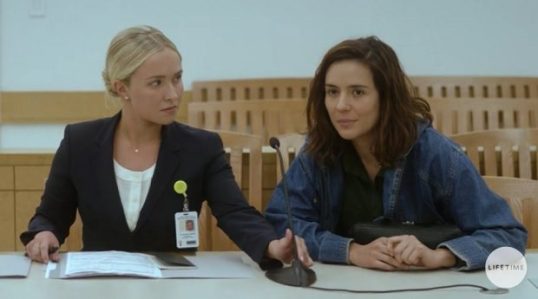
Last night’s Lifetime movie premiere, Custody, didn’t really feel like a Lifetime film.

This was largely because it really wasn’t.  Custody was written and directed by the acclaimed theatrical director, James Lapine.  The cast features not only Emmy winner Tony Shalhoub and Oscar nominee Catalina Sandino Moreno but also two Oscar winners, Viola Davis and Ellen Burstyn.  Unlike most Lifetime films, Custody was not filmed in Canada.  There were no Toronto landmarks in the background.  (You never realize how much you miss Canada until it’s gone.)  Custody played at Tribeca last year.  Much like Stockholm, Pennsylvania, Custody was made for a theatrical release but it ended up premiering on television instead.  As a result, Custody did not follow the usual Lifetime 8 act pattern.  The commercial breaks felt awkward.  With a 150 minutes running time, this film tested my four-minute attention span.

The other thing that set Custody apart from most other Lifetime films was that it wasn’t much fun to watch.  The great thing about Lifetime movies is that they are almost always fun.  It doesn’t matter what serious subject is being examined.  It doesn’t matter how dramatic things may get.  Lifetime movies are always fun.  To use one of my favorite terms, Lifetime movies embrace the melodrama.  Lifetime films push the limits.  Lifetime films say, “You think we won’t introduce a crazy twin halfway through the movie?  JUST WATCH US!  You think we won’t toss in a sudden case of amnesia or a cheating husband or a psychotic au pair in lingerie?  YOU DON’T KNOW LIFETIME!”

Custody, on the other hand, was a very serious movie about a very serious topic and therefore, it wasn’t much fun to watch.  In fact, Custody was a bit of a well-intentioned mess.  It followed one case as it worked its way through the family court system.  Sara Diaz (Moreno) has been wrongly accused of being an unfit mother.  Her attorney is Ally Fisher (Hayden Panettiere), who has just graduated from law school and who comes from a rich family.  Ally’s grandmother is played by Ellen Burstyn, largely because everyone’s rich grandmother is played by Ellen Burstyn.  Representing the state is Keith (Dan Fogler), who has absolutely horrid taste in ties.  The judge is played by Viola Davis and she’s going through a messy divorce from Tony Shalhoub.

I could see what Lapine was going for.  Custody juggles several plotlines, showing how everyone involved in the case has their own individual biases and problems to deal with.  Will the judge’s dissolving marriage make her more or less sympathetic to Sara?  Will the white and privileged Ally ever be able to truly understand Sara’s situation?  Will Keith ever learn how to properly select a tie?  These issues may seem petty when taken on their own but, when crammed together, they form one big human drama.

Or, at least, that seems to have been the plan.  Lapine gets some good performances from his cast but Custody never quite comes together.  This is one of those heavy-handed films where characterization is more likely to be advanced by a lengthy monologue than by action.  Add to that, Custody is ultimately far too enamored of the family court system.  Everyone means only the best and the bureaucracy is your friend.

I will say this.  Based on my own experience working as an administrative assistant in a law office, Custody does get one thing very right.  Male lawyers are always the worst dressed people at any courthouse.  On this count, Dan Fogler played one of the most realistic attorneys ever seen on TV.


Horror Film Review: Thirteen Ghosts (dir by Steve Beck)


thir13en_ghosts_poster

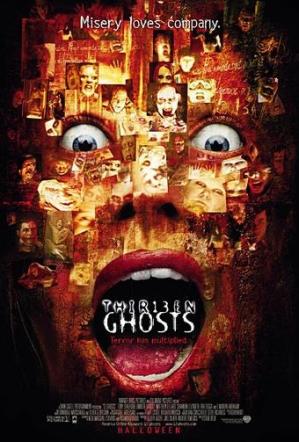
Thirteen Ghosts!  

Oh my God, this 2001 haunted house movie scared the Hell out of my when I was way too young to know any better.  Seriously, it would come on HBO late at night and I would secretly watch it with the sound turned down and just the visuals would freak me out.

That lawyer getting chopped in half by the glass doors?  AGCK!

That ghost staring at Shannon Elizabeth?  AGCK!

That other ghost attacking Shannon Elizabeth?  AGCK!

All of the ghosts suddenly appearing and then just as quickly disappearing?  AGCK!

MATTHEW LILLARD!?  DOUBLE AGCK!

Seriously, I had nightmares about those ghosts!

For this month’s horrorthon, I decided to rewatch Thirteen Ghosts and … well, first of all, I was reminded by the DVD that apparently, the name of the film is not Thirteen Ghosts.  Instead, the proper name is Thir13een Ghosts, which is really kind of annoying because it’s not like that “13” even vaguely resembles a “T”.  I’m not even sure how exactly you would pronounce Thir13een.  Wasn’t one of the robots in the last Star Wars film named Thir13een?  Just looking at the title makes me think about that episode of South Park where Cartman went into the future and had a robot dog named K-10 (and a cat named Kit-9 and a bird named Kok-A-3!)

So, no offense meant to anyone who was involved in the naming of the film, but I’m going to keep calling it Thirteen Ghosts!

Anyway, I decided to rewatch Thirteen Ghosts because I remembered it as being the scariest film ever made and … wow, it really did not stand up to the test of time.  I mean, don’t get me wrong.  The ghosts were still kind of scary and I guess that Tony Shalhoub did the best that he could do with the material.  But the movie itself…oh my God.

Seeing as how I’m contractually obligated to come up with at least 500 words about Thirteen Ghosts, let’s talk about the plot, shall we?  Tony Shalhoub is Arthur.  Arthur’s a widower who has two children, Kathy (Shannon Elizabeth) and Bobby (Alec Roberts).  For some reason, Kathy is obsessed with sink fixtures.  Bobby, meanwhile, is your typical bratty kid.  Arthur is like way poor and about to lose his house.  Despite this, he continues to employ a housekeeper named Maggie (Rah Digga).  HEY, ARTHUR, THERE’S NO POINT IN HAVING A HOUSEKEEPER IF YOU CAN’T AFFORD YOUR FREAKING HOUSE!

Anyway…

Fortunately, Arthur is informed that his uncle, a legendary ghost hunter named Cyrus (F. Murray Abraham) has died and, as a result, Arthur has inherited his mansion!  YAY!  PROBLEM SOLVED!  Of course, the mansion is kind of weird.  The walls are covered with Latin phrases and it’s all glass.  “I do not do windows,” Maggie says.  Ha ha ha.

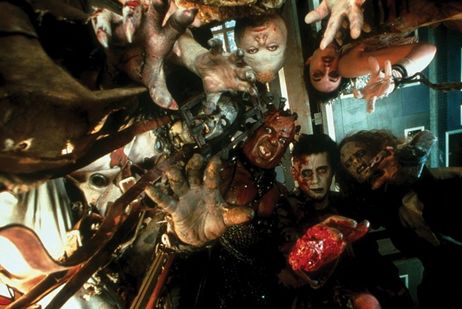
Well, it turns out that the entire house is full of murderous ghosts.  (Of course, you can’t see them unless you put on special glasses.)  We occasionally get glimpses of the ghosts and this is where Thirteen Ghosts actually triumphs.  The ghosts actually are really freaky looking and they’ve all got enjoyably weird backstories.  That’s a good thing.

What isn’t a good thing is that, in order for the ghosts to get free and wreck some havoc, everyone in the house is required to act like a total idiot.  Hence, we get Shannon Elizabeth staring at herself in a mirror for literally four minutes, just so one ghost can sneak up behind her.  We get Bobby and Maggie constantly running off.  We also get Embeth Davidtz as a “spirit liberator” and Matthew Lillard as a psychic.

Does Matthew Lillard give a good performance in Thirteen Ghosts?  It’s hard to say.  He definitely gives a performance that could only be given by Matthew Lillard.  There’s a few scenes where you do wish someone on set had told him to calm down but, on the whole, you can count me in the pro-Lillard camp.  It’s a silly film and it needs someone willing to give a silly performance.

There are a few parts of Thirteen Ghosts that have stood up well.  The ghosts, the production design, the scene with the lawyer.  But ultimately, the movie fails because you really don’t care about Arthur or his family or his housekeeper.  In these type of films, the main characters either have to be likable or they have to be so unlikable that you don’t mind seeing them get terrorized.  But bland just will not get the job done!

Since I love lists, here’s my ranking of the ghosts, from least to most frightening:

  1. The Withered Lover — I can’t talk too much about her without it counting as a spoiler but she’s the only ghosts that isn’t malicious and therefore, she’s not frightening.
  2. The Bound Woman — A hanging woman wearing a prom dress.  Who cares?
  3. The Torso — The torso is a legless torso that has to drag itself around by its hands.  The torso is kinda freaky but it’s hard to be scared of something that doesn’t have legs.
  4. The Pilgrimess — The Pilgrimess was accused of witchcraft in the 17th Century.  She’s kind of scary but she’s also still in the stocks so she’s not quite as threatening as she could be.
  5. The Great Child and
  6. the Dire Mother — AGCK!  The Dire Mother is a tiny woman who is always feeding her giant son, the Great Child!  Creepy!
  7. The Torn Prince — The Torn Prince always freaks me out.  Not only is he massively disfigured as the result of a car crash but he also carries a baseball bat.  AGCK!
  8. The First Born Son — The first born son is a kid who has an arrow sticking out his head.  He whispers that he wants to play.  AGCK!  Children are creepy.
  9. The Angry Princess — The Angry Princess is a total rip-off of the bathtub ghost from The Shining but she still scares the Hell out of me.  AGCK!
  10. The Hammer — AGCK!  He’s a former blacksmith, covered in spikes and featuring a hammer in place of his left hand.
  11. The Juggernaut — Oh my God, this guys is scary and evil-looking!  We’re told that he killed 9 people when he was alive and 31 people as a ghost.  DOUBLE AGCK!
  12. The Jackal — OH MY GOD!  The Jackal gave me nightmares when I was younger and he’s still the scariest of the ghosts!  He’s the one who has a cage on his head.  The scene where he attacks Shannon Elizabeth is pure nightmare fuel!  TRIPLE AGCK!

Anyway, the movie’s not as scary as I remembered but those ghosts are still Agck-worthy.

2001ghosts


Shattered Politics #63: Primary Colors (dir by Mike Nichols)


Primaryposter

Jack Stanton (John Travolta) is the charismatic governor of an unnamed Southern state.  After spending his entire life in politics, Jack is finally ready to run for President.  Even more ready is his equally ambitious wife, Susan (Emma Thompson).  Jack proves himself to be a strong candidate, a good speaker who understands the voters and who has the ability to project empathy for almost anyone’s situation. He’s managed to recruit a talented and dedicated campaign staff, including the flamboyant Richard Jemmons (Billy Bob Thornton), Daisy Green (Maura Tierney), and journalist Henry Burton (Adrian Lester).  Henry is the son of a civil rights leader and, as soon as they meet, Jack talks about the first time that he ever heard Henry’s father speak.  Within minutes of first meeting him, Henry believes in Jack.

The problem, however, is that there are constant hints that Jack may not be worthy of his admiration.  There’s the fact that he’s a compulsive womanizer who is given to displays of temper and immaturity.  When one of Jack’s old friends reveals that Jack may have impregnated his daughter, Jack and Susan respond with a pragmatic ruthlessness that takes Henry by surprise.

When one of Jack’s mistresses threatens to go public, Henry is partnered up with Libby (Kathy Bates) and sent to dig up dirt on her and her sponsors.  When the former governor of Florida, Freddie Picker (Larry Hagman), emerges as a threat to derail Jack’s quest for the nomination, Henry and Libby are again assigned to research Picker’s background.  Libby is perhaps the film’s most interesting character.  Recovering from a mental breakdown, Libby has no trouble threatening to shoot one political opponent but she’s still vulnerable and idealistic enough that it truly hurts her when Jack and Susan repeatedly fail to live up to her ideals.  As an out lesbian, Libby is perhaps the only character who has no trouble revealing her true self and, because of her honesty, she is the one who suffers the most.

First released in 1998 and based on a novel by Joe Klein, Primary Colors is an entertaining and ultimately rather bittersweet dramedy about the American way of politics.  John Travolta and Emma Thompson may be playing Jack and Susan Stanton but it’s obvious from the start that they’re meant to be Bill and Hillary Clinton.  And while it takes a few minutes to get used to Travolta’s attempt to sound Southern, this is ultimately one of his best performances.  As played by Travolta, Jack Stanton is charming, compassionate, self-centered, and ultimately, incredibly frustrating.  One reason why Primary Colors works is because we, as an audience, come to believe in Jack just as much as Henry does and then we come to be just as disillusioned as Libby.  Emma Thompson’s performance is a little less obviously based on Hillary.  Unlike Travolta, she doesn’t attempt to imitate Hillary’s voice or mannerisms.  But she perfectly captures the steely determination.

Primary Colors captures both the thrill of believing and the inevitability of disillusionment.  It’s definitely a film that I will rewatch in the days leading up to 2016.

My 2012 Emmy Nominations


So, for the past few days, I’ve been happily hopping around my section of the Shattered Lens Bunker and do you know why? 

Because it’s awards season, that’s why!  With the conclusion of the 2011-2012 TV season, Emmy ballots have been mailed and votes are being cast and, come July, we’ll know which shows and performers have been nominated for the 2012 Emmys. 

Before that happens, however, I would like to play a little game called “What if Lisa Was Solely Responsible For Picking the Nominees.”  Here’s how it works — I looked over and studied the complete list of the shows and performances that have been submitted this year for Emmy consideration.  And then, from that list, I picked my personal nominees.

(A complete list of every show and performer that’s been submitted for Emmy consideration can be found here.)

Below are my personal nominations in the major Emmy categories.  Again, note that these are not necessarily the shows and performers that I believe will be nominated.  Instead, these are the shows and performers that I would nominate if I was solely responsible for picking the nominees.

A complete list of my nominations in every single Emmy category can be found here.  (And yes, there’s a lot of Lifetime on the list.  There’s also a lot of Community.)

Best Comedy Series

Bored to Death (HBO)

Community (NBC)

Girls (HBO)

It’s Always Sunny In Philadelphia (FX)

Parks and Recreation (NBC)

Raising Hope (Fox)

Veep (HBO)

Best Drama Series

Boardwalk Empire (HBO)

Breaking Bad (AMC)

The Client List (Lifetime)

Downton Abbey (PBS)

Game of Thrones (HBO)

Homeland (Showtime)

Pan Am (ABC)

Ringer (The CW)

True Blood (HBO)

The Walking Dead (AMC)

Outstanding Miniseries or Movie

Blue-Eyed Butcher (Lifetime)

Cyberbully (ABC Family)

Drew Peterson: Untouchable (Lifetime)

Five (Lifetime)

Girl Fight (Lifetime)

Hatfields & McCoys (History Channel)

The Hour (BBC America)

Of Two Minds (Lifetime)

Outstanding Variety Series

Conan (TBS)

Fashion Police (E)

Key and Peele (Comedy Central)

The Soup (E)

Tosh .O (Comedy Central)

Outstanding Variety Special

Betty White’s 90th Birthday Party (NBC)

Celtic Women: Believe (PBS)

The Comedy Central Roast of Charlie Sheen (Comedy Central)

TV Land Awards (TV Land)

Wendy Liebman: Taller on TV (Showtime)

Outstanding Nonfiction Special

Bobby Fischer Against The World (HBO)

Catholicism: Amazed and Afraid (PBS)

Crime After Crime (OWN)

God Is The Bigger Elvis (HBO)

6 Days To Air: The Making of South Park (Comedy Central)

Outstanding Nonfiction Series

America in Primetime (PBS)

American Masters (PBS)

America’s Most Wanted (Lifetime)

Beyond Scared Straight (A&E)

Inside Story (Biography)

Outstanding Reality Program

Antiques Roadshow (PBS)

Dance Moms (Lifetime)

Kitchen Nightmares (Fox)

Scouted (E)

Storage Wars (A&E)

Outstanding Reality-Competition Program

The Amazing Race (CBS)

The Bachelor (ABC)

Big Brother (CBS)

The Celebrity Apprentice (NBC)

Hell’s Kitchen (Fox)

Project Runway (Lifetime)

So You Think You Can Dance (Fox)

Survivor (CBS)

Outstanding Lead Actor In A Comedy Series

Larry David in Curb Your Enthusiasm (HBO)

Johnny Galecki in The Big Bang Theory (CBS)

Danny McBride in Eastbound and Down (HBO)

Joel McHale in Community (NBC)

Lucas Neff in Raising Hope (Fox)

Jason Schwartzman in Bored To Death (HBO)

Outstanding Lead Actor In A Drama

Steve Buscemi in Boardwalk Empire (HBO)

Bryan Cranston in Breaking Bad (AMC)

Jeffrey Donavon in Burn Notice (USA)

Damian Lewis in Homeland (Showtime)

Andrew Lincoln in The Walking Dead (AMC)

Timothy Olyphant in Justified (FX)

Outstanding Lead Actor In A Miniseries or Movie

Idris Elba in Luther (BBC America)

Rob Lowe in Drew Peterson: Untouchable (Lifetime)

Steven Weber in Duke (Hallmark Movie Channel)

Dominic West in The Hour (BBC America)

Ben Whishaw in The Hour (BBC America)

Outstanding Lead Actress In A Comedy

Zooey Deschanel in New Girl (Fox)

Lena Dunham in Girls (HBO)

Tina Fey in 30 Rock  (NBC)

Julia Louis Dreyfuss in Veep (HBO)

Mary-Louis Parker in Weeds (Showtime)

Martha Plimpton in Raising Hope (Fox)

Outstanding Lead Actress in a Drama

Claire Danes in Homeland (Showtime)

Sarah Michelle Gellar in Ringer (The CW)

Jennifer Love Hewitt in The Client List (Lifetime)

Julianna Margulies in The Good Wife (CBS)

Elizabeth McGovern in Downton Abbey (PBS)

Anna Paquin in True Blood (HBO)

Outstanding Lead Actress In A Miniseries or Movie

Kristin Davis in Of Two Minds (Lifetime)

Anne Heche in Girl Fight (Lifetime)

Rose McGowan in The Pastor’s Wife (Lifetime)

Emily Osment in Cyberbully (ABC Family)

Sara Paxton in Blue Eyed Butcher (Lifetime)

Outstanding Supporting Actor In A Comedy Series

Charlie Day in It’s Always Sunny in Philadelphia (FX)

Danny DeVito in It’s Always Sunny In Philadelphia (FX)

Donald Glover in Community (NBC)

Nick Offerman in Parks and Recreation (NBC)

Danny Pudi in Community (NBC)

Matt Walsh in Veep (HBO)

Outstanding Supporting Actor In A Drama

Bruce Campbell in Burn Notice (USA)

Peter Dinklage in Game of Thrones (HBO)

Giancarlo Espositto in Breaking Bad (AMC)

Michael Pitt in Boardwalk Empire (HBO)

Michael Shannon in Boardwalk Empire (HBO)

Alexander Skarsgard in True Blood (HBO)

Outstanding Supporting Actor In A Miniseries or Movie

Powers Boothe in Hatfields and McCoys (History Channel)

Justin Bruening in Blue-Eyed Butcher (Lifetime)

Mark-Paul Gosselaar in Hide (TNT)

Sir Roger Moore in A Princess For Christmas (Hallmark Movie Channel)

Tony Shalhoub in Five (Lifetime)

Outstanding Supporting Actress In A Comedy

Alison Brie in Community (NBC)

Kristen Chenoweth in GCB (ABC)

Anna Chlumsky in Veep (HBO)

Gillian Jacobs in Community (NBC)

Cloris Leachman in Raising Hope (Fox)

Aubrey Plaza in Parks and Recreation (NBC)

Outstanding Supporting Actress in Drama

Christine Baranski in The Good Wife (CBS)

Kristen Bauer Von Straten in True Blood (HBO)

Kelly MacDonald in Boardwalk Empire (HBO)

Christina Ricci in Pan Am (ABC)

Sophia Turner in Game of Thrones (HBO)

Deborah Ann Woll in True Blood (HBO)

Supporting Actress In A Miniseries or Movie

Tammy Blanchard in Of Two Minds (Lifetime)

Kaley Cuoco in Drew Peterson: Untouchable (Lifetime)

Lisa Edelstein in Blue-Eyed Butcher (Lifetime)

Jessica Lange in American Horror Story (FX)

Jena Malone in Hatfields and McCoy (History Channel)