Retro Television Review: Homicide: Life on the Street 4.6 “Hate Crimes”


Welcome to Retro Television Reviews, a feature where we review some of our favorite and least favorite shows of the past!  On Sundays, Lisa will be reviewing Homicide: Life On The Street, which aired from 1993 to 1999, on NBC!  It  can be viewed on Peacock.
This week, Lewis solves a cold case.

Episode 4.6 “Hate Crimes”

(Dir by Peter Weller, originally aired on November 17th, 1995)

On the eve of Thanksgiving, a young man is killed outside of a gay night club.  Bayliss and Pembleton are investigating.  All of the witnesses say that the man was jumped by a group of skinheads.  While Pembleton, as usual, is set on capturing the guilty party, Bayliss is uncomfortable about the what he assumes to have been the victim’s identity.

Bayliss is a homophobe?  Really?

I guess this development doesn’t come totally out-of-nowhere.  There was an earlier episode where Bayliss was clearly uncomfortable dealing with an S&M-themed murder so he does have a history of getting weirded out by anything that goes against what he considers to be the straight and the conventional.  At the same time, it’s kind of hard to feel that Bayliss is often just whatever the writers need him to be at the moment.  For this episode, Pembleton needed a homophobe to deal with.  And, since Felton and Bolander are no longer on the show, the job fell to Bayliss, even though Bayliss — even at his most awkward and uncomfortable — has never been presented as being prejudiced before. For me, it’s hard not to feel that the episode would have been even more interesting if it was Pembleton — self-righteous, faith-struggling, Jesuit-trained Pembleton — was uncomfortable with the victim’s identity and if, for once, Bayliss could have been the tolerant one.  Pembleton’s a great character but occasionally, it’s hard not to feel that he’s almost too flawless.

That said, this storyline features a brilliant twist.  When Pembleton and Bayliss talk to the victim’s father (the great Terry O’Quinn), they ask him if he knew that his son was gay.  The father gets angry at them, says that if his son was gay then he deserved to die, and then kicks them out of the house.  Later, Bayliss and Pembleton learn that the victim was not gay.  Instead, the skinheads assumed he was gay and attacked him because he was outside of the nightclub.  Bayliss and Pembleton return to the victim’s father and tells him that his son wasn’t gay.  Only then does the victim’s father start to cry.  For him, his son was not worthy shedding a tear over until he was assured that his son wasn’t gay.  Of course, the father doesn’t realize that his prejudice is the same prejudice held by the skinheads who killed his son.  He’s stunned to hear his son was killed due to a mistake but it doesn’t occur to him that he rejected his son because he made the same mistake.

While that was going on, Lewis defied Howard and solved the Erica Chilton case.  (During the previous season, Howard was given the Chilton case after Crosetti committed suicide.  The since-departed Felton lost a key piece of evidence.)  When Erica Chilton’s daughter was brought to the office because she had been having dreams about her mother’s death, Lewis and Kellerman were the two detectives that talked to her.  Howard was not happy about this, saying that Lewis should have let her handle the interrogation.  Lewis. who has not been happy about Howard getting promoted to sergeant, told her to back off and to stop criticizing his former partner.  While the two of them were arguing, Kellerman got the little girl to remember that the murderer was wearing a monogrammed shirt and that his initials with “T.M.”  At the time of her murder, Erica was engaged to Tom Marans (Dean Winters).

Howard demanded that Lewis tell her before he interrogated Marans so that she could be in the Box.  So, of course, after Lewis and Kellerman tricked Tom into coming down to the station by telling him they needed him to look over some new evidence, Lewis proceeded to interrogate Tom without Howard being there.  With help of a new voice analysis machine, Lewis was able to get Tom to confess without much effort.  Lewis was also able to get a date with the voice analyst, Debbie Haskell (Allison Smith).  Sgt. Howard, meanwhile, got very, very pissed off.

Finally, Brodie (Max Perlich) — the cameraman who helped Lewis and Kellerman out a few episodes ago — got a new job when he was hired to help the Homicide Department film crime scenes.  I’m kind of amazed that they didn’t already have someone to do that.

This was a good episode, even if Bayliss’s homophobia did feel a bit forced.  While Andre Braugher and Kyle Secor were as great as always, I have to say that Clark Johnson really stole this episode as the cocky and rebellious Meldrick Lewis.  Howard is absolutely right about Lewis not treating her with the respect that she deserves.  At the same time, Lewis did finally solve the Chilton case.  So, maybe they’re even.

Probably not.
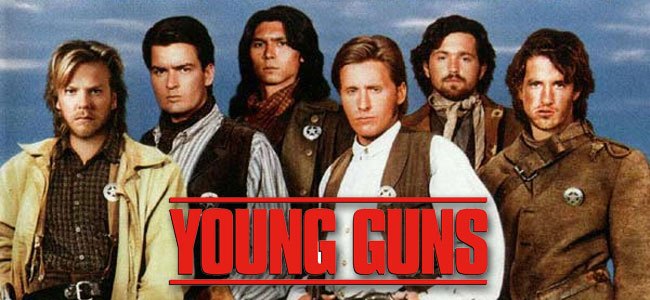
 

#MondayMuggers presents YOUNG GUNS (1988) starring Emilio Etevez, Kiefer Sutherland, Lou Diamond Phillips, and Charlie Sheen!


Every Monday night at 9:00 Central Time, my wife Sierra and I host a “Live Movie Tweet” event on X using the hashtag #MondayMuggers. We rotate movie picks each week, and our tastes are quite different. Tonight, Monday May 19th, we are showing YOUNG GUNS (1988) starring Emilio Estevez, Kiefer Sutherland, Lou Diamond Phillips, Charlie Sheen, Dermot Mulroney, Casey Siemaszko, Terence Stamp, Jack Palance, Terry O’Quinn, Brian Keith, and Patrick Wayne.

This movie focuses on a group of young gunmen, led by Billy the Kid (Emilio Estevez), who become deputies to avenge the murder of John Tunstall (Terence Stamp), the rancher who took them in, gave them jobs, and taught them how to read. But when Billy takes their authority too far, they soon find themselves to be the outlaws and the ones being hunted down.

Join us tonight for #MondayMuggers and watch the extremely fun YOUNG GUNS! It’s on Amazon Prime. The trailer is included below:

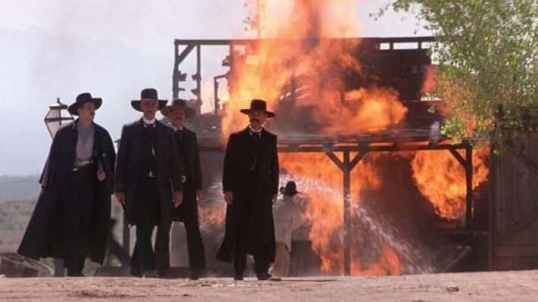
The Unnominated #12: Tombstone (dir by George Pan Cosmatos)


Though the Academy of Motion Picture Arts and Sciences claim that the Oscars honor the best of the year, we all know that there are always worthy films and performances that end up getting overlooked.  Sometimes, it’s because the competition too fierce.  Sometimes, it’s because the film itself was too controversial.  Often, it’s just a case of a film’s quality not being fully recognized until years after its initial released.  This series of reviews takes a look at the films and performances that should have been nominated but were, for whatever reason, overlooked.  These are the Unnominated.

I have come around on Tombstone.

The first time I watched this 1993 film, I was a bit confused as to why so many of my friends (especially my male friends) worshipped the film.  To me, it was a bit too messy for its own good, an overlong film that told a familiar story and which featured so many characters that it was difficult for me to keep track of them all.  Perhaps because everyone I knew loved the film so much, I felt the need to play contrarian and pick out every flaw I could find.

And I still think those flaws are there.  The film had a troubled production, with original director Kevin Jarre falling behind in shooting and getting replaced by George Pan Cosmatos, a director who didn’t have any real interest in the material and whose all-business approach rubbed many members of the cast the wrong way.  Kurt Russell took over production of the film, directing the actors and reportedly paring down the sprawling script to emphasize the relationship between Russell’s Wyatt Earp and Val Kilmer’s Doc Holliday.  On the one hand, this led to a lot of characters who really didn’t seem to have much to do in the finished film.  Jason Priestley’s bookish deputy comes to mind.  On the other hand, Russell was right.

The film’s heart really is found in the friendship between Wyatt and Doc.  It doesn’t matter that, in real life, Wyatt Earp was hardly as upstanding as portrayed by Kurt Russell.  It also doesn’t matter that the real-life Doc Holliday was perhaps not as poetic as portrayed by Val Kilmer.  Today, if you ask someone to picture Wyatt Earp, they’re probably going to picture Kurt Russell with a mustache, a cowboy hat, and a rifle.  And if you ask them to picture Doc Holliday, they’re going to picture Val Kilmer, sweating due to tuberculosis but still managing to enjoy life.  Did Doc Holliday every say, “I’ll be your huckleberry,” before gunning someone down?  He might as well have.  That’s how he’s remembered in the popular imagination.  And it’s due to the performances of Russell and Kilmer that I’ve come around to eventually liking this big and flawed western. With each subsequent viewing, I’ve come to appreciate how Russell and Kilmer managed to create fully realized characters while still remaining true to the Western genre.  If Wyatt Earp initially fought for the law, Doc Holliday fought for friendship.  Kilmer is not only believable as a confident gunslinger who has no fear of walking into a dangerous situation.  He’s also believable as someone who puts his personal loyalty above all else.  He’s the type of friend that everyone would want to have.

That said, I do have to mention that there are a lot of talented people in the cast, many of whom are no longer with us but who will live forever as a result their appearance here.  When Powers Boothe delivered the line, “Well …. bye,” he had no way of knowing that he would eventually become a meme.  Boothe is no longer with us, I’m sad to say.  But he’ll live forever as long as people need a pithy way to respond to someone announcing that they’re leaving social media forever.  Charlton Heston appears briefly as a rancher and he links this 90s western with the westerns of the past.  Robert Mitchum provides the narration and it just feels right.  The large ensemble cast can be difficult to keep track of and even a little distracting but there’s no way I can’t appreciate a film that manages to bring together not just Russell, Kilmer, Boothe, Heston, and Mitchum but also Sam Elliott, Bill Paxton, Michael Biehn, Michael Rooker, Billy Bob Thornton, Frank Stallone, Terry O’Quinn, and even Billy Zane!  The female roles are a bit underwritten.  Dana Delaney is miscast but Joanna Pacula feels exactly right as Doc Holliday’s lover.

But ultimately, this film really does belong to Val Kilmer.  When I heard the sad news that he had passed away last night, I thought of two films.  I thought of Top Gun and then I thought of Tombstone.  Iceman probably wouldn’t have had much use for Doc Holliday.  And Doc Holliday would have resented Iceman’s attitude.  But Val Kilmer — that brilliant actor who was so underappreciated until he fell ill — brought both of them to brilliant life.  In the documentary Val, Kilmer attends a showing of Tombstone and you can say he much he loves the sound of audience cheering whenever Doc Holliday showed up onscreen.

Tombstone was a flawed film and 1993 was a strong year.  But it’s a shame that Val Kilmer was never once nominated for an Oscar.  Tombstone may not have been a Best Picture contender but, in a year when Tommy Lee Jones won the Oscar for Best Supporting Actor for his role in the similarly flawed The Fugitive, it seems a shame that Kilmer’s Doc Holliday was overlooked.

Tombstone (1993, dir by George Pan Cosmatos (and Kurt Russell), DP: William Fraker)

Previous entries in The Unnominated:

  1. Auto Focus 
  2. Star 80
  3. Monty Python and The Holy Grail
  4. Johnny Got His Gun
  5. Saint Jack
  6. Office Space
  7. Play Misty For Me
  8. The Long Riders
  9. Mean Streets
  10. The Long Goodbye
  11. The General

Film Review: Heaven’s Gate (dir by Michael Cimino)


First released in 1981 and then re-released in several different versions since then, Heaven’s Gate begins at Harvard University.

The year is 1870 and the graduates of Harvard have got their entire future ahead of them.  At the graduation ceremony, Joseph Cotten gives a speech about how, as men of cultivation, they have an obligation to help the uncultivated.  Student orator Billy Irvine (John Hurt) then gives a speech  in which he jokingly says the exact opposite.  Amongst the graduates, Billy’s friend, Jim Averill (Kris Kristofferson), laughs at Billy’s speech.  It’s a bit of a strange scene, if just because all of the graduates appear to be teenagers except for Hurt and Kristofferson, who are both clearly in their 30s.  The graduates of Harvard sing to their girlfriends and dance under a tree and, for a fleeting moment, all seems to be right with the world.

Twenty years later, all seems to be wrong with the world.  Averill is now the rugged and world-weary marshal of Johnson Country, Wyoming.  Cattle barons are trying to force immigrant settlers to give up their land.  Gunmen, like Nate Champion (Christopher Walken) and Nick Ray (Mickey Rourke), are accepting contracts to execute immigrants who are suspected of stealing cattle.  When Averill stands up for the people of Johnson Country, the head of the Wyoming Stock Grower Association, Frank Canton (Sam Waterston), hires a group of mercenaries to ride into Johnson County and execute 125 settlers.  Billy Irvine, who now is dissolute alcoholic who works with Canton, warns his old friend Averill.  Averill, who has fallen in love with Ella (Isabelle Huppert), the local madam, announces that he will defend the immigrants.  Nate, who is also in love with Ella, considers changing sides.

Heaven’s Gate is loosely based on an actual event.  I actually have three distant ancestors who traveled to Wyoming to take part in the Johnson County War.  All three of them survived, though one of them was shot and killed in an unrelated manner shortly after returning to Ft. Smith, Arkansas.  That said, director Michael Cimino is clearly not that interested in the historical reality of the Johnson County War or the issues that it raised.  Just as he did with Vietnam in The Deer Hunter, Cimino uses the Johnson County War as a way to signify a loss of national innocence.  Averill and Irvine start the film as hopeful “young” men with the future ahead of them.  By the end of the film, one is dead and the other is living on a yacht and dealing with what appears to be crippling ennui.

Heaven’s Gate is a bit of an infamous film.  Though the film was pretty much a standard western, Cimino still went far over-budget and turned in a first cut that was over six hours long.  A four hour version was briefly released in 1980 but withdrawn after a week, due to terrible reviews and audience indifference.  A studio-edited version that ran for two hours and 35 minutes got the widest release in 1981.  Since then, there have been several other versions released.  Cimino’s director’s cut, which was released as a part of the Criterion Collection in 2012, runs for 212-minutes and is considered to now be the “official” version of Heaven’s Gate.

For years, Heaven’s Gate had a terrible reputation.  It’s failure at the box office was blamed for bankrupting United Artists.  After the excesses of the Heaven’s Gate production, studios were far more reluctant to just give a director a bunch of money and let him run off to make his movie.  (They should have learned their lesson with Dennis Hopper and The Last Movie.)  Described by studio execs as being self-indulgent and even mentally unstable, Michael Cimino’s career never recovered and the director of The Deer Hunter went from being an Oscar-winner to being an industry pariah.  (Some who disliked The Deer Hunter’s perceived jingoistic subtext claimed that Heaven’s Gate proved The Deer Hunter was just an overrated fluke.)  However, the reputation of Heaven’s Gate has improved, especially with the release of Cimino’s director’s cut.  Many critics have praised Heaven’s Gate for its epic portrayal of the west and, ironically given the controversy over The Deer Hunter, its political subtext.  It’s anti-immigrant villains made the film popular amongst the Resistance-leaning film historians during the first Trump term.

So, is Heaven’s Gate a masterpiece or a disaster?  To be honest, it’s somewhere in between.  Whereas it was once over-criticized, it’s now over-praised.  Visually, it’s a beautiful film but those who complained that the film was too slow had a point.  As with The Deer Hunter, Cimino takes the time to introduce us to and immerse us in a tight-knit immigrant community.  Personally, I like the much-criticized scenes of the fiddler on skates and Averill and Ella dancing in the roller rink.  Overall though, as opposed to The Deer Hunter, the members of the film’s victimized community still feel less like individual characters and more like symbols.  As for the political subtext, I think that any subtext of that sort is accidental.  (I feel the same way about The Deer Hunter, which I like quite a bit more than Heaven’s Gate.)  Cimino is more interested in the loss of innocence than whether or not the Johnson County War can be fit into some sort of nonsense Marxist framework.

The main problem with the film is that there is no center to keep everything grounded.  Kris Kristofferson had a definite screen presence but, as an actor who was incapable of showing a great deal of emotion, he lacks the gravitas necessary to keep from being swallowed up by Cimino’s epic pretensions.  Isabelle Huppert, an otherwise great actress, also feels lost in the role of Ella and Sam Waterston is not necessarily the most-intimidating villain to ever show up in a western.  Christopher Walken, as the enigmatic and intriguing Nate Champion, gives the best performance in the film but his character still feels largely wasted.

There are some brilliant visual moments to be found in Heaven’s Gate.  I even like the Harvard prologue and the ending on the boat, both of which are not technically necessary to the narrative but still add an extra-dimension to both Averill and Irvine.  But, in the end, Heaven’s Gate is big when it should have been small and epic when its should have been intimate.  It’s a misfire but not a disaster.  Even great directors occasionally have a film that just doesn’t work.  Speilberg had his 1941.  Scorsese has had a handful.  Coppola’s career has been a mess but no one can take his successes away from him.  Michael Cimino, who passed away in 2016, deserved another chance.

January True Crime: Shoot First: A Cop’s Vengeance (dir by Mel Damski)


Made for television in 1991 and possessing a rather unwieldy title, Shoot First: A Cop’s Vengeance tells the story of two friends in San Antonio in the early 80s.

Farrell Tucker (Dale Midkiff) and Stephen Smith (Alex McArthur) are both cops.  They entered the police academy together, they graduated as a part of the same class, and they both hope to be partners while working to keep the streets of San Antonio safe.  Tucker is laid back and friendly and not one to worry too much about following all of the regulations.  Stephen Smith, on the other hand, is uptight and, at first, by-the-book.  He grew up in a poverty-stricken, crime-riddled neighborhood and it left a definite impression on him.  He hates crime and criminals but what he really can’t stand is a justice system that seems to be more concerned with the victimizers than with the victims.  Tucker and Smith enjoy spending their time together, drinking at the local cop bars and practicing their shooting on the weekends.  Tucker’s not much of a shot, whereas Smith is a sharpshooter who rarely misses.

At first, no one notices or even cares that some of San Antonio’s less upstanding citizens are getting gunned down in the streets.  But when Smith somehow manages to be first on the scene to a series of shootings, it gets the attention of Internal Affairs.  With Sergeant Nicholas (Terry O’Quinn) investigating the possibility of a cop-turned-vigilante and Chief Hogan (G.D. Spradlin) announcing that no one is above the law, Smith starts to get a bit paranoid and Tucker is forced to consider that his friend could very well be a murderer.

And, of course, Tucker’s right!  The first scene features Tucker confronting Smith and then the majority of the film is told in flashback.  Even if not for that narrative choice, one could guess at Smith’s guilt just from the title of the film.  When Shoot First: A Cop’s Vengeance was released on home video, the title was changed to Vigilante Cop, which made Smith’s guilt even more obvious.  Finally, some viewers will guess that Smith is guilty because the film is based on a true story.  Officer Stephen Smith actually did go on a killing spree, gunning down men who he felt had escaped the law and even sending threatening letters to his chief when the latter announced that vigilante activity would not be tolerated.  Officer Stephen Smith went from being a follower of the rules to someone who attempted to write his own rules.  It’s an interesting story for anyone who wants to google it.

As for the film, it’s adequate without being particularly memorable.  Alex McArthur and Dale Midkiff both give good performance as Tucker and Smith and the cast is full of talented people like Terry O’Quinn, G.D. Spradlin, Bruce McGill, and Lynn Lowry.  Observant viewers will even notice a long-haired Jeremy Davies, showing up for a split-second.  I liked the performance of Loryn Locklin, as the waitress who marries Smith and then discovers that her charming husband actually has some very serious issues.  The main problem with the film is that the story moves a bit too slowly for its own good and some of the Texas accents were more than a little dodgy.  If you’re looking for an action film, this won’t be for you, though the shootings are surprisingly graphic for something that was made for television.  Shoot First: A Cop’s Vengeance is a rather routine telling of an interesting story.

Introducing #Sunday Shorts, with BLIND FURY!


Since Sunday is a day of rest for a lot of people, I’m introducing #SundayShorts, a weekly mini review about a movie I’ve recently watched.

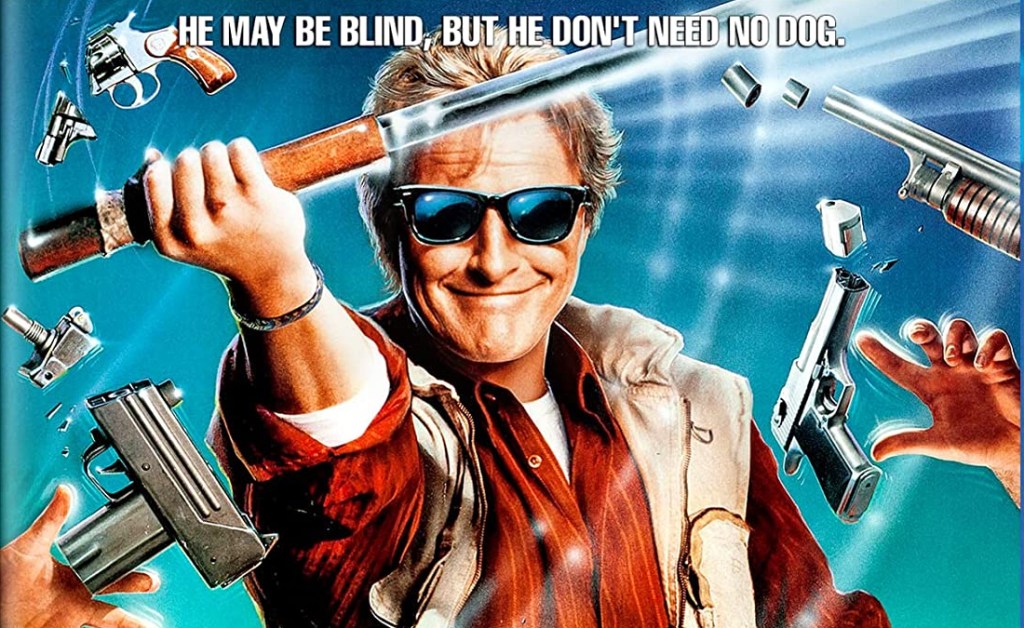
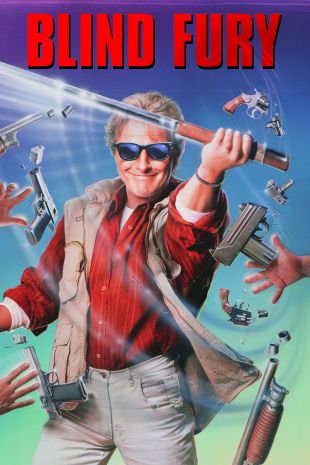
In BLIND FURY, Rutger Hauer does his best Zatoichi impersonation in a loose remake of a 1967 Japanese film called ZATOICHI CHALLENGED. The movie’s strongest quality is its ability to be both a kickass action film and a comic action film. That’s a fine line to walk and BLIND FURY does it exceedingly well.

Fast Facts:

  1. Star Rutger Hauer is probably the greatest Dutch actor of all time where he often starred in the films of director Paul Verhoeven. My favorite of Hauer’s foreign movies is SOLDIER OF ORANGE.
  2. ZATOICHI CHALLENGED, the inspiration for BLIND FURY, stars legendary Japanese actor Shintaro Katsu as a blind masseuse named Zatoichi. Katsu would play this amazing character in 26 films and 100 TV episodes between 1962 and 1989. You owe it to yourself to search out these films.
  3. Former heavyweight boxer Randall “Tex” Cobb plays a heavy in BLIND FURY. In his time, he beat Leon Spinx and went the distance with Larry Holmes.
  4. Australian director Phillip Noyce directed BLIND FURY. He’s an underrated director whose other credits include DEAD CALM, PATRIOT GAMES, and THE BONE COLLECTOR.

I highly recommend BLIND FURY!

Live Tweet Alert: Join #FridayNightFlix for The Cutting Edge!


As some of our regular readers undoubtedly know, I am involved in a few weekly live tweets on twitter.  I host #FridayNightFlix every Friday, I co-host #ScarySocial on Saturday, and I am one of the five hosts of #MondayActionMovie!  Every week, we get together.  We watch a movie.  We tweet our way through it.

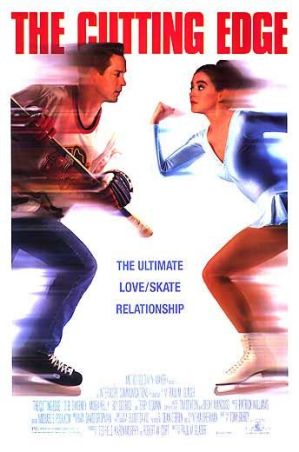
Tomorrow, at 10 pm et, I will be hosting #FridayNightFlix!  The movie?  1992’s The Cutting Edge!

It’s figure skating, hockey, and love!  D.B. Sweeney is a former hockey star.  Moira Kelly is a figure skater with a reputation for being a diva.  Terry O’Quinn and Roy Dotrice are the distinguished character actors who are brought in to class the joint up.  Can Sweeney and Kelly win the gold and fall in love at the same time!?

If you want to join us this Friday, just hop onto twitter, start the movie at 10 pm et, and use the #FridayNightFlix hashtag!  I’ll be there tweeting and I imagine some other members of the TSL Crew will be there as well.  It’s a friendly group and welcoming of newcomers so don’t be shy.

This movie is a personal favorite of mine and I can’t wait to play host tomorrow night!

The TSL’s Grindhouse: Blind Fury (dir by Philip Noyce)


Nick Parker (Rutger Hauer) may have lost his sight in Vietnam but he gained something else.  With the help of surprisingly friendly villagers, Nick learned how to master his other senses.  He also became a proficient and deadly swordsmen.  Why would the villagers go out of their way to help an American soldier who, in all probability, they viewed as an intruder?

Does it matter?

Of course not!  All that matters is that 1990’s Blind Fury features Rutger Hauer as a blind swordsman who, 20 years after returning home from Vietnam, decides to to go to Florida to pay a visit on his old service buddy, Frank (Terry O’Quinn).  Frank, however, has developed a gambling problem and is currently in Reno, Nevada.  While Nick is getting to know Frank’s ex-wife, Lynne (Meg Foster), and Frank’s bratty son, Billy (Brandon Call), Slag (Randall “Tex” Cobb) shows up with two corrupt cops.  As you can probably guess from his name, Slag is a bad guy.  He’s looking for Frank.  Nick manages to kill the cops and run off Slag but, in the process, Lynne is killed.  With her dying breath, Lynne asks Nick to take Billy to his father.  Nick, of course, agrees.

The rest of this fast-paced film follows Nick and Billy as they head across the country.  Following them along the way is Slag and his men.  Frank has obviously made some pretty big mistakes and gotten on the bad side of some pretty dangerous people and it’s now up to Nick to save Frank, if just so Billy doesn’t end up an orphan.  At first, Billy is resentful and does things like demanding a window seat on the bus that they’re taking to Nevada.  (As Billy rather rudely puts it, it’s not like Nick has any use for the window.)  Billy also laughs when Nick trips in a puddle and then tries to trick Nick into eating a rock.  However, Nick soon proves himself to be more than capable of defending both himself and Billy.  Soon, Billy is calling him “Uncle Nick” and Nick …. well, Nick still seems to be wondering what he ever did that was so wrong that a part of his punishment was to get stuck with such a little brat.  But, that is a part of Nick’s charm.

And, indeed, Nick has a lot of charm.  That’s not particularly surprising, given that he’s played by the charismatic Rutger Hauer.  Hauer is convincing as both a blind man and a fighter and he bring a lot of sly humor to the role.  Nick may be a warrior but he’s definitely a warrior with a certain joie de vivre.  Beyond his own talents as an actor, Hauer was just one of those performers who had enough natural athleticism to look totally credible while swinging a sword at his enemies. One of the things that makes Blind Fury so enjoyable is that you never doubt that Hauer could actually do all of the things that we see him do.

Blind Fury is a fast-paced and entertaining film.  Director Philip Noyce keeps the action moving quickly and he’s smart enough to avoid getting bogged down with trying to convince the audience that film’s plot makes any more sense than it does.  Blind Fury is a B-action movie that’s proud to be a B-action movie and, as a result, it’s a lot of fun.  The film ends with a battle between Hauer and Sho Kosugi that is genuinely exciting to watch.  It also ends with the promise of a sequel, one that was sadly never made.

As I watched the film tonight (and, with the temperature currently being below freezing and a good deal of ice still being on the ground outside, I definitely enjoyed the escape that the film provided), it occurred to me that I’ve recently viewed many Rutger Hauer films.  I’ve seen a few bad films starring Rutger Hauer but I have never seen a bad Rutger Hauer performance.  Hauer always gave 100%, regardless of what else might be going on with the movie.  That’s why he was a great actor and one who is definitely missed today.

Blind Fury is definitely a very good Rutger Hauer film.  Watch it the next time you need to see that, with a little determination, anything is possible.

Stranger On My Land (1988, directed by Larry Elikann)


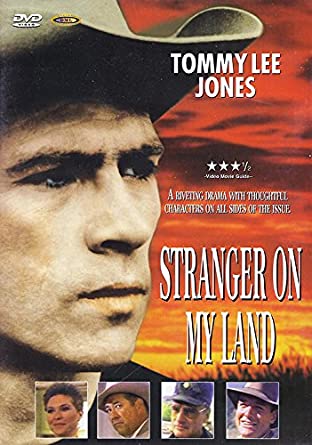
The Air Force wants to build a new air base in Utah but the Whitman family refuses to sell their ranch.  Bud Whitman (Tommy Lee Jones) served in Vietnam and he disapproved just as much of forcing Vietnamese villagers to move as he now disapproves of the idea of allowing the government to force American citizens to move.  When a judge rules that the Air Force can force the Whitmans to vacate their property under the rule of eminent domain, Bud announces that he still will not be moving.  With several of Bud’s old combat buddies showing up to support Bud, the villainous county surveyor, Connie Priest (Terry O’Quinn), prepares to take matters in his own hands.

Tommy Lee Jones vs. Terry O’Quinn?  That sounds like it should have the makings of a classic but Stranger On My Land is a largely forgettable made-for-TV movie.  A huge part of the problem is that O’Quinn’s character doesn’t have any real motivation beyond just being a prick and that seems like a waste when you consider the number of interesting villains that Terry O’Quinn has played over the years.  This is the actor who, in The Stepfather, actually made a multiple murderer seem a little bit likable.  Connie Priest seems like a villain that O’Quinn could have done a lot with if only the film’s script hadn’t been so simplistic.  Tommy Lee Jones is always well-cast as a modern day western hero but again, the script doesn’t do much with his character.  He’s just Tommy Lee Jones yelling at people to get off his property.  You could probably go to Tommy Lee Jones’s own ranch and have the exact same experience without having to sit through the rest of this movie.  Even Bud’s ethical objections to the Vietnam War feel like something that was just tossed in to assure the people watching at home that he’s not meant to be some sort of gun-toting militiaman.  The best performance in the movie comes from Ben Johnson, who is plays Tommy Lee Jones’s father.  That’s prefect casting.  If Ben Johnson wasn’t actually Tommy Lee Jones’s father, he probably should have been.

The main problem with Stranger On My Land is that it was made for television and it had to operate within the limits of what was acceptable for television in 1988.  The entire movie seems to be building up to a fierce battle between Bud and law enforcement but instead, it settles for a personal fight between Bud and Connie.  The film’s sudden ending doesn’t feel authentic but it does feel like what you’d expect to find on ABC in the late 80s.

Cinemax Friday: Lipstick Camera (1994, directed by Mike Bonifer)


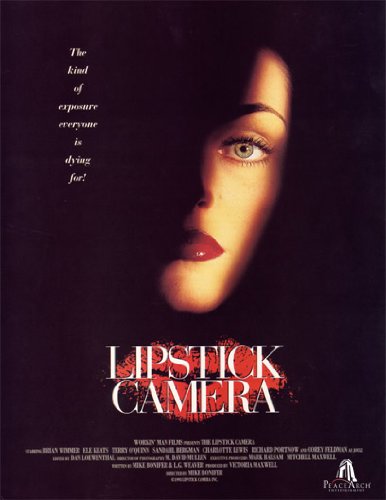
Omy Clark (Ele Keats) is an aspiring journalist who wants to work with the world famous videographer, Flynn Dailey (Brian Wimmer).  When she shows up at Flynn’s studio and marvels at how much power the filmed image can wield, Flynn blows her off.  While Flynn is busy ignoring Omy, Lily Miller (Sandahl Bergman) drops by and tries to hire Flynn to film her and her husband, Raymond (Terry O’Quinn), making love.  When Flynn heads out to the Miller residence, Omy tags along as an uninvited guest.  She happens to have a tiny camera that she stole from her best friend, Joule (Corey Feldman, sporting a beard and a beret).  Omy plants the camera in Lily’s bedroom.  Later, when Flynn, Omy, and Joule all return to the Miller house to retrieve the tiny camera, they discover that Lily has been murdered and that Raymond is a communist war criminal who fled East Germany following the collapse of the Berlin Wall.

Lipstick Camera has an intriguing premise and, even in 1994, it was trying to say something about media manipulation and what is today referred to as being “fake news.”  You could say that it was a film that was ahead of its time.  You could also say that it’s a complete mess or that it’s an erotic thriller that is neither erotic nor thrilling and you would be just as correct.  The main problem with the film is that almost every plot development is set in motion by Omy being either extremely self-absorbed or extremely stupid.  When she’s not manipulating Joule (who is not too secretly in love with her), she’s stalking Flynn and carelessly losing an expensive camera that didn’t even belong to her in the first place.  And she, of course, is meant to be our hero!

In the 90s, former teen idol Corey Feldman was one of the mainstays of late night Cinemax.  Even during his Cinemax years, Feldman would occasionally give a good performance.  Lipstick Camera was not one of those occasions.  In Lipstick Camera, Feldman wears a beard and a beret and spends a lot of time in a room that’s full of computer monitors and TV screens and that’s the extent of his characterization.  He does get a dramatic death scene, in which Joule appears to be determined to stave off the grim reaper by giving a monologue of Shakespearean proportions but otherwise, this is Corey Feldman at his worst.  Faring slightly better is Terry O’Quinn, who, at least, gets to deliver his lines in a light German accent.

With its focus on the media and communist war criminals, Lipstick Camera is an example of a direct-to-video film that tried to be about something more than just sex and murder.  (Though, this being a DTV film, there is one brief sex scene that takes place in front of a TV that’s showing a video of a fireplace.)  Unfortunately, nobody involved seems to know what that something was supposed to be.