Horror On The Lens: Teenage Caveman (dir by Roger Corman)


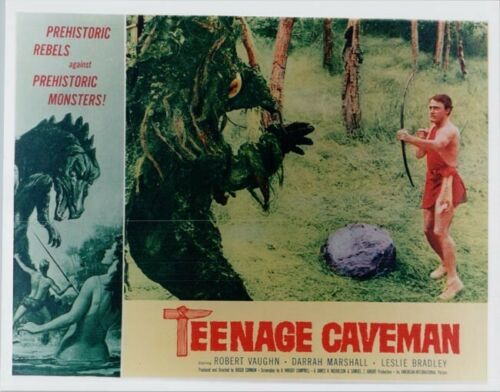
Future serious actor Robert Vaughn made his film debut in 1958’s Teenage Caveman.  Directed by Roger Corman, Teenage Caveman tells the story of a rebellious young man (that’s Robert Vaughn) who chooses to defy his father’s warnings and venture beyond the caves and into “the forbidden zone.”  He’s told that monsters roam in the forbidden zone and indeed, at least one of them does.  However, neither the Teenage Caveman nor his father are prepared for what lies at the heart of the forbidden zone.

(What will he find out there, Dr. Zaius?)

Robert Vaughn later said that, out of all the bad films that he made, this was the worst.  Personally, I think he was being a bit too hard on the film.  It’s not good but it is definitely fun.  Along with watching all of the dinosaur stock footage, you get to wonder how a caveman — especially a teenage caveman! — could possibly have such perfect hair.  Even more importantly, if you stick with it, this film has a twist ending that has to be seen to be believed.

Here is Teenage Caveman:


Prince of Bel-Air (1986, directed by Charles Braverman)


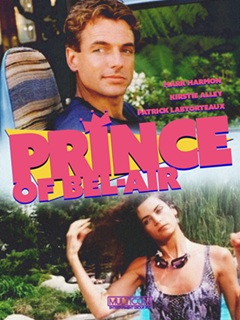
Robin Prince (Mark Harmon) is a laid-back former volleyball player who, at the age of 32, makes his living as a pool guy.  It’s an easy life and he enjoys it.  He sleeps with the wife (Deborah Harmon) of one of his clients and he hangs out with his richer friends.  Robin enjoys being a bachelor but that all changes when he agrees to give a job to Justin (Patrick Labyorteaux), the son of Stanley Auerbach (Robert Vaughn) and meets Justin’s cousin, an artist named Jamie Harrison (Kirstie Alley).  Justin goes from being bitter about having to work to idolizing Robin and his lifestyle.  Robin, meanwhile, falls for Jamie.

This film came out before Summer School, another movie that featured Mark Harmon as a laid-back guy who falls for Kirstie Alley, but it has a similar vibe.  Again, Mark Harmon is playing a likable guy who has never grown up and again, Kirstie Alley is playing a sophisticated woman who, at first, seems like she’s too serious for Harmon’s character.  Robin’s mentorship of Justin feels a lot like Hamon’s mentorship of his Summer School students.  (Dean Cameron even plays a supporting role in both Prince of Bel-Air and Summer School, though he’s far more memorable in Summer School.)  Prince of Bel-Air is more dramatic than Summer School.  In Prince of Bel-Air, Mark Harmon plays a character who secretly understands that there’s not much of a future in his lifestyle, even if he’s not initially willing to admit it.

Prince of Bel-Air is a likable movie.  Mark Harmon gives an amiable and relatable performance as someone who is finally trying to grow up and, as always, Robert Vaughn is a perfectly smug villain.  Kirstie Alley’s sultry performance is the highlight of the film.  In the 1980s, Alley has a smoky-eyed beauty that, when combined with her ribald sense of humor, made her irresistible.  It only takes a few minutes to understand why Robin would be willing to give up his previous life to be with her.  There’s nothing particularly deep about Prince of Bel-Air but it’s still an entertaining 100 minutes.

Join #MondayMuggers For THE DELTA FORCE!


Hi, everyone!  Guess is who is guest hosting the #MondayMuggers live tweet tonight?  That’s right …. me!

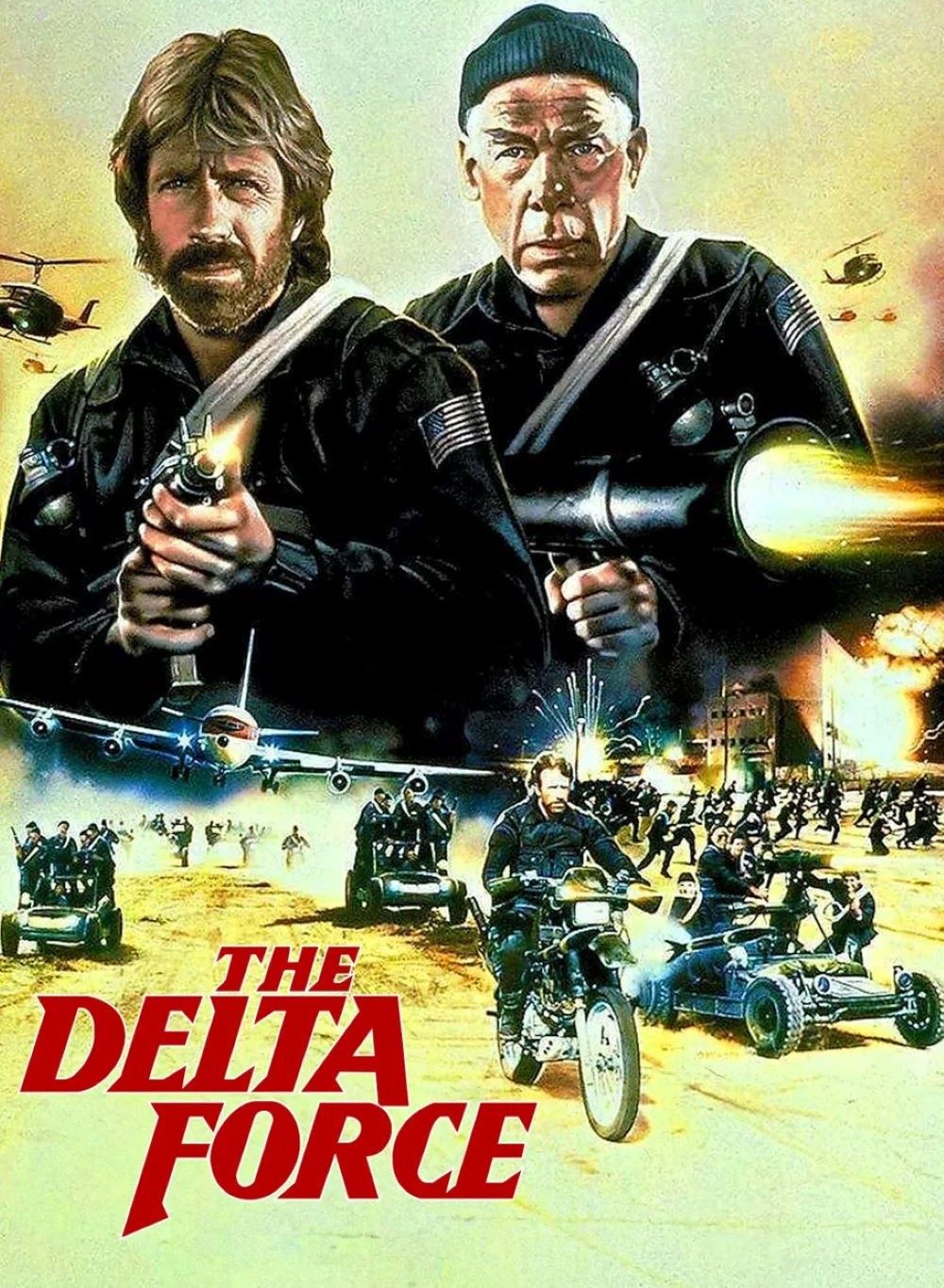
Tonight’s movie will be The Delta Force (1986), starring Chuck Norris, Lee Marvin, Robert Forster, George Kennedy, Robert Vaughn, Steven James, Hanna Schygulla, Shelley Winters, Martin Balsam, Bo Svenson, Joey Bishop, Susan Strasberg, Kim Delaney …. well, you get the idea.  There’s a lot of people in this movie!  Jedadiah Leland swears that this is the greatest film ever made.  We’ll find out tonight!

You can find the movie on Prime and then you can join us on twitter at 9 pm central time!  (That’s 10 pm for you folks on the East Coast.)  See you then!

Happy Birthday in heaven to Director John Sturges! 🎉


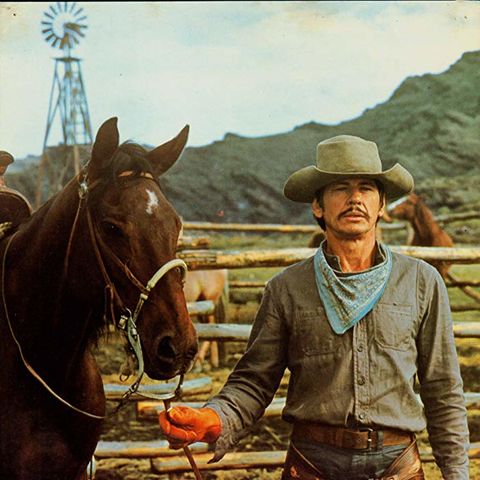
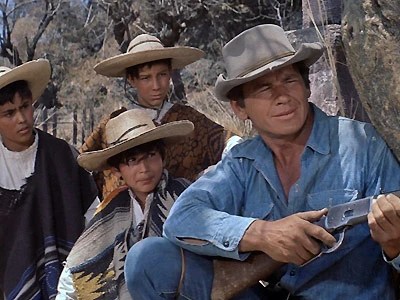
Director John Sturges was born on January 3rd, 1910. He directed some of my favorite movies, and many of them starred my movie hero, Charles Bronson. The picture above is from 1973’s CHINO!

Charles Bronson’s second role in a film was in Sturges’ THE PEOPLE AGAINST O’HARA from 1951, starring Spencer Tracy. The picture below isn’t a very good picture as Bronson was only in one scene. Can you spot Bronson??

In 1959, Sturges would direct Charles Bronson in NEVER SO FEW, which co-starred Frank Sinatra and Steve McQueen.

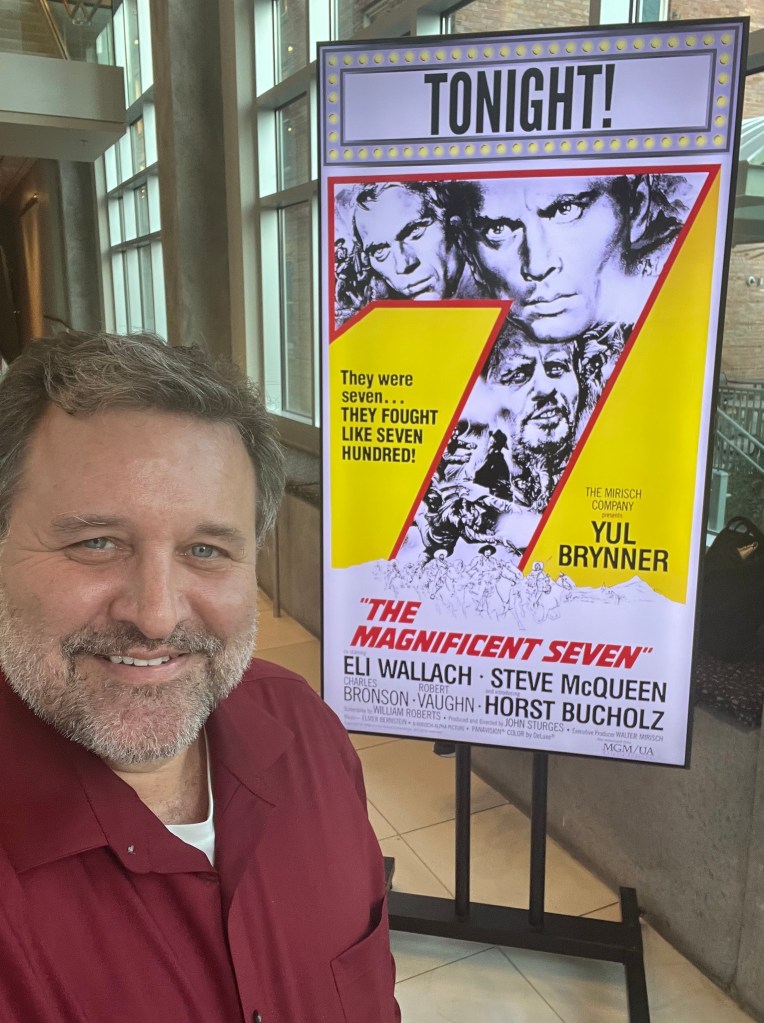
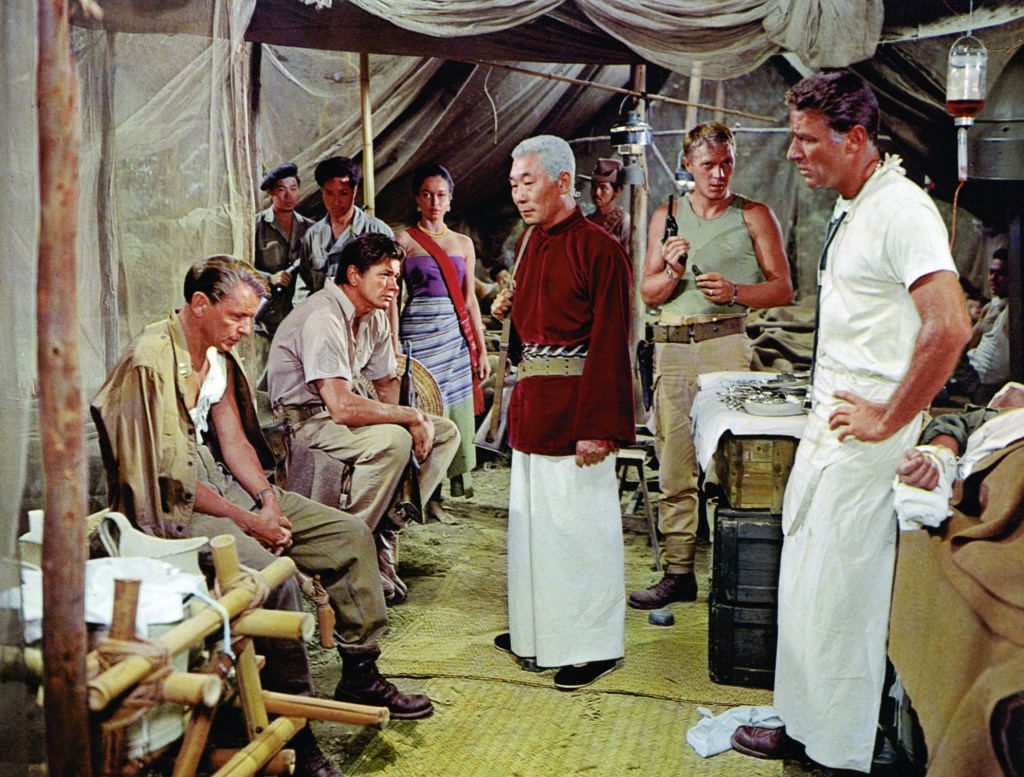
Just a year later in 1960, Sturges would direct Bronson and an all star cast that included Yul Brynner, Steve McQueen, James Coburn and Robert Vaughn in THE MAGNIFICENT SEVEN, a remade of the Akira Kurosawa classic THE SEVEN SAMURAI. Bronson’s role as Bernardo O’Reilly is one of the best in the entire film.

John Sturges would direct Charles Bronson again in 1963 in the classic film THE GREAT ESCAPE, which also starred Richard Attenborough, Steve McQueen, James Garner, James Coburn and Donald Pleasence. Charles Bronson drew on his experience in the coal mines of Pennsylvania when he played “The Tunnel King” in the classic World War II film. Charles Bronson is one of the characters who actually escapes, which made me very happy!

John Sturges would direct Charles Bronson one more time in the underrated western from 1973, CHINO (pictured at the top). Sturges was a phenomenal director, and Charles Bronson was in some of his very best work! As Charles Bronson’s biggest fan, Sturges will always be one of my favorite directors!!

Retro Television Review: The Love Boat 4.25 & 26: “This Year’s Model/The Model Marriage/Vogue Rogue/Too Clothes for Comfort/Original Sin”


Welcome to Retro Television Reviews, a feature where we review some of our favorite and least favorite shows of the past!  On Wednesdays, I will be reviewing the original Love Boat, which aired on ABC from 1977 to 1986!  The series can be streamed on Paramount Plus!
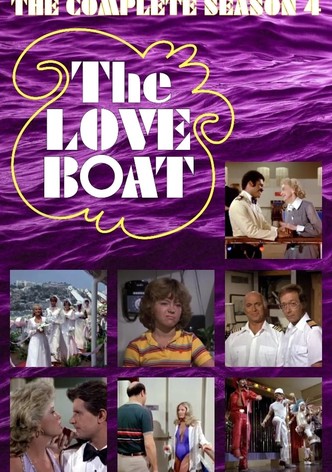
This week, it’s time for the fashion festival!

Episode 4.25 and 4.26 “This Year’s Model/The Model Marriage/Vogue Rogue/Too Clothes for Comfort/Original Sin”

(Dir by Roger Duchowny, originally aired on May 2nd, 1981)

This week, the Love Boat sails to Acapulco for the International Fashion Festival!  Vicki, who hopes to grow up to be a fashion designer, is excited about meeting her idols.  Doc, Gopher, and Isaac are excited about the models.  Captain Stubing starts the cruise by reminding everyone to do their job for once.  It’s about time Stubing told them that.  Does Doc even keep office hours anymore?

This one of those two-hour episodes of The Love Boat that gets chopped into two episodes for syndication.  As such, it’s double-sized, with twice as many guest stars and the boat actually sailing to Acapulco during filming.  That doesn’t mean that the storyline are any more complicated than usual on this episode.  Despite being longer then usual, the episode follows the usual Love Boat pattern.  The extra time is largely taken up with a travelogue of Mexico (watch as a limo very slowly drives to a luxury hotel!) and the fashion show.

Fashion designers Gloria Vanderbilt, Bob Mackie, Halston, and Geoffrey Beene all appear as themselves.  They’re listed as guest stars but they don’t actually do anything other than board the ship and then show off their designs.  They don’t find love on the boat, nor do they search for it.  (Well, Halston probably did….)  Interestingly enough, none of them — not even the famous Halston — has much of a screen presence and in the scene where they introduce themselves to the crew, they’re all so stiff that it is somewhat difficult to watch.  It’s obvious that none of them were actors but it’s also interesting to consider that there was a time when someone could be internationally famous without being a natural on camera.

There are also a few fictional designers on the cruise.  They’re the one who actually have storylines.  Harvey Blanchard (Dick Shawn) is not aware that his daughter, Mandy (Debra Clinger), has married his nerdy assistant, Alvin Beale (Richard Gilliand).  Mandy wants Alvin to tell her father that they re married during the cruise but first, Alvin is going to have to figure out what to do after he accidentally dumps some designer clothes down a laundry chute and they end up shrinking in the dryer.  (“Have you ever considered designing children’s clothing?” Alvin asks his boss.)

Benita James (Elke Sommer) is an “up-and-coming” fashion designer who falls in love with Sidney Sloan (Mike Connors), despite the fact that he’s an industrial spy who has been hired to steal her designs.  Sid falls in love with Benita as well and decides that he can’t betray her.  But when Sid’s partner (Steve Franken) ransacks Benita’s cabin, will Sid be able to convince her that he wasn’t involved?

Charles Paris (Robert Vaughn, looking somewhat embarrassed) is a cosmetics tycoon who boards the boat looking for the new Ms. Paris, the model who will be the face of his company.  Will he pick Liz(Morgan Brittany) the model with whom he is falling in love, or will he pick Joanne Atkins (Carmilla Sparv), the model who has been told that, since she’s now over 35, her career is over?

Speaking of Joanne, she falls in love with Captain Stubing and Stubing falls in love with her.  Meanwhile, the married heads of her modeling agency (Anne Baxter and McClean Stevenson, who looks almost as embarrassed as Robert Vaughn) argue over whether or not Joanne is too old to continue on as a model.

Julie is excited because her former sorority sister, Melissa (Cristina Ferrare), is a model on the cruise.  Julie can’t wait to spend the whole cruise with her but Melissa meets and falls in love with Larry (Chris Marlowe).  When Melissa and Larry run off to get married, Julie takes her friend’s place in the fashion show.

And really, the fashion show is what this episode is all about.  The stories aren’t particularly important.  We’re here for the clothes!

Bob Mackie starts things off with a really cute collection of lingerie and pajamas, which happen to be my favorite things to wear.  I loved his collection.

Gloria Vanderbilt follows with sporty summer fashion, and watching her collection, I found myself wanting to go play tennis with my neighbors.

Geoffrey Beene follows with a collection of plaid suits that will be familiar to anyone who has ever binged a 70s sitcom.

“Up and comer” Benita James presents a collection of truly hideous cocktail dresses.

And Halston closes things out with evening wear.  “Red is my favorite color,” Halston says, “It’s so fun.”  This redhead appreciates the sentiment, even if it was kind of obvious that Halston didn’t bring his top designs on the cruise with him.

As the highlight of the episode, the fashion show was definitely entertaining though. it was impossible not to smile at just how ugly Benita James’s designs actually were.  Seriously, someone went to the trouble to hire two industrial spies to steal those designs?

As for everything else, it all works out.  This is The Love Boat.  Everything always works out.  Charles Paris announces that the new Ms. Paris will be Joanne but then he asks Liz to be “Mrs. Paris.”  Sid and Benita decide to get married as well.  Captain Stubing gets to have sex for once.  I think that may be the first time that’s happened since this show started.  Julie enjoys modeling.  Everyone either finds love or decides not to get divorced.  That’s a successful cruise!

This cruise was fun in its silly way.  Bob Mackie definitely won the fashion show.  Though the designers may not have been comfortable on camera and McClean Stevenson looked like he was on the verge of jumping overboard from embarrassment, this was The Love Boat at its most entertaining.


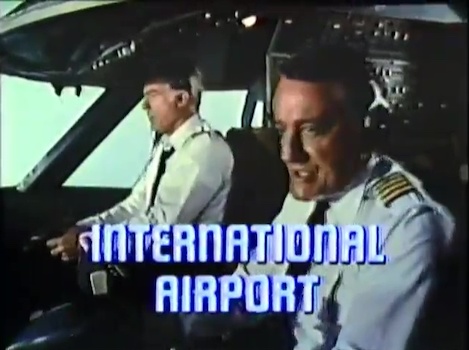
Retro Television Reviews: International Airport (dir by Don Chaffey and Charles S. Dubin)


Welcome to Retro Television Reviews, a feature where we review some of our favorite and least favorite shows of the past!  On Sundays, I will be reviewing the made-for-television movies that used to be a primetime mainstay.  Today’s film is 1985’s International Airport!  It  can be viewed on YouTube!

It’s not easy working at an international airport!

At least, that’s the message of this made-for-television film.  Produced by Aaron Spelling and obviously designed to be a pilot for a weekly television series, International Airport details one day in the life of airport manager David Montgomery (Gil Gerard).  Everyone respects and admires David, from the recently graduated flight attendants who can’t wait for their first day on the job to the hard-working members of the airport security team.  The only person who really has a problem with David is Harvey Jameson (Bill Bixby), the old school flight controller who throws a fit when he learns that a woman, Dana Fredricks (Connie Sellecca), has been assigned to work in the tower.  Harvey claims that women can’t handle the pressure of working the tower and not having a personal life.  He demands to know what Dana’s going to do during that “one week of the month when you’re not feeling well!”  Harvey’s a jerk but, fortunately, he has a nervous breakdown early on in the film and Dana gets to take over the tower.

Meanwhile, David is trying to figure out why an old friend of his, Carl Roberts (played by Retro Television mainstay Robert Reed, with his bad perm and his retired porn star mustache), is at the airport without his wife (Susan Blakely).  David takes it upon himself to save Carl’s troubled marriage because it’s all in a day’s work for the world’s greatest airport manager!

While Carl is dealing with his mid-life crisis, someone else is sending threatening letters to the airport.  One of the letters declares that there’s a bomb on a flight that’s heading for Honolulu.  David and Dana must decide whether to allow Captain Powell (Robert Vaughn) to fly to Hawaii or to order him to return to California.  And Captain Powell must figure out which one of his passengers is the bomber.  Is it Martin Harris (George Grizzard), the sweaty alcoholic who want shut up about losing all of his friends in the war?  Or is it the woman sitting next to Martin Harris, the cool and aloof Elaine Corey (Vera Miles)?

Of course, there are other passengers on the plane.  Rudy (George Kennedy) is a veteran airline mechanic.  Rudy is hoping that he can talk his wife (Susan Oliver) into adopting Pepe (Danny Ponce), an orphan who secretly lives at the airport.  Unfortunately, when Pepe hears that Rudy’s plane might have a bomb on it, he spends so much time praying that he doesn’t realize he’s been spotted by airport security.  Pepe manages to outrun the security forces but he ends up hiding out in a meat freezer and, when the door is slammed shut, it appears that Pepe may no longer be available for adoption.  Will someone hear Pepe praying in time to let him out?  Or, like Frankie Carbone, will he end up frozen stiff?

International Airport was an attempt to reboot the Airport films for television, with the opening credits even mentioning that the film was inspired by the Arthur Hailey novel that started it all.  As well, Gil Gerard, Susan Blakely, and George Kennedy were all veterans of the original Airport franchise.  George Kennedy may be called Rudy in International Airport but it’s easy to see that he’s still supposed to be dependable old Joe Patroni.  Unfortunately, despite the familiar faces in the cast, International Airport itself is a bit bland.  It’s a disaster film on a budget.  While the viewers gets all of the expected melodrama, they don’t get anything as entertaining or amusing as Karen Black flying the plane in Airport 1975 or the scene in Concorde: Airport ’79 where George Kennedy leaned out the cockpit window (while in flight) and fired a gun at an enemy aircraft.  Probably the only thing that was really amusing (either intentionally or unintentionally) about International Airport was the character of Pepe and that was just because young Danny Ponce gave perhaps the worst performance in the history of television.

International Airport did not lead to a television series.  Watching it today, it’s a bit on the dull side but, at the same time, it is kind of nice to see what an airport was like in the days before the TSA.  If nothing else, it’s a time capsule that serves as a record of the days when the world was a bit more innocent.

The TSL’s Horror Grindhouse: Teenage Caveman (dir by Roger Corman)


Who is the Teenage Caveman?

Believe it or not, he’s Robert Vaughn.  Vaughn, who would later go on to appear in The Magnificent Seven, The Man From UNCLE, Bullitt, The Towering Inferno, and Hustle, was 26 years old when he played a nameless caveman in Roger Corman’s 1958 film, Teenage Caveman.  At the age of 26, Vaughn looked like he was closer to 35 and he certainly didn’t resemble a teenager.  Despite wearing a loin cloth, he also didn’t appear to be a caveman.  If he was a caveman than he was certainly a well-groomed caveman and perhaps the only caveman to understand how to use hairspray.  Seriously, his hair is perfect in this film.

As for the film itself, it’s about a primitive tribe of people who live in a rocky wasteland.  However, just across the river, there’s a land that’s full of plants and animals.  It would obviously be a much better place to live and Vaughn’s teenage caveman is totally annoyed that the older folks on the tribe refuse to cross the river.  They claim that a monster lives in the river and that it will kill anyone who tries to cross.  Being a rebellious teenager, Vaughn decides to cross the river anyway.  He convinces a group of friends to go with him.  When they reach the river, they meet and fight the monster and they also discover that the monster was doing more than just guarding the river.  It all leads to a plot twist that feels as if it was added at the last possible second.

In a later interview, Robert Vaughn referred to Teenage Caveman as being the worst film in which he ever appeared.  He went on to suggest that it was the worst film ever made.  Those are bold words coming from someone who appeared in as many bad films as Robert Vaughn did.  That said, I do think that Vaughn was being a bit too hard on Teenage Caveman.  For what it is — an extremely low-budget film that barely runs over an hour — Teenage Caveman is entertaining if you’re in the right mood for it.  It’s hard not to smile at the cavepeople, with their modern haircuts and their very American accents.  As well, the film features the same stock footage of dinosaurs fighting that appeared in countless other B-movies of the time and, again, it’s hard not to smile at the actors valiantly trying to pretend that there are dinosaurs fighting just a few feet away from them.  And while that final plot twist may come out of nowhere, it’s just random enough to be interesting.  Worst film of all time?  With all respect to the teenage caveman, I have to disagree.  It’s a B-movie and, if you enjoy B-movies, you’ll enjoy this one.  And let’s give some credit to Robert Vaughn.  He gives an earnest performance, even though he later said that he felt foolish every time he stepped out on the set.  Add to that, his hair is perfect.

International Horror Review: Starship Invasions (dir by Ed Hunt)


Once, during an interview, the distinguished British horror actor, Christopher Lee, was asked to name the worst film in which he had appeared.

Being a very busy actor who appeared in well-over 200 films, Lee paused for a minute to give it some thought and then eventually said that, in 1977, he had appeared in a Canadian science fiction film in which he played a mute alien who was using a suicide ray to conquer Earth. Though he wasn’t quite sure what the title had been, that was his pick for the worst movie in which he had ever appeared.

Now, considering some of the films in which Lee appeared, that’s a bold statement. Was Lee correct? Was that film — which was entitled Starship Invasions — the worst film in which he ever appeared?

Well …. maybe. It’s certainly not one of his best. Lee plays Captain Ramses, who is the leader of the Legion of the Winged Serpents. The legion’s home planet is about to be destroyed by a supernova so he has taken it upon himself to find a new planet to colonize. Earth looks pretty good to him!

Christopher Lee remembered Ramses as being mute. Actually, he communicates through telepathy. We hear his words but his lips never move. The same is true of every alien that appears in the film. And yes, this could be an example of how different and more advanced the aliens are when compared to the humans but a more likely explanation is that it was cheaper to film the outer space scenes without sound and then just dub in the character’s “thoughts” later.

For reasons that are never quite clear, the Legion of the Winged Serpent abducts several Earthlings before then unleashing their suicide ray. Prof. Allan Duncan (Robert Vaughn) is the UFO expert who investigates the abductions before eventually getting abducted himself by a race of good, gray aliens. The gray aliens are determined to save the Earth from the Legion. It’s never really explained why.

Meanwhile, the suicide ray is causing chaos on Earth as people all over are driven to kill themselves and others. And the ray has just been aimed at Duncan’s wife (played by Helen Shaver) so Allan and the good aliens better hurry up and defeat Ramses and the bad aliens!

Is Starship Invasions really that bad? Well, it’s certainly not …. great. Christopher Lee is properly imposing as Ramses but even he occasionally has a “What have I gotten myself into?” look on his face. Most of all, Starship Invasions is very much a product of the 1970s. When Ramses visits a space station, it looks a lot like an incredibly tacky mix of a fitness center and a cocktail lounge. The fashion of both the Earthlings and the aliens is very much of the era. Robert Vaughn wears a turtleneck that just screams “community college history teacher.” The special effects are rather cheap and the plot never makes much sense. The scenes with the suicide ray, however, are surprisingly effective and the film does have a certain campy charm to it, especially if you’re into low-budget 70s sci-fi. Starship Invasions is probably not Christopher Lee’s worst film. It’s just one of his cheapest.

Julius Caesar (1970, directed by Stuart Burge)


In ancient Rome, under the direction of Cassius (Richard Johnson), several members of the Senate conspire to kill Julius Caesar (John Gielgud), believing that his death is the only way to preserve the Republic.  Even Caesar’s longtime friend, Brutus (Jason Robards), is brought into the conspiracy.  Unfortunately for the conspirators, after Caesar’s murder, Mark Antony (Charlton Heston) gives his famous speech asking the Romans to lend him their ears and the Roman citizens turn against Caesar’s murderers and instead look to Antony and Octavius (Richard Chamberlain) to lead them.

This was the first adaptation of William Shakespeare’s play to be filmed in color and the assassination of Caesar was portrayed much more graphically than in previous productions.  By the end of the attack, Caesar has been stabbed so many times and there’s so much blood on screen that it doesn’t seem like he should even have the strength to say, “Et tu, Brute?”  Despite the then-modern innovations, this version still feels creaky and stiff.  When Caesar makes his appearance on the Ides of March, all of the conspirators actually stand in a neat line while Caesar enters the Senate.  When Mark Anthony and Brutus make their speeches, the extras playing the Roman citizens looked bored and disinterested.

For most viewers, the appeal of this version of Julius Caesar will be for the cast, which was considered to be all-star in 1970.  Along with Gielgud, Robards, Heston, Johnson, and Chamberlain, the cast also features Robert Vaughn as Casca, Christopher Lee as Artemidorous, Jill Bennett as Calpurnia, and Diana Rigg as Portia.  Surprisingly, it’s Jason Robards, the Broadway veteran, who struggles with Shakespeare’s dialogue, delivering his lines flatly and without much emotion.  Meanwhile, Charlton Heston steals the entire film as Mark Antony, nailing Antony’s funeral oration and proving himself to be much more clever than the conspirators had originally assumed.  (Of course, Mark Antony was the Charlton Heston of his day so I guess it shouldn’t be too much of a surprise that Heston is perfect in the role.)  I also liked Diana Rigg’s performance in the small role of Portia and Robert Vaughn’s devious interpretation of Casca.

Though he plays Caesar here, John Gielgud previously played Cassius in the 1953 version of Julius Caesar, the one with James Mason and Marlon Brando.  That is still the version to watch if you want to see the definitive adaptation of Julius Caesar.

The Woman Hunter (1972, directed by Bernard L. Kowalksi)


Recovering from a traffic accident and having being recently acquitted on charges of vehicular manslaughter, wealthy socialite Diane Hunter (Barbara Eden) heads down to Acapulco with her businessman husband, Jerry (Robert Vaughn).  Diane wants to get away from the publicity of her case and relax but all Jerry seems to care about is business.  When she meets another American named Paul Carter (Stuart Whitman), Paul presents himself as being an artist.  But as Paul seems to be growing more and more obsessed with Diane and Jerry, Diane becomes convinced that Paul may have more sinister motives.  Is Diane right or is she having another breakdown?

The Woman Hunter is a quickly paced made-for-TV thriller that would probably have worked better if the two men in Diane’s life had been played by different actors.  Stuart Whitman and Robert Vaughn were both good actors but they were also so often cast in villainous roles that, as soon as they appear, everyone will know better than to trust either one of them.  The film’s big twist can be guessed just by the fact that Robert Vaughn is playing Diane’s husband.

Whitman seems bored with his role while Vaughn does his usual sleazy businessman routine.  He’s good at it but it’s a role that he played so often that it’s impossible to be surprised when it’s revealed that he’s less than trustworthy.  Barbara Eden gives a good performance and is really the main reason to watch this movie.  After being typecast as a genie in a bottle, Eden goes out of her way in The Woman Hunter to show that she was capable of doing so much more and, for the most part, she succeeds.  She’s sexy, sympathetic, and does just a good enough job portraying Diane’s mental instability that it does at least seem believable that she could be imagining all of the danger around her.  (Or, at least, it would be believable if the men in her life weren’t all portrayed by veteran screen villains.)

The Woman Hunter is forgettable but it was shot on location in Acapulco so at least everyone involved got a nice trip out of the deal.