Lisa Marie’s Week In Television: 9/28/25 — 10/4/25


For the most part, I’ve spent this week watching horror movies and reviewing them.  That said, I did get caught up with a handful of shows.  Here are a few thoughts:

Abbott Elementary (Wednesday Night, ABC)

I got pretty bored with Abbott last season but I still caught the season five premiere this week.  I laughed quite a bit so I guess I’m going to give the latest season a chance.  The show got a bit heavy-handed last season and I got bored with all of the golf course nonsense.  Hopefully, this season will put the focus back on teaching.

Big Brother 27 (Sunday Night, CBS)

Big Brother ended on Sunday and I’ve already forgotten all about it.  That’s the way things should be.

Hell’s Kitchen (Thursday Night, Fox)

I got caught up with the latest two episodes of Hell’s Kitchen.  The men seem to be especially incompetent this season.  I know that every season seems to start out with the men weak and the women strong before reversing things later on but seriously, this season, I wouldn’t want any of these people cooking for me.

Law & Order (Thursday Night, NBC)

I decided to give Law & Order another try this season.  (Last season, I stopped watching about halfway through.)  Of course, when I watched the first two episodes of the current season, the first thing I saw was Price on the verge of tears.  Is there ever a time when Nolan Price isn’t on the verge of tears?  Just as with the previous season, I preferred the Law to the Order part of the show.  If Maroun and Price are always miserable about having to do this jobs, why are they even working for the District Attorney’s office to begin with?  Ever since this show was revived, we’ve had a steady stream of new detectives and yet Price and Maroun are still the same colorless characters that they were when they first appeared.

The Prisoner (Night Flight Plus)

I watched two episodes of this cult classic on Friday.  My favorite character is Rover.

Seinfeld (Netflix)

Kramer starts a talk show in his living room.  It made me laugh!

Special Forces: World’s Toughest Test (Thursday Night, Fox)

Yet another group of celebrities have gathered to see if they can pass Special Forces training.  I watched the first two episodes this week.  I laughed when one of the instructors yelled, “How badly do you want this!?”  They probably just want their paycheck.  I also laughed at Jussie Smollett, trying to make a comeback as one of the celebs.  What if Smollett wins this season and is sent to Afghanistan with orders to take down the Taliban?  That would be a hell of a redemption arc!

The Young and the Restless (Weekday Morning, CBS)

I watched an episode on Monday, largely to see if Victor was still around.  He was.

Horror On TV: Hammer House Of Horror Episode #3: Rude Awakening (dir by Peter Sasdy)


In the third episode of Hammer House of Horror, Denholm Elliott plays an estate agent who finds himself having a series of nightmares about his wife (Pat Heywood) and his secretary (Lucy Gutteridge) and a murder that may or may not have happened on Friday the 13th.  This episode is an enjoyably surreal trip into the subconscious.

In the UK, Rude Awakening originally aired on September 27th, 1980.

October Hacks: Grim Reaper (dir by James Ian Mair)


In 2021’s Grim Reaper, escaped mental patient Victor Cunningham (Deron Cunningham) is wandering around a small country town and killing people.

That’s pretty much the entire plot.  Grim Reaper is only a 70-minute film and the majority of those minutes are made up of either Cunningham wandering around in his grim reaper mask, Cunningham’s victims being stalked, and the police being ineffective.  (The main detective wears a baseball cap that read: POLICE.  It’s a good thing that the guy was wearing that baseball cap because, otherwise, I would have just mistaken him for a local bartender.)  Our final girl has a big bruise on her face and is trying to escape an abusive relationship, which adds a level of poignance to her story.

There’s a tendency amongst many to be automatically dismissive of DIY slasher films like Grim Reaper.  It’s true that Grim Reaper has its amateurish moments and that the soundtrack leans a bit too heavy on the metal and it’s also obvious that most of the actors were not professionals but I have to admit that I kind of enjoyed the movie and not just in an ironic sense.  It helps that the film was obviously made by people who appreciate the genre and, watching the film, one gets the feeling that it was a fun set.  It may seem like a backhanded compliment to say that the film is comfortable with being what it is but you need only compare it to some of the current big budget horror films to see the difference between a horror film made be fans of the genre and people who think that they’re somehow better than the horror label.  Even shot on video, the film still had somewhat effective shots.  Director James Ian Mair appears to have a good eye and he even manages to make good use of natural light.  That’s the same thing that got Chloe Zhao an Oscar and a Marvel movie.

Sometimes, you just have to be willing to appreciate a film for what it is.

The TSL Horror Grindhouse: The Toolbox Murders (dir by Dennis Donnelly)


In 1979’s The Toolbox Murders, someone is murdering the female tenants of a building in Los Angeles.  The killer, who wears a mask and a leather jacket, uses tools.  One woman is killed by a hammer to the head.  Another is skewered by a power drill.  One is stabbed with a screwdriver.  Another is shot with a nail gun.  The identity of the killer would be a total mystery if not for the fact that we’ve already seen Cameron Mitchell’s name in the cast list.

Indeed, it’s a bit pointless to cast Cameron Mitchell in any sort of whodunit-type of film.  Nine times out of ten, Mitchell being in a movie means that that Mitchell (who, in the early days of his career, originated the role of Death of a Salesman‘s Happy Loman on Broadway) is going to be revealed as the murderer.  In this case, Mitchell plays Vance Kingsley, the owner of the building.  Vance has never recovered from the death of his daughter so he’s punishing women who he considered to be sinful.

The actual toolbox murders are pretty much finished after the first twenty minutes of the film.  The rest of the movie deals with Laurie (Pamelyn Ferdin), a 15 year-old girl who is kidnapped by Vance and his nephew, Kent (Wesley Eure).  Joey (Nicholas Beauvy), who is Laurie’s brother, attempts to find and then rescue his sister and turns out to very much not up to the task.  The film itself ends on a rather sick note, one that is followed by a title card that informs us that the film is based on a true story.  Yeah, sure, it was.

The Toolbox Murders has somehow earned a reputation for being a gory and shocking grindhouse film.  It was among the films that was banned in the UK for several years.  It’s actually not that gory and the use of tools to commit the murders is not quite as clever as the film seems to think it is.  Even the nail gun murder (which is the film’s best known moment) feels rather awkward as the victim (Kelly Nichols) never really makes a run for it despite the fact that Vance has to stop to reload after every nail that he fires.

The scenes with Laurie being held hostage are far more disturbing and weird, largely due to Mitchell’s characteristically over-the-top portrayal of Vance’s psychosis.  When you watch a movie called The Toolbox Murders, you’re probably not expecting a lengthy scene where Laurie — pretending to be Vance’s dead daughter — tells a long story about what it’s like in the afterlife.  In the role of Vance’s nephew, Wesley Eure is even more disturbing than Mitchell.  As opposed to the sinister-looking Mitchell, Eure actually has the look of a nice, young community college student and that makes his actions at the end of the film all the more icky to watch.

The Toolbox Murders doesn’t quite live up to its bloody reputation but it’s still a disturbing film nonetheless.  Did you know that Heaven smells like lollipops?  After this film, you’ll never forget.

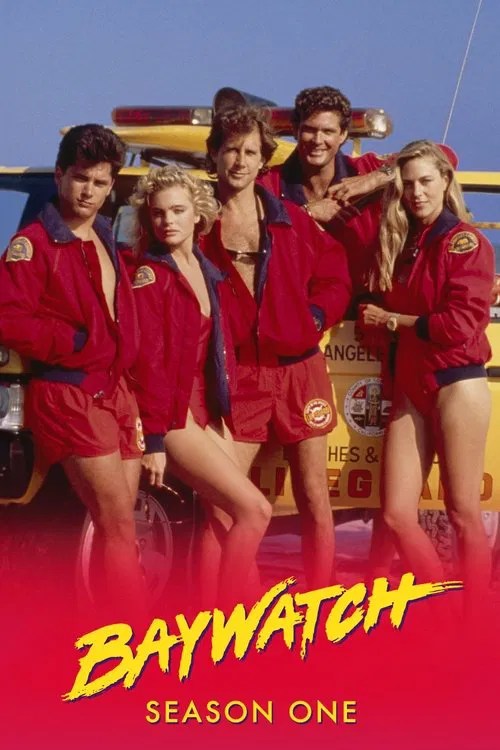
Retro Television Review: Baywatch: Panic At Malibu Pier


Welcome to Retro Television Reviews, a feature where we review some of our favorite and least favorite shows of the past!  On Saturdays, I will be reviewing Baywatch, which ran on NBC and then in syndication from 1989 to 2001.  The entire show can be purchased on Tubi.

Today, I start a new series of reviews.  Since I already did Baywatch Nights, it just made sense to go ahead and do Baywatch.  All together, this show ran for 11 and a movie so it should only take 241 weeks to finish up the series….

“Baywatch: Panic At Malibu Pier”

(Dir by Richard Compton, originally aired on April 29th, 1989)

It’s not easy being a lifeguard.

That would seem to be the main theme running through Panic at Malibu Pier, the two-hour movie that also served as a pilot for Baywatch.  Consider the drama:

Mitch Buchanan (David Hasselhoff) loves the beach and he loves getting in the water but it’s cost him his marriage and now, his ex-wife (Wendie Malick) is suing for sole custody of their young son, Hobie (Brandon Call).  Hobie doesn’t like going to school.  He doesn’t understand why he can’t just spend all day on the beach like his father.  Mitch, meanwhile, has been promoted to lieutenant of Baywatch and he’s now no longer supposed to do rescues.  He’s just supposed to supervise the other lifeguard.  His boss, Captain Thorpe (Monte Markham), is very insistent on that.  Mitch explains that he doesn’t even like wearing socks.  Ewwww.  You have to wear socks, Mitch!

Eddie Kramer (Billy Warlock) is a rookie lifeguard.  He finished at the top of his class but he’s also a tough kid from Philadelphia who grew up in the foster system.  Shauni (Erika Eleniak) is another rookie lifeguard who freezes up when she has to provide CPR to a drowned girl.  Her mentor, Jill (Shawn Weatherly), tells Shauni that it happens to every lifeguard.  I bet it’s never happened to Mitch.  Shauni seems to have a crush on Eddie and Eddie seems to be driven to prove himself.  Eddie has guts because he wears a Philadelphia t-shirt in California.

Al Gibson (Richard Jaeckel) is the veteran lifeguard who is reaching retirement age and who dies at the end of the episode and gets a big lifeguard funeral on the beach.

Trevor (Peter Phelps) is the Australian lifeguard who calls everyone “mate.”

Finally, Craig Pomeroy (Parker Stevenson) is the attorney who prefers to spend his time in his lifeguard tower.  Even when he should be at the office and working for his clients, Craig just hangs out at his tower.  He saves the life of a disturbed teenager named Laurie (Madchen Amick).  Laurie subsequently becomes obsessed with him.  When the married Craig tells her to stay out of his lifeguard tower and stop taking off all of her clothes, she accuses Craig of assaulting her.  Later, she tries to murder Craig’s wife (Gina Hecht).  This all could have been avoided if Craig had just gone to his office like he was supposed to.

This pilot film for Baywatch has everything that the show would make famous — stiff line deliveries from the supporting cast, red swimsuits, David Hasselhoff’s earnestly goofy sincerity, slow motion, and plenty of musical montages.  Amongst the guest cast, Madchen Amick stands out at the obsessive Laurie, showing an ability for handling melodrama that would be put to good use on Twin Peaks.  Take a drink every time Mitch says, “Rescue can,” and see how long you can go before passing out.  Unlike a lot of pilots that don’t really resemble the eventual show, Panic at Malibu Pier is unmistakably Baywatch.

And, watching it, you can see why the show eventually became a success.  The beach scenery is nice.  The men are athletic, the women are pretty, and the slow motion is cool the first time you see it.  Of course, the most important thing about the pilot — and the show itself — is that it doesn’t require a good deal of attention.  It’s one of those things where you can step away from the screen for a few minutes and then come back without having worry about having missed anything important.

Panic at Malibu Pier was a ratings hit.  Baywatch followed.  We’ll get into that next week.

October True Crime: Drew Peterson: Untouchable (dir by Mikael Salomon)


From the years 2007 to 2013, it’s hard to think of anyone who was as universally despised as Drew Peterson.

Drew Peterson was the Illinois cop who first came to national attention when his fourth wife, Stacy, went missing.  Stacy had been on the verge of completing her nursing degree at the time of her disappearance.  Though Drew was a cop, he wasn’t the one who reported her missing.  Instead, it was her sister who called the police after she failed to hear from Stacy.  When Drew was asked about Stacy, he seemed unconcerned and even cocky as he claimed Stacy had run off with another man.  Few people believed him.  It had only been three years since another Peterson had been convicted of murdering his wife and, like Drew, Scott Peterson also claimed that his wife left their home and vanished.

The investigation into Stacy’s disappearance led to authorities taking another look at the death of Drew Peterson’s third wife, Kathy Savio.  Kathy death had originally been found to be an accidental drowning, though how one can drown in an empty bathtub was never really explained.  A second autopsy revealed evidence of a struggle and, in 2013, Drew Peterson was convicted of her murder.  Drew Peterson is currently in prison and Stacy is still listed as missing.

The thing that sticks out about Drew Peterson is how smug he always seemed.  Like Dennis Rader (who was a serial killer by night and a neighborhood compliance officer by day), Drew Peterson was the ultimate nightmare authority figure.  He had a uniform and he had a badge and he had an attitude that said, “I can do whatever I want and if you complain, nobody will believe you.”  When we looked at Drew Peterson, we saw every cop who had ever pulled someone over for a busted taillight or he had ever tried to hit on someone after stopping them for speeding.  Even when he had people accusing him of killing Kathy, Drew would appear on television and smirk and basically dare you to do anything about it.  If you want to know what we mean when we use terms like “mansplaining,” go watch an interview with Drew Peterson.

Drew Peterson’s legal troubles were so drawn out that the 2012 Lifetime film, Drew Peterson: Untouchable, actually went into production before Peterson had even been convicted of anything.  (Peterson actually filed a cease and desist letter demanding that production be halted.)  The film ends not with Drew Peterson being convicted of killing Kathy but instead with Rob Lowe (playing the paunchy, middle-aged Peterson) doing a slow motion strip tease after being arrested.  The film does a very good job of not outright accusing Peterson while, at the same time, reminding viewers of why so many of them instantly disliked him.

Of course, when the film was first aired, it received a lot of attention for casting the amiable and handsome Rob Lowe as Drew Peterson, a man who was neither of those things.  Lowe gives an excellent performance as Peterson, capturing the somewhat desperate swagger of a man who doesn’t want to admit that he’s aging.  Lowe captures Peterson’s cockiness and his manipulative nature and, even more importantly, he captures the arrogance of a man who believes that, because he wears a uniform, he can get away with anything.  As his victimized wives, both Kaley Cuoco and Care Buono gave poignant performances.

I don’t know where Drew Peterson is but, wherever he’s serving his time, I hope he’s being forced to watch this movie at least once a day.

Horror Film Review: The Wind (dir by Nico Mastorakis)


In 1986’s The Wind, Meg Foster stars as Sian Anderson.  Sian is a novelist who lives in Los Angeles with her wealthy boyfriend, John (David McCallum).  How wealthy is John?  He’s so wealthy that he can sit out by his pool with a telephone.  (That’s 80s wealthy!)  He’s so wealthy that, when Sian says that she’s going to go to Greece so she can work on her next novel, John rents out the Goodyear Blimp and has it say, “Bon Voyage.”

(It would have been funnier if it had said, “The World Is Yours.”)

On the Greek isle of Monemvasia, she rents the home of Elias Appleby (Robert Morley), an eccentric man who tells her that she must be careful during the night because the heavy winds can be deadly.  He probably also should have warned her that the handyman, Phil (Wings Hauser), was crazy.  No sooner has the wind started howling outside and Sian has started work on her latest novel (which, from what we hear of her writing, sounds absolutely awful), then wild-eyed Phil starts acting crazy and homicidal.  Isolated and too stupid to figure out how to use a Greek phone (and yes, that actually is a plot point), Sian tries to survive the night.

The Wind was directed by Greek journalist-turned-filmmaker Nico Mastorakis.  Anyone was has seen a previous Mastorakis film will immediately be able to spot that The Wind is a product of his somewhat unique aesthetic vision.  As with almost all of Mastorakis’s films, The Wind is both a thriller and a travelogue.  Yes, Phil is trying to kill Sian but — hey!  Look at how pretty the island is!  As well, in typical Mastorakis fashion, the cast is a hodgepodge of familiar faces who don’t all seem as if they belong in the same movie.  Along with Meg Foster, Wings Hauser, Robert Morley, and David McCallum, the film also features Steve Railsback as a friendly sailor who, stranded on the island by the wind, attempts to help Sian out.

The other big Mastorakis trademark is that none of the characters in the film seem to like each other.  That makes sense when it comes to Sian and Phil.  But what is one to make of the scene where Appleby gives Sian a tour of the home and the two of them, who have just met, immediately start snapping at each other for no reason?  They’ve just met and they really don’t have any reason to be arguing with each other.  But that’s what they do because this is a Nico Mastorakis film.

For me, the funniest part of the film involves John.  Worried that Phil is going to kill her, Sian finally gets to talk to John on the phone.  The connection is bad but John, who is sitting out by his pool, still clearly hears Sian say that someone is trying to kill her.  The line then goes dead.  John contacts the international operator and says that he has to make an emergency call to Greece but he’s not sure about the exact number.  The international operator replies that a call cannot be made with an exact number.  So, what does John?  He shrugs, hangs up,  gets in the swimming pool, swims a few laps and nearly misses it when Sian, hours later, calls him again.  To reiterate: John, a wealthy man with Goodyear Blimp connections, heard that the love of his life was isolated and in fear of her life and his response was to go for a swim.

On the plus side, The Wind is actually decently paced and Nico Mastorakis makes the use of his limited locations.  Meg Foster and Wing Hauser are both such eccentric performers that it’s impossible not be entertained by the sight of them acting opposite each other.  Even by his usual standards, Hauser is memorably unhinged here.  This film is ludicrous and a lot of fun.  It’s a Nico Mastorakis film, after all.

Horror Song of the Day: Zombie Stomp by The Del-Aires


If you watched Horror of Party Beach earlier this week, you’ll definitely remember this song, which was performed by a Patterson, New Jersey band called The Del-Aires!

Everybody’s doing the zombie stomp!

Horror Film Review: Alligator (dir by Lewis Teague)


1980’s Alligator begins in 1968.  While on vacation in Florida, a teenage girl named Marisa Kendall purchases a baby alligator named Ramon.  When she returns home to Chicago, her jerk of a father flushes Ramon down the toilet.

12 years pass.  Marisa (Robin Riker) becomes a herpetologist.  As for Ramon, he actually survives being flushed down the toilet and thrives in the sewer.  He eats the carcasses of animals that had been a part of an experiment involving a growth serum.  The serum had the desired effect of making the animals bigger but it also increased their metabolism to the extent that they became aggressive and had to eat constantly.  Evil industrialist Slade (Dean Jagger) is convinced that, by tossing the carcasses in the sewer, he’s ensured that no one will ever find out about the experiments.  Instead, he’s turned Ramon into a giant alligator who is always hungry.  Soon, the super-intelligent alligator is ambushing and eating sewer workers.

Burned-out Detective Dave Madison (Robert Forster) teams up with Marisa to solve the mystery of why so many body parts are turning up in the sewers.  It’s not easy.  No one wants to admit that there might be a giant alligator living under the city.  Everyone wants to believe that’s just an urban legend.  But, after a tabloid reporter (Bart Braverman) manages to snap a few photographs of Ramon before being devoured, the police are forced to deal with the fact that they’ve got an alligator on their hands.  As Slade continues to try to cover up his involvement, big game hunter Colonel Brock (Henry Silva) comes to town and announces that he will be capturing the alligator.

Directed by Lewis Teague and written by John Sayles, Alligator is a dark comedy disguised as a horror film.  While numerous people get eaten and the film ends on a properly ominous note, Alligator is obviously not meant to be taken seriously.  The cast is full of good actors who send up their own images.  That’s especially true in the case of Henry Silva, who appears to be having a blast as the hyper macho Colonel Brock.  Robert Forster, meanwhile, delivers his lines with a self-aware weariness that seems a bit more appropriate for a noir hero than a film about a detective investigating a giant alligator.  One reason why the film works is because Forster, Silva, and the rest of the cast understood exactly what type of film they were appearing in and they delivered their overheated lines with just enough wit to let the viewer know that the film was in on the joke.  The big and somewhat stiff-looking alligator may not look entirely real and it may move somewhat awkwardly but ultimately, it’s the most likable character in the movie.  It just wants to relax in the sewers but, every few minutes, someone else is bugging him.

When first released, Alligator struggled at the box office but it has since gone on to become a cult favorite.  Quentin Tarantino is a self-described fan and he had said he was inspired to cast Robert Forster as Max Cherry in Jackie Brown after seeing him as Dave Madison in this film.  That’s not bad for a movie about a giant alligator!

Horror Film Review: From Hell It Came (dir by Dan Milner)


“And to Hell it can go!” — The Critics

Sometimes, you’ll come across something that simply defies easy description.  It’s something that actually has to be seen to be believed.  I could describe to you the monster at the center of 1957’s From Hell It Came but I don’t know that, even with my extensive vocabulary, I really have the capability to capture just how absurd and weird this thing is.

In this case, a picture says more than a thousand words ever could:

The monster in From Hell it Came is a walking tree that has a rather angry (not to mention immobile) face.  After Prince Kimo is framed for the murder of his father, the chief of a tribe that lives on a South Sea island, he is sentenced to execution.  He announces that he will seek revenge on everyone who framed him.  He’s then stabbed in the heart and encased in the trunk of a hollow tree.  (Apparently, the knife is left in his heart which seems kind of unnecessary but who am I to argue?)  Later, Kimo comes back as a walking tree who tosses his enemies into quicksand.  The knife is still sticking out of the tree, which would suggest that Kimo was physically transformed.  However, the native insist that Kimo has actually become one of their legendary monsters, the fearsome Tabanga.

Along with the natives, there is also a group of American doctors on the island.  They’ve been sent to conduct research and to also give the natives medicine to help them deal with an outbreak of the plague.  The natives don’t trust the medicine.  They trust the magic of their medicine men.  Since this film came out in 1957, the doctors react to this by rolling their eyes and talking down to everyone.  If there’s one thing that has remained consistent over the decades, it’s that the worst way to get people to do anything is to talk down to them.

The doctors are the first to discover the tree stump that will eventually become the Tobanga.  They take the stump back to their laboratory, where they discover that the stump is radioactive due to some nearby atomic tests.  The next day, the stump comes to life and leaves the laboratory.  One of the most interesting things about this film is that the scientists are skeptical about the natives claim that the tree stump is one of their legendary monsters come to life but they are willing to accept that radiation created a walking stump.  Radiation bringing a tree stump to walking life actually makes even less sense than magic doing it.

While the tree is killing its enemies, the American doctors deal with their own drama.  For instance, Dr. Terry Mason (Tina Carver), is a woman and that greatly disturbs her male colleagues, all of whom  can’t understand why she’s not currently married and raising a family.  Meanwhile, Mrs. Mae Kilgore (Linda Watkins, an American actress who played the role with an amazingly bad British accent) owns the local trading post and is not happy about having a killer tree wandering around the island.  Mrs. Kilgore is prone to saying things like, “I saw the bloomin’ thing!”

In the end, the Americans finally figure out how to deal with the murderous tree.  “Your American magic is better,” the current chief of the natives says.  “Hell yeah!” I shout in response, “AMERICA!”  From Hell It Came is a thoroughly ludicrous movie but, once you watch it, you’ll never forget that tree.