Film Review: Stargate (dir by Roland Emmerich)


In 1994’s Stargate, James Spader plays Daniel Jackson, a nerdy Egyptologist who is recruited to decipher some hieroglyphics on some ancient stones that are being studied in a secret government facility in Colorado.  Kurt Russell plays Colonel Jack O’Neill, a Special Operations officer who has been suicidal ever since the accidental death of his son.  (He shot himself with Jack’s gun.  Yikes!)

Together …. they solve crimes!

Well, no, not really.  Instead, by deciphering the hieroglyphics, Daniel discovers how to open up a stargate, a wormhole that leads to another planet.  Daniel, Jack, and a group of soldiers go through the stargate to see where it leads.  Daniel is interested in discovering a new world and perhaps coming to understand how the pyramids were built.  Jack just wants to get things over with.  He’s been given a nuclear bomb and told to blow things up if the stargate leads to a hostile world.  Jack doesn’t care if he lives or dies.

That changes once everyone finds themselves on a desert planet where the inhabitants are being exploited by Ra (Jaye Davidson)!  It turns out that Ra actually does exist.  Rather than being the God that the ancient Egyptians believed him to be, Ra is actually an alien who feeds off of the life forces of others.  Every sacrifice that is performed for him allows Ra to extend his life.  When Ra discovers that Daniel and Jack are on the planet and that Jack has a nuclear warhead with him, Ra takes that as a sign of aggression.  He decides to make the warhead even more powerful and send it back through the stargate so that it can blow up the Earth.  Normally, Jack wouldn’t care but fighting for the planet’s oppressed inhabitants has filled him with a renewed purpose.

Stargate is a film that I like almost despite myself.  There’s a lot of reasons why Stargate would seem like the type of film that I would normally dislike.  With the exception of a few films (Starcrash, the Guardians of the Galaxy trilogy), I’m not normally a huge fan of science fiction.  I’m not really a fan of anything that takes place in the desert because I know I would be miserable if I was there.  (Redhead don’t tan, we burn.)  I’m not really a fan of Roland Emmerich as a director.  I’ll never forgive him for Anonymous, which I realize was made decades after Stargate but it was still annoying all the same.

And yet, I do like Stargate.  I like that James Spader gets to play something other than a sinister creep for once.  Nerdy Spader is a very appealing Spader.  I like that Kurt Russell gives a fully committed performance, even if the film itself is somewhat silly.  He doesn’t just go through the motions with his role, that I’m sure the temptation was there to do so.  When Jack is depressed, you believe it.  I like that Jaye Davidson gives an enjoyably bizarre performance as Ra.  (Davidson, who was offered the role after The Crying Game and was shocked when the producers agreed to pay him a million dollars to play Ra, retired from acting after this film.)  I liked the fact that, for once, the aliens truly seemed like aliens as opposed to coming across like stuffy Earthlings in a flying saucer.  And I appreciated that, with this film, Emmerich actually seemed to be having fun with the story as opposed to just stolidly moving the action from one trailer-ready moment to another.

Stargate is silly.  Wow, is it ever silly!  But it’s silly in an enjoyable and entertaining way.  James Spader, Kurt Russell, and Jaye Davidson make the film worth watching.

Retro Television Review: Miami Vice 3.21 “Knock Knock …. Who’s There?”


Welcome to Retro Television Reviews, a feature where we review some of our favorite and least favorite shows of the past!  On Mondays, I will be reviewing Miami Vice, which ran on NBC from 1984 to 1989.  The entire show can be purchased on Prime!

This week, the one hand doesn’t know what the other one is doing.  That’s life in Miami.,

Episode 3.21 “Knock Knock …. Who’s There?”

(Dir by Tony Wharmby, originally aired on March 27th, 1987)

An drug buy that Crockett and Tubbs (as Burnett and Cooper) set up with Esteban Montoyo (a miscast Ian McShane), falls apart when a group of DEA agents show up.  Or, at least, they say that they’re DEA agents.  Oddly, they just take the money and the drugs and then leave, saying that Miami metro will take care of the rest.

It quickly becomes apparent that the DEA agents were fake but Crockett and Tubbs have no way to confirm that because the DEA refuses to share any information about their activities with the Vice Squad.  Even though the DEA and detectives are all after the same people and are supposedly soldiers in the same war, they don’t trust each other and they don’t share information.  Meanwhile, Internal Affairs is convinced that Crockett and Tubbs stole the money and the drugs for themselves and are determined to prove it.  Apparently, it doesn’t matter that Crockett and Tubbs have killed a variety of different drug lords over the past three seasons.  No one in Miami trusts anyone!

As for the fake DEA busts, they’re being set up by an agent named Linda Colby (Elizabeth Ashley).  Linda’s husband (Jimmie Ray Weeks) is a former agent who is now in a wheelchair and who is a friend of Crockett’s.  Their son is in the hospital, fighting for his life.  Linda’s crimes are helping her to pay for his treatment.  It’s not greed that motivates her, or at least greed isn’t the only thing.  She’s also motivated by love.

Of course, in the end, she still gets shot during a showdown between Crockett, Tubbs, and Montoya.  Unlike the majority of Miami Vice‘s guest stars, Linda survives being shot.  But, as she’s lying on the stretcher, Crockett has to arrest her.  Linda says that Crockett would have done the same thing for his son.  With tears in his eyes, Crockett proceeds to recite Linda’s Miranda rights.  Though Crockett doesn’t say it, he knows that she’s right but he’s also a cop and he has no choice but to arrest her.  Now, her son will no longer receive medical treatment and his mother is going to be in jail.  Wow, Miami Vice, depressing much?

Of course, happy endings were a rarity on Miami Vice.  That was one of the show’s strengths.  No one ever got a truly happy ending.  Every drug lord that Crockett and Tubbs took down would be replaced by someone else.  Anyone who ever tried to help usually fell victim to a bullet.  People like Linda did things for desperate reasons and paid the price, all in the service of an unwinnable war.

This episode was uneven.  Ian McShane was not a particularly interesting villain and Crockett getting his cover blown happens so frequently that it’s no longer a shock.  But that final scene definitely packed a punch.  Never have the Miranda rights sounded so hollow.

Next week …. it’s Crockett and Tubbs vs. a motorcycle gang!  We’ll see what happens.  It can’t be any more depressing than this episode.

Guilty Pleasure No. 77: Captain Ron (dir by Thom Eberhardt)


1992’s Captain Ron opens with Martin Harvey (Martin Short) suffering through another day as a corporate drone in Chicago.  What is Martin’s job like?  It’s the type of job where there’s broken glass on the sidewalk because someone jumped out a window.  Martin is ready for an escape and he gets it when he’s informed that his deceased uncle has left him a yacht that once belonged to Clark Gable.  The only catch is that the yacht is on a Caribbean island and Martin will need to sail it to Miami if he wants to sell it.  Martin decides this will be a great opportunity get away from cold Chicago with his wife (Mary Kay Place), daughter (Meadow Sisto), and son (Benjamin Salisbury).

It turns out that the yacht is in terrible shape.  And so, for that matter, is the sailor who has been assigned to help the Harveys set sail.  Ron “Everyone calls me Captain Ron” Rico (Kurt Russell) is a somewhat slovenly drunk who wears sunglasses over his eyepatch and who is in debt to some dangerous people.  It also turns out that, despite talking a big game, Captain Ron is fairly incompetent as a navigator.  He knows how the boat works.  He knows how to keep the engine from overheating.  He knows how to borrow Martin’s video camera so he can film Marin’s wife and daughter while they walk around top deck.  What Captain Ron can’t do is actually get the boat to where it needs to go.  Instead, Captain Ron takes the family to a number of islands, gets them into trouble with pirates, and also becomes the surrogate father-figure that the family needs.

There’s a lot to criticize about Captain Ron.  The script cannot quite decide just who exactly it wants these characters to be.  Moments of sentimental family comedy are mixed with scenes of Captain Ron leering at Martin’s wife and daughter.  Martin and his wife get stuck in the boat’s shower and I’ll admit that I laughed at the scene because something similar happened to me in college but it still felt as if it was included solely to get the movie up to a PG-13.  The film has the making of being a wild comedy but it never quite goes as far as it could.  Martin gets upset but he never gets truly frantic, which is a waste of Martin Short’s talents.  Ron has the makings to be a true force of chaos but the film instead just makes him incompetent.  There’s an odd scene where Martin considers shooting Captain Ron with a flare gun.  It comes out of nowhere and it’s not ever mentioned again.  It hints at a film that could have been a lot more subversive than it turned out to be.

That said, I did enjoy Captain Ron.  The island scenery is lovely.  The shots of that dilapidated yacht on the ocean do, almost despite themselves, achieve a sort of grandeur.  And then you’ve got Kurt Russell, wearing a red speedo and apparently having the time of his life as the incompetent yet rather cocky Captain Ron.  It’s a fun performance, even if the film sometimes doesn’t seem to be sure what to do with it.  That the film remains watchable is a testament to the charm of Kurt Russell.  Much like the title character, Captain Ron is a film that’s likable even when it shouldn’t be.

Previous Guilty Pleasures

  1. Half-Baked
  2. Save The Last Dance
  3. Every Rose Has Its Thorns
  4. The Jeremy Kyle Show
  5. Invasion USA
  6. The Golden Child
  7. Final Destination 2
  8. Paparazzi
  9. The Principal
  10. The Substitute
  11. Terror In The Family
  12. Pandorum
  13. Lambada
  14. Fear
  15. Cocktail
  16. Keep Off The Grass
  17. Girls, Girls, Girls
  18. Class
  19. Tart
  20. King Kong vs. Godzilla
  21. Hawk the Slayer
  22. Battle Beyond the Stars
  23. Meridian
  24. Walk of Shame
  25. From Justin To Kelly
  26. Project Greenlight
  27. Sex Decoy: Love Stings
  28. Swimfan
  29. On the Line
  30. Wolfen
  31. Hail Caesar!
  32. It’s So Cold In The D
  33. In the Mix
  34. Healed By Grace
  35. Valley of the Dolls
  36. The Legend of Billie Jean
  37. Death Wish
  38. Shipping Wars
  39. Ghost Whisperer
  40. Parking Wars
  41. The Dead Are After Me
  42. Harper’s Island
  43. The Resurrection of Gavin Stone
  44. Paranormal State
  45. Utopia
  46. Bar Rescue
  47. The Powers of Matthew Star
  48. Spiker
  49. Heavenly Bodies
  50. Maid in Manhattan
  51. Rage and Honor
  52. Saved By The Bell 3. 21 “No Hope With Dope”
  53. Happy Gilmore
  54. Solarbabies
  55. The Dawn of Correction
  56. Once You Understand
  57. The Voyeurs 
  58. Robot Jox
  59. Teen Wolf
  60. The Running Man
  61. Double Dragon
  62. Backtrack
  63. Julie and Jack
  64. Karate Warrior
  65. Invaders From Mars
  66. Cloverfield
  67. Aerobicide 
  68. Blood Harvest
  69. Shocking Dark
  70. Face The Truth
  71. Submerged
  72. The Canyons
  73. Days of Thunder
  74. Van Helsing
  75. The Night Comes for Us
  76. Code of Silence

Film Review: Swing Shift (dir by Jonathan Demme)


1984’s Swing Shift begins in 1941.  Kay (Goldie Hawn) and Jack Walsh (Ed Harris) are a young married couple in California.  At first glance, they seem to have the perfect life.  Jack works all day and comes home and has a beer and tells his wife how much he loves her.  Kay spends her day cleaning up around the house and when her husband comes home, she sits down next to him and tells him how much she loves him.  Whenever their neighbor, Hazel (Christine Lahti), walks by their bungalow, Jack mutters that she’s a tramp.  Hazel sings in a sleazy nightclub and dates a shady fellow named Biscuit (Fred Ward) and that’s just not what respectable people do!

When the Japanese bomb Pearl Harbor, Jack enlists in the Navy.  Kay suggests that she could get a job while he’s gone but Jack is firm.  He doesn’t want his wife working.  However, after Jack leaves, Kay is motivated by both boredom and her patriotic duty to apply for a job in an armaments factory.  With all of the men overseas fighting, their wives have been implored to do their part for the war effort.

Kay works the swing shift, along with Hazel and a trumpet player named Lucky (Kurt Russell).  (Lucky sweetly declines to explain why he’s called Lucky.)  Despite some early antagonism, Hazel and Kay becomes friends.  Kay starts to come out of her shell, especially where Lucky is concerned.  How will Jack react when he returns home?

The late director Jonathan Demme described directing Swing Shift as being one of the worst experiences of his career.  Demme’s original cut of the film was an ensemble piece that was a drama with comedic moments.  Star Goldie Hawn was reportedly not happy with Demme’s original cut and the film was essentially taken away from the director.  Screenwriter Robert Towne was brought in to write some additional scenes.  (Even before Towne was brought in, at least four writers had written a draft of the script and the screenplay itself was finally credited to a non-existent “Rob Morton.”)  Some scenes were reshot.  The film itself was reedited.  The end result was a film that focused primarily on Kay and made her relationships with Hazel, Jack, and Lucky far less complex.  Jonathan Demme walked away from the film, retaining his directorial credit but pointedly requesting that the film not be advertised as a “Jonathan Demme film.”  Later in life, Demme declined to discuss either Swing Shift or the experience of working with Goldie Hawn.

Watching the studio cut of Swing Shift on Prime, I could understand many of Demme’s objections.  It’s a film that’s full of good performances and some stylish visuals but it really doesn’t have much narrative momentum and, especially when it comes to Kay’s friendship with Hazel, it does feel like certain scenes are missing.  Hazel is remarkably quick to forgive someone who she believes has spent years calling her a tramp.  As well, there’s a lot of interesting characters in the background, many of whom are played by regular members of the Jonathan Demme stock company.  (Charles Napier, Susan Peretz, Holly Hunter, Roger Corman, Lisa Peilkan, Sudie Bond, and Stephen Tobolowsky all have small roles.)  Watching the film, one gets the feeling that they all probably had more to do in Demme’s original cut.

That said, I have to admit that I still enjoyed the studio cut of Swing Shift, flaws and all.  A lot of that is due to the performances of Hawn and Russell.  (Christine Lahti received a Supporting Actress Oscar nomination for her performance in this film.  She’s okay, though I don’t really think she deserved a nomination over someone like Elizabeth Berridge in Amadeus or Tuesday Weld in Once Upon A Time In America.)  Hawn does a wonderful job portraying Kay’s transformation from being a rather meek housewife to someone who can put a plane together without a moment’s hesitation.  Hawn and Russell began their legendary romance on the set of Swing Shift and their chemistry is strong enough to carry the film over plenty of rough spots.  At its best, Swing Shift inspired me to wonder what I would have done if I had been alive in the 1940s.  Would I have ended up cutting my hair and working in a factory?  Would I have waited at home from my ‘husband or sweetheart” (as the film refers to them) to come home?  Or would I have run off with Lucky and followed him from town to town?  Swing Shift is a good film that could have been great and, by many accounts, actually was great before it was recut.  (Even with the reediting, enough of Demme’s trademark humanity comes through to make the scenes in the factory memorable.)  In the end, Swing Shift isn’t perfect but I still enjoyed it.

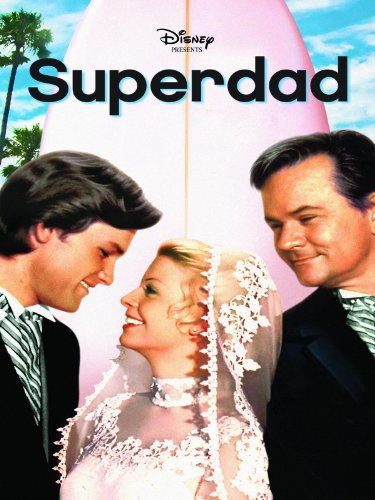
Life’s A Beach: Superdad (dir by Vincent McEveety)


In 1973’s Superdad, Disney takes on the generation gap.

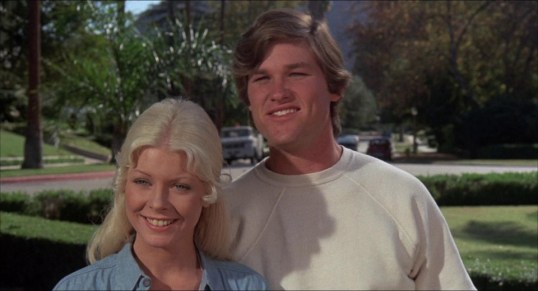
Charlie McCready (Bob Crane) just can’t understand what’s going on with his daughter, Wendy (Kathleen Cody).  She’s smart, pretty, and has the potential for a great future ahead of her but all she wants to do is hang out with her friends on the beach.  Eccentric Stanley Schlimmer (Bruno Kirby) drives everyone around in a souped-ambulance.  Ed Begley, Jr. (who plays a character who doesn’t even get a name) joins in whenever the group sings a folk song.  Wendy’s boyfriend, Bart (young and likable Kurt Russell), is a surfer and water skier.  Charlie is truly convinced that this extremely clean-cut group of teenagers is going to lead his daughter astray.  In fact, Wendy wants to marry Bart!  Charlie attempts to hang out with Wendy, Bart, and his friends on the beach and he can’t keep up.  He can’t water ski, he can’t play football, he can’t play volleyball.  All he can do is scream in this weird high-pitched voice.  The entire time is Bart is extremely nice to him and doesn’t even make fun of him for not being able to hit a volleyball over a net.  I mean, even I can do that!  But because Charlie’s not dealing well with becoming middle-aged, he decides that Bart is a threat.

(I’m going to assume that Charlie also teams up with a creepy friend and starts filming himself having threesomes with groupies, though we don’t actually see that happen in the film.  The subtext is there, though!)

Charlie decides that he has to get Wendy away from this group and the best way to do that would be to trick her into thinking she’s received a scholarship to …. Yes, this is just that stupid …. a scholarship to a prestigious university.  While Bart and his healthy, non-smoking, non-drinking friends are all going to City College and living at home with their parents, Wendy will be miles away at a college where she can do anything that she wants. Charlie thinks this is a great plan.  One gets the feeling that Charlie, for all of his overprotectiveness, hasn’t read a newspaper in 20 years.  Seriously, has he not been keeping up with what was happening on most college campuses in the late 60s and early 70s?

The main problem with this film is that Charlie is an incredible jerk.  It’s one thing to be overprotective.  Fathers are supposed to be overprotective of their daughters.  It’s one thing to worry about his daughter not having a good deal of ambition.  I can even understand him getting annoyed with Stanley because Stanley is kind of annoying.  (Watching this film, it’s hard to believe that Bruno Kirby was just one year away from playing the young Clemenza in The Godfather, Part II.)  But seriously, Charlie is freaking out over his daughter dating KURT RUSSELL!  In this film, Kurt Russell plays a character who is always polite, mild-mannered, sensible, and remarkably understanding of Charlie’s attempts to keep him from marrying Wendy.  There is one scene where Bart gets upset and he barely even raises his voice.  He’s incredibly likeable and, for all of this film’s flaws, it’s still easy to see why Kurt Russell became a star.

Of course, what really makes this film a cringe-fest is that it stars Bob Crane as a family man with a secretly manipulative side and, the whole time I was watching, I kept having flashbacks to Greg Kinnear in Auto-Focus.  Wendy, to make her dad really angry, gets engaged to an actual hippie named Klutch (Joby Baker) and there’s a scene in which Klutch and Charlie get into a fight in Klutch’s artist studio.  Every time Klutch swung anything near Charlie’s head, I definitely cringed a bit.  Red paints get spilled everywhere, though luckily it ends up on Klutch and not Charlie.  Still, watching the film, I couldn’t help but think that there are worse things that could happen to someone than having their daughter marry Kurt Russell.

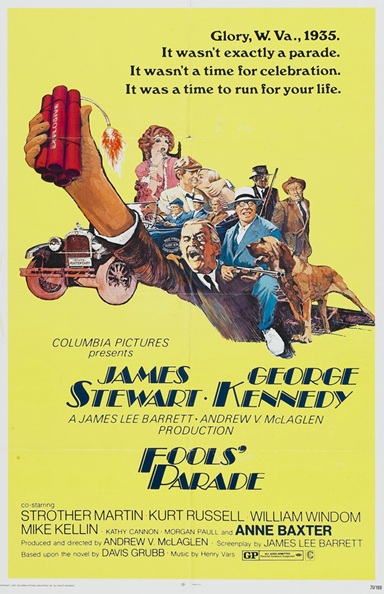
Film Review: Fools’ Parade (dir by Andrew V. McLaglen)


1971’s Fools’ Parade opens in 1935.

Three men are released from the West Virginia state penitentiary and given a train ticket out of town by the prison captain, Council (George Kennedy).  The men are a bank robber named Lee Cottrill (Strother Martin), a young man named Johnny Jesus (a young Kurt Russell), and a courtly older man named Mattie Appleyard (James Stewart).  Despite his polite tone of voice and his folksy manner, Appleyard is actually the most notorious of the three men being released.  Convicted of murdering two men, Appleyard has spent the past 40 years in prison.  Both Appleyard and Cottrill are looking to go straight.  Every day of his sentence, Appleyard worked and earned money.  Along with a glass eye, Appleyard leaves prison with a check for $25,000 dollars.  Appleyard plans to cash the money at the bank and then open a store with Cottrill.

Unfortunately, Appleyard has been released at the height of the Great Depression.  The streets are full men desperately looking for work.  People will do anything to feed their families or to make a little extra money.  Salesman Roy K. Sizemore (William Window) transports guns and dynamite.  Willis Hubbard (Robert Donner) works as a conductor on the train.  Aging prostitute Cleo (Ann Baxter) offers to sell the virginity of her adopted daughter, Chanty (Katherine Cannon).  Junior Killfong (Morgan Paull) sings on the radio and occasionally takes on deadlier work with his friend, Steve Mystic (Mike Kellin).  As for Captain Council, he’s decided that he’s going to make his money by ambushing the train carrying the three men that he has just released from prison.  After killing the men, Council will cash Appleyard’s check himself.

Of course, it doesn’t quite work out as simply as Council was hoping.  Willis Hubbard has a crisis of conscience and lets Appleyard, Cottrill, and Johnny know what Council is planning.  The three men narrowly make their escape but Council frames Appleyard for a murder that he didn’t commit.  Now wanted once again, the three men must not only get the money but also clear their names.  It won’t be easy because, as Hubbard explains, they may be free from the penitentiary but now, they’re trapped in “the prison of 1935.”

Fools’ Parade really took me by surprise.  I watched it because it featured two of my favorite actors, James Stewart and Kurt Russell.  And both Stewart and Russell give very good performances in the film.  Stewart was always at his best when he got a chance to hint at the melancholy behind his folksiness and the young Kurt Russell plays Johnny with a sincerity that makes you automatically root for him.  For that matter, the normally sinister Strother Martin is very likable as Lee Cottrill, a bank robber who is still struggling with the idea of going straight.  But, beyond the actors, Fools’ Parade is a genuinely sad portrait of desperate people trying to survive.  At one point, Sizemore and Cottrill watch as their train passes a camp of people who have been displaced by the Great Depression and it’s even implied that the villainous Council has some regret over what he’s become.  (There’s a small but poignant scene in which Council and Cleo acknowledge the passage of time and, for a minute, the viewer realizes these two people were, at one time, maybe as idealistic and optimistic as Johnny.)  It’s a well-acted film, one in which moments of humor are mixed with moments of true sadness.  I may have picked the film for Jimmy and Kurt but, in the end, the film’s story and performances drew me in.  The 63 year-old Stewart proved that he could still give a memorable performance and the 20 year-old Kurt Russell proved that he was a future star in the making.  If you haven’t seen it, this is definitely a film to check out.

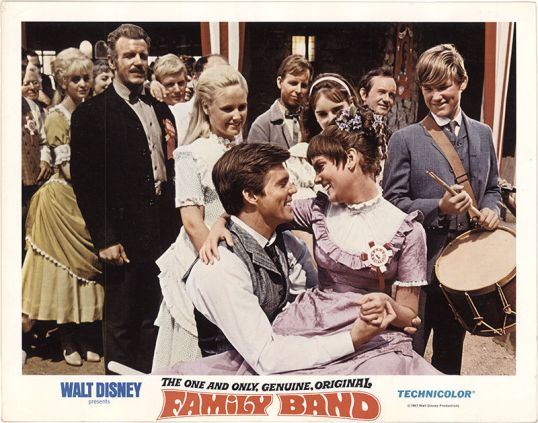
Shattered Politics: The One and Only, Genuine, Original Family Band (dir by Michael O’Herlihy)


First released in 1968, The One and Only, Genuine, Original Family Band is an old school Disney family film that almost feels like a rather mean-spirited parody of an old school Disney family film.  The songs are forgettable, the film has a cheap made-for-TV look to it, and the whole thing feels a bit too manufactured to  produce any sort of genuine emotion.

That said, it’s memorable for two reasons.  First off, it may be the only film ever made that centers on the presidential election of 1888.  In the Dakota territories, the citizens wait to see whether or not Democrat Grover Cleveland will be reelected or whether he’ll be defeated by Republican Benjamin Harrison.  Those who support the Dakotas joining the Union as one state hope to see Cleveland returned to the White House.  Those who favor the creation of a North and South Dakota hope that Benjamin Harrison will win the election, allowing for four new Republican senators to be sent to Washington.

Confederate veteran Renssaeler “Grandpa” Brown (Walter Brennan) supports the Democrats and he’s got his family singing songs to promote the cause of Grover Cleveland.  Grandpa’s son, Calvin (Buddy Ebsen), is a Republican who still has no problem performing at the Democratic Convention because he, much like his children, is a born performer.  His oldest son, Sidney (Kurt Russell, who was 16 at the time of filming), is not old enough to vote but I imagine he’d probably vote for the Republican ticket because he’s Kurt Russell and it’s hard to imagine Kurt voting for a Democrat.  The other children want to keep both Grandpa and their father happy.  Meanwhile, daughter Alice (Lesley Ann Warren) has fallen in love with newspaper editor, Joe Carder (a very bland John Davidson).  Joe’s a Republican and supports Benjamin Harrison.  Grandpa’s not happy but really Grandpa should just mind his own darn business.  At least, that’s my take on it.  (Also, I gave up cursing for Lent.)

On the one hand, the Bowman sisters are pretty evenly split politically, with two voting for the Democrats and the other two tending to vote Republican so I could definitely relate to the idea of a family that didn’t always agree on politics  At the same time, this film’s premise means that there are a lot of songs about Benjamin and Grover Cleveland in this film and they’re about as memorable and exciting as you would expect a bunch of songs about two of America’s forgotten presidents to be.  If you learn anything about the election of 1888 from this film, you’ll learn that Cleveland’s full name was Stephen Grover Cleveland.  You might also note that, for all the talk about how the country have never been as divided as it is today, people were saying the exact same thing in 1888.

The other thing that makes this otherwise forgettable film stand-out is that it features the film debut of Goldie Hawn, who appears as a Republican dancer in the film’s climax.  This was not only Hawn’s debut but it was also the first film that she made with Kurt Russell.  That said, don’t panic.  Hawn was 22 to Kurt’s 16 when she made this film but the two of them didn’t become a couple until they met again in 1983, while filming Swing Shift.  I read an interview with Kurt where, when asked whether he noticed Goldie Hawn in her film debut, he said that he did but he didn’t even think of talking to her because, “I didn’t even have a car.”

Fortunately, everything worked out in the end.  Benjamin Harrison vanquished Grover Cleveland (though Grover returned in 1892, becoming the first of two president to serve non-consecutive terms) and, after their second film together, Kurt Russell and Goldie Hawn are together to this day.


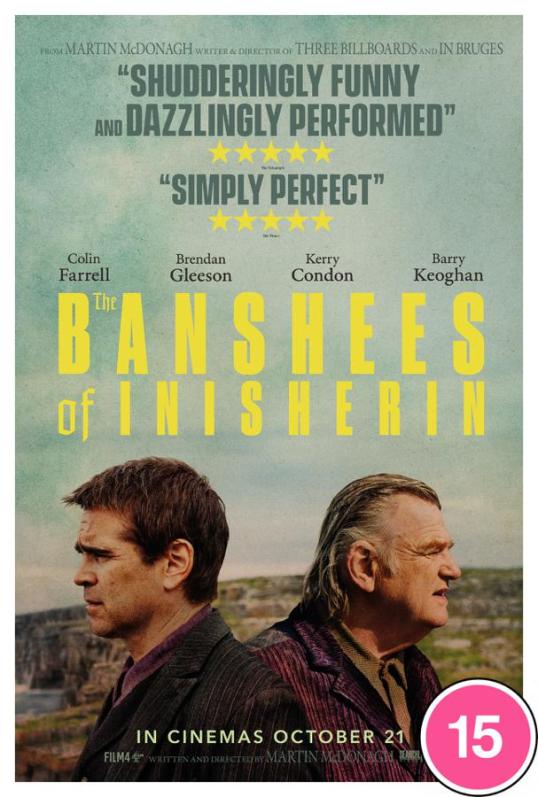
Lisa Marie Reviews An Oscar Nominee: The Banshees of Inisherin (dir by Martin McDonagh)


2022’s The Banshees of Inisherin takes place in 1923, near the end of the Irish Civil War.

On the fiction isle of Inisherin, the inhabitants are safe from the the fighting happening on the main land.  Occasionally, they can hear the gunfire and the explosions coming from Ireland but, for the most part, they’re content to go about their lives the same as they always have.  A few do dream of changing their routine.  Young Dominic Kearney (Barry Keoghan) has a crush on Siobhán Súilleabháin (Kerry Condon), who herself occasionally entertains the idea of leaving Inisherin and seeking something better.  But, for the most part, everyone is happy with doing the same thing over and over again.  They know exactly when they will see each other.  They know where everyone will be at any given moment of time.  They know that Colm Doherty (Brendan Gleeson) will be playing his fiddle at the pub or sitting in his cottage with his dog.  They know that every morning, he will have a drink with his best friend (and Siobhan’s brother), Padraic (Colin Farrell).

Except, one day, Colm abruptly tells Padraic that he no longer wants to be his friend.

Padraic has a difficult time understanding what Colm could possibly mean.  He and Colm have always been friends.  How can Colm suddenly no longer be his friend?  Making things even more frustrating is that Colm refuses to explain what, if anything, Padraic has actually done to make Colm no longer want to be his friend.  The closest thing to an explanation that Padraic gets is that Colm finds Padraic to be boring.  Colm, who composes music and, at the very least, seems to spend a good deal of time in contemplation, is tired of Padraic’s jokes and his simple ambitions.  He’s even tired of hearing about Padraic’s pet donkey, Jenny.  In order to show how sincere he is in his desire to no longer speak to Padraic, Colm says that he will chop off one of his fingers every time that Padraic speaks to him.  Padaic, who loves to talk and really doesn’t have anyone other than Colm and his sister to talk to, is shocked when fingers start to show up at his home.  It only escalates from there.

It’s a darkly funny movie, which is no surprise considering that it was written and directed by Martin McDonagh.  If anyone can make you smile while discussing mutilating himself, it’s Brendan Gleeson.  At heart, though, The Banshees of Inisherin is a deadly serious film with the characters of Colm and Padraic obviously meant to represent more than just two friends who are no longer speaking.  Colm, in his desire to have something more to his life than just his boring life in Inisherin, chops off his fingers and leaves you wondering how he will be able to play the fiddle that he loves so much.  It seems counter-productive but once Colm says he’s going to do it, he has no choice but to follow through.  The simple-minded but achingly sincere Padraic goes from simply being emotionally wounded to being vengeful over Colm’s rejection.  It’s easy to see that Colm originally ended the friendship because he was depressed and feeling as if he had wasted his entire life on Inisherin.  Unfortunately, by the time Colm and Padraic come to understand this very common emotion, they’re both too far gone to turn back.  While Colm and Padraic go from being friends to sworn enemies, Dominic attempts to be more assertive and Siobhan dreams of perhaps the same thing that motivates Colm, an escape from Inisherin.

The Banshees of Inisherin is a well-acted and thought-provoking film, one that mixes serious of heart-rendering drama with scenes of dark comedy.  Brendan Gleeson, Colin Farrell, Barry Keoghan, and Kerry Condon were all Oscar-nominated for their work here.  It’s hard to believe that this was Gleeson’s first nomination.  (Gleeson lost Supporting Actor to Ke Huy Quan for Everything Everywhere All At Once.  I would argue that Gleeson should have been nominated for Best Actor and that he deserved the Oscar over The Whale‘s Brendan Fraser.)  Farrell and Gleeson are believable as both lifelong friends and sudden enemies.  Farrell delivers his lines with such earnest conviction that he actually brought tears to my eyes.

Despite having received 9 nominations, The Banshees of Inisherin didn’t win in any of its categories, not even for Best Original Screenplay.  The Banshees of Inisherin lost Best Picture to Everything Everywhere All At Once, a true Oscar injustice.

Lisa Marie Reviews An Oscar Winner: Belfast (dir by Kenneth Branagh)


When it comes to the Oscar race, there will often be a film that is anointed at the front runner just to falter once it’s actually released.   It may be hard to believe now but, way back in 2013, almost every Oscar pundit spent the early part of the year predicting that George Clooney’s The Monuments Men would be a major contender.  Martin Scorsese’s Silence suffered a similar fate in 2016.  Sometimes, it’s because the films in question are truly flawed.  The Monuments Men pretty much confirmed that Clooney’s directorial instincts were aggressively middlebrow.  Sometimes, it’s because the film itself turns out to appeal to a very narrow audience.  That was the case with Silence, one of the most Catholic films ever released by a major studio.  Unfortunately, when these front runners falter, they tend to get hit by a backlash, with some critics and audience members seeming to take it personally that the film was not as much of a triumph as they were expecting.

That was certainly the case with Kenneth Branagh’s Belfast.  Released in 2021, Belfast spent much of the year being touted as the obvious front runner for Best Picture.  Seriously, how could the Academy resist it?  Not only was the film in black-and-white but it was said to be Branagh’s most personal film.  One of the best actors in the Western World, the man who had revived cinematic interest in Shakespeare, had now written and directed a film about his youth in Belfast.  The film would deal with growing up as a protestant during the early days of the  Troubles.  Jamie Dornan and Caitriona Balfe where playing Branagh’s parents.  The great Judi Dench and Ciaran Hinds were playing his grandparents.  For all the acclaim that he had received over the years, Kenneth Branagh had yet to actually win an Oscar.  Indeed, some felt that, pre-Belfast, it was a bit embarrassing that he had only been nominated for twice for his acting and once for his direction.

However, when Belfast came out, critics were complimentary but, at the same time, there was a slight undercurrent of disappointment in most of the reviews.  Belfast was good, they seemed to be saying, but it wasn’t as good as they were expecting.  Some members of Film Twitter was practically savage towards the film, as if Branagh had personally insulted them by making a nostalgic film about his childhood.  Belfast received seven Oscar nominations but it was no longer the Oscar front runner.  That role had been assumed by the technically impressive but emotionally remote The Power of the Dog.

Belfast has its flaws.  Some scene works better than others, the ending is a bit overdone, and, for a film that was sold as being a memoir, some of the scenes do feel a bit familiar as if Branagh spent his childhood imitating moments from other coming-of-age films.  That said, I liked Belfast and I don’t think it deserved all of the criticism that it received.  Young Jude Hill did a wonderful job as Buddy, the Kenneth Branagh stand-in.  Jamie Dornan proved that he was capable of more than one might have suspected based on his work in the Fifty Shades of Grey films.  He and Caitriona Balfe were a compelling couple and the actors had such a strong chemistry that I found myself wishing that the film had been even more about their marriage.  At this point, we take actresses like Judi Dench and actors like Ciaran Hinds for granted but both of them are truly wonderful in this film.  At its best, Belfast captures the feeling of being young and not realizing that the world is basically collapsing around you.  Buddy may be growing up in the shadow of The Troubles but, until the unrest literally comes into his home, he just wants to enjoy movies and have fun with his friends. Belfast is nostalgic and sometimes a bit predictable in its storytelling but it’s gorgeous to look at and the acting won me over.

In then end, the Academy honored neither Belfast nor The Power of the Dog for Best Picture but instead another film about family, the far more straight-forward CODA.  Branagh, however, did win his first Oscar for Best Original Screenplay.

Lisa Marie Reviews An Oscar Nominee: In The Name Of The Father (dir by Jim Sheridan)


One thing that I’ve come to realize is that Irish-Americans (like myself) have been guilty of idealizing the Irish Republican Army in the past.

We tend to view the IRA as being freedom fighters, battling against the occupation and standing up against religious bigotry.  The truth of the matter is that the IRA was a violent organization whose actions often made things even worse for the Catholics in Northern Ireland.  While the IRA’s American supporters always tended to present the IRA as plotting actions against the British army, the truth of the matter is that many of the IRA’s victims were Irish citizens who were judged to either be collaborators or to not be properly enthused about the IRA in general.  The popular excuse for the IRA’s terrorism is to say that the IRA usually called and gave advanced warning before a bomb went off but really, that’s kind of a weak excuse when you think about it.  Really, the only thing that the IRA had going for it was that the British were often just as bad and even more heavy-handed when it came to dealing with the Irish.

In 1993’s In The Name of the Father, Daniel Day-Lewis plays Gerry Conlon, who is sent to London by his father, Giuseppe (Pete Postlethwaite), specifically to keep him from falling victim to the IRA.  Of course, once Gerry arrives in London, he supports himself through burglaries and spends most of his time in a state of stoned bliss with his friends.  It’s while Gerry is in London that an IRA bomb blows up a pub in Guildford.  When Gerry later returns to Belfast, he is promptly arrested and accused of being one of the four people responsible for the bombing.

Gerry protests that he’s innocent and we know that he’s innocent.  We know that, when the bomb was placed, Gerry was busy getting high with Paul Hill (John Lynch).  Paul has also been arrested and the British police are determined to get a confessions out of both him and Gerry.  The interrogation stretches for hours.  Though exhausted, Gerry refuses to confess.  Suddenly, Inspector Robert Dixon (Corin Redgrave) enters the room.  He walks up to Gerry and whispers in his ear that if Gerry doesn’t confess, “I will kill your Da.”

It’s a shocking moment because the threat is delivered without a moment of hesitation on the part of Dixon.  Dixon’s voice is so cold and so direct that, when I watched this film, I actually gasped at the line.  An exhausted and terrified Gerry confesses.  Soon, Gerry is thrown in prison.  He’s joined by his sickly father, who has been accused of being a co-conspirator.  At first, Gerry resigns himself to never being free again.  He meets Joe (Don Baker), who says that he’s the one who set the bomb and that he confessed after Gerry, Giuseppe, Paul Hill, and the other members of the so-called Guildford Four had been given their life sentences.  With Giuseppe’s health faltering, Gerry finally steps up and, with the help of an attorney (Emma Thompson), fights for his freedom.

In The Name of the Father is a powerful film, one that was based on a true story.  Gerry and his father come to represent every victim of a biased justice system and an authoritarian-minded police force.  Gerry starts the movie trapped between the two sides of the Troubles.  The IRA doesn’t trust him because he’s not a bomb-thrower.  The British distrust him because he’s Irish.  Despite his innocence being obvious, Gerry finds himself sent to prison because letting him go would be viewed as a sign of weakness.  Daniel Day-Lewis gives a passionate and charismatic performance as the impulsive and somewhat immature Gerry but the film’s heart really belongs to the late Pete Postlethwaite, playing a father who refuses to give up on either his freedom or his son.

In The Name of the Father received seven Oscar nominations, including Best Picture, Director, Actor, Supporting Actor, and Supporting Actress (for Emma Thompson).  That was also the year of Schindler’s List, which took the Oscars for both Picture and Director.  Daniel Day-Lewis lost to Philadelphia’s Tom Hanks while Postlethwaite lost to Tommy Lee Jones for The Fugitive and Thompson lost to Anna Paquin for The Piano.  1993 was a good year for movies and the Oscars, though I would have voted for Day-Lewis over Hanks.