Film Review: Precious Cargo (dir by Max Adams)


2016’s Precious Cargo tells the story of Jack (Mark-Paul Gosselaar) and his ex-wife Karen (Claire Forlani).

Karen is a professional thief who has botched a robbery for her former lover, crime boss Eddie Filosa (Bruce Willis).  Eddie wants Karen dead so, of course, Karen flees down to the Florida everglades, where she finds Jack living in a swamp shack and making love to his latest girlfriend, Jenna (Lydia Hull).  Karen tells them to go ahead and finish up and she’ll just wait out in the kitchen.  Jack in not particularly happy to see Karen again but then he notices that she has a baby bump.  “Always use a condom,” Karen tells Jenna.  Eddie’s men, led by Simon (Daniel Berhardt), attack and it all leads to a boat chase that is surprisingly exciting when you consider that Precious Cargo is a low-budget, direct-to-video offering.

It turns out that Jack can save Karen from Eddie’s wrath by planning and executing a heist for the crime boss.  Jack assembles his crew, Jack gets ready for the heist …. uh-oh, it’s time for a double cross!  The plot is nothing special.  It’s identical to a hundred other low-budget crime films that you’ve seen recently.  It’s the type of thing that Michael Mann could have turned into a metaphor for American ennui but, in this film, it’s just a typical heist.  The viewer enjoys it while it’s happening and then forgets about it two minutes afterwards.

That said, Precious Cargo is not quite as bad as the typical direct-to-video film.  Mark-Paul Gosselaar — yes, Zack Morris himself — gives a reasonably compelling performance as Jack.  To a certain group of people, he’s always be Zack and I imagine he’s sick of people asking him about whether or not he still has his giant phone but, as he’s gone from teen idol to adult actor, Gosselaar has shown himself to be a talented actor.  (For the record, Zack lost his phone in the drunk driving episode.  I know some people say that episode doesn’t count because it was a Tori episode but I say that it does.  So there.)  Claire Forlani is actually more compelling in these direct-to-video films than she ever was in any of the big budget studio films that she used to appear in.

Of course, I imagine that the main selling point for this film was meant to be Bruce Willis.  This is one of the direct-to-video films that dominated the last fourth of Willis’s career.  When Willis retired due to aphasia, there was a general assumption that all of Willis’s direct-to-video films were made as a result of his condition.  I don’t know if that’s quite true.  (It’s entirely possible that he just wanted a quick payday.)  But it is true that Willis only has a few minutes of screentime in Precious Cargo and that several shots involving Eddie were accomplished with a stand-in.  That said, in this film, Willis still brings some energy to the part.  He’s an effective villain, even if I think everyone prefers to see Willis saving the day.  Even in the direct-to-video era, Bruce Willis still had a definite presence.

Precious Cargo is predictable and ultimately forgettable but it’s still entertaining enough for 90 minutes.
Film Review: Lay The Favorite (dir by Stephen Frears)


2012’s Lay the Favorite is a movie about gambling.

Rebecca Hall stars as Beth Raymer, a dancer in Florida who makes her money by giving private shows and lap dances to paying customers.  Bored and disillusioned with her life, she follows the advice of her father (Corbin Bernsen) and decides to pursue her lifelong dream of becoming a Las Vegas cocktail waitress.

(Really, that’s your dream?  I mean, my mom occasionally worked as a waitress because she was essentially taking care of four girls by herself and she needed the extra money but it was hardly a lifelong dream.)

Vegas is a union town, which means that Beth can’t just walk in and start serving drinks.  Instead, she gets a job working with Dink Heimowitz (Bruce Willis), a big-time gambler who hires other people to place bets for him.  Dink is surprisingly nice for a professional gambler and it’s not long before Beth finds herself falling for him.  Dink’s wife, Tulip (Catherine Zeta-Jones), is not happy about that.  Tulip need not worry about Beth eventually ends up falling in love with a journalist named Jeremy (Joshua Jackson) and the two of them quickly become one of the most boring couples that I’ve ever seen in my life.  Eventually, Tulip does demand that Dink fire Beth and Beth ends up in New York, working for a decadent gambler named Rosy (Vince Vaughn).  Uh-oh — bookmaking’s illegal in New York!

Rebecca Hall is one of those performers who tends to act with a capitol A.  There’s not necessarily a bad thing.  Hall has given some very strong and very memorable performances, in films like Vicky Christina Barcelona, Please Give, and the heart-breaking Christine.  However, when Hall is miscast — as she is in this film — her style of acting can seem overly mannered.  Hall plays Beth as being a collection of quirks and twitches and nervous mannerisms and embarrassed facial expressions and the end result is that Beth comes across not as being the endearing ditz that the film wants her to be but instead as just a very annoying and very immature human being.  It’s actually perfectly understandable why Tulip would demand that Dink fire her.  What’s less understandable is why we should care.  Myself, I wanted someone to warn Joshua Jackson because I don’t think he knew what he was getting into.

Lay The Favorite is yet another film that tries to use Las Vegas as a metaphor for American culture.  That’s not a bad idea.  David Lynch made great use of Vegas in Twin Peaks: The Return.  Martin Scorsese did the same with Casino.  However, Lay The Favorite was directed by the British Stephen Frears and, as happens so often whenever a European director tries to understand American culture, the entire film leaves you feeling as if you’re on the outside looking in.  Lynch and Scorsese, for instance, both understood that Las Vegas represents both the ultimate risk and the ultimate second chance.  If you have the courage, you can bet every asset that you have.  And if you’re lucky, you might win.  If you lose, you know you can still rebuild.  Whether it’s grounded in reality or not, it’s a very American idea.  Lay The Favorite, on the other hand, can’t see beyond the glitz of the strip and the harsh concrete reality of a nearby apartment complex.  It’s portrait of Vegas is as superficial as a tourist’s postcard.  Thematically, Lay The Favorite feels as empty and predictable as its double entendre title.

On the plus side, Bruce Willis, Vince Vaughn, and Catherine Zeta-Jones all gave better performances that the film probably deserved.  Willis, especially, gives a poignant performance as temperamental, henpecked, and good-natured Dink.  Bruce Willis spent so much time as an action star that it was often overlooked that he was a very good character actor.  Even in a bad film like this one, Willis came through.

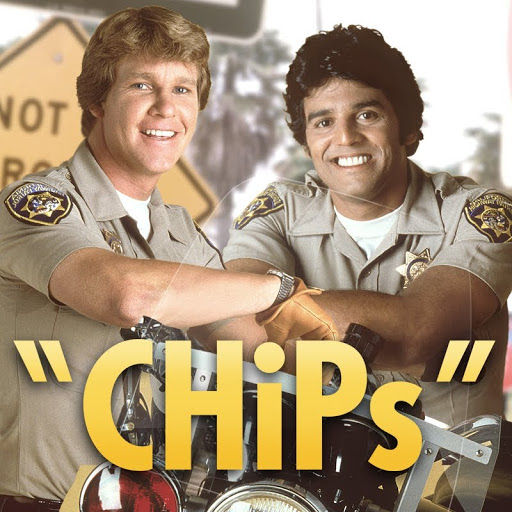
A Preempted Late Night Retro Television Review: CHiPs 3.13 “Second Chance”


Welcome to Late Night Retro Television Reviews, a feature where we review some of our favorite and least favorite shows of the past!  On Mondays, I will be reviewing CHiPs, which ran on NBC from 1977 to 1983.  The entire show is currently streaming on Prime!

CHiPs got preempted this week, due to our Monday celebration of St. Patrick’s Day and Kurt Russell.  Here’s the late review of this week’s episode!

Episode 3.13 “Second Chance”

(Dir by John Florea, originally aired on December 1st, 1979)

Someone is breaking into the homes of rich people, stealing their jewelry, and then making a fast escape on a motorcycle.  I say “someone” but, actually, we know who it is because the show tells us early.  It’s a two-man operation.  One guy works as a valet parker at a trendy restaurant.  The other guy sits in his van until the first guy brings over the keys of whoever they’re going to rob.  We know it but the cops don’t know it so we still have to sit through Ponch and Baker investigating the robberies and somehow not figuring out what’s going on,  even though it’s extremely obvious.

So, the crimes weren’t that interesting this week.  This show was mostly about celebrating the local children’s hospital and, even more importantly, celebrating Ponch’s popularity at the local children’s hospital.  All the nurses love Ponch.  All the children love Ponch.  Only the recently paralyzed Kelli (Dana Laurita) is immune to Ponch’s charms but he wins her over eventually.  Given the way this show treated Ponch, I’m surprised he didn’t magically heal her.

In other words, this is another episode in which Baker does a lot of work and Ponch gets all the credit.  There are a few exciting chases, as there were with every episode of CHiPs.  Whatever else you may want to say about the show, it’s obvious that the producers understood that people were watching for the high-speed pursuits and the crashes.  This episode even features Ponch on a boat.  The bad guys can’t even swim away to safety!  Of course, it’s Ponch who got on the boat.  There’s no way that Baker was going to get do anything like that.  I’m surprised Ponch even needed a boat, to be honest.  If nothing else, Ponch should be able to walk on water by this point.

Anyway, it was an okay episode.  Ponch appears to be full recovered from his injuries from earlier in the season so watch out, bad guys!

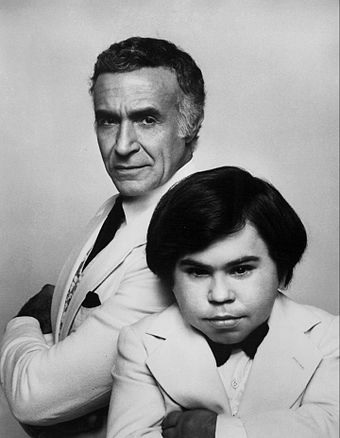
Retro Television Review: Fantasy Island 6.9 “Naughty Marietta/The Winning Ticket”


Welcome to Retro Television Reviews, a feature where we review some of our favorite and least favorite shows of the past!  On Tuesdays, I will be reviewing the original Fantasy Island, which ran on ABC from 1977 to 1984.  Unfortunately, the show has been removed from most streaming sites.  Fortunately, I’ve got nearly every episode on my DVR.

This week, Tattoo’s rich!

Episode 6.9 “Naughty Marietta/The Winning Ticket”

(Dir by Don Weis, originally aired January 8th, 1983)

Let’s get the boring storyline out of the way first.

Overbearing Beatrice Solomon (Jayne Meadows) wants her daughter, Alison (Dorothy Hamill) to become an actress.  Beatrice’s husband (David Doyle) wishes that Beatrice would just back off.  Mr. Roarke sends Alison into the past, where Alison finds herself transformed into Marietta, the subject of the operetta Naughty Marietta.  Lorenzo Lamas plays Captain Richard Warrington, who is trying to track down a notorious pirate on behalf of the Governor of Louisiana (James Doohan).  There’s a lot of singing and the costumes are nice but it’s also kind of boring because ice skater Dorothy Hamill was a terrible actress and she has next to no chemistry with Lorenzo Lamas.  The fantasy ends with everyone brought back to the present, including Lamas who, it turns out, was actually just a guest having a fantasy of his own.  It’s nothing we haven’t seen before and I don’t want to talk to much about it because the other story is …. A TATTOO STORY!

After years of being the sidekick and Mr. Roarke’s enigmatic frenemy, Tattoo finally gets a story of his own.  When Margaret Stanton (Hope Lange) comes to the Island to award a check to an employee who won the Irish Sweepstakes, Roarke is saddened to inform her that the man, a groundskeeper named Ambrose, passed away shortly after winning.  Roarke assigns Tattoo to find out who Ambrose’s closest friend was on the Island.  Tattoo takes his job seriously.  Afterall, Tattoo was one of the few people who regularly checked on the curmudgeonly old man, always stopping by to talk and to make sure that he was feeling okay.  As a matter of fact, you could even say that Tattoo was a true friend to the old man.  In the end, he was truly the old man’s best friend….

OH MY GOD, TATTOO’S RICH!

After reading the deceased man’s diary, Roarke and Tattoo realize that Ambrose would have wanted Tattoo to have the money.  Tattoo now has a million dollars and Roarke decides that this means that Tattoo is now a guest at Fantasy Island.  Tattoo moves into the most spectacular guest bungalow.  Tattoo orders a fancy meal and leaves a huge tip.  Tattoo is having a wonderful time until Mr. Roarke informs him that guests are not allowed to live on the Island….

WAIT, WHAT!?

Okay, first off, it wasn’t Tattoo’s idea to be a guest.  It was Roarke’s idea.  Roarke also mentions that Tattoo is the one who came up with the idea of not allowing guests to live on the Island but, over the past few seasons, we’ve seen many guests decide to never leave the Island and Roarke has never had a problem with it!  Seriously, I thought Tattoo and Mr. Roarke were finally getting along.  Suddenly, it seems like Mr. Roarke has decided to kick him out.  “I will miss you,” Mr. Roarke says.  Well, then don’t make him leave!  Can’t Mr. Roarke do whatever he feels like doing?

Tattoo, for his part, says that he will miss being on the Island.  He’ll miss Mr. Roarke.  He’ll miss the rest of the staff.  He’ll miss everything.  Tattoo decides that rather than leave the Island, he’ll donate the money to build a retirement home in England.  And that’s nice and all but I still don’t understand why Tattoo would have had to leave in the first place.  Maybe Mr. Roarke just wanted to teach Tattoo about generosity but Tattoo is already extremely generous.

As the show ends, Mr. Roarke mentions that Tattoo still needs to pay for his stay in the bungalow and for all the food he ordered.  DON’T START, MR. ROARKE!

This was a weird episode but it was still nice to see Tattoo get his moment in the spotlight.  I still think he should have allowed to keep the money and stay on the Island.  I mean, seriously, this Island is full of eccentric rich people living in haunted mansions.  Why should Tattoo miss out on all the fun?

Music Video of the Day: Now I’m In It by Haim (2020, dir by Paul Thomas Anderson)


I definitely know the feeling.  I have yet to see a Haim video to which I can not relate.

This video was directed by Paul Thomas Anderson, who did several videos for Haim and did such a good job with all of them that I personally think he might have a future in feature films.

Enjoy!

Film Review: Deepwater Horizon (dir by Peter Berg)


2016’s Deepwater Horizon tells the story of the 2010 explosion that led to the biggest oil spill in American history.

Owned by British Petroleum, the Deepwater Horizon was an oil rig sitting off the coast of Louisiana and Texas.  A series of explosions, which were found to be the result cost-cutting and negligence on the part of BP, killed eleven men, injured countless others, and led to an 87-day oil spill that leaked 210 million gallons of oil into the Gulf of America (or the Gulf of Mexico, as it was known back then.  I know, it can be heard to keep track).  I can still remember when the disaster happened.  It was seen as an early test of the “government-can-fix-anything” philosophy of the Obama era and it pretty much proved the opposite.  Private citizens (including Kevin Costner) offered to help and were rebuffed.  The governor of Louisiana was criticized for ordering the construction of barrier islands, even though they were more effective than was that the federal government was offering up.  The CEO of British Petroleum issued a self-pitying apology.  For a generation coming of political age in 2010, witnessing the government’s ineffective attempts to deal with the oil spill was as radicalizing a moment as the COVID lunacy would be for people coming of age in 2020.

In all the chaos surrounding the oil spill, it was often overlooked that 11 people died in the initial explosion.  In all the rightful criticism that was directed towards British Petroleum, the heroic efforts of the workers on the Deepwater Horizon, all of whom risked their lives to try to prevent the disaster from getting worse, were also often overlooked.  To an extent, Deepwater Horizon corrects that oversight, paying tribute to the men on that rig while also portraying the extent of the environmental disaster caused by BP’s negligence.

The film centers of Jimmy Harrell (Kurt Russell) and Mike Williams (Mark Wahlberg), two engineers who attempt to warn BP execs like Donald Virdrine (John Malkovich) that cutting costs on safety will inevitably lead to disaster.  Russell, Wahlberg, and Malkovich are all ideally cast, with Russell and Wahlberg capturing the spirit of men who try to do their job well and who live their life by the philosophy of not leaving anyone behind.  Malkovich is playing a corporate stooge, the man who many people blamed for the disaster.  But, to his credit, Malkovich is able to turn Virdrine into a complex character.  Virdrine makes terrible mistakes but he never becomes one-dimensional corporate villain.  Though Deepwater Horizon is dominated by its special effects and the explosion is an undeniably intense scene, the film doesn’t forget about the human cost of the disaster.  Russell, Wahlberg, and Malkovich are supported by good performances from Ethan Suplee, Gina Rodriguez, and Kate Hudson.  (Hudson, in particular, deserves a lot of credit for making her thinly-written role into something compelling.)  Kurt Russell does such a good job of capturing Jimmy’s quiet confidence and his expertise that, the minute he’s injured by the explosion, the audience knows that Deepwater Horizon is doomed.  If even Kurt Russell can’t save the day, what hope is there?

Director Peter Berg specialized in films about ordinary people who found themselves caught up in extraordinary situations.  His well-made and earnest films — like Lone Survivor, Patriots Day, and this one — were rarely acclaimed by critics, many of whom seemed to take personal offense at Berg’s unapologetically patriotic and individualistic vision.  Personally, I appreciate Berg’s pro-American aesthetic.  At a time when we were being told that individuals didn’t matter and that everyone should be content with merely being a cog in a bigger machine, Berg’s films came along to say, “This is what team work actually means.”  It’s been five years since Berg’s last film.  Hopefully, we will get a new one soon.


Embracing The Melodrama: Poseidon (dir by Wolfgang Petersen)


The plot of 2006’s Poseidon may sound familiar.

There’s this cruise ship.  It’s a luxury liner and it’s sailing across the ocean on New Year’s Eve.  There’s a lot of passengers on the liner.  Most of them are wealthy and the majority of them are played by familiar actors.  Everyone is in the ballroom, celebrating the upcoming new year.  They do the countdown.  They cheer when they hit zero.  Kisses are exchanges.  Dances are danced.  A blonde woman sings a song.  Suddenly, a tidal wave smashes into the Poseidon, turning it over.  Explosions rock the ship as it ends up floating upside down.  The majority of the crew and the passengers are killed immediately.  The survivors face a decision.  Do they stay in the ballroom or do they attempt to climb upwards to safety?

Yep, Poseidon is a remake of The Poseidon Adventure.  It tells basically the same story but with slightly better special effects and slightly less histrionic actors.  The original Poseidon Adventure had Gene Hackman and Ernest Borgnine yelling at each other for over two hours while Shelley Winters swam until she died.  “WHERE’S YOUR GOD NOW, PREACHER!?” Borgnine shouted while Hackman yelled, “ROGO!” over and over again.  (Rogo was Borgnine’s character.  Hackman shouted the name with a wonderful amount of loathing.)  It was a very loud and every entertaining movie.  The cast of Poseidon is a bit more low-key but Poseidon is also more interested in special effects than any sort of human (melo)drama.

For instance, Josh Lucas plays a Navy veteran-turned-professional gambler.  He gives a good performance as the de facto leader of the survivors but he never gets to yell as much as Gene Hackman did in the original.  Richard Dreyfuss plays an architect and you would think that Dreyfuss, of all people, would chew up the scenery in this disaster film with relish but Dreyfuss is oddly subdued.  Jacinda Barrett is the mother who tries to protect her son (played by Jimmy Bennett).  Fergie is the singer who embraces the ship’s captain (Andre Braugher) as the ballroom floods.  Emmy Rossum is the rebellious teenager.  Mike Vogel is her boyfriend.  And Kurt Russell plays the former mayor of New York City.  He also happens to be a former fireman.

It’s a good cast.  Kurt Russell is especially good in his role, believable as both a fireman (a role that he’s played in a few films) and as a politician.  It’s a talented group of actors but no one really goes overboard in the way that Gene Hackman, Ernest Borgnine, Shelley Winters, Stella Stevens, Roddy McDowall, and even Leslie Nielsen did in the first one.  The premise of the film is so silly that it really does require the cast and the director to fully embrace the melodrama.  As opposed to the original, this film only gives the melodrama a quick hug and instead concentrates on explosions, water, and flames.  The special effects overshadow the humans and that’s unfortunate because there’s a lot of interesting people in this movie.  A good performance can last a lifetime.  There’s a reason why we still talk about Kurt Russell in films like Escape From New York and The Thing.  Good special effects, on the other hand, still look incredibly dated after three years.

I’m not really sure that it was necessary to remake The Poseidon Adventure in the first place.  I’m just glad they left Beyond The Poseidon Adventure alone.

Days of Paranoia: Dark Blue (dir by Ron Shelton)


2002’s Dark Blue opens in 1992, with a decorated Los Angeles cop named Eldon Perry (Kurt Russell) holed in a hotel room with a shotgun and a pistol.  Perry, who were learn comes from a long line of cops, should be happy. He’s about to finally get promoted.  While Los Angeles is in the grip of the riots that followed the Rodney King verdict, Perry’s lifelong dream is about to come true.  But, instead of celebrating, he’s a nervous wreck.  Dark Blue shows us why.

Perry is the protegee of Commander Jack Van Meter (Brendan Gleeson), a corrupt cop who regularly encourages his men to harass, arrest, and even kill anyone who is suspected of having committed a crime.  Van Meter and Perry claim that they’re doing what they need to do in order to keep the city safe.  They look at a reformer like Assistant Chief Arthur Holland (Ving Rhames) and they see someone who has no idea what it’s actually like on the streets and who is more concerned with his own ambitions than anything else.  However, Van Meter has a side operation going.  Two of his informants (played by Korupt and Dash Mihok) regularly commit robberies that he sets up and helps them get away with.  When their latest robbery leaves four people dead and one wounded, Van Meter assigns Perry and Perry’s young partner, Bobby Keough (Scott Speedman), to the case.  Bobby is young and maybe not as cynical as Perry.  But he’s also Van Meter’s nephew so the assumption is that he’ll play ball.

And, at first, Bobby does go along with whatever Van Meter and Perry say.  When Perry unknowingly gets too close to the truth about what happened at the robbery, Van Meter orders Perry and Bobby to go after someone else.  When Perry orders Bobby to execute an innocent man, Bobby does so and Perry takes the blame.  (In one of the film’s best scenes, Bobby gives his statement about the shooting to Internal Affairs, just for the detectives to shut off the tape recorder and give Bobby a chance to make a better statement.)  But when Bobby has a crisis of conscience and Van Meter reveals that depths that he’ll go to protect himself, Eldon Perry is forced to reconsider the life that he’s built for himself as a cop.  With Los Angeles descending into chaos, Perry has to finally decide whether or not to play the game or to do the right thing.

There’s a lot going on in Dark Blue. Actually, there’s too much going on.  The film is based on a story by James Ellroy and it has Ellroy’s traditionally dense plotting, full of duplicitous characters and macho dialogue.  Not only is Perry dealing with the investigation, he’s also dealing with his frayed marriage to Sally (Lolita Davidovich).  Not only is Bobby struggling with his ethics but he’s also struggling with his love for Sgt. Beth Williamson (Michael Michele), who is also Holland’s assistant and who also once had a one-night stand with Holland, pictures of which have gotten into Van Meter’s hands and which Van Meter plans to use to blackmail Holland into taking a job in Cleveland.  It’s a lot to keep track of and, visually, director Ron Shelton struggles to capture Ellroy’s trademark prose.  As a writer, Ellroy’s jittery style can get readers to accept almost anything, no matter how complex or potentially disturbing.  Ellroy has no fear of alienating the reader.  Shelton, on the other hand, has a much more gentle style and it’s not a good match for Ellroy’s vision of a world gone mad.  The film mixes Ellroy’s moral ambiguity with Shelton’s rather predictable liberal piety and the end result never really comes together.  Shelton doesn’t seem to be sure what he wants to say with Dark Blue.

That said, this film does feature an excellent performance from Kurt Russell.  Russell plays a character who is both good and bad.  Perry cares about his partner.  He cares about his family.  He’s loyal to the police department.  His methods may be extreme but he’s also taking criminals off the street.  But Perry is also thoroughly mired in Van Meter’s corruption.  Perry trusts Van Meter because Perry considers the police force to be his family.  His shock at being betrayed is one of the more poignant things about the film and Russell captures the moment perfectly.

Dark Blue has a lot that it wants to say, about morality, policing, and race relations.  It doesn’t really work because Ron Shelton was the wrong director to bring James Ellroy’s pulp sensibility to life.  But it does provide Kurt Russell a chance to show us that he’s one of our most underrated actors.

The TSL Grindhouse: Soldier (dir by Paul W.S. Anderson)


1998’s Soldier starts off with a brilliant seven-minute sequence.  We watch as, over the course of 17 years, a child named Todd is raised and trained to be the ultimate soldier.  From a young age, he’s learning how to fight.  He’s learning discipline.  He’s learning to follow orders without question.  We follow him as he goes on to fight in conflict after conflict.  The name of each conflict in which he fights is tattooed on his muscular arms.  Finally, a title card appears that informs us that Todd (now played by Kurt Russell) is “Between wars.”

Captain Church (Gary Busey) insists that Todd and his fellow soldiers are the greatest fighting force in the galaxy.  The autocratic Colonel Merkum (Jason Isaacs) disagrees, claiming that his genetically-engineered soldiers are superior and that Todd is now obsolete.  After a savage training exercise that leaves Todd unconscious, Merkum orders that Todd be dumped on an abandoned planet.

Of course, it turns out that the planet in question is not actually abandoned.  Instead, it’s home to a group of colonists who crash-landed on the planet years ago and who now live a life that is devoid of conflict.  When Todd approaches the colony, he is cautiously welcomed.  Todd, who rarely speaks, is extremely strong and quick and that pays off when he’s able to save Jimmy (Michael Chiklis) from being pulled into a thrasher.  However, Todd is also haunted by PTSD and he’s been bred to fight and that leaves the other colonists cautious about him.  Despite the efforts of Mace (Sean Pertwee) and his wife Sandra (Connie Nielsen), the other colonists vote to exile Todd from their colony.

Meanwhile, Merkum and his “superior” soldiers are heading towards the planet, eager to execute the colonists as a part of a training exercise.  Todd will have to use all of his training to defeat Merkum’s super soldier, Caine 607 (Jason Scott Lee), and help the colonists reach their final destination.

One of the more interesting things about Soldier is that it apparently takes place in the same cinematic universe as Blade Runner.  The wreckage of one of Blade Runner‘s flying cars is spotted on the planet and Todd is shown to have fought in some of the same battle that Roy Batty claimed to have witnessed in Ridley Scott’s classic film.  For that matter, Ridley Scott himself has said that Blade Runner also takes place in the same cinematic universe as Alien and some people insist that Predator is a part of the universe as well.  That’s a rich heritage for Soldier, which is essentially a dumb but entertaining B-movie.

I liked Soldier, almost despite myself.  It’s a silly film and there are certain scenes, mostly dealing with day-to-day life in colony, that feel a bit draggy.  But I enjoyed Kurt Russell’s performance as the ultimate super soldier.  Russell has very little dialogue in the film and his character is bit stunted emotionally but it doesn’t matter.  Ultimately, Russell’s natural charisma carries the day and his fight with Caine 607 is genuinely exciting.  As usual, Jason Isaacs makes for a wonderfully hissable villain and even Gary Busey gives what is, for him, a rather restrained and ultimately credible performance.  As is so often the case with the work of director Paul W.S. Anderson, the film is a cartoon but it’s an entertaining cartoon.