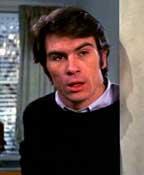
When I watched the pilot episode of Game Of Thrones, I got very excited when I saw that Thomas McCarthy was credited as the director. Now, McCarthy isn’t a household name but chances are, you’ve seen him. He played the plagiarist journalist in the final season of The Wire. He was John Cusack’s romantic rival in 2012. He was nominated for an Academy Award for co-writing the Pixar film Up. However, McCarthy has received most of his critical acclaim as the director of low-key, character dramas like The Station Agent and The Visitor. I have to admit that I was shocked to see McCarthy’s name linked to Game of Thrones because, with the exception of Peter Dinklage, it appeared to have nothing in common with his previous films. Well, turns out that I wasn’t the only one who thought that because apparently, despite McCarthy being credited as the director, the majority of the pilot was actually reshot (quite well) by Tim Van Patten.
So, you might not be seeing Thomas McCarthy’s work on television but fortunately, you can still catch it in the movie theaters. McCarthy’s latest film is a surprisingly poignant comedy called Win Win.
InWin Win, Mike (played by Paul Giamatti) is an attorney who works and lives in small New Jersey town. Mike is married to Jackie (Amy Ryan), owns a big house, helps to coach the high school’s mediocre wrestling team, and can’t pay his bills. Rather than let his family know that he’s on the verge of going broke, Mike instead becomes the legal guardian of one of his clients, the increasingly senile Leo (Burt Young). In return to acting as Leo’s guardian, Mike receives a payment. He also promises to take care of Leo so that Leo doesn’t have to enter a nursing home. However, since Mike is played by Paul Giamatti, it doesn’t come as much of a shock that Mike promptly moves Leo out of his home and into the nursing home. Leo, however, is too senile to understand that he’s being taken advantage of and all of Mike’s second thoughts disappear as soon as he gets the first check.
However, things get complicated once Leo’s delinquent grandson Kyle (Alex Shaffer) shows up looking for his grandfather. Mike takes Kyle to see Leo and soon finds out that Kyle’s mother (and Leo’s daughter) Jill (Melanie Lynesky) is currently in drug rehab and Kyle has nowhere to go. Reluctantly, he and Jackie agree to allow Kyle to stay with their family until his mother gets out of rehab.
While Kyle, at first, seems to just be an inarticulate drop out, he quickly reveals to himself to actually be a very intelligent (if very angry) young man. Even better, from Mike’s point-of-view, Kyle is a former wrestling champion. Mike arranges for Kyle to enroll in the local high school and join the wrestling team. With Kyle now on the team, they actually start to win matches. Suddenly, everything is starting to look up for Mike. He’s a town hero, Jackie starts to bond with Kyle, and Leo remains unaware of how Mike is taking advantage of him.
And then, Kyle’s mom shows up and everything pretty much goes to Hell.
Win Win is the latest entry in the genre of film known as Paul Giamatti Has A MidLife Crisis. The fact that the film remains interesting despite being the thousandth time that we’ve seen Giamatti have a midlife crisis is a tribute to both McCarthy’s intelligent script and Giamatti’s excellent lead performance. Giamatti could play these roles in his sleep and the fact that he doesn’t is what makes him such a consistently interesting character actor. Giamatti gets strong support from Shaffer and especially Ryan. However, my favorite performance in the film came from Bobby Cannavale, who plays Giamatti’s loyal if somewhat dull-witted best friend. Cannavale shows that you can give a very smart performance playing dumb and hopefully, his performance here well lead to greater things for him.
Now, I have to admit — I know nothing about wrestling. Actually, I know less than nothing about wrestling. And, to be honest, I really don’t care if I ever know anything about it. Yet this film, which centered around wrestling, held my attention because McCarthy, as a director, uses the wrestling story to portray something universal. His direction here is never flashy nor is it technically perfect. (To be honest, I counted three appearances by the boom mic.) McCarthy isn’t a polished director but that lack of polish works to this film’s advantage. He may not have been the right director for Game of Thrones but he was obviously just what Win Win needed.
Hey, ladies! Did your man make you sit through Battle Los Angeles? Did he spend the whole time going, “Oh Hell yeah!” every time something exploded? Did he insist on repeatedly going, “Hoorah!” after the movie ended?
You want to get revenge? Well, here’s what you’re going to do. You’re going to go up to him and you’re going to tell him, in the sweetest way possible, that he’s going to take you to see the latest film adaptation of Jane Eyre. Tell him that this is a revisionist take on the story and that its full of scenes of lesbian flirtation between Jane and Helen. Of course, that’s a lie but this is the same guy who just gave you a card for Valentine’s Day. You don’t owe him a damn thing.
And who knows? He might find something to enjoy in Jane Eyre because it’s one of the best films of 2011 so far. (Though I doubt it because Jane Eyre really is an unapologetic chick flick.)
Charlotte Bronte’s Jane Eyre is one of those books that has a timeless appeal to it. I don’t know if it was the first novel to feature a young governess isolated in a creepy mansion but it certainly set the standard that all other gothic romances would have to meet. The first film version was a silent film from 1910 and since then, Jane Eyre and the enigmatic Mr. Rochester have been played by everyone from Joan Fontaine and Orson Welles to Susannah York and George C. Scott to Charlotte Gainsbourg and William Hurt. In this latest version, Jane is played Mia Wasikowska and Rochester by Michael Fassebender and the end result is probably the best film version of Jane Eyre to date.
With a few notable exceptions, the film is faithful to Bronte’s book. Jane is an orphan who, after being mistreated by her wealthy aunt (Sally Hawkins, cast very much against type), is sent away to a “charity school” where she is again mistreated and abused until finally, she turns 18 and she leaves the school to take a job as the governess for a young French girl named Adele (Romy Settbon Moore). Adele is the ward of the mysterious, arrogant, surly, but oh so hot Mr. Rochester. Though Rochester is, at first, a rather fearsome employer, he soon starts to warm up to Jane and the two of them defy the 19th century class system by falling in love. However, not everything is perfect. Jane discovers that Rochester has secrets of his own and then there’s the constant sound of footsteps and moaning that seem to echo through the old mansion late at night. Fires are mysteriously set. A guest is savagely attacked in his sleep. When Jane discovers the truth, she also discovers that nothing is as perfect as it seems.
One reason why the original novel has remained such an important work (and one that is still readable as opposed to say, The Scarlet Letter) is because Bronte used her narrative to tell several different stories. Me, I’ve always related to the character of Jane and her struggle to maintain her independence in a society where women are not encouraged to think for themselves. Others see the story as an early soap opera, a melodramatic romance in which true love conquers all. There’s also an argument to be made that the book is primarily meant to be an examination of the 19th century British class system. Of course, if that’s all a bit too much for you, you can always just read Jane Eyre as an early “haunted house” story.
The genius of this latest film adaptation is to be found in the way that director Cary Fukunaga and screenwriter Moira Buffini brings all of these various themes to life while still crafting a compelling and entertaining movie out of them. Perhaps the biggest change they made is to begin their film near the book’s conclusion. They then proceed to tell the story of Jane’s childhood and romance with Rochester through flashback, a move that recreates the book’s ground-breaking 1st person narration (ground breaking because, before Jane Eyre, it was rare that any female character was allowed to tell her own tale). While some may complain that the 1st half of the book is pretty much reduced down to 15 minutes of screen time, Fukunaga and Buffini pick their scenes carefully and, most importantly. the essence of Bronte’s narrative comes through if not the exact details.
As a director, Fukunaga plays up the gothic aspects of the story. Whenever Jane ventures outside, the skies are overcast and you can almost literally feel the chill of a desolate wind. Meanwhile, the interior scenes are so full of menacing shadows and expressionistic camera angles that Fukunaga’s film almost feels like the noir version of Jane Eyre. By doing so, this Jane Eyre becomes not just a prototypical gothic love story but instead, it becomes a true coming-of-age story with the mysteries of Mr. Rochester coming to symbolize the mysteries of life itself.
Fukanaga is helped by some excellent performances. Jamie Bell and Judi Dench — playing a clergyman and a housekeeper respectfully — both bring life to characters that have been reduced to stereotypes in previous versions of this story. Fassebender is a perfect Rochester, displaying both strength and weakness in equally believable measures. However, the film’s success or failure obviously lies with Mia Wasikowska’s performance in the title role and this is Jane Eyre’s crowning triumph. Wasikowska gives a fiercely, intelligent performance. Her Jane is strong-willed, indepedent, and intelligent without ever becoming so idealized as to be unbelievable. If Jane Eyre was the first strong woman to appear in literature, Wasikowska gives a performance that is equally strong. There have been over 20 Jane Eyres since 1910 and Mia Wasikowska may very well be the best.
I saw the new “comedy” Your Highness a few days ago. I say “comedy” because I’ve been told that the film is supposed to be a “comedy.” Usually, however, a comedy also inspires a certain amount of laughter and I laughed exactly one time while watching Your Highness. I can’t remember what joke it was that made me laugh. Maybe I just couldn’t believe that this film had been made in the first place.
The film is meant to be a satire on all of the fantasy films that have come out in recent years. Danny McBride plays a cowardly prince who goes on a quest to rescue his brother’s fiancée from an evil warlock. (The brother is played by my future lover, James Franco. ) During the quest … oh Hell, who cares? The film’s idea of a joke is to have various character say “shit” and “fuck” while wandering around in a suit of armor. Apparently, this joke is so hilarious that it pops up every 3 minutes or so. This movie is kinda like an annoying 5 year-old who doesn’t understand that we’ve all heard his freaking knock knock joke before.
Definitely, if someone tries to convince you to see this film, run. Personally, I watched it because James Franco is in the film but Franco’s hotness is obscured by a really bad wig. Natalie Portman’s in this film as well, giving a surprisingly good comedic performance, and — check it out, boys! — you get to see her in a thong. That’s right. The boys get one of the best actresses of modern times in a thong while me? I get James Franco with his undeniable sexiness buried underneath a lot of hair. It doesn’t seem quite fair.
With the recent passing of director, Sidney Lumet, I decided to watch one of Lumet’s best-known films, the 1976 best picture nomineeNetwork.
Network tells the story of Howard Beale (played by Peter Finch). Howard is a veteran news anchor at a fictional television network. Because his ratings are in decline, Howard is fired. Howard reacts to this by announcing that he will commit suicide at the end of the next broadcast. Ironically, so many people tune in to see Howard kill himself that his ratings improve and Howard gets to keep his job under the watchful eyes of news director Max Shumacher (William Holden) and network executive Dianne Christiensen (Fay Dunaway).
At the same time, Max and Dianne are adulterous lovers. The course of the film’s narrative finds Max abandoning his wife (Beatrice Straight) and Dianne, who is described as a “child of the tube,” enthusiastically trying to produce an early reality television show starring a group of Marxist revolutionaries. They do this under the paranoid eyes of network president Frank Hackett (Robert Duvall) and Frank’s boss, the corrupt Arthur Jenson (Ned Beatty).
However, Howard Beale isn’t just an over-the-hill news anchor. He’s actually a seriously mentally ill man who hears voices and who starts to see himself as some sort of messiah. Eventually, this leads to a disheveled Howard giving a crazed speech in which he encourages viewers to yell, “I’m as mad as Hell and I’m not going to take it anymore!” Yes, this is the famous scene that is always used whenever some pompous media jackass wants to criticize the current state of television. Even though I think it’s one of the most overrated scenes in history, here it is:
Anyway, after this scene, Dianne starts to promote Howard as the “Mad Prophet of the Airwaves” and Max gets all outraged over how the news no longer has any integrity (bleh, Max is kinda full of himself) and eventually, Howard’s mad rantings get the attention of Arthur Jenson who has plans of his own for Howard. The whole thing eventually ends on one of those rather dark notes that’s impressive the first time you watch it but just seems more heavy-handed and clumsy with subsequent viewings.
As you might be able to tell from my review, I almost felt as if I was watching two different movies when I watched Network. For the first hour, the movie is a sharp and clever satire on the media. The characters are sharply drawn, the performance are full of nuance, and even the villainous Dianne is allowed a bit of humanity. And then, Howard gives his famous “mad as Hell” speech and the entire freaking film pretty much just falls apart as suddenly, all the characters start to act like cartoons. The film’s satire becomes so heavy-handed that you actually find yourself wanting to watch something mindless and brainless just because you know it would piss off self-righteous old Max. The actors stop acting and instead concentrate on shouting. Whatever humanity Dianne had been allowed suddenly vanishes and she just becomes yet another stereotypical “castrating bitch.” Max gets to spend a lot of time telling her why she’s worthless and it pretty much all comes down to the fact that 1) she’s under 40 and 2) she has a vagina. (Never mind the fact that Max has abandoned his wife, apparently men are allowed to be assholes.) By the time the 2nd half of the film ends, you don’t care about whatever the film’s message may have been. You’re just happy that everyone has finally shut up.
As I sat through the second half of this film, it soon became apparent to me why Aaron Sorkin has continually cited Network‘s screenwriter Paddy Chayefsky as a major influence. Chayefsky won an Oscar for writing Network and he’s constantly cited as one of the greatest screenwriters of all time but, quite frankly, his script isn’t that good. Much like Sorkin’s work, you’re aware of the screenplay not because of what the characters say but because they say so much. This is the type of film that is often wrongly called prophetic by bitter old men. This is largely because the script itself was written by a bitter old man. The only true insight one gets from this movie is the insight that the old will always view the young and the new as a threat.
And yet, even as the second half of the film collapses around us, Network still holds our attention. We’re still willing to stick around to see how all of this ends (and keep an eye out for a 17 year-old Tim Robbins who made his uncredited film debut at the end of Network). This has nothing to do with anything written by Paddy Chayefsky and everything to do with the direction of Sidney Lumet. I once read somewhere that you can’t make a good film out of a bad script. I’m not sure who said that though it has a definite William Goldman sound to it. Well, if nothing else, Network proves that this is not always the case.
To me, there is no more fitting tribute to Sidney Lumet than to say that he somehow managed to create something worthwhile out of Network.
I’ll admit right now that I’m a true crime junkie. Maybe it’s because I work for a lawyer or maybe I’m just morbid-minded but, for whatever reason, I am fascinated by this stuff. And while we all love to watch a good mystery and see if we can solve it before everyone else, it’s the mysteries without a solution that hold a special grip on my imagination. That’s why I was really looking forward to seeing the film All Good Things. Directed by Andrew Jarecki and starring Ryan Gosling, All Good Things is based on not one true crime case but three! (And two of those crimes remain unsolved to this day.)
All Good Things is based on the life of Andrew Durst, who was born into a wealthy New York family just to eventually find himself accused — at one time or another — of two murders and actually put on trial for a third. Oh, and did I mention that in-between being accused of killing people, Durst also found the time to drop out of high New York society and, despite being a very wealthy man, wandering around the country like a homeless transient? And, would you also believe that when Durst eventually ended up moving down to Galveston, Texas, he apparently also became a transvestite? And once Durst was in Galveston, he ended up living in a run-down boarding house with another transient who Durst eventually ended up decapitating? Of course, all of this happened long after the mysterious disappearance of his first wife and the execution-style shooting his best friend (who also happened to be the daughter of a Las Vegas mob boss). Durst, it should be noted, has only been put on trial once and, in that case, was acquitted. (For a better account of the various unproven allegations against Robert Durst, click here.)
Yes, Robert Durst is a man who has found himself at the middle of several very intriguing mysteries and All Good Things pretty much sticks to the facts of the case, recreating all the scenes that we Durst watchers are familiar with while leaving the ultimate question of Durst’s guilt or innocence ambiguous. For legal reasons, the names are changed but that’s about it. The film even begins with a title card telling us that the film is based on the Durst case even if Ryan Gosling is technically playing a character named David Marks. We watch as David meets and romances sweet but lower class Katie (Kirsten Dunst) despite the disapproval of his wealthy father. (David’s father is a real estate mogul who owes his fortunes to the peep shows and grindhouses on 42nd Street.) Once David and Katie have married, we watch the marriage turn into a nightmare as David grows increasingly abusive and Katie starts to abuse drugs. We meet all the familiar characters that we know about from reading about the case, especially David’s devoted friend Deborah (Lilly Rabe). We see the way that Deborah fanatically defends David after Katie mysteriously vanishes and eventually, we see David in Galveston, a blank-faced recluse who has lost the ability (if he ever had it) to exist in reality. Yes, it’s an interesting story but does the film do it justice?
Frustratingly, the answer is yes and no.
There’s a great movie to be found in the life of Robert Durst and unfortunately, director Andew Jarecki doesn’t find that great movie with All Good Things. Despite telling a fictionalized version of a true story, Jarecki still approaches the material as if he’s making another documentary. By simply concentrating on the public record of the Durst case (and, for the most part, declining to engage in any poetic license while telling the story), he keeps his distance from the characters and their world and, as a result, you watch fascinated because the story is so bizarre but not because you have any emotional investment in anything happening onscreen. Like a good documentarian, Jarecki concentrates on providing the evidence and leaving the ultimate verdict to the audience. If this film was a documentary about Robert Durst, this would be commendable. However, All Good Things is a movie about a vaguely sinister guy named David Marks who remains a cipher throughout the entire film.
However, this is not the fault of the cast who manage to redeem this movie with several carefully conceived character turns. In a frustrating and vague role, Ryan Gosling gives a far better performance than anyone would really have the right to expect. He plays the role with a vague sense of blank desperation, creating a portrait of a man who wants to fit in with reality but just doesn’t know how to do it. When we first meet see David wandering around 42nd street and struggling to maintain a facade of normalcy, it’s hard not to feel sorry for him. He looks like a lot child and your natural reaction is to want to protect him and help him find his place in the world. Add that vulnerability to the fact that he looks like Ryan Gosling and you can believe that Kirsten Dunst’s character would find him attractive and would eventually marry him, despite his quirks. Its only once David is married (and, in theory, no longer has to worry about losing Dunst) that he starts to show his true face. Any woman who has ever been in an abusive relationship will know the type of person that David Marks is. As played by Gosling, he becomes every boyfriend or husband who has ever transformed into a different person once we’ve made the mistake of falling in love with him. He’s every man we’ve ever been happy to have out of our life even as we wondered if we were to blame for whatever went wrong. Gosling’s strongest moments come when David simply stares at his own reflection, the look on his face indicating that he’s just as confused by himself as we are. Kirsten Dunst is sympathetic as his wife and there’s excellent character turns from Frank Langella, Philip Baker Hall, Diane Venora, and Lilly Rabe.
So, what I recommend All Good Things? I would. It makes for a good introduction to the Durst case and, if nothing else, it’s worth seeing for Gosling’s performance. The definitive version of Durst’s case hasn’t been told yet but All Good Things is, at the very least, a start.
I was in quite a mood after playing so much Dragon Age II, and (as that led to) another full play-through of Dragon Age: Origins. I had originally planned to continue straight on to Awakening, and just complete the whole series. But then, as I was on my roll, I remembered that I had purchased a couple of DLC packs for Dragon Age: Origins a while back on the cheap. They had some kind of sale for half price DLC, or some such. I’d taken that opportunity to pick up both Witch Hunt and The Golems of Amgarrak… but while I’d completed the former some time ago, I’d never bothered to sit down and play through Golems. I took a look at the achievements, because I’m like that, and I realized that I needed to complete the DLC on a minimum difficulty of Hard in order to receive my e-recognition for my accomplishments.
Harkening back, I recall that Golems of Amgarrak was touted as an extra-difficult bit of DLC… it was, ostensibly, much harder than the regular game, even on the Casual difficulty. In short, this DLC was not intended for the faint of heart. This did nothing but excite me, but I did go into it expecting a higher degree of difficulty, and felt that I should use some caution. Although I might be ‘that guy’ when it comes to gaining achievements in an expedient manner, I’m strangely honourable about some of them. It seemed to me that if I were going to defeat the DLC’s final boss on a Hard or Nightmare difficulty, I might as well play the whole DLC on that difficulty. So, I set my difficulty, and I chose to import a Warden from an Origins playthrough at level 20, a Dwarven sword-and-board warrior.
The DLC took a couple of hours to play through all the way. It introduces a semi-new area (yet another re-skin of the default Dwarven Thaig that we saw four times or more between the Origins game and the various DLCs) that paves the way into a completely new area. Amgarrak itself is a completely unique area replete with colour-switch puzzles, swarms of enemies (mostly of the more difficult types. I assumed there would be Golems, but I was treated to a plethora of Revenants, Arcane Horrors, and high-ranked skeletons as well), and a bunch of loot. Most of the loot proved to be useless, but it did provide upgrades to the Golem which I picked up on my way in. As one might expect, the Golem is the key to the whole deal. It has significant healing abilities, and while it can’t always fight its way out of trouble, the Golem is tough enough to escape from danger so long as your party features some tankier types.
Ultimately, I found the DLC a little on the disappointing side. It was about as substantial as I expected (given the average length of BioWare’s DLC add-ons) with a fairly large area to run through and a whole new party. However, in lieu of adding substantially to the story (as Leliana’s Song does, and Witch Hunt debatably does) the idea behind Golems of Amgarrak was to provide a very challenging play experience within the tactical game engine of Dragon Age: Origins. Earnestly, I didn’t feel the need to adjust my tactics much from playing the original game. Tank-type characters are still able to mostly take care of themselves, and the most effective approach for me seemed to be to focus on healing. The only encounter I had to repeat was a surprisingly difficult swarm of golems which jumps out at you in an optional chamber while in the process of acquiring golem upgrades. I was not particularly impressed by the Harvester, which seemed to be mostly a matter of managing a group of enemies and keeping on top of healing.
Anyway, I think this polishes off my experience with Origins. I’m very much anticipating a DLC – any DLC add-on, really – for Dragon Age II.
On Friday night, after we saw the movie Hanna, a friend Jeff and I returned back to my house and retreated to my bedroom where he eventually fell asleep and I tried to sleep. Insomnia, however, won out and I ended up watching a Lifetime horror movie called The Haunting on Sorority Row.
Why Was I Watching It?
I couldn’t get to sleep. Poor me. So, I turned on the TV, checked out what was on the DVR, and as soon as I saw The Haunting of Sorority Row, I knew what I had to do. Somehow, I forgot that, regardless of how low I turned down the sound the last time I was watching it, whenever I turn on my TV, the volume is always reset to full blast. So, as soon as I hit play, the TV literally thundered to life and woke up not only Jeff but probably the rest of the neighborhood as well.
As I frantically turned down the volume, Jeff sat up in bed and asked, “What’s this?”
“It’s a movie,” I said, “Sorry, I couldn’t sleep.”
“I bet it’s a horror film,” he said.
“Yeah,” I nodded. Then I looked over my shoulder, gave him my wicked little smile (well, I like to think of it as being my wicked little smile), and I added, “It’s a Lifetime horror film.”
“Oh,” he replied, sounding much less enthusiastic.
Anyway, The Haunting of Sorority Row put him back to sleep in about five minutes. Me, I still haven’t slept which is why I’m still sitting here in my beloved Pirates t-shirt while Jeff peacefully sleeps behind me. Maybe after I finish writing this, I’ll give sleep another chance.
What’s The Movie About?
It’s about a haunting on sorority row. More specifically, it’s about a really angry ghost who is determined to kill the four sorority sisters who are hiding a secret. Their ringleader is Leslie who is played by an actress named Lisa Marie Caruk. And that’s a great name. Anyway, Blair Waldorf herself, Leighton Meester, is also pledging this haunted sorority and she is determined to set things right.
What Worked?
Oh, this is a Lifetime Movie so everything worked. I mean, you know what you’re getting with Lifetime and part of the reason why we love Lifetime movies is because they’re all exactly the same. The perfect Lifetime Movie is the epitome of a stupid movie that can be best enjoyed by intelligent women with a healthy sense of the absurd. I’d like to think that I qualify on all three of those.
That said, there were a few things that worked even if you decided to ignore the fact that they were found in a Lifetime film. Not surprisingly, the nearly-all female cast was a lot more likable and their roles were a bit more developed than you’d expect to find in a horror film. Leighton Meester is probably one of the most underrated actresses working right now and she does a great job playing the film’s “final girl” while Lisa Marie Caruk has a lot of fun playing the bullying head of the Sorority.
Another thing that worked here was the great pleasure that I got out of imagining how many of you guys rented this film thinking it was a typical, Dead Women In Lingerie Slasher Film just to discover that it was instead a Lifetime movie.
What Didn’t Work?
This film works pretty well as a Lifetime movie but it totally sucks as a horror film. A lot of this is due to the fact that this is a TV movie which pretty much means that it can’t really show anything that would scare us.
As often happens in Lifetime movies, the main character’s boyfriend is a eunuch. In this one, we’re asked to believe that an 18 year-old boy would refuse to have premarital sex with Leighton Meester. Yeah, right. Because boys have so much self-control…
Finally, this is another one of those films that suffers from having a final twist that’s so obvious that most viewers will figure it out before the movie even begins. Yes, it’s that obvious.
“Oh my God! Just like me!” Moments
There’s a scene in which one of the unfortunately sorority sisters ends up getting trapped in the shower and scalded to death by hot water. This is scene vaguely disturbed me because 1) I’m claustrophobic, 2) I have a fear of scalding water, and 3) I’ve actually managed to get trapped in a shower before and I had to scream and scream until someone heard me, ran into the bathroom, and told me that I needed to pull (as opposed to pushing) the shower door in order to open it. Of course, my hands and arms were too busy trying to cover up me for me to take his advice on the door. So, I said. “Thank you. sir,” and then waited until he left.
Otherwise, it was hard for me to relate to this film because I never pledged nor did I ever want to pledge a sorority in college. I was actually invited to do so by one of them but, at the time, I said, “No, that’s way too bourgeois for me.”
“Bourgeois?” she replied, confused.
Lessons Learned
I definitely did the right thing by never joining a sorority.
I’ve discovered something as I’ve pursued my mission to see every single film ever nominated for best picture. Quite a few of the nominees (perhaps the majority of them) are no longer impressive because they’ve simply become dated by the passage of time. We can still watch these films and understand (and believe) that they were probably quite groundbreaking and impressive when initially released.
And then there’s the films like the 1970 best picture nominee, Love Story. These are the nominees that you quickly realize were never good. These are the films that were nominated because they either dominated the box office or perhaps they just lucked out and were released in a bad year for cinema in general. At least that’s what we tell ourselves. In all honesty, the circumstances of how they came to be nominated are often enigmatic and shrouded in mystery. I have yet to read a single critic — from either 1970 or the present day — who has had a single kind thing to say about Love Story and, after sitting through it last night, I can say that for once, me and the critical establishment are in agreement.
The plot of Love Story is pretty simple and I’m going to go ahead and include the entire story here because quite frankly, it’s impossible to spoil something this predictable. Oliver (Ryan O’Neal) meets Jenny (Ali MacGraw). Oliver is a rich jock who is attending Harvard. Jenny is a poor music student. Upon first meeting her, Oliver calls Jenny a “bitch.” Jenny calls Oliver “a dumb jock.” Oliver falls in love with Jenny. Jenny calls Oliver “a dumb jock.” Oliver and Jenny get married. Oliver’s father (Ray Milland) disapproves. Jenny’s father (John Marley) is just kind of confused. Cut off from the family fortune, Oliver struggles to provide for Jenny. (Apparently, the 70s were a tough time to be a graduate of Harvard Law School.) Jenny and Oliver have a fight. Oliver cries. Jenny says, “Love means never having to say you’re sorry,” which seems to be an underhanded way of admitting that most guys aren’t ever going to say that anyways. Oliver is happy. Jenny comes down with a never-named terminal illness and dies. The end.
I know that I’m supposed to watch a movie like Love Story and just shrug my shoulders and go, “Oh well, it’s not very good but I’m a girl so I’ll love it unconditionally.” And God knows, I tried my best, I tried so very hard to just shut down my mind and give control over to my heart. Because, believe it or not, I’m just a dorky, asthmatic romantic. I’m the type of girl who gets all giggly and excited when she gets flowers, despite all of my allergies. I can remember every sunset I’ve ever watched. The rare times we actually do have a winter down here in Texas, I’m all about the snowball fights that end with a long, passionate kiss. I love Valentine’s Day and I remember anniversaries. I still have every gift that I’ve ever been given, even the really cheap and ugly things that I wouldn’t be caught dead wearing in public. Every trinket, every stuffed animal, every card, every piece of jewelery, every note, every article of lingerie, every movie ticket — if it’s an artifact of a past or current relationship, I have it all safely stored in a place of honor.
Yes, I adore everything that Love Story was selling and yet, as I watched Love Story, I felt myself growing more and more cynical with each passing moment. Fortunately, the movie only last 99 minutes because if it had gone on for a few 120, I probably would have ended up “an old maid…closing up the library!” like Donna Reed in It’s a Wonderful Life. The problem with Love Story isn’t that it’s not romantic; it’s that it takes the standard clichés of romance and embraces them to such an extent that I didn’t feel as if I was being manipulated by the film as much as I felt like I was being brutally violated by it.
Seriously, the entire time I was watching, I felt like the film was screaming at me, “Look at how beautiful they are! Look at that sunset! Listen to that music! Cry, damn you, cry!” Never mind the fact that MacGraw and O’Neal — pretty as they are to look at — generate close to zero chemistry. Never mind that MacGraw responds to being terminally ill by laying in bed with her hair artfully spread on the pillow behind her while director Arthur Hiller practically bathes her in a warm, saintly glow. Never mind that “Love means never having to say you’re sorry,” doesn’t make any freaking sense at all. Trust me, if you love me and yet you still insist on acting like an asshole, you sure as Hell have to apologize to me.
On the plus side, the film’s got one of those overdone, lush soundtracks; the type that can make you cry as long as you don’t pay attention to what’s happening on-screen. (That said, Taylor Swift is nowhere to be found.) Ryan O’Neal is surprisingly likable as Oliver but Ali MacGraw — oh my God, where do I begin? Actually, I don’t think I will because there’s simply no way I can explain just how bad of a performance she gives here. Instead, I’ll just point out that Love Story also features the film debut of Tommy Lee Jones. He’s credited as Tom Lee Jones here and he plays Oliver’s roommate. He’s an on-screen for about 12 seconds and he delivers exactly one line.
Needless to say, he pretty much steals the entire film.
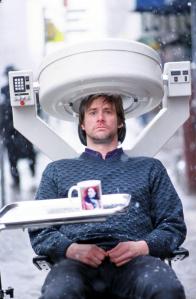
The plot plays out like something from a Philip K. Dick story. I don’t want to reveal too much because I don’t want to ruin the film for anyone who hasn’t seen this film. Eternal Sunshine is one of those rare films that carries with it the joy of discovery. Depressed Joel (played by Jim Carrey) discovers that his ex-girlfriend Clementine (Kate Winslet) has hired Lacuna Inc. to totally erase all memories of him from her mind. Embittered, Joel decides to go through the same process. The Lacuna technicians (Elijah Wood and Mark Ruffalo) comes to Joel’s apartment in the middle of the night and start the process of erasing his memories of Clementine. However, as Joel is losing his past, he realizes that he doesn’t want to lose his time with Clementine. Hence, Joel finds himself running through his rapidly fading memories of Clementine, trying to save at least some scrap of her memory from being erased. Meanwhile, as Joel fights to save his identity, Ruffalo entertains himself by inviting his girlfriend (Kirsten Dunst) over to Joel’s apartment while Elijah Wood sneaks off so he can meet his new girlfriend — who is none other than Clementine.
The genius of this Charlie Kaufman’s screenplay is that it takes an idea that seems very much “out there” and uses it to explore emotions that we’ve all felt. Who doesn’t have someone that they wish they could wipe from their mind? Me, I wish I could forget the exchange student from Keele University who broke up with me via e-mail. I’d love to obliterate all memory of the frat boy who told me I was “white trash” or the former love of my life who managed to break my nose and my heart with just one movement of his hand. We all have those people in our lives and what we forget is that by wiping out all the bad memories, we lose all the good ones as well. Yes, Paul Walsh may have made me cry with his e-mail but, for two months before that, he held me while I cried and I can’t remember what I was crying about but I do remember feeling like I had never been held like that before. And Dane may have hurt me terribly but now, every time I doubt myself, I simply remember that I’ve already survived the worst that could happen. As for that frat boy who called me “white trash” — well, fuck him. Yeah, there’s really no downside to erasing him from my mind. In fact, I’ve already started because, to be honest, I can’t remember his name for the life of me.
Ironically enough considering the title, there’s very little sunshine to be found in this film. Not only is every scene drenched in melancholy but, quite literally, director Michel Gondry appears to have exclusively filmed on overcast days. For such a deliriously romantic film — one that celebrates the idea of enduring love — Eternal Sunshine of the Spotless Mind is almost totally told in tones of gray and darkness. In fact, as I watched the film last night, I was struck by the fact that often times, the only color in the film was provided by the Clementine’s ever-changing hair. (Interestingly enough, Joel mentions Clementine’s hair as one of the things that he especially wants to forget about her.) That the film works as both a dark comedy and a love story despite the grim images is a testament to the talents of both screenwriter Charlie Kaufman and director Michel Gondry. (On the basis of the director’s later films — the latest being the enjoyable but shallow Green Hornet — I kind of suspect that Kaufman perhaps deserves a little bit more credit that Gondry.)
I think it’s also a testament to the talents of the film’s cast, all of whom gel into a perfect ensemble and allow the audience to believe in the film no matter how odd the film’s events may seem. As I watched them last night, I found myself thinking about how much I truly love to watch good acting. As long as a film has one or two good performance, it can be out-of-focus, choppily edited, and an hour or two too long. By the same token, I find nothing more offensive than a million-dollar film full of expensive technology and boring performances. (Hello, Avatar. How are you, Battle L.A?) When I find a film, like Eternal Sunshine, that is actually both well-made and well-acted, I’m pretty much in love.
As the two lovers, Jim Carrey and Kate Winslet have a very surprising and very real chemistry together. Watching them, you believed in their love and then you just as strongly believed in their hate. This is one of those odd love stories where you not only believed that the two of them would actually get together but you also completely understood how and why Joel eventually drove Clementine away. Carrey makes Joel’s depression believable without allowing it to get tedious or repetitive while Kate Winslet — well, where to begin? Kate Winslet is probably one of the best actresses ever and this is one of her best performances. I’ve always had a bit of a girlcrush on Winslet — there’s an honesty to her performances that few other actresses can match. When she’s onscreen, the audience is with her. She never puts up the whole “film star” barrier and, as a result, she inhabits her characters completely and brings them to life with both their strengths and their flaws. And Clementine has got her share of flaws. (I remember that when my mom saw this movie, she absolutely hated Clementine and the ever-changing color of her hair.) Winslet doesn’t shy away from making Clementine human and, as a result, I think she elevated everyone else in the film as well.
As good as Carrey and Winslet are, the supporting roles are well-played as well and, as in all great movies, they give the impression of a world that existed before the movie started and one that will continue after the end credits. I especially loved the performances of the Lacuna Staff, from Tom Wilkinson’s bland yet intimidating doctor to the creepy geekiness of Elijah Wood. Mark Ruffalo and Kisten Dunst have a few great scenes where they’re partying the night away in Joel’s apartment while Joel’s memory is slowly erased. The sight of a very hairy Ruffalo and a very giggly Dunst dancing in their matching panties pretty much epitomizes “geek love” for me. I know that some people have complained that the scenes with Ruffalo and Dunst seemed out-of-place when compared to the ones between Carrey and Winslet but actually, I love the chemistry between Ruffalo and Dunst. Even playing one of the nerdiest characters ever, Mark Ruffalo is still hot. As for Dunst, she’s basically playing the same character that she always plays. (As my friend Jeff recently put it, “Kirsten Dunst In Her Underwear” is as much of a film genre as drama, comedy, and science fiction.) But I’ve always thought that she’s a likable enough actress (plus, by going red for Spiderman, she also indirectly helped this redhead’s social life) and she actually provides a nice (if surprising) moral center for Eternal Sunshine.
(Also, I’ll admit right now that if my boyfriend had a job that allowed him to hang out into a different stranger’s apartment every night, I’d probably sneak over and dance around in my underwear as well.)
It took me a while and a handful of viewings to really appreciate Eternal Sunshine of the Spotless Mind. When I first saw it, I thought it was a strange film. I liked it but I never expected that it would become one of my favorite movies. However, with each viewing, I find myself relating to and loving this film just a little bit more. So, thank you to everyone who voted in my poll and who gave me a chance to fall in love with this film all over again.
Last Friday, I went and saw Zack Snyder’s new film Sucker Punch with my sister Erin and a group of our friends. Sucker Punch was a film that I had been looking forward to seeing for a while and not even all of the scathingly negative reviews that I read before leaving for the theater could dampen my enthusiasm. Somehow, I knew I would love this film (despite the fact that Zack Snyder is, usually, one of my least favorite directors). And you know what? I did love it.
The plot has been criticized for being both overly complicated and not being complicated enough and I actually think that a case can be made for either one of those complaints. The film opens in the 1950s. Teenage Babydoll (Emily Browning) is sent to a mental asylum by her evil father. Her father has made a deal with an orderly named Blue (Oscar Isaac) to have Babydoll lobotomized. (By the way, this was actually a pretty common thing back in the 50s. I shudder to think what would have been done to me if I had been born five decades earlier.) As Babydoll waits for her lobotomy (scheduled to occur at the end of her first week as a patient), she is subjected to the therapy of Dr. Gorski (Carla Gugino) who plays music and encourages her (all female) patients to find peace by controlling their fantasies.
Suddenly, we’re in a fantasy (just who exactly is having the fantasy is one of the film’s mysteries that’s never really explained but is actually kinda fun to debate). In the fantasy, the insane asylum is actually a brothel/dance hall that is owned by Blue. Gorski is a choreographer. The patients are now all lingerie-clad dancers/prostitutes. Babydoll is the latest girl to be put into service in the brothel and she is being held over for “the High Roller” who is expected to show up in five days.
(The fact that the movie explicitly compares forced lobotomy to rape is one of the many interesting facts that the majority of negative reviews have chosen to ignore.)
Babydoll soon discovers that 1) she’s such a good dancer that when she does dance, men can only watch in stunned silence and 2) whenever she does dance, she finds herself transported into a fantasy world where, along with getting advice from the Wise Old Man (Scott Glenn), she also battles (and defeats) everything from giant Samurai to dead Nazis who have been reanimated by “steam power” to a dragon. These battle scenes, as odd as they are, are actually pretty exciting. Say what you will, Snyder knows how to direct a battle scene and Browning and the rest of the almost entirely female cast all seem to be having a blast getting to do the type of things that usually, only boys are allowed to do.
Anyway, as a result of her fantasies, Babydoll comes up with a plan to escape the brothel. She quickly recruits four other girls into her plan — Amber (Jamie Chung), Blondie (Vanessa Hudgens), the free-spirited (and really, really cool) Rocket (Jena Malone) and finally Rocket’s older sister, the world-weary Sweatpea (Abbie Cornish). In order to escape, they need to steal four different items. While Babydoll distracts their captors by dancing (and therefore going into one of her battle fantasies), the others steal whatever is needed. And everything works out just fine. Until it doesn’t….
Sucker Punch is a glorious mess of a movie and, perhaps because I’m a glorious mess myself, I loved it. In fact, it’s probably my favorite film of 2011 so far. In this regard, I know I’m going against the majority but so what? Throughout history, if one thing has always been consistent, it is that the majority sucks. Yes, Sucker Punch is a deeply flawed film that runs on for at least half-an-hour too long. And yes, I think it can be argued quite convincingly that this film is ultimately a happy accident, a film that’s strength comes not from directorial design but instead as the result of a few random elements that resonate in the subconscious. But no matter — happy accident or not, I loved Sucker Punch and I’m not ashamed to admit it.
Hmmm…that’s a familiar pose.
Let’s start with a few obvious points. As even those who hate this film seem to be admitting, it’s visually stunning. The battle scenes are kinetic and exciting, the film’s over-the-top production design (a mix of German Expressionism, 50s film noir, Bob Fosse choreography and old Zack Snyder films) is always a blast to look at, and the soundtrack kicks ass. Like other films in the so-called “Girls with Guns” genre, Sucker Punch allows its actresses to be something other than just scenery or helpless damsels.
Interestingly enough, for a film that takes place mostly in the world of fantasy, there’s no attempt to really make this film’s version of “reality” come across as anything other than an elaborate fantasy as well. The film’s opening scenes are played out in slow-motion and the film’s asylum (which, like most movie asylums, appears to have been borrowed from The Cabinet of Dr. Caligari) is so gray that the film might as well be in black-and-white. Blue and Babydoll’s father hold a melodramatic conference while standing directly behind Babydoll, their three heads filling the screen like flashes of manic paranoia. As such, the film — at times — becomes a fantasy taking place in a fantasy taking place in a fantasy. It takes a while for the viewer to get used to this and, at times, it can seem like there’s really nothing to give the film any sort of grounding. However, for me, the opening sequences are not meant to be “real” as much as they serve as a reflection for the way that the real world can imprison anyone but women in particular. As women, we know what its like to look up and suddenly realize that our entire world has somehow become gray and cold without our knowledge. Throughout history, when everything else has been taken away from us, fantasy has been our escape and salvation, our imagination being the one of those precious things that our fathers, our husbands, and our bosses would never be able to deny us.
One problem I did have with the film is that, for all the talk about how Babydoll’s dancing is essential to the escape plan, we never actually see her dance. Instead, we see Browning start to sway a little, her eyes cast down and then suddenly, we’re transported into a fantasy involving zombie Nazis or giant samurai. Once this fantasy mission has been completed, we’re suddenly back in the brothel where we see Babydoll ending her dance while her audience applauds.
To a large extent, I actually agree with Snyder’s approach here because I know, for me much as with the characters in this film, dance always presented an escape from the grayness of being. When I was dancing, I was literally living a fantasy and this seems to be the case with Babydoll as well. However, from simply a cinematic point of view, the constant talk of the importance of Babydoll’s dance leads the audience to naturally expect that they’ll get to see at least a little bit of the dance in question. When you don’t, it’s hard not to feel as if you’ve been teased. (I have to admit, as well, that all this dance talk got my competitive streak going as well. As I whispered to Erin, “They should see me dance.” “It’s a movie, Lisa Marie, not a challenge.” Erin replied.) Snyder, as a director, certainly probably has a strong enough visual sense that he could have found a way to make any dance that Emily Browning came up with look impressive and other worldly.
Oscar Isaac
As Arleigh has pointed out on both twitter and this site, Zack Snyder is a director who concentrates almost all of his effort on producing memorable visuals. That’s how he tells his stories and gets the whatever response he wants from his audience. Characters and dialogue are often kept simple so that they don’t get in the way of his visuals. Typically, I hate films like this and I’m hardly a fan of Snyder’s previous work. However, it didn’t bother me so much here, perhaps because I could relate to the overall theme of feeling trapped and needing an escape. (More on that later.) As with previous Snyder films, the performances here are mostly in service of the visuals. The actors don’t so much perform as much as they just pose against the stunning backdrops. As such, Emily Browning, Vanessa Hudgens, and Jamie Chung don’t really get much of a chance to make an individual impression. Playing sisters, Abbie Cornish and Jena Malone don’t have a lot to work with but they both are strong enough personalities that they manage to bring some life to their characters beyond simply serving as figures on a landscape.
(I should also mention — and Arleigh had the same reaction — that Cornish and Malone and their character’s relationship reminded me a lot of my relationship with my older sister, Erin — especially all the times that Rocket attempted to keep things fun and interesting just to be told, by Sweetpea, that she wasn’t being boring enough. I definitely related to that. Erin, for her part, says that she related to all the scenes where Sweatpea nearly got killed “because her bratty, little sister did something stupid that made absolutely no sense.”)
Abbie Cornish and Jena Malone (or Erin and Lisa) In Sucker Punch
I also have to mention Oscar Isaac and Carla Gugino, both of whom seem to understand just how far they can go with their characters without descending to the level of camp. Gugino — after this film, Sin City , and Watchmen — has got to be the Queen of digital filmmaking. She’s also the closest thing that American film has to an old school femme fatale right now. As well, as I told Erin as we watched the film, I can only hope that my tits look that good when I’m 60 years old. And speaking of looking good, Oscar Isaac certainly does look good here. Even when he has dark circles under his eyes and sports a glowering scowl, I would still throw Isaac on the ground and lick his face. Plus, he and Gugino contribute a great performance of Love Is The Drug which plays over the end credits.
Finally, Scott Glenn — looking a lot like the late David Carradine — plays the “Wise Old Man” who pops up as a father figure of sorts in Babydoll’s fantasies. Glenn does okay with his role though I wish his character had been a bit more clear. To be honest, simply from the point of view of empowerment, I kinda wish his character had been known as the “Wise Woman” and had been played by Cate Blanchett.
One huge issue that seems to be coming up a lot when people talk about Sucker Punch is the issue of “empowerment.” Does this film, which indulges in a massive schoolgirl fetish even while portraying girls kicking ass, empower or degrade women? Well, first off, I would suggest that the question itself is an inappropriate one because to argue that a film is either “empowering” or “degrading” and nothing else is basically the same as arguing that all women are going to have the exact same response to what they see regardless of their own life experiences or personal outlook. Quite frankly, because of some of my own personal experiences, I find the infamous, much-maligned 1970s rape/revenge film I Spit On Your Grave to be very empowering and I’m not alone in that regard. At the same time, I also know many very intelligent, very strong women who would consider that film to be anything other than empowering. It’s simply a matter of perspective.
I think the same can be said about Sucker Punch. To me, Sucker Punch was a very empowering film and, honestly, that’s the main reason that I loved it even with its flaws. First off, I think that any film in which women are allowed to do something other than stand around and panic until they’re rescued by a man, is going to be empowering because, far too often, we are taught that waiting for the right man to arrive is the only option available to us. As well, the main theme of Sucker Punch was the theme of escape, whether that escape was physical or mental. While I won’t presume to speak for all women, I can say that for many of us, escape is the usually the root of all fantasy and, at least to some extent, the ultimate goal. As I watched Sucker Punch on Friday night, it seemed to me that, for far too many of us, life is a series of prisons and asylums in which the walls are constructed out of the harsh judgments of patriarchal society. We allow ourselves to become trapped by the need to be a mother or a wife or a nurturer or a seductress or a whatever it is that society says a good woman has to be on any given day. The women in Sucker Punch are imprisoned because they’ve gone against the expectations of society and now, whether being lobotomized or sacrificing their bodies in the fantasy brothel, they are allowing their role and personality to be defined by men. Therefore, when Babydoll and her crew fight for their freedom, we can relate to them because that’s what we have to do every day of our lives.
My Dream Is Yours
But, the argument goes, how this be considered to be empowering when all the female images in the film are so hyper-sexualized? And it’s true that even when the film is supposed to be portraying reality, the camera does linger over the bodies of the actresses. In the brothel sequences, the film often looks like an outtake for some anime-inspired Victoria’s Secret fashion show. (Seriously, this film has a major lingerie fetish but you know what? So do I. Lingerie is fashion poetry and when I’m wearing something pretty, I feel like a poem.) Finally, there’s the image of Babydoll fighting her enemies and dodging explosions while flashing her underwear to the viewer. Many have argued that this is a degrading image, that it encourages male viewers to leer and to ogle.
Well, the fact of the matter is that this film was directed by a man and often times it is obvious that we’re watching the action through a male gaze. But, so what? Just as I believe that women should not be ashamed of their sexuality, I don’t see why men should be expected not to look. (Looking is not the problem. It’s the assumption that the right to look also gives one the right to judge.) And ultimately, I would argue, that being sexy is empowering because society, with its fucked up view of human sexuality in general, is so quick to tell us that the ideal woman is unaware of her sexuality or, at the very least, she should either hide it behind a facade of demure humility or else flaunt it to such an extent as to suggest that it’s all actually a sign of some deeper neurosis. What is rarely given as an option is the idea that we might want to show off a little just as a matter of pride. Men are applauded for showing off their muscles yet we are still expected to blush if we show a little cleavage. Being sexy is not degrading. What’s degrading are the conditions that society has attempted to impose on the right to be sexy. To me, it’s very empowering to see strong, independent women standing up for themselves and looking good while doing it.
Sexual Empowerment
And therefore, for me, Sucker Punch was a very empowering film. It’s entirely possible that this empowerment could be the result of a happy accident and that Snyder had no idea he was actually making a film that celebrated third wave feminism. In fact, I’m sure that’s probably the case.
Even with as much as I enjoyed Sucker Punch, I’m still not really sold on Zack Snyder as a director When his films work, they almost work despite his directorial flourishes than because of them. The slow-mo action thingee was kinda fun at first but now, everyone’s doing it and it’s hard to see why it was so exciting in the first place. Add to that, whenever I hear his name mentioned, I think about the Zach was on both seasons of Paradise Hotel and who, at one point, did this priceless drunken monologue about how he was apparently descended from lawyers. Seriously, he was such a tool. Well, why take my word for it? Here’s a clip of Zach that I found on YouTube…
But anyway, what about Zack Snyder? As I’ve mentioned earlier, there’s a lot of people right now who are gleefully hating on Sucker Punch in general and Zack Snyder in specific. What’s really odd is, to judge from twitter, a lot of these haters are people who previously loved Snyder’s more male-centric films. Which just goes to show what I’ve always said — men suck. Well, that and nothing breeds contempt quicker than success. The fact of the matter is that it was time, in the eyes many, for Snyder to take a fall. Personally, I think Zack Snyder could be a truly noteworthy director but his style — the slow-mo action and all that — is running the risk of becoming less a storytelling tool and more of a nervous tic.
In many ways, Sucker Punch is a happy accident, a film that works despite itself. I think that’s probably why so many male filmgoers are having such a negative reaction to it — in order to surrender to a happy accident, one has to surrender the illusion of control and men aren’t exactly good at that. (Of course, neither are most women but seriously, at least we’ll admit to being lost. I mean, goddamn, guys — if you don’t know where you are, you’re lost. Just deal with it.) I expect to have a lot of people disagree with me concerning my opinion of this film and I expect those same people will probably use Sucker Punch as some sort of code word for a “bad” or “disappointing” film from now until whenever David Fincher releases his Girl with The Dragon Tattoo remake. But I think, as time goes on, Sucker Punch will probably be one of the few Zack Snyder films to truly become a cult film. 300 will be forgotten but Sucker Punch will remain.