The Results Are In!


The results are in and the people have spoken and the movie I will be watching in about 90 minutes and then reviewing tomorrow is — Eternal Sunshine of the Spotless Mind!  Thank you to everyone who voted.

As I mentioned in the comments section of the original post, I am also going to go ahead and review Mandingo (the 2nd place finisher) at some point during this upcoming week.

Lisa Marie Looks At The Front Page (dir. by Lewis Milestone)


As part of my efforts to watch every film ever nominated for best picture, I recently watched 1931’s The Front Page (which lost to Cimarron, the first western to ever win best picture). 

The Front Page, which is based on a broadway play by Ben Hecht and Charles MacArthur, is the story of Chicago newspaper editor Walter Burns (Adolphe Menjou) and his favorite reporter, Hildy Johnson (Pat O’Brien).  Hildy is planning on retiring from the newspaper business so he can get married and take a job in advertising.  Walter is determined to keep his star reporter.  Walter’s attempts to keep Hildy from quitting are played out against a larger background of civil corruption, cynical reporters, and an escaped death row inmate who ends up hiding out at the newspaper. 

It’s odd to watch a film like The Front Page today.  It’s not just the fact that the movie is technically primitive but that the film is such a product of its time and a lot has changed since 1931.  This is one of those old films where African-Americans are continually referred to as being “colored” and the modern-day audience cringes in discomfort and tries to figure out the correct way to react.  As a reviewer, I guess I’m supposed to explain how you should react but I really can’t say.  Personally, I look at a film like this as a reflection of its time and the casual, unthinking racism that was a part of the culture back then.  Then again, I’m not the one being called “a pickaninny.”  This is also another one of those old films where women are presented as distractions and the only work that’s worth doing is man’s work.  Oddly enough, the sexism didn’t surprise me as much as the racism.  Then again, sexism is still socially acceptable while our modern, patriarchal society now insists that people, at the very least, pretend not to be racist.

Still, as dated as many of the film’s attitudes may be, the movie’s cynicism and it’s portrayal of journalists as essentially being a bunch of biased, blood-sucking leeches does give the film a slightly more contemporary feel than most films from the 30s.  As Hildy and Walter, Pat O’Brien and Adolphe Menjou are both well cast and the rest of the film’s characters are played by a strong collection of character actors.  A surprisingly large amount of the cynical one-liners still work and, once you get used to the film’s pre-CGI style of filmmaking, it occasionally show some genuine visual flair.

Personally, I think that The Front Page makes a lot more sense once you acknowledge the unstated fact that Walter and Hildy are former lovers.  Hollywood realized the same thing because The Front Page was later remade as His Girl Friday with Rosalind Russell taking over the Hildy Johnson role.

Anyway, for the curious, here’s The Front Page…

Lisa Marie Gets On Top of The Lincoln Lawyer (dir. by Brad Furman)


When I’m not writing about movies or reality television, I work for a lawyer.  Some people would describe me as being a receptionist but personally, I prefer the term office administrator.  (Actually, what I’d really prefer would be to have people refer to me as “Dr. Bowman,” but that’s in the future.)  As a result of my job, I’ve become jaded as far as “legal thrillers” are concerned.  The fact of the matter is that most lawyers aren’t slick, most trials aren’t exciting, and most surprise witnesses will probably have their testimony ruled inadmissable.  (Assuming, of course, that the testimony is allowed in the first place.  It won’t be.)  Add to that, attorney-client privilege is always presented as being some sort of grave and somber power like the one ring to unite them all.*

All of the usual legal thriller elements show up in Brad Furman’s new film, The Lincoln Lawyer.  Slick attorneys, melodramatic courtroom theatrics, and a lot of discussion about attorney-client privilege, The Lincoln Lawyer has them all but, fortunately, director Furman presents these cliches with so much energy and such a fine attention to detail that you don’t really mind the fact that you’ve seen this movie a hundred times in the past.

In the Lincoln Lawyer, Matthew McConaughey plays a lawyer who operates from the backseat of his car and who finds himself hired to defend a spoiled rich kid (Ryan Phillippe) who has been accused of raping a prostitute.  After McConaughey takes the case, it quickly becomes apparent to both him and his lead investigator (a nicely eccentric turn from William H. Macy) that not only is Phillippe guilty but he’s a serial murderer as well.  Phillippe, however, quickly reveals that he doesn’t care if McConaughey knows that he’s guilty.  After all, since McConaughey is Phillippe’s lawyer now, McConaughey can’t go to the police. 

Ryan Phillippe makes for an imposing villain and Margarita Leviera (she played Lisa P. in Adventureland) also gives a sympathetic performance as his latest victim.  However, the film is really a showcase for Matthew McConaughey who is at his full McConaugheyness here.  Not only do you believe him as the type of lawyer who would operate out of the backseat of a car but you also totally buy it when he has to deliver potentially awkward lines like, “I’m trying to set things right!”  This is probably his best performance to date, one in which all the bad acting habits of the past are totally appropriate for the character.  If nothing else, The Lincoln Lawyer is worth seeing if just for Matthew McConaughey.

——

*Seriously, if you call up your lawyer and tell him that you’re planning on trying to blow up California in three weeks, attorney-client privilege isn’t going to protect you.  So, don’t do it.

Film Review: Limitless (dir. by Neil Burger)


This review is a little late.  I saw Limitless last Friday and I was hoping to write up this review on Sunday.  Unfortunately, I ended up 1) not sleeping at all between Saturday night and Sunday morning and 2) having a massive, life-threatening asthma attack between Sunday night and Monday morning.  Anyway, this all led to the usual Emergency Room hijinks (I’m on a first name basis with a lot of the nurses now and it was nice to get all caught up with them once I finished nearly dying) and then I came home a few hours later, intent on writing up my review but then I was ordered to rest and anyway, it all boils down to this: the review is late.

In Limitless, Bradley Cooper plays Eddie.  Eddie is a writer who is suffering from a terrible case of writer’s block.  He’s divorced, he drinks too much, and his tiny apartment is seriously so filthy that I would never step foot in it, even if it was owned by Bradley Cooper.  In short, Eddie’s a loser.

However, one day, Eddie runs into Vernon (Johnny Whitworth).  Vernon is Eddie’s former brother-in-law but even more importantly, he’s a drug dealer.  After hearing about Eddie’s troubles, Vernon gives Eddie a pill which is designed to allow Eddie to use 100% of his brain as opposed to just 20% of it.  (Wisely, the film doesn’t spend too much time trying to explain how exactly the drug works but essentially, it’s the strongest ADD medication ever.)  Reluctantly, Eddie takes the pill and, half-a-minute later, he’s the smartest man on the planet.

(Actually, the film’s advertising is deceptive.  The pill doesn’t make Eddie smarter as much as it just allows him to focus his mind and remember all of the thousands of little lessons that we learn everyday and lose track of almost immediately.  Director Neil Burger does something very clever here, making use of flashbacks to illustrate the difference between Eddie’s mind on drugs and his mind while sober.  Most importantly, the film doesn’t make Eddie the smartest man on the planet, just the most focused.)

After one day on the drug, Eddie wakes up to discover that he’s a dullard again.  He goes to Vernon to try to get more of the drugs but, during the visit, Vernon is murdered by persons unknown.  Eddie manages to escape with Vernon’s stash and quickly finds himself both addicted and succesful.  He finishes his book in a matter of days.  He makes a fortune on the stock market.  Eventually, he is hired as a financial advisor by a ruthless business tycoon (Robert De Niro) and he transforms himself into the center of the universe.

At the same time, Eddie grows more and more dependent upon the drug and, with Vernon dead, he has no way to replenish his own dwindling supply.  As he tries to find someone else with a supply, he discovers that everyone else who has tried it has ended up dying as soon as their supply ran out.  He also discovers that someone knows about his supply and they’re determined to take it away from him.  As well, he soon starts to suffer from black outs as time and space apparently skips around him.  One morning, he discovers that a woman he vaguely realizes was murdered during one of his blackouts.  Is he the murderer?  Or is there a greater conspiracy at work?

As a film, Limitless is definitely uneven.  It meanders a bit in the middle, Robert De Niro is wasted in a role that seems more appropriated for an actor like Frank Langella, and there’s a lot of plot points that just seem to vanish after they’re introduced. 

However, flaws and all, Limitless is still an enjoyable little thriller that on a few very rare occasions manages to suggest something deeper going on beneath the surface.  The premise is intriguing and, though I could have done without some of Cooper’s heavy-handed, off-screen narration, the film is intelligently written and even has a few moments of genuine wit.  Director Neil Burger does a good job contrasting the drabness of Cooper’s life as a sober loser with the vibrancy of his existence as a victorious addict.  Burger also does a good job of visualizing those moments when Cooper’s mind starts to skip through time and space.  Speaking as someone who has had similar experiences while taking dexedrine (which I take for ADD, it’s all legal), these scenes ring surprisingly true.

Much like Inception, Limitless is fortunate to have an excellent cast.  Everyone in the film seems to be taking his or her role seriously and works to keep things compelling and relatable no matter how outlandish the plot might occasionally get.  Abbie Cornish (who starred in one of my favorite films of all time, Bright Star) doesn’t get to do much in the role of Cooper’s girlfriend but she does get one great scene where she has to take a pill in order to escape a pursuer.  (And after seeing that scene, I’ll never watch ice skating the same way again.)  Johnny Whitworth oozes a potent combination of sleaze and charisma while Anna Friel has a poignant cameo as Cooper’s ex-wife.  Playing a Russian mobster, Andrew Howard is both funny and scary (which is saying something since the sarcastic Russian mobster is such a familiar character archetype that I now roll my eyes whenever I hear a Russian accent in a film because I know exactly what’s coming up).

However, the film truly belongs to Bradley Cooper and he probably gives his best performance to date here.  I have to admit that I love Bradley Cooper.  I’ve loved ever since I saw the Hangover.  Don’t get me wrong.  I don’t love him because he was the guy making snarky comments in Vegas or encouraging his friends to be irresponsible.  Quite frankly, those scenes could have been acted by an actor with a cute smile.  No, I fell in love with Bradley Cooper at the end of the film when I saw his character at his friend’s wedding, holding his film son in his lap.  There was something surprisingly genuine about Cooper’s performance in those scenes that it forced me to reconsider everything that had happened in the film up to that point.  Those scenes offered a hint that Cooper is the type of talented movie star that Limitless proves him to be.

Song of the Day: When Your Mind’s Made UP (performed by Glen Hansard and Marketa Irglova)


It’s St. Patrick Day!  Now, I can’t speak for everyone but for me, this is the only holiday that matters.  For one thing, it gives me a convenient excuse to show off some of my Irish Folk Dance moves.  For another, it gives me an excuse to say things like, “I’m just a good Irish girl,” in the closest I can come to an Irish accent.  (Admittedly, that’s not very close.  My own accent tends to be kinda twangy and country.) 

Oh!  And there’s another great thing about St. Patrick’s Day.  It gives me an excuse to wear green and I look really good in green.  Today, I’m green from my eyeshadow to my underwear.

Anyway, with all that mind, it was pretty easy to pick today’s song of the day.  One of my favorite films of 2007 was a wonderfully romantic and charmingly low-key Irish film called Once.  The film’s soundtrack, which I’ve been listening to all day today, is one of my all-time favorites. 

One of my favorite songs on that soundtrack — and my pick for song of the day — is When Your Mind’s Made Up, performed by the film’s stars Glen Hansard and Marketa Irglova.  As actors, performers, and as a real-life couple (awwwwwww!)*, Hansard and Irglova have this amazing chemistry and it’s on display in the video posted below.

(By the way, can I be like really, really sappy here without everyone rolling their eyes and getting all “Gaggggggg!” on me?  Sometimes, if I’m feeling really sentimental and silly, I think about how Jeff is like Glen Hansard and I’m like Marketa Irglova.  And then I start singing another song from the movie — the Oscar-winning Falling Slowly.  Or at least I sing a version of it because I have a hard time remembering lyrics.)

Happy St. Patrick’s Day!

——————-

*According to Wikipedia, Hansard and Irglova are apparently no longer a couple. 😦

Game Review: Bulletstorm


Unfocused Ramblings

I loved Gears of War. I just want to establish that before I begin a rant that no doubt is going to feel very much like some kind of savage attack at the heart of that game. My problem with Gears of Wars is simple. There’s just too much ultra-real-gritty-brown-and-gray in today’s media. It’s not confined to Gears. It’s everywhere. Films have taken a darker ultra-realism tone, video games seem to be obsessed with avoiding an artistic style in favour of an ultra-realistic one. I’m sure this trend was fueled by a hundred different factors – not the least of which being that people expect HD graphics to look like real life – and it’s not even wholly a bad thing. It’s just everywhere.

So imagine my surprise when Epic’s new first person shooter game isn’t gritty or ultra-realistic at all. Here’s the first and strongest thing I can say about Bulletstorm: It’s almost an anti-Gears of War. The setting is shiny and vibrant. There are colours everywhere. I don’t have trouble making out details of the setting because of the lack of contrast between surfaces. And it’s ridiculous over-the-top action. Now, of course, it’s also a traditional first person shooter rather than an over-the-shoulder affair and it isn’t cover-based, so it’s not in quite the same genre as Gears of War… but I’d say there are certainly some strong parallels in places. It’s just that Bulletstorm feels like a much livelier game.

Which is ironic, because the game is about a dwindling group of people trapped on the surface of a hostile alien world which is completely overrun with toxic mutants, carnivorous plant life, and five hundred foot tall monsters with a foul temper.

Bulletstorm is, at its heart, about over-the-top action. Throughout the game, you will acquire points by slaying enemies. The caveat is that the game doesn’t reward precision or efficiency, but creativity. Although a small point bonus is given for shooting an enemy with a devastating headshot, a much bigger one is given for kicking him off the side of a chasm into a swirling tornado which has become charged with lightning and presumably ending his day in a less-than-desireable way. These point bonuses are universally referred to as Skillshots, and there are a couple hundred of them, encompassing virtually every conceivable creative killing. Oh, at this point it might be worth mentioning that this isn’t a game for your young kids. Trust me. The language is strong, the violence is insane, and the themes of bitterness, revenge, and despair aren’t particularly accessible to the under-20 crowd. Of course anyone can appreciate a good action game… and this is definitely one of those, because you’ll be moving non-stop, even while you try to find creative ways to dispatch your hapless foes and occasionally take cover from the devastating fire being flung back at you.

Like Gears of War, Bulletstorm features a quick-switching weapon trio. We haven’t got any grenades, but we do have a supertech gadget called a Leash. This is the game’s outstanding feature, as it allows you to manipulate your environment in many ways, gripping objects, flinging them from place to place, and so on. Of course, it distinguishes itself from other physics-heavy weapons (like Half-Life 2’s famous gravity gun) in that it also directly manipulates your enemies themselves. You’ll use the Leash to draw enemies out from behind cover so they can be kicked onto some metal wreckage (for good bonus points!) or to maneuver an explosive container for a timely detonation. The Leash definitely offers the most potential for manipulation and fun, but of course there are some enemy types which are (mostly) immune to it except in special circumstances by virtue of being either too large or too fast… but you’ll be relieved to know that even at the end of the game’s single player mode most enemies are ready to be tossed around like rag dolls.

In addition to the Leash, Bulletstorm features a variety of weapons. We have the obligatory assault rifle, a high-caliber pistol, a sniper rifle with remote controlled bullets, a gun that launches drills, among other stand-outs. In addition to their basic firing mode, each weapon has an upgraded ‘charge’ mode which can be purchased (with those ever useful score points) that can be used in special circumstances. The ‘Peacemaker’ assault rifle, for example, can use its charge mode to fire a special hundred-shot clip instantly into a foe. This will literally disintegrate one or more opponents if you land it, with the accompanying visual effects. The Leash itself has an upgraded charge mode called the Thumper which will use a wide-area application of force to launch your enemies into the air and crash them into the ground. It has more applications than it sounds like, and can occasionally be used to dramatically clear an entire field of enemies.

The weapons are re-loaded, re-armed, and equipped at the discretion of the player who will use special containers called DropKits which will accept the currency of the player’s score (achieved, again, through killing enemies through the skillshots) in exchange for the player’s choice of weapons, charge ammo, regular ammo, Thumpers, and so on. This interface also features a handy database of skillshots. You know,  just in case there was a weapon effect that you hadn’t considered.

Game Modes

Bulletstorm features a feature-length single player campaign of what to me felt like ‘appropriate length’. I didn’t time my run through it, but I can say that I was neither left wanting more nor lamenting the time spent on it. It tells the story of Grayson Hunt (voiced by Steve Blum, of anime dub fame), a bitter alcoholic space pirate and his squad. In the opening moments, Grayson makes a poor decision amidst an alcohol-induced haze which lands he and his remaining friends on a hostile alien world. Before all is said and done, Grayson is left with only his emergency-rebuilt pal Ishi, who is now half machine and partially in the grips of a psychotic AI. Recognizing that, despite Hunt’s mistakes, their best chance lies in cooperation, Hunt and Ishi take off across the hostile alien terrain. They discover the overgrown remains of what seems to be a giant tourist-friendly resort which has apparently been taken over by inhuman mutants, hostile plant life, and others.

It also features the Echoes mode, which is essentially a series of time trials that take you quickly through sequences from the single player game only without the story bits and dialogue, and with the bonus of a timer. As a result, these levels are completed quickly, and they heavily emphasize using the point-boosting skillshots in order to achieve a high score (in this case, rewarded by Stars, which are essential to completing a number of Achievements/Trophies).

Multiplayer is another outstanding feature as long as you have some fun folks to play with. The game mode, which is called Anarchy, is similar to a Hordes or Firefight mode from other FPS titles. However, the Bulletstorm twist (as you might expect) is that the game is based around racking up a high score through the use of skillshots. The environments in Anarchy mode provide some extra opportunities to earn some skillshots not seen in the single player mode, which is good, because the team’s aggregate score must pass a certain minimum in order to advance out of the current round. A premium higher than survival or the overall massacre of your enemies is on using the terrain features correctly in order to maximize player score. Although it’s certainly a great deal of fun (at least, initially), you may ultimately find that there’s not a ton of variety to be had in the Anarchy mode. The main variation is in the specific details of the maps, but there’s not a PvP aspect to it, and the AI is the same as it would have been in the single player campaign mode.

The Bottom Line

The single key word to Bulletstorm is: fun. It’s not thought-provoking (although the characters are oddly compelling), and it’s not breaking new ground all over the place, but it is a great deal of fun just to sit down and play. It’s worth re-emphasizing that this isn’t a game for younger kids… the characters swear like sailors.

The Big Question

Is it now required by law (as opposed to just by convention) that every game needs to set itself up for its own sequel?

Game-Play

The game plays pretty tightly. Occasionally you’ll find the hit tracking on the melee attack isn’t so good against enemies who are right up in your grill, but this is only a problem when trying to pull off specific skill shots and not an overall problem when playing the game. Despite having quite a few mechanics going for it, Bulletstorm’s control system is simple and intuitive. If you’ve mastered the controls of any first-person shooter in the past you’ll have no trouble with Bulletstorm. Despite its variety of game modes, Bulletstorm is ultimately a bit limited in terms of the variety of experiences that it provides. However, as long as you ration your exposure, you could very well find the game fun forever.

Graphics

As we expect from Epic, the graphics in Bulletstorm are gorgeous. More importantly, we see some varieties in colour, with lush green foliage all over the place and a clear sky above. Now, of course, there are some areas of the game which are more breathtaking than others, but all of the sets were gorgeous in design, and some of the set pieces were very epic, and very cool. You’ll have such encounters as a hydroelectric dam which is coming to pieces around you (including its massive water-turning wheels), and trying to escape not only from enemies but also from terrain pieces aboard a fast-moving train. The character models are also very pretty, although some of the textures will sometimes break down in close-ups. The best character design in the game definitely has to go to Ishi and his newly-installed machine parts. You’ll also be treated to a number of interesting visuals directly tied to how you finish off your enemies, but those I’ll leave you to discover on your own.

Sound

The score is proficiently done and fits the settings pretty well. For the most part, the tracks are forgettable (although I do very much enjoy the main theme which plays on the menu and at places during the single player campaign). The voice acting is all very well done. I particularly like the voice acting for Ishi, which has been digitally modified to have a mechanical edge to it. His banter with Grayson is a little reminiscent of what you get between Dom and Marcus in Gears of War, but with a more genuinely hostile edge to it. The sound for the game’s effects, weapons and other features is tight and complete. Nothing to complain about in the sound department with this title.

Multiplayer

The Anarchy mode is definitely a lot of fun, but it’s not something that most people are going to want to play every day. Given the style of the game it’s not insane that there isn’t a strong PvP multiplayer component to Bulletstorm, but by its nature PvE multiplayer is going to have some limitations that there are no ways to overcome – human enemies will think creatively, and want to hurt you. AI opponents just do whatever they’re programmed to do.

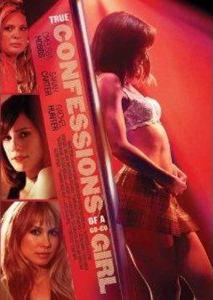
What Lisa Marie Watched Last Night: Confessions of a Go-Go Girl (dir. by Grant Harvey)


So, late, late last night, I was laying in bed, trying to get to sleep when I suddenly remembered that I had earlier recorded a movie called Confessions of a Go-Go Girl off of the Lifetime Movie Network.  So I turned on the TV and I started watching, hoping that the movie would simply calm my racing mind and help me get to sleep.  Instead, I found myself sitting up in bed for the next two hours, totally enraptured with this film. 

After the first few minutes, I started to scream until my sister Erin woke up and rushed into my room.  “What’s going on!?” she asked.  “Erin,” I replied, “you have to watch this movie with me!”  Erin stared at me for a few minutes before replying, “Oh my God, Lisa,” and then walking out of the room.  So, after that, I started to call random friends, telling them about this movie.  Unfortunately, most of them were already asleep since it was like 3 in the morning.

Anyway, long story short — I am really, really tired today!  But enough about me.  Let’s talk about Confessions of a Go-Go Girl.

Why Was I Watching It?

Okay, my friend Evelyn asked me this same question when I called her up last night at 3 in the morning and tried to convince her to come over and watch this with me.  So, as I told her, “Oh.  My.  God.  Are you like kidding me!?  Confessions of a Go-Go Girl?  How can you not watch it!?”

If I’ve learned anything, it’s that if “Confessions” appears in the title of a movie, there’s about a 75% chance that it’s going to be a lot of fun.  And if that “Confessions” movie happens to be a Lifetime movie, than those chances increase to 99%. 

Add to that, these aren’t just the confessions of a go-go dancer.  No, they are the confessions of a go-go girl.  In other words, the whole go-go thing isn’t just a job in this movie.  It’s a lifestyle.

What’s It About?

It’s yet another Canadian film that’s found a home on the Lifetime Movie Network.  In this one, Jane McCoy (played by Chelsea Hobbs) is a sweet and innocent aspiring actress who, in order to make some extra money, secretly takes a job as a “go-go dancer” at a sleazy bar.  Under the influence of an older, cocaine-addicted dancer (played by Sarah Carter), Janet quickly starts a downward spiral of drugs, decadence, and alienation.  As her new identity as a go-go girl starts to dominate her life, Jane soon finds herself growing distant from her wealthy family, her boring boyfriend, and her stridently scary drama teacher.

What Worked?

Oh my God, this is like the ultimate Lifetime movie.  Over-the-top, melodramatic, awkwardly moralistic, and amazingly silly, Confessions of a Go-Go Girl is a camp masterpiece that simply has to be seen to be believed.

Nothing happens in this movie that you couldn’t predict within the first few minutes.  The film’s genius is not that it does anything unexpected.  Instead, it’s that it takes the expected to such an extreme.  Listen, we all know, from the minute that Jane first dances, that she’s going to eventually end up becoming jaded and cynical.  What we could never guess is that it’s pretty much going to happen right after the first dance.  It’s kinda like one of those old anti-drug films where all it took was one puff off of a “marijuana cigarette.”  One puff and you’re a giggling psycho.  One dance and suddenly, your soul fades away.  This is the type of film where we know that Jane has become a bad girl because she starts to part her hair down the middle and grow out her bangs.

Plus, as I’ve mentioned so many times before, I love to dance, I love to watch others dance, and if nothing else, this movie had a lot of dancing.  Watching this movie, I was surprised to discover that sordid, Canadian go-go clubs apparently are capable of providing Broadway-style dance shows.  I mean, I’m not big into strip clubs but, from my experience, most of them just seem to involve a runway, a pole, and a lot of plastic.  I mean, it’s fun to grab onto that pole and spin around and go, “Wheeee!” but it’s not exactly exciting to watch (or, at least, it’s not for me).  But in Canadian go-go clubs, the dance routines have elaborate costumes, ironic themes, and really impressive lighting.  After watching this film, I realized that I really want to move up to Canada and become a go-go dancer.  Seriously.

Eventually, Jane is approached by a rival go-go club promoter who tells her that he’s seen her perform and, “I remember you dancing in white panties.”  This line highlights the fact that this film is obsessed with underwear.  And that’s okay because, honestly, who isn’t?  Watching this film reminded me of an ongoing debate that I have going with Erin concerning whether or not fancy, pretty, colorful lingerie more sexy than boring, blah, cotton, white underwear.  This movie seemed, ultimately, to side with my sister in favor of the boring undies.  Obviously, I disagree but the film still gave me a lot to think about.  I don’t know, maybe I should start a poll or something.  Do any of our male readers have an opinion on the underwear question?  Please, use the comments section to let your voice be heard.

What Did Not Work?

When taken on its own terms, the entire film worked.  If I’m secretly a kitty cat in human disguise than the Lifetime Movie Network is my catnip and that’s largely because of silly, over-the-top movies like this. 

Actually, I do have one or two complaints.  First off, the lead character is named Jane McCoy and oh my God, is that not just one of the most bleh names in history?  Seriously, she should have been named Lisa Marie McCoy or something.  Secondly, Jane’s boyfriend (played by Travis Milne) was soooo boring.  I believe the character was named Eric but they might as have just named him “Plastic Man” because seriously, he had all the personality of one of the mannequins from those Old Navy commercials.  To me, Eric’s character was defined by the moment when, as Jane went down on him, he said, “I don’t think I know you anymore.”  Double bleh on him.

“OMG!  Just like me!” Moments

Oh.  My.  God.  There were so many of these moments that I don’t even know where to begin.  I love dancing and I love having fun while I’m dancing so watching this film was kinda like peering in to my life in an alternative, Lifetime-based universe.

Lessons Learned

Apparently, I’m incapable of not relating everything I see to my own life.  Also, I have absolutely no impulse control because I just ordered the 11 x 17 Confessions of a Go Go Girl movie poster off of Amazon.

Lisa Marie Finds A Place In The Sun (dir. by George Stevens)


As part of my mission to see every film ever nominated for best picture, I watched George Stevens’ A Place In The Sun this weekend.  A Place in the Sun was released in 1951.  It was a front-runner for best picture but in an upset, it lost to An American In Paris.  (Another best picture loser that year: A Streetcar Named Desire.)

Montgomery Clift plays George Eastman, a poor man with a religious fanatic mother and a wealthy uncle.  Looking to make his fortune (i.e., to find his “place in the sun), George gets a job working in his uncle’s factory and quickly starts a romance with one of his co-workers, the shy and insecure Alice (Shelley Winters).  However, even as he and Alice settle down to a life of dreary romantic bliss, George discovers that the Eastman name also allows him to mingle with (if never truly belong to) high society.  He meets the rich (and shallow) Angela Vickers (played by Elizabeth Taylor) and soon, he’s also romancing her.  Neither Angela or Alice is aware of the other’s existence and for a while, George has the best of both the  world he desires and the world in which he actually belongs.  Eventually, George decides that he wants to marry Angela and become a part of her world.  However, there’s a problem.  Alice is pregnant and demanding that George marry her or else.  The increasingly desperate George quickly decides that there’s only one way to get Alice out of his life…

A Place in the Sun was based very loosely on Theodore Dreiser’s 1925 novel, An American Tragedy.  While the movie remains (more or less) faithful to the novel’s plot, director Stevens jettisons most of Dreiser’s heavy-handed Marxism and instead concentrates on the more melodramatic elements of the story.  The end result is a glorious soap opera that is occasionally a bit tacky and heavy-handed but always watchable and entertaining.

Stevens is helped by the three lead performances.  As Angela, a stunningly beautiful Elizabeth Taylor manages to be both calculating and clueless,   seductive and innocent.  As her counterpart, Shelley Winters gives a really brave performance as Alice.  The film is structured that its impossible not to feel sorry for Alice.  The genius of Winters performance is that she (and director Stevens) allowed Alice to become a real, flawed human being as opposed to just a symbol of victimization.  However, the film is truly dominated by Montgomery Clift.  Clift is in just about every scene and his own rather fragile persona translates wonderfully in the role of George.  Was Montgomery Clift ever as handsome as he was in A Place In The Sun?  He gives a perfect performance as the type of guy that every girl has known, the guy that we fell in love with not because of who he was but who we thought he could be.  These are the guys who always end up breaking our hearts, they’re the ones who we still can’t help but think about years later, always wondering “why?”

Unlike a lot of older films, A Place in the Sun remains remarkably watchable and relevent today.  Perhaps its most famous scene involves a capsized rowboat and oh my God, that scene freaked me out so much.  Admittedly, a lot of that had to do with the fact that I have this morbid fear of drowning (and, like one of the characters in this film, I can’t swim) but director Stevens also does a great job building up the scene’s suspense.  He makes brilliant use of sound especially, in much the same way that Francis Ford Coppola would later use that roaring train in The Godfather.  Seriously, I watched that scene with my hands literally over my eyes, just taking an occasional peek until it was all over. 

One last note — there’s an actor in this film who plays a detective.  You’ll see him if you play the trailer at the top of the post.  His big line is “You’re under arrest.”  I have no idea who this actor was but he had one of the most authentic and memorable faces that I’ve ever seen in a movie, regardless of when the movie was made.  He had the type of presence that reminded me why I love character actors.

Film Review: Dog Day Afternoon (dir. by Sidney Lumet)


Last night, as part of my continuing mission to see every film ever nominated for best picture, I watched Sidney Lumet’s Dog Day Afternoon.  Dog Day Afternoon was released in 1975.  Though nominated for best picture, it lost to One Flew Over the Cuckoo’s Nest.

In Dog Day Afternoon, Al Pacino plays Sonny, a nervous Viet Nam vet who, along with the dim-witted and possibly crazy Sal (John Cazale), attempts to rob a bank.  Unfortunately for him, Sonny doesn’t really know what he’s doing and literally within minutes of him first drawing his gun, the bank is surrounded by cops.  The robbery quickly descends into a hostage situation.  As Pacino negotiates with a NYC police detective (Charles Durning), a crowd of onlookers gathers around the bank and starts to cheer with every defiant word that comes out of Sonny’s mouth.  Sonny discovers he likes his new-found fame.  In the film’s most famous scene, he stands outside the bank and leads the crowd in a chant of “Attica!  Attica!”   Eventually, Durning learns that Pacino’s motive for robbing the bank was to steal enough money for his suicidal lover (Chris Sarandon) to get a sex change operation.  However, now that the robbery has failed, Pacino has a new plan.  He demands a flight out of the country.  Meanwhile, the hostages inside the bank start to form their own odd kinship with the two bank robbers and Durning finds himself being challenged by the F.B.I., who have a much more drastic plan for how to end the situation.

Dog Day Afternoon is a remarkable film, a dark comedy of desperation and human nature that, by the final scene, reaches a certain tragic grandeur.  Sidney Lumet (who made his directorial debut in 1957 with 12 Angry Men and whose most recent film, Before the Devil Knows Your Dead, was released 51 years later) was one of the most important (if underrated) filmmakers of the 1970s and he proves it here.  From the opening montage of New York City looking so wonderfully sordid at the height of the grindhouse era to Pacino’s bumbling initial attempt to rob the bank to the film’s violent and abrupt conclusion, Lumet captures your attention and, much like Al Pacino in this movie, he holds it hostage until the movie ends. 

Dog Day Afternoon is probably one of the best acted films that I’ve ever seen.  This is one of those films where every role — regardless of how large or how small — fills like an actual human being.  By the end of the film, you feel as if you know the bank managers and the tellers almost as well as you know Pacino, Durning, Sarandon, and Cazale.  Pacino is simply amazing here, giving a nervous, jittery performance as a character who manages to be both selfish and selfless at the same time.  Durning, meanwhile, is hilarious as the frazzled detective who finds himself steadily overwhelmed by the circus around him.  Much as you can’t help but root for Pacino no matter how self-absorbed he might act, you can’t help but sympathize with During, even if he is a member of the establishment.  As Pacino’s transsexual lover, Sarandon plays his role with a fragile dignity that prevents the role from becoming a stereotype.  However, for me, the film truly belongs to John Cazale who is both scary and oddly child-like as Sal.  As seen below, Cazale improvised one of the best lines in the movie when he replies to Pacino’s question regarding to which country Cazale wants to make his escape.

Now, this is going to be difficult for me to admit but, as thrilling as it was to watch Pacino shout, “Attica!  Attica!,” I honestly had no idea why that phrase was the one he chose to use to work up the crowd.  In fact, if I had written this review right after seeing (or while watching) the film last night, I probably would have doubled embarrassed myself by claiming that Pacino was shouting “Ateka.”  However, for once, I decided to be a responsible reviewer and I actually did some research as opposed to just going with my first conclusion.  So, as a result of this film, I can now say that I know about the Attica Prison Riots of 1971.

But what’s truly significant about that “Attica” chant is that it’s the only part of this film (beyond a few fashion choices) that feels dated.  As I watched the movie, it was easy for me to imagine myself jumping on twitter and seeing “#Attica” as a trending topic.  We’ve all seen the famous “Attica!” scene in countless compilations but what’s often forgotten is how that sequence ends.  When Pacino, obviously a bit star struck by all the attention, goes outside and start chanting a second time, he is suddenly tackled from behind by one of the bystanders who has decided to play hero.  And as Pacino goes down to the ground, the same crowd that was previously cheering him now cheers for the new object of their affection.  If nothing else, Dog Day Afternoon showed why sometimes we all need to escape to Wyoming.

Film Review: The Adjustment Bureau (dir. by George Nolfi)


This weekend, I saw The Adjustment Bureau, a film that I’ve been looking forward to ever since I first saw the trailer back in November.

In The Adjustment Bureau, Matt Damon plays a New York politician who loses a race for the U.S. Senate and falls in love with Emily Blunt on the same night.  Inspired by some advice from Blunt, Damon gives a concession speech which, to me, sounds kinda whiney but apparently, the voters of New York find it to be amazingly compelling.  You should understand, of course, that this is a mainstream Hollywood version of the American political system.  What that means is that Damon’s character, of course, is a Democrat who would have won that election if not for the fact that apparently, a newspaper ran a photo of him mooning some people in college.  Now, seriously, consider that.  Not only does this movie start out by asking us to believe that a Democrat could lose a statewide election in New York but it also asks us to believe that he would lose for that reason.  Meanwhile, in the real world, Massachusetts (one of the few states more Democratic than New York) is electing a Republican who used to be a Playgirl centerfold to the Senate.  Anyway, the film continues to show its political sophistication by having Damon give a speech in which he says that political consultants have too much influence in the American political system and apparently, every voter in New York goes, “Oh my God!  He’s right!”  I don’t claim to be an expert on politics but seriously, all of the “political” scenes in this film just ring so amazingly false.

Anyway, Damon’s speech is apparently so amazing that his career is revived and soon, he’s being spoken of as a front-runner for the other senate seat (apparently, this film takes place in a world where New York would not only elect one Republican to the Senate but two).  In fact, some people are apparently talking him up as a future President.  But Damon doesn’t care about that.  All he cares about is winning the heart of Emily Blunt.

The Adjustment Bureau, however, has other ideas.  What is the Adjustment Bureau?  Well, the movie tries to keep it all ambiguous and mysterious but essentially, the members of the Adjustment Bureau are angels and the Chairman they answer to is God.  And God has already mapped out Matt Damon’s destiny and Emily Blunt is not meant to be a part of it.  (How Calvinistic.)  However, Damon insists on pursuing her until eventually, he finds himself being continually pursued by three members of the Adjustment Bureau — the blandly corporate John Slattery, sympathetic Anthony Mackie, and finally the cold and intimidating Terrence Stamp.  The whole thing finally culminates in an Inception-like chase through the streets of New York City with Damon insisting that he has free will and the Adjustment Bureau insisting that no, he does not.

What a frustrating film!  The plot is intriguing and potentially thought-provoking but the film doesn’t bother with following any of its themes to any sort of real conclusion.  In the end, all of the questions raised simply turn out to be an excuse to film Matt Damon being chased across various New York landmarks.  Don’t get me wrong.  I’m always more than happy to spend money to watch Matt Damon get chased.  He looks good running for his life.  But still, it’s hard not to look back at the movie and think, “After all that set-up, that’s it?”  The Adjustment Bureau is like Inception without that spinning dreidel.

Still, I enjoyed The Adjustment Bureau despite myself and I can’t exactly say that I’m proud of that.  With each of its vaguely New Agey themes and its rather simplistic emotional content, this is the type of film that invites me to be cynical.  However, I enjoyed the movie even if I did find myself rolling my eyes during some of the more “sincere” moments.  A lot of this had to do with the chemistry between Matt Damon and Emily Blunt.  They made a likable and cute couple.  As well, Mackie, Stamp, and especially Slattery were well-cast as members of the Adjustment Bureau.  Director George Nolfi comes up with a few striking images and, if nothing else, he knows how to film people being chased.  Then again, it may have just been the fact that I saw this film with a special someone and therefore, I didn’t feel like I had to be cynical.  I could just embrace all the emotional silliness in all of its simple-minded glory and as a result, I had a good time.

That said, I don’t think I’ll be seeing The Adjustment Bureau a second time or buying it on DVD.  Unlike 0ther guilty pleasures, I don’t imagine this is a film that’s going to hold up well on repeat viewings.