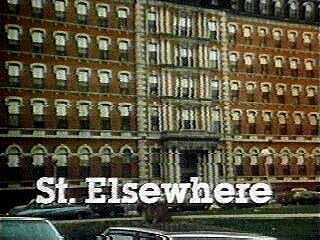
Welcome to Retro Television Reviews, a feature where we review some of our favorite and least favorite shows of the past! On Fridays, I will be reviewing St. Elsewhere, a medical show which ran on NBC from 1982 to 1988. The show can be found on Hulu!
This week, Peter White continues to disappoint everyone.
Episode 1.6 “Legionnaires: Part One”
(Dir by Thomas Carter, originally aired on December 7th, 1982)
Dr. Peter White (Terence Knox) is perhaps the most incompetent doctor at St. Eligius. Over the course of the first few episodes, we have watched as he’s taken advantage of his fellow residents, been rude to patients, misdiagnosed obvious medical conditions, and complained nonstop about how difficult his life is. Dr. White is struggling to balance the punishing schedule of being a resident with also being a husband and the father to a young girl and a newborn. He’s in over his head.
What’s interesting is that, despite all of his problems, he’s not a particularly sympathetic character and I don’t think he’s meant to be. He’s never going to be a good doctor and he doesn’t have the courage to admit it. Instead of finding a career for which he’s suited, he insists on being a doctor and risking the life of anyone unlucky enough to be his patient. What makes Dr. White an especially disturbing character is that there are probably a lot of doctors in the real world who are just like him. They’re overwhelmed and they make stupid mistakes. I get overwhelmed sometimes too, as does everyone. And, like everyone, I occasionally make mistakes. However, my mistakes usually amount to something like missing a cringey typo that causes me to feel embarrassment until I get a chance to fix it. A doctor’s mistake can lead to people dying.
This week, Dr. White attempts to give penicillin to a patient who is allergic. Fortunately, Dr. Westphall is able to stop White from putting his patient into a coma. Dr. White also manages to lose his hospital-issued pager and, when he’s told that it will cost him $300 to get a new one, he freaks out. A chance meeting with a lawyer in the hospital cafeteria leads White to offer to sell out the hospital by recommending the lawyer to anyone willing to sue because they ended up with a doctor like Peter White. White finally raises the money by donating his sperm. The nurse at the sperm bank says that it’s really generous for a doctor to donate. Not this doctor!
While Peter is screwing up his life, Dr. Westphall is dealing with what appears to be an outbreak of Legionnaire’s Disease in one of the wards. Westphall wants to immediately shut down the ward. Dr. Auschlander and board member H.J. Cummings (Christopher Guest — yes, that Christopher Guest) disagree. However, after another young woman dies of what appears to be Legionnaire’s, Westphall orders the ward to be closed and the patients to be relocated.
Meanwhile, Kathy Martin broke up with Fiscus because she felt their fling was turning into a relationship and Dr. Cavanero dealt with a nurse who disliked her. Neither one of those subplots did much for me, though Kathy is emerging as one of my favorite characters on this show. Before breaking up with Fiscus, she goes to a funeral of a stranger just so he won’t be buried without someone there to mourn him. She wears white to the funeral. One doctor comments that she’s never seen Kathy wear white before. Kathy’s a great character and deserves better than just being Fiscus’s girlfriend.
This episode was an improvement over the last episode I watched. According to the title, it’s also only “Part One” so I imagine there will be some fallout over closing that ward next week. We’ll see what happens.
Welcome to Retro Television Reviews, a feature where we review some of our favorite and least favorite shows of the past! On Fridays, I will be reviewing St. Elsewhere, a medical show which ran on NBC from 1982 to 1988. The show can be found on Hulu!
This week’s episode of St. Elsewhere featured Dr. Craig winning an award. Good for him!
Episode 1.5 “Samuels and the Kid”
(Dir by Thomas Carter, originally aired on November 30th, 1982)
This week’s episode of St. Elsewhere was kind of boring, It wasn’t a bad episode because the show was well-acted and even the boring subplots felt as is they were part of a bigger whole but, especially when compared to last week’s episode, Samuels and the Kid just wasn’t as compelling.
The Kid of the title is Robbie Durant (Jeremy Licht), a young patient who needs to have some minor surgery done on his ankle. Dr. Samuels take a really intense interest in the kid, bonding with him and even offering him tickets to a Patriots football game. At first, it seems like Samuels is just trying to be nice to a kid who is in a scary situation. (When I was growing up, I spent a few nights in the hospital because of my asthma and it always scared me to death.) But, at the end of the episode, it is revealed that Samuels had a son who was Robbie’s age who died in a freak accident. As for Robbie, the operation is a success but he still dies as the result of an embolism. It was sad but, at the same time, I knew Robbie was going to die as soon as he showed up in the hospital. I’ve seen enough medical shows to know.
Dr. Cavanero was at a bed-and-breakfast when she learned that one of her patients had gone into labor and was at her apartment alone. Cavenro had to beg people for change so that she could use a pay phone to call the patient’s neighbors so that she could talk them through delivering the baby. Seen today, the most interesting thing about this storyline is that it takes place at a time when people had to carry around quarters so that they could call each other in case of an emergency. (There is a very dusty old payphone a few blocks away from my house. I assume it doesn’t work and I don’t think it’s been touched by human hands since the 90s — and I’m certainly not going to touch it! — but it’s always interesting to see it sitting there like some haunted beacon of the past.)
Dr. Fiscus continued to have sex with Kathy Martin. Good for them but I really don’t know that I need to spend a good deal of time listening to Howie Mandel talk about his sex life.
Dr. Chandler (Denzel Washington) accused a nurse of being incompetent. Nurse Rosenthal (Christina Pickles) got mad at him for yelling at the nurse in the hospital hallway. Dr. Westphall mediated and agreed to move the nurse to another floor. Denzel Washington is always fun when he’s yelling at people.
There was one very funny scene. Dr. Craig won an award for surgeon of the year and gave an extremely long, pompous, and rather bitter acceptance speech. (The award was a plaster cast of his own hands.) William Daniels played the scene perfectly and I have a feeling that Dr. Craig is going to end up becoming my favorite character. As a bonus, Daniels’s wife, Bonnie Bartlett, appeared as Craig’s wife. By the middle of Craig’s speech, even she had stoppled listening and lit a cigarette.
As I said, this was a little bit of a boring episode. Still, I look forward to the future of the show!
Speaking of the future, this is my last St. Elsewhere review of 2024. My next review of this show will post on January 3rd!
Welcome to Retro Television Reviews, a feature where we review some of our favorite and least favorite shows of the past! On Fridays, I will be reviewing St. Elsewhere, a medical show which ran on NBC from 1982 to 1988. The show can be found on Hulu!
This week, we get to know a very bad doctor.
Episode 1.3 “Down’s Syndrome”
(Dir by Mark Tinker, originally aired on November 16th, 1982)
St. Eligius is home to several doctors, some of whom are good at their job and some of whom are really, really bad.
One of the bad ones appears to be Dr. Peter White (Terrence Knox), a resident who was in the background during the previous two episodes but who was at the center for a good deal of this episode. Peter has a terrible bedside manner, absolutely no social skills, and his knowledge of medicine appears to be subpar at best. When a homeless man comes in and complains of pain, Peter gives him a dose of potassium that nearly kills him. (Only the quick thinking of Dr. Ehrlich — who himself hardly appears to be the perfect doctor — keeps the patient alive.) Dr. White seems to be overwhelmed and it certainly doesn’t help that his wife is constantly calling the hospital and demanding to speak to him about every little thing. That said, it’s hard to have much sympathy for Dr. White. Yes, he’s overwhelmed but his mistakes nearly kill a man.
I have to admit that, as I watched Dr. Peter White on this week’s episode, I kept thinking about some of the doctors who treated my father after he had his car accident in May. Whenever I spoke to them, they would brusquely answer my questions, usually in technical language that reflected that it had been a long time since they talked anyone who hadn’t gone to medical school. At the time, I made the same excuses for them that I just made for Dr. White. They were young, they were busy, and they were overwhelmed. After my father died, though, I stopped making excuses for them and I instead just accepted that they weren’t very good at their job. And perhaps Dr. White should admit the same.
It doesn’t help that Dr. White is contrasted with Dr. Auschlander, a kind and elderly liver specialist who is battling cancer but who still manages to treat all of his patients with kindness and respect. The episode made it clear that all of the residents should hope to become a doctor like Dr. Auschlander. While Peter snaps at his patients and nearly kills a man, Auschlander takes the time to play cards with a woman who is dying. We should all be so lucky as to have an Auschlander in our life.
Finally, Brian Whitehill (Tony Bill) and his pregnant wife, Denise (Maureen Whitehill) are informed that their baby will be born with Down’s Syndrome. In a scene that brings to mind Icelandic eugenics, Brian suggests that Denise get an abortion but Denise refuses, especially when she learns that she’s going to have a son. (She already has two daughters.) A day later, Brian comes home from work and tells Denise that he’s realized that she’s right and he’s prepared to be the father of a special needs child. Denise replies that she had the abortion earlier in the day. Seriously, what a depressing story! That said, I respected what the show was doing here. The patients are just as important as the doctors.
(And while Denise is getting an abortion, Dr. Morrison is learning that he’s going to be a father and, in contrast to Brian Whitehill, joyfully cheering in the hospital stairwell.)
As with the previous episode, there was a lot going on in the background. Dr. Beale attempted to analyze terrorist Andrew Reinhardt (Tim Robbins), who is still basically acting like an arrogant prick. Kathleen McAllister, the victim of Reinhardt’s attack, is still in a coma. Dr. Westphall gave a tour of the hospital to two community leaders who both suggested that St. Eligius should shut down and move its operations to a wealthier neighborhood. Dr. Fiscus got a blow job in an elevator from Kathy Martin. (“Going down?” Fiscus asked the next guy who got on the elevator.) It was a busy day at the hospital! It was a good episode, even if it didn’t really have any of the big wow moments that the previous two episodes featured. This episode was more about following a few days in the life of a hospital and the emphasis was on the nonstop flow of patients and doctors, some of whom were doing their best and some of whom were on the verge of giving up. In the end, the main thing I took away from this episode was that there may not be enough Aucschlanders to make up for all the Peter Whites.
Welcome to Retro Television Reviews, a new feature where we review some of our favorite and least favorite shows of the past! On Fridays, I will be reviewing St. Elsewhere, a medical show which ran on NBC from 1982 to 1988. The show can be found on Hulu!
This week, William Daniels claims the show as his own.
Episode 1.2 “Bypass”
(Dir by Thomas Carter, originally aired on November 9th, 1982)
“Hey, it’s Tim Robbins!”
Yes, the future Oscar winner shows up in the second episode of St. Elsewhere, playing a rich kid-turned-terrorist named Andrew Reinhardt. Reinhardt, who no doubt learned all about Marxism during his first semester away at college, set off a bomb in a bank, killing two people and putting a woman named Kathleen McCallister into a coma. Both Reihnhardt and McCallister have been brought to St. Eligius. While Kathleen’s husband, Stephen (Jack Bannon), sobs in the hallway, Reinhardt acts like a petulant brat in his hospital room.
With the nurses refusing to change his sheets or even give him his morphine shots, it falls to Dr. Morrison to take care of him. Reinhardt is not at all appreciative and Morrison finds himself conflicted. How is he supposed to give proper medical treatment to someone who he despises? Morrison is so conflicted that he even goes to Dr. Westphall. Westphall responds by telling a long story about a time that he fell in love with a patient. I’m getting the feeling that Morrison feeling conflicted and Westphall telling long stories are both going to be regular features on this show.
(The correct answer to Morrison’s question about how he can take care of a bad person is as follows: It’s your job and you’re getting paid to do it.)
This episode also gave the viewer a chance to get to know Dr. Craig, the very talented but very egotistical head of surgery who is played by the great William Daniels. Dr. Craig holds a press conference to inform reporters about the conditions of both Reinhardt and Kathleen McCallister and declares that, despite its bad reputation, “St. Eligius is the place to be!” He then proceeds to get angry when the press is more interested in talking to the surgeon who actually saved Kathleen’s life than to him.
Dr. Craig browbeats a Mr. Broadwater (Robert Costanzo) into getting bypass surgery done. The surgery appears to have been a success but it’s hard to ignore that Craig essentially bullied the guy into getting a major operation, one that could have killed him if the least little thing had gone wrong. Resident Victor Ehrlich (Ed Begley, Jr.) assists in the operation and, at one point, Dr. Craig intentionally head butts him when Ehrlich cannot name all of the arteries leading into the heart. It’s a bit aggressive but, on the plus side, Ehrlich does learn all of the names. Afterwards, Dr. Craig brags about how his own son is following in his footsteps and tells Mr. Broadwater’s son that some day, a new Dr. Craig will operate on him. In other words, Dr. Craig is kind of a jerk but he’s good at what he does and he’s played by William Daniels so it’s hard to hold anything against him.
There were other subplots playing out in the background, the majority of which just seemed to be there to remind us that St. Elsewhere is an ensemble show and that, just because someone isn’t a major character in this episode, that doesn’t mean they won’t be important later on. Psychiatrist Hugh Beale (G.W. Bailey) attempted to learn how to swim and ended up taking a class with a bunch of children. Dr. Fiscus (Howie Mandel, the least convincing doctor ever) held court in the cafeteria and claimed that the hormones used in processing food were causing children to develop earlier than ever before. Dr. Peter White (Terrence Knox) wandered around with a bunch of X-rays and begged everyone he met to help him understand what he was (or wasn’t) seeing. If nothing else, this episode did a good job of capturing the idea of the hospital as being a place that’s always busy.
For the most part, though, it was Dr. Craig who carried this episode. While Morrison and Westphall ponderously considered the implications of doing their jobs, Craig was an arrogant, angry, and brilliant dynamo and William Daniels’s high-energy performance was a pleasure to watch. Whenever the episode started to slow down, Dr. Craig would liven things up by yelling at someone. The hospital was lucky to have Dr. Craig and St. Elsewhere was lucky to have William Daniels.
Welcome to Retro Television Reviews, a new feature where we review some of our favorite and least favorite shows of the past! On Fridays, I will be reviewing St. Elsewhere, a medical show which ran on NBC from 1982 to 1988. The show can be found on Hulu!
When I started reviewing Homicide, Jeff suggested that I should also review St. Elsewhere because the two shows shared a similar sensibility and a lot of behind-the-scenes personnel. (Homicide showrunner Tom Fontana started out as a writer on St. Elsewhere.) Apparently. a few characters from St. Elsewhere would eventually cross-over to Homicide. Since I’m planning on soon reviewing two shows that were descended from Homicide — Oz and The Wire — it only seemed right to also review a show that was Homicide’s ancestor.
Though the show aired largely before my time, St. Elsewhere is definitely a show that I have heard about. Everyone who follows American pop culture has either read about or seen the show’s infamous final episode and knows about the Tommy Westphall Universe Hypothesis. Obviously, I can’t get into it now because that would be a spoiler but we’ll discuss it when the time comes!
For now, let’s start at the beginning, with the pilot!
Episode 1.1 “Pilot”
(Dir by Thomas Carter, originally aired on October 26th, 1982)
St. Eligius is a hospital in Boston that has obviously seen better days. From the outside, it looks old. On the inside, the hallways have the dim and dull look of a building that hasn’t been renovated in over ten years. As Dr. Mark Craig (William Daniels, long before he played Mr. Feeney on Boy Meets World) angrily puts it, the hospital gets no respect in Boston. It’s seen as being a “dumping ground” for patients who can’t afford anything better. Dr. Craig is world-renowned heart surgeon whose wealthy patients have donated what few improvements the hospital has seen over the past few years. (“All of our clocks now read the same time!” Dr. Craig brags at one point.) But not even Dr. Craig can change the hospital’s reputation as being secondary to Boston General.
There are actually a few good things about St. Eligius. For one thing, a young Denzel Washington is on staff, playing resident Phillip Chandler. Denzel doesn’t get to do much in the pilot but still, his presence fills the viewer with confidence. St. Eligius is also home to a world-renowned liver specialist, Dr. Daniel Auschlander (played by Norman Lloyd, who also worked with Hitchcock and Orson Welles). Auschlander has liver cancer but the hospital chief-of-staff, Dr. Donald Westphall (Ed Flanders), assures everyone that Auschlander will probably “out live us all.” (And he was right, to an extent. Norman Lloyd lived to be 106 years old before passing away in 2021. Ed Flanders died, tragically by suicide, in 1995.) St. Eligius is a teaching hospital and the residents want to make a good impression by keeping their patients alive. That’s always a good thing.
At the same time, how secure can you feel when Howie Mandel is one of the residents? Mandel plays Dr. Wayne Fiscus, who wears a baseball cap and acts …. well, he acts a lot like Howie Mandel. Like Washington, Mandel doesn’t do a lot in the pilot. He does get a subplot where he apparently has sex in the morgue with goth pathologist Cathy Martin (Barbara Whinnery) but otherwise, we don’t see him treating a patient or anything like that. Still, it’s a bit jarring to see Howie Mandel as a doctor. I would not necessarily want him for my doctor because he’s to be easily distracted. Maybe he’ll change my mind as the series progresses.
Speaking of sex, Dr. Ben Samuels (David Birney) has gonorrhea and spends most of the pilot approaching doctors and nurses and informing them of his conditions and suggesting that they might want to get tested themselves. That’s not exactly the best way to be introduced to a character but it also lets us know that this show is not just going to be about dedicated doctors who spend all of their time worrying about their patients and making amazing medical discoveries. Instead, this show is also about doctors who get venereal diseases. Has anyone checked on Fiscus in the morgue?
(That said, Dr. Samuels does get a scene where he saves the life of a woman who was injured in a terrorist bombing, as if the show does want to make sure that we know that he can do his job, even if he is spreading VD through the hospital.)
The majority of the episode follows Dr. Jack Morrison (David Morse), a first-year resident who has been working several 24-hour shifts and who complains, at one point, that he hasn’t seen his wife for days. Dr. Morrison gets upset when a surgeon wants to operate on one of his patients, a 15 year-old girl named Sandy (Heather McAdams). Morrison believes that surgeons always want to cut into somebody. Morrison gets even more upset when Sandy’s mother requests that Sandy be transferred to Boston General, which has a reputation for being a better, more modern hospital. In fact, Morrison is so upset and exhausted that he forgets to file a death certificate for a patient who dies during the night. As a result, it’s believed that the patient, who has a reputation for being violent, has gone missing and is stalking the hospital. Dr. Annie Cavanero (Cynthia Sikes) spends the entire episode looking for a dead man, which at least gives her an excuse to visit every ward and introduce the viewers to the members of the show’s ensemble cast.
Having lost my mom to cancer and now my Dad to Parkinson’s, I was hesitant about reviewing St. Elsewhere. (Actually, I was hesitant about reviewing any medical show.) When my Dad was in the hospital, I felt like I couldn’t get anyone to give me a straight answer about his condition and I often felt the doctors were talking down to me. To be honest, my worst conflicts were with the nurses, one of whom told me that I would have to “lose the attitude” before she would explain why my father had been moved to the Delirium Ward. (It didn’t help that, at the same time my Dad was in the hospital, there was a huge storm that left us without power for a week.) At the same time, there were other doctors who were helpful. The staff at the rehab center that my dad was sent to were also wonderful. I have my regrets about agreeing to hospice care but the nurse who was assigned to my Dad was very empathetic and totally understanding whenever I asked her for a cigarette. (Under normal circumstances, I don’t smoke because I have asthma but seriously, the stress was killing me.) I’m bitter and angry about a lot of what happened but I’m also thankful for the small moments of kindness.
Watching a show set in a hospital was not easy for me but the pilot of St. Elsewhere appealed to me with its mix of melodrama and humor. There was a quirkiness to it that I appreciated. William Daniels made me laugh with his annoyed rant about how little respect the hospital received. Most of all, I cared about whether or not Dr. Morrison would still be alive at the end of his shift. David Morse’s performance won me over. He’s the type of doctor that I would want to have. Well, actually, I’d probably want Denzel to my doctor but Dr, Morrison could assist. Just keep Dr. Howie Mandel away from me. Nothing against him but he seemed to be having way too much fun at the hospital….
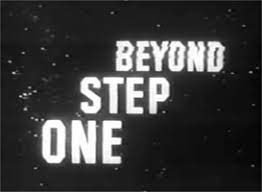
A young woman (Suzanne Pleshette) desperately needs a blood transfusion. Fortunately, the police have managed to track down one of the only people to share her blood type, an accountant named Harold Stern (Norman Lloyd). Harold seems like a nice, rather mild-mannered guy and he has a long history of donating blood. However, when the police approach him, Harold refuses to donate.
“What type of crumb are you!?” the police demand.
Harold explains that, whenever he gives someone blood, he develops a psychic connection with that person. He can see their future. And that’s simply a burden that he can no longer shoulder….
This episode of One Step Beyond originally aired on September 15th, 1959. Norman Lloyd, who plays Harold, got his start as a member of Orson Welles’s Mercury Theater and he also played the villain in Alfred Hitchcock’s Saboteur. (Speaking of Hitchcock, Suzanne Pleshette played the doomed school teacher in The Birds.) When Lloyd appeared in this episode of One Step Beyond, he was 44 years old. He would go on to live for another 62 years, making his final film appearance at the age of 101!
The 1945 Best Picture nominee, Spellbound, tells the story of Dr. Constance Petersen (Ingrid Bergman), a psychoanalyst at a mental hospital in my least favorite state, Vermont.
Constance has fallen in love with a man (Gregory Peck) who she believes to be Dr. Anthony Edwardes, the newly appointed director of the hospital. Dr. Edwardes is youngish and handsome and idealistic and authoritative …. well, he’s Gregory Peck. However, he also has an intense phobia about seeing any set of parallel lines. Curious to discover the reason for Edwardes’s phobia, Constance does a little digging on her own and discovers that Dr. Anthony Edwardes is not a doctor at all! Instead, he’s a guilt-stricken amnesiac who is convinced that he murdered Dr. Edwardes and took his place!
Constance, however, doesn’t believe that the Amnesiac is a murderer. She thinks that he is suffering from some sort of deep-rooted guilt that had led him to believe that killed the doctor. She wants a chance to psychoanalyze him and discover the truth about his background. Unfortunately, the police do think that the Amnesiac is a murderer and their determined to arrest him.
Constance and the Amnesiac go on the run, heading to the home of Constance’s mentor, Dr. Alexander Brulov (Michael Chekhov, the nephew of Anton Chekhov). With Brulov’s help, Constance analyzes a dream that the Amensiac had, one involving curtains decorated with eyes, the faceless proprietor of a casino, and a man falling off a mountain. Can Constance and Brulov solve the mystery of the Amnesiac’s identity before the police take him away to prison?
Spellbound was the last of the four Hitchcock best picture nominees and it was also the last film that Hitchcock made for producer David O. Selznick. Selznick was quite a fan of psychoanalysis and he insisted that Hitchcock not only make a movie about it but that he also use Selznick’s own therapist as a technical advisor on the project. Hitchcock, for his part, was able to bring in the surrealist Salvador Dali to help design the Amnesiac’s dream sequence but Selznick felt that the 20-minute sequence was too long and too weird and, as a result, it was cut down to two minutes for the final film. All this considered, it’s not a surprise that, despite the fact that Spellbound was a hit with critics and audiences, Hitchcock himself didn’t care much for it and considered it to be more of a Selznick film than a Hitchcock film. And it is true that the film’s total faith is psychoanalysis feels more like something one would expect to hear from a trendy producer than from a director like Hitchcock, who was known for both his dark wit and his rather cynical attitude towards anyone in authority.
For a film like Spellbound to truly work, there has to be some doubt about who the Amnesiac is. For the suspense to work, the audience has to feel that there’s at least a chance, even if it’s only a slight one, that the Amnesiac actually could be a murderer, despite the attempts of Constance and Brulov to prove that he’s not. And Spellbound is full of scenes that are meant to leave the audience wondering about whether or not the Amnesiac should be trusted. However, because the Amnesiac is played by Gregory Peck, there’s really no doubt that he’s innocent. Hitchcock was not particularly happy with Gregory Peck as his leading man. Peck projected a solid, middle-American integrity. It made him ideal for heroic and crusading roles but made him totally wrong for any role that required ambiguity. It’s difficult to believe that the Amnesiac is suffering from a guilt complex because it’s difficult to believe that Gregory Peck has ever done anything for which he should feel guilty. Cary Grant could have played the Amnesiac. Post-war Jimmy Stewart could have done an excellent job with the role. But Peck is just too upstanding and stolid for the role. In a role that calls from neurosis, Peck is kind of boring.
That said, the rest of the cast is fine, with Ingrid Bergman giving one of her best performance as Constance and Michael Chekhov bringing some needed nuance to a role that could have turned into a cliché. Leo G. Carroll has a small but pivotal role and he does a good job keeping the audience guessing as to his motivation. Even at a truncated two minutes, the Dali dream sequence is memorably bizarre and the famous shot of a gun pointed straight at the camera still carries a kick. This is a lesser Hitchcock film but, that said, it’s still a Hitchcock film and therefore worth viewing.
As I mentioned previously, this was the last of Hitchcock’s films to be nominated for Best Picture. Ironically, his best films — Rear Window, Vertigo, and Psycho among them — were yet to come. Spellbound was nominated for six Oscars but only won for Miklos Rozsa’s score. (Ingrid Bergman was nominated for Best Actress that year, not for her role in Spellbound but instead for The Bells of St. Mary’s.) The big Oscar winner that year was Billy Wilder’s The Lost Weekend.
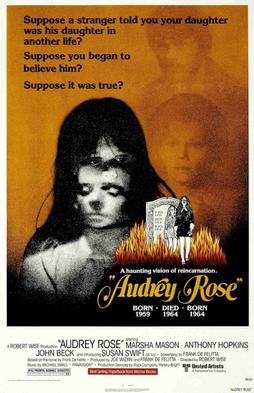
The 1977 film, Audrey Rose, tells the story of an annoying little girl named Ivy (Susan Swift), who is the daughter of annoying Janice (Marsha Mason) and annoying Bill (John Beck). Everything seems to be perfectly normal in an annoying way until, one day, they notice that they’re being followed around by an annoying man named Elliott (Anthony Hopkins). Elliott explains that Ivy is the reincarnation of his daughter, Audrey Rose, who was herself kind of annoying. Whenever Elliott says, “Audrey Rose,” Ivy going into a trance and starts screaming, which gets a bit annoying after a while. Elliott explains this is because Audrey died in a fiery car crash and was apparently reincarnated too soon after her death. Therefore, anytime Elliott shows us, Ivy relives the crash and tries to burn herself. Annoying!
To me, it seems like there’s a simple solution to all of this. Elliott could just go away or, at the very least, stop saying, “Audrey Rose” every ten seconds. Anyway, at one point, Ivy starts screaming so Elliott rushes into the apartment and makes her stop. However, Elliott is accused of attempting to abduct Ivy, arrested, and put on trial.
Elliott’s defense is that he couldn’t abduct his own daughter so therefore, if Ivy is the reincarnation of Audrey Rose, then he’s innocent. Somehow, this leads to the trial becoming about proving reincarnation. Hindu holy men are called to the stand. Elliott smirks and tells his lawyer to call Janice to the stand because he’s figured out that Janice believes him. Meanwhile, Ivy finds herself drawn towards every fire that she sees…
Audrey Rose was directed by a legitimately great director, Robert Wise. Unfortunately, Wise takes the material way too seriously. Just when you think the film is going to be an over the top possessed child flick, it suddenly turns into a turgid and serious debate about reincarnation. The movie is so busy trying to be realistic that it forgets to be fun.
There’s also a lot of yelling in Audrey Rose. In between Ivy screaming and Elliott continually calling his dead daughter’s name and Bill arguing with Janice and random characters screaming whenever Ivy gets to close to a fire, it’s easy to get a headache while watching this film.
Mason and Beck are pretty lousy in the roles of Janice and Bill. Hopkins brings an occasionally neurotic edge to the role of Elliott. You never quite trust him, even though the movie wants you to. The best performances in the film come from the performers in the minor roles, character actors like Norman Lloyd, Robert Walden, and John Hillerman. None of them are required to pretend like they’re taking their dialogue seriously and, as such, they’re a lot more fun to watch.
All in all, Audrey Rose is a fairly silly movie. For some reason (probably the presence of Hopkins), it does seem to show up on TCM fairly regularly but I wouldn’t recommend watching. If you want to see a good Robert Wise horror movie, check out The Haunting.
The Los Angeles Film Critics Association met earlier today and announced their picks for the best of 2020. In the past, the LAFCA has been considered to be one of the more reliable of the Oscar precursors. For the past decade, the LAFCA’s pick for best film has gone on to pick up several Oscar nominations.
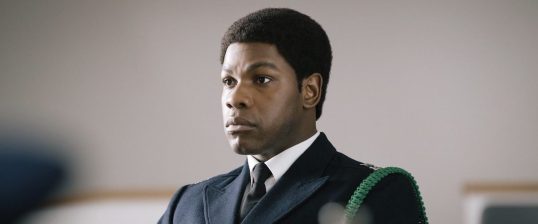
Well, that streak came to an end today. In a totally unexpected but still rather nice twist, the LAFCA selected Steve McQueen’s Small Axe as Best Picture. Small Axe, of course, is the umbrella title for five films that McQueen produced for the BBC and which are currently streaming on Prime. I’ve reviewed two of them — Mangrove and Red, White, and Blue. I’ll watch and review the other three this week.
Whether or not Small Axe is Oscar eligible has long been an open question. Both Mangrove and Red, White, and, Blue were selected to premiere at Cannes and to play at other festivals before making then airing on the BBC and streaming on Prime. Due to the pandemic, the Academy also changed the rules this year to make it easier for streaming films to compete. However, Steve McQueen has said that Small Axe was always intended to be a television miniseries and that, despite the films being accepted to Cannes and other festivals, there was never any plan to release any of them theatrically. For its part, Amazon has submitted Small Axe to the Golden Globes as a Limited Series and was apparently planning on mounting an Emmy campaign next year. With the exception of documentaries, films nominated for Emmys are not eligible to be nominated for Oscars and vice versa. The rule, even in this odd year, is that you have to pick one or the other.
So, by all those standards, none of McQueen’s five films nor Small Axe as a whole are Oscar-eligible. Will that change? Will Amazon decide to forgo the Emmys and instead go for an Oscar campaign? Eh …. probably not. But who knows — with this year blurring the lines between theatrical and television films like never before, anything could happen. (But probably won’t.)
Anyway, here are the LAFCA winners!
Best Film
Small Axe
Runner-Up: Nomadland
Best Foreign Film
Beanpole
Runner-Up: Martin Eden
Best Director
Chloé Zhao – Nomadland
Runner-Up: Steve McQueen – Small Axe
Best Actress
Carey Mulligan – Promising Young Woman
Runner-Up: Viola Davis – Ma Rainey’s Black Bottom
Best Actor
Chadwick Boseman – Ma Rainey’s Black Bottom
Runner-Up: Riz Ahmed – Sound Of Metal
Best Documentary Film
Time
Runner-Up: Collective
Best Screenplay
Promising Young Woman
Runner-Up: Never Rarely Sometimes Always
A young woman (Suzanne Pleshette) desperately needs a blood transfusion. Fortunately, the police have managed to track down one of the only people to share her blood type, an accountant named Harold Stern (Norman Lloyd). Harold seems like a nice, rather mild-mannered guy and he has a long history of donating blood. However, when the police approach him, Harold refuses to donate.
“What type of crumb are you!?” the police demand.
Harold explains that, whenever he gives someone blood, he develops a psychic connection with that person. He can see their future. And that’s simply a burden that he can no longer shoulder….
This episode of One Step Beyond originally aired on September 15th, 1959. Norman Lloyd, who plays Harold, got his start as a member of Orson Welles’s Mercury Theater and he also played the villain in Alfred Hitchcock’s Saboteur. (Speaking of Hitchcock, Suzanne Pleshette played the doomed school teacher in The Birds.) When Lloyd appeared in this episode of One Step Beyond, he was 44 years old.
Today, Norman Lloyd is 105 years old and guess what? He’s still active! He had a role in Trainwreck and still occasionally appears on television.



 Through the Shattered Lens