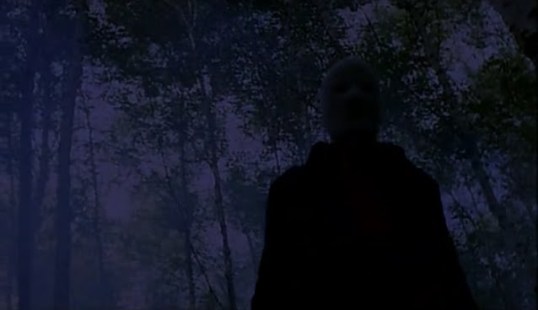
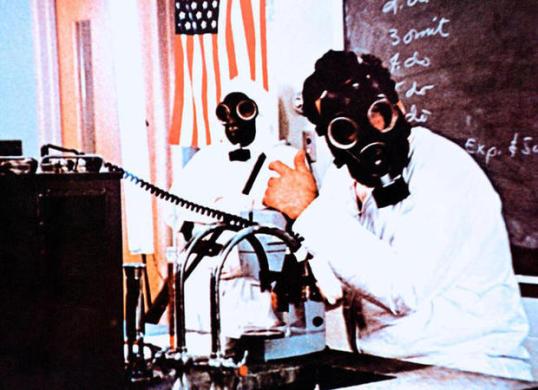
4 Or More Shots From 4 Or More Films is just what it says it is, 4 shots from 4 of our favorite films. As opposed to the reviews and recaps that we usually post, 4 Shots From 4 Films lets the visuals do the talking!
4 Shots From 4 Horror Films
4 Or More Shots From 4 Or More Films is just what it says it is, 4 shots from 4 of our favorite films. As opposed to the reviews and recaps that we usually post, 4 Shots From 4 Films lets the visuals do the talking!
4 Shots From 4 Horror Films

In The Ground Beneath Our Feet, Emma Bryant (Elliana McKean) is a teenager who feels lost. Her school has drab lighting and is full of teachers who don’t seem to care and bullies who terrorize the hallways. When she gets cast in the school musical, it turns out that it’s a sacrilegious dirge written by a drama teacher who obviously has issues of her own. (“Thank God I don’t need God!” a typical song goes.) Her grandparents aren’t going to be happy about that! For that matter, they also probably wouldn’t approve of her crush on simple-minded football star Aiden (Cooper Southfield).
Hidden away in the corners of her grandparents’ home is a diary that was written by Emma’s great-aunt Evelyn. Reading it, she learns about how, in the 1950s, Evelyn (Mirabelle Bishaw) watched as her sister Mary (Ruby Eisenberg) fell under the influence of a no-good boyfriend named Roy (Eric Johnson) and a Math teacher who rarely taught about Math and instead would spend the entire class talking about his atheism.
The film flashes back and forth, from the 50s to 2024. There’s even a brief stopover in the 70s. That’s actually an intriguing premise and the film does make an effort to show how history repeats itself. The alienation that Mary felt in the 50s is much like the alienation that Emma feels in 2024. Unfortunately, the film itself really doesn’t have the budget to convincingly recreate the 50s, beyond featuring a few vintage cars. Indeed, the film’s version of the 50s feels almost like a parody. All of the dialogue has the sound of a writer trying to duplicate the rhythms of an era that they don’t know much about beyond what they’ve seen on television or in other movies. And while Mirabelle Bishaw, Ruby Eisenberg, and Eric Johnson all do a good job in the 50s scenes, the actors playing their friends and acquaintances deliver their lines almost robotically. It’s a bit disconcerting to listen to some of them.
The main theme running through this film is that people are very easily led. That’s not necessarily a bad theme. The truth of the matter is the most people are easily manipulated, especially by authority figures like teachers. (Myself, I tend to assume that everyone is wrong except for me. And while that may be preferable to being easily influences, it still comes with its own set of difficulties.) In the modern scenes, Emma listens as a friend of her grandmother’s explains that her granddaughter has fallen away from the church because she read a set of “fantasy book” that led to her becoming an occultist. That’s something that often seems to happen in faith-based films but I have to say that I don’t buy it. Don’t blame the books just because your granddaughter apparently can’t think for herself. People are responsible for their own decisions, regardless of how easily led they may be.
This film was definitely better-made than the average faith-based film. The movie actually looked like a real movie. Elliana McKean was sympathetic and likable as Emma. The story was a bit difficult to follow. The nonlinear style of storytelling has become very popular nowadays but it really does require a fine eye for detail to truly make it work. I doubt it will convert anyone but at least the film felt like a professional production.
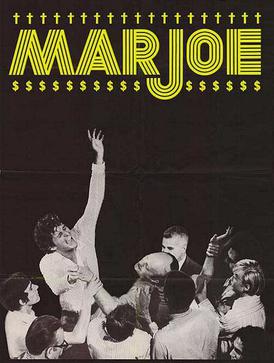
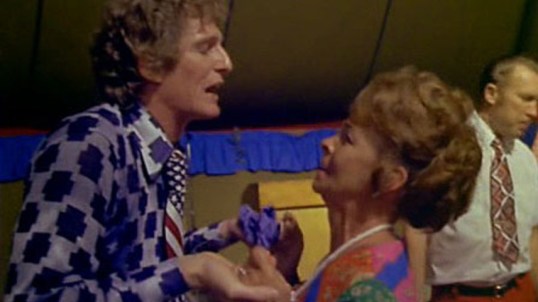
Before Marjoe Gortner was an actor, he was a preacher.
Actually, that might be a bit too glib on my part. According to Marjoe, he was never more of an actor than when he was standing under a tent and preaching.
The 1972 documentary Marjoe opens with footage of a four-year-old Marjoe Gortner wearing a white button-down shirt and a bow tie and preaching about how all the sinners are going to burn in Hell. We watch as young Marjoe performs a marriage. We see his parents beaming as Marjoe delivers a fire-breathing sermon. In a voice-over, an adult Marjoe Gortner explains that he was named after Mary and Joseph and that both of his parents were active on the Pentecostal revival circuit. His father was a preacher. At four years old, Marjoe became the world’s youngest ordained preacher. Marjoe talks about how the novelty of a child preacher drew in crowds. By the time he was 14, he had brought in over four million dollars to his family’s ministry. When crowds turned out to be less interested in a teenage preacher than they had been in a child preacher, Marjoe’s father left the family and took the money with him.
We cut to Marjoe Gortner at 27. He’s tall, a little bit gawky. He has curly hair and a beak-like nose. He’s not exactly handsome, but when he speaks, he still has the charisma that once made him a superstar in evangelical circles. He’s talking to a documentary crew who are about to follow him on what he says will be his final revival tour. Marjoe claims that, even as a child, he never really believed or even understood what he was preaching. He was raised to perform, and that’s what he did. Now, Marjoe says that he’s had a crisis of conscience. In public, he’s still a fire-and-brimstone preacher who claims to be able to heal the sick and whose rhythmic sermons cause people to dance, speak in tongues, and give away their money. (The money, Marjoe explains, is the important part.) He preaches against drugs and sin and anyone who believes differently than he does. In private, Marjoe is a pot-smoking beatnik (and indeed, beatnik would be the right term to use because Marjoe’s a bit too cynical to be considered a hippie) who enjoys hanging out with the same people that he condemns from the stage.
The documentary features a lot of footage of Marjoe at various revival meetings, preaching and showing off the moves that he says he copied from Mick Jagger. We watch as Marjoe has an awkward reunion with his estranged father, who shows up to preach under the same tent as his son. We watch as Marjoe repeatedly counts his money. Marjoe revels in being a showman and admits that he still loves the feeling of holding the emotions of his audience in the palm of his hand. As creepy as the footage sometimes is, there’s a definite elitism to the documentary crew, of which they don’t really seem to be aware. Of course, the film seems to be saying, this would happen in the South. We Northerners are too smart to fall for Marjoe’s act. And yet, just the fact that they’re filming him shows that they have fallen for his act. They just don’t realize it.
While the revival footage is indeed fascinating (one can really feel the audience getting swept up in Marjoe’s sermons), the film’s most interesting moments are when we see Marjoe talking to the documentarians. For all the talk about how he wants to finally be himself, Marjoe never stops performing. Even when he’s confessing and claiming to be telling the truth, Marjoe is acting. One gets the feeling that performing is all that Marjoe ever knew, and certainly it makes it easy to understand why, in the years following this documentary, he found success as a character actor. There’s never a moment in the documentary in which Marjoe isn’t “on.” In the end, one gets the feeling that he’s conning the documentarians just as easily as he’s conning the faithful. When Marjoe says that he is “bad but not evil,” it ultimately feels like another performance. Marjoe spends the documentary taking viewers behind the scenes, and yet he’s as much of an enigma at the end of the documentary as he was at the beginning. He’s a fascinating character, if only because it’s impossible to tell how much of anything is real to him.
(Indeed, watching Marjoe, I was reminded of Elizabeth Holmes’s disturbingly empty smile in the trailer for the upcoming documentary You Can See Everything.)
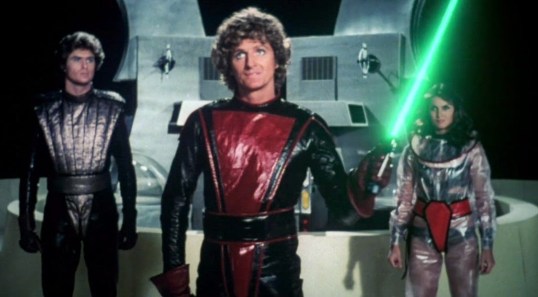
Released in 1972, Marjoe won the Oscar for Best Documentary. Marjoe Gortner, who passed away last week at the age of 82, had a lengthy acting career, one in which he often played con men and other outlaws. His final role was in 1995’s Wild Bill. He played a preacher. My favorite Gortner role will always be as Akton in 1978’s Starcrash.
1963’s House of the Damned tells the story of an isolated mansion. It’s a place that many people have tried to live in but no one has ever been willing to stick around for too long. There are rumors that the mansion is haunted. In fact, you could even make the claim that the mansion is a house of the damned! Of course, we all know that there’s no such thing as ghosts, right?

Joseph Schiller (Richard Crane), the new owner of the mansion, calls architect Scott Campbell (Rob Foster) and tells him to go up to the house and check the place out. Scott points out that he was planning on celebrating his anniversary with his wife, Nancy (Merry Anders). Joseph say that there is no better way to celebrate an anniversary than to visit a house that might be haunted. Scott and Nancy (who is amazingly understanding) head for the house, where all sorts of strange things happen.
What type of strange things? Keys disappear. There are weird noises. Sometimes, it seems like something or someone might be lurking in the shadows. Could the house be haunted? While Scott and Nancy try to figure out what’s going on, Joseph shows up with his wife, Loy (Erika Peters). When Loy disappears, it becomes obvious that something is happening in the house of the damned!
House of the Damned is a briskly paced and occasionally effective haunted house story. It was directed by Maury Dexter, who was a director who was so fast and so capable of stretching a low budget that, at his best, he gave Roger Corman a run for his money. House of the Damned is only 63 minutes long and the film’s story isn’t particularly complex but Dexter still manages to create a properly ominous atmosphere and he does keep you guessing as to whether or not the house is actually haunted. The house itself was the former estate of infamous gangster Bugsy Siegel. Dexter reportedly spent ten days filming the movie at the Spiegel estate. Hopefully, he was not bothered by Bugsy’s ghost.
None of the characters are particularly well-developed but they are well-cast and the actors are all likable. The best performance comes from Erika Peters, who plays Loy as being slightly self-absorbed but ultimately good-hearted. She also gets to wear a bathing suit that is simply to die for. This film also features a very early performance from the great Richard Kiel, playing “The Giant.” It’s always nice to see Richard Kiel in a movie. Shortly before he passed away in 2014, Kiel visited my Alamo Drafthouse for a showing of The Spy Who Loved Me. Though it was obvious that he wasn’t in great health, he still took time to answer questions and to show off a rather charming smile. When a certain redhead told him that she loved him in a beloved 90s golf comedy, he smiled and said, “I believe that jacket belongs to Mr. Gilmore.”
House of the Damned was a nice surprise. We need more 62-minute films.

As far back as I can remember I’ve been a fan of Mel Gibson. I also truly believe that the LETHAL WEAPON series is one of the greatest action franchises of all time. Of course, part of that could be because it meant so much to me when I was growing up. I remember renting the original action classic with my family when we were on a spring break vacation at a resort in Hot Springs. I was 16 when part 2 became a huge hit in the late summer of 1989, and one of my first real dates was to see the film at the theater. Part 3 didn’t have as lasting an impact, but part 4 introduced me to the action legend Jet Li. Needless to say, if the long-rumored part 5 ever materializes, I’ll be there.
So, when I recently came across the thriller ON THE LINE (2022) on Netflix, I was happy to see Gibson back in a leading man role that appears to give him a chance to have some real fun. Here, he plays Elvis Cooney, a controversial late-night radio host whose show takes a serious turn when a distraught caller threatens to murder his family if he doesn’t play a dangerous game with him. What begins as any other night at the station turns deadly, with Elvis trying to figure out who he’s dealing with and just how far he’s willing to go.
One of the things I’ve always liked about Gibson is his ability to play characters who can be funny, obnoxious, and downright nuts, sometimes all at the same time. He brings plenty of that crazy personality to Elvis, who often comes off as a complete A-hole. But Gibson has a way of making even a real jerk entertaining to watch, and I enjoyed seeing him carry this film. I’ll just say this right now, if you don’t like Gibson, this is probably not the movie for you. He’s the primary reason to watch. I know Gibson has had some very public controversies over the years, and I certainly don’t condone some of his actions. But that doesn’t change the fact that this guy, his performances, and his movies were a staple of those early years when I was falling in love with cinema.
ON THE LINE reminded me a little of THE GAME (1997), the David Fincher thriller starring Michael Douglas and Sean Penn. Both films use the lead character’s birthday to set into motion an elaborate deception. I don’t want to give away this film’s surprises, and I’m certainly not suggesting that it’s nearly as accomplished as THE GAME, but I found it interesting that the two movies brought those same thoughts to my mind.
Is ON THE LINE a great movie? I wouldn’t go that far, and I’m sure there are plenty of folks who may feel cheated by the twisty ending(s). While I understand all of that, I’m the kind of viewer who doesn’t need every movie I watch to be a masterpiece. First and foremost, I’m a fan of actors, and I enjoy having a chance to see Mel Gibson being the true lead in a film that allows him to shine. That goes a long way with me.

I actually thought that I reviewed “Backrooms” already, but I had not. However, since it is October, it’s a perfect time to review this …. story. The fanbase is Star Wars-level obsessive and just because I don’t particularly care for something, it doesn’t mean it’s terrible- it usually does, but maybe this time is different. I can’t be correct – all the time…. or can I?
This film started as a 4chan post that went viral and the writer/director Kane Parsons built his life around this 4chan post. Then, he went all found footage on its ass. From the age of sixteen to twenty, his entire life was devoted to this magical world that looks a lot like a cubicle farm without the cubicles. The backrooms is a place where you expect to see sad data entry professionals working in sweatshop conditions. Maybe the backrooms is really just a front for an H1-B scam? Whenever a person enters the backrooms, all the workers are gone; so, maybe they used the backrooms as a means to move around their illegal data entry group and things got out of hand, creating a H1-B multiverse?
The film’s quantum mechanics are very intricate, but the movie itself has a very thin plot like saran wrap thin. Backrooms is 95% lore and the plot exists just to have more scenes wandering around the backrooms. Clark is the vehicle we use to get into the backrooms; he is the protagonist – sort of. He is an abusive alcoholic and failed architect who likely killed his wife. He also runs a furniture store and has employees who hate him, but that’s pretty normal for Clark because Clark is an asshat. In fact, his asshattery is so well-developed that even his therapist thinks he’s a boring jerk.
During one of his self-loathing sessions, Clark goes to his store’s basement and tries to do some electricity maintenance and he falls through a portal in his wall to …. wait for it…the backrooms! They basically look like the same room that he was in, but crappier and there are infinite backroom dimensions and quasi-fake people who you can eat- if you want. Apparently, it is okay to go Dahmer on these freaky people because they are “still lifes” – copies of copies of the earth prime people- I think.
He tells his therapist about the backrooms and she checks them out and nearly dies. I would have avoided this adventure and I would’ve been just fine. Clark, unlike me, becomes obsessed with the backrooms, gets his employees to explore them with him, and all the employees die because of a monster or because Clark eats them. Yes, Clark is a quasi-cannibal or a full-on cannibal or he is long pig curious. Don’t worry, Clark is stopped because he gets eaten by a paper mache version of himself. I always knew that arts and crafts were the devil’s workshop.
You could say that the backrooms are a Clark eat Clark world….
If you want to understand the backrooms, be prepared to have A LOT of homework like D&D dungeon master levels of homework!
I love this movie!
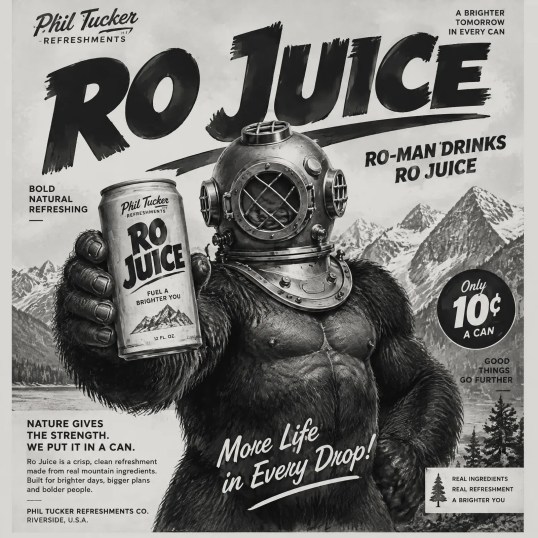
In this 1953 film, a gorilla wearing a diving helmet uses the Calcinator Death Ray to wipe out almost all human life on Earth. Only 8 people survive, among them a professor, his family, and Roy (future Eurospy star, George Nader). Ro-Man (George Barrows) is hounded by his superior to track down and destroy the survivors. Ro-Man does his best, though the humans prove to be …. well, they’re not really that resourceful. In fact, they’re pretty dumb. But Ro-Man is pretty dumb himself.
Regularly (and incorrectly) cited as being one of the worst films ever made, Robot Monster is an enjoyably absurd hybrid of horror and science fiction. Earth is destroyed through a combination of bad lighting effects and stock footage and the arguments between Ro-Man and his superior have to be heard to be believed. Robot Monster is actually a bit more self-aware than a lot of people realize. This is a low-budget Z-movie that realizes that it’s a low-budget Z-movie and which cheerfully embraces its identity. Robot Monster is a personal favorite and it’s a bit of Halloween tradition around these parts.
And now, enjoy Robot Monster in all of its black-and-white glory!
From 1958’s Attack of the 50 Foot Woman, Harry discovers that cheaters never get away with it. Especially when they’re cheating on someone who is 50 feet tell….
4 Or More Shots From 4 Or More Films is just what it says it is, 4 shots from 4 of our favorite films. As opposed to the reviews and recaps that we usually post, 4 Shots From 4 Films lets the visuals do the talking!
4 Shots From 4 Horror Films

Over the past decade, Cancel Culture was has gone though an interesting evolution. Whether or not its exists often seems to depend on who you ask or whether or not they feel that they’re the ones getting canceled.
Before 2016, it was agreed that Cancel Culture was real but it was viewed as largely being an internet meme. On Twitter, people would announce that “so-and-so is canceled” because that person had failed to mouth the right political platitudes or they were friends with someone else who had been canceled. Cancel Culture was around but few took it seriously because the main advocates were anonymous social media users who spent way too much time obsessing on Glee.
During the 2016 election and the year 2017, the Right claimed that the Left was trying to cancel anyone who voted Republican. This led to the Left declaring that Cancel Culture was a myth and that the Right was just being whiny.
In 2018, when Al Franken resigned from the Senate, the Left briefly decided that Cancel Culture was real and it was a bad thing if it led to someone that they liked getting in trouble. Once the Right started calling them out on this, the Left went back to saying that Cancel Culture was a myth but it was still bad in that it caused Al Franken to have resigned. And that’s why Kirsten Gillibrand will never be President.
In 2020, the Left decided that Cancel Culture was fine as long as the only people being canceled were people who didn’t wear masks or who had doubts about the lockdowns. However, at the same time, it was also decided that anyone who lost a job opportunity due to Cancel Culture would have lost that opportunity anyway because of …. reasons. It doesn’t matter if, like Gina Carano, you were one of the most popular actors on a show that was, for the moment, capturing the pop culture zeitgeist. The message seemed to be, “Yes, we’re cancelling people but it’s not anybody truly important so what do you care?”
Then, from 2022 to roughly 2026, the mainstream once again decided that Cancel Culture didn’t actually exist, except for when people like Eric Swalwell and Graham Platner were the ones getting canceled and that it was hypocritical of those who were previously canceled for tweeting a joke to take any joy over people being canceled for sexual assault.
In other words, Cancel Culture doesn’t exist except for when it does and hey, why do you care? Are you looking to get canceled?
As you can probably guess from the title, 2024’s Cancel Me Not is a film about Cancel Culture. Actor Chase Murray (Eddie McClintock) is accused of sexual harassment and assault by an actor who just wants to further their career. Chase is acquitted by a jury of his peers but after spending a year being relentless attacked online, he’s not ready to return to the spotlight. He travels to Florida, where he finds himself staying next door to Heather Campbell (Jana Lee Hamilton), who has just left her husband. Heather’s daughter, Emma (Arabella Weaver), is attending a college where the dean refers to the students as being his “children.” When Emma is harassed for being a Christian, it looks like it’s time for Chase to go to the school and give a speech at an assembly.
Cancel Me Not is another low-budget, faith-based film from Jason Campbell. On a technical level, the sound recording is often muddy and, despite only running for a little over an hour, it still feels a bit overlong. On the plus side, while it’s not a film that’s likely to change anyone’s mind about Cancel Culture, it is a film that is specifically designed to annoy those who claim that it doesn’t exist. It’s a “let’s tick off the other side” film and, when it works, it’s in a “Oh, I can’t wait to trick my Bernie-loving, DSA cousin into sitting through this” sort of way. There’s nothing subtle about it but it’s entertaining as long as you already agree with the film’s conclusions.