4 Shots From 4 Films: Special Joseph Kosinski Edition


4 Or More Shots From 4 Or More Films is just what it says it is, 4 shots from 4 of our favorite films. As opposed to the reviews and recaps that we usually post, 4 Shots From 4 Films lets the visuals do the talking!

Today, TSL wishes a happy birthday to director Joseph Kosinski!  It’s time for….

4 Shots From 4 Joseph Kosinski Films

Tron: Legacy (2010, dir by Joseph Kosinski, DP: Claudio Miranda)

Oblivion (2013, dir by Joseph Kosinski, DP: Claudio Miranda)

Only The Brave (2017, dir by Joseph Kosinski, DP: Claudio Miranda)

Top Gun: Maverick (2022, dir by Joseph Kosinski, DP: Claudio Miranda)

Film Review: The Jackpot (dir by Walter Lang)


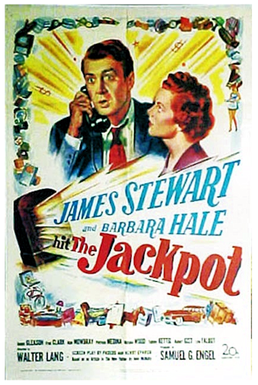
In 1950’s The Jackpot, James Stewart plays Bill Lawrence.

Bill has a job at a department store.  He’s not the manager but he’s still a respected member of the staff and who knows?  Maybe his boss (Fred Clark) will give him a promotion someday.  He lives in a big, two-story home with his wife, Amy (Barbara Hale).  He and Amy have two children, one of whom is played by a 12 year-old Natalie Wood.  By all appearances, Bill is doing pretty good for himself.  At one point, it’s mentioned that makes a grand total of $7,500 a year.

That definitely caught my attention.  “I make more than that!” I snapped at the screen.  I pulled up an inflation calculator and I discovered that $7,5000 in 1950 is the equivalent of — wait for it — $102,000 today!  (Technically, I still make more than that but still, it’s six figures.)

When Bill answers a phone call from a radio station and guesses the correct answer to a trivia question, he wins $24,000-worth of prizes.  (I didn’t bother to figure out how much that $24,000 would be be in 2025 dollars but we can safely assume that it would be quite a bit.)  Unfortunately, a lot of the prizes end up costing more than their worth.  Bill wins a side of beef , 7,500 cans of soup, and a 1,000 fruit trees but he doesn’t win anywhere to store it all.  He also wins a maid, an interior designer, a pony, a swimming pool, a trip to New York, and a session with portrait painter Hilda (Patricia Medina).  He also ends up with an income tax bill for $7,000.  Remember, he only makes $7,500 a year.  Damn the IRS!

Realizing that he’s going to have to sell the majority of his winnings, Bill loses his job when he’s caught trying to sell to the store’s customers.  Needing money to pay off his tax bill, he tries to pawn a diamond ring and ends up getting arrested.  With his anniversary coming up, he asks Hilda to paint a portrait of Amy from his description of her but Bill ends up spending so much time with Hilda that Amy becomes convinced that he’s having an affair.

Basically, one terrible thing after another happens to Bill, all the result of having won a contest.  (The film is loosely based on a true story, with James Gleason playing a fictionalized version of the reporter who wrote the original story.)  The movie’s a comedy but, as with the majority of the films that James Stewart made after World War II, there’s a sense of melancholy running through it.  Even before he wins the money, Bill doesn’t seem satisfied with his life.  Much like George Bailey, he’s restless and wondering if there will ever be more to his life than just his house in the suburbs and his job in the city.  Also, like George, Bill learns to appreciate what he has as the result of getting what he wants and discovering that he was happier before.  Few actors were as skilled at capturing ennui and dissatisfaction as Jimmy Stewart.  The Jackpot is a silly comedy but it’s also an effective portrait of a middle-aged man trying to find peace with the way his life has turned out.  That’s almost entirely due to Stewart’s likable but honest performance.
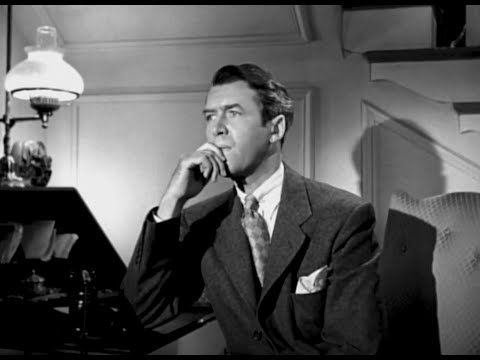
The Jackpot may not be one of Stewart’s most-remembered films but it’s entertaining, with the supporting cast all providing their share of laughs while Stewart provides the film with a heart.  The film may be a comedy but it’s also a look at America and Americans adjusting to life in the years immediately following World War II.  Suddenly, abundance is everywhere but, as Bill Lawrence, not without a price.

Live Tweet Alert: Join #ScarySocial for Alligator!


As some of our regular readers undoubtedly know, I am involved in a few weekly live tweets on twitter.  I host #FridayNightFlix every Friday, I co-host #ScarySocial on Saturday, and I am one of the five hosts of #MondayActionMovie!  Every week, we get together.  We watch a movie.  We tweet our way through it.

Tonight, at 9 pm et, Deanna Dawn will be hosting #ScarySocial!  The movie?  1980‘s Alligator!  

If you want to join us this Friday, just hop onto twitter, start the movie at 9 pm et, and use the #ScarySocial hashtag!  I’ll be there tweeting and I imagine some other members of the TSL Crew will be there as well.  It’s a friendly group and welcoming of newcomers so don’t be shy.

Alligator is available on Prime!

See you there!

Scene That I Love: The Meteor Hits Hong Kong


Today’s scene that I love is a chaotic scene in which a fragments of a meteor cause a tidal wave to crash over Hong Kong.  It’s chaos on a budget in 1979’s Meteor!  This scene was actually filmed in Los Angeles and featured cardboard cut-outs of buildings in a big water tank.

4 Shots From 4 Films: Special 1932 Edition


4 Shots From 4 Films is just what it says it is, 4 shots from 4 of our favorite films. As opposed to the reviews and recaps that we usually post, 4 Shots From 4 Films lets the visuals do the talking!

Today, we take a look at a classic cinematic year.  It’s time for….

4 Shots From 4 1932 Films

The Blood of a Poet (1932, dir by Jean Cocteau, DP: Georges Piranal)

Shanghai Express (1932, dir by Josef von Sternberg, DP: Lee Garmes and James Wong Howe)

Trouble In Paradise (1932, dir by Ernst Lubitsch, DP: Victor Milner)

Vampyr (1932, dir by Carl Theodor Dreyer, DP: Rudolph Mate)

Live Tweet Alert: Join #FridayNightFlix for Meteor!


As some of our regular readers undoubtedly know, I am involved in a few weekly watch parties.  On Twitter, I host #FridayNightFlix every Friday and I co-host #ScarySocial on Saturday.  On Mastodon, I am one of the five hosts of #MondayActionMovie!  Every week, we get together.  We watch a movie.  We tweet our way through it.

Tonight, at 10 pm et, I will be hosting #FridayNightFlix!  The movie?  1979’s Meteor, with Sean Connery and friends!

If you want to join us this Friday, just hop onto twitter, start the movie at 10 pm et, and use the #FridayNightFlix hashtag!  I’ll be there tweeting and I imagine some other members of the TSL Crew will be there as well.  It’s a friendly group and welcoming of newcomers so don’t be shy.

Meteor is available on Prime!

See you there!

Film Review: The Murder Man (dir by Tim Whelan)


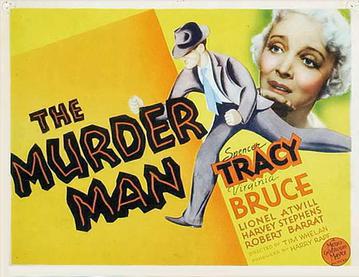
Seven minutes into the 1935 film, The Murder Man, 27 year-old James Stewart makes his film debut.

He’s playing a reporter named Shorty and, since this is a 30s newspaper film, he’s first seen sitting at a table with a bunch of other cynical reporters, the majority of whom seem to be alcoholics and gambling addicts.  Suddenly, words comes down that a corrupt businessman named Halford has been assassinated, shot by an apparent sniper.  (It is theorized that he was shot from one of those carnival shooting gallery games, which was somewhat oddly set up on a street corner.  Maybe there was shooting galleries all over place in 1935.  I supposed people had to do something to keep their spirits up during the Depression.)  While the other reporters run to the scene of the crime, Shorty is on the phone and calling his editors to let them know that a huge story is about to break.

Steve Grey (Spencer Tracy) is the reporter assigned to the story.  Crime is his beat and everyone agrees that no one’s better at covering criminals and understanding what makes them tick.  Unfortunately, it’s not always easy to track Steve down.  He’s a hard drinking reporter and lately, he’s been concerned about the collapse of his father’s business.  Still, when Steve is finally tracked down, he throws himself into covering the story and speculating, in print, about who could have killed Halford.  In fact, his girlfriend (Virginia Bruce) worries that Steve is working too hard and that he’s developing a drinking problem.  She suggests that Steve needs to take some time off but Steve is driven to keep working.

It’s largely as a result of Steve’s actions that a man named Henry Mander (Harvey Stephens) is arrested and convicted of Halford’s murder.  Steve should be happy but instead, he seems disturbed by the fact that he is responsible for Mander going to jail.  When his editor requests that Steve go to Sing Sing to interview Mander, a shocking truth is revealed.

Admittedly, the main reason that I watched The Murder Man was because it was the feature film debut of James Stewart.  (Stewart previously appeared in a comedy short that starred Shemp Howard.)  Stewart is only in a handful of scenes and he really doesn’t have much to do with the main plot.  To be honest, Shorty’s lines could have been given to anyone.  That said, Stewart still comes across as being a natural on camera.  As soon as you hear that familiar voice, you can’t help but smile.

Even if Stewart hadn’t been in the film, I would have enjoyed The Murder Man.  It’s fast-paced mystery and it has a decent (if not totally unexpected) twist ending.  It’s one of those films from the 30s where everyone speaks quickly and in clipped tones.  Casual cynicism is the theme for the day.  Spencer Tracy gives a wonderful performance as the hard-drinking and troubled Steve Grey and the scene where he meets Mander in prison is surprisingly moving.  Clocking in at only 68 minutes, The Murder Man is a good example of 30s Hollywood.

Brad’s “scene of the day” – Glenn Ford, Charles Bronson, Rod Steiger & Ernest Borgnine!


JUBAL (1956) is one of my favorite westerns. It’s set in the Grand Tetons and it stars some of my all time favorite actors, namely Bronson, Ford and Steiger. On what would have been his 109th birthday, I just wanted to take a moment to appreciate Glenn Ford. I visited the Tetons a couple of summers ago and I thought of these great actors often! Enjoy this scene from these icons of cinema!

Film Review: …. And Justice For All (Dir by Norman Jewison)


First released in 1979, ….And Justice For All will always be remembered for one scene.

Yell it with me, “YOU’RE OUT OF ORDER!  THE WHOLE TRIAL IS OUT OF ORDER!  THEY’RE OUT OF ORDER!”

When attorney Arthur Kirkland (Al Pacino) starts screaming in the middle of the courtroom, it’s a cathartic moment.  We’ve spent nearly two hours watching as Arthur deals with one insane situation after another.  One of Arthur’s partners, Warren (Larry Bryggman), cares more about his car than actually delivering the right documents to a judge.  Another of Arthur’s partners, Jay (Jeffrey Tambor), has a nervous breakdown and, after shaving his head, ends up throwing cafeteria plates at people in the courthouse.  Arthur has three clients, one of whom is indigent, one of whom is innocent, and one of whom is a wealthy and despised judge (John Forsythe) who has been accused of a rape that Arthur suspects he committed.  The system offers no mercy for Arthur’s innocent (or, at the very least, harmless) clients while going out of it’s way to defend the judge.  Meanwhile, another judge (Jack Warden), is driven to take suicidal risks, like flying a helicopter until it runs out of fuel and comes down in a nearby harbor.  The assistant district attorney (Craig T. Nelson) only cares about his political ambitions and finally, after one incident after another, Arthur snaps.  And it’s cathartic because we’re all on the verge of snapping as well.

That final moment, with its signature Al Pacino rant, is such a strong and iconic scene that it’s easy to forget that the film itself is actually rather uneven.  The script, by Barry Levinson and Valerie Curtin, owes a good deal to the work of Paddy Chayefsky.  Just as Chayefsky often wrote about men being driven mad by institutional failure, ….And Justice For All features character after character snapping when faced with the screwed-up realities of the American justice system.  The final “out of order” speech is obviously meant to be this film’s version of Howard Beale’s “I’m as mad as Hell and I’m not going to take it!” speech from Network and, much like George C. Scott in the Chayefsky-written The Hospital, Arthur spends a lot of time talking about what he doesn’t like about his job.  The thing that sets ….And Justice For All apart from the best works of Chayefsky is that Levinson, Curtin, and director Norman Jewison all take Arthur Kirkland at his word while one gets the feeling that Chayefsky would have been a bit more willing to call out Arthur on his self-righteousness.  Arthur has every right to be angry when Warren forgets to give a judge an important document while Warren is substituting for him in court.  At the same time, Arthur is the one who trusted Warren to do it.  In the end, the document was not about one of Warren’s client.  In fact, Warren knew absolutely nothing about the case or Arthur’s client.  The document was about Arthur’s client and Arthur was the one who decided trust someone who had consistently shown himself to not be particularly detailed-orientated.  One gets the feeling that Chayefsky would not have let Arthur off the hook as easily as Levinson, Curtin, and Jewison do.  Arthur’s perpetual indignation can sometimes be a little hard to take.

It’s a very episodic film.  Arthur goes from one crisis to another and sometimes, you do have to wonder if Arthur has ever had any human or legal interactions that haven’t ended with someone either going insane or dying.  There’s no gradual build-up to the film’s insanity, it’s right there from the beginning.  And while this means the narrative often feels heavy-handed, it also makes that final speech all the more cathartic.  It’s an uneven film and, of all of the characters that Pacino played in the 70s, Arthur is probably the least interesting.  But that final rant makes up for a lot and, fortunately, Pacino was just the actor to make it memorable.  For all it’s flaws, the final few minutes of ….And Justice For All make the film unforgettable.


Days of Paranoia: Serpico (dir by Sidney Lumet)


In 1973’s Serpico, Al Pacino plays a cop who doesn’t look like a cop.

Indeed, that’s kind of the start of Frank Serpico’s problems.  He’s a New York cop who doesn’t fit the stereotype.  When we see him graduating from the Academy, he’s clean-shaven and wearing a standard patrolman uniform and he definitely looks like a new cop, someone who is young and enthusiastic and eager to keep the streets safe.  However, Serpico is an outsider at heart.  The rest of the cops have their homes in the suburbs, where they spend all of their time with their cop buddies and where they go also go out of their way not to actually live among the people that they police.  Serpico has an apartment in Greenwich Village and, as a plainclothes detective, he dresses like a civilian.  He has a beard.  He has long hair.  He has a succession of girlfriends who don’t have much in common with the stereotypical (and there’s that word again) cop’s wife.  Serpico is an outsider and he likes it that way.  In a world and a career that demands a certain amount of conformity, Frank Serpico is determined to do things his own way.

However, the real reason why Serpico is distrusted is because he refuses to take bribes.  While he’s willing to silently accompany his fellow officers while they collect their payoffs from not only the people that they’re supposed to be arresting but also from the storeowners that they’re meant to be protecting, Serpico refuses to take a cut.  Serpico understands that the small, everyday corruption is a way of forcing his silence.  The corruption may help the cops to bond as a unit but it also ensures that no one is going to talk.  Serpico’s refusal to take part makes him untrustworthy in the eyes of his fellow cops.

Serpico and Bob Blair (Tony Roberts), a politically-connected detective, both turn whistleblower but it turns out that getting people to listen to the truth is not as easy as Serpico thought it would be.  The Mayor’s office doesn’t want to deal with the political fallout of a police conspiracy.  Serpico finds himself growing more and more paranoid, perhaps with good reason.  When words gets out that Serpico has attempted to turn into a whistleblower, his fellow cops start to turn on him and, during a drug bust, Serpico finds himself deserted and in danger.

Serpico opens with its title character being rushed to the hospital after having been shot in the face.  This actually happened to the real Serpico as well.  What the film leaves out is that hundreds of New York cops showed up at the hospital, offering to donate blood during Serpico’s surgery.  That’s left out of the film, which at times can be more than a little heavy-handed in its portrayal of Serpico as an honest cop surrounded by nonstop corruption.  Filmed just three years after Serpico testified before New York’s Knapp Commission (which was the five-man panel assigned to investigate police corruption in the city), Serpico the movie can sometimes seem a bit too eager to idealize its title character.  (Vincent J. Cannato’s excellent look at the mayorship of John V. Lindsay, The Ungovernable City, presents far more nuanced look at the NYPD corruption scandals of the early 70s and Serpico’s role as a whistleblower.)  Director Sidney Lumet later expressed some dissatisfaction with the film and even made other films about police corruption — The Prince of the City, Q & A, Night Falls On Manhattan — that attempted to take a less heavy-handed approach to the subject.

That said, as a film, Serpico works as a thriller and as a portrait of a man who, because he refuses to compromise his ideals, finds himself isolated and paranoid.  Al Pacino, fresh from playing the tightly-controlled Michael Corleone in The Godfather, gives an intense, emotional, and charismatic performance as Serpico.  (One can see why the image of a bearded, hippie-ish Pacino was so popular in the 1970s.)  Sidney Lumet brings the streets of New York to vibrant and dangerous life and he surrounds Pacino with an excellent supporting cast, all of whom bring an authentic grit to their roles.  Serpico may not be a totally accurate piece of history but it is a good work of entertainment, one that works as a time capsule of New York in the 70s and as a portrait of bureaucratic corruption.  It’s also the film in which Al Pacino announced that he wasn’t just a good character actor.  He was also a movie star.