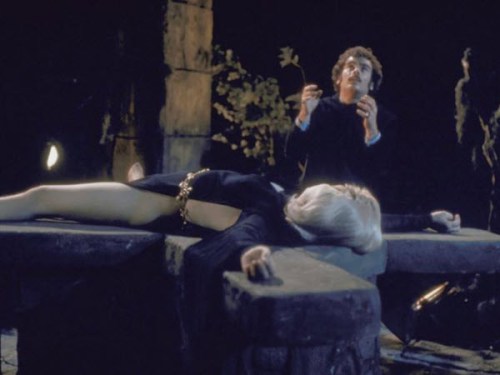
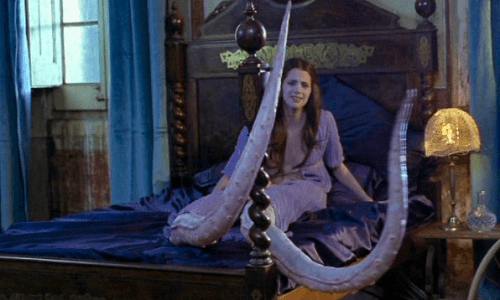
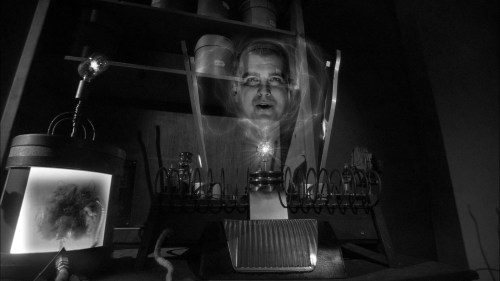
4 Shots From 4 Films is just what it says it is, 4 shots from 4 of our favorite films. As opposed to the reviews and recaps that we usually post, 4 Shots From 4 Films is all about letting the visuals do the talking.
This edition of 4 Shots From 4 Films is dedicated to H.P. Lovecraft, on the occasion of his 125th birthday.
4 Shots From 4 Films
The Dunwich Horror (1970, directed by Daniel Haller)
Dagon (2001, directed by Stuart Gordon)
The Call of Cthulhu (2005, directed by Andrew Leman)
The Whisperer in Darkness (2011, directed by Sean Branney)
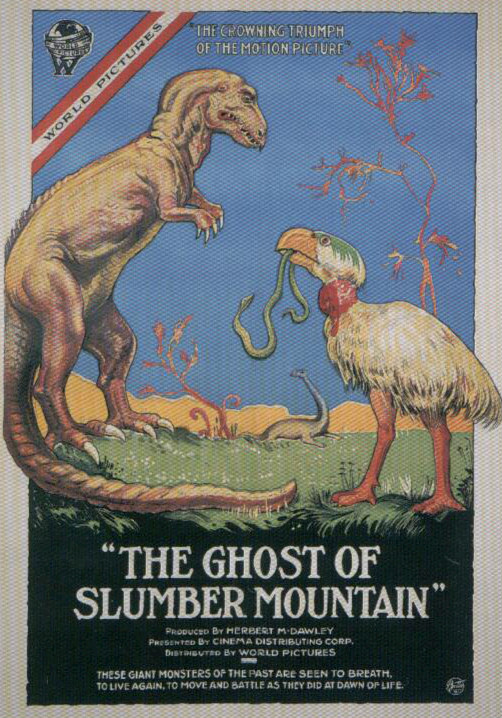
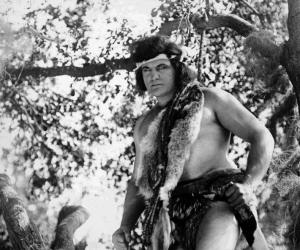
Directed by special effects pioneer Willis O’Brien (who would later do the special effects for the original King Kong), The Ghost of Slumber Mountain tells the story of an explorer and writer named Holmes (Herbert M. Dawley). When his nephews ask him to tell them a story, Holmes tells them about the time that he explored Slumber Mountain and met the ghost a prospector named Mad Dick (played by O’Brien himself). The ghost instructs Holmes to look through a telescope. Upon doing so, Holmes finds himself starting into prehistoric times. He not only sees a fight between a Tyrannosaurus and a Triceratops but then apparently gets sent though time himself as he soon finds himself being chased by the surviving dinosaur.
Now, there are a few things that I should make clear about The Ghost of Slumber Mountain. It’s a silent film, which means that watching it requires modern audiences to adapt to a far different narrative experience than they may be used to. As well, the film originally ran 30 minute but the current print clocks in at 19 minutes. As a result, most of the film’s non-dinosaur plot is unknown.
With all that in mind, The Ghost of Slumber Mountain is still a fascinating and fun slice of cinematic history. This was the first film to show live actors and stop-motion creatures together on the screen. And while the special effects are primitive when compared to today’s CGI monsters, there’s also an undeniable charm to them.
Today, of course, we tend to take special effects for granted. One of the great things about watching a movie like The Ghost of Slumber Mountain is that it gives you a chance to travel back to a time when special effects truly were special and unexpected. There was once a time when film magic truly did seem to be like magic and sometimes, it’s fun to hop into a cinematic time machine and try to imagine being in that 1918 audience and being truly amazed by what we are seeing.
So, why not hop into that time machine and watch The Ghost of Slumber Mountain?
Over on Through the Shattered Lens Presents the Oscars, we are continuing to reimagine Oscar history, one year at a time! Today, we take a look at the year 1918. World War I ended, the Spanish Flu wiped out 5% of the world’s population, and the Academy embraced Tarzan of the Apes!
1918 was a year of dominated by war and pestilence. As the world seemed to be intent on destroying itself, both the Academy and American filmgoers embraced escapism.
Overseas, the Great War continued to drag on. With no end to the fighting in sight, there were fears that the American public would turn against the war and their elected leaders would withdraw American soldiers from the fighting. The British government, realizing the potential of film as a propaganda tool, contacted director D.W. Griffith and offered to help him make a film. The end result was Hearts of the World, an epic war film that starred Lillian Gish as a French girl who struggles to survive and find true love as the Germans raid her village.
What’s an Insomnia File? You know how some times you just can’t get any sleep and, at about three in the morning, you’ll find yourself watching whatever you can find on cable? This feature is all about those insomnia-inspired discoveries!
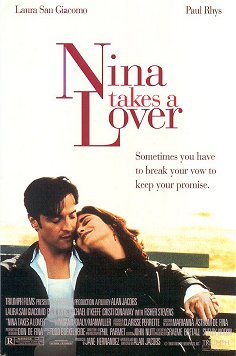
Last night, if you were having trouble getting to sleep at 2 in the morning, you could have turned over to Starz and watched Nina Takes A Lover, a movie from 1994.
Nina Takes A Lover is such a typical 90s Sundance film that it could have just as easily been called Independent Movie From 1994. Everything that we tend to associate with American independent cinema is present in this film. It’s a relationship drama with moments of quirky comedy. It’s set in the city and no, it doesn’t matter which city. It could be New York or it could be Seattle or it could be Los Angeles or San Francisco. The important thing is that it’s a city on one of the coasts, the type of city where people engage in witty banter while sharing an apple in the park or over cups of coffee at a cozy cafe that was probably replaced by a Starbucks after this film was released. This is the type of film where the characters tell their stories in flashback while being interviewed by a bespectacled journalist. Characters alternate between artificial small talk and sudden statements of portentous wisdom. Of course, all of quirky drama leads up to a sudden twist. I figured out the twist after watching about 10 minutes of the film. Maybe audiences in 1994 were a bit more surprised.
About the only thing that keeps Nina Takes A Lover from being the most stereotypical indie film ever made is the fact that there’s no quirky criminals and nobody spends any time talking about their favorite childhood TV shows. If Nina had only shot someone while taking a lover, this would have been the most indie film ever.
I imagine that I’ve probably made the film sound totally unbearable but I actually enjoyed Nina Takes A Lover. Once I realized and accepted that Nina Takes A Lover wasn’t exactly going to reinvent cinema, I discovered that it was actually a very likable film.
Nina is played by Laura San Giacomo, who owns a shoe store. Nina meets a man in the park. The man (Paul Rhys) has no name and is merely identified as being “Photographer.” (And, of course, he’s British because this is an independent film and, in the world of indie cinema, all ideal lovers are British.) Soon, Nina and Photographer are having a passionate and very physical affair. However, Nina explains that she’s married and her husband will be home in three weeks. Photographer says that he has a wife as well. As Nina and the Photographer talk about love, marriage, and sex, they also try to figure out what they should do when the three weeks are up.
And, of course, it all leads to a twist that you’ve probably already figured out but you know what? It doesn’t matter if the film is predictable because it’s just so likable. Laura San Giacomo and Paul Rhys both give likable performances, they have a lot of chemistry, and the sex scenes are well-done and genuinely erotic. The film may tell a familiar story but it tells it well.
Nina Takes A Lover is a good film to watch when you’ve got insomnia. It won’t put you to sleep but it will definitely make the hours of darkness a little more pleasant.
Carol, which is based on a Patricia Highsmith novel and stars Cate Blanchett and Rooney Mara, was widely acclaimed at Cannes and it’s expected to be a major Oscar contender.
(Yes, that’s right — Rooney might finally get an Oscar nomination that she actually deserves, as opposed to the nomination she got for David Fincher’s insulting bastardization of The Girl With The Dragon Tattoo.)
This teaser looks pretty good. The only thing that concerns me is that director Todd Haynes may have be acclaimed by some critics but I’m Not There was a mess that featured a handful of good scenes and a general sense of incoherent pretension. And his version of Mildred Pierce was a total travesty, which was mostly rewarded for what it should have been as opposed to what it actually was.
So, Carol could be brilliant. Or it could be totally overrated. I look forward to finding out!
Lisa and I continue to reimagine the Oscar history, one year at a time. Today, we look at 1917. The U.S. enters World War I, the Pickfords take over Hollywood, and, for the first time, the entire membership of the Academy gets to vote.
Whereas the previous year had been dominated by films, like the Award-winning Civilization, that promoted neutrality and world peace, 1917 saw the release of several films that were designed to support the American war effort. The pacifism of Civilization was forgotten as the box office embraced…
In the past, I have occasionally shared old educational films here on the Shattered Lens. As everyone should know by now, I love history and these short films all serve as interesting time capsule of the era in which they were made. Seeing as how August is traditionally the time when students go back to school, I figured now would be as good a time as any to share some wisdom from the past.
The film below is from 1952. It’s called Cheating. It’s about what happens when John Taylor forces his friend Mary to help him cheat. When he gets caught, it not only harms Mary’s reputation but John soon finds his own position on the student council threatened! Oh, the horror!
Now, I have to admit that I enjoyed this short film because, as I’ve mentioned before on this site, I occasionally cheated on a few tests while I was in high school. But, beyond that, this film is interesting because it’s shot like a living nightmare, complete with crooked camera angles, expressionistic lighting, an atmosphere of existential dread, and an extremely judgmental narrator. Director Herk Harvey goes all out in his direction for this one. (Harvey is probably best known for later directing Carnival of Souls, his only feature film.)
Plus, there’s always the fun of listening to all those country accents. It may be tempting to make fun of the “actors,” all of whom seem to have picked out of a local high school drama class. But, there’s an authenticity to them that will make most viewers reconsider the importance of cinematic authenticity.
Anyway, the ultimate message here seems to be that you should only cheat if you know you can get away with it and that is a message that I happily endorse. It’s something that all students should keep in mind as they return to school this month.
What’s an Insomnia File? You know how some times you just can’t get any sleep and, at about three in the morning, you’ll find yourself watching whatever you can find on cable? This feature is all about those insomnia-inspired discoveries!
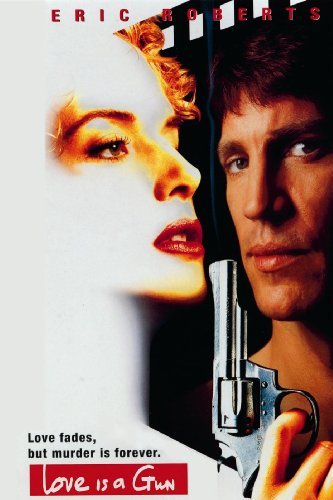
If you were suffering from insomnia last night, at around 2 in the morning, you could have turned on Showtime and watched Love is a Gun, an odd little thriller from 1994.
How odd is Love Is a Gun? It’s so odd that it stars Eric Roberts. Roberts plays Jack, a photographer with problems. His longtime girlfriend, Isabelle (Eliza Roberts), refuses to forgive him for cheating on her in the past and demands that he put a ring on her finger. (Jack, for his part, has bought a ring but he keeps losing it.) Jack is haunted by a reoccurring dream, in which he sees himself with a gun pointed at his head. Isabelle says that the dream means that Jack needs to give her a ring. Jack says it’s all about deja vu.
Jack gets a job working as a crime scene investigator. He meets a detective who is so crazy that he’s played by R. Lee Ermey. Jack takes pictures of dead bodies. His colleagues make macabre jokes. A local reporter offers to pay Jack for insider information. Ermey asks Jacks to help cover up a crime. Jack has visions of a line of well-dressed detectives shooting at him, firing squad style. Eventually, Jack ends up sitting in a living room, an anonymous body at his feet, and watching a soap opera. The actors on TV repeat dialogue that we’ve heard Jack and Isabelle say earlier in the film. Jack starts to giggle and is soon laughing like a maniac. A detective steps into the living room and asks Jack if he remembered to take a picture of the body in the bathroom. “Oh yeah,” Jack says, “I forgot about that…”
Jack meets a model named Jean (Kelly Preston). He takes pictures of her wearing a bridal gown and occasionally playing dead. He realizes that he’s already seen the exact same pictures that he’s just taken. Somebody left them in his locker at work but the images of Jean faded to black as soon as he looked at them. He asks Jean if this is all an elaborate joke. “Take the shot, Jack,” Jean replies.
Soon, Jean and Jack are having an affair. Jean tells Jack that she has a strange rash. Jack imagines that there’s a hole in Jean’s forehead. A man claiming to be Jean’s husband shows up and wishes Jack luck because his wife is crazy.
Jack goes back to Isabelle. Isabelle demands the ring. Jack freaks out and returns to Jean. Jean says she’s pregnant but then says she isn’t. Jack giggles and then cries. He goes back and forth between the two women, constantly begging for forgiveness as beads of sweat collect on his forehead.
Jack’s watch stops. He tries to get it repaired. An old man yells at him that his watch is cursed and cannot be repaired because it might infect all of the other watches in the man’s shop.
And, after all of that, the movie starts to get really weird…
Love Is A Gun does eventually offer up an explanation as to what’s going on. It doesn’t make a bit of sense but somehow, the total incoherence of it all adds to this low-budget film’s charm. Full of surreal images and intentionally odd dialogue, Love Is A Gun is compulsively watchable.
It also features a genuinely strange performance from Eric Roberts. Roberts goes through the film with this goofy smile on his face, except for the scenes when Jack gets upset. When Jack is upset, Roberts stomps his feet, jumps up and down, yells out every other line of dialogue, and contorts his body in some truly weird ways. When he gets really angry, he grabs can after can of beer and furiously shakes them before opening, causing the beer to drench his face. Eric Roberts’s lead performance is literally one of the oddest things that I have ever seen and it’s worth watching Love Is A Gun just to experience it.
Last night, I watched the Lifetime original film, Sorority Murder!
Why Was I Watching It?
Well, the obvious answer is that I was watching because it was on Lifetime. However, beyond that, I had high hopes for this film because Lifetime has a pretty good track record when it comes to over-the-top melodrama about sororities. Remember The Haunting Of Sorority Row?
What Was It About?
Jen (Scarlett Byrne) has a lot to deal with. She has just started her first semester at college and she already has a huge design project due. Her alcoholic mother (Sarah-Jane Redmond) keeps getting arrested and needs her daughter to bail her out. And, on top of all that, Jen is being harassed by the apparently crazy president of her sorority.
When the president turns up dead, everyone assumes that Jen must have killed her! However, Jen was alone in her bedroom, working on that design project, when the crime was committed! Can Jen track down the real murderer before the semester ends? Will Jen’s mother ever get her drinking under control? And will Jen ever manage to finish that project!?
You’ll have to watch the movie to find out.
What Worked?
The film’s title promised both a sorority and a murder and it totally delivered both of those things. You have to appreciate a film that actually keeps its promises. The murder mystery was enjoyable, if a little predictable. I especially enjoyed the way the film portrayed the sorority as almost being a Scientology-style cult. I was half-expecting someone to start talking about evil Lord Xenu.
Also, I liked the relationship between Jen and her mother. It was sweet and touching, in the best Lifetime tradition.
What Did Not Work?
Sadly, the film never quite reached the heights of the greatest of all Lifetime sorority films, The Haunting of Sorority Row.But, when taken on its own terms, the entire film worked. It was a good Lifetime movie.
“Oh my God! Just like me!” Moments
I have never been a member of a formal sorority (though I am a member of the unofficial sisterhood of red-headed film bloggers) and I have never killed anyone, though I have been tempted. So, unfortunately, this was the rare Lifetime film to which I could not directly relate.
Then again, when the film is about murder, that’s not necessarily a bad thing.
(Actually, I did relate to Jen’s desperate attempts to get her design project completed while dealing with all the death, lies, and cover-ups. What’s sad is that the project itself — which showed that Jen was heavily influenced by the Bauhaus School of Design — did not look like it was that impressive. I would have given her a C at the most.)
Well, here we are. The year is more than halfway over. The fall movie season is approaching. And yet, not a single true Oscar front-runner has yet to emerge. Could this be the year that a true populist hit, like Mad Max: Fury Road, or an unexpected art house wonder, like Ex Machina, manages to secure a spot?
Well, probably not. But still, it’s fun to speculate!
(Are Oscar pundits being too quick to dismiss Straight Outta Compton? I have not seen it yet but look at those reviews and look at that box office. It’s an interesting question.)
Anyway, here are my prediction for August! To see how my thinking has evolved over the year, check out my predictions of January, February, March,April, May, June, and July!