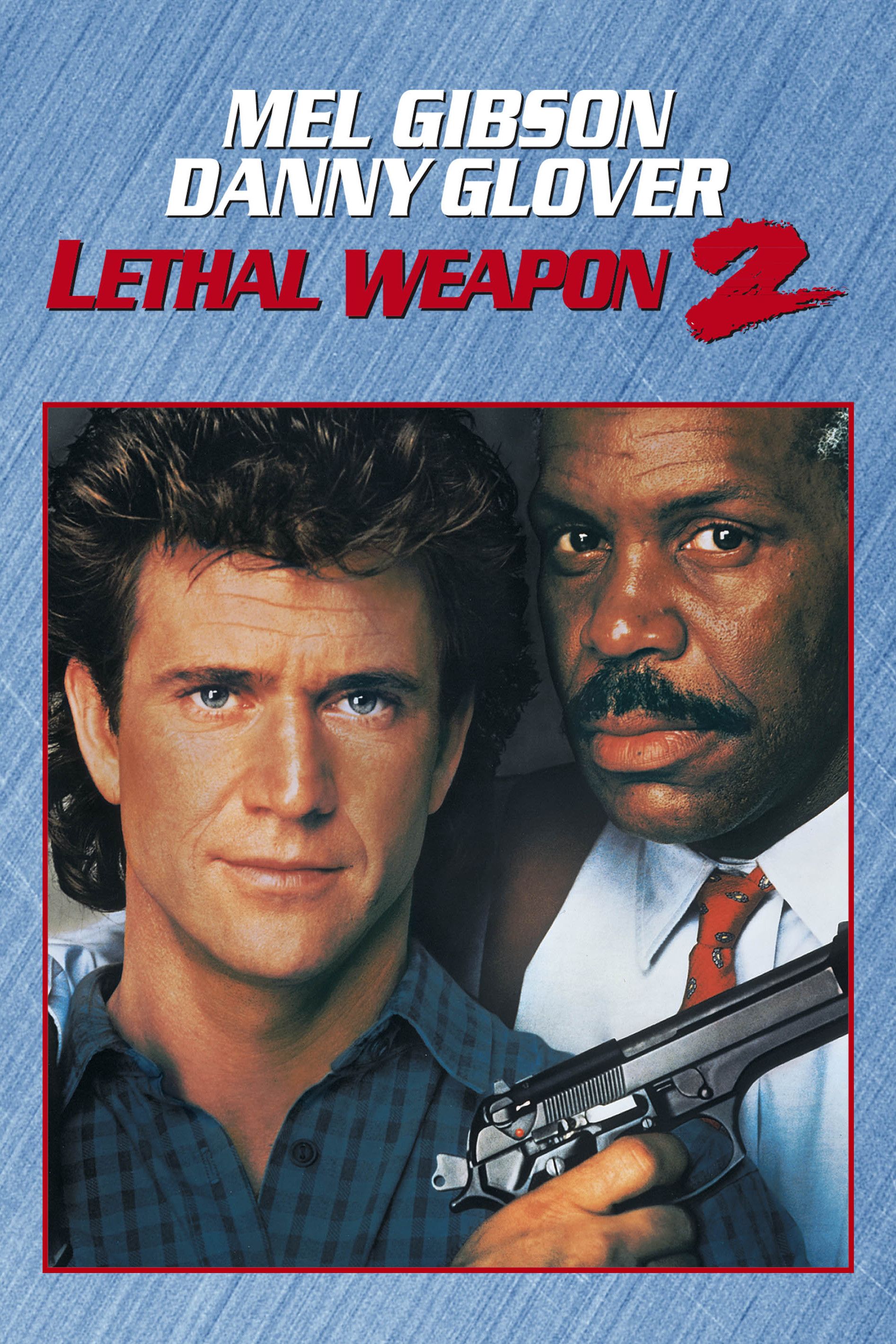
Review: Lethal Weapon 2 (dir. by Richard Donner)


“We’re back, we’re bad. You’re black, I’m mad. Let’s go!” — Martin Riggs

Lethal Weapon 2 is the kind of sequel that doesn’t really try to reinvent what worked the first time so much as crank the volume on everything: the action is bigger, the jokes come faster, and the chaos feels almost constant. Depending on what you loved about Lethal Weapon, that approach delivers more of the high-energy partnership in a flashier package. It’s a confident, very entertaining 80s action movie that knows it’s a sequel and leans into the spectacle that status allows.

Plot-wise, Lethal Weapon 2 wastes no time reminding you what this world feels like. It drops Riggs and Murtaugh into a wild car chase almost immediately, and from there the story locks onto a case involving South African diplomats hiding behind apartheid-era “diplomatic immunity” while running a massive drug and money-laundering operation. It’s a cleaner, more high-concept hook than the original’s murkier web of Vietnam vets and heroin smuggling, and the script makes the villains broad on purpose, almost cartoonishly arrogant, to give the audience someone very easy to hate. The trade-off is that the plot feels a bit more mechanical this time; you always know who the bad guys are and what the destination is, so the film’s real energy comes from the detours, jokes, and set-pieces rather than any mystery.

One of the big shifts from Lethal Weapon to Lethal Weapon 2 is tone. The first film balanced brutal violence and dark humor with a surprisingly heavy focus on Riggs’ suicidal grief and Murtaugh’s fear of getting too old for the job. The sequel keeps those elements in the background but leans harder into banter, slapstick timing, and outrageous gags like the now-famous exploding toilet sequence, with Richard Donner’s direction pushing the script toward action comedy. It’s still R-rated and not shy about blood or cruelty, but the emotional intensity is dialed down compared to the original’s raw edges.

Mel Gibson and Danny Glover remain the anchor, and their chemistry is as sharp as ever. Gibson’s Riggs is still reckless and unhinged, but there’s a looser, more playful side to him this time; he’s less haunted and more of a live-wire prankster until the story gives him something personal to latch onto. Glover’s Murtaugh continues to be the grounded center, constantly exasperated and always half a step away from just walking off the job, and the film has a lot of fun putting his straight-man persona through increasingly humiliating situations while still letting him be competent when it counts. Compared to the first film, where their partnership slowly thawed from suspicion to genuine trust, Lethal Weapon 2 starts from “these guys are already a team” and builds its best moments from how comfortably they now bounce off each other.

The biggest new ingredient is Joe Pesci as Leo Getz, a federal witness turned tagalong who basically functions as the franchise’s third stooge. Pesci leans into the motor-mouthed, paranoid, endlessly complaining energy that would become his signature, and his presence tips some scenes from gritty cop story into broad comedy. He undercuts tension at times, but he also gives the movie a different rhythm, especially in the quieter in-between beats where the first film might have lingered more on Riggs’ inner damage.

In terms of action, Donner clearly has more money and confidence to play with, and it shows. The chases are bigger, the shootouts are staged with a slicker sense of geography, and there’s a steady escalation in scale that makes the film feel like a genuine summer sequel rather than just another mid-budget cop movie. The original had a grimy, street-level intensity, with brutal fistfights and sudden bursts of violence; Lethal Weapon 2 is more interested in creative set-pieces, crowd-pleasing payoffs, and moments designed to make an audience cheer. It’s less intimate, but it is rarely dull.

Where the film lands in a more complicated space is its attempt to keep some emotional stakes alive while also going bigger and funnier. Riggs’ grief over the loss of his wife is still part of his character, and the story finds ways to poke at that wound again, including a new relationship that lets him imagine some kind of future beyond the constant death wish. Those beats are there to echo what worked so well in the first movie, but they have less room to breathe, often getting squeezed between an action scene and a joke instead of shaping the entire film’s tone. You can feel the push and pull between wanting to keep the darker emotional spine and delivering the kind of lighter, more easily marketable sequel a studio would understandably chase.

The villains themselves are effective in that pulpy 80s way: not nuanced, but very punchable. Arjen Rudd, with his smug talk of “diplomatic immunity,” is a villain designed to make audiences grind their teeth, and his main henchman adds a physically intimidating, quietly sadistic presence to the mix. Compared to the original’s more grounded ex-military antagonists, these guys feel one step closer to Bond territory, and that shift mirrors the film’s overall move toward heightened, almost comic-book stakes. What the sequel loses in plausibility, it gains in revenge-fantasy satisfaction.

When stacked directly against Lethal Weapon, the second film feels like a classic case of “if you liked hanging out with these characters once, here’s more time with them.” The original is tighter, more emotionally focused, and arguably more distinctive, with a stronger sense of danger and genuine unpredictability around Riggs’ mental state. Lethal Weapon 2 smooths some of those jagged edges and replaces them with quips, bigger set-pieces, and a more overtly crowd-pleasing structure, which makes it an easier, more consistently fun watch but also a slightly less resonant one. It is still a good film, but in many ways it is also the moment where the franchise shifts from a character-driven cop thriller with action to a full-on action-comedy machine.

As a fair, middle-of-the-road assessment, Lethal Weapon 2 works very well on its own terms and delivers exactly what most people want out of a late-80s buddy-cop sequel. The chemistry is intact, the action is energetic, and the film moves with the kind of confident pace that never really lets you get bored. At the same time, the tonal tilt toward broader humor and more cartoonish villains means it doesn’t quite have the same staying power or emotional punch as Lethal Weapon, especially if what hooked you the first time was how wounded and volatile it all felt. For fans of the original, it’s an enjoyable continuation—a louder, flashier second round that may not hit as hard, but still knows how to entertain.

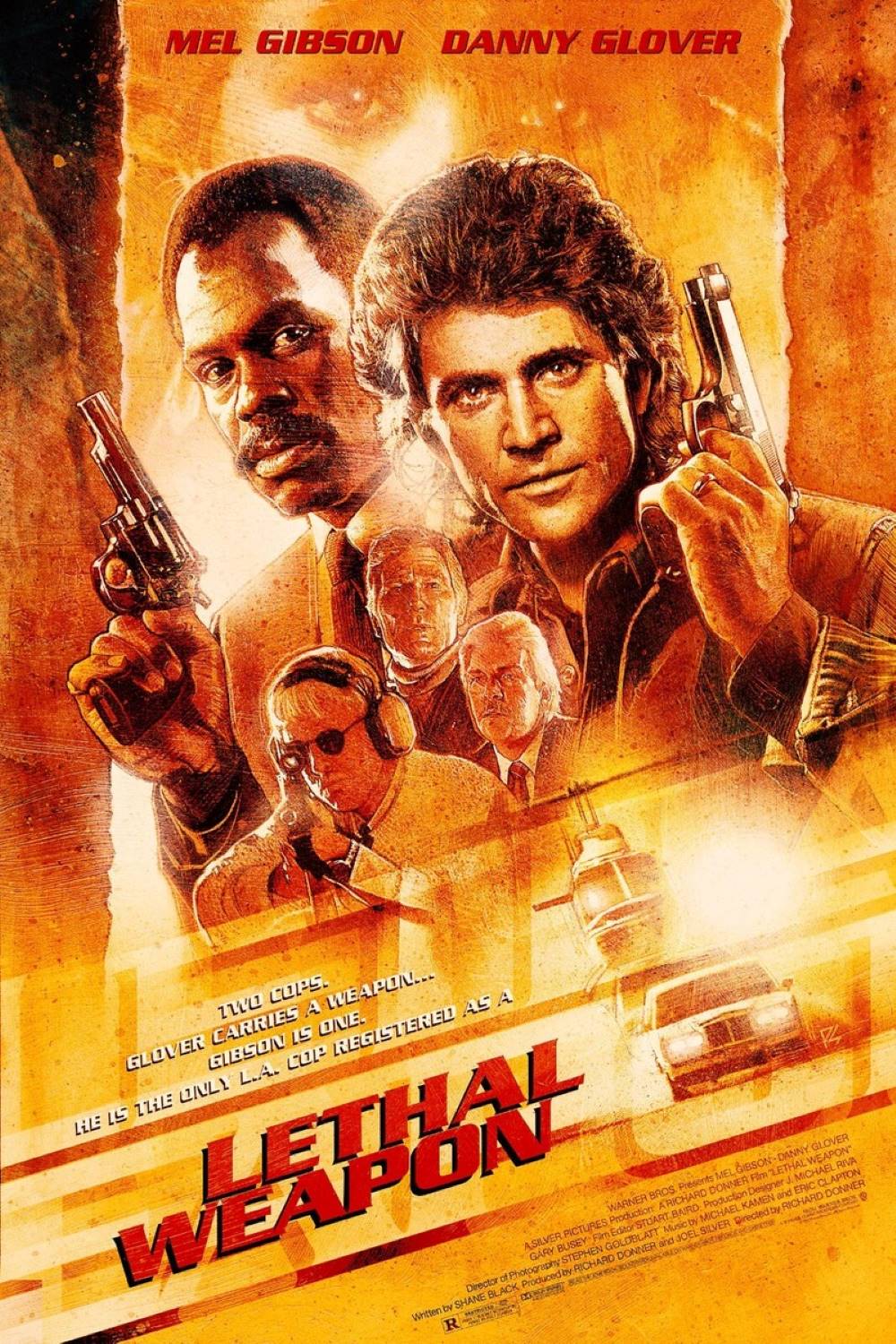
Review: Lethal Weapon (dir. by Richard Donner)


“I’m too old for this shit.” — Roger Murtaugh

Lethal Weapon is one of those action movies that looks like pure genre formula on paper but somehow plays like lightning in a bottle on screen. From the opening moments, it feels like a film that knows exactly what kind of ride it wants to deliver and leans into that mission with confidence, attitude, and just enough heart to make the bullets and explosions actually matter.

The premise itself is as straightforward as they come, and that simplicity is part of the charm. Martin Riggs is the textbook “cop on the edge,” a former special forces sniper whose life has completely fallen apart after the death of his wife. He’s volatile, depressed, and teetering on the edge of suicidal, which gives everything he does an extra layer of danger. On the other side of the pairing is Roger Murtaugh, a seasoned detective staring down his 50th birthday, trying to balance a long career in homicide with the quiet, constant pull of his family at home. When these two are thrown together and assigned to a case involving drugs, dead bodies, and shady ex-military criminals, the story plays out across familiar beats: suspicious deaths, escalating confrontations, close calls, and a trail that leads them deeper into a dangerous operation. The crime plot is pulpy and direct rather than twisty, but the film uses it as a sturdy framework rather than the main point of interest, keeping the investigation moving while the characters come into focus. Much of that sharp setup and snappy progression comes from Shane Black’s script, which crackles with knowing genre savvy, pitch-perfect banter, and a keen eye for how personal pain fuels action-hero antics.

What really makes Lethal Weapon feel alive is how much time it spends letting Riggs and Murtaugh exist as people before they fully morph into the “classic duo” that pop culture remembers. The film doesn’t rush past the small stuff. Riggs is introduced living in a rundown trailer on the beach with his scruffy dog for company, drinking and stumbling through life with the casual recklessness of someone who genuinely doesn’t care if he sees tomorrow. Those early moments of him alone, flirting with self-destruction, give his later heroics a sense of tragic context: he’s not just fearless, he’s half-convinced he has nothing left to lose. Murtaugh’s introduction is a complete contrast: a crowded home, kids, a loving wife, and the kind of loud, chaotic domestic life that’s full of relatable irritation and warmth. Seeing him grumble through birthday milestones or awkwardly handle family situations does more for his character than any speech about his years on the force could. These slices of everyday life build a strong emotional foundation so that when the bullets start flying, there’s something at stake beyond catching bad guys. Black’s writing shines here, weaving those intimate details into the thriller beats without ever feeling forced or preachy.

The chemistry between Mel Gibson and Danny Glover is the film’s true secret weapon. Gibson plays Riggs as an unpredictable live wire, able to flip from goofy physical comedy to chilling seriousness in an instant. He sells the idea that this is a man barely keeping it together, yet still razor-sharp when it comes to the job. There’s a constant sense that his jokes and antics are a flimsy barrier over something very raw. Glover, by contrast, keeps Murtaugh grounded and human; his performance is packed with little sighs, muttered reactions, and weary facial expressions that speak volumes. He comes across as a guy who has seen too much, loves his family, and genuinely wants to do the right thing, but is exhausted by how hard that is in practice. Their initial friction hits the expected “mismatched partners” beats: Murtaugh thinks Riggs is unstable and dangerous, while Riggs treats Murtaugh like a fussy old man who doesn’t get it. Yet as they move through stakeouts, interrogations, and gunfights, their banter evolves from pure irritation into an easy rhythm filled with barbs, mutual respect, and eventually real affection. Shane Black’s dialogue is the glue for all of it—witty, profane, and laced with just enough vulnerability to make the laughs land harder and the tension feel real.

Richard Donner’s direction is a huge part of why all of this clicks as well as it does. He has a knack for blending big, commercial genre instincts with an eye for character detail, and Lethal Weapon is a textbook example of that balance. He stages action scenes with clear geography and rhythm, so even when things get loud and chaotic, you always know where you are and what everyone is trying to do. At the same time, he’s just as interested in the quiet beats: a pause on Riggs’ face after a joke lands flat, Murtaugh’s body language when he walks into his noisy home after a brutal day, the way a conversation in a car can shift from banter to confession in a couple of lines. Donner keeps the film moving at a brisk pace, but he knows when to let a shot linger or a silence hang long enough to tell you what the characters can’t quite say out loud. His tonal control—jumping from dark to funny to tense without completely losing the thread—is a big reason the movie doesn’t collapse under its own genre juggling, and it pairs beautifully with Black’s script that sets up those shifts so precisely.

Tonally, Lethal Weapon walks a tricky line, and that’s a big part of its identity. On one hand, this is a story with genuinely dark undercurrents. Riggs’ suicidal impulses are not a throwaway character quirk; the film gives time to scenes where he nearly acts on them and struggles in a very raw way with his grief and loneliness. The case they’re working breaks open into territory involving drugs, exploitation, and violence that’s sometimes nasty rather than cleanly heroic. On the other hand, the film is full of humor, ranging from quick one-liners to broad physical bits. The Murtaugh household provides a lot of that levity: awkward conversations with his kids, Riggs stumbling through family dynamics, and the contrast between domestic calm and the chaos of the streets. The movie often jumps from heavy emotional beats to comedic ones and back again, and while the transitions can be abrupt, that mixture is part of what keeps it from feeling like just another grim cop story. The laughter doesn’t erase the darker material, but it does give the movie a sense of momentum and charm that keeps it entertaining instead of oppressive. Black’s screenplay nails this push-pull, using humor as both release valve and revelation.

As an action film, Lethal Weapon delivers a steady run of sequences that are energetic, clear, and tactile. The action is built around physical stunts, dangerous-looking falls, and gunfights that feel chaotic without becoming incoherent. One memorable sequence has Riggs dealing with a jumper on a rooftop in a way that instantly tells you everything about his mentality and willingness to risk himself. Another set piece in a more open, exposed environment lets the film escalate tension step by step before violence finally erupts. Through it all, Donner keeps a strong sense of spatial clarity; you can track where the characters are, what they’re trying to do, and how each decision raises the stakes. The fights feel scrappy and painful rather than overly slick, and that slightly rough quality actually works in the movie’s favor, making each impact land harder. Riggs, especially, moves like a human weapon, hurling himself into situations with a recklessness that ties directly into his psychological state, all fueled by Black’s clever plotting that makes those risks feel personal.

Underneath the gunfire and explosions, there’s a surprisingly sturdy emotional core tying everything together. Riggs’ grief isn’t just window dressing; it’s the lens through which his every decision makes sense. The movie doesn’t lecture you about what he’s feeling, but it shows it—through quiet moments alone, through the anger that erupts at all the wrong times, and through the way he throws his body into danger almost as if daring the world to take him out. Murtaugh’s arc is more subtle but still strongly drawn. He’s at an age where he has to confront the reality that he can’t keep pace with younger, more reckless colleagues forever, and yet his sense of duty keeps pulling him into situations where his family might lose him. Throughout their investigation, Murtaugh’s protective instincts—toward his loved ones, toward Riggs, and toward innocent people caught in the crossfire—become as important as his skills as a detective.

The relationship that develops between Riggs and Murtaugh is the heart of the film and the main reason it sticks in the memory. At first, Murtaugh just wants to survive partnering with a man he genuinely believes might be unhinged, while Riggs seems to treat their pairing as just another chaotic twist in a life already off the rails. As they trade confessions, back each other up in tight spots, and slowly understand what the other is carrying, their bond shifts into something like brotherhood. Murtaugh becomes a kind of anchor for Riggs, offering not just backup in a fight but also a place at the table, both literally and figuratively. Riggs, in turn, forces Murtaugh out of his comfort zone, reminding him that he still has plenty of courage and fire left in him. The film doesn’t turn their connection into a sentimental soapbox, but it lets small moments—a shared laugh after a narrow escape, a quiet conversation after the chaos—do the emotional lifting, with Black’s words giving those scenes their understated power.

If there’s a clear weak spot, it’s that the villains are fairly thinly drawn, operating more as looming threats than fully realized characters. They are dangerous and organized, capable of serious brutality and clearly involved in serious criminal operations, but the movie doesn’t spend much time exploring their motivations or inner lives. They’re the kind of antagonists designed to be obstacles: formidable enough to make the heroes’ victories feel earned, but not so complex that they distract from the central duo. For a character-driven action film, that trade-off mostly works. When Lethal Weapon is firing on all cylinders, the tension doesn’t come from wondering what the bad guys will do next so much as from seeing how Riggs and Murtaugh will handle whatever gets thrown at them and what that reveals about who they are.

Structurally, the film keeps a tight pace, always nudging the story forward even when it pauses for character beats. Expository scenes rarely feel like dry info dumps; they’re often laced with jokes, personal jabs, or subtle shifts in how the two leads relate to each other. The downtime moments—a quiet drink, a shared meal, a conversation in a car between partners who would rather pretend they’re fine—are as important as the louder ones. By the time the case ramps up to its most intense passages, there’s been enough time with these characters to care less about the mechanics of the plot and more about whether these two damaged, stubborn men can come out the other side with something to hold onto.

What ultimately makes Lethal Weapon work so well is that it doesn’t settle for being just a checklist of genre requirements. Yes, it has gunfights, dark humor, car chases, and tough-guy posturing. But wrapped around all of that is a story about grief, aging, loyalty, and how unlikely partnerships can change the trajectory of a person’s life. Donner’s steady hand behind the camera, Shane Black’s razor-sharp script, and the powerhouse performances turn what could have been a forgettable cop thriller into something much more memorable. For anyone who enjoys action movies that care as much about the people pulling the triggers as the bullets they fire, Lethal Weapon stands out as a defining entry in the buddy-cop mold, powered by the messy, heartfelt dynamic at its center and the sure-footed craftsmanship that brings it all together.

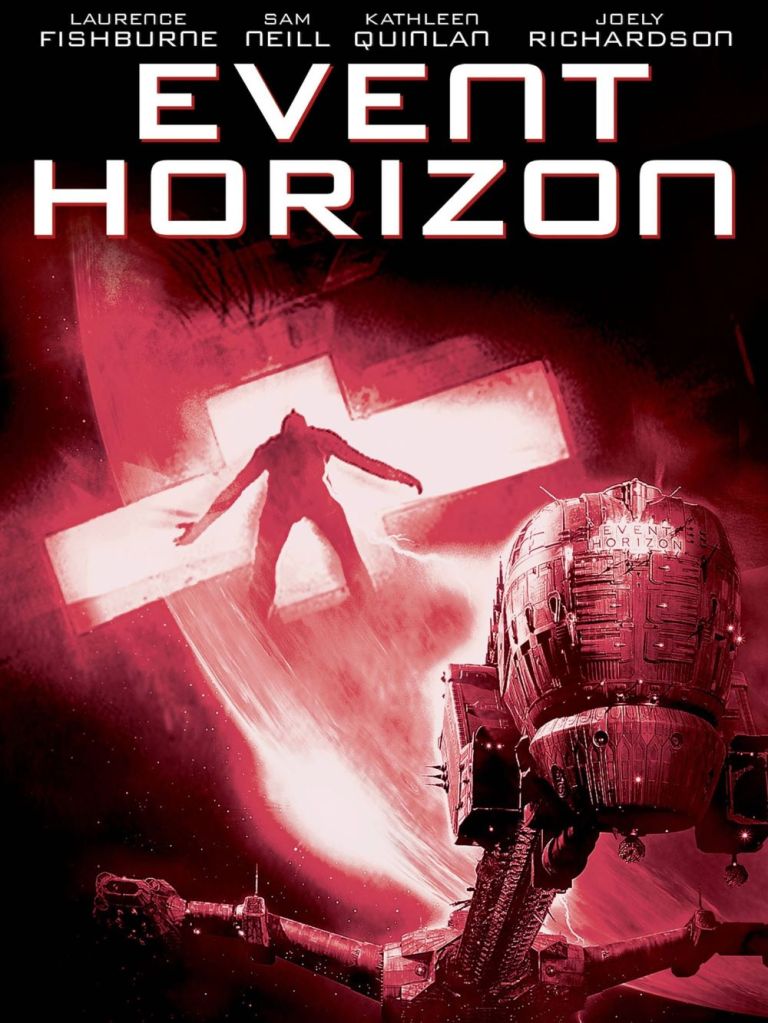
Horror Review: Event Horizon (dir. by Paul W. S. Anderson)


“You know nothing. Hell is only a word. The reality is much, much worse.” — Dr. Weir

Paul W.S. Anderson’s 1997 film Event Horizon stands out as a memorable mix of science fiction and horror, remembered for its gripping atmosphere and disturbing visuals. The story is set in 2047: a rescue crew aboard the Lewis and Clark is sent out to recover the long-missing spaceship Event Horizon, a vessel built to test a new kind of faster-than-light travel. Onboard with them is Dr. William Weir, the Event Horizon’s creator, who explains that the ship vanished after first activating its “gravity drive,” which can fold space to allow for instant travel across vast cosmic distances.

Soon after reaching the drifting Event Horizon, the crew discovers signs of mass violence and horror. They recover a disturbing audio message and realize something traumatic happened to the original crew. As they search for survivors, they experience intense and personal hallucinations—memories and fears brought to life by the ship. It becomes clear that the Event Horizon didn’t just jump through space; it traveled to a place outside reality, a nightmarish interdimensional realm resembling hell.

What makes Event Horizon particularly unique is its concept of hell as an alternate dimension that can infect and corrupt whatever or whoever crosses into it. The ship’s gravity drive doesn’t simply facilitate faster travel—it accidentally opens a gateway to this chaotic, malevolent place. This portrayal of hell as a dangerous interdimensional reality that preys on minds and bodies echoes the idea found in the massive gaming property Warhammer 40K, where hell is depicted as the Warp, a dimension of chaos that corrupts and drives people insane. Like the Warp, the film’s hell is an unpredictable, hostile realm where sanity and physical form break down, infecting and warping everything that comes into contact.

Visually, the film relies on claustrophobic corridors, flickering lights, and unsettling sounds to keep the audience off-balance. The design of the ship itself—part gothic cathedral, part industrial nightmare—adds to the sense of unease and dread throughout. The use of practical effects and detailed sets grounds the sci-fi terror in something tangible, making it all feel more immediate and believable.

Event Horizon also hints at bigger philosophical questions: how far should science go, and what happens when the drive for knowledge is unchecked by ethics or humility? The gravity drive is a technological wonder, but it’s treated with little caution by its inventor, and the catastrophic results suggest that some discoveries may be better left unexplored. The ship becomes both a literal and figurative vehicle for exploring the limits of human ambition and the dangers of pushing beyond them.

As the movie builds toward its climax, the rescue crew faces increasingly desperate odds. The possessed Dr. Weir, now an outright villain, sees the hellish dimension the gravity drive visited as the next step for humanity—a place of chaos and suffering. Multiple characters die in gruesome ways, and the survivors have to fight their own fears and the haunted ship itself. The ending is chilling and ambiguous, leaving open the possibility that the ship’s evil has not been fully contained.

At release, Event Horizon divided critics and audiences. Some found the violence and nightmare imagery too intense or the story too messy to follow. Others praised its ambition and the way it blends psychological horror with cosmic sci-fi. Over the years, the film has developed a cult reputation, frequently cited as one of the more effective and original space horror movies. Its legacy can be seen in later media, especially in video games that tackle similar haunted spaceship scenarios.

However, the film is not without flaws. Many viewers and critics point out uneven pacing, especially in the second half where tension sometimes drains away. The characters often act inconsistently or make choices that feel unrealistic for trained astronauts, which undermines the suspense. The script’s tonal shifts—from serious psychological drama to moments that unintentionally verge on camp—can jolt the viewer out of the experience. The use of jump scares is sometimes predictable, and the film’s heavy reliance on loud, chaotic sequences instead of quiet suspense can feel overwhelming. Some CGI effects haven’t aged well, contrasting with the otherwise impressive practical effects and set design. Acting performances are mixed too; while Sam Neill and Laurence Fishburne are strong, some supporting cast members lack conviction, making emotional engagement uneven.

Importantly, Event Horizon represents Paul W.S. Anderson at his most subtle and effective in directing. Compared to many of his later films, where his style often becomes frenetic and unchecked—possibly due to a lack of producer control—Event Horizon is more controlled, atmospheric, and haunting. This balance between style and substance makes it one of Anderson’s better directorial works, if not his best to date. The film showcases his interest in spatial geography, the use of negative space, and claustrophobic production design, all elements he would expand on in his later work but never as effectively deployed as here. The haunting visual touches, combined with his ability to direct actors and maintain tension, set Event Horizon apart from his more bombastic, less focused later entries.

Despite its flaws, Event Horizon remains gripping and memorable. Its strengths lie in combining deeply personal psychological horror with the vast, terrifying unknown of space and alternate realities. The film explores not just external threats, but also how guilt, fear, and trauma can be weaponized by forces beyond human understanding. For viewers seeking more than a standard haunted spaceship story, Event Horizon offers a disturbing, thought-provoking glimpse into the dark frontier of science, faith, and madness. It stands as a cult classic of sci-fi horror that continues to inspire discussion about the dangers of pushing too far into the unknown.

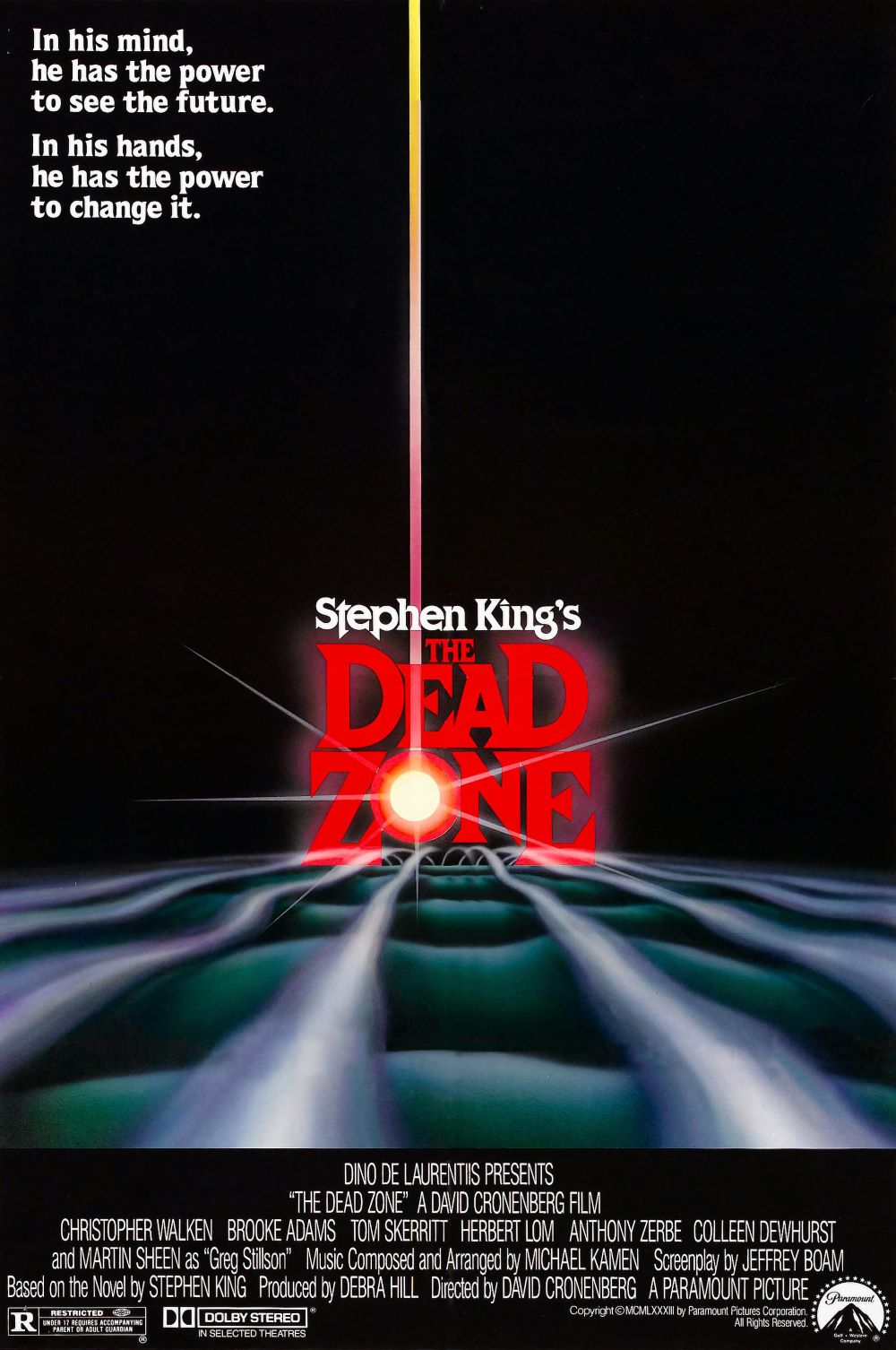
Horror Review: The Dead Zone (dir. by David Cronenberg)


“Bless me, Father, for I have sinned. I had the power… and I tried to prevent what I saw.”Johnny Smith

In 1983, David Cronenberg adapted Stephen King’s The Dead Zone with a distinctive emphasis on mood, morality, and psychological depth rather than traditional horror spectacle. The film follows Johnny Smith (Christopher Walken), a small-town schoolteacher whose life transforms irrevocably after a traumatic car accident leaves him in a five-year coma. Upon awakening, Johnny discovers he possesses psychic abilities that allow him to see the past and future by touch. Rather than a gift, this power becomes a heavy burden, isolating him and forcing him into wrenching moral choices.

Cronenberg’s direction is meticulous and deliberately restrained. The film’s muted color palette and stark winter landscapes visually echo Johnny’s emotional isolation and the fragility of human existence. His careful, often gliding camera movements create a mounting sense of quiet dread, while minimalistic sound design underscores moments of revelation with haunting subtlety. This subdued style elevates the film’s psychological impact, transforming it into a thoughtful and melancholy meditation on the cost of harrowing knowledge.

Significantly, The Dead Zone marks a departure from Cronenberg’s signature body horror. Instead of the grotesque physical transformations and visceral mutations that characterize much of his other work, here Cronenberg turns inward. The real horror lies in the malleability of the mind and the elusive nature of perception—how reality, memory, and the future are unstable constructs that can shift and fracture under psychic strain. This thematic focus on the impermanence and distortion of mental reality touches on some of Cronenberg’s deepest artistic fascinations.

The restrained treatment of body horror in The Dead Zone previews the director’s later, more psychologically driven films such as A History of ViolenceEastern Promises, and A Dangerous Method, where character studies and narrative depth take precedence over startling visuals. In this early pivot, Cronenberg demonstrates that his mastery lies not only in visual spectacle but in probing the profound emotional and moral dilemmas faced by his characters. The vision-focused horror here is cerebral and grounded, rooting supernatural phenomena in human frailty and ethical complexity.

Christopher Walken’s nuanced portrayal is the emotional heart of the film. He captures Johnny’s vulnerability, weariness, and profound solitude, portraying a man burdened by a cursed knowledge that isolates him from the world. Martin Sheen plays Greg Stillson, the ambitious and morally bankrupt politician whose rise Johnny must foretell and who embodies the film’s central threat. The supporting cast, including Brooke Adams as Johnny’s lost love Sarah and Tom Skerritt as Sheriff Bannerman, delivers compelling and authentic performances that humanize the film’s intimate, small-town environment.

Several changes from King’s novel sharpen the film’s thematic focus. The novel’s sprawling plot, including a serial killer subplot and a brain tumor storyline symbolizing Johnny’s mortality, is pared down or omitted. Despite this trimming, the serial killer element retained in the film remains chilling and effective. It highlights the darker repercussions of Johnny’s psychic gift and injects a tangible sense of dread, reinforcing the psychological weight Johnny carries. This subplot grounds the supernatural within a disturbing reality, illustrating the violent and tragic circumstances Johnny must grapple with as part of his burden.

The concept of the “dead zone” itself shifts in meaning. Originally, the term referred to parts of Johnny’s brain damaged by the accident, blocking certain visions. Cronenberg reinterprets it as a metaphor for the unknown and unknowable parts of the future—the gaps in psychic clarity that allow for free will and change. This subtle shift reshapes the narrative toward a more ambiguous, hopeful meditation on destiny and human agency.

Compared to King’s novel, Cronenberg’s Johnny is more grounded and isolated. The novel frames Johnny’s struggle within a broader spiritual and fatalistic context, highlighted by the looming presence of a brain tumor and a nuanced exploration of hope versus resignation. The film, by contrast, focuses on the emotional and moral fatigue induced by Johnny’s psychic gift, emphasizing his loneliness and reluctant responsibility rather than supernatural destiny.

Walken’s restrained, haunting performance strips away mythic grandeur to reveal a deeply human character. The film’s narrowed narrative tightens focus on Johnny’s internal anguish and his difficult ethical choices, making his plight intimate and richly relatable.

On a thematic level, The Dead Zone contemplates fate, free will, and sacrifice. Johnny’s psychic abilities act as a draining, almost chthonic force, transforming him into a reluctant prophet who is tasked with intervening in grim futures at great personal cost. The film’s bleak winter setting visually reflects Johnny’s alienation, while its deliberate pacing highlights the exhaustion and heartbreak that comes with such knowledge.

Ultimately, Cronenberg’s The Dead Zone goes beyond supernatural thriller conventions. It is a profound meditation on empathy, sacrifice, and the human condition—where the greatest horrors are internal, and the cost of knowledge is both psychic and emotional. Johnny Smith emerges as a tragic, flawed figure wrestling with unbearable burdens.

Cronenberg’s direction and the impeccable performances make The Dead Zone a standout in King adaptations. The film’s enduring impact lies in its rich thematic texture, its moral ambiguity, and its unflinching exploration of human frailty, all conveyed through a director shifting skillfully from physical body horror to psychological and existential terror. The film remains as haunting and resonant now as it was upon release, a testament to the synergy of Cronenberg and King’s extraordinary talents.

Horror Song of the Day: Call of Ktulu (by Metallica)


Metallica’s “The Call of Ktulu” is like an eerie soundtrack to something ancient and terrifying lurking just beneath the surface. The whole song feels like a slow, deliberate wake-up call for an otherworldly monster straight out of Lovecraft’s nightmares. Without any lyrics, it’s the music itself that tells the story—starting off quiet and haunting, then gradually building layers of tension like the air getting heavier before a storm, pulling you into an unsettling experience of growing dread.

What’s cool is how each instrument adds its own flavor to that feeling. Cliff Burton’s bass rumbles low and deep, almost like the sea itself is grumbling, while the guitars slowly creep in with sharp, sometimes almost claw-like riffs. Lars Ulrich’s drums keep everything feeling urgent without rushing it, like the heartbeat of something big and unstoppable. It’s not just playing metal riffs; it’s like they’re painting a picture of a cosmic beast stirring from an ancient sleep, and you can’t look away even though you’re scared.

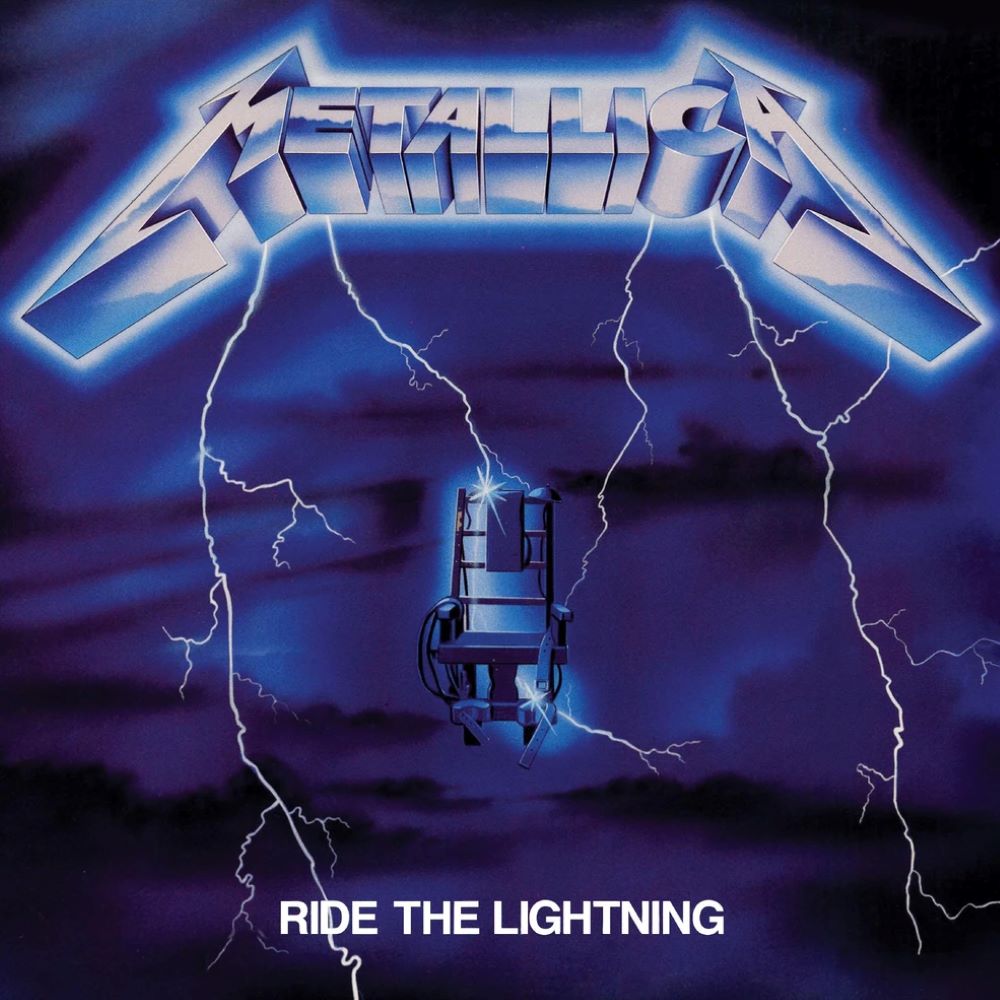
Interestingly, “The Call of Ktulu” was initially started by Dave Mustaine before his dismissal from Metallica, but it ultimately became a collaborative piece among all four original band members. Released as part of their 1984 album Ride the Lightning, the song reached new heights when performed with the San Francisco Symphony Orchestra on the live album S&M. The legendary composer Michael Kamen arranged and conducted the orchestral parts, adding sweeping strings and powerful brass that turned the track into an apocalyptic ritual of sound, blending Metallica’s heavy riffs with symphonic grandeur and amplifying the song’s cosmic horror vibe to an unforgettable level.

Horror Song of the Day: The Thing The Should Not Be (by Metallica)


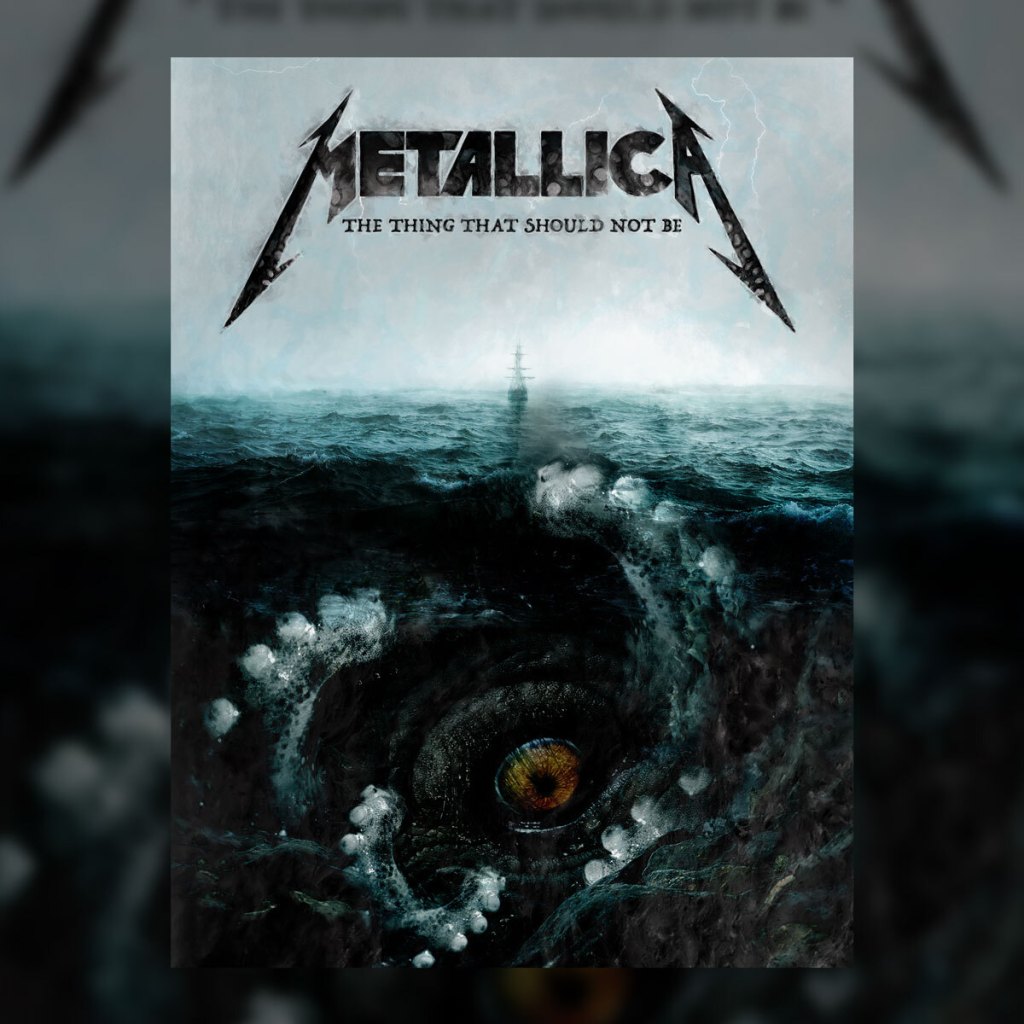
If you’re into heavy music with a dark, spooky vibe, Metallica’s “The Thing That Should Not Be” is a must-listen. The song draws heavy inspiration from H.P. Lovecraft’s stories about ancient sea monsters and forbidden gods — you can feel that eerie cosmic horror flowing through the lyrics and music. Unlike their faster, thrashy songs, this one’s slower and heavier, building this oppressive, almost underwater atmosphere that really pulls you into a different world. The sounds perfectly suit a cosmic horror soundtrack, like you’re hearing something ancient waking up beneath the surface.

Every member of Metallica brings something special here. James Hetfield’s vocals nail that storytelling vibe, like he’s warning you about unspeakable horrors. Kirk Hammett’s guitar solo adds a weird, haunting layer with its echoing bends and wild tone, totally fitting the Lovecraftian theme. Cliff Burton’s bass work gives the song a thick, gnarly depth that makes everything feel huge and otherworldly, while Lars Ulrich’s steady drumming drives the mood without rushing it. Together, they craft this dense, crushing atmosphere that feels like it could be the soundtrack to a cosmic nightmare.

If you want to hear the song take on an epic new dimension, check out the S&M version with the San Francisco Symphony. The orchestra adds massive, cinematic power, turning the track into a full-on cosmic horror soundtrack. The strings and brass layer in this grand, haunting sound that makes the whole thing feel even more apocalyptic and intense. It’s like Metallica took their already heavy and spooky song and gave it the kind of scale and depth that only a symphony can provide. Definitely worth a listen if you want to experience cosmic horror in both metal and orchestral form.

The Thing That Should Not Be

Messenger of fear in sight
Dark deception kills the light
Hybrid children watch the sea
Pray for father, roaming free

Fearless wretch
Insanity
He watches
Lurking beneath the sea

Great old one
Forbidden site
He searches
Hunter of the shadows is rising

Immortal
In madness you dwell

Crawling chaos, underground
Cult has summoned, twisted sound
Out from ruins once possessed
Fallen city, living death

Fearless wretch
Insanity
He watches
Lurking beneath the sea

Timeless sleep
Has been upset
He awakens
Hunter of the shadows is rising

Immortal
In madness you dwell

[Guitar solo]

Not dead which eternal lie
Stranger eons death may die
Drain you of your sanity
Face the thing that should not be

Fearless wretch
Insanity
He watches
Lurking beneath the sea

Great old one
Forbidden site
He searches
Hunter of the shadows is rising

Immortal
In madness you dwell

Song of the Day: Band of Brothers Theme (by Michael Kamen)


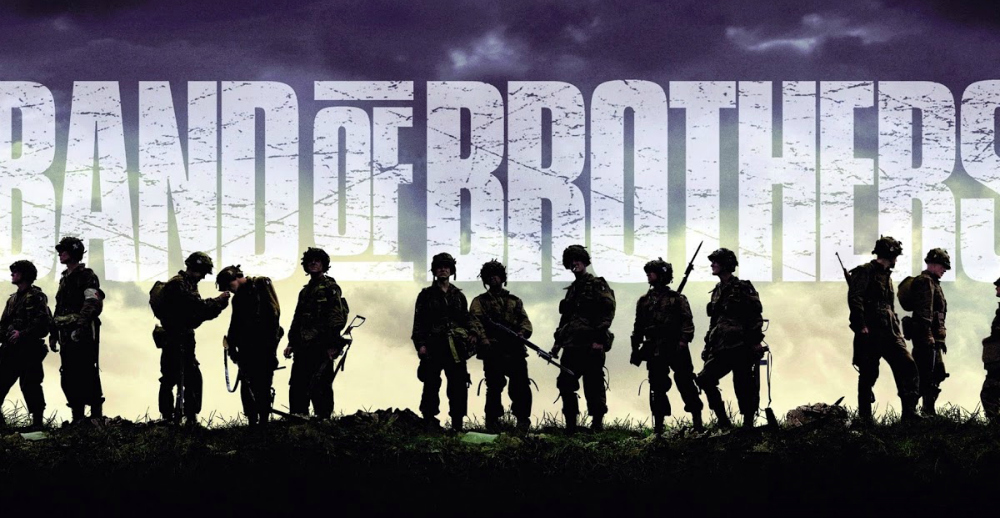
Band of Brothers

In what’s become an annual tradition in the Sandoc household since it first aired, Band of Brothers will be marathoned (and of late it’s companion series The Pacific)

The series was produced by both Steven Spielberg and Tom Hanks who years before made the equally powerful film Saving Private Ryan. That film introduced the younger generation of today about the true details of heroism and horror that was World War II. What was becoming a dry and academic exercise in schools was suddenly given life in the vivid and heartbreaking imagery as seen through the eyes of Spielberg and the personal accounts of the men of the “Greatest Generation” who went to war and survived to tell their tales.

Band of Brothers would take the accounts of Easy Company of the 501st Parachute Regiment of the 101st Airborne Division from their time at boot camp at Camp Toccoa, Georgia through training in England and then the war zones of France, the Netherlands, Belgium and, finally, Germany itself. This series wasn’t about made up soldiers and heroes, but the real ones who survived over a year of constant battle that saw some acquit themselves bravely while others failing to measure up.

The series was a production that had everyone at the top of their game. One such person was Michael Kamen who would compose the series’ orchestral score. It would be one of the last compositions he would create before his death in 2003. Nothing helped set the tone for the series more than the opening theme which accompanied the opening credits for each of the ten episodes.

In honor of Memorial Day, it is this opening theme from Band of Brothers which is the “Song of the Day.”

Song of the Day: Nothing Else Matters (by Metallica)


NothingElseMatters

For only the rare times when we get more than one “Song of the Day” posted in the same day. This time it’s for that special day we call Valentine’s Day. Resident editor of all things art and photography Dazzlin’ Erin posted earlier tonight a song that tells one and all to love the one we’re with. It’s a celebratory song.

To help close out 2013’s Valentine’s Day I’ve chosen a much more intimate ballad that speaks of the love that survives the trials and tribulations of distance and being far apart. The song is Metallica’s power ballad from their Black Album and has become one of their signature songs. “Nothing Else Matters” remains one of the more popular power ballads and, coming from the band’s pre-rock era which most younger listeners know them more nowadays, quite a lovely song from the kings of thrash.

I’ve chosen the live and symphony-backed version of the song conducted by the late Michael Kamen. Part of the set-list for their metal and symphony show, S&M, the song takes well to the addition of a 100-piece symphony orchestra that doesn’t just repeat the same notes, but adds so much more nuances to the song. This could be heard quite clearly when the song reaches the guitar-solo part. This time around we get the string section, especially the violins, giving voice to the emotional aspect of the song. It’s my favorite part of the song and can listen to it over and over.

Happy Valentine’s Day…til next year.

Nothing Else Matters

So close, no matter how far
Couldn’t be much more from the heart
Forever trusting who we are
and nothing else matters

Never opened myself this way
Life is ours, we live it our way
All these words I don’t just say
and nothing else matters

Trust I seek and I find in you
Every day for us something new
Open mind for a different view
and nothing else matters

never cared for what they do
never cared for what they know
but I know

So close, no matter how far
Couldn’t be much more from the heart
Forever trusting who we are
and nothing else matters

never cared for what they do
never cared for what they know
but I know

Never opened myself this way
Life is ours, we live it our way
All these words I don’t just say

Trust I seek and I find in you
Every day for us, something new
Open mind for a different view
and nothing else matters

never cared for what they say
never cared for games they play
never cared for what they do
never cared for what they know
and I know

So close, no matter how far
Couldn’t be much more from the heart
Forever trusting who we are
No, nothing else matters

Song of the Day: The Outlaw Torn (by Metallica and S.F. Symphony)


The latest entry in my “Song of the Day” feature is from one of my favorite bands ever, Metallica, and from one of their live albums: “The Outlaw Torn” feat. the S.F. Symphony Orchestra.

This song was part of their 6th album, Load, and was picked by classical composer Michael Kamen to become part of the set list for the band’s live collaboration with the S.F. Symphony Orchestra. One of these days I’ll review that live album with all its great entries and some so-so ones, but for now it’s all about “The Outlaw Torn” and how the band’s attempt at trying a hard rock sound instead of their original thrash metal beginnings ended up becoming pretty great once paired with a full symphony orchestra adding their own voices to the song.

Unlike some of the other songs picked for the S&M album (as this one was called Symphony & Metallica), this particular track benefited from the added melodies and arrangements that only ranks upon ranks of strings, brass and percussion sections an orchestra could bring to the table. The orchestra didn’t just mimic the very sound and notes the band was playing but added different layers of sounds and with this song one could hear those additions.

This version of “The Outlaw Torn” gets continuous play on my computer and iPhone that I know by memory just when certain sections of the orchestra comes in and just what sort instruments would be coming in. It’s that good.

The Outlaw Torn

And now I wait my whole lifetime
For you
And now I wait my whole lifetime
For you

I ride the dirt I ride the tide
For you
I search the outside search inside
For you

To take back what you left me
I know I’ll always burn to be
The one who seeks so I may find
And now I wait my whole lifetime

My whole lifetime
My whole lifetime
My whole lifetime
And I’m torn

So long I wait my whole lifetime
For you
So long I wait my whole lifetime
For you

The more I search the more my need
For you
The more I bless the more I bleed
For you

You make me smash the clock and feel
I’d rather die behind the wheel
Time was never on my side
So long I wait my whole lifetime

My whole lifetime
My whole lifetime
My whole lifetime
And I’m torn

HEAR ME
And if I close my mind in fear
Please pry it open

SEE ME
And if my face becomes sincere
Beware

HOLD ME
And when I start to come undone
Stitch me together

SEE ME
And when you see me strut
Remind me of what left this outlaw torn

HEAR ME
And if I close my mind in fear
Please pry it open

SEE ME
And if my face becomes sincere
Beware

HOLD ME
And when I start to come undone
Stitch me together

SEE ME
And when you see me strut
Remind me of what left this outlaw torn