“Find that bastard.” – Eom Joong-ho
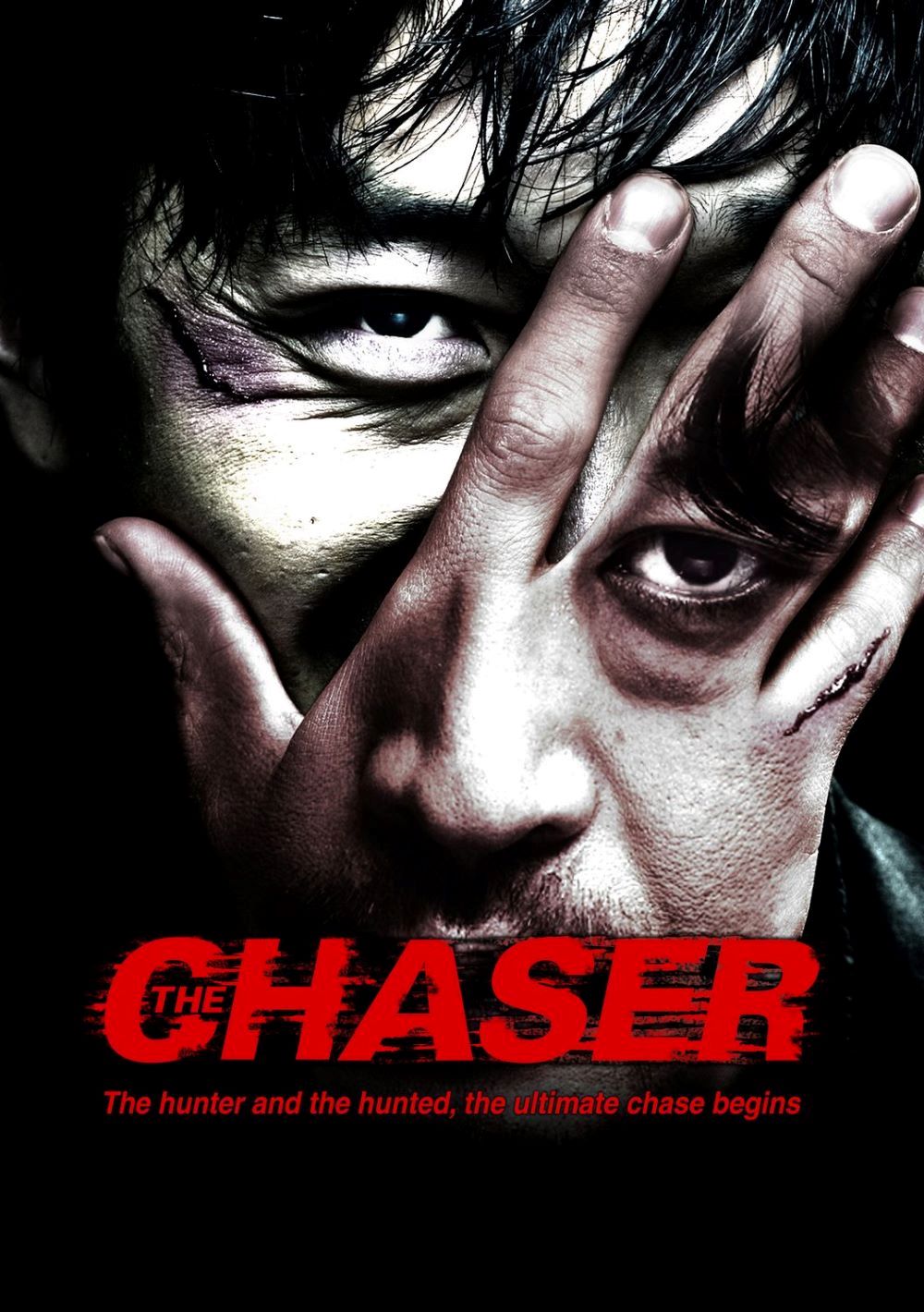
You know that feeling when a thriller drags you so deep into its messiness that you forget to breathe? That’s The Chaser for most of its runtime, but it’s also a movie that stumbles as often as it sprints. Directed by Na Hong-jin in his feature debut back in 2008, this South Korean thriller doesn’t play by the usual rules. It’s not about a genius detective outsmarting a methodical killer. It’s about a washed-up, broke ex-cop turned pimp who stumbles into a serial murder case because one of his girls went missing and, frankly, he wants his money back. That blunt, ugly premise sets the tone for what follows: raw, desperate, and uncomfortably human. But being a first-time effort, The Chaser also shows its seams—clunky pacing in places, a few too many convenient coincidences, and an ending that tries for tragedy but sometimes feels more like the writer painted himself into a corner.
Let’s talk about our unlikely “hero,” Joong-ho, played with permanent five-o’clock shadow and simmering rage by Kim Yoon-seok. He’s not a good guy. He runs an escort service, slaps his girls around when they’re difficult, and only starts looking for one of them, Mi-jin, because her disappearance means lost profit. But here’s the tricky part Na Hong-jin pulls off: you still root for him. Joong-ho is tired, cynical, and beaten down by life, but underneath the scuzziness is a man who has seen too much corruption and feels a prick of responsibility when he realizes a customer might be a monster. The film doesn’t redeem him—he never turns into a noble saint—but it gives him a blunt, stubborn engine that feels real. That said, his character arc is more of a flat line. He doesn’t really change or learn anything by the end; he just gets more exhausted. For a debut, that’s a common shortcut—confusing intensity with development.
The killer, Young-min (Ha Jung-woo), is the opposite of what you’d expect. He’s not a lurking shadow or a theatrical psycho. He’s a soft-spoken guy with a pale, ordinary face who lives in a nondescript house. When Joong-ho first tracks him down through a phone number, Young-min calmly admits he took the girl, and then he calmly admits he probably killed her. The chilling part? He can’t remember the exact number of victims. He keeps a photo collection, but his memory is foggy from a brain injury. That detail is clever. It strips away the “mastermind” trope and leaves you with something more disturbing: a man who kills almost casually, like a bad habit he can’t quite recall. But the film never really explores why that brain injury matters beyond giving Young-min an occasional blank stare. As a debut flaw, it’s the kind of half-baked motivation that a more experienced director might have fleshed out or cut entirely.
What separates The Chaser from a typical cat-and-mouse thriller is how it weaponizes time and bad luck. The whole movie takes place over a day and a half, and every missed connection feels like a punch to the gut. At one point, Joong-ho drives right past the house where Mi-jin is still alive but bleeding out, because he’s following a different lead. Later, the police release Young-min on a technicality—lack of evidence—moments before Joong-ho finds crucial proof. You’ll scream at the screen. But here’s the thing: not all of these near-misses feel earned. Some of them rely on characters making decisions that are less “human error” and more “plot convenience.” For a debut director, balancing realism with momentum is tough, and Na Hong-jin sometimes tips too far into frustration for its own sake. The chase scenes aren’t slick; they’re clumsy and exhausting, which works in theory, but in practice, a couple of them drag on long enough that you start checking the runtime.
Then there’s Mi-jin (Seo Yeong-hie), the missing escort. For most thrillers, she’d be a corpse or a victim trophy. But The Chaser spends real time with her after she escapes Young-min’s basement—badly injured, confused, dragging herself through dark alleys. We see her call her young daughter. We see her haggle with a convenience store owner for a bandage. She’s not a plot device; she’s a tired single mom trying to survive. That’s genuinely good writing. However, the film also sidelines her for long stretches in the middle act, and when she reappears, the emotional payoff feels rushed. It’s a common debut problem: wanting to do justice to a supporting character but not yet knowing how to balance screen time across a whole cast.
Visually, the film is drenched in muted grays and wet streets. This isn’t the neon-lit Seoul of Oldboy or the slick gloss of I Saw the Devil. It’s rainy, cramped apartments, rundown police stations, and the kind of low-budget grit that makes everything feel lived-in and hopeless. That’s a strength. But the camerawork can get distractingly shaky, especially in dialogue scenes where no one is running. You can tell Na Hong-jin comes from a documentary background—sometimes it adds urgency, other times it feels like they forgot to set up a tripod. The sound design is nastier than the visuals: bones crack audibly, hammers thud on tile, and a child’s voice over a phone cuts through like glass. The score is barely there, which works until it doesn’t—some scenes feel a little too dry, a little too quiet, like the director was afraid of seeming manipulative.
What becomes increasingly difficult to ignore as The Chaser progresses is how the film’s portrayal of police incompetence drifts from pointed social critique into something closer to farce, yet without ever fully committing to satire. The detectives aren’t just flawed—they’re written as so hilariously useless that the movie flirts with dark comedy, but then pulls back. Are we supposed to laugh at the officer who falls asleep during a murder confession, or are we supposed to feel outraged? The tonal whiplash suggests Na Hong-jin wasn’t sure how far to push the absurdity, which is a common growing pain for a first-time director trying to balance genre beats with real-world cynicism. Also, the ending has become famous for its bleakness, but on a second watch, some of that bleakness feels forced. Without spoiling anything, the final fifteen minutes rely on a string of bad luck that would strain belief in a Final Destination movie. For a film that otherwise prides itself on gritty realism, that stretch feels like a debut director overcorrecting—trying too hard to avoid a happy ending and landing on something that’s more exhausting than meaningful.
If you compare The Chaser to Na Hong-jin’s later work, like The Yellow Sea or The Wailing, you can see the bones of a great filmmaker learning to control his impulses. Here, he throws everything at the wall: grueling chase scenes, social commentary about corrupt policing, a serial killer who isn’t a genius, a protagonist who isn’t a hero. Some of it sticks. Some of it slides off. The movie is too long by about fifteen minutes, and the middle section sags under the weight of repeated near-misses that start to feel less like tragedy and more like the director twisting the knife for the sake of it.
In the end, The Chaser is a good but uneven thriller. It’s not the masterpiece some fans claim, and it’s not a failure either. It’s a debut film with genuine energy, a couple of great performances, and a willingness to be ugly and uncomfortable. But it also has pacing issues, tonal confusion, and a third act that mistakes relentless misery for emotional depth. Watch it for Kim Yoon-seok’s grimy determination and Ha Jung-woo’s creepy blankness. Just don’t expect the polish of a veteran director. Na Hong-jin would get there later. Here, he’s still chasing his own potential.