“They say there’s no such thing as a bad man. Only bad situations.” — Murakami
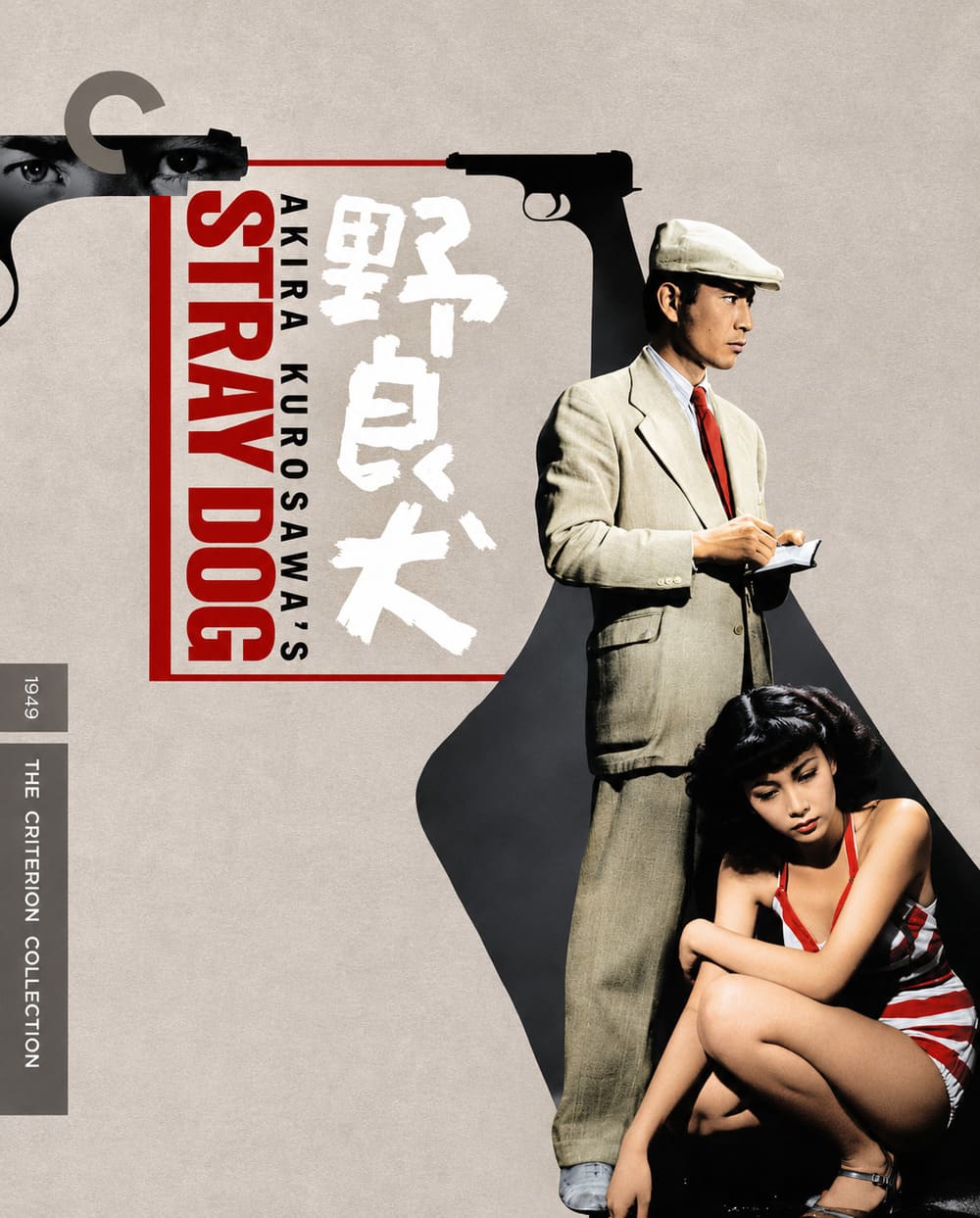
There are bad days at work, and then there is losing your police gun on a packed bus during a Tokyo heat wave. That is the setup for Akira Kurosawa’s Stray Dog (1949), a crime thriller that turns one embarrassing mistake into a surprisingly moving study of guilt. A young detective wants his weapon back before someone gets hurt, but the search gradually becomes something larger and messier. What makes the film so good is that Kurosawa never treats the investigation as just a puzzle. Every lead takes us deeper into a city where surviving the peace seems almost as difficult as surviving the war.
Toshiro Mifune plays Murakami, the inexperienced detective whose stolen pistol becomes the center of his increasingly miserable existence. Once he discovers that the weapon has entered the criminal underworld, recovering it stops being a matter of professional embarrassment. He feels personally implicated in whatever happens next. That reaction could have made him seem self-important, but Mifune makes it painfully believable. Murakami does not simply regret making a mistake; he seems unable to accept that a mistake can exist without defining him. His seriousness is admirable, exhausting, and occasionally a little immature, which gives the character a useful roughness.
Mifune’s performance works especially well because so much of it seems trapped inside his body. His tense posture and watchful expression suggest someone trying to hold himself together through sheer discipline. Rather than playing a naturally commanding detective, he gives us a man who has not yet learned how to wear authority comfortably. There is something touching about that uncertainty. Murakami believes responsibility means feeling everything as intensely as possible, even when those feelings make him less effective. The film lets us respect his conscience without pretending that his approach is sustainable. He needs experience, but he also needs a little distance from himself.
Stray Dog was the third collaboration between Kurosawa and Mifune, following Drunken Angel (1948) and The Quiet Duel (1949), and it shows how quickly their partnership was developing range. Rather than simply repeating the volatile gangster energy Mifune brought to Drunken Angel, Kurosawa gives that intensity a different outlet here. Murakami is trying desperately to behave correctly, not daring the world to stop him. The energy is still there, but it has been turned inward, becoming shame, vigilance, and barely contained panic. That shift makes the film an important early demonstration of how much more Mifune could offer than swagger or explosive anger.
There is a productive tension between the way Mifune performs and the way Kurosawa directs him. Mifune makes Murakami’s crisis feel intensely personal, while Kurosawa keeps widening the frame of reference. However overwhelmed the detective becomes, the city refuses to organize itself around his feelings. Crowds continue moving, business continues, and other people have their own problems. That contrast keeps the film from becoming an extended exercise in one man’s self-punishment. Kurosawa recognizes the sincerity of Murakami’s guilt, but his direction also quietly questions the assumption that suffering more necessarily means understanding more.
That is where Takashi Shimura’s veteran detective Sato becomes essential. Partnered with Murakami, Sato brings a calmer understanding of police work and human weakness. Their relationship gives the film much of its warmth without turning it into an easygoing buddy picture. Shimura’s relaxed presence plays beautifully against Mifune’s nervous intensity: one man understands that investigations require patience, while the other seems to experience every delay as another personal failure. More importantly, Sato offers a competing moral perspective. He can pursue a criminal without becoming consumed by the question of why that person became one, something Murakami finds much harder to do.
It is also striking how early Stray Dog brings together the narrative conventions we now associate with buddy-cop movies and police procedurals. Released in 1949, it is an early forerunner of both, pairing an anxious rookie with a seasoned detective while building its investigation around interviews, leads, and patient legwork. Their mismatched personalities anticipate a familiar genre formula, but Kurosawa uses those differences for more than friction or comic relief. The partnership explores how experience changes a person’s understanding of responsibility. Watching it now, there is something fascinating about recognizing the outlines of countless later crime movies in a relationship that still feels this unforced.
Still, the film’s most overwhelming presence might be the heat. Kurosawa makes Tokyo feel sticky, crowded, and short of breathable air. Sweat is not just an atmospheric detail; it becomes part of the film’s visual rhythm, along with exhausted faces and bodies looking for relief. The weather puts everyone under pressure before the plot even has to. That is a particularly effective noir touch: instead of relying only on darkness and threatening shadows, Stray Dog finds anxiety in a world that feels overexposed. There is nowhere comfortable to stand, nowhere private to think, and certainly nowhere Murakami can escape his own worry.
Kurosawa’s direction makes that discomfort active rather than merely decorative. He fills scenes with small movements—people fanning themselves, wiping their faces, shifting around—so that even a conversation can feel physically restless. Against that constant background activity, Murakami’s rigid concentration becomes especially noticeable. The editing can move the investigation along briskly, but Kurosawa also knows when to stretch time until we start sharing the detective’s frustration. His visual style is energetic without being interested only in action. Sometimes the most effective thing he does is make waiting feel unbearable.
The extended passages through Tokyo’s black markets are where that approach becomes most absorbing, although they also test the pacing. Murakami searches, watches, walks, and keeps walking. Anyone waiting for the next clean piece of detective information may start getting restless, and that reaction is fair. The sequence lingers beyond what the plot strictly needs. But its duration also changes our relationship to the investigation. We stop looking only for clues and begin noticing the crowd, the transactions, and the sheer labor of getting through the day. The city becomes more than scenery. It becomes the difficult reality that any tidy explanation of crime will have to confront.
That broader perspective matters because Stray Dog is interested in the unstable boundary between the policeman and the person he pursues. Murakami and the gun’s eventual possessor, Yusa, are both veterans struggling with the aftermath of war. Their circumstances do not make them identical, but they make the distinction between respectable citizen and criminal feel less comfortably absolute. Murakami recognizes something of himself in the other man, and that recognition unsettles the usual pleasures of a manhunt. Catching the suspect might resolve the case, but it cannot settle the question of why two damaged people took different paths.
What I like is that the film does not require sympathy to cancel accountability. Understanding desperation is not the same thing as excusing violence, and Kurosawa keeps those ideas in productive tension. Sato’s practicality has obvious value, particularly when Murakami risks disappearing into identification with his quarry. Yet Murakami’s discomfort also seems necessary. Without it, police work could become a way of sorting people into categories and refusing to look any closer. Neither attitude feels entirely sufficient by itself. The film’s moral intelligence comes from allowing compassion and judgment to coexist without making their relationship neat.
By the final confrontation, the pursuit has become something rawer than a contest between professional competence and criminal cunning. The physical struggle strips away much of the authority attached to Murakami’s job, leaving two exhausted men whose differences remain real but whose vulnerability is shared. Kurosawa brings the film’s large social concerns back to bodies, faces, and distress, while Mifune makes the encounter feel like the breaking point of everything Murakami has been holding inside. It is suspenseful without delivering a simple rush of triumph. Recovering an object can never undo everything that happened while it was missing. Stray Dog is not perfectly paced, but its rough edges belong to an unusually humane crime movie: tense, observant, and unwilling to confuse solving a case with understanding a person.
Kurosawa-Mifune Collaborations