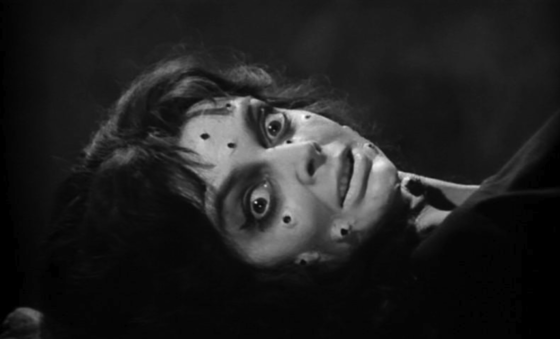
4 Shots From 4 Films: Special 1966 Edition


4 Shots From 4 Films is just what it says it is, 4 shots from 4 of our favorite films. As opposed to the reviews and recaps that we usually post, 4 Shots From 4 Films lets the visuals do the talking!

Today, let us take a look back at a classic cinematic year.  It’s time for….

4 Shots From 4 1966 Films

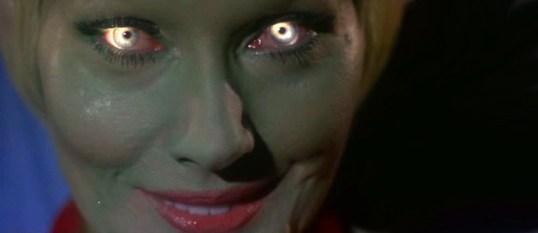
Queen of Blood (1966, dir by Curtis Harrington, DP: Vilis Lapenieks)

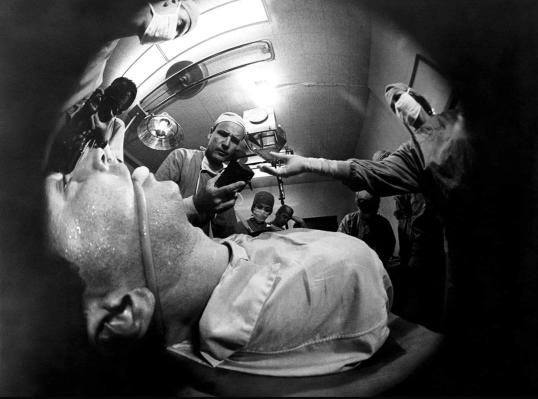
Seconds (1966, dir by John Frankenheimer, DP: James Wong Howe)

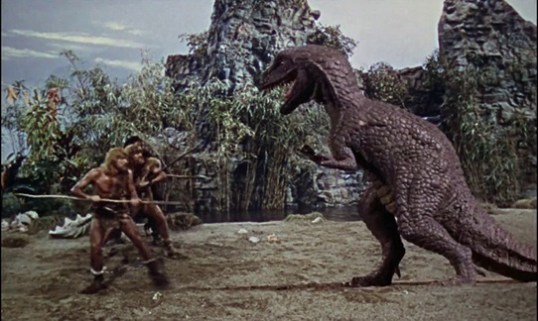
One Million Years B.C. (1966, dir by Don Chaffey, DP: Wilkie Cooper)

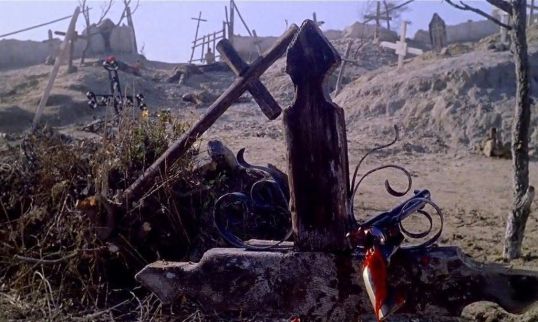
Django (1966, dir by Sergio Corbucci, DP: Enzo Barboni)

The Challenge (1982, directed by John Frankenheimer)


Rick Murphy (Scott Glenn) is a punch-drunk boxer who is hired to return an ancient sword to Japan so that it can be returned to its rightful owner, the honorable Toru (Toshiro Mifune).  Once in Japan, Rick becomes involved in a battle between Toru and his corrupt brother, Hideo (Atsuo Nakamura).  Hideo demands that Rick work as an undercover spy in Toru’s martial arts school or be beheaded.  Rick decides to keep his head and be a spy but he soon finds himself truly wanting to learn the ways of the Bushido.

A martial arts film is the last place most people would expect to find Scott Glenn and considering how miscast Glenn is, that’s understandable.  Scott Glenn feels very out-of-place as both a boxer and a modern-day samurai.  Scott Glenn is a very good actor but the role of Rick Murphy called for someone who could mix comedy with drama and be convincingly desperate.  That’s not Scott Glenn.  Who would have been better in the role?  Tom Berenger was already acting in 1982.  Or maybe even someone like Jan-Michael Vincent.  Vincent was a B-actor but, deep down, The Challenge is a B-movie.

The good thing is that the action often does make up for Glenn’s miscasting.  John Frankenheimer struggled with making the human drama compelling but he knew how to film a good fight.  John Sayles’s script is pulpy without ever being disrespectful to Japanese culture and, as always, Mifune looks like he could battle and defeat the entire world if he wanted to.

One final note: Steven Seagal worked behind-the-scenes on the film but we won’t hold that against it.

Horror Film Review: Prophecy (dir by John Frankenheimer)


First released way back in 1979, Prophecy is one of those films where a big evil corporation is selfishly polluting the environment and a group of noble Native Americans is convinced that a vengeful spirit of the forest has been awakened as a result.

We’re told that the vengeful spirit is named Katahdin and that it’s “as large as a dragon and has the eyes of a cat.” We’re also told, by someone who claims to have actually seen it, that the Katahdin is a combination of several different creatures, “a part of everything that is God’s creation.”

Sound pretty scary, right?

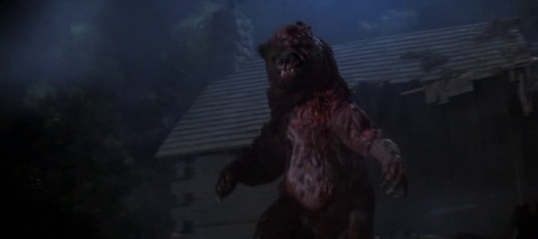
Well, it is until the bear itself actually shows up on screen. That’s when we find ourselves confronted with this:

I mean, don’t get me wrong. He certainly is ugly. But he just looks so silly and …. well, fake.

The lesson here, and it’s an important one, is that you should never put your monster onscreen unless it can actually live up to all the hype. Take a lesson from Spielberg. When it became obvious that the shark in Jaws looked like a tin model, Spielberg made the decision to not show the shark. Instead, he gave us a lot of point of view shots and, by the time the shark did appear, audiences were so frightened that it didn’t matter whether it looked convincing or not. Prophecy makes the mistake of having its monster all over the place and it just doesn’t work.

Of course, once the EPA’s Dr. Robert Verne (Robert Foxworth) shows up with his pregnant wife (Talia Shire, who somehow went from The Godfather and Rocky to this), he discovers that one reason why the Katahdinh doesn’t live up to all the hype is because it’s just a mutant bear. It turns out that all that pollution led to some crazy results and now every logger, Native American activist, and camper in the area is in danger! Can Dr. Verne and a team of disposable, forgettable characters end the threat of Katahdinh!?

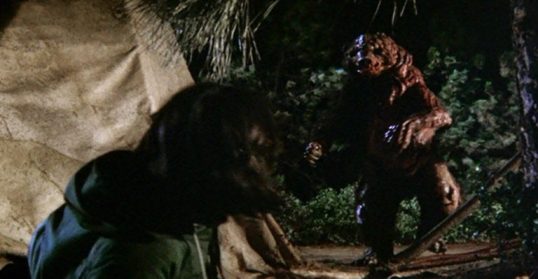
Prophecy is a big, dumb movie that’s never as much fun as you want it to be. There is one early scene that features a camper trying to hop away from Katahdinah while zipped up in a sleeping bag. That scene — which ends with one ruined sleeping back and lot of feathers floating around — is just demented enough to be kind of fun:

Otherwise, the entire film is slow-moving and rather dull. Part of the problem is that it was directed by John Frankenheimer, a major and important filmmaker who had entirely the wrong sensibility for this film. Frankenheimer was a legitimately great director (among his good credits: The Manchurian Candidate, Birdman of Alcatraz, Ronin, Seconds) but he takes the material too seriously. He spends so much time trying to sell the film’s environmental message that he forgets that the majority of the audience for a film like this isn’t watching because they want to become a better person. They’re watching for mutant bear mayhem! This is the type of film that needed to be directed by someone from the Roger Corman school of quick thrills and shameless shlock.

So, here are the twin lessons of Prophecy: know your audience and make sure your monster can live up to its reputation! Otherwise, you’ll just be known for that one scene with the exploding sleeping bag.

18 Days of Paranoia #8: The French Connection II (dir by John Frankenheimer)


The 1975 film, The French Connection II, opens up three years after the downbeat conclusion of the first French Connection.

Having escaped from the police at the end of the first film, the wealthy and suave Alain Charnier (Fernando Rey) is still smuggling drugs and living his best life.  He goes to parties with wealthy people.  He has lunch dates with important businessman.  Even though the French police are keeping an eye on him, Charnier seems to be virtually untouchable and he knows it.  If Charnier seemed impossibly smug in the first French Connection, he’s even worse in the second one.

Charnier may be enjoying himself in Marseille but what he doesn’t know is that there’s an American tourist in town.  He’s a very loud American, one who insists on trying to speak to everyone in English and is shocked to discover that most of the French natives don’t have the slightest clue as to what he’s talking about.  He’s shocked when he goes into a bar and fails to impress two young French women.  He also doesn’t seem to understand that even French people who speak English are not going to appreciate being called a “frogs.”  He wanders around town in loud shirts and with a fedora sitting rakishly on his balding head.

Yep, it’s Popeye Doyle (Gene Hackman).  The anti-hero from the first French Connection is still on the case and he’s now come all the way to France to help track down Charnier.  The last time we saw Doyle, he had just accidentally killed a cop and was running through a dark warehouse, firing his gun.  In fact, the first film ended with the suggestion that Doyle was such a loose cannon that his career as a narcotics detective was probably over.  Instead, in the sequel, we learn that Popeye is still working in narcotics and he’s still just as much of a loose cannon as he ever was.  If you thought people in New York found Popeye to be obnoxious, just you wait to see how the French react to him!

What Popeye doesn’t know is that his superiors in New York have only sent him to Marsielle so that he can be a target.  They know that Popeye will never be able to blend in.  Charnier will spot him and, hopefully, Charnier will panic and make some sort of mistake that will finally allow the police to capture him.  French detective Henri (Bernard Fresson) goes along with the plan, despite his own moral objections.  Henri can’t stand Popeye but he doesn’t want to see him killed either.

It doesn’t take long for Charnier to notice Popeye.  After Popeye is captured by Charnier’s man, they inject him with heroin until soon, Popeye is an addict.  Before Popeye can finally get his shot at Charnier, he’s going to have to overcome his own drug addiction….

The French Connection II starts out well, with Gene Hackman wandering around Marsielle and acting like a stereotypical ugly American.  Director John Frankenheimer does a good job of keeping the action moving at a steady pace during the first half of the film and there’s a lot of great scenes involving Popeye being followed around town by not just the police but also Charnier’s men.  The first half of the film does a great job of establishing an atmosphere of paranoia, which is not surprising when you consider that Frankenheimer’s other credits included The Manchurian Candidate, Seven Days In May, and Seconds.

Unfortunately, once Popeye is captured and gets hooked on heroin, the action not only comes to a halt but the normally reliable Gene Hackman starts to act up a storm.  When Popeye, while going through withdrawal, starts talking about how he used to play baseball and how he once has a try-out with the New York Yankees, the scene seems to go on forever and Hackman’s performance becomes so histrionic that you basically just end up feeling like you’re watching someone auditioning his heart out for a spot in the Actor’s Studio.  Gene Hackman was one of the world’s great actors and Popeye Doyle was a great role but, in The French Connection II, we’re reminded that even a great actor occasionally needs to have his performance reined in.

Eventually, after Hackman’s had his big Oscar moment, the action kicks back in and the film kind of regains its momentum.  There’s a big action scene towards the end of the film.  (Ironically, it’s the type of big, good guys vs. bad guys shoot out that the first film deliberately avoided.)  The film ends with a literal bang that’s abrupt yet undeniably effective.

As far as sequels go, The French Connection II is good.  It’s not great and, not surprisingly, it doesn’t come anywhere close to matching the power of the first film.  But it still has enough effective scenes to make it worth watching.  You just might want to hit fast forward whenever Popeye starts talking about baseball…..

Other Entries In The 18 Days Of Paranoia:

  1. The Flight That Disappeared
  2. The Humanity Bureau
  3. The Private Files of J. Edgar Hoover
  4. The Falcon and the Snowman
  5. New World Order
  6. Scandal Sheet
  7. Cuban Rebel Girls

A Movie A Day #329: The Fourth War (1990, directed by John Frankenheimer)


The year is 1989 and the Cold War is coming to an end.  Colonel Jack Knowles (Roy Scheider) was a hero in Vietnam but now, years later, his eagerness to fight has made him an outsider in the U.S. Army.  Most people would rather that Knowles simply retire but, as long as there are wars to be fought, Knowles will be there.  His only friend, General Hackworth (Harry Dean Stanton), arranges for Knowles to be assigned to an outpost on the  West German-Czechoslovakia border.  As soon as he arrives, Knowles starts to annoy his superior officer, Lt. Col. Clark (Tim Reid).  When Knowles sees a Czech refugee gunned down by the Soviets while making a run for the border, he unleashes his frustration by throwing a snowball at his Russian counterpart.  Like Knowles, Col. Valachev (Jurgen Prochnow) is a decorated veteran who feels lost without a war to fight.  Knowles and Valachev are soon fighting their own personal war, even at the risk of starting a full-scale conflict between their two nations.

The Fourth War was one of the handful of films that John Frankenheimer directed for Cannon Films.  Much as he did with The Manchurian Candidate, Frankenheimer mixes serious thrills with dark satire in The Fourth War.  Frankenheimer gets good performances from the entire cast, especially Scheider and Prochnow.  The real star of the movie is the snow-covered landscape, which Frankenheimer turns into a metaphor for the entire Cold War.  When Knowles and Valachev end up throwing punches on a frozen lake that’s breaking apart underneath their feet, it is not hard to see what Frankenheimer’s going for with this film.  Released shortly after the fall of the Berlin Wall, The Fourth War is an underrated thriller that deserves to be rediscovered.

A Movie A Day #316: 52 Pick-Up (1986, directed by John Frankenheimer)


Harry Mitchell (Roy Scheider) is a businessman who has money, a beautiful wife named Barbara (Ann-Margaret), a sexy mistress named Cini (Kelly Preston), and a shitload of trouble.  He is approached by Alan Raimey (John Glover) and informed that there is a sex tape of him and his mistress.  Alan demands $105,000 to destroy the tape.  When Harry refuses to pay, Alan and his partners (Clarence Williams III and Robert Trebor) show up with a new tape, this one framing Harry for the murder of Cini.  They also make a new demand: $105,000 a year or else they will release the tape.  Can Harry beat Alan at his own game without harming his wife’s political ambitions?

Based on a novel by the great Elmore Leonard and directed by John Frankenheimer, 52 Pick-Up is one of the best films to ever come out of the Cannon Film Group.  Though it may not be as well-known as some of his other films (like The Manchurian Candidate, Seconds, Black Sunday, and Ronin), 52 Pick-Up shows why Frankenheimer was considered to be one of the masters of the thriller genre.  52 Pick-Up is a stylish, fast-paced, and violent thriller.  John Glover is memorably sleazy as the repellent Alan and the often underrated Roy Scheider does an excellent job of portraying Harry as a man who starts out smugly complacent and then becomes increasingly desperate as the story play out.

One final note: This movie was actually Cannon’s second attempt to turn Elmore Leonard’s novel to the big screen.  The first attempt was The Ambassador, which ultimately had little to do with Leonard’s original story.  Avoid The Ambassador but see 52 Pick-Up.

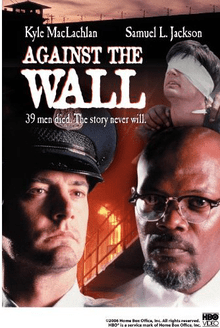
A Movie A Day #108: Against The Wall (1994, directed by John Frankenheimer)


The year is 1971 and Malcolm Smith (Kyle MacLachlan) has just started working as a prison guard at Attica Correctional Facility.  Even though his father (Harry Dean Stanton) was a prison guard, Malcolm does not fit in with the other guards at Attica.  Malcolm is younger than them and is disgusted by the inhumane treatment of the prisoners.  If not for his wife (Anne Heche) and the child that they are expecting, Malcolm would just quit but he needs the money.  He fears that he is going to eventually turn into just another sadistic guard.

When a prison riot breaks out, Malcolm is one of the guards taken hostage.  While the psychotic Chaka (Clarence Williams III) wants to kill all of the guards, Jamaal X (Samuel L. Jackson) realizes that killing the hostages will sacrifice what little leverage that prisoners have.  If the guards are killed, Jamaal X reasons, the state police will have no reason not to storm the prison and violently restore order.  Over the course of the four-day riot, Jamaal and Malcolm become unlikely friends and allies but it turns out that, even with the guards being held hostage, the government has no interest in negotiating with the prisoners.

This moving, thought-provoking, and well-acted docudrama originally aired on HBO and it won John Frankenheimer a well-deserved Emmy.  Samuel L. Jackson is powerful as Jamaal X and this is one of the few times that Kyle MacLachlan got to play a thoroughly normal person with no dark secrets or weird quirks.  Malcolm Smith is just a regular everyman who finds himself in the middle of a history-making event.

For fans of Twin Peaks, Against the Wall features three alumni of the show.  Kyle MacLachlan, of course, starred as Dale Cooper while Clarence Williams III appeared in one episode as Roger Hardy.  Finally, Harry Dean Stanton, a longtime favorite of David Lynch, appeared in Twin Peaks: Fire Walk With Me.

Never Nominated: 16 Directors Who Have Never Received An Oscar Nomination


It’s a sad fact of life that not everyone who deserves an Oscar gets one.  For instance, Alfred Hitchcock received five nominations for best director but never won once.

That said, at least Hitchcock was nominated!  Some of our greatest directors have never even been nominated!  This list below is hardly exclusive but still, these 16 directors have somehow never been nominated.  Ten of them could still be nominated in the future.  Sadly, for six, the opportunity has forever passed.

  1. Dario Argento

Sadly, Dario Argento will probably never be nominated for best director.  None of his films — even the early, acclaimed work — were typical Oscar films.  But, consider this: Argento is one of the most influential directors of all time.  Regardless of what might be said about some of Argento’s more recent films, his earlier films are classics of their genre.  Deep Red, Suspiria, Inferno, Tenebrae — his work on any of these films would have been worthy of a nomination.

2. Andrea Arnold

This British director is responsible for two of the best films of the past ten years — Fish Tank and American Honey.  She deserved a nomination for both of them (and a win for American Honey).  Hopefully, she will be recognized in the future.

3. Tim Burton

I’m not the world’s biggest Tim Burton fan but he has a fan base that will follow him almost anywhere.  It seems like every year, we hear that Burton has finally made the film that will win him some Oscar recognition.  Remember Big Eyes?  As I said, I’m not a huge Burton fan but, if I was to nominate him, it would probably be for his work on Sweeney Todd.

4. John Carpenter

Carpenter deserved all sorts of nominations for his work in the 70s and the 80s.  Being the rebel that he is, Carpenter will probably never get the Oscar recognition that he deserves.  (He did win an Academy Award for Best Live Action Short.)

5. David Cronenberg

It’s hard to believe that this Canadian director has never been nominated.  While it’s obvious that the Academy would never recognize Cronenberg’s earlier work (even if he did deserve some recognition for that exploding head in Scanners), it still seems like he’s destined to be nominated eventually.

6. Terry Gilliam

Much like Tim Burton, Gilliam sadly seems to be destined to be one of those directors who will have to be content with a devoted fan base.  Sadly, as of late, Gilliam’s become better known for the film projects that were canceled than the ones that were actually produced.  I would have nominated him for Brazil.

7. Werner Herzog

How has Werner Herzog gone his entire career without receiving at least one nomination for Best Director!?  I would nominate him for the chance to hear the acceptance speech alone.

8. Christopher Nolan

Christopher Nolan is another director who I’m shocked to realize has never been nominated.  He certainly deserved a nomination for Inception.  Maybe, just maybe, he’ll finally get some recognition for Dunkirk.

9. Lars Von Trier

With his controversial aesthetic and his talent for offending the masses, Lars Von Trier will never be nominated, no matter how much he might deserve it.

10. Joe Wright

Personally, I think that Joe Wright is responsible for two of the best films of the past ten years, Hanna and Anna Karenina.  Unfortunately, both were left out of their respective best picture races.  Even when Atonement was nominated for best picture, Wright did not receive a corresponding nomination.  Fortunately, with Darkest Hour, Wright will have another chance this year.

Best Director Joe Wright

And here are six directors who are no longer with us.  Sadly, these six will never have a chance to receive their first Oscar nomination:

  1. Mario Bava

Much like Dario Argento, there was never really any chance that the Academy would actually honor Mario Bava.  That’s a shame because Bava truly was one of the greatest directors of all time.  Check out Black Sabbath and Shock for proof.

2. Stanley Donen

It’s hard to believe that Donen wasn’t even nominated for Singin’ In The Rain.

3. John Frankenheimer 

It’s also hard to believe that Frankenheimer never received a nomination.  While he directed his share of bad films, he also directed Seven Days in May, The Manchurian Candidate, Seconds, and Ronin.

4. John Hughes

Not even for The Breakfast Club or Ferris Bueller’s Day Off!  Hughes may have been snubbed by the Academy but his films practically invented an entire genre.

5. Michael Powell and Emeric Pressburger

This directing team was a major influence on Martin Scorsese.  Black Narcissus remains one of the most visually stunning films of all time.  The Red Shoes was nominated for best picture but Powell/Pressburger were snubbed.

6. Nicholas Ray

Everyone knows that Ray directed Rebel Without a Cause.  Personally, I think his work on Bigger than Life was even more worthy of a nomination.

Insomnia File No. 15: George Wallace (dir by John Frankenheimer)


What’s an Insomnia File? You know how some times you just can’t get any sleep and, at about three in the morning, you’ll find yourself watching whatever you can find on cable? This feature is all about those insomnia-inspired discoveries!

George Wallace

If, after watching Promise last night, you discovered that you were still suffering from insomnia, you could have watched the very next film that premiered on TCM.  That film was the 1997 biopic, George Wallace.

Like PromiseGeorge Wallace was originally made for television.  Also, much like Promise, George Wallace is a character study of a conflicted man who makes many people uncomfortable and it’s also well-acted by a cast of veteran performers.  That, however, is where the similarities end.  Whereas Promise was ultimately a rather low-key and human drama, George Wallace is an epic.  Clocking in at nearly 3 hours and telling a story that spans decades, George Wallace attempts to use one man’s life story as a way to tell the entire story of the civil rights movement.

That’s a tremendously ambitious undertaking, especially for a film that had to conform to the demands of 1990s television.  Therefore, it’s probably not surprising that the movie, as a whole, is uneven.  It’s not a bad movie but, at the same time, it doesn’t quite work.

First off, we need to talk about who the historical George Wallace was.

(Here’s where I get to show off my amazing history nerd powers.  Yay!)

George Wallace served a total of four terms as governor of Alabama.  A protegé of a populist known as “Big Jim” Folsom, Wallace first ran for governor in 1958.  He campaigned as a moderate who supported integration and, as a result, he was defeated by the KKK’s endorsed candidate, John Patterson.  (Oddly enough, a fictionalized version of Patterson was the hero of the classic and racially progressive 1955 film, The Phenix City Story.)  When Wallace ran again in 1962, he ran as an outspoken segregationist and defeated his former mentor, Jim Folsom.  Infamously, Wallace is the governor who stood in the schoolhouse door and announced that Alabama would never accept integration.  Unable to succeed himself, Wallace arranged for his wife, Lurleen, to be elected as governor.  Lurleen subsequently died in office, succumbing to cancer while Wallace was running for President as the candidate of the American Independent Party.  (As of this writing, Wallace is the last third party presidential candidate to carry any states.)  Reelected governor in 1970, Wallace married Folsom’s niece and made another presidential run.  However, after a string of primary victories, that campaign was cut short when Wallace was shot and crippled by Arthur Bremer.  (Bremer would serve as the inspiration for Robert De Niro’s Travis Bickle in Taxi Driver.)  Confined to a wheelchair, Wallace served as governor until 1978 and, in 1976, ran for President one final time.  After being out of office for four years, he was elected Governor for one final term in 1982.  Late in life (and, it should be pointed out, long after integration had been generally accepted as the law of the land), Wallace renounced his segregationist past and publicly apologized for standing in the schoolhouse door.  During his final campaign for governor, he won a majority of the black vote and he proceeded to appoint more blacks to state positions than any governor before him.

George Wallace lived a long, dramatic, and interesting life and he’s still a very controversial figure.  Who was the real George Wallace?  Was he a political opportunist who used racism to further his career?  Was he truly a racist who saw the error of his ways and repented or did he only pretend to renounce his former beliefs once they were no longer popular?  And, even if Wallace was sincere in his regret, did he deserve to be forgiven or should he always be remembered as the villainous caricature that Tim Roth portrayed in Selma?  If we forgive or make excuses for the actions of a George Wallace, do we run the risk of diminishing the success and importance of the civil rights movement?

And I, honestly, have no answers to those questions.  Unfortunately, neither does George Wallace.  But before we get into that, let’s consider what does work about this film.

George Wallace opens in 1972 with Wallace campaigning in Maryland.  Wallace is played by Gary Sinise and his second wife, Cornelia, is played by a very young Angelina Jolie.  Sinise and Jolie both give brilliant performances, perhaps the best of their respective careers.  Sinise plays Wallace as a calculating and charismatic politician who is also a very angry man.  Throughout every second of his performance, we are aware of Wallace’s resentment that his political success in Alabama has potentially made him unelectable in the rest of the country.  Watching Sinise as Wallace, you see a man who believes in himself but doesn’t necessarily like the person that he’s become.  Meanwhile, Jolie plays Cornelia like a Southern Lady MacBeth and watching her, I remembered how, at one time, Angelina Jolie really did seem like a force of nature.  The Angelina Jolie of George Wallace is the wild and uninhibited Jolie of the past (the one who once said, “You’re in bed, you’ve got a knife, shit happens.”), as opposed to the safe and conventional Jolie of the present, the one who is currently directing rather stodgy movies like Unbroken and By The Sea.

After Wallace is shot, the film goes into flashback mode.  We watch as Wallace goes from being a liberal judge to being the segregationist governor of Alabama.  Mare Winningham plays Lurleen Wallace while Joe Don Baker plays Big Jim Folsom.  They all do a pretty good job but the flashback structure is so conventional (and so typical of a made-for-tv biopic) that it makes the film a bit less interesting.

There’s also a character named Archie.  Played by Clarence Williams III, Archie is literally the only major black character in the entire film.  He is portrayed as being a former convict who has been hired to serve as Wallace’s valet.  While Wallace plots to thwart the civil rights movement, Archie stands in the background glowering.  At one point, he’s even tempted to kill Wallace.  However, after Wallace is shot, Archie helps to take care of him.  The film suggests that being shot and subsequently cared for by Archie is what led to Wallace renouncing his racist views.  (The film also suggests that Wallace was never that much of a racist to begin with and, instead, was just so seduced by power that he would say whatever he had to say to win an election in Alabama.)

At the end of the film, we’re informed that almost everyone in the film was real but that Archie was fictional.  The problem, of course, is that the film is suggesting that the fictional Archie is responsible for the real-life Wallace both rejecting racism and apologizing for the all-too real consequences of racism.  The film ends with the realization that the filmmakers were so convinced that audiences would not be able to accept an ambiguous portrait of a public figure that they created a fictional character so that Wallace could have a moment of redemption.

(It also doesn’t help that a film about civil rights only features one major black character and that character is a fictional valet who doesn’t get to say much.)

In the end, the film doesn’t seem to be certain what it’s trying to say about Wallace and the meaning of his dramatic life.  That said, I enjoyed watching George Wallace because of the acting and because, as a history nerd, I always enjoy seeing historical figures portrayed on-screen, even if the filmmakers don’t seem to be quite sure what they’re tying to say about them.

George Wallace was directed by John Frankenheimer, a good director who, it appears, was constrained by the demands of 1990s television.  If George Wallace were made today, it would probably air on HBO and would probably be allowed to take more of a firm stand one way or the other on Wallace’s character.  That said, it would probably also be directed by Jay Roach who, to put it lightly, is no John Frankenheimer.

Anyway, George Wallace doesn’t quite work but it’s definitely interesting.  Watch it for Gary and Angelina!

Previous Insomnia Files:

  1. Story of Mankind
  2. Stag
  3. Love Is A Gun
  4. Nina Takes A Lover
  5. Black Ice
  6. Frogs For Snakes
  7. Fair Game
  8. From The Hip
  9. Born Killers
  10. Eye For An Eye
  11. Summer Catch
  12. Beyond the Law
  13. Spring Broke
  14. Promise

Super Bowl Alternative: The “Other” BLACK SUNDAY (Paramount 1977)


gary loggins's avatarcracked rear viewer

blimp1

My New England Patriots aren’t in this year’s big game, and I can’t stand that big-headed Peyton Manning, so my interest in tonight’s Super Bowl is minimal. And the halftime show does nothing for me: Coldplay is probably one of my least favorite bands (Beyoncé’s OK, though). So if like me, you’re not planning on spending much time watching Roger Goodell’s season-ending spectacular (can’t stand Goodell, either) may I suggest an alternative, namely John Frankenheimer’s thriller BLACK SUNDAY.

blimp2

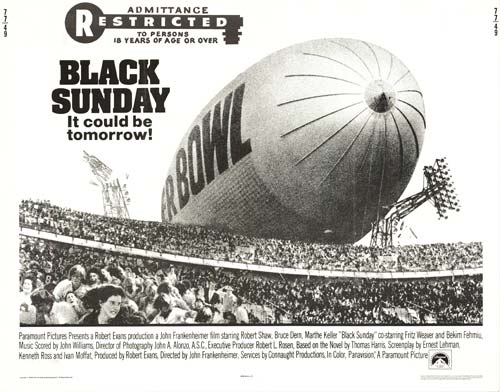
No, it’s not the 1960 Barbara Steele/Mario Bava horror classic, this BLACK SUNDAY is a rousing political thriller about terrorist organization Black September plotting a strike against America at the biggest game of them all, the Super Bowl. Beautiful but deadly terrorist Dahlia (Marthe Keller) has recruited the bitter, unstable blimp pilot Michael Lander (Bruce Dern at his 70’s psycho best) to turn the blimp into the ultimate suicide bomb, with plastique explosives setting…

View original post 224 more words