Retro Television Review: Fantasy Island 7.17 “Awakening of Love/The Imposter”


Welcome to Retro Television Reviews, a feature where we review some of our favorite and least favorite shows of the past!  On Tuesdays, I will be reviewing the original Fantasy Island, which ran on ABC from 1977 to 1984.  The show is once again on Tubi!

It’s time for a trip to 1984.

Episode 7.17 “Awakening of Love/The Imposter”

(Dir by Bob Sweeney, originally aired on March 17th, 1984)

Wendy Collins (Robin Mattson) is a beautiful model who cannot overcome her trust issues.  She fears that she might be frigid and she even resists Roarke’s attempts to make her fantasy of finding true love come true by setting her up with photographer (Rod McCrary).  Wendy finally reveals the truth to Roarke.  She grew up in a troubled home and, as a result, she has a hard time trusting people.  She’s only had one lover and the lover was….

“An older man?” Roarke asks.

“A woman,” Wendy reveals.

The camera zooms in on Roarke looking shocked.

Welcome to 1984!  Now, today, it’s pretty obvious what would happen.  Wendy would fall in love with the photographer’s assistant, Carla (Renee Lippin), and she would realize that there was nothing wrong with that.  But this episode aired in 1984, which means that Wendy has to find the courage to tell the photographer that her previous lover was a woman and that the photographer will then have to be willing to say that it doesn’t matter.  Basically, Wendy’s fantasy is to be reassured that she’s straight despite having had one same-sex relationship.

Yes, well, hmmm …. hey, what’s going on in the other fantasy?

Arthur Crane (John Davidson) has a compulsive disorder that leads to him assuming other people’s identities.  That’s quite a serious problem and Fantasy Island plays it for laughs.  Roarke tells Lawrence to follow Arthur around the Island and to keep Arthur from taking on anyone else’s identity.  Lawrence is terrible at his job.  (Tattoo could have done it!)  Arthur pretends to be a movie producer.  Arthur pretends to be Mr.  Roarke.  (Okay, that did make me laugh.)  Arthur pretends to be a doctor so Mr. Roarke zaps Arthur into an alternate universe where he is a doctor and he’s going to have to perform surgery on someone who has had a cerebral hemorrhage.  Arthur points out that he doesn’t really have any medical skills or training..  Then he looks at the comatose patient and discovers that it’s ….. HIMSELF!

This storyline had potential but it was done in by some seriously bad acting and the fact that the fantasy was comedic so the viewer knows from the start that Arthur is not going to accidentally kill himself on the operating table.

This was a rather dated trip to the Island.  The main theme seemed to be that Lawrence was thoroughly incompetent.

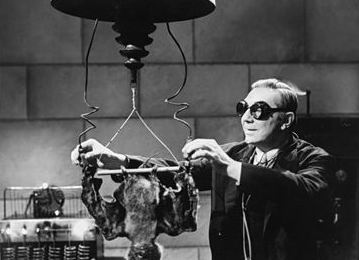
Bonus Horror On The Lens: The Devil Bat (dir by Jean Yarborough)


Because today would have been Bela Lugosi’s birthday, it seems appropriate to showcase him in a bonus horror on the lens!

In the 1940 film, The Devil Bat, the owners of a company in the small town of Heathville are super-excited because they’re going to be given their head chemist, Dr. Paul Carruthers (Bela Lugosi), a bonus check of $5,000.  However, since Carruthers’s inventions have made millions for the company, he is offended by the small check and decides that the best way to handle this would be to sue in court and demand fair compensation …. just kidding!  Instead, Dr. Carruthers sends his army of giant bats to kill the families of his employers.

The Devil Bat was produced by Production Releasing Corporation, a poverty row studio that specialized in shooting quickly and cheaply.  Going from Universal to PRC was technically a step down for Lugosi but The Devil Bat is actually an excellent showcase for Lugosi and he gives one of his better non-Dracula performances as the embittered Dr. Carruthers.  Indeed, one can imagine that Lugosi, who played such a big role in putting Universal on the map, could relate to Carruthers and his bitterness over not being fairly rewarded for the work he did to make others wealthy.

Enjoy The Devil Bat, starring the great Bela Lugosi!

Insomnia Files #71 and #72: Dallas Cowboys Cheerleaders (dir by Bruce Bilson) and Dallas Cowboys Cheerleaders II (dir by Michael O’Herlihy)


What’s an Insomnia File? You know how some times you just can’t get any sleep and, at about three in the morning, you’ll find yourself watching whatever you can find on cable or streaming? This feature is all about those insomnia-inspired discoveries!

If you were having trouble getting to sleep last night, you could have gone over to YouTube and watched 1979’s Dallas Cowboys Cheerleaders!  And then, if you were still having trouble getting to sleep, you could have followed it up with 1980’s Dallas Cowboys Cheerleaders II!  And then if you were somehow still not able to get any rest …. well, sorry.  There’s only two of them.  I guess you could watch that Making the Team show.  I don’t know.

Anyway, back to the movies!

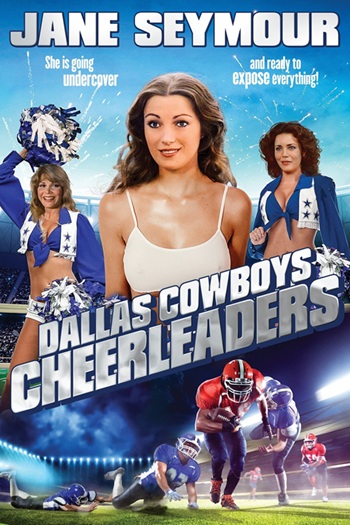
The first Dallas Cowboys Cheerleaders stars Jane Seymour as a serious journalist who at first scoffs at the idea of going undercover as a Dallas Cowboys Cheerleader.  But her ex-boyfriend and editor (Bert Convy) insists that she take the assignment.  Jane goes undercover and even makes the squad!  (It’s never mentioned whether she has any sort of dance or cheerleading experience so I find it a bit odd that she actually made it onto a professional cheerleading squad but whatever….)  Seymour gets to know the other members of the Squad, including the Love Boat’s Lauren Tewes.  She comes to realize that she doesn’t want to write up a tabloid story about the cheerleaders.  These are “good, down home girls,” she tells Convy.  Convy doesn’t care.  He wants scandal!

He’s not going to get it, though.  The main message of this film is that the Dallas Cowboys Cheerleaders are basically saints with pom poms.  Sure, one of them has a loser ex-boyfriend.  And another one of them struggles a bit with the routines.  It’s not an easy job but, in the end, everyone does their bit to support the team!

It’s all pretty silly but I’m from Dallas and I’m surrounded by Cowboy fans who have been complaining nonstop about the team for as long as I can remember so I enjoyed watching a movie that portrayed the Cowboys organization as being the greatest group of people on the planet.  (No drug or gun problems here!)  It’s very much a film of the 70s, made for television and straddling the line between being exploitive and being wholesome.  Yes, the costumes are skimpy but no one smokes, drinks, or curses.  The film features soapy drama, actual Dallas locations, 70s fashion, a great disco soundtrack, and dorky Bert Convy as a womanizer.  Plus, like me, Jane Seymour has mismatched eyes.  How can you not love this film!?

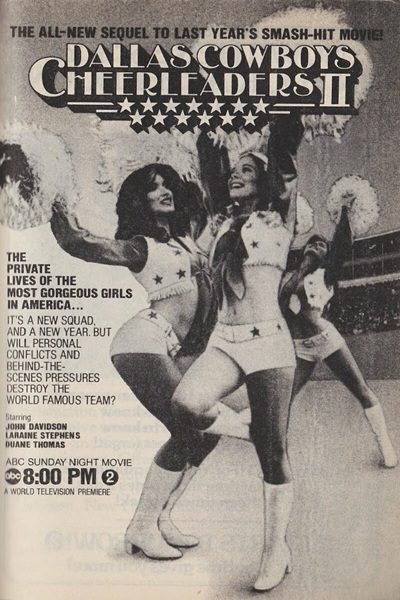
As for the sequel, it ditches almost everyone from the first film.  Only Laraine Stephens, as the squad’s no-nonsense coach, returns.  She’s got a whole new squad to deal with and only a limited amount of time to perfect the cheer that will win the Cowboys the Super….sorry, I mean to say the playoff game.  Whenever anyone in the film says, “playoff game,” their lips read “Super Bowl,” so I guess there was some last-minute tinkering after shooting was completed.  The squad also has to get ready to tour with the USO and to perform at a children’s hospital.  (Ray Wise appears as a doctor at the children’s hospital.)  The Cheerleaders are not only going to bring peace to the world but they’re also going to give those children the inspiration they need to get better.  Yay!

This one isn’t as much fun, largely because Laraine Stephens’s character isn’t that much fun.  The first film featured the very British Jane Seymour in Texas, somehow becoming a member of an all-American football team’s cheerleading squad and it was impossible not to enjoy the implausibility of it all.  The second film is just Laraine Stephens getting mad at people for not having the routine down to perfection.  No thanks, movie, I’m done with dealing with demanding choreographers.  There’s a reason why I turned down all of those offers to join the cheer squad in high school.  (For the record, my sister was the greatest cheerleader our high school ever had or ever will have!  Erin watched the first movie with me a few weeks ago.  She said it was okay but she didn’t think Jane Seymour was a convincing cheerleader.)

According to what I’ve read online, the first Dallas Cowboy Cheerleaders film was a huge rating success.  The second film was less so, which I guess is why there was never a third.

Previous Insomnia Files:

  1. Story of Mankind
  2. Stag
  3. Love Is A Gun
  4. Nina Takes A Lover
  5. Black Ice
  6. Frogs For Snakes
  7. Fair Game
  8. From The Hip
  9. Born Killers
  10. Eye For An Eye
  11. Summer Catch
  12. Beyond the Law
  13. Spring Broke
  14. Promise
  15. George Wallace
  16. Kill The Messenger
  17. The Suburbans
  18. Only The Strong
  19. Great Expectations
  20. Casual Sex?
  21. Truth
  22. Insomina
  23. Death Do Us Part
  24. A Star is Born
  25. The Winning Season
  26. Rabbit Run
  27. Remember My Name
  28. The Arrangement
  29. Day of the Animals
  30. Still of The Night
  31. Arsenal
  32. Smooth Talk
  33. The Comedian
  34. The Minus Man
  35. Donnie Brasco
  36. Punchline
  37. Evita
  38. Six: The Mark Unleashed
  39. Disclosure
  40. The Spanish Prisoner
  41. Elektra
  42. Revenge
  43. Legend
  44. Cat Run
  45. The Pyramid
  46. Enter the Ninja
  47. Downhill
  48. Malice
  49. Mystery Date
  50. Zola
  51. Ira & Abby
  52. The Next Karate Kid
  53. A Nightmare on Drug Street
  54. Jud
  55. FTA
  56. Exterminators of the Year 3000
  57. Boris Karloff: The Man Behind The Monster
  58. The Haunting of Helen Walker
  59. True Spirit
  60. Project Kill
  61. Replica
  62. Rollergator
  63. Hillbillys In A Haunted House
  64. Once Upon A Midnight Scary
  65. Girl Lost
  66. Ghosts Can’t Do It
  67. Heist
  68. Mind, Body & Soul
  69. Candy
  70. Shortcut to Happiness

Shattered Politics: The One and Only, Genuine, Original Family Band (dir by Michael O’Herlihy)


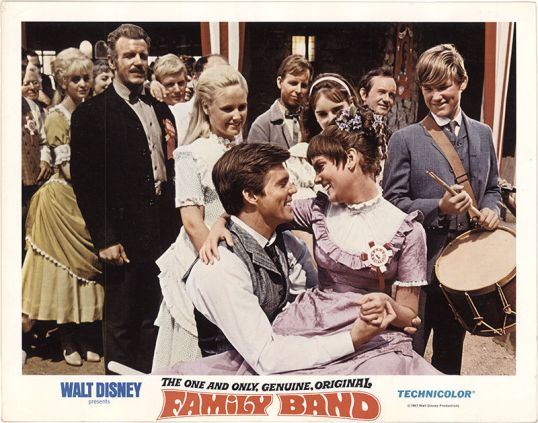
First released in 1968, The One and Only, Genuine, Original Family Band is an old school Disney family film that almost feels like a rather mean-spirited parody of an old school Disney family film.  The songs are forgettable, the film has a cheap made-for-TV look to it, and the whole thing feels a bit too manufactured to  produce any sort of genuine emotion.

That said, it’s memorable for two reasons.  First off, it may be the only film ever made that centers on the presidential election of 1888.  In the Dakota territories, the citizens wait to see whether or not Democrat Grover Cleveland will be reelected or whether he’ll be defeated by Republican Benjamin Harrison.  Those who support the Dakotas joining the Union as one state hope to see Cleveland returned to the White House.  Those who favor the creation of a North and South Dakota hope that Benjamin Harrison will win the election, allowing for four new Republican senators to be sent to Washington.

Confederate veteran Renssaeler “Grandpa” Brown (Walter Brennan) supports the Democrats and he’s got his family singing songs to promote the cause of Grover Cleveland.  Grandpa’s son, Calvin (Buddy Ebsen), is a Republican who still has no problem performing at the Democratic Convention because he, much like his children, is a born performer.  His oldest son, Sidney (Kurt Russell, who was 16 at the time of filming), is not old enough to vote but I imagine he’d probably vote for the Republican ticket because he’s Kurt Russell and it’s hard to imagine Kurt voting for a Democrat.  The other children want to keep both Grandpa and their father happy.  Meanwhile, daughter Alice (Lesley Ann Warren) has fallen in love with newspaper editor, Joe Carder (a very bland John Davidson).  Joe’s a Republican and supports Benjamin Harrison.  Grandpa’s not happy but really Grandpa should just mind his own darn business.  At least, that’s my take on it.  (Also, I gave up cursing for Lent.)

On the one hand, the Bowman sisters are pretty evenly split politically, with two voting for the Democrats and the other two tending to vote Republican so I could definitely relate to the idea of a family that didn’t always agree on politics  At the same time, this film’s premise means that there are a lot of songs about Benjamin and Grover Cleveland in this film and they’re about as memorable and exciting as you would expect a bunch of songs about two of America’s forgotten presidents to be.  If you learn anything about the election of 1888 from this film, you’ll learn that Cleveland’s full name was Stephen Grover Cleveland.  You might also note that, for all the talk about how the country have never been as divided as it is today, people were saying the exact same thing in 1888.

The other thing that makes this otherwise forgettable film stand-out is that it features the film debut of Goldie Hawn, who appears as a Republican dancer in the film’s climax.  This was not only Hawn’s debut but it was also the first film that she made with Kurt Russell.  That said, don’t panic.  Hawn was 22 to Kurt’s 16 when she made this film but the two of them didn’t become a couple until they met again in 1983, while filming Swing Shift.  I read an interview with Kurt where, when asked whether he noticed Goldie Hawn in her film debut, he said that he did but he didn’t even think of talking to her because, “I didn’t even have a car.”

Fortunately, everything worked out in the end.  Benjamin Harrison vanquished Grover Cleveland (though Grover returned in 1892, becoming the first of two president to serve non-consecutive terms) and, after their second film together, Kurt Russell and Goldie Hawn are together to this day.


Horror On The Lens: The Devil Bat (dir by Jean Yarborough)


In the 1940 film, The Devil Bat, the owners of a company in the small town of Heathville are super-excited because they’re going to be given their head chemist, Dr. Paul Carruthers (Bela Lugosi), a bonus check of $5,000.  However, since Carruthers’s inventions have made millions for the company, he is offended by the small check and decides that the best way to handle this would be to sue in court and demand fair compensation …. just kidding!  Instead, Dr. Carruthers sends his army of giant bats to kill the families of his employers.

The Devil Bat was produced by Production Releasing Corporation, a poverty row studio that specialized in shooting quickly and cheaply.  Going from Universal to PRC was technically a step down for Lugosi but The Devil Bat is actually an excellent showcase for Lugosi and he gives one of his better non-Dracula performances as the embittered Dr. Carruthers.  Indeed, one can imagine that Lugosi, who played such a big role in putting Universal on the map, could relate to Carruthers and his bitterness over not being fairly rewarded for the work he did to make others wealthy.

Enjoy The Devil Bat, starring the great Bela Lugosi!

Shell Game (1975, directed by Glenn Jordan)


Max Castle (John Davidson) is a conman who gets arrested in Florida because of a shady real estate deal.  The judge releases him into the custody of his older brother, an attorney named Stephen (Robert Castle).  Though Max is technically just a paralegal, he secretly helps out his brother’s clients but running elaborate scams on the people who have cheated them.  When businessman Lyle Rafferty (Jack Kehoe) embezzles money from his own charity and then lets one of his employees take the fall, Max decides that Rafferty is going to be his next target.

Shell Game was a made-for-TV movie.  It’s pretty obvious that it was meant to be the pilot for a weekly series, where I guess Max would have pulled a con on every different evildoer every week.  Because the show is more interested in setting up who Max is and why he cons people, there’s not much dramatic tension in Shell Game.  Max tricks Rafferty into buying a worthless gold mine and Rafferty falls for every single trick that Max pulls on him.  Unfortunately, since Rafferty is such an easy target, there’s no real pay-off to seeing him get conned.  It’s not like The Sting, where there were real stakes and dangers involved in Paul Newman and Robert Redford’s pursuit of Robert Shaw’s money.  The con is just too easy.

On the plus side, Max’s old partner-in-crime is played by Tom Atkins.  Atkins is so believable as a veteran conman with a heart of gold that he probably would have been a better pick for the lead role than the likable but bland John Davidson.  The rest of the cast is forgettable.

Would Shell Game have worked as a weekly series?  Maybe, especially if Tom Atkins was a part of the regular cast. The idea of a former conman now running scams on other con artists had the potential to be intriguing and Max hints that he was framed by his partners in Florida.  I guess a weekly series would have explored that in greater detail.  However, it was not to be.  This shell game was played once and then forgotten.

The Fabulous Forties #38: The Devil Bat (dir by Jean Yarbrough)


1940_devil_bat_012

The 37th film in Mill Creek’s Fabulous Forties box set was 1940’s The Devil Bat, which Gary Loggins reviewed on this site back in October.  Since, for the most part, I agree with Gary’s review, I’m going to recommend that you go read it and then I’ll just add a few thoughts of my own.

The Devil Bat is usually described as being one of the films that Bela Lugosi made during his decline, even though he made it just a year after appearing in a supporting role in the Oscar-nominated Ninotchka.  Lugosi plays Dr. Paul Carruthers, a small-town chemist who uses radiation to create a gigantic bat that he unleashes on everyone who he feels has wronged him.  The bat targets anyone who makes the mistake of wearing an aftershave lotion that Carruthers has created.

I would argue that there is a hint of genius to be found within The Devil Bat.

First off, there’s the fact that the giant bat is so clearly fake that it actually becomes rather charming.  Wisely, the film makes no effort to convince you that the bat is real.  Whenever that big, fake bat is lowered in on a bunch of often-visible wires, it works as almost a Brechtian alienation device.  In much the same way that Godard used jump cuts in Breathless, Devil Bat uses that big, fake bat to remind the audience that they are watching a film.  As a result, the audience has no choice but to think about the conventions of the horror genre and how their own world view has been shaped by watching movies like Devil Bat.

The other hint of genius is the satirical masterstroke of casting Bela Lugosi as a small town chemist.  Lugosi remains Lugosi, regardless of what role he plays.  When the film’s characters accept, without even a second glance, that Bela Lugosi, with his thick accent and his theatrical acting style, is a humble suburbanite, the film becomes a perhaps inadvertent satire of American conformity.

Needless to say, Lugosi was always a far better actor than he has ever been given credit for being.  In The Devil Bat, he plays Dr. Carruthers with a weary sense of resignation.  Carruthers never becomes a standard evil villain.  Instead, he’s a man who has been so beaten down by life that he now see no other option beyond using a giant bat to kill those who he feels has betrayed him.  Much as he would in Ed Wood’s Bride of the Monster, Lugosi brings an almost redemptive sadness to his mad scientist.

The end result is that poor, misunderstood and underestimated Bela elevates the entire film.

db