This song from Walk Hard: The Dewey Cox Story has to be the most romantic song ever written.
This song from Walk Hard: The Dewey Cox Story has to be the most romantic song ever written.
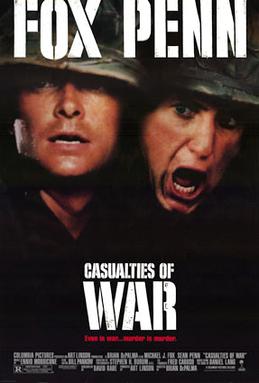 Private Max Eriksson (Michael J. Fox) is a new arrival in Vietnam, a young infantryman who is called a “cherry” by his fellow soldiers. No one wants to get close to Eriksson because everyone knows that it’s the new guy who is most likely to make a mistake and get himself killed. The only person who seems to care whether Eriksson lives or dies is Sgt. Tony Messerve (Sean Penn), a squad leader who is so tough and battle-worn that it is easy to forget that he is only 20 years old. After a member of Messerve’s squad is killed in a firefight and Messerve’s squad had been denied leave despite all of the stress and pressure that they’ve been under, Messerve decides that, during their next mission, the squad is going to kidnap a woman from a village and take her with them.
Eriksson, who is still naive enough to sincerely say, “We’re supposed to be here to help these people,” is horrified by Messerve’s actions. At first, only he and Diaz (John Leguizamo) refuse to take part in raping the terrified woman (Thuy Thu Le). Diaz soon caves to the pressure from the rest of the squad and joins in. Only Eriksson continues to refuse but his attempt to help the woman escape fails when the members of the squad murder her during a firefight with the Viet Cong. After the battle, the wounded Eriksson discovers that no one in command wants to hear about what happened. Messerve’s second-in-command, Clark (Don Patrick Harvey), targets Eriksson, trying to shut him up permanently.
One of the many Vietnam films to come out after the success of Platoon, Brian De Palma’s Casualties of War is an intense and disturbing recreation of a true story. After years of being accused of making misogynistic and exploitive films, De Palma made an effective and sensitive anti-war film, one that did not exploit the suffering of the kidnapped woman but instead portrays the depravity of war and the courage it takes to do the right thing when everyone around is ordering you not to. While it always takes a while to get used to Michael J. Fox in a serious role (and, at the start of the film, he really does seem to be miscast), he eventually gives the best performance of his career in Max Eriksson and, by using a framing device of Eriksson back in the United States after completing his tour, both De Palma and Fox show how the Eriksson, like countless other veterans, is still haunted by what he saw in Vietnam even after he returns home. Sean Penn is equally impressive as Messerve, playing him as someone who sacrificed his soul in order to survive in Vietnam. Messerve has come to view the entire country with contempt and, in his twisted way, he sees kidnapping the woman as a way to reward his squad for all that they’ve endured. The rest of the cast is also strong, with John C. Reilly making his acting debut as a member of the squad.
Not surprisingly, the dark and disturbing Casualties of War was a box office disappointment. It’s still one of most harrowing films made about Vietnam and one of De Palma’s best.
He was born ready!
Since I already shared the full version for today song of the day, it only seems right to share the classic scene from 1997’s Boogie Nights, featuring Mark Wahlberg performing The Touch.
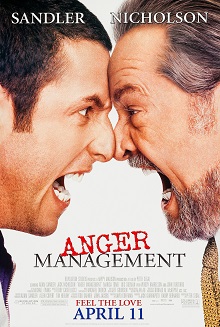 Dave (Adam Sandler), a timid man who has never gotten over being humiliated when he was a teenager, is sentenced to anger management after a slight argument on a plane is blown out of proportion by a taser-wielding shy marshal. His therapist is Dr. Buddy Rydell (Jack Nicholson), whose techniques only seem to exacerbate Dave’s growing anger. Among Dr. Rydell’s methods are giving Dave an unstable “anger buddy” named Chuck (John Turturro), ordering Dave to get revenge on the guy (John C. Reilly) who humiliated on his as a teenager, and also encouraging Dave to cheat on his girlfriend Linda (Maria Tomei) with a woman (Heather Graham) that they meet at bar. Dave goes from timid to angry, Dr. Rydell starts dating Linda, and the whole thing is wrapped up with a totally implausible ending.
The idea of the star of Chinatown and Five Easy Pieces co-starring in an Adam Sandler comedy sounds like it should be exhibit #1 when it comes to talking about the decline of American cinema but I’ve always liked Anger Management. Casting Jack Nicholson as the seemingly insane Dr. Rydell was an inspired choice and Nicholson gives a real performance in the film as opposed to just coasting on his already-established persona. Anger Management came out a year after Adam Sandler’s first dramatic film, Punch-Drunk Love, and, even though Anger Management is a raunchy comedy from the start to finish, Sandler’s performance actually finds the reality in Dave’s situation. Sandler plays Dave as being someone who is sincerely trying his best to get through his court-mandated anger management without losing control. Nicholson and Sandler make for a surprisingly good team.
Of course, it’s an Adam Sandler comedy so it’s not for everyone. The humor is often crude and the film’s final twist is so ridiculous that it can actually leave you feeling like you might need anger management. But Anger Management does show how Jack Nicholson improves anything that he’s involved with and it also shows that Adam Sandler can act when he feels like it. Anger Management also gave us the meme of Jack Nicholson nodding his approval, meaning the film and the performance will live forever.
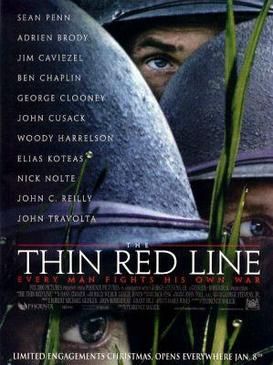
Based on a novel by James Jones (and technically, a sequel of sorts to From Here To Eternity), 1998’s The Thin Red Line is one of those Best Picture nominees that people seem to either love or hate.
Those who love it point out that the film is visually stunning and that director Terrence Malick takes a unique approach to portraying both the Battle of Guadalcanal and war in general. Whereas Steven Spielberg’s Saving Private Ryan told a rather traditional story about the tragedy of war (albeit with much more blood than previous World War II films), The Thin Red Line used the war as a way to consider the innocence of nature and the corrupting influence of mankind. “It’s all about property,” one shell-shocked soldier shouts in the middle of a battle and later, as soldiers die in the tall green grass of the film’s island setting, a baby bird hatches out of an egg. Malick’s film may have been an adaptation of James Jones’s novel but its concerns were all pure Malick, right down to the philosophical voice-overs that were heard throughout the film.
Those who dislike the film point out that it moves at a very deliberate pace and that we don’t really learn much about the characters that the film follows. In fact, with everyone wearing helmets and running through the overgrown grass, it’s often difficult to tell who is who. (One gets the feeling that deliberate on Malick’s point.) They complain that the story is difficult to follow. They point out that the parade of star cameos can be distracting. And they also complain that infantrymen who are constantly having to look out for enemy snipers would not necessarily be having an inner debate about the spirituality of nature.
I will agree that the cameos can be distracting. John Cusack, for example, pops up out of nowhere, plays a major role for a few minutes, and then vanishes from the film. The sight of John Travolta playing an admiral is also a bit distracting, if just because Travolta’s mustache makes him look a bit goofy. George Clooney appears towards the end of the film and delivers a somewhat patronizing lecture to the men under his command. Though his role was apparently meant to be much larger, Adrien Brody ends up two lines of dialogue and eleven minutes of screentime in the film’s final cut.
That said, The Thin Red Line works for me. The film is not meant to be a traditional war film and it’s not necessarily meant to be a realistic recreation of the Battle of Guadalcanal. Instead, it’s a film that plays out like a dream and, when viewed a dream, the philosophical voice overs and the scenes of eerie beauty all make sense. Like the majority of Malick’s films, The Thin Red Line is ultimately a visual poem. The plot is far less important than how the film is put together. It’s a film that immerses you in its world. Even the seeming randomness of the film’s battles and deaths fits together in a definite patten. It’s a Malick film. It’s not for everyone but those who are attuned to Malick’s wavelength will appreciate it even if they don’t understand it.
And while Malick does definitely put an emphasis on the visuals, he still gets some good performances out of his cast. Nick Nolte is chilling as the frustrated officer who has no hesitation about ordering his men to go on a suicide mission. Elias Koteas is genuinely moving as the captain whose military career is ultimately sabotaged by his kind nature. Sean Penn is surprisingly convincing as a cynical sergeant while Jim Caviezel (playing the closest thing the film has to a main character) gets a head start on humanizing messianic characters by playing the most philosophical of the soldiers. Ben Chaplin spends most of his time worrying about his wife back home and his fantasies give us a glimpse of what’s going on in America while its soldiers fight and die overseas.
The Thin Red Line was the first of Terrence Malick’s films to be nominated for Best Picture and it was one of three World War II films to be nominated that year. However, it lost to Shakespeare In Love.
In 1990’s Days of Thunder, Tom Cruise plays Cole Trickle, a talented but headstrong racecar driver who is recruited by businessman Tim Daland (Randy Quaid) to become a NASCAR champion and to also provide some publicity for Daland’s Chevrolet dealership. Tim convinces Harry Hogge (Robert Duvall) to come out of retirement and serve as Cole’s crew chief. Harry builds cars in his barn and then he talks to them, whispering sweet nothings into their side mirrors. (This happens quite a bit.) Both Cole and Harry have something to prove. Cole has to prove that he’s the best. Harry has to prove, to himself, that an accident that killed one of his driver was not his fault. Harry also has to prove that he’s not insane. That’s not an easy thing to do when you’re always in the barn, talking to a car.
At first, Cole’s rival is Rowdy Burns (Michael Rooker) but, after Rowdy is seriously injured in a crash and told that he will never race again, Rowdy becomes Cole’s closest friend and supporter. With Rowdy off the circuit, Russ Wheeler (Cary Elwes) becomes Cole’s main rival. We know that Russ is a bad guy because he never has a hair out of place and he’s played by Cary Elwes, who for some reason was always cast as the smug bad guy in films like this despite having a rather charming screen presence.
Cole’s love interest is Dr. Claire Lewicki (Nicole Kidman), who is there to help Cole deal with his anger issues and who is surprisingly forgiving of all the times that Cole acts like a complete and total jerk. That happens quite a bit. Cole is a bit of brat but eventually, with the help of everyone around him, he learns how to be a great driver.
The first time I ever saw Days of Thunder, I was pretty dismissive of it. The film was producer and directed by the same people who were behind Top Gun and it pretty much tells the same story, except the jets are replaced with cars and the stakes are a bit less than saving democracy. Like Top Gun, it was a film where Tom Cruise played a character who wants to be the best but who has to learn how to set aside his own ego and take control of his impulsive nature. The first time I saw the film, I shrugged and said that, while Nicole Kidman and Tom Cruise had a lot more chemistry than Cruise and Kelly McGillis, it was still nothing that I hadn’t seen before.
But I have to admit that, since then, I’ve rewatched the film a few times. It’s one of those movies that I never specifically seek out but if I see it playing somewhere on cable, I’ll usually watch a bit of it. Some of it is because the race scenes actually are exciting, even if they do get a bit repetitive after a while. Tony Scott was a director who knew how to film action. The other major reason why I often find myself watching Days of Thunder is for the totally over-the-top performances of Robert Duvall and Randy Quaid.
“We looked like a monkey fucking a football out there!” Quaid exclaims, not once but twice. It’s a phrase that doesn’t make the least bit of sense and it’s one of those lines of dialogue that reminds us that Days of Thunder went into production with a script that was being written and rewritten on a daily basis. But Randy Quaid’s delivery is so emphatic that line works despite being totally stupid.
As for Robert Duvall, his performance here is a perfect example of how much fun it can be to watch a legitimately great actor overact. There’s nothing subtle about his performance and I doubt Days of Thunder will ever be a film that shows up when people are talking about the highlights of his legendary career. But when Duvall talks to his car, you believe every minute of it. It’s such a silly scene but Duvall pulls it off like the pro that he is.
Finally, if you’re going to watch a movie about two cocky race car drivers who are constantly taunting each other, wouldn’t you want them to look like Tom Cruise and Cary Elwes? Good lookin’ guys in fast cars, drivin’ around Southern racetracks, what’s not to love?
Previous Guilty Pleasures
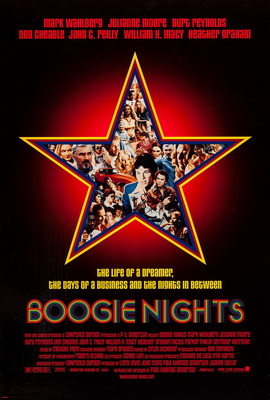
Today is John C. Reilly’s 59th birthday. This provides me with a great reason to share a scene that I love from 1997’s Boogie Nights. In this scene, John C. Reilly and Mark Wahlberg star in one of the best films never actually made, Angels Live In My Town.
Brock Landers and Chest Rockwell were quite a team.
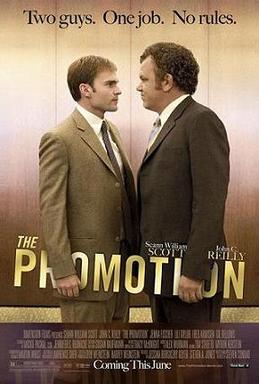
Yesterday, after I got home from voting in my town’s city council elections, I wanted to unwind with a tennis movie. When I did a search for “tennis,” Tubi recommended that I watch The Promotion.
I don’t know why because there is no tennis in The Promotion. No one plays a game or even talks about tennis in The Promotion. Instead, the movie is about two men who work for a grocery store and who are both hoping to get promoted. The narrator is Doug (Seann William Scott), who is married to Jen (Jenna Fischer), a nurse. Doug wants to get promoted so that he and Jen can move into a new house and so that he can be the sole breadwinner. Doug also has to get the promotion because he has already lied to Jen and told her that he got it. Doug was feeling insecure because Jen’s boss, Dr. Timm (Bobby Cannavale) saves lives for a living while Doug just spends all day dealing with angry customers and the gang members who hang out in the store’s parking lot. Doug’s rival for the promotion is Richard (John C. Reilly), a recovering drug addict who listens to self-help tapes. Each of them tries to sabotage the other. Doug tries to make Richard look stupid at a company retreat and Richard files a false injury report after Doug hits him with a bag of frozen tater tots.
I think the movie was trying to make a point about how desperate people are for status and money that they’ll do anything to get it but I didn’t care because I didn’t find Doug or Richard to be in any way likable and I didn’t want either one of them to get the promotion. I would not shop at any store where they worked because grocery shopping is bad enough without having to deal with all of that extra drama. Both Richard and Doug were terrible as assistant managers so as far I was concerned, neither one of them deserved to be promoted. Jen should have left Doug for Dr. Timm.
Plus, there wasn’t any tennis.
Via twitter, I was reminded that today is John C. Reilly’s 57th birthday. This provides me with a great reason to share a scene that I love from 1997’s Boogie Nights. After falling out with his director, 70s porn star Dirk Diggler (Mark Wahlberg) attempts to reinvent himself as a rock star. Providing support, both emotionally and musically, is his best friend and frequent co-star, Reed Rothchild (John C. Reilly).
Now, obviously, Wahlberg’s brilliantly tuneless singing usually gets the most attention here but there’s something really touching about Reed’s loyalty in these scenes. It may just be because of the cocaine but you can tell that Reed is perhaps even more convinced of Dirk’s talent than Dirk is.
Enjoy and remember …. YOU GOT THE POWER!
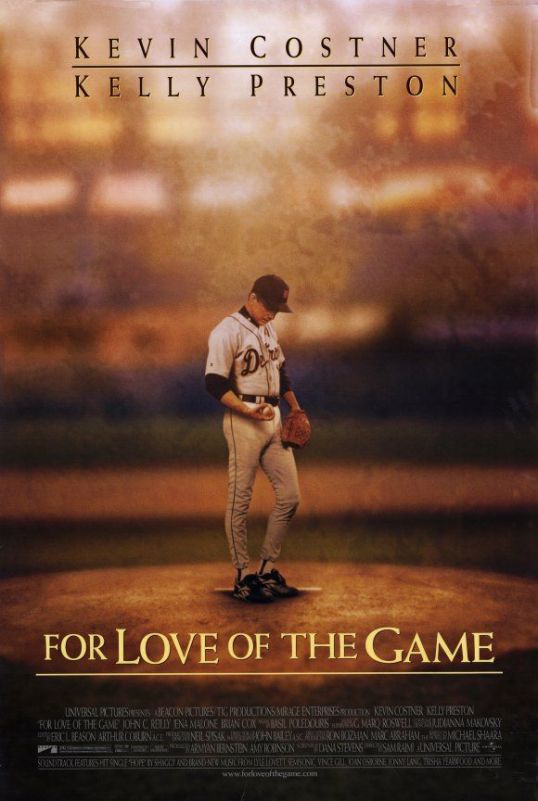
Last week, the Dodgers won the World Series and brought the 2020 MLB season to a close. For me, it was a disappointing season because the Rangers ended up with the worst record in the American League and came nowhere close to the playoffs. I should be used to that by now but it still hurts every season.
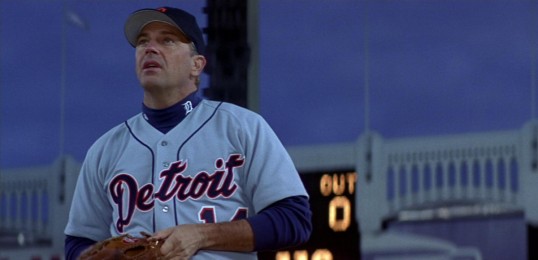
If only we could have had a pitcher like Billy Chapel, who Kevin Costner plays in For Love of the Game. Billy Chapel is a forty year-old veteran who has been playing baseball his entire life and who has spent his entire major league career as a member of the Tigers. Before the start of the team’s final game against the Yankees (the Yankees have already clinched the playoff berth while the Tigers are at the bottom of their division, kind of like my Rangers), Billy is told that the Tigers have been sold and that Billy is going to be traded to the Giants. Will Billy go to San Francisco or will he retire and go to London with the woman he loves, Jane Aubrey (Kelly Preston)?
That’s the decision that Billy is going to have to make. But first, Billy’s going to throw a perfect game against the New York Yankees.
While Billy is pitching the game, he’s also thinking about Jane and having flashbacks to how they first met and fell for each other. Billy loves Jane but he also loves playing baseball and it keeps the two of them apart. Jane doesn’t want to be a baseball groupie and she needs a man who she knows is going to be there for her and her daughter, instead of spending most of the year traveling around the country. Billy, meanwhile, doesn’t want to give up the game that’s defined his life. As Billy throws his perfect game, he has to decide whether or not to keep playing until he can no longer get the ball across the plate or whether to start a new chapter with Jane. Meanwhile, Jane is stuck in an airport, watching Billy play the game of his life.
For Love Of The Game is a good love story but it’s a great baseball movie. I loved the scenes of Billy standing out on the mound, carefully evaluating each batter while blocking out all of the noise around him. (The only villains in this movie are the New Yorkers who won’t stop yelling at Billy during the game.) I enjoyed the interplay between Billy and the catcher (John C. Reilly) and I especially appreciated the way that the movie showed that it takes more than a good pitcher to have a perfect game. It takes teamwork and focus. It’s not just Billy’s perfect game. It’s the entire team’s perfect game.
For Love of the Game may be a romantic drama but it’s also a celebration of everything that makes baseball great. It’s America’s pastime and this movie shows why. Watching Billy Chapel get his perfect game made me look forward to seeing what will happen next year. Who knows? Maybe the Rangers will even shock everyone and make the postseason. If Billy Chapel can throw a perfect game while playing the Yankees in New York City, then anything can happen!
 Through the Shattered Lens