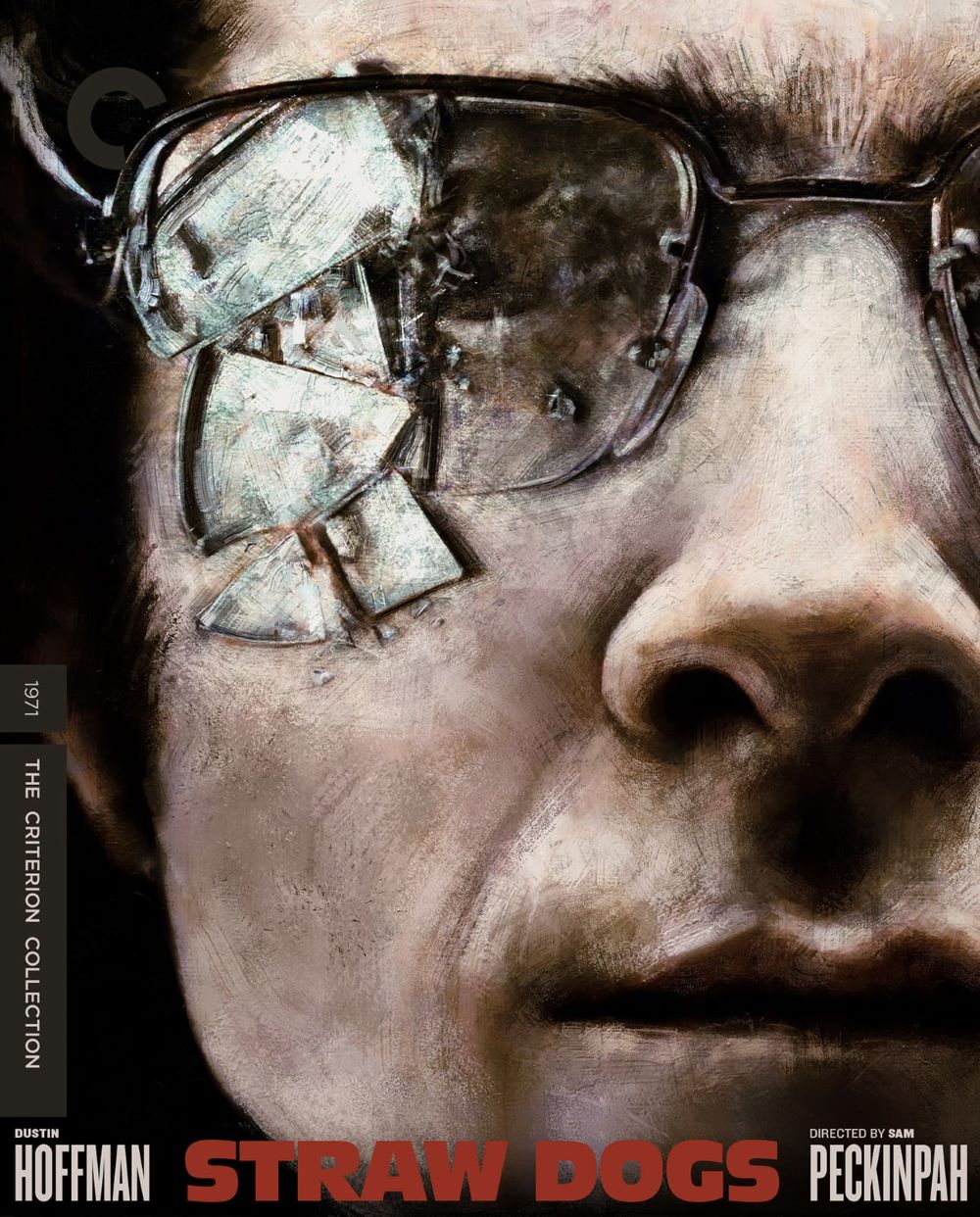
Review: Straw Dogs (dir. by Sam Peckinpah)


“Violence can be the only answer sometimes.” — David Sumner

Sam Peckinpah’s Straw Dogs is a raw, compelling dive into the breakdown of civility and the primal instincts bubbling underneath. The story follows David Sumner, a mild-mannered American mathematician, who moves with his wife Amy to her rural English hometown. The couple’s plan for a quiet life takes a sharp turn when tensions with the locals spiral out of control, resulting in a violent showdown. At its core, the film examines how far a person can be pushed before the veneer of civilization peels away, revealing something much wilder underneath.

The tension starts subtly, as David’s intellectual and pacifist nature clashes with the rough, territorial mindset of the local men. This brewing conflict isn’t just about cultural difference but taps into deeper themes around masculinity, power, and identity. Straw Dogs asks difficult questions about what it means to be a man, exploring how fragile male identity can be when confronted with real or perceived threats. David’s journey is less about heroism and more about the psychological and emotional transformation forced upon a man who initially seems ill-equipped for the violence unleashed around him. The whole film operates as a kind of symbolic stage where primal instincts and societal expectations collide, forcing each character to confront their own limits.

Amy’s role in the film is both pivotal and deeply complex. Her experience of assault, handled with subtle but unflinching attention, adds emotional and thematic weight without dominating the narrative. The film portrays her trauma through its impact on her and the shifting dynamics in her relationship with David, inviting reflection on resilience and struggle for control. Amy is depicted not merely as a victim but as a layered character navigating vulnerability and strength amid the hostile environment. This approach challenges viewers to consider the nuanced and often contradictory responses to trauma, avoiding simplistic victim narratives while emphasizing its profound consequences.

The rural setting of Straw Dogs is more than just a backdrop; it becomes a character in its own right. The close-knit, insular community embodies a microcosm where social order teeters and violence hides just beneath the surface. Law enforcement and authority figures seem ineffective or indifferent, which heightens the sense of isolation and lawlessness. The hostility from some village locals, including Amy’s ex-boyfriend Charlie, feeds into a toxic masculinity that sees David as weak and out of place. Peckinpah carefully stages this clash, using tension and silence as expertly as physical violence, making viewers feel the pressure ramping up until it finally snaps.

Dustin Hoffman’s portrayal of David is quietly brilliant in its subtlety. He plays David as a man trapped between worlds—intellectual and physical, passivity and aggression—with a restrained but deeply affecting performance. Hoffman’s ability to convey complex emotions beneath a calm exterior makes David’s eventual transformation all the more gripping. Susan George delivers an equally powerful performance as Amy, capturing the mixture of fear, defiance, and heartbreak her character endures. Their dynamic feels authentic and layered, making the viewer invested in their peril. The supporting cast, including actors like Peter Vaughan, add a layer of authentic menace, embodying the grim rural antagonists with convincing grit and intensity. The performances overall ground the film’s explosive themes in believable, relatable humans.

Themes in Straw Dogs extend beyond just personal violence to address ideas about identity and societal breakdown. The film explores the notion of the “symbolic order”—how individuals fit into and negotiate the rules and roles imposed by society. David’s identity crisis and his uneasy place within the village spotlight questions of power, emasculation, and rebirth. Peckinpah uses psycho-sexual imagery—such as symbols of emasculation and phallic power—to deepen the psychological stakes of David’s journey. The film conveys how deeply fragile human identity is and how violence can act as a brutal yet transformative force pushing individuals to redefine themselves. At the same time, the portrayal of Amy complicates these themes by challenging traditional gender roles, making the film as much about female agency as male dominance.

The film’s violence is famously brutal and unsettling. Peckinpah does not shy away from showing the full consequences of escalating conflict, culminating in an intense and chaotic finale where the line between victim and aggressor blurs. This isn’t violence for spectacle but a narrative and thematic necessity that Peckinpah uses to strip away pretenses and reveal the raw human instincts beneath. It’s this uncompromising depiction that both shocked audiences at the time and continues to provoke discussion about the nature of power and survival. The film is also notable for its innovative editing, with Peckinpah’s use of jump cuts and slow-motion heightening the emotional intensity and pacing the violence with a rhythmic, almost visceral punch.

Ultimately, Straw Dogs is a challenging film that forces viewers to confront disturbing truths about human nature, relationships, and societal order. Its exploration of violence and masculinity is complex and often uncomfortable, presenting no easy answers. The film remains a significant piece of cinema for its bold themes, outstanding performances, and the way it captures the frailty and ferocity of its characters. Peckinpah’s direction melds tension, psychological drama, and physical action into a gripping, unforgettable experience. Though controversial for its content, Straw Dogs endures as a powerful work that asks what truly happens when the thin line between civilization and savagery breaks down.

Memoirs of an Invisible Man (1992, directed by John Carpenter)


An accident at a laboratory renders stock analyst Nick Holloway (Chevy Chase) invisible.  CIA agent David Jenkins (Sam Neill) wants to recruit Nick to be an assassin but Nick doesn’t want to kill people.  He just wants to make his date with Alice (Daryl Hannah).  With Jenkins and his agents in pursuit, Nick flees to a beach house belonging to his friend George (Michael McKean) and tries to figure out what to do with his life now that no one can see him.  Fortunately, Alice is staying at the beach house too.  Nick and Alice fall in love but Jenkins is close behind.

Based on a science fiction novel by H.F. Saint, Memoirs of an Invisible Man started out as a vanity project for Chevy Chase, who felt that the film’s mix of comedy and drama would establish him as a serious actor.  The project went through a series of directors, including Ivan Reitman and Richard Donner, but in the end no one wanted to work with the special effects necessary to create the impression of invisibility and, even more importantly, no one wanted to work with Chase.  When the film was finally offered to John Carpenter, he was reluctant to do another studio film because of his bad experience with They Live.  He finally agreed because it had been four years since his last film.

The special effects in Memoirs of an Invisible Man are still impressive and the chase scenes show off Carpenter’s abilities as an action director.  The movie flopped with critics and audiences but that was not Carpenter’s fault.  Carpenter keeps the story moving and gets good performances out of Sam Neill and even Daryl Hannah.  The problem with the movie is that Chevy Chase is miscast as an action hero and he tries too hard to give a serious performance.  Carpenter later said he wanted to add more comedy to the film and to emphasize Chase’s talent for physical comedy but Chase refused to do so.  Chase also resented wearing the blue bodysuit that would be used to render him invisible onscreen and often removed the suit early, ruining whatever else Carpenter had planned to shoot during the day.  You can add John Carpenter to the long list of directors who have said they will never work with Chevy Chase again.

One good thing did come out of Memoirs of an Invisible Man.  Carpenter met and enjoyed working with Sam Neill.  (Memoirs of an Invisible Man probably would have worked better in Neill and Chase had switched roles.)  Neill would go on to star in Carpenter’s next film, In The Mouth of Madness.

Funny Pains: Documentary Review, Poster and Trailer


First off,

I am not a very good documentary reviewer, so, remember that going forward.

Second off:

Here is the poster Funny Pictures


Third Off:

Here is the trailer:

Review:

I got this screener thinking it would be all about Nikki Glasser and Jim Norton and comedy fun. Well, I was surprised. Jorge Cruz (Director) took his documentary in an entirely different direction (pun intended) than I anticipated.

I absolutely did not realize I was hooked.

Now, you are about to ask me why Wendi Starling is not the centerpiece of this documentary. Well, she is And you will just have to watch to find out why. I’m not going to tell you it broke my heart watching. It did! And I thank Jorge Cruz for taking me on that amazing ride!

Would I recommend this Documentary?

There is so much laughter and crying that I had watching it! So, absolutely, YES!

Where Can You Watch?

May, 26, 2020 check your VOD (And I definitely recommend you do!


;

Insomnia File #33: The Comedian (dir by Taylor Hackford)


What’s an Insomnia File? You know how some times you just can’t get any sleep and, at about three in the morning, you’ll find yourself watching whatever you can find on cable? This feature is all about those insomnia-inspired discoveries!

http://www.youtube.com/watch?v=gLQXUmzXuEo

If you were having trouble getting to sleep around two in the morning last night, you could have turned over to Starz and watched the 2016 film, The Comedian.

It probably wouldn’t have helped.  It’s not that The Comedian is a particularly interesting movie or anything like that.  Abysmally paced and full of dull dialogue, The Comedian would be the perfect cure for insomnia if it just wasn’t so damn loud.  Robert De Niro plays an aging comedian named Jackie Burke and, in this movie, being an aging comedian means that you shout out your punch lines with such force that you almost seem to be threatening anyone who doesn’t laugh.  However, the threats aren’t necessary because everyone laughs at everything Jackie says.

Actually, it’s a bit of an understatement to say that everyone laughs.  In The Comedian, Jackie is such a force of pure, unstoppable hilarity that all he has to do is tell someone that they’re fat and literally the entire world will shriek with unbridled joy.  The thing with laughter is that, in the real world, everyone laughs in a different way.  Not everyone reacts to a funny joke with an explosive guffaw.  Some people chuckle.  Some people merely smile.  But, in the world of The Comedian, everyone not only laughs the same way but they also all laugh at the same time.  There’s never anyone who doesn’t immediately get the joke and, by that same token, there’s never anyone who can’t stop laughing once everyone else has fallen silent.  The Comedian takes individuality out of laughter, which is a shame because the ability to laugh is one of the unique things that makes us human.

Anyway, The Comedian is about a formerly famous comedian who is now obscure.  He used to have a hit TV show but now he’s nearly forgotten.  Why he’s forgotten is never made clear because nearly everyone in the movie still seems to think that he’s the funniest guy in the world.  Jackie’s an insult comic and people love it when he tells them that they’re overweight or when he makes fun of their sexual preferences.  This would probably be more believable if Jackie was played by an actor who was a bit less intense than Robert De Niro.  When De Niro starts to make aggressive jokes, you’re natural instinct is not so much to laugh as it is to run before he starts bashing in someone’s head with a lead pipe.

Anyway, the plot of the film is that Jackie gets into a fight with a heckler.  The video of the fight is uploaded to YouTube, which leads to a scene where his manager (Edie Falco) stares at her laptop and announces, “It’s going viral!”  Later on, in the movie, Jackie forces a bunch of old people to sing an obnoxious song with him and he goes viral a second time.  I kept waiting for a shot of a computer screen with “VIRAL” blinking on-and-off but sadly, the movie never provided this much-needed insert.

In between beating up the heckler, ruining his niece’s wedding, and hijacking a retirement home, Jackie finds the time to fall in love with Harmony Schlitz (Leslie Mann), a character whose name alone is enough to The Comedian one of the most annoying films of all time.  Harmony’s father is a retired gangster (Harvey Keitel) and you can’t help but wish that Keitel and De Niro could have switched roles.  It wouldn’t have made the movie any better but at least there would have been a chance of Keitel going batshit insane whenever he took the stage to deliver jokes.

I’m not sure why anyone thought it would be a good idea to cast an actor like Robert De Niro as a successful comedian.  It’s true that De Niro was brilliant playing a comedian in The King of Comedy but Rupert Pupkin was supposed to be awkward, off-putting, and not very funny.  I’m not an expert on insult comics but, from what I’ve seen, it appears that the successful ones largely succeed by suggesting that they’re just having fun with the insults, that no one should take it personally, and that they appreciate any member of the audience who is willing to be a good sport.  Jackie just comes across like a cranky old misogynist.  Watching Jackie is like listening to your bitter uncle play Vegas.  I guess it would help if Jackie actually said something funny every once in a while.  A typical Jackie joke is to refer to his lesbian niece as being a “prince.”  Speaking for myself, when it comes to Robert De Niro being funny, I continue to prefer the scene in Casino where he hosts the Ace Rothstein Show.

Perhaps the funniest thing about The Comedian is that, when it originally released into theaters, it was advertised as being “The Comedian, a Taylor Hackford film,” as if Taylor Hackford is some type of Scorsese-style auteur.  Taylor Hackford has been making films for longer than I’ve been alive and he has yet to actually come up with any sort of signature style beyond point and shoot.  The second funniest thing is that The Comedian was billed as a potential Oscar contender, up until people actually saw the damn thing.

Though it may have failed at the box office, The Comedian seems to show up on Starz quite frequently.  They always seem to air it very late at night, as if they’re hoping people won’t notice.  

Previous Insomnia Files:

  1. Story of Mankind
  2. Stag
  3. Love Is A Gun
  4. Nina Takes A Lover
  5. Black Ice
  6. Frogs For Snakes
  7. Fair Game
  8. From The Hip
  9. Born Killers
  10. Eye For An Eye
  11. Summer Catch
  12. Beyond the Law
  13. Spring Broke
  14. Promise
  15. George Wallace
  16. Kill The Messenger
  17. The Suburbans
  18. Only The Strong
  19. Great Expectations
  20. Casual Sex?
  21. Truth
  22. Insomina
  23. Death Do Us Part
  24. A Star is Born
  25. The Winning Season
  26. Rabbit Run
  27. Remember My Name
  28. The Arrangement
  29. Day of the Animals
  30. Still of The Night
  31. Arsenal
  32. Smooth Talk

Playing Catch-Up With 6 Mini-Reviews: Amy, Gloria, Pitch Perfect 2, Sisters, Spy, Trainwreck


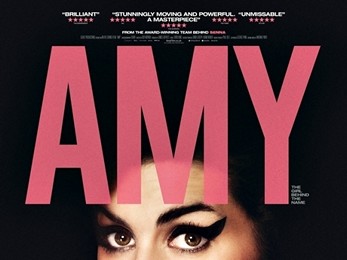
Amy_Movie_Poster

Amy (dir by Asif Kapadia)

Amy opens with brilliant and, in its way, heartbreaking footage of a 14 year-old Amy Winehouse and a friend singing Happy Birthday at a party.  Even though she’s singing deliberately off-key and going over-the-top (as we all tend to do when we sing Happy Birthday), you can tell that Amy was a star from the beginning.  She’s obviously enjoying performing and being the center of attention and, try as you might, it’s impossible not to contrast the joy of her Happy Birthday with the sadness of her later life.

A star whose music touched millions (including me), Amy Winehouse was ultimately betrayed by a world that both wanted to take advantage of her talent and to revel in her subsequent notoriety.  It’s often said the Amy was self-destructive but, if anything, the world conspired to destroy her.  By focusing on footage of Amy both in public and private and eschewing the usual “talking head” format of most documentaries, Amy pays tribute to both Amy Winehouse and reminds us of what a great talent we all lost in 2011.

Gloria_(2014_Film_Poster)

Gloria (dir by Christian Keller)

The Mexican film Gloria is a musical biopic of Gloria Trevi (played by Sofia Espinosa), a singer whose subversive songs and sexual image made her a superstar in Latin America and challenged the conventional morality of Catholic-dominated establishment.  Her manager and lover was the controversial Sergio Andrade (Marco Perez).  The movie follows Gloria from her first audition for the manipulative Sergio to her arrest (along with Sergio) on charges of corrupting minors.  It’s an interesting and still controversial story and Gloria tells it well, with Espinosa and Perez both giving excellent performances.

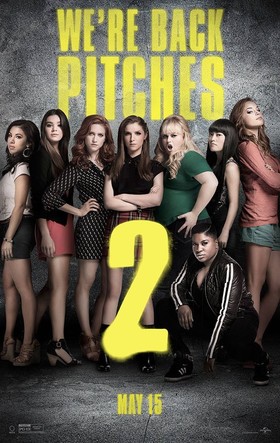
Pitch_Perfect_2_poster

Pitch Perfect 2 (dir by Elizabeth Banks)

The Bellas are back!  As I think I’ve mentioned a few times on this site, I really loved the first Pitch Perfect.  In fact, I loved it so much that I was a bit concerned about the sequel.  After all, sequels are never as good as the original and I was dreading the idea of the legacy of the first film being tarnished.

But the sequel actually works pretty well.  It’s a bit more cartoonish than the first film.  After three years at reigning ICCA champions, the Bellas are expelled from competition after Fat Amy (Rebel Wilson) accidentally flashes the President.  The only way for the Bellas to get the suspension lifted is to win the World Championship of A Capella.  The plot, to be honest, really isn’t that important.  You’re watching the film for the music and the interplay of the Bellas and, on those two counts, the film totally delivers.

It should be noted that Elizabeth Banks had a great 2015.  Not only did she give a great performance in Love & Mercy but she also made a respectable feature directing debut with Pitch Perfect 2.

Sisters_movie_poster

Sisters (dir by Jason Moore)

It’s interesting how opinions can change.  For the longest time, I really liked Tina Fey and I thought that Amy Poehler was kind of overrated.  But, over the past two years, I’ve changed my opinion.  Now, I like Amy Poehler and Tina Fey kind of gets on my nerves.  The best way that I can explain it is to say that Tina Fey just seems like the type who would judge me for wearing a short skirt and that would get old quickly, seeing as how I happen to like showing off my legs.

Anyway, in Sisters, Tina and Amy play sisters!  (Shocking, I know.)  Amy is the responsible one who has just gotten a divorce and who wants to make everyone’s life better.  Tina is the irresponsible one who refuses to accept that she’s no longer a teenager.  When their parents announce that they’re selling the house where they grew up, Amy and Tina decide to throw one last party.  Complications ensue.

I actually had two very different reactions to Sisters.  On the one hand, as a self-declared film critic, it was easy for me to spot the obvious flaw with Sisters.  Tina and Amy should have switched roles because Tina Fey is simply not believable as someone who lives to have fun.  Sometimes, it’s smart to cast against type but it really doesn’t work here.

However, as the youngest of four sisters, there was a lot of Sisters that I related to.  I saw Sisters with my sister, the Dazzling Erin, and even if the film did not work overall, there were still a lot of little scenes that made us smile and go, “That’s just like us.”  In fact, I think they should remake Sisters and they should let me and Erin star in it.

Spy2015_TeaserPoster

Spy (dir by Paul Feig)

There were a lot of very good spy films released in 2015 and SPECTRE was not one of them.  In fact, the more I think about it, the more disappointed I am with the latest Bond film.  It’s not so much that SPECTRE was terrible as there just wasn’t anything particular memorable about it.  When we watch a film about secret agents saving the world, we expect at least a few memorable lines and performances.

Now, if you want to see a memorable spy movie, I suggest seeing Spy.  Not only is Spy one of the funniest movies of the year, it’s also a pretty good espionage film.  Director Paul Feig manages to strike the perfect balance between humor and action.  One of the joys of seeing CIA employee Susan Cooper (Melissa McCarthy) finally get to enter the field and do spy stuff is the fact that there are real stakes involved.  Susan is not only saving the world but, in the film’s best scenes, she’s having a lot of fun doing it and, for that matter, McCarthy is obviously having a lot of fun playing Susan and those of us in the audience are having a lot of fun watching as well.

Spy also features Jason Statham as a more traditional action hero.  Statham is hilarious as he sends up his own macho image.  Seriously, who would have guessed that he could such a funny actor?  Here’s hoping that he, McCarthy, and Feig will all return for the inevitable sequel.

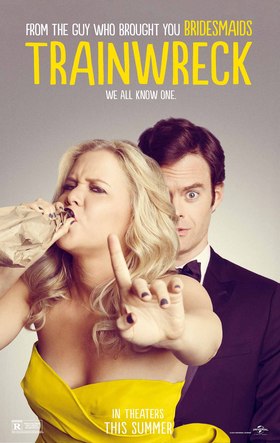
Trainwreck_poster

Trainwreck (dir by Judd Apatow)

There’s a lot of great things that can be said about Trainwreck.  Not only was it the funniest film of 2015 but it also announced to the world that Amy Schumer’s a star.  It was a romantic comedy for the 21st Century, one that defied all of the conventional BS about what has to happen in a romcom.  This a film for all of us because, let’s just be honest here, we’ve all been a trainwreck at some point in our life.

But for me, the heart of the film was truly to be found in the relationship between Amy and her younger sister, Kim (Brie Larson).  Whether fighting over what to do with their irresponsible father (Colin Quinn) or insulting each other’s life choices, their relationship is the strongest part of the film.  If Brie Larson wasn’t already guaranteed an Oscar nomination for Room, I’d demand that she get one for Trainwreck.  For that matter, Amy Schumer deserves one as well.

Seriously, it’s about time the trainwrecks of the world had a film that we could truly call our own.