Horror Film Review: Don’t Look Now (dir by Nicolas Roeg)


Donald Sutherland and Julie Christie in Don’t Look Now (1973)

I have to admit that I’m actually a bit embarrassed to say that Venice is my favorite city in Italy.

I mean, it’s such a cliché, isn’t it?  Tourists always fall in love with Venice, even though the majority of us really don’t know much about the city beyond the canals and the gondolas.  I spent a summer in Italy and Venice was definitely the city that had the most American visitors.  Sadly, the majority of them didn’t do a very good job representing the U.S. in Europe.  I’ll never forget the drunk frat boys who approached me one night, all wearing University of Texas t-shirts.  One of them asked, “Are you from Texas?”

“No,” I lied.

“You sound like you’re from Texas!” his friend said.

“No, ah’m not from Texas,” I said, “Sorry, y’all.”

I mean, that’s not something that would have happened in Florence or even Naples!  In Rome, handsome men on motor scooters gave me flowers.  In Venice, on the other hand, I had to deal with the same assholes that I dealt with back home!

That said, I still fell in love with Venice.  And yes, it did happen while riding in a gondola.  At that moment, I felt like I was living in a work of art.  I can still remember looking over the side of the gondola and watching as a small crab ran across someone’s front porch.  That’s when I realize that, by its very existence, Venice proved that anything was possible.

I’ve often heard that Venice is slowly sinking.  That Venice has a reputation as being a dying city would probably have come to a surprise to the drunk Americans who were just looking for a girl from Texas that summer.  And yet, Venice has always been associated with death.  Just consider Thomas Mann’s Death in Venice and the subsequent film adaptation from Luchino Visconti.  Consider the controversial Giallo in Venice.  And, of course, you can’t forget about the 1973 film, Don’t Look Now.

Oh my God, Don’t Look Now is a creepy movie.  It’s probably best known for two things: the lengthy sex scene between Julie Christie and Donald Sutherland (which was apparently quite controversial back in 1973 but which seems rather tame when viewed today) and the film’s shock ending.  It’s one of the best and most disturbing endings in the history of horror and I’m not going to spoil it in this review.  The first time I saw the movie, the ending caught me totally off guard and gave me nightmares.  Admittedly, it’s not hard to give me nightmares but what’s remarkable is that, upon subsequent viewings, the ending is still just as frightening and disturbing.  In fact, knowing what’s going to happen makes the film even more chilling.

The film’s story is actually a rather simple one.  After their daughter, Christine, accidentally drowns, John (Donald Sutherland) and Laura Baxter (Julie Christie) take a trip to Venice.  Though they’re in Venice so that John can restore an ancient church, both John and Laura are mostly trying to escape their grief.  Laura meets a blind woman, Heather (Hilary Mason), who claims to not only be a psychic but who also says that she can see Christine in the afterlife.  Laura believes Heather and is concerned when Heather says that Christine wants them to leave Venice.  John, on the other hand, believes that Heather is a fake.

When the Baxters get a phone call informing them that their son has taken ill, Laura flies back to the UK.  Or does she?  One day, John spots his wife riding on a boat with Heather and her sister.  Has Heather abducted or brainwashed his wife?  When John goes to the police, they are as skeptical of him as he was of Heather.  In fact, they start to suspect that John may have something to do with a recent rash of murders.

Confused, John searches Venice for his wife but, instead of finding her, he spots a figure in the distance.  It appears to be a young child, one who is wearing the same red coat that Christine was wearing when she drowned….

It’s a simple story but it’s told in a very complex fashion.  Director Nicolas Roeg is best known for his fragmented narrative style.  Roeg often mashes together scenes from the past, present, and future and leaves it up to the viewer to put it all together.  (For instance, in Don’t Look Now, scenes of John and Laura making love are intercut with scenes of them getting dressed afterward.)  Roeg’s style that can often come across as being pretentious but, in Don’t Look Now, it works perfectly.  The audience is kept off-balance and is always aware that that’s more than one possible interpretation for everything that is seen.  Is Laura in the UK or is she on a boat in Venice?  Is Heather seeing Christine or is she just trying to con a grieving mother?  Is John chasing the figure in the red coat or is she actually the one pursuing him?  Is John chasing the figure because he believes that she’s his daughter or because he wants to prove, once and for all, that Christine is gone and never coming back?  Roeg keeps you guessing.

Death seems to permeate every frame of Don’t Look Now, whether it’s Heather’s cheery descriptions of the afterlife or the sight of a bloated corpse being pulled out of the canal.  Even when John is working in the church, he still nearly slips off a scaffolding.  While John restores ancient buildings to the vibrant glories of the past, the present seems to grow more and more ominous and menacing.  John and Laura may have traveled to Venice to escape their grief but their grief follows them.  How they deal with that grief — both as a couple and as individuals — is what determines their fate.  For a film that is full of mysteries, none is as enigmatic as Julie Christie’s smile when she’s on the boat.

I’m probably making Don’t Look Now sound like an incredibly grim film and, to a certain extent, it is.  After all, early 70s cinema is not known for its happy endings.  And yet, as dark and disturbing as this film may be, it’s impossible to look away from.  Roeg does a fantastic job capturing both the beauty and the decay of Venice while Donald Sutherland and Julie Christie are so sympathetic as John and Laura that you find yourself rewatching and hoping that somehow, they don’t end up making the same mistakes that they made the last time that you watched.

Don’t Look Now is an essential horror film and one that’s as timeless as the sight of a crab running across someone’s front porch.

It’s Almost Time For The Shattered Lens’s 7th Annual Horrorthon!


Put on your dancing shoes because, in just a few hours, it will be the first day of October!

If things have been a little bit more quiet than usual here at the Shattered Lens Bunker, it’s because we’ve been busy getting ready for our 7th Annual Horrorthon!  That’s right, this is the time of year when the Shattered Lens devotes itself to my favorite genre …. horror!

This is my favorite time of year!

This year, among other things, I’ll be showcasing Italian horror!  The tricks and the treats begin in just another few hours!  So, sit back, have some popcorn, and get ready for the greatest 31 days of the year!

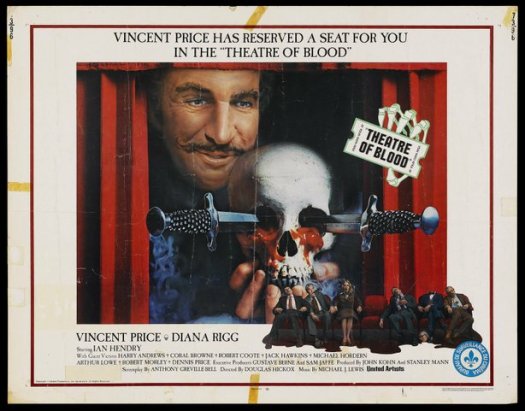
Outrageous Fortune: Vincent Price in THEATER OF BLOOD (United Artists 1973)


gary loggins's avatarcracked rear viewer

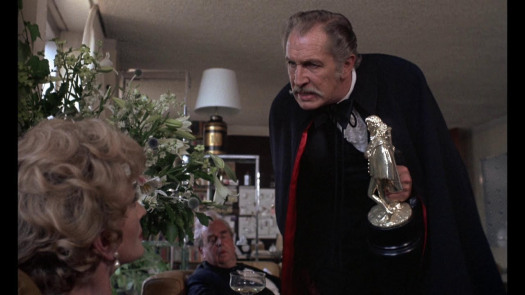
Vincent Price  traded in Edgar Allan Poe for William Shakespeare (and American-International for United Artists) in THEATER OF BLOOD, playing an actor’s dream role: Price not only gets to perform the Bard of Avon’s works onscreen, he gets to kill off all his critics! As you would imagine, Price has a field day with the part, serving up deliciously thick slices of ham with relish as he murders an all-star cast of British thespians in this fiendishly ingenious screenplay concocted  by Anthony Greville-Bell and directed with style by Douglas Hickox.

Edward Lionheart felt so slighted by both scathing criticism and once again being stiffed at the prestigious Critics’ Circle award, he broke up their little soiree by doing a swan dive into London’s mighty Thames. His body was never found, and everyone assumed they had seen Lionheart’s final performance, but unbeknownst to all he was fished out of the river…

View original post 535 more words

TV Series Review: Ghoul


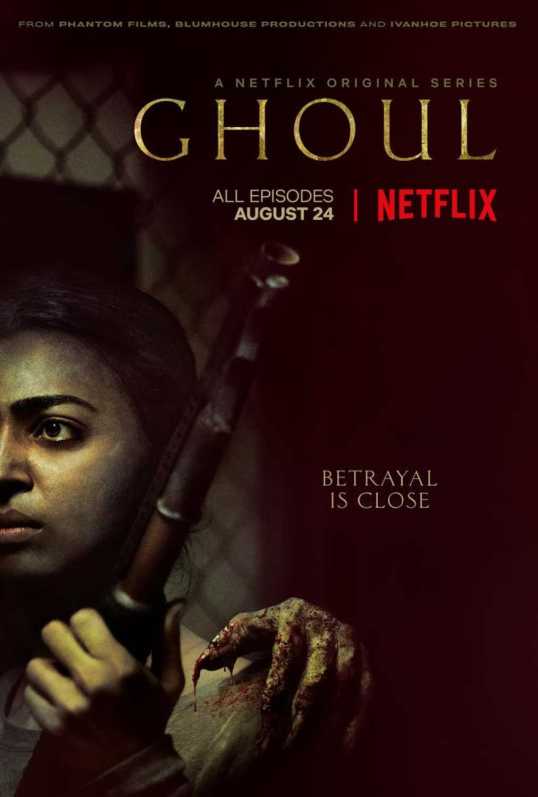
poster

Cast:

  • Radhika Apte as Nida Rahim
  • Manav Kaul as Colonel Sunil Dacunha
  • S. M. Zaheer as Shahnawaz Rahim
  • Ratnabali Bhattacharjee as Lieutenant Laxmi Das
  • Mahesh Balraj as Ali Saeed
  • Mallhar Goenka as Babloo
  • Rohit Pathak as Captain Lamba
  • Robin Das as Maulvi (Muslim Cleric)

Plot:

Based in the Arabic folklore of the ghoul, a monster who can eat the flesh of another and take on its likeness. Set in a dystopian future where everything taught against the ruling class is punishable by any means necessary, Nida’s (Apte) father (Zaheer) is captured for just those crimes. Sentenced to a prison where the only possible outcome is death. Years later, Nida, after being recruited by a special force, is sent as a new recruit to that same prison as a guard and interrogator, only to find it has much darker secrets.


250px-Ghoul_-_2018_Poster

Quotes:

“Strike the deal with your blood….. and out of the smokeless fire…. The Ghul will come….”

“The near future. The country has changed. Sectarian violence has reached crisis point. Secret detention centers are established. A military clampdown is in effect.”

“You will not know its presence…. As it takes to your group…. Awake or asleep, The nightmares will begin…”

“Finish the task… Reveal their guilt… Eat their flesh…”

Review:

This, honestly, was one of the most intense, terrifying and horrific TV series I have ever watched. It seriously is not for the faint of heart. However, it also is one of the best written, acted and directed horror series I have seen in a long time. If you get a bit squeamish at intense horror, this might not be the series for you, but if you do love to be scared and on the edge of your seat for two and a half hours, this is the one for you.

Trailer:

Where can you watch?

The three part terrifying series is streaming on Netflix now.


4 Shots From 4 October Films: Vampire Circus, The Beyond, The Living Dead Girl, I Madman


4 Shots From 4 Films is just what it says it is, 4 shots from 4 of our favorite films. As opposed to the reviews and recaps that we usually post, 4 Shots From 4 Films lets the visuals do the talking.

Only one more month to go and it’ll be time for TSL’s annual horrorthon!  I’m already working on my October reviews.  Here’s four shots from 4 films that I’m planning on reviewing in October!

4 Shots From 4 October Films

Vampire Circus (1972, dir by Robert Young)

The Beyond (1981, dir by Lucio Fulci)

The Living Dead Girl (1982, dir by Jean Rollin)

I, Madman (1989, dir by Tibor Takacs)

Don’t worry.  It’s almost October!

Scenes That I Love: “They Call Us Death” from Dario Argento’s Inferno


Earlier today, I watched Dario Argento’s underrated 1980 masterpiece, Inferno, on Retroplex.

I fear that, with all the hype surrounding the remake of Suspiria, people are going to forget about Argento’s original Three Mothers trilogy.  Inferno was the second part of the trilogy and a loosely connected sequel to the original Suspiria.

In this scene, Mark (played by Leigh McCloskey) finally confronts the Mother of Darkness (Veronica Lazar).  While this scene undoubtedly loses some of its effectiveness when viewed separate from the rest of the film, it still shows off Argento’s dream-like style.

Here’s the scene.  Be sure to track down and watch whole film if you haven’t already:

Sneak Peek: Suspiria “Improvise Freely”


suspiria-1

As we get closer to the Fall film season, we’re getting more hype on upcoming films that’s not part of the summer or holiday blockbuster hype train. One such film that has been getting some buzz is Luca Guadagnino’s remake of Suspiria.

Our very own Lisa Marie is very leery of this remake since she holds the original by giallo maestro Dario Argento in such high regard. While I’m always open to any film whether original, sequel or remake, I do hold remakes with a certain degree of cautious optimism. I’m more than willing to give any remake, especially horror remakes, a chance to stand on it’s own merits. For the most part horror remakes tend to be cash grabs and not up to the standard set by the original.

Here’s to hoping that Guadagnino’s remake of Suspiria is one that bucks the trend of disappointing horror remakes. A clip released by Amazon Studios does seem to up the intrigue factor for the film. At least, for this film fan.

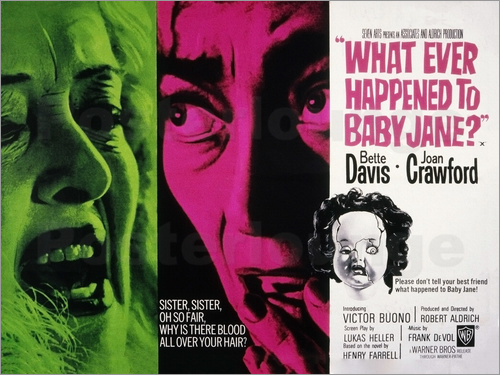
Grandma Guignol: WHATEVER HAPPENED TO BABY JANE (Warner Bros 1962)


gary loggins's avatarcracked rear viewer

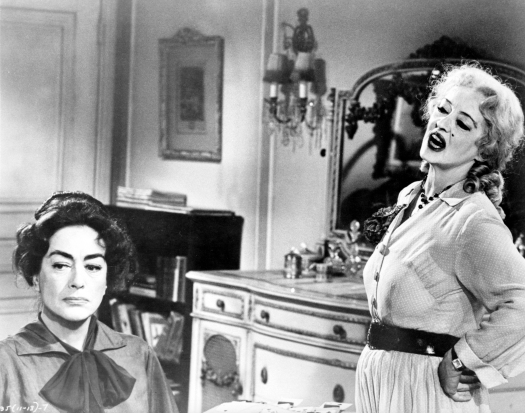
Joan Crawford  and Bette Davis had been Hollywood stars forever by the time they filmed WHATEVER HAPPENED TO BABY JANE?. Davis was now 54 years old, Crawford 58, and both stars were definitely on the wane when they teamed for this bizarre Robert Aldrich movie, the first (and arguably best) of what has become know as the “Grand Dame Guignol” (or “psycho-biddy”) genre.

Bette is Baby Jane Hudson, a washed-up former vaudeville child star with a fondness for booze, while Joan plays her sister Blanche, a movie star of the 30’s permanently paralyzed in a car accident allegedly caused by Jane. The two live together in a run-down old house, both virtual prisoners trapped in time and their own minds. Blanche wants to sell the old homestead and send Jane away for treatment, but Jane, jealous of her sister’s new-found popularity via her televised old films, descends further into alcoholism…

View original post 419 more words

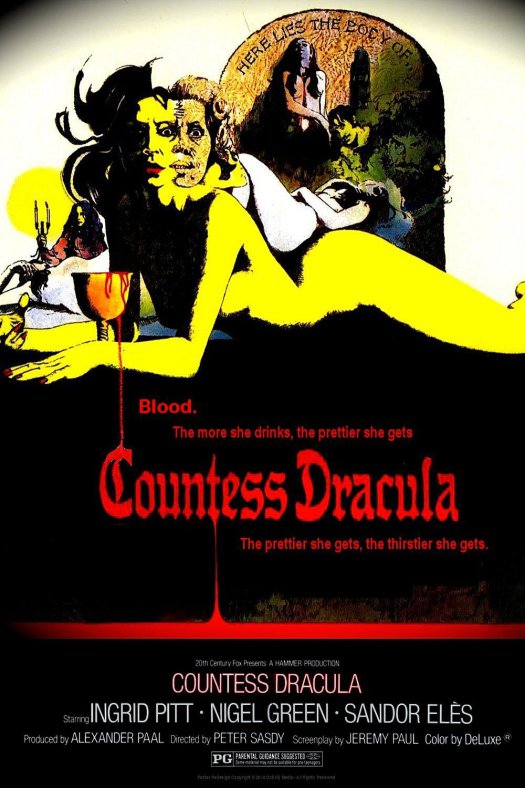
Forever Young: Ingrid Pitt in COUNTESS DRACULA (20th Century Fox/Hammer 1971)


gary loggins's avatarcracked rear viewer

Iconic Ingrid Pitt became a horror fan favorite for her vampire roles in the early 1970’s.  The Polish-born actress, who survived the horrors of a Nazi concentration camp as a child during WWII, played bloodsucking lesbian Carmilla in Hammer’s THE VAMPIRE LOVERS, based on the classic story by J. Sheridan LeFanu, and was a participant in the Amicus anthology THE HOUSE THAT DRIPPED BLOOD opposite Jon Pertwee in that film’s best segment. Finally, Ingrid sunk her teeth into the title role of COUNTESS DRACULA, a juicy part where she’s not really a vampire, but a noblewoman who gets off on bathing in blood, loosely based on the real life events of Hungarian Countess Elizabeth Bathory.

Portrait of the real Elizabeth Bathory

Bathory (1560-1614) was the most infamous female serial killer in history, officially found guilty of 80 murders, yet a diary allegedly found puts the count as high as 650!…

View original post 383 more words

Film Review: The Howling (dir by Steven M. Smith)


Horror is all about atmosphere.

It doesn’t matter how bloody or gory a film is.  It doesn’t matter how creative the filmmakers gets when it comes to creating their monster or plotting out their haunting.  It doesn’t matter how meta the dialogue is or how many references are tossed in to other horror movies.  It all starts with atmosphere.

The right atmosphere keeps us, the viewers, off-balance throughout the entire film.  The right atmosphere leaves us wondering what’s lurking behind every corner and it makes us jump at every unexpected sound.  The right atmosphere tells us that something terrifying could happen at any minute.  The right atmosphere makes us feel as if we’re watching a filmed nightmare.  The right atmosphere keeps us watching even when we might want to look away.

The Howling is full of atmosphere.

Now, before anyone asks, this British film is not a remake of the classic American werewolf movie.  Instead, it deals with the legend of Dr. Rathbone (Jon-Paul Gates).  Rathbone, it’s said, was a scientist who lived in a mansion outside of a small English village.  Everyone suspected that, inside of his mansion, Rathbone was performing horrific experiments on both animals and humans.  When Rathbone mysteriously disappeared, no one regretted his absence.  In fact, many people suspected that perhaps Rathbone had been killed by one of his experiments and, if so, good riddance!  Of course, the only problem was that, with Rathbone gone, no one was quite what had actually happened to his experiments.  Were they now living in the woods or was the whole thing just an urban legend?

Dr. Rathbone, at work


As Halloween approaches, three teenagers — Jason (Erik Knutsvik), his girlfriend Kristy (Tiffany-Ellen Robinson), and their friend Sophia (Maria Austin) — camp in the woods, hoping to discover the truth.  After all, there’s a lot of online clicks and youtube views to be captured by hunting the paranormal.  One need only watch Mystery, Uncovered with Ben Tramer (Matthew Fitzthomas Rogers) to understand that!

(I assume that Ben Tramer was named after Laurie’s unfortunate crush in the first two Halloween films.)

When it starts storming and their car disappears, Jason, Kristy, and Sophia are forced to seek refuge in what appears to be some sort of decrepit asylum.  They’re met by the caretaker, Shelley (Hans Hernke), who says he works for the Master and who, when an inmate suddenly makes an appearance, says, “Don’t mind him, he’s harmless.”

Of course, no one that they’ll meet that night is harmless…

The Howling plays out like a filmed dream, full of strange characters and nicely surreal images.  The film starts with a series of overhead shots, all of which suggest that not only the main characters but the entire world is being watched and stalked by some ominous and unknown force.  With the exception of a few key scenes, the majority of the film is in black-and-white and some of the images captures, especially in the doctor’s lab, are striking in their starkness.  (There are also a few brief scenes where the asylum is so dark that it’s hard to visually make out what’s happening.  Instead, we only hear voices in the blackness, an effective reminder of why so many people sleep with at least one light on.)  The few times when color does intrude on the film, like when Shelley lights a candle or when we see an episode of Mystery, Uncovered, the effect is a disquieting one.  In perhaps the film’s strongest sequence, several of Rathbone’s “patients’ suddenly appear in full, vibrant color, a nightmarish montage that seems to literally explode from the film.  There’s also a nicely down black-and-white scene involving a rather haunting dance.

Lest I give you the wrong idea, The Howling definitely has a sense of humor about itself.  In many ways it’s an homage to the gloriously over-the-top horror films of the past.  It’s a film that obviously was made for horror fans by horror fans and, as a result, the 83 minute running time is full of references to other classic horror films.  Shelley, for instance, will be a familiar character to anyone who has ever seen a haunted house film from the 40s or 50s.  There’s always a mysterious caretaker.  As for the Asylum itself, it feels like it could have been transported in from the twisted, psychological landscape of German Expressionism.

I liked The Howling.  It’s a low-budget horror film that makes pays homage to some of my favorite horror films and makes good use of a dream-like atmosphere.  And, as I said before, atmosphere is everything….