Film Review: Cast Away (dir by Robert Zemeckis)


“WILSON!”

Seriously, I’m usually pretty well-behaved when I watch a movie but every time I see the 2000 film Cast Away, I find myself thinking, “Protect Wilson!  You must protect Wilson!”  And then, every time, I feel the sting of tears in my eyes as Wilson, with that red-face and that understanding attitude, goes floating away.

Wilson is a volleyball.  When a FedEx executive named Chuck Noland (played by Tom Hanks) finds himself stranded on a desert island, Wilson becomes his only companion.  A stain from Chuck’s bloody palm creates something that resembles a face on Wilson’s rubber surface and Chuck spends a lot of time talking to Wilson.  It’s how Chuck maintains his sanity, even as he loses weight, sheds most of his clothes, and grows a beard.

Chuck learns how to make fire.  He learns how to catch fish.  He is able to survive due to the supplies that he gathers from the FedEx packages that were being carried on the plane that crashed into the island.  But Chuck never stops dreaming of returning home to his girlfriend (Helen Hunt).  Eventually, Chuck finds the courage to try to make the journey back to civilization.  He brings Wilson with him but ultimately, this is something that Chuck is going to have to do on his own.  Of course, Chuck has failed to consider that he’s been gone for years.  He is presumed dead.  On the Island, time seemed like it was frozen.  For the rest of the world, life has continued.

Cast Away is a film that a lot of people, especially online film commentators, tend to criticize.  The complaint is usually that the film is essentially a commercial for FedEx, that it’s not believable that Tom Hanks could survive on that island for as long as he did, and that the film itself has a weak ending.  I’ll concede that the film does make FedEx look like the nicest corporation on Earth.  (FedEx’s CEO appears as himself, which should tell you something about how the company is presented.)  And I will admit that the film’s time-advancing jump cut, which abruptly takes Hanks from being clean-shaven and husky to being thin and bearded, does leave a lot of unanswered questions.  But I will always defend the film’s ending.  The film ends on a note of ambiguity but how else could it have ended?  Everyone thought Chuck Noland was dead.  His girlfriend had every right to get on with her life and, in fact, it would have been psychologically unhealthy for her if she hadn’t.  As for that final shot, it’s an acknowledgment that Chuck doesn’t know what lies ahead of him in the future.  All he knows is that he life isn’t over yet.  It’s a melancholy ending.  It’s a frustrating ending.  But it’s also the only way the film could have ended and therefore, it’s a perfect ending.

Cast Away is a film that I will always defend and it’s also a film that really only could have worked with Tom Hanks in the lead role.  He plays Chuck as being the ultimate everyman, an affable guy who was just trying to do his job and whose survival of the initial plane crash was largely due to luck.  Hanks is one of those actors who is instantly sympathetic and Cast Away uses his screen persona to good effect.  You want him to survive because he’s Tom Hanks.  He may be playing a character named Chuck Noland but ultimately, he’s Tom Hanks.  He survived being trapped in space.  Surely, he can survive being stranded on an island.  The majority of the film is just Hanks talking to himself.  This would have brought out the worst in so many actors but Tom Hanks makes it work.  And yes, he’ll bring tears to your eyes as he watches Wilson float away.  That’s the power of a good actor.

As for Wilson, I like to think that he washed up in Pensecola.  Recently, I played a little volleyball on a beautiful Florida beach.  Was that you, Wilson?

 

Scenes I Love: Bill Paxton and Helen Hunt In Twister


Bill Paxton would have been 70 years old today.

Today’s scene that I love comes from Twister and it features Bill Paxton showing off some wonderful chemistry with Helen Hunt.  One of the great things about Bill Paxton is that he was equally at home in both big blockbusters like Twister and Titanic and low-budget indies like Near Dark.  He was an artist who also happened to be a star.  As a lover of both films and eccentric Texans, I will always miss Bill Paxton.

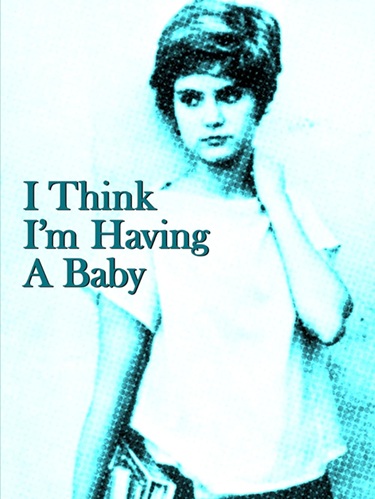
Back to School: I Think I’m Having A Baby (dir by Arthur Allan Seidelman)


Poor Jennifer Jason Leigh!

Seriously, whenever you watch any of the movies that Leigh made early in her career, your heart just goes out for.  She was always either getting stalked or getting abused or getting lost or struggling through a pregnancy scare.  In Fast Times At Ridgemont High, she actually did get pregnant and had to go to the abortion clinic on her own after Mike Damone failed to keep his promise to be there for her.  It doesn’t get quite as bad as that for her in 1981’s I Think I’m Having A Baby but she still has to put up with a lot.

In I Think I’m Having A Baby, Jennifer Jason Leigh plays 15 year-old Laurie, who is not only socially awkward but also has the worst haircut that has even been inflected on an otherwise attractive person.  Laurie idolizes her older cousin, Phoebe (Helen Hunt).  Phoebe is dating a lunkhead jock named Peter (Shawn Stevens).  Phoebe does Peter’s homework for him and Peter complains that Phoebe won’t go beyond some mild making out in his car.  That’s the kind of relationship that they have.  On the night of his birthday, Peter and Phoebe have an argument at the outdoor party that Phoebe went out of her way to set up.  Peter drives off in his car, little realizing that the shy Laurie is hiding in the backseat.  When Peter notices Laurie there, he pulls over and starts talking about how difficult (cue a massive eye roll from me) his life is.  By the end of the night, Peter has revealed himself to be a whiny jerk and Laurie is no longer a virgin.

Soon afterwards, Laurie starts to feel ill.  Her nerdy best friend, Marsha (Samantha Paris), thinks that Laurie might have the flu.  Laurie, however, fears that it’s definitely not the flu.  When Laurie tells Peter that she thinks she might be pregnant, Peter freaks out.  He tells her to take care of it and makes it clear that he has no interest in being a father.  Marsha says that she can’t understand why anyone would want to have a baby.  She announces that she’s never going to have one.  Instead, she’ll just adopt a dog.  That really doesn’t help out Laurie, though.  Eventually, Marsha and Laurie head to the clinic to discover whether or not Laurie is actually pregnant.

Meanwhile, Laurie’s little sister, Carrie (Tracey Gold), makes the mistake of letting her pet rabbits all socialize with each other.  Carrie learns a lesson about the importance of keeping a safety barrier between male and female rabbits.  At school, the students smirk as Mr. Fenning (David Birney) ties to teach a sexual education class.  One of the students is played by future Breakfast Club member Ally Sheedy, making her television acting debut by uttering a handful of lines.  The ultimate message is that no one knows anything and all of the education that they’ve gotten so far has been inadequate.

It’s pretty heavy-handed and some of the acting is a bit less than award-worthy.  (Samantha Paris shouts nearly every line that she has.)  But Jennifer Jason Leigh gives a good performance as Laurie, perfectly capturing not only Laurie’s fear of being pregnant but also the sadness that comes from being painfully shy.  Your heart breaks for her when you watch this film.  If nothing else, hopefully Laurie realizes, by the time the end credits roll, that she can do far better than Peter.  For that matter, so can Phoebe.  While everyone has a bright future ahead of them, Peter is destined to spend the rest of his life wondering why he peaked at 17.

And that’s the way it should be.

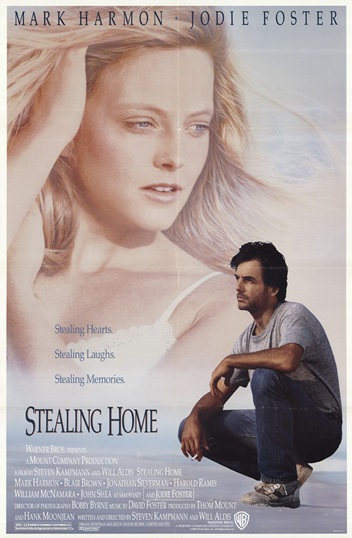
So, I Watched Stealing Home (1988, dir. by William Porter and Steven Kampmann)


Back in December, Lisa agreed to watch a baseball movie with me to make up for making me watch The Catcher in 2023.  The one we picked was Stealing Home, because it starred Mark Harmon and Jodie Foster and it looked like it would be a sweet movie.

Stealing Home opens with Billy Wyatt (Mark Harmon), a minor league baseball player who is getting ready to take the field and who is standing for the National Anthem.  I immediately liked Billy because he was standing for the Anthem and not taking a knee.  I also like aging minor leaguers because they’re still playing the game even though they know they’ve probably missed their window to move up to the majors.  Billy Wyatt loves both the game and his country.

As Billy waits to play ball, he thinks about another type of love, the love that he had for Katie Chandler (Jodie Foster).  Katie was six years older than him and encouraged him to always pursue his dreams, whether it was in baseball or love.  The movie flashes back to Billy living in a motel with a cocktail waitress and getting a phone call from his mother who tells him that Katie has committed suicide and she wants Billy to spread her ashes at a special place.  Billy then flashes back to his childhood and his teen years, in which he’s played by William McNamara who does not look like he could ever grow up to be Mark Harmon.  Billy’s best friend is Alan Appleby, who is played as a teenager by Jonathan Silverman and as an adult by Harold Ramis.  Jonathan Silverman growing up to be Harold Ramis seems even more unlikely than William McNamara becoming Mark Harmon.  Billy remembers losing his virginity to Appleby’s prom date, losing his dad to a car wreck, and a Fourth of July weekend that he spent on the beach with Katie and his mom (Blair Brown).

Only Jodie Foster plays Katie Chandler and we only see Katie thorough Billy’s eyes.  Jodie Foster gives a lively performance as Katie but she always more of a plot device than a fully rounded character.  We never find out why Katie killed herself.  Her father says that Katie was unhappy during her adult life but why?  Even after Billy gets her ashes and tries to figure out where she wanted him to spread them, he never thinks about why she killed herself.  In fact, he hadn’t even talked to her for years.  That really bothered me.

The movie ends with Billy stealing home during a game and proving that he’s still got it as far as baseball goes.  I love baseball but I still felt like Katie’s untold story was probably more interesting than Billy’s.  I liked Mark Harmon’s performance and I really wanted to like Stealing Home more than I did.  I wish the movie had been more about who Katie was instead of being about who Billy thought Katie was.

Scenes I Love: Bill Paxton and Helen Hunt In Twister


Bill Paxton would have been 69 years old today.  As a lover of both films and eccentric Texans, I still miss Bill Paxton.

Today’s scene that I love comes from Twister and it features Bill Paxton showing off some wonderful chemistry with Helen Hunt.  One of the great things about Bill Paxton is that he was equally at home in both big blockbusters like Twister and Titanic and low-budget indies like Near Dark.  He was an artist who also happened to be a star.

Late Night Retro Television Review: Highway to Heaven 1.24 & 1.25 “Thoroughbreds”


Welcome to Late Night Retro Television Reviews, a feature where we review some of our favorite and least favorite shows of the past!  On Thursdays, I will be reviewing Highway to Heaven, which aired on NBC from 1984 to 1989.  The entire show is currently streaming on Freevee and several other services!

This week, season one concludes with a two-part episode.

Episodes 1.24 and 1.25 “Thoroughbreds”

(Dir by Michael Landon, originally aired on May 1st and 8th, 1985)

For their last assignment of the first season, Jonathan and Mark are sent to work at a stable owned by the wealthy Mr. Armstong (Stephen Elliott).  Lizzy MacGill (a young Helen Hunt) is the daughter of one of Amrstrong’s employees (Noble Willingham) and has practically grown up at the stables.  She loves horses and, as the first episode progresses, she also falls in love with Mr. Armstrong’s spoiled son, Garth (John Hammond).

Garth falls in love with Lizzie as well, learning how to be both a better horseman and just a better man from his interactions with her.  Despite his father’s threat to disown him, Garth breaks off his engagement to Ms. Richy McSnobby Snob (that may not have been her actual name) and he elopes with Lizzie.

Yay!

Except …. Lizzie has cancer and she doesn’t know it!  The test comes back on the exact same day that she runs off with Garth.  Part one ends with two fathers in tears, though each for different reasons.

At the start of Part Two, Jonathan tracks down Lizzie and informs her of her diagnosis.  Without telling Garth what’s going on, she returns home and is informed that 1) she must start chemotherapy immediately and 2) she’s pregnant.  Her doctor (Richard Bull) tells Lizzie that she’ll have to have an abortion if she wants to start treatment.  Lizzie runs from the hospital.

As for Garth, he naturally wants to know what’s going on.  Lizzie lies to him and tells him that she only wanted him for his father’s money and since he’s now cut-off, they might as well just call off the marriage as well.  Heart-broken, Garth decides to marry RIchy McSnobby Snob.

Worst ending ever, right?  Well, don’t worry, it’s not over yet.  Jonathan and Mark crash the wedding (and Jonathan tells a lie to get into the church, which I thought was a no-no for angels) and Jonathan causes A FIRE TO BREAK OUT IN THE CHURCH’S BASEMENT!  Again, this does not seem like good angel behavior.  Anyway, all the smoke gives Garth time to realize that he actually does love Lizzie and, after Mark informs him about why Lizzie actually left him, Garth rushes back to Lizzie and they go to the local Justice of the Peace to get married.  Fortunately, Jonathan is able to convince Mr. Elliott to come to that wedding as well.

The episode ends with a flashforward,  in which we see Lizzie and Garth’s toddler son playing outside while an apparently healthy Lizzie watches.

Yay!

It’s not a bad way to end the first season, though I do think the story could have just as easily been told in one episode as opposed to two.  (The first episode especially feels padded out.)  Helen Hunt and John Hammond made for a perfectly adorable couple and their chemistry ensured that the show’s signature mix of sentimentality and melodrama never felt too cloying.  All in all, this was a good ending to a fairly strong first season.

Next week, season 2 begins!

Horror on TV: The Hitchhiker 4.4 “Why Are You Here?” (dir by Chris Thomson)


Tonight’s episode of The Hitchhiker is an early example of found footage horror.

Jerry Rulack (played by the star of Midnight Express, Brad Davis, in one of his final performances) is a smarmy TV host who, along with his camera crew, goes from nightclub to nightclub and asks the clubgoers, “Why are you here?”  Eventually, Jerry runs into a rich girl named Donette (Helen Hunt), who turns the question around and leaves Jerry to wonder why he’s there.  Donette and her friends are rich, decadent, and ultimately dangerous.  Eventually, Jerry discovers that there is a price to pay for asking too many stupid questions.  Brad Davis does an adequate Geraldo Rivera impersonation while Helen Hunt seems to be having fun playing someone who literally cares about nothing.  As the Hitchhiker, Page Fletcher is wonderfully judgmental while introducing Jerry and later while considering his fate.

This episode originally aired on March 10th, 1987.

Retro Television Reviews: Murder In New Hampshire: The Pamela Smart Story (dir by Joyce Chopra)


Welcome to Retro Television Reviews, a feature where we review some of our favorite and least favorite shows of the past!  On Sundays, I will be reviewing the made-for-television movies that used to be a primetime mainstay.  Today’s film is 1991’s Murder In New Hampshire: The Pamela Smart Story!  It  can be viewed on YouTube!

When Pamela Wojas (Helen Hunt) first became engaged to Gregg Smart (Hank Stratton), she thought that they would never get older or settle down to a conventional life.  She thought that Gregg would always have long hair and that they would spend the rest of their lives following Van Halen around the country.  But then Gregg got a job with a New Hampshire insurance company and he cut his hair.  And then Pam failed in her attempts to get hired by the local news station and instead, she ended up accepting a job as the part-time media director at a local high school.

Pam spearheaded the school’s anti-drug campaign and ended up working closely with two students in particular, Billy Flynn (Chad Allen) and Cecelia Pierce (Riff Reagan).  Billy and Pam bonded over their shared love of Van Halen and soon, they were having an affair.  Was Pam just trying to relive her youth or was she already setting up Billy to murder her husband?

Based on the true story that also inspired Gus Van Sant’s To Die For, Murder In New Hampshire jumps back and forth through time.  The film opens with Gregg being shot and killed by Billy and one of his friends.  It then cuts to a courtroom, where a prosecutor (Howard Hesseman) tells the jury that Gregg was murdered on the orders of his own wife.  A very conservatively and modestly-dressed Pam sits in the courtroom and provides quite a contrast to the far more wild and hedonistic Pam who we see in the film’s frequent flashbacks.  While Gregg settles comfortably into life as a suburban insurance agent, Pam continually tries to hold onto her past.  While Gregg wins awards for selling the most insurance, Pam tells Billy that Gregg beats her and that he’s dangerous.

It’s difficult to watch Murder In New Hampshire without comparing it To Die For.  They both tell the same story and they even use the same flashback structure.  But if To Die For presented Nicole Kidman as being a soulless killer who was driven by her obsession with being a star, Murder In New Hampshire suggests that Pam’s main motivation was that she just couldn’t handle the idea of settling down and living a conventional, suburban life.  As well, To Die For presented Joaquin Phoenix’s gunman as being someone who was essentially incapable of thinking for himself.  In Murder In New Hampshire, Billy is far more active character.  Though he is undoubtedly manipulated by Pam, Billy is still portrayed as someone who made his own decision to get involved in Pam’s schemes.  If To Die For is a stylized satire of the true crime genre, Murder In New Hampshire is the epitome of what was being satirized.

That said, Murder In New Hampshire is a good example of the true crime genre, largely due to Helen Hunt’s wonderful performance as Pam Smart.  Hunt plays Pam as someone who has never grown up and who is so scared of being required to that she’ll even resort to murder to pull it off.  While Murder In New Hampshire never quite escapes the shadow of To Die For, it’s still an effective film when taken on its own terms.

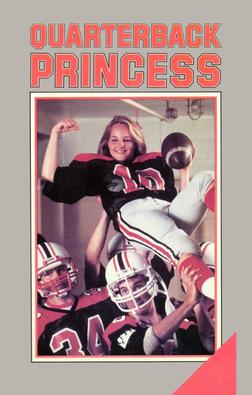
Retro Television Review: Quarterback Princess (dir by Noel Black)


Welcome to Retro Television Reviews, a feature where we review some of our favorite and least favorite shows of the past!  On Sundays, I will be reviewing the made-for-television movies that used to be a primetime mainstay.  Today’s film is 1983’s Quarterback Princess.  It  can be viewed on YouTube!

Quarterback Princess begins with Ralph Maida (Don Murray) dropping in on the coach of a high school football team in the small town of Minnvile, Oregon.  Ralph explains that he and his family are going to be relocating to the town from Canada.  His eldest child wants to play football and Ralph is curious as to when the team will be holding the tryouts.  The coach asks what position Ralph’s son plays.  Ralph explains that Tami is his daughter and she plays quarterback.  After an awkward moment of silence, the coach explains that he’ll have to talk to the school board.

Yes, Quarterback Princess is one of those films.  It’s an only girl on the team film, in which an athletic teenager has to convince not only her male teammates but also all of the stodgy old people that she can play just as well as the boys.  On the one hand, films (and shows, as Degrassi had an entire storyline about Jane trying to get on the school’s football team) like this are usually entertaining because it’s fun to watch a girl succeed while all of the men sputter with outrage until the team starts winning.  On the other hand, they’re always a little bit difficult for me to relate to because I would honestly have no interest in doing what Tami’s doing and it’s hard for me to understand why anyone else would either.  I mean, seriously why would anyone want to live in Oregon when Montana’s just a short drive away?

Quarterback Princess is based on a true story.  In real life, Tami Maida was 14 year old when she joined her high school football team as their quarterback.  That season, the team had a record of 7-1 and they won the state championship.  Tami was also elected Homecoming Queen that seem year.  The parts of the movie that seem like the type of thing that only a screenwriter could come up actually happened.  Helen Hunt, who was 20 years old at the time, plays Tami.  When I watched the film, I thought Hunt did a good job in the scenes off field but I thought she was a bit unconvincing when she was actually playing the game and throwing the ball.  Fortunately, I did some research before I actually wrote this review and I discovered that Tami served as Helen Hunt’s stand-in during the film and, in most of the game scenes, that actually is Tami throwing the ball and running around the field.  That shows you how much I know about football.

Quarterback Princes is definitely a made-for-television production.  These are the only high school football players in existence who neither drink nor curse.  For that matter, the coaches are surprisingly nice as well.  That said, it isn’t bad.  The best scenes are the ones that feature Tami and her family adjusting to Tami’s sudden fame.  Daphne Zuniga gives a sympathetic performance as Tami’s sister, who is not particularly happy about how Tami’s sudden fame has changed everyone’s lives.  The always likable John Stockwell plays Tami’s boyfriend and the two of them are a believable couple.  Noel Black, who also directed Pretty Poison, does a good job of keeping the action moving at a steady pace.  Probably the worse thing you can say about this film is that it was a bit predictable but, in this case, all of the predictable stuff actually happened so what can you do?

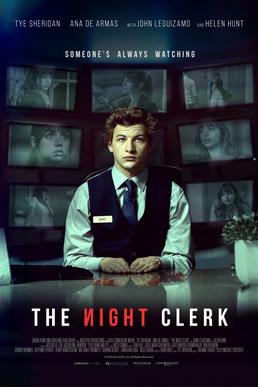
The Films of 2020: The Night Clerk (dir by Michael Cristofer)


“Tye Sheridan Is …. THE NIGHT CLERK!”

That’s not how The Night Clerk was advertised, though perhaps it should have been.  This is one of those overheated melodramas that’s so sure that it’s making a bigger statement than it actually is that it becomes somewhat fascinating to watch.  Usually, when we say that a film is fascinating to watch, we mean that it’s either fascinatingly good or fascinatingly bad.  The Night Clerk is fascinatingly middle-of-the-road.  It has opportunities to be good, largely due to the performances of Tye Sheridan and Ana de Armas.  And it has opportunities to be bad, largely due to the direction and script of Michael Cristofer.  Try as it might, the film never becomes truly good and yet it’s never truly bad, either.  It’s just kind of there.

The title character is Bart Bromley (Tye Sheridan), a young man who has Asperger’s syndrome and who works as a night desk clerk at a hotel.  He’s hidden cameras all over the hotel, so that he can observe the guests in their rooms.  He even watches the guests when he returns to the home that he shares with his mother, Ethel (Helen Hunt).  That’s undeniably creepy but we’re not supposed to hold that against Bart because he’s only watching the guests so that he can learn how to talk and communicate with other people.

(To be honest, the film is very lucky that Tye Sheridan was available to play Bart.  As written, Bart is not a particularly sympathetic character.  But Sheridan is such a likable actor and has such an appealing screen presence that you’re willing to overlook a lot of narrative inconsistencies where his character is concerned.)

Anyway, Bart ends up taking an interest in a guest named Karen (Jacque Gray) but, when Karen’s murdered, Bart becomes the number one suspect.  Even though Bart knows that Karen was killed by a mysterious man who had a distinctive tattoo, he can’t reveal how he knows that information.  When Bart is assigned to another hotel, he meets Andrea Riviera (Ana de Armas).  Andrea seems to take an interest in Bart but is she sincere or is she somehow involved with the murderer herself?

Do I really need to answer that question for you?

And again, the film is lucky that Ana de Arams was available to play Andrea because Andrea is another character who wouldn’t be particularly sympathetic if she had been played by a less appealing performer.  The film can never seem to make up its mind whether she’s a calculating femme fatale or a naive victim and it’s somewhat amazing that de Amas is able to give a good performance considering how badly Andrea is written.

The Night Clerk is one of those films that holds your interest while you watch it but it tends to fade from the memory as soon as it ends.  Sheridan and de Armas are appealing actors but the film’s central mystery isn’t a particularly interesting one.  When the mystery is finally solved, I was so underwhelmed that I kept waiting for another twist to suddenly pop up.  Surely, I kept saying, it can’t be that simple.  But yes, it is.  Though the hotels are impressively trashy, the film itself has a rather flat, uninteresting look and director Michael Cristofer never really brings the story together.  It’s a mess of a film but it does work as a testament to the talents of Tye Sheridan and Ana de Armas.