Horror Film Review: C.H.U.D. (dir by Douglas Cheek)


There’s something living under the streets of New York City.

That’s the basic idea behind 1984’s C.H.U.D., a film that opens with an upper class woman and her little dog being dragged into the sewers by a creature the reaches out of a manhole.  People are disappearing all over the city but the authorities obviously aren’t revealing everything that they know.  Even after the wife of NYPD Captain Bosch (Christopher Curry) disappears, the city government doesn’t seem to be too eager to dig into what exactly is happening.

Instead, it falls to two activists.  Photographer George Cooper (John Heard) specializes in taking picture of the homeless, especially the one who live underground in the New York subways.  He’s like a well-groomed version of Larry Clark, I guess.  Social activist A.J. “The Reverend” Shepherd (Daniel Stern) runs a homeless shelter and is convinced that something is preying on the most vulnerable citizens of New York.  When the police won’t do their job, George and the Reverend step up!

So, what’s living in the sewers?  Could it be that there actually are cannibalistic humanoid underground dwellers out there?  Everyone in New York City has heard the legends but, much like stories of the alligators in the Chicago sewers, most people chose not to believe them.  Or could the disappearance have something to do with the cannisters labeled Contamination Hazard Urban Disposal that are being left in the sewers by the Nuclear Regulatory Commission?  Wilson (George Martin) of the NRC says that they would never purposefully mutate the people living underground but Wilson works for the government so who in their right mind is going to trust him?

C.H.U.D. is a horror film with a social conscience.  It’s very much an 80s films because, while you have Shepherd running around and attacking everyone for not taking care of the most vulnerable members of society, the true villain is ultimately revealed to be the members of a regulatory agency.  Instead of finding a safe way to get rid of their nuclear waste, they just found a sneaky way to abandon it all in New York and obviously, they assumed no one would care because …. well, it’s New York.  Everyone in the country knows that New York City isn’t safe so who is going to notice a few underground monsters, right?

The idea behind C.H.U.D. has a lot of potential but the execution is a bit lackluster.  For every good C.H.U.D. kill, there’s long passages where the story drags.  Considering that Heard spent most of his career typecast as the type of authority figure who would dump nuclear waste under New York City, it’s actually kind of interesting to see him playing a sympathetic role here.  Daniel Stern, on the other hand, is miscast and rather hyperactive as Shepherd.  You really do want someone to tell him to calm down for a few minutes.  Watching C.H.U.D., one gets the feeling that it’s a film with an identity crisis.  Is it a horror film, an action flick, a work of social commentary, or a dark comedy?  There’s no reason why it can’t be all four but C.H.U.D. just never really comes together.  It ultimately feels more like a mix of several different films instead of being a film made with one clear and coherent vision.

In the end, Death Line remains the film to see about underground cannibals.

Days of Paranoia: Dark Blue (dir by Ron Shelton)


2002’s Dark Blue opens in 1992, with a decorated Los Angeles cop named Eldon Perry (Kurt Russell) holed in a hotel room with a shotgun and a pistol.  Perry, who were learn comes from a long line of cops, should be happy. He’s about to finally get promoted.  While Los Angeles is in the grip of the riots that followed the Rodney King verdict, Perry’s lifelong dream is about to come true.  But, instead of celebrating, he’s a nervous wreck.  Dark Blue shows us why.

Perry is the protegee of Commander Jack Van Meter (Brendan Gleeson), a corrupt cop who regularly encourages his men to harass, arrest, and even kill anyone who is suspected of having committed a crime.  Van Meter and Perry claim that they’re doing what they need to do in order to keep the city safe.  They look at a reformer like Assistant Chief Arthur Holland (Ving Rhames) and they see someone who has no idea what it’s actually like on the streets and who is more concerned with his own ambitions than anything else.  However, Van Meter has a side operation going.  Two of his informants (played by Korupt and Dash Mihok) regularly commit robberies that he sets up and helps them get away with.  When their latest robbery leaves four people dead and one wounded, Van Meter assigns Perry and Perry’s young partner, Bobby Keough (Scott Speedman), to the case.  Bobby is young and maybe not as cynical as Perry.  But he’s also Van Meter’s nephew so the assumption is that he’ll play ball.

And, at first, Bobby does go along with whatever Van Meter and Perry say.  When Perry unknowingly gets too close to the truth about what happened at the robbery, Van Meter orders Perry and Bobby to go after someone else.  When Perry orders Bobby to execute an innocent man, Bobby does so and Perry takes the blame.  (In one of the film’s best scenes, Bobby gives his statement about the shooting to Internal Affairs, just for the detectives to shut off the tape recorder and give Bobby a chance to make a better statement.)  But when Bobby has a crisis of conscience and Van Meter reveals that depths that he’ll go to protect himself, Eldon Perry is forced to reconsider the life that he’s built for himself as a cop.  With Los Angeles descending into chaos, Perry has to finally decide whether or not to play the game or to do the right thing.

There’s a lot going on in Dark Blue. Actually, there’s too much going on.  The film is based on a story by James Ellroy and it has Ellroy’s traditionally dense plotting, full of duplicitous characters and macho dialogue.  Not only is Perry dealing with the investigation, he’s also dealing with his frayed marriage to Sally (Lolita Davidovich).  Not only is Bobby struggling with his ethics but he’s also struggling with his love for Sgt. Beth Williamson (Michael Michele), who is also Holland’s assistant and who also once had a one-night stand with Holland, pictures of which have gotten into Van Meter’s hands and which Van Meter plans to use to blackmail Holland into taking a job in Cleveland.  It’s a lot to keep track of and, visually, director Ron Shelton struggles to capture Ellroy’s trademark prose.  As a writer, Ellroy’s jittery style can get readers to accept almost anything, no matter how complex or potentially disturbing.  Ellroy has no fear of alienating the reader.  Shelton, on the other hand, has a much more gentle style and it’s not a good match for Ellroy’s vision of a world gone mad.  The film mixes Ellroy’s moral ambiguity with Shelton’s rather predictable liberal piety and the end result never really comes together.  Shelton doesn’t seem to be sure what he wants to say with Dark Blue.

That said, this film does feature an excellent performance from Kurt Russell.  Russell plays a character who is both good and bad.  Perry cares about his partner.  He cares about his family.  He’s loyal to the police department.  His methods may be extreme but he’s also taking criminals off the street.  But Perry is also thoroughly mired in Van Meter’s corruption.  Perry trusts Van Meter because Perry considers the police force to be his family.  His shock at being betrayed is one of the more poignant things about the film and Russell captures the moment perfectly.

Dark Blue has a lot that it wants to say, about morality, policing, and race relations.  It doesn’t really work because Ron Shelton was the wrong director to bring James Ellroy’s pulp sensibility to life.  But it does provide Kurt Russell a chance to show us that he’s one of our most underrated actors.

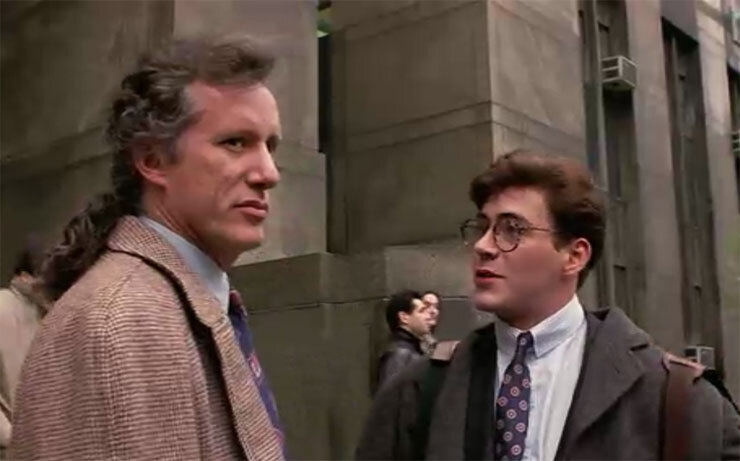
TRUE BELIEVER -James Woods & Robert Downey, Jr. take on the system!


I’ve been going through my movies and re-watching some of my favorites. A movie that clearly falls into that category is TRUE BELIEVER starring James Woods and Robert Downey, Jr. I became a fan of James Woods around 1988 primarily based on the strength of two action films that he worked on around that time, those being BEST SELLER (1987) and COP (1988). I spent hours combing through the rental selections at our local Hastings Entertainment store and I remember both of these movies being in the “New Release” section at the same time. They’re both hard hitting, violent films, and Woods is especially good in both. Being an obsessive completist, I found myself searching out the prior work of the star for some more good movies. It was during this time that TRUE BELIEVER was released to the theaters in February of 1989. I enjoy courtroom dramas, and knowing the intensity that Woods brings to his films, I had no doubt I would like it.

The story revolves around Eddie Dodd (Woods), an attorney who used to fight for the cause of the little guy, but now mostly finds himself protecting drug dealers from the law. Enter Roger Baron (Downey Jr.), a recent law school graduate who idolizes Dodd, and is now disappointed to see his legal hero reduced to his current cynical state. When a Korean mother comes into the law offices one day and says her son, Shu Kai Kim, has spent 8 years in prison for a crime he didn’t commit, cynical Dodd doesn’t want to take the case. Young Baron shames him into it though, and soon the two men find themselves taking on the New York District Attorney himself Robert Reynard (Kurtwood Smith) as they try to prove Shu Kai Kim’s innocence and help him taste freedom once more!

Often when people ask me to name my favorite James Woods film, I’ll quickly answer TRUE BELIEVER even though there are many good films to choose from. There are a few reasons for that. First, even though the film is a serious legal thriller with many dark undertones, director Joseph Ruben has given his movie a dark sense of humor. Woods and Downey, Jr. are able to find the humorous elements inherent in their characters and that brings some fun to the otherwise serious proceedings. Second, I really enjoy the story of underdogs taking on the big, bad system. Shu Kai Kim is an underdog who maintains his innocence when all the evidence appears flawlessly stacked against him. Eddie Dodd, the once feared civil rights lawyer who is now a hopeless burnout, is an underdog who appears to be out of his league as he goes up against the most powerful attorney in New York. These underdog story lines give us something to really root for as the story plays out. And finally, the performances are phenomenal from top to bottom. James Woods, an actor known for his electric intensity, is at the top of his game and Kurtwood Smith is a great adversary. Robert Downey, Jr. brings a bright-eyed enthusiasm to the role that compliments the cynical Woods nicely. And Yuji Okumoto as Shu Kai Kim shows us quite a transformation from a man who goes from almost being dead inside as a result of his eight years in prison, to a man who allows a glimmer of hope to seep in for a second chance. I think Okumoto is great in the role. The story takes many twists and turns and I enjoy every moment as it plays out.

TRUE BELIEVER is definitely one of my favorites!

Retro Television Review: Miami Vice 2.20 “Payback”


Welcome to Retro Television Reviews, a feature where we review some of our favorite and least favorite shows of the past!  On Mondays, I will be reviewing Miami Vice, which ran on NBC from 1984 to 1989.  The entire show can be purchased on Prime!

After taking a two-month hiatus, I think it’s time to finally get back to the reviews.  Thank you for your patience, everyone.  Now, let’s head to down to Miami for some Vice!

Episode 2.20 “Payback”

(Dir by Aaron Lipstadt, originally aired on March 14th, 1986)

A low-level drug dealer named Jesus Moroto (Roberto Duran) wants a meeting with the detective who arrested him and sent him to jail.  When Sonny Crockett arrives to see what Moroto wants, Sonny is shocked when Moroto commits suicide in the visitation room.

Sudden and violent deaths are a recurring thing in Miami but the death of Moroto haunts Sonny.  As Sonny explains to Tubbs, it doesn’t make any sense for Moroto, who was only looking at a few years in jail, to have killed himself.  Sonny wonders why Moroto died in front of him.  Tubbs suggests that Sonny instead focus on their current assignment, trying to get close to the elusive drug lord, Mario Fuente (played by famed art rocker, Frank Zappa).  As a lot of drug lords do on this show, Fuente lives on a yacht and it’s next to impossible to see him.  Using their undercover identities as Burnett and Cooper, Crockett and Tubbs have so far only been able to meet with Fuente’s second-in-command, Reuben Reydolfo (Dan Hedaya).

Crockett and Tubbs find themselves assigned to work with two DEA agents, one whom — Kevin Cates (Graham Beckel) — claims that he can get Crockett and Tubbs onto Fuente’s boat.  Crockett and Tubbs are reluctant to work with anyone but it soon turns out that Cates is apparently better at his job than Crockett and Tubbs gave him credit for.

Except, of course, everyone’s got a secret.  Before he went to jail, Moroto stole several million dollars from Fuente.  It turns out that Internal Affairs is convinced that Crockett helped Moroto steal the money and Fuente, who knows that Burnett and Cooper are actually Crockett and Tubbs, believes the same thing.  The only person who can truly prove that Crockett is innocent is Kevin Cates and that’s because he’s the one who stole the money!

It doesn’t matter that the twisty plot of this particular episode is not always easy to follow.  It also doesn’t matter that this episode leaves you wondering just how exactly Crockett and Tubbs have managed to maintain their Burnett/Cooper personas for so long without everyone in Miami’s underworld figuring out the truth.  (Personally, I wonder that after every episode.)  This episode works due to the atmospheric direction of Aaron Lipstadt and the performances of Don Johnson, Edward James Olmos, Frank Zappa, and especially Graham Beckel.  Beckel gives a performance that will keep you guessing at just who exactly Kevin Cates is working for and whether or not he can be trusted.  That he makes Kevin into a somewhat likable character makes it all the more disturbing when he turns out to not be quite the honest law enforcer that he made himself out to be.  If the main theme of Miami Vice often seemed to be that Crockett and Tubbs were fighting a war that there was no way to win, this episode shows why their work often felt so futile.  In this episode, Crockett not only has to battle a drug lord but he also has to battle Internal Affairs.  No one trusts anyone.

The episode ends on an ambiguous note, with Crockett technically cleared but still unable to truly prove his innocence.  (Kevin Cates, the only man who can truly prove Crockett’s innocence, is naturally gunned down during the show’s final few minutes.)  Crockett is warned that Fuente is still going to be coming after him.  (Unfortunately, Zappa was in poor health when he filmed this episode and Fuente would never return.)  This episode is Miami Vice at its most cynical and its most effective.

Retro Television Reviews: Class of ’63 (dir by John Korty)


Welcome to Retro Television Reviews, a feature where we review some of our favorite and least favorite shows of the past!  On Sundays, I will be reviewing the made-for-television movies that used to be a primetime mainstay.  Today’s film is 1973’s Class of ’63!  It  can be viewed on YouTube!

It’s college reunion time!  Alumni of all ages and from all over the country are returning to the place where they became adults and spent the best years of their lives.

Joe Hart (James Brolin), of the Class of ’63, returns to the campus but he immediately feels like a bit like an outsider.  As opposed to his former classmates, many of whom are desperately trying to recapture their fading youth, Joe is quiet and sensitive and he’s aware of the passage of time.  He hasn’t come back to college so that he can relive his carefree fraternity days.  Instead, his main interest is whether or not his former fiancée will be there.

And it turns out that Louise Swerner (Joan Hackett) is there!  She’s accompanied by her husband and fellow member of the Class 0f 63, Mickey Swerner (Cliff Gorman).  From the minute that Mickey appears, it’s obvious that he has both a chip on his shoulder and a lot of insecurity.  He is visibly annoyed when people fail to immediately recognize him.  He and Louise have a strained marriage and he’s not particularly happy with how excited she is to see Joe again.  While Mickey tries to convince everyone that he’s grown up to be a winner, Louise and Joe get reacquainted and it becomes obvious that they still love each other.  Will Louise and Joe leave the reunion together and should they be more concerned with the fact that Mickey just happens to have a sniper rifle in his luggage?  And what to make of Dave McKay (Ed Lauter), the former classmate who seems to be just a little bit too excited to see everyone?

It’s an interesting film and I have to say that it didn’t quite go the direction that I was expecting it to.  Despite the presence of the rifle and Mickey’s obvious instability, the film is less a thriller and more a look at what it means to grow up and the difficulty of letting go of the past.  None of the characters are caricatures.  Joe and Louise may seem perfect together but the film makes clear that they’re also idealizing their time together.  With neither one of them really happy with their current life, they’ve both fallen into the trap of wondering, “What if?”  Meanwhile, Mickey may be flawed but it’s impossible not to have some sympathy for him.  As hostile as Cliff can be, it’s obvious that the person that he hates the most is himself and Cliff Gorman does a good job of capturing Mickey’s raging insecurity.  Gorman’s intensity provides a good balance to Brolin’s more laid back performance and, by the end of the film, one can understand why and how Louise was able to fall in love with two men who superficially seem to be so different.

Class of ’63 is a good drama, one that requires a little patience but which ultimately rewards the audience for sticking with it.

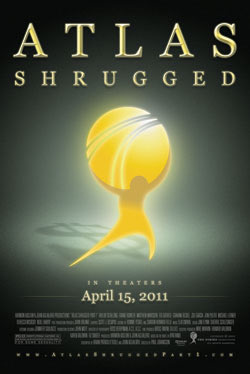
Film Review: Atlas Shrugged, Part One (dir by Paul Johansson)


The year is 2016.  A global depression has crippled the world’s economy.  While the middle class struggles to exist from day to day, the poor are getting poorer and the rich are getting richer.  Across the world, countries are nationalizing their industries, instituting price controls, and passing burdensome regulations.  Though the government officials and the academics claim that all of this is being done “in the name of the people”, it’s hard not to notice that the people are the one who are suffering as a result.  It’s also hard not to notice that most of the regulations seem to result in the bureaucrats getting not only more powerful but also wealthier.  Throughout the world, people who have started businesses or who have otherwise stood up to the government are vanishing without a trace.  In the shadows people ask, “Who is John Galt?”

Because gasoline now costs $37.00 a gallon, railroads have made a big comeback.  But the government, which claims to know what’s best and to be infallible, has done a terrible job maintaining the nation’s railways.  Dagny Taggart (Taylor Schilling), the vice president of Taggart Transcontinental Railways, is determined to rebuild the aging tracks with Rearden Metal, a new type of metal that is somehow both stronger and lighter than steel.  The inventor of the new metal is Hank Rearden (Grant Bowler).  And while that may sound like a good plan that will preserve the the nation’s supply chain, the government is angry that Rearden will not hand Rearden Metal over to them.  When Dagny’s weaselly brother, James (Matthew Marsden), announces that Taggart Railways will continue to use an inferior metal, Dagny goes into business for herself.  Despite the attempts of the government to stop them with bad publicity and excessive regulation, Dagny and Hank construct the John Galt Line.  Unfortunately, the success of the John Galt Line does not matter to Wesley Mouch (Michael Lerner, giving the film’s best performance), the former corporate lobbyist-turned-economics czar.  Mouch only sees the success of others as being a threat to his own power.

Meanwhile, people like oil tycoon Ellis Wyatt (Graham Beckel, giving the film’s second-best performance) continue to ask, “Who is John Galt?”

The first part of a trilogy of films based on the Ayn Rand novel of the same name, Atlas Shrugged Part One was released in 2011.  At that time, it received overwhelmingly negative reviews.  That, in itself, wasn’t really a shock.  There was no way that a Libertarian-themed film released at the height of the “good government” era was going to get positive reviews.  To some, it was a bigger shock that the film itself didn’t do particularly well at the box office but, again, it should have been expected.  I think Libertarians always tend to overestimate the amount of people who have 1) read Ayn Rand and 2) liked what they read.

Myself, I thought the film suffered due to its low-budget and the bland performances of Taylor Schilling and Grant Bowler in the lead roles.  At the same time, I felt that the film accomplished what it set out to do, in that it entertained the anti-government folks while annoying the MSNBC crowd.  (That said, I doubt anyone from the latter group voluntarily watched the film.)  With everything that has happened over the past seven years, it can be easy to forget just how idealized the government was in 2011.  In 2011, we were continually told that the solution to every problem could be found in a government agency populated by wonky bureaucrats.  It was like being trapped in a never-ending Aaron Sorkin fanfic.  Whatever flaws Atlas Shrugged Part One had, there was something enjoyably subversive about the film’s suggestion that the government was staffed by fools and aspiring authoritarians.  The film may have been heavy-handed when it came to portraying the greed and the stupidity of its villains but one could argue that it was no more heavy-handed than the typical Hollywood film.  It’s just, in this case, the villains of Atlas Shrugged Part One were the people who would have been the heroes of any other film.

Of course, when viewed today, Atlas Shrugged lands a bit differently.  Now that we’ve lived through the COVID era, the film’s portrayal of arrogant bureaucrats and politicians barking out orders and claiming that anyone who questions them is an enemy of the people no longer feels quite as over-the-top.  As well, it’s no longer easy to laugh off the idea of corporations working hand-in-hand with the government or the supply chain being disrupted.  The film itself still comes across as being a bit silly with its attempts to recreate the world of the rich and powerful on a very limited budget but it’s definitely more relatable today than it was in 2011.  Much of what originally felt subversive about this film now feels a bit prophetic.  If the film were released today, it would probably appeal to a mix of anti-government activist and transcontinental rail enthusiasts.  The critic wouldn’t be any nicer but it would definitely do better at the box office.

The Things You Find On Netflix: The Loft (dir by Erik Van Looy)


The_Loft_film_poster

The Loft‘s journey to Neftlix was a long one.

A remake of a Belgian film, The Loft was originally filmed in 2011 and was meant to come out in that year.  It was due to be released by Joel Silver’s Dark Castle Entertainment and Warner Bros.  However, when Silver had a falling out with Warner Bros and moved his operations over to Universal, he took The Loft with him.  And it turned out that Universal was in no hurry to distribute The Loft.  After sitting on the film for three years, Universal announced that they would release it in August of 2014 but, at the last minute, they changed their mind and instead released the horror film As Above, So Below in the spot that was originally set aside for The Loft.  Dark Castle then dropped the film, leaving The Loft in limbo until Open Road Pictures picked up the distribution rights and gave it a limited release in January of 2015.  The critics hated it, audiences were indifferent, and The Loft quickly vanished from theaters.  It’s now available on Netflix.

And, having watched the film, I can understand why the studios weren’t exactly enthused about it.  It’s not the type of film that works on the big screen.  The characters are too unlikable.  The plot is an unstable combination of silliness and melodrama.  The big twists are more likely to inspire groans than cheers.  It’s just not the type of film that you want to spend too much money on.

And yet, it’s the perfect film for Netflix.  What may seem over-the-top and annoying when viewed in a public theater becomes a lot more entertaining when viewed in the privacy on your own home.  The Loft is a film that works best if you don’t spend too much time thinking about how little sense it all makes.  It’s the perfect film to watch while you’re doing something else.

And if that sounds like faint praise, it’s not.  I thoroughly enjoyed The Loft without once mistaking it for being a “good” film.  Instead, it’s an over-the-top melodrama, with all that entails.  It’s ludicrous, it’s silly, and — when taken on its own terms — it’s also a lot of fun.

The film is about five friends and the loft to which they all have a key.  All five of the friends are married and all five of them have secrets.  Vincent (Karl Urban) is the unofficial leader of this group of friends, an architect who is also a compulsive cheater.  Luke (Wentworth Miller) is a nervous guy who appears to worship Vincent.  Marty (Eric Stonestreet) is an alcoholic who always manages to say the wrong thing.  Chris (James Marsden) is a psychiatrist who often seems to feel that he’s morally superior to his other friends.  And Phillip (Mattias Schoenarts) is Chris’s half-brother, a mentally unstable and violent guy who snorts cocaine and may have incestuous feelings towards his younger sister.

The five men use the loft to cheat on their wives.  The men are all confident that only they know about the existence of the loft and that they are the only ones who have a key.  So, naturally enough, they are all a little shocked when a woman turns up dead in the loft.  As the men gather in the loft, they debate who killed her and we get numerous flashbacks to how this all came to be.

Of course, it all leads to many secrets being revealed.  This is one of those films that simply cannot stop with one plot twist.  Instead, every twist leads to another twist until eventually, it becomes nearly impossible to keep up with who knows what.  In fact, the film features so many twists that it all quickly gets a bit silly.  But, at the same time, it’s also undeniably entertaining.  Strangely enough, the fact that it doesn’t make much sense only add to the film’s melodramatic charm.

As for the five men — well, none of them are particularly likable but at least they’re all interesting to watch.  Wentworth Miller is properly strange, Matthias Schoenarts is properly sleazy, and Eric Stonestreet is properly pathetic.  James Marsden often seems wasted in mainstream films (like Straw Dogs and The Butler) but he’s actually very charming when he appears in B-movies like this one and Walk of Shame.  And finally, you’ve got Karl Urban, doing great work and turning Vincent into the epitome of every middle-aged guy who has ever tried to flirt with me while I was waiting at a red light.

The Loft may not have got much respect when it was released into theaters but it’s entertaining enough for Netflix.

http://www.youtube.com/watch?v=GdVMCx3J6jo

Embracing the Melodrama Part II #100: Pearl Harbor (dir by Michael Bay)


Pearl_harbor_movie_poster

“And then all this happened…”

Nurse Evelyn Johnson (Kate Beckinsale) in Pearl Harbor (2001)

The “this” that Evelyn Johnson is referring to is the Japanese attack on Pearl Harbor.  You know, the date will live in infamy.  The attack that caused the United States to enter World War II and, as a result, eventually led to collapse of the Axis Powers.  The attack that left over 2,000 men died and 1,178 wounded.  That attack.

In the 2001 film Pearl Harbor, that attack is just one of the many complications in the romance between Danny (Ben Affleck), his best friend Rafe (Josh Hartnett), and Evelyn (Kate Beckinsale).  The other complications include Danny briefly being listed as dead, Danny being dyslexic before anyone knew what dyslexia was (and yet, later, he’s still seen reading and writing letters with absolutely no trouble, almost as if the filmmakers forgot they had made such a big deal about him not being able to do so), and the fact that Rafe really, really likes Evelyn.  Of course, the main complication to their romance is that this is a Michael Bay film and he won’t stop moving the camera long enough for anyone to have a genuine emotion.

I imagine that Pearl Harbor was an attempt to duplicate the success of Titanic, by setting an extremely predictable love story against the backdrop of a real-life historical tragedy.  Say what you will about Titanic (and there are certain lines in that film that, when I rehear them today, make me cringe), Leonardo DiCaprio and Kate Winslet had genuine chemistry.  None of that chemistry is present in Pearl Harbor.  You don’t believe, for a second, that Ben Affleck and Josh Hartnett are lifelong friends.  You don’t believe that Kate Beckinsale is torn between the two of them.  Instead, you just feel like you’re watching three actors who are struggling to give a performance when they’re being directed by a director who is more interested in blowing people up than in getting to know them.

Continuing the Titanic comparison, Pearl Harbor‘s script absolutely sucks.  Along with that line about “all this” happening, there’s also a scene where Franklin D. Roosevelt (Jon Voight) reacts to his cabinet’s skepticism by rising to his feet and announcing that if he, a man famously crippled by polio and confined to a wheelchair, can stand up, then America can win a war.

I’ve actually been to Pearl Harbor in Hawaii.  I have gone to the USS Arizona Memorial.  I have stood and stared down at the remains of the ship resting below the surface of the ocean.  It’s an awe-inspiring and humbling site, one that leaves you very aware that over a thousand men lost their lives when the Arizona sank.

I have also seen the wall which lists the name of everyone who was killed during the attack on Pearl Harbor and until you’ve actually been there and you’ve seen it with your own eyes, you really can’t understand just how overwhelming it all is.  The picture below was taken by my sister, Erin.

Pearl Harbor 2003If you want to pay tribute to those who lost their lives at Pearl Harbor, going to the Arizona Memorial is a good start.  But avoid Michael Bay’s Pearl Harbor at all costs.

6 Quickies With Lisa Marie: Atlas Shrugged, Beautiful Boy, Crazy Stupid Love, The Devil’s Double, Sarah’s Key, and Water For Elephants


For my first post-birthday review post, I want to take a look at 6 films that I saw earlier this year but, for whatever reason, I haven’t gotten a chance to review yet.  My goal has been to review every single 2011 release that I’ve seen this year.  So far, I’ve only seen 106 2011 films and I still need to review 21 of them.  So, without further ado, let’s “gang bang this baby out” as a former employer of mine used to say. (*Shudder*  Seriously, what a creepy thing to say…)
1) Atlas Shrugged, Part One (dir. by Paul Johansson)

What to say about Atlas Shrugged, Part One?  When I recently rewatched it OnDemand with a friend of mine who had just gotten back from Occupying somewhere, he threw a fit as soon as he heard wealthy 1 percenter Graham Beckel declaring, “I am on strike!”  When I first saw it earlier in the year, in a theater full of strangers, they broke out into applause when they heard the same line.  Atlas Shrugged is a wonderfully divisive film.   If you’re a political person, your enjoyment of this film will probably come down to which news network  you watch. If you enjoy those MSNBC spots where Rachel Maddow won’t shut up about the freakin’ Hoover Dam, you’ll probably hate Atlas Shrugged.  If you truly believe that Fox News is “fair and balanced,” chances are you’ll enjoy it.  But what if you’re like me and the only politics you follow are the politics of film and you only bow at the altar of cinema?  Well, I enjoyed Atlas Shrugged because the film really is a grindhouse film at heart.  It’s an uneven, low-budget film that has a few good performances (Beckel and Taylor Schilling), several bad performances, and ultimately, it goes totally against what establishment films have conditioned us to expect when we go to the movies.  Ultimately, the film is a big middle finger extended at both the film and the political establishments and who can’t get behind that?  Add to that, Roger Ebert hated it and when was the last time he was right about anything?

2) Beautiful Boy (dir. by Shawn Ku)

I’ve read a lot of rapturous reviews of this film online and my aunt Kate loved it when she saw it at the Dallas Angelika earlier this year.  So, admittedly, when I watched this film via OnDemand, I had pretty high hopes and expectations but, unfortunately, none of those expectations came anywhere close to being met.  In the film, two of my favorite performers — Michael Sheen and Maria Bello — play the middle-class parents who have to deal with the consequences (both emotional and physical) of a terrible crime perpetrated by their son.  The film is based on the Virginia Tech massacre and both Sheen and Bello give excellent performances but overall, the film feels like a thoroughly shallow exploration of some various serious issues.  Ultimately, the film’s refusal to provide an explanation for the crime feels less like a brave, artistic choice and more like a cop-out.  The film is less abstract than Gus Van Sant’s Elephant and Denis Villeneuve’s Polytechnique but it’s also a lot less effective.

3)Crazy, Stupid Love (dir. by John Requa and Glenn Ficarra)

I don’t know if I’ll ever forgive Steve Carell for abandoning The Office and forcing upon me the current, almost painful season of the show.  Still, I can’t totally blame him because the guy is totally a film star and he proves it in Crazy, Stupid Love by holding his own with other certifiable film stars like Ryan Gosling, Kevin Bacon, Marisa Tomei, Julianne Moore, and Emma Stone.  In the film, Julianne Moore plays Carell’s wife who leaves him for a coworker (played by Kevin Bacon, doing his charming jerk routine).  The depressed Carell is taken under the wing of womanizer Gosling who teaches Carell how to be more confident and appealing.  Things seem to be working out well until Gosling starts going out with Carell’s daughter (played by Emma Stone).  The movie, itself, isn’t anything special and it’s really kind of a mess but it’s saved by a massively appealing cast.  And, by the way, Ryan Gosling —très beau!  Seriously.
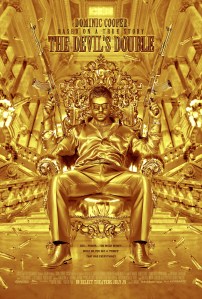
4) The Devil’s Double (dir. by Lee Tamahori)

Taking place in pre-Desert Storm Iraq, The Devil’s Double claims to tell the true story of Latif Yahia, an Iraqi who was forced to serve as the double for the sociopathic young dictator-in-training Uday Hussien.  I’ve read that there’s some debate as to how faithful The Devil’s Double is to the facts of the story and it is true that Latif is portrayed as being almost too good to be true but no matter.  The Devil’s Double is a compelling and oddly fascinating little gangster film, one that manages to show the dangerous appeal of the excessive lifestyle of a man like Uday Hussien without ever actually being seduced by it.   The film is dominated by Dominic Cooper, who gives a great performance playing both the tortured Latif and the cheerfully insane Uday. 

5) Sarah’s Key (dir by Gilles Paquet-Brenner)

Sarah’s Key tells two stories at once and, the result, is a film that feels very schizophrenic in quality.  The better part of the film deals with Sarah, a 10 year-old Jewish girl living in Nazi-occupied France.  When Sarah and her parents are sent to a concentration camp, her younger brother is left behind in Paris.  Sarah eventually manages to escape and desperately tries to get back to Paris to rescue her brother.  Meanwhile, in the modern-day, a journalist (Kristen Scott Thomas) researches Sarah’s story and discovers that her French husband’s family has a connection of their own with Sarah’s story.  The film is compelling and heart-breaking as long as it concentrates on Sarah but, unfortunately, the modern-day scenes feel forced and predictable and the end result is a film that’s never quite as good as it obviously could have been.

6) Water For Elephants (dir. by Francis Lawrence)

Look, I make no apologies — I freaking loved this movie.  Yes, plotwise, this film feels almost like a parody and yes, so much of this film was over-the-top and kinda silly but I don’t care.  I loved this film for the old-fashioned, melodramatic, and rather campy spectacle that it is.  Robert Pattinson plays a Depression-era Ivy League college student-turned-hobo who ends up joining the circus and falling in love with Reese Whitherspoon, the wife of insane circus owner, Christoph Waltz.  Pattinson isn’t much of an actor but he’s easy on the eyes and he and Whitherspoon have just enough chemistry to remain watchable.  The film, however, is totally dominated by Waltz who is both charming and scary.  The next time your man makes you sit through anything starring Jason Statham, you make him watch Water for Elephants.