From 1979’s Apocalypse Now, here is the haunting music that plays as Willard and the boat approach the infamous bridge that is built every day so that it can be destroyed every night. This musical piece was composed by Francis Ford Coppola’s father, Carmine.
In honor of Francis Ford Coppola’s birthday, today’s scene that I love comes from The Godfather.
In this scene, a self-pitying Johnny Fontane (Al Martino) discusses his career problems with Marlon Brando’s Vito Corleone. Johnny is losing his voice. Johnny is up for a role in a big movie but he worries that the producer will never allow him to appear in the film. Johnny says he doesn’t know what to do and he sheds a tear….
….and that’s not a smart thing to do when you’re talking to Don Corleone.
This scene contains some of the best moments of The Godfather. Al Martino was a professional singer with little acting experience. (While Johnny Fontane was a major character in Mario Puzo’s book, he only appeared in two scenes in the film version. Coppola later said that he thought the Johnny Fontane chapters were so poorly written that he would have turned down the film if he had to include too much of the character.) In order to get an effective performance out of Martino, Brando did not warn him that he would actually be slapping him. During one take, Brando got so aggressive that he knocked off Martino’s toupee and caused Robert Duvall to start laughing. It was all worth it, though. Martino was thoroughly convincing as Johnny Fontane and Marlon Brando won (but did not accept) his second Oscar for Best Actor. Coppola did not win Best Director for The Godfather (1972 was a competitive year) but he made up for it 1974 when he was honored for The Godfather Part II.
4 (or more) Shots From 4 (or more) Films is just what it says it is, 4 (or more) shots from 4 (or more) of our favorite films. As opposed to the reviews and recaps that we usually post, 4 (or more) Shots From 4 (or more) Films lets the visuals do the talking.
Today is Francis Ford Coppola’s birthday! Coppola is a bit of a controversial figure among some film scholars. While everyone agrees that, with the first two Godfathers, he directed two of the greatest films of all time (and some people would include Apocalypse Now on that list as well) and that he was one of the most important directors of the 70s, his post-Apocalypse Now career is often held up as a cautionary tale. Some say that Coppola’s career suffered because of his own excessive behavior and spending. Others argue that he was treated unfairly by a film industry that resented his refusal to compromise his vision and ambitions. Personally, my natural instinct is to always side with the artist over the executives and that’s certainly the case with Coppola. Coppola has only completed five films since the start of this current century and three of them were not widely released. Say what you will about the films themselves, that still doesn’t seem right. For the record, I liked Megalopolis when I saw it but I don’t remember much about it now.
Regardless of how one views his latter career, Coppola is responsible for some of the best and most important films ever made. And today, on his birthday, it’s time for….
4 Shots From 4 Francis Ford Coppola Films
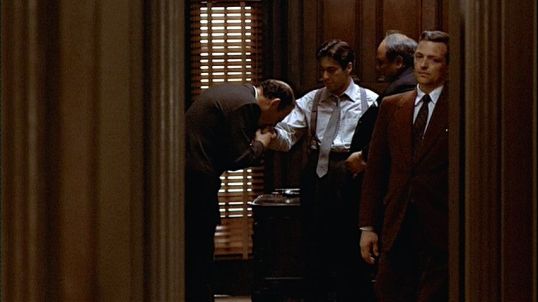
The Godfather (1972, dir by Francis Ford Coppola, DP: Gordon Willis)
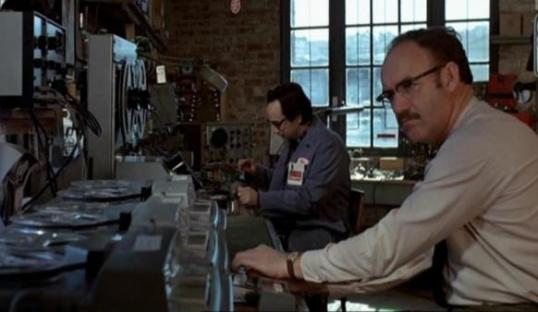
The Conversation (1974, dir by Francis Ford Coppola, DP: Bill Butler)
The Godfather Part II (1974, dir by Francis Ford Coppola, DP: Gordon Willis)
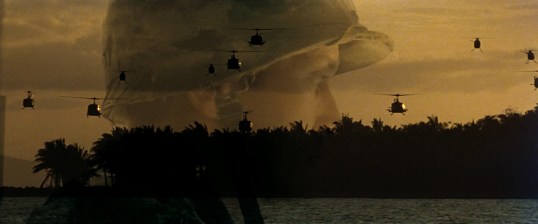
Apocalypse Now (1979, dir by Francis Ford Coppola, DP: Vittorio Storaro)
4 Or More Shots From 4 Or More Films is just what it says it is, 4 shots from 4 of our favorite films. As opposed to the reviews and recaps that we usually post, 4 Shots From 4 Films lets the visuals do the talking!
102 years ago, on this date, Marlon Brando was born in Omaha, Nebraska. One of the greatest of American actors and one of the main reasons why so many young actors became enamored with the Method, Marlon Brando played many roles in our culture. When he was young, he was a Broadway bad boy. When he went out to Hollywood, he became a legitimate movie star. In the 60s, he was a cautionary tale as his career suffered a series of notorious flops. In the 70s, he made a comeback and, in during the final years of his career, he was as known for his eccentricities as for his talent. It’s a shame that those eccentricities overshadowed Brando as an actor. When he wanted to be, he was one of the best to ever appear on stage or in the movies.
In honor of the wonderful, tragic, and talented Marlon Brando, it’s time for….
4 Shots From 4 Marlon Brando Films
A Streetcar Named Desire (1951, dir by Elia Kazan, DP: Harry Stradling)
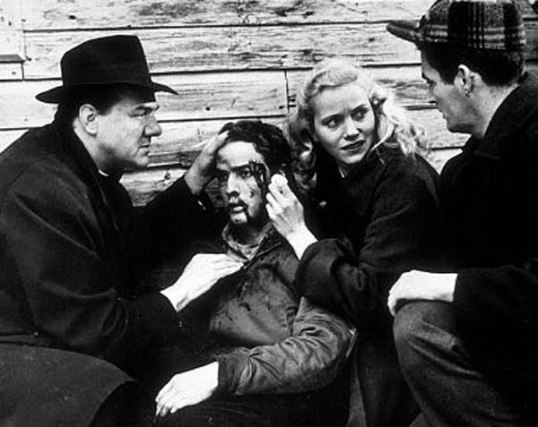
On The Waterfront (1954, dir by Elia Kazan, DP: Boris Kaufman)
The Godfather (1972, dir by Francis Ford Coppola, DP: Gordon Willis)
Apocalypse Now (1979, dir by Francis Ford Coppola, DP: Vittorio Storaro)
Lenny Montana started out as a boxer and a wrestler. He eventually ended up working as a bouncer and a bodyguard for the leadership of the Colombo Crime Family. However, Montana achieved his immortality as a result of veteran tough guy actor Timothy Carey turning down the role of Luca Brasi in The Godfather. Brasi was the Corleone Family’s most feared enforcer and Carey, who had made a career out of playing psychos, was one of the most feared men in Hollywood, one who was rumored to have pulled a gun on more than a few directors. (For the record, Stanley Kubrick loved him.) When Carey turned down the role in favor of doing a television series, Francis Ford Coppola offered the role to Lenny Montana. Montana may not have had Carey’s screen acting experience but he brought real-life authenticity to the role. When Michael says that Luca Brasi is a “very scary man,” one look at Lenny Montana confirms it. Unfailingly loyal to the family and willing to do anything for the Don, Luca Brasi represents the Family’s strength. When Luca Brasi is killed, you know that the old era of the Corleones is ending as well. Without Luca, the Corleones are in deep trouble.
My favorite Luca Brasi scene comes at the beginning of the film. Surprised to be invited to Connie’s wedding, Luca wants to thank the Don personally. Nervous about acting opposite Marlon Brando, Montana flubbed his lines. The scene, with the flub, was kept in the film and it served to humanize both Luca and Don Corleone. (The Don’s smile was due to the fact that Marlon Brando was having trouble not laughing.) It’s a nice little scene, one that reminds us that even gangsters are human.
4 Shots From 4 Films is just what it says it is, 4 shots from 4 of our favorite films. As opposed to the reviews and recaps that we usually post, 4 Shots From 4 Films lets the visuals do the talking!
Here are a few the classic films that we released in 1972.
4 Shots From 4 1972 Films
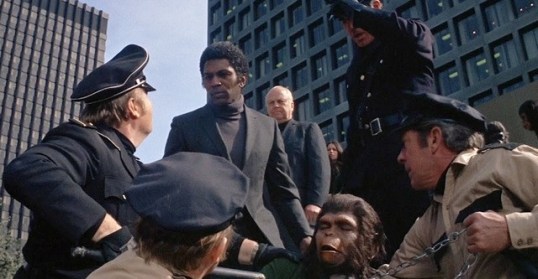
Conquest of the Planet of the Apes (1972, dir by J. Lee Thompson, DP: Bruce Surtees)
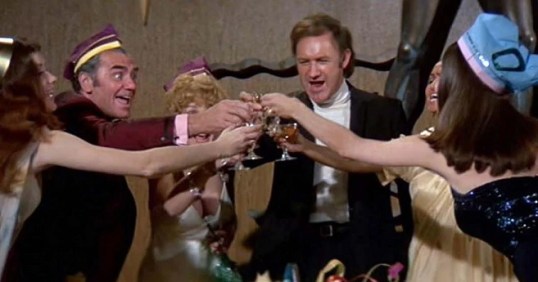
The Poseidon Adventure (1972, dir by Ronald Neame, DP: Harold E. Stine)
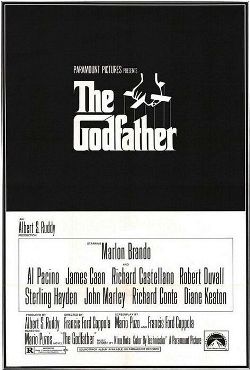
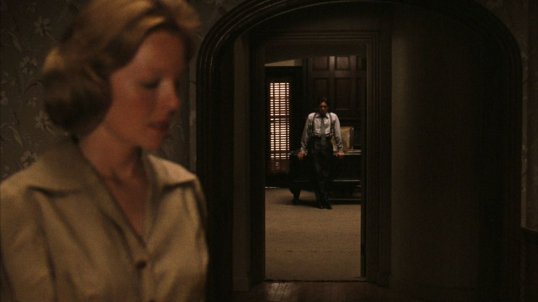
The Godfather (1972, dir by Francis Ford Coppola, DP: Gordon Willis)
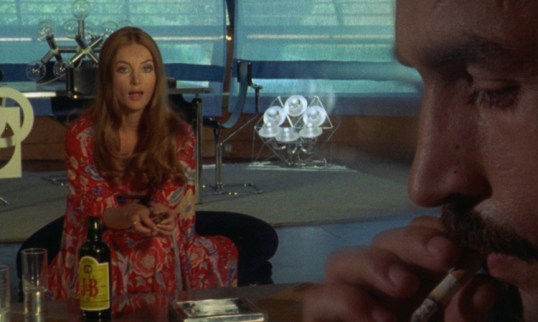
Don’t Torture A Duckling (1972, dir by Lucio Fulci, DP: Sergio D’Offizi)
4 Or More Shots From 4 Or More Films is just what it says it is, 4 shots from 4 of our favorite films. As opposed to the reviews and recaps that we usually post, 4 Shots From 4 Films lets the visuals do the talking!
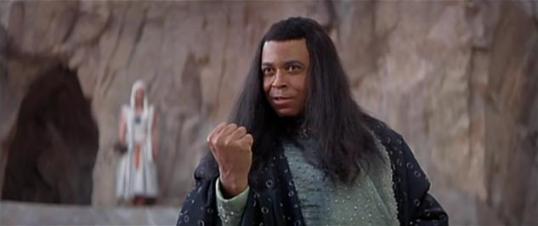
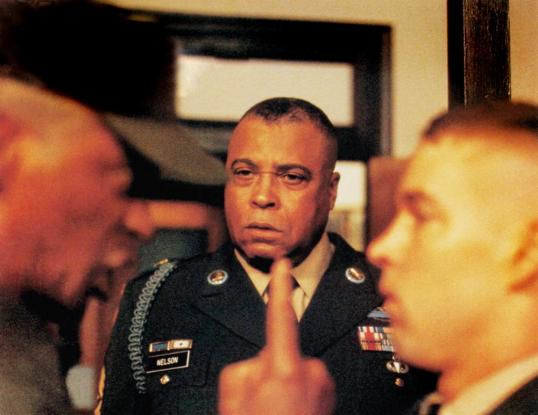
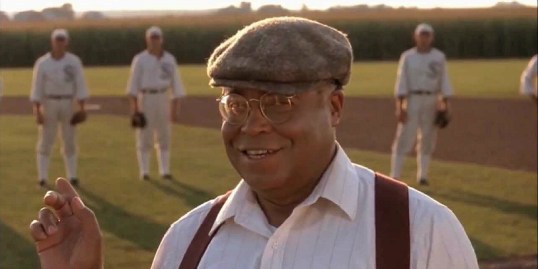
Today, we remembers the great James Earl Jones. It’s time for….
4 Shots From 4 James Earl Jones Films
Conan The Barbarian (1982, dir by John Milius, DP: Duke Callaghan)
Gardens of Stone (1987, dir by Francis Ford Coppola, DP: Jordan Cronenweth)
Field of Dreams (1989, dir by Phil Alden Robinson, DP: John Lindley)
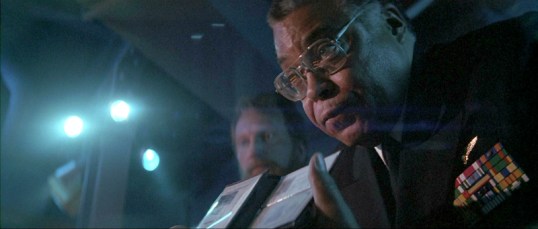
The Hunt for Red October (1990, directed by John McTiernan, DP: Jan de Bont)
1969’s The Rain People tells the story of Natalie Ravenna (Shirley Knight), a Long Island housewife who, one morning, sneaks out of her house, gets in her station wagon, and leaves. She later calls her husband Vinny from a pay phone and she tells him that she’s pregnant. Vinny is overjoyed. Natalie, however, says that she needs time on her own.
Natalie keeps driving. In West Virginia, she comes upon a young man named Jimmy Kligannon (James Caan). She picks him up looking for a one-night stand but she changes her mind when she discover that Jimmy is a former college football player who, due to an injury on the field, has been left with severe brain damage. The college paid Jimmy off with a thousand dollars. The job that Jimmy had waiting for him disappears. Jimmy’s ex-girlfriend (Laura Crews) cruelly says that she wants nothing more to do with him. Natalie finds herself traveling with the child-like Jimmy, always trying to find a safe place to leave him but never quite being able to bring herself to do so.
Jimmy is not the only man that Natalie meets as she drives across the country. Eventually, she is stopped by Gordon (Robert Duvall), a highway motorcycle cop who gives her a speeding ticket and then invites her back to the trailer that he shares with his young daughter. (Gordon’s house previously burned down.) Natalie follows Gordon back to his trailer, where the film’s final tragic act plays out.
The Rain People was the fourth film to be directed Francis Ford Coppola. Stung by the critical and commercial failure of the big-budget musical Finian’s Rainbow, Coppola made a much more personal and low-key film with The Rain People. While the critics appreciated The Rain People, audiences stayed away from the rather downbeat film. Legendary producer Robert Evans often claimed that, when Coppola was first mentioned as a director for The Godfather, he replied, “His last movie was The Rain People, which got rained one.” Whether that’s true or not, it is generally acknowledged that the commercial failure of The Rain People set back Coppola’s directing career. (Indeed, at the time that The Godfather went into production, Coppola was better-known as a screenwriter than a director.) Of course, it was also on The Rain People that Coppola first worked with James Caan and Robert Duvall. (Duvall, who was Caan’s roommate, was a last-second replacement for Rip Torn.) Both Caan and Duvall would appear in The Godfather, as Sonny Corleone and Tom Hagen respectively. Both would be Oscar-nominated for their performances. (It would be Caan’s only Oscar nomination, which is amazing when you consider how many good performances James Caan gave over the course of his career.)
As for The Rain People, it may have been “rained on” but it’s still an excellent film. Shirley Knight, Robert Duvall, and James Caan all give excellent performances and, despite a few arty flashbacks, Coppola’s direction gives them room to gradually reveal their characters to us. The film sympathizes with Knight’s search for identity without ever idealizing her journey. (She’s not always nice to Jimmy and Jimmy isn’t always easy to travel with.) As for Caan and Duvall, they both epitomize two different types of men. Caan is needy but innocent, a former jock transformed into a lost giant. As for Duvall, he makes Gordon into a character who, at first, charms us and that later terrifies us. Gordon could have been a one-dimensional villain but Duvall makes him into someone who, in his way, is just as lost as Natalie and Jimmy.
The Rain People is a good film. It’s also a very sad film. It made my cry but that’s okay. It earned the tears.
Well, the clock has now struck midnight on the West Coast and that officially means that it is 2026 in the United States! What better way to start things off than by sharing a scene that I love from one of the greatest and most important films of all time, 1974’s The Godfather Part II?
The scene below takes place on New Year’s Eve. The scene starts in 1958 and it ends in 1959. Michael Corleone (Al Pacino) and his brother Fredo (John Cazale) are in Havana at the invitation of Hyman Roth (Lee Strasberg). Roth know that Cuba could be a gold mine for the American mob but Michael, from the start, realizes that the country’s corrupt government is on the verge of collapse and that it’s about to be replaced by something even worse. (Admittedly, that’s my opinion. Director Francis Ford Coppola had a much higher opinion of Castro and the communists than I did.) Tragically, it’s also in Havana that Michael realizes that Fredo betrayed him to his enemies. On December 31st, 1958, as the new year is celebrated in Havana, the rebels ride into the city. While the President of Cuba prepares to announce that he will be fleeing the country, Michael confronts his brother and tells him that he knows the truth. Later, as they both attempt to flee the country, Michael and Fredo see each other on the streets. Fredo runs from Michael, refusing his offer to help. Though Fredo would eventually return to the family, the film’s ending revealed Fredo’s first instinct was the correct one.
Here’s a scene that I love, featuring great work from both Al Pacino and the brilliant John Cazale:
4 Shots From 4 Films is just what it says it is, 4 shots from 4 of our favorite films. As opposed to the reviews and recaps that we usually post, 4 Shots From 4 Films lets the visuals do the talking.
Happy holidays!
Let’s get December started with….
4 Shots From 4 Christmas Films
The Godfather (1972, dir by Francis Ford Coppola, DP: Gordon Willis)
Lethal Weapon (1987, dir by Richard Donner, DP: Stephen Goldblatt)
Die Hard (1988, dir by John McTiernan, DP: Jan de Bont)
Die Hard 2 (1990, dir by Renny Harlin, DP: Oliver Wood)