6 Trailers For October 2nd, 2022


With Horrorthon underway, it’s time for a special October edition of Lisa Marie’s Favorite Grindhouse Trailers!  Today, I bring you 6 spine-tingling trailers from the 30s and the 40s!  Say hello to old school horror at its best!

  1. Dracula (1931)

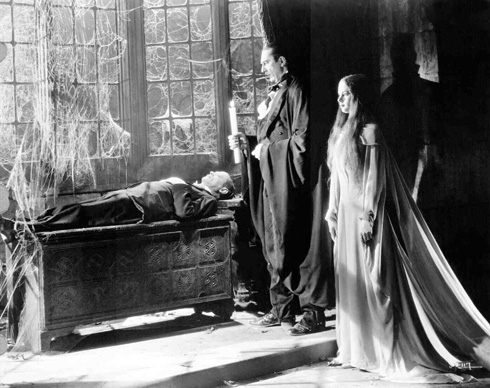
First off, here is the original trailer for the 1931 version of Dracula!  Yes, it’s a bit grainy and it’s a bit creaky and …. well, it’s old.  But listen, if I had been around in 1931 and I saw this trailer, I definitely would have been at the theater on opening day.  “Do vampires exist?” the trailer asks.  No, they do not but who knows?  Maybe the trailer would have made me question my beliefs for at least a day or two.

Apparently, the odd scene with Edward Van Sloan and the mirror was taken from an outtake.  The scene itself is not in the film and presumably, that mirror was not supposed to fall off the wall.  Also, it’s interesting to note that Dracula was not a Halloween film but instead, it was released just in time for Valentine’s Day!

2. Frankenstein (1931)

Of course, Universal followed Dracula from Frankenstein.  Again, this is one of the original trailers for the film and not a trailer that was put together and released in later years.  The trailer does, at one point, say, “It’s coming back!,” so I’m assuming that this version was sent to theaters where the film had played previously.  The trailer features a few scenes that were cut from the film and also a few alternate takes,

3. Bride of Frankenstein (1935)

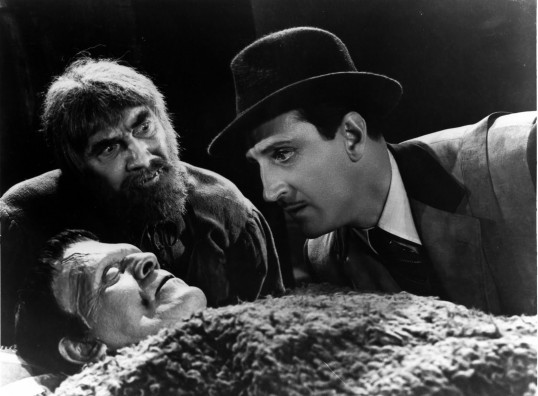
If you have a weak heart …. you better leave now!  The early Universal horror films are not necessarily thought of as being grindhouse films but this trailer is pure grindhouse.

4. The Wolf Man (1941)

In the 40s, Dracula and Frankenstein’s Monster were joined by a werewolf named Larry.  Here is the original trailer for The Wolf Man.

5. Cat People (1943)

In 1943, horror took a new, psychological turn with the original Cat People!

6. House of Frankenstein (1944)

Finally, in 1944, all of the great monster came together.  Before The Avengers, before the Justice League, before the Snyder cut, there was the House of Frankenstein! 

Next week …. more horror trailers!

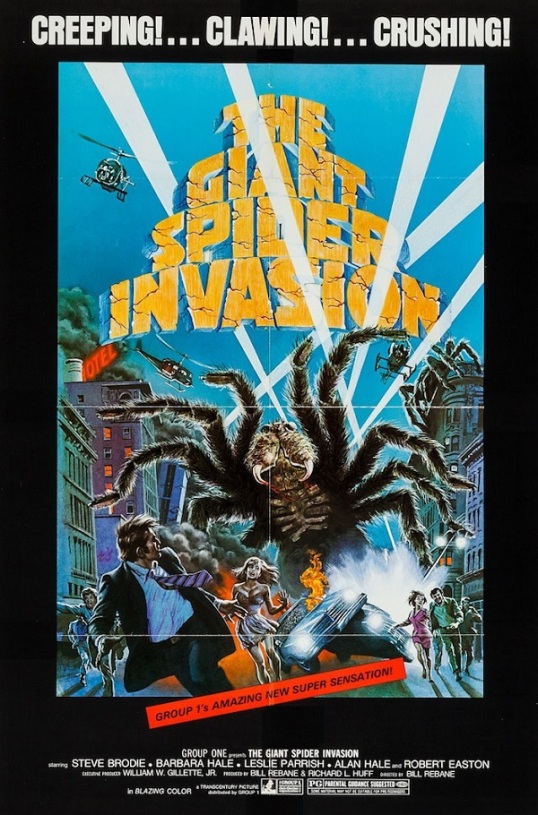
Horror on the Lens: The Giant Spider Invasion (by Bill Rebane)


For today’s Horror on the Lens we have the 1975 classic, The Giant Spider Invasion!

Directed by Wisconsin’s own Bill Rebane, The Giant Spider Invasion works specifically because it delivers exactly what the title promises.  The title says that you’re going to see giant spiders invading the Earth and that’s exactly what happens!  And, as someone who cannot stand spiders, I can only say, “AGCK!”

This is a fun movie.  Sadly, I don’t think it would be as entertaining if it were made today.  The budget would be too high.  The actors wouldn’t be in on the joke.  The whole production would be more concerned with creating the perfect CGI spider than just having fun with the concept.  For a film like this to work, you need someone who is willing to work with a low budget and you need someone willing to fully embrace the the idea of spiders invading the farmlands of Wisconsin and wrecking havoc, regardless of how silly it might seem.  You need a director like Mr. Bill Rebane.

Enjoy!

October Positivity: Second Glance (dir by Rich Christiano)


“Hey Scotty! Jesus, man!”

This 1992 film tells the story of Dan Burgess (played by David A. R. White, who, years later, would be the center of the God’s Not Dead franchise).  Dan is a high school student who fears that, because he spends all of his time going to church, he’s missing out on all the fun that he should be having.  Dan’s probably right.

Consider this:

The other kids are going to a big party.  Not Dan!

The other kids get to stay out as late as they want.  Not Dan!

The other kids don’t have to deal with two parents and a bratty sister.  Not Dan!

The other kids don’t have to keep their grades up.  Not Dan!

Dan can’t even get a girlfriend, because he’s just such a nice guy!  Of course, the girl from his youth group likes him but Dan wants to date Tamara (Denise Weatherly) and she only goes out with the type of guys who enjoy bullying Dan for being such a do-gooder.

One night, Dan prays that he wishes he had never become “a believer,” which would seem to defeat the purpose of not believing but anyway…. The next morning, Dan wakes up to discover that his bedroom is full of empty beer cans, the neighbors refuse to talk to him, and he now wears a backwards baseball cap.  As well, all of the high school bullies are now his best friends and he’s dating Tamara!  Plus, he’s been invited to Randy’s party!  Who is Randy?  Who cares?  It’s a party.

There’s also a weird guy named Muriel (Blaine Pickett) hanging out in Dan’s backyard.  Muriel explains that he is Dan’s guardian angel.  Everyone in Heaven was really upset by Dan’s prayer so they sent Muriel down to do a little bit of that It’s A Wonderful Life magic and show Dan what the world would be like if he wasn’t a believer.  Muriel also explains that only Dan can see and hear him.  That doesn’t stop Dan from arguing with Muriel and it also doesn’t stop people from seeing Dan apparently talking to himself.  But no one cares because Dan is now one of the popular kids.

In fact, Dan has everything that he ever wanted except …. well, his father seems to be missing.  And so is his little sister.  In fact, it turns out that he doesn’t even have a little sister because his parents got divorced when Dan was younger.  When Dan quite rightfully wonders how it could be his fault that his parents got a divorce, Muriel explains that it’s because non-believer Dan wasn’t praying for them when they were having trouble.  Ouch!  That’s harsh!  That’s also actually pretty messed up and a huge burden to put on the shoulders of those of us who grew up as children of divorce.  I know that when my parents got divorced, I kind of blamed myself and the message of this film is that apparently it was my fault.  Seriously, that’s a terrible message.  If you’re reading this and if your parents are divorced or are in the process of getting divorced, it’s not your fault!

Anyway, Dan learns an important lesson about faith and being impulsive in his prayers.  Soon, Dan is back to greeting his best friend by saying, “Hey, Scotty!  Jesus, man!”  Apparently, enough 90s kids were traumatized by this film that Dan’s greeting has become a minor meme.  That’s the power of film!

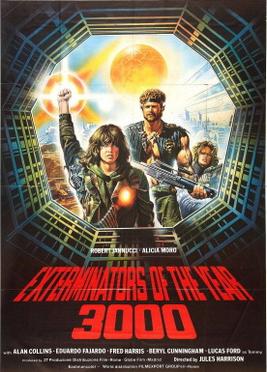
Insomnia File #56: Exterminators of the Year 3000 (dir by Giuliano Carmineo)


What’s an Insomnia File? You know how some times you just can’t get any sleep and, at about three in the morning, you’ll find yourself watching whatever you can find on cable or Netflix? This feature is all about those insomnia-inspired discoveries!

If you’re having trouble getting to sleep tonight, you might want to try going to over to YouTube and doing a search for a 1983 Italian film called Exterminators of the Year 3000.  It won’t cure your insomnia.  In fact, it’s such a peculiar film that it will probably keep you awake for the rest of the night.  However, you will be having fun.  Seriously, if you can’t sleep, you might as well have fun.

The film’s plot will be familiar to anyone who has seen The Road Warrior or Mad Max: Fury Road.  Due to a series of nuclear wars, society has collapsed.  The world is an arid wasteland.  Some survivors live in tiny communities.  Others drive motorcycles across the desert and prey on anyone that they can find.  Water is the most valuable commodity in this world.  The second most important thing to have is a good car.  Your car can be the difference between life and death.

Fortunately, Alien (Robert Iannucci) has a good car.  Unfortunately, Alien keeps losing it.  Alien is a wasteland drifter who spends half of the film looking for his car and the other half of the film helping a kid named Tommy (Luca Venantini) search for water for his community.  Tommy has a bionic arm.  When he’s captured by a group of evil bikers led by Crazy Bull (Fred Harris), his bionic arm gets ripped off.  In one of the strangest scenes that I’ve ever seen, Alien use duct tape to reattach the arm.  If that’s not odd enough, it also appears that he accidentally attached the arm upside down.

That’s just one of the many weird details that sets Exterminators of the Year 3000 apart from all of the other Italian Mad Max rip-offs.  There’s also the fact that Alien eventually and somewhat randomly runs into his ex-girlfriend, who looks like a model and, for some reason, is named Trash (Alicia Moro).  Alien and Trash agree to help Tommy but, the entire time, Alien keeps casually suggesting that maybe they should just abandon Tommy and take all the water for themselves.  This isn’t one of those things where Alien is just pretending to be a cynic, either.  The film leaves little doubt that Alien would have no problem just abandoning Tommy and taking the water for himself.  Even if Trash can convince Alien not to sell out the kid, they’re still going to have to fight a group of people who are all dressed like the Black Knight from Monty Python and the Holy Grail.  While Alien and Trash travel to get the water, Tommy gets a new arm that’s so strong that he can literally throw a piece of metal into someone’s forehead even while standing a few yards away.  Tommy also has a gerbil, which is not only cute but, in something of a rarity for an Italian exploitation film from the 80s, manages to survive the entire film.  (Seriously, I instinctively cringe whenever I see a cute animal in an Italian film from the 80s because I’ve seen enough of them to know what’s probably going to end up happening.)

Of course, Crazy Bull and his bikers continually show up and cause trouble.  Fred Harris gives such an enjoyably over-the-top performance that not even the usual bad dubbing can hurt it.  For whatever reason, Crazy Bull refers to his gang as the Mothergrabbers.  How can you not love a film that featured the main villain shouting, “Into battle, my merry band of Mothergrabbers!?”

Exterminators of the Year 3000 is a fun movie.  The action moves quickly.  There are lot of explosions.  The villains all snarl with panache.  There are plenty of slow motion shots of cars crashing.  And there’s enough odd moments to keep things interesting.  The film even ends with a sudden miracle.  How could anyone resist?  This is Italian exploitation as it most entertaining.

Previous Insomnia Files:

  1. Story of Mankind
  2. Stag
  3. Love Is A Gun
  4. Nina Takes A Lover
  5. Black Ice
  6. Frogs For Snakes
  7. Fair Game
  8. From The Hip
  9. Born Killers
  10. Eye For An Eye
  11. Summer Catch
  12. Beyond the Law
  13. Spring Broke
  14. Promise
  15. George Wallace
  16. Kill The Messenger
  17. The Suburbans
  18. Only The Strong
  19. Great Expectations
  20. Casual Sex?
  21. Truth
  22. Insomina
  23. Death Do Us Part
  24. A Star is Born
  25. The Winning Season
  26. Rabbit Run
  27. Remember My Name
  28. The Arrangement
  29. Day of the Animals
  30. Still of The Night
  31. Arsenal
  32. Smooth Talk
  33. The Comedian
  34. The Minus Man
  35. Donnie Brasco
  36. Punchline
  37. Evita
  38. Six: The Mark Unleashed
  39. Disclosure
  40. The Spanish Prisoner
  41. Elektra
  42. Revenge
  43. Legend
  44. Cat Run
  45. The Pyramid
  46. Enter the Ninja
  47. Downhill
  48. Malice
  49. Mystery Date
  50. Zola
  51. Ira & Abby
  52. The Next Karate Kid
  53. A Nightmare on Drug Street
  54. Jud
  55. FTA

Bela Lugosi As Henry Frankenstein?


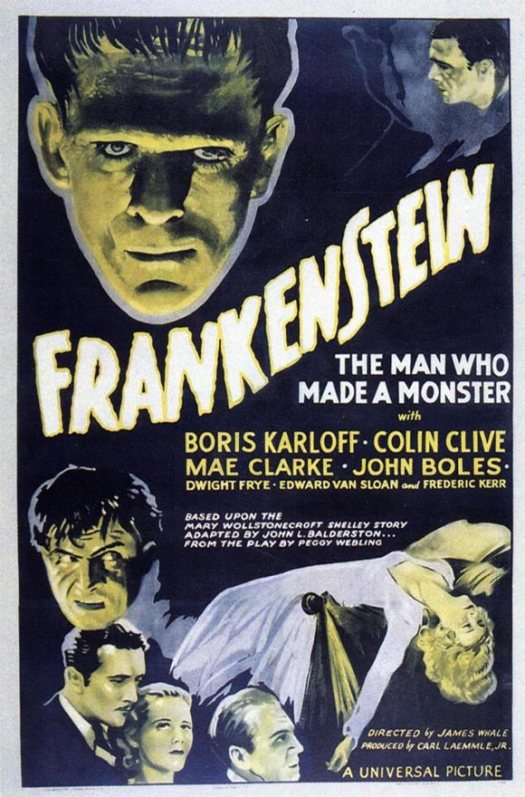
When it comes to the 1931 film version of Frankenstein, the piece of trivia that everyone seems to know is that Bela Lugosi was the original choice to play the Monster.

As the story goes, Lugosi had just finished filming Dracula and Universal’s Carl Laemmle felt that it would only make sense for Lugosi to play the lead role in Universal’s second horror adaptation.  Not only would Lugosi be firmly established as Universal’s favorite monster but it would also reunite him with Edward van Sloan and Dwight Frye, both of whom played prominent supporting roles in Dracula.  However, the story continues, Lugosi turned down the part when he saw that the monster wouldn’t have any dialogue.

Well, the story is partially right.

The truth of the matter is that Frankenstein was one of several books to which Universal had the rights.  And when Lugosi learned that one of the studio’s directors, Robert Florey, was interested in directing a film based on Mary Shelley’s novel, he did meet with Florey to say that he was intrigued by the idea of playing the monster.  Lugosi even did a makeup test, one in which the proposed look of Lugosi’s monster reportedly owed much to 1920’s The Golem.  As a director, Florey was heavily influenced by German expressionism so it makes sense that he would look to The Golem for inspiration.
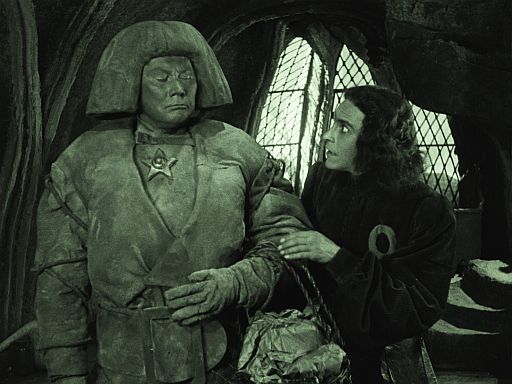
The Golem (1920, dir by Paul Wegner and Carl Boese)

Lugosi eventually lost interest in the role, not because of the lack of dialogue but because he felt that he wouldn’t be able to give a good performance while made up to look like the Monster.  His face would be barely visible and, as an actor, Lugosi naturally wanted to be recognized.  Lugosi had no objections to the script because the script itself hadn’t been written.  When Lugosi lost interest, so did Florey.

Instead, the project was taken on by director James Whale, who specifically asked for the project because he felt it would be a change-of-pace from the war movies that he had been directing.  Universal suggested John Carradine for the role of the Monster.  Whale, however, spotted Boris Karloff sitting in the studio’s cafeteria and specifically asked him to test for the role.  Karloff, with his imposing frame but gentle manner, more aligned with Whale’s version of the Monster as essentially being a child who is easily angered but ultimately more of a victim than a victimizer.

From the start, Whale also wanted Colin Clive to play Henry Frankenstein and Mae Clarke to play Elizabeth.  The studio, who wanted at least one star in the film, tried to convince him to go with Leslie Howard as Henry and Bette Davis (who, at that time, was just starting her career) as Elizabeth.  While the studio was willing to substitute the more glamorous Clarke for Davis, they were a bit less enthusiastic about Colin Clive as Henry.  If Whale was that opposed to Leslie Howard, the studio suggested, how about Bela Lugosi instead?

As we all know, Whale held firm and he eventually got Colin Clive.  Still, it’s interesting to imagine Frankenstein with Bela Lugosi, in the role of Henry, bringing Karloff’s Monster to life.  Personally, I think Whale made the right decision.  Lugosi would have been a bit too obviously sinister for the role of Henry Frankenstein whereas Colin Clive really nailed the characterization of Henry being an essentially good man who allowed his own obsessions to get the better of him.  Still, it’s interesting to imagine a Frankenstein that not only reunited the stars of Dracula but which included Boris Karloff as well!  Not only would it have been Lugosi and Karloff’s first film together but who knows?  Perhaps if a Lugosi-Karloff version of Frankenstein had been as successful as the Clive-Karloff version, Lugosi and Karloff would never have started their rivalry and Lugosi could have escaped the Dracula typecasting that hampered the rest of his career.

Though they didn’t share the screen in Frankenstein, Karloff and Lugosi would go on to appear in several films together.  Unfortunately, unlike the universally beloved Karloff, Lugosi’s career would be sabotaged by his own addictions and personal demons.  Lugosi would eventually get his chance to play Frankenstein’s Monster in 1943’s Frankenstein Meets The Wolf Man.  Unfortunately, that film is considered to be one of the weaker of the Universal horror films and Bela really didn’t get much of a chance to make a huge impression as the monster.  (He was right about the difficulty of being recognized under all that makeup.)

Bela Lugosi would die in 1956, at the age of 73.

Boris Karloff passed away 13 years later, at the age of 81.
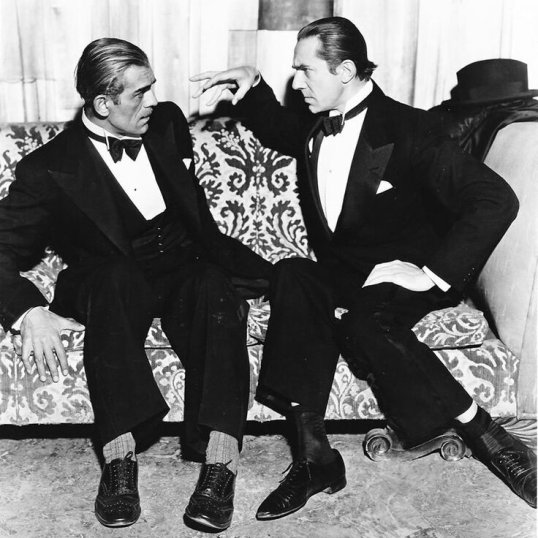
Boris and Bela

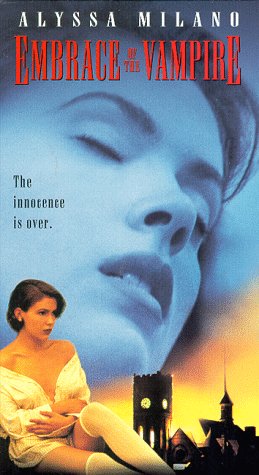
The TSL’s Horror Grindhouse: Embrace of the Vampire (dir by Anne Goursaud)


In this incredibly silly film from 1995, Martin Kemp plays The Vampire.  He doesn’t get a name but he does get a backstory.  Back when he was mortal, the Vampire pursued a secret and forbidden affair with a princess.  One day, after making love, the man who would became the Vampire was laying down next to a stream when he was approached by three naked women who proceeded to bite his neck and vampirize him.

Centuries later, the Vampire is sickly and approaching the end of his existence.  He only has three days to convince the reincarnation of his former lover to allow him to drink her blood so that he can continue to exist.  And apparently it won’t work unless she’s a virgin and unless she rejects all others and loves only him.  That sounds like a lot of rules to me and, to be honest, most of them seem to be kind of arbitrary.  Not only does The Vampire have to find the reincarnation of the Princess but he has to find her before she loses her virginity or otherwise, what?  She’ll cease to be the reincarnation?  Her love will somehow be devalued?  Her blood will no longer be worth drinking?  If this vampire has had to spend centuries only drinking blood from virgins who were in love with him, no wonder he looks so sickly.  I really think that maybe the other vampires were playing a practical joke when they explained the rules to him.  Hazing the new guy, it has consequences!

Anyway, the princess has been reincarnated as Charlotte (a young Alyssa Milano).  Fortunately, for the Vampire, Charlotte was raised in a convent and, even though she is now a college student, she’s still a virgin who blushes when she even hears the word sex.  Unfortunately, Charlotte has a boyfriend named Chris (Harrison Pruett) and she’s thinking about losing her virginity if she can convince herself that she loves Chris more than any other person that she will ever possibly meet.  So, the Vampire not only has to convince Charlotte to fall in love with him but he also has to make sure that she doesn’t have sex beforehand.  It’s going to be difficult because everyone on campus is determined to get Charlotte laid.  This has all the makings of Italian sex comedy but Embrace of the Vampire instead takes its plot very seriously.

The Vampire starts to appear in Charlotte’s dreams.  He gives her an ankh to replace the cross that Chris gave her.  Because the Ankh is a symbol of desire, just wearing it makes Charlotte more sexually aggressive and soon, she’s wearing short skirts, low-cut tops, and white stockings.  She’s also making out with Sarah (Charlotte Lewis), the photographer who lives in the dorm room next to hers.  (As played by Charlotte Lewis, Sarah is actually an interesting character and it’s a shame that the film pretty much just uses her for titillation.)  But since the Vampire’s whole thing is keeping Charlotte from losing her virginity, why would he give her something that would make her more open to sexual experiences?  Again, it’s hard not to think that the Vampire is just the victim of an elaborate practical joke.

As I said at the start of the review, Embrace of the Vampire is incredibly silly.  It’s also a film that seems to be a bit popular with viewers of a certain age.  I’m assuming that’s because of the frequent Alyssa Milano nudity and that one scene with Charlotte Lewis.  For the most part, Alyssa Milano gives a bland performance in Embrace of the Vampire.  It’s not so much that she’s bad as everything about her performance is on the surface.  One gets the feeling that there’s really not much going on with Charlotte’s inner life, both before and after she starts dreaming about The Vampire.  As The Vampire, Martin Kemp appears to be absolutely miserable.  He comes across as if he’d rather be anywhere than appearing in this movie.

That said, the film’s director got her start working with Francis Ford Coppola and she has a good eye for gothic scenery and atmosphere.  A scene where Charlotte imagines a frat party turning into a Hellish orgy is effectively done.  Jennifer Tilly has a small role as a vampire and she has said that Quentin Tarantino approached her at the Oscars to tell her that he enjoyed the movie.  It’s a silly movie (yes, third time I’ve used that specific term and that should tell you just how silly it is) but, for better or worse, it epitomizes an era.

Horror Scenes That I Love: Edward Van Sloan Introduces Frankenstein


For our first Scene that I love for this year’s Horrorthon, I’m sharing the opening of the 1931 classic, Frankenstein.  The scene below features neither Colin Clive or Boris Karloff.  Instead, Edward Van Sloan breaks the fourth wall and, in his humorously avuncular way, lets the audience know what’s in store for them.

Today, of course, we all know the story of Frankenstein and his monster.  However, imagine how audiences in 1931, many of whom probably knew nothing about the story they were about to watch, must have felt when Edward Van Sloan specifically took a minute to warn them that they were about to see something terrifying.  You have to remember that Van Sloan was talking to the first generation of regular filmgoers and he was introducing them to one of the first true horror films of the sound era.  Today, it’s easy to smile when Van Sloan says, “You can’t say we didn’t warn you.”  In 1931, I imagine it probably sounded more like a dare.  Van Sloan was asking, “Do you have the courage to stay in theater?”  It’s kind of charming, isn’t it?

Edward Van Sloan was a bit of fixture when it came to the early Universal horror films.  Not only did he play Henry Frankenstein’s mentor but, in the same year, he played Prof. Van Helsing in Dracula.  He also had a key supporting role in The Mummy.  When it came to explaining the supernatural and the undead, no one else did it with quite the class of Edward Van Sloan.

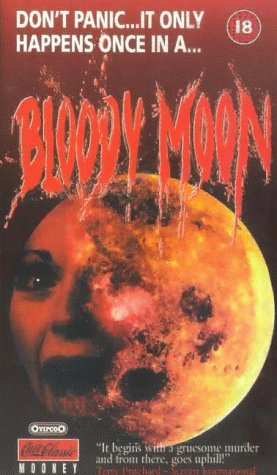
International Horror Film Review: Bloody Moon (dir by Jesus Franco)


A 1981 West German/Spanish co-production, Bloody Moon open with a disfigured man named Miguel (Alexander Waechter) putting on a Mickey Mouse mask and sneaking into a party being held on the campus of a private school that is known as (deep breath) Europe’s International Youth-Club Boarding School of Languages.  It’s a school that is meant for the young, the rich, and the unburdened.  In short, it’s not a place for Miguel at all.

With his face safely hidden behind the smiling image of Disney’s favorite mouse, Miguel meets a young woman who is dancing by herself.  She mistakes him for her boyfriend and heads into a nearby bungalow with him.  They start to make love but — uh oh! — the mask falls off!  The woman screams at the sight of Miguel’s scarred face.  Miguel grabs a pair of scissors and stabs her to death while Mickey Mouse’s smiling face smiles on the floor.  (One can only imagine how Disney reacted to this film.)

A few years later, Miguel is being released from a mental hospital.  He’s released into the custody of his sister, Manuela (Nadja Gerganoff).  Miguel’s doctor (played by the film’s director, Jesus “Jess” Franco) says that Miguel should be fine as long as he’s not around anything that reminds him of the incident.  Manuela says that she’ll look after him and then promptly takes him back to the school where he committed the murder.  What part of not reminding him did she fail to understand?

Manuela does actually have an excuse for bringing Miguel to the school with her, though.  She and her aunt, Countess Maria (Maria Rubio), own the school.  Countess Maria is an angry, wheelchair-bound woman who is convinced that Manuela wants to kill her so that she can take over the school and it does seem that Manuela does have some hostility towards her aunt.  Of course, another reason for bringing Miguel back to the school to live with her is that he and Manuela have an incestuous relationship …. or, at least, they did.  Now that Manuela refuses to sleep him, Miguel is reduced to lurking around campus and staring at all the students while they sunbathe topless at the pool.  While Manuela stands naked in her room and stares at the moon (the bloody moon?), Miguel is hunched down in the shrubbery and peeping through windows.

Among the students is Angela (Olivia Pascal).  Angela is upset because she discovered a dead body but no one’s willing to believe her because she also enjoys reading mystery novels.  Angela knows that someone is committing murders on campus but is it Miguel or it is Professor Alvaro (Christoph Moosbrugger) or could it even be the enigmatic Bueno (Otto Retzer), a bald guy who seems to randomly pop up around campus?  Can Angela convince her remarkably stupid classmates that there’s a murderer on campus before it’s too late?

Bloody Moon was one of the many films directed by the Spanish auteur and former Orson Welles collaborator, Jesus Franco.  In a career that lasted over 60 years, Franco directed at least 173 feature films.  (It’s felt that he actually directed quite a bit more, usually under a pseudonym.  Franco, himself, claimed that he didn’t really remember how many films he had directed.)  As a director, Franco is remembered for his low budgets, his unapologetic embrace of the sordid, his rather casual attitude towards maintaining continuity from one scene to another, and for occasionally framing an interesting shot or two.  By his own admission, Bloody Moon was not a personal project for Franco.  It’s something that he did for the money, as a director-for-hire.  However, Bloody Moon is unmistakably a Franco film.  The budget is low.  The subject matter is often so sordid that it borders on parody.  As far as continuity goes, Angela goes from wearing a nightshirt when she discovers a dead body inside her bungalow to wearing a colorful sweater when she runs outside in a panic.  (I guess she could have stopped to change clothes with a dead body on the bed and a killer lurking somewhere in the bungalow but I doubt it.  When there’s a dead body on your bed, modesty should be the least of your concerns.)  And yet, as silly as it all is, there are moments when Bloody Moon does achieve a certain dream-like intensity.  The mix of badly dubbed performers, sudden jump cuts, bloody violence, and the total lack of narrative logic makes Bloody Moon feel a bit like a filmed nightmare.  It works despite itself.

Bloody Moon is one of the films that was, for a while, banned in the UK due to its violence and bloodshed.  And indeed, there is a lot of blood and the violence is a bit more graphic than what one might expect to find in the American slasher films that Bloody Moon was obviously meant to capitalize upon.  This film is notable for just how cruel the killer is.  Not even Michael Myers or Jason Voorhees resorted to using a giant radial saw.  That said, this is one of those films that has a reputation for being bloodier than it actually is.  The majority of the film is taken up with scenes of people wandering around campus, either searching for their friends or stalking a potential victim.  Personally, I felt the nonstop searching scenes added to the film’s dreamlike feel but I imagine those who only watch films like this for the kills will find it all to be a bit slow.

Bloody Moon was clearly made to capitalize on the success of American slasher films like Halloween and Friday the 13th.  That said, Bloody Moon has more in common with the Italian giallo genre, right down to the whodunit nature of the plot, the ludicrously sleazy motives of the killer, and the total lack of intentional comic relief.  Like so many giallo films, Bloody Moon takes place in a world where everyone’s either a victim or a killer and no one’s particularly likable.  It’s not one of Franco’s personal films but there’s still enough of his signature style to appeal to his fans.  As with most of Franco’s film, it will be best appreciated by those who like a little ennui mixed with their horror.

8 Shots From 8 Horror Films: The 1930s


4 Or More Shots From 4 Or More Films is just what it says it is, 4 shots from 4 of our favorite films. As opposed to the reviews and recaps that we usually post, 4 Shots From 4 Films lets the visuals do the talking!

This October, I’m going to be doing something a little bit different with my contribution to 4 (or more) Shots From 4 (or more) Films.  I’m going to be taking a little chronological tour of the history of horror cinema, moving from decade to decade.

Today, we take a look at the 1930s.

8 Shots From 8 Horror Films

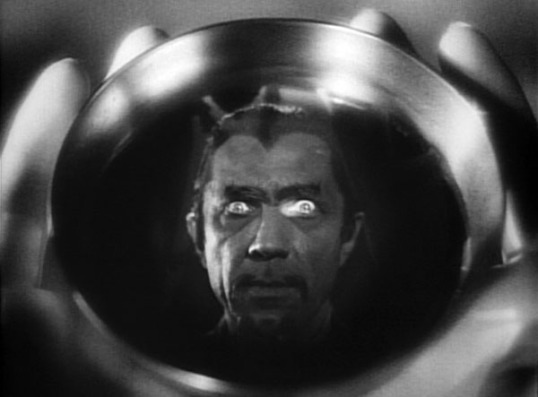
Dracula (1931, starring Bela Lugosi as the Count, Dir by Tod Browning, DP: Karl Freund)

Frankenstein (1931, dir by James Whale, DP: Arthur Edeson)

White Zombie (1932, directed by Vincent Halperin, DP: Arthur Martinelli)

The Mummy (1932, directed by Karl Freund, DP: Charles Stumar)

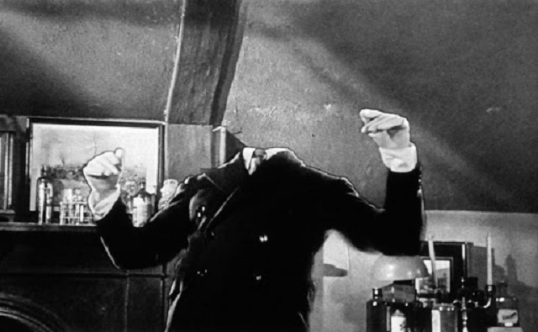
The Invisible Man (1933, dir by James Whale, DP: Arthur Edeson)

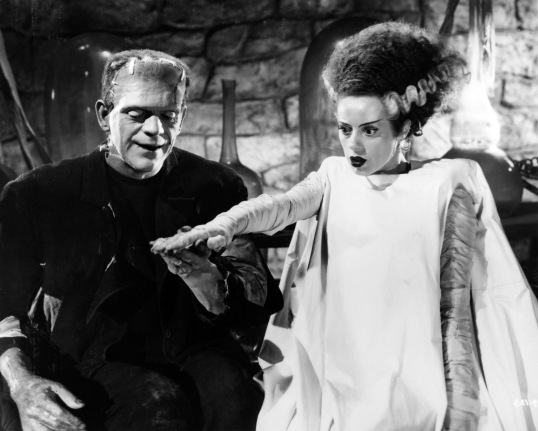
Bride of Frankenstein (1935, dir James Whale, DP: John J. Mescall)

Mark of the Vampire (1935, dir by Tod Browning, DP: James Wong Howe)

Son of Frankenstein (1939, directed by Rowland V. Lee, DP: George Robinson)

Horror Film Review: Await Further Instructions (dir by Johnny Kevorkian)


The 2018 film, Await Further Instructions, takes place in the United Kingdom during the Christmas season.  However, it tells a story that could take place anywhere and at any time.  That’s even more obvious today than when the film was first released.

A dysfunctional family has gathered for the holidays.  Nick (Sam Gittins) brings his girlfriend, Annji (Neerja Naik).  Nick’s sister, Kate (Holly Weston), is both pregnant and a racist.  She brings her husband, Scott (Kris Saddler).  Tony (Grant Masters) and Beth (Abigail Cruttendon) are the parents, trying to keep some sort of order as dinner is served.  Finally, Granddad (David Bradley) dislikes everyone as grandfathers are allowed to do.  Once someone reaches a certain age, bad behavior is casually dismissed as someone just having a bad day.

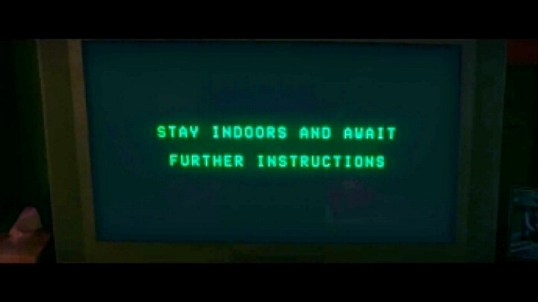
The family dinner is interrupted by reports of some sort of ill-defined disaster.  A dark substance appears to have surrounded the house, trapping them inside.  Bizarre messages start to appear on the television, telling the family to obey orders and to await further instructions.  Some members of the family dare to unplug the television, just for Tony quickly plug it back in.  Hypodermic needles are dropped through the chimney, along with a message that one of them is infected and that they have to take the vaccine if they’re going to survive.  Even after taking the shot leads to one member of the family vomiting to death, Tony continues to insist that everyone has to follow the instructions coming from the television.  The television accuses one of them being a sleeper agent.  The television demands a sacrifice.  The television warns of terrible consequences if its instructions are not followed.  Those who try to resist find themselves being attacked by the other members of the family.  “Worship me,” the television suggests at one point and much of the family is willing to do just that.

Await Further Instructions was made in 2018 but it’s a film that feels as if it was specifically made for the COVID era.  (I write this as someone who is voluntarily vaccinated and who is still more than happy to put on a mask if someone politely requests that I do so.)  While a good deal of the film’s horror does come from grotesque imagery and Cronenberg-style body horror, the reason why the film sticks with the viewer is because it perfectly captures the paranoid atmosphere that everyone has had to deal with over the past two years.  (Indeed, if this film had been made today, critics would probably say that the film was a bit too on the nose in its portrayal of people putting blind faith in instructions coming from unseen forces.)  Tony goes from being a slightly addled father to being a monster, precisely because that’s what he’s ordered to do and he doesn’t have the courage or the imagination to question why.  This is the story of a family that’s destroyed because they put more faith in authority than in their own common sense.  It’s a story about family that turns on itself because it’s ordered to do so.  It’s a story that feels very relevant today.  One need only read one of the thousands of self-pitying social media updates from people talking about how they’ve shut their families out of their lives to realize that many people, if they were in the same situation, would probably behave the same way that Tony behaves in this film.

By confining the action to one location, the film creates a visceral atmosphere of claustrophobia.  Even if the family could escape from the house, the viewer has to wonder if there’s anywhere left to go.  The film declines to make clear if the same horror is happening to the rest of the world or if it’s just concentrated on that one house.  Is everyone being told to await further instructions or is just that one family?  Await Further Instructions not only captures the horrors of blind conformity and overwhelming paranoia but also the horror of isolation and again, it’s hard not to feel that this 2018 film predicted the future.  For all the horrors of the COVID era, the isolation was the most psychologically damaging.  Families were destroyed.  Friendships were broken.  Faith in institutions was lost.  All while people were ordered to shut up and await further instructions.

Even more now than when it was first released, Await Further Instructions is a powerful and visceral horror film.