International Film Review: Revenge in the House of Usher (dir by Jess Franco)


In the 1982 Spanish horror film, Revenge in the House of Usher, Antonio Mayans plays Dr. Alan Harker.  Harker receives an invitation to visit the estate of his former mentor, Prof. Eric Usher (Howard Vernon).  Usher is elderly and in poor health.  He’s attended to by several mysterious servants, including his physician, Dr. Seward (Daniel White).  While trying to figure out what has led to Prof. Usher’s current state, Harker discovers that….

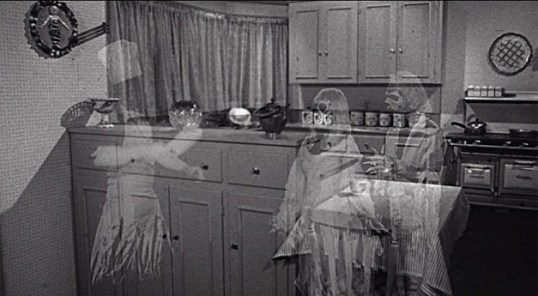
Well, here’s where it gets confusing, as things tend to do whenever one tries to discuss the later films of director Jess Franco.  There are actually three different versions of Revenge In the House of Usher and each one of them tells a totally different story.  In the first version, Usher is revealed to have been a decadent, Giles de Rais-style serial killer who has murdered hundreds of women through the years and who is now being haunted by their vengeful ghosts.  Apparently, that version didn’t go over well when it made its debut at the 1983 Festival Internacional de Madrid de Cine Imaginario y de Ciencia-ficción.  The audience booed and laughed and Franco couldn’t convince any distributors to purchase the film from him.

So, Franco filmed thee more scenes that established that Usher wasn’t just a serial killer but that he was also a vampire!  (This explains why two characters in this Edgar Allan Poe adaptation were suddenly given names from Dracula.)  This reception of this version was not considered to be much of an improvement on the reception of the version where Vernon was just a serial killer.

With the backing of Eurocine, Franco then put together a third version of the film.  This time, he turned it into another Dr. Orlof film, though Howard Vernon’s character was still referred to as being Prof. Usher.  In this version, Harker discovers that Usher and his elderly servant Morpho (Olivier Mathot) have spent years abducting women from the village and using their blood to keep Usher’s daughter alive.  This leads to a solid 15 minutes of flashbacks to Usher’s past activities, all of which are taken directly from The Awful Dr. Orlof.  Just as in the other two version of the film, Usher is haunted by the ghosts of his victims.  As his mental state deteriorates, so does his castle.

As far as I know, the third version of the film is the only one that currently exists.  The first version is now considered to be lost.  For his part, Franco claimed that the first version was a misunderstood masterpiece but he was still willing to turn it into another Orlof film so that he could at least make some money off of it.  Franco may have been an often frustrated artist but he was also a pragmatist.

Considering its production history, it’s not surprising that Revenge in the House of the Usher is a bit of a disjointed film.  It’s only 91 minutes long (and 15 of those minutes is taken up with black-and-white footage from The Awful Dr. Orlof) but this film still feels like it has several false endings.  There were so many times that I thought the film had to be over, just for it to keep going.  Watching the film, one can sense that Franco is willing to try almost anything to finally wrap the film’s somewhat incoherent story up.  That said, Howard Vernon brings the right amount of haughty decadence to the role of the decaying Usher and Franco’s decision to film in an actual castle (and to largely utilize natural light) does give the film perhaps a bit more atmosphere than one would expect.  This is a lesser Franco film but it does do a good job of capturing the bizarre logic of dreams.  The film is, at times, so incoherent that it’s actually rather fascinating.

Following this film, Vernon would play Dr. Orloff one final time, in Franco’s surprisingly entertaining Faceless.

6 Shots From 6 Horror Films: 1978


4 Or More Shots From 4 Or More Films is just what it says it is, 4 shots from 4 of our favorite films. As opposed to the reviews and recaps that we usually post, 4 Shots From 4 Films lets the visuals do the talking!

This October, I’m going to be doing something a little bit different with my contribution to 4 (or more) Shots From 4 (or more) Films.  I’m going to be taking a little chronological tour of the history of horror cinema, moving from decade to decade.

Today, we take a look at a very important year: 1978.

6 Shots from 6 Horror Films: 1978

Halloween (1978, dir by John Carpenter, DP: Dean Cudney)

Dawn of the Dead (1978, dir by George Romero, DP: Michael Gornick)

Piranha (1978, dir by Joe Dante, DP: Jamie Anderson)

Martin (1978, dir by George Romero, DP: Michael Gornick)

Blue Sunshine (1978, dir by Jeff Lieberman, DP: Don Knight)

The Grapes of Death (1978, dir by Jean Rollin)

Horror Film Review: Cabin Fever (dir by Eli Roth)


When this Boy Meets World
Boy Meets World
Wandering down this road, that we call life
Is what we’re doin’
It’s good to know I have friends that will always
Stand by me
When this Boy Meets World

I imagine that I should probably apologize to Rider Strong for starting this review by quoting the theme song from the final few seasons of Boy Meets World.  I’m sure that when Strong agreed to star in the original Cabin Fever, he was hoping that the playing Paul would take him far away from his best-known role of Shawn Hunter.  But I have to admit that whenever I think of Cabin Fever (which, admittedly, is not often) I always think of it as being Boy Meets Flesh Eating Virus.

Cabin Fever tells the story of a group of stupid college students, including Rider Strong, who decide to spend Spring Break at a remote cabin in the woods.  They’ve got weed, beer, and plans for a wild, sex-fueled weekend.  Unfortunately, the majority of them also end up with a flesh-eating virus.  It turns out the virus has been infecting people and animals all around the cabin.  People are going crazy as their flesh decays and peels off of their bones.  It’s a messy virus.  With the police struggling to contain the spread, a group of locals have decided that it’s up to them to kill off anyone who is infected.

One member of the group grabs the beer and runs off so that he can spend the weekend drunk and in isolation,  The other members of the group are stranded in the cabin and the surrounding woods.  Bodies are falling apart and dogs are eating their owners.  It’s Boy Meets Pandemic.

This was Eli Roth’s directorial debut and he didn’t hold back on the gore.  While we really don’t know much about the college students in the cabin (beyond the fact that they’re all dumbasses and one of them is played by Rider Strong), we learn everything that you could possibly want to know about what that flesh-eating virus does to its victims.  The film might as well be called “Nom nom nom,” because it’s all about eating flesh.  Roth is also shameless about paying homage (or ripping off, depending on how much you like Roth) to the horror films that influenced him.  Night of the Living Dead comes to mind, especially the ending.

(Personally, I like the fact that, with his first film, Eli Roth declared himself to be a lover of horror.  Cabin Fever was released in 2002, long before the current mainstream horror boom.  Eli Roth was openly celebrating horror at a time when many critics were still writing it off.)

Cabin Fever is a hit-or-miss affair, with the emphasis on miss.  The virus is scary because it’s so nasty but the characters themselves are so boring that most viewers won’t care when they get infected.  I did like Giuseppe Andrews’s performance as a weird deputy but otherwise, no one is the cast makes much of an impression until after they’ve lost their skin.  They’re walking down this road that we call life …. and now they’re dead.

Viewed today, of course, it’s hard not to compare the flesh-eating virus to COVID or Monkeypox or whatever the latest disease is.  If Cabin Fever were made today, the gun-toting locals would have been the heroes and the college students would have been the villains for daring to try to leave the cabin.  Yesterday’s villains and today’s heroes and vice versa.  For many, walking down this road that we call life has never felt more uncertain, even without a flesh-eating virus to worry about.

Horror on the Lens: Night of the Ghouls (dir by Edward D. Wood, Jr.)


GhoulsdvdToday’s movie is Ed Wood’s sequel to Bride of the Monsters.  In Night of the Ghouls, con man Dr. Alcula (Kenne Duncan) moves into Bela Lugosi’s old mansion and pretends to talk to the dead.  What Alcula doesn’t realize is that the house is actually haunted (by Tor Johnson’s Lobo, among others) and real ghosts don’t appreciate pretend ghosts.

What can you say about a film like of Night of the Ghouls?  It’s an Ed Wood film, with all that suggests.  However, how can you resist a film that starts with Criswell sitting up in his coffin and providing commentary?

The role of Dr. Alcula was originally written for Bela Lugosi.  After Lugosi’s death, veteran actor and longtime Wood friend Kenne Duncan got the role instead.  Also of note, Wood appears twice in this film.  Not only does his picture appear on a wanted poster in the police station but Wood also plays one of the ghouls.

October Positivity: Pamela’s Prayer (dir by Dave Christiano)


The 1998 film, Pamela’s Prayer, opens with a title card that informs us that “Pamela Bucklin” got married in 1992 when she was 22 years old.  It’s a bit of an odd opening, because I imagine that there were a lot of 22 year-olds who got married in 1992.

The film then flashes back to the 70s and we learn that, after her mother died in childbirth, Pamela was raised by her father, Wayne (Rick Scheiderman).  Wayne works at the family business, a Christian film library which specializes in sending films (like this one!) to church groups and evangelical retreats.  Wayne prays with Pamela every night.  As Pamela grows up, he makes clear to her that she’s to wait until marriage.  From Wayne’s point of view, that means no dating, no kissing, no male friends at all.  Needless to say, once Pamela becomes a teenager, she starts to resent Wayne’s protectiveness but, since this is a faith-based film, Pamela’s rebellion is not only very chaste but it only lasts for one night and it leads to a sleazy boy spreading rumors about her.  Later, that same boy goes on a date with Jessica, who is also Pamela’s best friend, and things do not end well.  When Pamela informs Wayne about all of this, Wayne can barely suppress smirk.  It’s a real “I Told You So” moment.

Fortunately, there’s a nice boy working at the Christian Film Library and eventually, he and Pamela have one of those courtships where they don’t even hold hands.  After getting Wayne’s permission, they marry.  (Jessica, being the maid of honor, can only wonder why she has yet to find the one.)  Having waited 22 years to even kiss a boy, Jessica decides that she can wait for a few minutes more and she calls her father …. ON HER WEDDING NIGHT! …. so that they can pray together over the phone.

I think that I’ve proven over the years that I can be fair when it comes to judging faith-based films on their own merits but seriously, Pamela’s Prayer is exactly the type of faith film that drives other people crazy.  I mean, don’t get me wrong.  Some people choose not to have sex before marriage and, if that’s their decision, that’s fine.  Personally, I think it’s a bit foolish to go into a commitment like marriage blind but whatever.  The problem with Pamela’s Prayer, though, is that its emphasis on purity feels rather cult-like and it’s never really Pamela’s decision not to date or to kiss.  Instead, it’s all due to Pamela’s father ordering her to wait.  One gets the feeling that Pamela spent the first 22 years of her life being controlled by father and now she’ll spend the next 60 or 70 years being controlled by her husband.  What does Pamela want?  The film seems to suggest that it really doesn’t matter.

Christian films always seem to struggle when it comes to dealing with sex.  I guess it’s understandable when you consider that, especially in the 90s, the majority of these films were made to be shown at church meetings and to youth groups.  An honest discussion about sex and attraction and the suggestion that sex can be more than just a marital obligation would probably have scandalized the film’s target audience.  That’s one reason why films like this always seem to resort to the best friend who gets “in trouble.”  In this film, it leads to a telling of the story of Jesus and the woman accused of adultery, with the emphasis being not on Jesus ordering people not to cast stones but instead on Jesus saying, “Go and sin no more.”  To me, that’s missing the most important part of the story.  Don’t throw stones, people!

In the end, Pamela’s Prayer is about as effective as an old purity ring.

The TSL’s Horror Grindhouse: Creature of Destruction (dir by Larry Buchanan)


In this 1967 film from venerable B-movie director Larry Buchanan, a psychic con artist uses hypnosis to bring back into existence a prehistoric, humanoid amphibian.

Wait?

What?

Okay, so the story doesn’t make much sense.  In fact, I would be lying if I said that I fully understood the film, despite the fact that I sat through all 88 minutes of it on Saturday night.  Basically, Dr. Basso (Les Tremayne) is a hypnotist and an occult historian.  He’s bitter about the fact that the world doesn’t appreciate him or take him seriously, despite the fact that he spends almost the entire film wearing a tuxedo and he has a head of silver hair that would have made even the great Criswell jealous.  So, Basso decides that the best way to prove his powers would be start predicting when people are going to die.  And the way he does that is by hypnotizing his assistant, Doreena (Pat Delaney).

Somehow, hypnotizing Doreena causes this prehistoric humanoid monster thing to rise out of the nearby lake so that it can kill whoever Dr. Basso wants dead.  It’s interesting that Dr. Basso could figure out how to bring an extinct creature back to life but he could come up with a less destructive way to prove his powers.  This is just my opinion but it seems like he could have just displayed the prehistoric monster and that would have proven his powers far more effectively than committing murders.  Dr. Basso’s plan is needlessly complicated.  Neither Dr. Basso nor the film ever seem to consider what would happen if he was asked to prove his powers while performing somewhere that wasn’t conveniently located near a lake.  If Dr.  Basso ever plays Vegas, he’s in trouble.

Anyway, it falls of Lt. Blake (Roger Ready) and Captain Dell (Aron Kincaid) to figure out how to stop Dr. Basso.  Captain Dell is not just an expert on the occult but he’s also an Air Force psychiatrist, so he goes through the entire movie wearing his uniform.  Dell being in the Air Force doesn’t really figure into the plot otherwise.  He could just as easily be in private practice.  One gets the feeling that he was made an Air Force captain just because someone had the uniform and it looked good on Aron Kincaid.

Creature of Destruction is a fairly confusing film.  Unfortunately, it’s also a rather boring film.  Larry Buchanan was a prolific director but he was never a particularly good one.  Some directors knew how to take advantage of a low budget and less than compelling actors.  Unfortunately, Buchanan really wasn’t one of them.  Still, the lake scenery is nice and it’s kind of fun to watch the monster waddle across the screen.  As  well, there are two musical interludes that come out of nowhere but which are amusing in a late 60s beach movie sort of way.  So, the film has that going for it.  Otherwise, not even hypnosis will help you get through Creature of Destruction.

Horror Scenes I Love: Carrie Blows Up A Car


When it comes to the 1976 film, Carrie, we tend to focus so much on what Carrie does at prom that we forget about what she does while she’s walking home.

The prom scene, to me, is disturbing because Carrie not only kills her bullies but also a lot of people who probably weren’t actually laughing at her.  The floppy-haired photographer wearing the dorky fake tuxedo?  That dude did not deserve to die in a fiery inferno!

However, the scene in which Carrie blows up Chris and Billy is extremely satisfying because there’s no doubt they deserved it.

International Horror Film: Robo Vampire 3: Counter Destroy (dir by Godfrey Ho)


In 1989, Hong Kong director Godfrey Ho made what might be the most confusing film of all time.  It has been released under many different name.  The Vampire Is Still Alive was one.  Another was Counter Destroy.  And finally, there’s  the title that I’m choosing to use for this review — Robo Vampire 3!  This is indeed the third part of the Robo Vampire trilogy, though the guy in the robot suit doesn’t show up until the very end of the movie and even then, it’s never quite clear whether he’s really there or if he’s just a figment of someone’s imagination.

Robo Vampire 3 is actually two movies in one.  Half of the film deals with a private detective named Jackie.  Jackie has been hired by a movie mogul named Lawrence.  Lawrence is producing a film about the last emperor of China but, apparently, there are several other film companies that want to make a movie about the same subject.  (Uhmmm, guys …. Bernado Bertolucci beat all of you to it by about two years.)  Lawrence is concerned that the other film companies and their gangster allies are going to try to disrupt his production so he hires Jackie to find out what their plans are.  Jackie accepts the assignment and then go around killing all of the other studio heads and gang bosses.  Jackie is presented as being one of the film’s heroes, even though she’s basically just tracking down middle-aged men and murdering them in cold blood.  Now, in fairness to Godfrey Ho, the efforts of the Triads to control the Hong Kong film industry are fairly well-documented so, when seen in that context, Lawrence and Jackie’s action might make more sense.  It’s still kind of jarring to watch Jackie assassinate a man, at close range, with a crossbow.

Meanwhile, Joyce has been assigned to write the script for Lawrence’s Last Emperor movie and she’s been given a week to do all the research and get the script done.  Joyce and her assistant, Cindy, are working in a villa.  However, after Joyce and Cindy have a conversation with a mysterious monk, a scarred guy who has a Freddy Krueger-style glove knife shows up at the villa and starts to haunt Joyce’s nightmares.  Meanwhile, a bunch of hopping vampires (in Chinese folklore, vampires hop) are approaching the house.  Who do they work for?  Are they connected to all of the other productions of The Last Emperor?  Are they college students who have been brainwashed by Bertolucci’s Marxist cinema?  It’s never really made clear.

But where is Robo Vampire?  As I said, he shows up eventually.  Long after Joyce has been possessed by an evil spirit and it appears that the film set is going to be overrun by hopping vampires, the director of this film’s version of The Last Emperor suddenly spins around and is transformed into the cyborg Shadow Warrior dude from the previous two films.  No one is particularly shocked when this happens.

As you may have guessed, Robo Vampire 3 is a bit of a disjointed film but it’s pretty much what we’ve come to expect from Godfrey Ho.  One gets the feeling that Robo Vampire 3 was stitched together with stock footage and outtakes from several unrelated movies.  It also wouldn’t surprise me to discover that there were several different versions of the film out there.  The version I saw was badly dubbed so who knows what the film’s plot actually was.  The whole thing has a “make it up as you go along” feel to it.  With the previous Robo Vampire films, the shoddiness was kind of charming but Robo Vampire 3 takes forever to get going.  It needed more hopping vampires.

As far as I know, this was the last Robo Vampire film.  Hopefully, Robo Vampire’s version of The Last Emperor was a big enough success that he could retire from shadow warrioring and devote himself to cinema.  Now, that’s a happy ending!

10 Shots From 10 Horror Films: 1975 — 1977


4 Or More Shots From 4 Or More Films is just what it says it is, 4 shots from 4 of our favorite films. As opposed to the reviews and recaps that we usually post, 4 Shots From 4 Films lets the visuals do the talking!

This October, I’m going to be doing something a little bit different with my contribution to 4 (or more) Shots From 4 (or more) Films.  I’m going to be taking a little chronological tour of the history of horror cinema, moving from decade to decade.

Today, we take a look at three very important years: 1975, 1976, and 1977!

10 Shots From 10 Films: 1975 — 1977

Deep Red (1975, dir by Dario Argento, DP: Luigi Kuveiller)

Trilogy of Terror (1975, dir by Dan Curtis. DP: Paul Lohmann)

Eaten Alive (1976, dir by Tobe Hooper. DP: Robert Caramico)

The Omen (1976, dir by Richard Donner, DP: Gilbert Taylor)

Carrie (1976, dir by Brian De Palma, DP: Mario Tosi)

Shock (1977, dir by Mario Bava, DP: Alberto Spagnoli)

The Hills Have Eyes (1977, dir by Wes Craven, DP: Eric Saarinen)

Suspiria (1977, dir by Dario Argento, DP: Luciano Tuvalia)

Eraserhead (1977, directed by David Lynch, DP: Frederick Elmes and Herbert Cardwell)

Shock Waves (1977, dir by Ken Wiederhorn, DP: Reuben Trane)

Horror Film Review: The Fog (dir by John Carpenter)


“Time for one more story,” Mr. Machen (John Houseman) declares the beginning of John Carpenter’s 1980 horror film, The Fog.

Mr. Machen is a resident of Antonio Bay, California, a coastal town that was founded with the help of gold stolen from a ship that was owned by a wealthy man named Blake (Rob Bottin). Blake wanted to start a leper colony. Instead, he was betrayed by six sailors who sank Blake’s ship, stole the gold, and used it to start the town of Antonio Bay.

At 12 midnight, on the day that the town is to celebrate its 100 anniversary, strange things start to happen. Windows shatter. Masonry falls from walls. A thick fog rolls across the ocean and seems to move from house to house. Inside the fog are several angry spirits, led by Blake. They not only want their gold back but they also want to take six lives as a way of getting revenge on the six conspirators who stole their gold and sank their ship.

It all starts with knock at the door and, if you look out a window, maybe you’ll see a dark shadow standing in an all-enveloping fog. Answering the door is a mistake. At the same time, so is not answering the door. It’s not easy to escape the vengeful spirits in the fog.

The Fog (1980, dir by John Carpenter, DP: Dean Cudney)

The Fog plays out like a disaster film, albeit one with a supernatural twist. The film follows several characters who are trying to survive the night and the majority of them don’t even meet until the final half of the film. There’s a truck driver (Tom Atkins) and a hitchhiker (Jamie Lee Curtis). There’s the alcoholic priest (Hal Halbrook) and the chairwoman (Janet Leigh) of the anniversary committee. Nancy Loomis, who co-starred with Curtis in Carpenter’s Halloween, plays an administrative assistant while Carpenter’s wife, Adrienne Barbeau, plays the local radio DJ whose son is briefly targeted by the fog. There’s even a coroner named Dr. Phibes!

In fact, the whole film is full of references to other films. The Fog finds John Carpenter in a rather playful mood, with characters named after Carpenter associates like Dan O’Bannon, Tommy Wallace, and Nick Castle. There’s even a mention of Arkham, the fictional New England town that served as the setting for many of H.P. Lovecraft’s stories.

42 years after it was made, The Fog holds up as a very well-told ghost story. I mean, fog is just creepy in itself. Then you add in a bunch of silent shadows standing in the fog and it gets even scarier! For the most part, the actors all do a good job playing rather thinly-drawn characters. Tom Atkins is always fun to watch! The true stars of the film, of course, are the ghosts and they will definitely give you nightmares.

The Fog is a good film for Halloween viewing so watch it and don’t answer the door!

The Fog (1980, dir by John Carpenter, DP: Dean Cundey)

(Don’t just take my word for it!  Be sure to read Leonard’s review of The Fog!)