In this short film from 1951, a young American airman goes to a small town while on furlough. He goes to sleep in a freedom-loving American town but, when he wakes up, things have changed. The people are no longer friendly. The streets are patrolled by sinister soldiers. A man gives a speech in the town square, announcing that no one is allowed to defy the state. When a woman tries to speak up, she’s grabbed by soldiers. When the airman tries to defend her, he’s grabbed as well. A judge listens as the airman defends America and the first amendment. The judge says that the airman would make a good propagandist. The airman would rather be executed.
What’s happened!?
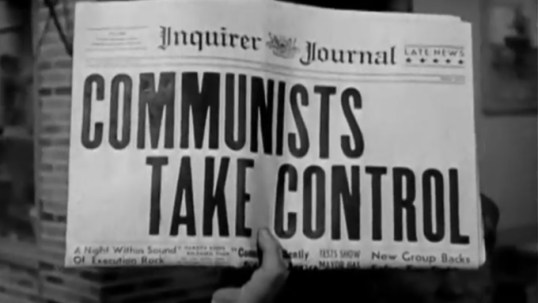
Well, here’s what the newspaper says:
That’s right! The communists have taken control and apparently, it only took them a few hours to do it. The airman somehow slept through the whole thing. It really does make me wonder whether he’s someone who I really want in an important position when it comes to defending this country. Sleeping through a communist coup takes a lot of effort.
Fear not, though. There’s a twist ending. I won’t spoil it, other than to say that it makes about as much sense as a member of the Air Force sleeping through a communist coup. You can watch it for yourself:
On the one hand, this film is pure propaganda. On the other hand, authoritarianism has become very popular lately and not just among communists. This short film may be heavy-handed but it probably seems a bit less heavy-handed today than it did just a few years ago. In the film, the enemy is communism. In real life, the enemy is anyone who would say that freedom of speech and thought should be curtailed. It’s true that they always have what sounds like a good reason for sacrificing freedom, whether it be to protect the workers or to protect the children or to make the world a safer place. But, in the end, the main goal is to make sure that only one voice can be heard.
Watch this short film on a double bill with the original Red Dawn. What a great way to celebrate May Day.
After having been arrested in front of his wife and daughter, football player-turned-criminal Casey Rhodes (Beau Mirchoff) has been sent to prison. In the same prison is Rhodes’s nemesis, former Detective James Knight (Bruce Willis). Knight has been imprisoned for murdering the two villains from Detective Knight: Rogue, finally answering the age-old question of what happens to an action hero after the end credits roll. In prison, both men meet Ricky Conlan (Paul Johansson), a former convict who is now a chaplain. Conlan is big on encouraging everyone in prison to set aside their differences and come together as one big community of sinners seeking redemption.
Meanwhile, as Christmas approaches, New York City finds itself under siege. Terrorists are dressing up like Santa Claus and robbing banks, chanting “Ho! Ho! Ho!” as they do so. Their leader alternates between handing out candy canes and tossing live grenades at people. He becomes known as The Christmas Bomber and he announces that he’s only robbing the banks to get back at the 1%. He’s a revolutionary, you see.
He’s also a prison chaplain. That’s right, Ricky Conlan is the Christmas Bomber and he’s decided that Casey is going to be newest member of his operation! He even stages a jailbreak, releasing the entire population of Riker’s onto the streets of New York. The only prisoner who voluntarily chooses not to escape is Detective Knight. Impressed by his refusal to escape when he had the chance, NYPD Capt. Anna Shea (Miranda Edwards) arranges for Detective Knight to be released from prison so that he can head up the search for Conlan and the commie Santas.
Meanwhile, Knight’s partner, Eric Fitzgerald (Lochlyn Munro), has traveled to New York to help out with the investigation. In the previous movie, when we last saw Detective Fitzgerald, he was in the hospital after having been shot by Casey Rhodes. Fitzgerald may be in a wheelchair now but he’s still good with a gun and he also mentions that the doctors think that he should be able to walk again by Memorial Day. Fitzgerald doesn’t let being in a wheelchair prevent him from investigating and confronting New York’s power brokers, including the oily mayor (John Cassini).
Detective Knight: Redemption was one of the films that Bruce Willis filmed shortly before the announcement that he would be retiring from acting. Though he’s definitely the main attraction here and he still looks convincing firing a gun during the film’s finale, Willis’s screen time is limited and it’s also obvious that a stand-in was used for a few of the scenes that involved his character. There are a handful of fleeting moments where we get to see some hints of the wiseguy charisma that was Willis’s trademark but, for the most part, Detective Knight is written to be a man of few words. When he made this film, Willis still had his screen presence but it’s still difficult to watch with the knowledge that he was struggling with his health during filming.
With Willis largely sidelined, it falls to Munro, Johansson, and Mirchoff to keep the action moving and all three of them prove themselves to be up to the challenge. Johansson, in particular, is so wonderfully over-the-top in his villainy that it’s impossible not to be entertained whenever he’s onscreen. The film’s plot does have a few interesting twists. Conlan presents himself as being a revolutionary who is dedicated to bringing down the 1% but Casey eventually realizes that, much like Die Hard‘s Hans Gruber, he’s ultimately just a greedy thief. Conlan’s gang is a mix of hardened escaped prisoners who are looking for revenge on the system and confused kids who quickly discover that the revolution is a lot scarier than they thought it would be. The story may sometimes be too quick to ask the viewer to suspend their disbelief but the plot moves quickly and, just as he did with GasolineAlley, director Edward Drake doesn’t allow the film’s low budget to prevent him from choreographing a few impressive action scenes.
Ultimately, of course, the main reason to see Detective Knight: Redemption is that it features a bunch of Santa Clauses chanting “Ho! Ho! Ho!” while robbing banks. Who can resist that?
So, you think you can just ignore the law, huh? Well, the Super Cops have got something to say about that! This film was based on the “true” adventures of two widely decorated NYPD cops. The cops were so good at their job that they were even nicknamed Batman and Robin. Of course, long after this movie came out, it was discovered that they were both corrupt and were suspected of having committed more crimes than they stopped. Amazingly, this film was directed by the same man who did Shaft. The Super Cops are kind of annoying, to be honest.
2. Super Fuzz (1980)
Far more likable than The Super Cops was Super Fuzz. Terence Hill plays a Florida cop who gets super powers! Ernest Borgnine is his hapless partner. The film was directed by Sergio Corbucci, of Django fame.
3. Miami Supercops (1985)
In 1985, Terence Hill returned as a Florida cop in Miami Supercops. This time, his old partner Bud Spencer accompanied him.
4. Miami Cops (1989)
Apparently, Miami needed a lot of cops because Richard Roundtree decided to join the force in 1989. Unfortunately, I could only find a copy of this trailer in German but I think you’ll still get the idea.
5. The Soldier (1982)
In order to celebrate loyalty, here’s the trailer for 1982’s The Soldier! They’re our government’s most guarded secret …. or, at least, they were. Then someone made a movie about them.
And finally, what better way to celebrate both Loyalty and Law Day than with a film that pays tribute to the Molokai Cops? From Andy Sidaris, it’s….
Welcome to the month of May! Here’s a few things that I’m looking forward to over the next 31 days!
Cannes Film Festival
The 76th annual Cannes Film Festival will be taking place from May 16th to May 27th! Along with discovering which films will be honored by the Ruben Ostlund-led jury, we will also be getting initial reactions to Asteroid City, Indiana Jones and the Dial of Destiny, and Killers of the Flower Moon. While doing well at Cannes is hardly a requirement for being an Oscar contender, it certainly doesn’t hurt.
2. Guardians of the Galaxy Volume 3
Admittedly, I’ve kind of grown a bit weary of the MCU. I’m among those who feel like it all should have just ended with Tony Stark’s funeral at the end of Endgame. However, I’m still looking forward to the third Guardians of the Galaxy film. Seriously, who can resist Peter Quill, Groot, Drax, Rocket, and Gamora? Plus, James Gunn is once again in the director’s chair. Hopefully, they can bring some fun back to the MCU because, after The Eternals and all that, the MCU could definitely use it. Guardians ofthe Galaxy Volume 3 is due to open on the 5th.
3. Fast X
I can’t help it. I like fast cars and I like movies about fast cars. Despite the fact that the franchise has started to show its age, I’ll always be willing to check in on the adventures of Toretto and the gang. Fast X opens on May 19th.
4. Your Hurt My Feelings
I’ve heard very good things about the latest film from Nicole Holofcener and also about Julia Louis-Dreyfus’s starring performance. You Hurt My Feelings opens on May 26th.
5. The Finale of Barry
HBO’s Barry is set to wrap up its story on May 28th. I can’t wait to see how it all ends, even if I am a bit worried that all of my favorite characters are going to be dead by the time the final credits roll.
6. The Televised Coronation of Charles III
Seriously, how often do you get to watch a coronation? We’ll get our chance on May 6th! If nothing else, it’ll remind those of us in America of why we had a revolution. Or, depending on how Charles does, it’ll make us reconsider the revolution in the first place. Either way, it’ll get some sort of reaction.
What are you looking forward to in the month of May?
4 Or More Shots From 4 Or More Films is just what it says it is, 4 shots from 4 of our favorite films. As opposed to the reviews and recaps that we usually post, 4 Shots From 4 Films lets the visuals do the talking!
Today, the Shattered Lens wishes a happy birthday to Texas’s own Wes Anderson! It’s time for….
4 Shots From 4 Wes Anderson Films
Bottle Rocket (1996, dir by Wes Anderson, DP: Robert Yeoman)
Fantastic Mr. Fox (2009, dir by Wes Anderson, DP: Tristan Oliver)
Moonrise Kingdom (2012, dir by Wes Anderson, DP: Robert Yeoman)
Grand Budapest Hotel (2014, dir by Wes Anderson, DP: Robert Yeoman)
Today, the Shattered Lens wishes a happy 77th birthday to director John Woo, the man who did the most to popularize the idea of the slo mo of doom!
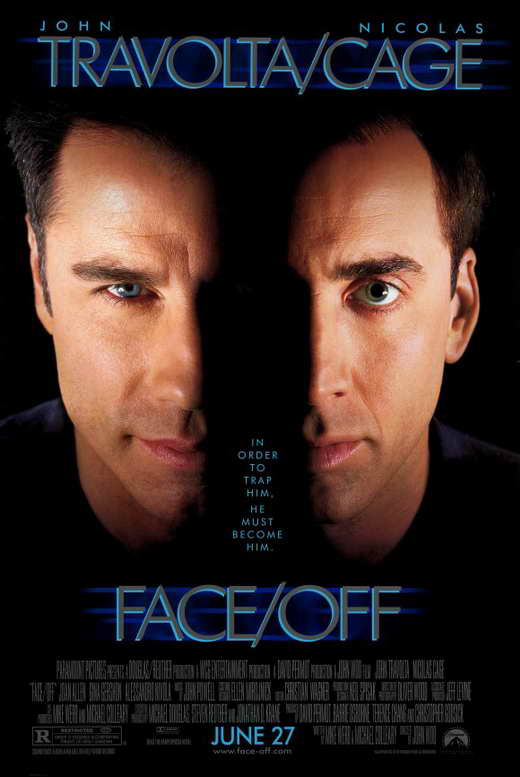
Today’s scene that I love comes from Woo’s 1997 film, Face/Off. In this scene, John Travolta pursues Nicolas Cage by both car and helicopter. While Cage’s criminal has the time of his life, Travolta’s no-nonsense federal agent reveals just how obsessed he is with capturing his prey. No one has switched faces yet but the action is already wonderfully over-the-top. Cage and Travolta both do what they do best in this scene and so does John Woo.
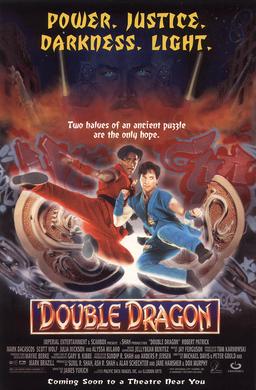
The future looks a lot like a cheap music video. Due to repeated earthquakes, California is now an island and Los Angeles has been left in ruins. The city has been renamed New Angeles, even though the correct name would have been Nuevos Angeles but whatever. The important thing is that city is now a mess. The police allow the gangs to run rampant at night in return for not running rampant during the day. The nightly news, which is anchored by George Hamilton and Vanna White, is full of stories about the federal government refusing to send any more aid to California, despite the fact that Jerry Brown is the Vice President. For some reason, Andy Dick plays the weatherman and gives continual updates on the smog and rain.
Despite the fact that the city is the most dangerous place on Earth, Satori Imada (Julia Nickson) still makes the time to drive her teenage sons, Billy (Scott Wolf) and and Jimmy Lee (Mark Dacascos, who was clearly not a teenager when this film was shot) to and from their karate tournaments. However, that might all end because Sartori possesses half of a magic medallion and the evil Koga Shuko (Robert Patrick, looking oddly like Sugar Ray’s Mark McGrath) has the other half. Satori gives her half of the medallion to Billy and tells him that he and his brother must keep it out of the hands of Shuko.
That’s not going to be easy because Shuko not only has control of the local gangs but also the police. Fortunately, rebel leader Marian Delario (Alyssa Milano) is willing to help out the Lee brothers. It all leads to a lot of fights, a lot of running, some campy humor, and stiffly delivered dialogue. For whatever reason, the filmmakers decided that the way to make this marital arts film a success would be to push accomplished martial artist Mark Dacascos into the background and instead focus on Scott Wolf, who spends most of the movie looking like he’s either confused by the plot or terrified as to what Double Dragon might do to his career.
Yeah, this movie is pretty stupid and the plot is pretty much impossible to follow. And yet, it is oddly entertaining in its own weird way. If you ignore the story and just focus on the visuals, it can actually be kind of fun. Look at all the bright colors. Look at Robert Patrick, with his goat-tee and his 90s pop star hair. Look at Alyssa Milano, who, surprisingly, seems to actually be in on the joke. Look at all of the Mad Max-inspired fashion choices. From a purely visual point of view, New Angeles is a huge improvement on Los Angeles. Along with the film visuals, the film is also worth watching just so one can witness just how over-the-top Robert Patrick goes in his performance. I don’t normally think of Patrick as being someone who chews the scenery but, in this film, he gives into every cartoonish impulse that he has and it’s actually a lot of fun to watch. There’s not a moment of subtlety to be found in either his performance or Alyssa Milano’s and thank the Angels for that. Finally, I have to appreciate the fact that the film’s main message appears to be that the government and all other forms of civil authority are basically useless. Not even Vice President Jerry Brown can be bothered to help out the people of New Angeles. That pretty much tells you all that you need to know.
In the end, Double Dragon is not a particularly good film but it’s fun in its own deeply dumb way.
Welcome to Retro Television Reviews, a feature where we review some of our favorite and least favorite shows of the past! On Sundays, I will be reviewing the made-for-television movies that used to be a primetime mainstay. Today’s film is 1971’s See The Man Run! It can be viewed on YouTube!
Two criminals have kidnapped the 18 year-old daughter of Dr. Thomas Spencer (Eddie Albert). They call the number that they have for Dr. Spencer and they tell the man that answers that they are going to kill his daughter unless he pays them a large amount of money.
What the criminals don’t know is that Dr. Spencer has recently changed his phone number and his old number was given to a struggling actor named Ben Taylor (Robert Culp). When the kidnappers call, Ben has just gotten out of bed and he’s still a bit too groggy to explain to them that they have the wrong number. Though he suspects that the whole thing might be an elaborate prank, he decides to call the real Dr. Spencer and tell him about the phone call. However, when the doctor answers, Ben does such a bad job of explaining the situation that Dr. Spencer thinks that Ben is the kidnapper. Begging Ben not to hurt his daughter, Dr. Spencer says that he’ll pay anything and that he won’t even call the police.
This gives Ben and his wife, Joanne (Angie Dickinson), an idea. When the kidnappers call back, Ben pretends to be Dr. Spencer. After the kidnappers tell Ben the amount of money that they want, Ben then calls Dr. Spencer and, pretending to be the kidnapper, relays the message but he also adds an extra $50,000 to the ransom demand. Ben and Joanne’s plan is to collect the ransom from Dr. Spencer, take their cut, and then deliver the ransom to the kidnappers.
It’s a complicated plan and, throughout the course of the day, both Ben and Joanne have their moments of doubt. But they stick with it, because Joanne wants the money and Ben wants the chance to not only prove himself as an actor but to also show Joanne that he’s not the loser that she insists that he is. Complicating matters, though, is that Dr. Spencer’s wife (June Allyson) has called the police without telling Dr. Spencer. Though Dr. Spencer doesn’t know it, the cops are determined to be there when he hands off the ransom to the man who claims to have his daughter.
Clocking in at a briskly-paced 73 minutes, See The Man Run is an enjoyable thriller, one that is full of unexpected twists and which features a fierce performance from Angie Dickinson and a rather poignant one from Robert Culp. Culp is convincing rather he’s playing a kidnapper, a doctor, or just an out of work actor who doesn’t realize that he’s gotten in over his head. As smart as he may be, Ben cannot escape from his own insecurities and his fear of being betrayed. It all leads to a diabolically clever surprise ending, one that proves that you can run only so far before you stumble.
Here are my Oscar predictions for April! As always, when it’s this early in the year, I recommend taking all of these with a grain of salt. At this point, the only thing that anyone knows for sure is that it’s safe to remove Jonathan Majors and Magazine Dreams from any list of predictions.